Up next in 10



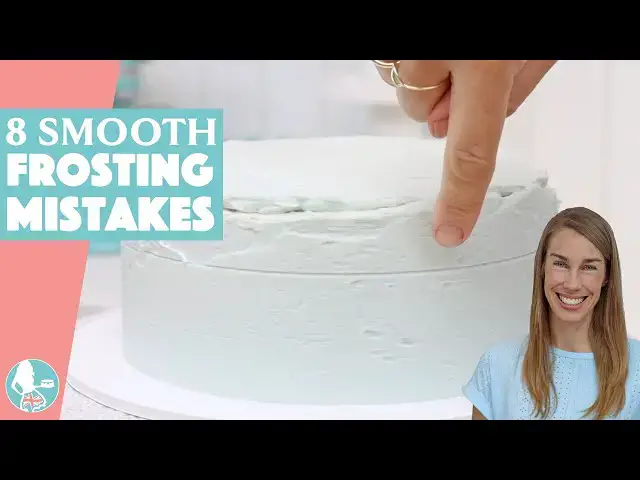
Air pockets, indents, uneven top edges, and texture lines that just won't go away… These are some of the most common frosting mistakes and in this tutorial I’ll show you how to spot them, what causes them, and most importantly, how to fix them!
🥣My Recommended Cake Decorating Tools: https://www.britishgirlbakes.com/my-recommended-tools-for-cake-decorating
💫Start your FREE 7 day trial on my cake school: https://britishgirlbakes.teachable.com/p/all-you-can-cake
🎂Take my FREE course on 10 Frosting Techniques: http://britishgirlbakes.com/free-course
👩🏼🍳My 4 Minute Buttercream recipe
https://www.britishgirlbakes.com/recipes/buttercream-frosting/
📄READ a written version of this tutorial (with photos!)
https://www.britishgirlbakes.com/8-smooth-frosting-mistakes-and-how-to-fix-them/
👍Please LIKE and SUBSCRIBE to my channel for a new cake decorating tutorial every week!
💬 SAY HI!
Website: https://www.britishgirlbakes.com
Instagram: https://www.instagram.com/britishgirlbakes
Show More Show Less View Video Transcript
0:00
If your frosting looks like this, watch
0:02
this video to find out how to turn it
0:04
into this. I'll show you the most common
0:06
mistakes people make when they smooth
0:08
buttercream. From how they use their
0:09
tools to the technique they use. Here's
0:12
a quick recap of how to get your cake
0:14
ready for icing or frosting it by
0:16
attaching it to a cakeboard with some
0:17
buttercream to act as glue and then
0:19
layering it with your filling. I have
0:21
two really detailed tutorials on how to
0:23
make a layer cake and how to crumb coat
0:25
a cake in case you want more details
0:26
about this part. Once the cake is
0:28
crumbcoated and the crumb coat has set,
0:31
we move on to the final layer of
0:32
buttercream, and this is where the
0:34
problems tend to start. The first
0:35
frosting mistake is not spreading
0:37
buttercream up to the edges of the cake
0:39
on the top and also around the sides,
0:41
which we'll get to in a minute. This
0:43
will leave a gap in the top edge of the
0:45
cake, which you'll see after we smooth
0:46
the sides of the cake. On the sides, if
0:48
the buttercream doesn't go right up to
0:50
the top of the cake, you'll end up with
0:52
gaps or shallow parts around the top,
0:54
and the top edge will be uneven instead
0:56
of straight. Let's fast forward to what
0:58
this would look like if I stopped
0:59
spreading the buttercream now and scrape
1:01
around the cake with a cake comb or
1:03
icing scraper or frosting smoother. I'll
1:05
show you how to fix this in a moment.
1:07
But first, I want to highlight three
1:08
problems with the way you use your cake
1:10
comb or icing scraper or frosting
1:12
smoother. After you've spread your
1:13
buttercream all the way down to the
1:15
bottom of the cake, to the cakeboard,
1:17
ignoring the top of the cake for now
1:18
because we'll fix that next. When you
1:20
start smoothing it, these are the most
1:22
common problems. these short jerky spins
1:25
of the turntable and this trail or
1:27
groove or line that goes all the way
1:28
around the cake imprinted into the
1:30
buttercream and the shallow patches you
1:32
can still see down here at the bottom.
1:34
Watch the straight edge of the cake comb
1:36
and you'll notice that with these short
1:38
spins on the turntable, every pause as I
1:40
reach to spin the turntable again, the
1:42
edge of the cake comb digs into the
1:44
frosting and you'll see vertical dents
1:46
going up the frosting spaced all around
1:48
the cake. Instead, reach as far around
1:51
the turntable as you can to spin it in a
1:53
long smooth spin without any jerks. And
1:56
that will allow your cake comb to glide
1:58
around the cake without digging into it.
2:00
Now, let's talk about this line in the
2:02
buttercream here. This is caused by
2:04
something digging into the buttercream.
2:05
Something that sticks out from the
2:07
straight edge of the cake comb. And
2:08
that's what happens when you ding or
2:10
dent the straight edge when you drop it
2:12
or knock it. I can feel a sharp piece
2:14
sticking out along the edge of my comb.
2:17
and that's what's digging into the
2:18
buttercream and dragging a trail behind
2:20
it. If I switch to a different cake comb
2:22
that hasn't been damaged, it will smooth
2:23
the buttercream without leaving a trail
2:25
or line behind it. I find that metal is
2:28
a lot more resilient than plastic or
2:30
acrylic for cake combs. Moving down to
2:32
these shallow areas of the buttercream
2:34
around the bottom of the cake. These
2:35
happen wherever the buttercream wasn't
2:37
spread on as thickly as on the rest of
2:39
the cake. And they're really easy to fix
2:41
when they're this shallow because you
2:43
could just scrape around the cake a few
2:44
more times to take off a few layers of
2:46
buttercream and then those areas won't
2:48
be shallower than the rest. I want to go
2:50
back to this top edge here. To avoid
2:52
these gaps around the top of the cake,
2:54
spread more buttercream onto the cake
2:56
and spread it out so that it goes over
2:58
the sides of the cake. And around the
3:00
sides of the cake, push upwards so that
3:02
the buttercream sticks up to make this
3:04
wall or lip around the top edge of the
3:06
cake. It's a good idea to go around the
3:08
cake a few times to push the buttercream
3:09
up to make sure it's high enough.
3:11
Because if you scrape around too soon,
3:13
you'll still have these areas at the top
3:14
where the buttercream is shallower. So,
3:16
when you swipe sideways with an offset
3:18
spatula or angled pallet knife to level
3:20
this top edge, the buttercream won't be
3:22
smooth all the way up and the top edge
3:24
won't be level. By spreading on more
3:26
buttercream, it definitely looks better
3:27
than this. But to get the buttercream
3:29
really smooth, you need to spread
3:31
further and scrape more. And what I mean
3:33
by that is to spread the buttercream
3:34
further up and to scrape several times
3:37
until you've taken off all of the excess
3:38
buttercream and there aren't any shallow
3:40
patches left. But let's rewind to talk
3:43
more about the technique you use to
3:44
smooth buttercream. Press the base of
3:46
your cake comb down on the cakeboard to
3:48
line it up straight. And then use very,
3:50
very light pressure as you spin the cake
3:52
on the turntable. Holding the comb still
3:54
so it's the turntable that's moving and
3:56
doing all of the work. You can see that
3:58
the straight edge of my cake comb is
4:00
only coming into contact with the
4:01
buttercream that's sticking out the
4:03
furthest from the cake, which is why you
4:05
have to scrape so many times to take off
4:07
all of this excess until all of the
4:09
buttercream is the same thickness so
4:11
it's smooth. If you see any little air
4:13
bubbles like this, that's where your
4:15
pressure is too firm and tears the
4:17
buttercream. And to avoid it, you can
4:18
try harder to use lighter pressure. Or
4:21
to fix it, one of my favorite hacks is
4:23
to warm up your cake comb. There are
4:25
three ways I like to do this. You can
4:27
use a blowtorrch running the flame up
4:29
and down the straight edge that you're
4:30
going to press against the cake. Or a
4:32
haird dryer works well, too. Or you can
4:34
hold your comb under hot water and then
4:36
dry it off. What's really important with
4:38
any of these methods is to pinch the
4:40
comb and wait until it's warm, not hot.
4:42
Otherwise, you'll melt the buttercream
4:44
and cause bulges or bubbles underneath
4:46
the surface. And you can also change the
4:48
color of the buttercream. Once the comb
4:50
is barely warm, you'll feel it glide
4:52
effortlessly over the buttercream. and
4:54
it will fill in any air bubbles and
4:55
leave a super smooth surface behind. The
4:58
top edge is a common struggle because
5:00
everyone wants those sharp edges from
5:02
the sides over onto the top of the cake
5:04
and you can't get those if you didn't
5:05
spread your buttercream far enough
5:07
outwards on the top of the cake or
5:09
upwards on the sides of the cake because
5:11
there won't be enough buttercream there
5:13
and you'll have gaps and shallow edges
5:14
and an uneven top edge. Once the
5:17
buttercream is high enough, the action
5:19
you're looking for is a swipe sideways
5:21
using an offset spatula or pallet knife,
5:23
or you can use your cake comb. But there
5:25
are three really common frosting
5:27
mistakes here. The first is to push
5:29
down. You should only be pushing
5:30
sideways with no pressure going down
5:33
since that will cause a bulge in the
5:34
buttercream underneath. And the next
5:36
mistake is to use a messy blade.
5:38
Instead, wipe your tool after every
5:40
swipe so there's no buttercream left on
5:42
it. Because after swiping, look how much
5:44
buttercream is on my blade. And if I
5:46
swipe again, I'm dragging these drags of
5:48
buttercream back onto the neat edge I've
5:50
created, leaving this textured line
5:52
along the edge. So, make sure the blade
5:54
is clean. And then you can swipe again.
5:57
And finally, don't stop too soon. After
5:59
you've swiped all the way around the
6:00
cake, get down to eye level. And
6:02
wherever you see the top edge go up, so
6:04
it's not quite level, swipe again. These
6:07
blips are usually in between where two
6:09
swipes went before. So, you'll see them
6:11
in a few places around the cake, and it
6:13
just takes a moment to swipe over them
6:15
and wipe the blade clean again. And
6:17
repeat until the top edge is level all
6:19
the way around. I hope this has been
6:21
helpful. To learn hundreds more cake
6:23
decorating techniques and designs, visit
6:25
my cake school on britishgirlbakes.com
6:27
where you'll find online courses and
6:29
memberships. See you there.