I’m going to show you why a cake leans, how to avoid it, and, in case you DO end up with a leaning cake, how to fix it! To watch a video of this tutorial instead, scroll to the bottom of the page.
Why does a cake lean?
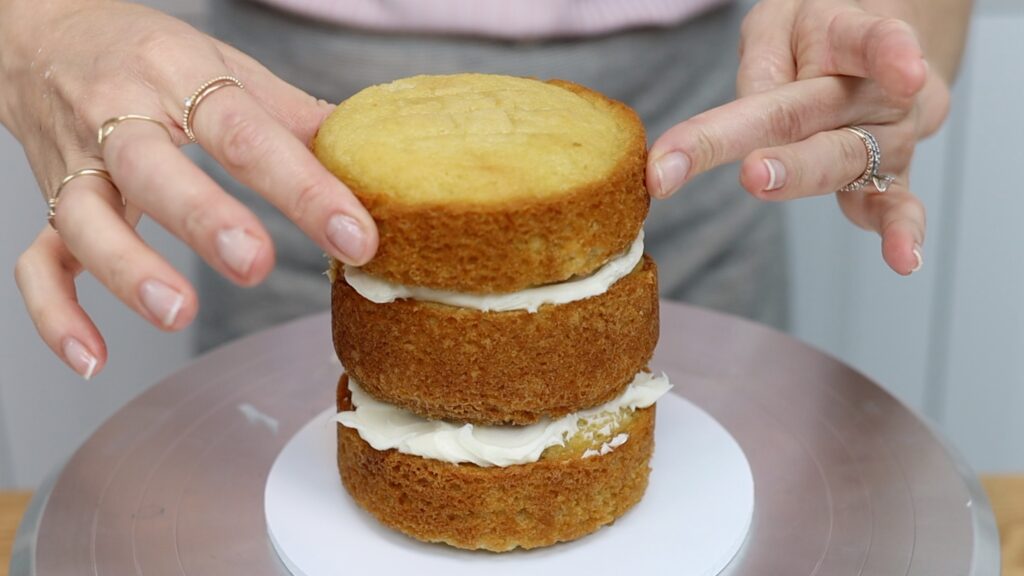
As you place each layer onto your cake, it’s tempting to rush and get to the fun part of frosting and decorating the cake but if each layer isn’t directly on top of the layer beneath it, the sides of the cake will slope up or down. This makes the cake look like it’s leaning or tilting.
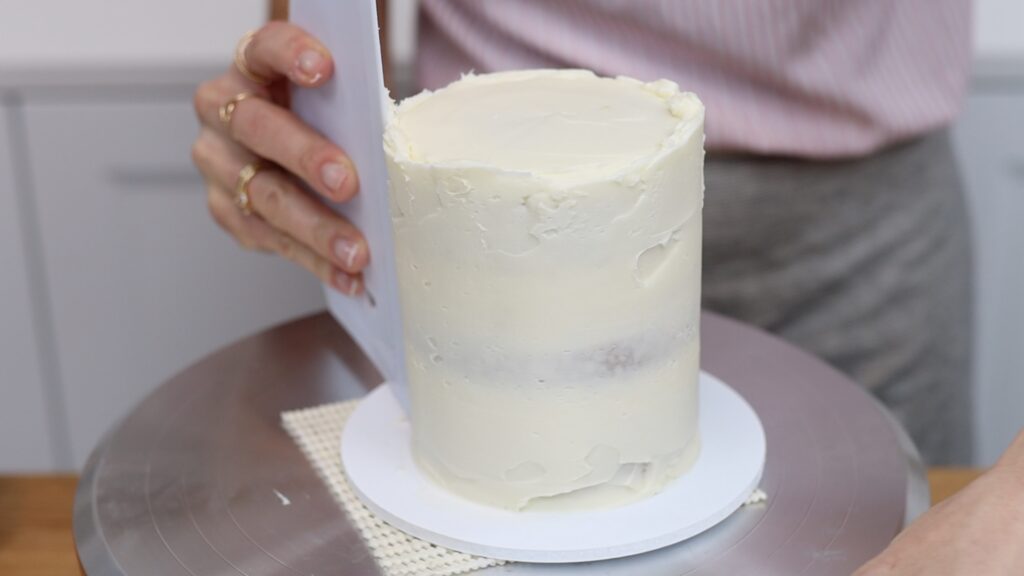
The other reason why a cake leans is the technique you use when you smooth the frosting on the cake. If you accidentally hold your cake comb at an angle, you’ll scrape more frosting off either the top or the bottom of the sides of the cake, which makes the cake look like it’s leaning.
How can I prevent my cakes from leaning?
To avoid a leaning cake take your time as you’re placing each cake layer, lowering it and then getting down to eye level and spinning the cake on a
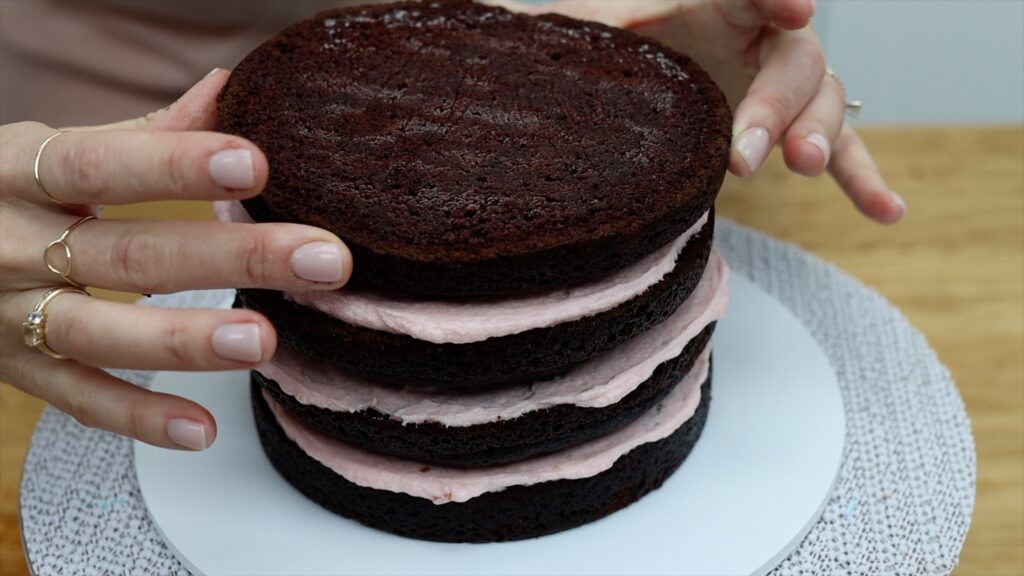
To adjust a layer that's sticking out over the edge, nudge it back so it’s centered. It's important to do this straight away, before the filling sets and secures the layer in place. Do this for every single cake layer and they’ll all be lined up straight. To check, spin the cake and choose one side to look at and stare at it as the cake spins to make sure it always looks straight, from top to bottom, for the entire spin.
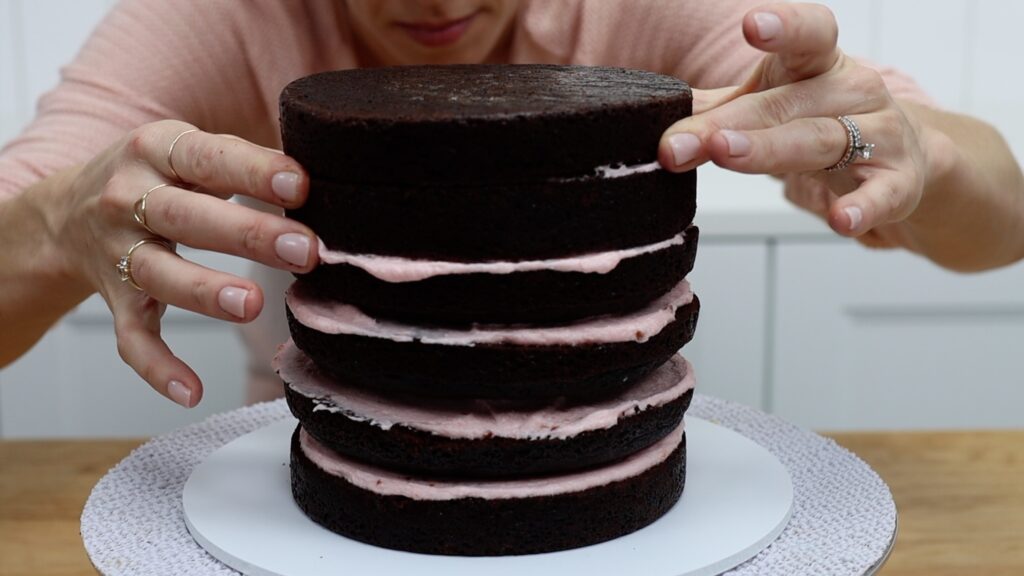
Now chill the cake for 15 minutes in the freezer or 30 minutes in the fridge to set the filling and so that the cake layers get a bit firmer and then when you frost the cake, the layers will stay in place and even as you apply pressure to the sides as you spread the frosting on and then smooth it, that pressure won’t push the cake layers around so the cake will stay straight.
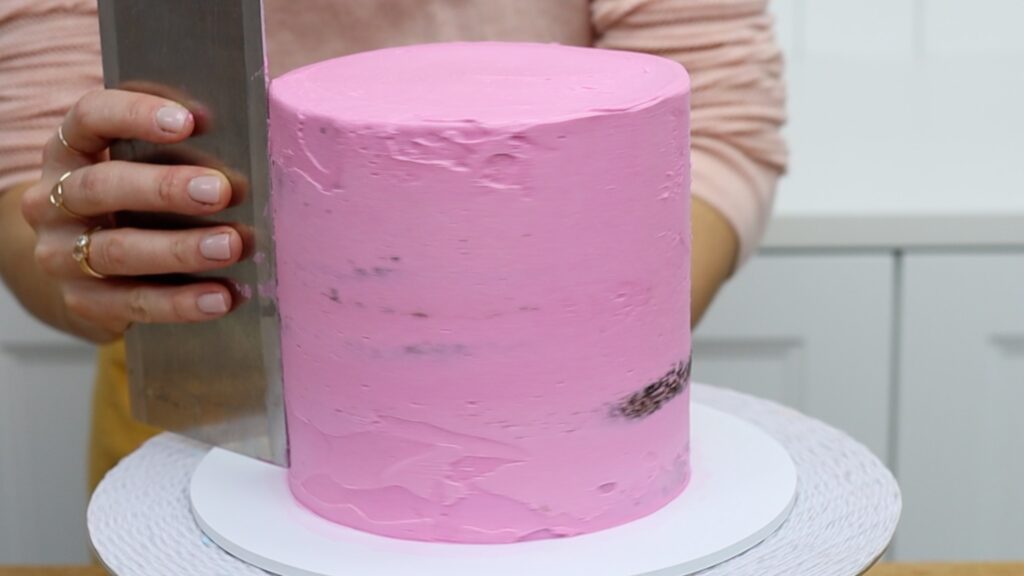
What’s very important as you’re smoothing the frosting is that you press the bottom edge of the cake comb down on the cake board, and this lines up the side edge of the cake comb, the part that’s scraping over the frosting on the cake, so that it’s straight against the cake and that will make the frosting straight! If you don’t press it down, it’s easy to push the comb against the cake at an angle, pushing it further into the frosting at the top of bottom of the cake and that will create a sloping or tilting or leaning cake. When you’re almost finishing smoothing the sides of the cake with your cake comb it’s a good idea to get down to eye level and spin the cake to check the sides are straight.
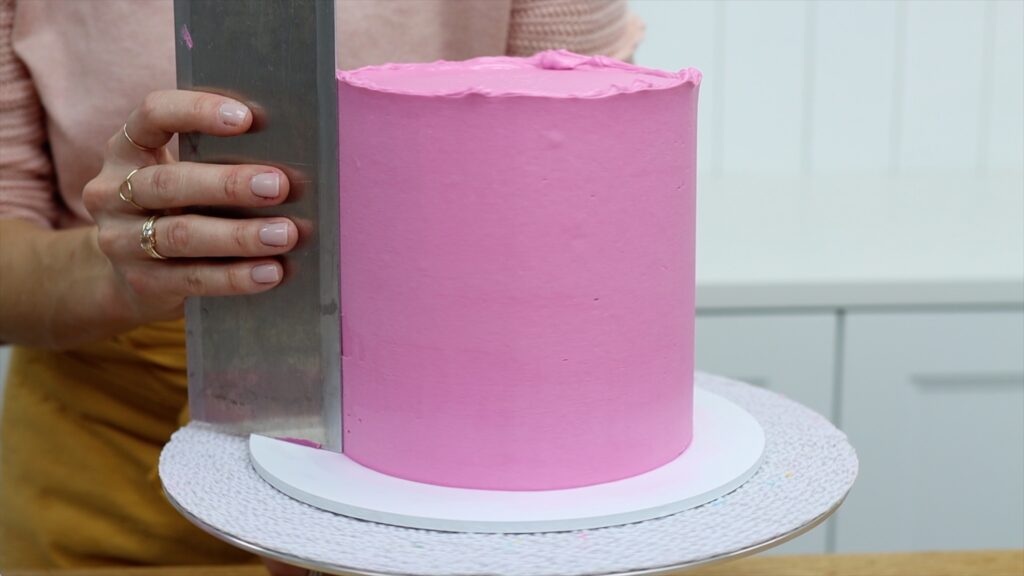
How to fix a leaning cake
Now, what happens if you DO end up with a leaning cake? Don’t throw it away! After you smooth the crumb coat, if you spin the cake on the
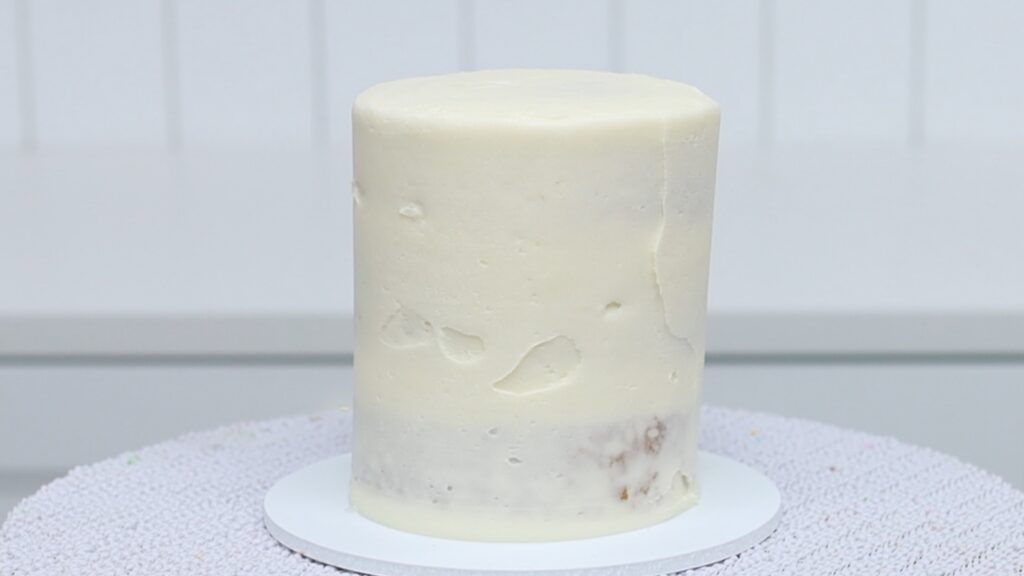
Put the cake in the freezer for 15 minutes or the fridge for 30 minutes to set the crumb coat and then look at the side of the cake that’s leaning and spread more frosting onto the parts that AREN’T sticking out, so that the frosting is as thick as the leaning part of the cake.
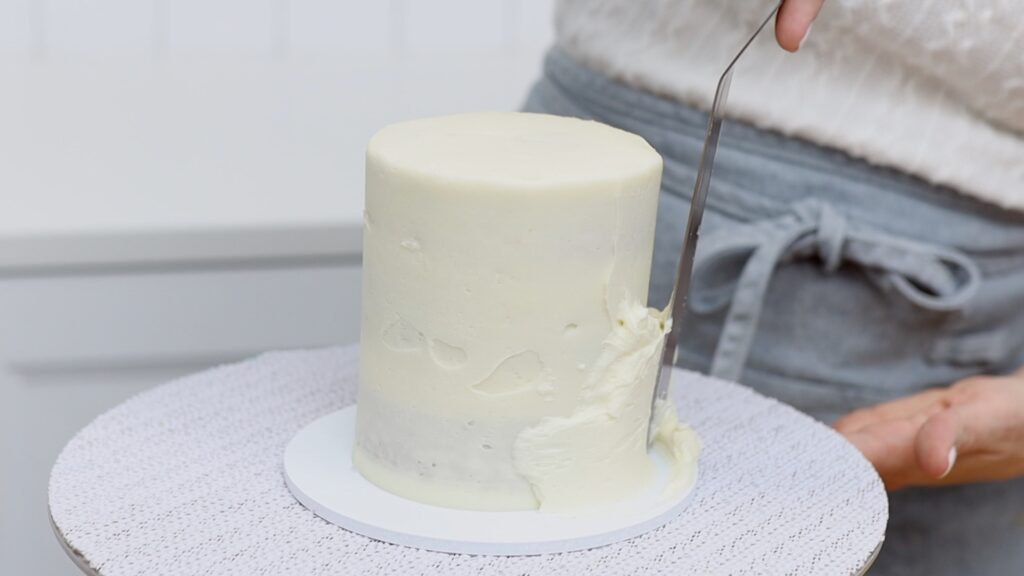
You’ll need to do this at the bottom of one leaning side, and on the opposite side of the lean you’ll need to do it at the top. This doesn’t need to be neat, the only purpose of this is to make the sides of the cake straight.
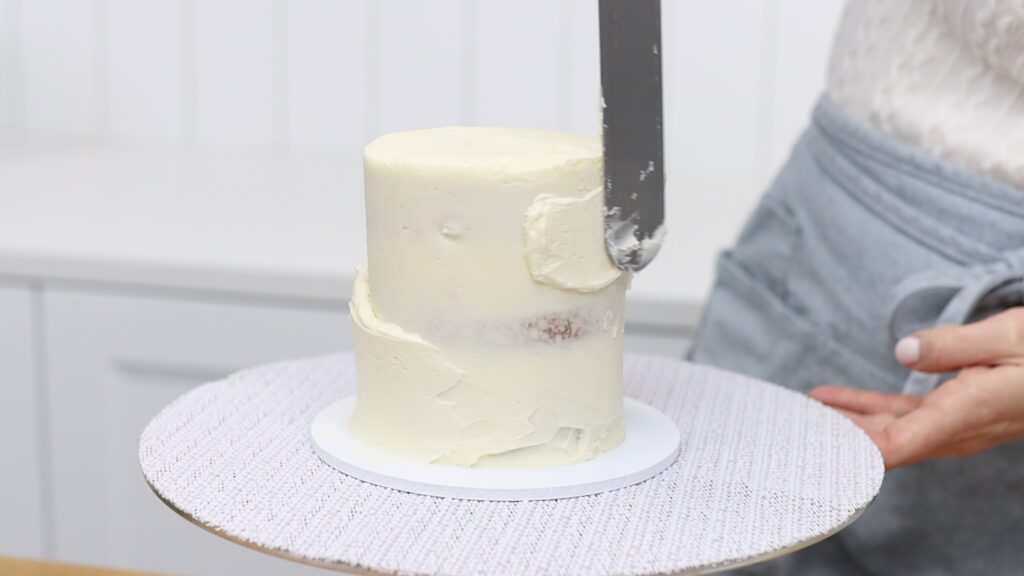
Scrape around the cake with your cake comb to flatten the frosting you spread on and then get down to eye level and spin the cake to check that the sides are straight. If the cake is still leaning, spread on a bit more frosting over those two areas and scrape around the cake again and then check again.
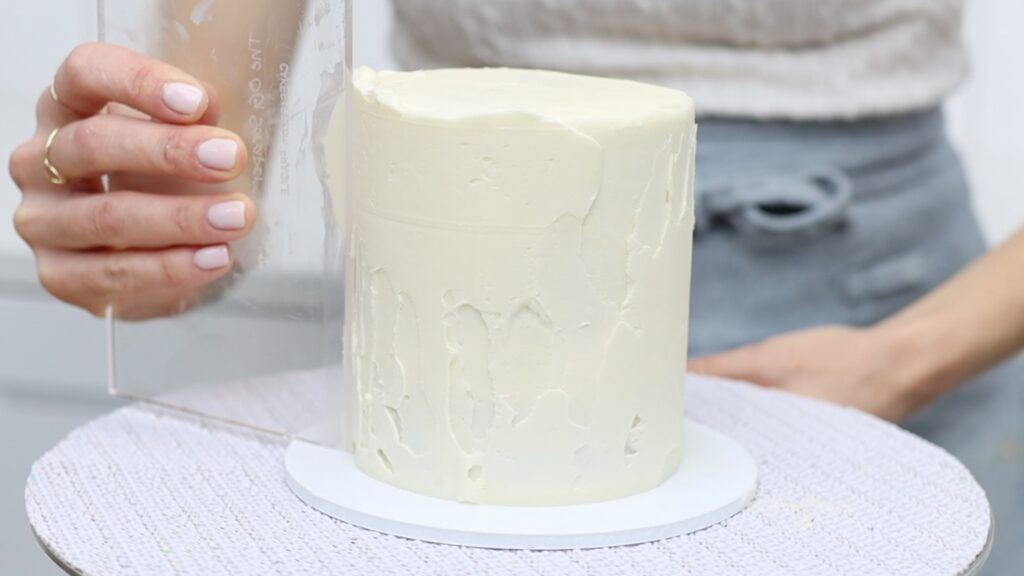
The shape of the cake doesn’t have look perfect yet because you’re going to cover it with another layer of frosting but by straightening the cake now with extra layers of the crumb coat, you’ll have a nice foundation to cover with your final coat of frosting.
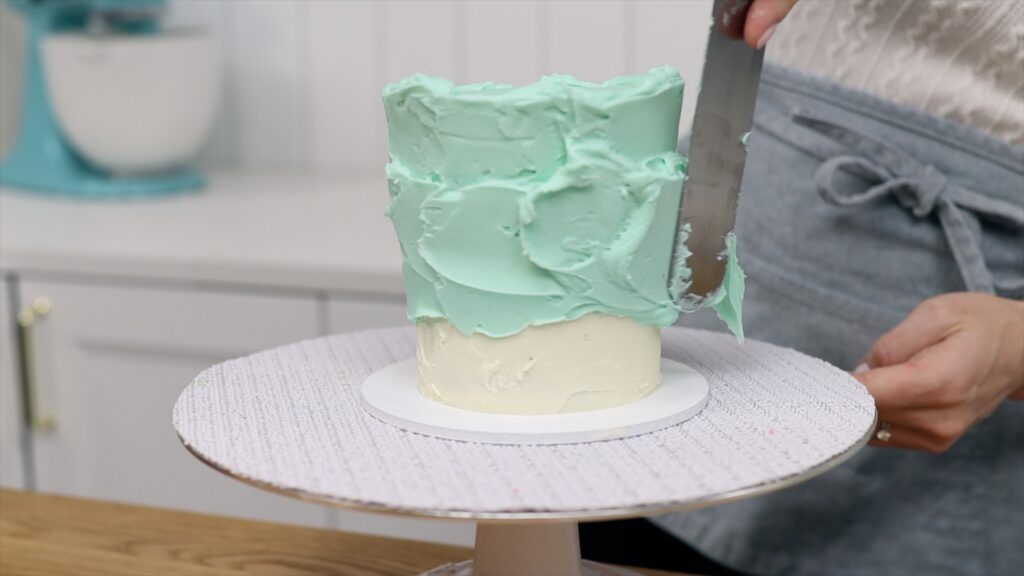
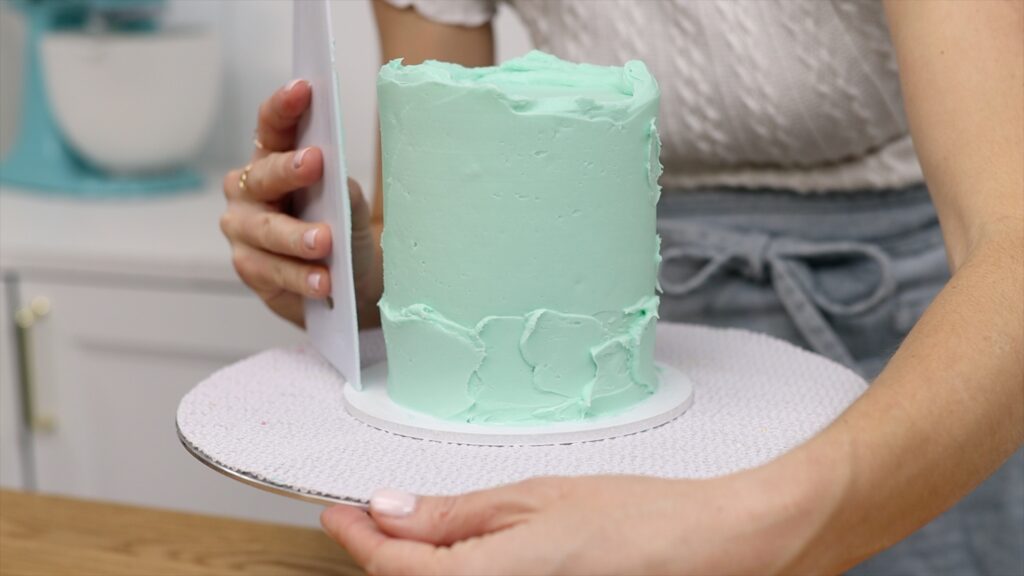
As long as you rest the bottom of the cake comb firmly down on the cake board as you scrape around the cake, this layer of frosting will give the cake perfectly straight sides and you’ll never know it used to be leaning!
I hope this has been useful! I break down hundreds of cake decorating techniques on my cake school, so that they’re clear and step-by-step with close up videos and explanations of why things go wrong and how to fix them. You can take individual courses or join my ClubPLUS for access to them all!
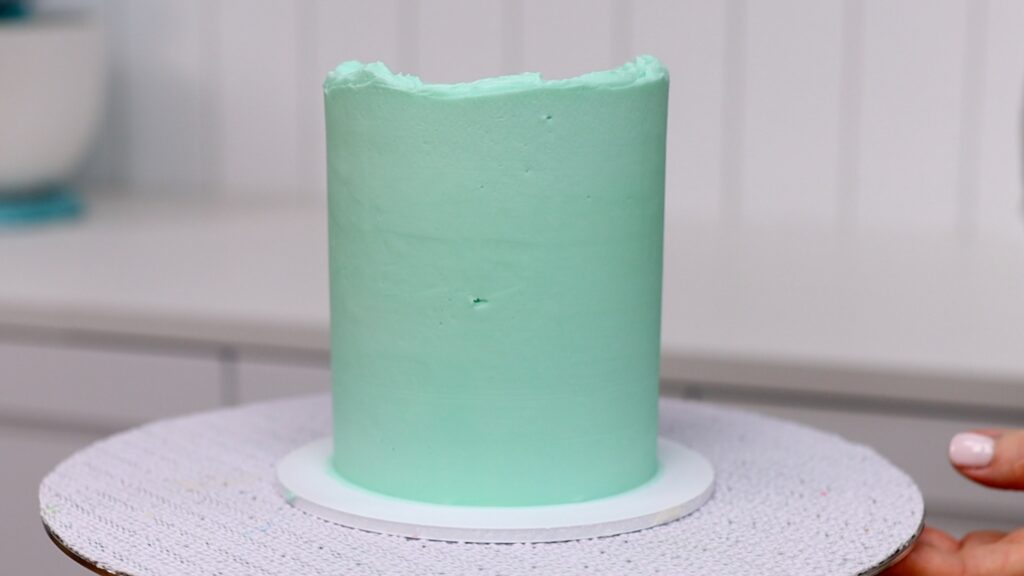
Watch a video version of this tutorial on how to fix leaning cakes:
These parchment paper hacks will save you time and money on your cakes! Parchment paper or wax paper or baking paper can be used for loads of cake decorating techniques, to create stunning and unique designs.
#1 Buttercream Transfers
Let’s start with one of my favourite parchment paper hacks: a buttercream transfer. This technique will let you replicate any design, even super complicated ones, onto a cake. Choose an image you like, online or on a notebook cover or wherever, and draw it (or trace it) onto parchment.
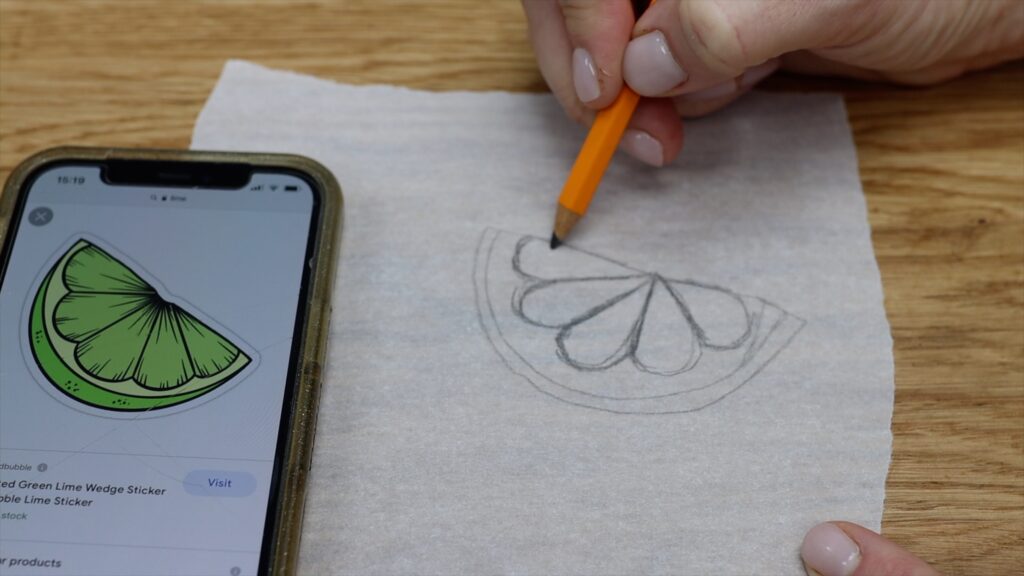
Tint buttercream the colours you want to use and buttercream is the best kind of frosting for this particular method because it gets so firm when it sets, which you’ll see in action in a minute. Put each colour into a piping bag with a small round piping tip or you can just put your buttercream in a ziploc bag and cut the corner off for a homemade piping bag! Outline and fill each coloured section of the design except the biggest section.
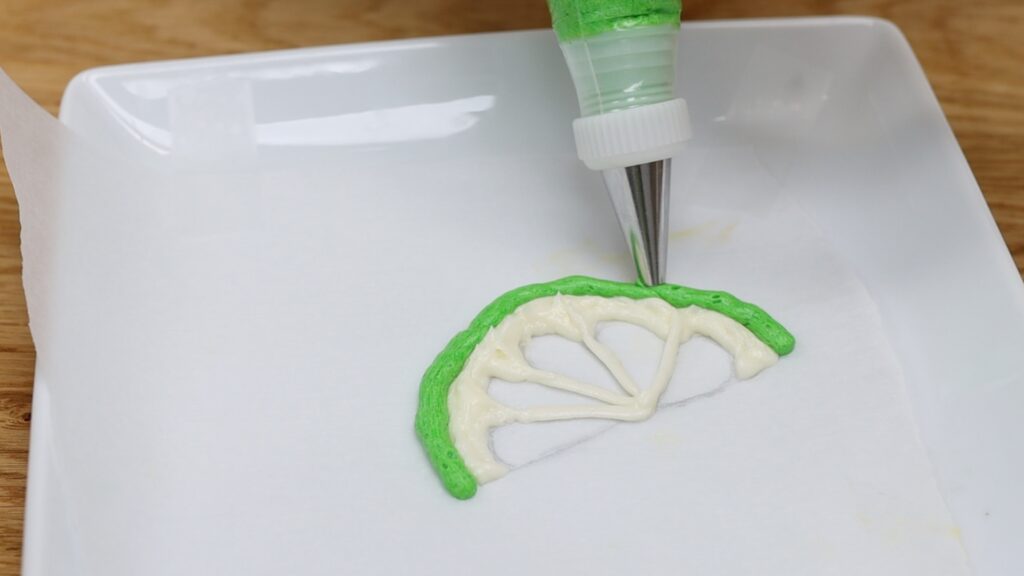
Freeze the design on the parchment for 5 minutes to set it and then pipe on the final colour and spread it over the whole design so that it’s flat and also to create a sticky surface on top of the parts of the design that have set.
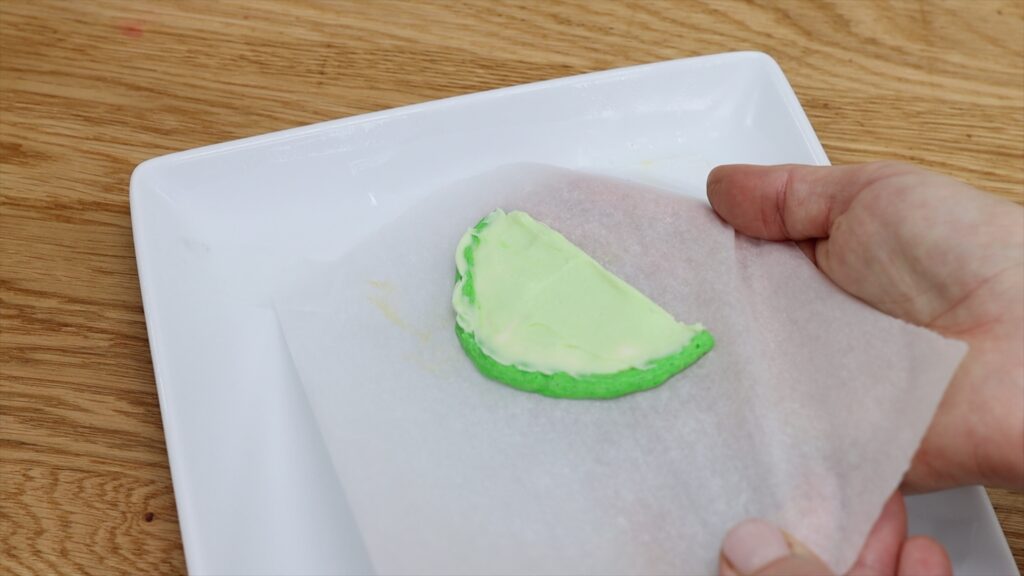
Lift it up straight away and press it against a cake, and the frosting on the cake should have set so that THAT frosting is firm, too, and then you won’t damage it.
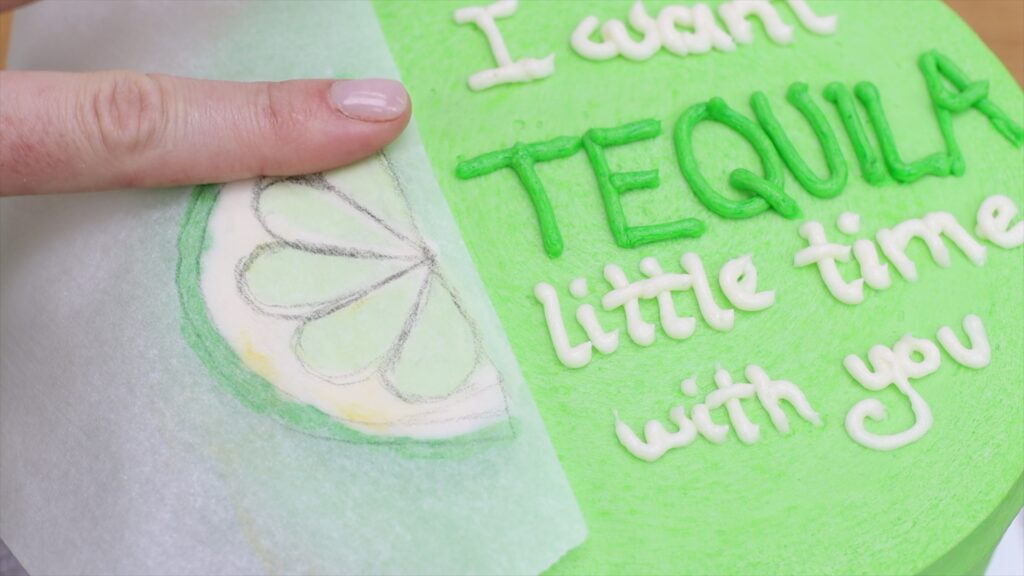
Put the whole cake in the fridge for 30 minutes or the freezer for 15 minutes and then peel the parchment off and voila!
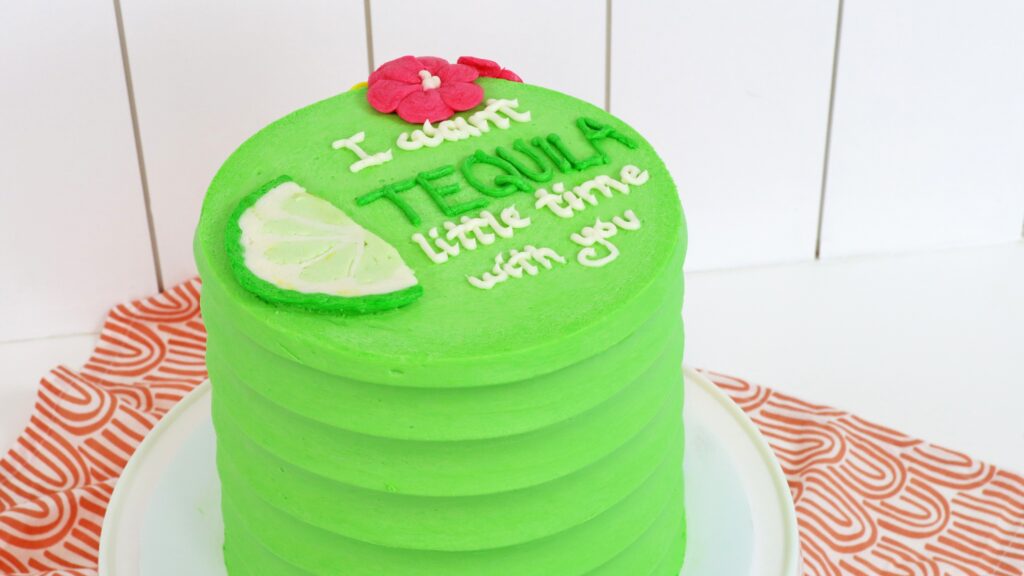
#2 Piped Details
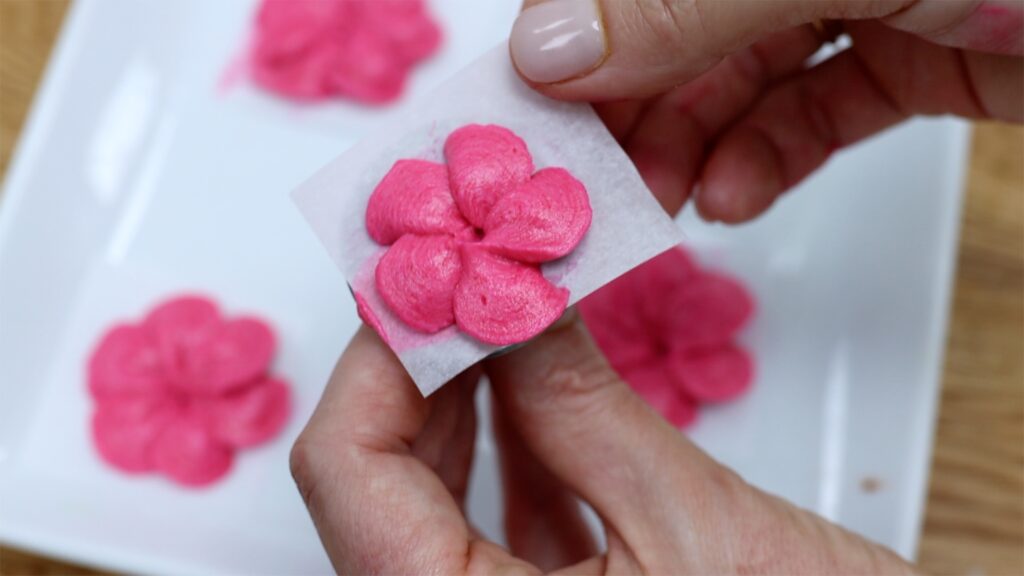
Another great use for parchment paper (or wax paper or baking paper) is for piping details that you can’t pipe directly onto a cake, and then transferring them onto a cake. I'll show you how to do this will and without a flower nail. If you have a flower nail, cut parchment into little squares the same width as the flat circle of the flower nail. You'll need one parchment square for each flower you pipe.
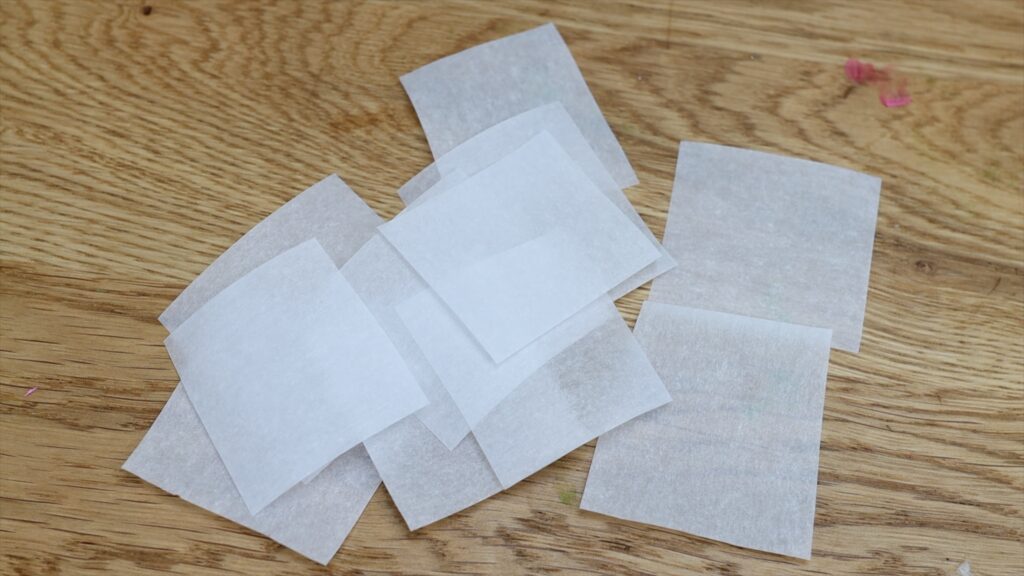
To attach the parchment to the flower, pipe a dot of buttercream onto the middle of the flat circular part of the nail and press the parchment into that. The buttercream dot will act as glue. Pipe your detail onto the parchment, spinning the nail between your thumb and finger as you pipe each petal. I'm using a #104 petal tip for this flower, stopping squeezing the bag at the end of each petal and then repeating all the way around the nail to finish each flower. I’ll pipe the middle later.
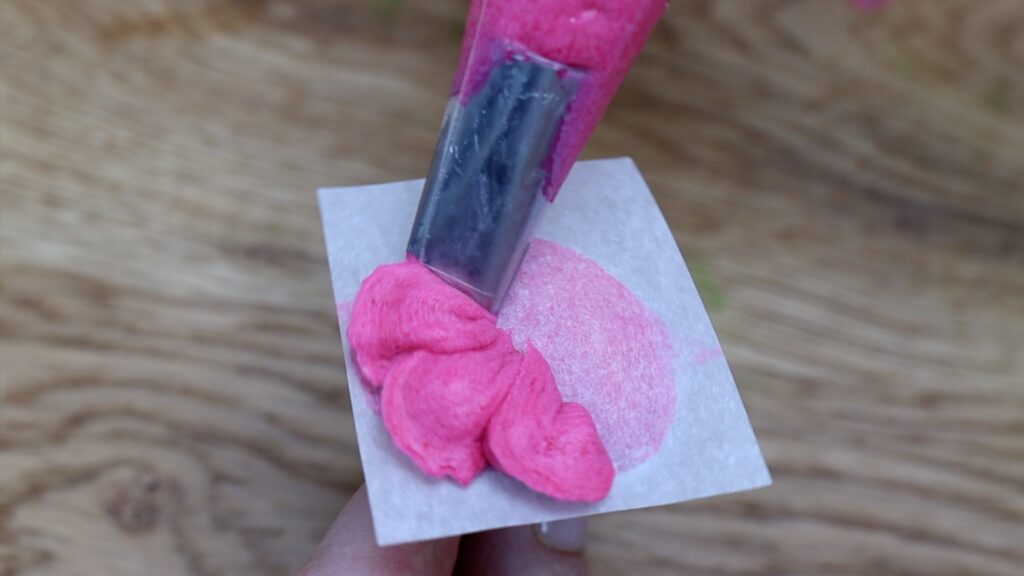
Slide the parchment off the nail and onto a plate and put it in the freezer for 5 minutes to set.
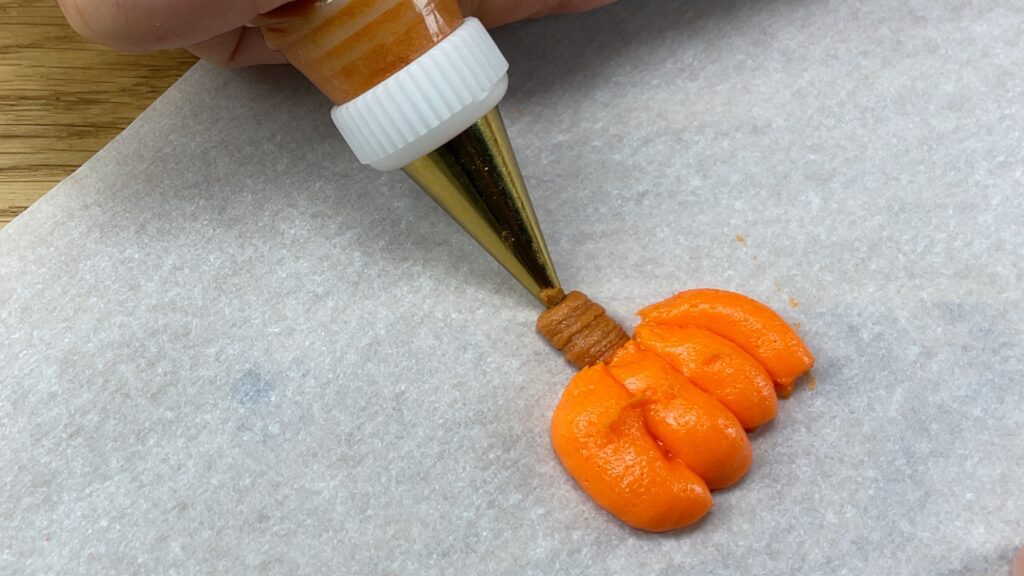
If you don’t have a flower nail you can pipe directly onto parchment paper on a plate, like this, turning the plate around as you pipe to find the easiest angle for each part of the flower or pumpkin or whatever you’re piping. Put the piped detail on the parchment paper into the freezer for 5 minutes to set the buttercream.
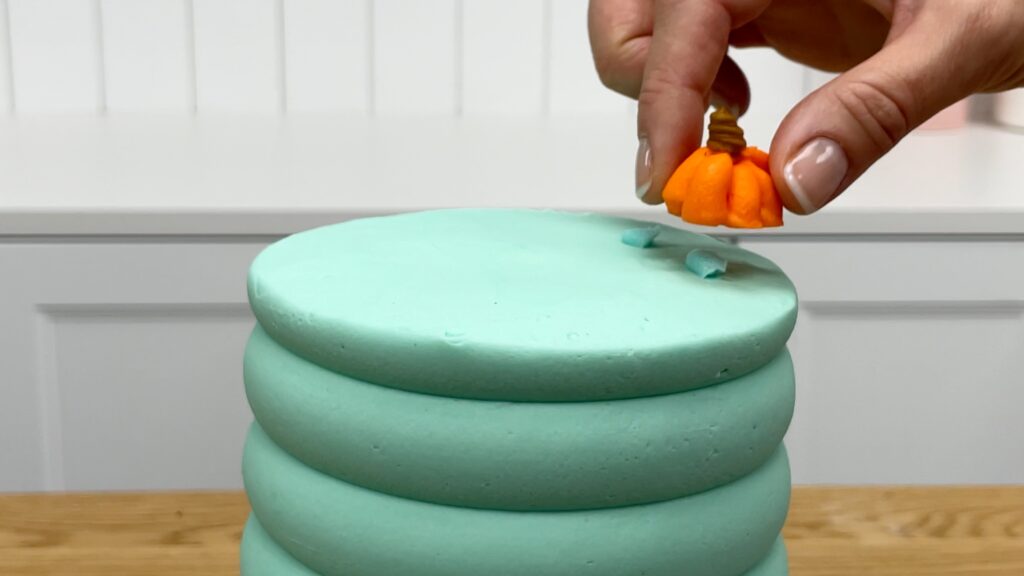
When the buttercream has frozen, peel the buttercream off the parchment and there are two ways to attach it to your cake. The first is to pipe some buttercream onto the bottom of the frozen flower and this fresh buttercream will act as glue. Work quickly because the frozen flower will thaw after a few seconds and start to stick to your warm hands.
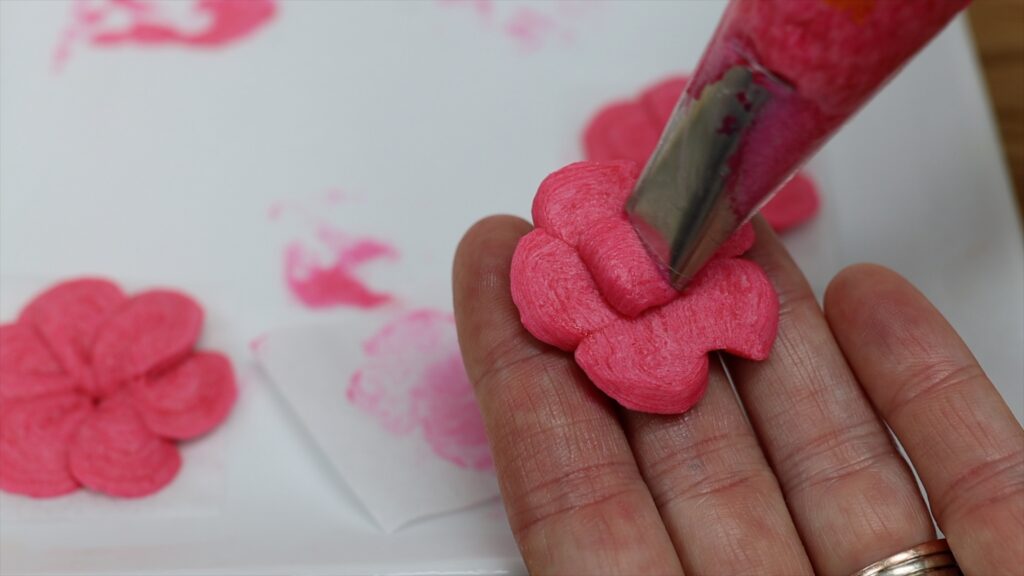
Now push the flower into the frosting of the cake and the frozen flower will chill the dot of buttercream so that it sets and holds the flower in place.
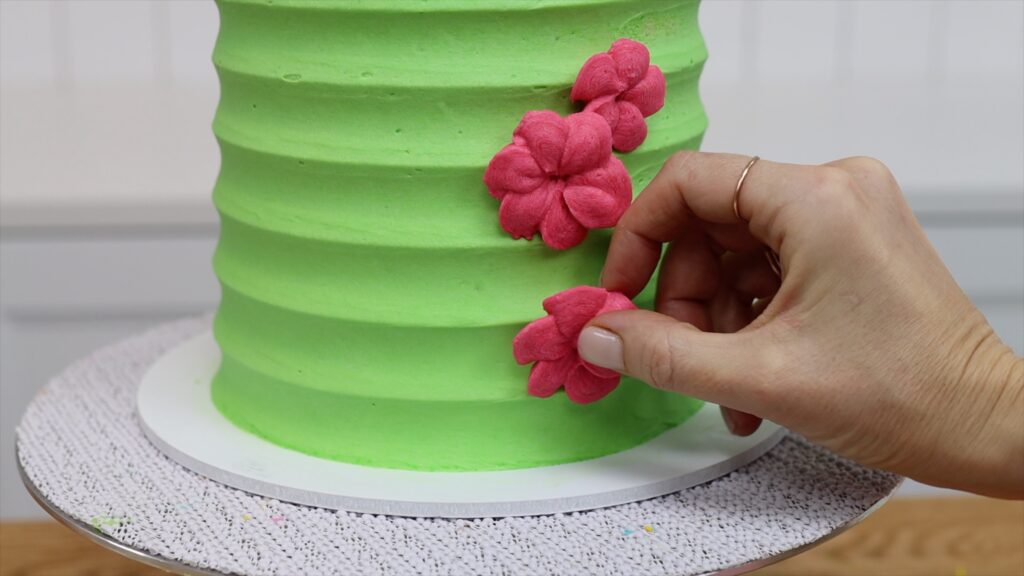
It’s useful to pipe the centers of flowers now, at the end, so that you can push against the middle of the flower to attach it to the cake without damaging anything.
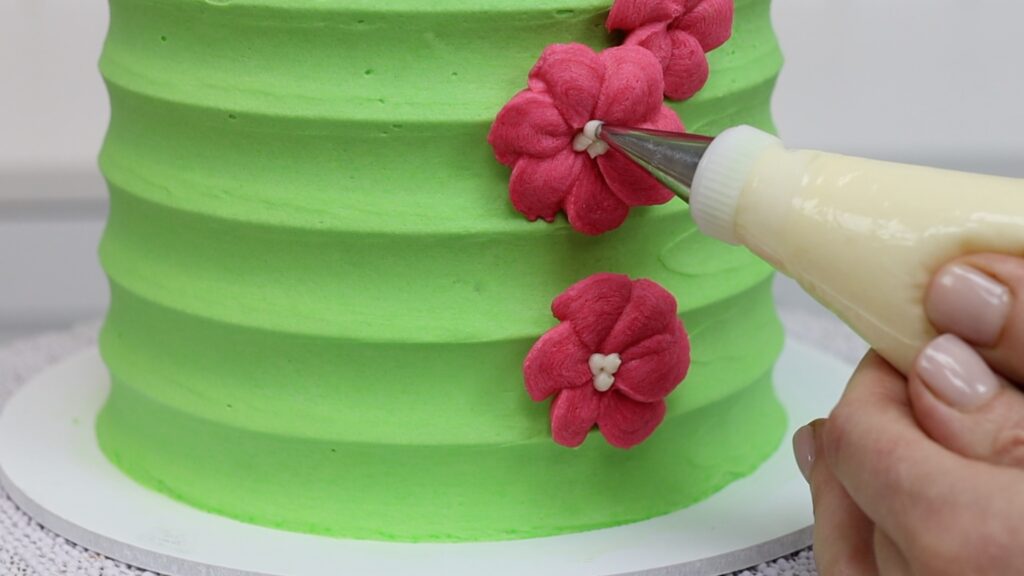
The second way to attach piped details to a cake also requires freezing the details on parchment paper first. Then pipe a dot of buttercream onto the cake, wherever you want to put the flower or any other piped detail. Now press the flower into that dot to attach it to the cake.
#3 Neat sprinkle borders
With this parchment paper hack you'll be able to create neat sprinkle borders on cakes. Use parchment to cover up the cake where you don’t want the sprinkles to go, leaving however much frosting you like exposed underneath. When you press sprinkles against the cake, they will only attach to the frosting below the parchment paper.
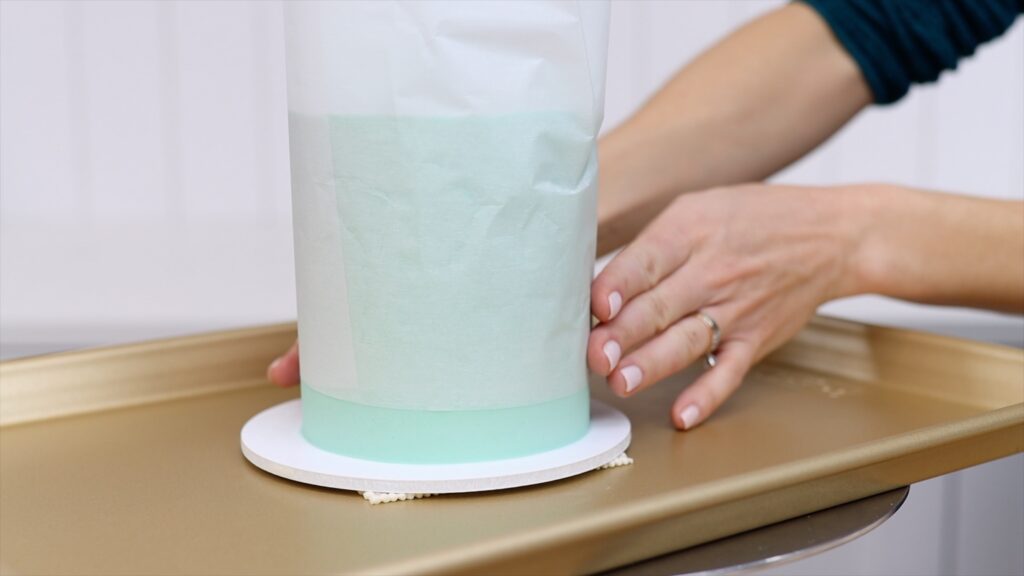
The frosting on the cake needs to have set before doing this so chill your cake for at least an hour in the fridge first. Pour sprinkles onto the cake board all the way around the cake and use an
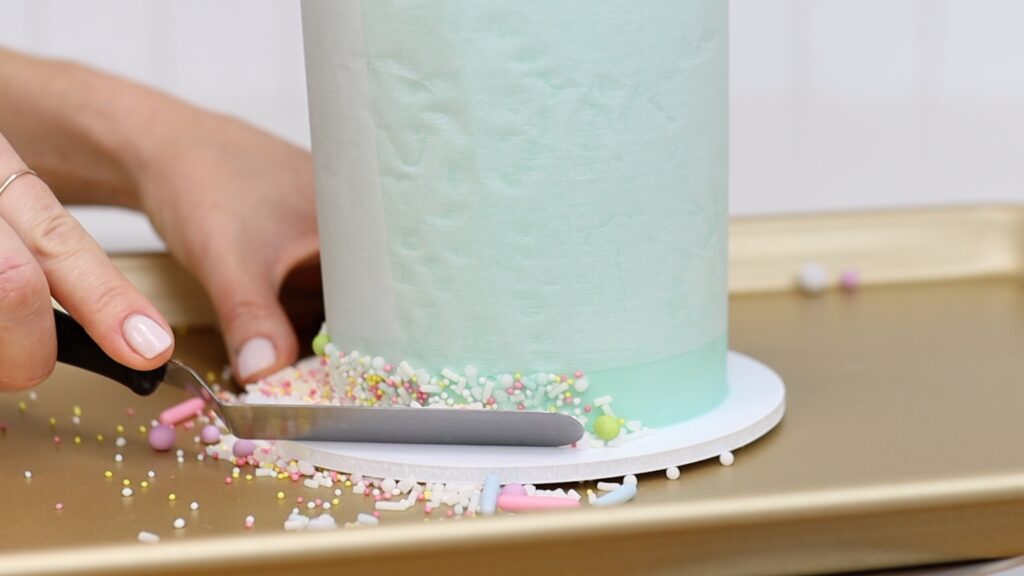
A tray or baking sheet with a rim is useful for catching falling sprinkles so that they don’t go everywhere!
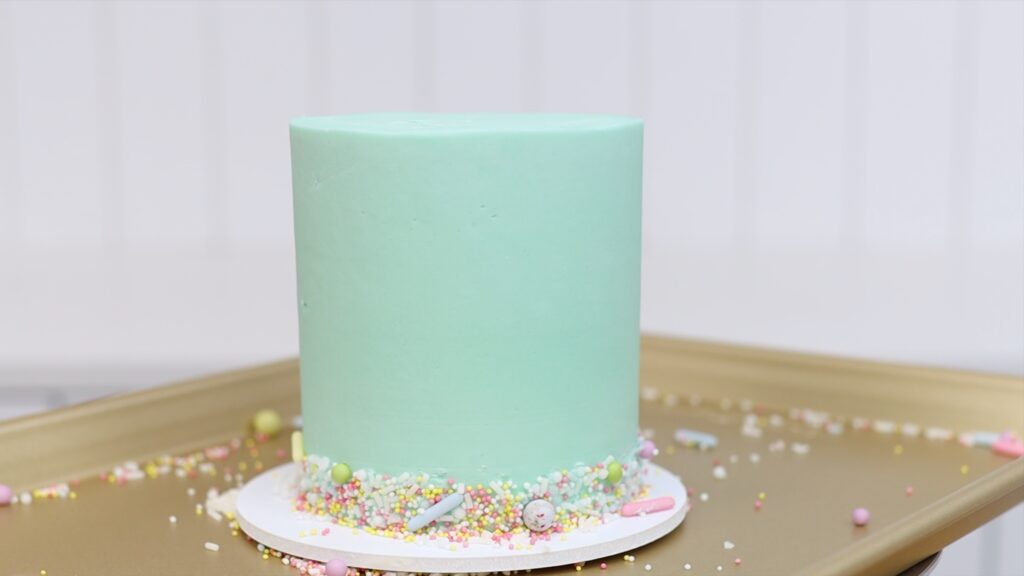
#4 Homemade buttercream stencils
Parchment is a cheap way to make absolutely any stencil design you like, by cutting a shape or design out of the parchment. If your parchment came on a roll it will curve and that’s ideal because when you wrap it around the cake it will do most of the work for you! Draw a shape and cut it out, leaving the surrounding parchment paper intact to use as your homemade stencil. Alternatively, cut little shapes out within the outline for a mosaic-style design.
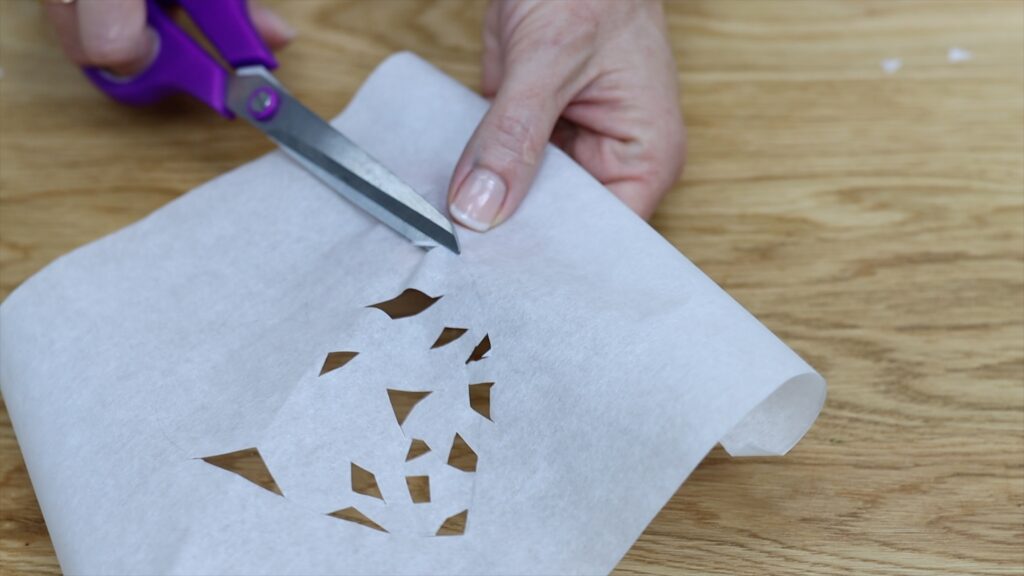
Pull the parchment tight and wrap it around the cake and press the ends of the parchment against the cake to keep the stencil flat. Spread buttercream over the stencil, being gentle so you don’t push the buttercream underneath the parchment, which will smudge the outline of the design you cut.
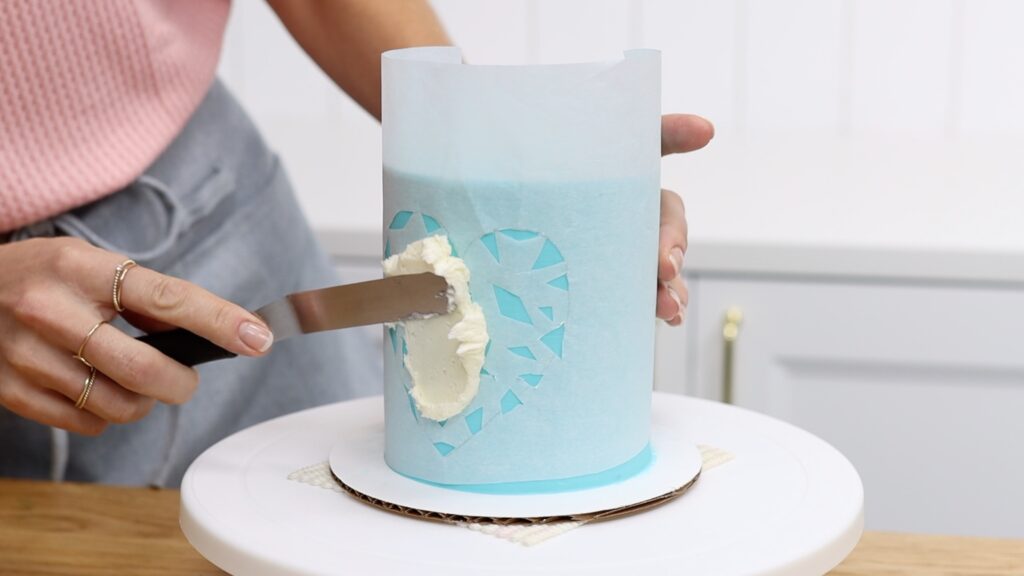
The frosting on the cake needs to have set before you wrap the stencil around it so chill the cake in the fridge for an hour first. Scrape off the excess buttercream with your
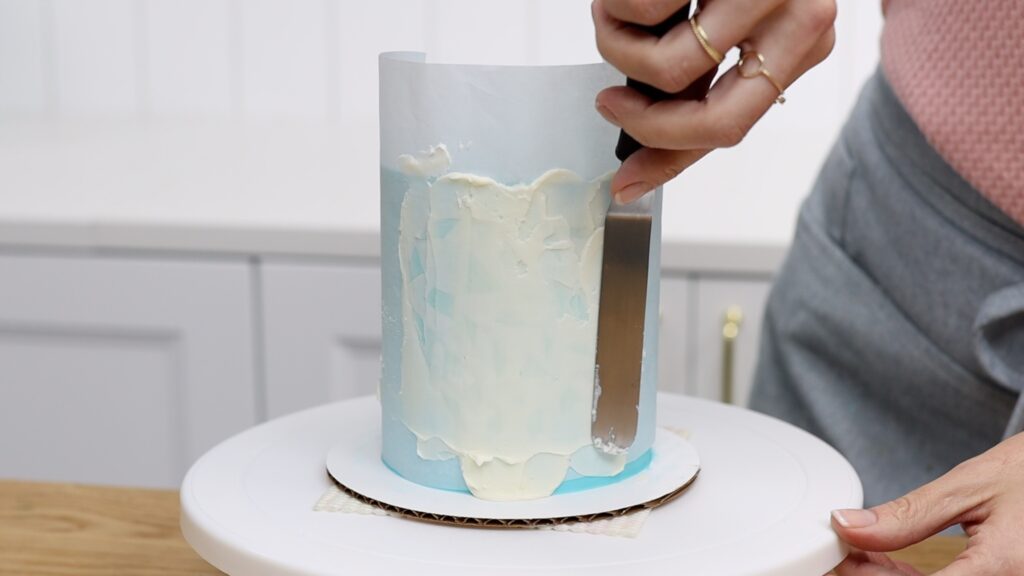
Pinch a corner of the parchment and peel it off, away from the cake, and tadaa! Parchment paper hacks like this one will save you a lot of money on expensive cake decorating tools.
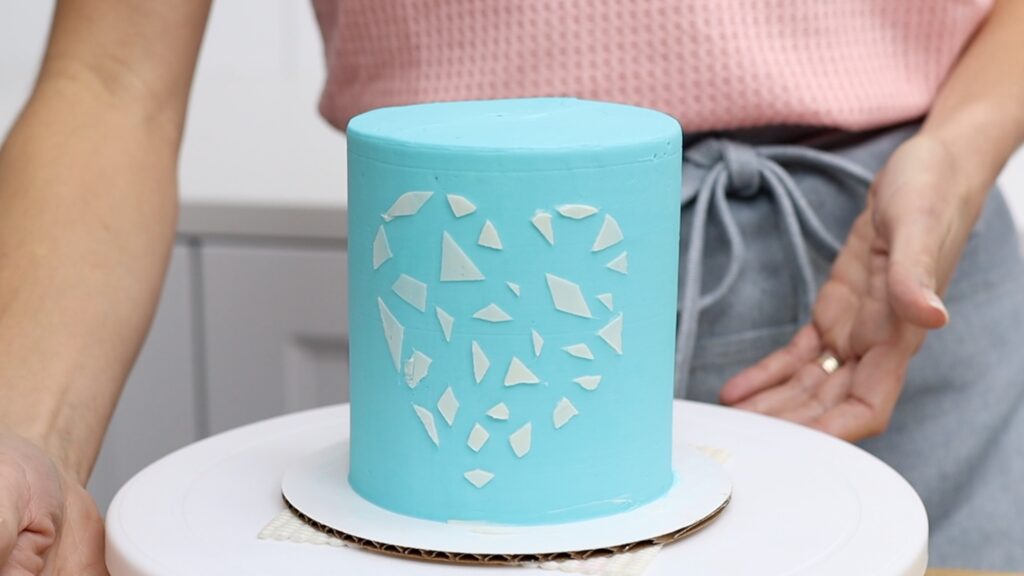
#5 Homemade sprinkle stencils
For a bit more bling, follow the same steps with a fun addition at the end. Cut your shape out of parchment, wrap it around the cake, spread buttercream over it, scrape off the excess and then peel the stencil off.
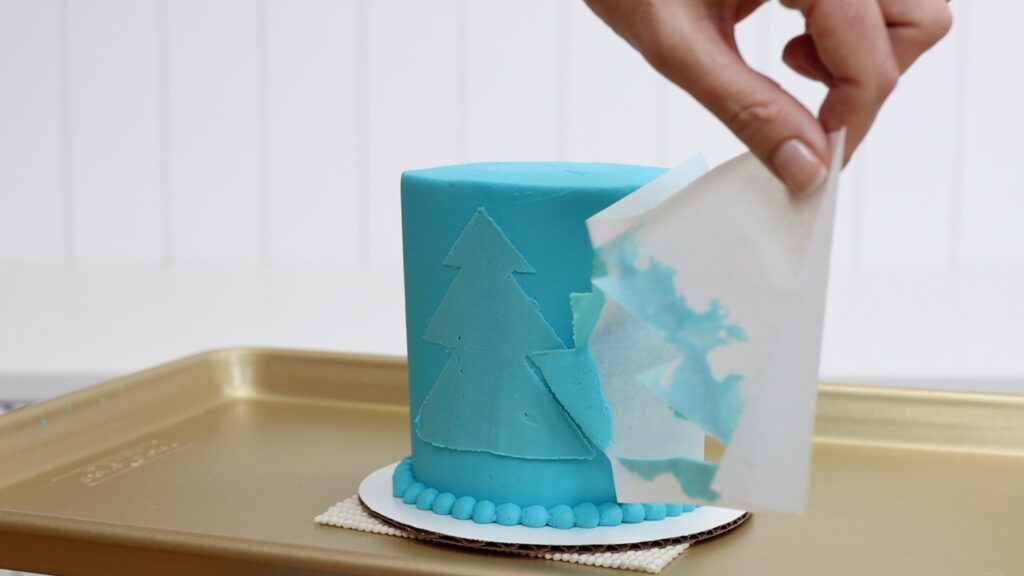
Now press sprinkles into the buttercream on the stencil. The sprinkles will attach easily since the frosting within the stencil is soft and sticky, but they won't stick to the frosting on the cake because that has already set.
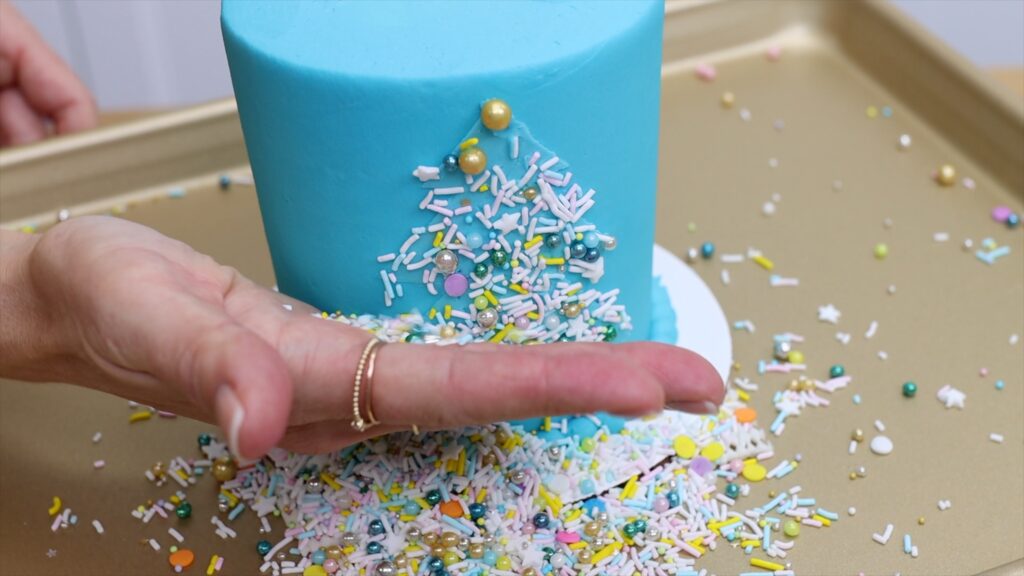
You can press the sprinkles in before peeling off the stencil but I find that the edges of the design are neater this way. You can brush off any unwanted sprinkles with a paintbrush to tidy things up. With these last two parchment paper hacks your homemade stencils will add quick and easy detail to you cake!
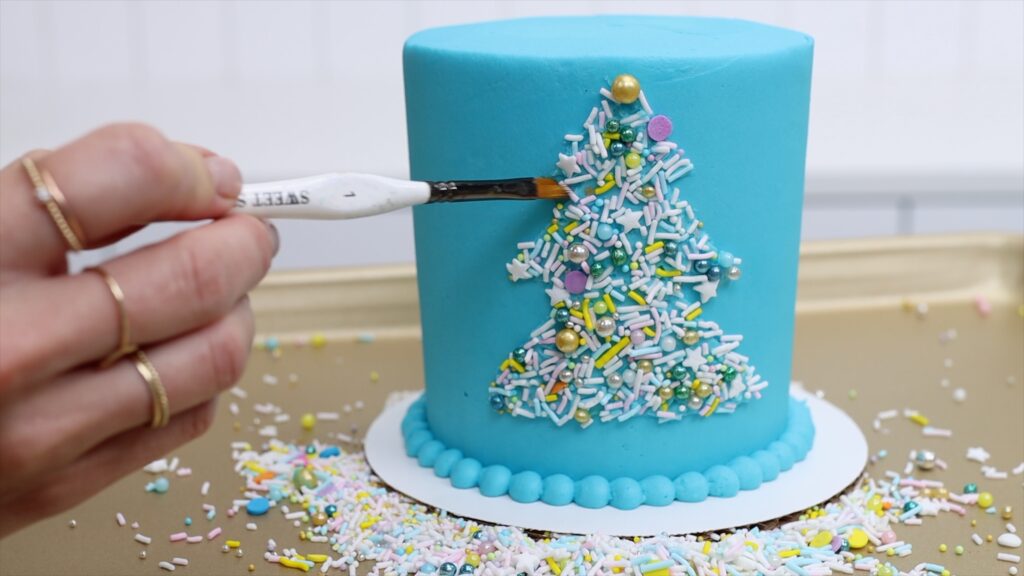
#6 Sponge painting
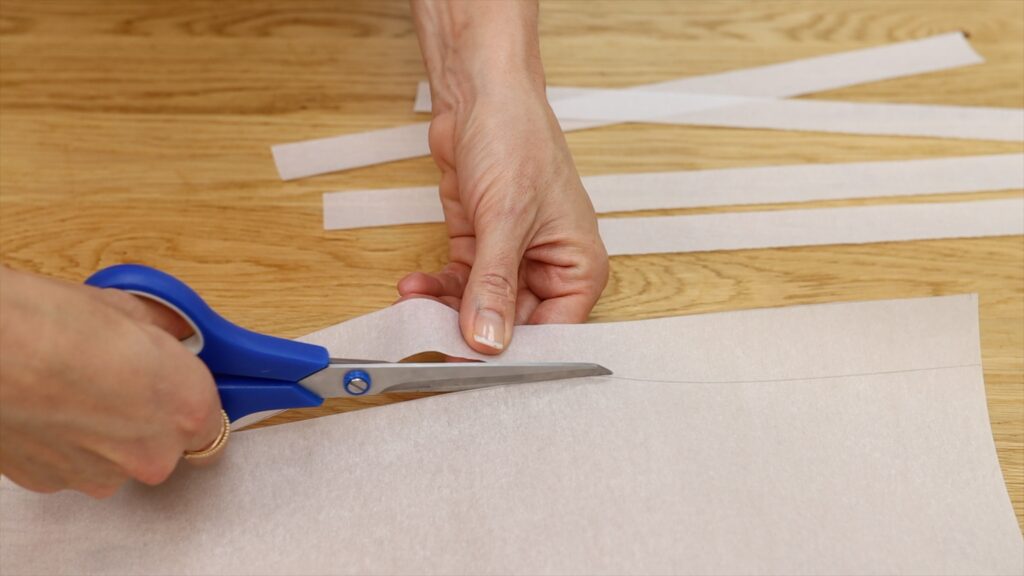
With parchment you can create patterns on a cake using a sponge painting technique with frosting! Just cut the parchment into strips or circles or whatever shapes you want to be the colour of the frosting on the cake.
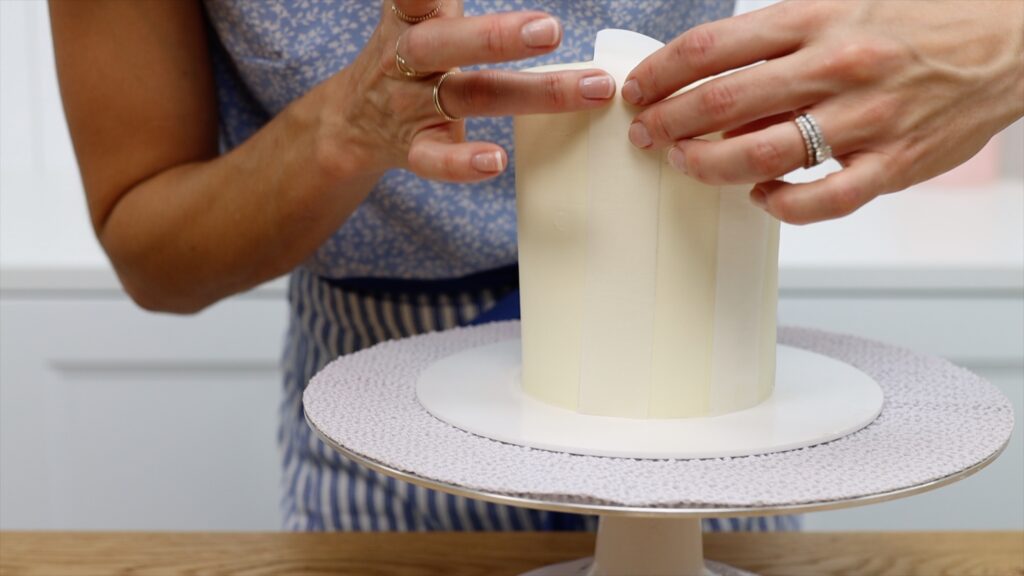
If you chill the cake first, when you take it out of the fridge some tiny drops fo condensation will form which will attach the parchment to it, or you can use pin to secure the parchment if you prefer.
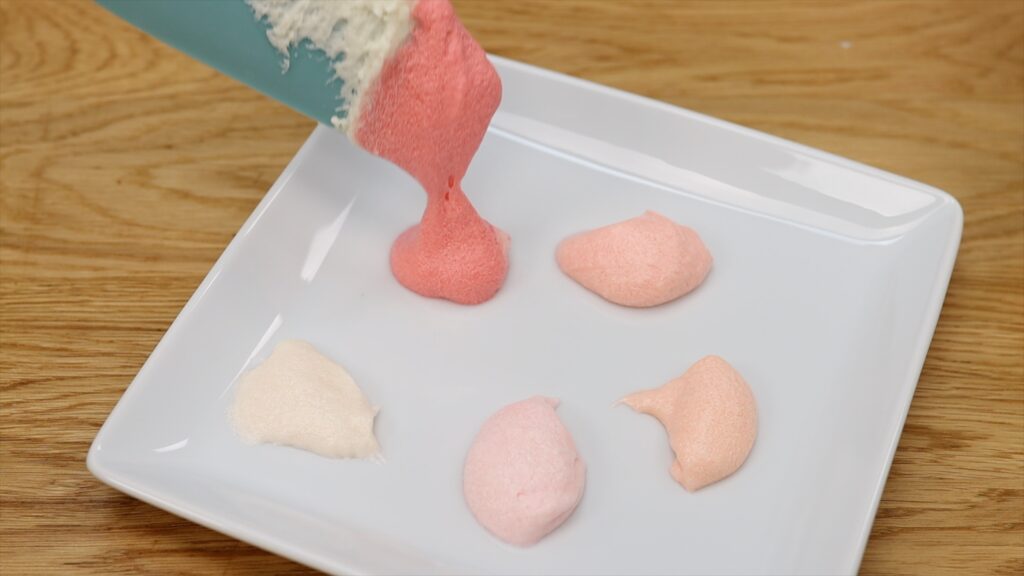
Tint buttercream or any other frosting to make “paint” and you’ll need to add milk or cream to buttercream to thin it out a bit to be able to use it for this.
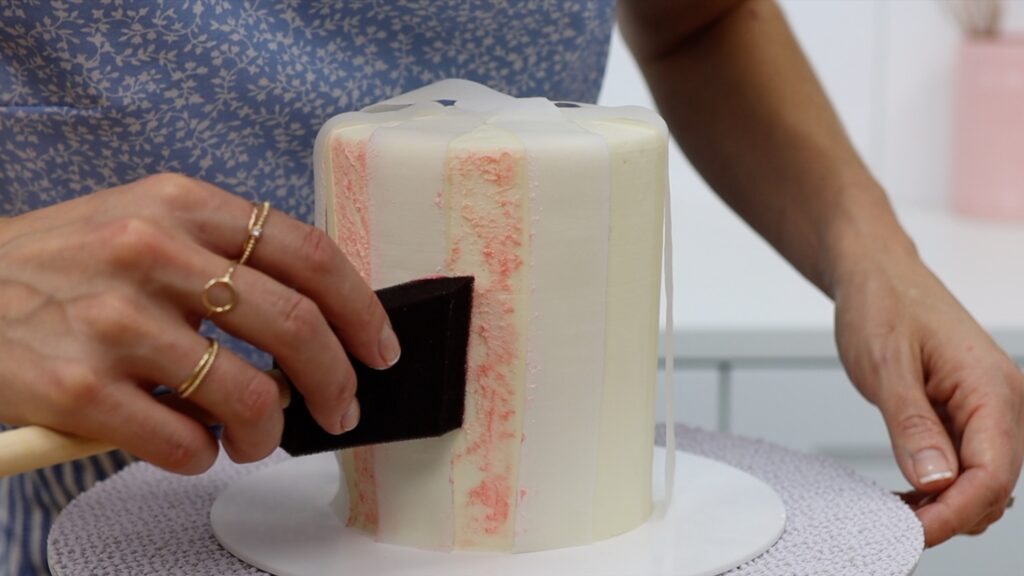
Dip a sponge into your paint and then dab it over the exposed parts of the cake and when you peel the parchment off you’ll have a colourful, slightly textured pattern!
I hope these parchment paper hacks were useful and you’ve seen some ideas you’d like to try! Tell me in the comments which is your favourite and check out my cake school for hundreds of cake designs and techniques. Join my ClubPLUS for access to every MiniCourse, MasterCourse, and Live Workshop on my cake school!
You can also watch a video version of this tutorial on 6 Parchment Paper Cake Hacks:
I’m going to show you step by step how to decorate this fun ice cream cake! It’s a much easier design than you might think and it gets a great reaction! To watch the video version of this tutorial, scroll to the bottom of the page.
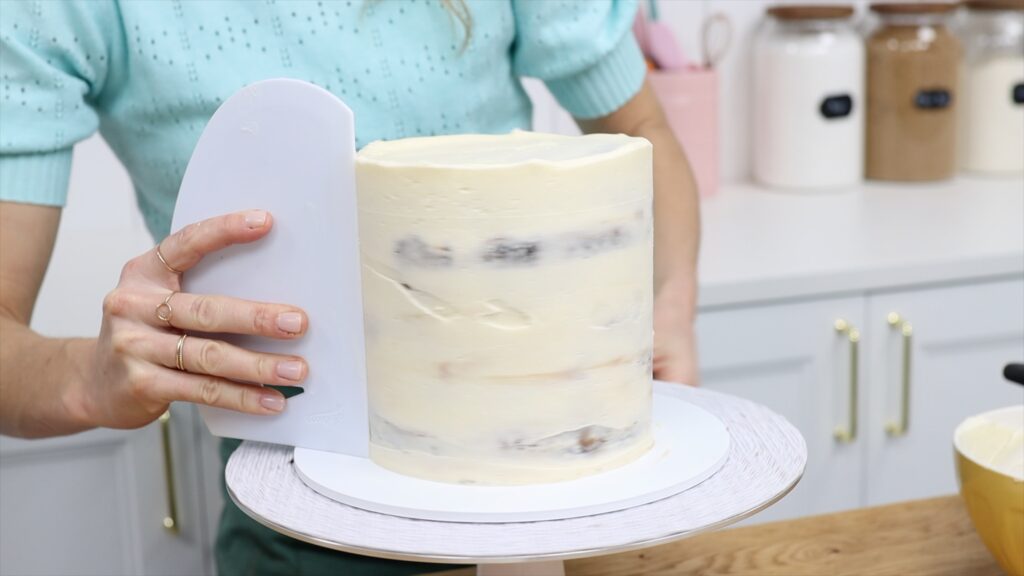
Start by assembling your cake by alternating cake and filling and then cover it with a crumb coat, which is a really thin layer of frosting that traps any crumbs that come off the cake so that they don’t get into the final layer of frosting. Let the crumb coat set by putting the cake in the fridge for about 30 minutes.
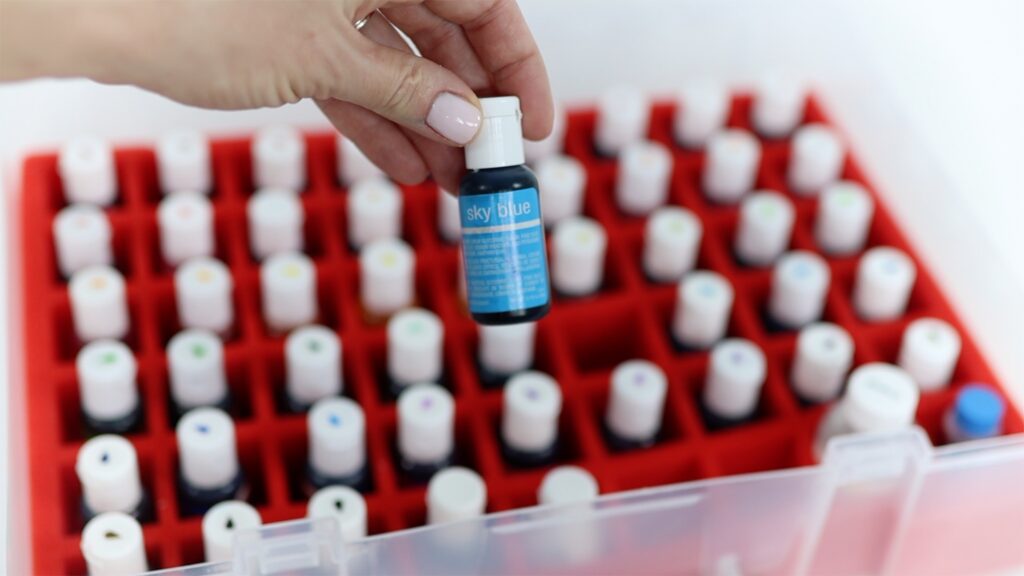
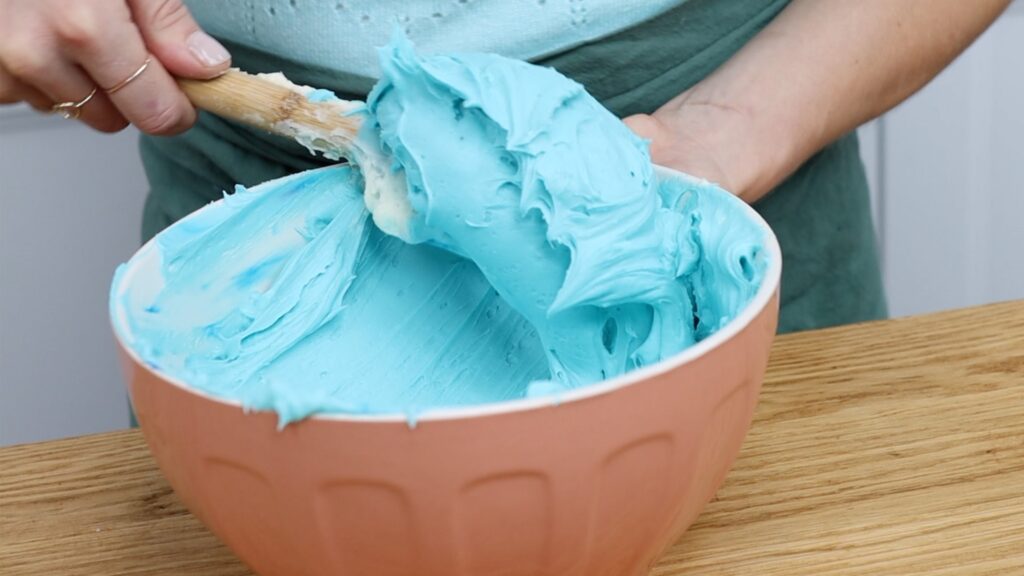
To frost my cake I'm using gel colour to tint my 4 Minute Buttercream blue. Gels are much more concentrated than liquid colours so you’ll get really bright colours with just a few drops. This case for gel colours is intended for nail polish but it’s perfect for these little bottles!
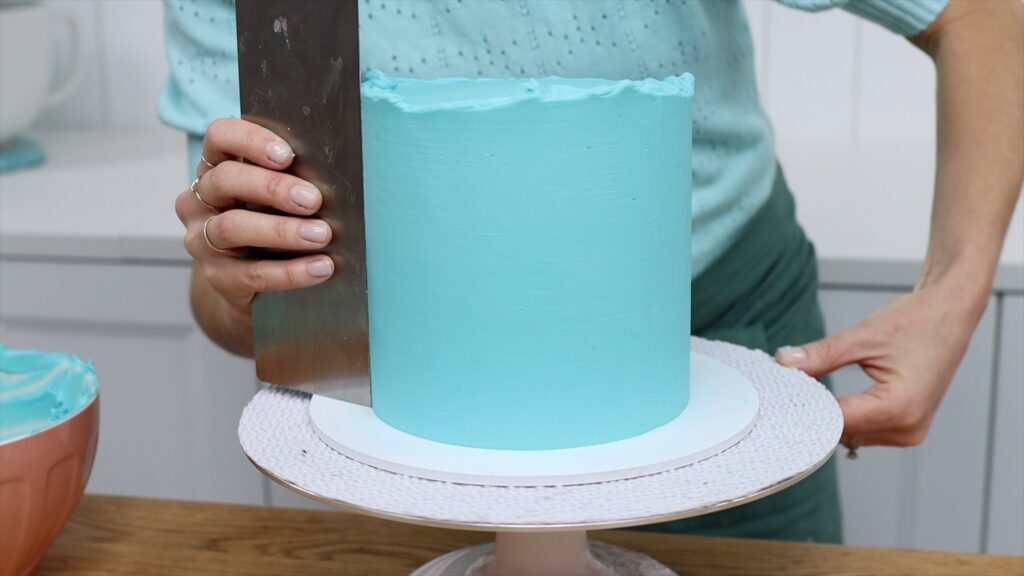
Once the crumb coat has set, spread on your final layer of frosting and smooth it with a cake comb to make nice straight sides and a level top and sharp angles from the top of the cake down to the sides. Put the cake in the fridge for another hour to set the frosting and meanwhile, prepare the ice cream cone!
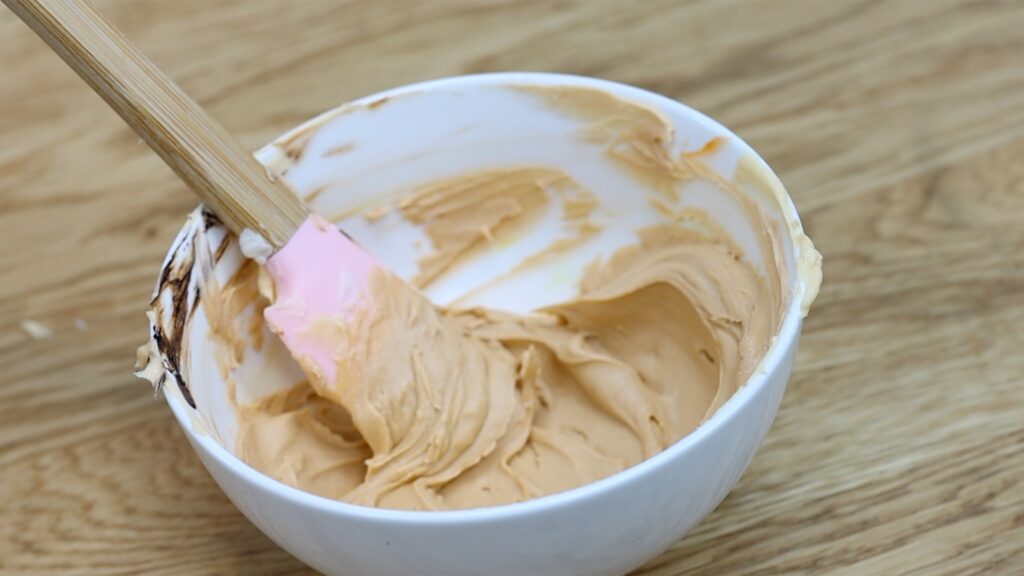
To make ice cream cone coloured buttercream I'm using a tiny drop of brown and a tiny drop of orange. You really don’t need much buttercream or much gel for the cone, just a few spoonfuls of buttercream and the tiniest drops of gel you can squeeze out of the bottle, or you can dip a toothpick into the bottle for more control over how little gel you’re adding. Add yellow to brighten the colour and brown to make it darker, until you’re happy with the colour.
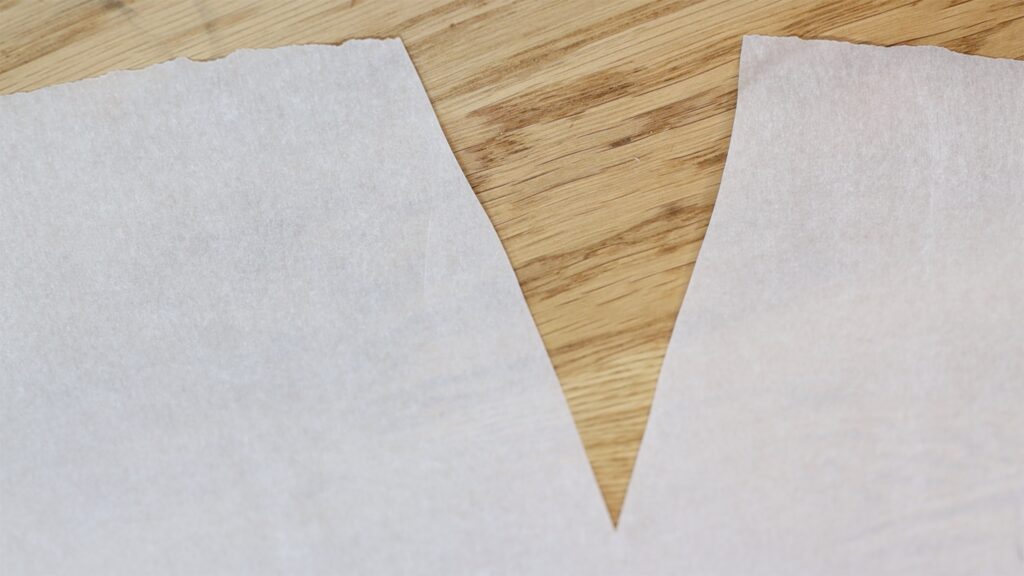
The neatest way I’ve found to make the cone is to make your own stencil, which is really quick and easy and cheap. All you need is a piece of parchment paper. Cut a triangle with the top of the cone touching one edge of the parchment so it will go like this onto the cake.
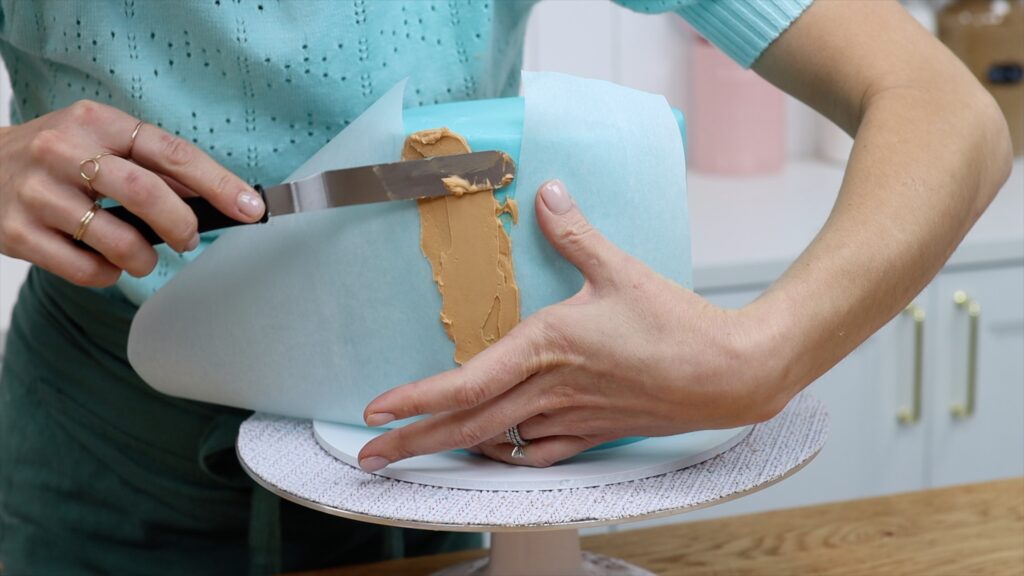
Once the frosting on the cake has set, wrap the stencil around the cake and hold it in place with your fingers. The higher you move it up, the narrower the top of the cone, and you can hold an ice cream scoop at the top to check the done is wide enough. Spread the brown frosting onto the exposed cake in the middle of the triangle, spreading up and down rather than side to side so that you don’t push the buttercream underneath the stencil by mistake, because that would smudge the edges of the cone.
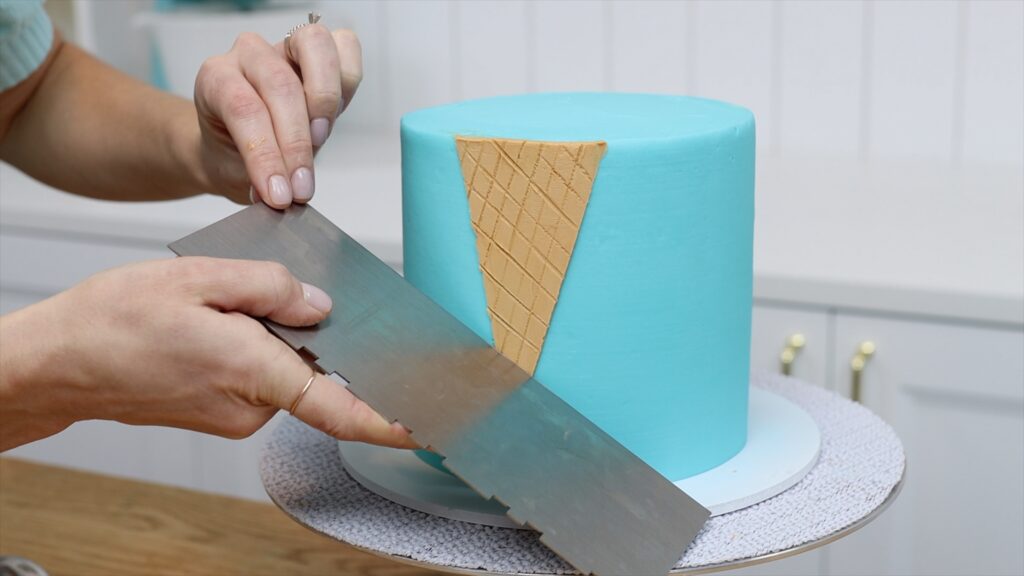
Scrape gently over the brown frosting with a cake comb to flatten and smooth the frosting and then peel the stencil off straight away, pulling it away from the cake to leave a neat triangle behind on the cake. This won't look like an ice cream cone yet, but it will in a minute!
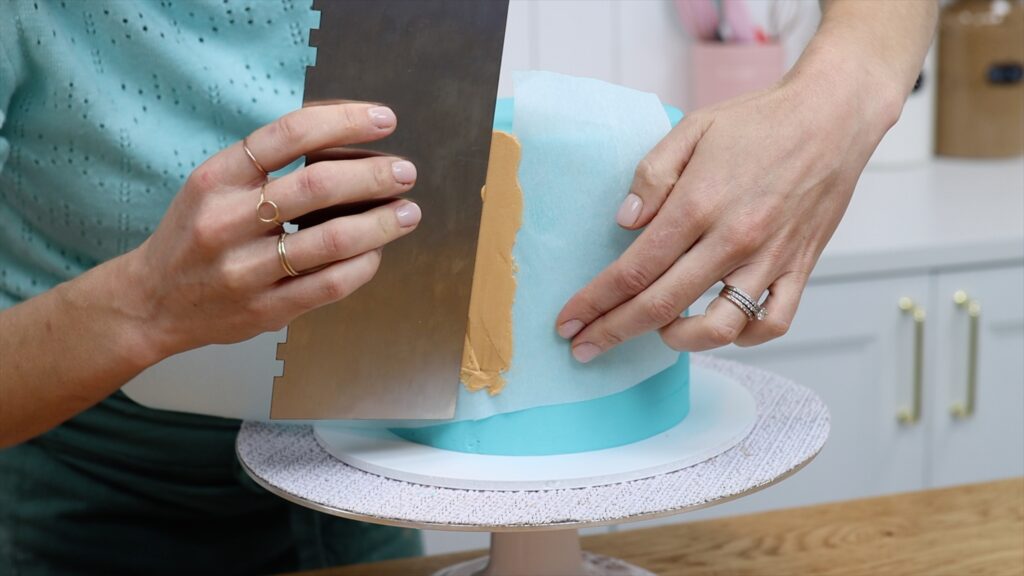
To make a waffle cone pattern, use the straight side of a cake comb to indent the brown frosting. Hold the comb it at a diagonal, working your way across the cone and making your lines are parallel and as evenly spaced as you can. Flip the cake comb around to indent lines that cross over these lines, at a diagonal as well.
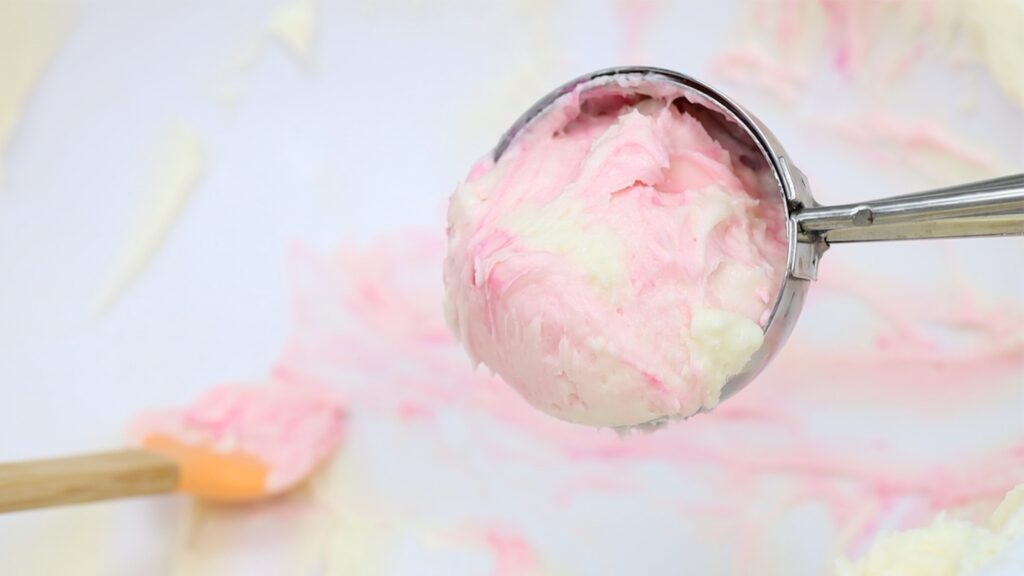
For the scoop of ice cream on top of the cone I’m using buttercream and adding pink gel but not mixing it in completely to make a sort of raspberry ripple effect. Buttercream has the same texture as ice cream but it doesn’t melt so it’s much more stable on a cake than actual ice cream. Use an ice cream scoop to scoop up a ball of buttercream just like you would if you were scooping ice cream.
Release the scoop of buttercream "ice cream" onto the top of the cake above the ice cream cone. It probably won’t look like ice cream straight away!
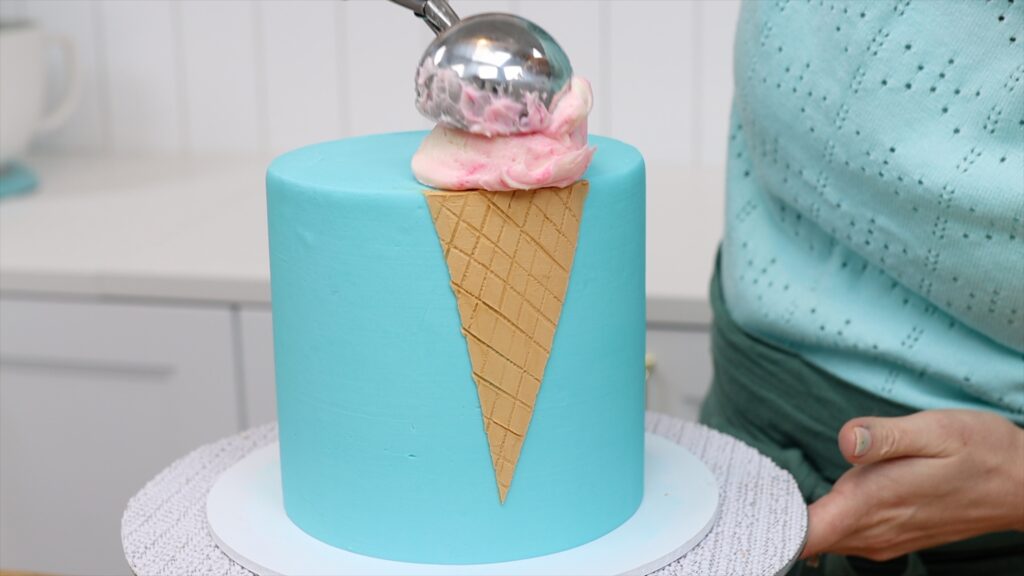
Add some texture at the bottom of the scoop by spreading on a few blobs of buttercream with an
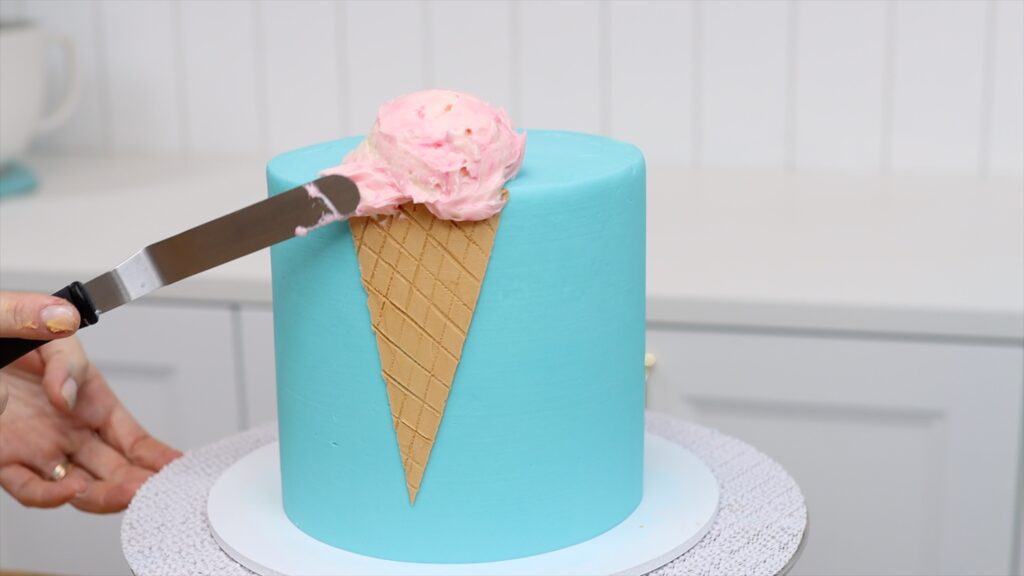
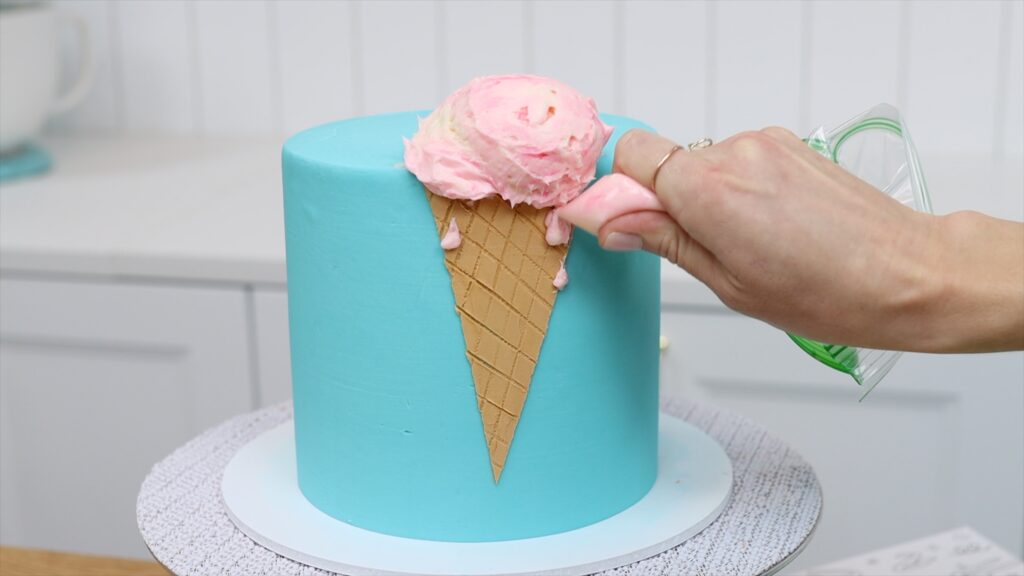
Then put a but of leftover pink buttercream into a ziplock bag (or you can use a piping bag) and cut a tiny piece off the tip to make a hole to squeeze the buttercream through. Pipe some little teardrop shapes onto the cone to look like melting drops of ice cream. You can use an
To write a message in the cake I’m using Sweet Stamp letters and you can use my code BGB10 for a discount! These letters come in lots of different fonts and the easiest way to lift the letters out of the box if to wrap a piece of tape around your finger and press that into whatever letters you want.
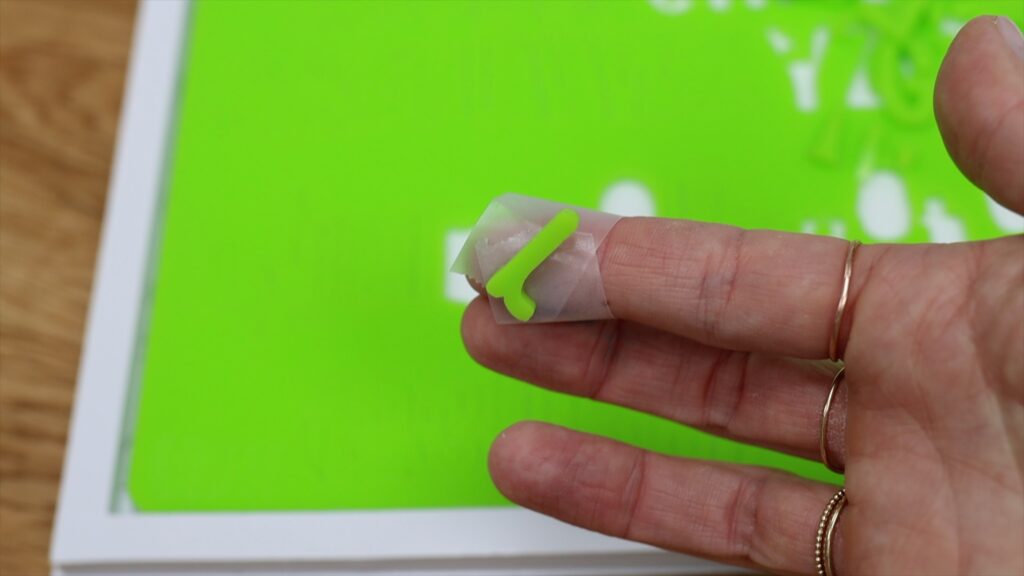
For the best results on buttercream frosting, chill the cake in the fridge to completely set the frosting, for a few hours or ideally overnight, and then leave the cake at room temperature for an hour so that the buttercream is still firm but it’s no longer cold, and that way you’ll imprint the letters when you press them into the frosting but you won’t pull off chunks of buttercream when you lift the letters off, which is what can happen if your frosting is too cold.
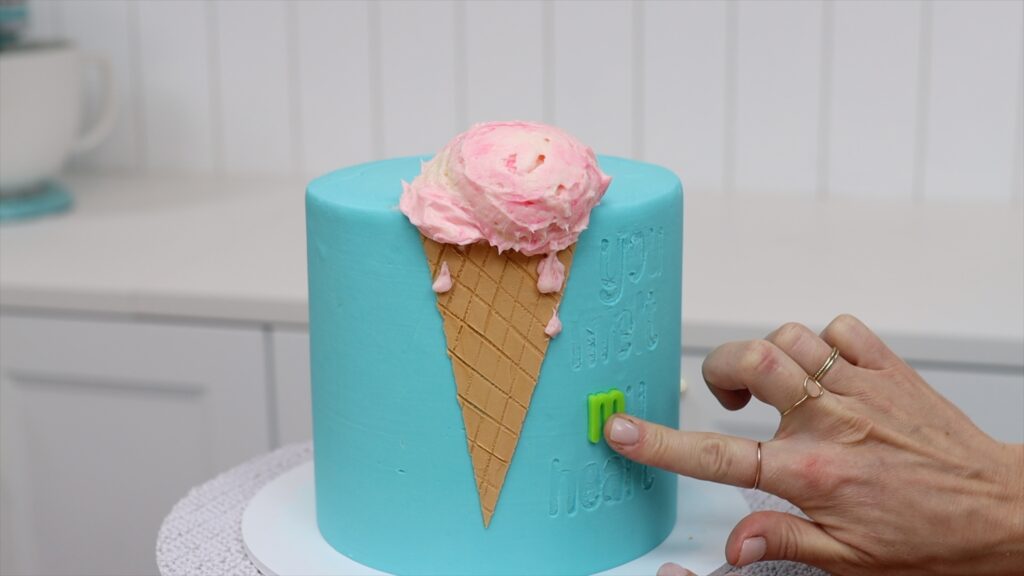
The letters don’t need to be legible at this point because you’re going to paint over them, but you want a clear outline to guide you as you paint over them. I’m using edible gold paint that comes ready-mixed in a bottle, also from Sweet Stamp, but you can make your own by mixing gold luster dust with vodka or any other clear alcohol of flavor extract.
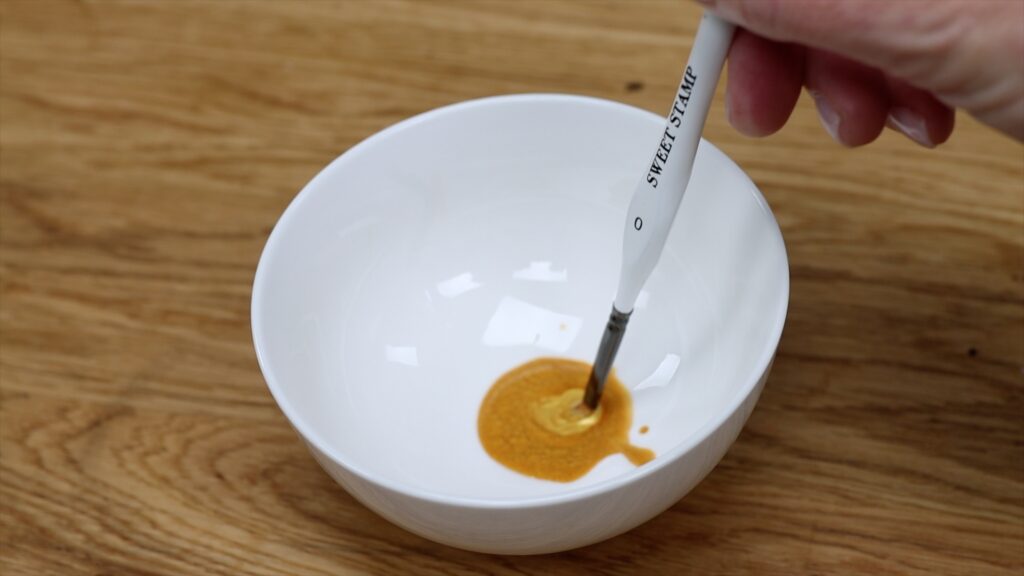
The thinner your paintbrush, the better - I started with what I thought was a small brush but quickly changed to the tiniest one I have! Sweet Stamp makes these amazing brushes too and this isn’t a sponsored tutorial - I just love their products! You’ll probably need at least two coats of gold paint to get a really bold, metallic colour, but leave the first coat to dry for 5 or 10 minutes before painting on the next coat.
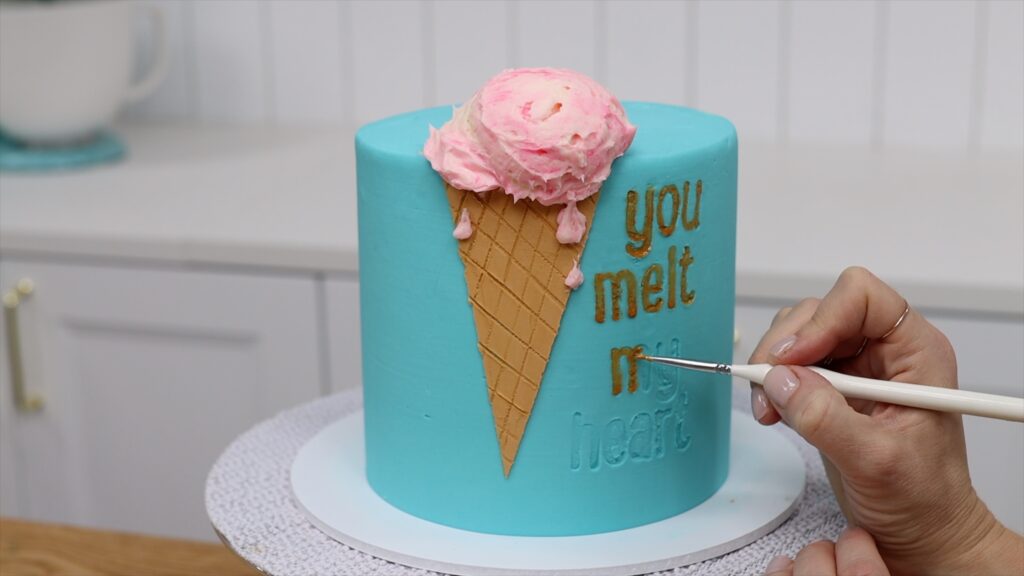
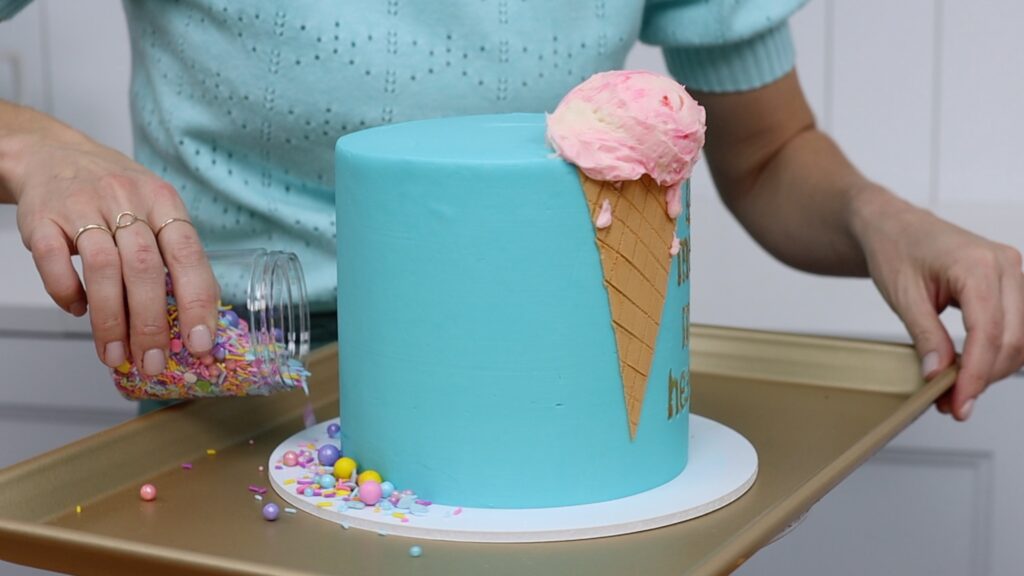
For a burst of colour add a sprinkle border! Place the cake on a tray to catch any bouncing sprinkles and make the cleanup easy. Pour sprinkles onto the cake board all around the cake and then press them into the bottom inch or so of the cake, using an
Paint over the letters again if you need to and you can see that the colour is much more eye-catching and shimmery now. Quick warning about the ice cream scoop: it’s heavy and can make the frosting droop or crack so keep the cake in the fridge until 4 hours before you serve it.
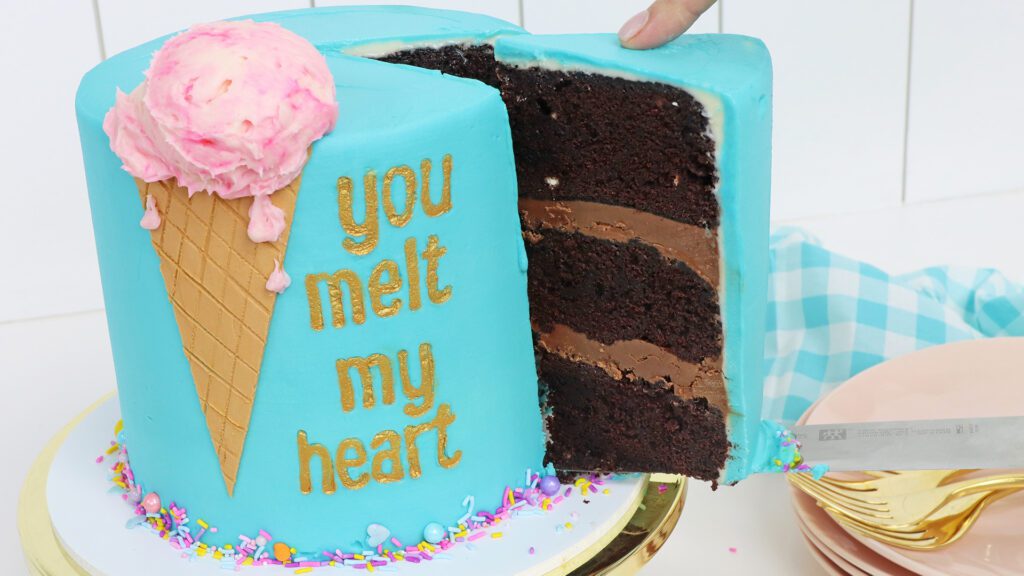
There are lots of ways to create messages on cakes - check out this tutorial on 4 ways to write on cakes. If you’ve enjoyed these step by step instructions you’ll LOVE the MiniCourses on my cake school! I teach hundreds of cake designs and techniques and if you join my ClubPLUS you’ll get access to them all!
In this video I’m going to show you 4 ways to write on cakes, to personalize them with messages and I’m going to use some fun Valentines Day puns for these examples!
To watch the video version of this tutorial, scroll to the bottom of the page.
For the first two techniques I’ll use my 4 Minute Buttercream and a piping bag. You can use any kind of frosting for this like whipped cream or ganache or meringue buttercream. I use gel colours because they’re very concentrated so they’re great for bright and bold colours.
#1 Piping: Handwriting
Any small round piping tip will work for this first technique - this is a #8. You can free-hand your letters onto your cake but I like to find a font I like, to mimic, which you can do on google images and save it to your phone to refer to, or search for a font generator and type in your word or sentence and then choose a font. You can save it on your phone or print it - whichever is easiest for you.

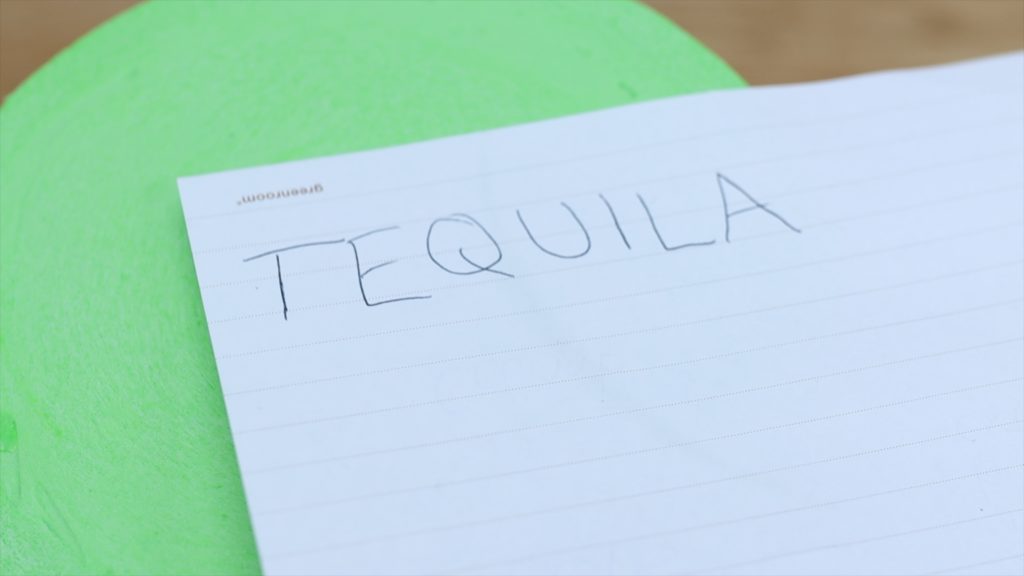
Before I write on a cake I write my word on paper so I can see what the size and spacing looks like on the cake. This is perfect and now I know that if I pipe the letters this size, they’ll fit onto the cake because they did when I wrote them that size on a piece of paper.
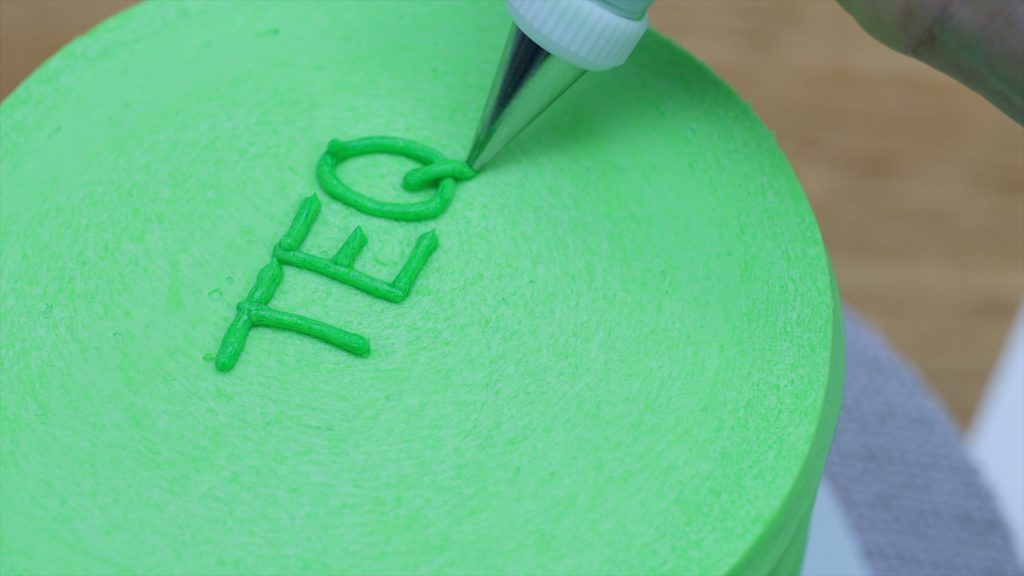
Having your cake on a
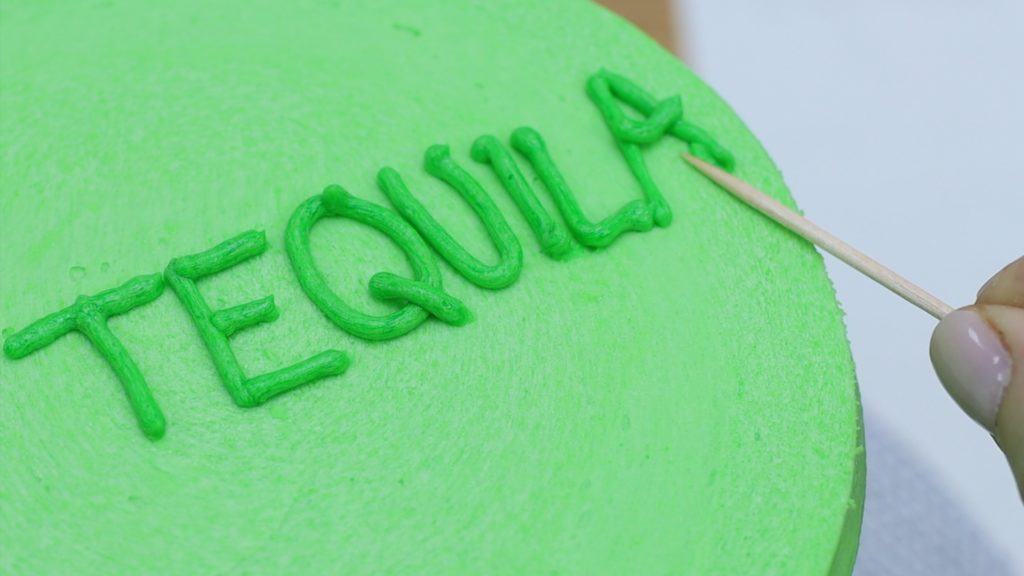
You can use a toothpick to adjust the shape of a line if you want it to be longer or shorter or straighter, like this.
For the rest of the words I’m referring to the sentence I typed out in a cursive font earlier, simplifying it because my cursive is terrible! You don’t have to have neat handwriting on paper to be able to write neatly on cakes - they’re totally different skills and practicing on cakes will make your writing neat even if your normal handwriting is sloppy. (Although I should mention that writing like this on the top of a cake is MUCH easier than writing on the side of a cake!)
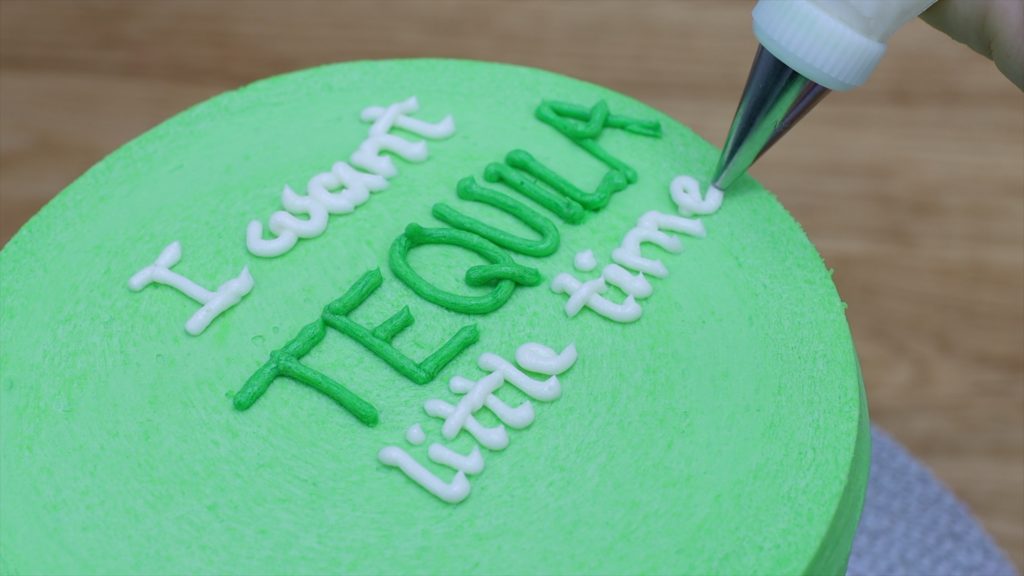
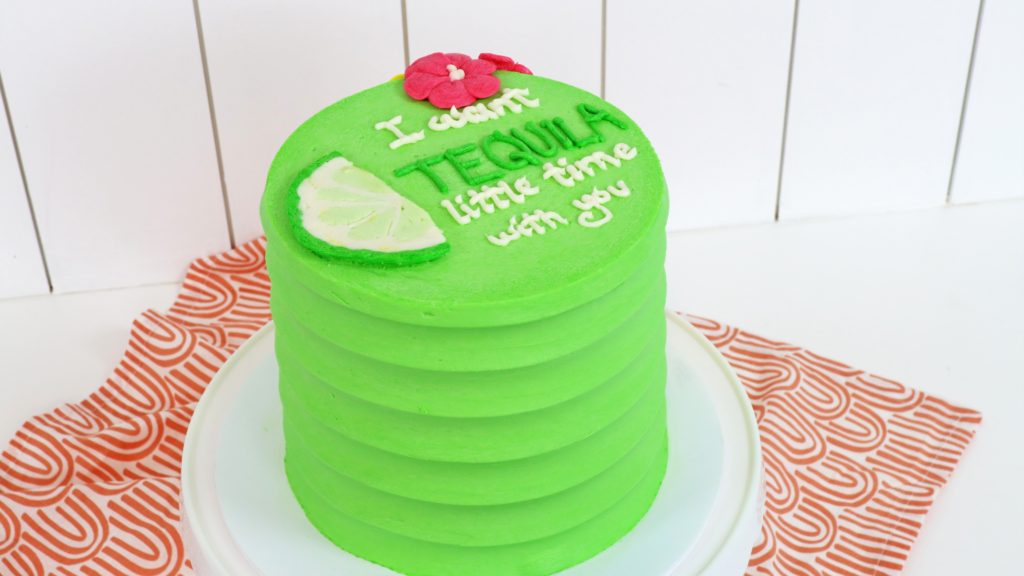
My writing is aligned to the right of the cake because I’m going to add a decoration on the left, and voila! A neat, legible message that’s quick to write AND delicious to eat!
#2 Piping: Pointillist
If you’re not confident about writing letters, try this next technique instead. Start by outlining your letters, and capital letters will be the most legible for this. You don’t have to outline the entire letter, just the first line of each letter will help guide you as I pipe, and these lines will help you keep each letter the same height and also make sure the words are straight on the cake.
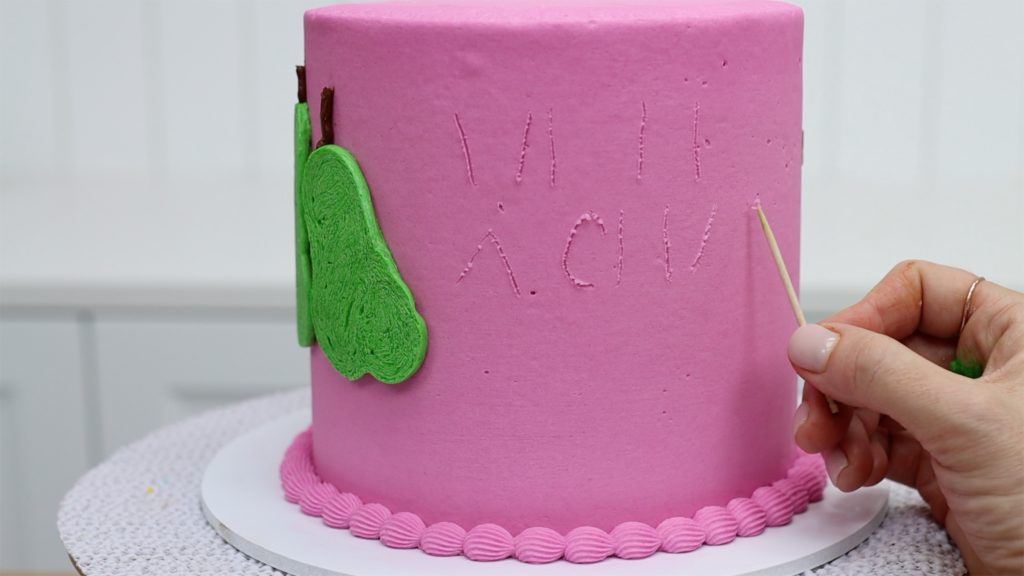
Now use a piping bag with a small round tip like this #3 to squeeze out dots all along the lines of the letters, free handing the lines that you didn’t outline with the toothpick. The closer together you pipe the dots, the neater the letters will be.
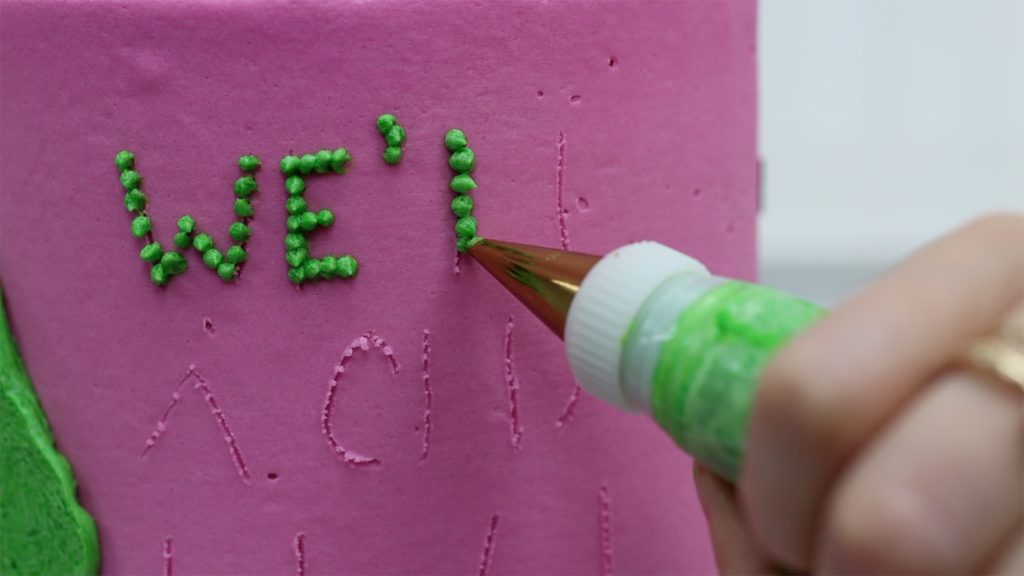
Try to hold your piping bag at the same angle as you pipe so that the tips of the dots all point in the same direction. If you have a long message like this, you’ll need to squeeze and release the piping bag hundreds of times as you pipe the dots and it will get tiring so here are three tips to make it easier: First, make sure your buttercream isn’t too stiff because you’ll have to squeeze the bag much harder than if the buttercream is a bit runnier, by adding a bit more milk to it. Second, twist the top of the piping bag to push the buttercream down into the bottom of the bag and that way, you won’t need to push as hard to pipe it through the tip.
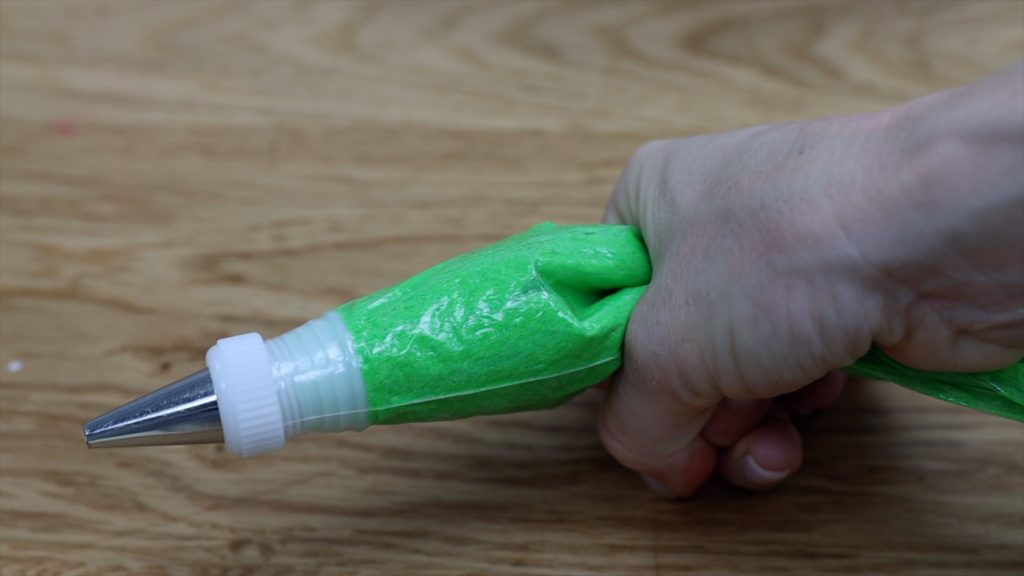
Third, take breaks when you get tired! It’s fine for some of the dots to set before you pipe the rest - it doesn’t all have to be done at once.
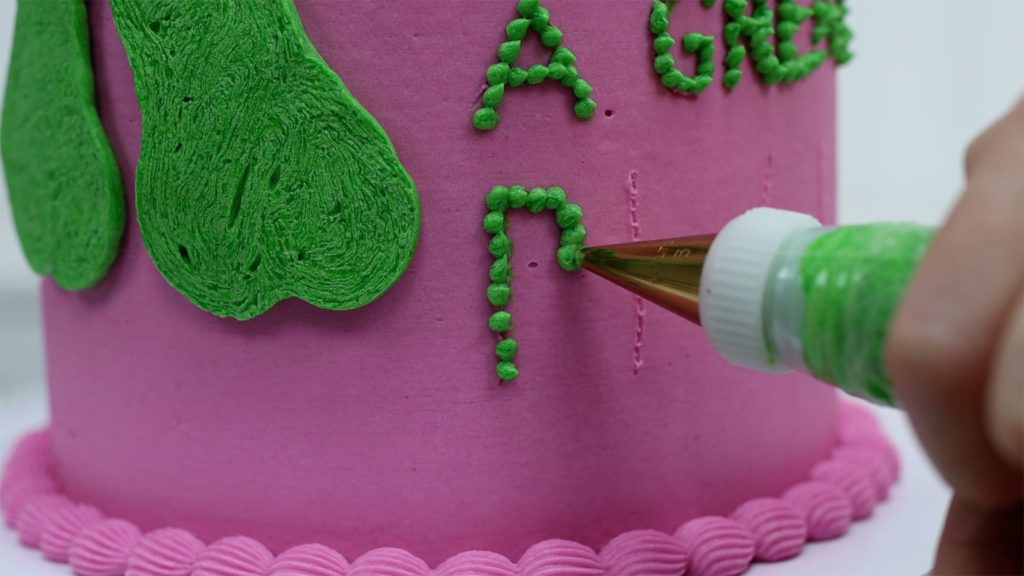
This is a great technique if you have quite a lot of space for your message, so you can pipe large capital letters, which are the easiest to read.
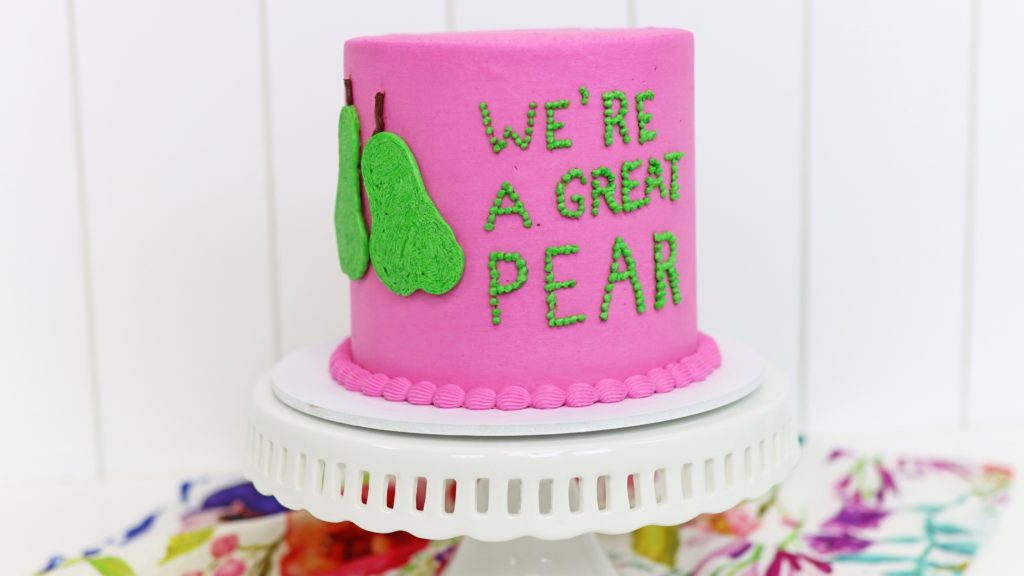
#3 Imprinted & Painted Lettering
For this next technique you’ll need a letter set. This is made by Sweet Stamp and you can use my code BGB10 for a discount! Wrap your finger in tape with the sticky side facing outwards and press it into the letters you want to pick up.
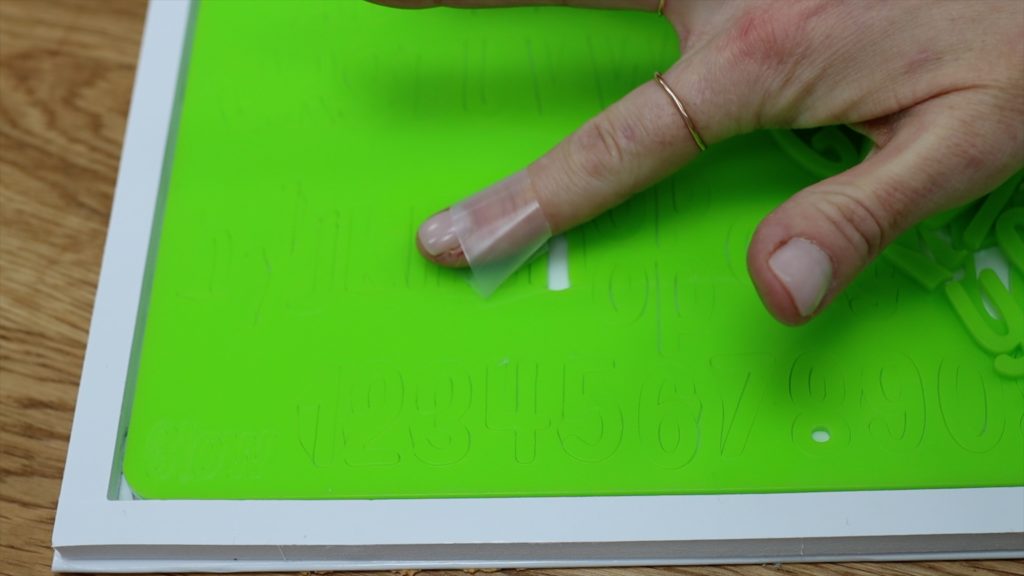
Press each letter into your cake. The best time to do this with buttercream is after chilling the cake for a few hours in the fridge so the frosting is very firm, but then leave the cake at room temperature for an hour so that the frosting is still firm but not cold. This will give you the neatest outline of the letters.
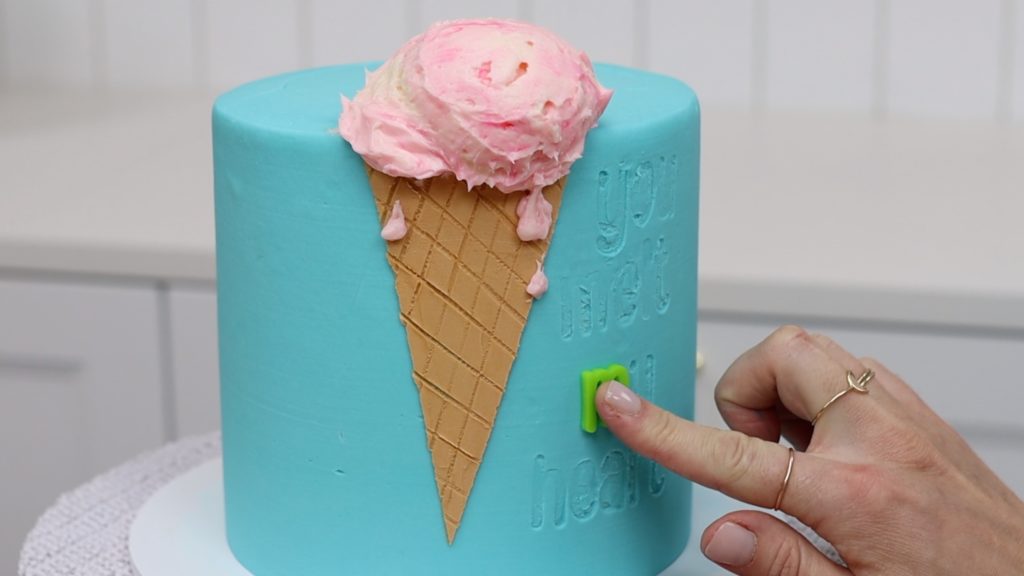
Use edible paint to colour the letters or you can mix luster dust with vodka or any other clear alcohol or flavour extract, to make your own edible paint. Use the thinnest paintbrush you have for the neatest painting, and if you accidentally paint outside the lines of a letter you can use a clean paintbrush dipped in water or vodka to brush over that smudge.
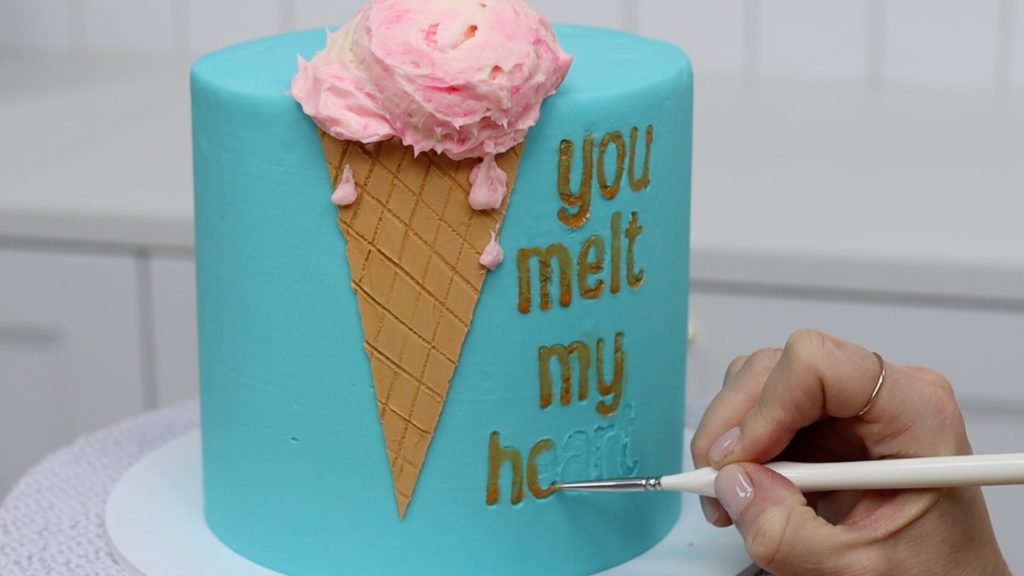
You’ll probably need to paint on two layers to get a really bold, metallic colour. This is the easiest way to get perfect fonts on the top or the sides of a cake.
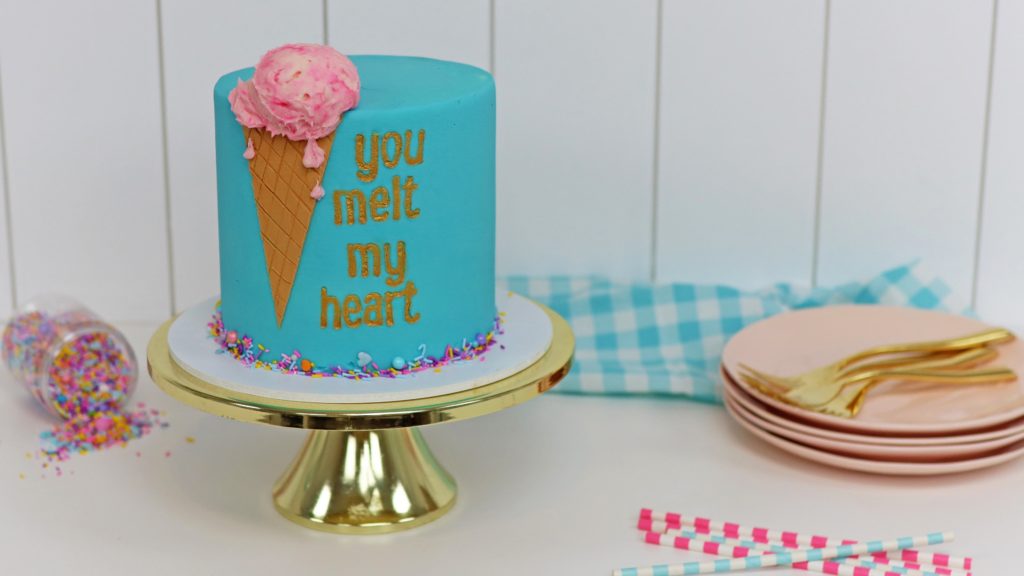
#4 Chocolate Letter Mold
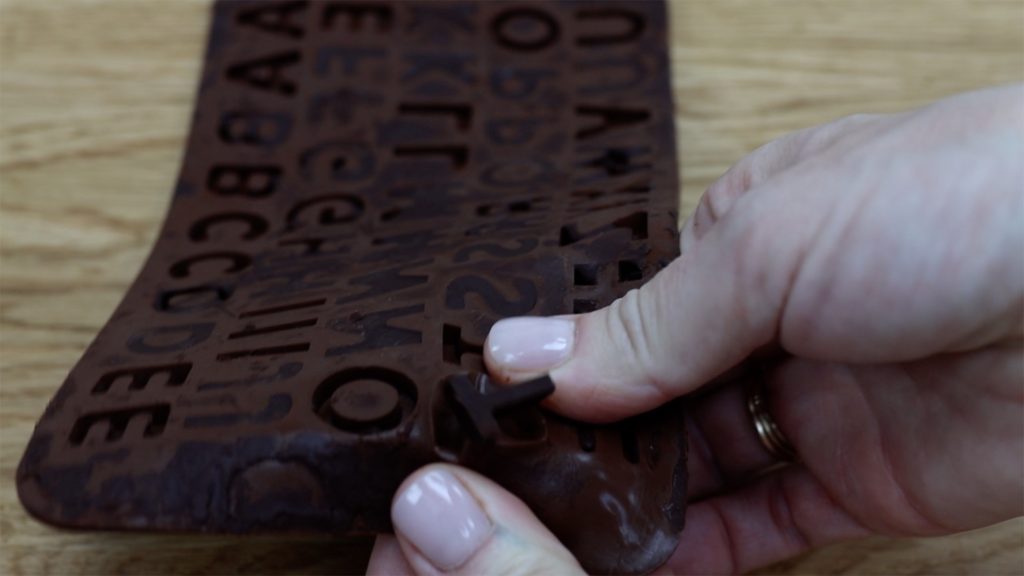
For a cheaper option than buying letter sets, melt chocolate chips or colourful candy melts and drizzle the melted chocolate into a letter molds, making sure you fill in all the letters you need for your message. Nudge the chocolate into the letters with a spoon to make sure the chocolate goes all the way down to the bottom of the letters, to prevent air pockets.
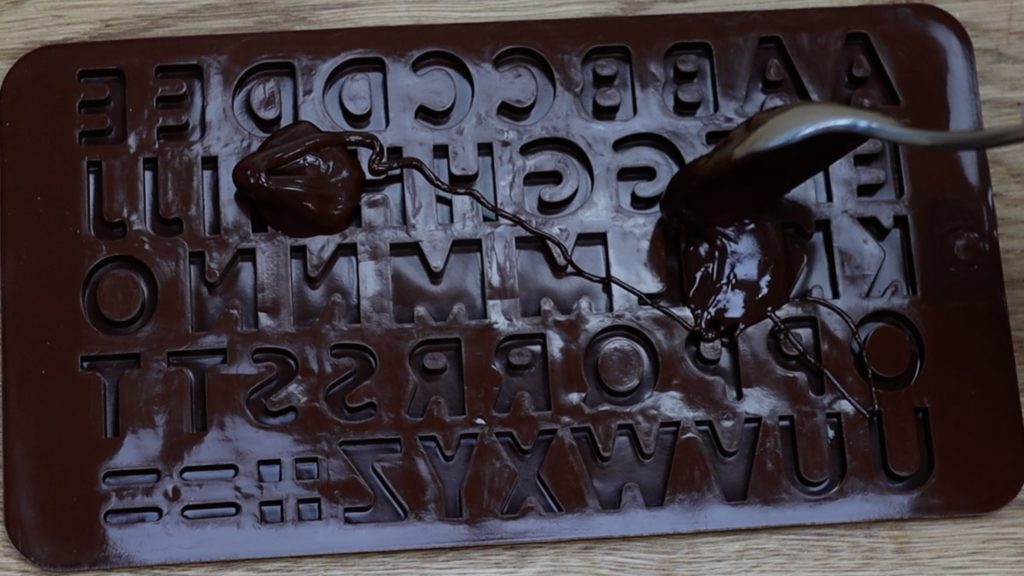
Scrape off the extra chocolate with an
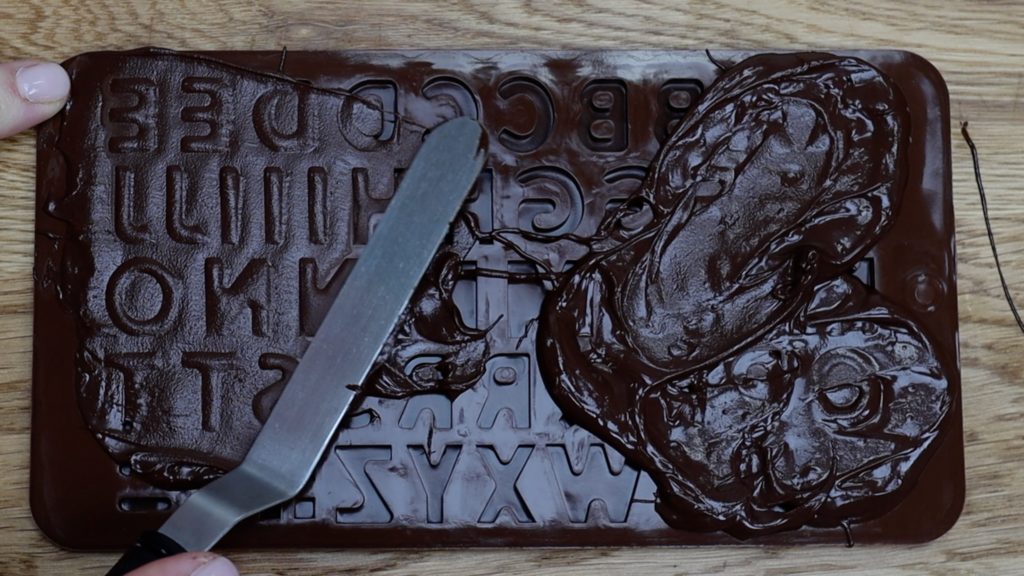
Put the mold in the freezer for 10 minutes or the fridge for 30 minutes and then push the letters out, pulling the mold away from each side of a letter and pushing up with your fingers from underneath the mold. Your hands will get covered in chocolate so if you want to keep them clean, wear gloves for this! I suggest placing them on a piece of parchment paper so that they don’t stick to table or wherever you put them.
Straight afdter frosting your cake, while the frosting is still soft and sticky, pick up the chocolate letters and push them into the frosting and they’ll attach easily. If you miss a letter just re-melt the chocolate, spoon it into the mold, chill it and pop that letter out!
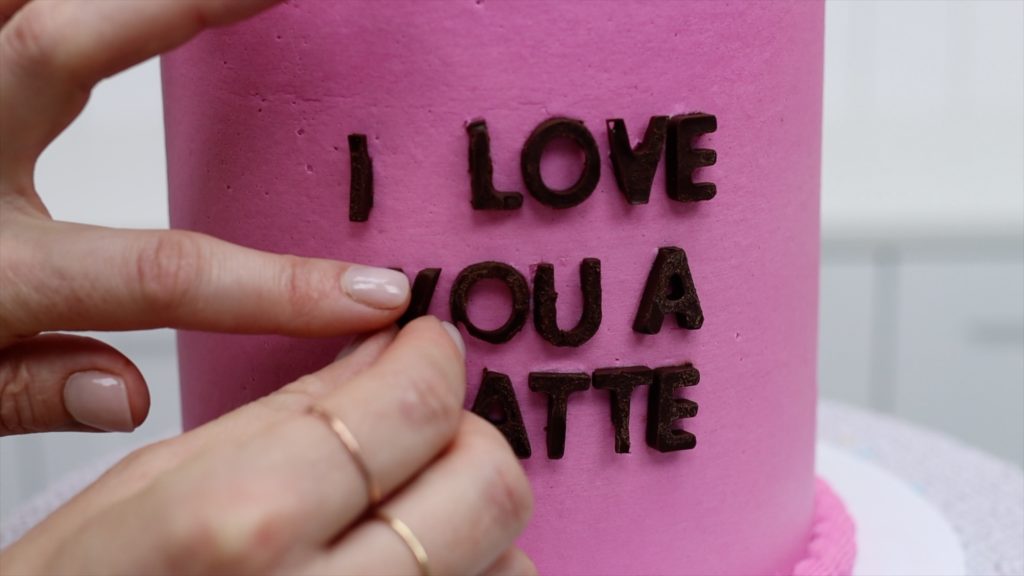
This is a cheap and delicious way to write in whatever font you choose!
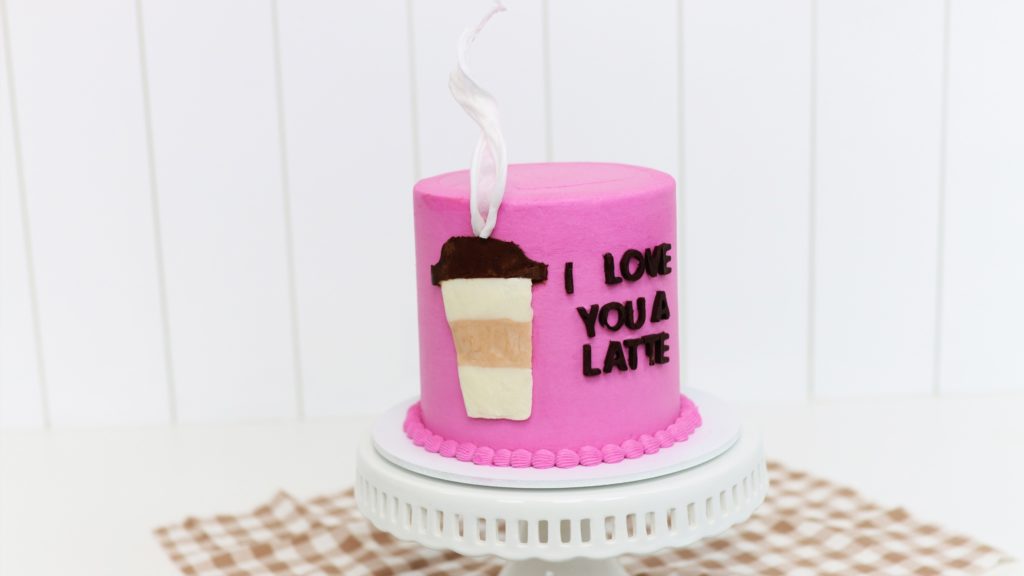
So, which way is your favourite? Tell me in the comments! This is one of the things I teach in my online course on 50 Easy Cake Decorating Techniques, which you'll find on my cake school, or join my ClubPLUS for access to every MiniCourse and MasterCourse and Live Workshop!
Smooth frosting is easy when you know what mistakes to avoid. In this tutorial I’ll show you each mistake, explaining how to avoid or fix it!
If you prefer to watch a video of this tutorial, scroll to the bottom of the page.
Mistake #1
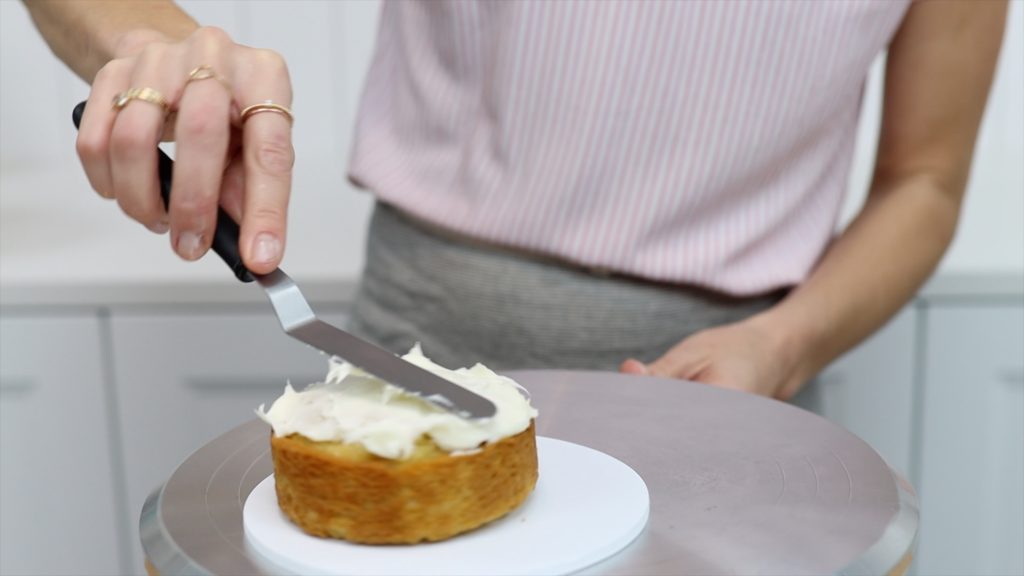
The first mistake is to put your cake board straight on a
Mistake #2
Not using buttercream as glue. If you place your cake straight onto your cake board, there’s nothing attaching it to the cake board so where you spread on your filling and frosting, the cake is going to wobble around and tall cakes can even topple over with the pressure from your
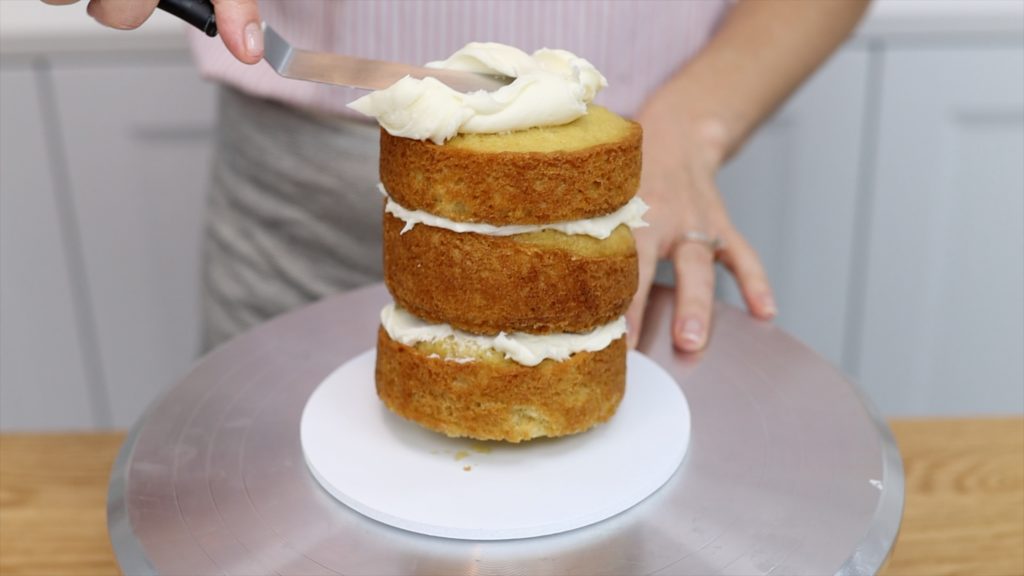
Solution: Spread or pipe a generous dot of buttercream onto the middle of the cake board and press your first layer of cake down onto the dot, which will act as glue and attach the cake to the cake board so it doesn’t move around.
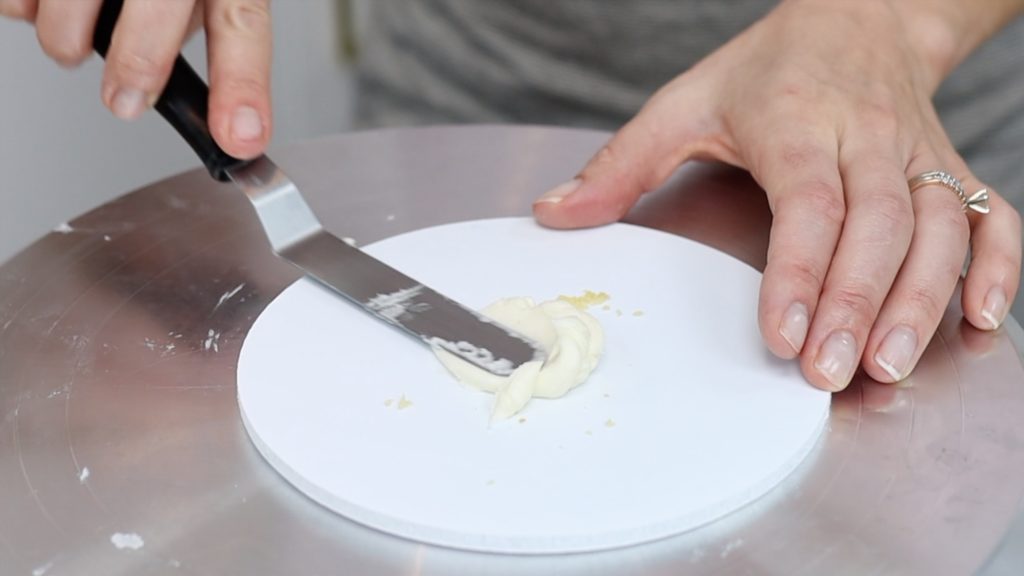
To stop the cake board from sliding around, use a non-slip mat or a ring of masking tape to stick the cake board to the
Mistake #3
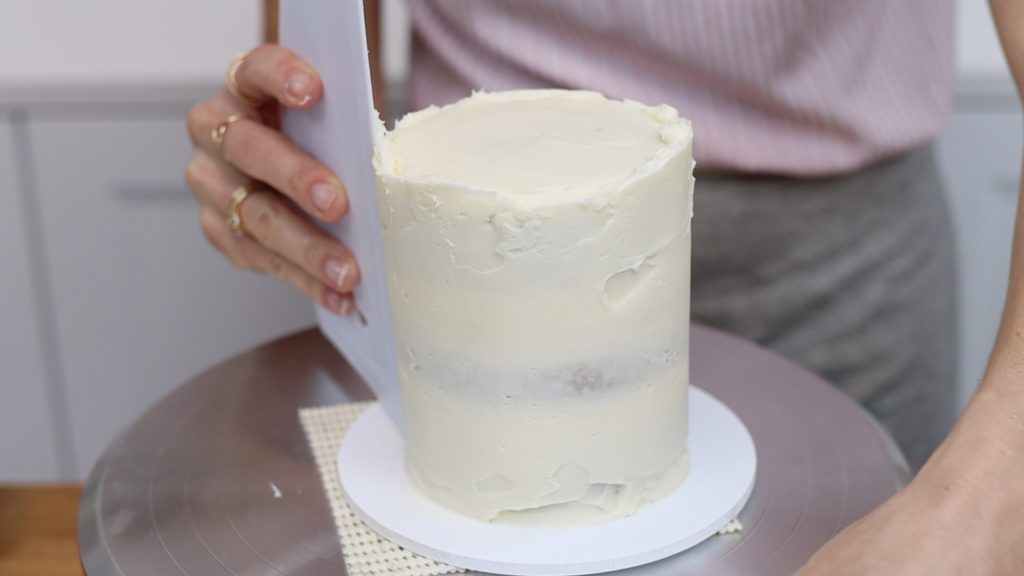
If you choose to frost your cake when the layers are at room temperature, the cake will wobble around, even though it’s attached with a dot of buttercream on the cake board and there’s a non-slip mat on the cake board.
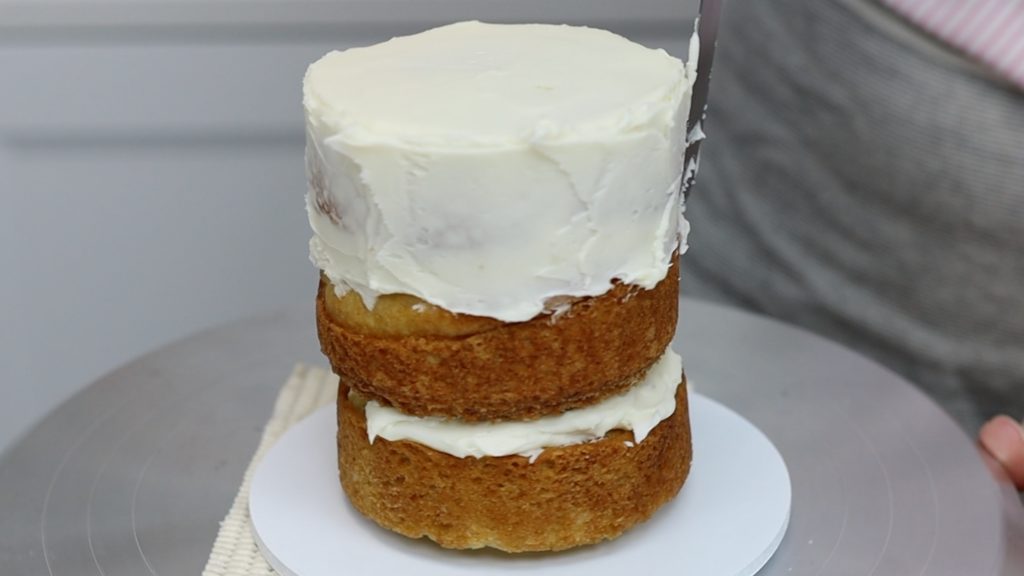
Solution: Compare this to a cake that’s been chilled in the freezer for just 15 minutes before frosting - the cake layers firm up so the cake doesn’t wobble around, AND since the layers are firmer, they’re less crumbly which makes frosting easier and neater. The cake layers will still be moist and delicious when they warm up to room temperature.
Mistake #4
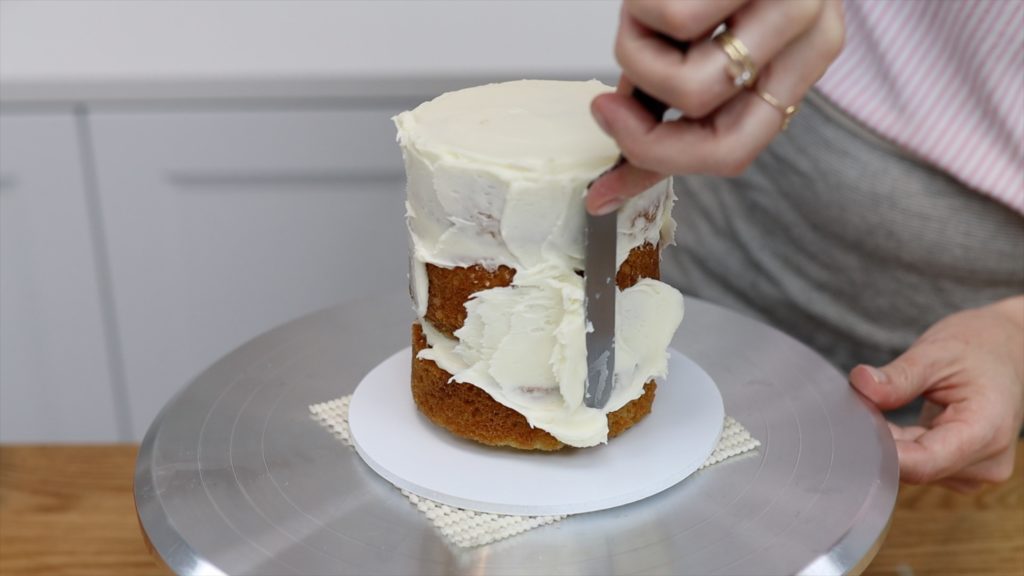
The consistency of your frosting is key and if you’re using buttercream that’s too stiff, it will be almost impossible to spread onto your cake because it’s so thick, and even if you can spread it on, it will be very difficult to smooth with a cake comb later.
Solution: If you find out when you start frosting your cake that the buttercream is too stiff, scrape off any that you just can’t spread and add a few tablespoons of milk or cream to the rest of the bowl of buttercream so it’s a thinner consistency and that will be MUCH easier to spread.
Mistake #5
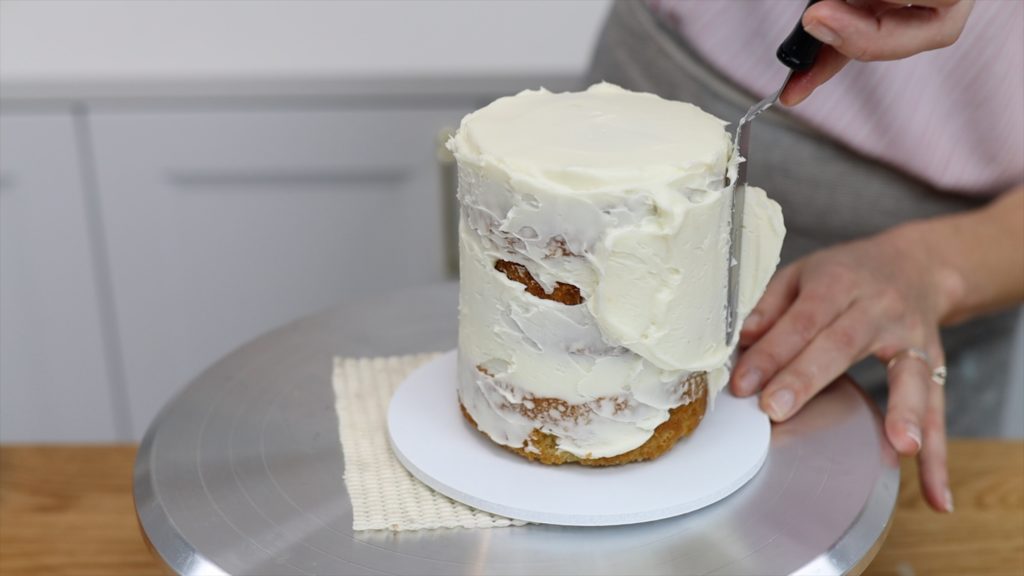
This thin layer of frosting is called a crumb coat, and a common mistake is to skip it and only apply one single layer of frosting, like this. The reason it’s a mistake is because the purpose of the crumb coat is to catch all of the crumbs that come off the cake while you’re spreading the frosting on, so that those crumbs get stuck in the crumb coat and then when you add the final layer of frosting, the crumbs don’t get into that so you have beautifully smooth, crumb free frosting. But here, where the first layer of frosting is also the final layer of frosting, you can see all the crumbs that come off the cake and are getting into this frosting, which will be visible specks on the outside of the frosting on the finished cake, AND because there’s only one layer of frosting you can see the dark shadowing of the cake layers underneath the cake, even though this is a vanilla cake so the colour of the cake is light compared to say, dark brown chocolate cake.
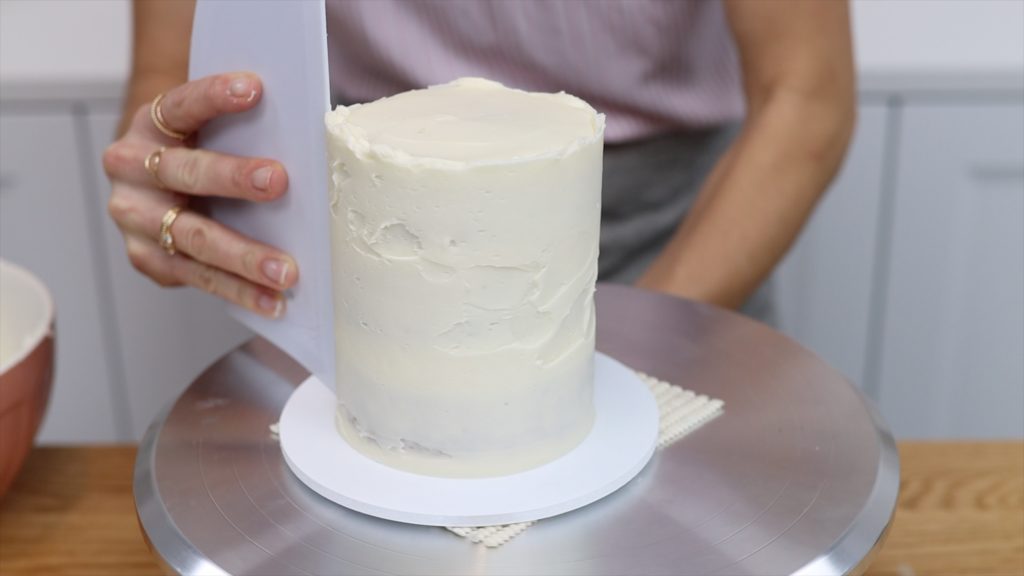
Solution: There’s a simple solution for this mistake: apply a crumb coat and let it set for 30 minutes in the fridge before applying a final coat of frosting, and the frosting will have no crumbs in it AND it’ll cover up the colour of the cake underneath.
Mistake #6
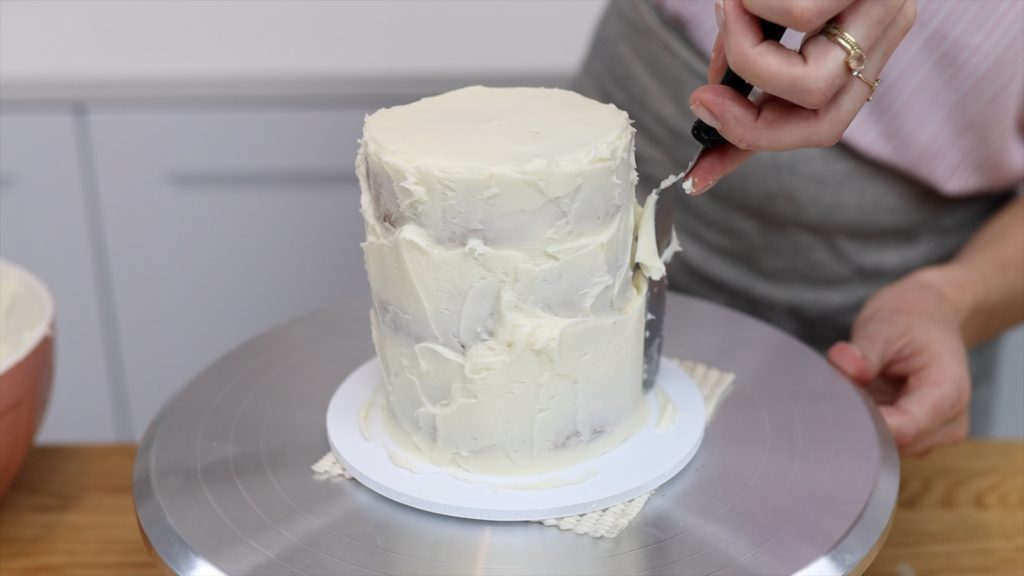
If you apply the final coat of frosting too thinly, like this, after using your cake comb a few times to smooth the frosting you’ll scrape off all of the frosting and expose the cake layers underneath.
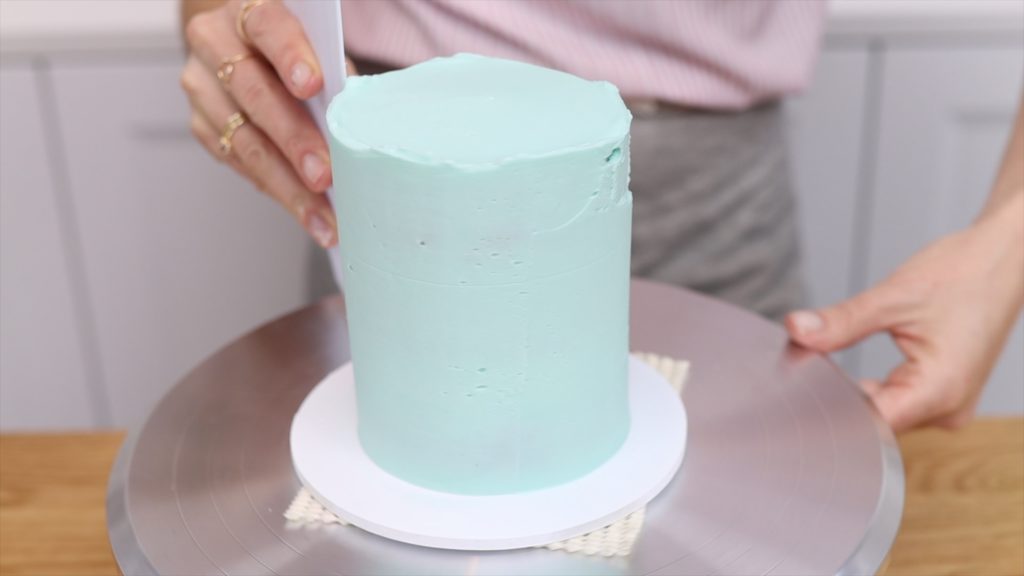
Solution: The solution for this is to spread the frosting on more thickly, which feels excessive but you’re going to scrape a lot off as you smooth it, so it won’t end up being nearly as thick.

Mistake #7
The mistake I see most often is when the frosting doesn’t go up high enough.
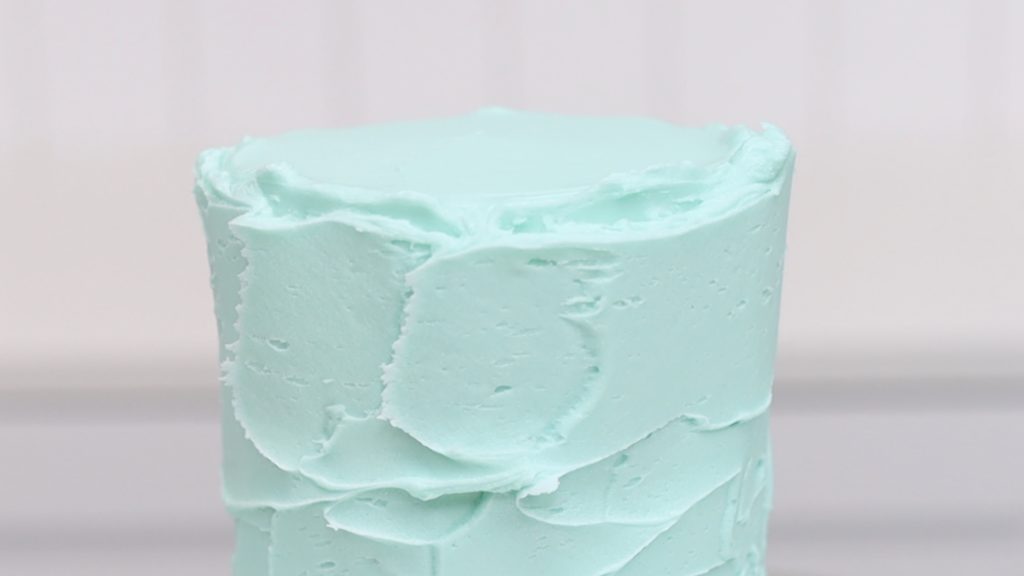
If the frosting stops before the top edge of the cake, you’re going to get indents or gaps around the top edge of the cake when you smooth it, because the frosting on the sides of the cake doesn’t meet the frosting on the top of the cake to form a neat join all the way around the cake. Look at this gap here.
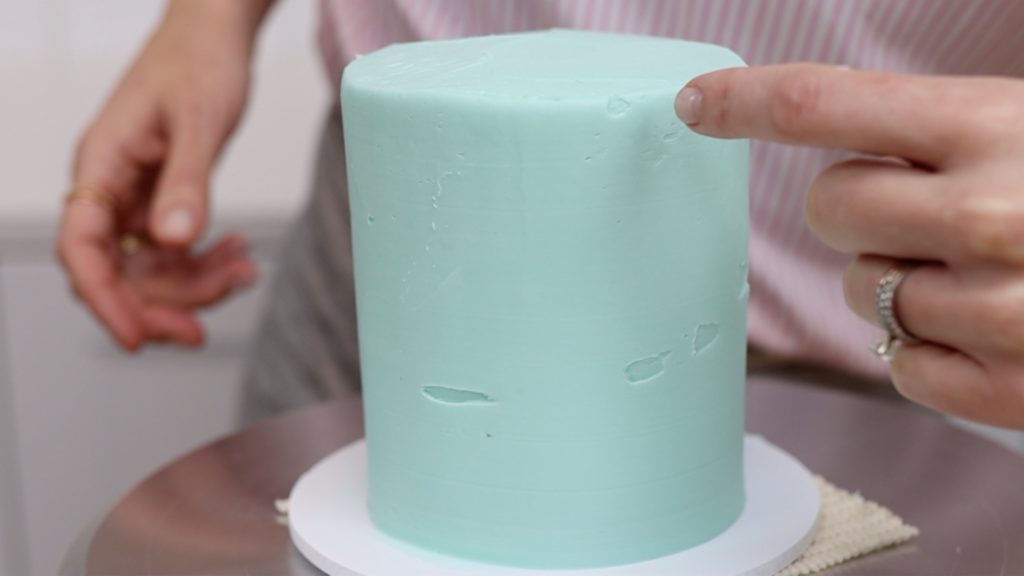
Solution: If you spread the frosting higher, so that it sticks up ABOVE the top edge of the cake, when you tidy up the top edge you’ll create sharp corners with no gaps or indents along the edge.
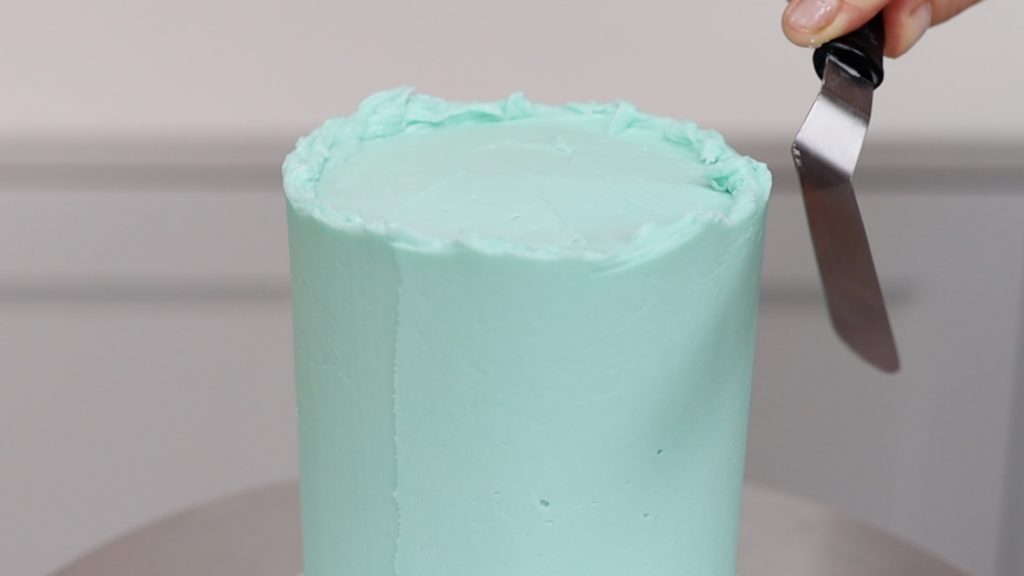
Mistake #8
If you use you cake comb once or twice to scrape around the cake, the frosting will be smoother than when you first spread it on but it won’t be perfect yet because it takes quite a few scrapes to get a flawless surface. If you stop now, your frosting will look like this.
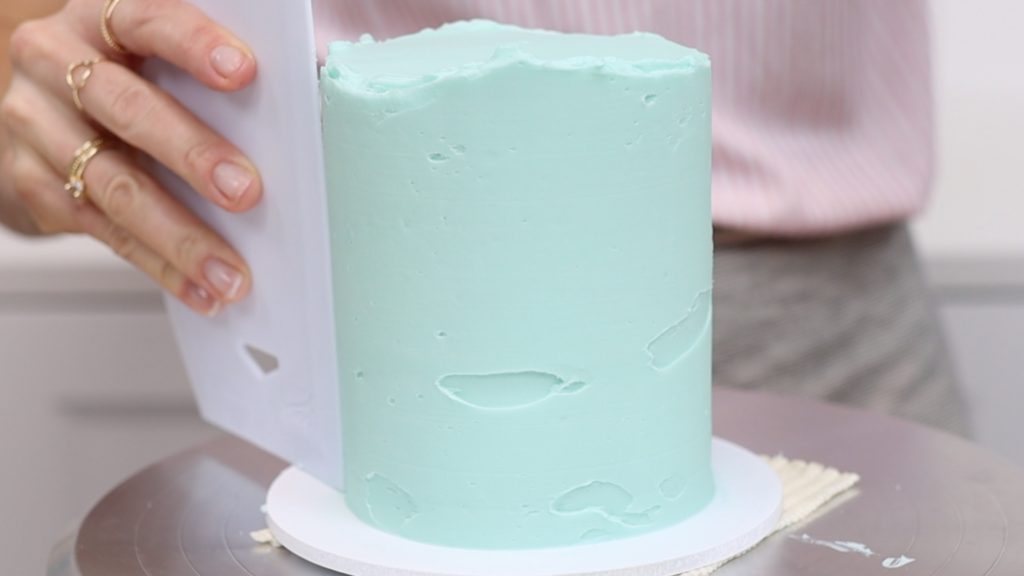
Solution: Instead, do some touch-ups by spreading more frosting over any indents, where the frosting isn’t as thick as it is on the frost of the cake. Then scrape around the cake again with your cake comb to flatten that touch-up frosting and pull off any excess, leaving a beautiful smooth surface behind!
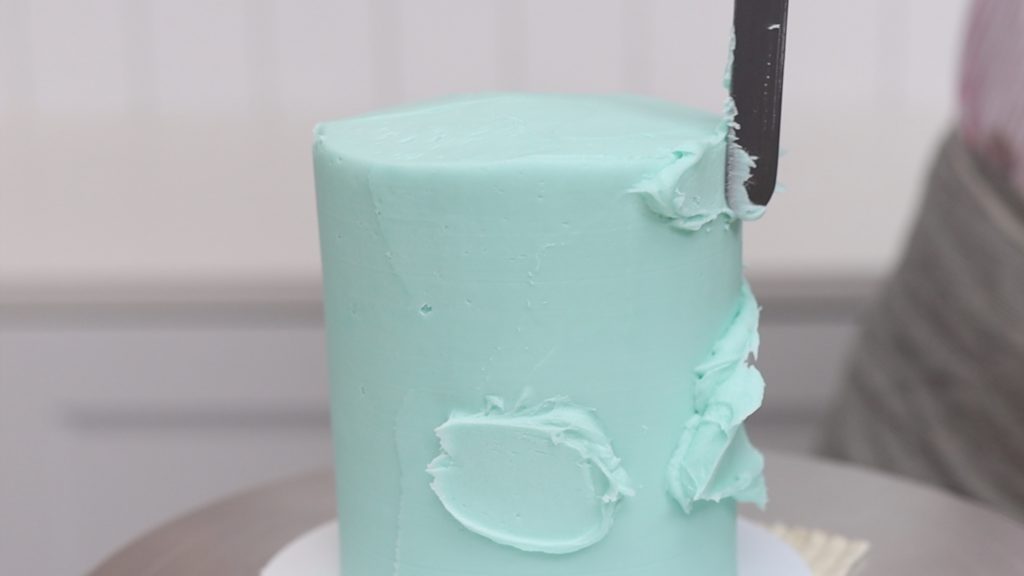
Mistake #9
If your cake comb has been dinged or dented, the surface on the straight side of the comb isn’t going to be perfectly straight and smooth and the ding will leave a trail behind in the frosting as you pull the comb around the cake.
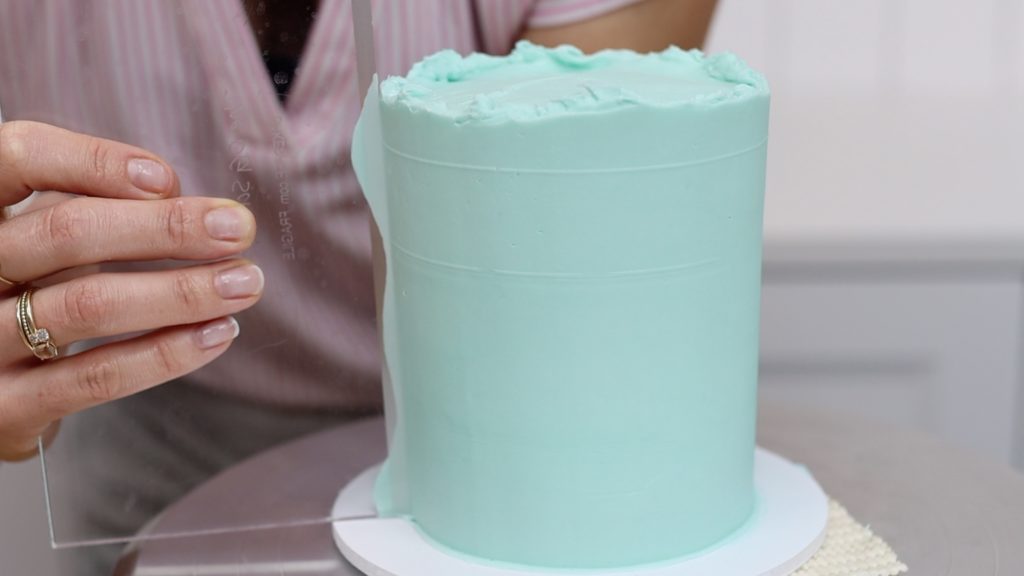
Solution: This can happen with plastic or acrylic combs, and once you realize it’s happened, you can try sanding down the edge or buy a new cake comb.
Mistake #10
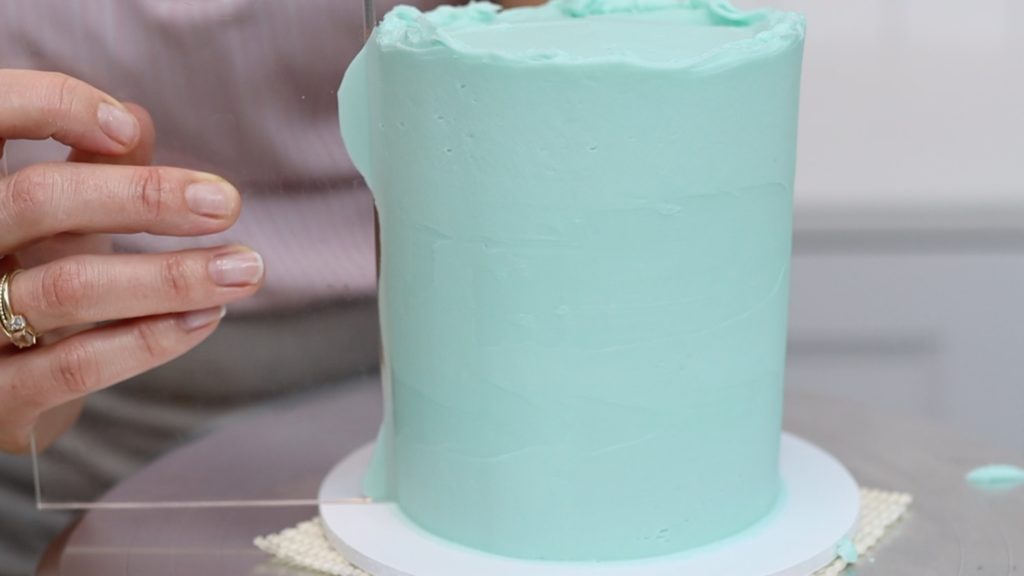
When you pull your cake comb off the cake at the end of a scrape, you’ll have frosting on the comb. You can see the build-up along the straight edge of the comb here. If you use the cake comb again straight away, you’ll drag that frosting back onto the cake and leave a line of texture going up and down the cake.
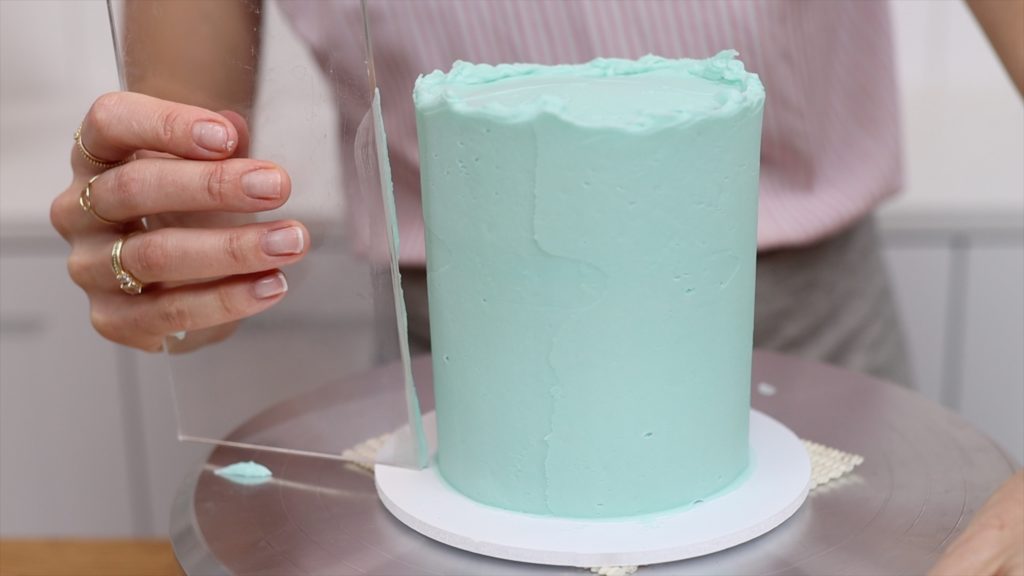
Solution: Instead, scrape that frosting into a bowl and wipe the cake comb clean on a towel or paper towel after every scrape. You'll avoid seams like the one you can see in the frosting here. This way, the only seam or texture you’ll have on your cake is from when you pull the cake comb away from the cake on the final scrape, and you can make that the back of the cake.
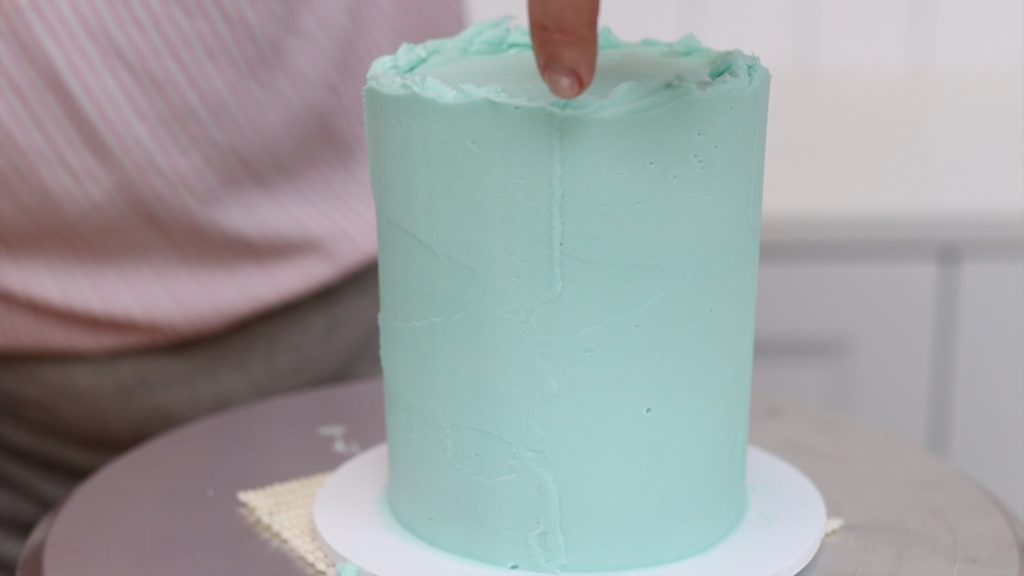
Mistake #11
The kind of
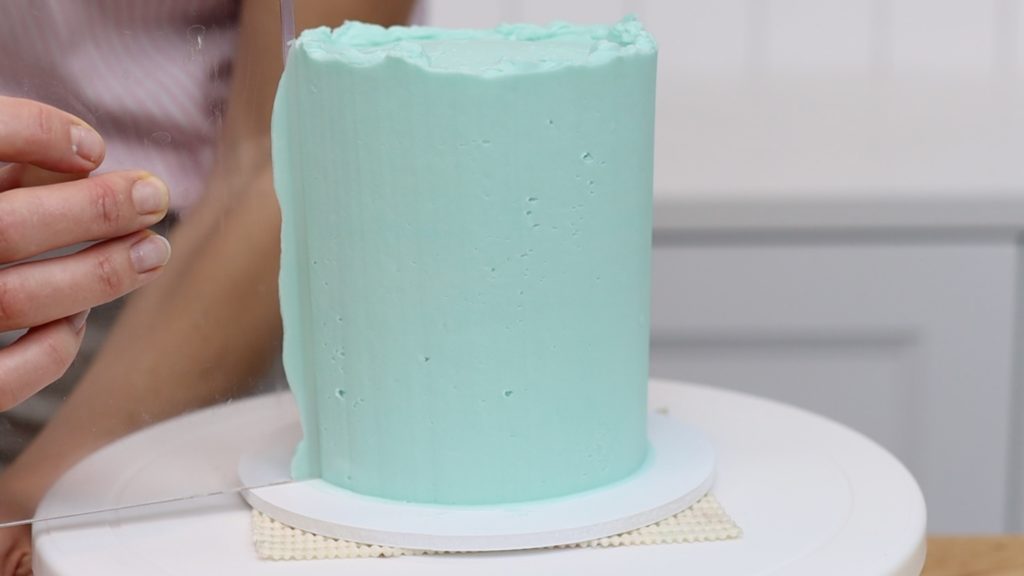
Solution: For much smoother frosting, a metal

Mistake #12
Your technique for tidying up the top edge of the frosting is important. Look below the right side of my
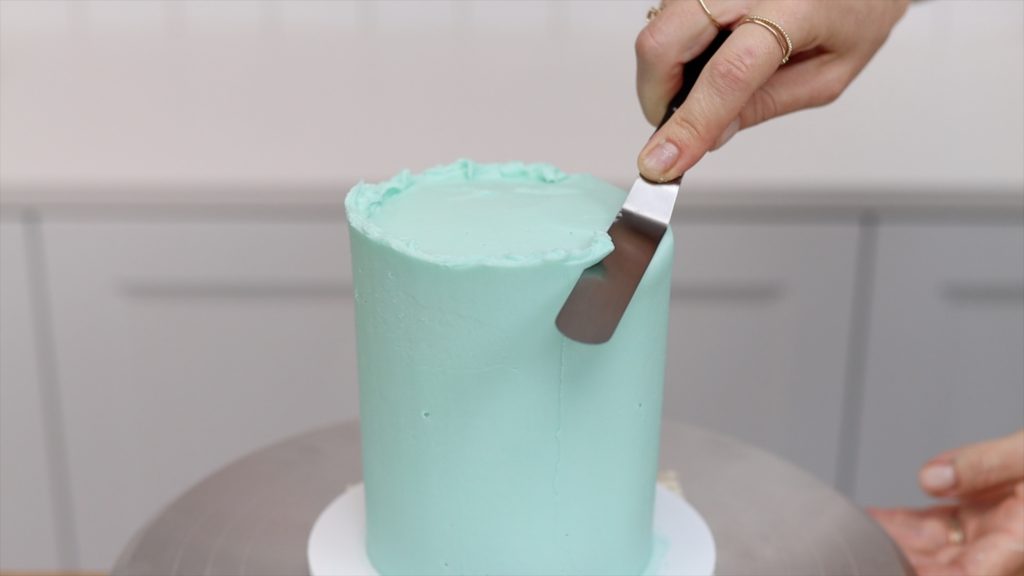
Solution: If that happens, scrape around the cake again with your cake comb to flatten the bulge and then tidy up the top edge by pushing sideways with your offset spatula, not down, and that will push the excess frosting across and lift it off the cake and leave a neat top edge with no bulges.
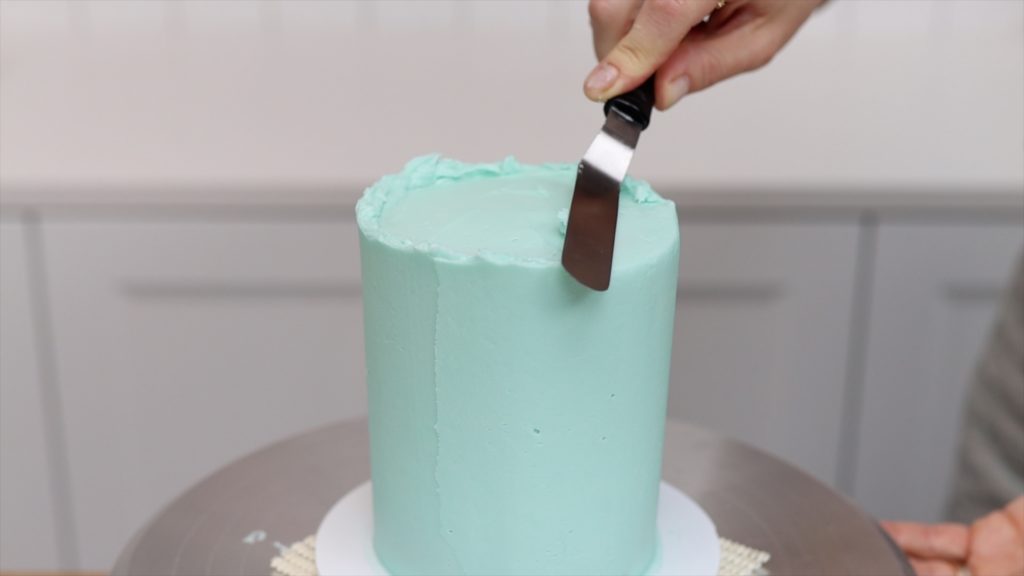
Mistake #13
After you push and lift this frosting that’s sticking up above the top edge of the cake, you’ll have that frosting on your
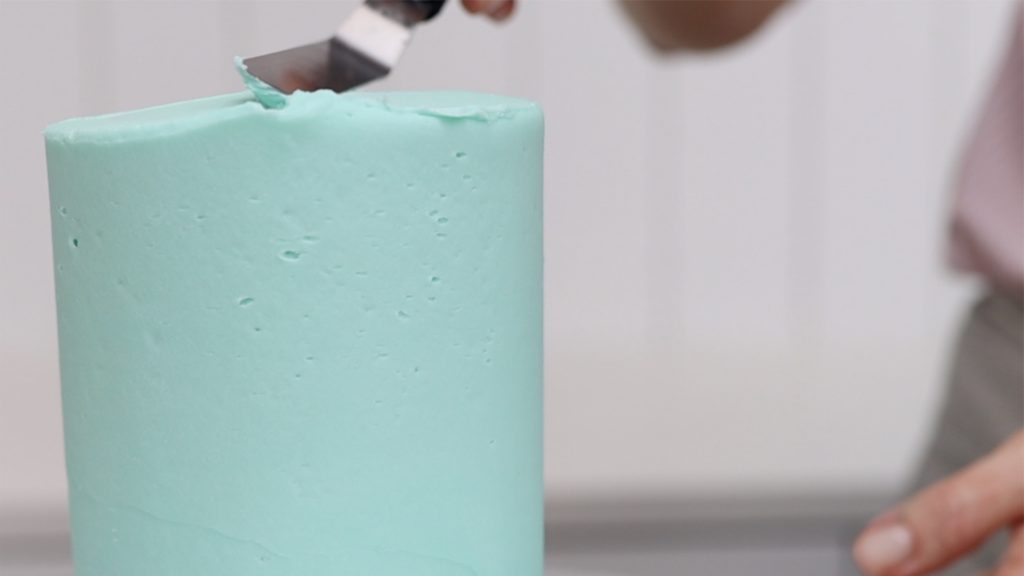
Solution: To prevent this, scape your
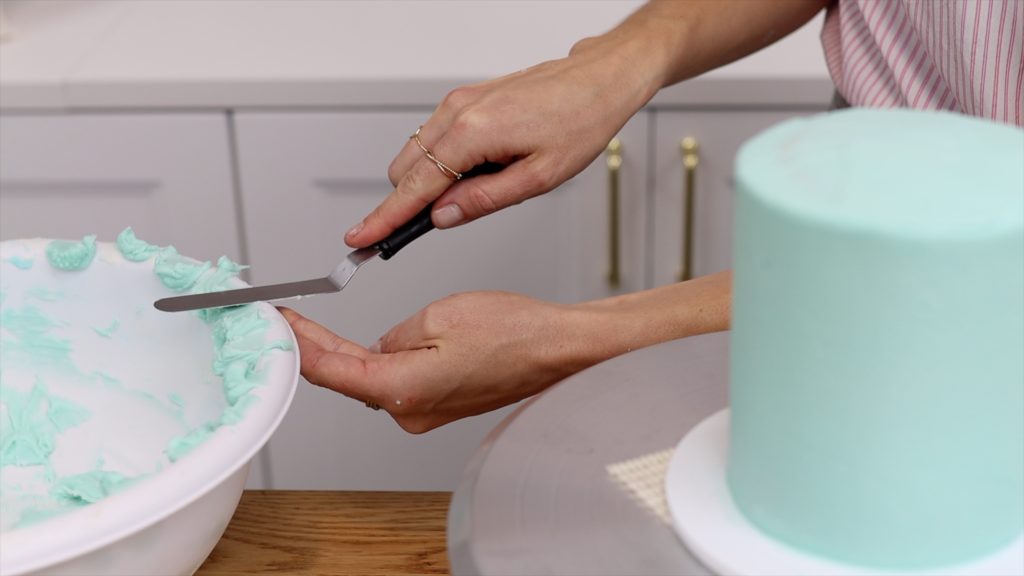
Mistake #14
Patience really is necessary for smooth frosting. If you stop after just a few touchups with your
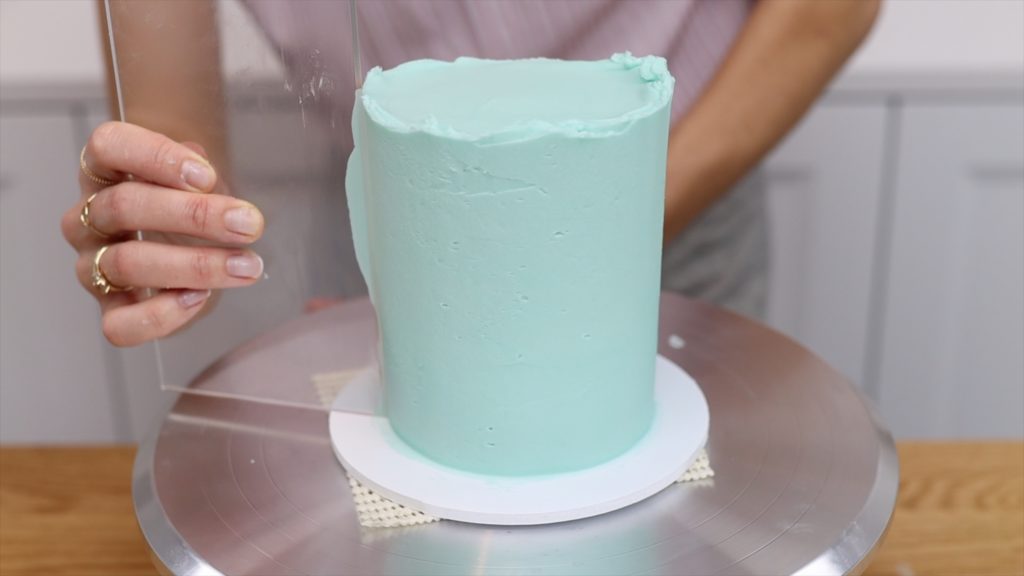
Solution: Whether you're using a plastic, acrylic, or metal cake comb and a plastic or metal
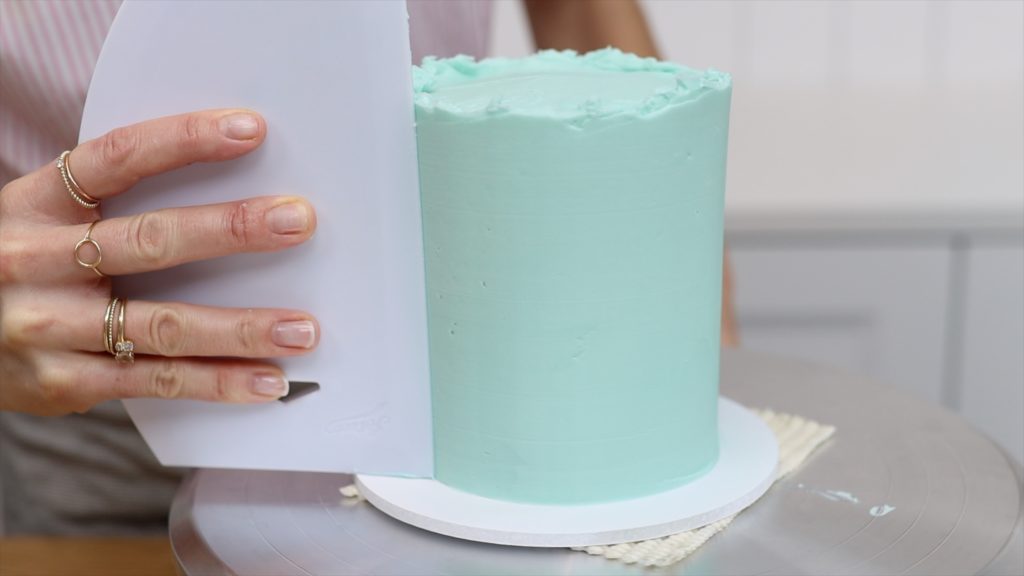
Mistake #15
When you’re happy with your frosting, you’re not finished yet! If you walk away and leave your cake at room temperature, look what happens. This cake was in a cool room overnight and the cake and filling and frosting sank, making the cake lean and bulge and in a few more hours the frosting will crack and the cake might even fall over sideways.
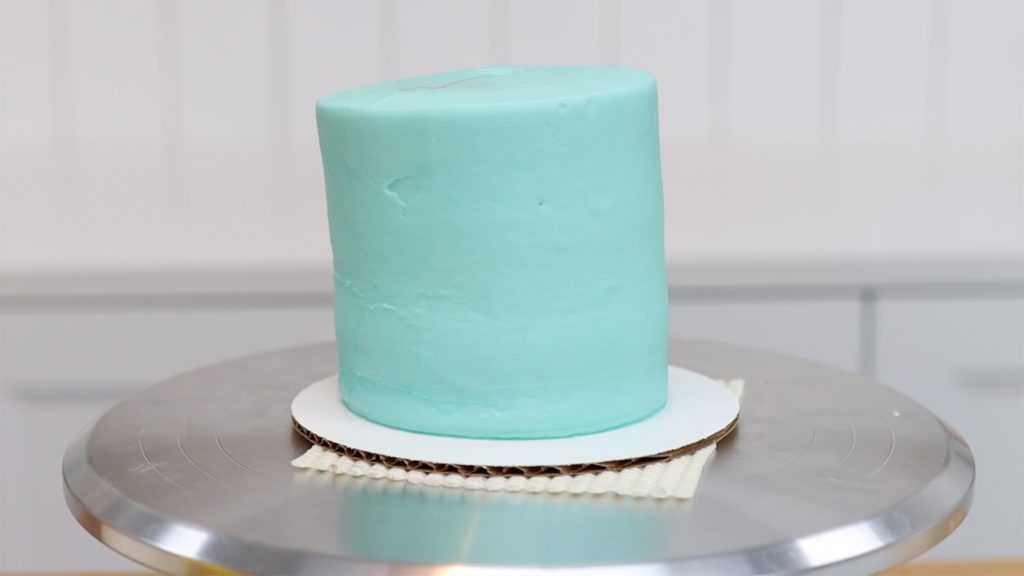
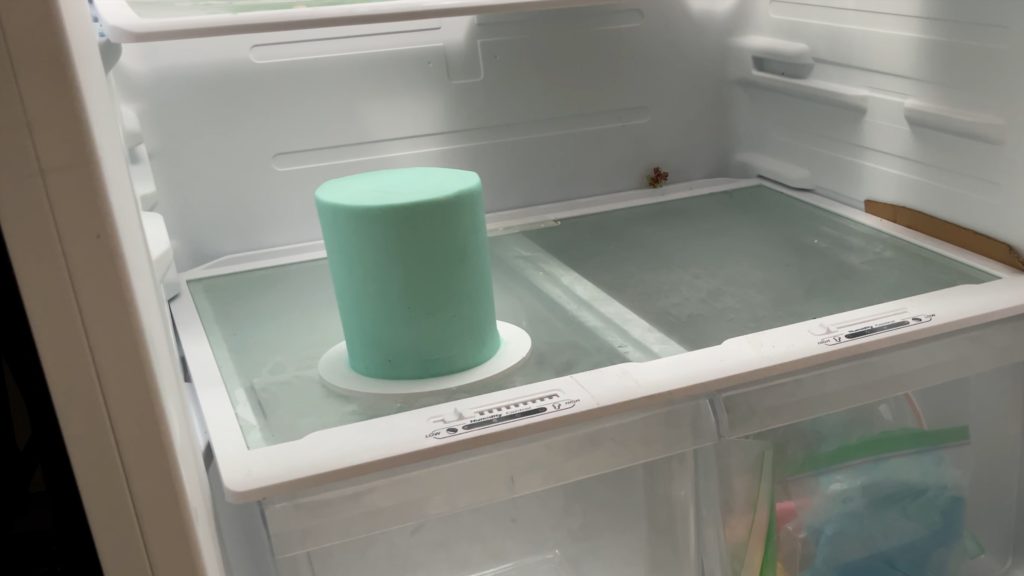
Solution: Put your frosted cakes in the fridge until you’re ready to transport them, or until 2 hours before you’re going to serve the cake. The fridge will keep the frosting firm and pretty and taking it out two hour before serving will bring the cake to room temperature, when it tastes its best.
If you’re looking for step by step videos on hundreds of cake designs and techniques, visit my online cake school to browse my MiniCourses and MasterCourses - choose just one or join my ClubPLUS for access to them all!
Here's the video version of this tutorial:
Make 2022 the year to take your cakes to the next level with these 8 baking, frosting, and decorating tips!
If you prefer to watch a video of this tutorial, scroll to the bottom of the page.
#1
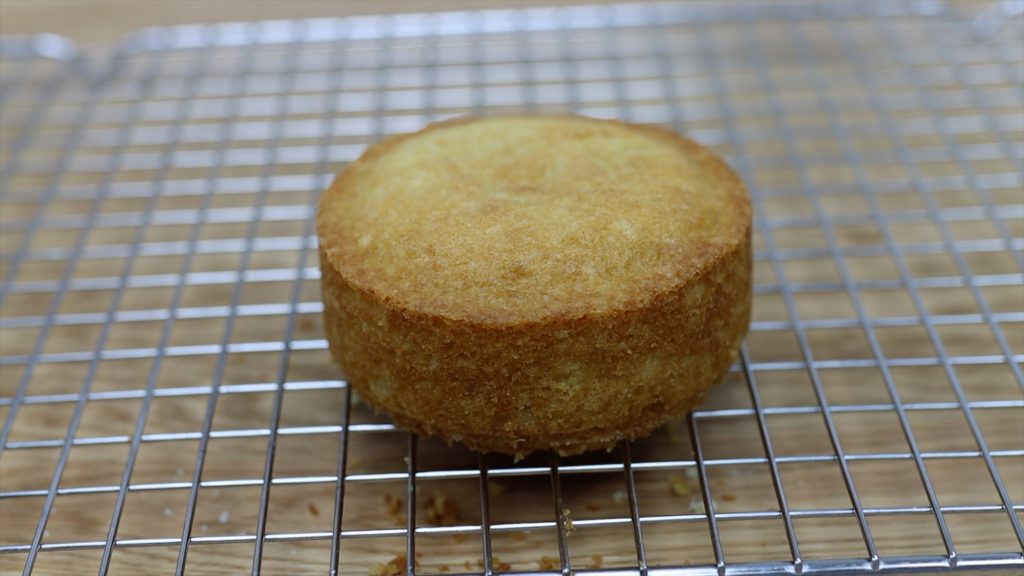
If you struggle with domes on your cakes, meaning that they rise higher in the middle than around the edges, your oven temperature is too high.
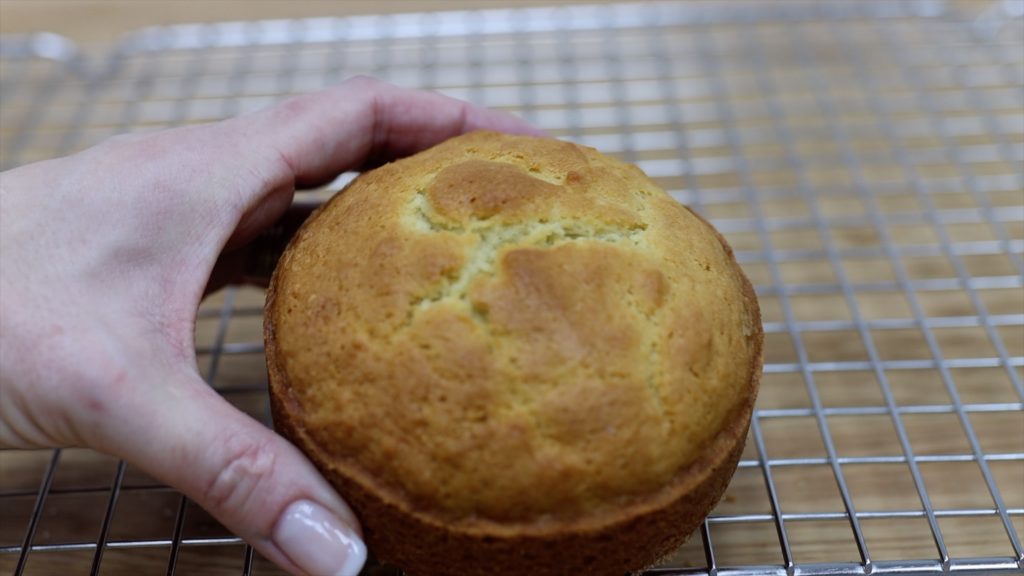
Try decreasing the temperature by 25F or 15C to get perfectly flat cake tops and you’ll also find that by reducing the temperature, your cake layers will be more evenly baked AND more moist!
#2
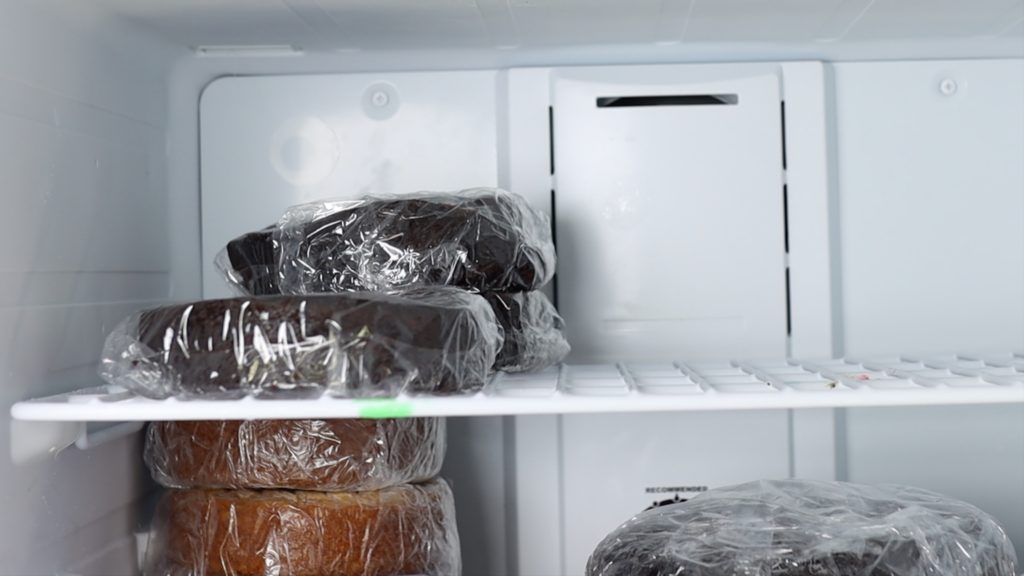
After baking your cake layers, when they’ve cooled completely wrap them in cling film or Saran Wrap and put them in the freezer for 15 minutes, before you assemble your cake and frost it. The cake layers will firm up and be more stable and less crumbly when you frost them, making your frosting much neater. 15 minutes in the freezer won’t affect the taste or texture at all – when the cake comes back to room temperature it’ll taste just as good as when it was freshly baked.
#3
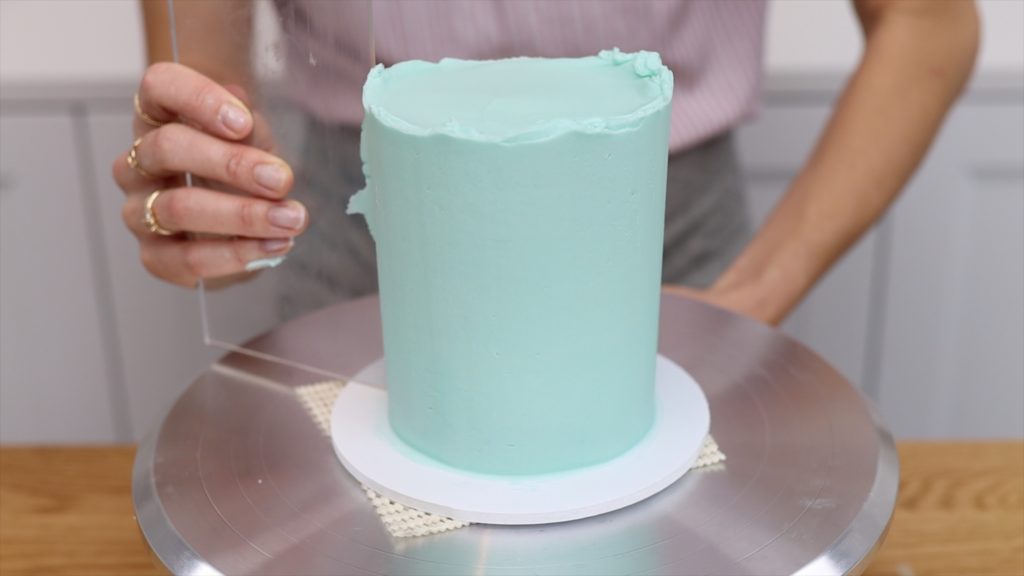
Make this the year to perfect smooth frosting on your cakes. The keys are to apply a crumb coat first, layer your frosting on thickly and so that it sticks up above the top of your cake, and do touch-ups to fill in indents as you go, after every few scrapes around the cake with your cake comb. Check out my tutorial on 15 Frosting Mistakes You’re Making And How To Fix Them for more tips!
#4
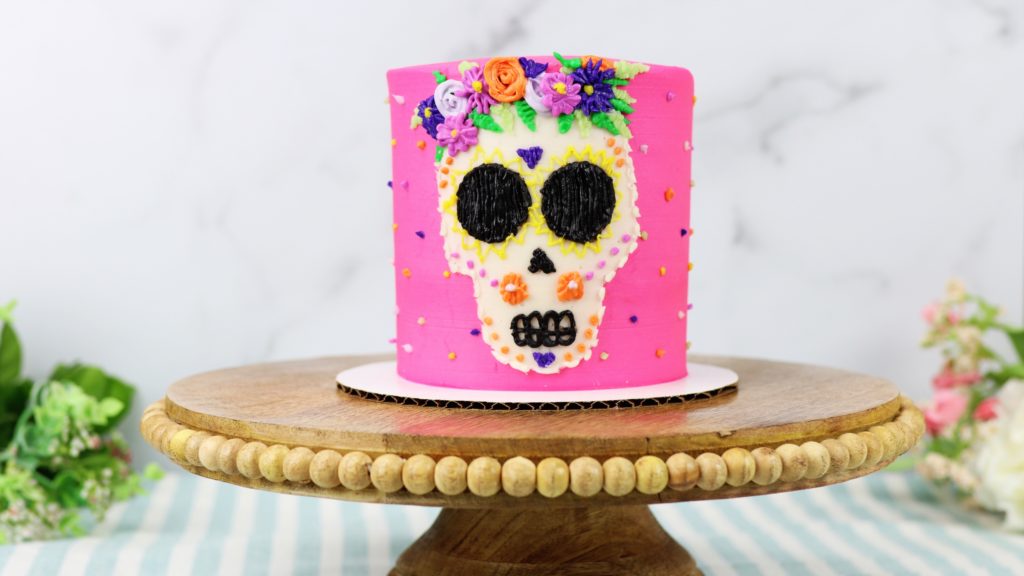
Invest in some gel colours to get really bright and bold frosting. Gels are much more concentrated than liquid colours, and with just a few drops you can make colours like this fuchsia, which would take probably a whole bottle of a liquid colour to achieve.
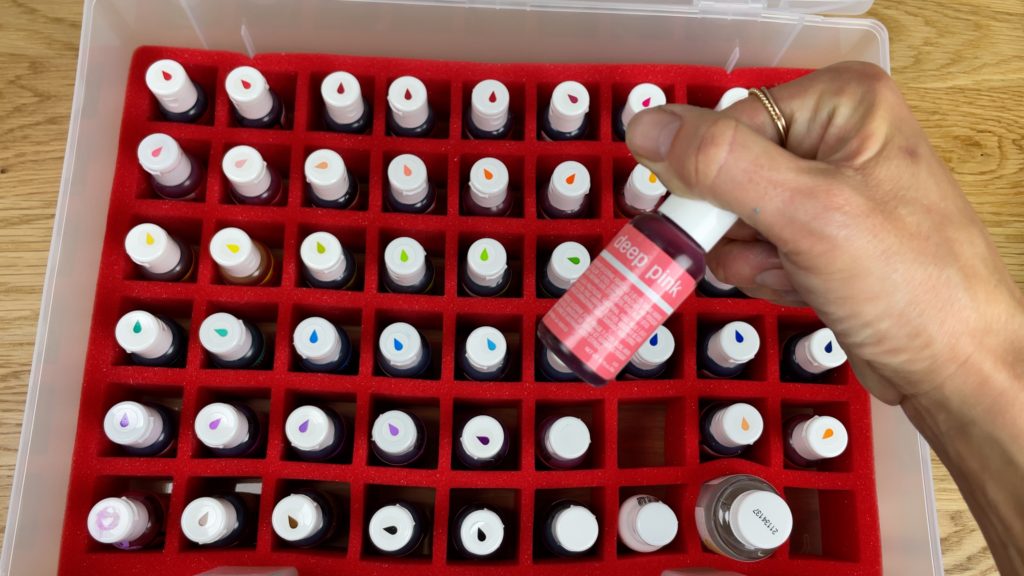
After mixing a coloured frosting, cover the bowl and leave it for an hour to allow the colour to develop and get even darker and you’ll blow everyone away with your brightly coloured cakes!
#5
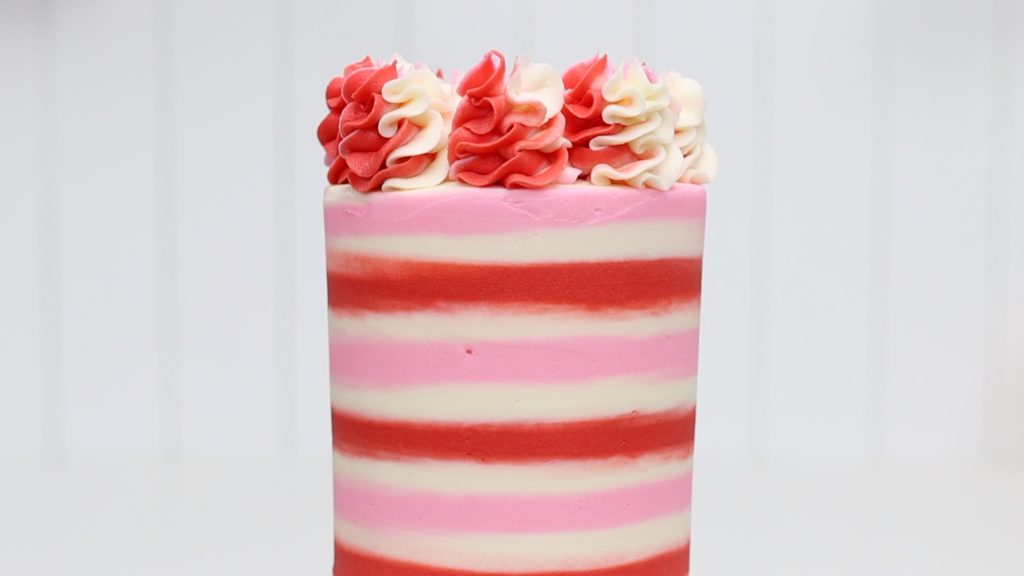
Branch out and try different piping tips for different textures. For examples, instead of always using a 1M star tip to pipe swirls onto the top of a cake, try a 2D instead.
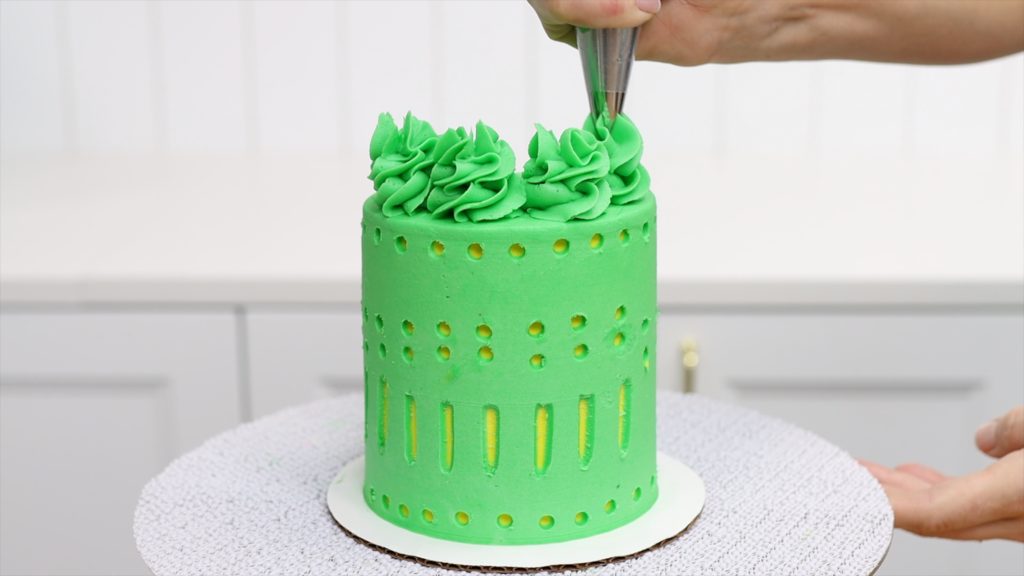
The 2D tip on this pink and red cake makes wavier swirls with more movement than the stiff lines of 1M swirls on the green and yellow cake above.
#6
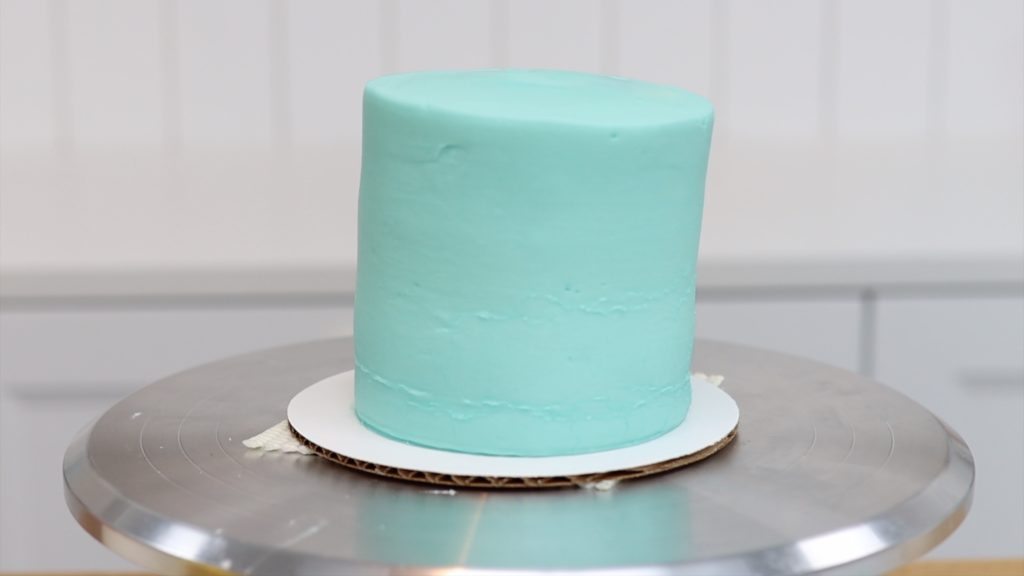
If you struggle with sinking, leaning or bulging cakes, refrigerate them after you frost and decorate them and that will keep everything firm and stable.
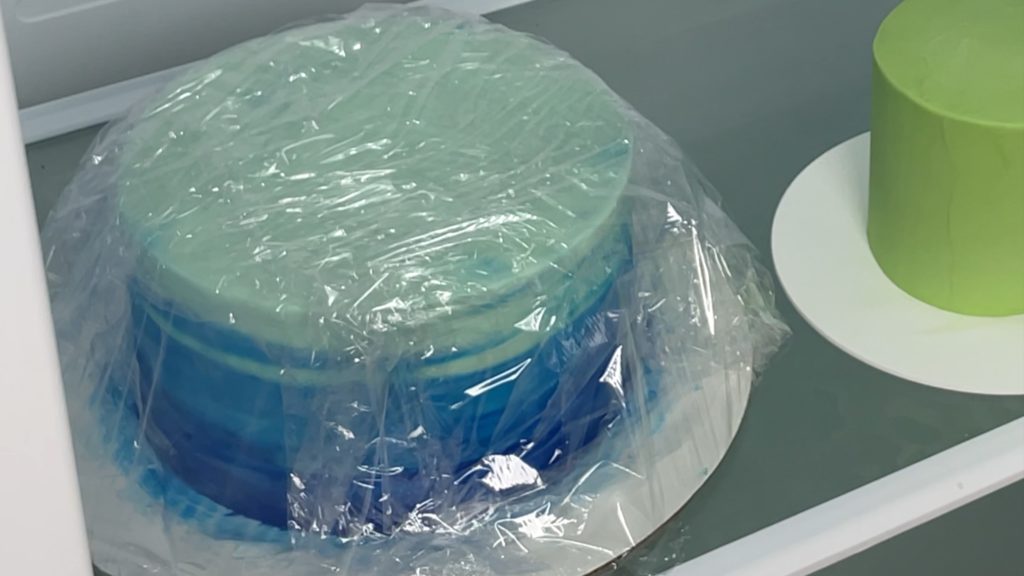
If the cake will be in the fridge for more than 6 hours, take it out after an hour, once the frosting is firm, and wrap it in cling film or Saran Wrap to seal it from the moisture in the fridge to prevent condensation, and then put it back in the fridge for up to 24 hours. Take the cake out 2-4 hours before serving it, and that will allow it to warm up to room temperature, when it tastes the best.
#7
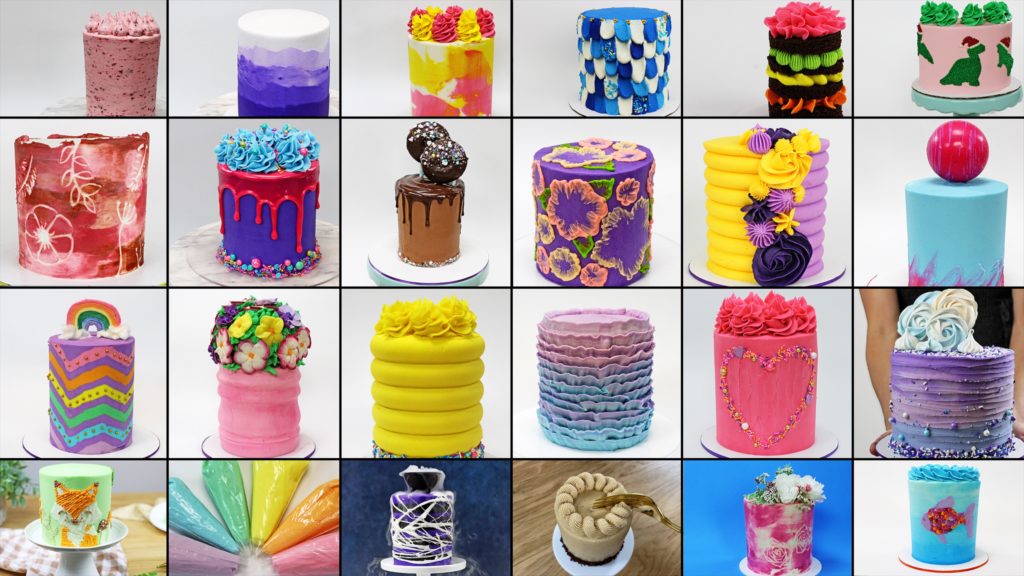
Take a cake decorating course! I have LOTS on my online cake schoolthat you can take from the comfort of your own home, watching the modules whenever is convenient for you and ask questions in the comments that I’ll reply to straight away!
#8
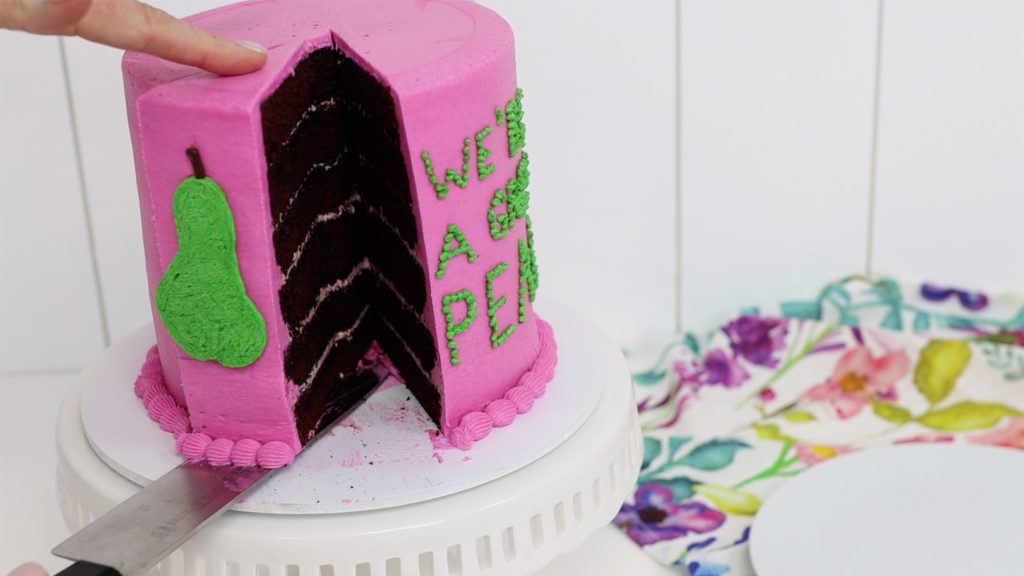
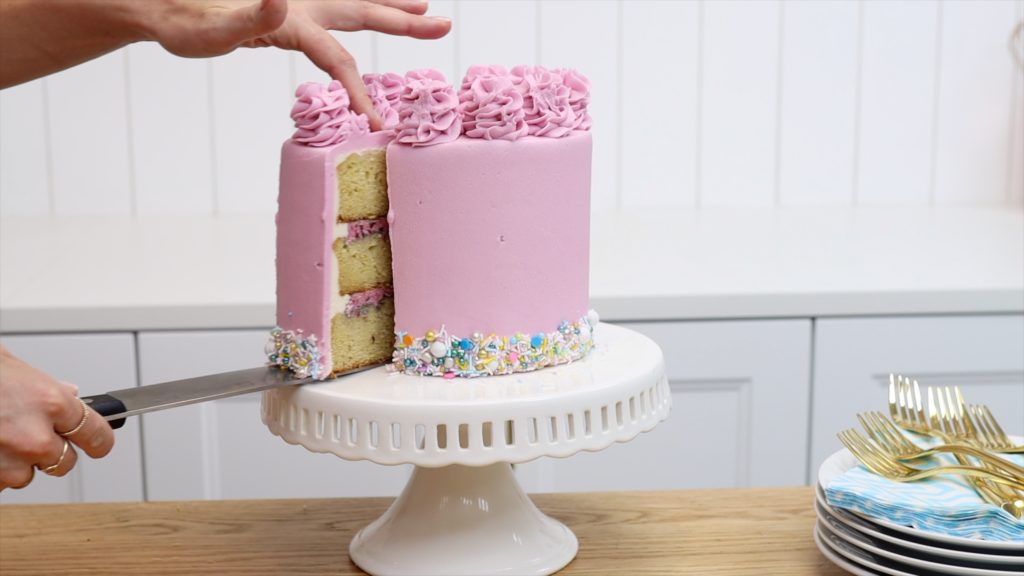
Finally, learn how to cut your cakes! I always used to dread taking my cakes to events because people would assume I would cut the cake, until I figured out how to do it without making a mess! Tall cakes can be cut into traditional slices but try this technique to get more portions out of each cake, with different ratios of cake and frosting so each person can choose what they like best! You’ll need a cutting board and a knife. Cut above an inch off the side of the cake and lift up your cutting board and use your knife to tip the slice over onto the cutting board. Then cut this end slice into three pieces and these are perfect for people who LOVE frosting.
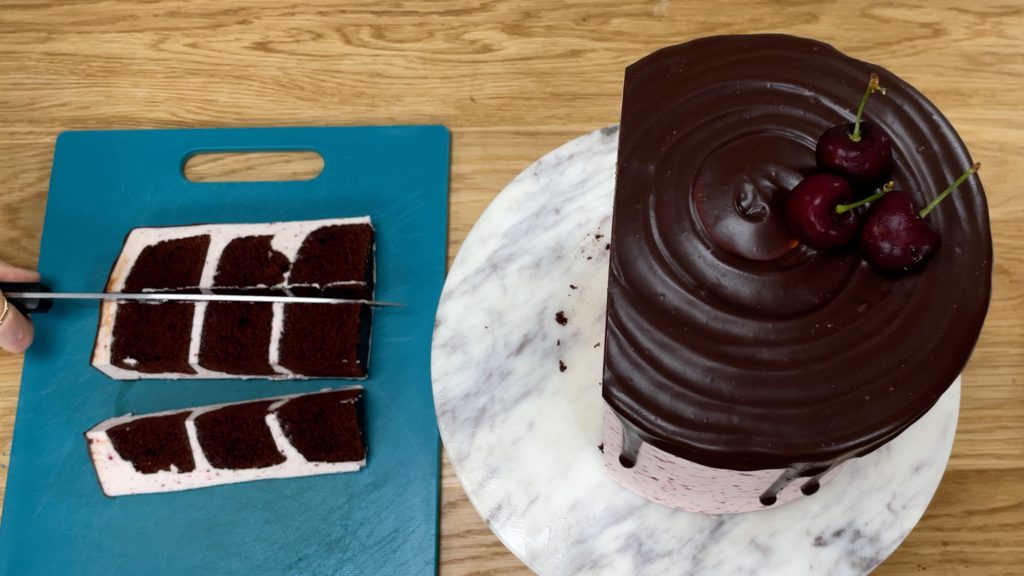
Use the same technique again, cutting another inch off and tipping it over onto your cutting board but for these wider slices from the middle of the cake, cut them into half and then half again to make 4 portions, and if you want smaller pieces you can cut across the middle, too. The middle pieces have much more cake than filling or frosting, so they’re great for people who don’t like super sweet desserts, but the edge pieces have a LOT of frosting so they’re great if you have a sweet tooth. There’s a piece for every kind of taste bud when you use this method of slicing your cake!
How will you improve your cakes in 2022?
If you’re looking step by step courses on hundreds of cake decorating techniques and designs, join my ClubPLUS for access to ALL of my online courses as well as Live Workshops!
Here’s the video version of this tutorial:
I’m going to show you how save a huge amount of time, free up your schedule, and get neater frosting by freezing cakes.
If you prefer to watch a video of this tutorial, scroll to the bottom of the page.
I know what you’re thinking and before getting into the technical details, I want to address your concern: that frozen cakes taste bad. If you follow these steps, you can confidently freeze cake layers and even entire cakes (frosted and decorated) for two months!
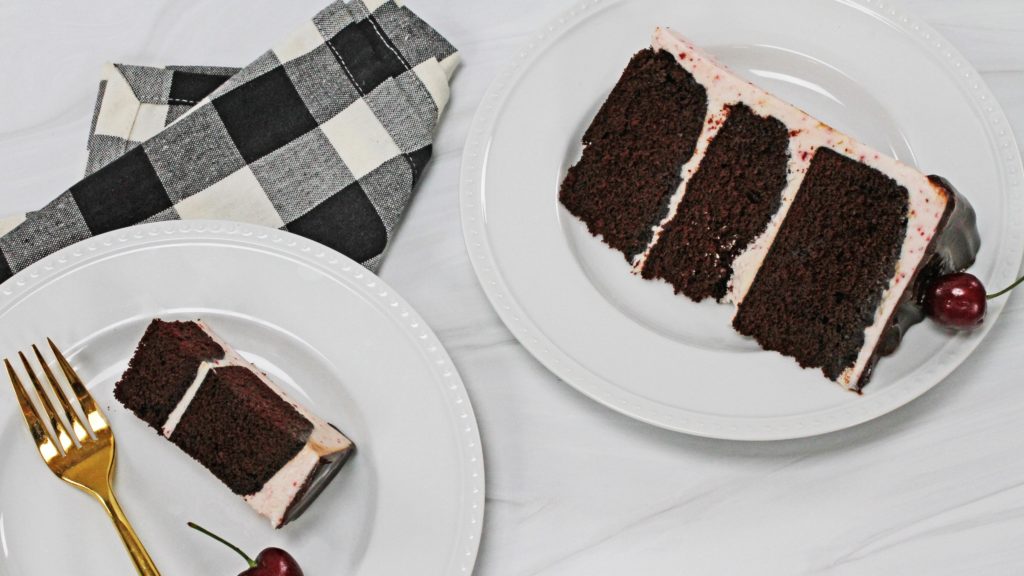
I’ll show you how to defrost your cakes properly too and when you slice into them you will never know they were frozen because the taste and texture will be perfect, the same as on the day of baking the cake.
How to freeze cake layers
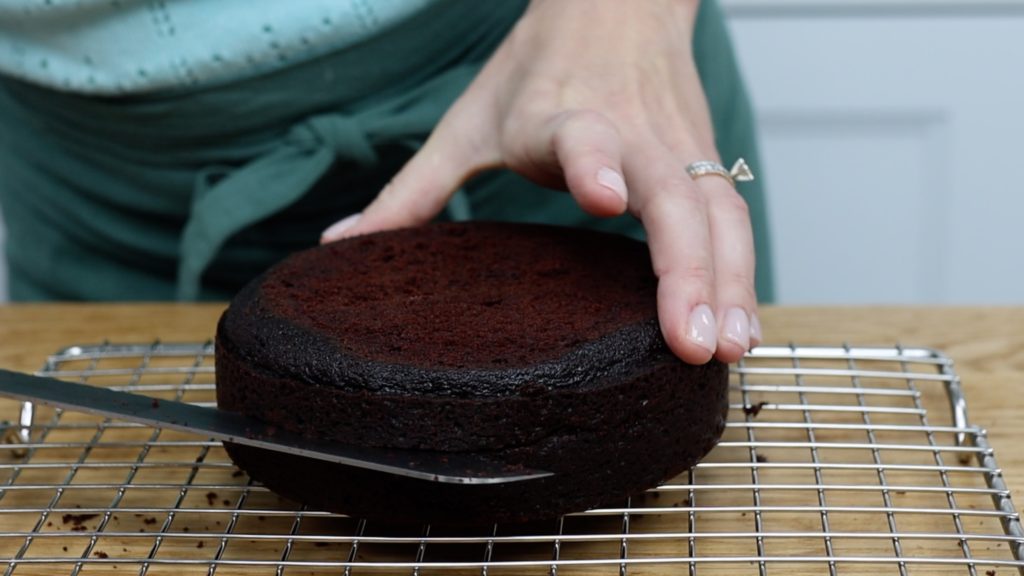
After you bake your cakes, let them cool completely. If you want to level and divide them and drizzle them with simple syrup, do that now because it’s easier when the cake is at room temperature than when it’s frozen.
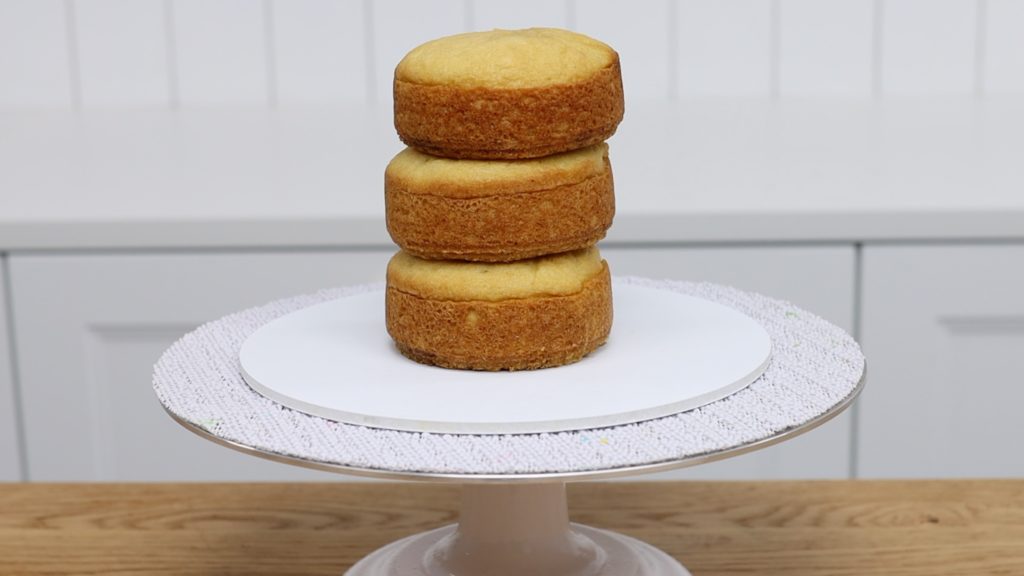
Wrap the cake layers in cling film or saran wrap. It’s important that they’re sealed so there aren’t any gaps where the moisture from the freezer can get through to the cake because that’s what can dry cakes out and make them taste like the freezer.
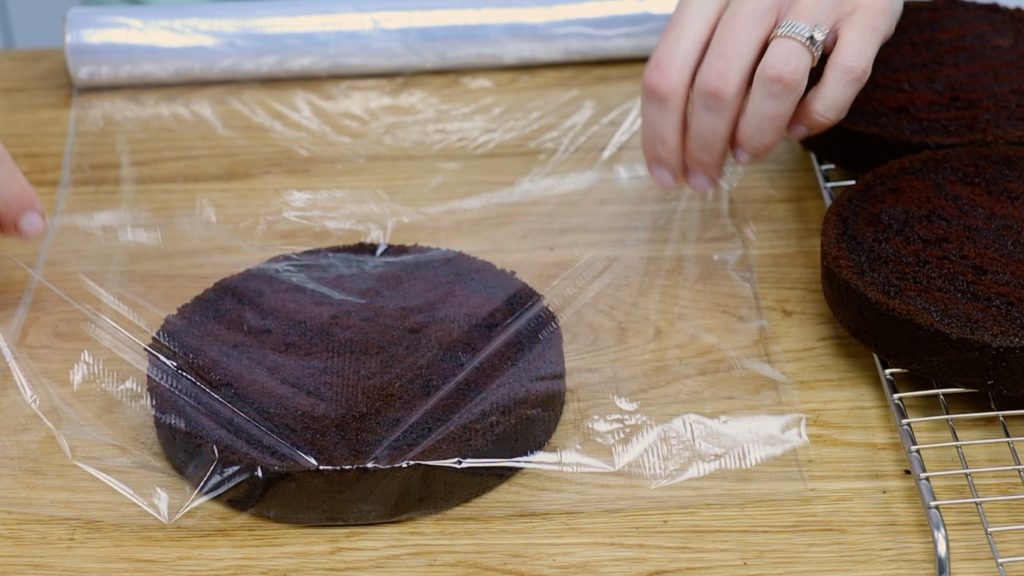
You can wrap layers individually or stack them but make sure there’s plastic wrap in between each layer otherwise they’ll stick together when they freeze. I only stack two layers at a time because these layers are freshly baked and very delicate, and adding the weight of another layer could cause the bottom layer to crack or crumble.
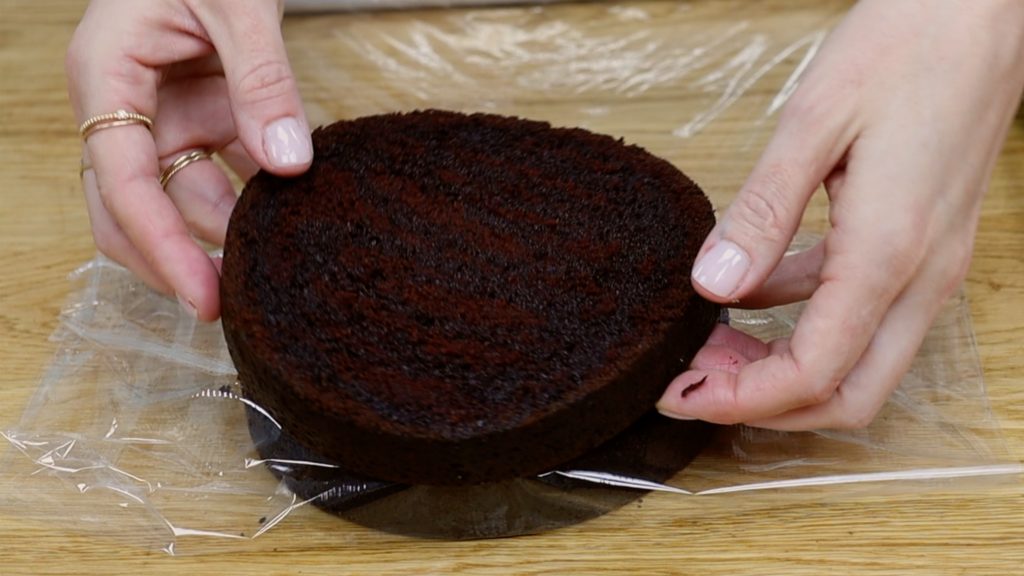
You can do this with any cake flavour and size. Being able to freeze cake layers means you can bake double or triple batches of cake, minimizing baking time and then pulling the layers out of the freezer whenever you want to make another cake!
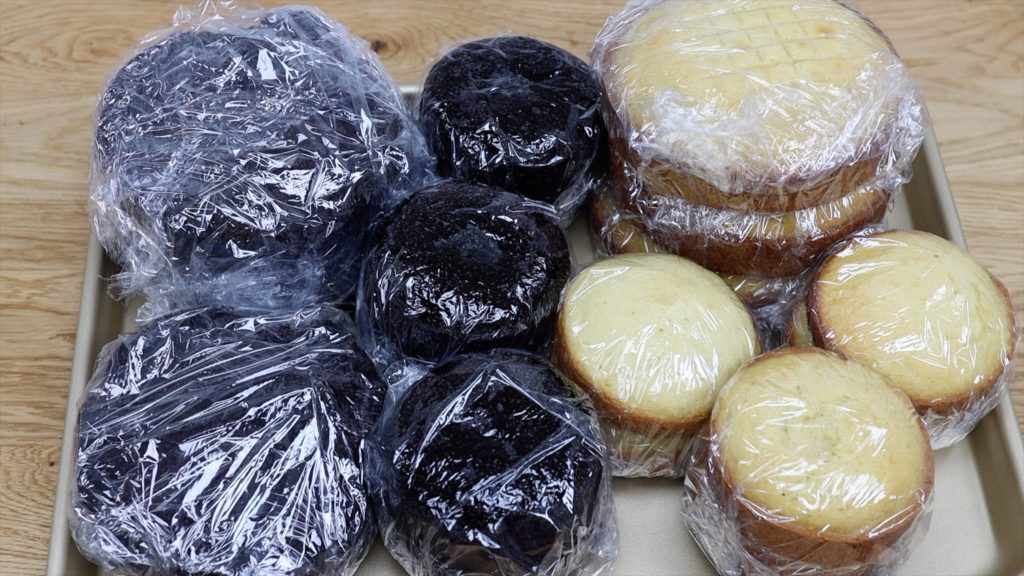
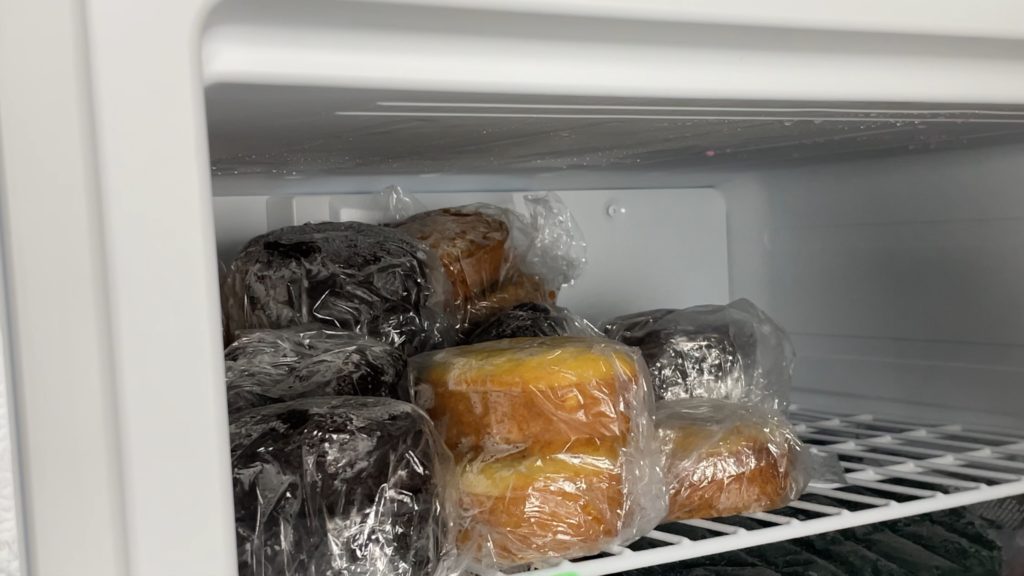
Put the layers in the freezer and when you want to make a cake, move the layers to the fridge the night before and they’ll thaw overnight, ready to use the next day.
How to assemble and frost a cake with frozen cake layers
When cake layers are frozen they’re firm and stable and not crumbly, which makes them easy to handle so I like to assemble cakes with layers that are still frozen, straight out of the freezer. Because they’re less crumbly, they’re a dream to frost so you can even apply your crumb coat while the cake is still frozen! The frosting will glide over the cakes without pulling off crumbs and it will be easy to smooth the frosting as it starts to chill and sets against the cold cake layers.
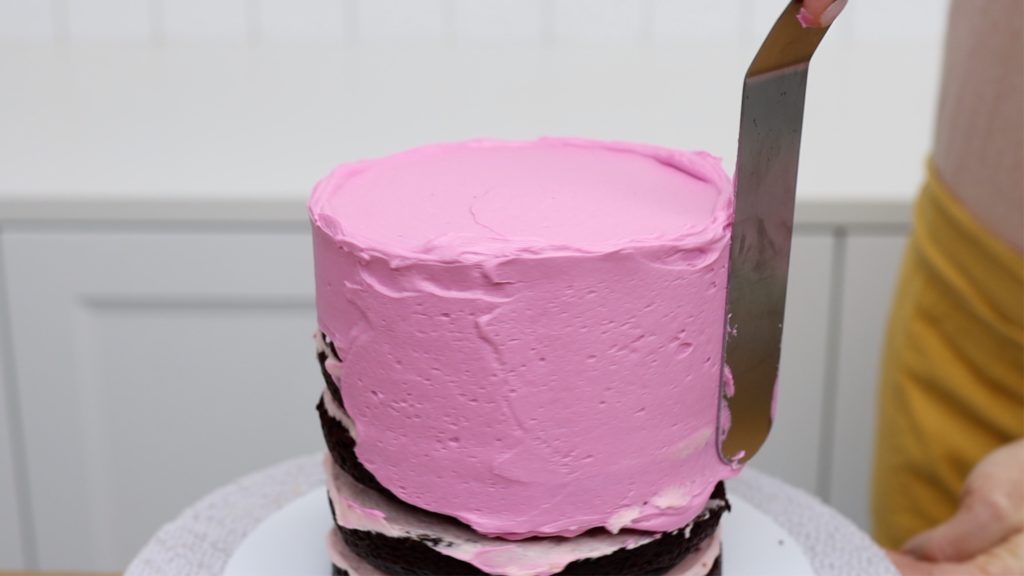
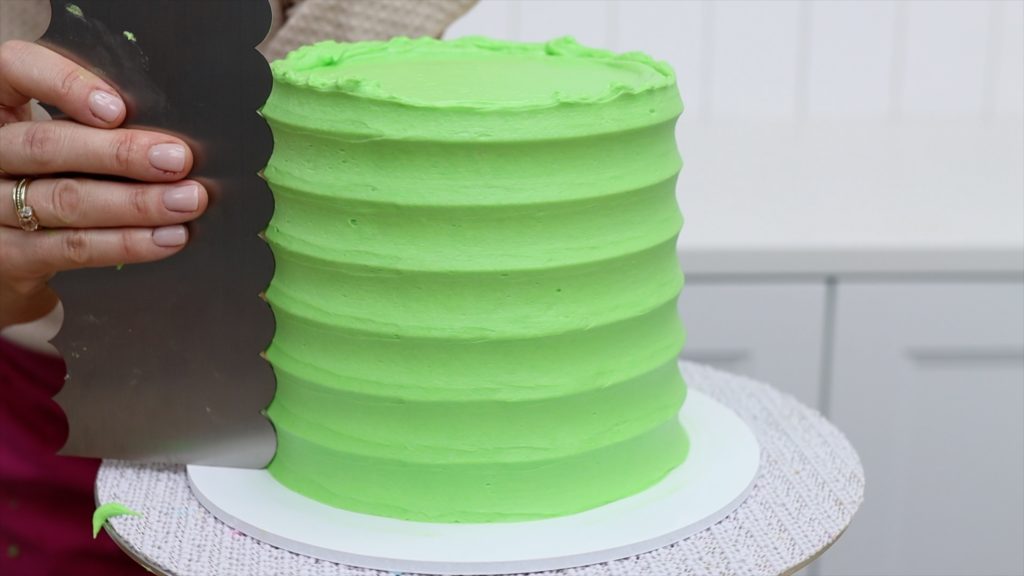
I like to wait for the cake to thaw before applying the final coat of frosting because then you’ll have much more time to perfect the frosting. I don’t recommend frosting frozen cakes because those frozen cake layers will chill and set the frosting very quickly, making you race against time to get your frosting smooth before it sets.
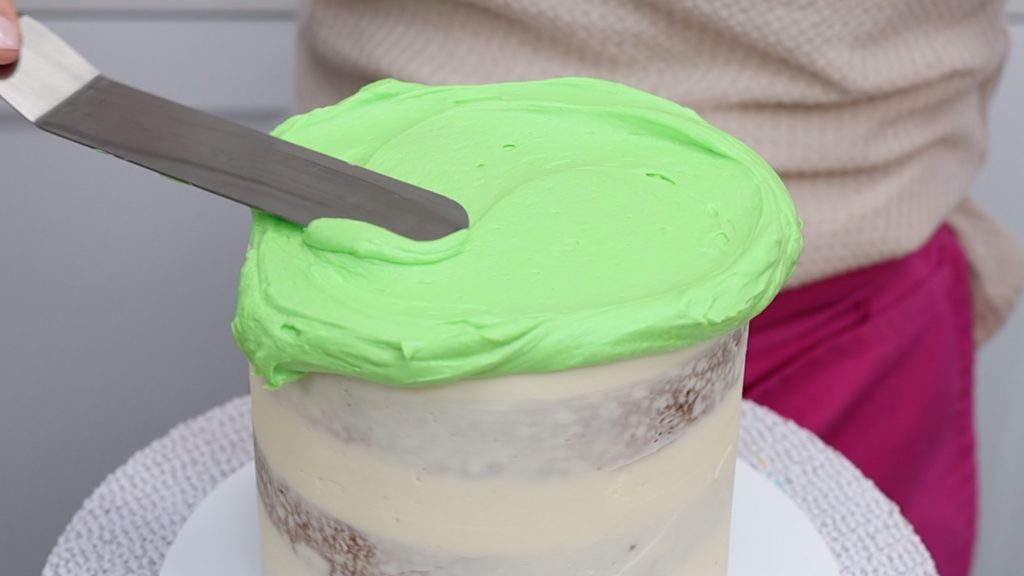
So after applying the crumb coat, leave the cake at room temperature for 30 minutes or in the fridge for an hour or two and then it won’t be as cold. When you frost the cake it will be stable, not wobbly, so you’ll find it much easier to get your frosting really smooth than if you try frosting a room temperature cake.
How to freeze a cake
After you assemble and crumb coat a cake, getting those stages out of the way, you can freeze the crumb coated cake. This way, you can do the preparation in advance and then when you’re ready to frost and decorate the cake, you don’t have to dedicate a whole day and start from scratch – you can skip straight to the fun part of frosting and decorating!
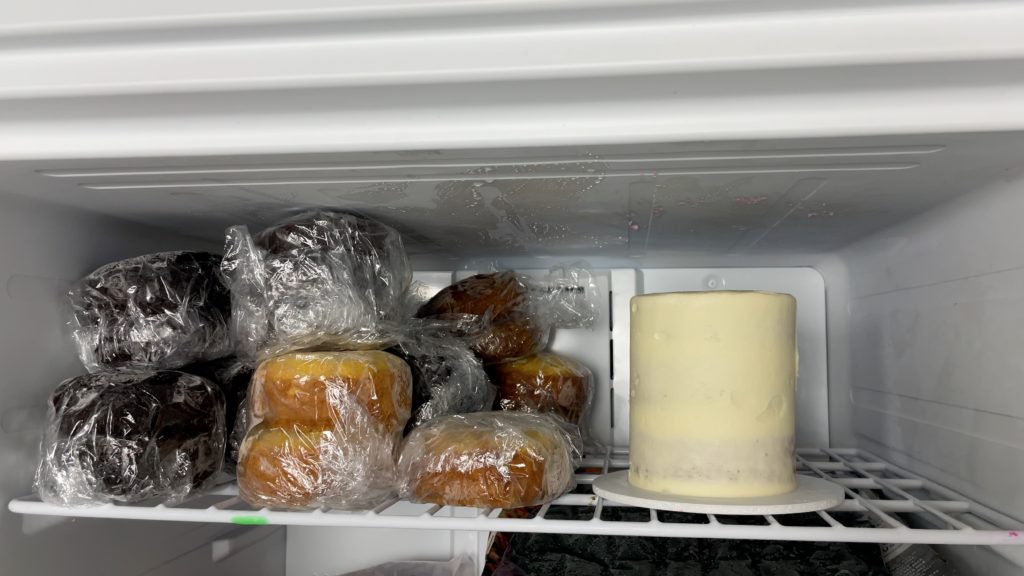
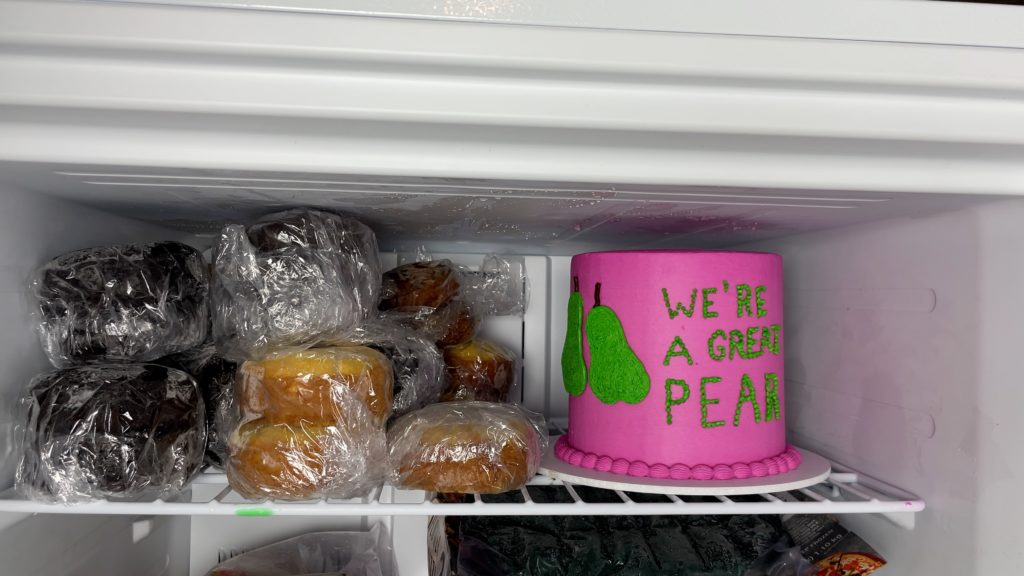
Even more useful, you can freeze a cake after frosting and decorating it, which is really useful if you need a cake for a certain date but your schedule is really busy that week so you won’t have time to make the cake. After decorating the cake, put it into the freezer for one hour to chill and set the frosting and the decorations and then take it out.
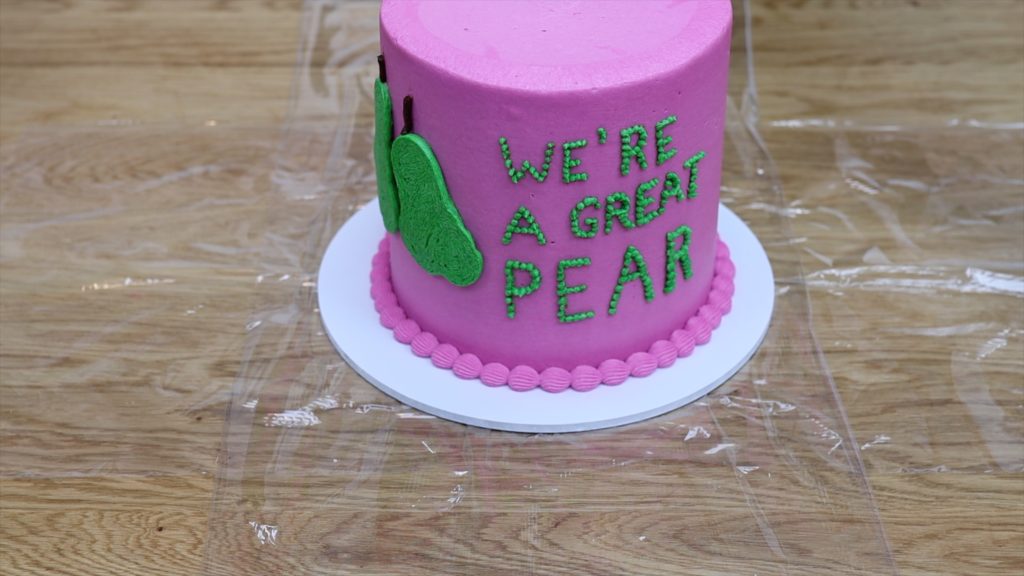
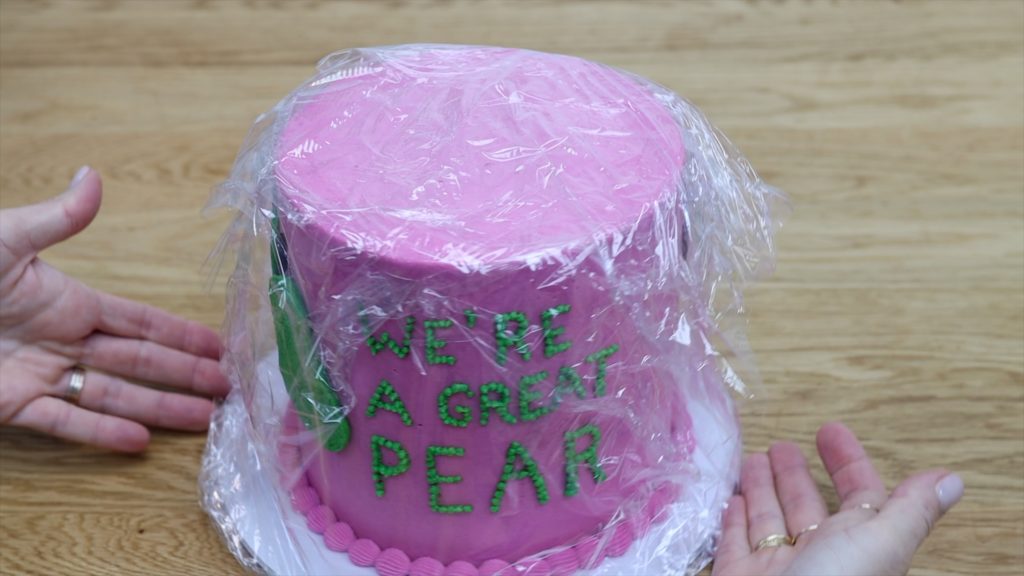
Wrap it in as many layers as you need to completely seal the cake so there’s nowhere for the air in the freezer to sneak through. I find that the easiest way to do this is to place two pieces of plastic wrap on the counter, making a cross, and then place the cake in the middle. Fold each end of each piece of plastic wrap over the cake and then crimp the sides together.
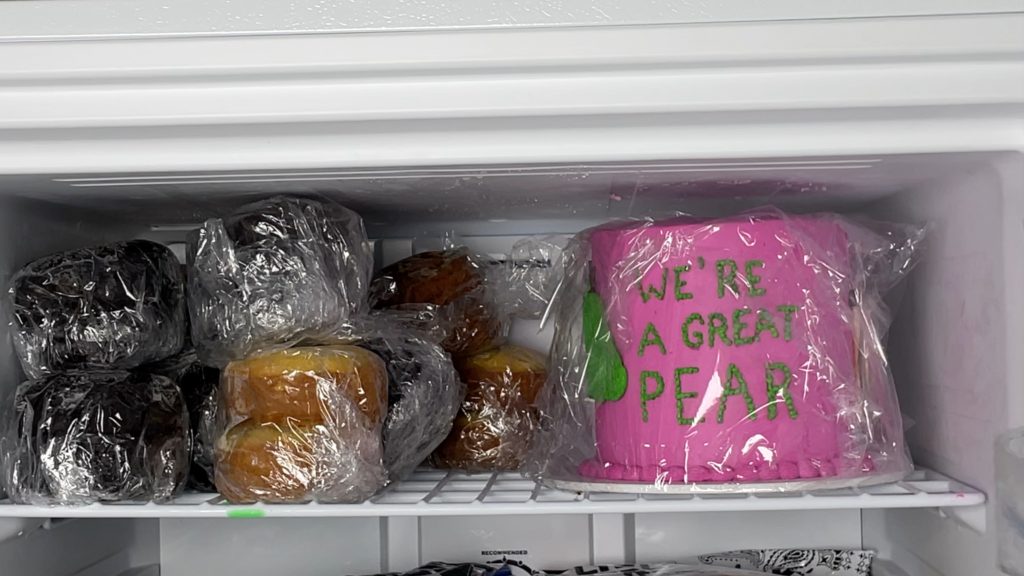
It’s the moisture in the air in the freezer that changes the taste and texture of a cake, so that’s what you want to protect the cake from. Put the cake in the freezer for up to two months, until the night before you need it.
That night before, move the cake from the freezer to the fridge, still in its wrapping, and it will thaw overnight. Four hours before serving the cake, take it out of the fridge and put it somewhere cool in your home to continue to warm up slowly.
Straight after taking the cake out of the fridge, unwrap it while the frosting is still cold and firm and the plastic wrap won’t damage it. When the cake comes to room temperature about 4 hours after coming out of the fridge, you’ll be able to slice through it easily and the cake will be as moist and delicious as it was on the day you baked it.

If you found this tutorial useful, check out my online course on the Basics of Cake, which covers every step of making a cake: mixing, baking, levelling and dividing, assembling, frosting, decorating, storing, transporting and serving cakes!
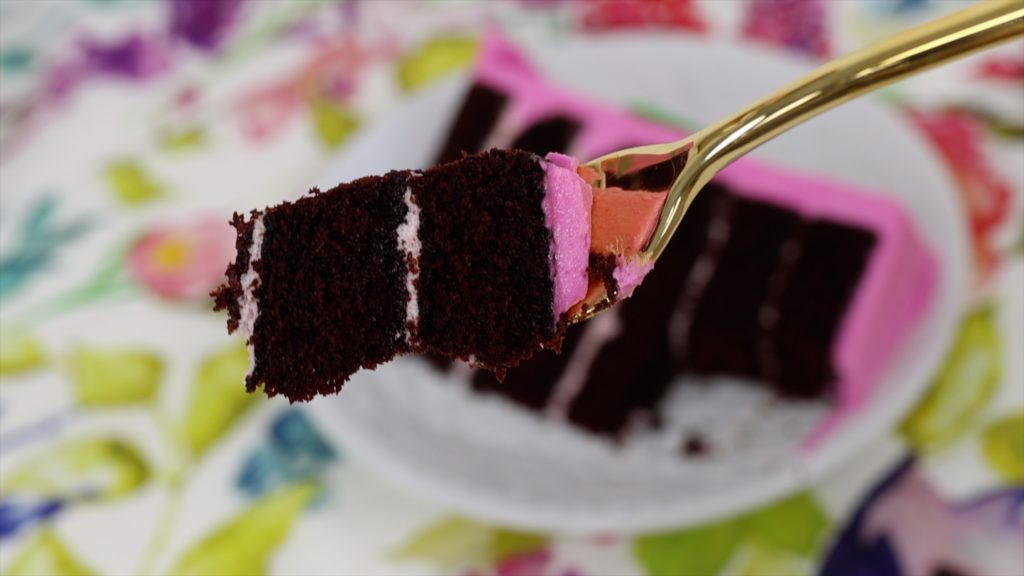
Here’s the video version of this tutorial:
Smooth frosting with sharp edges is the #1 struggle among cake decorators and in this video I’ll share a foolproof technique to achieve them!
If you prefer to watch a video of this tutorial, scroll to the bottom of the page.
You can use any kind of buttercream for this technique. I’m using my 4 Minute Buttercream, which I love because it’s quick and easy to make, it’s stable, and it makes hundreds of decorating techniques possible!
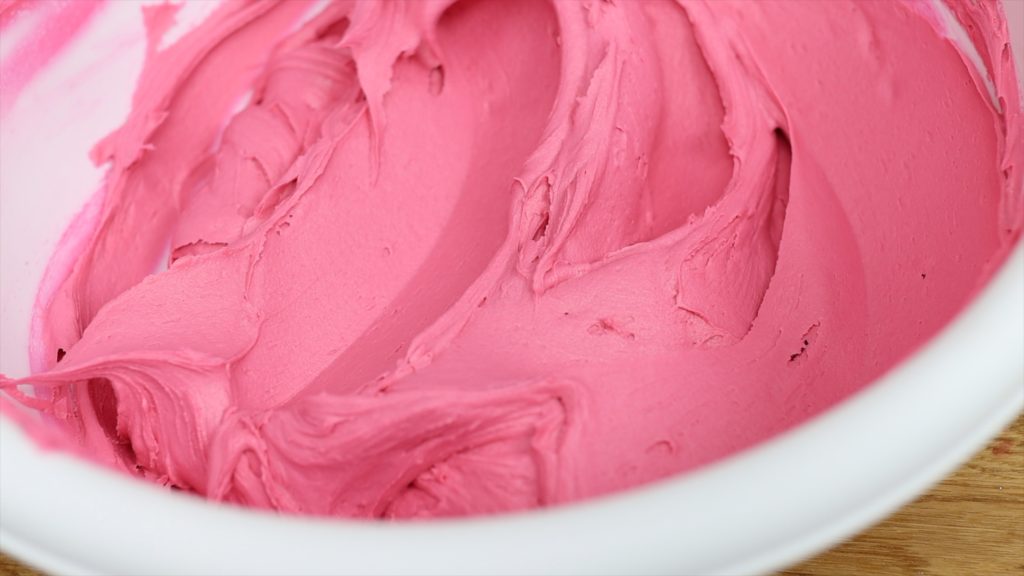
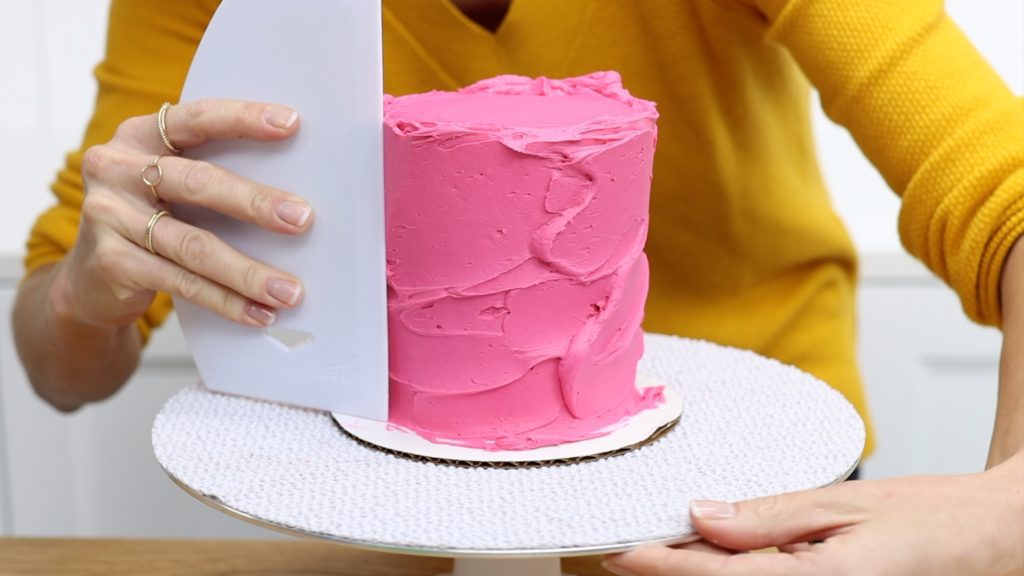
Frost your cake as normal apart from one thing. Just like you normally would, spread the frosting on and then scrape it with a cake comb to smooth it.
Then do your touchups over any air pockets or indents, by spreading more frosting over those areas and scraping again until the sides are nice and smooth.
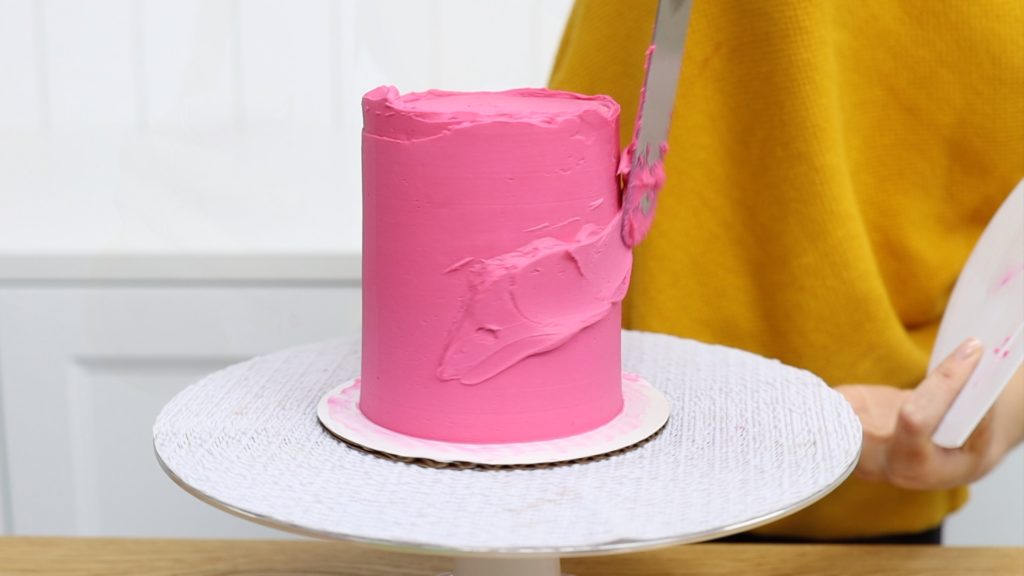
The difference for this technique for sharp edges is that you need to push the frosting up as you’re spreading it so that it sticks up above the top edge of the cake, all the way around the cake. You won’t have another chance to fix this later so it’s essential to get it right now so as a double check, after smoothing the frosting on the sides of the cake with your cake comb, it’s a good idea to spread another layer of frosting around the top edge and scrape that smooth. Whether you’re using this techie or any other technique to flatten the top edge of the cake, you won’t get neat results unless your frosting goes up high enough.
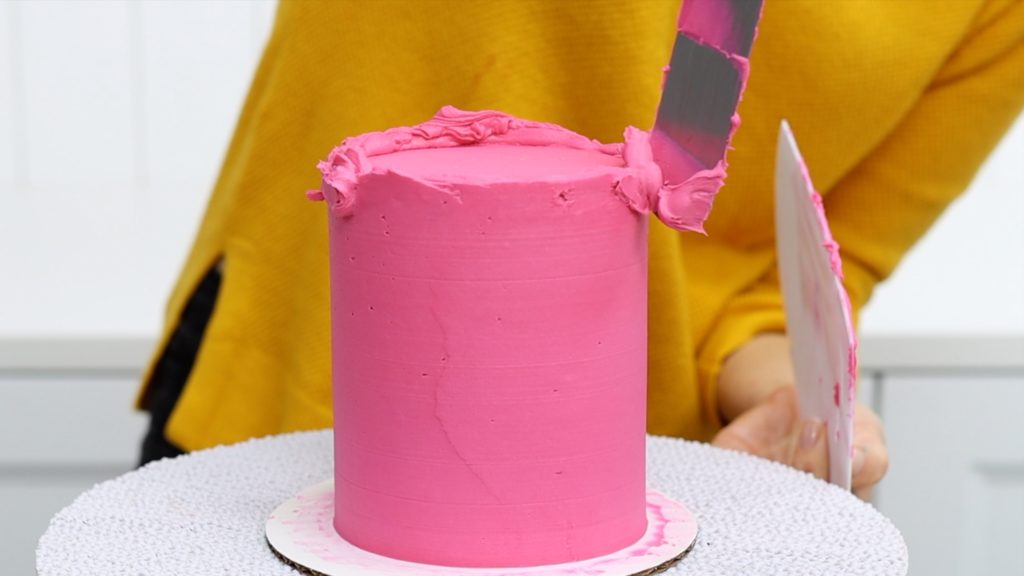
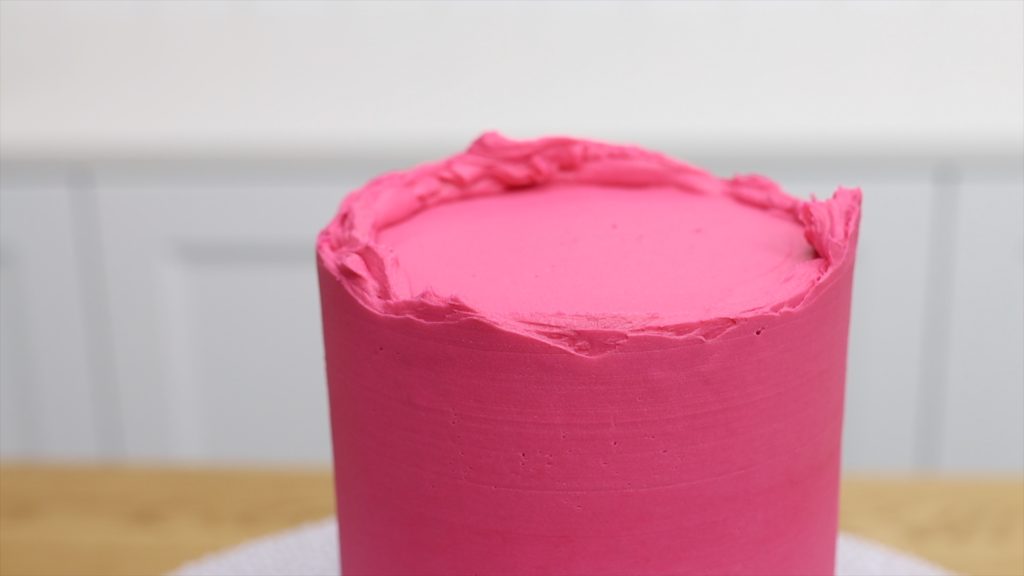
Your cake will now have smooth sides but an uneven top edge, which should be sticking up higher than the smooth top surface of the cake. Put your cake in the freezer for 30 minutes, to chill the frosting.
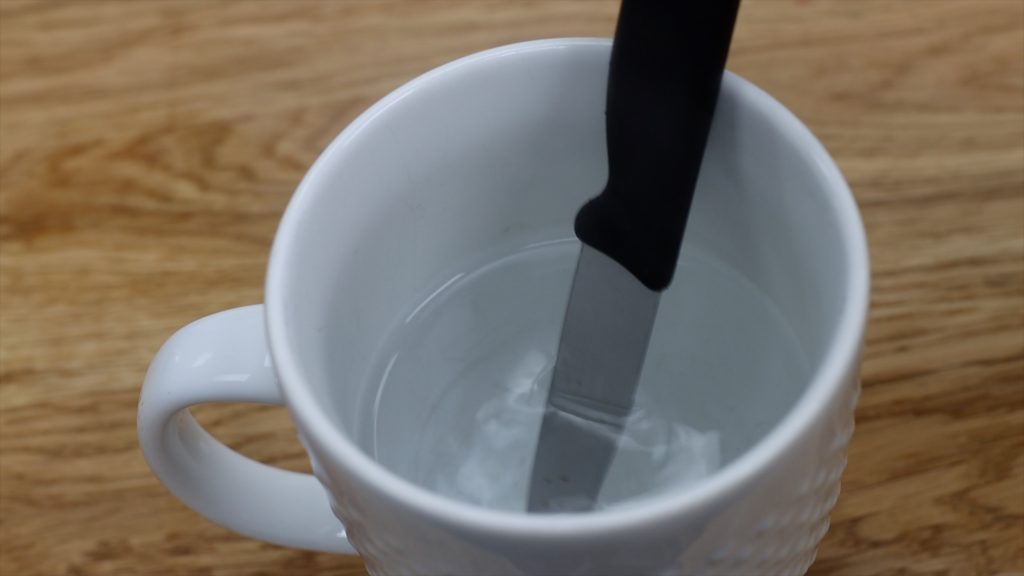
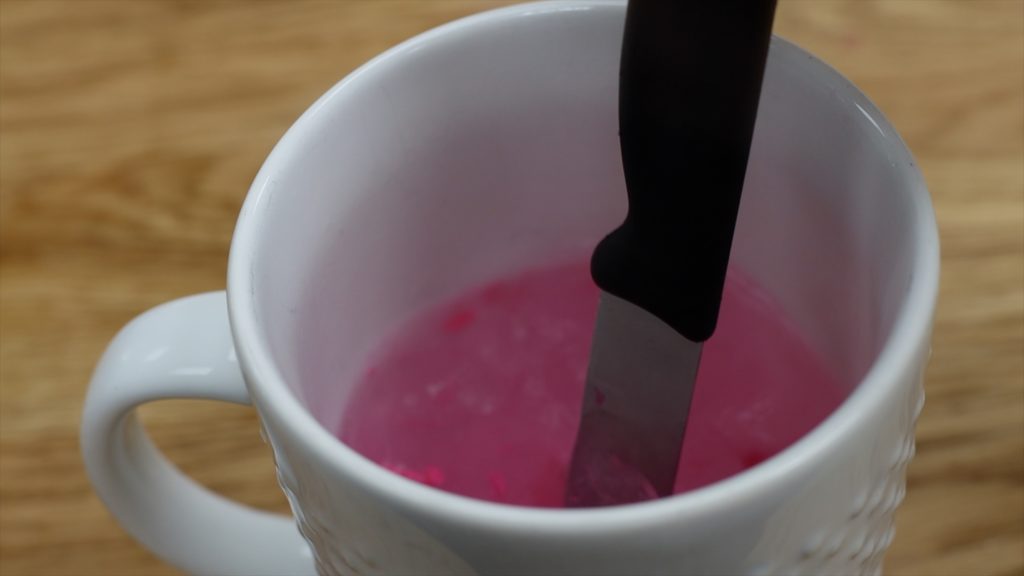
Meanwhile, boil some water and pour it into a cup or a bowl or even a vase, ideally something as tall as the length of the blade of your knife. Take your cake out of the freezer and dip your knife into the hot water and then dry the knife on a towel or paper towel.
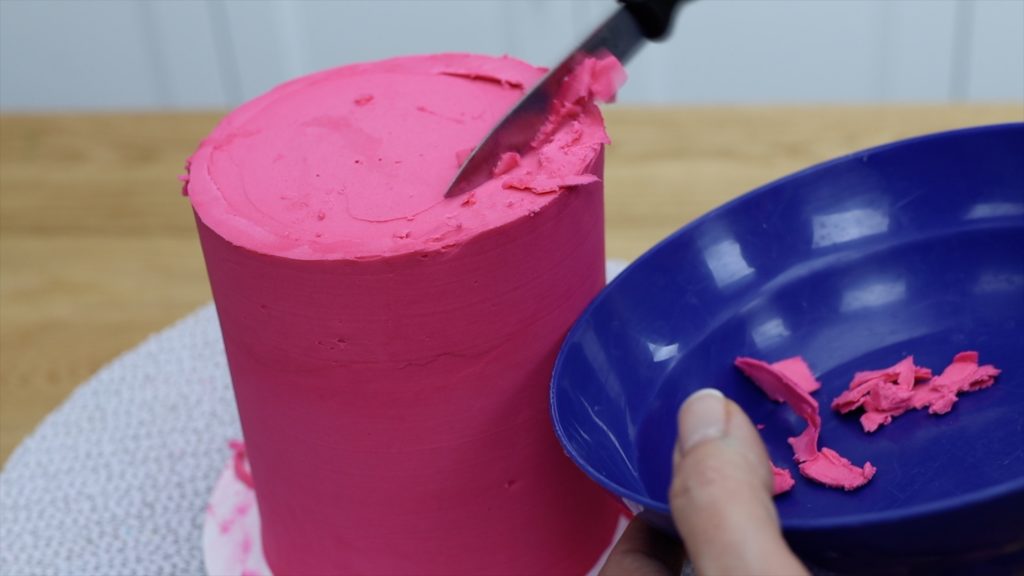
Use the knife to cut off that frosting sticking up above the top edge of the cake. It’s going to be messy to begin with, because there are lots of chunks of frosting to remove.
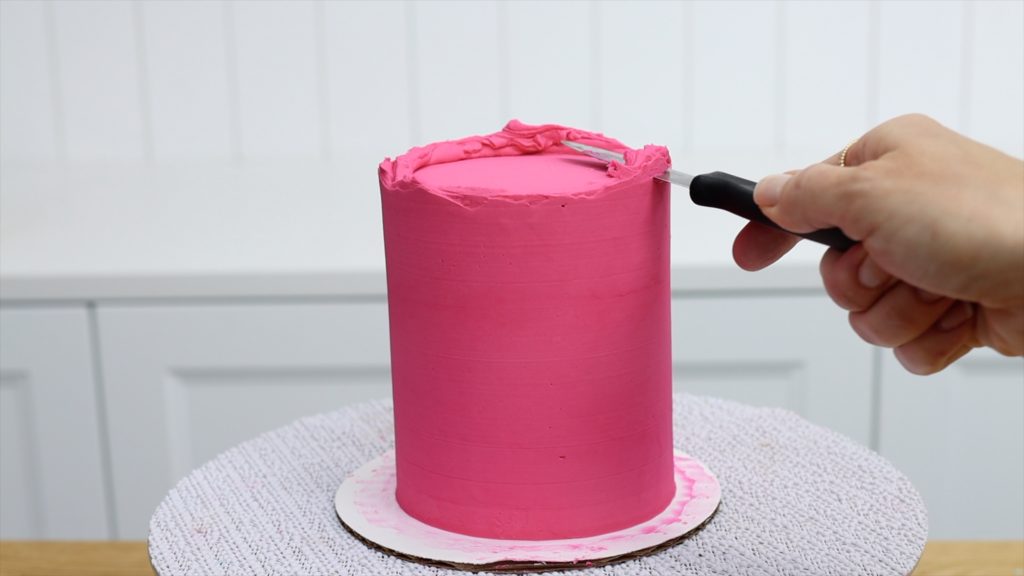
Dip your knife into the hot water every 30 seconds or so, shaking it around to loosen any frosting attached to it. Always dry the knife off before using it on the cake again, and use the knife immediately after dipping and drying it so that it’s hot when you come into contact with the frosting.
You should brush the chunks of frosting that you cut off, off the cake before they warm up and stick to the frosted cake. If you scrape them into a bowl you can reuse the frosting when it warms up!
After several spins of the cake, the frosting on the top will almost be level, so cutting gets easier. If you notice any dregs of cut off frosting sticking to the cake, lift those off with your knife now, before they set onto the cake. Since you’re spinning the cake while pressing your knife down slightly to trim the frosting, your knife will stay at the same height all the way around the cake so you’ll have a perfectly level cake top, with sharp angles from the top down onto the side of the cake.
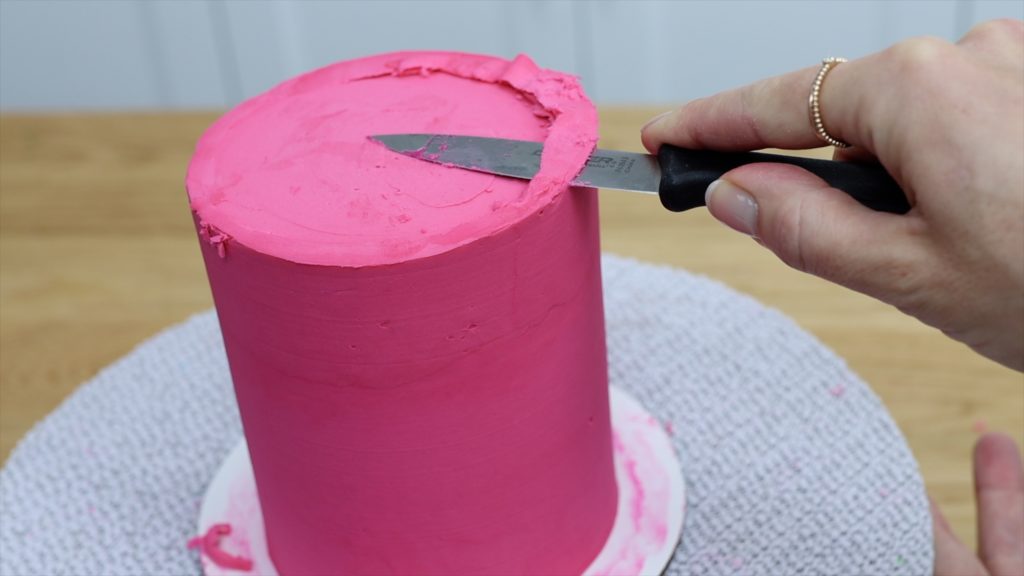
Any idents you see around the top edge of the cake are there because the frosting wasn’t spread high enough there, and you can keep trimming but just keep in mind that there’s a crumb coat and cake underneath the frosting, so if you cut off too much frosting you’ll expose those!
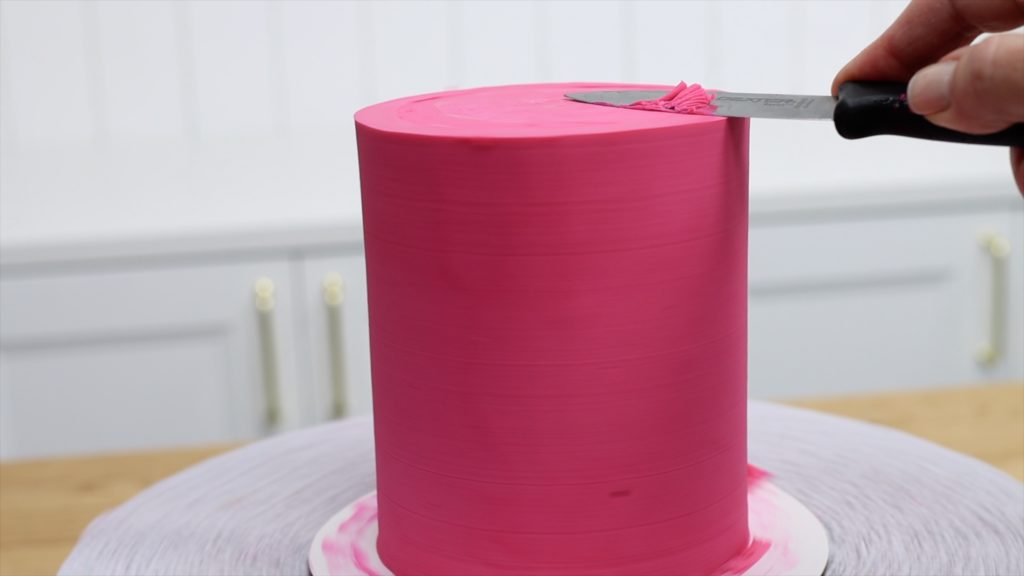
Your cake board will be covered with frosting smudges now, so wrap a towel or paper towel around your finger and push down firmly on the cake board as you spin the cake and you’ll wipe off all of those smudges. Since the cake has been chilled, the frosting on the cake will be firm and even if you accidentally brush against the side of the cake with your towel or paper towel, you won’t damage the frosting.
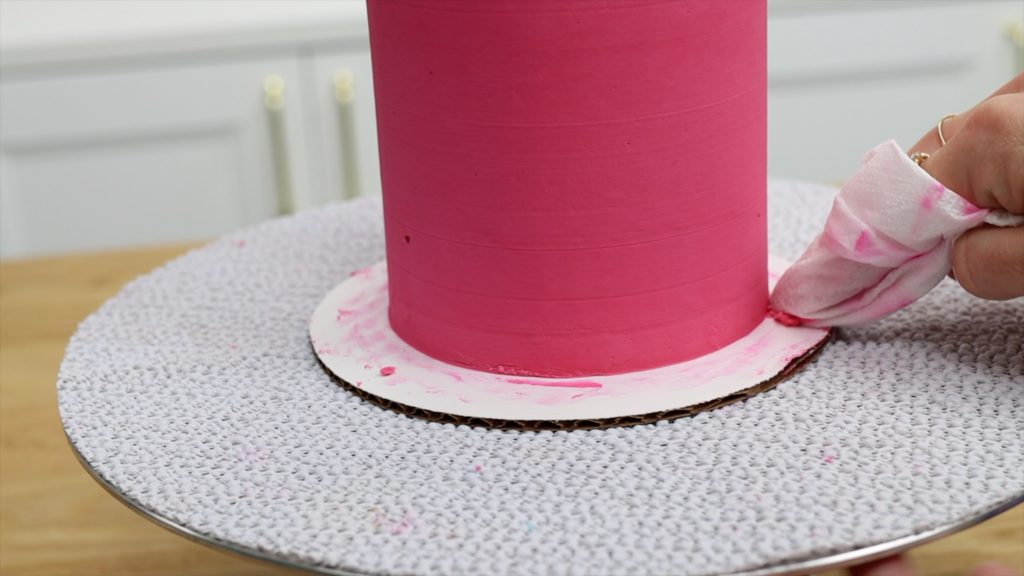
Now you can decorate your cake and any design will look its best on a cake with smooth frosting with sharp edges!
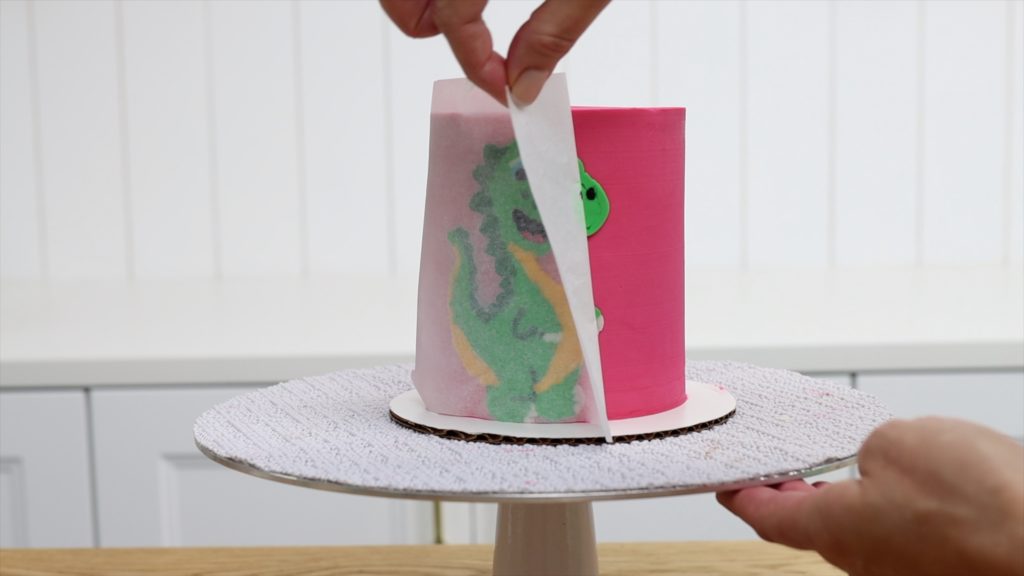
If you have any questions about this method, ask me in the comments! Check out my online cake school for hundreds of cake designs and techniques and join my ClubPLUS for access to them all!
Here’s the video version of this tutorial:
Following current cake trends or starting your own can grow your cake business AND your following on social media. Let’s look at how to start and spot cake trends by seeing what types of styles or designs are always popular, however you tweak them to make them your own.
If you prefer to watch a video of this tutorial, scroll to the bottom of the page.
Dripsare an almost guaranteed success. They started a few years ago, where chocolate ganache or a pouring consistency is “dripped” around the top edge of a cake using a spoon,
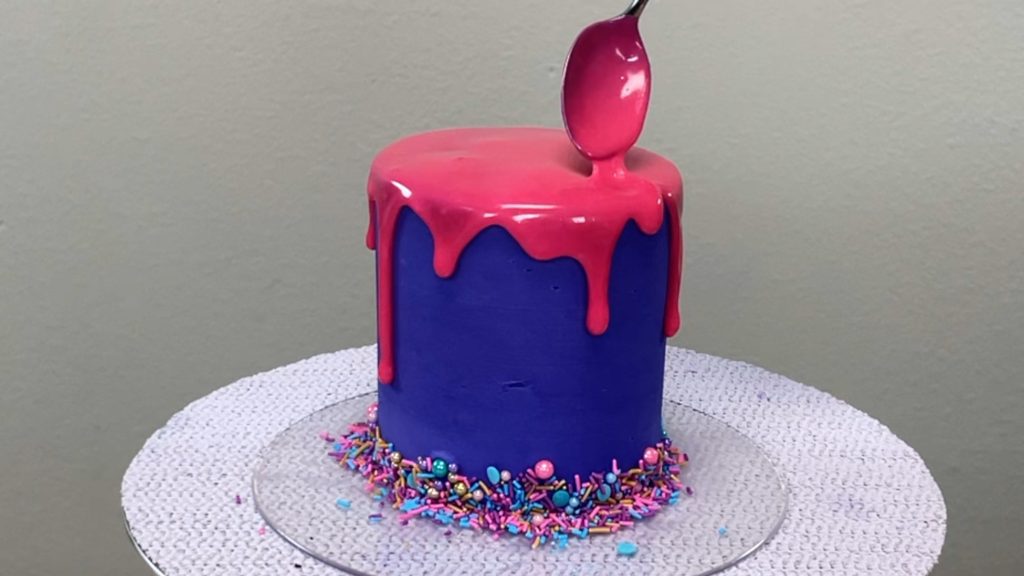
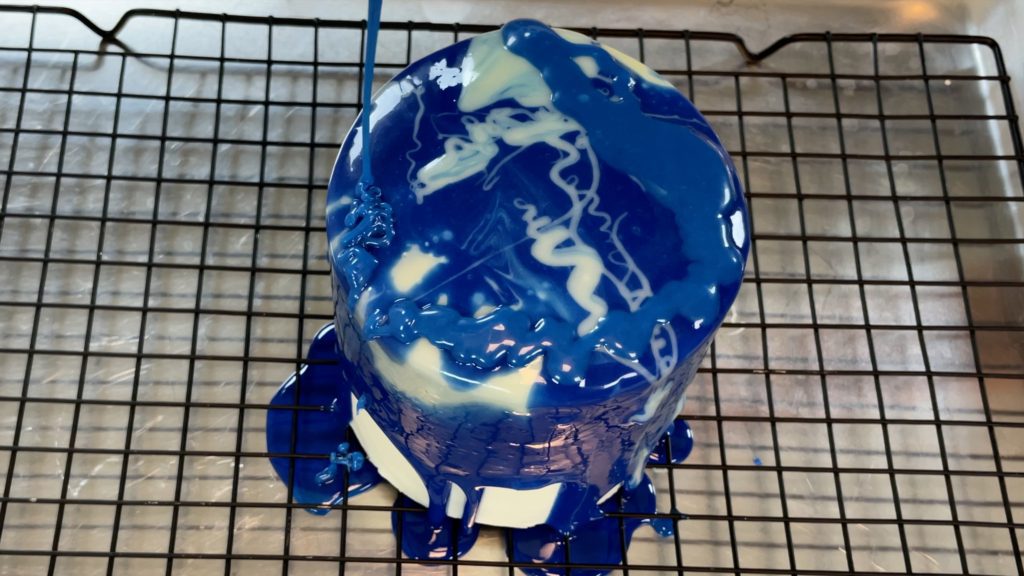
The simple drip developed into the mirror cake, where you pour coloured mixtures onto a cake and as the liquid floods and drips down the cake you’ll see beautiful colours and patterns emerge.
Tsunami cakes are the most recent variation of the drip trend, where you frost and chill a cake and then push a ring of acetate or a cookie cutter down onto the top. These were initially done with doll cakes but the trend works for all sorts of cakes like this Christmas tree cake! Pour ganache into the ring and sprinkles or glitter if you like, and when you serve the cake you lift it up to let the drip spill down!
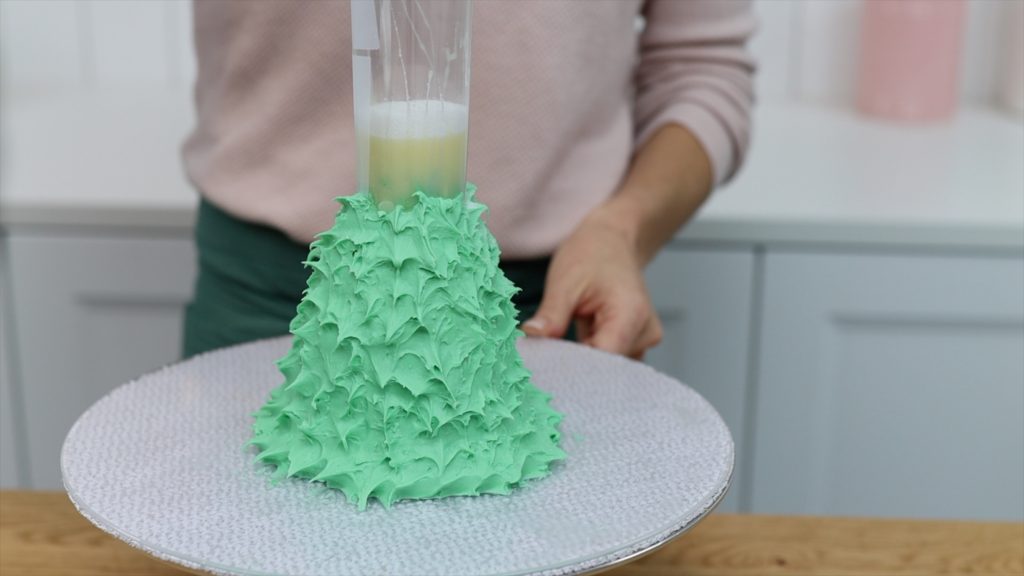
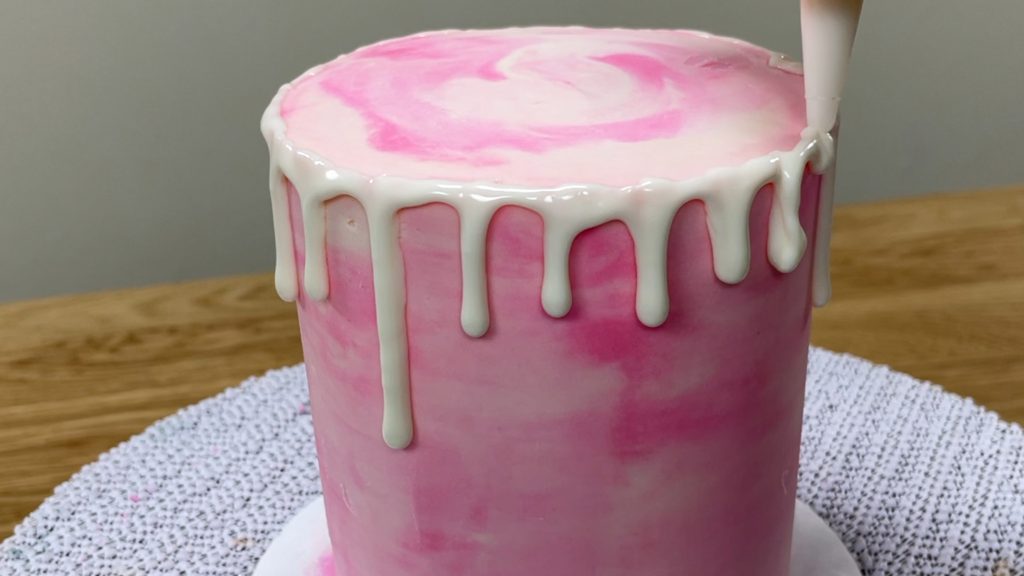
Any kind of drip is satisfying to watch and it’s easy to do if you get the right consistency of the drip so it’s not rushing down the cake all of the way to the bottom but it’s also not so thick it gets stuck and doesn’t actually drip. To adjust the consistency of the drip, add more or less cream and always make sure the cake is chilled and the drip is at room temperature.
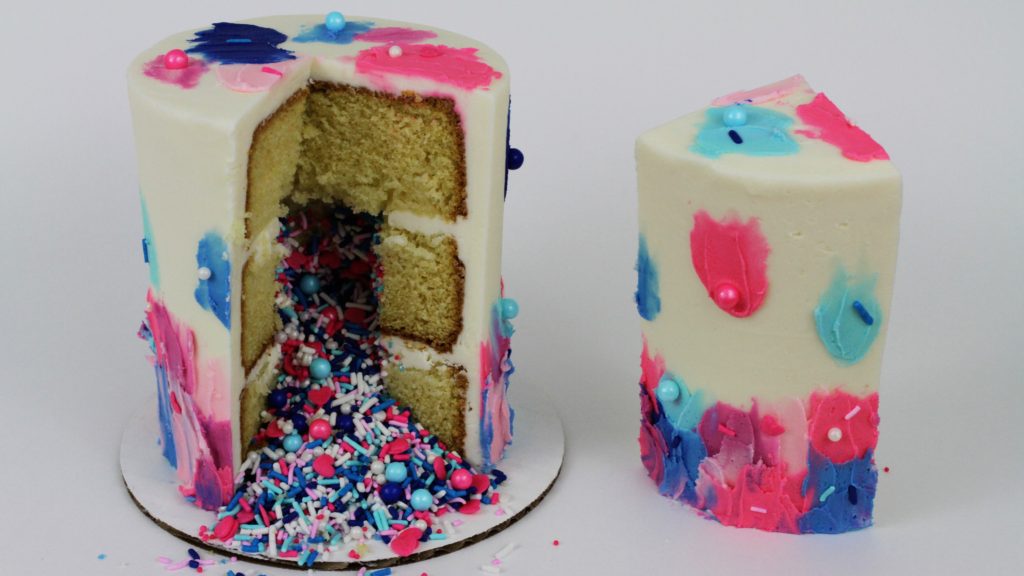
Explosions are almost another recipe for success – remember those sprinkle explosions or piñata cakes with candy or sprinkles spilling out when you cut them?
Recently the hot chocolate bomb trend took over, where two chocolate halves of a sphere were filled with hot chocolate powder and marshmallows to explode within a mud of hot chocolate.
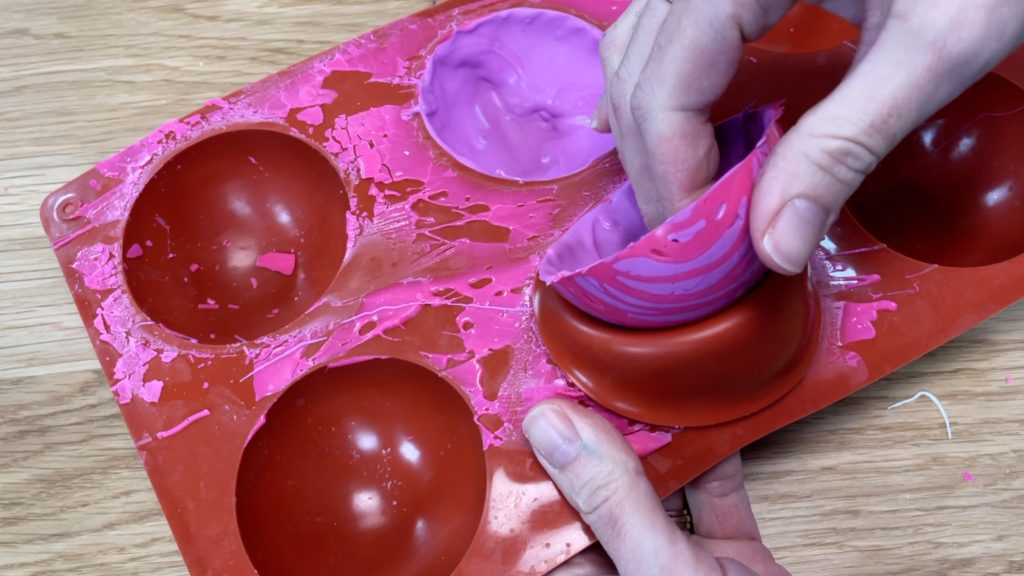
Although these started out as a novelty gift idea, it’s been an exciting trend to watch as bakers get incredibly creative and make all sorts of variations of these. They can also be used as eye-catching cake toppers.
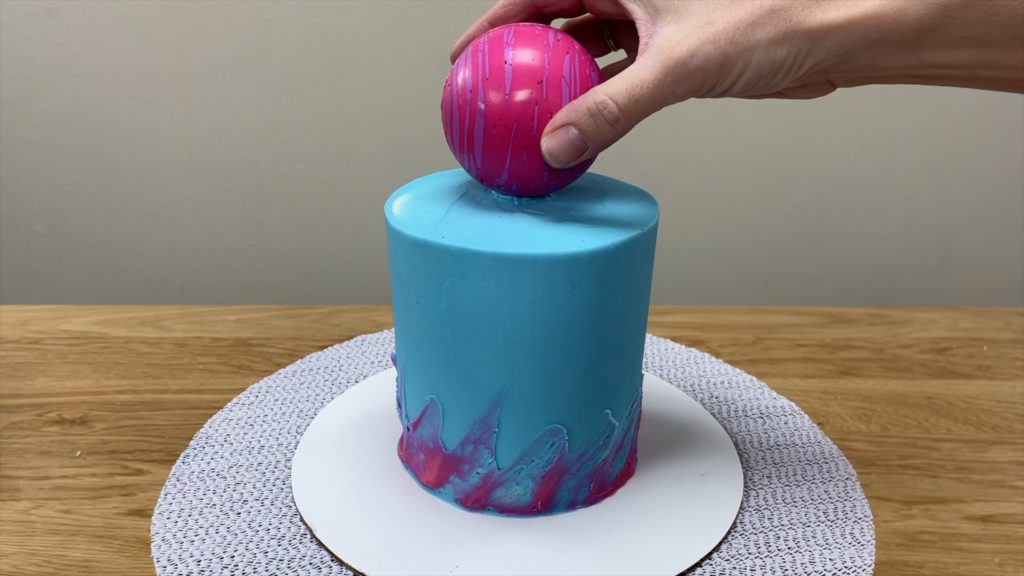
Round hot chocolate bombs morphed into these breakable hearts with fun fillings inside, which can also be used as cake toppers. To piggyback on this trend, just keep in mind that any cake or cake decoration that looks pretty but has a surprise inside is likely to trend.
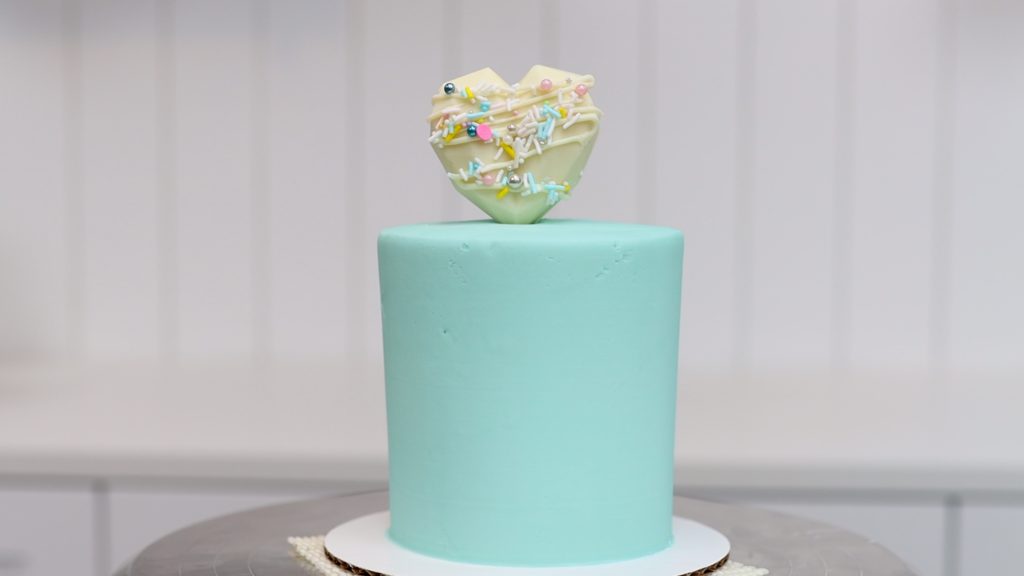
Sprinkle have been popular for a few years now but instead of casually sprinkling them onto cakes, unique sprinkle placements have become very trendy. Sprinkles can be used for borders around the bottom of cakes or scattered onto melted chocolate to make sprinkled chocolate cake toppers but since then, more intricate designs have become trendy.
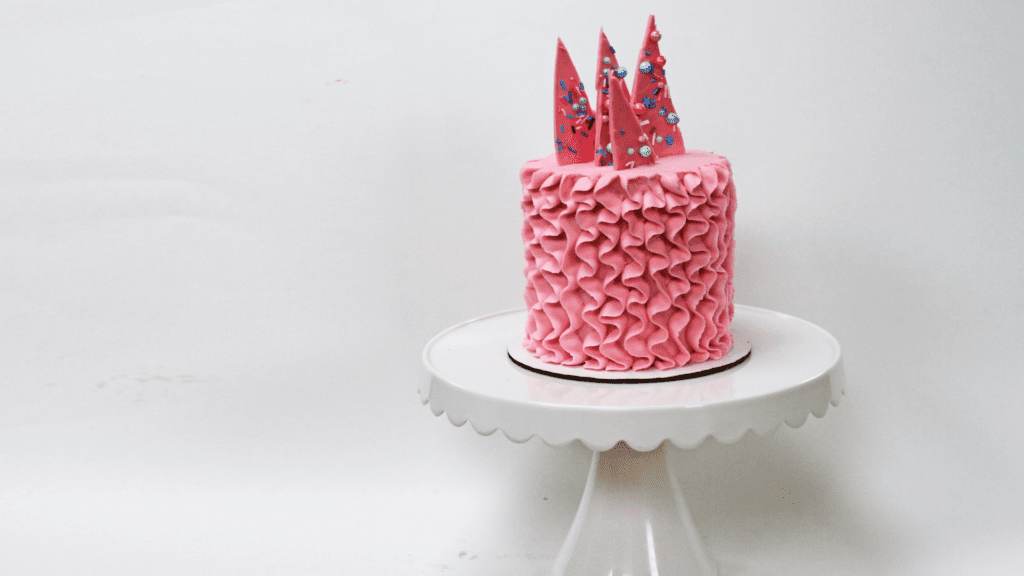
Sprinkles can be pressed one by one into drips to make sprinkle drips, pressed into specific areas of stencil designs, or even held against a stencil to create designs on cakes made entirely of sprinkles, used to cover up the join on half and half cakes, to create quick and easy stripes… the possibilities are endless!
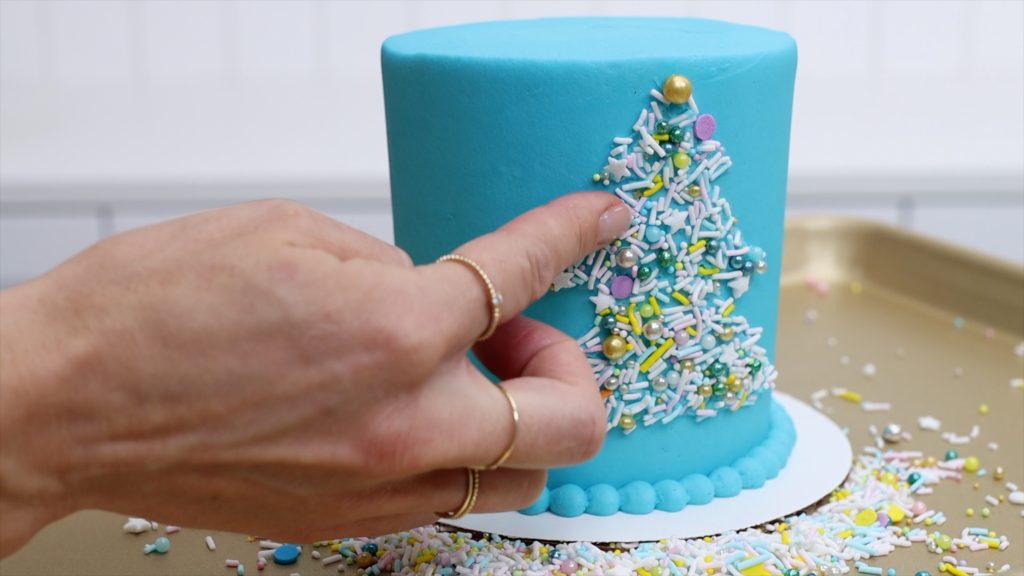
Sprinkle placement can be time consuming so anything unique but not too complicated to achieve is bound to catch on!
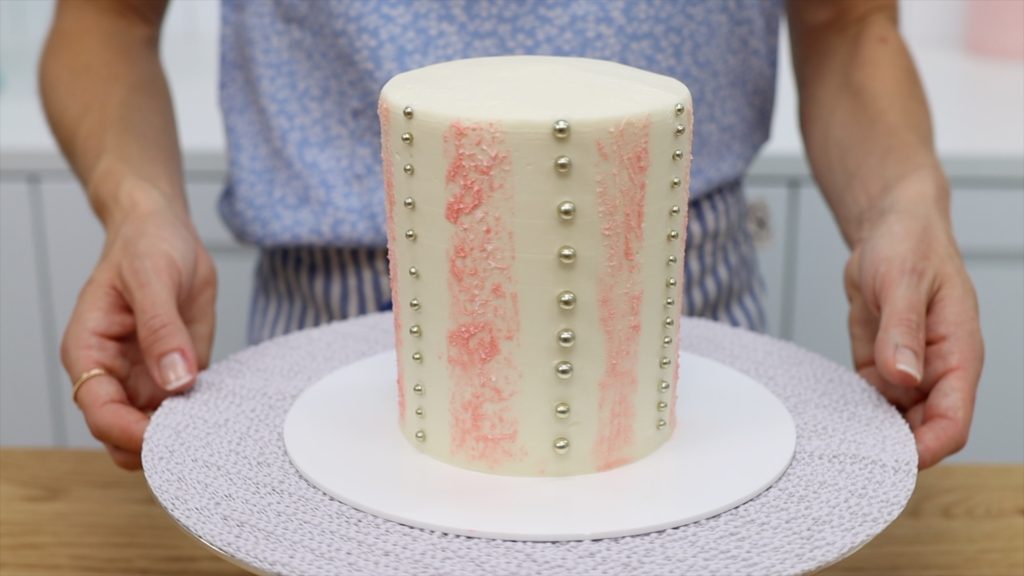
Lots of cake designs are eye-catching but certain colours and colour combinations are particularly attention-drawing. Black and red are the most striking because they’re so dramatic and also notoriously tricky to achieve.
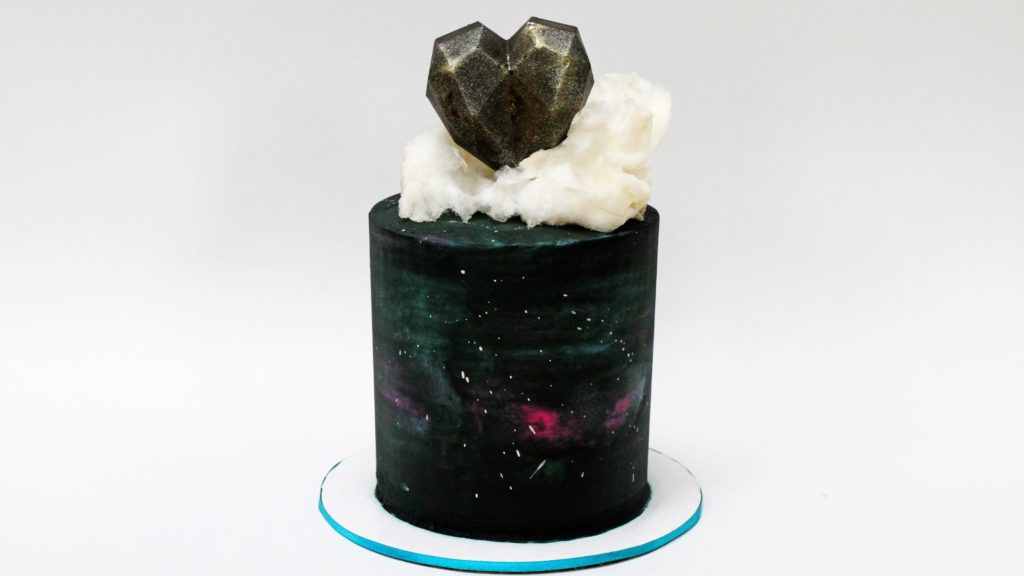
Gold always gets a great reaction because it’s surprising to see metallics on things that are edible. Edible gold can be used to highlight details, like brushing the edges of buttercream flowers, or you can cover an entire cake with gold luster dust to make it really shine!
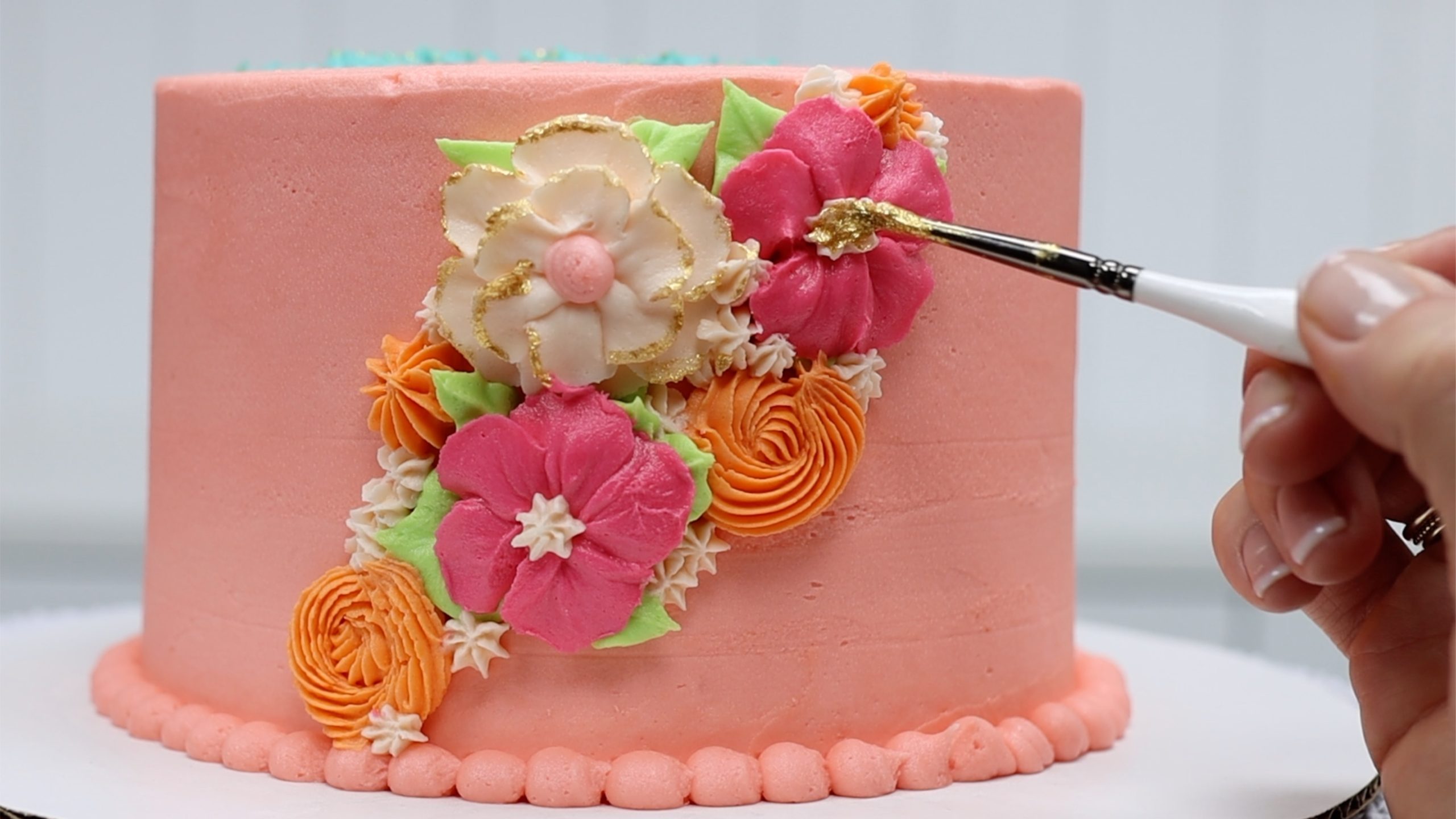
Any bold colour will be eye-catching like hot pink or dark purple, especially when it’s paired with contrasting colours like purple with orange.
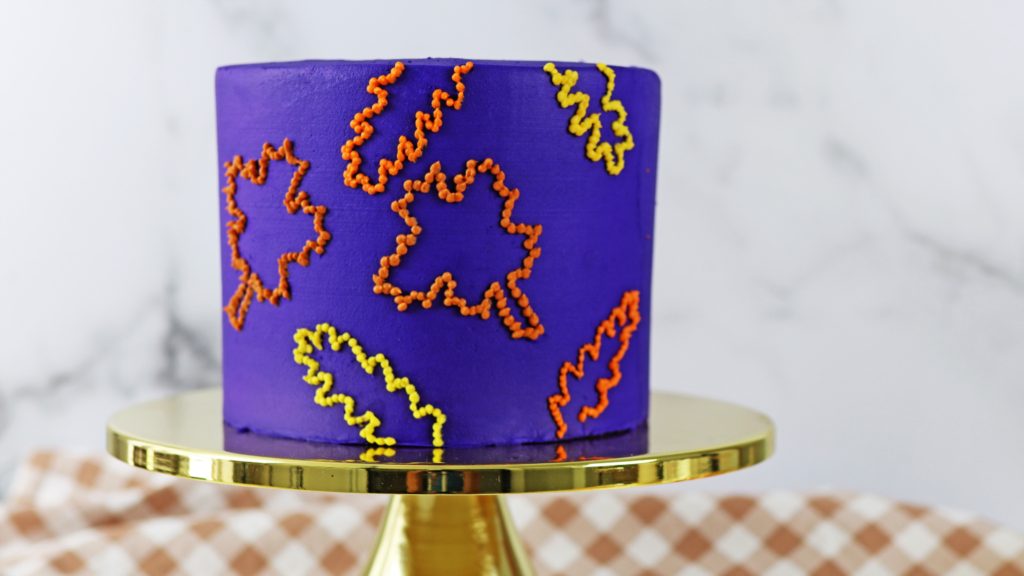
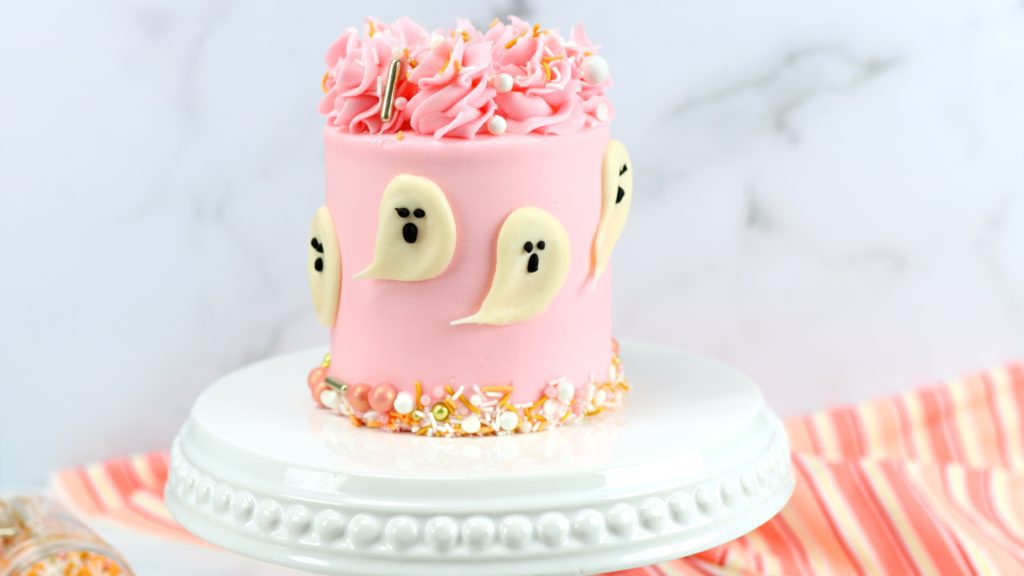
Any colour combination that isn’t typical for a season or holiday is likely to trend, like using pink and orange instead of black and orange for Halloween. Using pink for Christmas is a pleasant break from the expected red and green colour scheme.
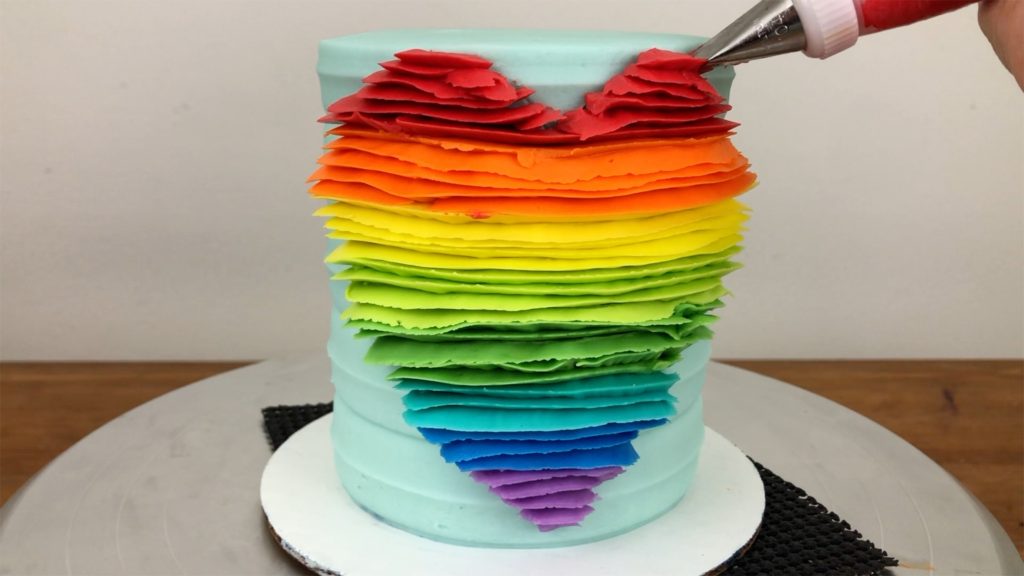
Everything rainbow seems to become a trend and cakes are no exception! Tint the layers inside a cake, or use rainbow colored filling between the layers, and rainbow coloured frosting is always a hit.
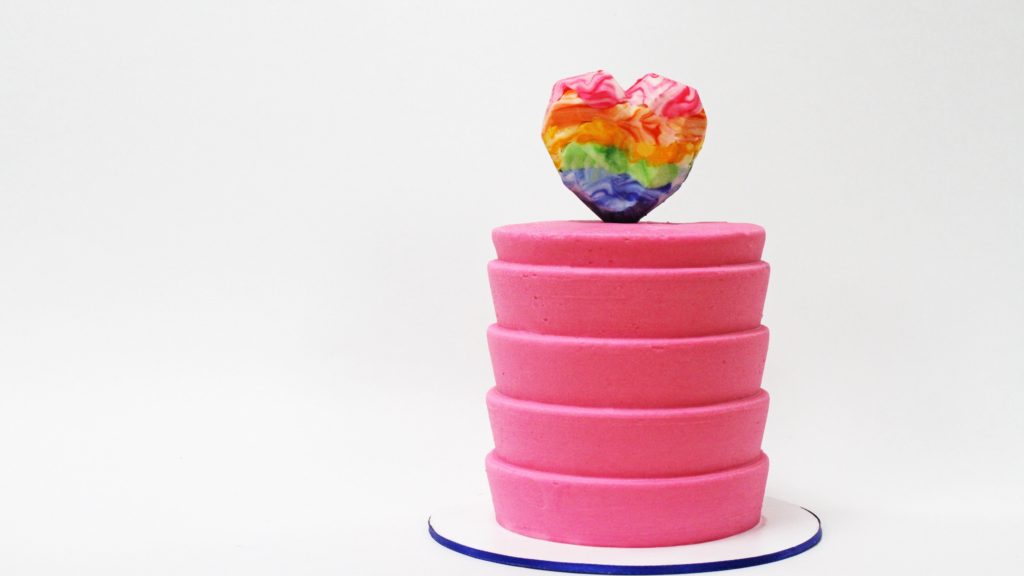
Rainbow swirls on top of cakes, rainbow cake toppers… basically whatever cake design or decoration you think of, doing it in rainbow colours will exaggerate the reaction!
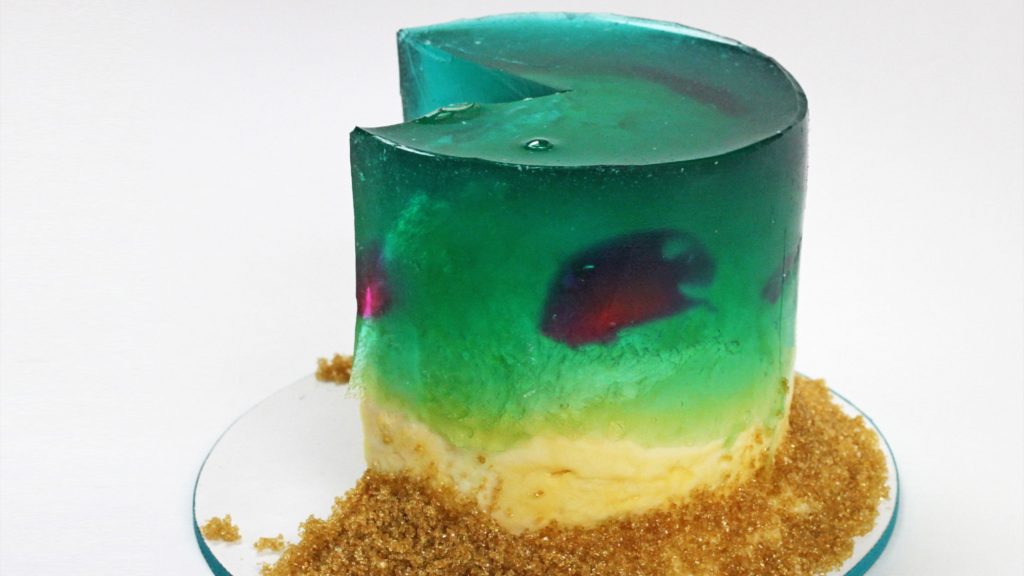
A key factor in whether something trends or not is how easy it is for other cake decorators to do. Jelly island cakes are amazing to look out but incredibly fiddly and time consuming to make so thats a trend that never really took off.
Same with half and half cakes, where you have to make two flavours of cake and two flavours of frosting AND two types of decorations.
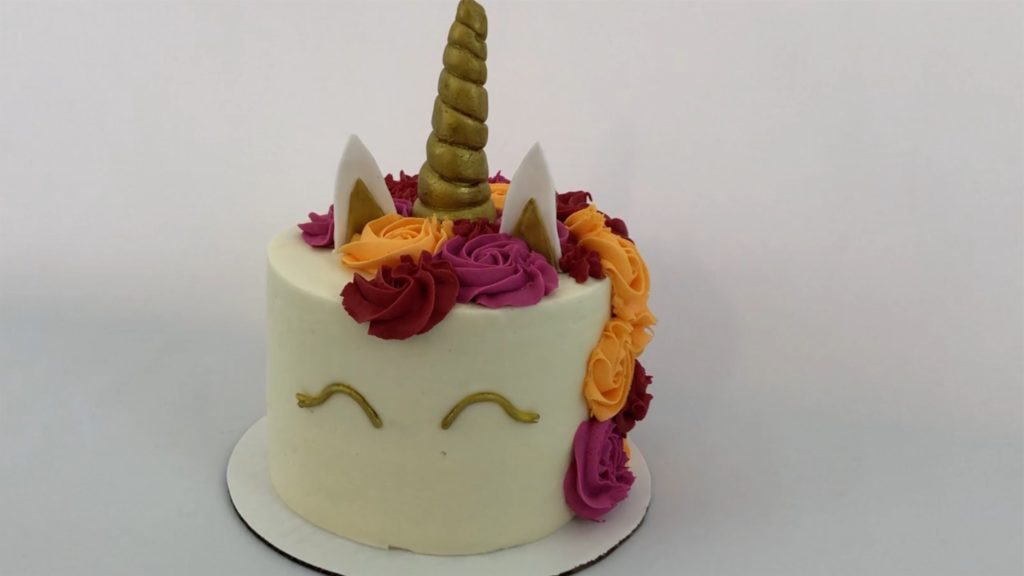
Compare that to unicorn cakes, which were trending for a long time because they’re SO easy: a simple round cake, lots of swirly rosettes, and a few easy fondant details – very manageable, even for beginners.
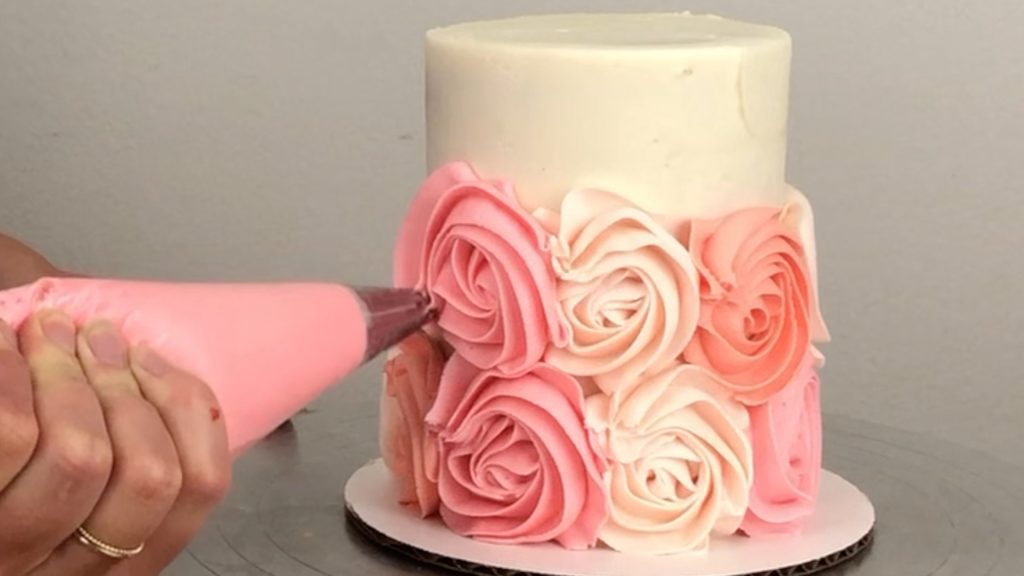
These rosette cakeswere a huge trend for the same reason: they’re easy! Piping roses petal by petal is much more time consuming and requires a flower nail, which not everyone has. Rosette cakes are simple and the only tool you need is a star tip like a 1M, which every cake decorator has.
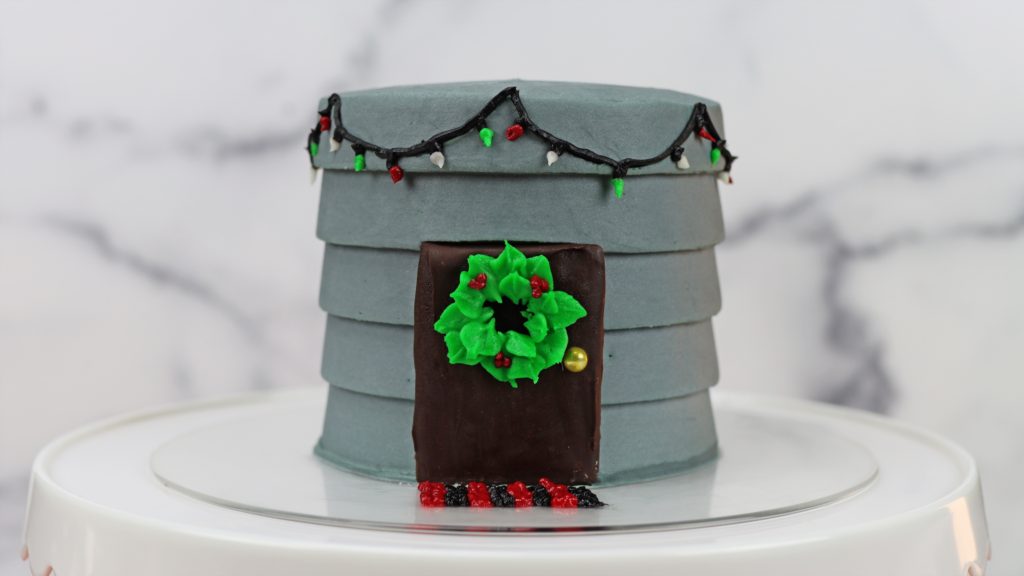
I made this porch cake thinking they might trend because they’re so much easier to make than a gingerbread house… we’ll see what happens!
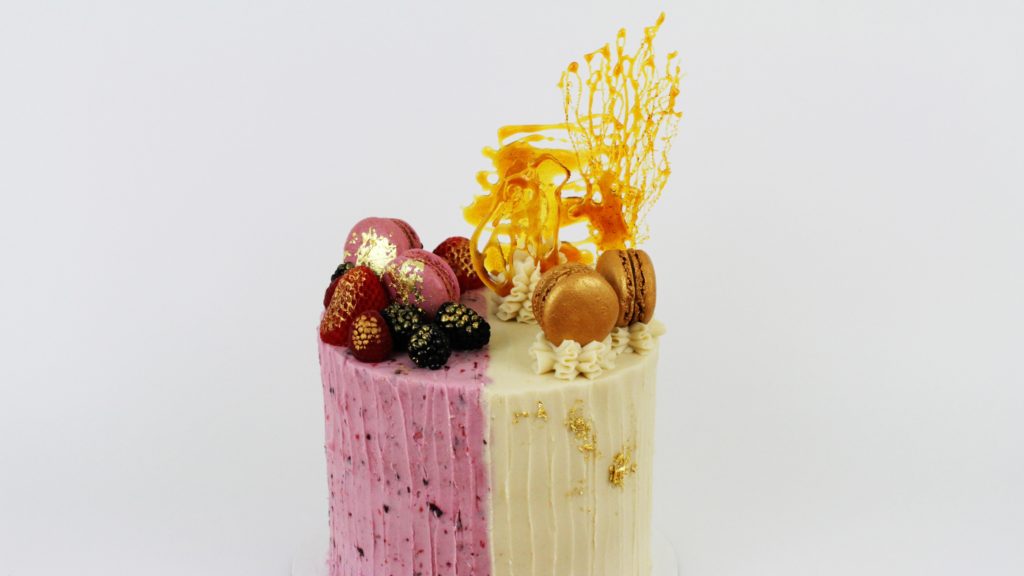
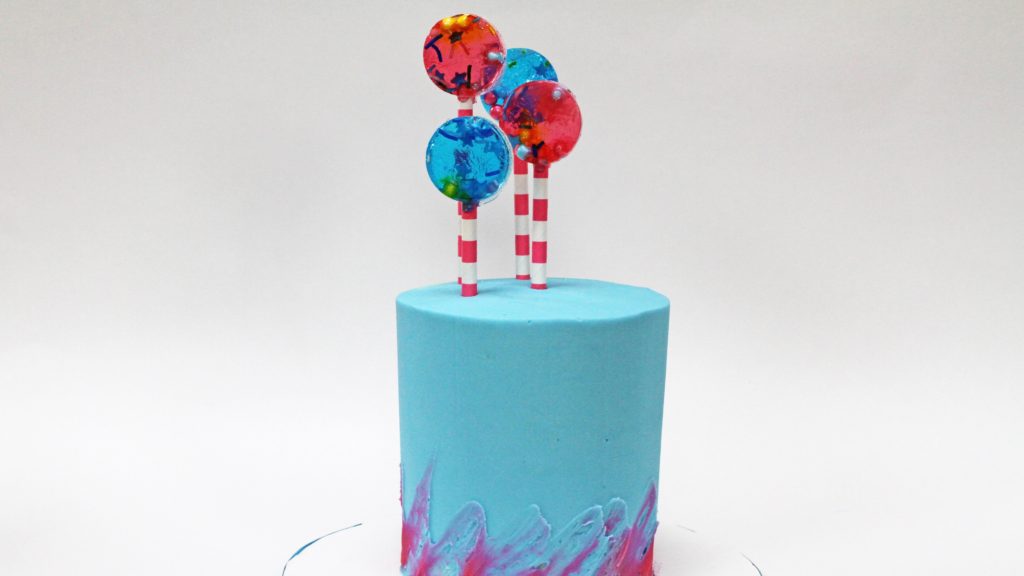
Another reason cakes will be copied and start to trend is that the technique or recipe is achievable by home bakers, not just decorators working in bakeries. Sugar lollipops make fun cake toppers and they’re much easier to make than isomalt cake toppers, which require an unusual and expensive ingredient and also quite a bit of practice.
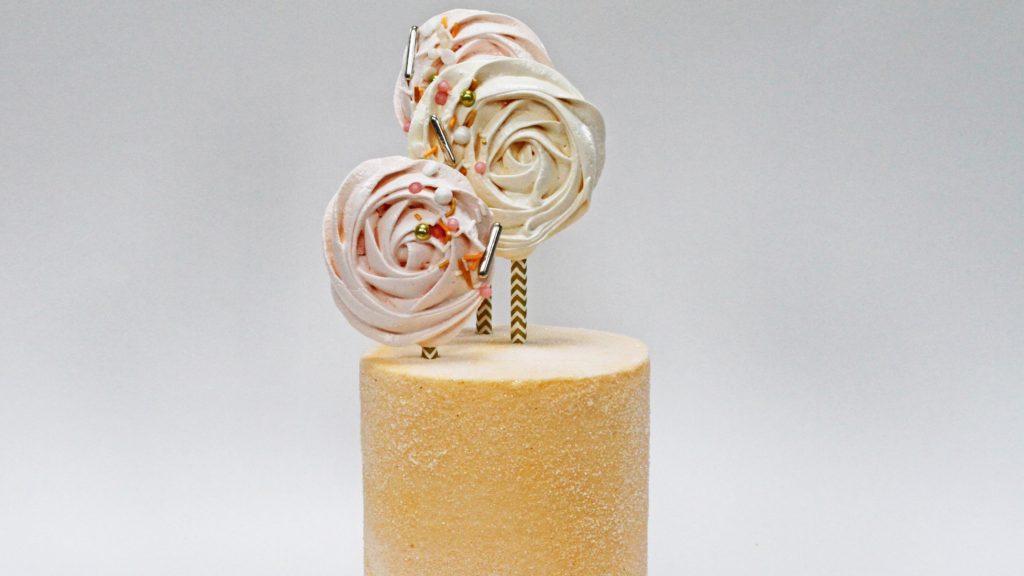
Meringue pops are made with egg whites and sugar, very simple, and the technique for piping them is the same and making rosettes on a cake so anything who’s done that, can follow a recipe for meringue pops to use as cake toppers.
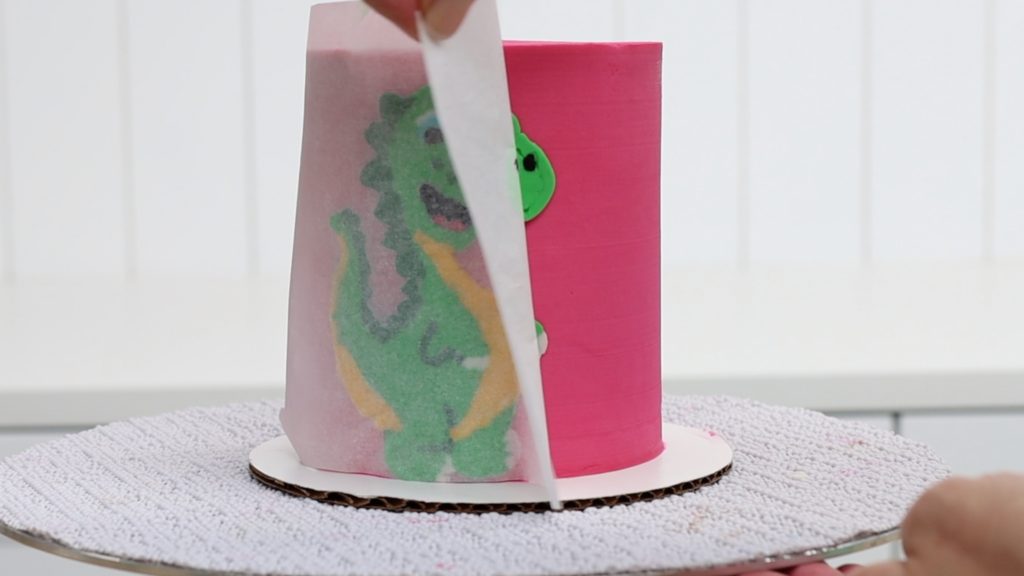
Buttercream transfers are starting to trend now, popping up all over Instagram, and it’s because they’re a simple, home baker friendly way to create intricate detailed designs without needing to buy an edible printer or any other fancy tools.
Cakes that make you wonder “HOW?” are usually picked up quickly by fellow cake decorators and mimicked around the world with different variations appearing as each person puts their own spin on it.
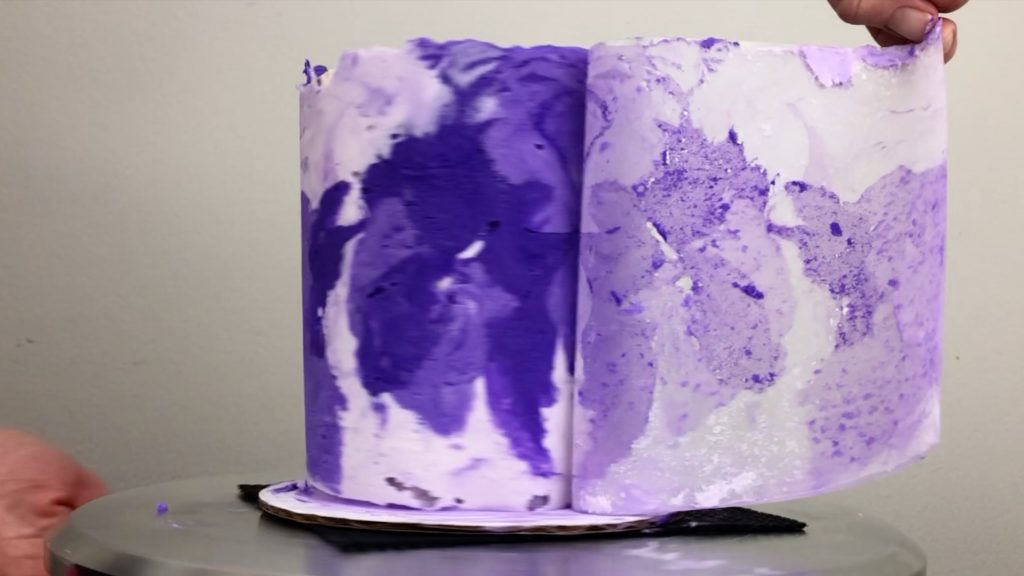
Examples of this are striped cakes, which seem impossible to make so perfect with just buttercream, and the marble effect which is also mysteriously achieved with buttercream, and the dramatic effect of the fault line cakes.
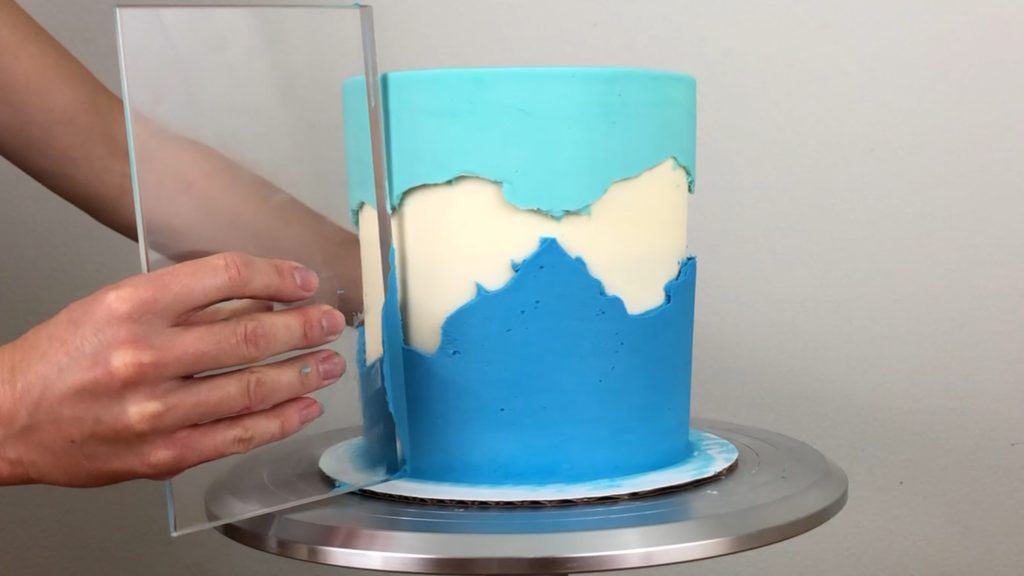
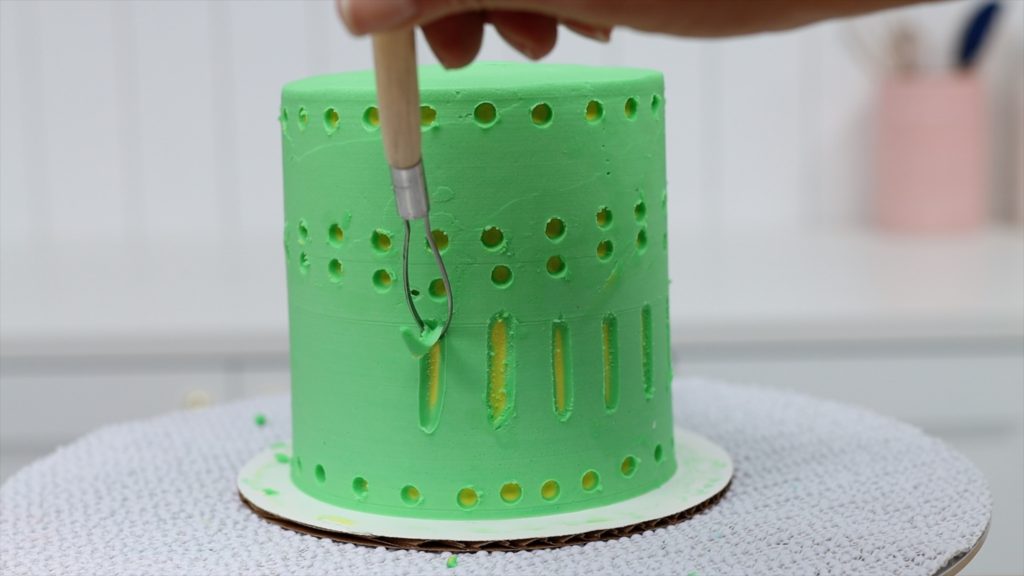
Cakes that look like they’ve been carved are always an attention-grabber, and the frosting on this actually has been carved! I teach all of these techniques and designs and styles on my online cake school.
An important reason why cakes trend is thats there is an actual demand for them. Why? Because usually, the people who are starting trends are people who make cakes to sell to customers so the designs or techniques or styles are going to be ones that people have ordered.
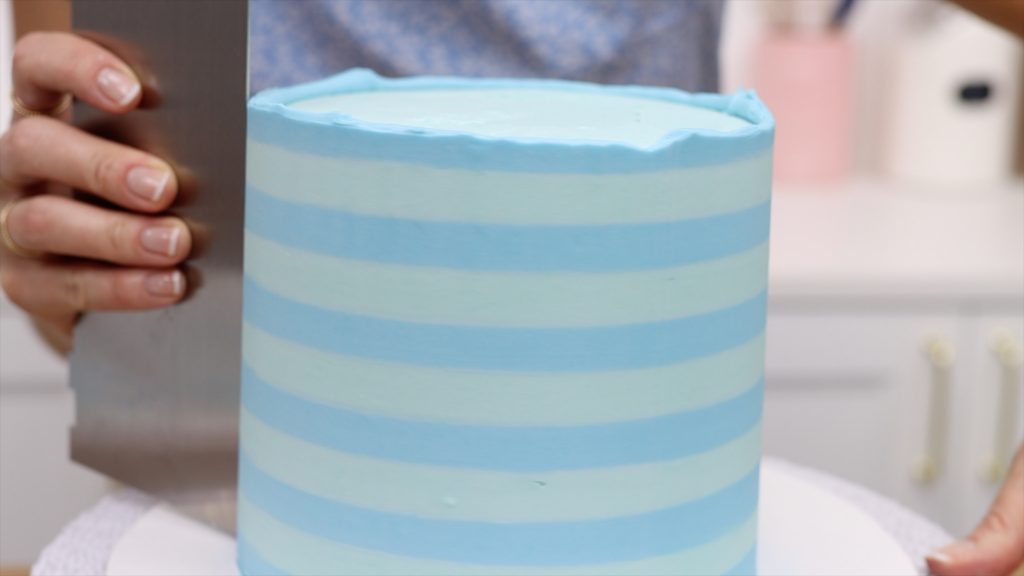
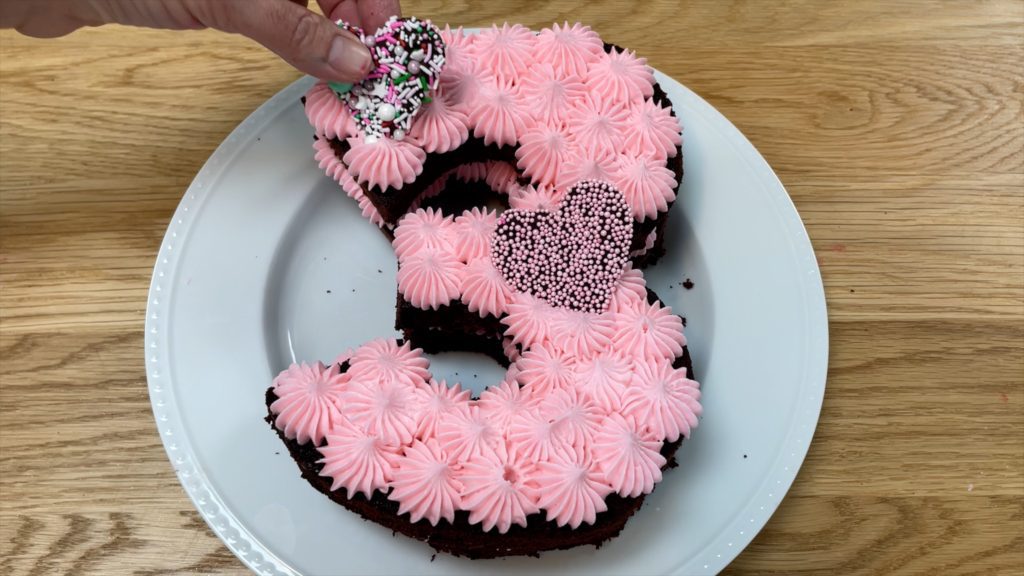
Number cakes work for literally any age so are great for every birthday celebration and striped cakes and drip cakes are versatile styles that work for any occasion.
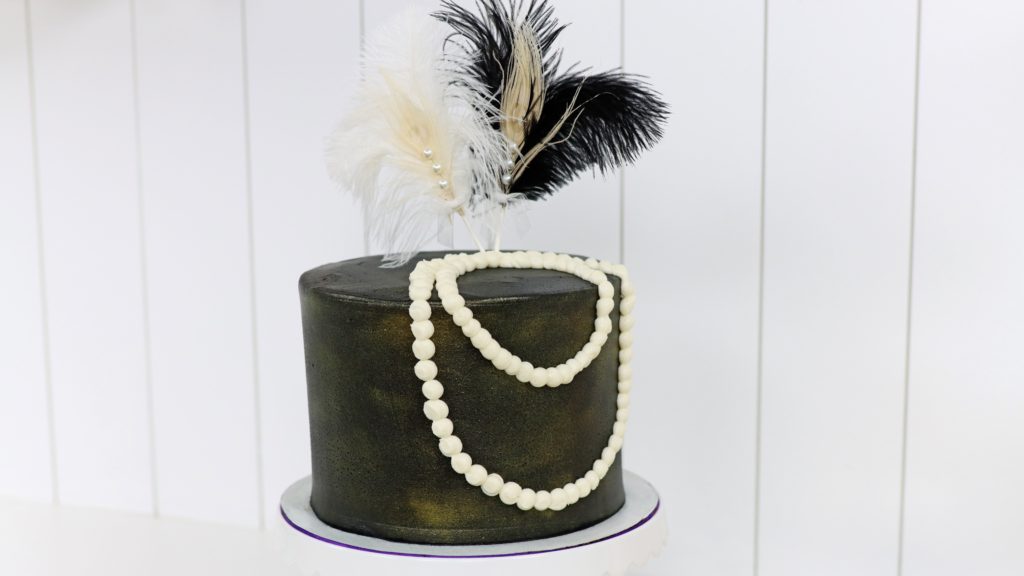
Compare that to, say, a cake with piped beads made for a 50s themed party or a poker themed cake. Those are very particular themes that aren’t in high demand so they’re not a likely design to trend.
Cakes decorated with chocolate covered malt balls or any other easily found candy or ingredient might trend but using materials that aren’t super accessible adds a WOW factor to the cake and makes it more likely to trend.
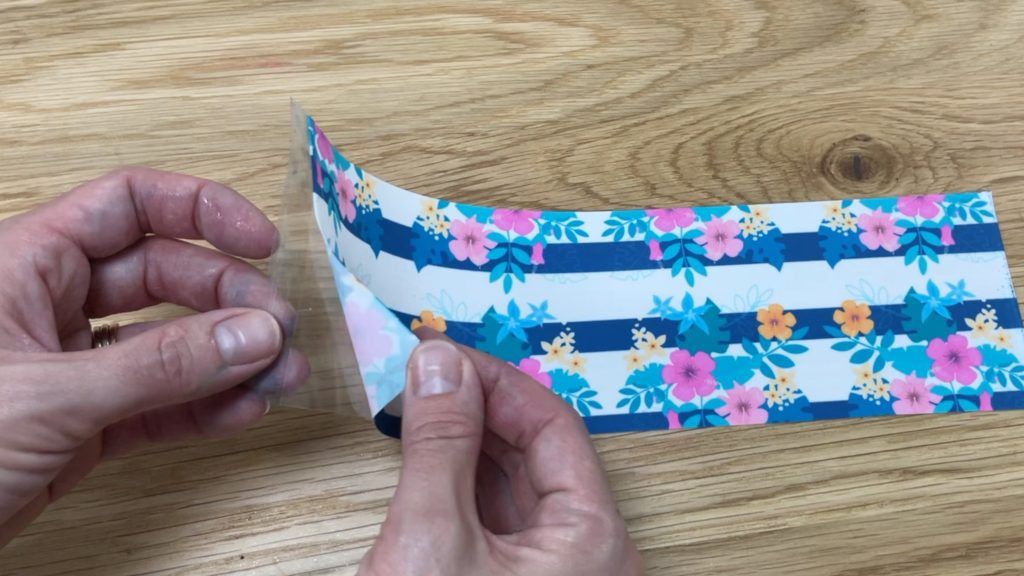
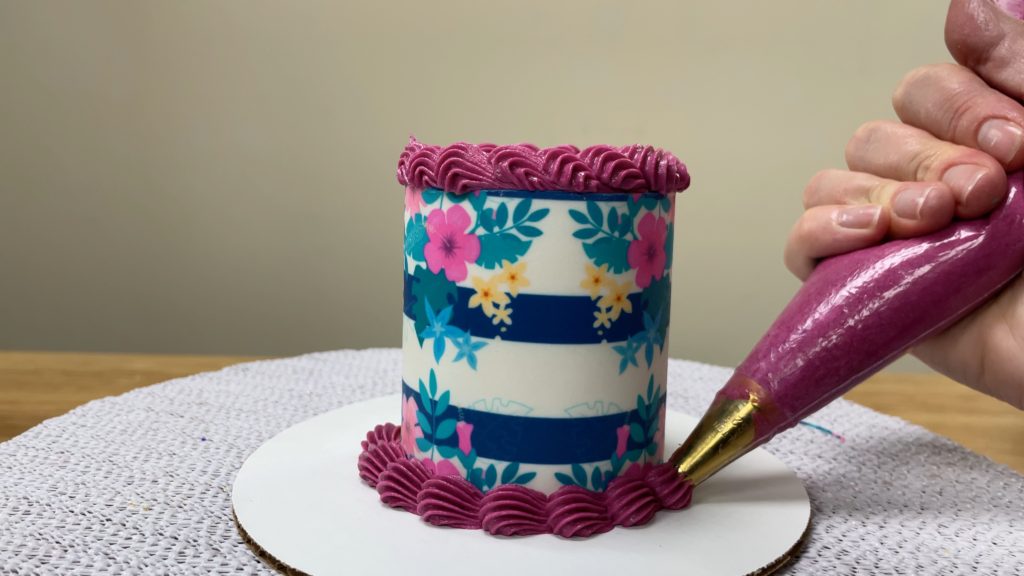
Icing sheets are printed with gorgeous edible designs and they can be ordered online but can’t be found in your local supermarket or grocery store, making these cakes more elusive and mysterious because unless you know about icing sheets, you would never guess what was used to achieve this effect. Wafer paper, gold dust and edible glitters are other examples of this.
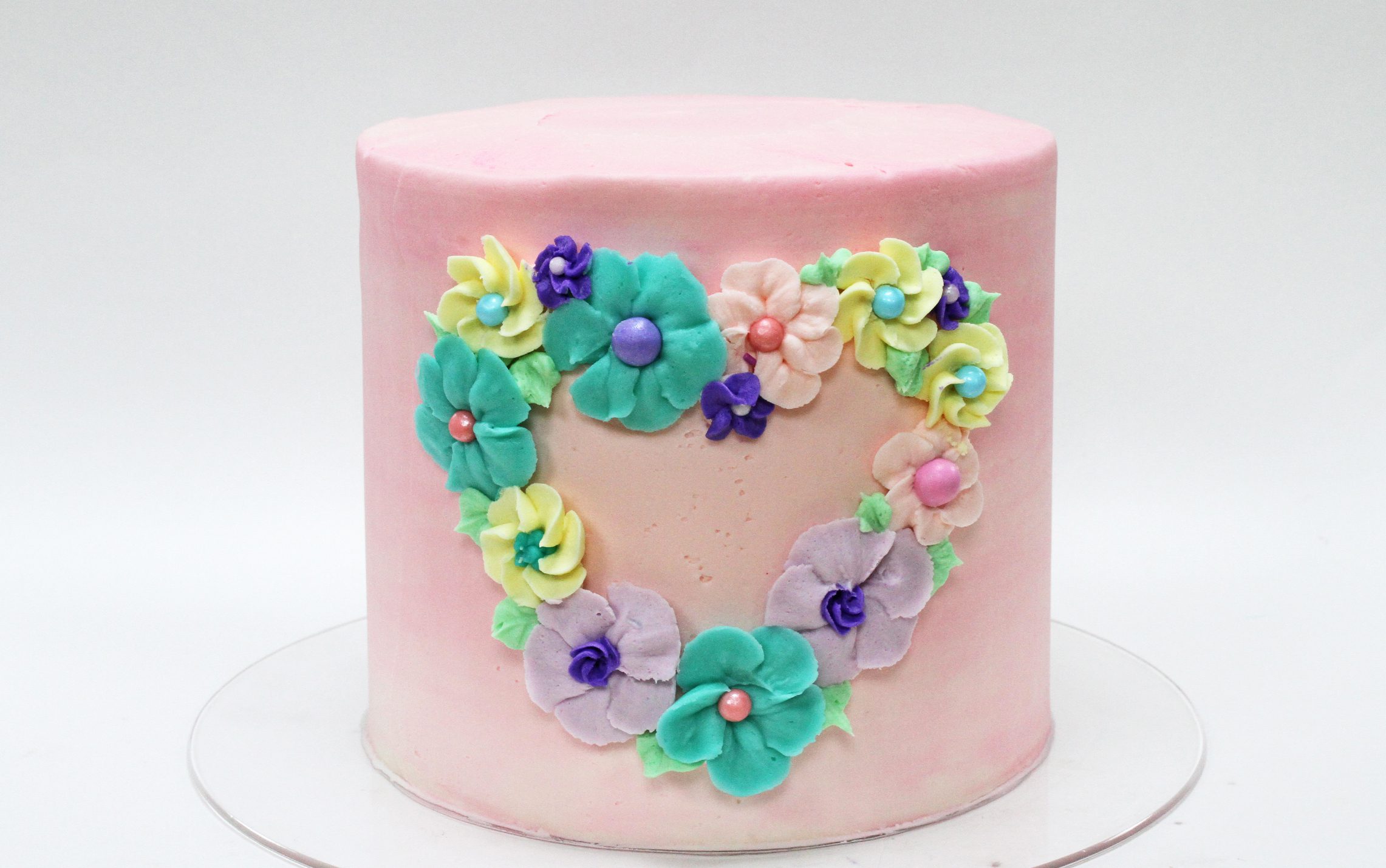
So if you want to start a trend or choose one of the designs or techniques you’ve seen to put your own spin on, choosing something that falls within one of these 10 categories will increase your chance of creating a popular cake, getting more cake orders, and blowing up on social media!
Check out my online cake school for LOTS of courses to take your cake decorating skills to the next level with hundreds of designs and techniques to learn!
Here’s the video version of this tutorial:
Ever wondered how bakeries make cakes so quickly, easily, and profitably? I’m going to share 11 secret tricks that bakeries use to make cake decorating quick, easy, and more affordable, AND to make their cakes look beautiful and taste delicious!
If you prefer to watch a video of this tutorial, scroll to the bottom of the page.
Bakery secrets for speed
#1. Quick clean-up
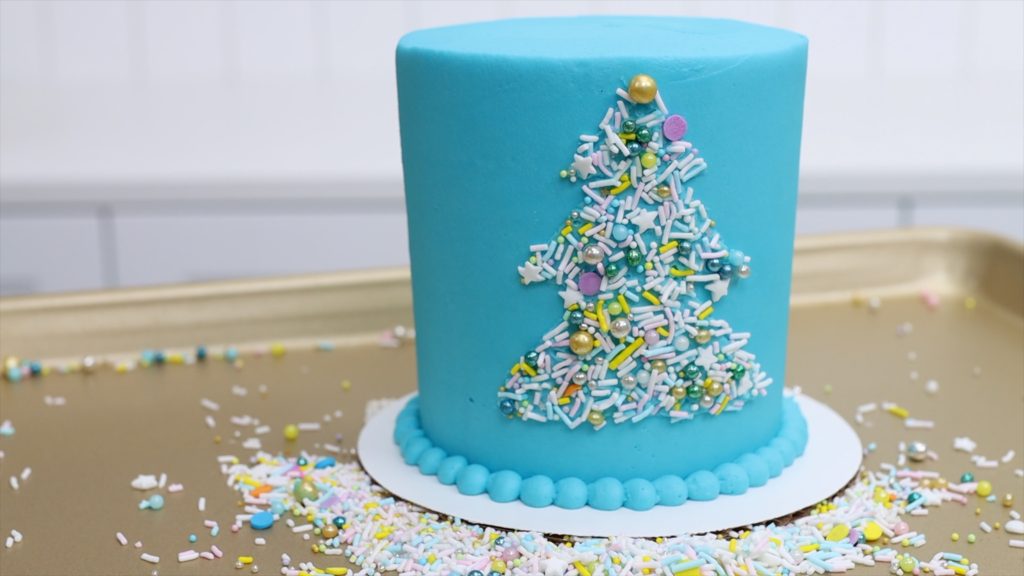
Minimize time spent cleaning up by using a baking sheet or tray to catch falling ingredients – sprinkles are the worst so this is great for those! A non-slip mat is useful to hold the cake in place while you decorate it.
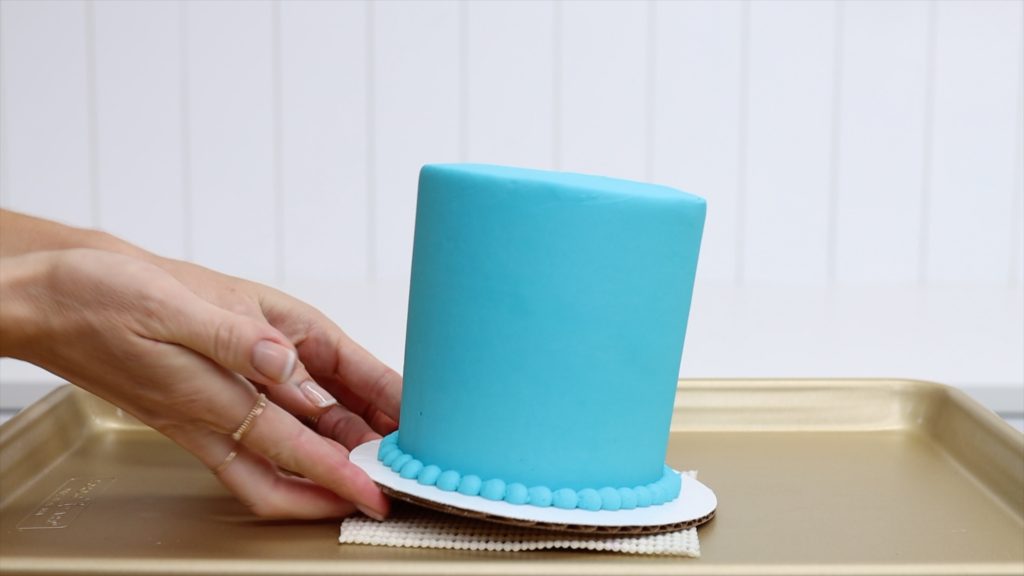
As you decorate, the sprinkles will fall down and bounce off the cake board but the rim of the tray will catch them. This way, you won’t be stepping on crunchy sprinkles on your floor for weeks!
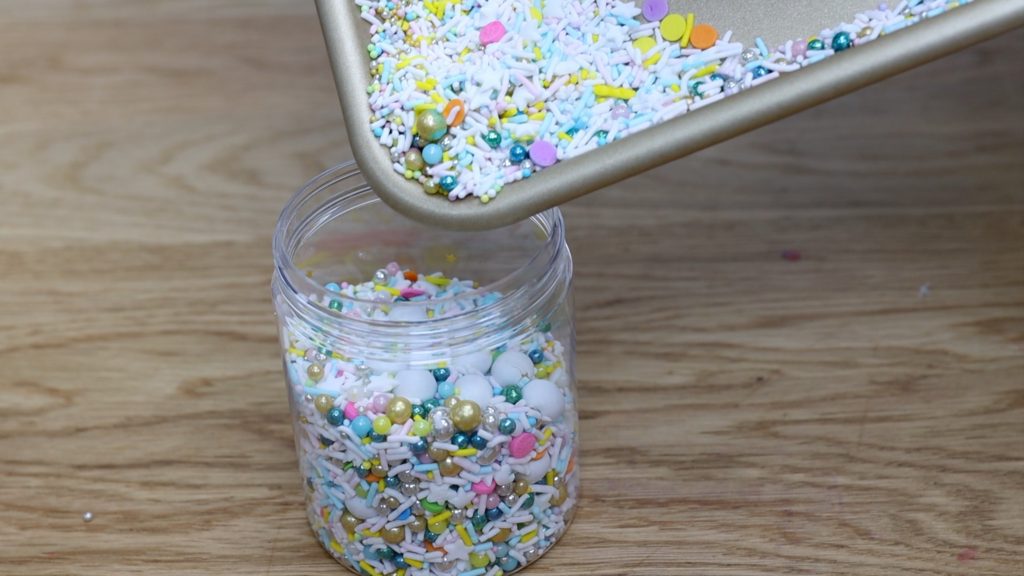
When you’ve finished decorating, tip the tray so that all of the sprinkles roll down into one corner and pour them back into the jar or packet to use for another project!
#2. Quick cake toppers
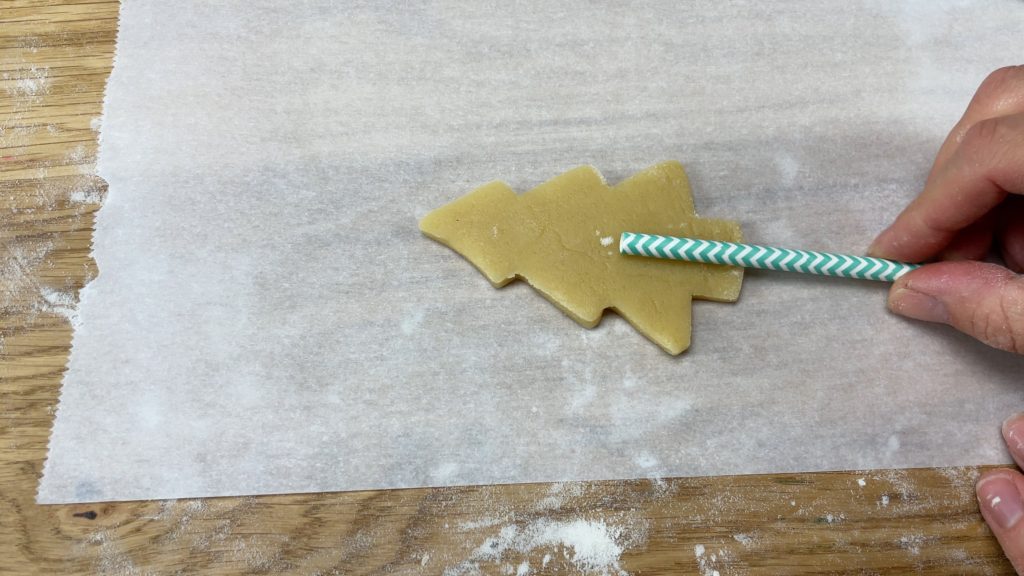
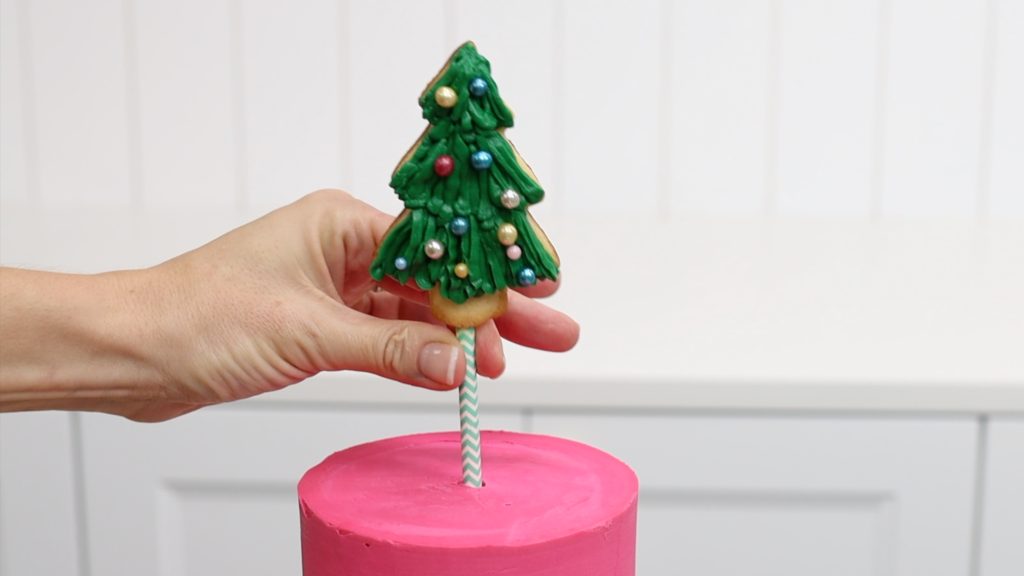
Fondant is beautiful but it’s very time consuming to work with. For a much quicker way to make cake toppers, bakeries will use cookies instead!
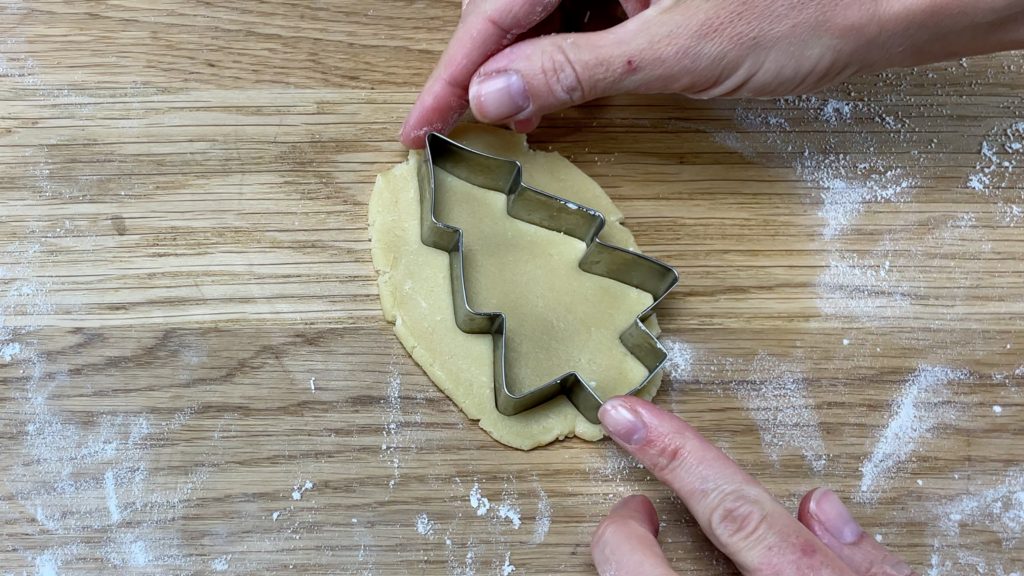
Remember to press a paper straw or cookie stick into the back before baking. This will act as support to hold the cake topper in place on top of the cake.
Not only are these much faster to shape and decorate with buttercream, they’re also delicious so they’re sure to actually be eaten!
Bakery secrets to make things easier for cake decorators
#3. Increase productivity
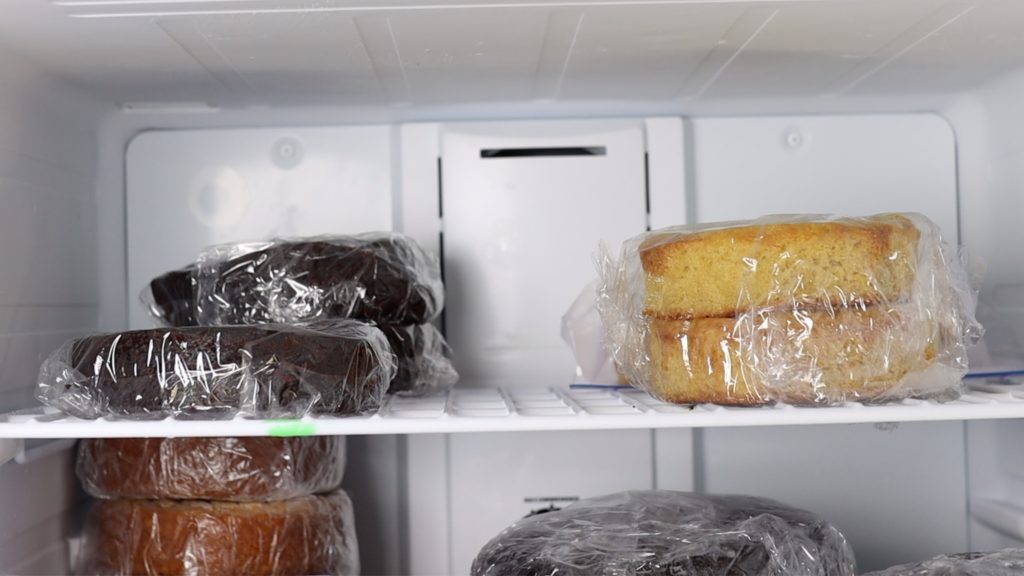
To make scheduling easier and increase productivity, bakeries hardly ever bake, frost, and decorate a cake on the same day. The secret for spreading out the stages of making a cake is the freezer. After baking cakes, let them cool and them wrap them in two layers of cling film or Saran Wrap. This makes them airtight and keeps them moist.
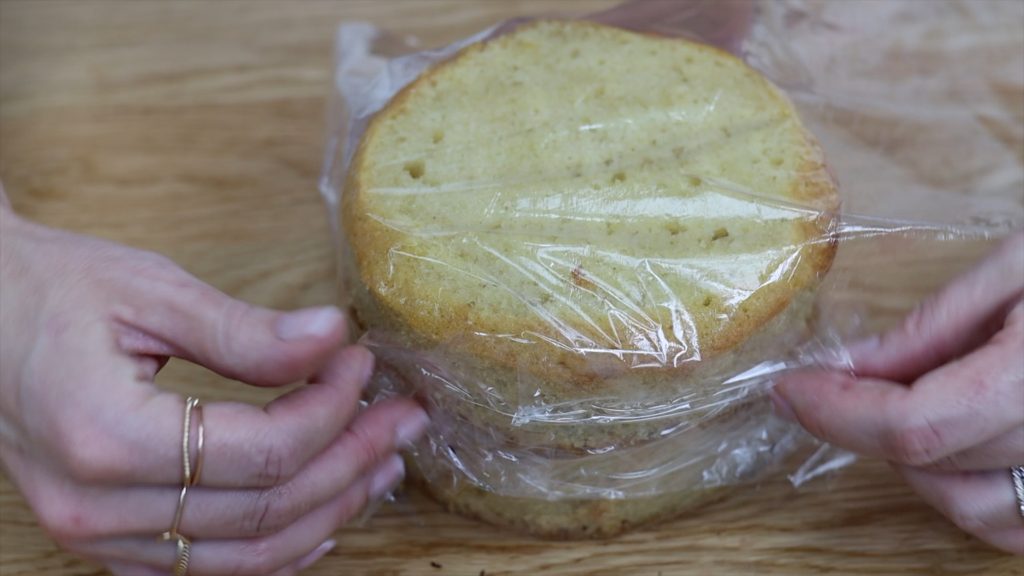
Put the wrapped cake layers in the freezer for up to a month. This means you can mix double or quadruple batches of batter to save time, bake several cakes at the same time, and then pull them out of the freezer on different dates to frost and decorate then.
#4. Cheap tiers
If you make cakes, I’m sure someone has asked you for a four tier cake to serve… two people. Tier cakes are gorgeous but not always practical and that’s where dummies come in.
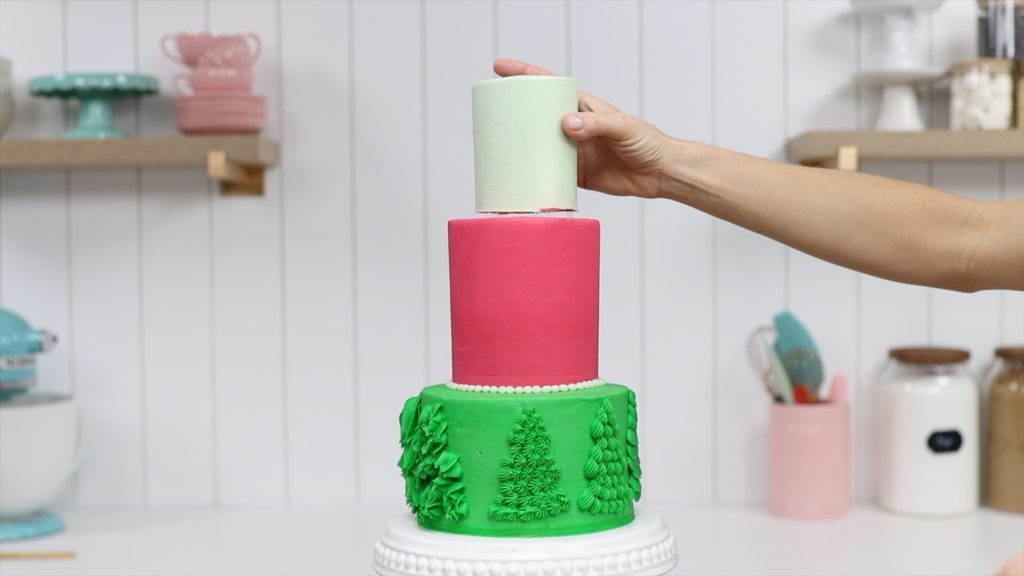
These styrofoam cylinders look just like cakes when they’re frosted and decorated. You can buy them in every size (width and height) and use them to replace one tier or several!
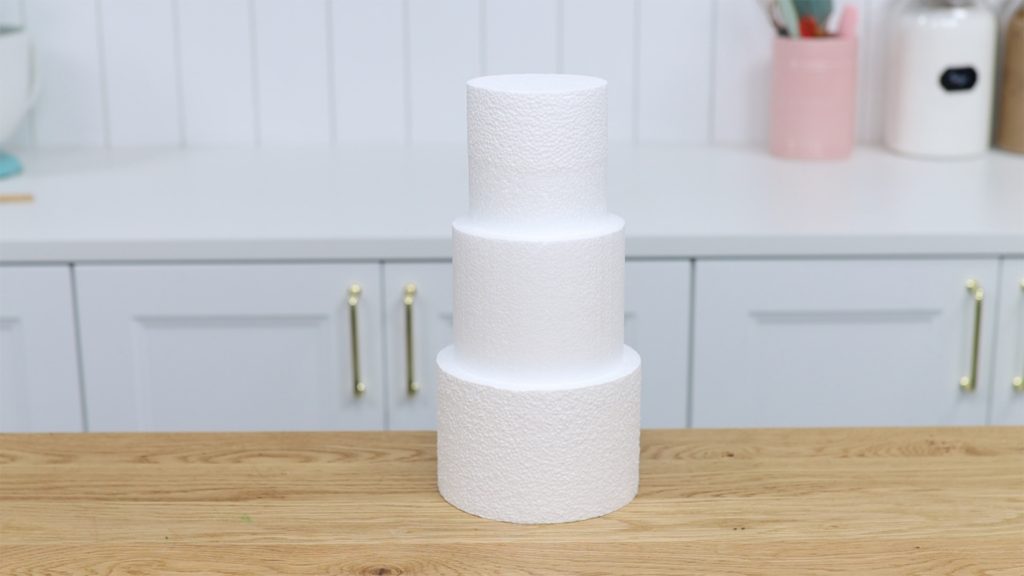
Cake dummies make it easy for bakeries and cost effective for customers to create the tier cake of their dreams without have leftover cake for weeks.
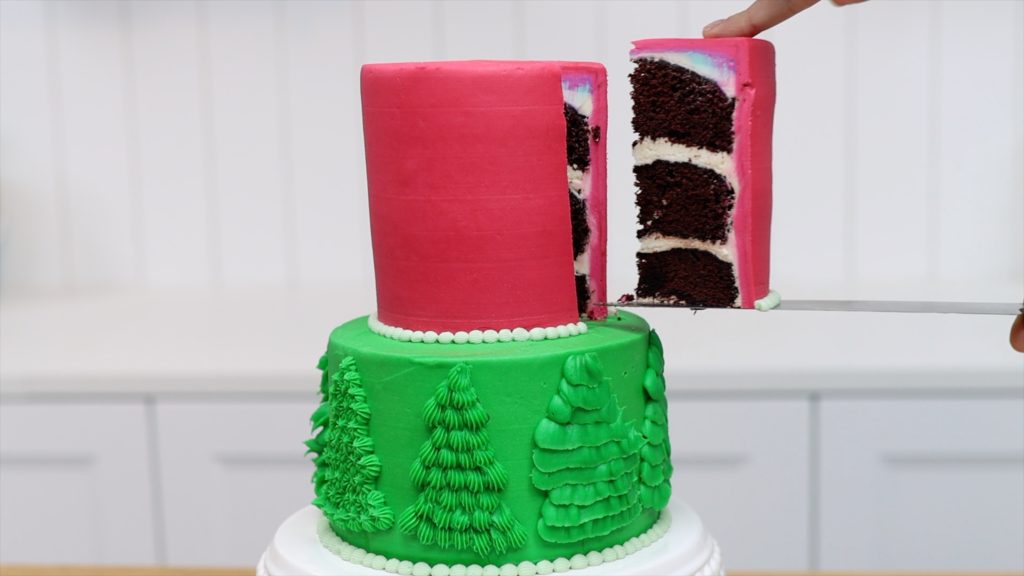
Bakery secrets to increase profits
By minimizing waste and lowering costs, bakeries increase their profits which is a priority for bakeries as well for anyone who wants to make money with their cakes.
#5. Reduce waste
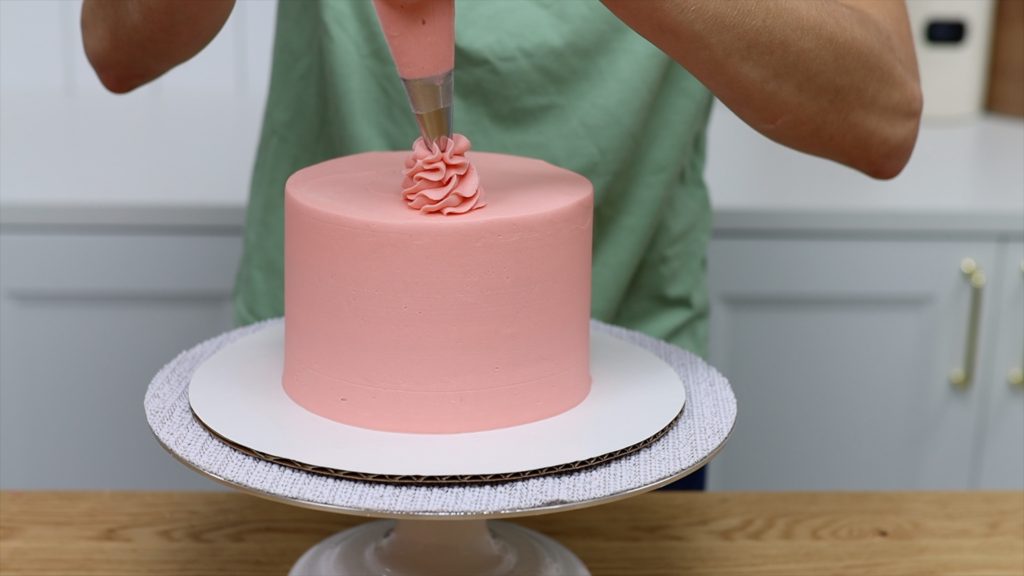
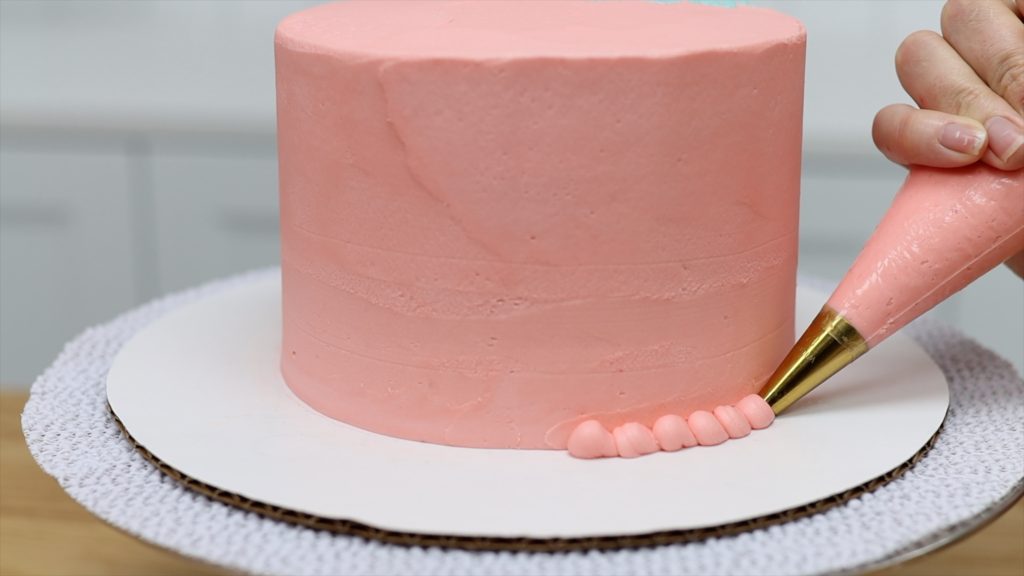
Wasted ingredients mean higher costs and lower profits so bakeries will re-use buttercream leftover from frosting cakes. You can use the leftover frosting as is to pipe borders around a cake or swirls onto the top of the cake.
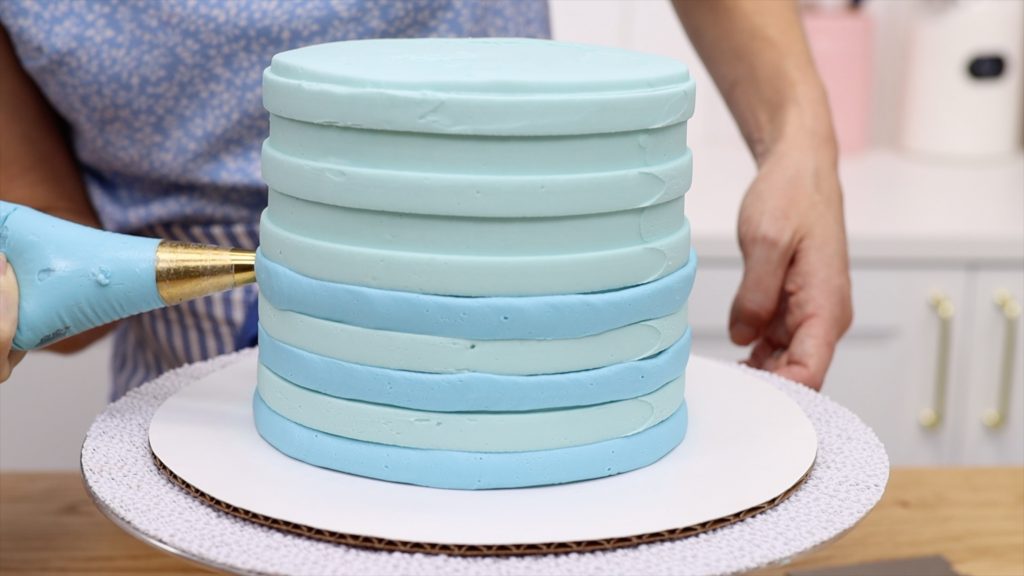
Another option is to add colour to the bowl of leftover frosting to tint it another colour to use for the decorations on this cake, or on the next cake!
#6. Smart tool investing
To stretch any investment in tools, use cake decorating tools for cookies and vice versa. For example, cookie cutters provide a neat outline for designs on cakes, which can then be piped onto.
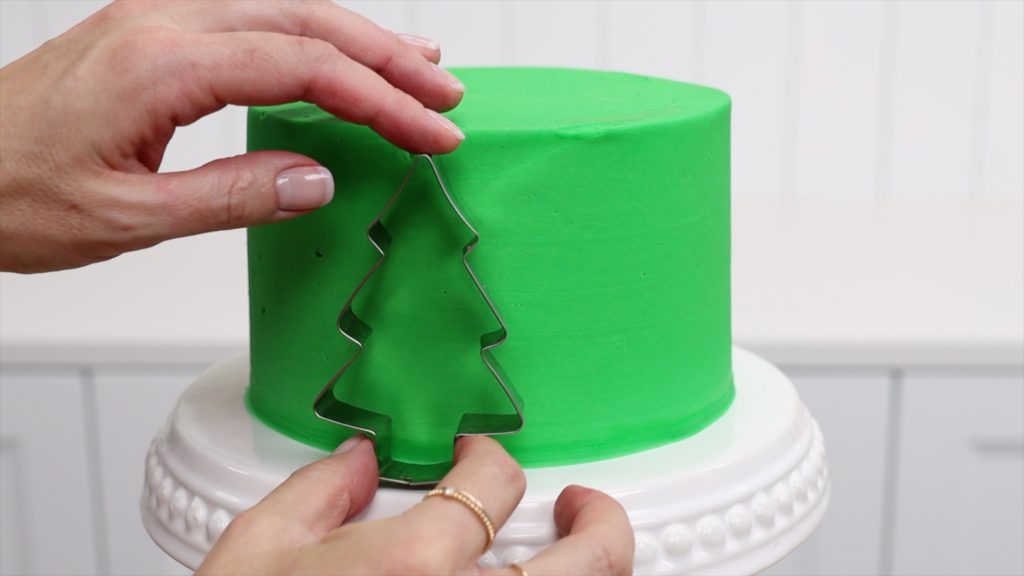
If you’re buying cookie cutters, choose shapes that can be used for lots of designs. Simple shapes are the most versatile like a set of circles or squares of different sizes.
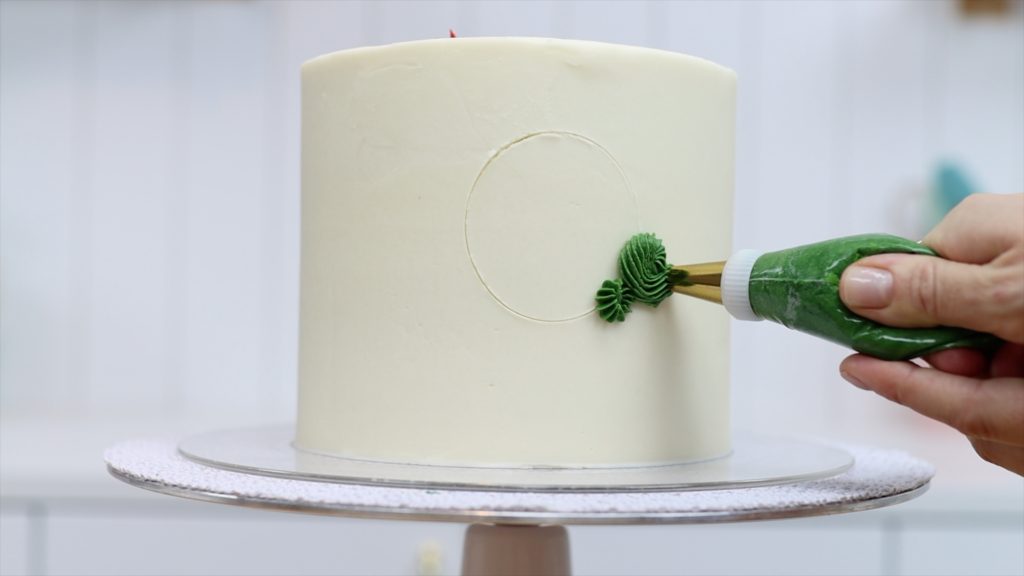
Using cookie cutters is much quicker than printing or sketching a design yourself. It also guarantees that if you’re piping a circle, that circle will be round instead of lopsided, which would probably happen if you free-handed it.
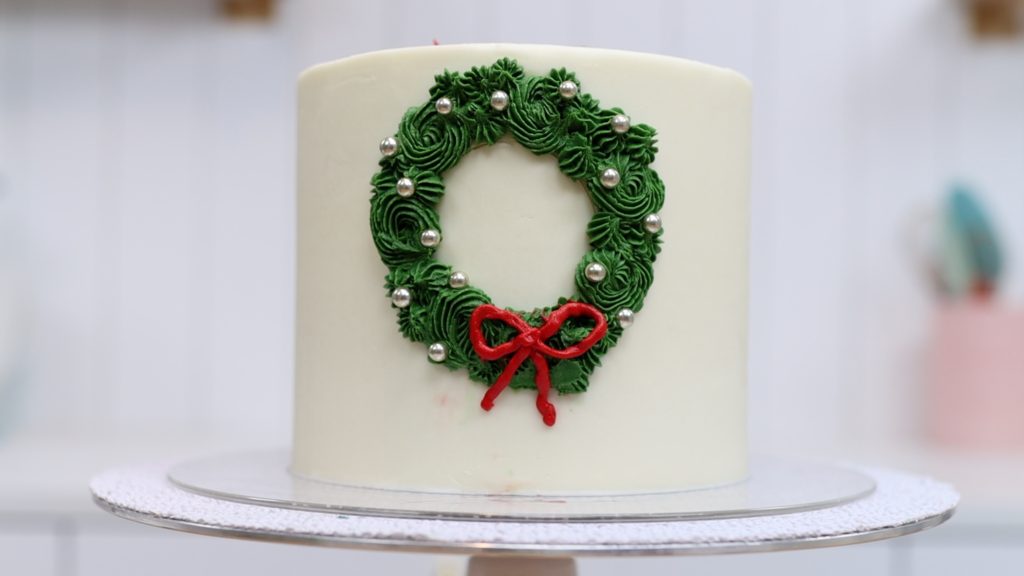
#7. Cheap piping bags
Bakeries love piping because it’s quick and easy but makes cakes look highly decorated. Piping bags are expensive but using parchment paper, you can make your own piping bags for a fraction of the price.
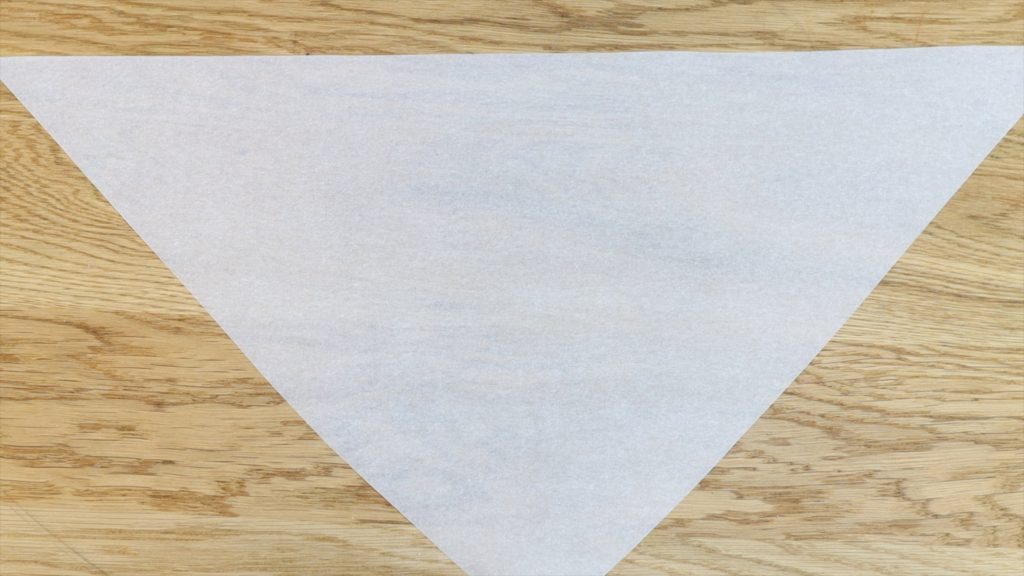
Cut a triangle and fold one corner down and underneath the bottom corner.
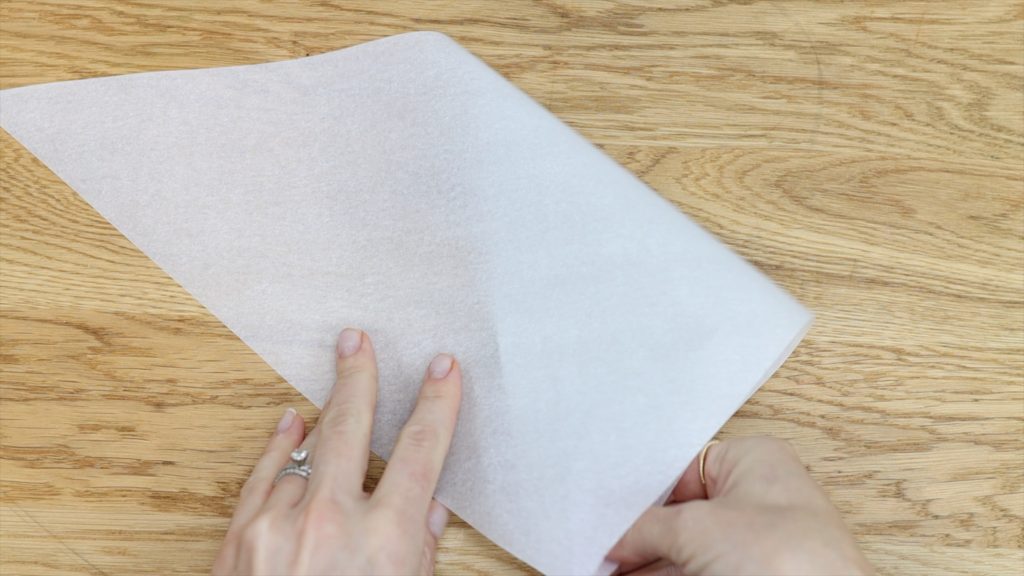
Do the same with the other corner and you’ll have three points down here at the bottom.
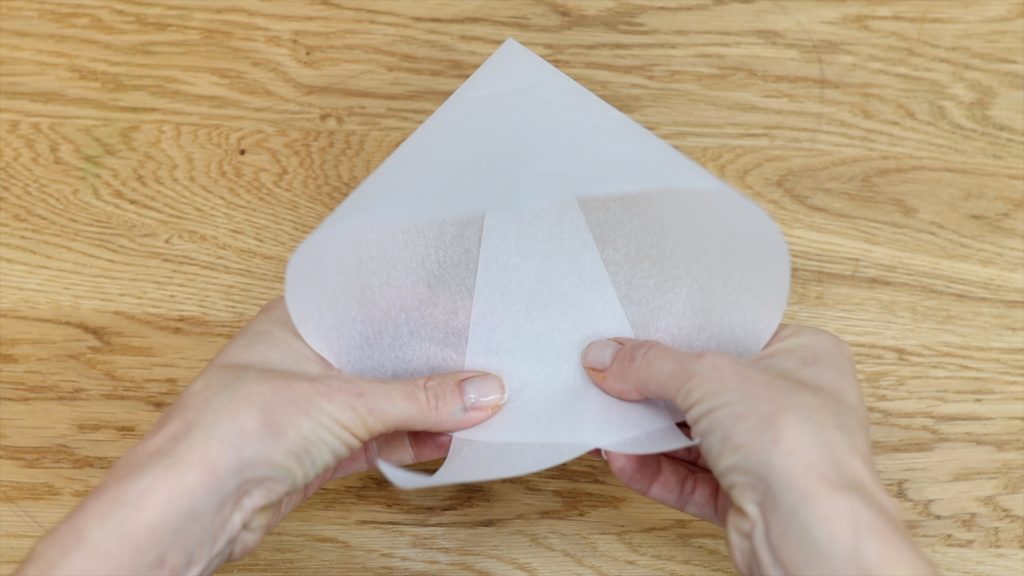
Pinch them and fold them over to make a cone, which you can fill with buttercream and then cut the tip off to pipe a message or a border or a design.
#8. Bold colours
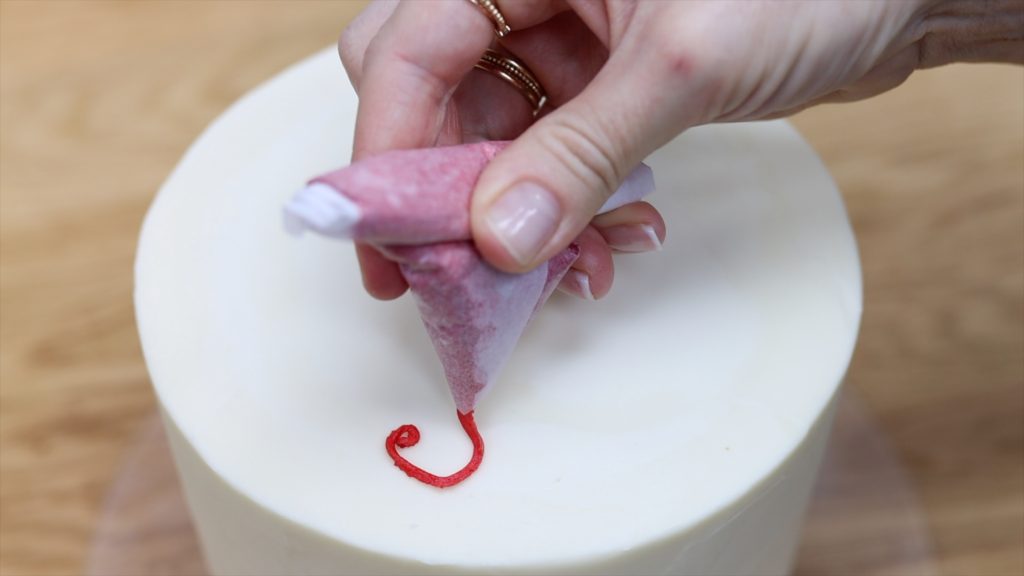
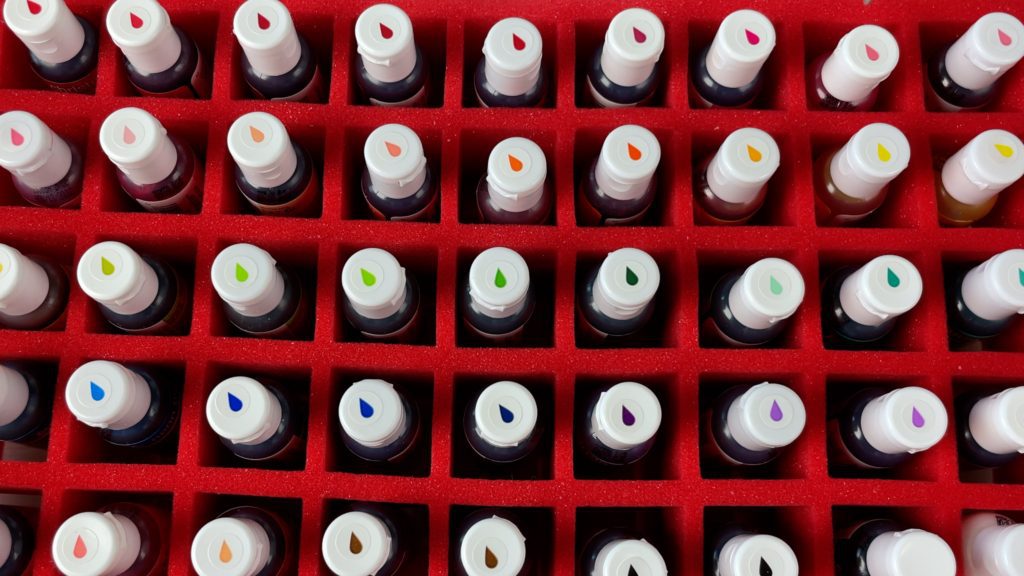
You could use a whole bottle to tint buttercream red or black but bakeries limit how much they need to use with this trick: first, use gel, not liquid colours, because they’re more concentrated so you need a lot less.
Then, add just enough to make your buttercream a dark pink or very light red. You would need almost double this amount of gel to make a bold red colour. Now put a lid on the bowl or cover it tightly with cling film or Saran Wrap.
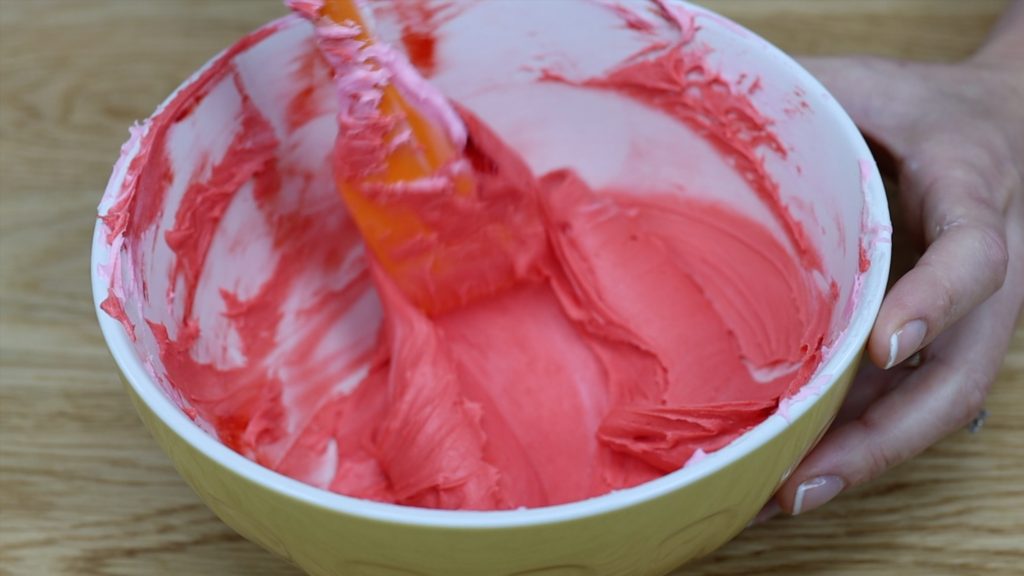
Leave it for an hour or overnight, and tada! Bright red buttercream with a minimal amount of gel!
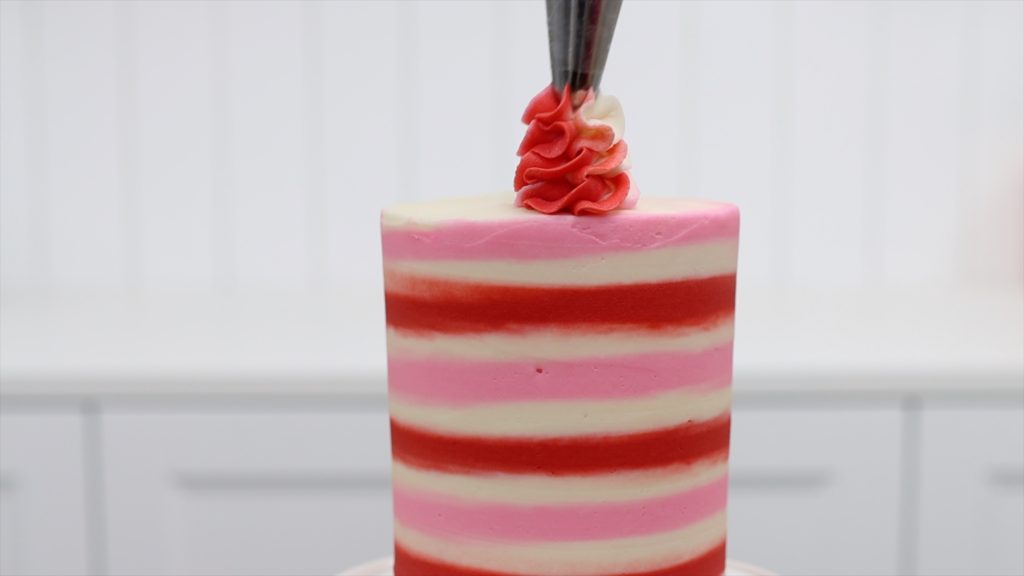
Why do people order cakes from bakeries? They’re beautiful and delicious!
Bakery secrets for beautiful and delicious cakes
#9. Smooth frosting
To get super smooth frosting bakeries use metal or cast iron turntables, which have a very smooth spin and that creates very smooth frosting without dents or indents.
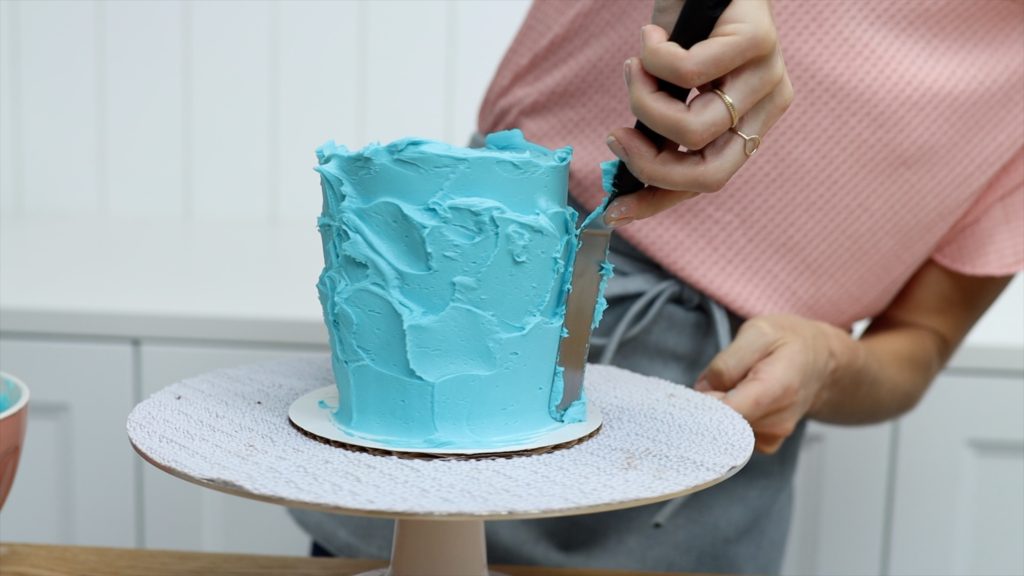
Plastic turntables are much cheaper but their wobbly spin makes it almost impossible to get perfectly smooth frosting and any cake decoration looks its best on smooth frosting.
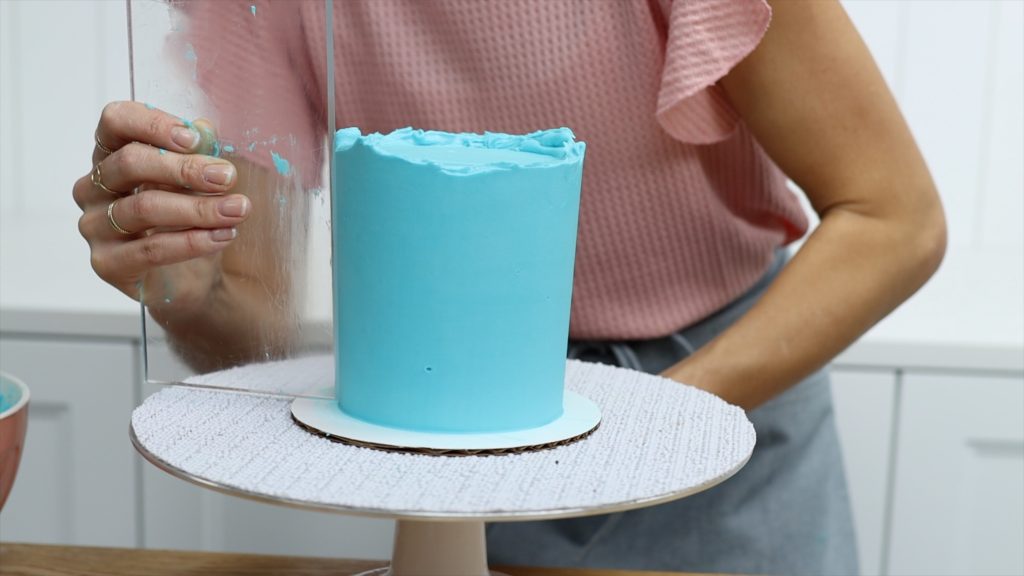
#10. Flawless cakes
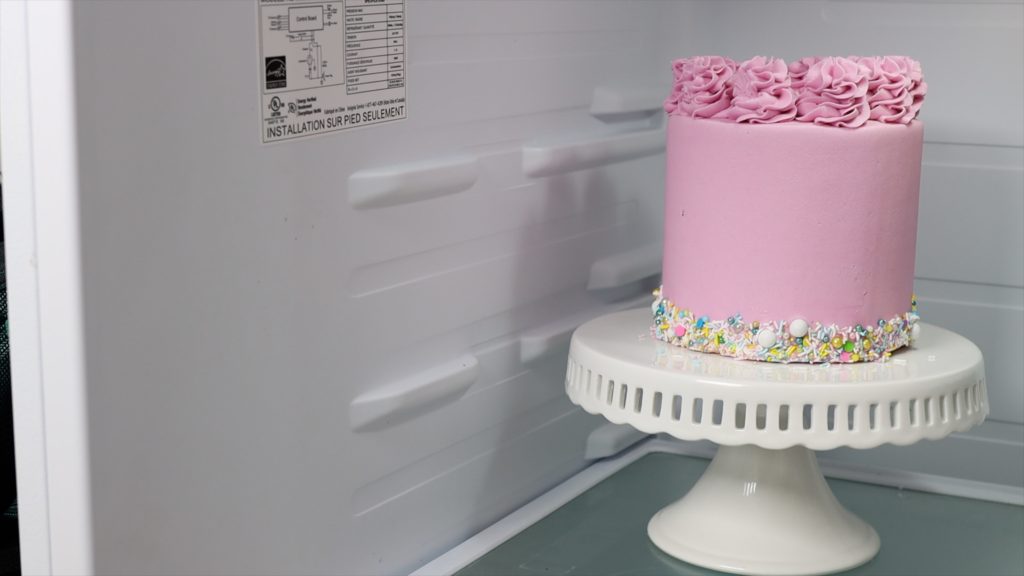
Bakeries refrigerate cakes after decorating them, until they’re picked up or delivered. When cakes are cold they’re firm and the decorations are stable so they’ll survive the vibrations of a car and sudden breaking, and the frosting won’t sink or get bulges in the sides, which happens when they sit out at room temperature for a long time.
#11. Moist cakes
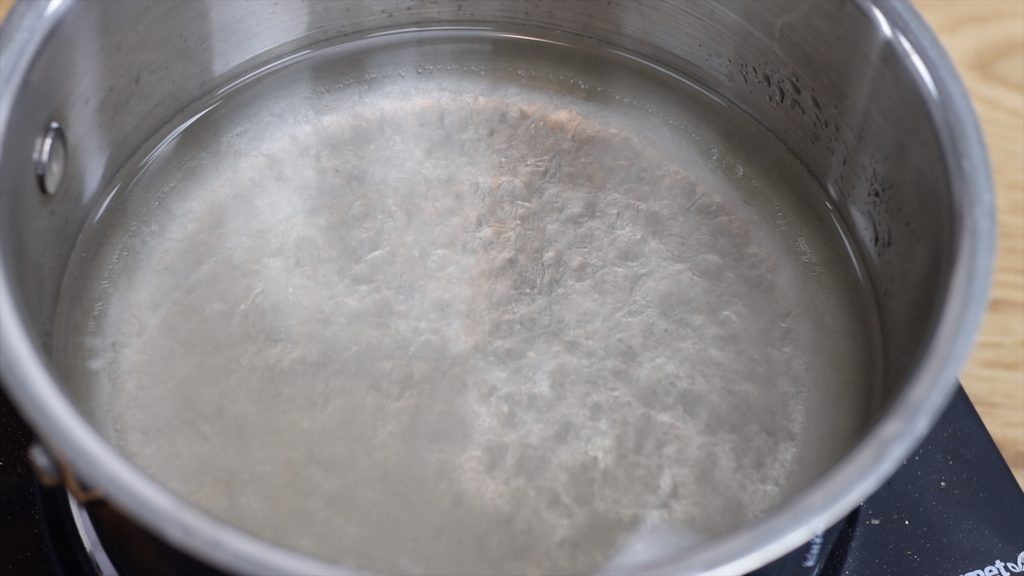
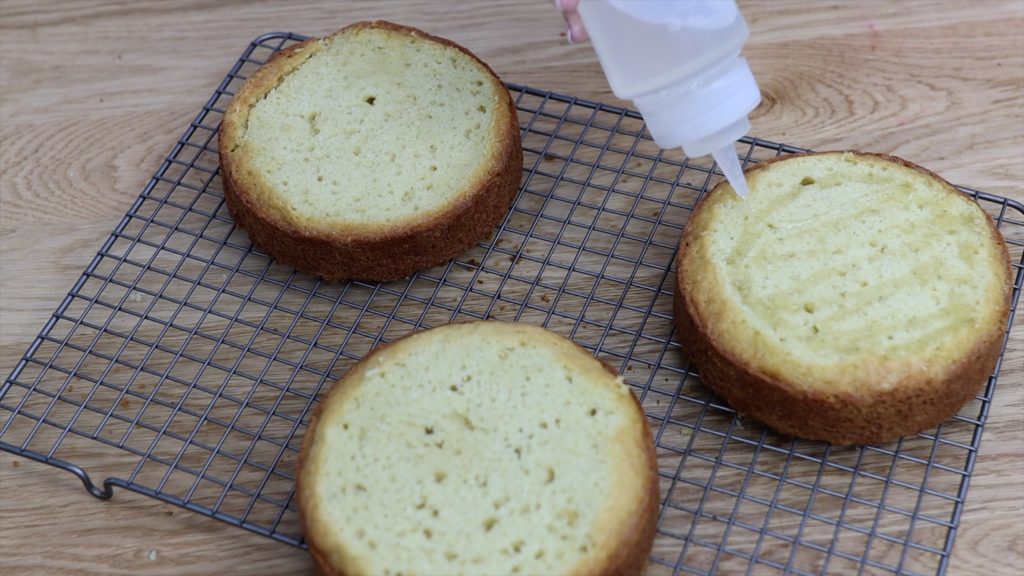
To ensure that cakes stay moist even though they’re rarely baked and decorated on the day they’re picked up, the secret ingredient used by bakeries is simple syrup. This is the formula for moist cakes, even days after baking them!
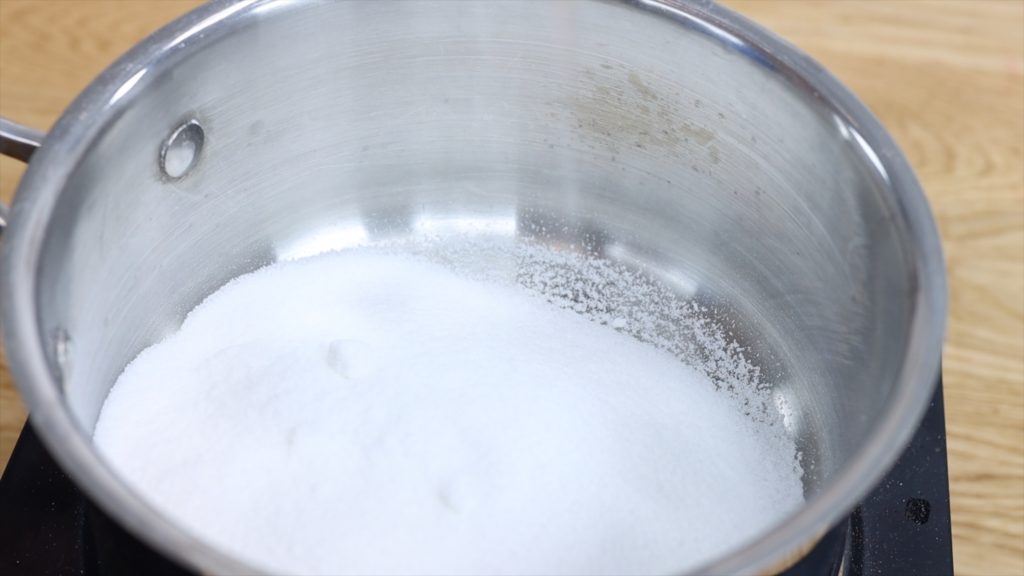
The recipe is super simple, no pun intended: put equal amounts of water and sugar into a pan, bring to a simmer over medium heat, let it cool and then pour it into a squeezy bottle.
Drizzle over cake layers, paying special attention to the edges, and this will keep the cake layers moist for several days, giving you flexibility to bake, frost and decorate cakes in stages if you want to divide the work between different days.
I hope these secrets will be useful to know! Visit my online cake school for LOTS of courses teaching hundreds of cake designs and techniques and join my ClubPLUS for access to them all!
Here’s the video version of this tutorial: