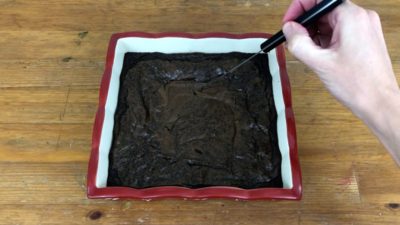
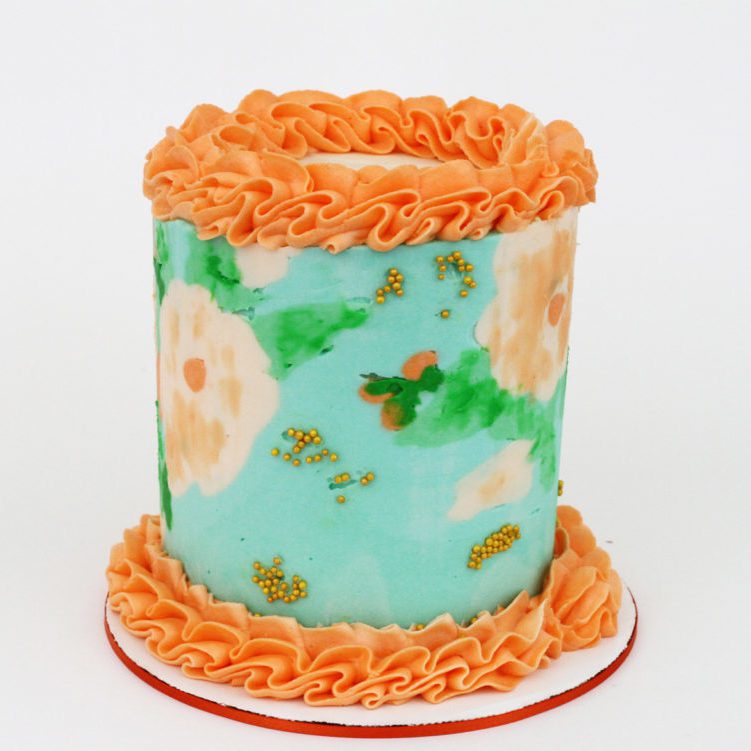
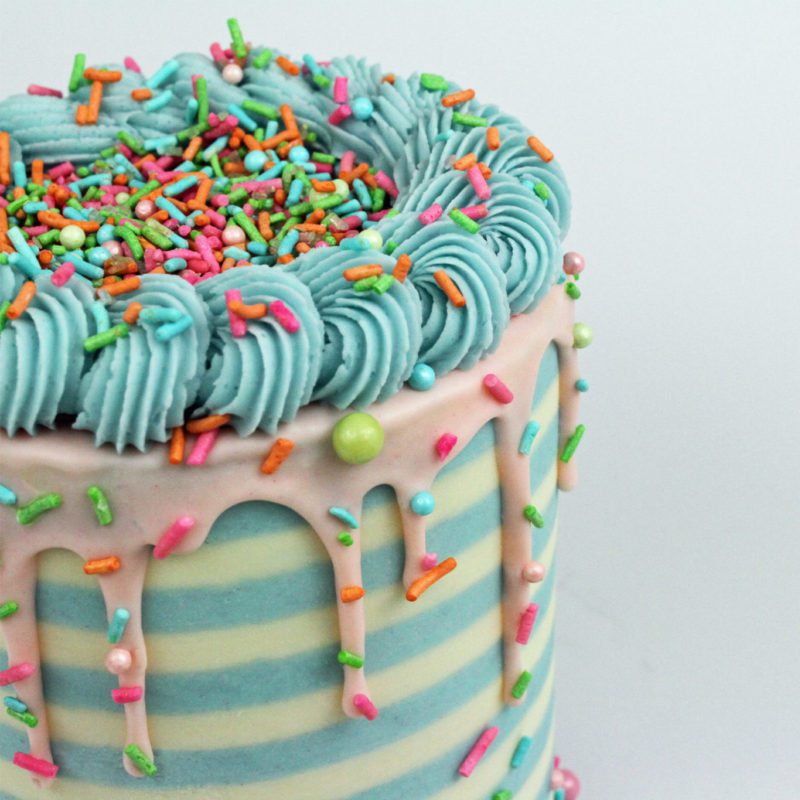
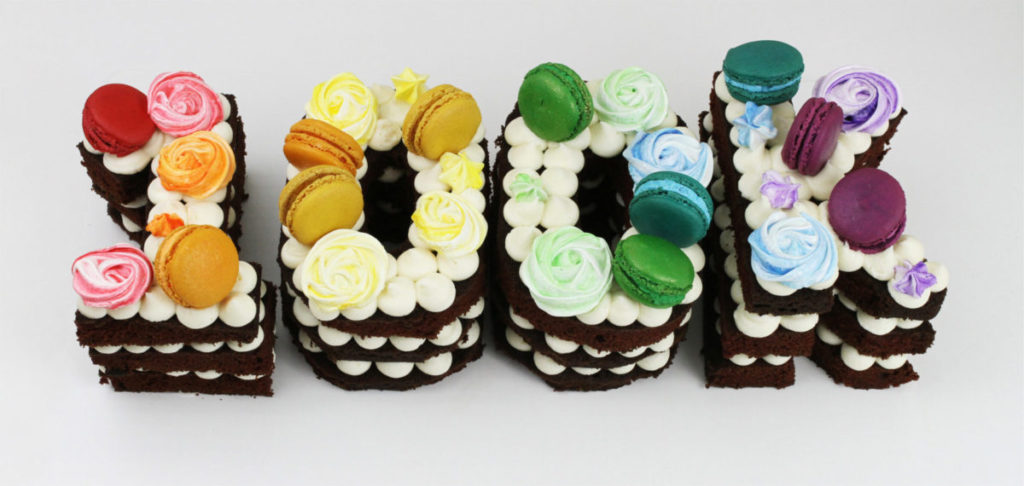
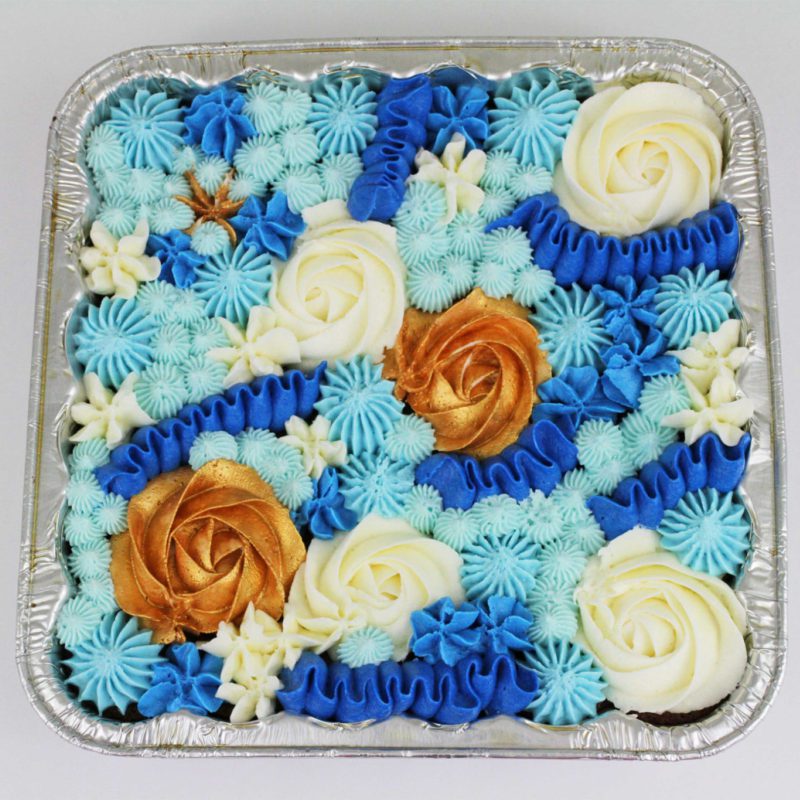
This first one is the easiest cake you could possibly decorate! Bake your cake in a deep baking tray or casserole dish and you can even use other desserts like brownies or cheesecake for this. Use a sharp knife to score a design on the top, like the heart I’m drawing on this one, and you can trace around a printed image if you’re not confident about drawing your own shape.
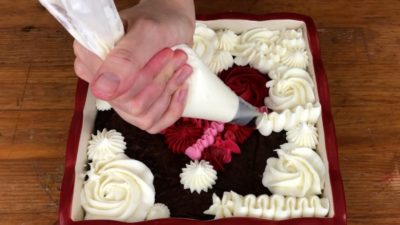
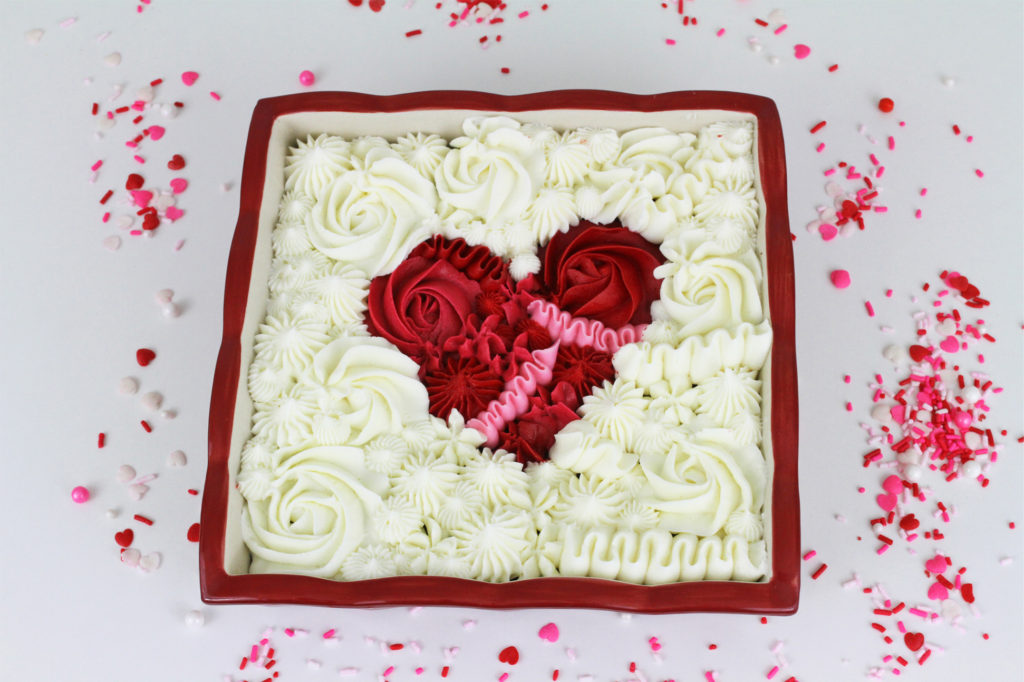
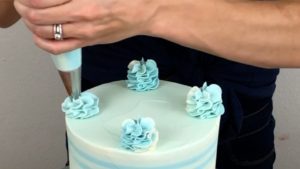
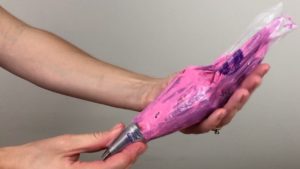
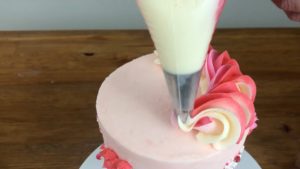
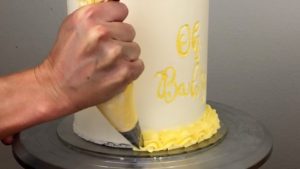
Fill few piping bags with different piping tips and different colours of buttercream and then cover the shape with swirls, wiggles, and rosettes! I piping these rosettes and swirls with a 1M star tip, 8B open star tip and 199 tip, and the ruffles with a 104 petal tip, holding the tip with the wider end facing downwards, towards the cake, and the narrow end pointing upwards to create some movement the ruffle.
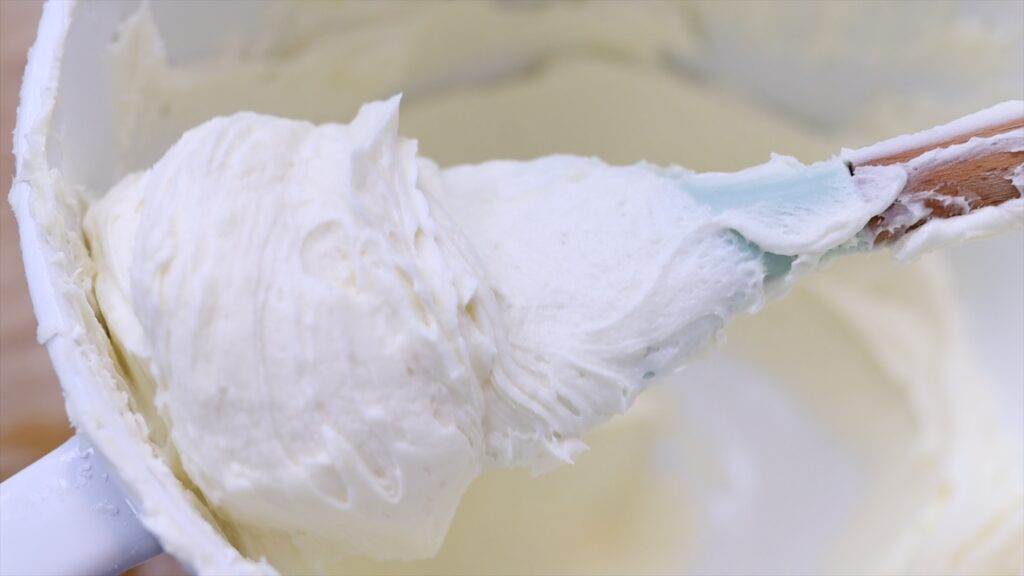
I like to chill the cake at this point to set the pinks and reds so that when I continue, the coloured buttercream doesn’t smudge onto the rest of my piping around the shape. Meanwhile, I wash the piping bags and tips to re-use with plain white buttercream. I used my 4 Minute Buttercream for this cake. For the outline of the shape, I start with the corners of the cake to get into the trickier spaces while I still have lots of room the maneuver, and gradually working my way in towards the heart.
You’ll notice that the shape gets much darker after refrigerating it, and that’s because red tones get darker when they get cold but they’ll lighten up again when the cake comes back to room temperature.
It’s a good idea to check the cake from different angles when you think you’ve finished, or even as you go along, to check that the cake underneath the frosting isn’t visible anywhere through the piping.
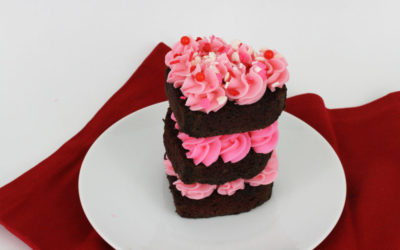
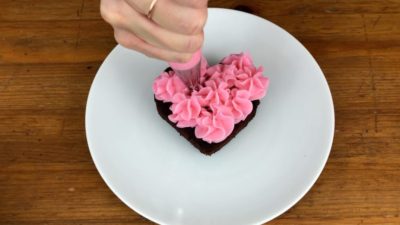
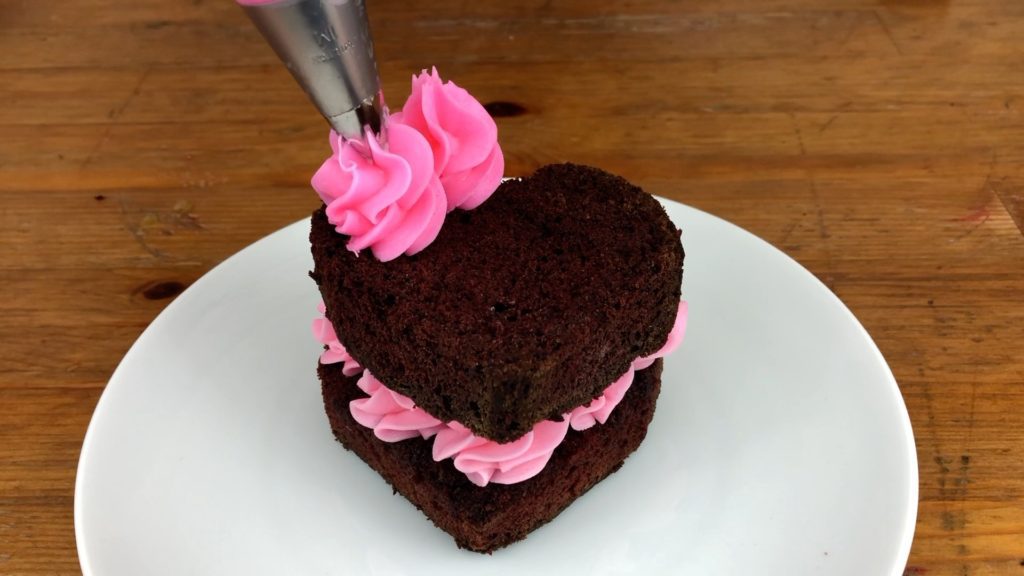
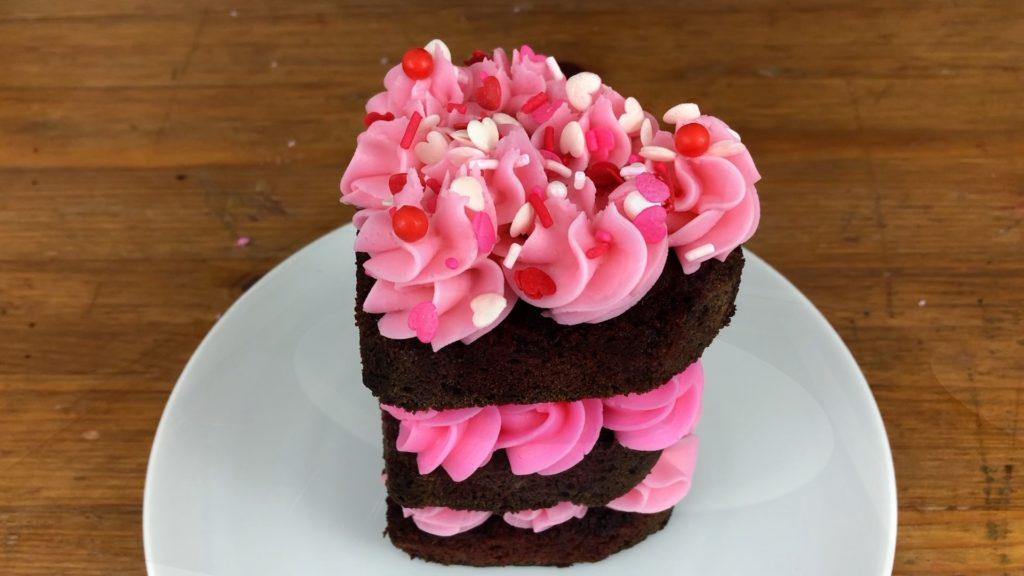
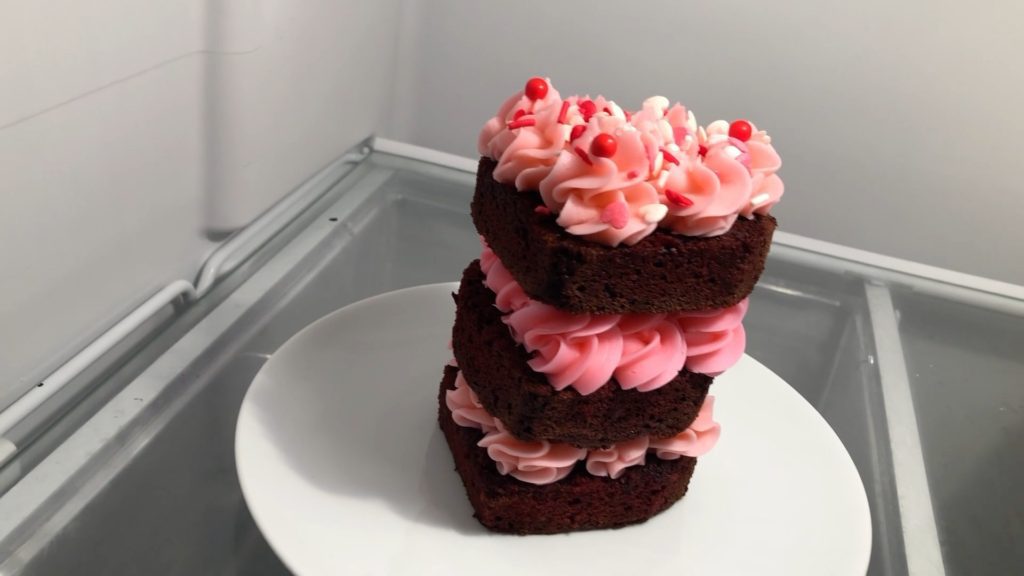
Almost as easy to decorate as a tray bake cake is this naked heart-shaped cake with piped buttercream filling. Start by drizzling your cake layers with simple syrup to keep them moist, since they won’t be covered in frosting which normally locks the moisture into the cake. I cover this step in detail in my tutorial on 10 Hacks For Decorating Cakes Like A Pro. Wrap the cake layers in cling film or saran wrap and chill them in the fridge for at least an hour or in the freezer for 30 minutes, because they’re much easier to carve in the next step if they’re cold.
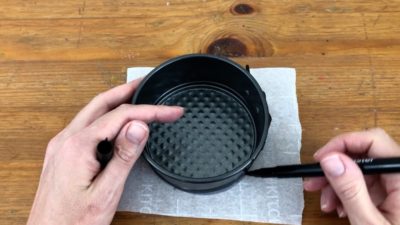
While the cake layers are in the fridge, trace around your cake pan onto paper so that you have a guide of the size of your layers, and then draw a heart within that outline.
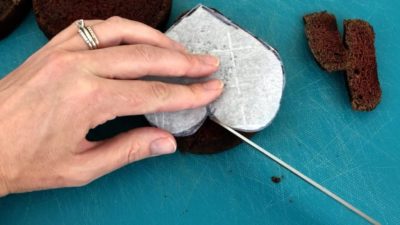
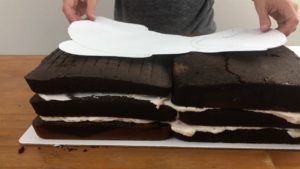
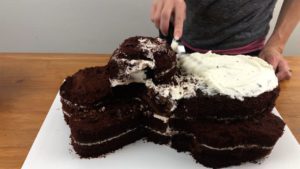
Cut the shape out and place it on a chilled cake layer and cut around it using a serrated knife, cutting the general outline first with lots of little straight cuts and then smoothing out any angular parts next by trimming them with even smaller cuts. Repeat this for all of your layers.
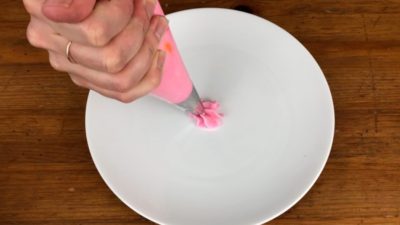
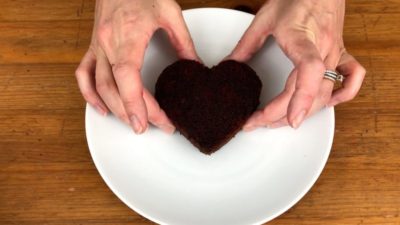
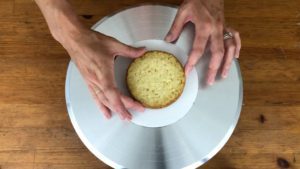
Tint buttercream with gel food colours. I used my 4 Minute Buttercream with different amounts of Rose Pink gel to make different shades of pink, and put the buttercream in piping bags fitted with any star shaped piping tip (I used 1M tips). Now use a plate or a cake board and pipe a dollop of buttercream in the middle, which will secure your first layer of cake in place.
Pipe swirls around the edge of the heart, piping a small spiral and as you lift the piping bag slowly, continue to pipe a smaller spiral on top and then release your pressure on the piping bag as you lift it up and away from the cake to leave a nice neat peak on your buttercream swirl. Do the outline of the heart first so that the swirls line up nicely, and then fill in the middle and these swirls are less important because they won’t be visible after you add the next layer of cake, so they don’t have to be as neat.
Add another layer of cake and another layer of swirls, and I’m using my darker pink for these ones. Another layer of cake, and walk around your cake to check it from different angles and adjust the layer so that it’s lined up straight on top of the rest of the cake, and then pipe on the top layer of swirls. Scatter some sprinkles on top immediately, before the buttercream sets because then the sprinkles won’t stick to it anymore.
To store the cake you can place it in the fridge for 30 minutes or the freezer for 15 minutes to set the swirls, and then take it out and wrap the cake and plate or cake board in cling film or plastic wrap to prevent it from drying out. Put it back in the fridge and when you’re ready to serve it, take it out and take the cling film off immediately, before the buttercream softens, so that you don’t damage the piping while you’re unwrapping it. Leave it for about an hour to come to room temperature and then enjoy!
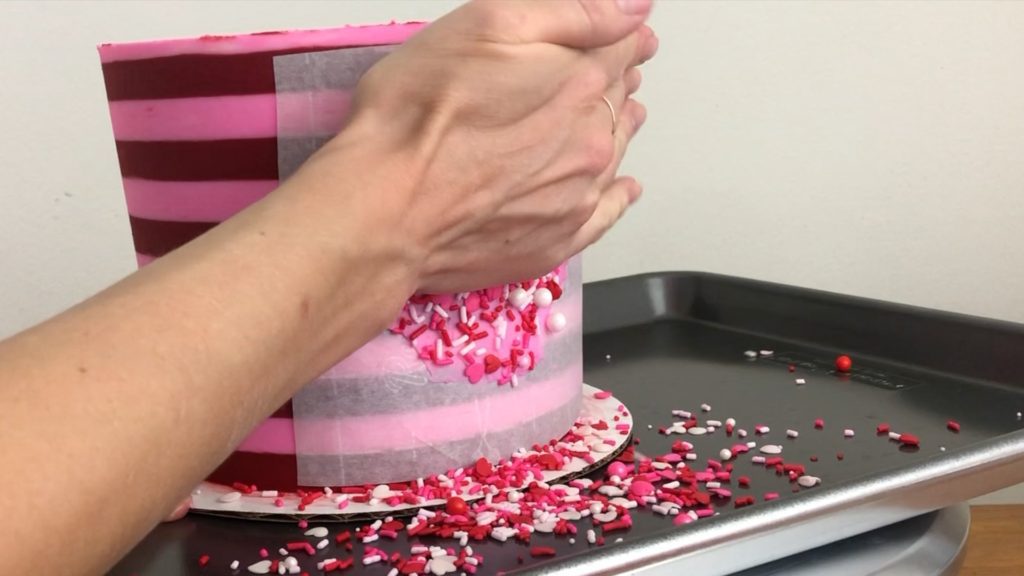
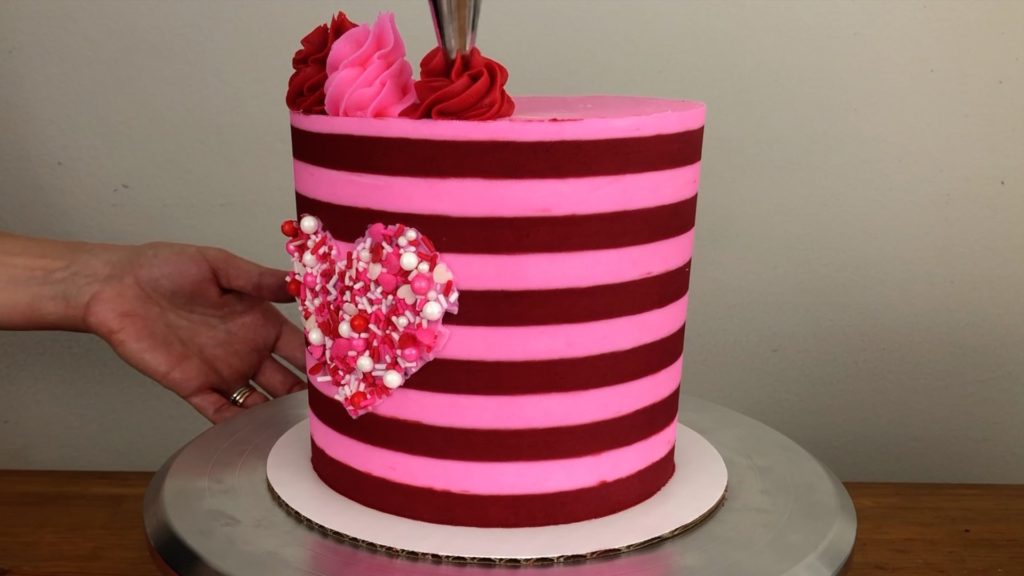
This sprinkled heart can be added to any cake, like this pink and red striped beauty. If you’re interested in how to do these stripes, I have a very detailed free YouTube tutorial on 4 Secrets For Perfect Stripes.
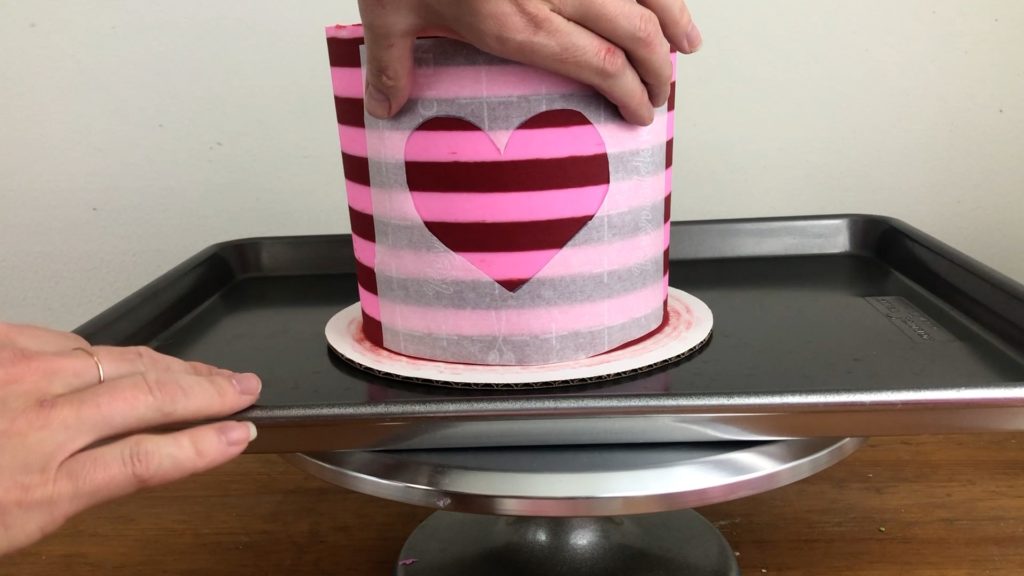
Chill your frosted cake in the fridge for at least an hour to set the frosting and meanwhile, draw a heart on parchment paper and cut it out, making a cut in the middle of the heart to get the scissor blades in and cutting it out while leaving the paper around it intact, and this will be your stencil.
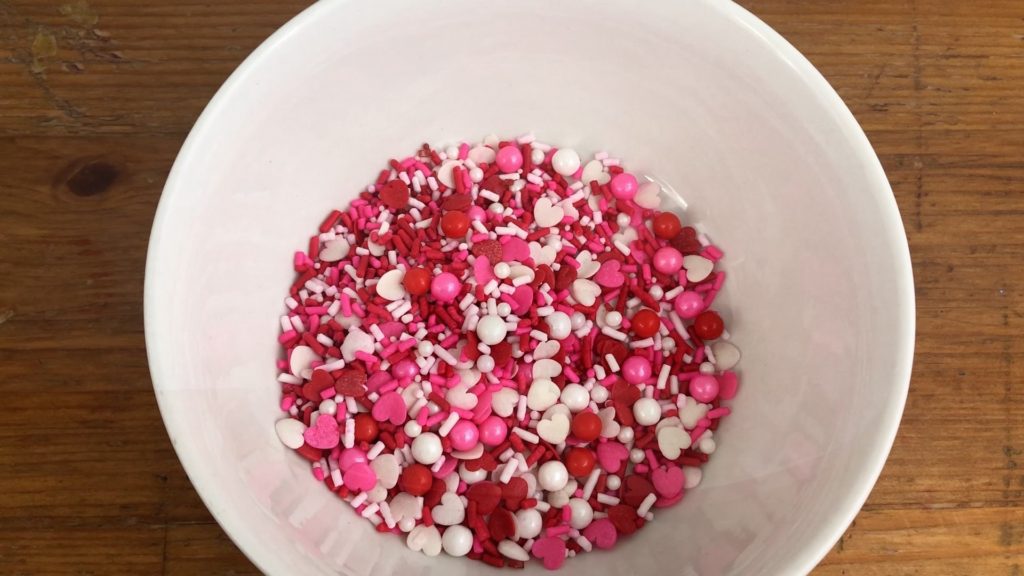
Prepare your sprinkle mix using a pre-made mix or create your own by pouring different colours, shapes and sizes of sprinkles into a bowl and mixing them up. I recommend using a baking tray for this next part, so that you don’t get sprinkles all over the place.
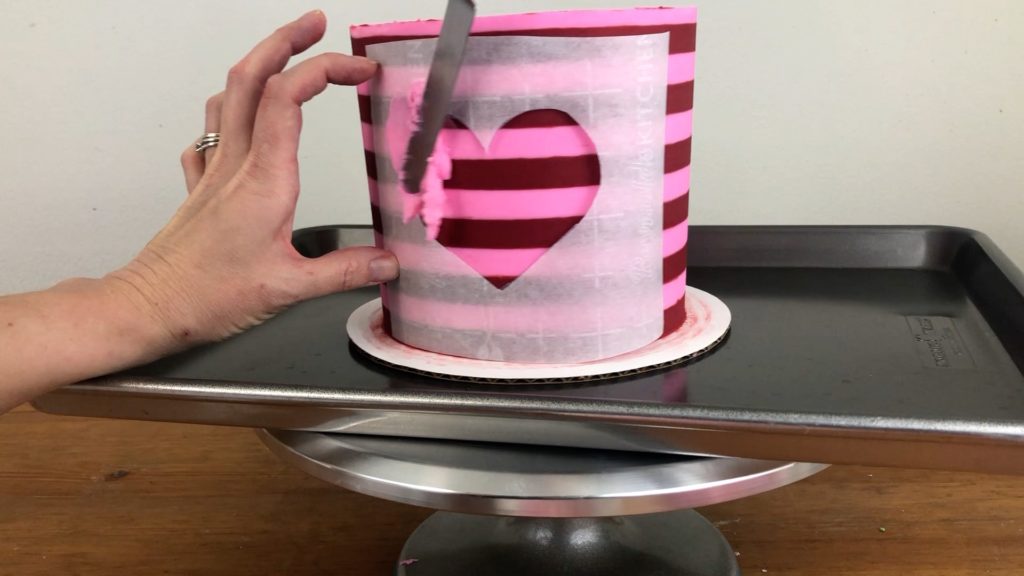
When you can press gently against the frosting on your cake without indenting it, it’s ready for the stencil. Place your chilled cake on the baking tray and hold your stencil up against the side of the cake. If there are any imperfections in the frosting on your cake, this is a great opportunity to hide them by placing the heart on top of them! Line the stencil up so that it’s straight and spread buttercream over the heart shape to completely cover it.
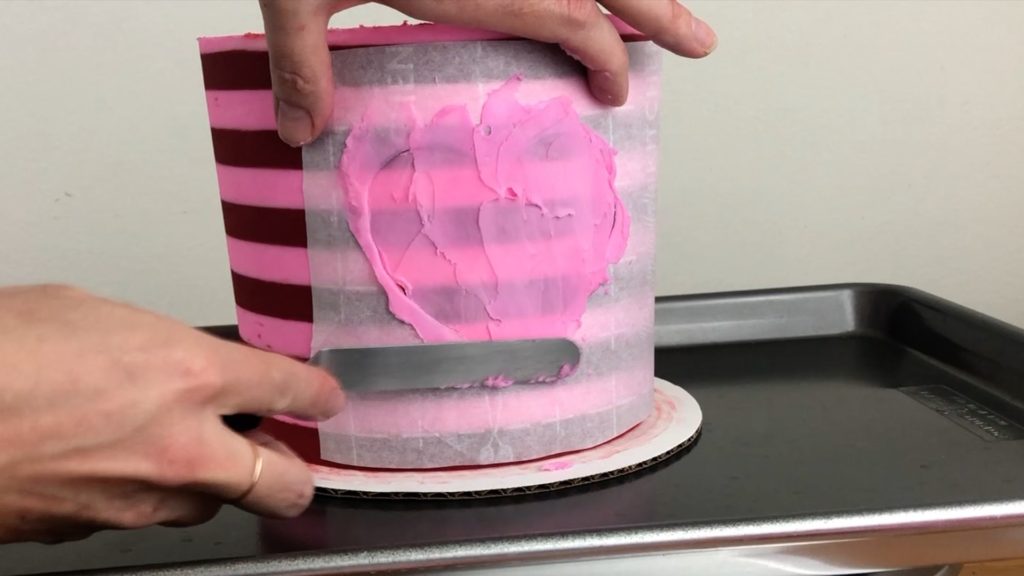
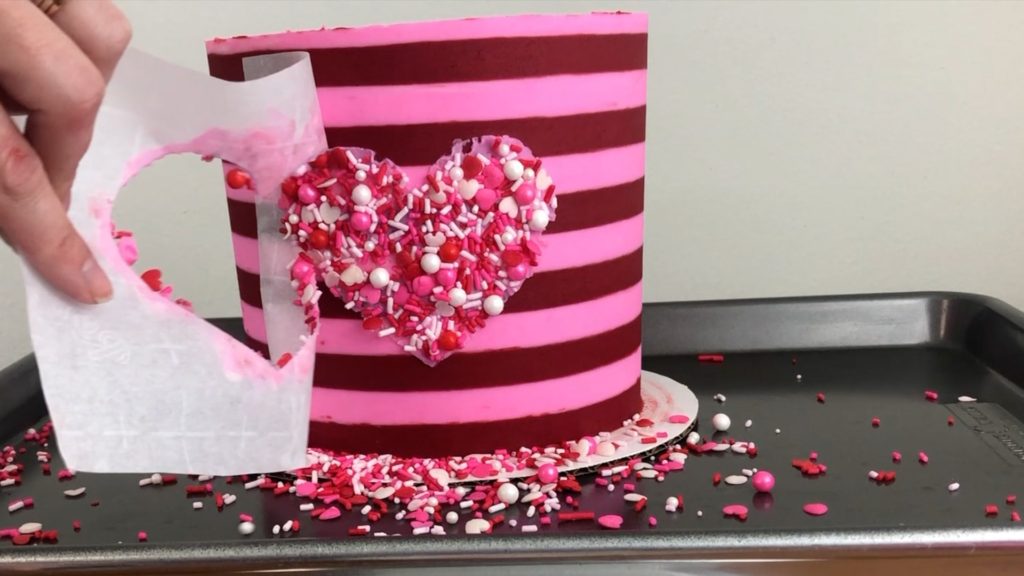
Spread from the parchment surround the heart, towards the middle of the cutout heart shape, because if you go the other way you might push buttercream underneath the parchment paper and mess up the outline of your heart. The stencil will be very flimsy because parchment paper is so thin and the frosting on the cake has set so the parchment won’t stick to it, so only your hand is holding it in place. If the stencil moves around, line it up again and continue spreading on the buttercream. Ideally you should use the same colour as the frosting on the cake or the colour of the sprinkles you’re going to use to fill it. It doesn’t need to be thick, just enough to cover the whole heart shape and you should smooth it out with your offset spatula or a frosting smoother so that it’s an even thickness.
Immediately press your sprinkles into the fresh buttercream so that they stick, working your way around the whole shape to make sure it’s all covered with sprinkles. If you’re not going to add a sprinkle border around the bottom of the cake, it’s a good idea to make sure your parchment stencil goes all the way to the bottom of the cake to prevent any sprinkles accidentally sticking to the cake as they fall down. When you’ve covered up as much of the shape as possible with your sprinkles, carefully peel off the parchment to reveal your sprinkled shape!
If there are any parts without sprinkles, probably around the outline of the shape, you can add sprinkles individually to cover up that buttercream and complete the shape.
For my tutorial on 6 Ways To Decorate Cakes With Parchment Paper click here. To finish off this cake I piped some buttercream swirls with piping bags fitted with 1M tips and filled with pink and red buttercream, the two colours of my frosting stripes, alternating colours as I worked around the cake.
If you’re looking for more Valentines Day cake designs, I have a tutorial on this stunning carved buttercream cake, which is one of the 18 cakes I teach how to decorate in my online course on Buttercream Carving, on my online cake school.
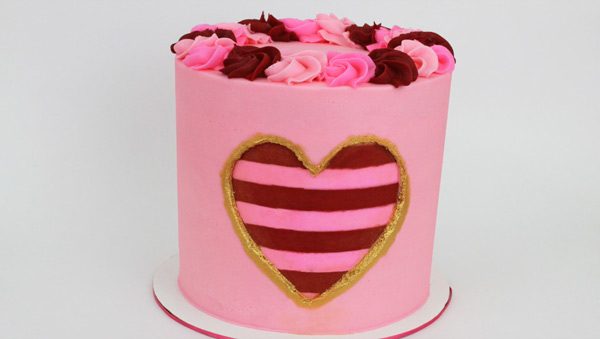
I also have an online class on how to decorate this fun peekaboo cake:
You can watch the video of this tutorial here:
In this cake decorating tutorial I share 10 hacks for decorating cakes like a pro, used by professional cake decorators to make cakes look and taste amazing! I opened and ran my own cake shop and have managed several others and these are tricks I’ve picked up along the way. I hope you find them useful!
Hack #1: Bake even layers
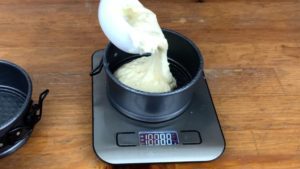
This first hack is a bit mathematical, but none of the rest are. When you’ve made your cake batter, prepare even cake layers by weighing your batter as you divide it between pans. Place each pan on your scale, reset the weight to zero, and then weigh the batter as you spoon it into the pan.
My recipes include the total batter weight, which you can divide by the number of pans you’re using, or if your recipe doesn’t include a weight you can weigh the mixing bowl before you start and then subtract that number from the weight of the bowl with the batter, to get the weight of just the batter, and divide that by the number of pans you’re using. Here, I’m making 6 layers of 80 grams each, so I keep spooning batter into the pans until I reach that weight, or take out a bit if I go over that weight. A few grams on each side of your target weight is fine. Then spread your batter flat in the pans, tap them a few times on the counter to get rid of air bubbles, and bake them. You’ll probably need to level your layers after baking, and optionally divide them, and I cover those techniques in my online course on The Basics Of Cake.
Hack #2: Keep cakes moist
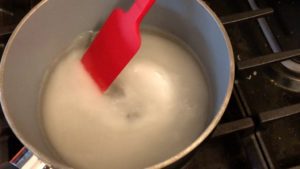
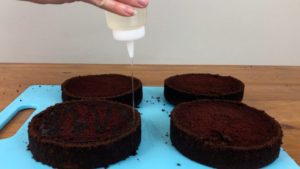
After baking your layers but before assembling your cake, you can drizzle them with simple syrup to keep them moist. Simple syrup is ridiculously easy to make… just put equal amounts of water and sugar into a saucepan – I usually do 1 cup of each – and turn the heat to medium and stir occasionally until all of the sugar has dissolved, which will happen by the time the mixture starts bubbling.
Let it cool and then drizzle your cake layers, going right up to the edges because that’s where they’re most likely to dry out.
Hack #3: Fill piping bags neatly and without “squirting”
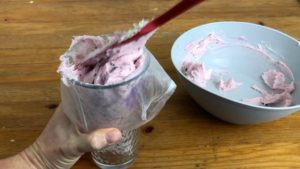
If you pipe buttercream onto your cake, either as a filling or for the frosting on the outside of the cake, you’ll need to put your buttercream into a piping bag. An easy way to do this that avoids mess is to fold the top of your piping bag over a glass and then spoon the buttercream into the bag, pushing it all the way down to the bottom.
Then you can unfold the piping bag and you’ll have space to twist the bag, to stop the buttercream oozing out of the top of the bag and making a mess on the bag and your hands. If you need to refill the bag, you’ll get air pockets between the old buttercream at the bottom of the bag and the new buttercream at the top of the bag, so before you start piping, squeeze the bag into a bowl, pushing the old buttercream out and wait for the squirt of air, which will spray out some buttercream with it, before you use the piping bag again.
Hack #4: Stop cakes sliding on their cake boards
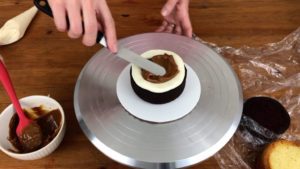
When you assemble your cake on a cake board, start by spreading or piping a dollop of buttercream onto the middle of the cake board to secure the first layer of cake, pressing the cake firmly down so it sticks onto the buttercream.
This will prevent the cake from sliding around while you assemble it, but before you frost it you should chill the cake in the fridge for 30 minutes or in the freezer for 15 minutes, which will chill and set the buttercream dollop on the cake board, causing it to stick more securely to that first layer of cake so it doesn’t move when you spread frosting onto the outside of the cake.
Hack #5: Prevent bulges in the sides of your frosting
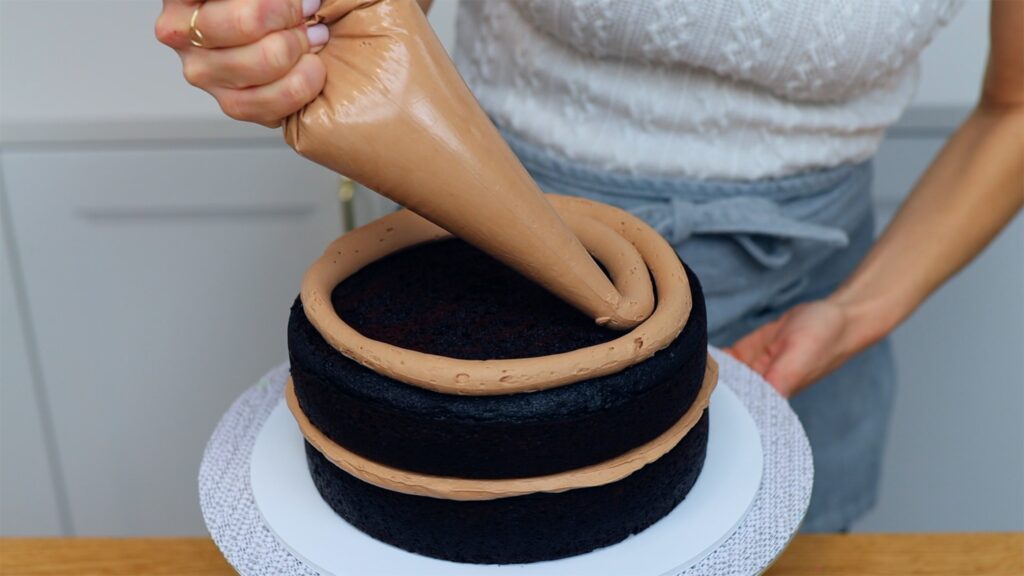
If your fillings are more liquid than buttercream, like fruit sauces or dulce de leche, you should use a buttercream dam on each layer of cake to contain the filling. This is just a ring of buttercream piped around the outer edge of the cake, and then you can spoon the filling into the middle and spread it right up to the dam.
The filling shouldn’t go any higher than the dam. Place your next layer on top and push down to make sure that the filling doesn’t ooze out. This will prevent a bulge in the frosting on the side of your cake, where filling oozes out under the weight of the cake and fillings and frosting on top of it.
Hack #6: Keep cakes steady on the turntable
Before placing your cake board onto a turntable, place a ring of masking tape in the center and press your cake board down onto it, to secure it in the middle of the turntable so that it doesn’t slide around while you’re frosting or decorating it. You can use masking tape or a non-slip mat for this, and you can buy these non-slip mats as drawer liners on Amazon or grocery stores.
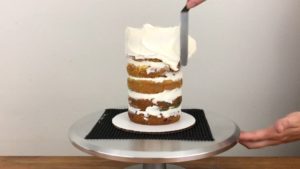
You can see that even though this cake is really tall, with a non-clip mat underneath the cake board and a dollop of buttercream securing the bottom layer of cake to the cake board, it isn’t wobbling around as I frost it.
Hack #7: Prevent crumbs in your frosting
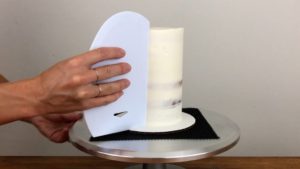
This frosting is called a crumb coat and it’s a thin layer of frosting that completely covers the cake, from the very tp of the sides all the way down to the cake board at the bottom, and the top surface of the cake as well.
Its purpose is exactly what the name suggests – a crumb coat is a coat of frosting to trap any crumbs that come off the cake. It doesn’t need to be pretty – it’s fine if you can see the cake layers through it and it will probably have visible crumbs in it, but you’re going to let it set before applying the final coat of frosting, which will sit on top of this, and the crumb coat will act as a barrier between the cake and the final coat so that crumbs can’t get into the final coat of frosting. Click here for my tutorial on how to get perfectly smooth frosting with sharp edges.
Hack #8: Create neat, even borders
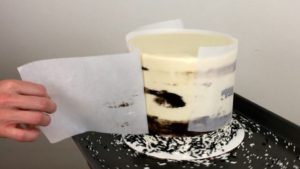
A quick, easy, and therefore popular way to add a border to the bottom of a cake is to use sprinkles. Place your cake on a tray for this, to catch any falling sprinkles so they don’t go all over your kitchen, and you’ll need parchment paper for this hack. Fold a piece of parchment paper in half and cut along the seam to make 2 strips of parchment paper and tape them together to make one long strip. Wrap the strip around a chilled cake, covering up the top section of cake but leaving the bottom exposed where you want the sprinkles to go. It’s fine if the parchment strip doesn’t go all the way up to the top of the cake – just a few inches above the exposed area where you’re going to press the sprinkles is fine. The cake needs to be chilled so that the frosting sets and gets cold and hard, so it holds its shape and doesn’t get damaged by the parchment paper wrapped around it.
Now just press your sprinkles into the exposed frosting below the parchment strip, using an offset spatula or a spoon or your hands, and when you peel the parchment paper away you’ll leave a perfectly neat sprinkle border around the base of the cake!
Hack #9: Decorate cakes a month in advance!
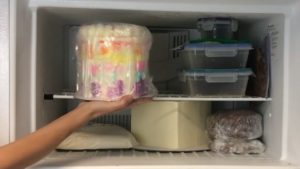
After you frost and decorate your cake, you can refrigerate it until the next day or if you want to store it for longer, you can freeze it, fully decorated! To do this, place your cake in the freezer for 30 minutes to an hour to set the frosting and decorations, so that they get hard and hold their shape for the next step. Then take the cake out and wrap the whole thing – the cake and the cake board and any decorations on top – in cling film or Saran Wrap. You’ll need at least 2 layers to completely cover the cake and the point of this is to prevent any condensation in the freezer getting to the cake, because any droplets of condensation will stick to the outside of the cake and can damage the decorations.
Then put the wrapped cake back in the freezer for up to a month, moving it to the fridge 24 hours before serving to defrost gradually. Unwrap the cake as soon as you take it out of the fridge, while the frosting is still cold and hard and won’t get damaged while unwrapping it.
Hack #10: Beautify cardboard cake boards
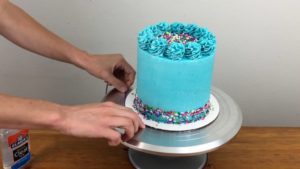
A quick hack to make even these cheap cardboard cake boards look pretty is to wrap them in fabric ribbon. Squeeze clear craft glue all around the edge of the cake board, and the easiest way to do this is to hold your hand still with the tip of the glue bottle against the side of the cake board and then spin the turntable to apply the glue all the way around, and then choose where the back of your cake will be and press the end of the ribbon into that point on the cake board. Spin the turntable again, pressing your finger against the ribbon as you go to keep it taught and to stick it to the glue.
Fabric ribbon works best for this because it’s flexible and sticks easily and it also looks pretty, especially if you choose a colour that matches or complements the colours of the frosting or decorations on the cake. Make sure the width the ribbon is the same as the height of the cake board, so that it completely covers the cardboard edging but doesn’t stick up above the top of the cake board. When you get to the end, cut the ribbon so that it will overlap the beginning of the ribbon by a little bit, maybe half a centimeter, and then squeeze a dot of glue onto the beginning of the ribbon and press the end against it. Don’t move the cake from the surface you did this on for about half an hour, until the glue has dried and the ribbon has stuck to the cake board, so if the cake is on a turntable and you want to to refrigerate it, put it in the fridge on the turntable.
If you prefer to watch the video of this tutorial you can do that here:
Going into 2020, the trends for cake decorating showcase generous use of texture and colour and, a welcome factor for most of us, simplicity! I’m going to walk you through the top 10 trends that I anticipate highlighting the cake decorating world this year, which I’ve divided into styles featuring texture, colour, and simplicity.
The easiest way to incorporate texture in your cakes is to use a textured frosting comb, and the speed and ease of this technique is one of the reasons it’s gaining so much popularity! Crumb coat and frost your cake as normal, making sure the sides are straight and that you have quite a thick layer of frosting all over the cake since you’re going to take a lot of it off when you use the comb. After smoothing the frosting, immediately use the textured comb, applying consistent pressure against the side of the cake as your spin the cake on a turntable, going around several times and touching up any gaps in the frosting with more buttercream, keeping going until you have a defined texture with no air pockets. Frosting combs are available in lots of different patterns, made of plastic or metal or acrylic, and all of them work well but it’s easiest if the comb you choose is at least as tall as your cake. You can play around with the colours of your frosting, like the ombre design on the cake above, and add drips or piped frosting details or cake toppers as you would with any other design.
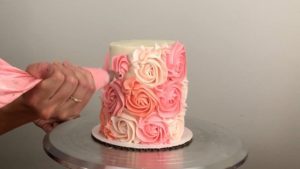
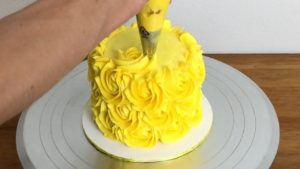
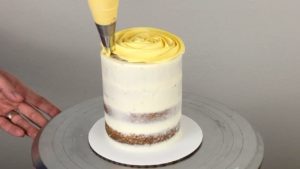
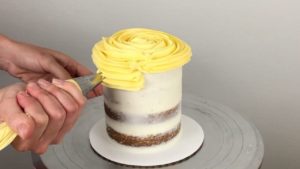
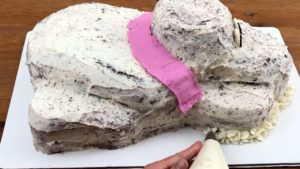
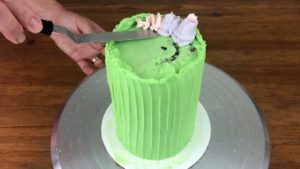
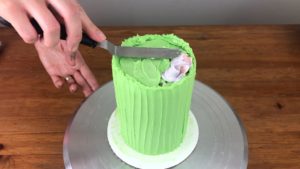
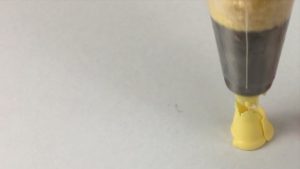
A more time consuming but very forgiving way to add texture is with piping tips. Even if you haven’t been decorating cakes for long, you’ve probably experimented with piping tips or at least the standard star tip, also called a 1M tip, which is the typical tip used to pipe a cupcake swirl. But you can do SO much more with this tip than just that! Pipe easy roses onto a cake by covering a cake with swirls, or make frosting “fur” for animal cakes, and I share more ideas in my tutorial on 8 Ways To Use a 1M Piping Tip.
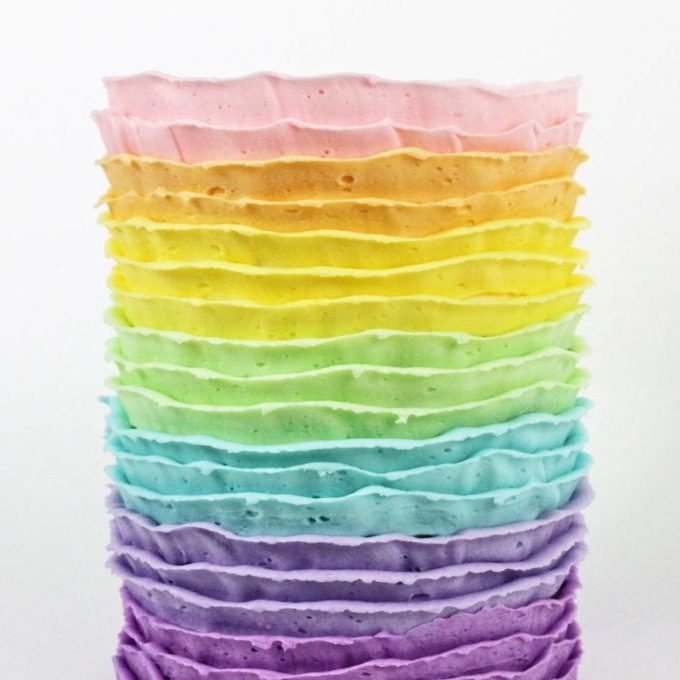
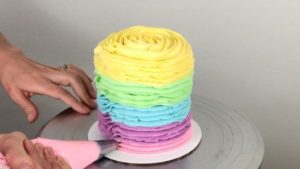
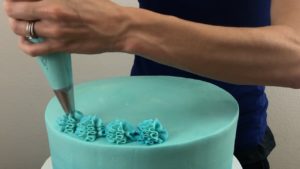
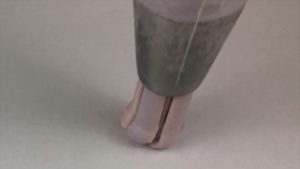
Other piping tip textures include the ribbon-style frosting in the photo above, piped with a petal tip like a number 104 or 125. For more ideas check out my tutorial on 8 Ways To Use A Petal Tip. Scallops are beautiful too – they can be piped with a round tip or even a piping bag with no tip, and smoothed out with an offset spatula or the back of a spoon.
The beauty of using piping tips to frost a cake is that you don’t need to cover it in perfectly smooth frosting, just a simple crumb coat to lock in the crumbs and the moisture, so if smooth frosting isn’t your strongest skill then frosting a cake with piping tip texture is a great alternative, so you can still make a cake that looks professionally decorated.
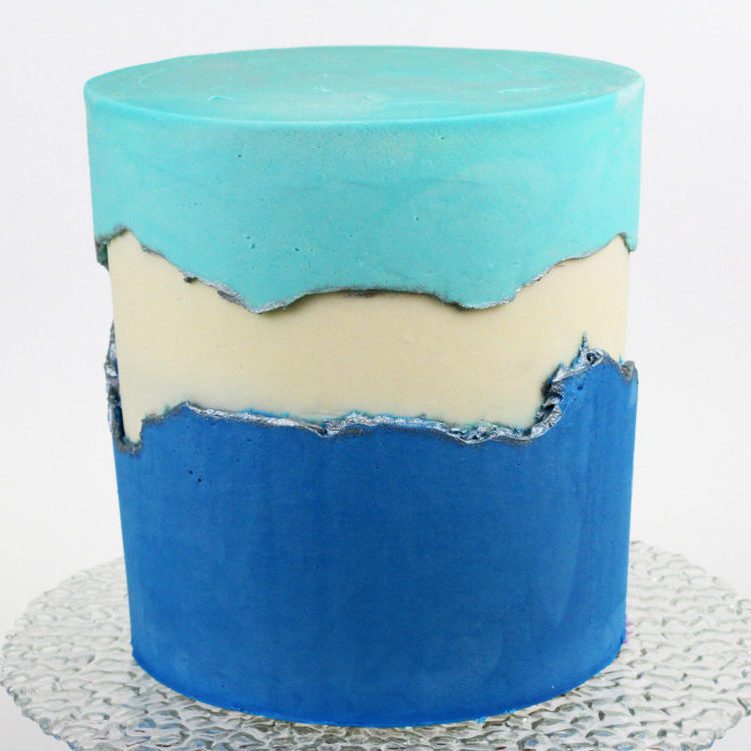
One of the big trends in 2019 was the fault line cake, which is still going strong and definitely worth trying before the trend dies out. We’ve seen several variations of it, starting with simple spreading a second coat of frosting with a gap in the middle, hence the name “fault line” cake, and optionally painting the edges with metallic paint. I have a step by step tutorial on this technique here. To achieve the design, apply your first coat of frosting and let it set completely by chilling it in the fridge for at least an hour before applying the second coat to the top of the cake, and on the sides cover just the top and bottom, leaving the middle section without a second coat so you can see the first colour. Smooth the frosting as normal, leaving an uneven, jagged edge above and below the gap in the middle. If you want to paint the edges of the fault line, chill the cake for another hour to set the frosting and then mix gold or silver luster dust with vodka or any other clear alcohol or lemon extract and then paint along the edge of the fault line. This is how the fault line cake originated, but the trend has already evolved in several ways.
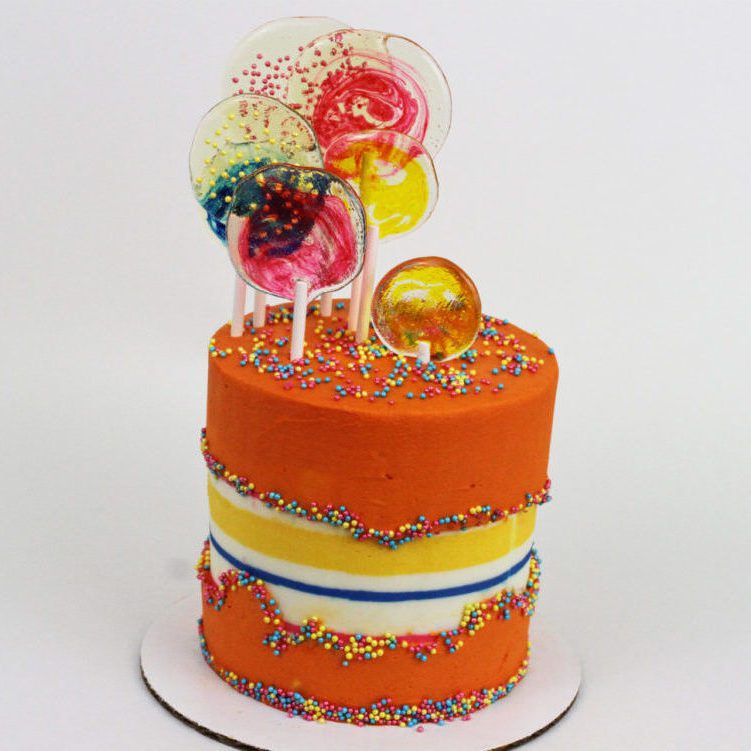
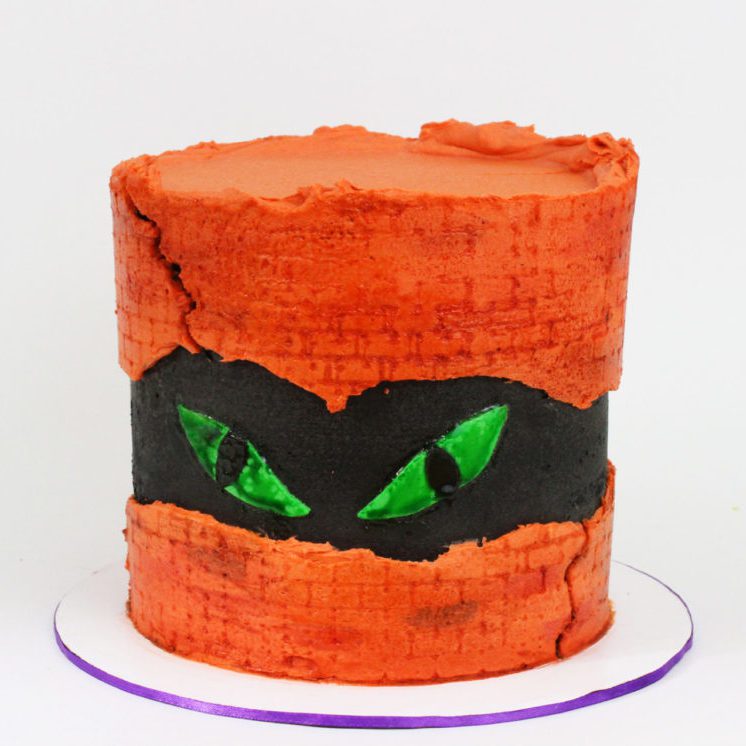
The first variation was filling the fault line with sprinkles, which you achieve by pressing sprinkles onto the middle section of the crumb coat, letting them set, and then piping or spreading frosting over the rest of the cake and smoothing it to leave the sprinkled gap in the middle. Another fun evolution is to decorate the fault line with stripes, and I’ll cover stripes in more detail as a trend on its own later. Other emerging variations include adding that second layer of frosting to only the bottom of the cake, and you can spread it on or use parchment paper to have more control over the placement of the frosting. Jazz up the edge of the fault line by adding sprinkles to it, or edible glitter, instead of the original style of metallic paint. Try adding texture to the second layer of frosting with a textured frosting comb or an impression mat, and take it even further by painting the second layer of frosting or adding details like the brick wall cracks on this Halloween cake.
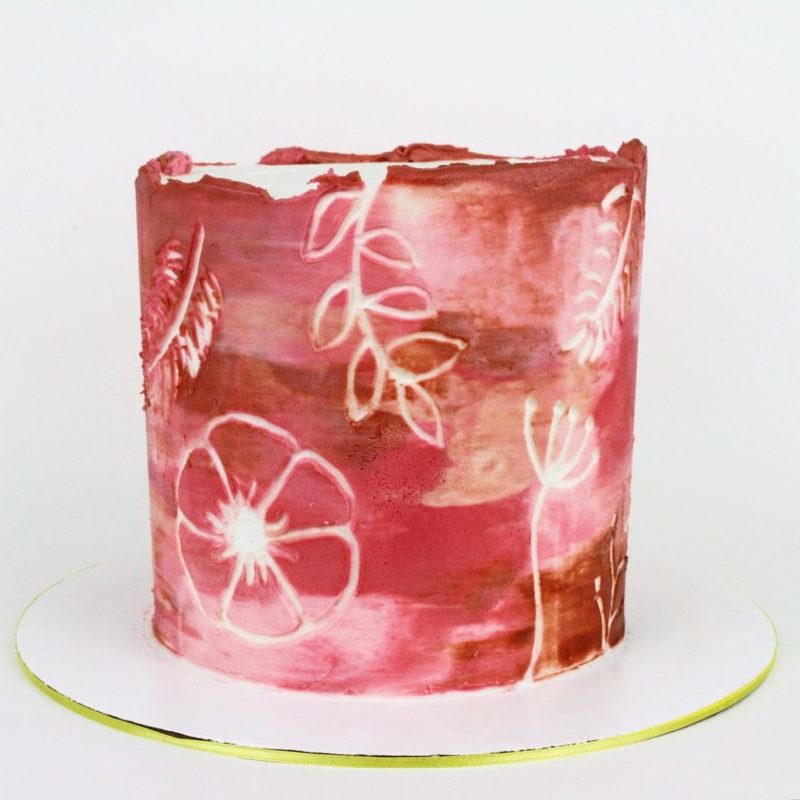
My favourite new trend is the carved buttercream trend, which has endless possibilities for texture and colour on your cakes. This trend uses clay modeling tools, which are very cheap and easy to find on amazon or in arts and crafts shops, and you can use the tools to carve out patterns, images, shapes, textures… carving is an incredibly versatile technique and I spent a few months experimenting with it and created an online course teaching the techniques and several styles of carved designs, including 4 themed cakes showing step by step from start to finish how to create the design. If you’re interested in that course click here.
Another trend that adds colour and texture to cakes is to use sprinkles to create or highlight your design. This can be as simple as pressing sprinkles onto the sides of the cake, which is easiest if you dip your finger in water and tap off any excess before pressing it into a sprinkle, so that the sprinkle sticks to your finger and then when you press it onto the frosting of the cake, it transfers to the cake for perfectly accurate placement. Hide sprinkles in the middle of your cake for a sprinkle explosion, also called a piñata cake, buy cutting a circle out of the middle of all of your cake layers except the top one, which creates a chamber that you can pour sprinkles into and after sealing the chamber with the top layer of cake without a hole in it, you frost and decorate the cake as normal and when you cut into it, a cascade of sprinkles explodes out for a fun surprise! You can buy or make your own sprinkle mix, and I cover a lot more ways to use them on your cakes in my online course on 10 Cake Decorating Techniques.
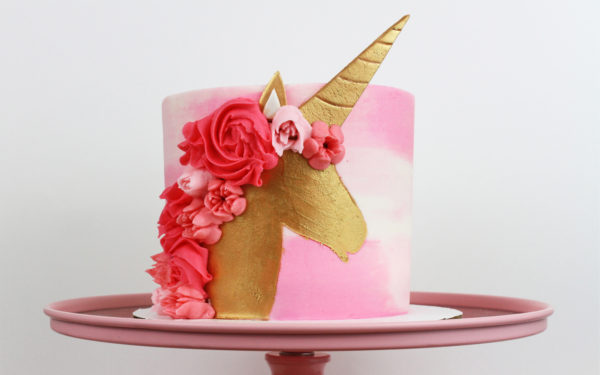
With all of the fun sprinkle mixes you can buy, which incorporate every colour and lots of metallics, I think cake colour schemes will continue to be inspired by sprinkles and we’ll be seeing a lot of metallics on cakes. This will include edible gold leaf, which is bought in sheets and sticks easily onto buttercream by pressing it gently against the cake on the sheet it come on, or using a paintbrush to carefully lift it off the sheet and transfer it to the cake. Edible gold paint will be popular too, which is made easily by mixing gold luster dust with vodka or any other clear alcohol or lemon extract, To get the strongest, most opaque shade of gold use high proof alcohol like Everclear 190, which makes a thick gold paint like on this unicorn cake:
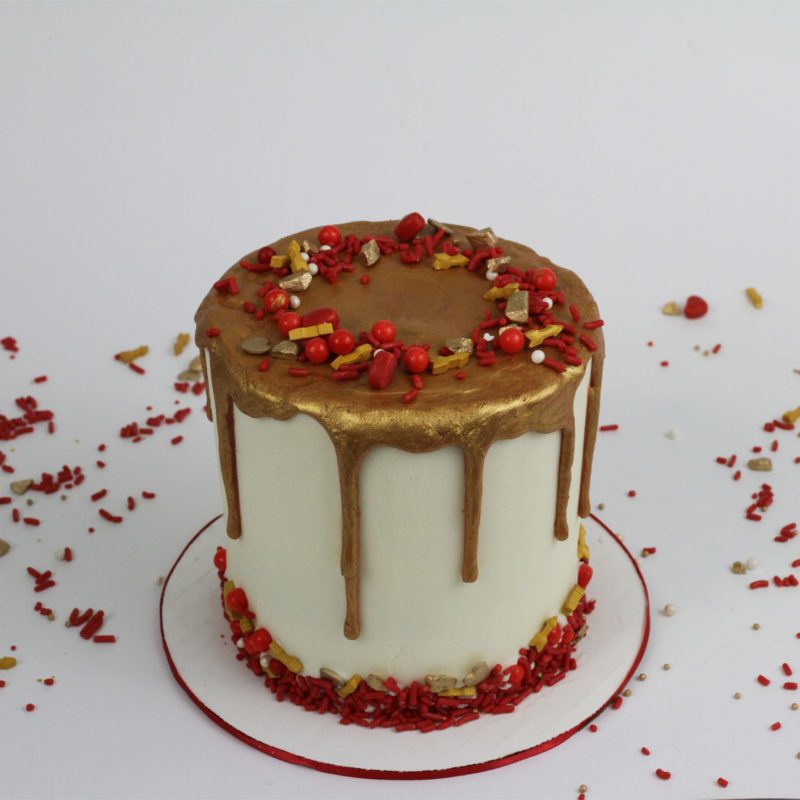
Another way to incorporate gold is a gold drip, which is most easily achieved by applying a ganache drip using white chocolate or semisweet chocolate, letting it set, and then painting the drips with edible gold paint. This is a lot easier than it sounds if the drip is the right consistency, and I have a full tutorial on gold drips here.
This next trend uses acetate or parchment paper to apply colourful designs to cakes. Wrap the acetate or parchment around the cake and add a few inches to leave space for the design you’re going to apply to it, and then cut the acetate and cover it with a design. You can use Candy Melts, melted chocolate, or even buttercream to pipe your design. Then take your chilled cake and wrap the acetate tightly around it, pressing the design against the cake and then putting it back into the fridge to set against the sides of the cake. When you peel the acetate off you’ll leave the design behind, attached to the frosting, and this lets you to create designs that gravity wouldn’t normally allow. In my tutorial on How To Make A Cake With Wrapping Paper I show step by step how to trace over a pattern or design, like wrapping paper or a gift bag, and after pressing it against the cake, chilling it and then peeling it off, use a frosting smoother dipped in hot water to smooth the design. Then you can add details like buttercream borders, shadowing with more buttercream applied with a palette knife, and sprinkles for some texture or to cover up any air pockets. Apart from being simple, this technique is great because you don’t need any special tools or materials, just some acetate or you can do this with parchment paper instead. I’ve started to see more cake designs appearing with this technique, to I think the trend will grow this year and we’ll be seeing lots of creative designs using this simple material.
A trend that became huge in 2019 is striped buttercream created with a striped frosting comb, and although these have been popular for over a year now, I don’t see the trend going away any time soon. You can buy a striped cake comb for a few dollars and get these stunning designs which make beautiful cakes on their own or with very little extra decoration. I have a VERY detailed tutorial on Four Secrets for Perfect Stripes which I highly suggest watching before you start!
Now for the trends featuring simplicity… firstly, if you haven’t made one yet, jump on the number cake bandwagon! These are great because you don’t need to be confident with smooth frosting, since you layer cakes with piped buttercream and don’t frost the sides. You can show off the flavours of the cake because they aren’t hidden by covering the cake in frosting, and they’re easily personalized with the birthday boy or girl’s favourite chocolate, candies, flowers, or even toy figures! The most eye catching designs have a colour scheme, even if it’s just brown from the chocolates placed on top. I have a tutorial for How To Make A Number Cake and also for the rainbow number cake in the photo above.
Finally, another ridiculously simple cake to make is a tray bake cake! These are baked in a deep baking tray or casserole dish or disposable cake pan and decorated and served within the same pan, so there’s no need for layering or crumb coating or anything complicated or time consuming. All you need are a few piping bags with different tips and different colours of frosting and you can cover the top of the cake with whatever piped patterns or textures you like for a fun, unique design that only takes a few minutes! I have a full tutorial on Tray Bake Cakes if you’re interested in some ideas for piping styles like rosettes, ruffles and piped flowers using Russian tips.
These are the 10 trends I think we’ll see in the cakes of 2020 and as a side note, if you want to show off your cake decorating skills, why not travel with your cake when you visit friends or family? You can travel with a cake in a car or even on an airplane following a very simple method which I’ve explained in my tutorial on How to Travel with a Cake in your Suitcase, which you can watch here. Which of these techniques are you excited to try this year? Or is there another trend you’re curious about? Tell me in the comments below!
If you prefer, you can watch my video tutorial on 10 Cake Decorating Trends to Try in 2020 below:
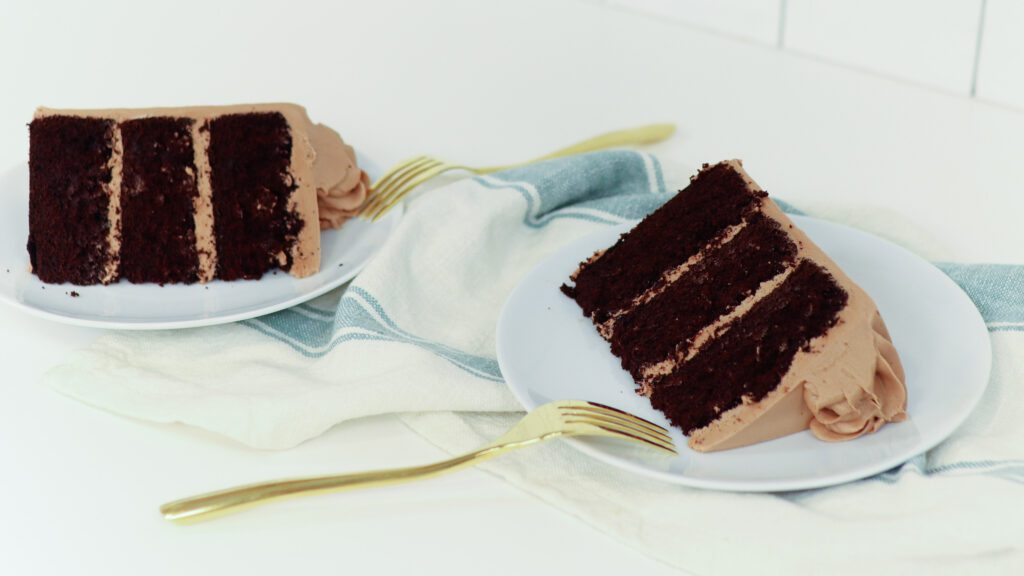
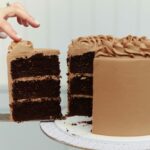
This is my absolute favourite chocolate cake recipe. The cake is incredibly moist and not too sweet. It’s light and springy to the touch but it holds up wonderfully under frosting and even fondant.
I’ve listed the ingredients with both measuring cup and weight measurements. Personally, I use measuring cups for this recipe. It's a fairly forgiving recipe and the small difference in each person’s level cup (including the difference between US and UK measuring cups) doesn’t affect the end result.
How to make this Perfect Chocolate Cake
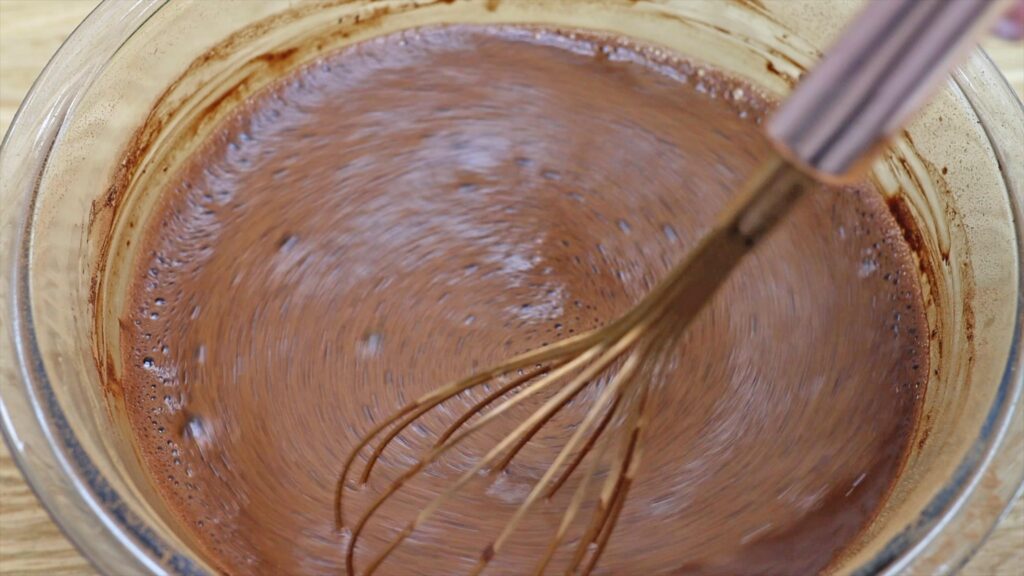
I recommend making this with an electric mixer of some sort - a stand mixer or a handheld mixer. Before mixing anything, the first step is to prepare the liquid for this recipe. This is a combination of cocoa powder and hot water. Measure the cocoa powder into a bowl and add the hot water and whisk together. Using hot water helps the cocoa powder dissolves when you whisk it. Since everything should be at room temperature when you add it to the cake batter, this will then need time to cool. That's why you should prepare the cocoa powder mixture first.
As with almost all baking recipes, it's important that al ingredients are at room temperature so that they combine easily. Butter should be taken out of the fridge at least two hours before you use it and to check that it's ready, you should be able to slice through it easily with a spatula.
Mixing the Perfect Chocolate Cake batter
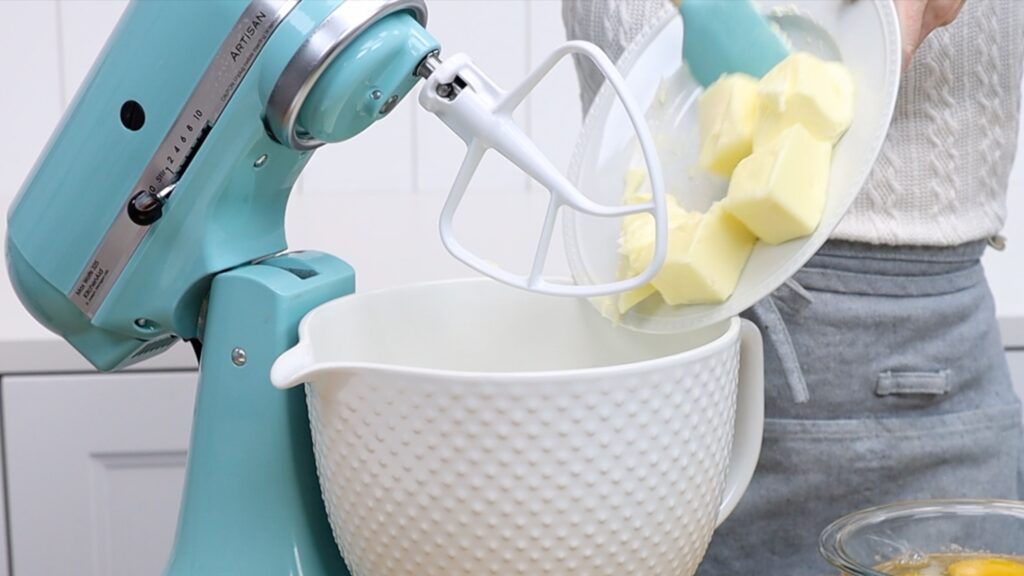
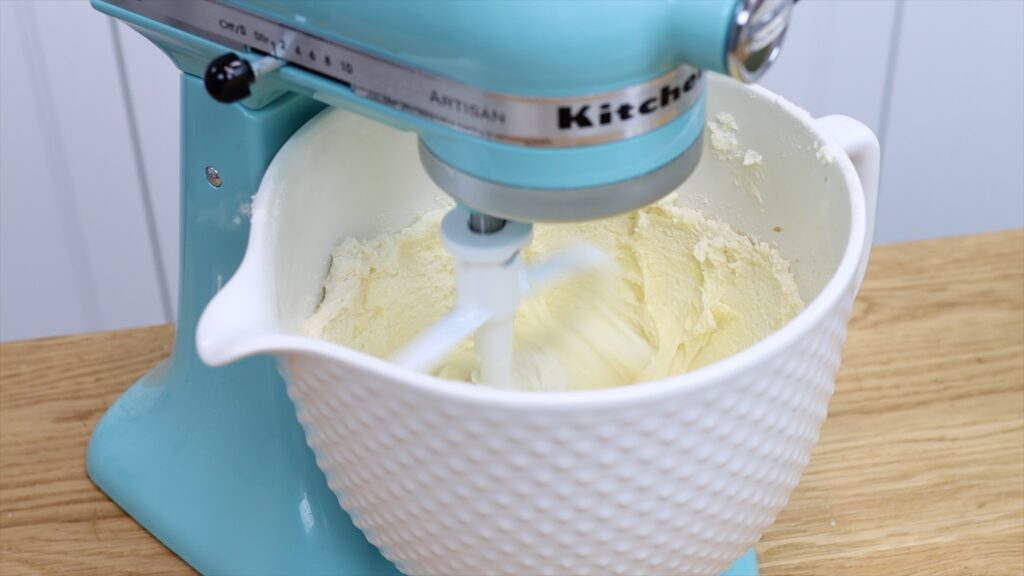
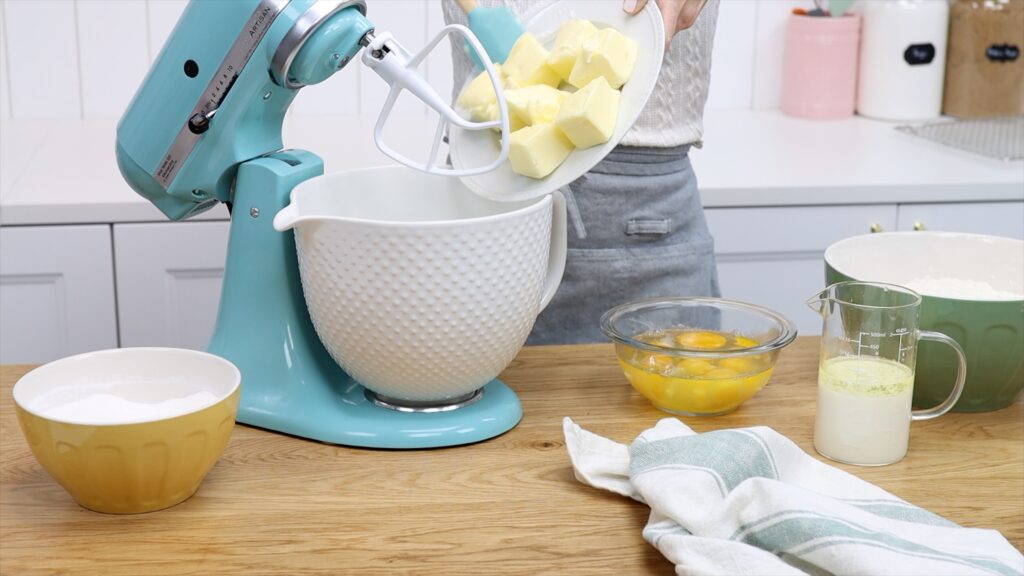
In a mixer with a beater or paddle attachment, mix the butter with the sugar on medium speed until pale and creamy. It will take about 2 minutes of your butter is at room temperature. You'll notice the mixture get lighter in colour and also fluffier. Scrape down to the bottom of the bowl once during mixing to make sure no butter is stuck at the bottom.
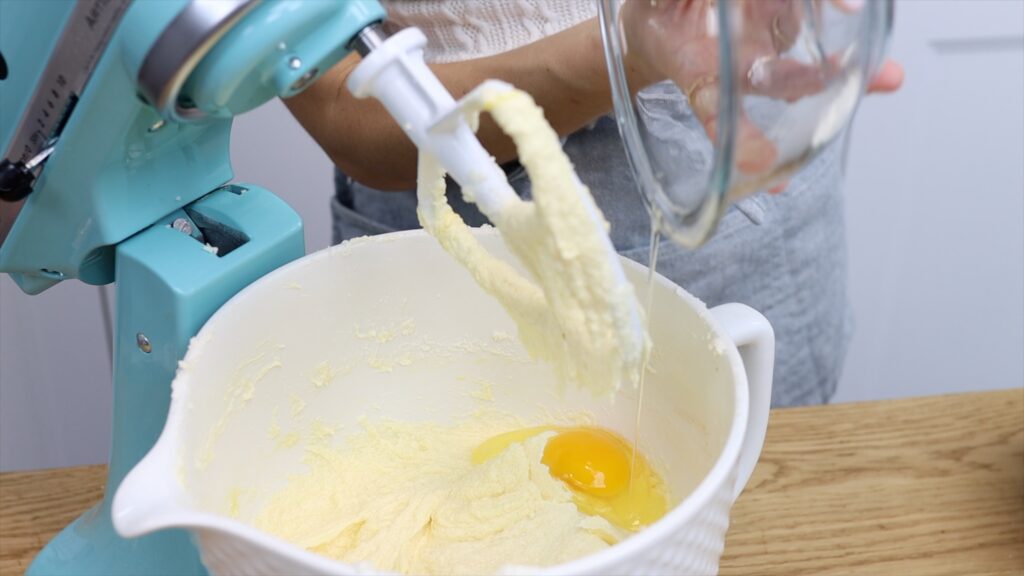
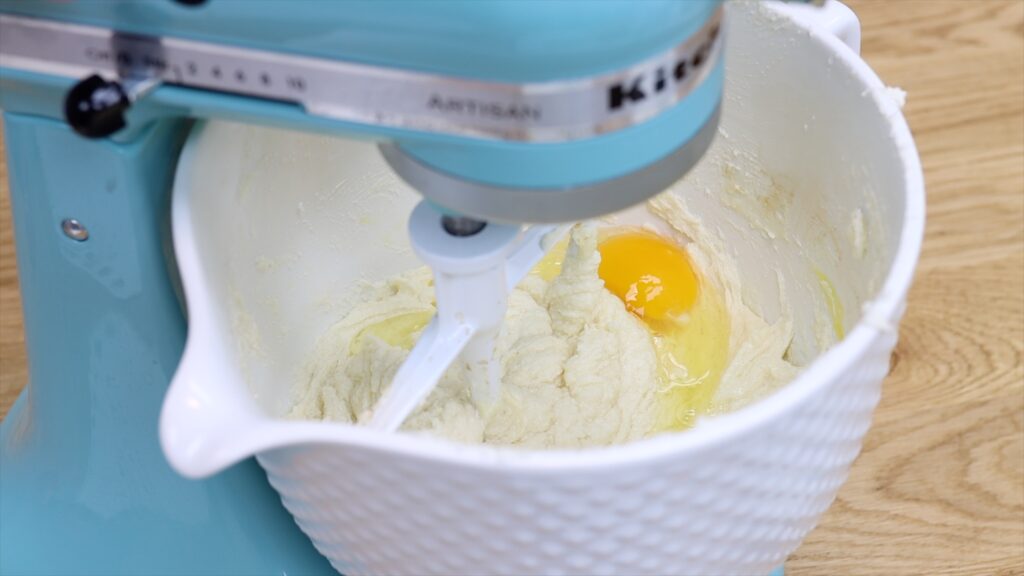
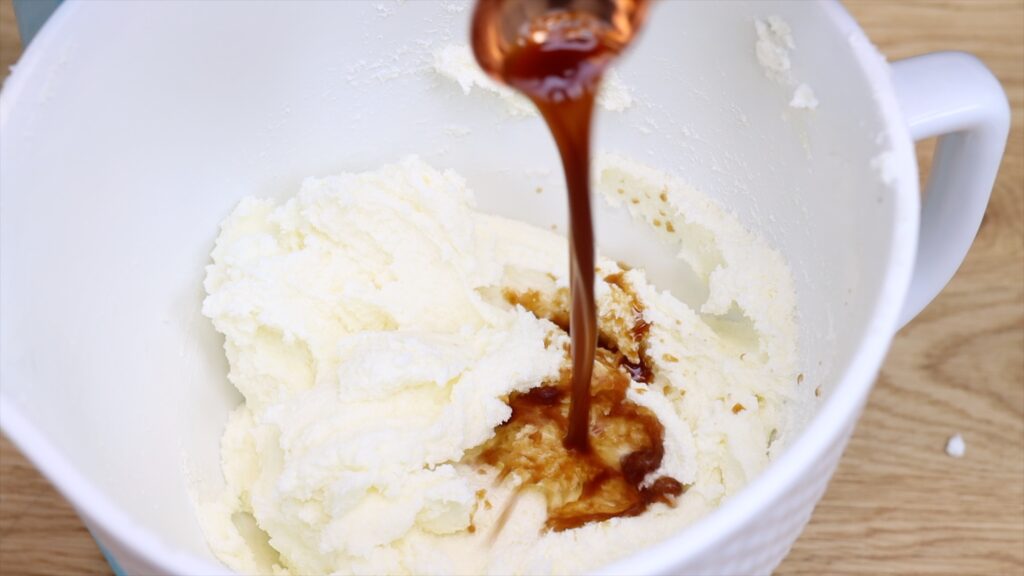
Add the eggs one at a time, mixing on the lowest speed after each one until it's incorporated into the batter, which will take about 30 seconds. Next, add the vanilla and mix on lowest speed for about another 30 seconds.
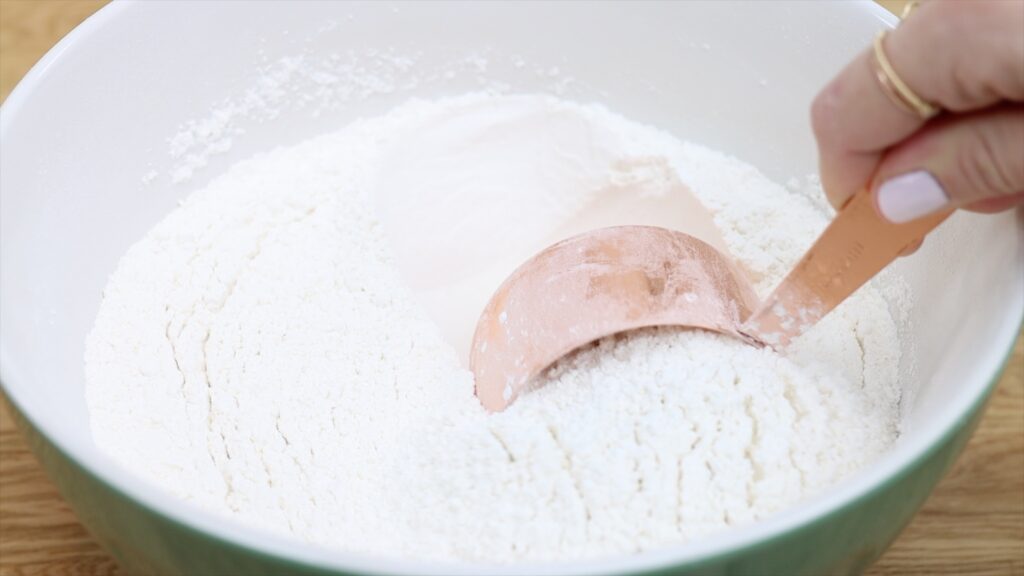
In a bowl sift the flour, baking soda, baking powder and salt. Add a third of the flour mixture to the mixing bowl and mix on lowest speed until you can't see any clumps of flour in the batter.
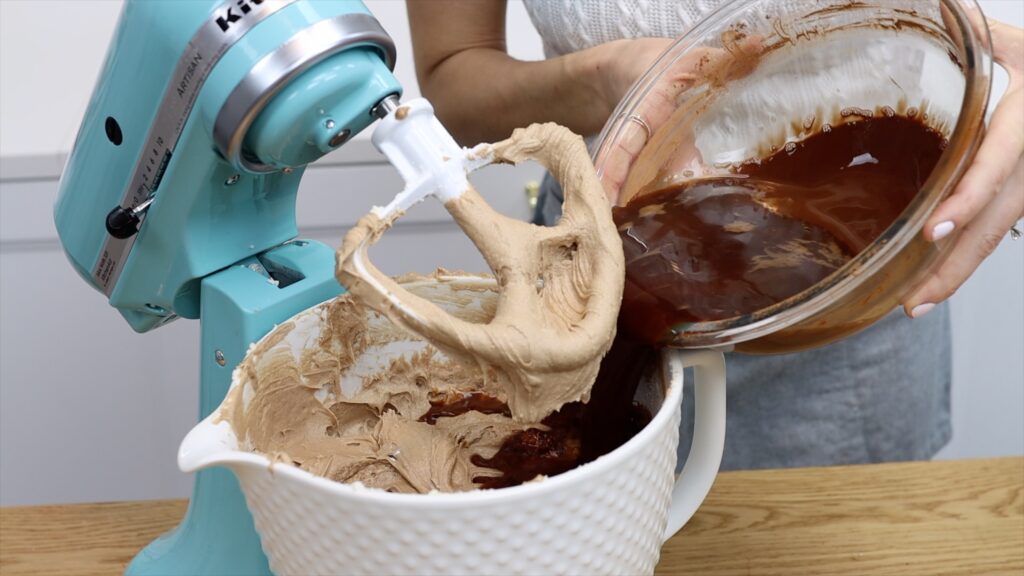
Add half of the cocoa mixture to the mixing bowl and mix on lowest speed to incorporate. The cocoa powder mixture will sit on top of the batter until you turn the mixer on. Then it will gradually mix into the rest of the batter. As soon as you don't see streaks of the dark brown cocoa powder mixture anymore, turn the mixer off.
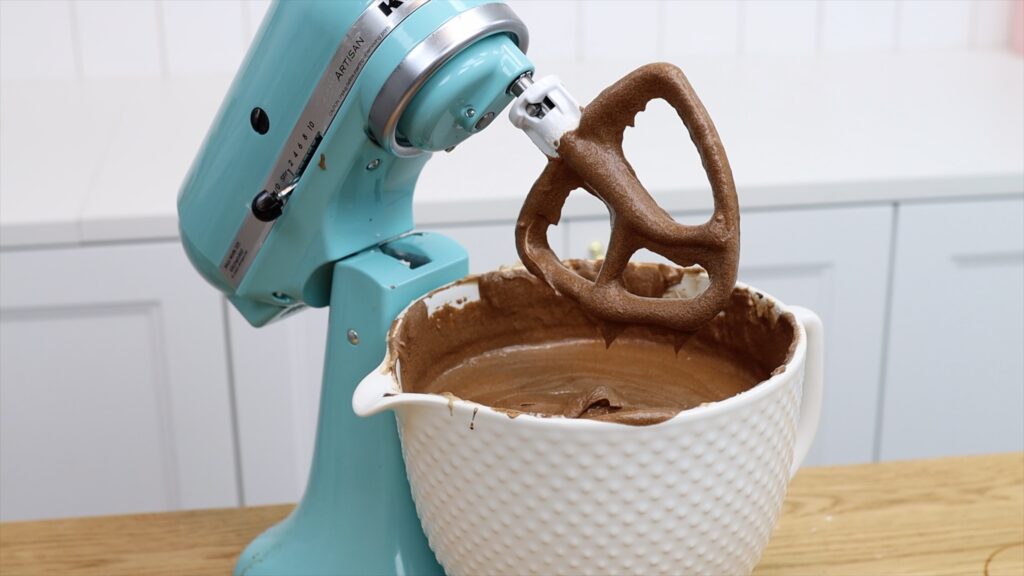
Add the remaining flour mixture and mix to combine. Then add the remaining cocoa powder mixture, mixing until the batter is smooth.
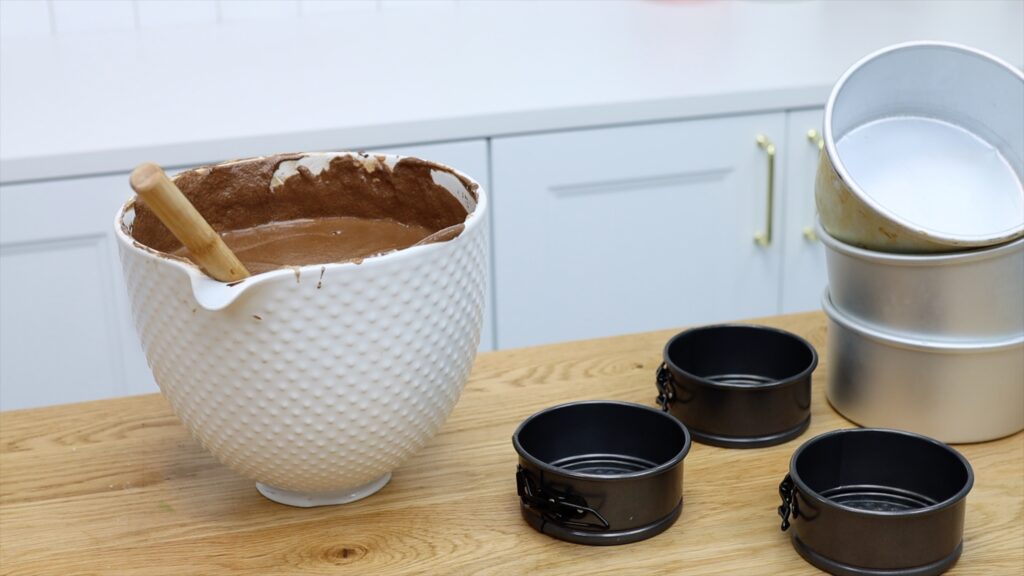
This is a runny batter, which makes it easy to pour or spoon into pans to bake. The recipe (listed in a printable and Pinnable format below) is for an 8" cake with three layers. I've also included two tables below converting the recipe to different size cakes.
To go more in depth in perfecting the foundation of your cakes, take my online course The Basics of Cake, where you'll learn with video modules showing every step of the process of making a cake: mixing, baking, levelling and dividing layers, making fillings and frostings, assembling, frosting, decorating, storing, transporting and serving!
Bake the Perfect Chocolate Cake layers
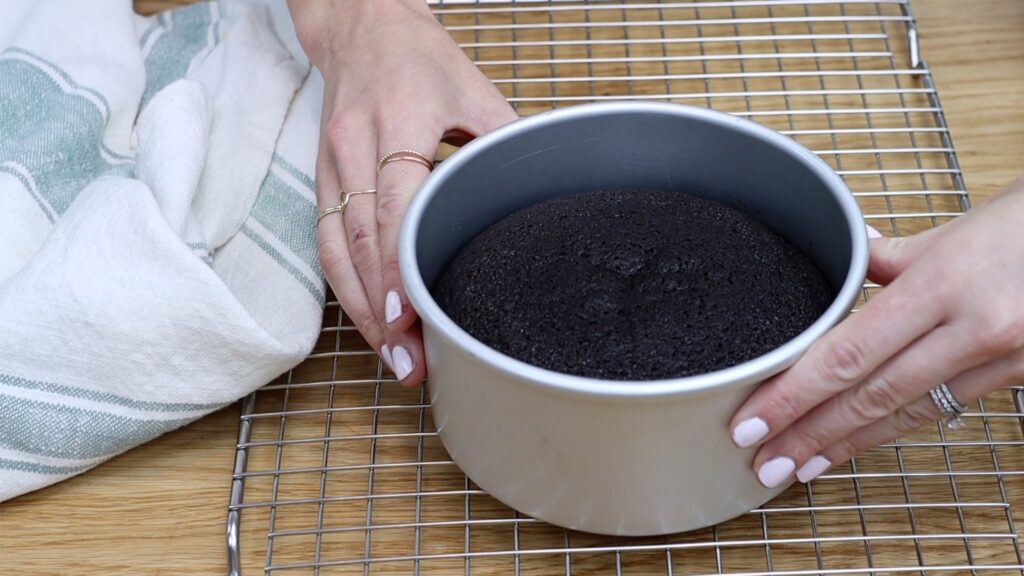
Grease the inside base and sides of three 8" pans with butter, oil, or non-stick spray. (Or see below for a table converting this recipe into different sizes!) Divide the batter between three cake pans and bake at 175ºC or 350ºF for 38 minutes, or until a toothpick inserted into the middle of the cake comes out clean.
Leave the cakes to cool in their pans for ten minutes. Use a spatula to loosen cake from the edges of the cake pan and then, as soon as you can touch the pans with your bare hands without burning yourself, turn the cakes onto a wire cooling rack. Leave then to cool completely before assembling your cake.
Make a cake with these Perfect Chocolate Cake layers
After assembling and frosting this cake you can leave it at room temperature for 3 days or in the fridge for up to a week. If you do refrigerate the cake, leave it at room temperature for at least 2 hours before serving it so that it comes to room temperature, when it tastes the best!
After slicing it, to prevent the cake drying out you can cover the cut side of the cake tightly with cling film or Saran Wrap.
Print or pin the recipe below or scroll down for a table with conversions into different sizes of cakes. Watch the video at the bottom of the page for more visual, step-by-step instructions!
This is my absolute favourite chocolate cake recipe. The cake is incredibly moist and not
too sweet. It’s light, not dense, but it holds up wonderfully under frosting and even
fondant.
Ingredients
Units
2 1/2cups hot water
1 1/4cupscocoa powder
1 1/4cupsunsalted butter
3cupswhite sugar
5 eggs
2 1/2 teaspoons vanilla extract
3 1/3cupsplain flour
1/2 teaspoon baking powder
2 1/2 teaspoons baking soda
1/4 teaspoon salt
Instructions
In a bowl, whisk together hot water and cocoa powder until the cocoa has dissolved. Set aside to come to room temperature.
In a mixer with a beater attachment, mix butter with sugar on medium speed until pale and creamy, about two minutes. Scrape down to the bottom of the bowl once during mixing to make sure no butter is stuck at the bottom.
Add eggs one at a time, mixing on the lowest speed after each addition until incorporated, about 30 seconds.
Add vanilla and mix on lowest speed for about 30 seconds to combine.
In a bowl sift flour, baking soda, baking powder and salt. Add a third of the flour mixture to the mixing bowl and mix on lowest speed to incorporate.
Add half of the cocoa mixture to the mixing bowl and mix on lowest speed to incorporate. Repeat with another third of the flour mixture, then the remaining cocoa powder mixture, and then the remaining flour mixture. Mix just until the ingredients are combined.
Grease the inside (base and sides) of three 8" pans with non-stick spray, butter or oil. Divide batter between the cake pans.
Bake at 175ºC or 350ºF for 38 minutes, or until a toothpick inserted into the middle of the cake comes out clean.
Let cakes cool in their pans for 10 minutes. Use a spatula to loosen cake from the edges of the cake pan and then turn onto a wire cooling rack. Leave to cool completely.
Notes
You can use salted instead of unsalted butter but if you do, omit the salt.
This recipe works best with plain flour, also called all-purpose flour.
How to Convert Perfect Chocolate Cake Batter
My Perfect Chocolate Cake recipe can be converted into lots of sizes of cakes by adjusting the quantities of the ingredients.
I like to divide my cake batter between three cake pans to make three layers for tall cakes, which are about six inches high. You'll see those tall cakes in any of my tutorials, like Parchment Paper Cake Decorating Hacks or 4 Ways To Write On Cakes. In case you prefer standard height cakes of around 4 inches high, I've also listed the quantities for the standard height version of each size of cake.
Whatever size of cake you're making, follow the same steps in this Perfect Chocolate Cake recipe but use the quantities of ingredients listed below.
Standard Height Cakes
For standard height cakes of about 4 inches tall, use the ingredients in the quantities listed below and divide the batter into two cake pans.
Ingredients
2-layer 6" cake
2-layer 8" cake
2-layer 10" cake
Hot water
1 cup 235ml
2 cups 475ml
3 cups 710ml
Cocoa powder
1/2 cup 45g
1 cup 85g
1 1/2 cups 130g
Unsalted butter
1/2 cup 114g
1 cup 227g
1 1/2 cups 341g
Sugar (white, granulated or caster)
1 cup and 2 tablespoons 225g
2 1/4 cups 450g
3 1/2 cups 675g
Eggs
2
4
6
Vanilla extract
1 teaspoon
2 teaspoons
1 tablespoon
All purpose flour (plain flour)
1 1/3 cups 167g
2 2/3 cups 333g
4 cups 500g
Baking soda
1 teaspoon
2 teaspoons
1 tablespoon
Baking powder
1/8 teaspoon
1/4 teaspoon
1/2 teaspoon
Salt
Pinch
1/8 teaspoon
1/4 teaspoon
Total weight of batter
924g
1848g
2776g
Weight of batter per pan for 2 pans
462g
924g
1338g
Baking time
38 minutes
50 minutes
48 minutes
Tall Cakes
For tall cakes of about 6 inches tall, use the ingredients in the quantities listed below and divide the batter into three cake pans. I find that this makes for the perfect ratio of cake to filling and frosting and it also provides lots of space on the sides of the cake for decorations.
Ingredients
3-layer 6" cake
3-layer 8" cake
3-layer 10" cake*
Hot water
1 1/2 cups 355ml
3 cups 710ml
4 1/2 cups 1065g
Cocoa powder
3/4 cup 65g
1 1/2 cups 130g
2 1/4 cups 195g
Unsalted butter
3/4 cup 170g
1 1/2 cups 341g
2 1/4 cups 511g
Sugar (white, granulated or caster)
1 3/4 cups 338g
3 1/2 cups 675g
5 1/4 cups 1013g
Eggs
3
6
9
Vanilla extract
1 1/2 teaspoons
1 tablespoon
1 tablespoon and 1 teaspoon
All purpose flour (plain flour)
2 cups 250g
4 cups 500g
6 cups 750g
Baking soda
1 1/2 teaspoons
1 tablespoon
1 tablespoon and 1 1/2 teaspoons
Baking powder
1/4 teaspoon
1/2 teaspoon
3/4 teaspoon
Salt
1/8 teaspoon
1/4 teaspoon
1/2 teaspoon
Total weight of batter
1388g
2776g
4164g
Weight of batter per pan for 3 pans
462g
925g
1388g
Baking timeat 350F
38 minutes
50 minutes
48 minutes
*PLEASE NOTE: this 10" batter will not fit into a home mixer! Instead, I suggest mixing the 6" cake batter and baking that in one 10" pan and then mix the 8" cake batter and divide that into two 10" pans and bake those two together.
Here's a video of how to make my Perfect Chocolate Cake, step-by-step. Please ask me any questions in the comments below!
This is a rich, buttery, easy vanilla cake and it’s a great starting point for loads of flavours of fillings and frostings.
How to make this easy vanilla cake
As with almost any baking recipe, take your ingredients out of the fridge a few hours before you start so that they come to room temperature. This will allow them to combine better and give you the best results!
In a mixer with a beater or paddle attachment, beat the butter and sugar together using medium speed for about two minutes. They should become pale and look "fluffier" or creamier. Use a spatula to scrape down to the bottom of the bowl once during mixing to make sure no butter or sugar is stuck at the bottom.
Now add the eggs one at a time. Mix on the lowest speed after adding each egg for about 30 seconds until everything is incorporated.
Using real vanilla extract instead of artificial vanilla essence will give you the richest tasting cake. Mix the vanilla into the batter for about 30 seconds.
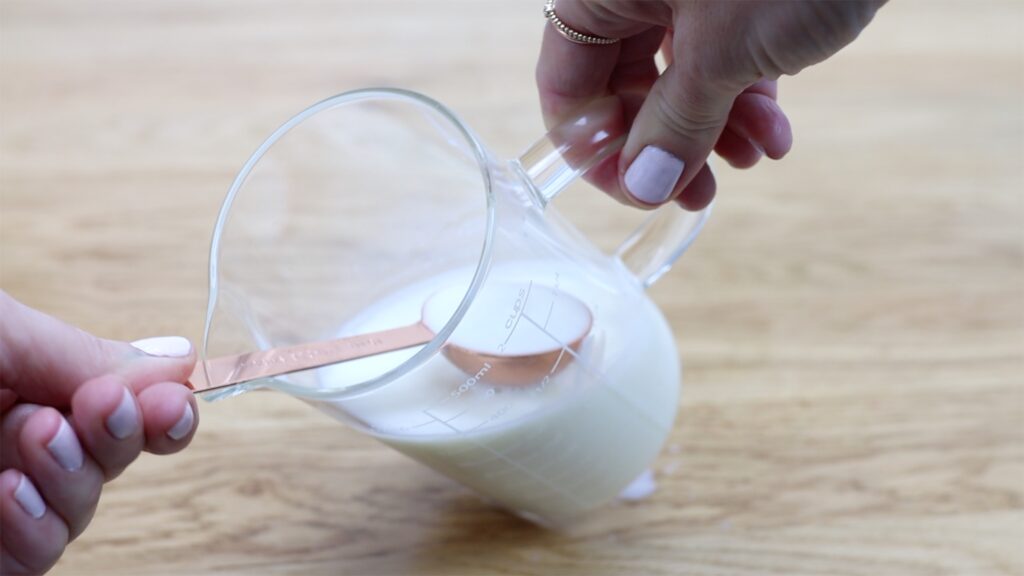
In a small bowl or measuring jug, mix buttermilk and oil. If you don't have buttermilk, try this substitution: use milk instead of buttermilk but after measuring it, remove one tablespoon of milk and add one tablespoon of lemon juice or white vinegar. Leave the milk for 5 minutes to curdle.
Add half of the buttermilk and oil mixture to the butter mixture and mix on lowest speed to incorporate.
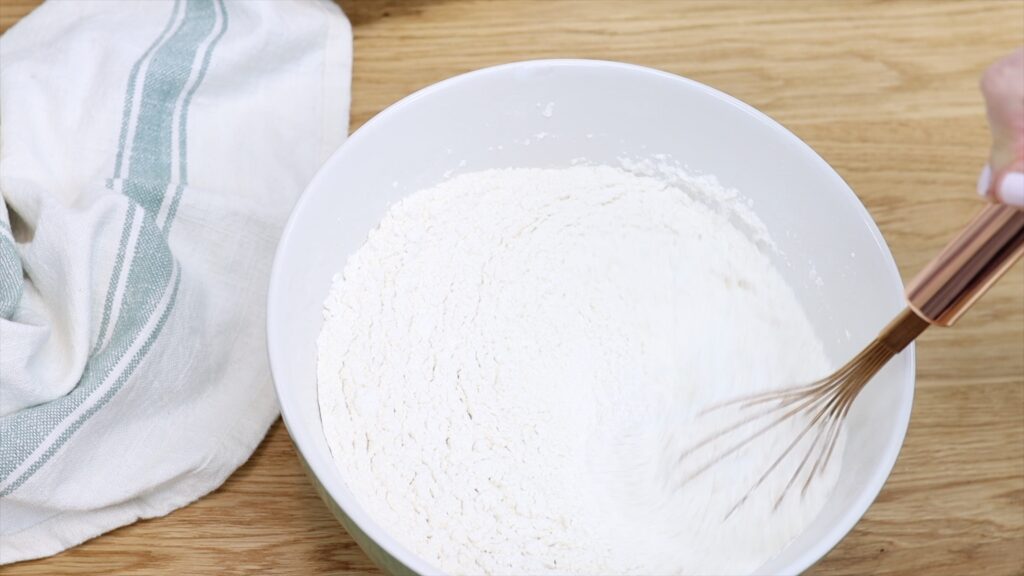
Sift the dry ingredients together: flour, baking soda, baking powder and salt. By whisking them together to combine them, the rising agents will spread evenly throughout your cakes.
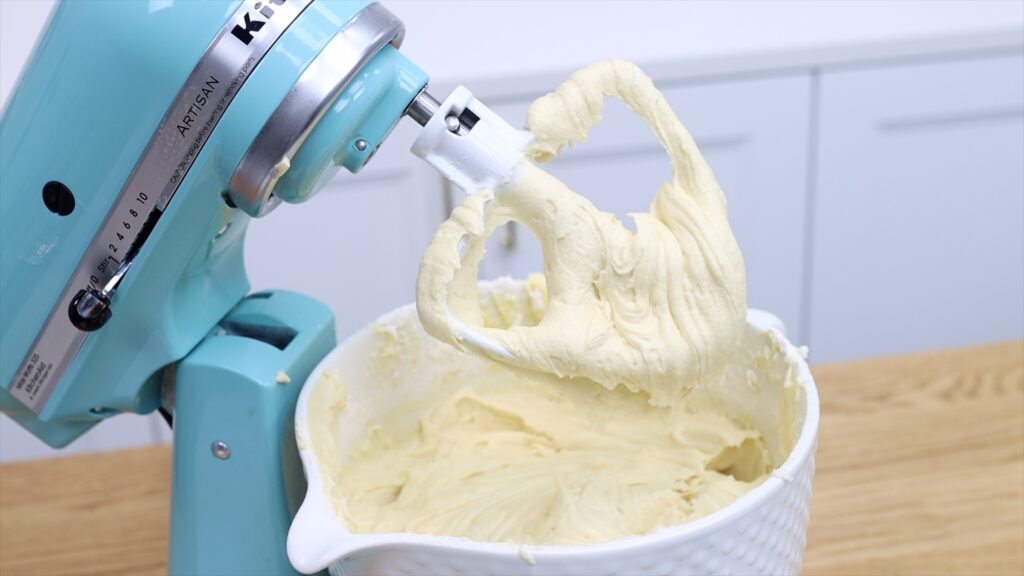
Add half of the flour mixture to the mixing bowl and mix on lowest speed to incorporate. Scrape down to the bottom of the mixing bowl to check that the batter is evenly mixed. Over-mixing the batter will make the cake dense and tough. Stop mixing as soon as the ingredients are combined to make a moist vanilla cake. Add the remaining buttermilk and oil mixture, mix together, and then add the remaining flour mixture. This easy vanilla cake batter is quite thick, which makes it easy to spoon into cake pans next.
How to bake this easy vanilla cake
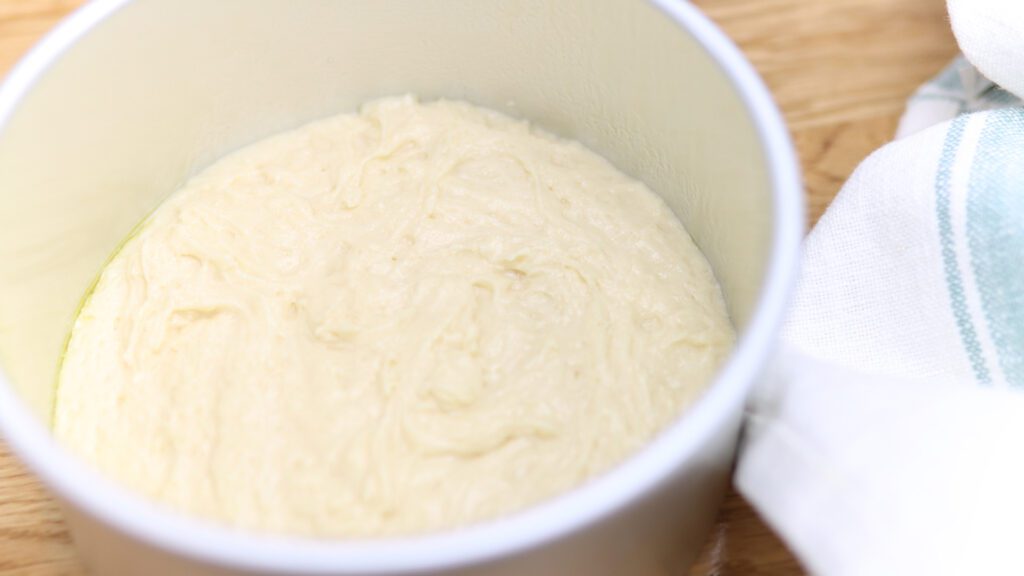
Grease the inside base and sides of three 8" cake pans with butter or non-stick oil spray. Divide the cake batter between the pans. Use a spatula to spread the batter so that it's level and tap the pans on the counter a few times to knock out any air bubbles.
Bake the cake layers at 160ºC or 325ºF for 38 minutes. To check that they're baked you can shake the pans and the middle shouldn't wiggle. You can also poke a toothpick into the middle of the cake to check it comes out clean.
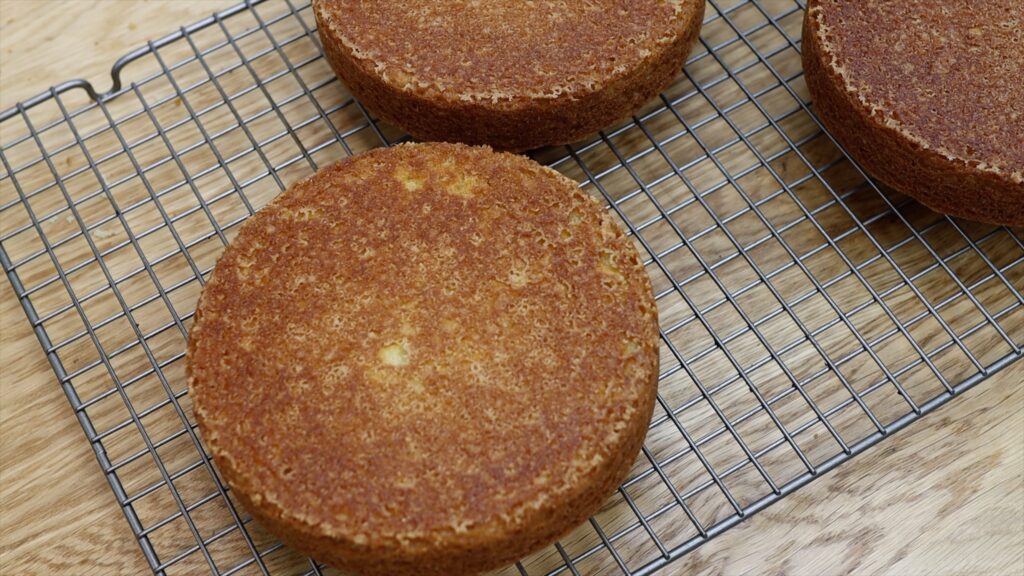
Leave the cakes to cool in their pans for 10 minutes. Then slide a spatula around the edges to loosen them from the pans. Turn the cakes oven onto a wire cooling rack and leave them to cool completely, which will take about three hours.
You’ll notice a golden caramelized exterior on the cakes after baking, which seals the cake’s moistness.
How to fill and frost this easy vanilla cake
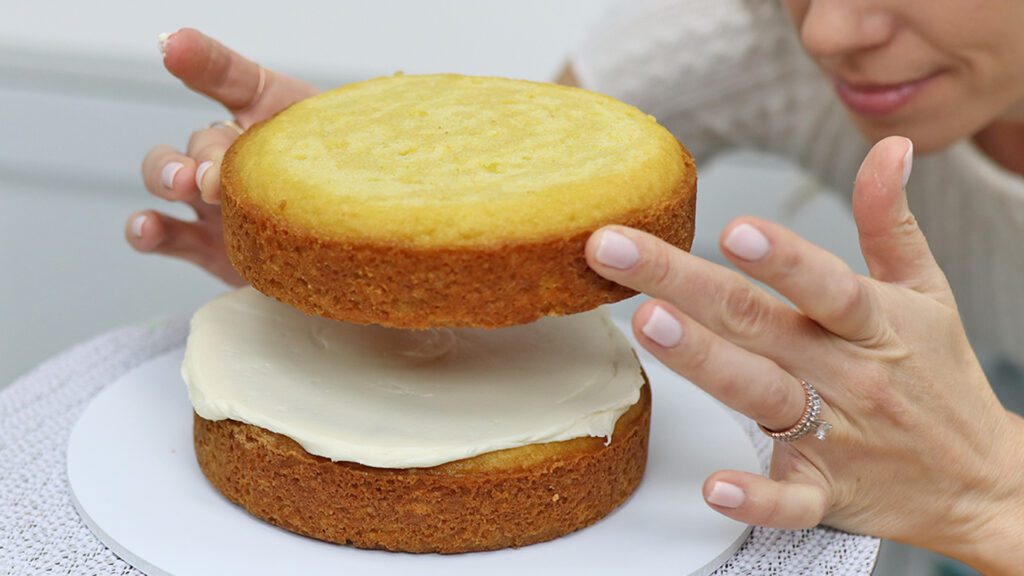
Once the cakes have cooled completely, assemble and frost your cake! I love filling and frosting this cake with my 4 Minute Buttercream but it pairs well with SO many flavours: strawberry, lemon, caramel, chocolate...
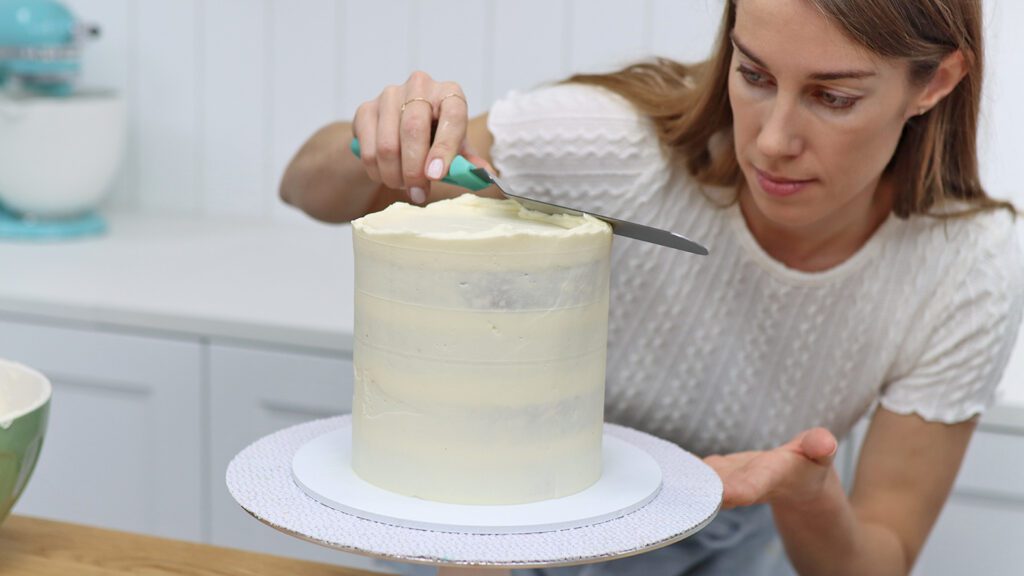
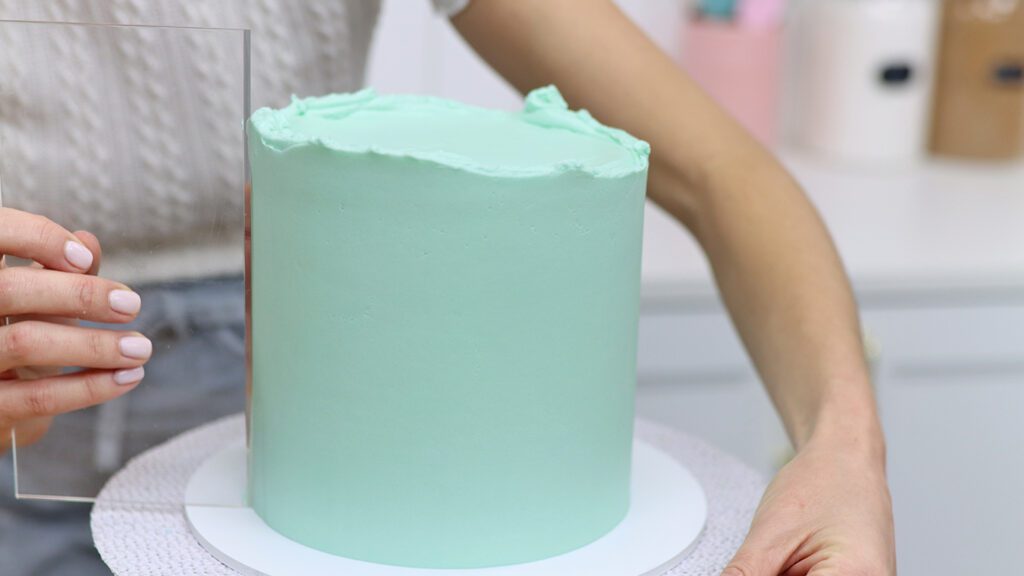
If you struggle to frost your cakes smoothly check out my Basics of Cake online course, where I teach every step of the cake-making process. You'll learn how to mix, bake, make fillings and frostings, level and divide cake layers, assemble, frost, decorate, store, transport and serve cakes!
Here's the printable, Pinnable recipe. Switch between ingredient measurements using cups or grams to use whichever you prefer. I usually measure my ingredients out in cups rather than weighing them. This recipe is flexible enough that any minor differences in quantities won't affect the end result.
This is a rich, buttery cake and it’s a great starting point for loads of flavours of fillings and frostings.
Ingredients
Units
1 1/2cupsunsalted butter
2cupswhite sugar (granulated sugar)
6 eggs
1 tablespoon vanilla extract
3/4cupbuttermilk
3 tablespoons vegetable oil
3 1/2cupsplain flour (all-purpose flour)
1 tablespoon baking powder
1/2 tablespoon baking soda
1/2 teaspoon salt
Instructions
Using a mixer with a beater/paddle attachment (not a whisk), beat room temperature butter and sugar on medium speed until pale and creamy, about 2 minutes. Scrape down to the bottom of the bowl once during mixing to make sure no butter or sugar is stuck at the bottom.
Add eggs one at a time, mixing on the lowest speed after each addition for 30 seconds. Scrape down to the bottom of the bowl to make sure everything is incorporated before adding the next egg.
Add vanilla and mix for about 30 seconds to combine.
In a small bowl or measuring jug, mix room temperature buttermilk and oil. Add half to the butter mixture and mix on lowest speed to incorporate.
In a bowl, sift flour, baking soda, baking powder and salt. Add half of the flour mixture to the mixing bowl and mix on lowest speed to incorporate, scraping down to the bottom of the mixing bowl to check that batter is evenly mixed. Repeat with the remaining buttermilk mixture and then finish with the remaining flour mixture.
Grease three 8" baking pans with non-stick oil spray or butter. Divide batter equally between the cake pans.
Bake at 160ºC or 325ºF for 38 minutes, or until a toothpick inserted into the middle of the cake comes out clean.
Leave cakes to cool in their pans for 10 minutes. Use a spatula to loosen the cakes from the edges of the pans and then turn onto a wire cooling rack. Leave to cool completely.
Notes
You can use salted instead of unsalted butter but if you do, omit the salt.
This recipe works best with plain flour, also called all-purpose flour.
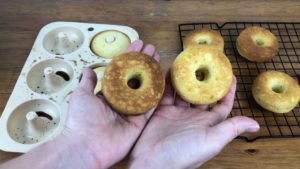
I’m going to show you how to make these beautiful little doughnuts, which are ridiculously easy to make and a great way to use up any extra cake batter you have! You’ll need a silicon doughnut mold, which you can find on Amazon, and you can make these with any butter-based cake batter, like my vanilla cake or chocolate cake. You can make a batch especially for these if you want to make quite a few or if you have a bit of batter left over after filling your cake pans, this it a fun way to use it up!
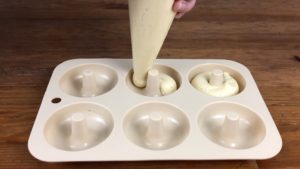
The easiest way to do this is to spoon your batter into a piping bag without a piping tip, just with the end of the bag cut out so there’s a hole. Squeeze the batter in a ring around the doughnut mold, making sure you don’t overfill the mold.
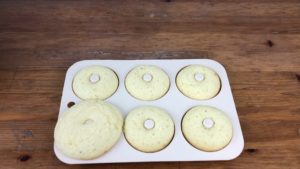
Every cake recipe is different as far as how much it rises, so for example my chocolate cake doesn’t rise as much as my vanilla cake so I can use more chocolate batter but know I need to be quite stingy with how much vanilla batter I pipe into the mold. I’ve overfilled the final doughnut to show you what happens… the batter will come up out of the mold when it bakes so instead of your doughnut being nice and rounded and it will overflow to make a big blob like a muffin top and can also close that signature hole in the middle of the doughnut.
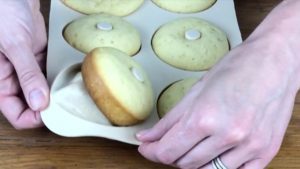
Depending on your cake batter, you may or may not choose to grease the mold. My vanilla batter doesn’t stick to the mold so I don’t need to grease it and you can see how easily these came out of the mold.
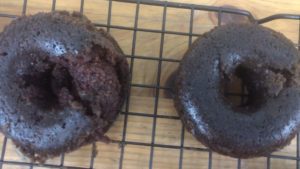
My chocolate batter does stick, so if I don’t grease the mold, when I turn the doughnuts out they break apart like this.
If you spray cooking oil into the mold and then bake the doughnuts, they don’t stick to the pan but they come out of the oven with little holes, where the oil pooled in the mold. This will mostly be covered with a glaze so it doesn’t matter aesthetically but it can also create slightly darker, and slightly crispy doughnuts because the oil burns the edges of the donuts, and you can see that here: the darker doughnut on the left was cooked in a greased mold but the lighter doughnut on the right was not.
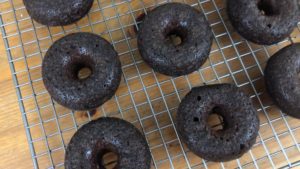
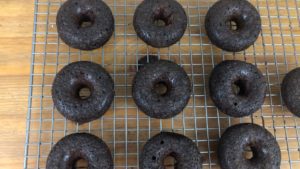
So if you need to grease the mold I recommend either rubbing the molds with just a little bit of butter or spraying them with oil and then using a paper towel to dab the mold gently to mop up any excess oil, and this is how the chocolate doughnuts baked when I did that.
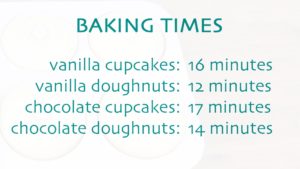
The baking time for these will be a bit less than it would be for cupcakes, partly because of the hole in the middle so the cake part of the doughnuts is thinner than a cupcake, and partly because silicon heats up more quickly than a metal cupcake mold. You can tell when they’re ready because when you poke them gently, they should spring back.
Take the mold out of the oven, let it cool for about a minute to give the doughnuts a chance to set, and then flip the mold out over a cooling rack, peeling the mold carefully off the doughnuts to leave them behind as you lift the mold up. When the doughnuts are completely cool it’s time to decorate!
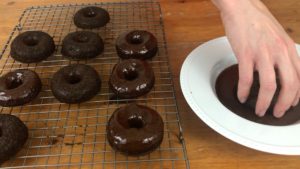
My favourite topping for these is chocolate ganache. I’ve shared my recipe for ganache here and also have a tutorial on 4 ways to use ganache. Pour your ganache into a bowl a bit bigger than your doughtnuts. Pick a doughnut up, flip it over, and dunk it in the ganache to cover it about halfway up. Flip it back over and leave it to set on the cooling rack.
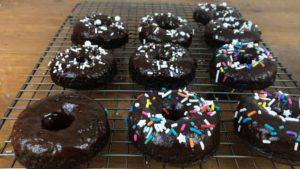
Before they set you can add any sprinkles or other ingredients, but you have to be quick because once the ganache hardens any topping will bounce straight off.
You can use coloured ganache as well and I cover how to make dark chocolate and white chocolate ganache and how to colour it in my online course on 10 Cake Decorating Techniques.
For a candy melt ganache I’ve used a 4:1 ratio of 40g of candy melts and 10g of heavy whipping cream or double cream, microwaving it at 50% power for 2 minutes and stirring it until it’s smooth.
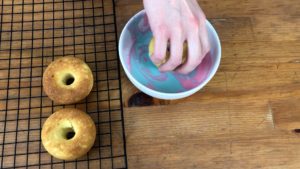
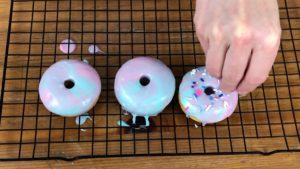
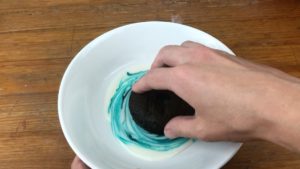
Now I’m pouring one color of ganache into the other, stirring it gently to mix them together just a little bit, and then dipping the doughnuts to cover half in the ganache, angling the doughnuts and re-dipping to get the coverage I want.
You can leave them like this or add some sprinkles before the ganache sets.
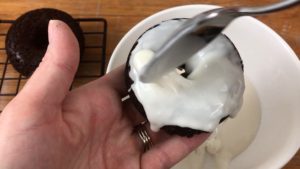
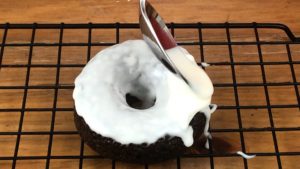
Instead of ganache you can make a glaze for your doughnuts, but this isn’t my favourite way of decorating them because glazes are very sweet and to get the right consistency to dip the doughnuts, the coverage isn’t as good as it is with ganache.
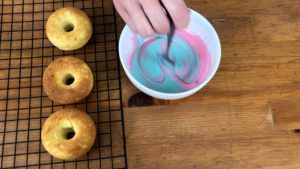
To make enough glaze for 6 doughnuts, sift 1 cup of powdered sugar into a bowl and whisk in 2 tablespoons of whole or full fat milk. Add 1 teaspoon of vanilla and pour it into a wide, shallow bowl. Dip your doughnuts and you can spoon more glaze onto them to get better coverage.
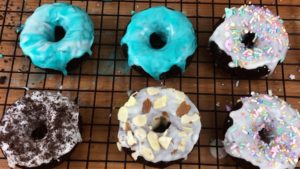
You can add colour to your glaze, either mixing completely or just stirring slightly to marble the colours together, and then dip the doughnuts or spoon the glaze over the top.
You can add toppings like Oreo crumbs, sliced almonds, sprinkles, or whatever you like! Store the doughnuts in an airtight container for a day or two or decorate a cake with them!
If you prefer to watch the video of this tutorial you can do that here:
Black cakes are dramatic and can be either elegant or festive (perfect for Halloween!) but the frosting usually gives everyone a black mouth. This is my recipe for a rich, decadent buttercream that is truly jet black but won’t stain your teeth!
Makes 6 cups (enough to fill and frost an 8″ or 9″ cake)
Ingredients 2 1/2 cups (5 x 113g or 4oz sticks) unsalted butter* 907g or 32oz (about 7 cups) powdered sugar 1/2 teaspoon salt 1/2 tablespoon vanilla extract 1/3 cup black cocoa powder (35g or 1.2oz) 1/4 cup hot water (60ml) 3/4 cup semi-sweet chocolate (130g or 4.6oz) 2 teaspoons black gel food colour
*If you use salted butter instead, omit the salt in the recipe
Method
1. Prepare ingredients: whisk together the black cocoa powder with the hot water and leave to cool. Melt chocolate for 1 minute at a time in the microwave, stirring until smooth and then leave to cool. The powdered sugar should be sifted to remove any lumps and the butter should be at room temperature. If the butter is cold, bring it to room temperature quickly by popping it in the microwave for 10 seconds and then flipping it over and microwaving it for another 10 seconds.
2. In a mixer with a paddle attachment, mix butter with 1/4 of the powdered sugar and salt (if using) on the lowest speed until incorporated, about 1 minute. Scrape down to the bottom of the mixing bowl with a spatula to loosen any butter and sugar and add the rest of the powdered sugar 1/4 at a time, mixing in between each addition until incorporated.
3. Add vanilla extract, black cocoa mixture, cooled melted chocolate and black gel colour to the buttercream and mix to combine. Cover the buttercream with a lid or cling film and leave for at least 30 minutes for the colour to deepen. Optionally, if the buttercream isn’t as black as you want it to be, add more black gel colour.
Watch my video tutorial above for step by step instructions on how to make a black cake with black cake batter and this black buttercream.
If you’re looking for more tips on how to colour buttercream and how to make it, how to troubleshoot issues like graininess, lumps, air bubbles, or a yellow colour, how to store it, and how to use it to frost and decorate cakes, check out my online course on The Basics of Cake.
British Girl Bakes is a participant in the Amazon Services LLC Associates Program, an affiliate advertising program designed to provide a means for sites to earn advertising fees by advertising and linking to products on www.amazon.com. If you buy any of the products I’ve linked out to, the price you pay won’t change but I will make a small commission on anything you buy. Thank you for helping to keep the British Girl Bakes tutorials FREE!
Even if you’re just beginning to decorate cakes, you’re probably familiar with a 1M star tip, most often used to pipe cupcakes swirls. In this tutorial I’m going to show you 8 ways to use a 1M piping tip, which is my favourite piping tip. If you prefer to watch a video of this tutorial, scroll to the bottom of the page.
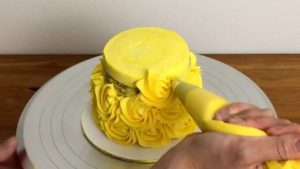
I’ll start with probably my favourite way to use a 1M tip, by piping easy roses onto a cake. You need a thin coat of frosting on the cake first, partly because it provides a flat, not-crumbly surface for your roses to stick to, but also because if there are any gaps between your roses it won’t be as noticeable when there’s frosting underneath instead of naked cake.
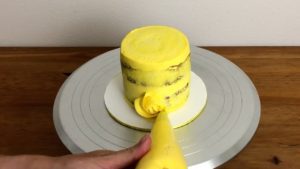
For each rose, hold your tip against the side of the cake and pipe a tight spiral, working your way out, and then releasing your pressure on the piping bag as you pull the bag away from the cake. Start at the bottom and pipe a row of roses around the cake, and then another row on top, and then another row. I like to pipe each rose in between the 2 below, so that they’re slightly offset.
This is a really quick and easy way to cover a cake with decorative frosting and the color possibilities are endless.. you can use just one color, or pipe the roses on by alternating colors, or make it ombre by using a light shade of the color for the first row, and then get darker as you work your way up or down the cake.
When you’ve finished the sides you can leave the top as it is, or you can pipe roses on top as well.
Then if there are any gaps between roses you can squeeze a bit of frosting out of the piping bag, still using the 1M tip, to pipe little star blossoms.
For this next technique you’ll need piping bags for every colour of frosting, unless you want to wash the bag in between each colour. Build your cake and give it a crumb coat.
I like to start at the top of the cake and work my way down for this one, to make sure the join between the top and the sides is neat. Pipe a rose onto the top by starting in the middle and spiralling outwards until you’ve covered the entire top surface of the cake.
Around the sides, hold your tip against the cake and spin the cake, holding your hand still, which will ensure your frosting is piped in a straight line.
You can change colours as you go down the cake if you want, or use the same colour for the whole cake.
You can either start piping in the same place for each row, and where the frosting row starts and ends will cause a little seam which can then be the back of your cake, or you can start in a different place for each row and by the time you’ve piped all of the rows of frosting, the seams in different places around the cake won’t be noticeable anymore.
The 1M tip is a useful one to use for texture, like the fur or hair on an animal cake. For this dog cake I’ve carved my Perfect Chocolate Cake using a sketch to guide me as I trim the cakes with a serrated knife.
I’m covering the cake with a crumb coat, which is easiest after chilling the cake so that it’s less crumbly.
Before adding fur to the cake, I’ve piped the collar onto the neck and added eyes and a nose, so that the fur sticks out around those details.
With my 1M tip I’m squeezing just enough frosting out of the bag to make a little star of frosting
I’m doing this all over the cake, changing colours to make some of the fur white and some brown.
On its own, a single squeeze of frosting through the 1M tip looks like a star bu when you cover a cake with it, it looks like shaggy fur or hair, which is perfect for dog cakes or any other animal with slightly shaggy fur.
A fun way to add some detail to the top of your cake is to pipe frosting around the top. These are wiggles or ruffles of frosting using a 1M tip.
To make the wiggles or ruffles, hold the tip just above the cake and as you lift the bag up slowly, wiggle your wrist back and forth slightly to make the frosting fold over itself to make these pretty ruffles.
You can place things in between the ruffles, like macarons or cookies or truffles or candies. To space them out evenly it’s easiest to place the macarons or other decorations first.
Then pipe in between them afterwards, wiggling the piping bag left and right until it touches a macaron so that the buttercream fills the gaps between the macarons.
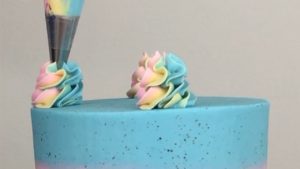
Another way to pipe frosting on top of a cake is to pipe little swirls, the same as you would pipe onto a cupcake. Hold your 1M tip in the center of wherever you want the swirl to be and pipe spiral, lifting your bag slowly as you pipe so that the spiral layers on top of itself.
I’m spacing the swirls around the cake by imagining that the cake is a clock and piping the swirls at opposites, so 12 o’clock and 6 o’clock, 9 o’clock and 3 o’clock, and then another swirl in the middle of each.
You can use a single colour, or alternate bags with different colours of frosting inside, or blend a few colours together inside the piping bag. I go over this in a lot more detail in my online course on The Basics Of Cake.
A final fun border for the top of your cake is a rope border, which you pipe with little overlapping circles of frosting. Go around the outer edge of the cake and when you get to the end of each circle, immediately start the next circle.
Each circle of frosting will overlap half of the previous circle. Continue all the way around the cake, finishing with a complete circle and then if you like you can add some sprinkles on top.
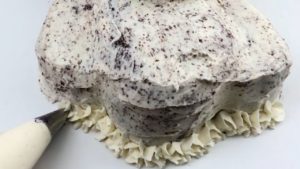
For the base of the cake, you can use your 1M tip to pipe this wave-like border to cover up the join of the cake and the cake board. Hold your piping bag vertically and squeeze the frosting out as you move your wrist away from you, and then pull it back towards you to finish the wave.
Release your pressure on the bag for a moment and then as you pipe the next wave, moving the bag away from you, start squeezing the bag again to push out more frosting. This is a nice way to add some detail at the bottom of the cake.
If you’re going to put something on top of your cake, like macarons or sugar art or chocolate shapes or other decorations, a fun way to attach them is to pipe frosting onto the top with your 1M tip and then, while the frosting is still sticky, press the decorations into it.
When the frosting sets after about 30 minutes at room temperature or 15 minutes in the fridge, it will secure the decorations in place on top of your cake so you can move it around without worrying about the decorations fall over or falling off the cake.
I hope you’ve seen a fun new technique to try – please tag @britishgirlbakes in your photos on Instagram if you try any of these so I can see what you make!
Here’s the video version of this tutorial:
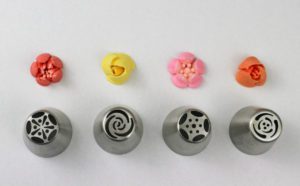
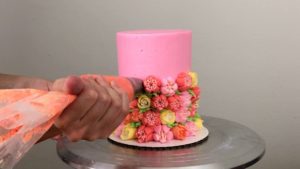
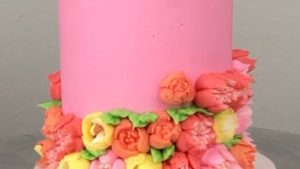
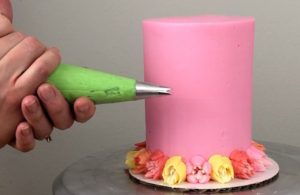
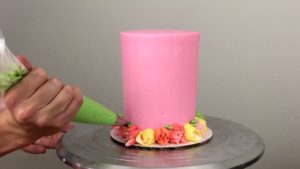
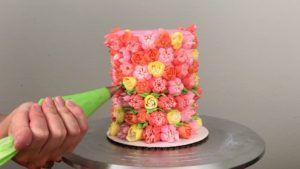
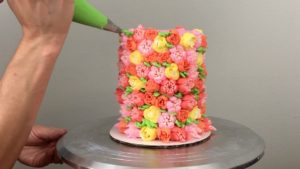
In this tutorial I’m going to show you how to use these elaborate looking flower tips, which are also called Russian tips. With just one squeeze of a piping bag you can create these intricate flowers that make stunning decorations for cakes or cupcakes. They look complicated but they’re actually very easy to use with just a few tricks, which I’m going to show you now.
Trick #1: How to get the buttercream consistency just right
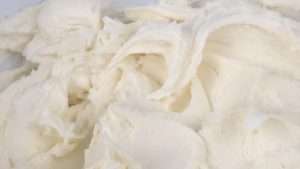
If you’re making a fresh batch of buttercream using my 4 Minute Buttercream recipe, leave out the milk or cream and the frosting should be the perfect consistency for these tips. If you’ve already added milk or cream because you’re going to use the buttercream to frost a cake, add a little bit more powdered sugar to thicken it up. You’ll get used to recognizing the consistency: buttercream is too thick if it’s quite difficult to stir and when you lift your spatula, the peak of buttercream it leaves behind is very rough and jagged, like in this photo.
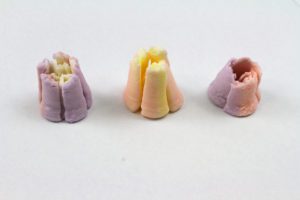
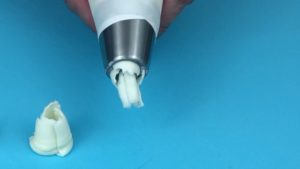
When the buttercream is too stiff it will cling to your piping tip and not all of the petals will release when you squeeze the piping bag so you’ll get uneven rough edges on the petals like this:
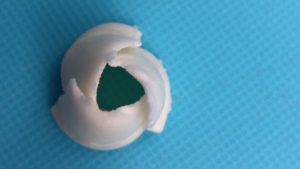
or hollow flowers because the details in the middle of the flower will cling to the piping tip and lift off with it, like in these test flowers.
If your buttercream is too stiff, add a bit of milk. If it’s too soft, so the flowers are coming out with their petals mushed together and undefined, just add a bit more sugar. Test the buttercream before you add your colours because otherwise you’ll have to check and potentially change the consistency of every bowl of each separate colour.
Trick #2: How to prepare and fill your piping bags
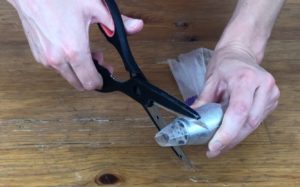
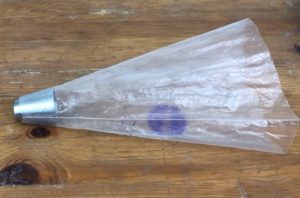
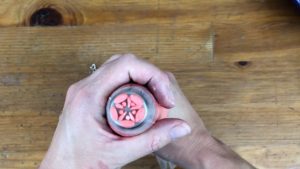
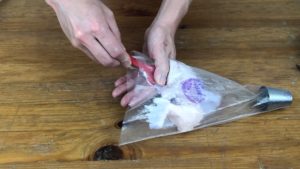
Flower tips or Russian tips are bigger than standard tips so they probably won’t put into the piping bags you already have. To make them fit, drop them into a piping bag and use a pair of scissors to score around just above the tip of the tip.
When you take the tip out you’ll see a line behind and you can cut along that and then when you drop the tip in, it should go in with just the tip of the tip sticking out.
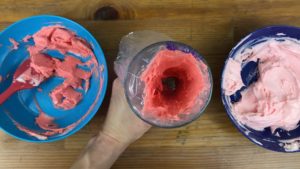
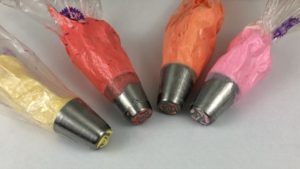
Before you fill your bag with buttercream, divide your buttercream into separate bowls and add colour to each one. I like to use gel food colours because they’re a lot thicker than liquid colours so they won’t affect the consistency of your buttercream. You don’t have to mix your colours in completely – they look quite nice when they’re blended.
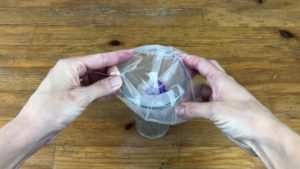
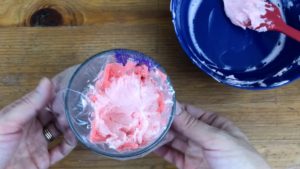
Part of the fun of these tips is that it’s so easy to incorporate lots of colours. There are a few methods to fill up the bags and for this first one you’re going to need a tall glass. Insert the piping bag into the glass with the tip at the bottom and fold the top of the piping bag over the rim of the glass and pull it down until the bag is quite tight inside the glass. For more tips and tricks like this, check out my tutorial on 10 Hacks For Decorating Cakes Like A Pro.
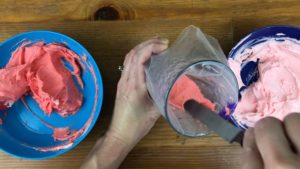
Spread the first colour of buttercream around the outside of the bag. I like to use an offset spatula for this but you could also use a regular spatula or spoon or even a knife and if you want to.
You can do a few different layers of colour with a different colour layered on top of each one so that the colours blend gradually from a dark to a light colour. If you look at flowers you’ll notice that usually the colour on the outer petals is much darker than on inner petals or the little details on the inside of the flowers so that’s how I like to do my buttercream as well.
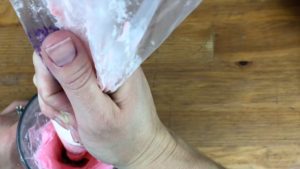
Once you’ve got your layer of frosting all around the piping bag, add another colour inside. You can push it in with a spatula, but it’s quite difficult to get all the way down to the bottom.
If the inner colour frosting sits a little bit higher in the bag than the outer colour of frosting, when you squeeze the bag you might see only the outside colour coming out for a while but just wipe it off on one of your frosting bowls and as soon as the inside colour starts coming through, the bag is ready to go.
To get the inside colour further down in the bag so that when you pipe both colours come out straight away, after spreading the first colour around the sides of the bag you can use a piping bag without a tip, pushing the piping bag down as low as you can in the bag before you start squeezing and this way you should have both colours all the way down at the bottom of the bag.
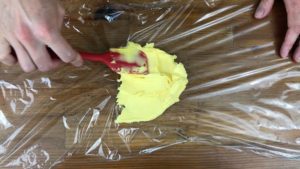
If this looks a bit fiddly, another technique is to use cling film or saran wrap to separate your colours. Spread the first colour in a rectangular block in the middle of the cling film. This is going to be the colour on the outside of the flower.
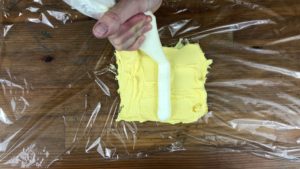
Spread or pipe the next colour down the middle, and this will be the colour in the middle of the flower.
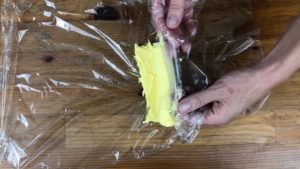
Fold the buttercream over itself using the plastic wrap to help you roll it up into a log of buttercream.
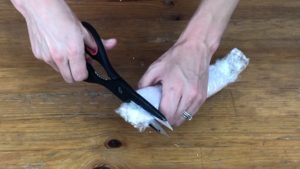
Cut one of the ends off and then push that end down into the bottom of one of your piping bags.
The easiest way to mix colours is to spoon them all randomly into the piping bag or you can put them in a bowl and stir them just a little bit to blend them slightly and then spoon them into the bag. You don’t have much control of how the colours come out this way but for some flowers it looks really pretty when they’re a bit random like this.
These bags don’t look very full but this is enough to completely cover a very tall 4-inch cake with flowers. It’s only just over one cup of buttercream so you don’t need as much as you think for this.
Trick #3: How to prepare your cake
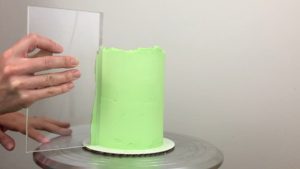
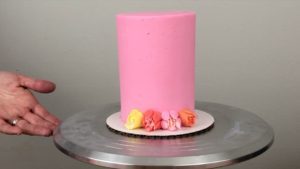
When you frost your cake, choose a complementary colour for the frosting just in case any of the frosting is visible. If you’re going to be piping leaves you could choose green so that any frosting showing through in between flowers just looks like more leaves.
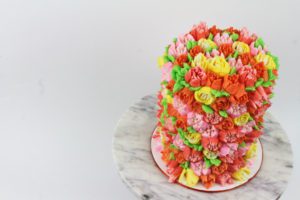
For this cake I’m using pink because most of the flowers have pinkish tones so any visible frosting will hopefully look like it’s just part of one of these flowers.
Optionally, you can chill your cake so that the frosting sets and becomes hard and the advantage of this is that if you pipe a flower you don’t like, you can scrape it off. Because the frosting on the cake is hard it won’t get indented or smudged by the flower you’re scraping off or by your offset spatula.
If the flowers pull off the cake as you pipe them, it could be because of two things. The first is that your frosting consistency is too stiff so the frosting doesn’t want to leave the piping bag, so it clings to the piping tip instead of transferring to the cake.
Another reason for flowers not sticking to the cake is because the surface you’re piping onto isn’t sticky enough so the flower doesn’t have anything to cling to. Crusting buttercream loses its stickiness when it sets, which happens either when you put it in the fridge or just by sitting out for about 20 minutes. This is useful for most decorating techniques but if it’s preventing your flowers from sticking to the cake, you can spread a thin layer of frosting onto the cake on top of the frosting that’s already there and that way the flowers will have something to stick to.
Trick #4: How to perfect your piping technique
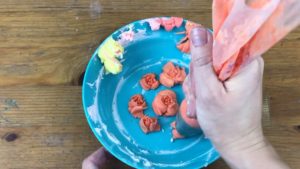
You should always do a test first on parchment paper or a paper towel or a baking tray or whatever you have handy before you actually get started on the cake. Every batch of buttercream is going to have a slightly different consistency and this is exaggerated by the temperature of the ingredients you use and also the weather that day, so buttercream will pipe slightly differently every time you do it.
When you want the flower to end you need to lift the piping bag up and immediately after you start lifting your hand to release the pressure on the bag and that will give your petals a nice neat point. You’ll find that some flowers look better piped quite short and others look better with longer petals so you can play around with the height of the flowers too.
The technique for piping against the side of the cake is the same, it’s just at a different angle so it might take a little bit of getting used to. Assuming your buttercream is at the right consistency, if the flower buckles at the bottom so it has little ridges or or waves at the base, you need to lift your wrist a bit faster because what’s happening is the buttercream is coming out faster than your movement. If your petals are breaking off early you need to apply more pressure to the piping bag because you’re lifting the bag faster than you’re piping the buttercream.
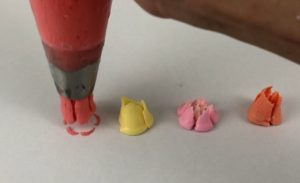
As you pipe, your hands will warm up the buttercream in the piping bag so your petals might start to lose their shape. The petals of this orange flower has mushed together and lost their definition because the buttercream is too soft.
You can put the piping bag in the freezer for one minute to chill the buttercream (set a timer so you don’t forget about it!) and then squeeze out a practice flower or two to check the consistency and when you’re happy with the flowers you can continue on your cake.
Trick #5: Add finishing touches
Leaves are a fantastic finishing touch. Adding some greenery to your flowers will mimic how they look in nature. It adds more colour to your cake, it fills in any gaps between flowers where you can see the frosting of the cake underneath, and you can also use it to cover up any parts of a flower you don’t like, like if there’s a ridge at the base of the flower.
This is a leaf tip and you should hold it this way, sideways, so that you can see a triangle on the side of the tip. When you pipe you are first creating the base of the leaf and as you pull your wrist away and release the pressure on the piping bag, you’re creating the point of the leaf.
You can pipe leaves after you finish each row or section of flowers and that’s a nice way to do it because you have a very good view of the cake at that point.
Alternatively, you can continue piping more flowers and then go in and fill in the gaps. This is more efficient, with less changing between piping bags, but it’s a bit more difficult to see what’s going on – you have to crouch down to see where the gaps are.
Leaves are particularly useful at the top edge of a cake in places where a full flower won’t fit – piping flowers onto that 90 degree angle at the corner of the top of the cake is quite tricky! Instead, you can pipe a few leaves and that fills in the gap and then you can pipe your next flower onto a flat surface instead of a corner.
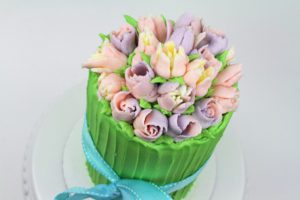
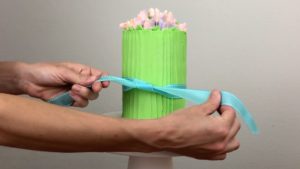
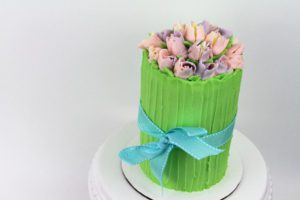
A fun idea to add some colour after you’ve decorated your cake is to add ribbon. You can choose a ribbon that adds more colour to the cake or one that matches the flowers you’ve already picked. It’s really important to chill your cake properly first so you should put it in the fridge for at least an hour so the frosting sets and gets hard. Wrap your ribbon around the cake and tie it in a bow.
If you want to secure the ribbon onto the cake you can put a little dab of buttercream in between the ribbon and the cake and that will set the ribbon in the right place.
These flower tips might look intimidating at first but I hope this tutorial has given you some useful tricks and confidence to use them. I’d love to see your cakes – please tag @britishgirlbakes in your photos on Instagram so I can see them!
If you prefer to watch a video of this tutorial, click the play button below:
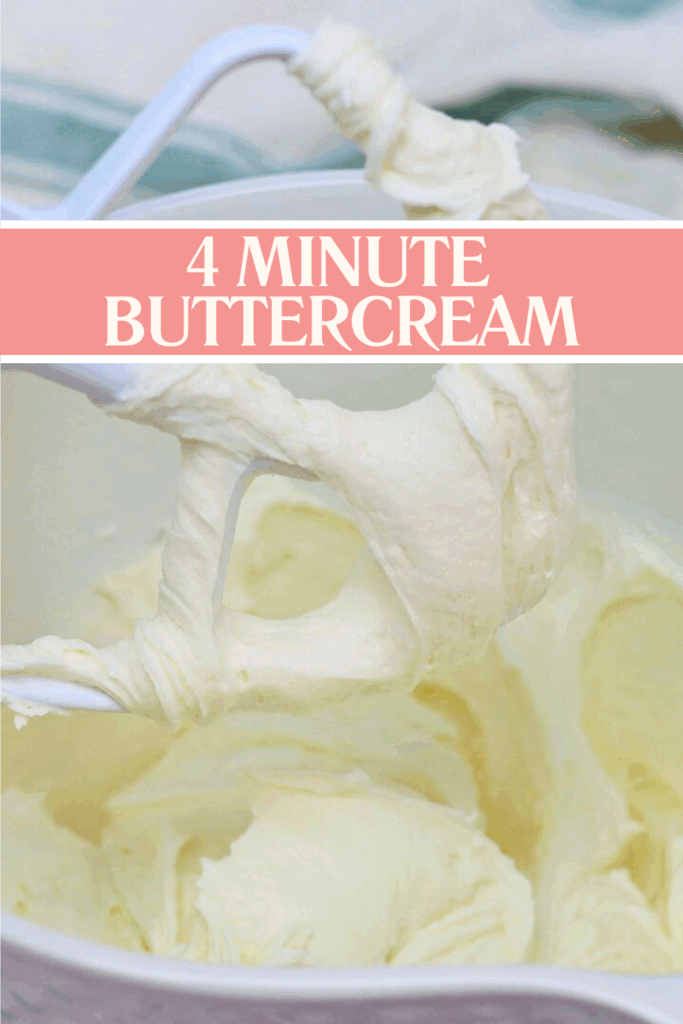
This easy buttercream frosting recipe takes just 4 minutes to make and it’s:
quick – it only takes 4 minutes to make!
easy – it only has 5 ingredients! If you can find 2lb bags of powdered sugar you don’t need to do any precise measuring
versatile – instead of adding cream or milk in the final step you can add different ingredients to make different flavours. Try strawberry puree, lemon curd, melted chocolate or peanut butter!
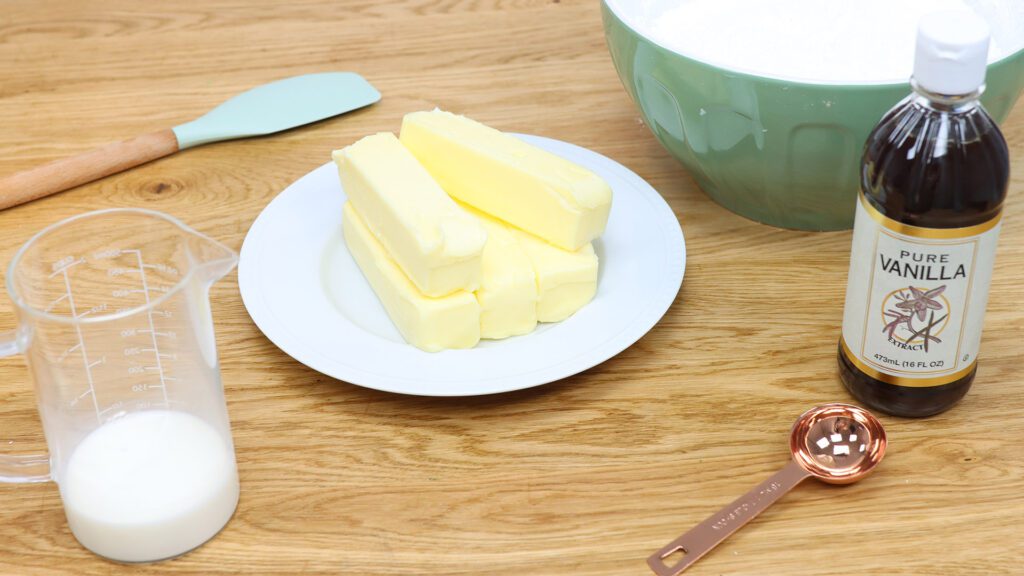
I'm going to show you step by step how to make my 4 Minute Buttercream. I'll also show you how to check the consistency so it's perfect for frosting and piping. And I'll share tips for storing buttercream and adapting this recipe for hot weather.
This recipe makes 6 cups of buttercream, which is enough buttercream to fill and frost an 8″ cake. I almost always double the recipe, which is the biggest batch that will fit in my 5qt KitchenAid mixer. The doubled recipe makes enough buttercream to fill and frost two 8" cakes or three 6″ cakes.
Affiliate disclosure: Some links on this page are affiliate links. If you purchase something through one of these links, British Girl Bakes may earn a small commission at no additional cost to you.
Ingredients for 4 Minute Buttercream Frosting
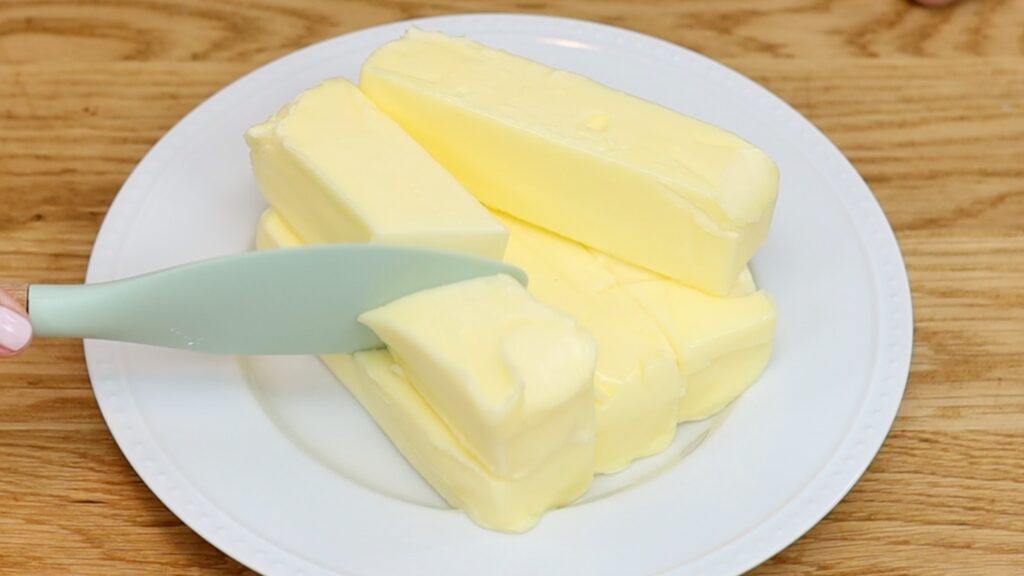
To make my 4 Minute Buttercream frosting, start by preparing your ingredients. The powdered sugar should be sifted to remove any lumps and the butter should be at room temperature. You'll know if it's at room temperature because you'll be able to slice through it easily with a spatula. If the butter is cold, bring it to room temperature quickly by popping it in the microwave for 10 seconds. Then flip it over and microwave it for another 10 seconds.
How to make 4 Minute Buttercream Frosting
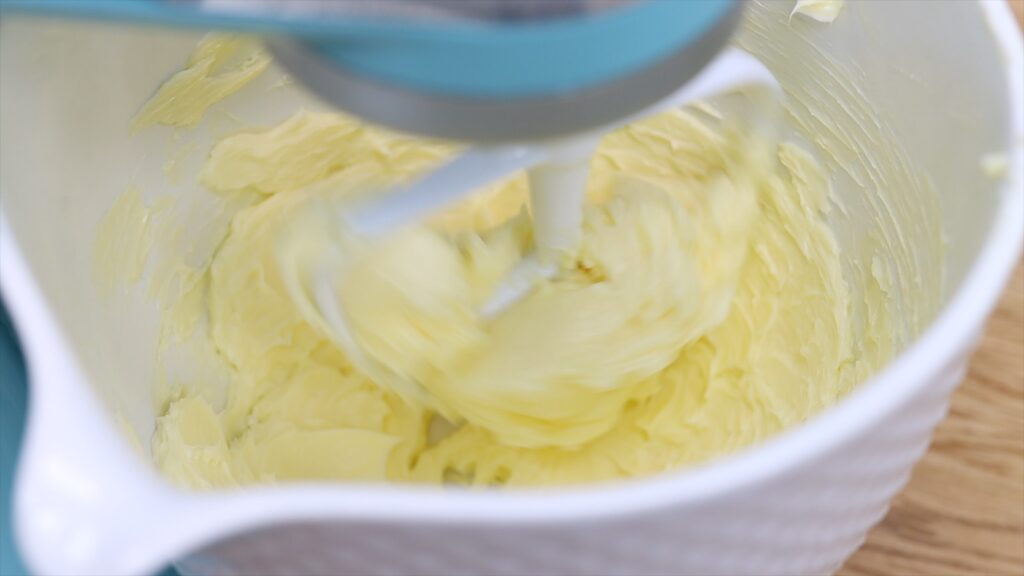
It's easiest to make this 4 Minute Buttercream Frosting with a stand mixer or a handheld mixer. Use the beater or paddle attachment, not the whisk! Mix the butter for a few seconds until smooth. If it’s not smooth and there are any lumps of butter, your butter is too cold.
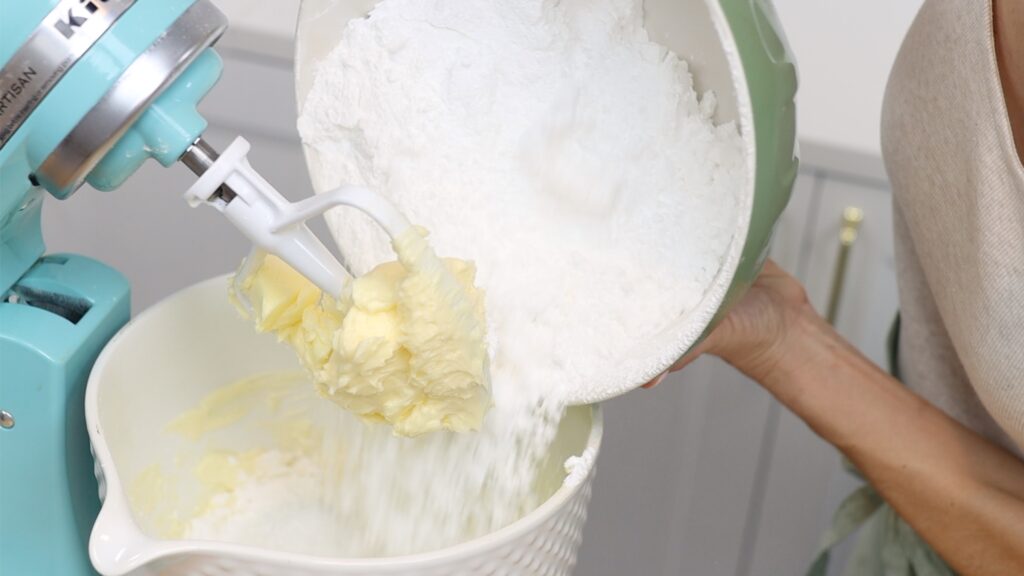
Add about a quarter of the powdered sugar. Mix on the lowest speed until incorporated, about one minute. Scrape down to the bottom of the mixing bowl with a spatula to loosen any butter and sugar. Then add another quarter of the powdered sugar, mixing for another minute on low.
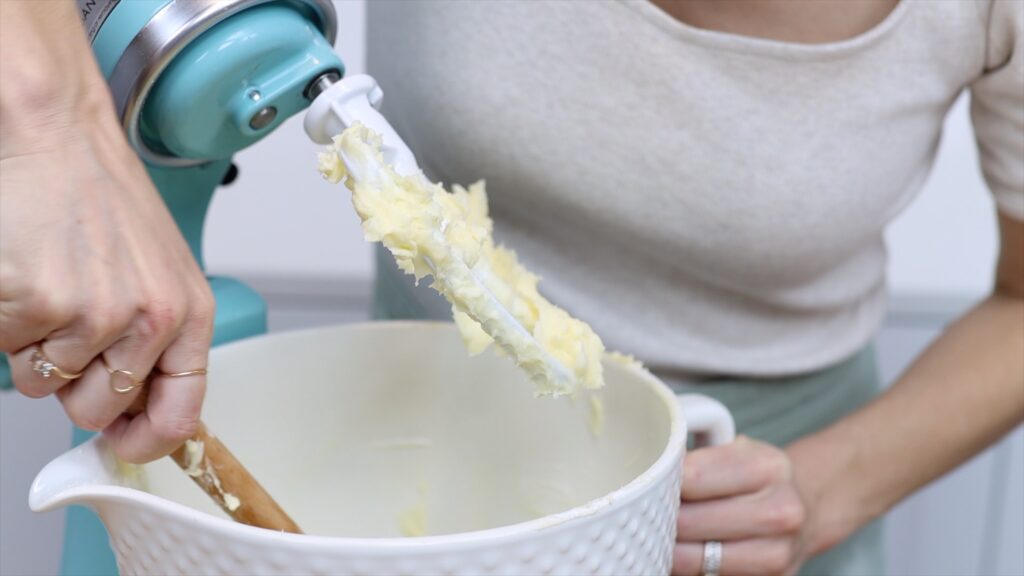
Scrape down to the bottom of the bowl and add another quarter of the powdered sugar. Mix for one minute on low and scrape again. As you scoop up the buttercream from the very bottom of the bowl you'll see clumps of sugar underneath. By scraping down with your spatula, you're incorporating that sugar into the buttercream.
Add the final quarter of powdered sugar and the salt. If you're using salted butter, skip the salt! Mix for one more minute on low and then add the vanilla. Mix for about 30 seconds until everything is combined.
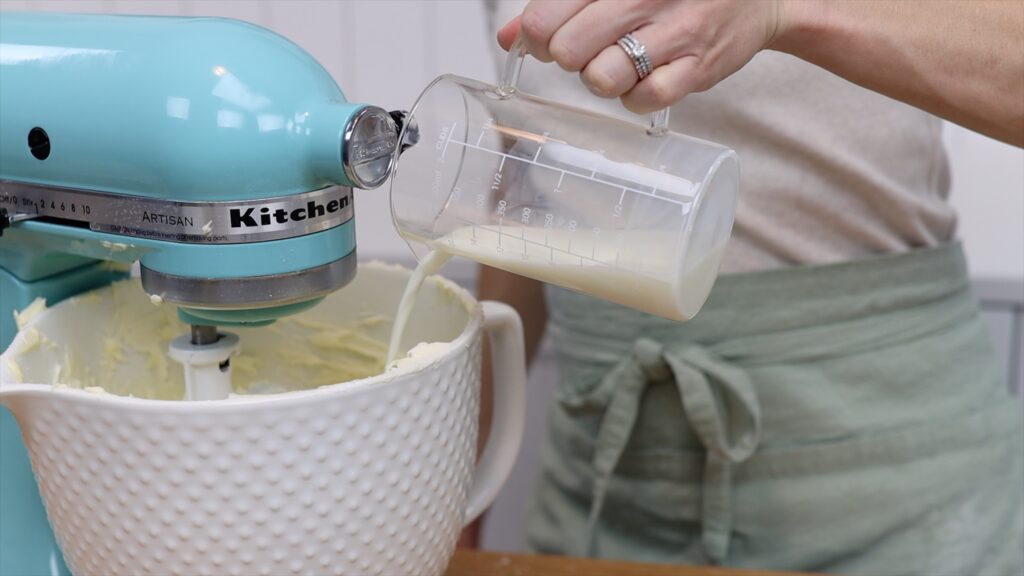
The buttercream will be thick and stiff and the final step is to add liquid. This will loosen the consistency so that you can frost a cake or cupcakes or pipe with it. Add milk or cream, mixing for a few seconds until it's incorporated, and then check the consistency.
How to check the consistency of buttercream
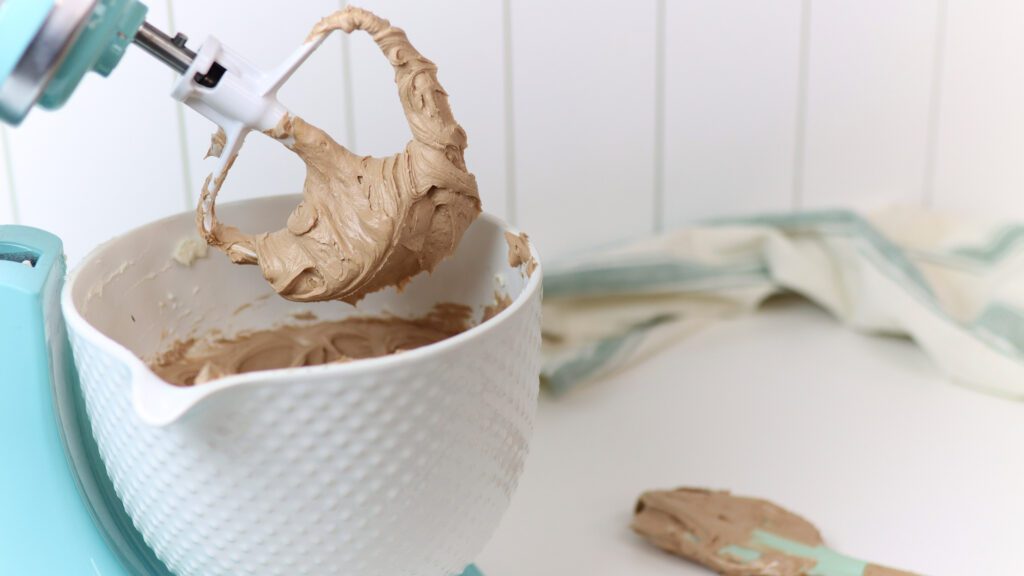
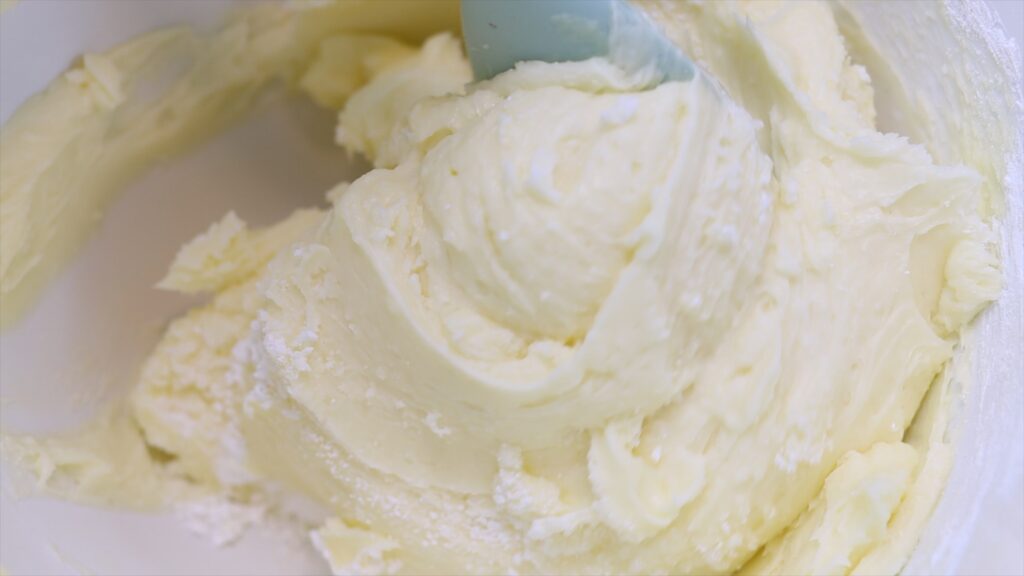
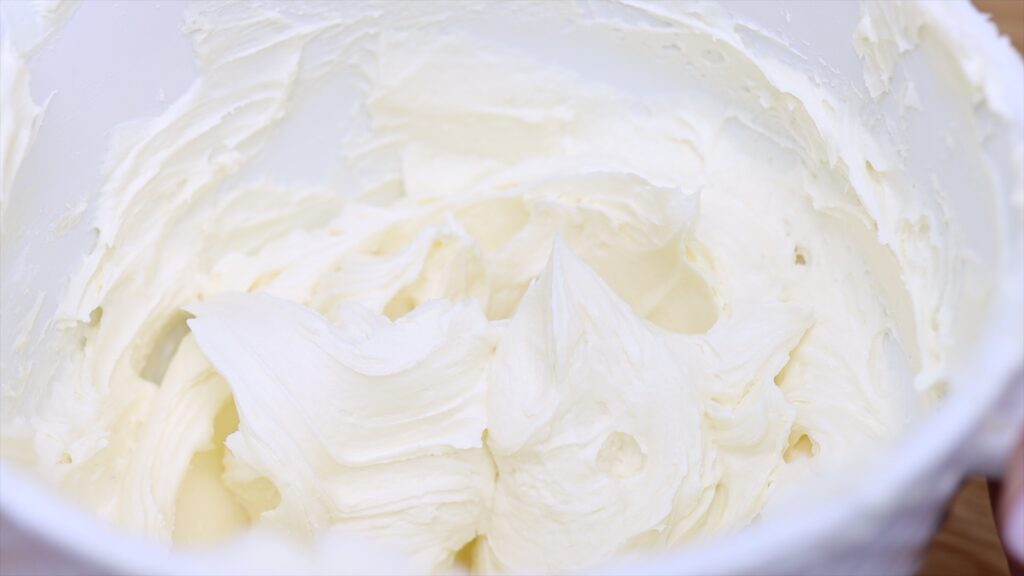
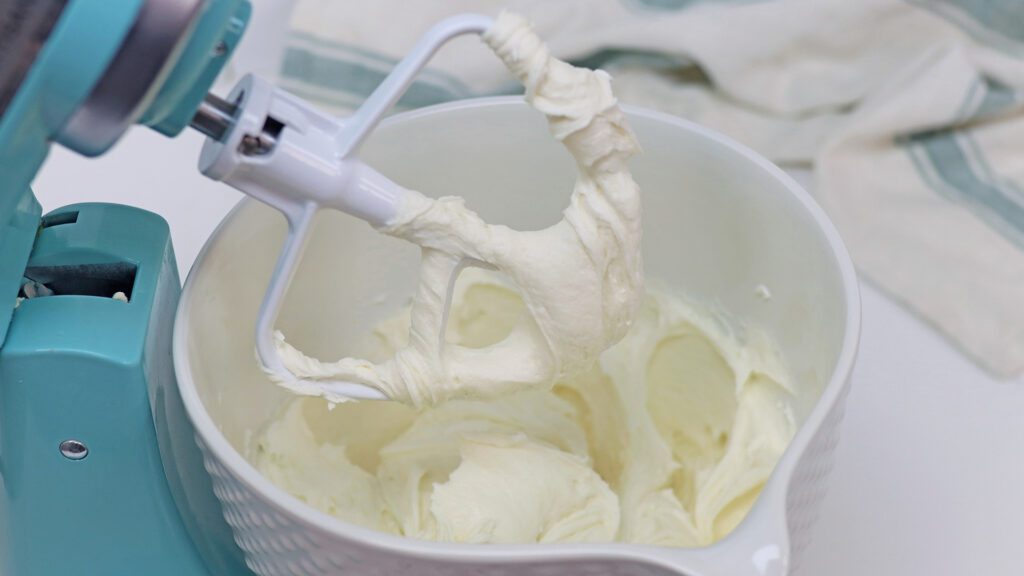
Stir the buttercream with your spatula. It should be fairly easy to stir but not as soft as yoghurt. When you pull the spatula out of the bowl it should leave soft peaks behind in the buttercream.
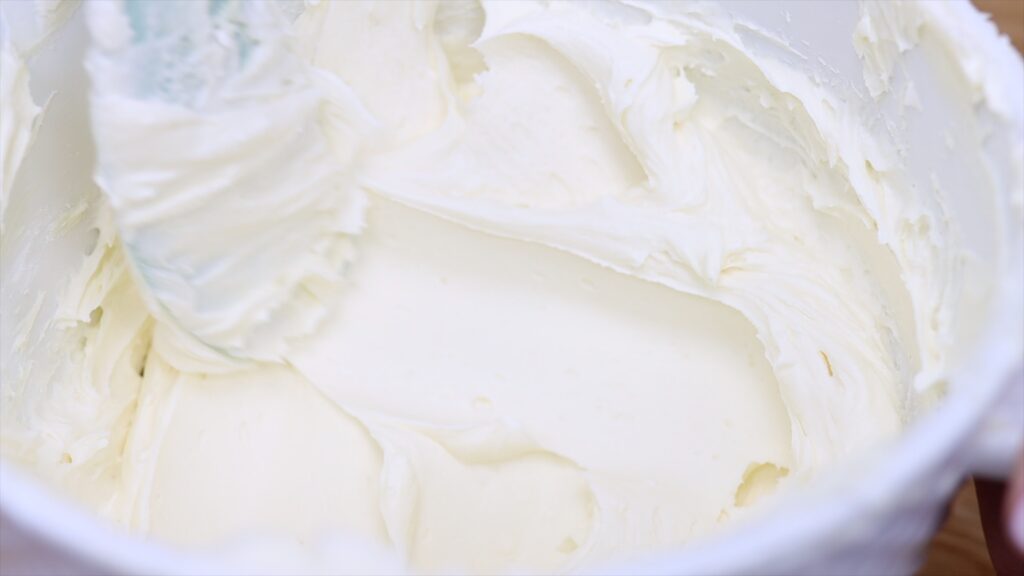
Drag your spatula through the buttercream and look at the trail it leaves behind in the buttercream. It should be smooth with no air pockets or holes. Those are signs that the buttercream is too stiff and needs more milk or cream to thin it out.
Troubleshooting common issues
Air bubbles are caused by mixing at high speed or with a whisk. Both of these things incorporate lots of air into the buttercream. Always use the lowest speed when you’re mixing and use a paddle or beater attachment, not a whisk. This is what air bubbles look like:
Graininess is caused by gritty sugar. If your butter is at room temperature, your buttercream should be perfectly smooth. If it isn’t, try a different brand of icing sugar or powdered sugar. Look for 10X on the label, which means it’s been sifted 10 times so it’s very fine.
There are a few tricks to take away the tinge of yellow buttercream. The easiest is to beat just the butter for one minute at the slowest speed before adding the sugar. You can also add a tiny bit of violet gel to take away the yellow tone.
I go into much more detail on how to achieve the perfect consistency of buttercream for frosting cakes and piping as well as troubleshooting issues like graininess, yellow buttercream, lumps, and air bubbles, and how to colour it and store it and decorate it in my online course on The Basics of Buttercream.
This buttercream is quick, easy, delicious, stable, and versatile!
Use the "US" and "M" buttons below to switch between cup and gram measurements for the ingredients.
Ingredients
Units
2 1/2cupsunsalted butter at room temperature
2lbpowdered sugar
1/2 teaspoon salt
1/2 tablespoon vanilla extract
3 tablespoons cream or milk
Instructions
Sift the sugar to remove any lumps and check that the butter is at room temperature - you should be able to slice through it easily with a spatula.
In a mixer with a beater (paddle) attachment, mix butter for a few seconds until smooth. Add a quarterof the powdered sugar and salt (if using) and mix on the lowest speed until incorporated, about one minute.
Scrape down to the bottom of the mixing bowl with a spatula to loosen any butter and sugar and add the next quarter of powdered sugar and mix for another minute on low.
Scrape down to the bottom of the bowl, add another quarter of the powdered sugar, mix for one minute on low, scrape, and add the final quarter of the powdered sugar. Mix for one more minute on low, adding the vanilla once everything is mixed together and continuing to mix until it's incorporated.
Add the milk or cream and mix for about 30 seconds until it's combined with the buttercream. Check the consistency and add more milk or cream a tablespoon at a time until the buttercream is smooth and easily stirred.
Notes
If you use salted butter instead of unsalted, don't add the salt in the recipe
How to adapt buttercream for hot weather
If you live somewhere with hot summers, you’ll be happy to hear that this buttercream is a great option! I started making cakes in hot and humid Costa Rica and used this recipe as it’s written with no problems. However, there is a substitute you can use to make it even more stable in hot weather. Substitute half of the butter with vegetable shortening like Crisco or Trex, which resists the heat better than butter does.
How to store buttercream frosting
You can store my 4 Minute Buttercream in an airtight container or a bowl covered tightly with cling film or saran wrap, or even in a ziplock bag. It will be fine for two days at room temperature, for two weeks in the fridge, or for two months in the freezer. If you freeze it, take it out the night before or a few hours before you use it so that it comes to room temperature. Refrigerated buttercream will take about an hour to come to room temperature. You’ll need to stir the buttercream a few times to get rid of any air bubbles and if there are still any cold, hard chunks of buttercream, cover the bowl again and leave it for another hour.
Watch my video tutorial below for a more visual guide on how to prepare ingredients for this buttercream, how to make it, check the consistency, store it, and troubleshoot issues like air bubbles, graininess and yellow buttercream:
FAQs
Why does my buttercream have holes in it?
When you smooth buttercream frosting onto a cake, your cake scraper can leave holes behind in the surface of the buttercream frosting. These can be caused by three things:
Your cake is too cold so the buttercream is setting against it and as you drag your cake scraper around the cake, it's tearing the buttercream
There are air bubbles in your buttercream from overtaxing or mixing on a high speed.
You buttercream is too stiff. Add more milk or cream to loosen it.
Why is my buttercream yellow?
Butter is yellow so your buttercream will be yellow to start with, too. There are a few tricks to make it whiter. The easiest is to beat just the butter for one minute at the slowest speed before adding the sugar. You can also add a tiny bit of violet gel to take away the yellow tone.
Can I keep buttercream in the fridge?
Yes! Buttercream can be left at room temperature for 2-3 days but it lasts for 2 weeks in the fridge.
Ask me any other questions you have in the comments below!
Save this 4 minute buttercream recipe to Pinterest for later: