Up next in 10


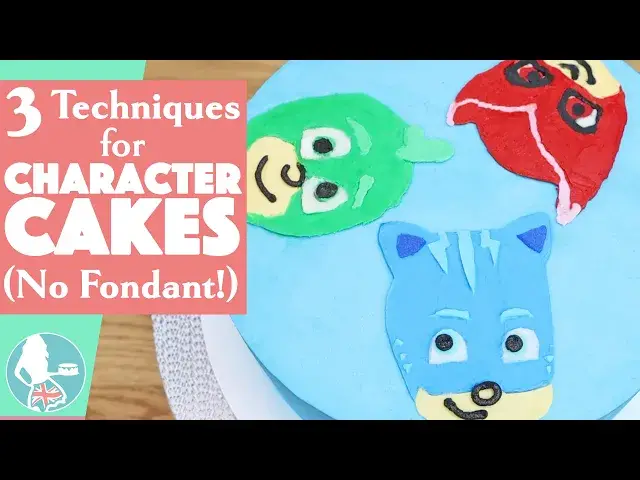
I’ll show you step by step 3 techniques to make character cakes with buttercream, without fondant, for detailed and delicious cakes!
*Start your FREE 7 day trial on my cake school
https://britishgirlbakes.teachable.com/p/all-you-can-cake/
*LEARN The Basics of Cake and The Basics of Buttercream in my most popular online courses!
https://britishgirlbakes.teachable.com/
*My 4 Minute Buttercream recipe
https://www.britishgirlbakes.com/recipes/buttercream-frosting/
*READ a written version of this tutorial (with photos!)
https://www.britishgirlbakes.com/3-ways-to-make-character-cakes-with-no-fondant/
*SUBSCRIBE to my channel for a new cake decorating tutorial every week!
*SAY HI!
Website: https://www.britishgirlbakes.com
Instagram: https://www.instagram.com/britishgirlbakes
Show More Show Less View Video Transcript
0:00
I'm going to show you three techniques to make characters with buttercream
0:04
without fondant, to make detailed and delicious cakes. For all of these techniques, you'll need the frosting on your cake to set
0:14
so it's firm and doesn't get damaged when you add the characters. So after layering your cake and filling, and giving it a crumb coat
0:22
frost your cake and put it into the fridge for at least an hour. Find a picture of your character or characters
0:28
I like to use Google Images for this. and I'm stretching my image out to almost fill a piece of A4 or letter-sized paper
0:34
so that it will be as big as possible for my 8-inch cake. Now for the techniques
0:40
Starting with the pipe and spread technique, cut out your character and trace around the edge with a toothpick
0:45
to make an outline on the cake. Then cut out the individual features of the character
0:50
like the face here, and position it within the outline on the cake, and trace around it to guide you when you fill in the colours of those details
0:57
Cutting these parts out and tracing around them is the most accurate way to add details to your character
1:03
but if you prefer, you can go freestyle, referring to your image and drawing the features on with your toothpick
1:09
Now mix your colours of butter cream. This is my four-minute butter cream, and the recipe is on British Girlbakes.com
1:16
Put your colours in piping bags fitted with small round piping tips, like a number three or a number four
1:21
or I'll show you a way to do this without piping tips in a moment. Choose one of the large areas of the design to start with, outlining it, and then fill it in by zigzagging with your buttercream
1:32
Spread this with a tapered offset spatula or a pallet knife, something with a narrow tip, so that it fits to reach small areas
1:40
You don't have to outline every single detail on the character. I'm piping the black circles into the eyes just by looking at the image to see where they go and how big they are
1:49
For lines like the nose and mouth, it's also not necessary to draw them before piping, because they're so
1:54
simple details that are easy to freestyle. Just look at your image to see where they go
1:59
If you don't have small round piping tips, you can use a piping bag with a tiny piece cut
2:04
off the end to make a very small hole to pipe through. Your lines won't be as neat as if you
2:09
use a round piping tip, but you can make them neater by using a toothpick to nudge a line
2:14
sideways or smooth out an edge. I recommend leaving the white details until last, and I'll
2:20
show you why after this For the face I outlining the details that will eventually go onto it the eyes and eyebrows and then filling in the rest of it with these zigzags and then smoothing it You aiming for a smooth surface and edges to cover
2:35
each section. Use your spatula or pallet knife to smooth the piping, and a toothpick is a great
2:40
tool to touch up buttercream too. The narrower the tip of your spatula or pallet knife
2:46
the easier this is for detailed characters, especially if they're small. This is best to do when
2:51
your cake is cold because the buttercream you pipe and spread will chill quickly and become smoother
2:56
than when it's at room temperature. If you're struggling to get a smooth surface, you can heat your
3:02
spatula or palette knife by dipping it into hot water and drying it off, and the hot metal will
3:07
work well to smooth the butter cream. Always chill the cake before adding any white details because
3:13
white picks up other colours so easily, so if the other colours haven't chilled and set, they'll make
3:19
visible smudges within the white details. This is a number eight piping tip and you can see that
3:24
it's way too big for these eyes. A number three or number four tip is ideal for little details like
3:30
this. I only suggest using a larger round piping tip like this for very large areas of color. But here's
3:36
another example of where a toothpick comes in handy to tidy up piped buttercream. So that's the first
3:42
technique. It's the fastest but I'd also say the trickiest and the messiest result of the three techniques I'm
3:49
going to show you. Next up, a buttercream transfer for Allette. Tint your colours and put them
3:54
into piping bags fitted with round piping tips or just a small hole cut off the end. You'll need a
4:00
small flat surface like a cakeboard or a cutting board and place your image on this with a piece
4:05
of parchment paper on top so you can see the image underneath. Tape them in place and then
4:10
pipe the smaller details onto it first. Just like with the previous technique, a number three or number
4:16
four will give you the neatest results, but just cutting the bag will work. One color details
4:21
straight after the other is fine, but only the details that don't touch each other. Then put the
4:26
board with the image into the freezer for five minutes before adding the next details on top. To fill in
4:32
an area, spread the piping with a spatula or palette knife to push the buttercream down to the
4:37
parchment paper. This side is not going to be visible. It's going to be pressed against the cake. It's the
4:43
side facing down against the parchment that you'll see. So don't worry about making this
4:48
upward facing side smooth or neat I know these eyes look demonic but from the other side the side will see when it on the cake it won look so creepy Before adding any details that touch these colors you just piped put the board back into the freezer for five minutes to chill and set the buttercream Then add the next details leaving the background
5:07
color until last. Chill the final details for five minutes in the freezer and then outline and
5:12
fill the rest of the design. Piping and spreading over all of the details for two reasons. First
5:18
it's quicker than trying to pipe and spread around them, and second, because the chilled butter
5:23
butter cream has set, so it's not sticky anymore, and you want to make the entire design sticky
5:27
so that it attaches to the cake. Scrape across to flatten and level the buttercream and then
5:33
straight away, while the buttercream is still sticky, peel off the tape attaching the parchment
5:37
to the board, pick up the parchment, and flip it over and press it down onto your cake. Press it
5:42
very gently to attach it to the cake. If you push too hard, you'll make the buttercream warp and
5:47
bulge, and you'll change the shape of the details. Put the whole cake in the fridge for 30 minutes or the
5:53
freezer for 10 minutes and then peel the parchment off to reveal your character. You'll have lots
5:57
of little indents where the buttercream didn't push all the way down to the parchment, so fill those
6:02
in now by piping more buttercream of that colour over the gaps, and spread it to push it down
6:07
and then scrape off any access so that it doesn't cover up any of the other details. Since the
6:12
rest of the design is cold and hard, spreading this fresh buttercream over it won't blend with
6:17
or stain those other colours. And that's the second technique. A buttercream transfer. A buttercream
6:23
It's an easy way to trace a very detailed character cake, but it's not as neat as the next technique I'll show you
6:29
For Catboy, I'll use my favorite technique. Layered homemade stencils. Cut several pieces of parchment the same size as your character
6:37
One piece for every colour of details. I'm cutting five pieces for five colours
6:43
Place one over the image and trace the outline of one colour. I'm doing the blue mask first
6:48
Just draw the outline, none of the details within it. Then on the next piece of parchment, trace the next color, the mouth and nose under the mask
6:57
then the next color on the next piece of parchment, the dark blue inner parts of the ears
7:02
and the next color on the next piece, all of the light blue details on the mask and the eyes and the eyebrows
7:09
It's fine to have several details on one piece of parchment as long as they're all the same color
7:14
Finally, another piece of parchment for the whites of the eyes. I'm going to add the black circles without a stencil, but you could make another stunts
7:21
for those if you wanted to Now when you layer the stencils on top of the image you should have all of the details of the character Cut out all of the details leaving the parchment paper around them
7:32
intact, and these will be your stencils. Small scissors are ideal for cutting out the very small
7:38
details, like the markings on the mask. Now we're going to layer these stencils on the cake
7:43
to recreate the entire character. Decide where you're going to place the character on the cake
7:49
and line up your first stencil, which should be the background color
7:52
or one of them, if there are more than one. Spread colored buttercream over it
7:57
scrape off the excess to flatten and smooth it, and leave just a thin layer
8:01
and then peel off the parchment stencil. Put the cake in the freezer for five minutes
8:05
or the fridge for 15 minutes to set this color, tint your next colors, if you haven't already
8:11
and then take the cake out and line up your next stencil, and spread the next color over it
8:16
Since your layering details one over the other, you start with the background colours and then add the smaller details on top
8:22
getting smaller as you go. The cake needs to be chilled before doing this so that your stencils don't damage the frosting
8:28
on the cake, and since the cake is cold, the buttercream details will chill and set in just
8:32
five minutes in the freezer, so this is quite a quick technique. If there are two separate coloured details in different areas of the design, you can use both
8:41
of those stencils one after the other, without chilling in between, as long as you trim the second
8:46
stencil so that the parchment doesn't touch the previous buttercream detail you've just spread on
8:52
A toothpick is useful here to smooth out any uneven edges, where the buttercream pulls up slightly
8:56
as you peel the stencil off. Even though this is a relatively detailed design, I only need
9:02
five stencils to create all of the features, except for the black eyeballs, which I'm piping on
9:07
since I happen to have black butter cream in a piping bag with a small round piping tip, but a
9:12
stencil would work just as well, if not better, because piping it creates an either stooping
9:16
looks out quite a bit, whereas stenciling it would make it lie flat against the cake
9:21
For the smile and nose, you can draw them with a toothpick, or you can pipe them
9:25
and in hindsight, I think drawing them with a toothpick would have looked better, more subtle
9:29
And there are the three techniques. The last one with layered parchment stencils is my favourite, because it creates the flattest
9:36
smoothest, most accurate details, and looks the neatest. I hope this tutorial has been useful
9:43
Subscribe for more and visit my cake school on British Girlbakes.com. for online courses on baking and cake decorating
#Online Video
#Desserts