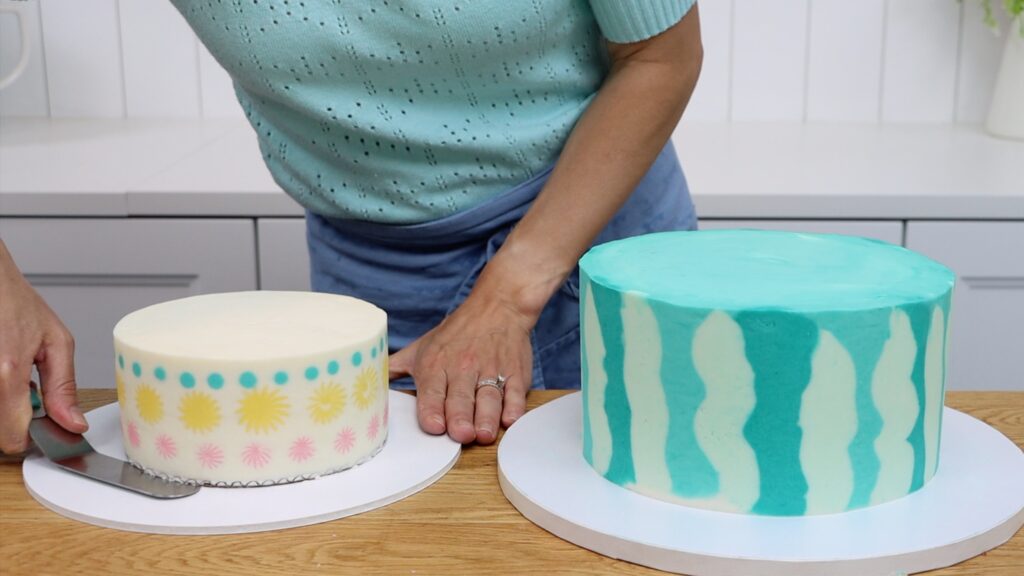
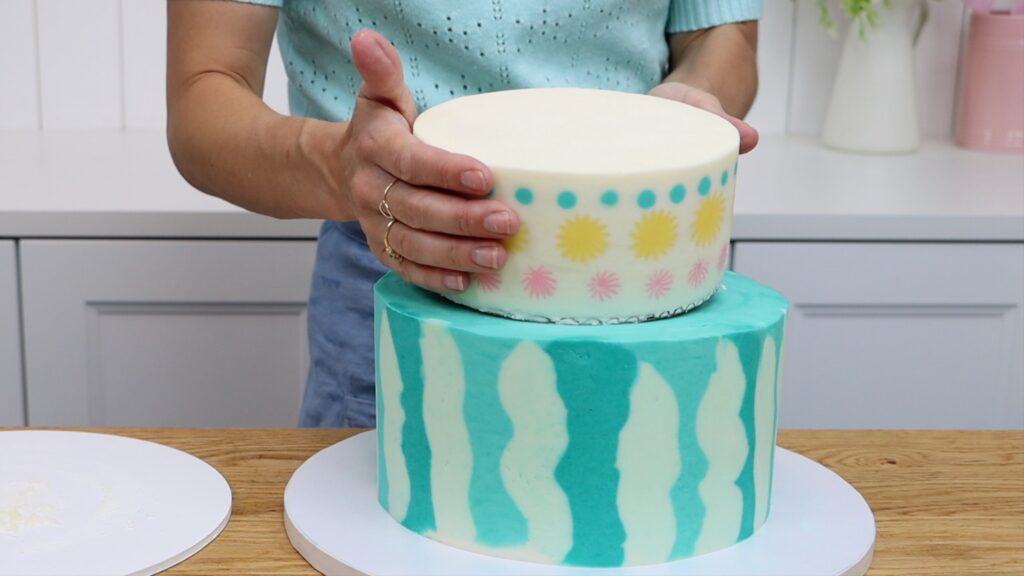
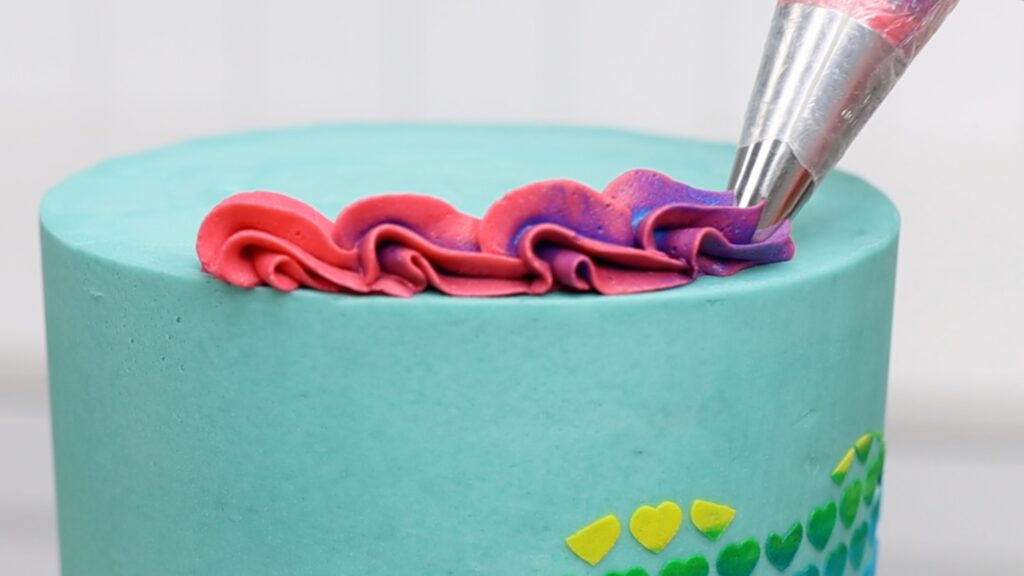
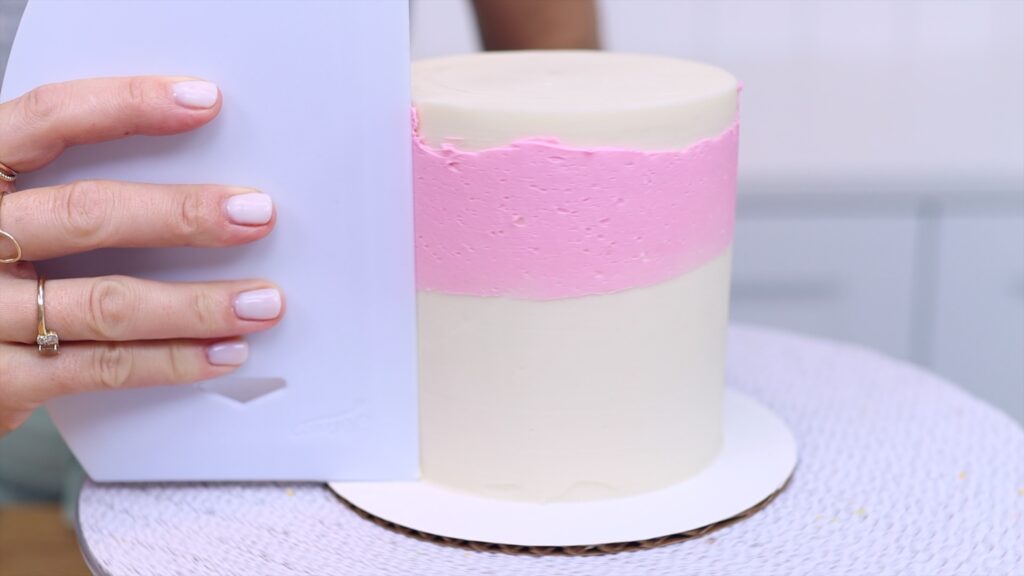
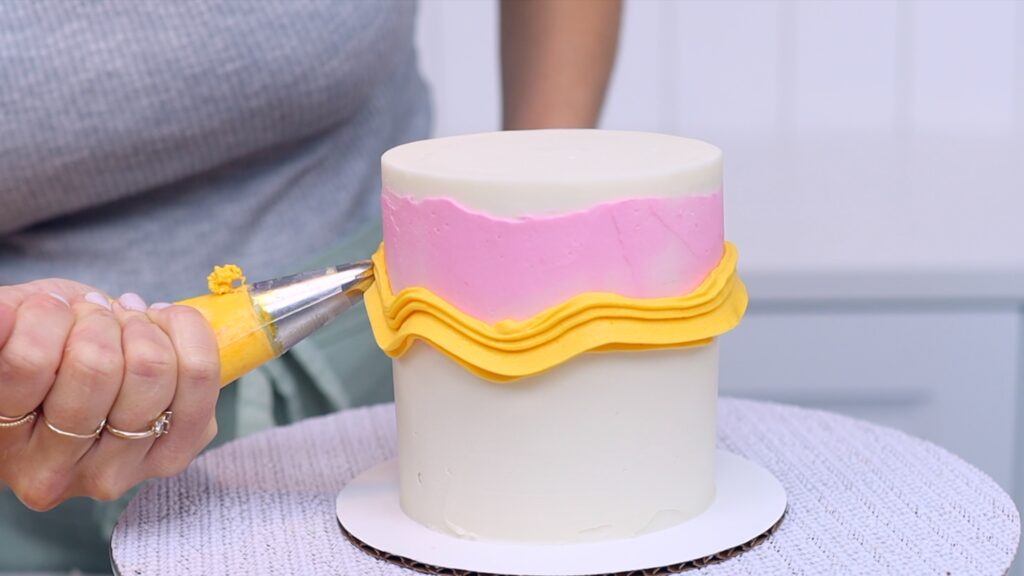
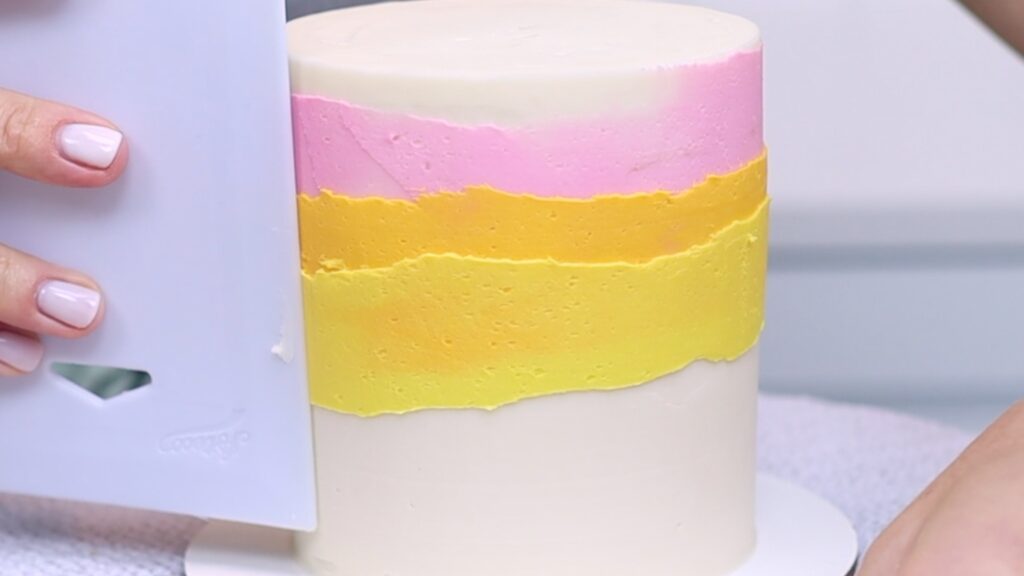
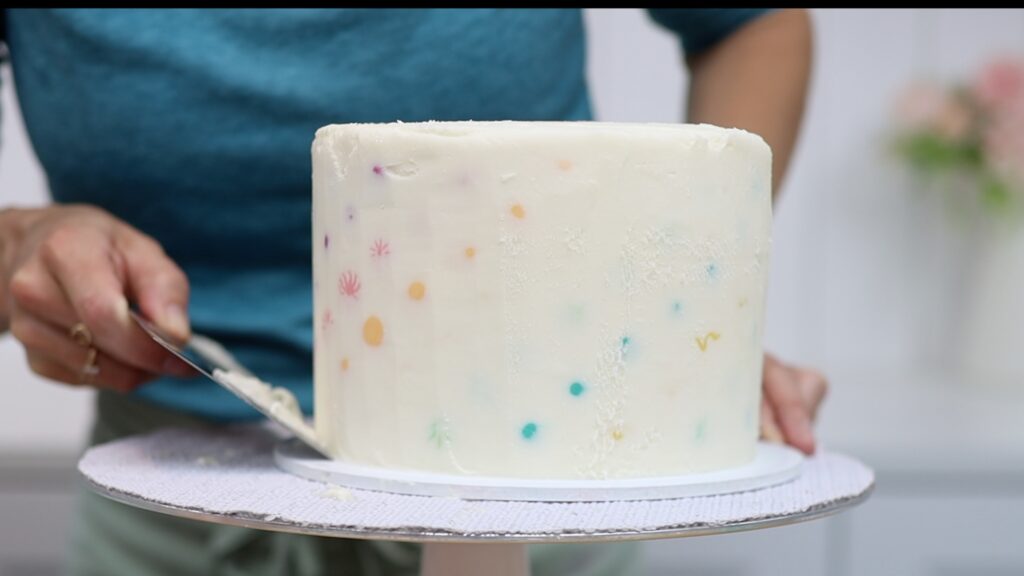
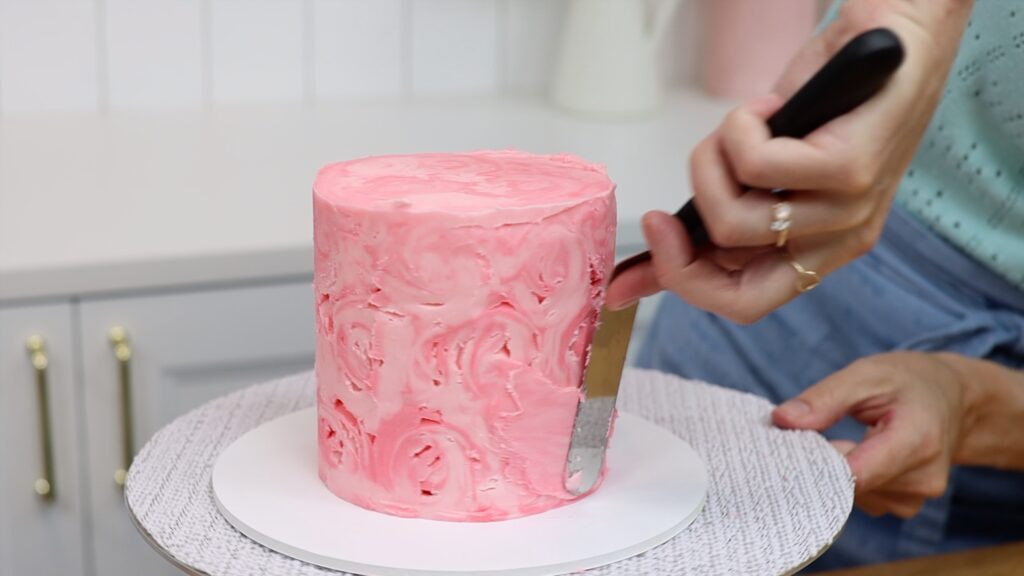
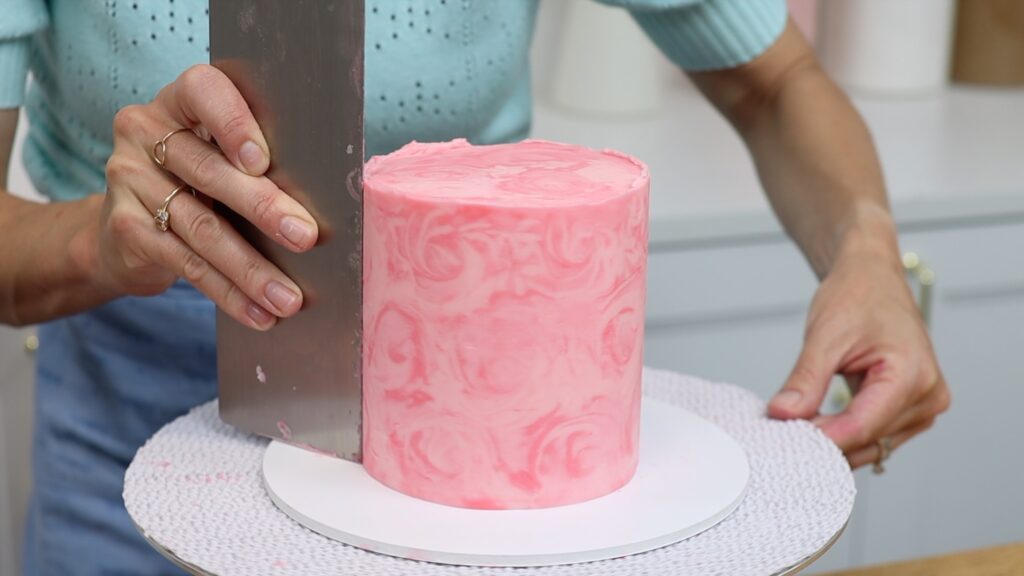
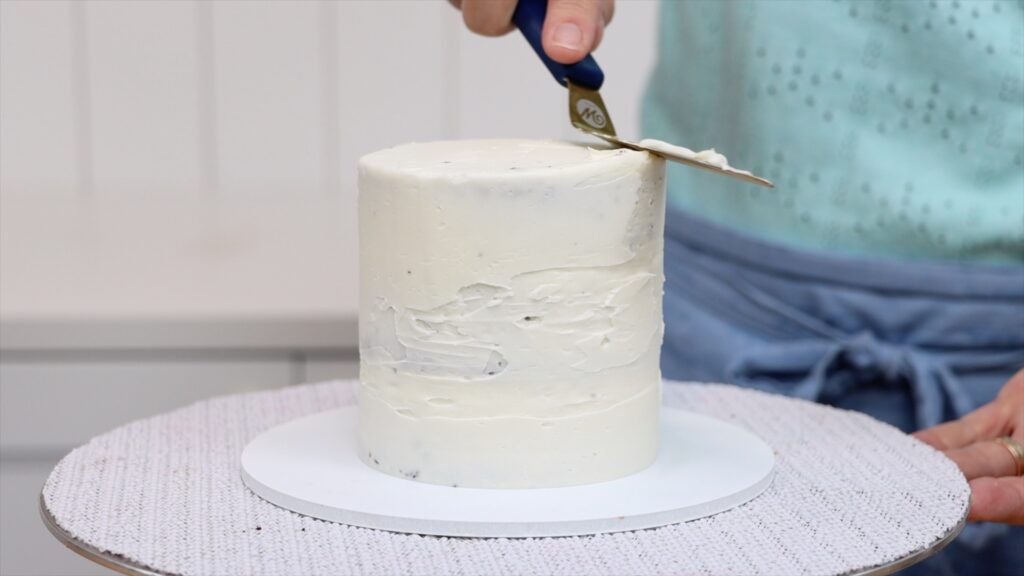
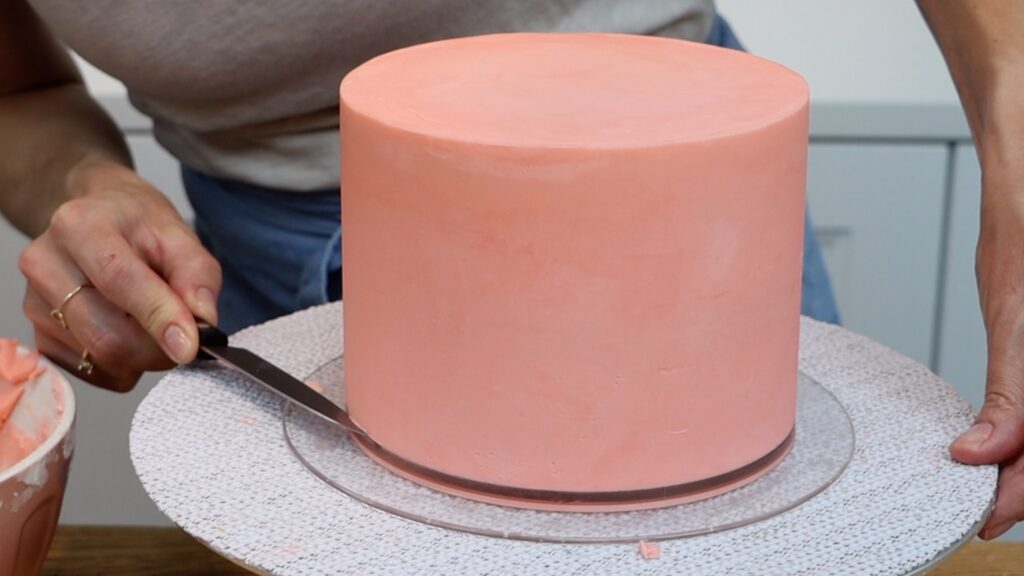
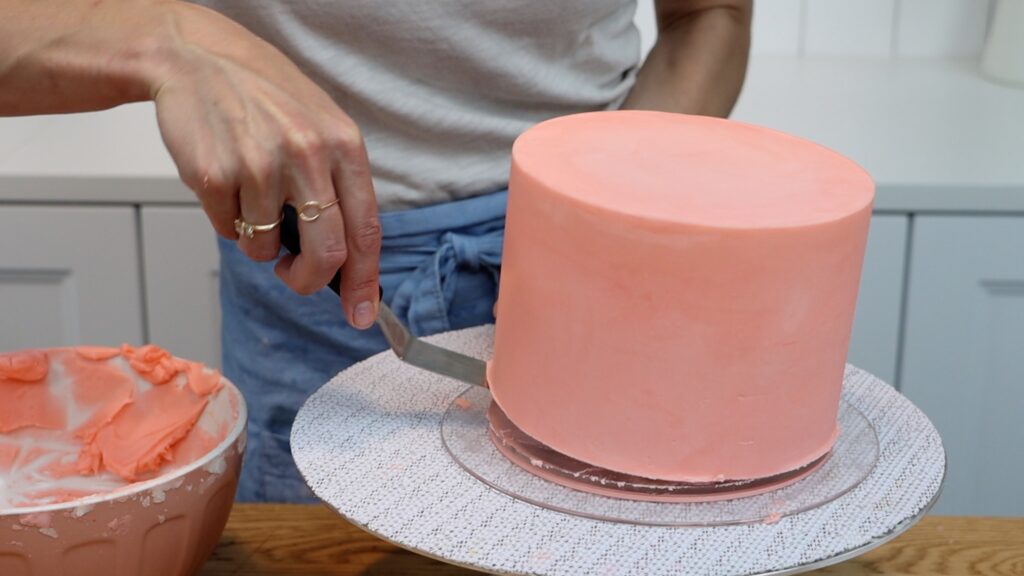
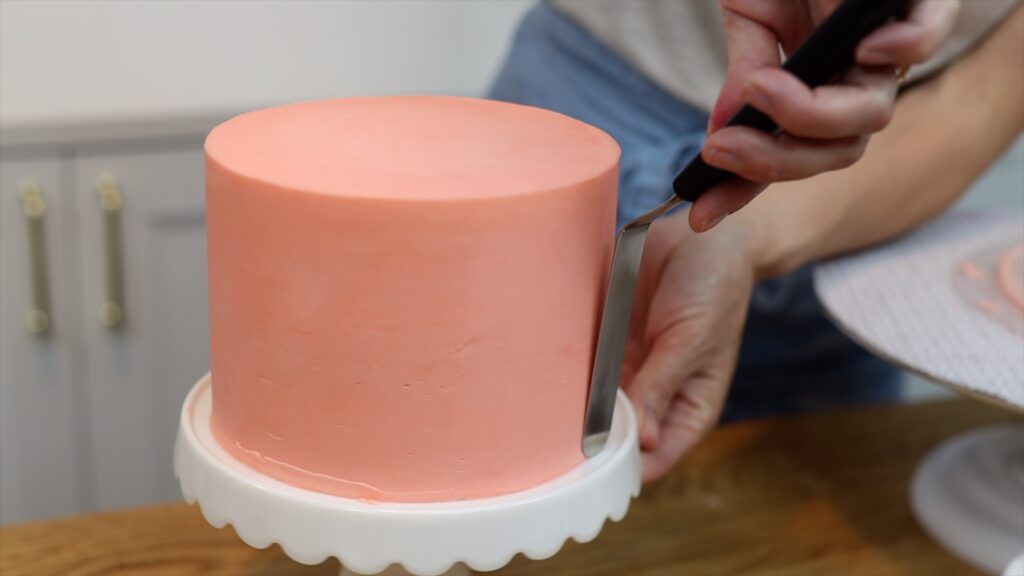
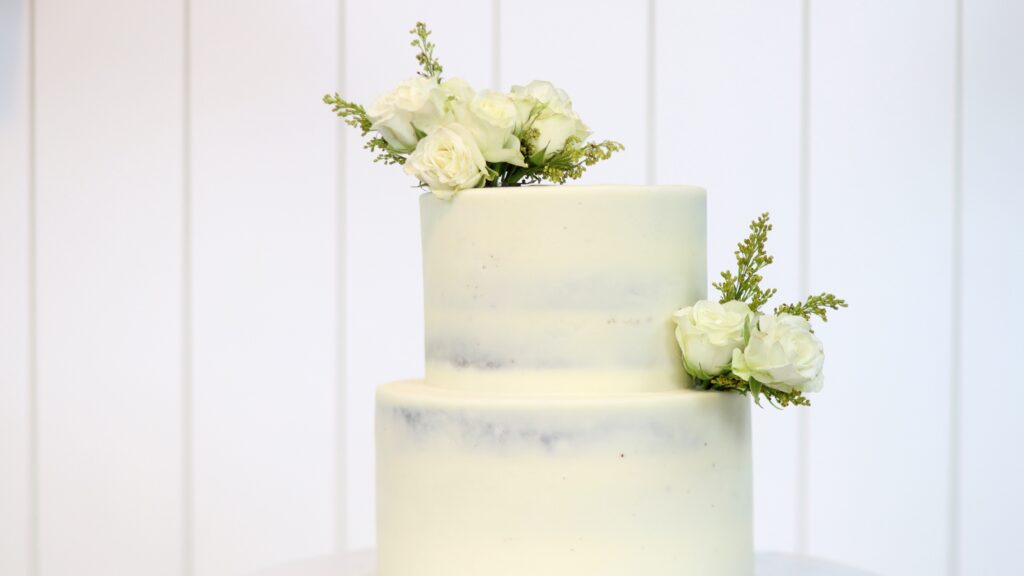
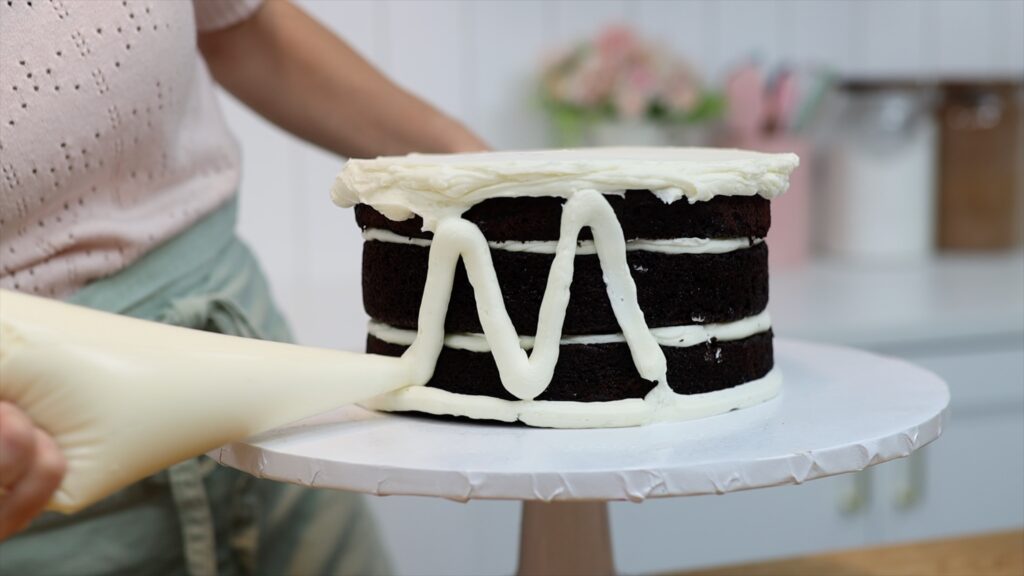
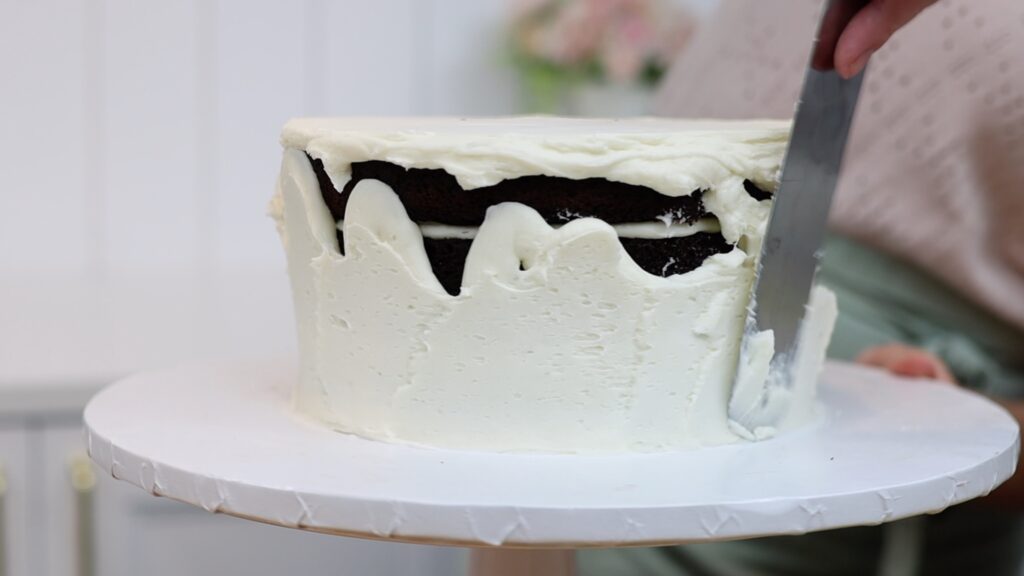
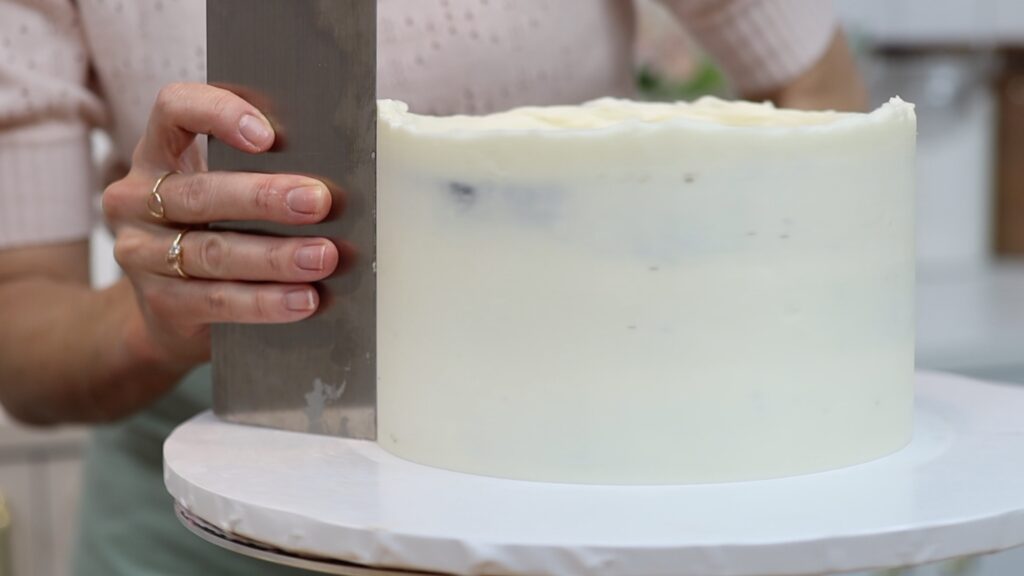
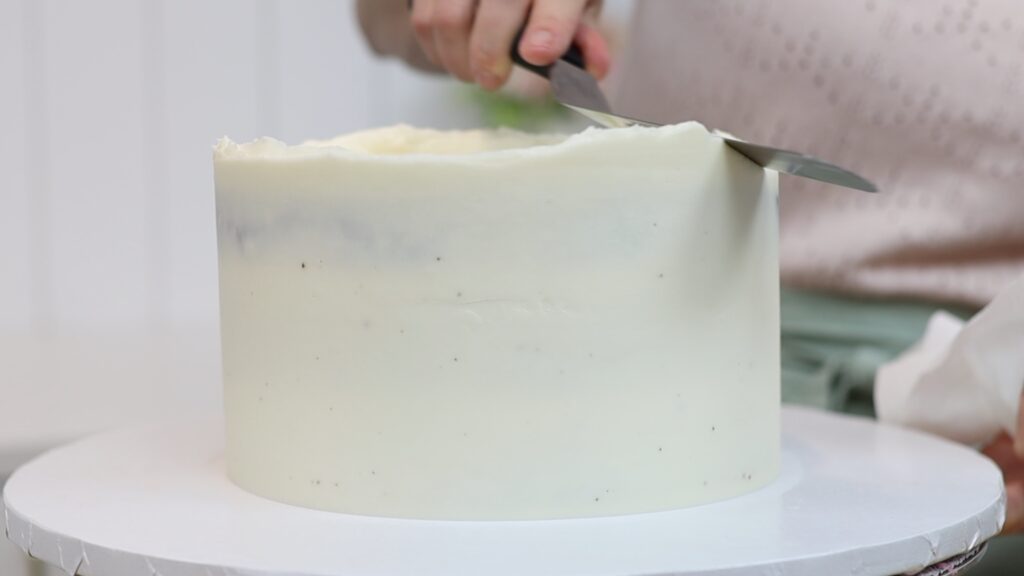
Stacking a cake can be nerve-wracking but in this tutorial I'll show you how to make a tier cake, sharing tips and tricks so that you can assemble, frost, and stack a two or three tier cake confidently!
Bake the cakes for your tier cake
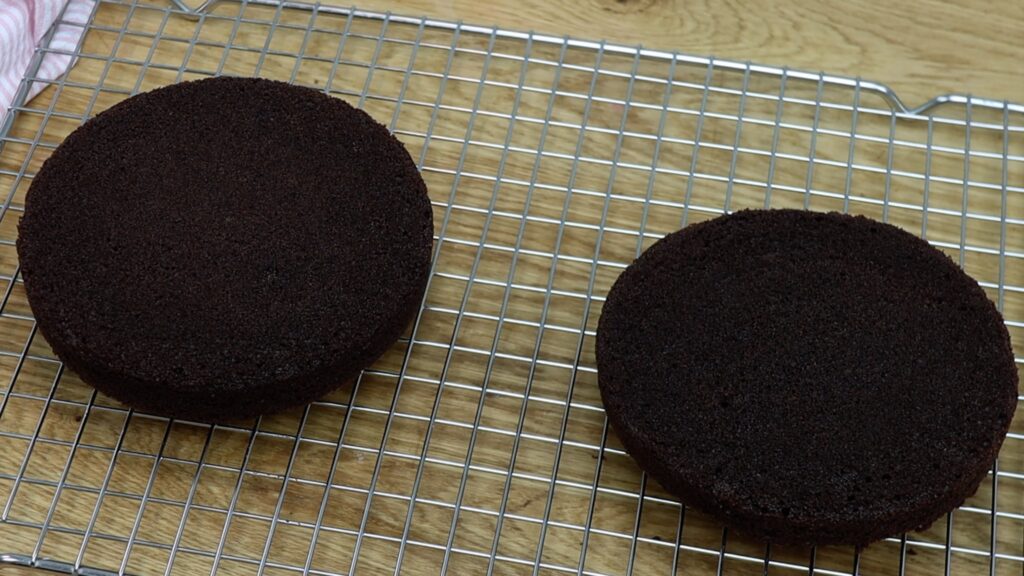
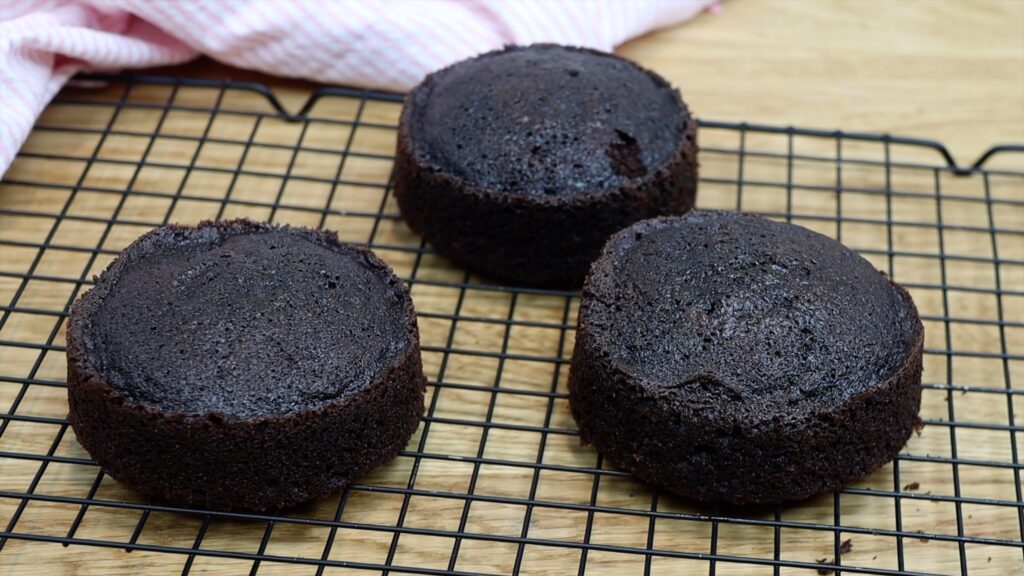
The first step is of course to bake your cakes. I’m using my Perfect Chocolate Cake batter for a standard height 8 inch cake and a tall 4 inch cake. For my middle tier, I'm using my Small Chocolate Cake recipe for a short 6 inch cake. My Perfect Chocolate Cake recipe has a table with the ingredient conversions for different sizes and heights of cakes.
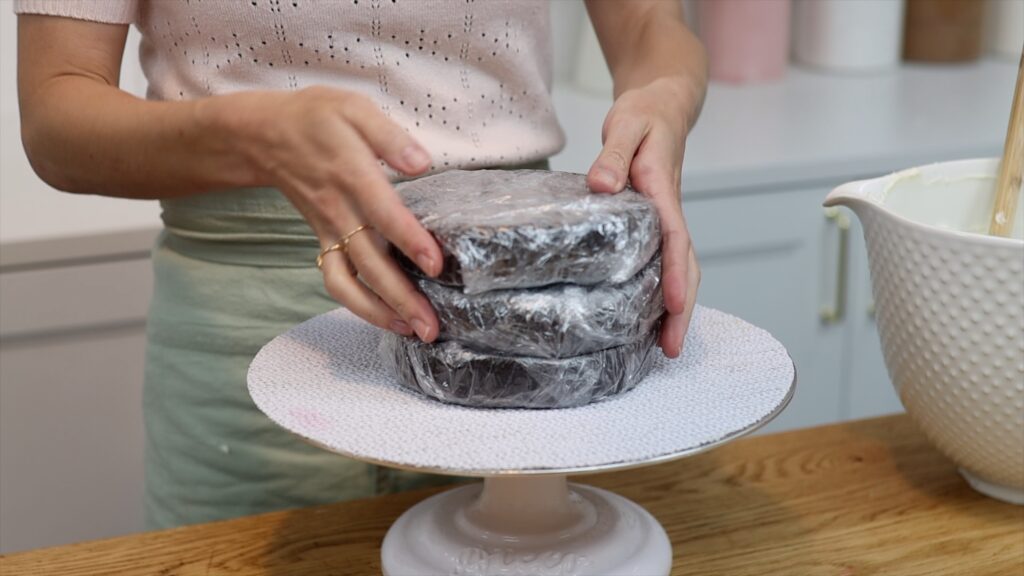
After baking, leave your cakes in the pans for 10 minutes to cool slightly. Then turn them out onto wire racks and leave them to cool completely which takes about 2 hours. After they cool, I really recommend chilling them and you’ll see why in a moment. You can put them into the freezer for 30 minutes or the fridge for an hour. If you prefer, wrap them with plastic wrap and leave them in the fridge overnight.
Assemble each tier of cake
You'll need a cake drum to support the weight of a tier cake. A cake drum is a type of cake board that's thicker and stronger than cardboard. It should be at least 4 inches wider than your bottom tier so that there's space for frosting and decorations. I'll show you how to assemble the bottom tier straight on the cake drum. If there isn't space in your fridge for it, you can use a smaller cake board and transfer it later.
Even if you've never made one before, you're probably already familiar with several of the steps for how to make a tier cake.
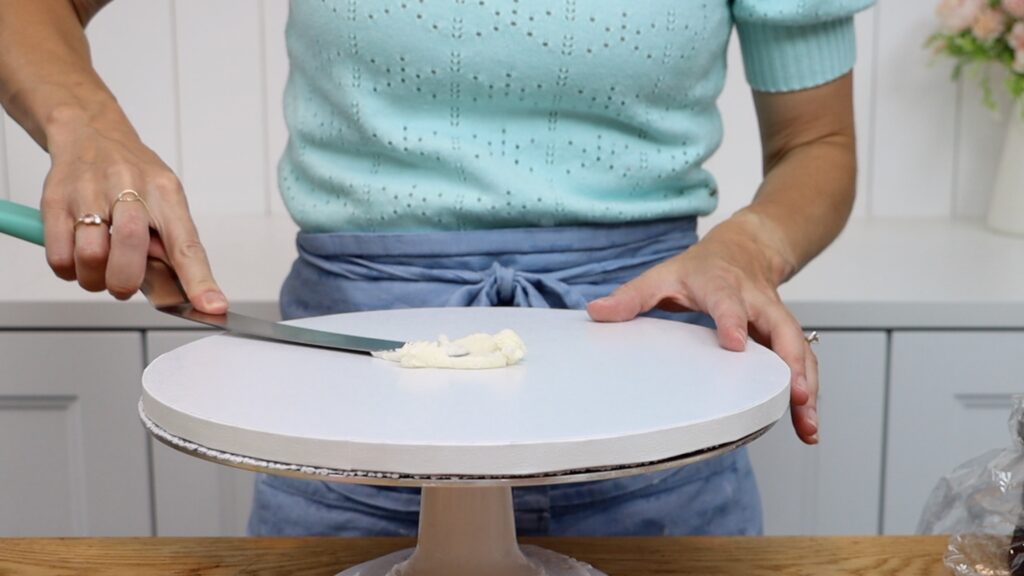
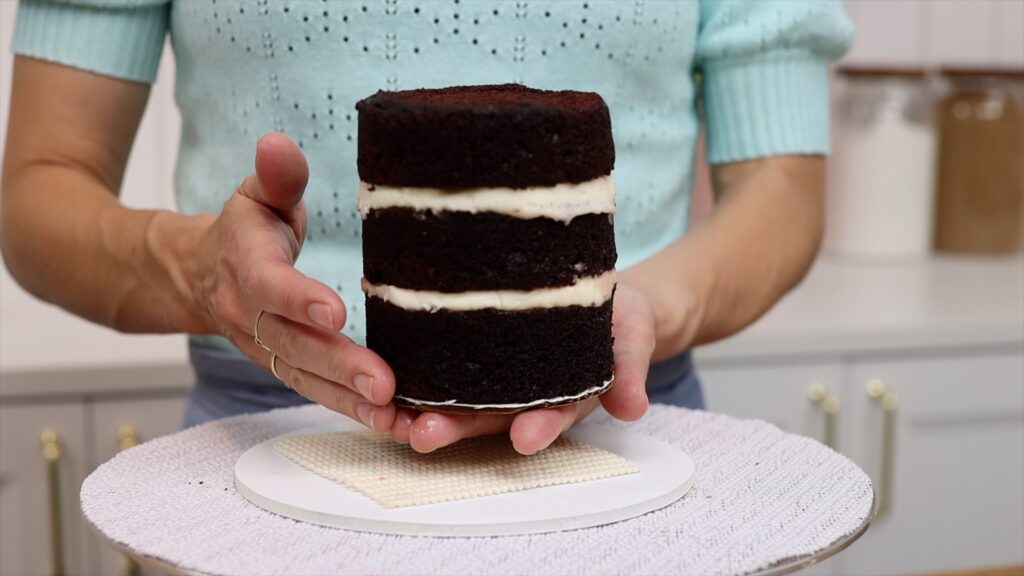
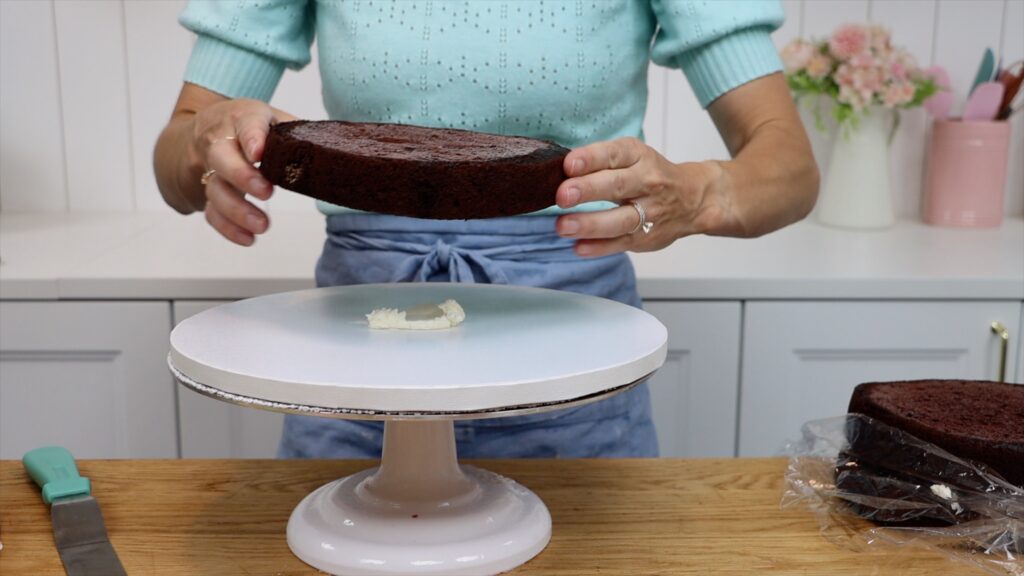
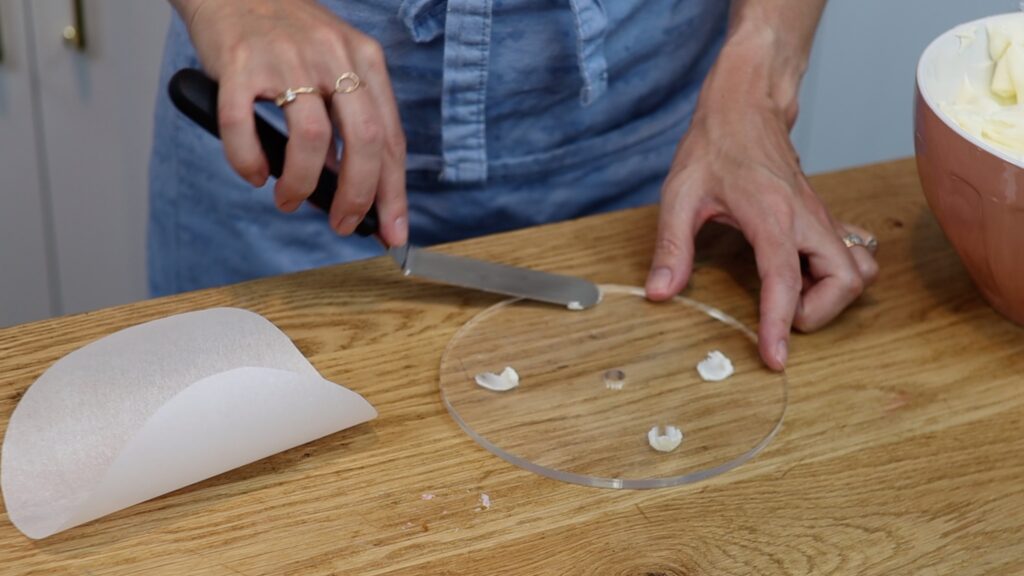
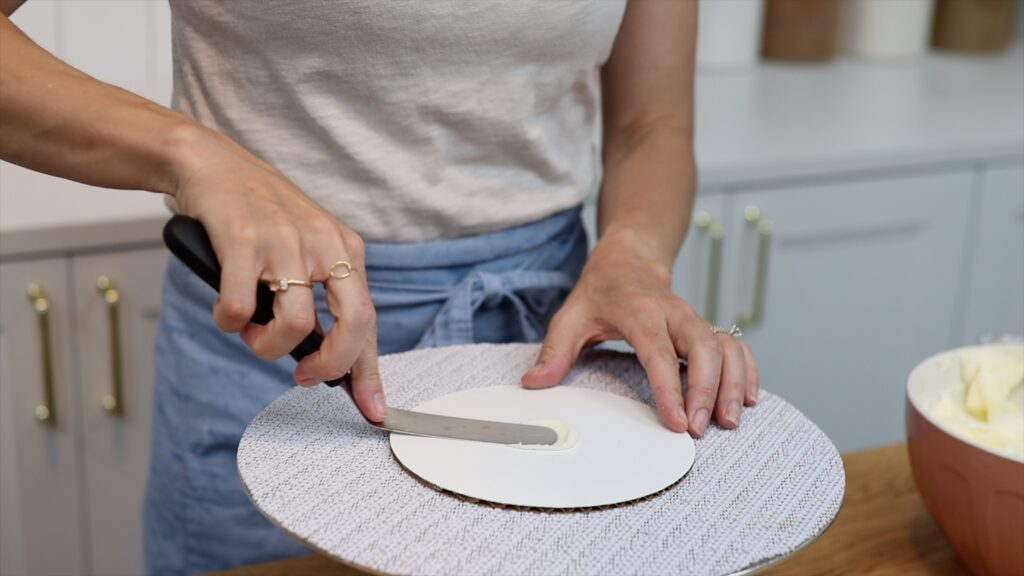
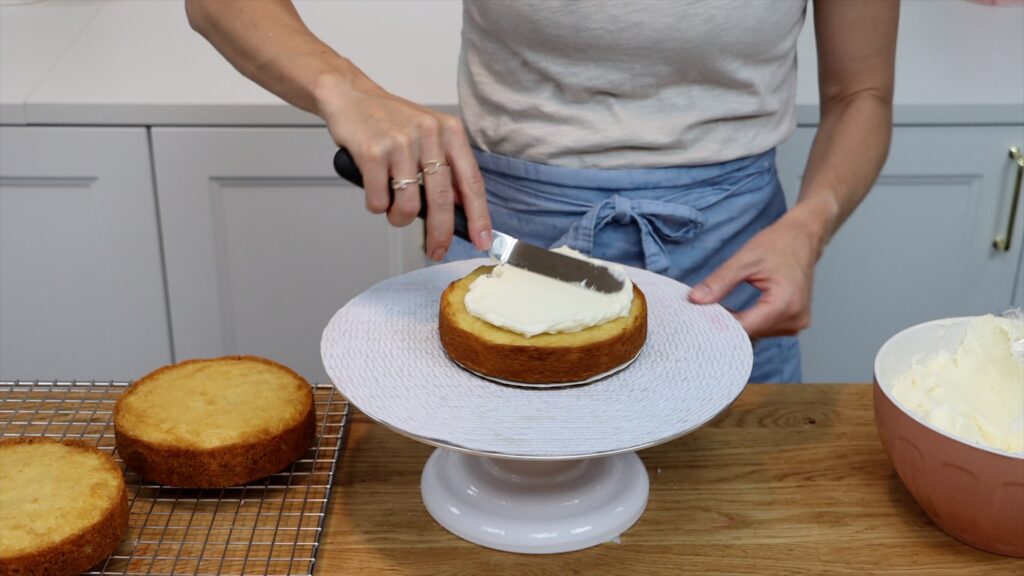
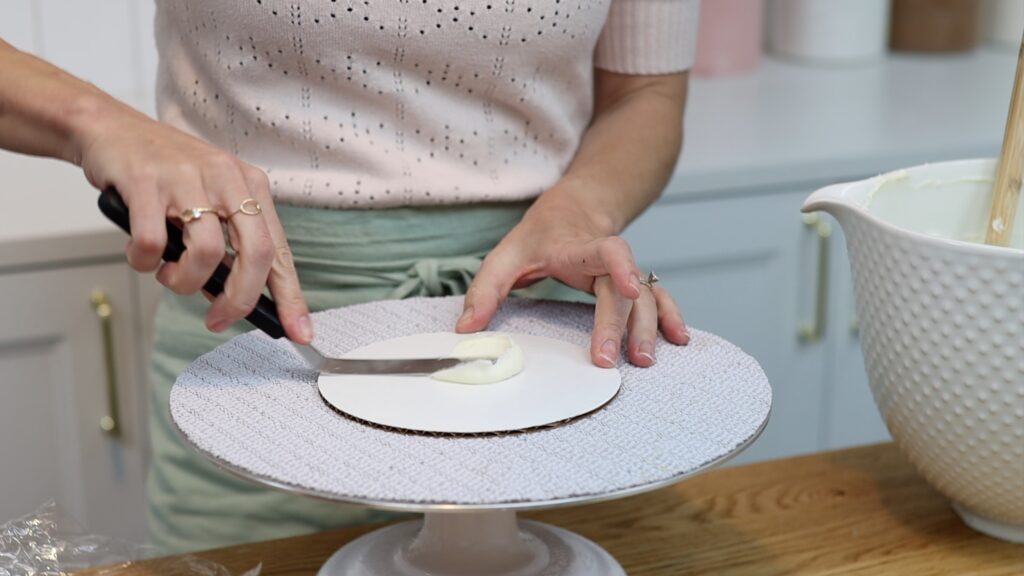
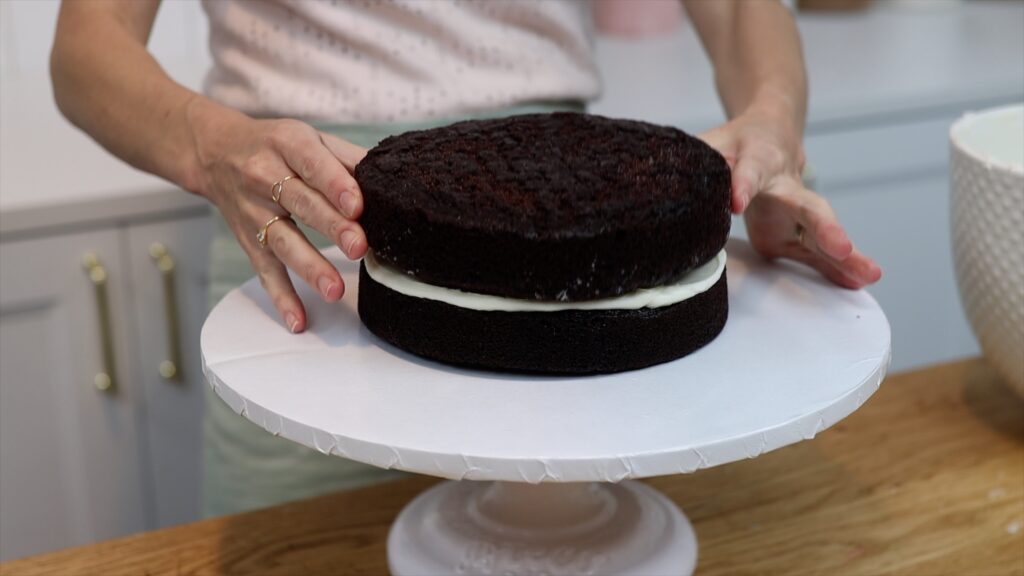
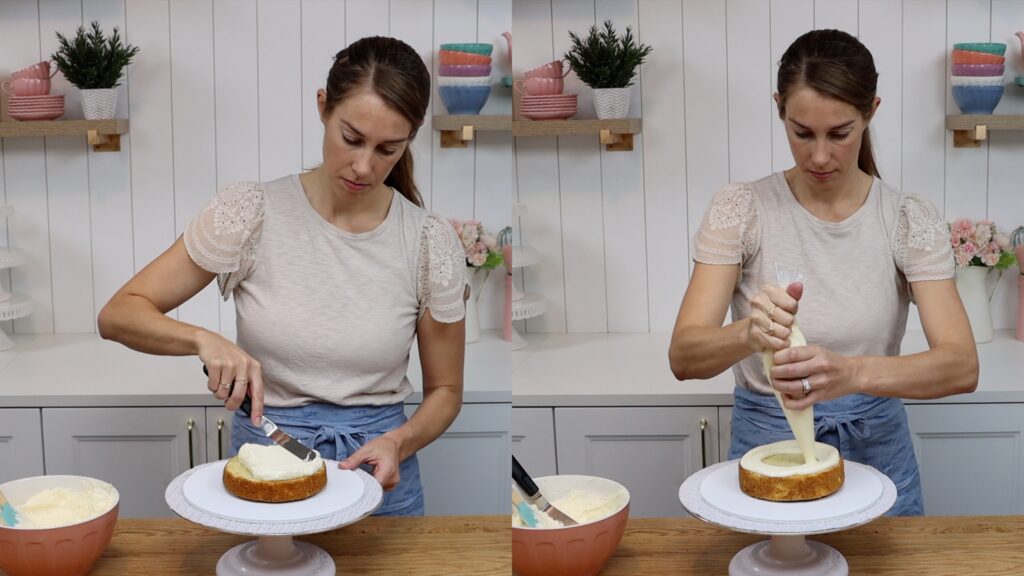
Start by assembling your largest cake, which will be the first or bottom tier. Spread buttercream onto the middle of the cake drum and push the first layer of cake down onto it. The dot of buttercream will stop the cake from sliding around as you frost and decorate it.
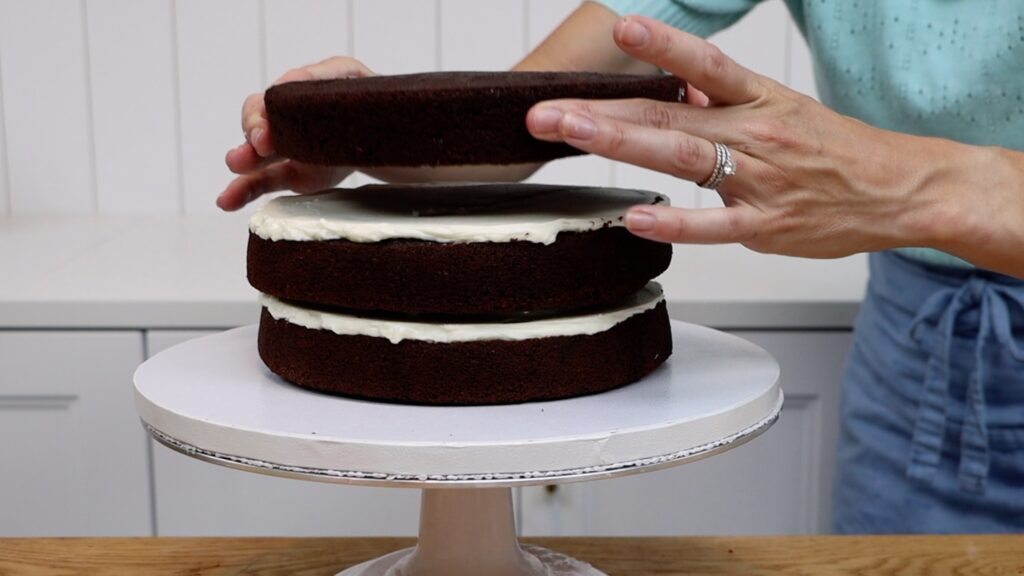
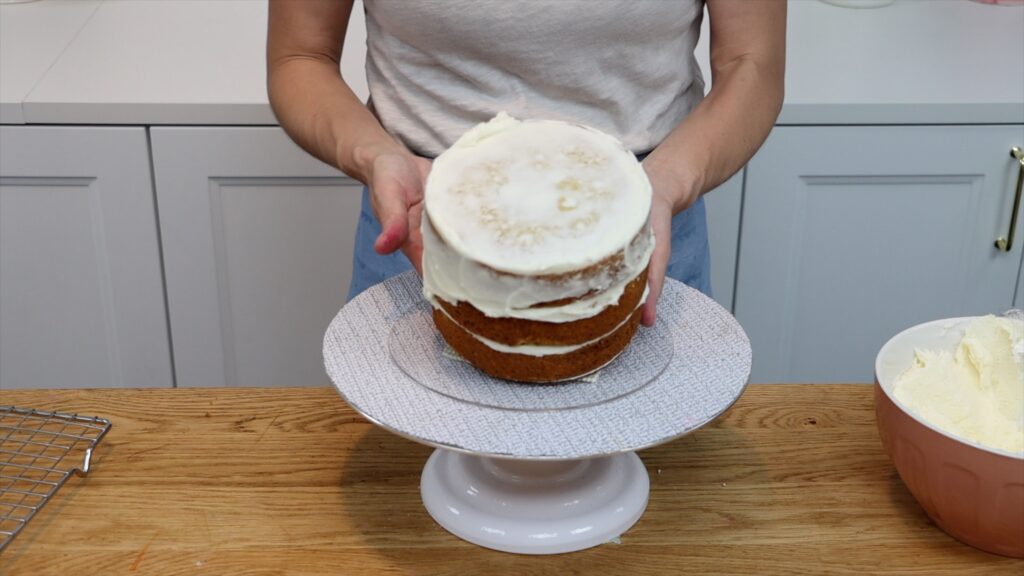
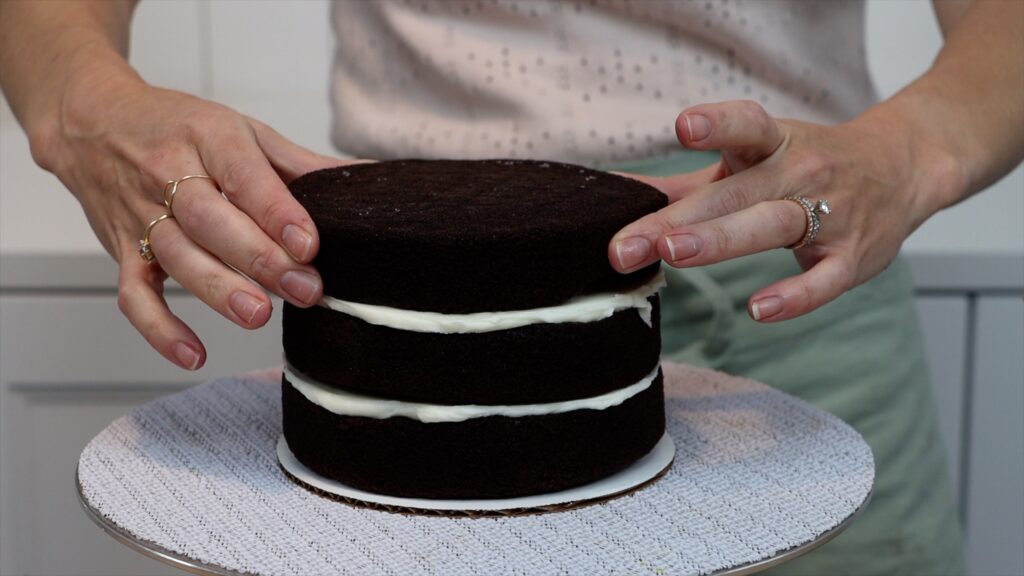
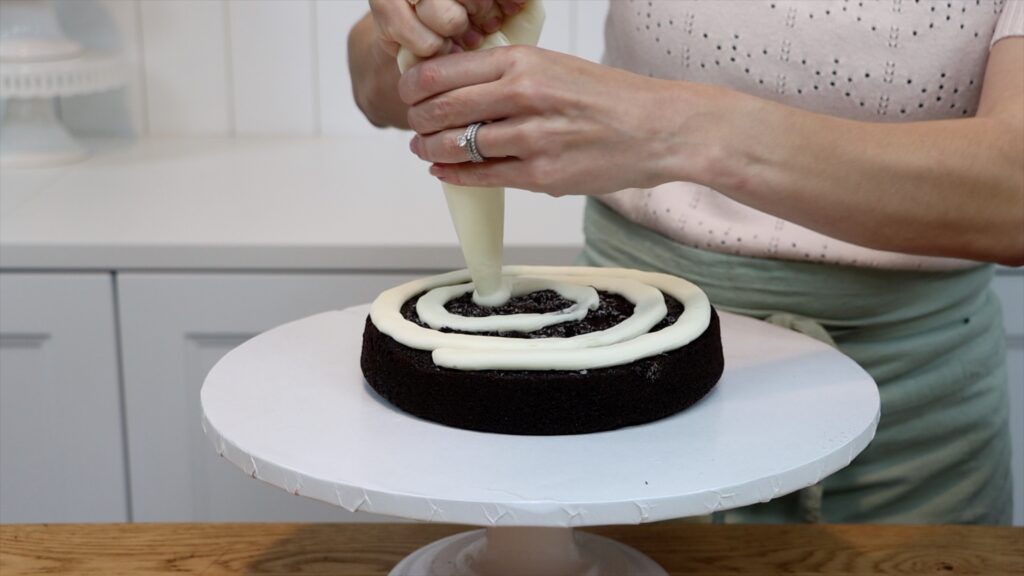
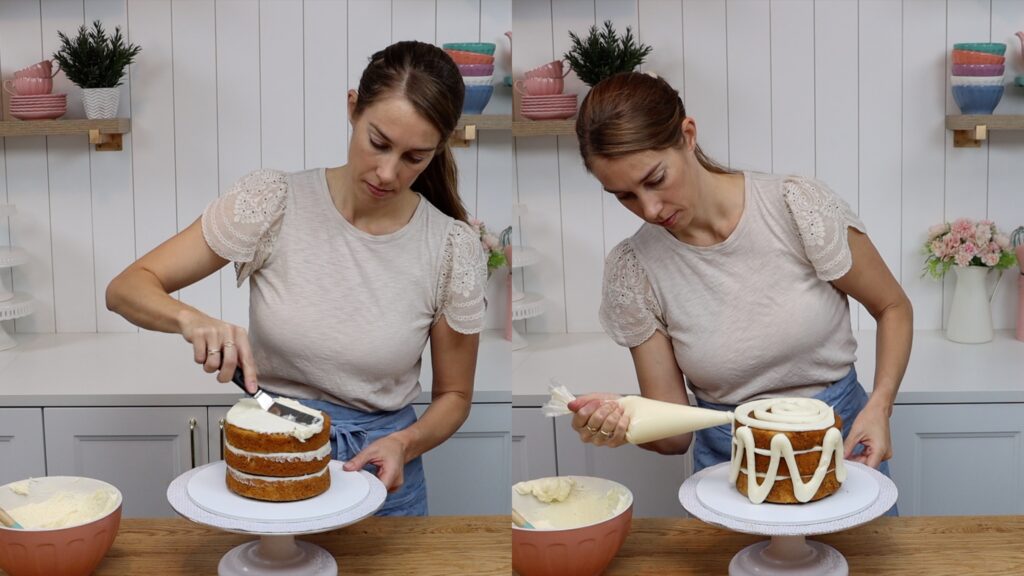
Spread or pipe your filling onto this first layer of cake. Then alternate between cake and filling. As you place each cake layer on the cake, take your time to line it up above the layer below. Make sure the sides of the cake are straight and it’s not leaning. My layers are very firm because they’re cold so I can lift them and move them around without them cracking or crumbling.
Cover the bottom cake with a crumb coat
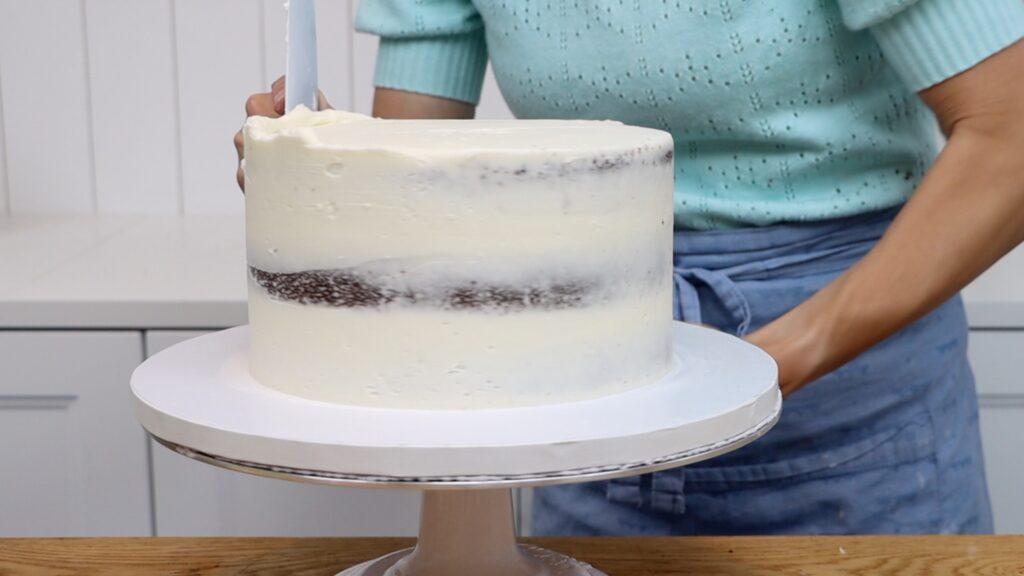
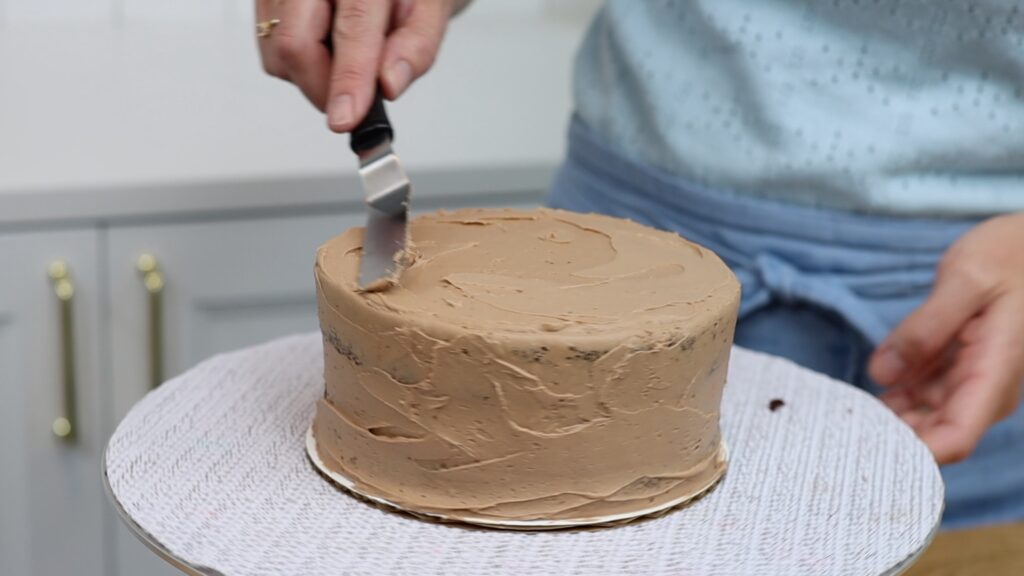
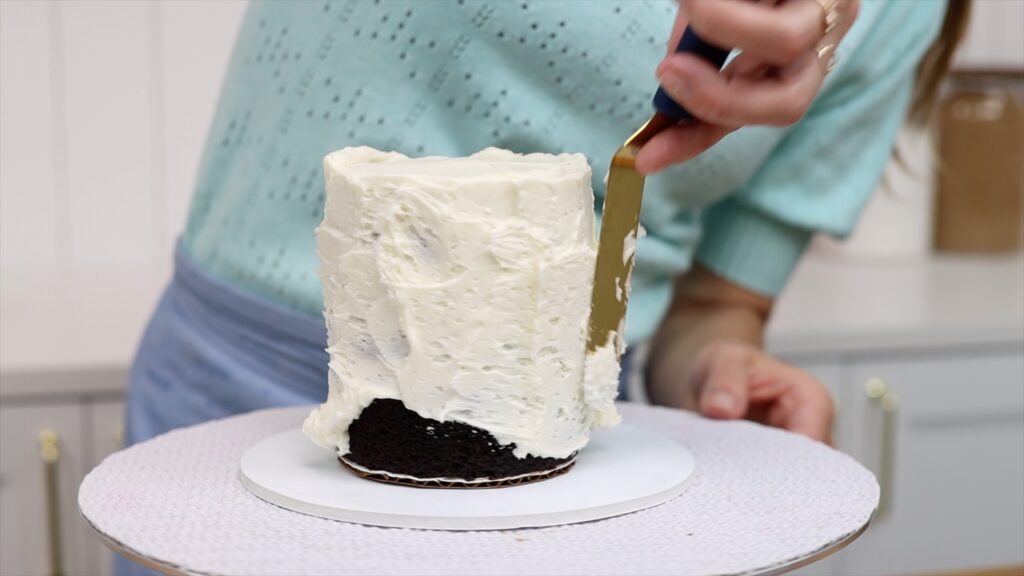
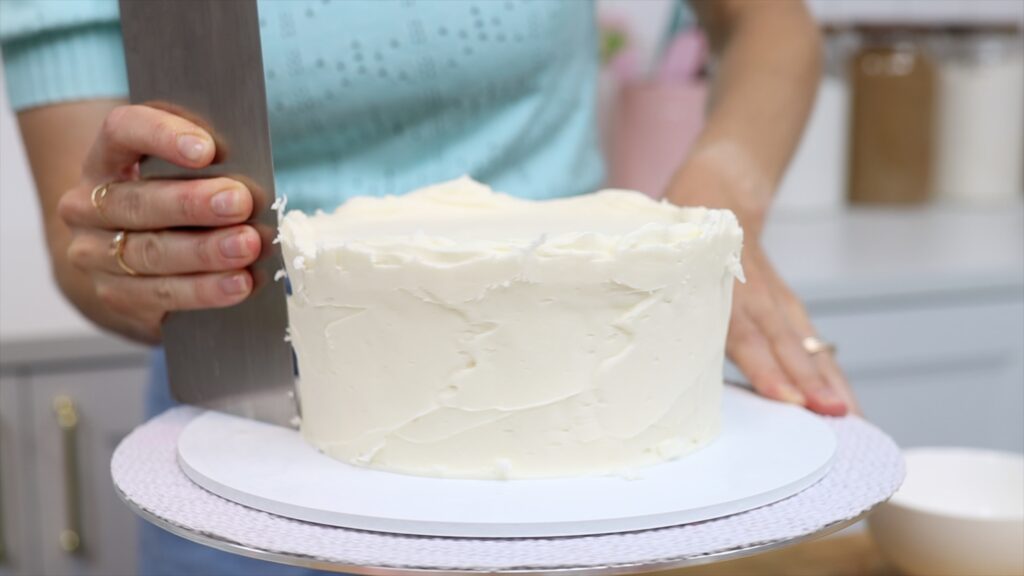
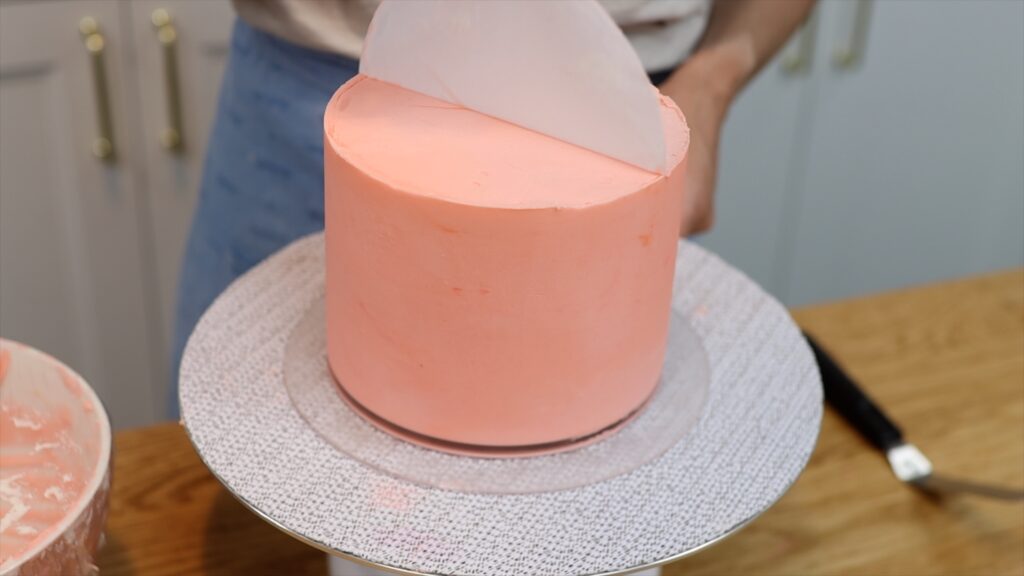
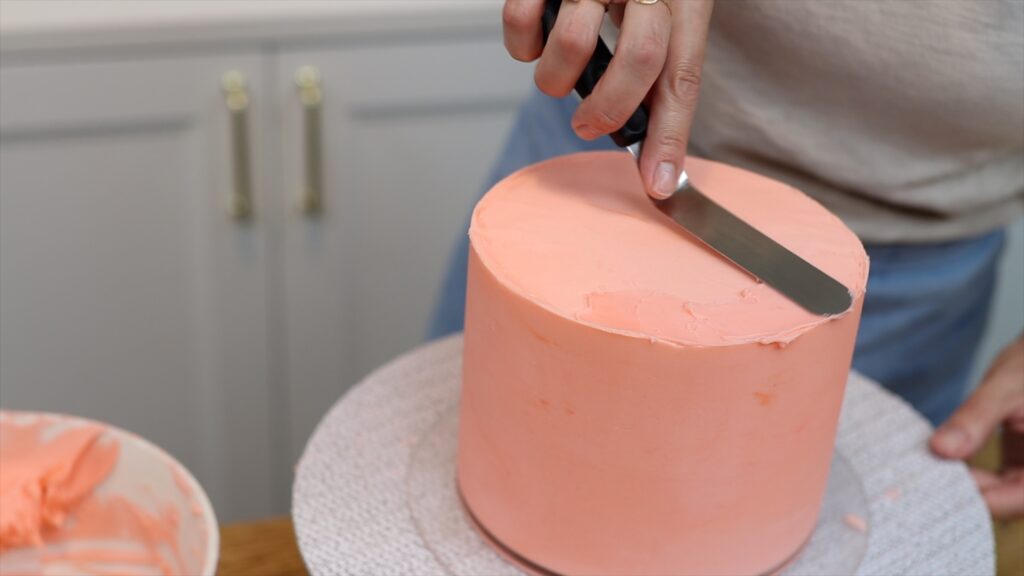
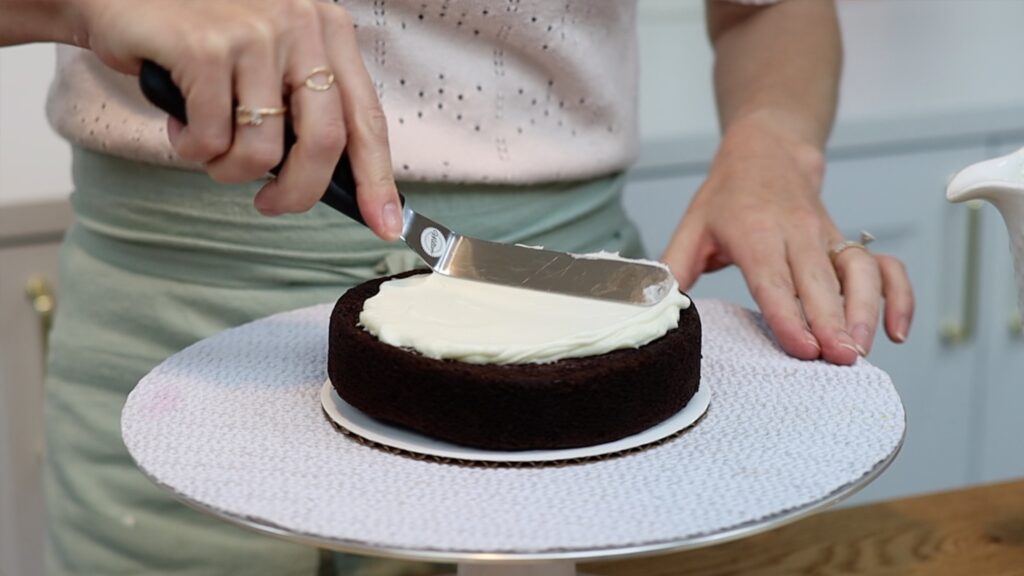
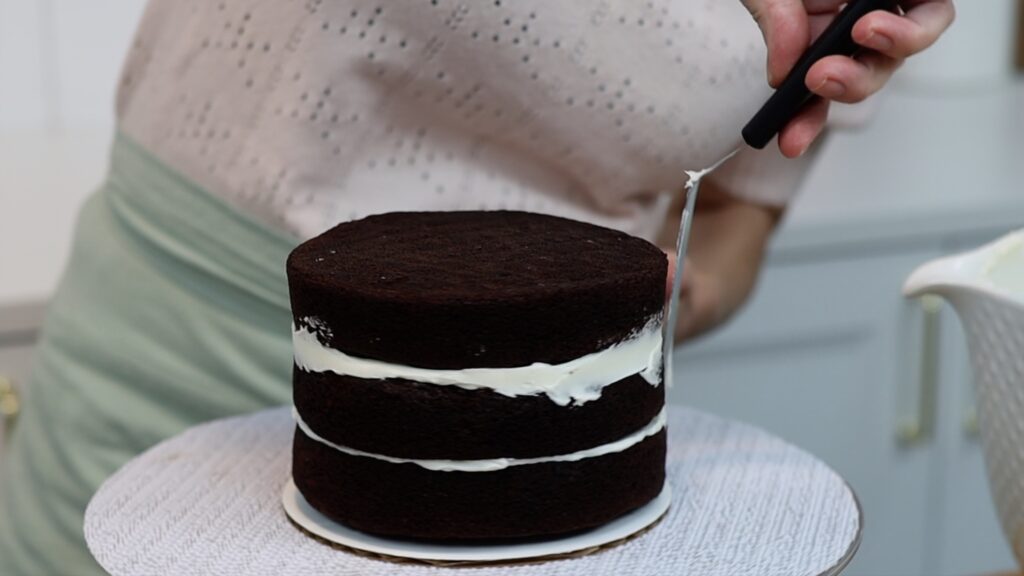
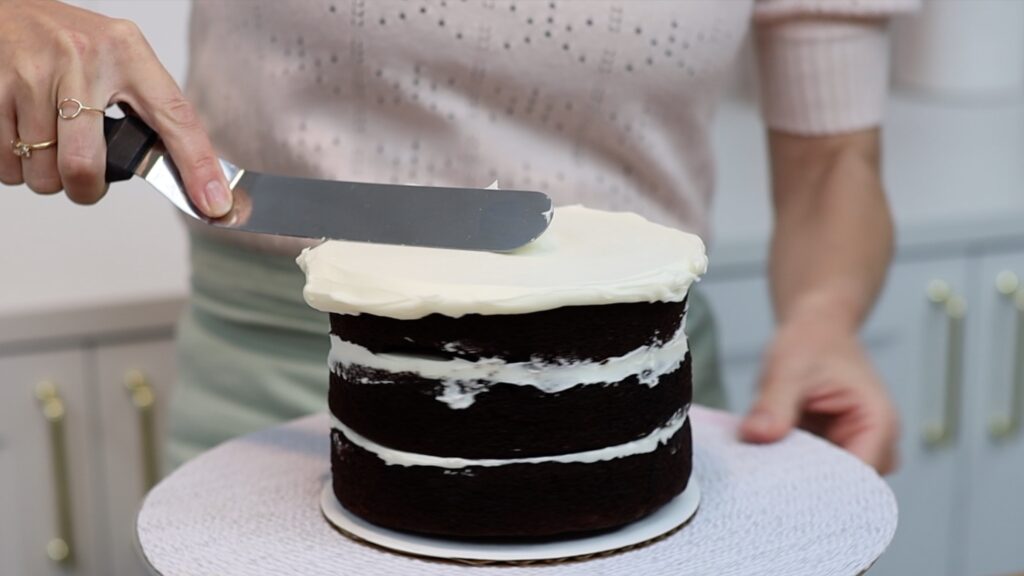
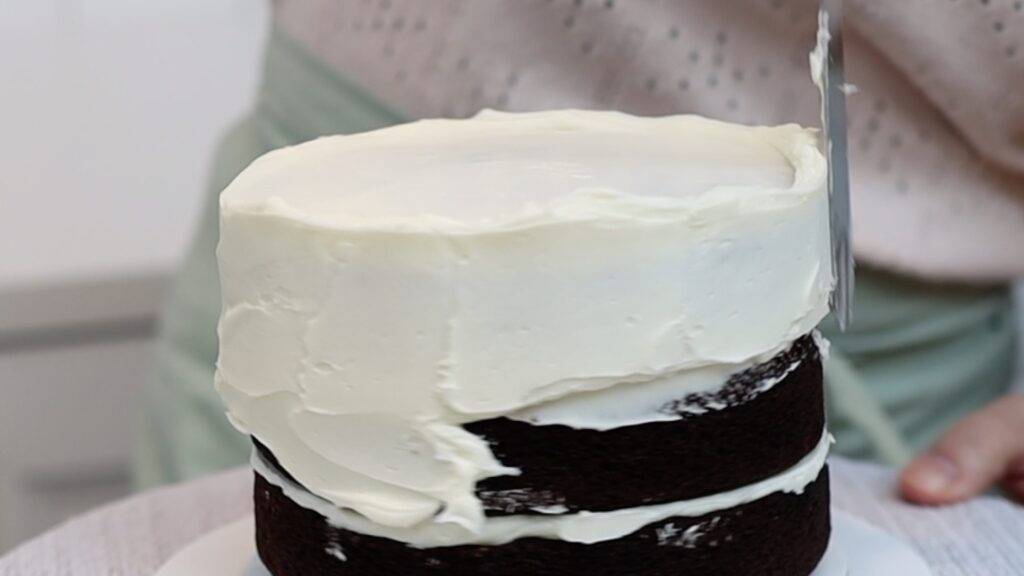
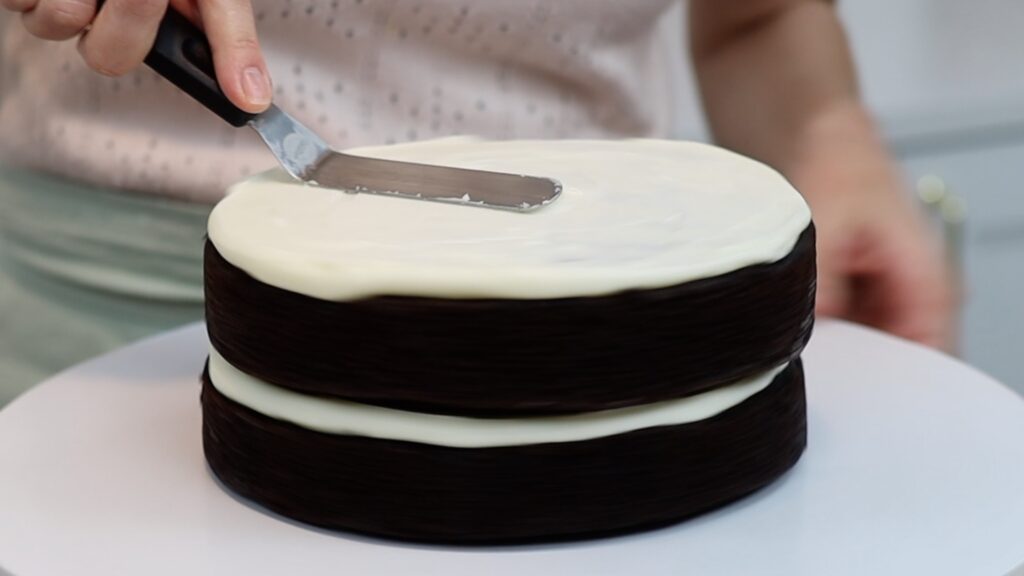
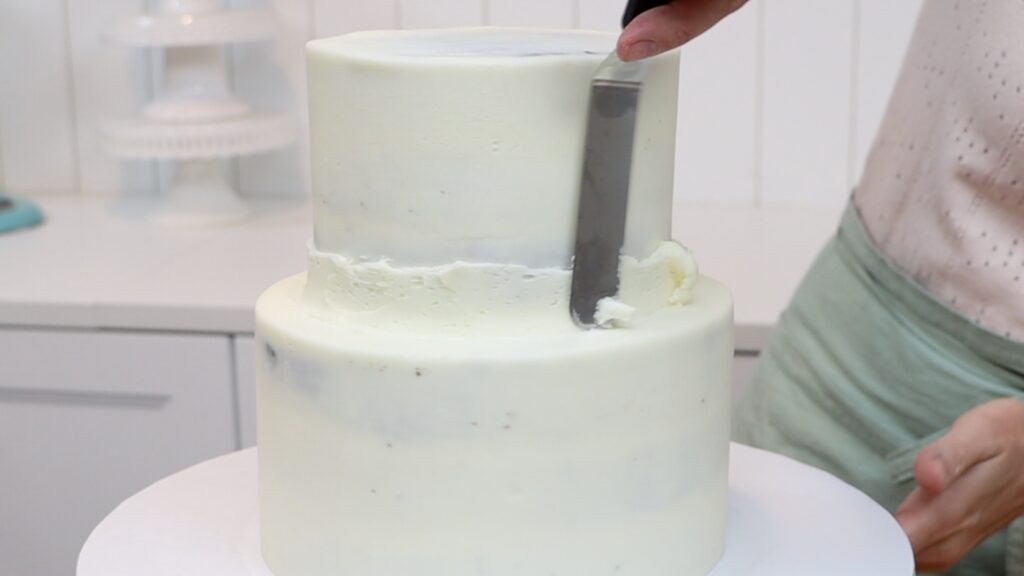
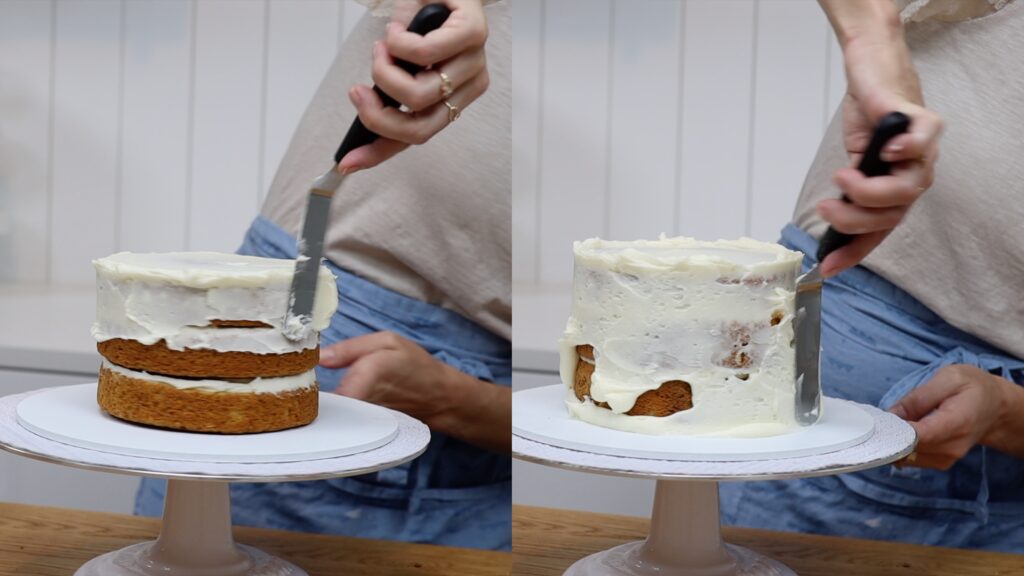
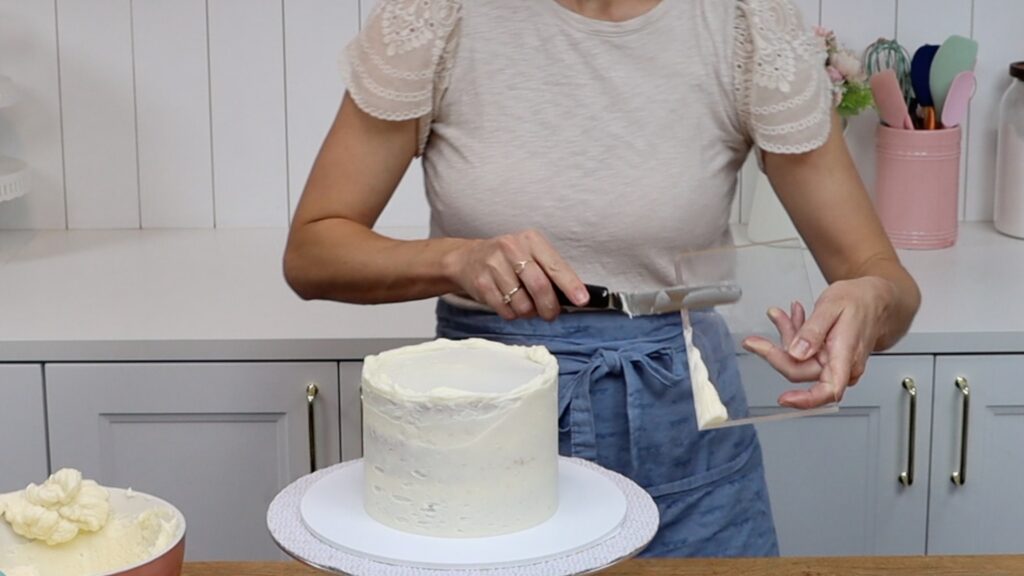
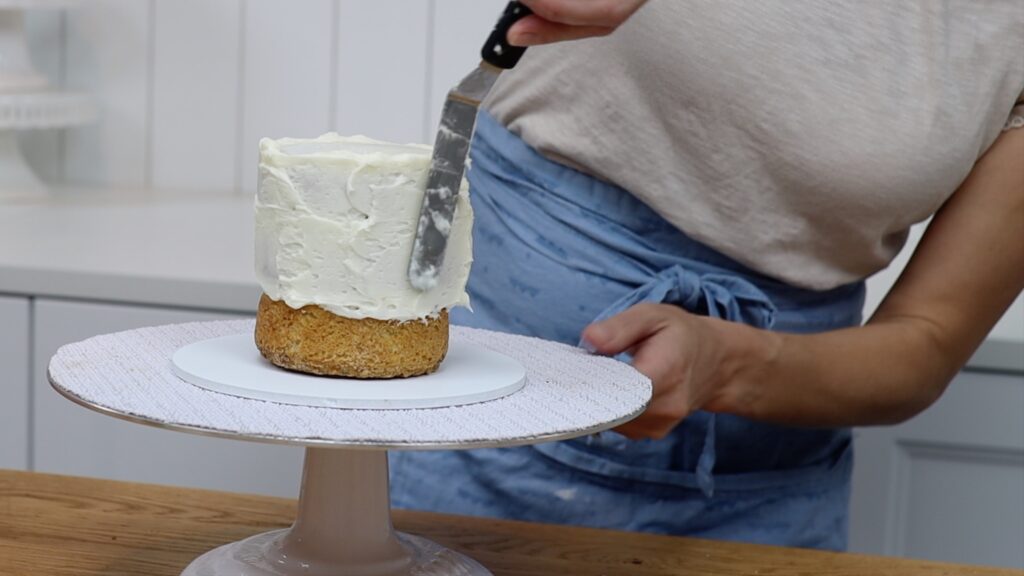
Cover the cake in a thin layer of frosting. This is called a crumb coat because it’s meant to catch any crumbs that come off the cake. I like to start with the top, spooning on a generous amount of buttercream. Spreading it all over the top of the cake. Push it out beyond the edges of the cake to prevent a domed top later. Hold your offset spatula at a 45 degree angle and spin the cake to smooth and level the frosting. The excess frosting will build up on your offset spatula until you swipe it off and away from the cake. Then scrape that frosting into a bowl. Use a new bowl so that you’re not putting this frosting into your main bowl of frosting, since this frosting might have crumbs of cake in it. You don’t want to get those into the rest of your frosting that you’ll use for the final layer of frosting later.
Move down to the sides of the cake, spreading from side to side to cover the whole cake with frosting. Make sure that the frosting sticks up above the top edge of the cake, which will prevent drooping edges.
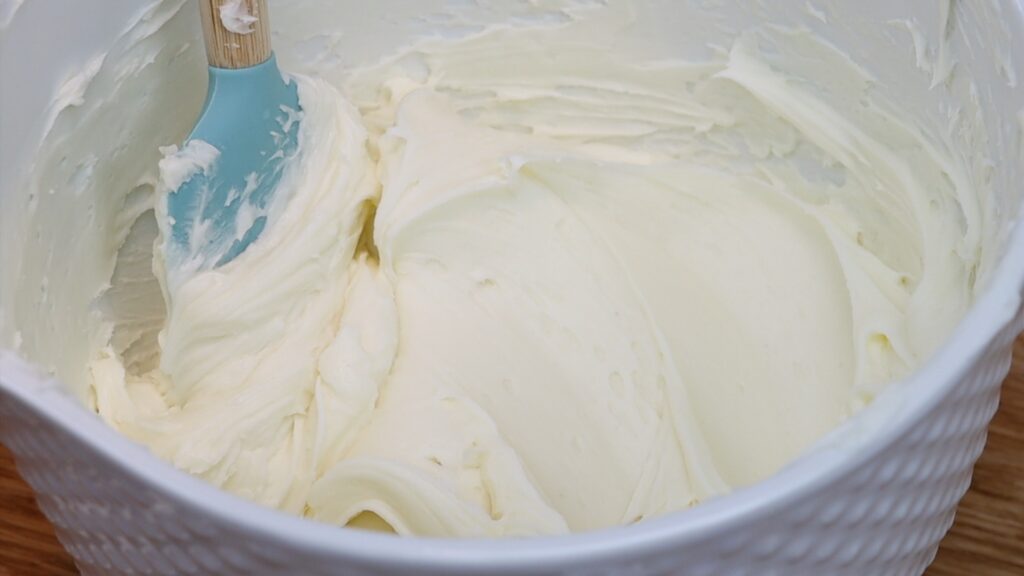
Frosting a cake is definitely easier to do when your cake layers are cold compared to room temperature cake layers. Cold layers are firm so the cake won’t wobble when you apply pressure to it as you frost it. Also, cold layers are less crumbly so you won’t pull off pieces of cake as you spread your sticky frosting. I'm using my 4 Minute Buttercream.
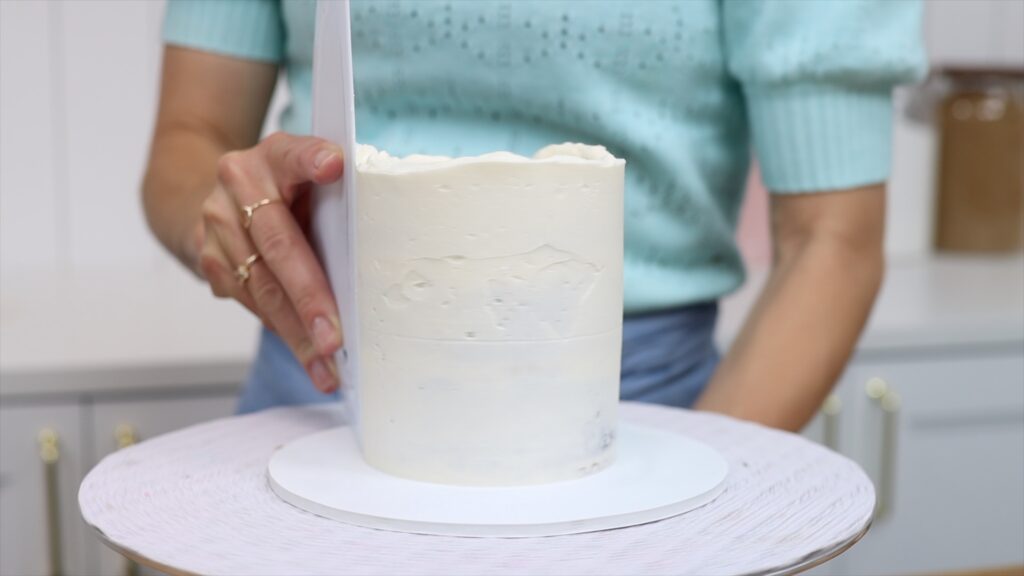
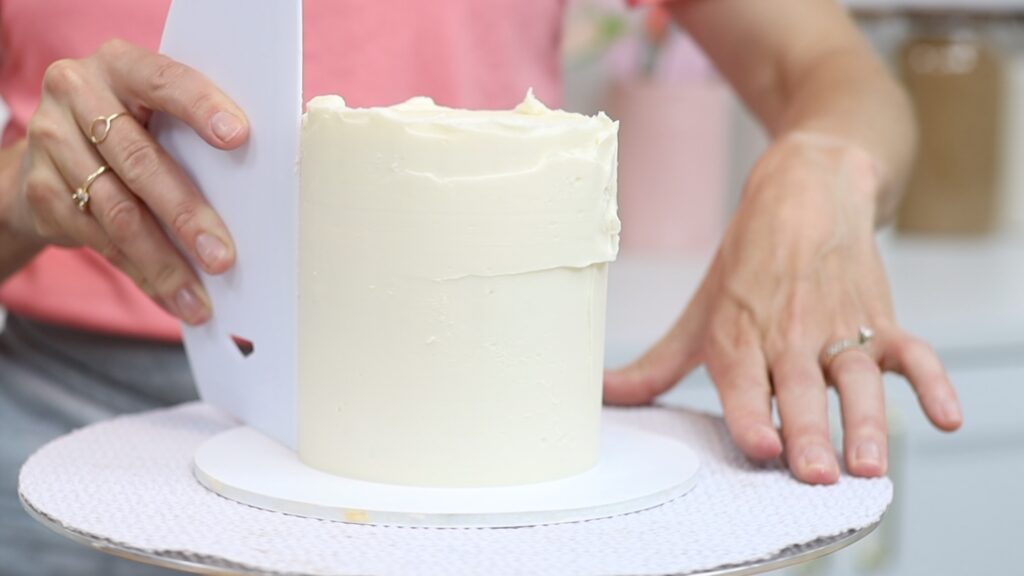
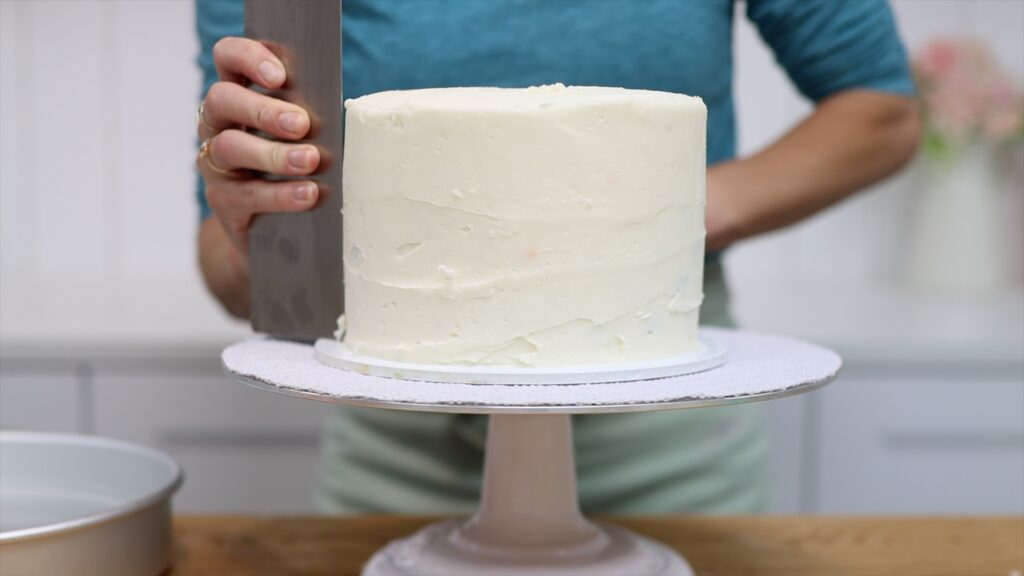
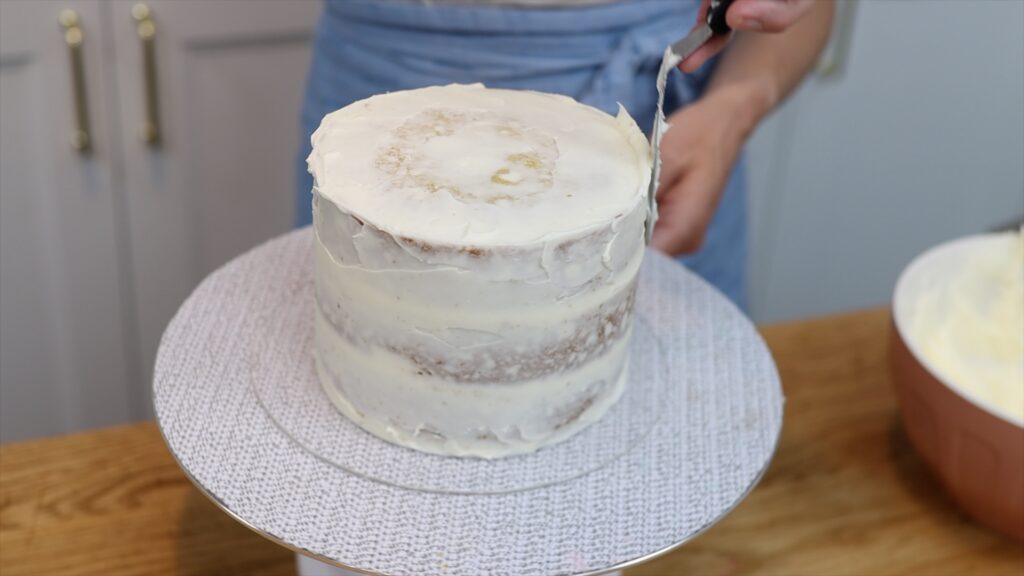
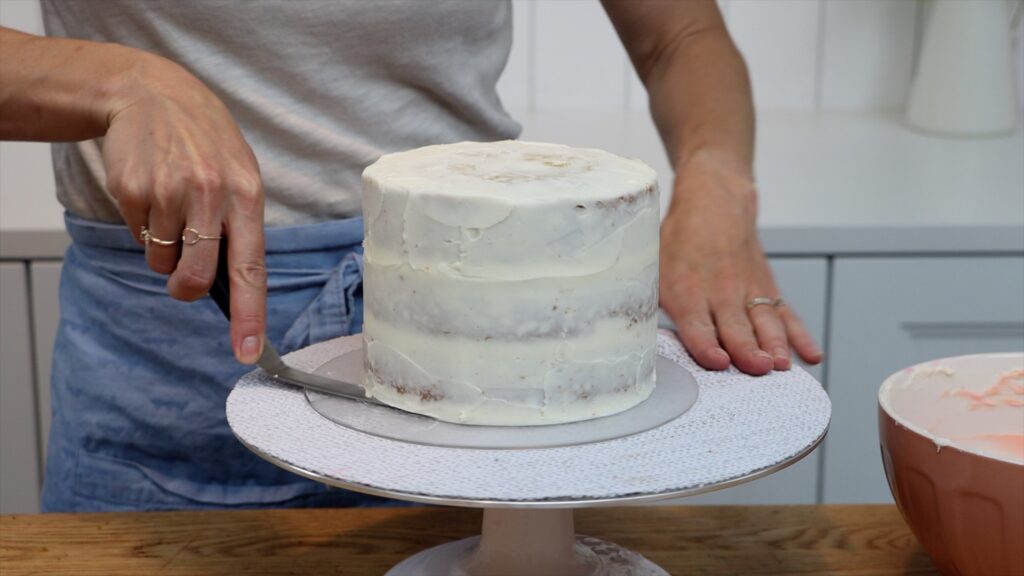
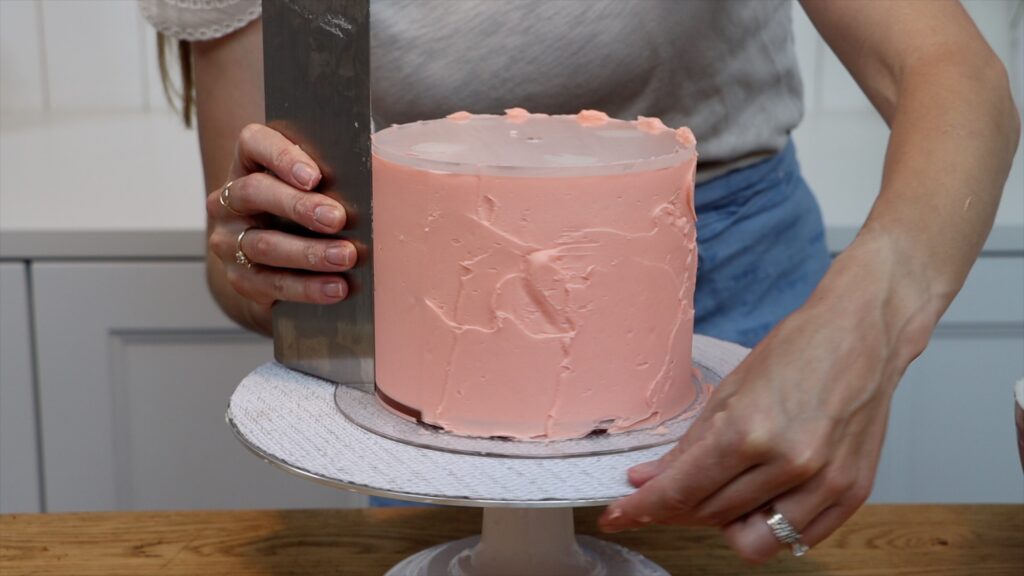
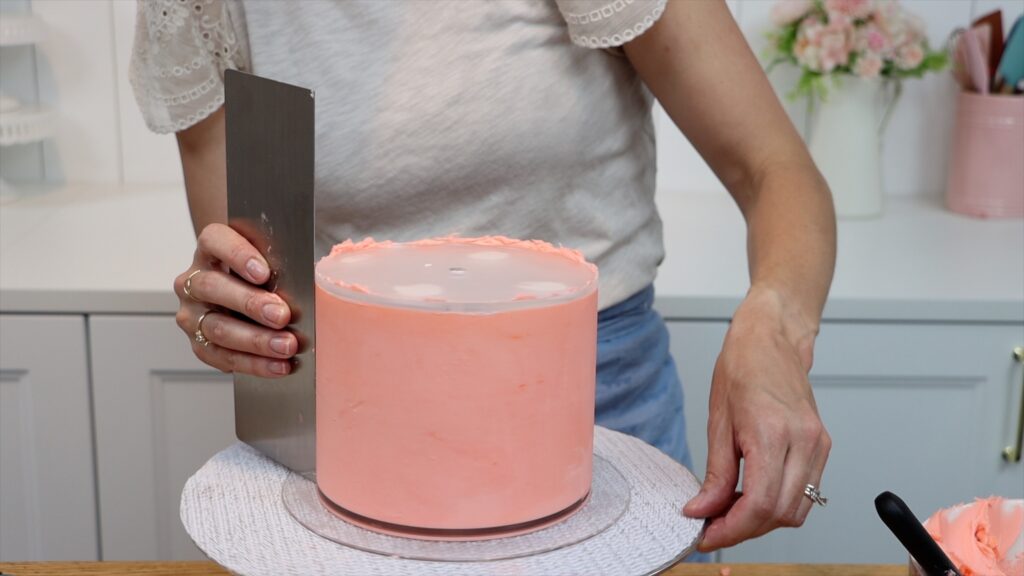
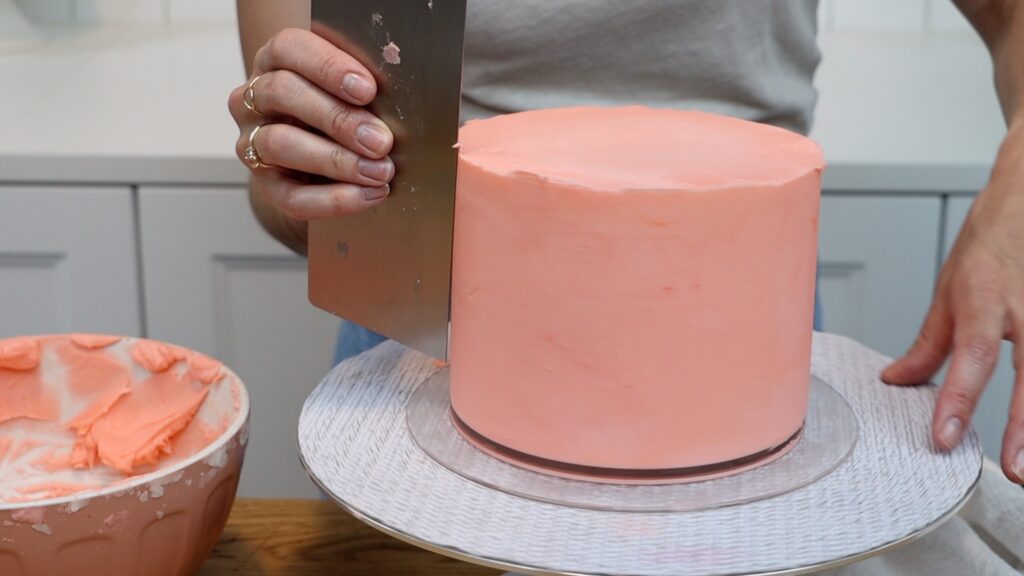
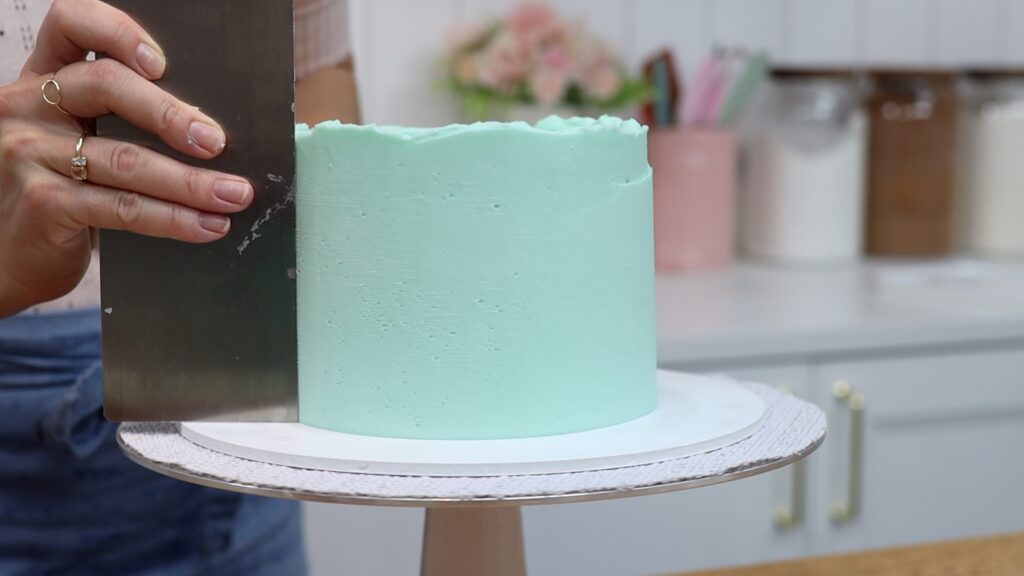
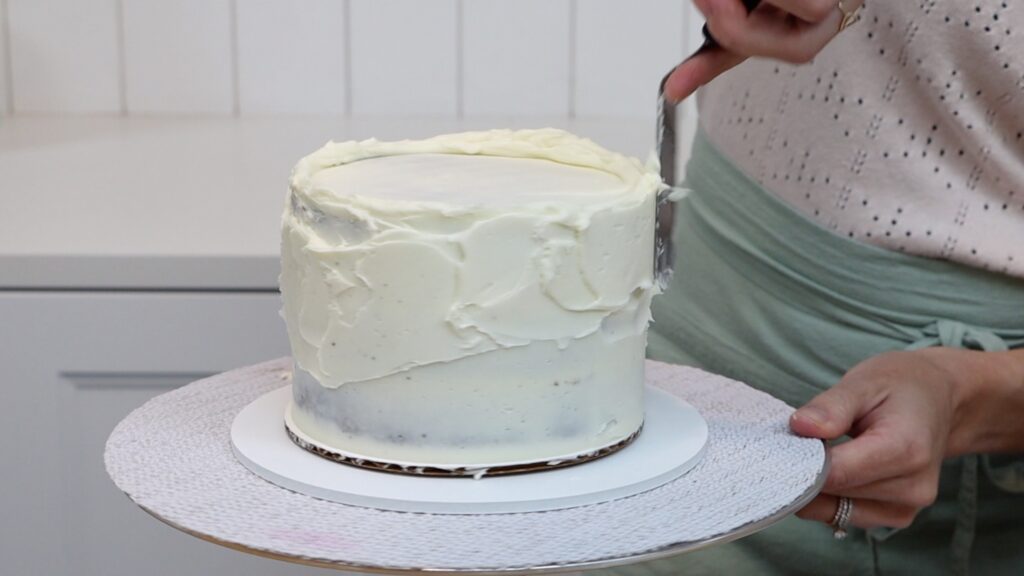
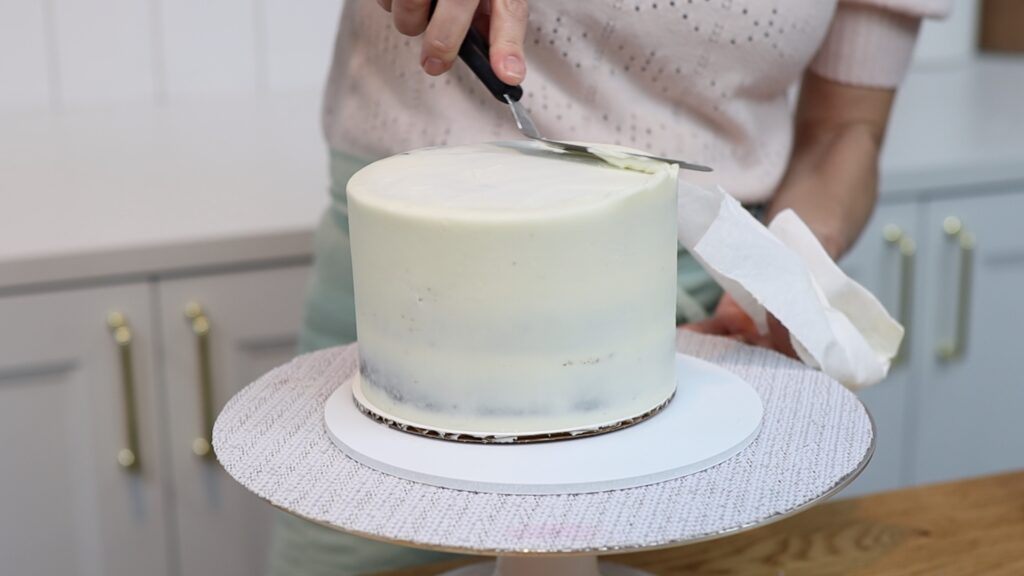
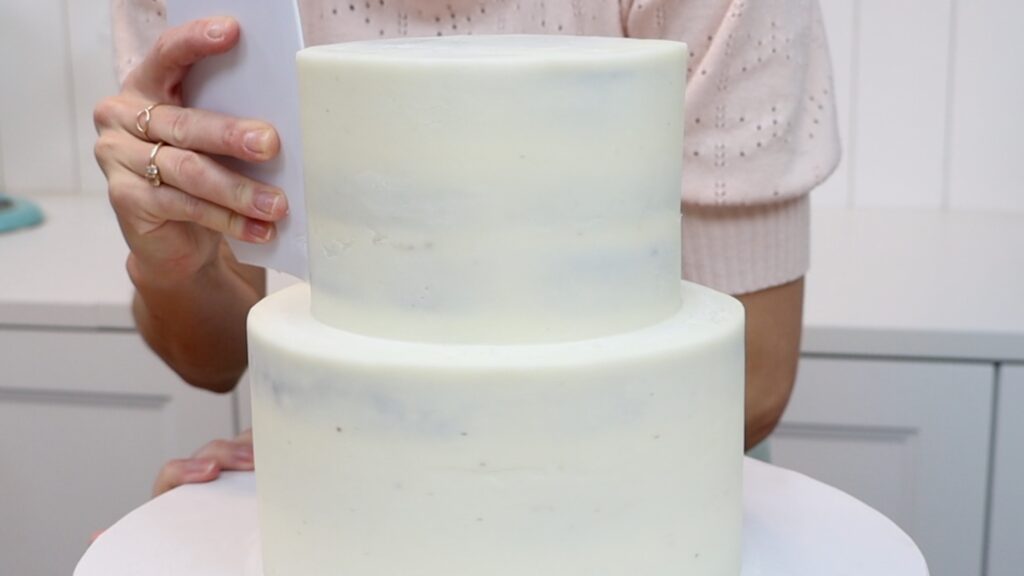
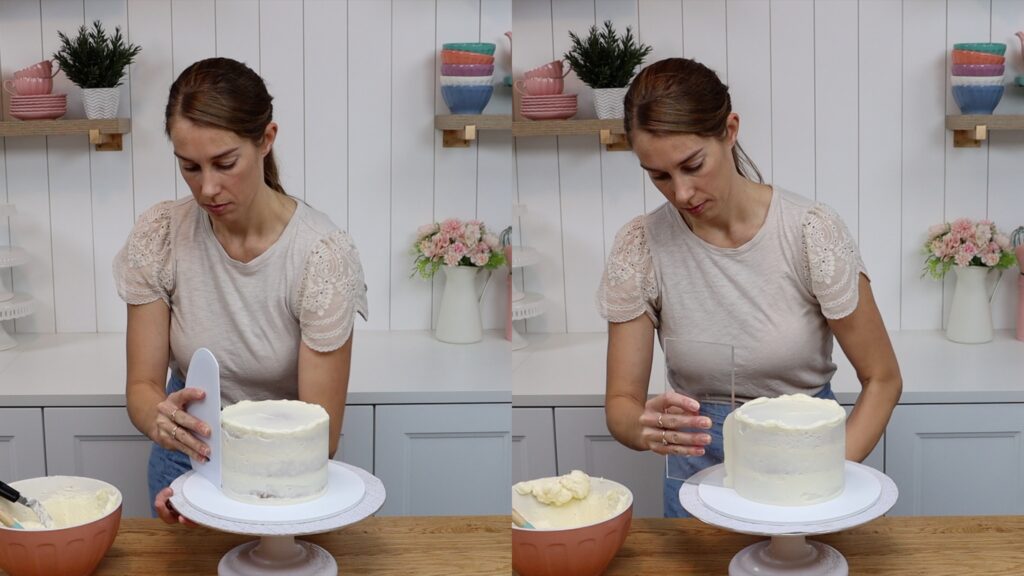
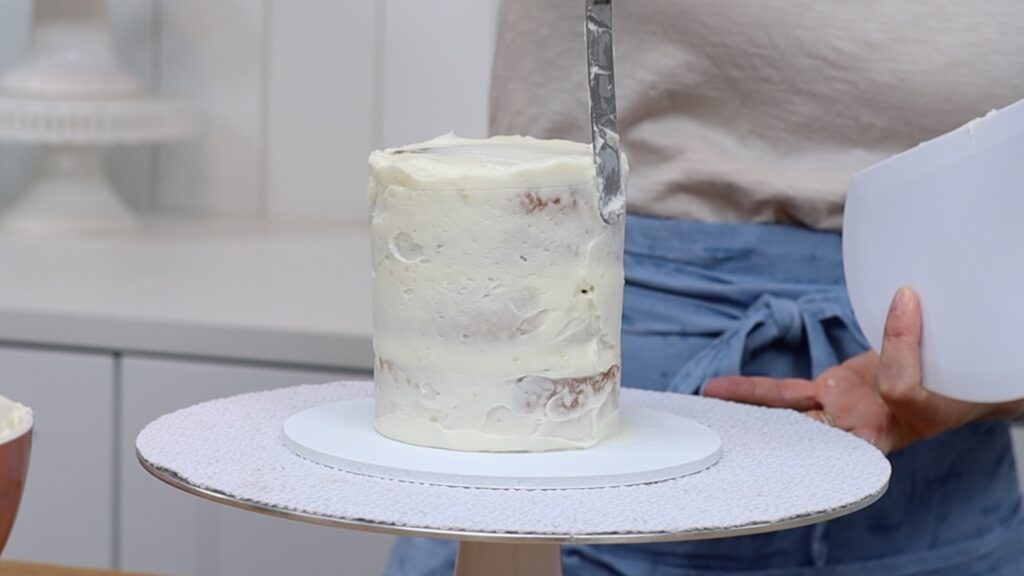
Scrape around the cake a few times with a straight edged cake comb or frosting smoother. The crumb coat doesn’t have to be perfectly smooth because it's going to be covered up but make sure it gives the cake a neat outline. Focus on getting straight sides and a level top and, very importantly, make sure there’s no exposed cake. You need this layer of frosting to cover the whole cake so that it traps every crumb that might come off the cake.
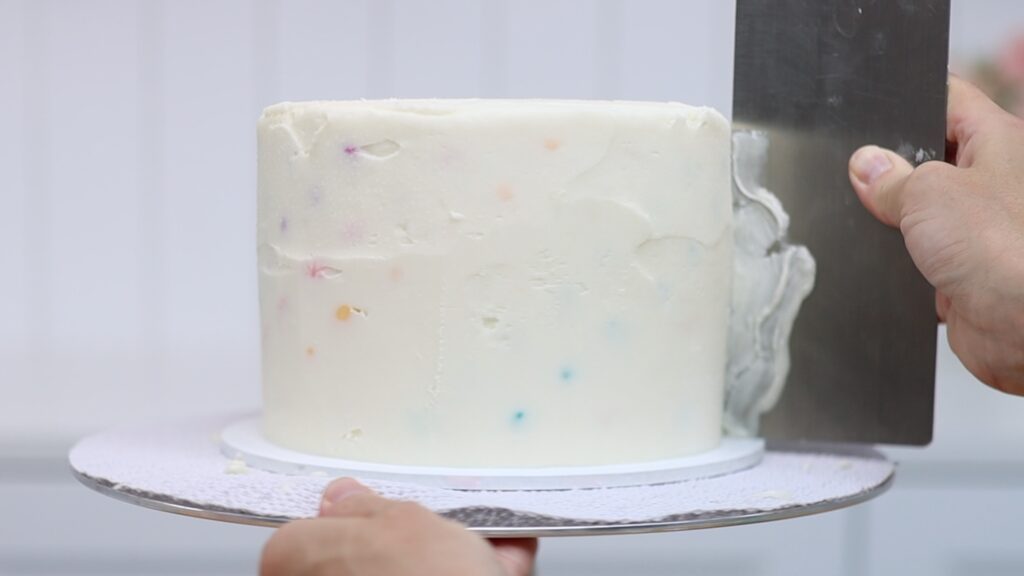
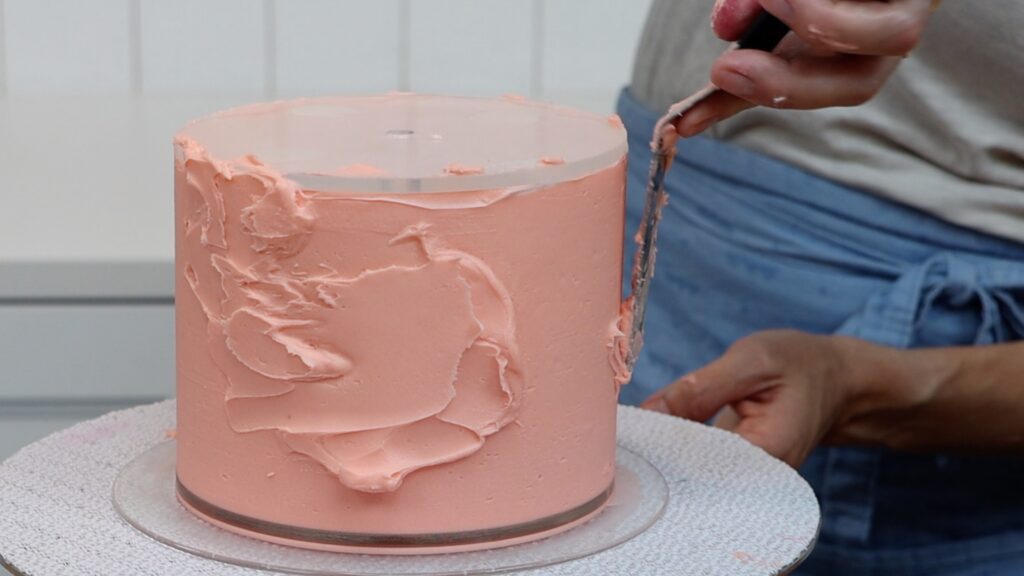
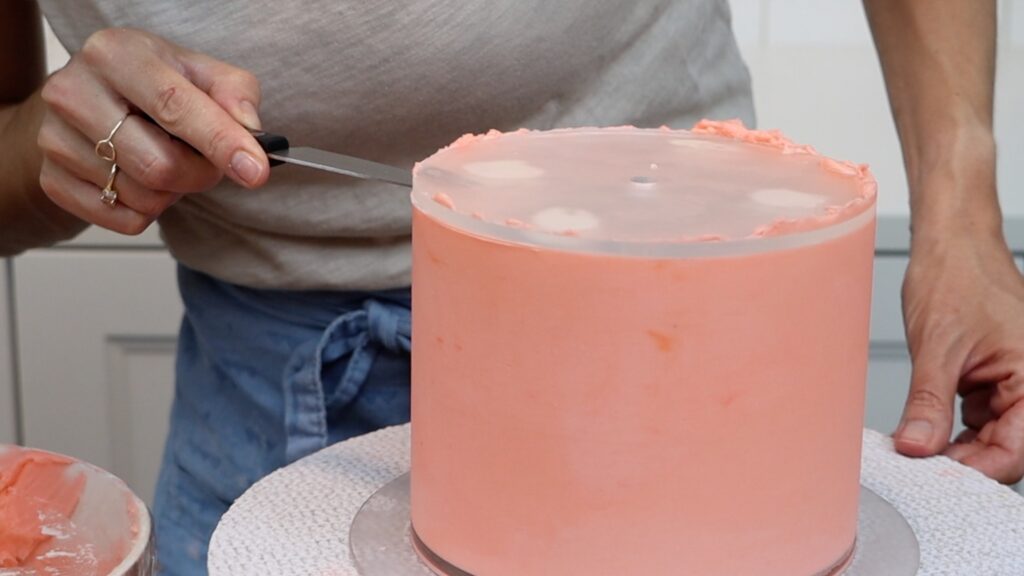
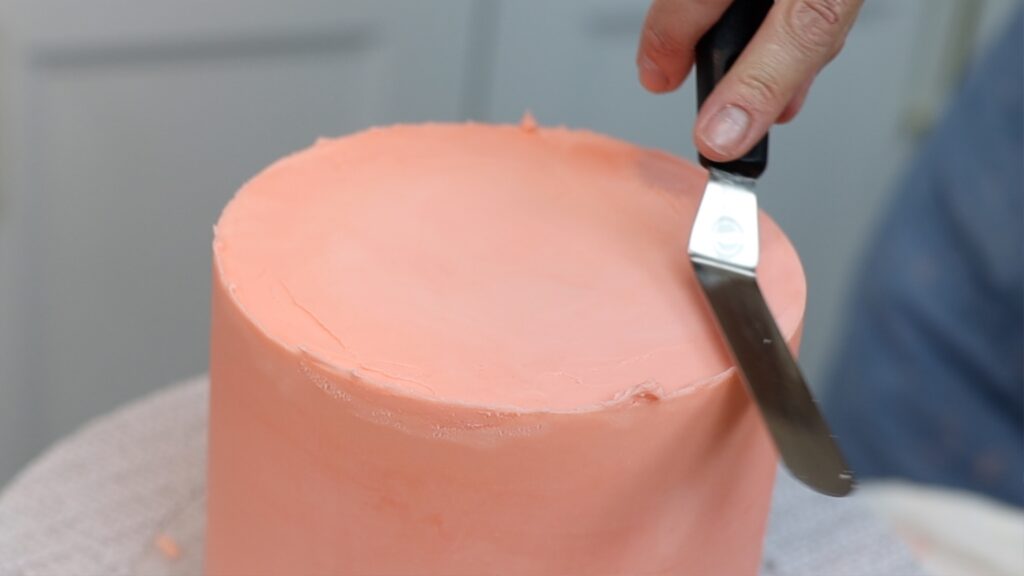
Use your offset spatula to scrape the build up of frosting from your cake comb into the extra bowl you’re using for this potentially crumbly frosting. Then scoop some back up and use it to fill in any indents in the frosted cake. These happen where the frosting isn’t as thick as on the rest of the cake. Scrape around the cake again with your cake comb until the cake is covered with a thin layer of frosting. For the top edge, push sideways with your offset spatula to take off the excess frosting that’s sticking up. Push straight across without angling your spatula upwards or downwards. This will leave a neat, sharp angle around the top of the cake.
Put this cake on its cake drum or cake board in the fridge while you assemble the other tiers.
Cover the other cakes with a crumb coat
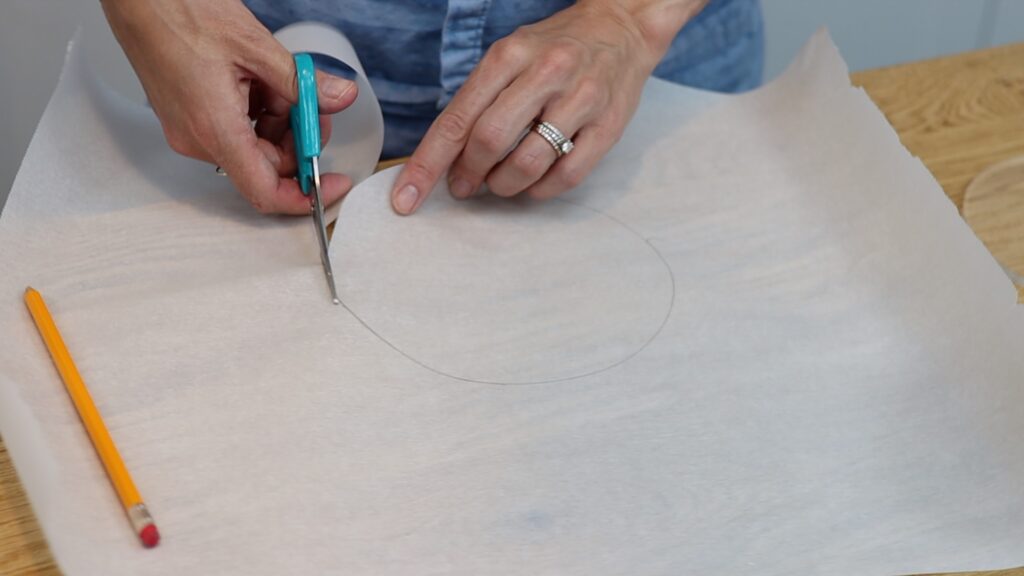
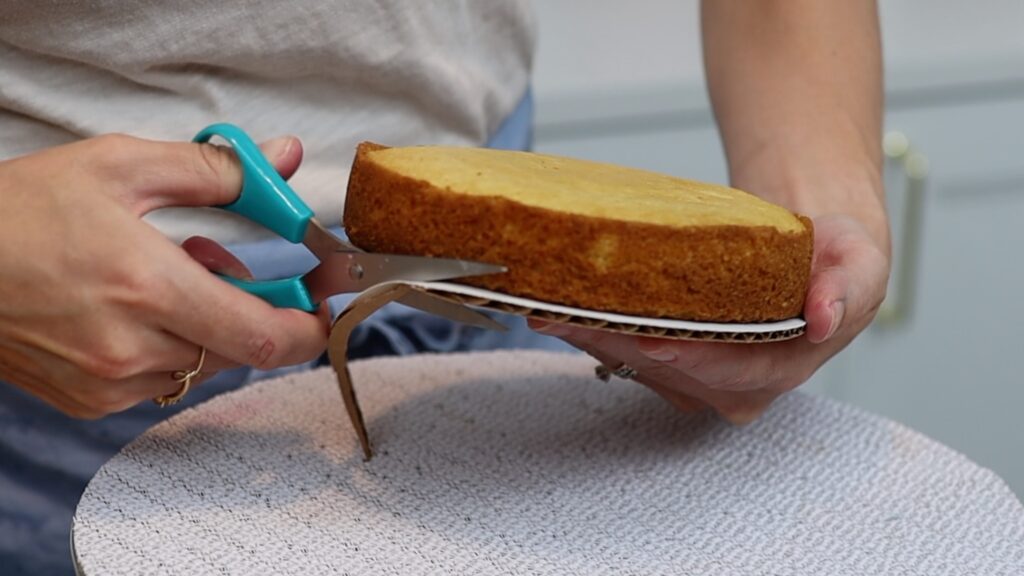
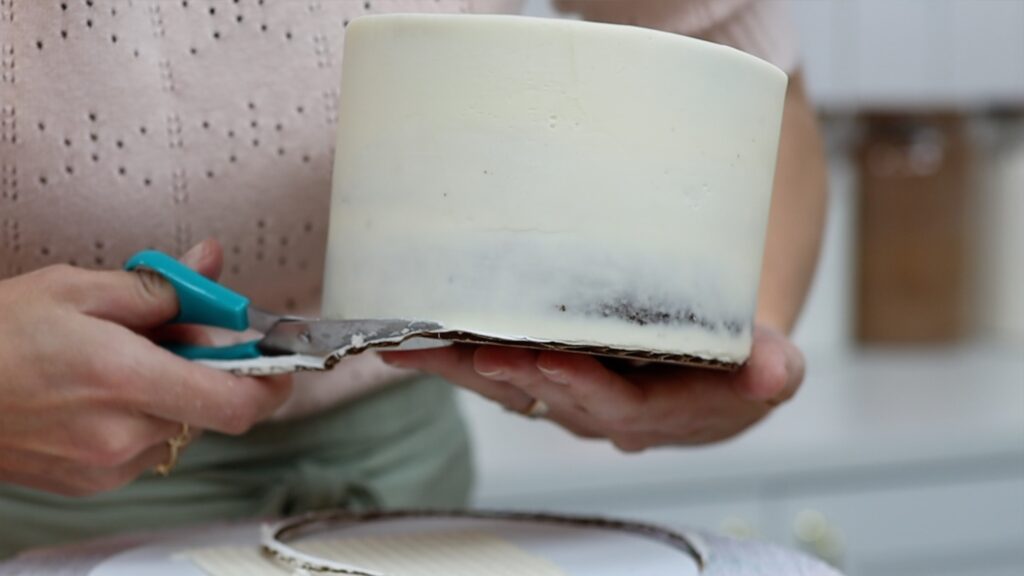
For the next tier of the cake, choose a cake board that’s the same size as the cake. If you don't have one, choose one as close to that size as possible. If it's more than 1/2 an inch bigger you'll need to trim the board with scissors. This is a 6 inch cake on a 6 inch board:
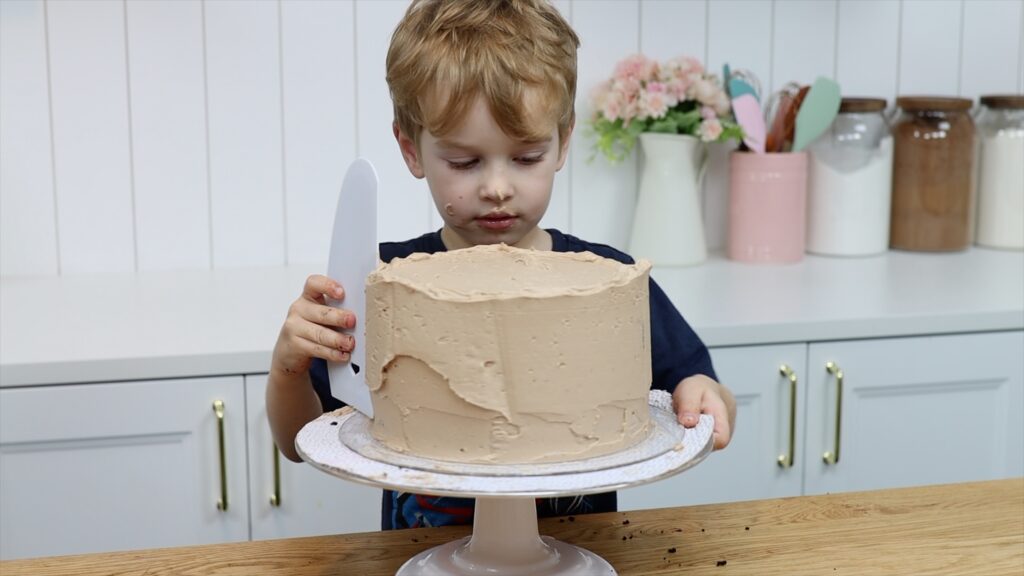
Attach the first layer to the board with a dot of buttercream and add your filling. Repeat to assemble the cake. Cover this cake in a crumb coat, which is typically the same colour as your final layer of frosting. Alternatively, you might choose to use something different if you want to incorporate another flavour. I'm doing that here, using chocolate buttercream for the crumb cot and then I'll use vanilla for the final coat. Put this cake in the fridge to chill and repeat the process with the rest of your cakes.
Once you know the steps of how to make a tier cake you can create as many tiers as you like. Mine will be three tiers with this little 4 inch cake at the top. For every tier except the bottom, the cake needs to be on a board the same size as the cake. I didn't have one small enough for this cake so I trimmed a cardboard cake board. The board needs to be the same size as the cake so that it will be invisible after frosting, stacking and decorating the tier cake.
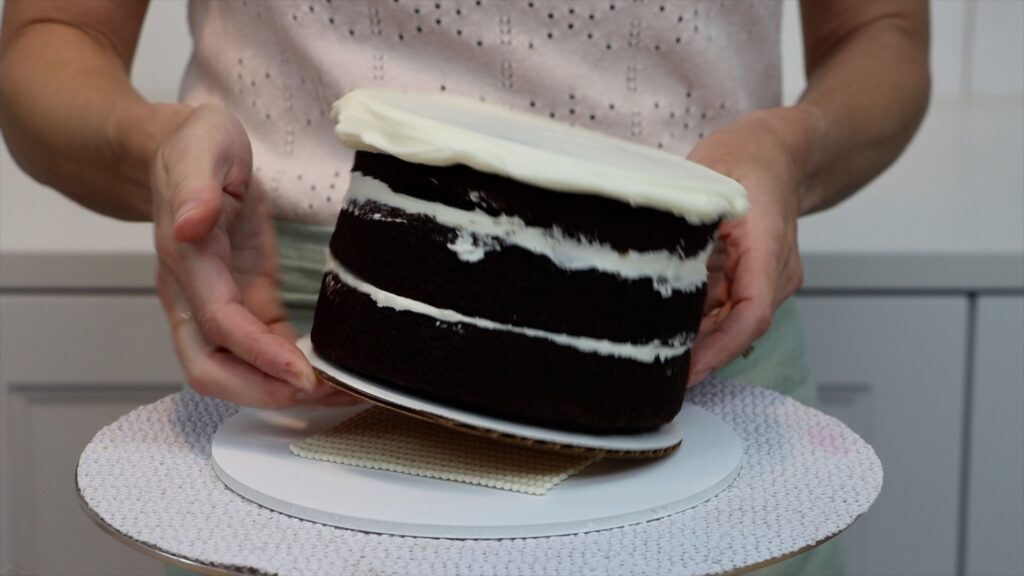
To frost a cake on a board the same size as the cake, use a larger board as well. Put a non-slip mat or masking tape on the larger cake board, placing the cake (on its small board) on top. This way, the frosting won’t get all over your turntable because the large cake board will catch it. It’s also easier to move the cake around now because you have something to hold onto.
I mentioned earlier that you don’t have to assemble your bottom tier on a cake drum. If you prefer, assemble it on a board the same size as the cake, like I’m doing for this cake. Later you can attach that board to the cake board with a ring or masking tape.
To set the crumb coat, leave the cake in the fridge for about 30 minutes.
Frost each cake for your tier cake
Chilling the crumb coat makes it firm so it doesn't mix with this final layer of frosting. This means the colours will stay separate instead of blending. Also, any crumbs within the crumb coat frosting won’t get into this final layer of frosting. This ensure that there are no crumbs visible on the final decorated cake.
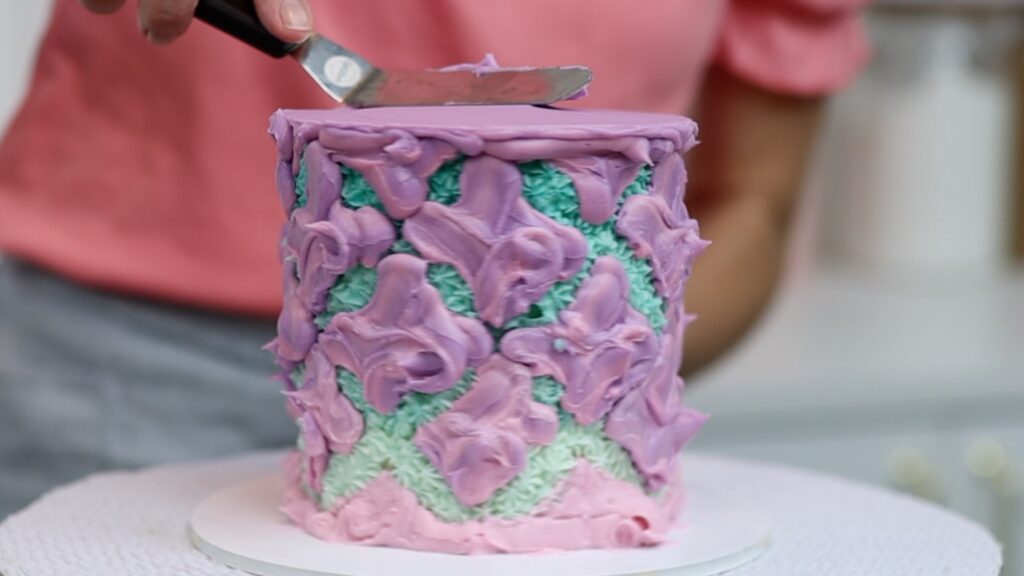
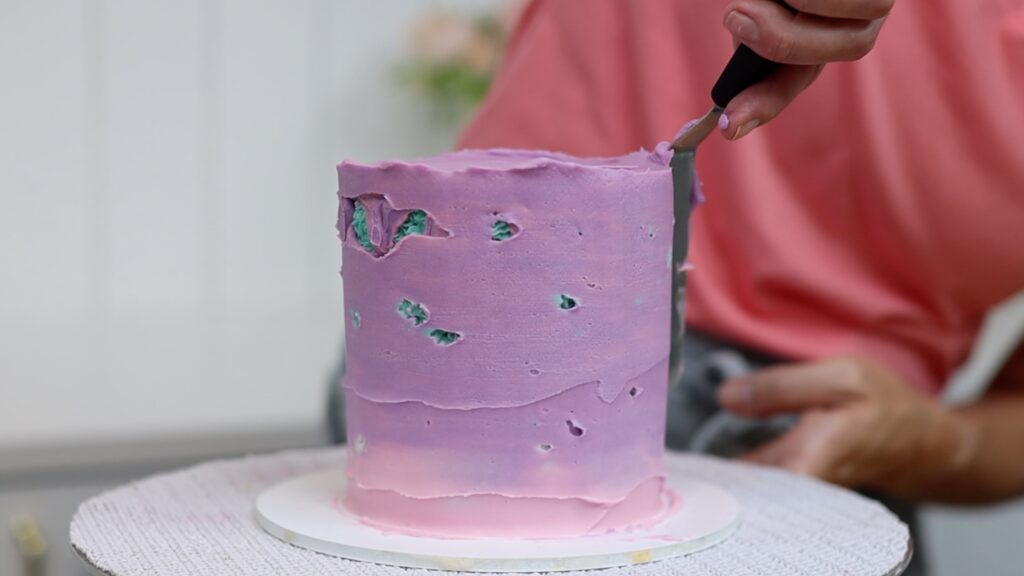
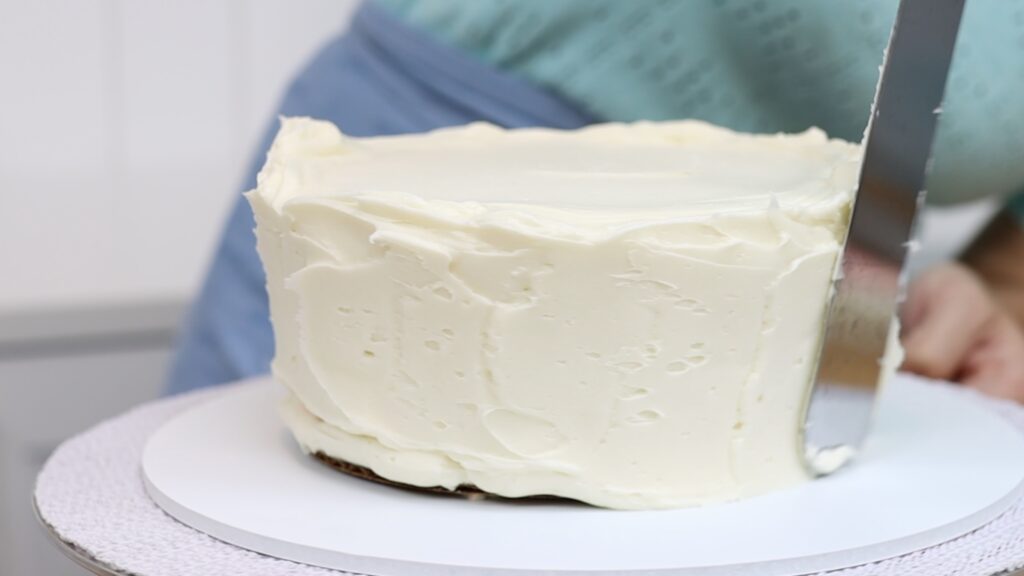
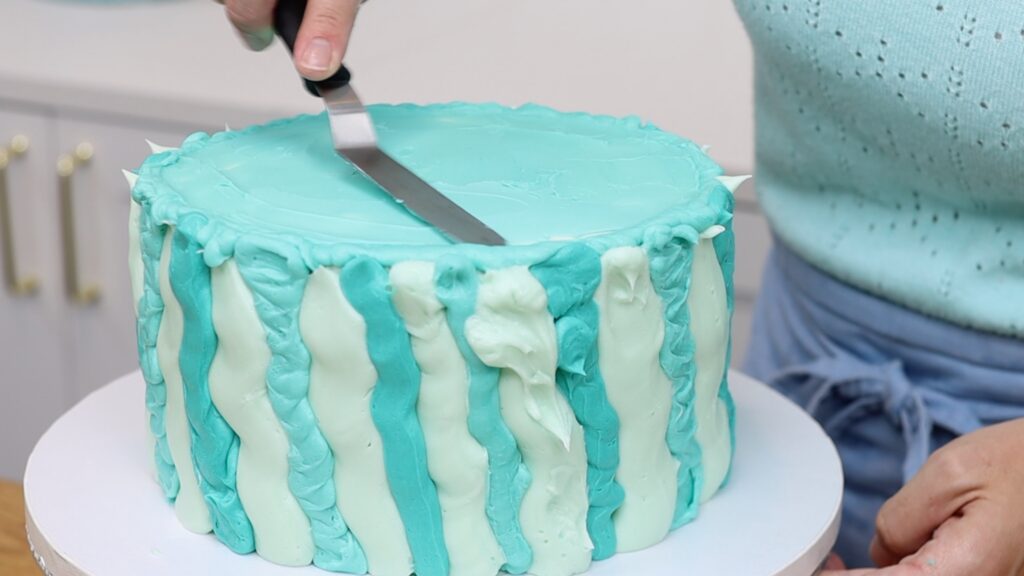
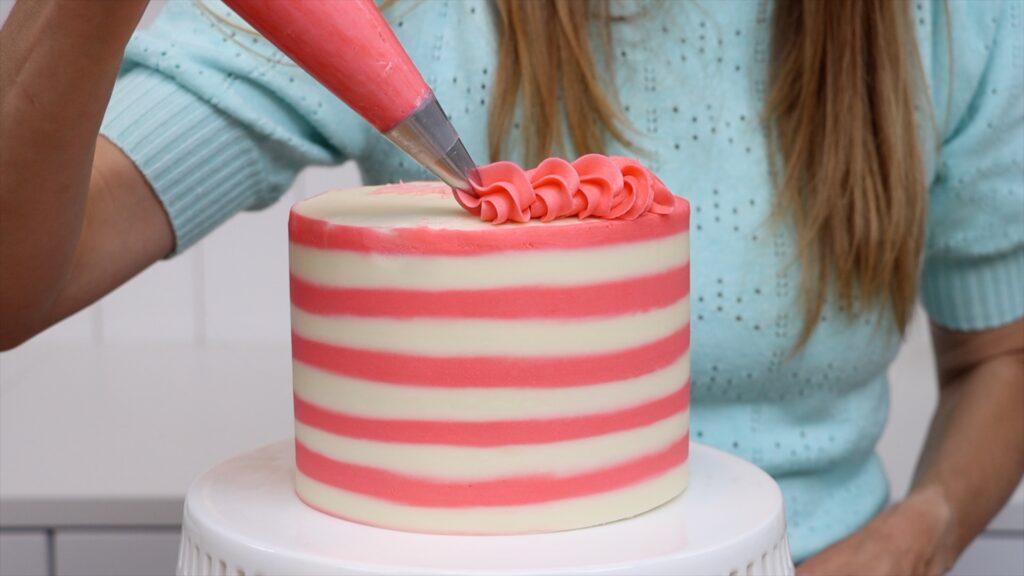
Frost your cakes but I don’t recommend adding any decorations yet, like piped borders or texture or wafer paper. When you stack the tiers, these decorations might get damaged. It’s best to add them right at the end, when the cake is tier. I’m using my facelift frosting technique on all of these cakes.
Note that your cakes don’t all have to be the same height! The pink cake is about 5 inches tall but the white cake is only about 3 inches tall. Sometimes it’s nice to vary the heights of each cake. You’ll see at the end that this design is so dramatic and colourful that the different heights really adds to the effect. For a more traditional design you might choose to use the same height for each cake. The conversation table for my Perfect Chocolate Cake recipe has measurements for both standard and tall cakes. Whatever width your cakes are, the heights will be the same, either standard or tall.
It’s fine if you can see the cake board at the bottom of the cake, like you can on these. I’ll show you how to cover that up during the stacking process. When you finish each cake, put it back into the fridge to chill and set the frosting.
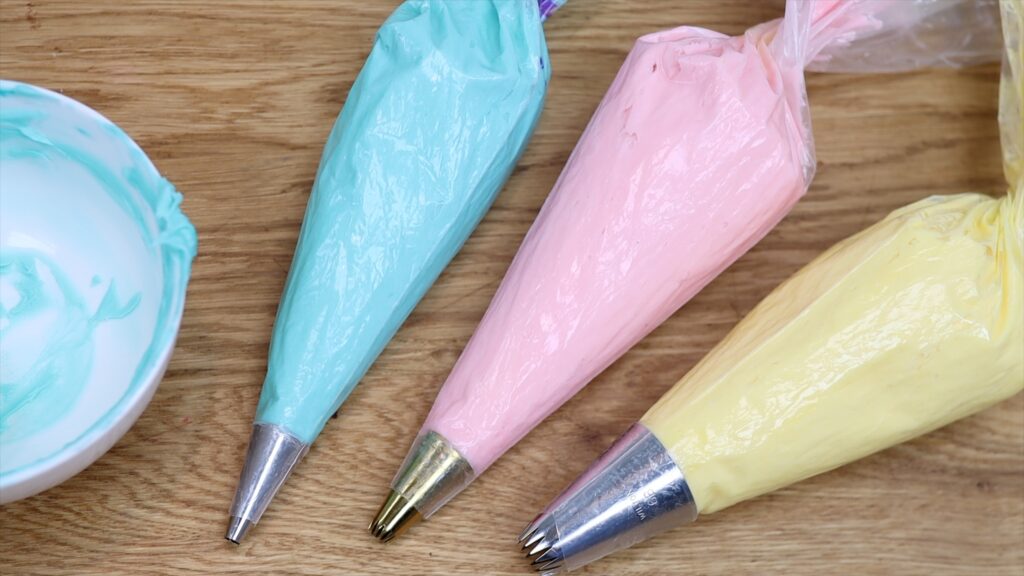
I’m using lots of colours of buttercream for my cake but you might be using just one. However many colours you’re using, it’s important to save any leftovers for the stacking process. Cover any bowls of leftover buttercream with plastic wrap so the buttercream doesn't dry out. If you’re using piping bags you can leave the leftovers in those. Put the whole bag into a Tupperware or twist the end to keep it tight and wrap the piping tip with plastic wrap. This will prevent the exposed buttercream from drying out and crusting.
Take your time to make the top edge of each cake neat because they'll be very noticeable when the cake is stacked. Sharp angles from the sides onto the top makes the cake look much neater than a rounded top edge. My tutorial on 15 frosting mistakes you’re making and how to fix them will help improve your frosting technique!
Put all of your cakes in the fridge for at least two hours before stacking them.
Prepare to stack your tiers
At this point, your bottom tier should be on a cake drum at least 4 inches wider than the cake. All of the other tiers should be on cake boards the same size as those cakes. It’s fine if the boards are visible for now!
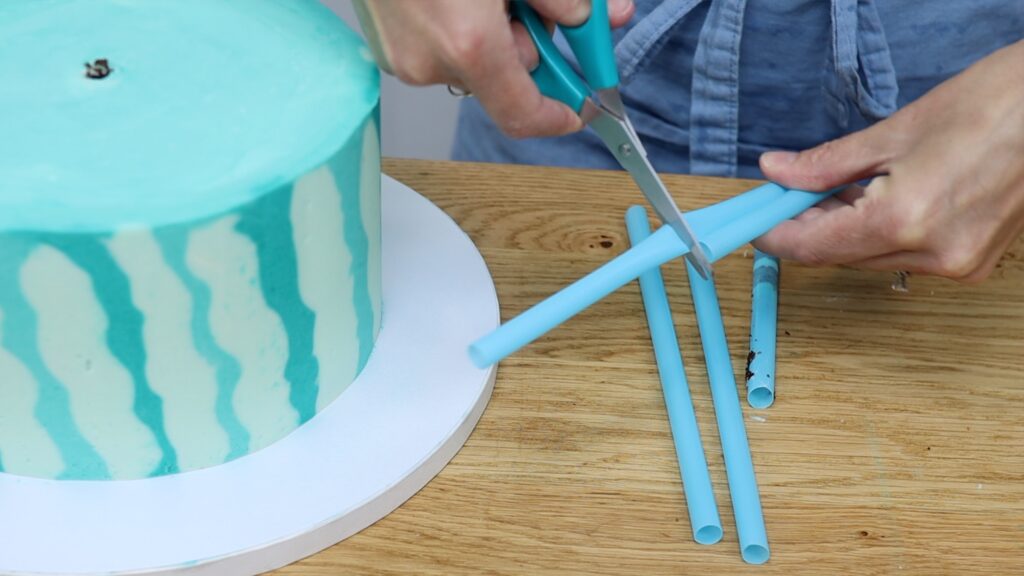
A tier cake needs an internal support structure to hold the upper tiers up. This sounds a bit intimidating but it's much simpler than it seems! All you need are some boba straws and a pair of scissors. Boba straws are thicker and wider and stronger than normal straws. They're much easier to measure and cut to size than wooden dowels.
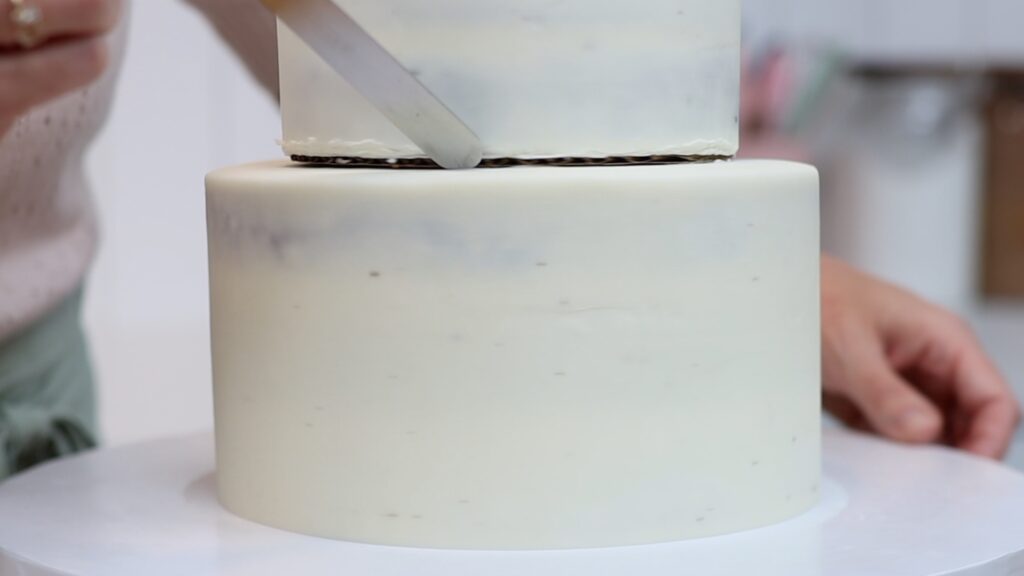
Start with the bottom tier and before adding any supports, you need to know where to place those supports. Take the next tier out of the fridge, the one that will sit on top of it. Separate the cake on its little cake board from the large cake board by slicing in between the boards with an offset spatula.
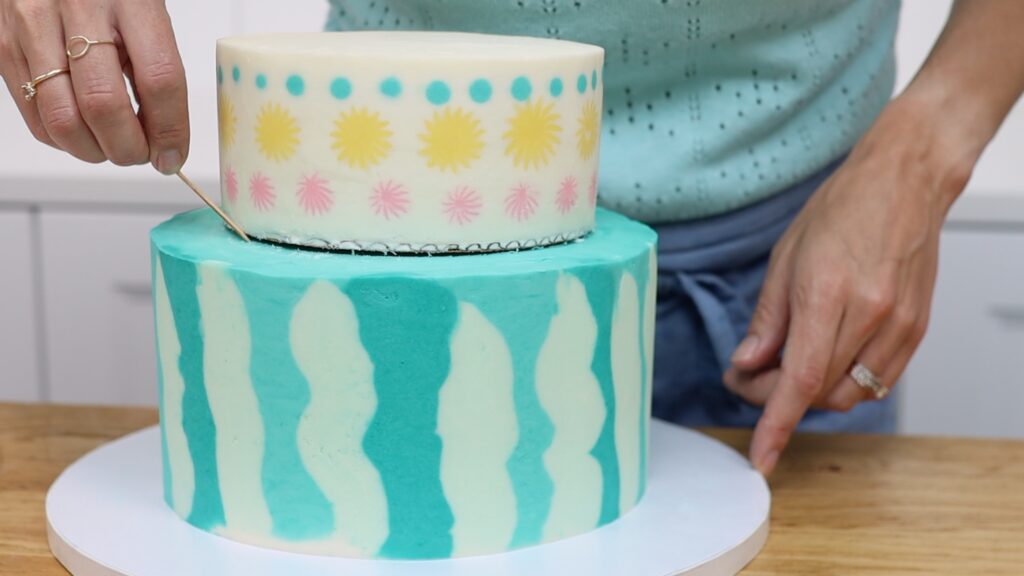
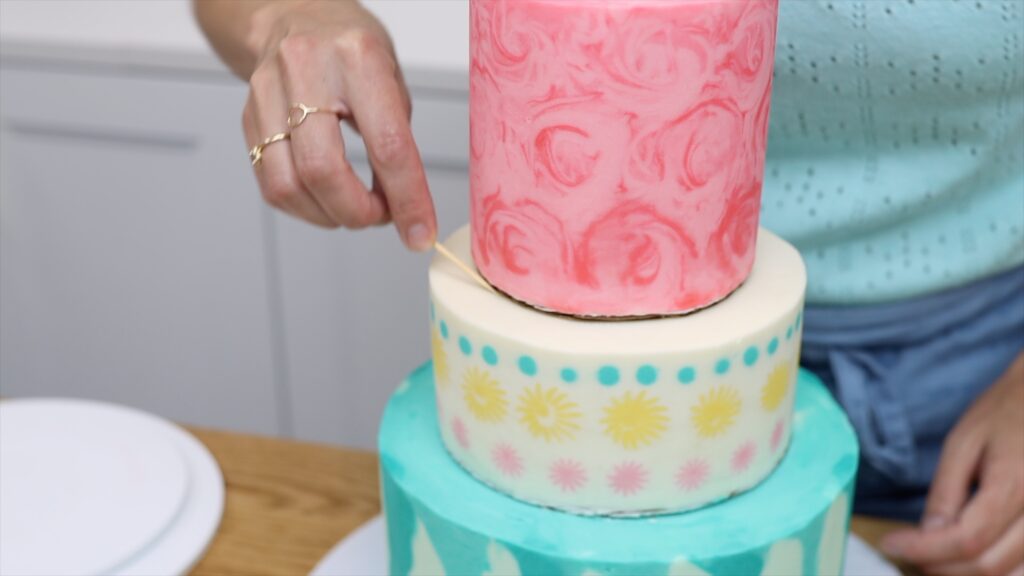
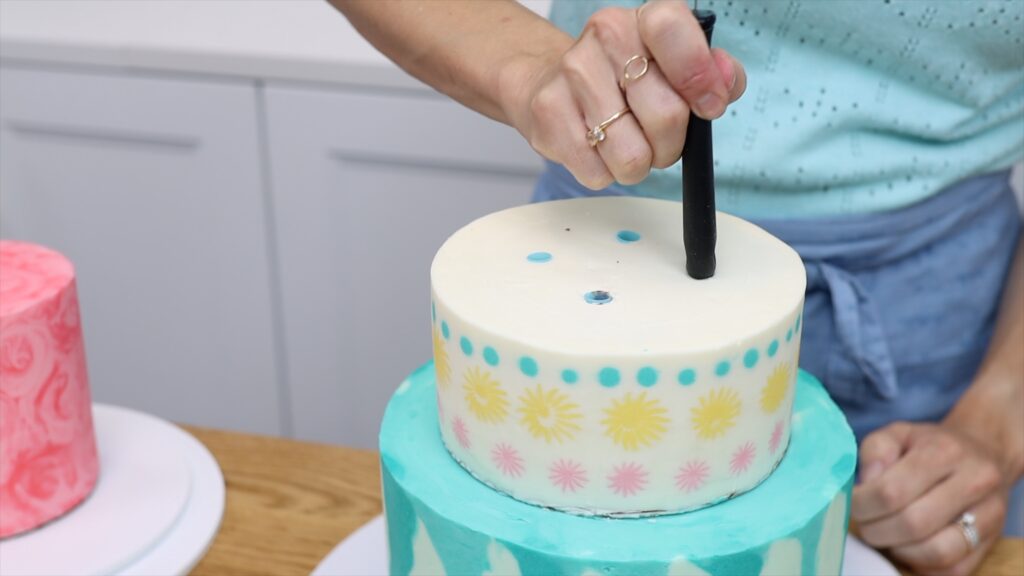
Lift the cake up on its little cake board and place in on the bottom tier. Adjust it to center it and then trace around it with a toothpick or your offset spatula. This line you’re drawing will be your guide or boundary for the supports so that they sit underneath the cake above it.
Take the top cake off and put it back into the fridge so that the frosting stays cold and firm.
How to add support to a tier cake
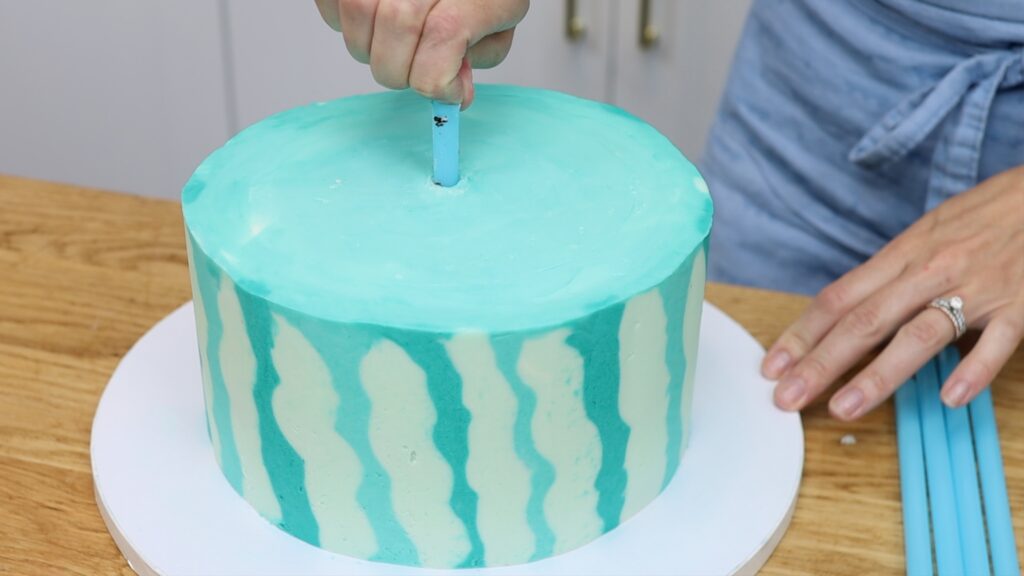
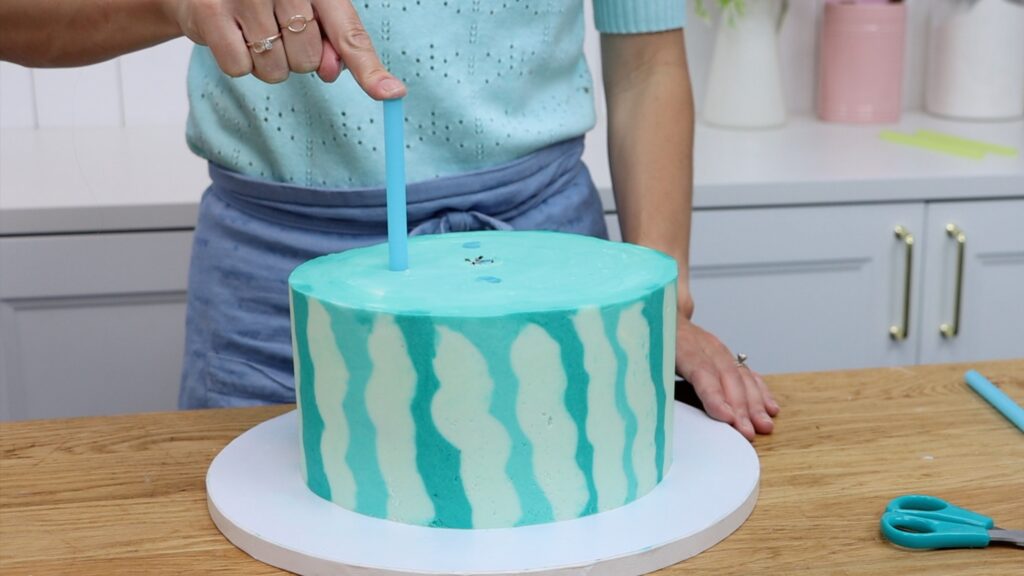
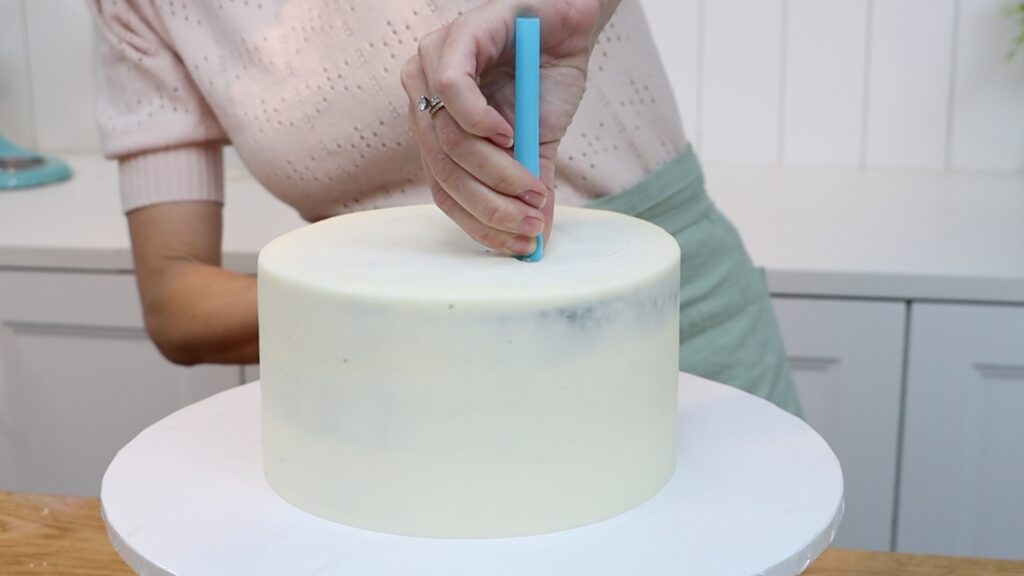
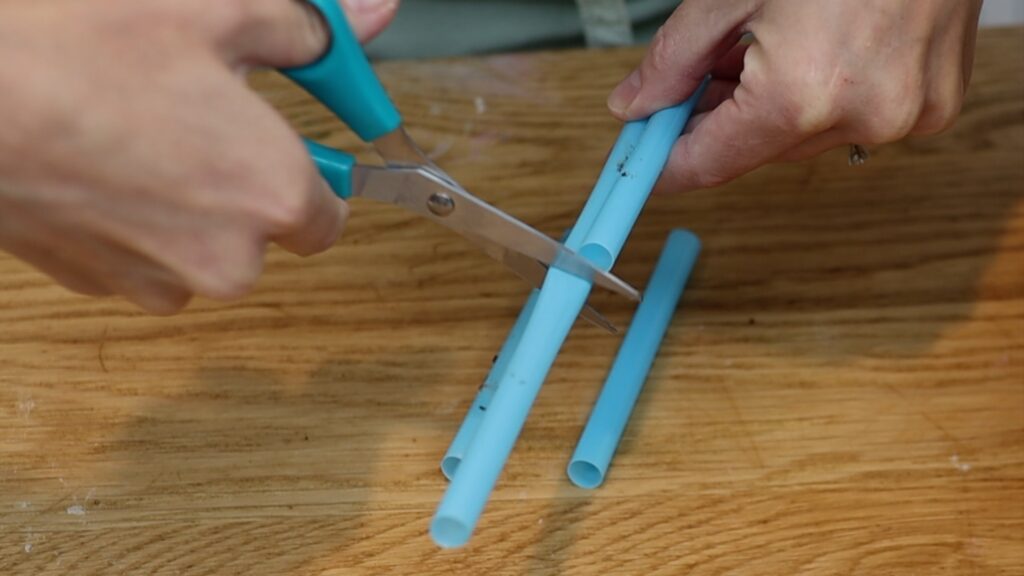
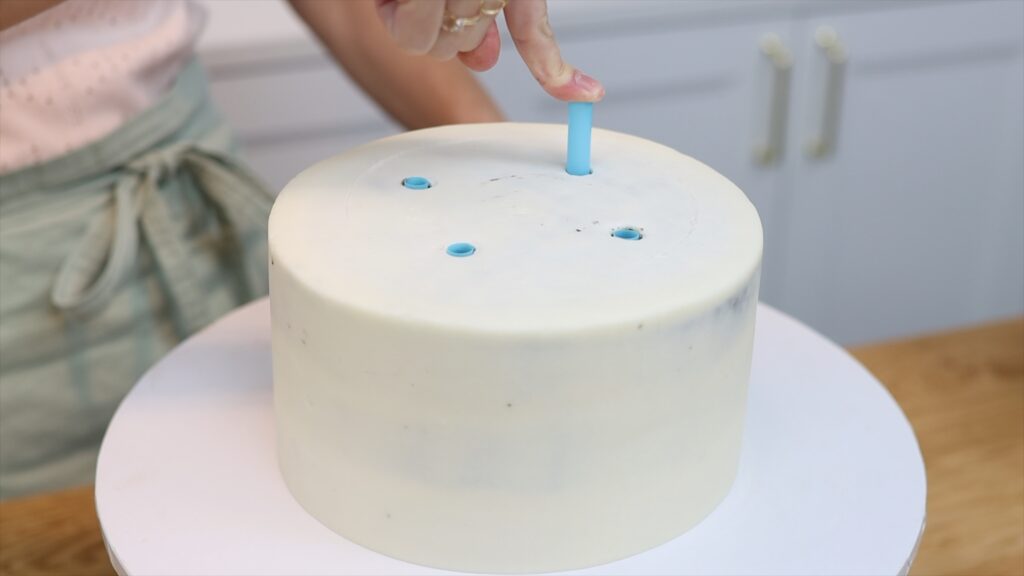
Before seeing how to make a tier cake by stacking the tiers, you need to add support to the cake. For this you’ll need your boba straws. They all need to go within the line you traced around the cake. For cakes 8 inches or larger, I start with one straw in the middle. Push it down until you feel it hit the cake board. Then pinch it level with the top of the cake. Pull it up and cut where you pinched it. Now it’s exactly the same height as the cake.
Use this piece of straw to measure the rest of the straws, cutting them to be the same height.
Poke your first straw back into the first hole. Then place the next one halfway between that first straw and the circle you drew around the top cake. Push it down until you feel it hit the cake board at the bottom. Then place the next straw 2 inches away, also halfway between the middle straw and that outer line. Continue with the rest of the straws.
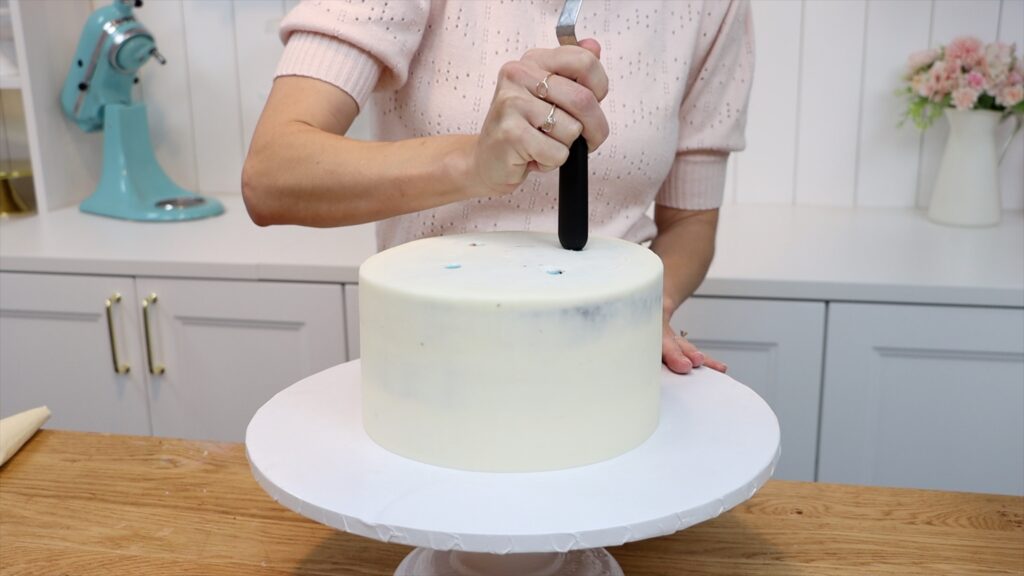
This is an 8 inch cake and I can fit 4 straws if I place them all 2 inches apart from each other, plus the straw in the middle. To push the straws as far down as you can, use the handle of your offset spatula.
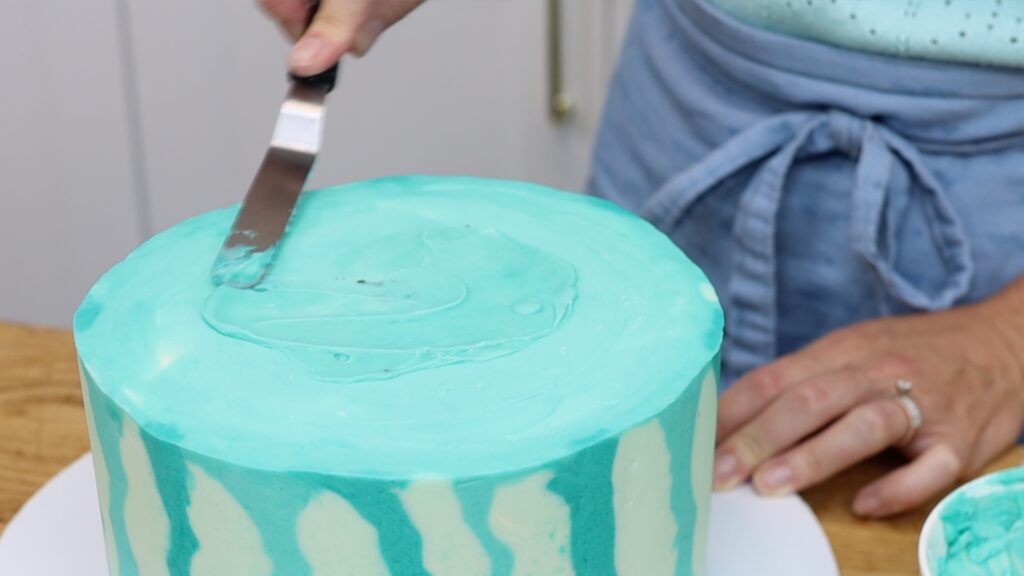
Remember the leftover buttercream you saved from frosting your cakes? Spread some of that onto the top of the cake within the circle you drew. This will act as glue to attach the next tier of cake. It will stop it from sliding around when you move the cake.
How to stack a tier cake
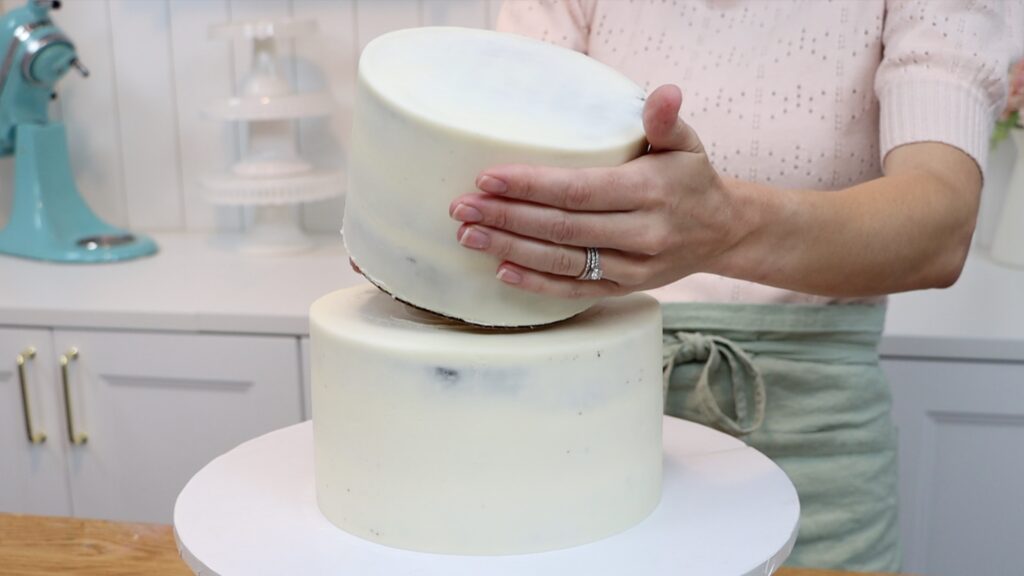
Take your next cake out of the fridge and place it, still on its cake board, onto the bottom tier. Press it down to attach it to the frosting you just spread. Don’t worry that the cake board is still visible because we’ll fix that soon.
If you're making a three tier cake, this second tier of cake needs supports, too. The supports will allow it to hold up the third tier of cake. Place the third tier on top, center it and trace around it. Then put the top cake back in the fridge. Keeping it cold is important so that the frosting stays firm even when you touch it as you’re stacking it.
Follow the same steps to measure and cut and arrange your straws. My top tier is a 4 inch cake and for the straws to be 2 inches apart from each other I can only fit 4 straws into the 6 inch cake below it.
One of the frequently asked questions I get about tier cakes is why I don’t use a central dowel. I don’t find them necessary for a 3 tier cake. The buttercream you spread onto the top of each cake will attach the cake above it. It prevents it from sliding around. Keeping the cake cold until you transport it will make sure it’s stable even with the movements and vibrations of a car. More about that in a moment!
Spread a little bit of leftover frosting to cover the straws. Keep it within the circle you drew so that the next cake will hide this extra frosting. Then place the next cake on top. Center it and push down to secure it to the frosting you spread on.
Cover up the cake boards on the tier cake
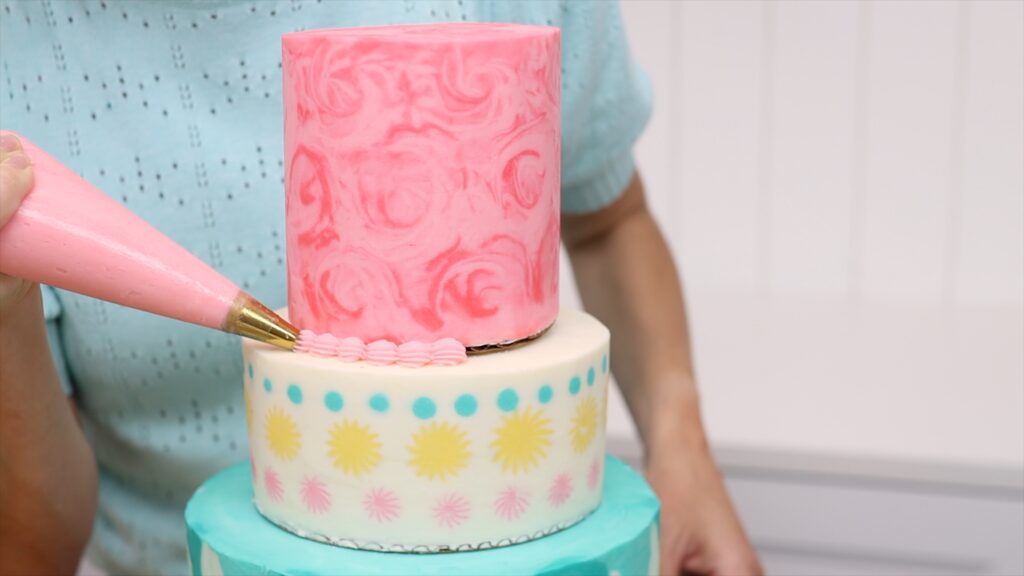
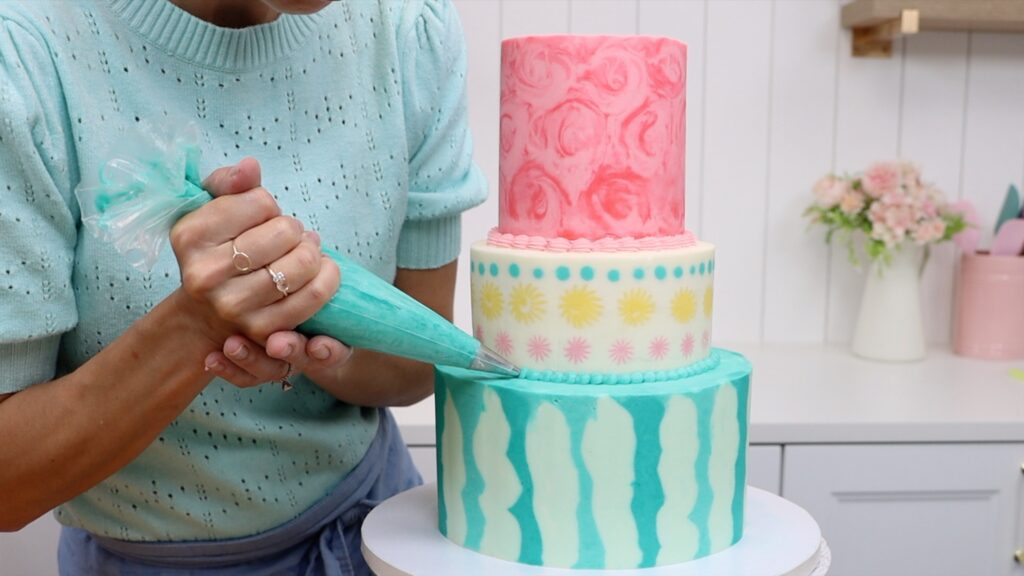
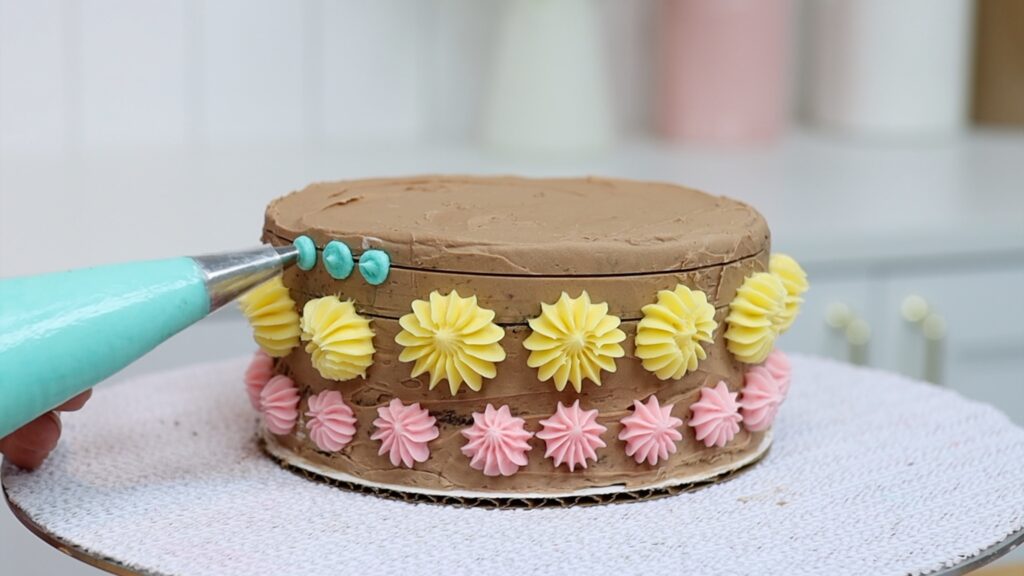
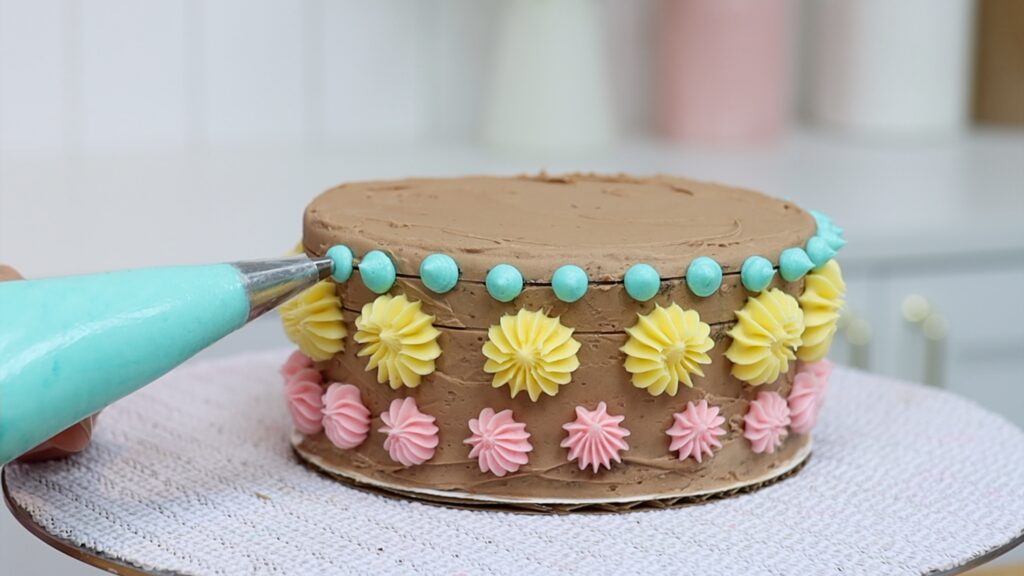
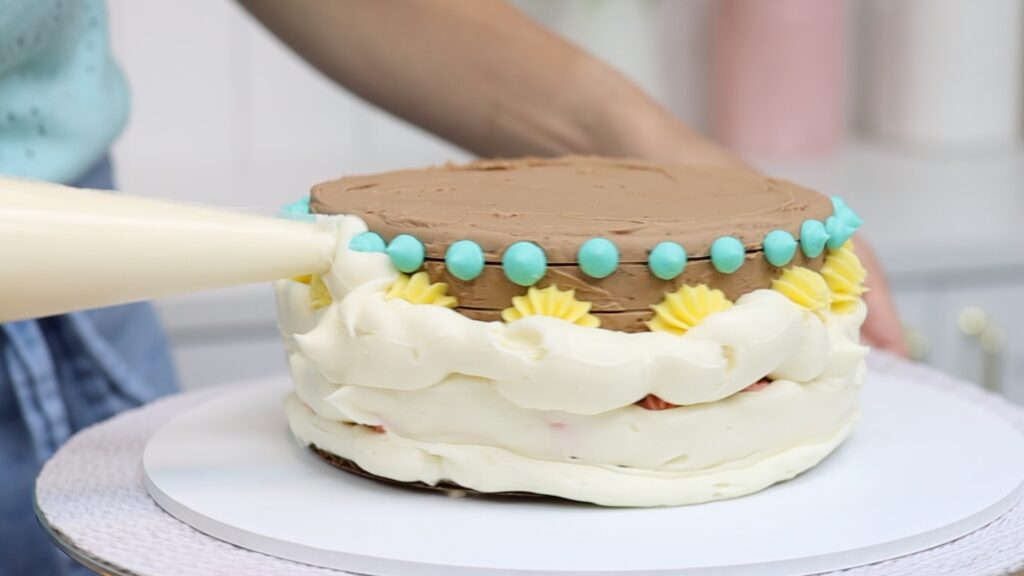
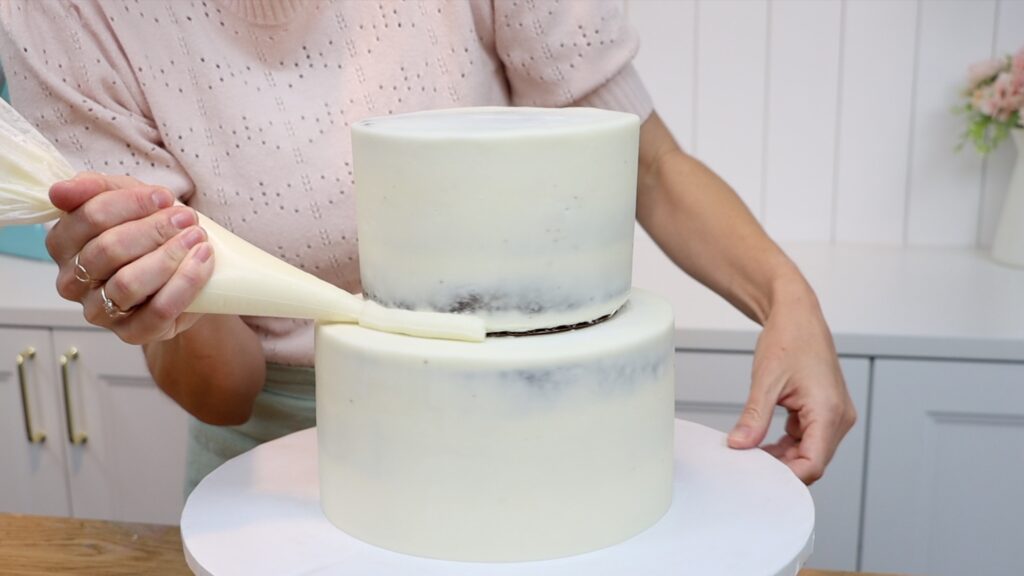
The joins between each tier won't look very nice yet. You'll be able to see the cake boards under the top tiers. This is easy to fix! Put the cake on a turntable to make this next step easier. Now pipe around the bottom of each cake to add a border. The border will cover up the visible board and also add some texture and detail to the tier cake.
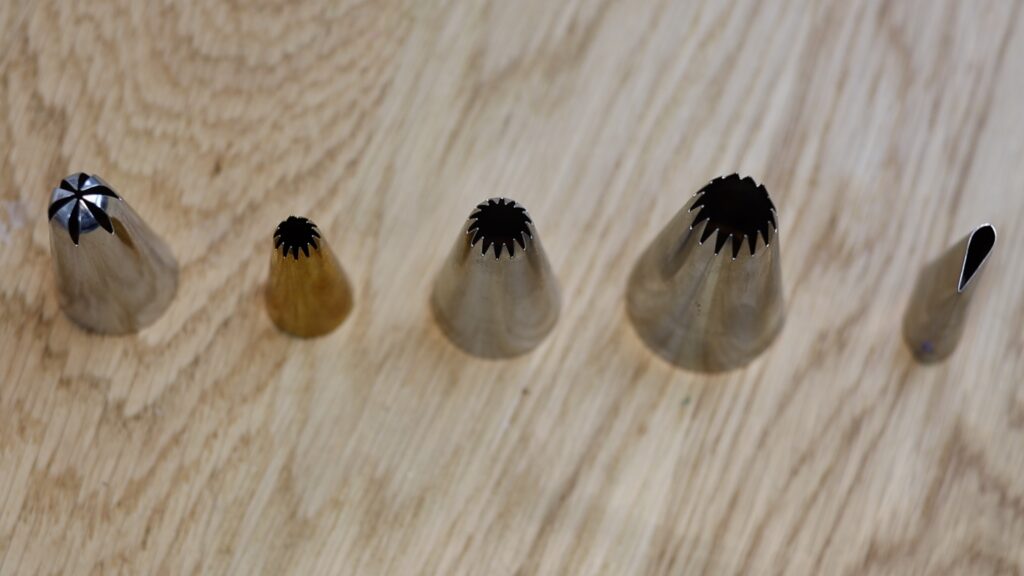
This is an open star tip and the next one is a round tip. I’m choosing to pipe borders because I want the extra decoration and because all of the cakes are different colours. If they’re the same colour you can pipe or spread buttercream around the bottom of each tier. Then use a cake comb to scrape off the excess to leave a thin layer flat against the cake. This will disguise the join or seam. I demonstrate this technique in my tutorial on how to make a semi-naked wedding cake.
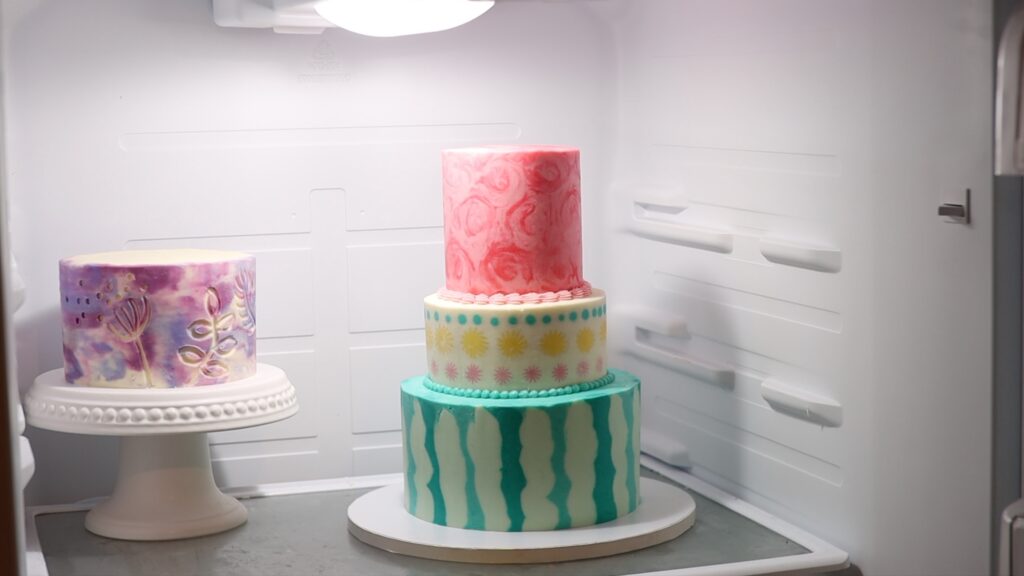
Now the cake has a stable support structure inside it and it looks stunning on the outside. It’s ready to store, transport or serve! I recommend refrigerating the cake until you transport it. Keep it in the fridge until 2-4 hours before serving it, depending on the temperature of the room where it will be on display.
I’m going to show you 7 Mother's Day cake ideas and how to decorate each one. They're pretty, delicious, and fun to make!
Watercolour with Peekaboo Hearts
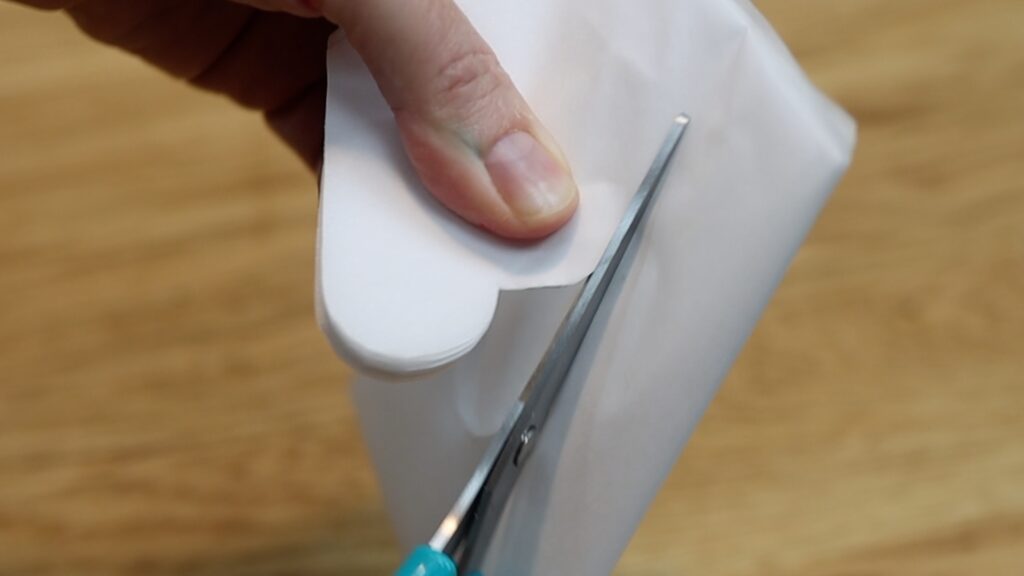
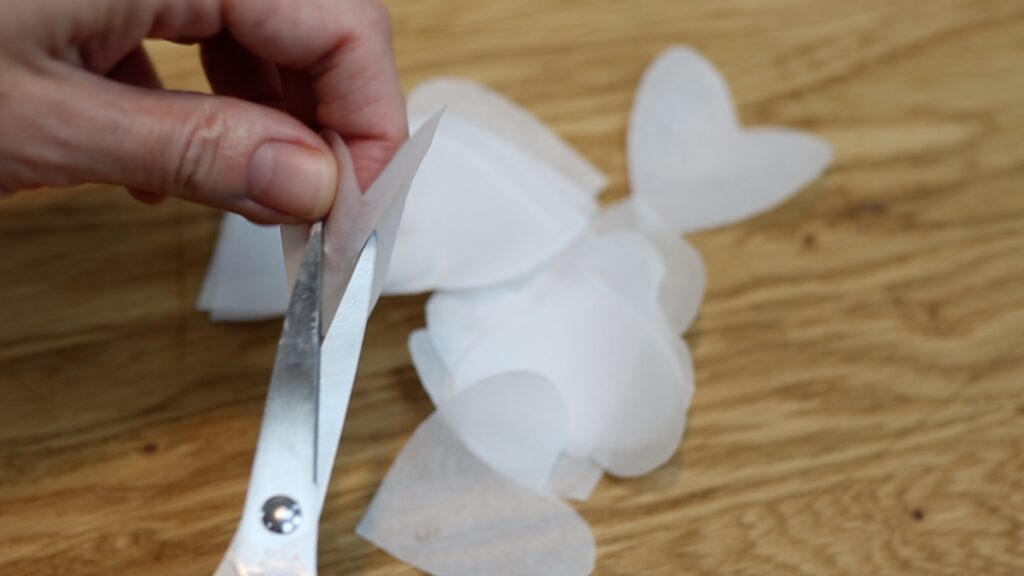
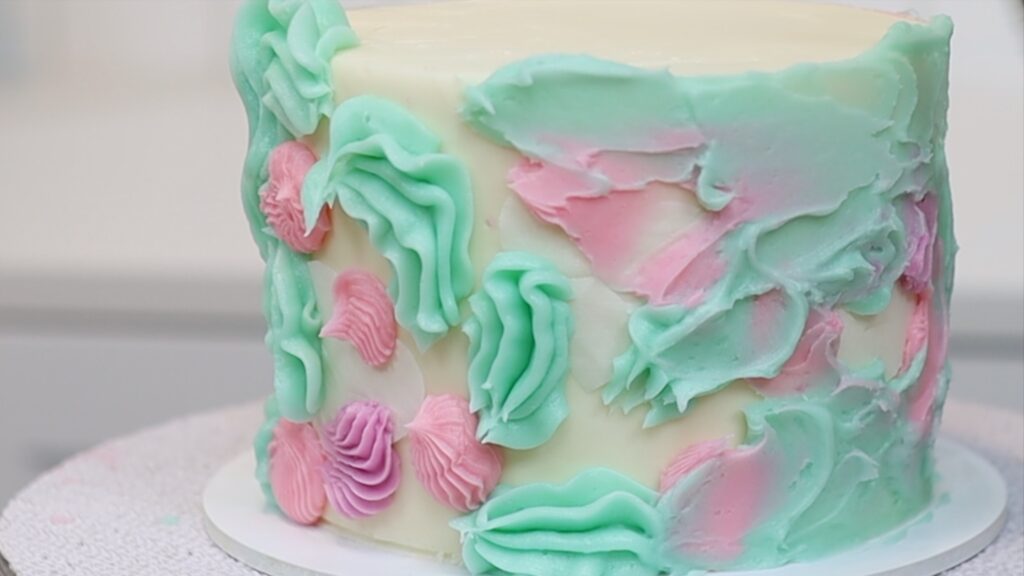
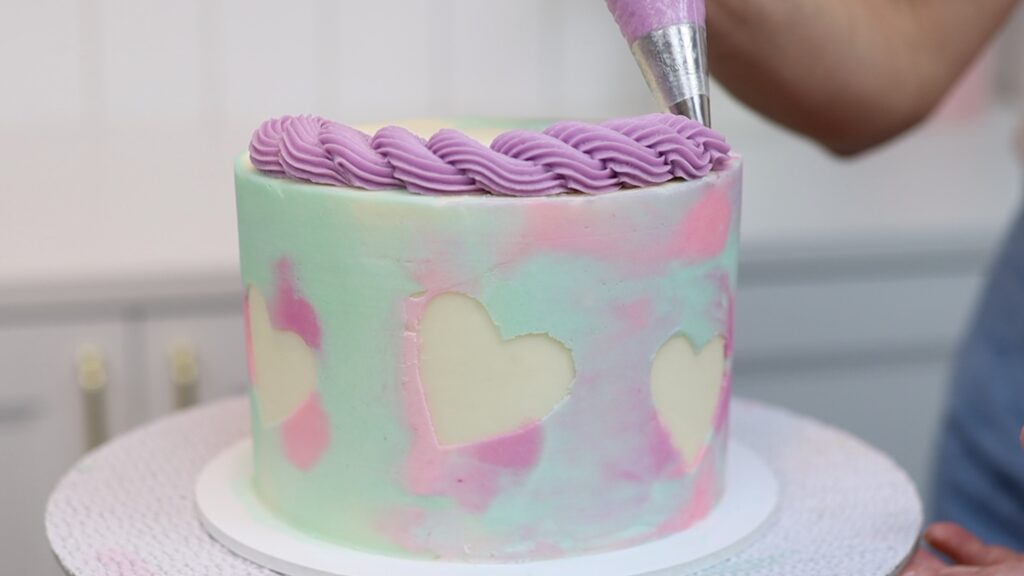
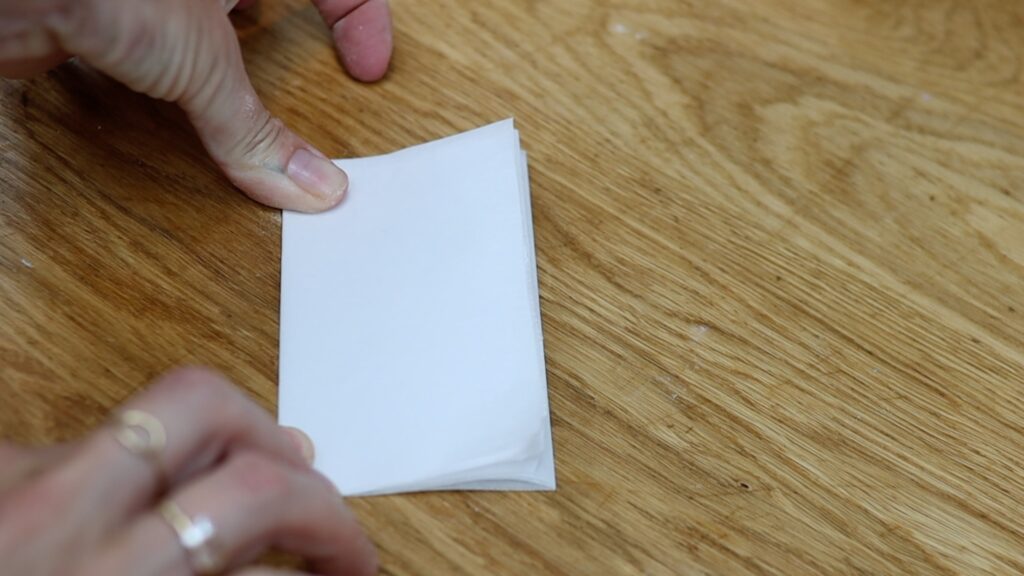
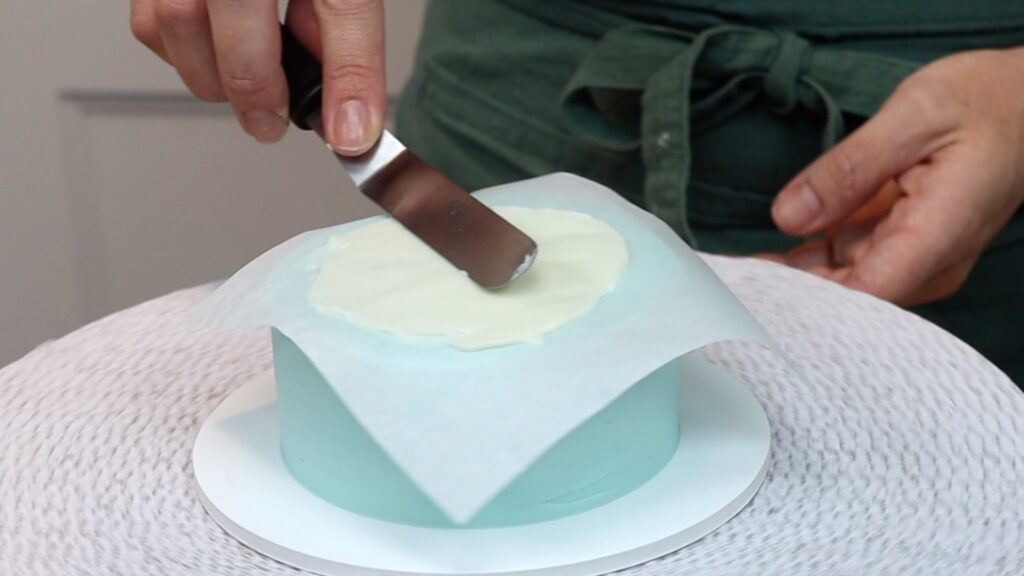
Let’s start with a watercolour cake with a peekaboo effect, which is one of my favourites. To make several identical shapes, fold a piece of parchment paper or baking paper in half a few times. Then cut out a heart or any other shape. Snip the middle of each heart to make it easier to peel these off the cake later.
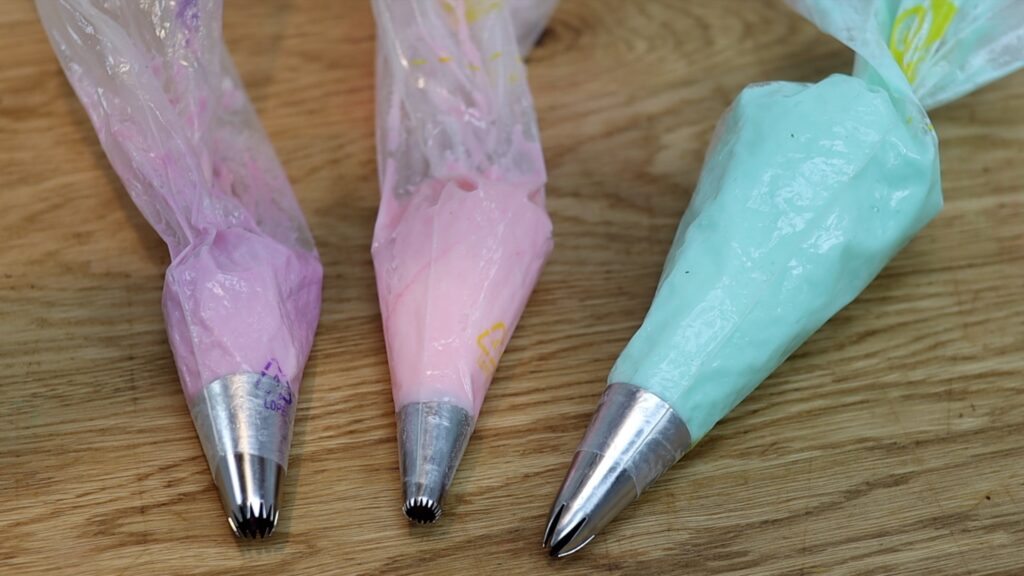
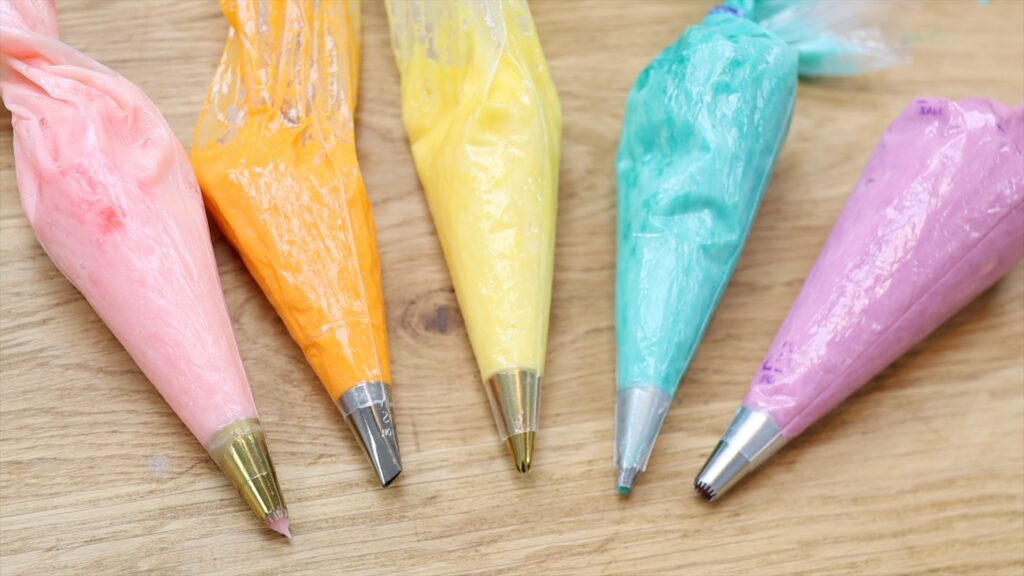
Tint your frosting whatever colours you want to use for the watercolor design. It's best to choose colours that blend together to make colours you like, too. I'm using my 4 Minute Buttercream for all of these cakes. I like to put the colours into piping bags or even use piping bags leftover from another cake. Any piping tip will work because all of the texture will be flattened out soon anyway.
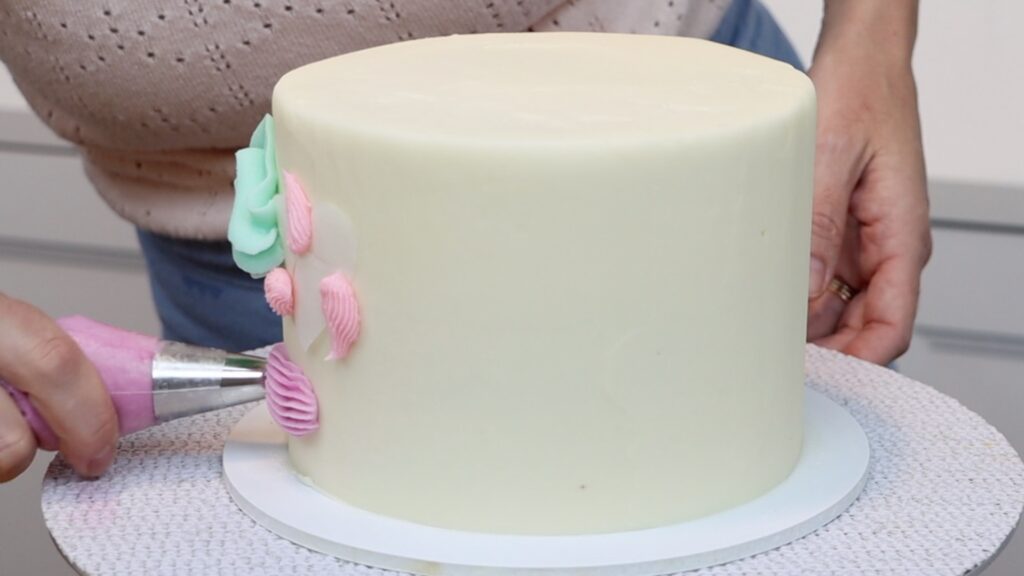
Your cake will need to be frosted and chilled before beginning this technique. When the frosting is chilled it will become firm, which means it won't get damaged while you're decorating. Press a heart onto the frosting and then pipe or spread your coloured frosting around it. Cover the edges of the heart, which will attach the heart to the cake. Don't cover the middle of the heart because it’s easiest if the slit you made is still visible.
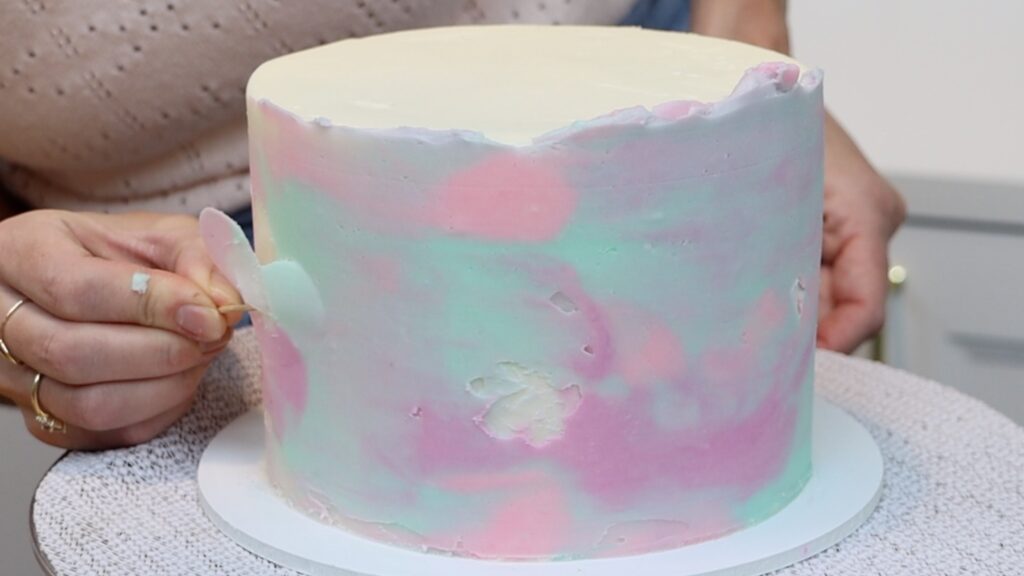
When you've attached all of the hearts to the cake, spread the buttercream to cover up most of the cake. Try to avoid the centers of the hearts. Don’t worry about covering up the entire cake because when you smooth the frosting you’ll spread it to fill in any gaps. Since the white frosting has set, these colours of buttercream sit on top instead of blending with it.
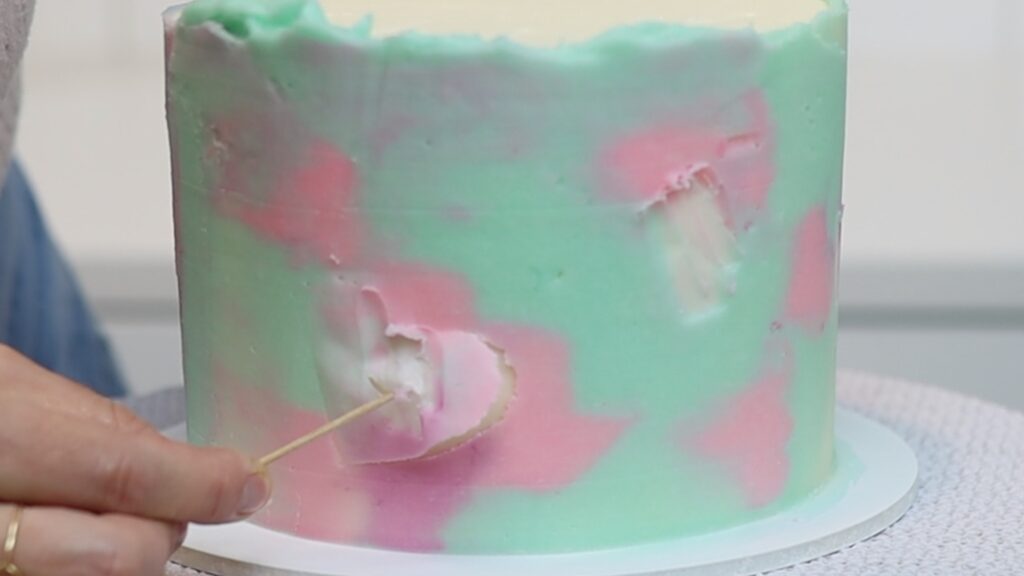
Now it’s time to peel off the hearts. I like to use a toothpick, sliding it into the slit you cut in the middle of the heart. Pull away from the cake to peel the heart off.
If any hearts are buried under frosting, you’ll still be able to see the outline of the heart. Use your offset spatula to scrape gently over the middle of the heart to expose the slit you cut and then you can use your toothpick to peel it off.
If you’re making this for your own Mother’s Day cake, it’s a fun one to decorate with your kids. They can squeeze the piping bags to get the frosting onto the cake and then they can watch you smooth it and peel the hearts off. Add a border on top if like and then you can all eat it together!
Textured Frosting with Mini Donuts
This next design is great if you struggle to smooth your frosting. Spread frosting onto your cake and scrape around it a few times with a cake comb. Don’t worry about indents or air pockets or imperfections because you'll smooth those out in a moment. Focus on pressing your cake comb down on the cake board to line it up straight against the cake so that the sides of the cake are straight.
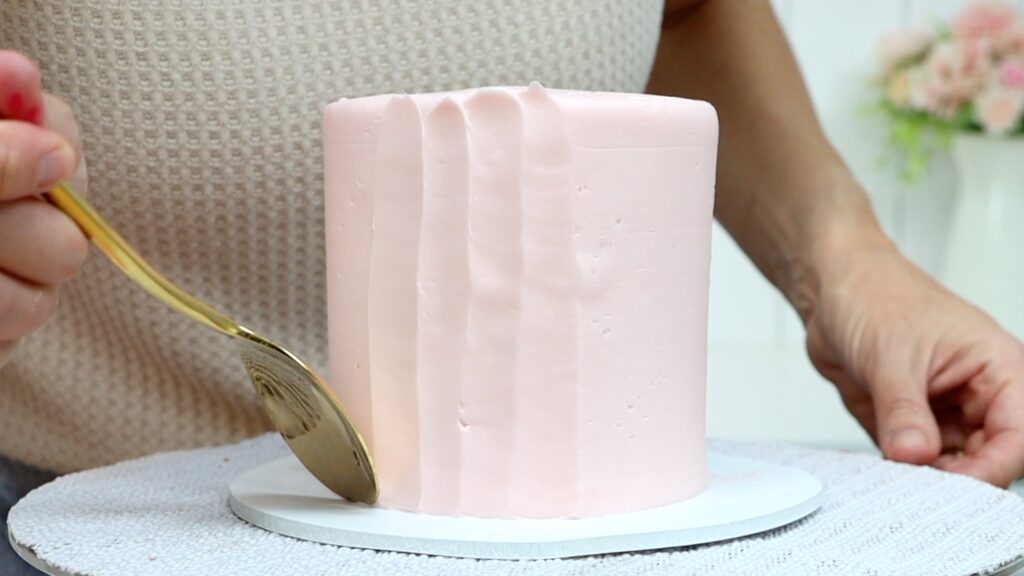
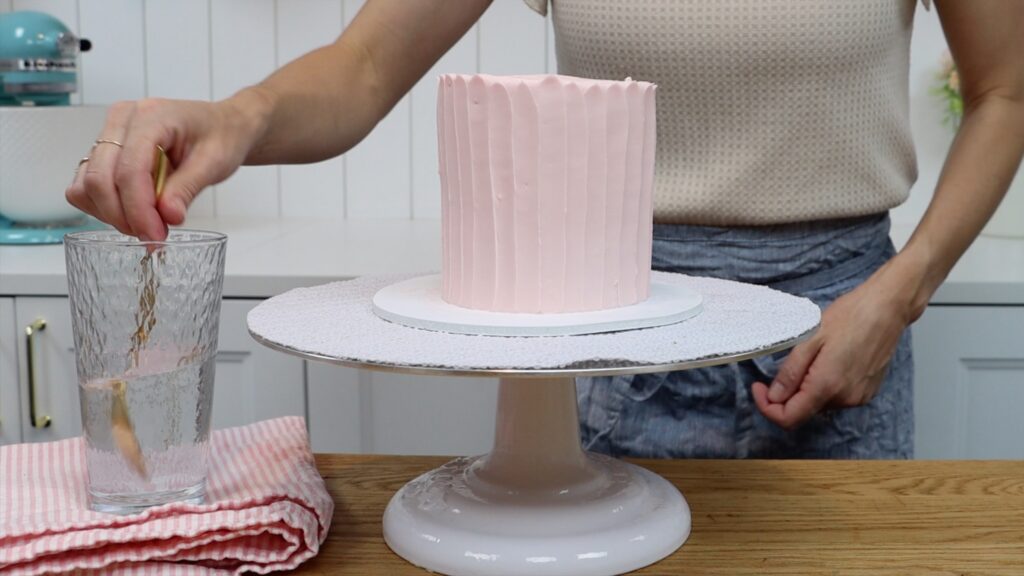
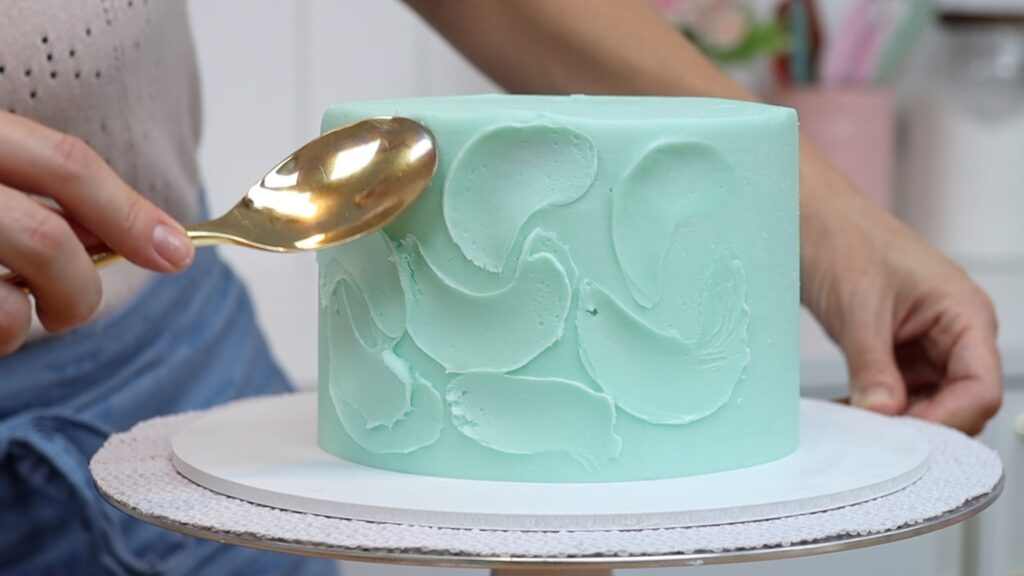
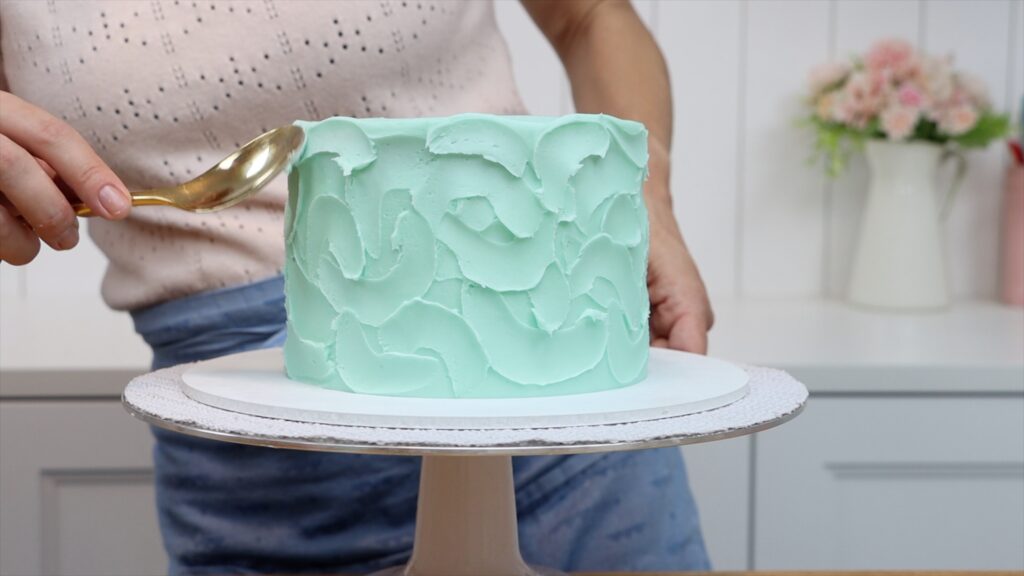
When you're happy with the shape of the cake, use a spoon to add gorgeous texture. Press the back of the spoon lightly against the frosting and pull it up the side. Lift up and away from the cake to leave a neat peak at the top. Overlap the previous groove slightly to cover the whole cake with texture.
A hot spoon works best for this. Dip it into a cup or bowl of hot water every minute or so and then dry it off before pressing it into the frosting. The hot metal will smooth the frosting as you pull it and create these “swooshes”.
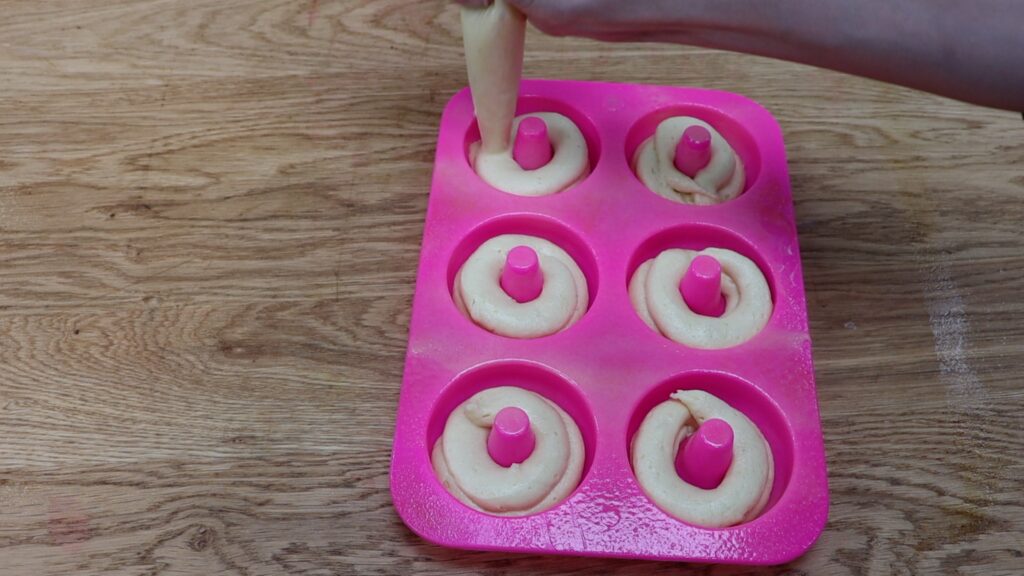
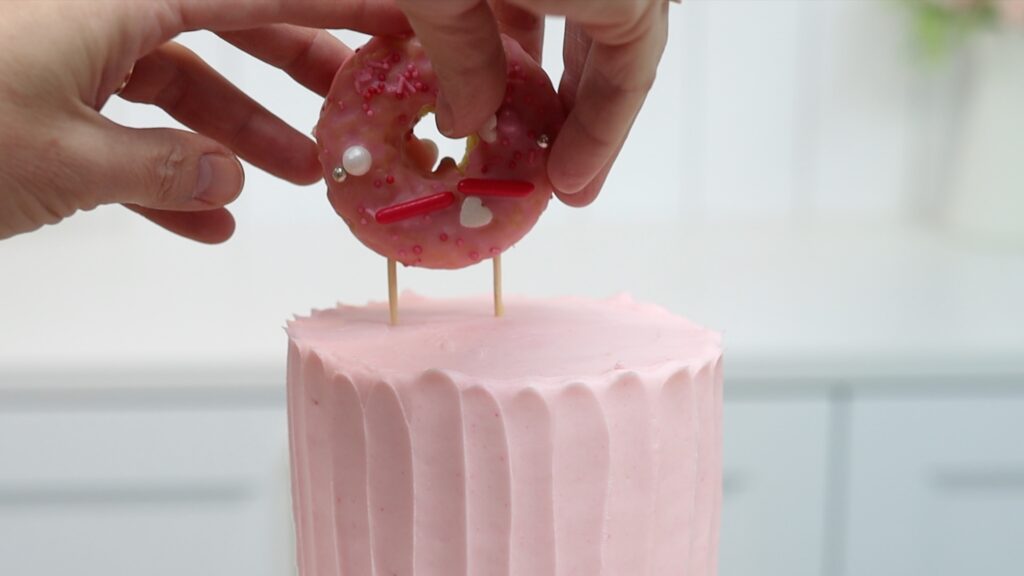
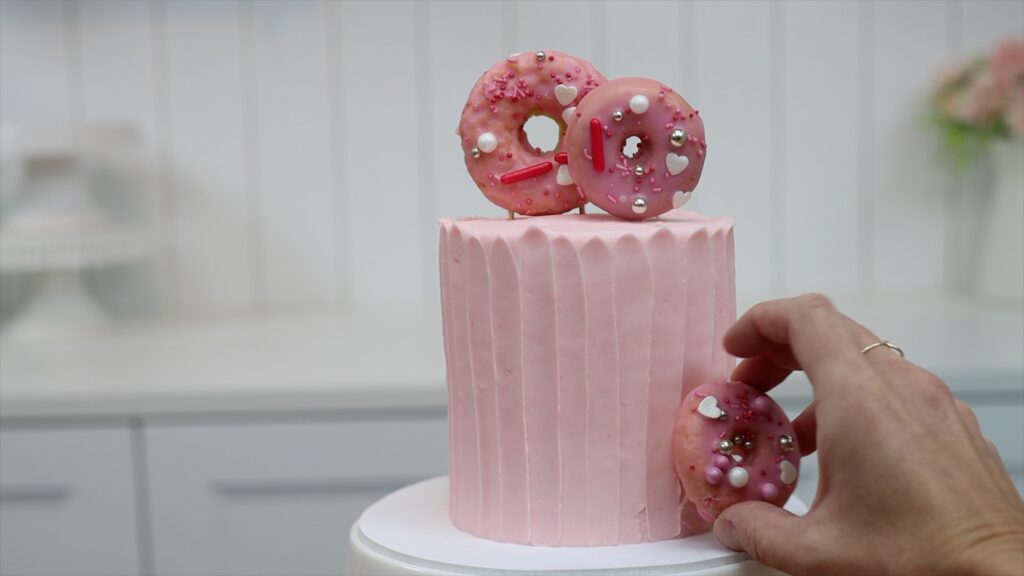
Add a Mother's Day cake topper or decorate the cake with cake donuts. These are shockingly easy to make! Just squeeze a little bit of your cake batter until a silicon donut mold using a piping bag to get it neatly into the rings. Bake for the same time as you would for cupcakes, about 15 minutes.
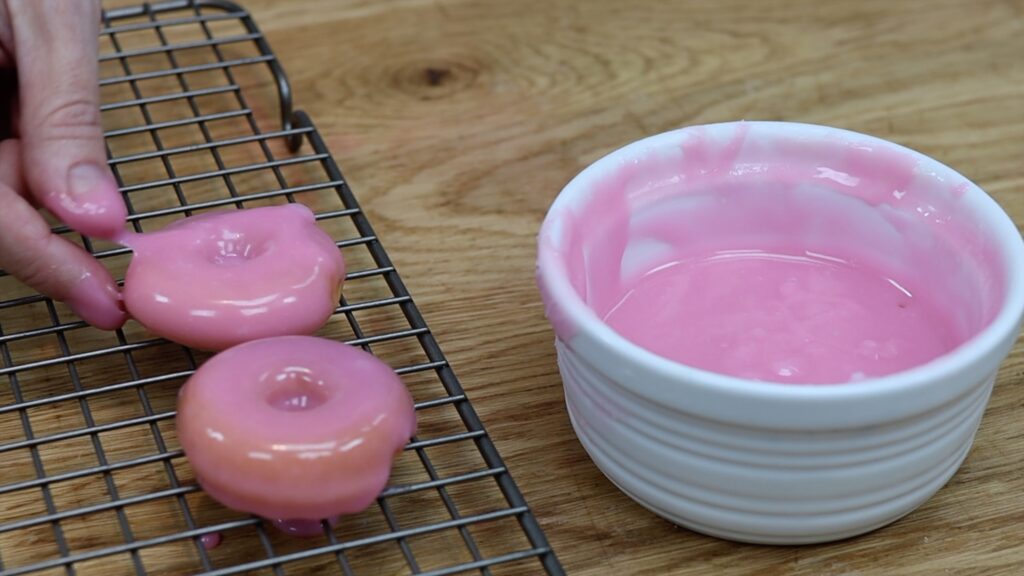
When the donuts cool, dip them in ganache. To make ganache, use 3 parts white chocolate chips and 1 part heavy whipping cream or double cream. Heat the cream in the microwave until bubbles form around the edges of the bowl, which takes about 30 seconds. Pour the chocolate chips into the hot cream, pushing them under the surface. Leave them for 5 minutes and then stir until smooth. Add oil based colours if you like.
Add some sprinkles while the ganache is still sticky, before it sets. Then poke toothpicks into the donuts and push them into the cake to hold them upright as cake toppers.
To attach donuts to the sides of the cake, spread a bit of frosting wherever you want to put one and press the donut into it.
Piped Flowers
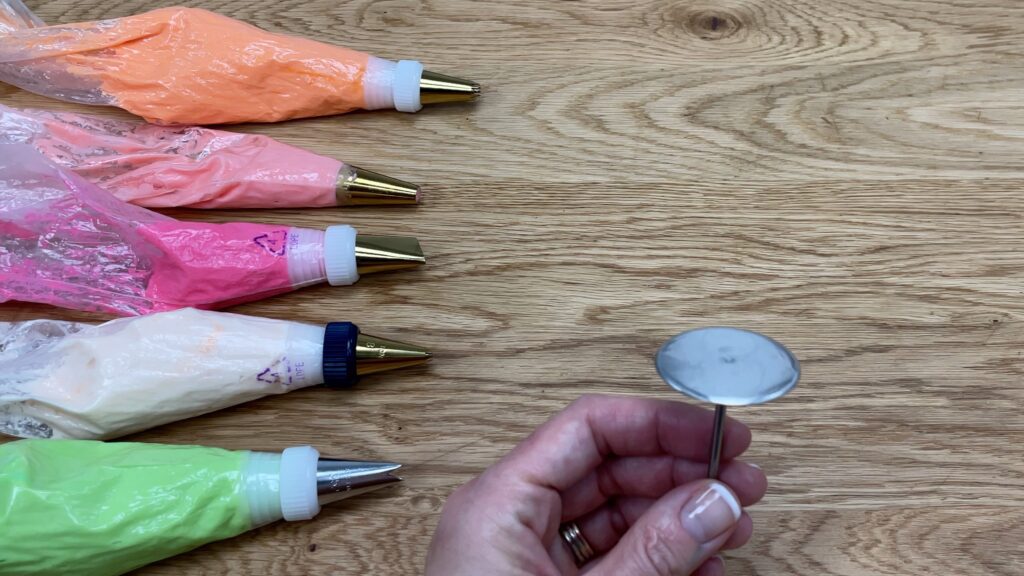
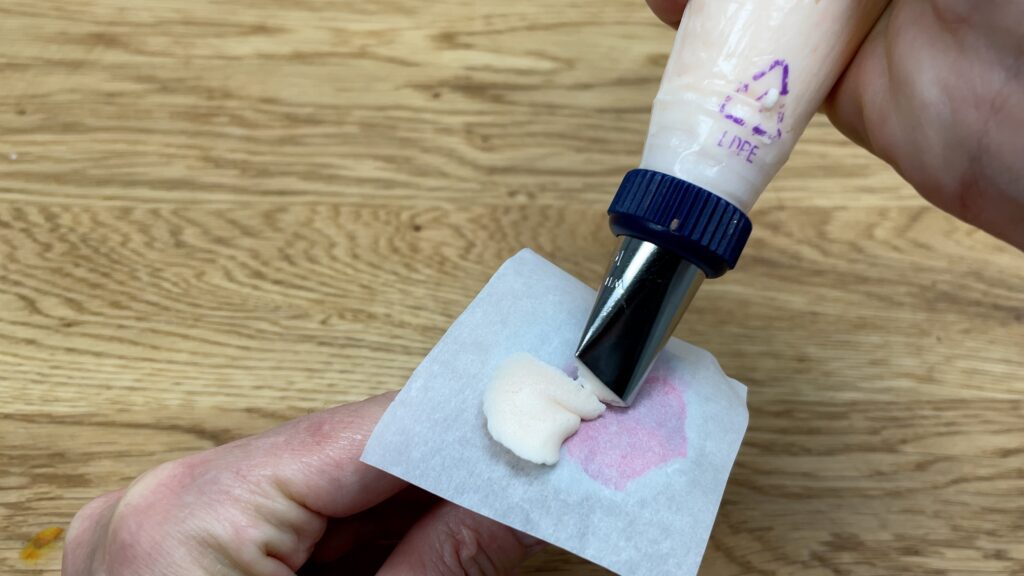
Create a delicious floral beauty with a few colours of buttercream or any other frosting and a few piping tips. You’ll also need a flower nail and parchment paper or wax paper. Cut the paper into squares as wide as the flat head of the flower nail.
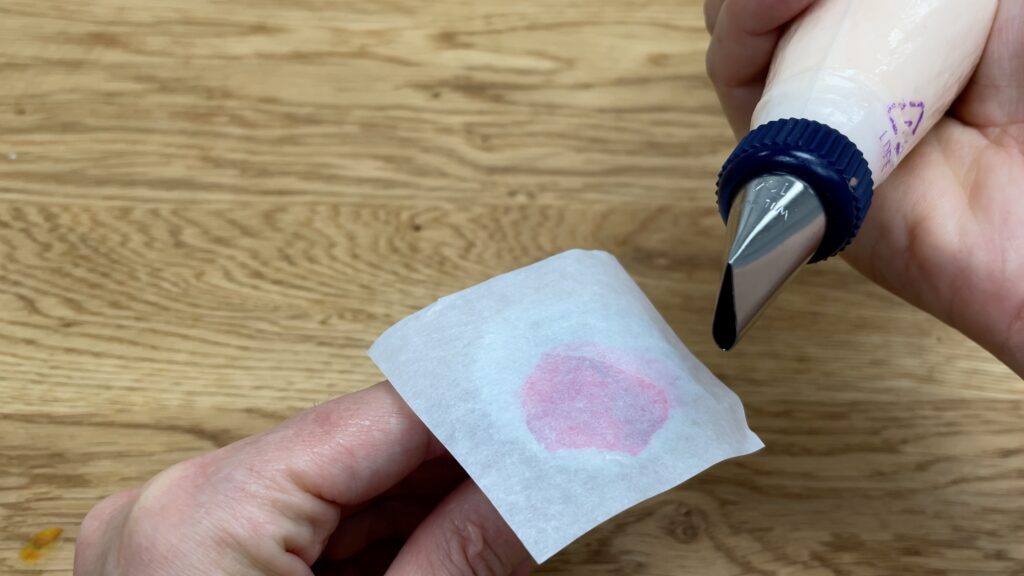
Piping the flowers onto parchment or wax paper makes it easy to move the flowers onto your cake later. Pipe a dot of buttercream onto the nail and then cover it with one of your little squares of paper. For pretty, simple flowers use any petal shaped piping tip like this #104.
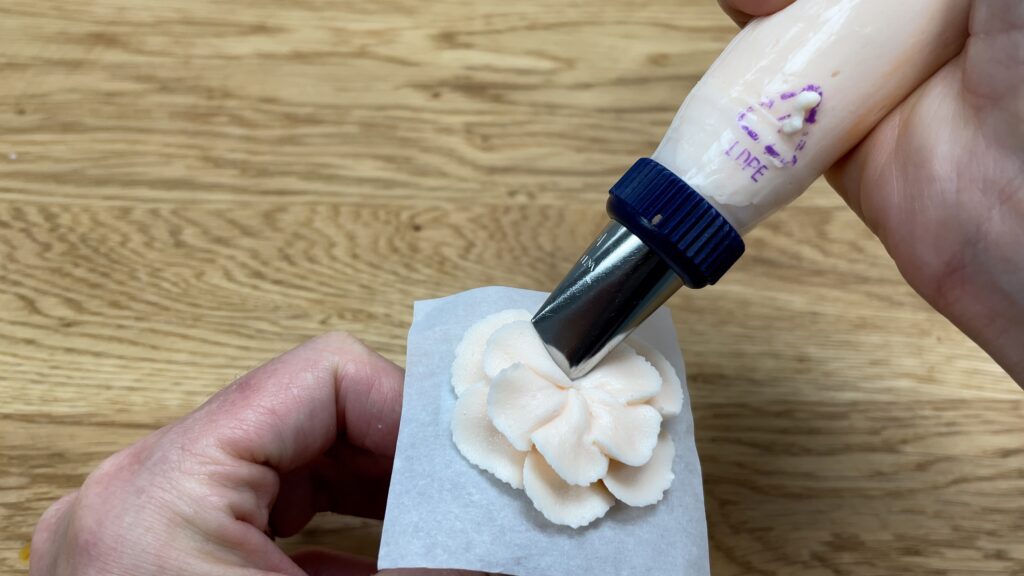
Hold it so that the wider end of the teardrop shape is pressed down against the middle of the nail and the narrow part points outwards. Pipe petals by squeezing the bag and pushing the tip slightly away and then pulling back towards you. Stop squeezing the bag and pull it away to finish the petal. Then spin the nail between your thumb and finger to rotate it before piping the next petal.
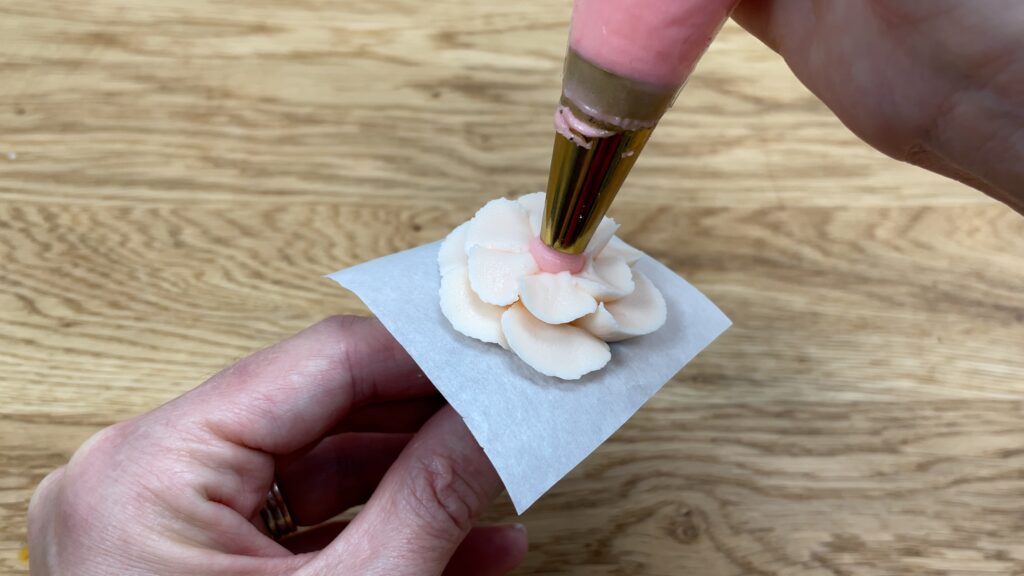
These pansy type flowers are the quickest and easiest flowers to pipe. Use a round tip or a star shaped tip with a different colour of buttercream to pipe a center onto each flower. Then carefully pull the paper sideways off the flower nail and lower it down onto a tray or baking sheet. Repeat the process to pipe as many flowers as you want for your cake.
Add variety to your cake design by changing colours, using different sizes of petal tips, piping a second layer of petals on top of the first, or changing the colour or piping tip you use to pipe the centers of each flower.
Pipe all of your flowers, placing each one on the tray, and put the tray in the freezer for 10 minutes. This chills the flowers so that they set and you'll be able to touch them without damaging them.
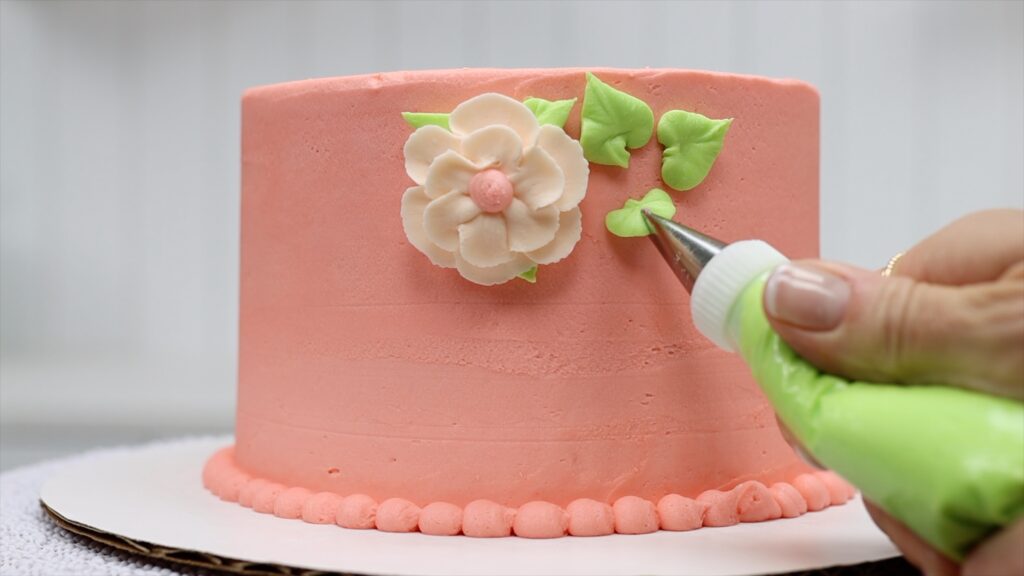
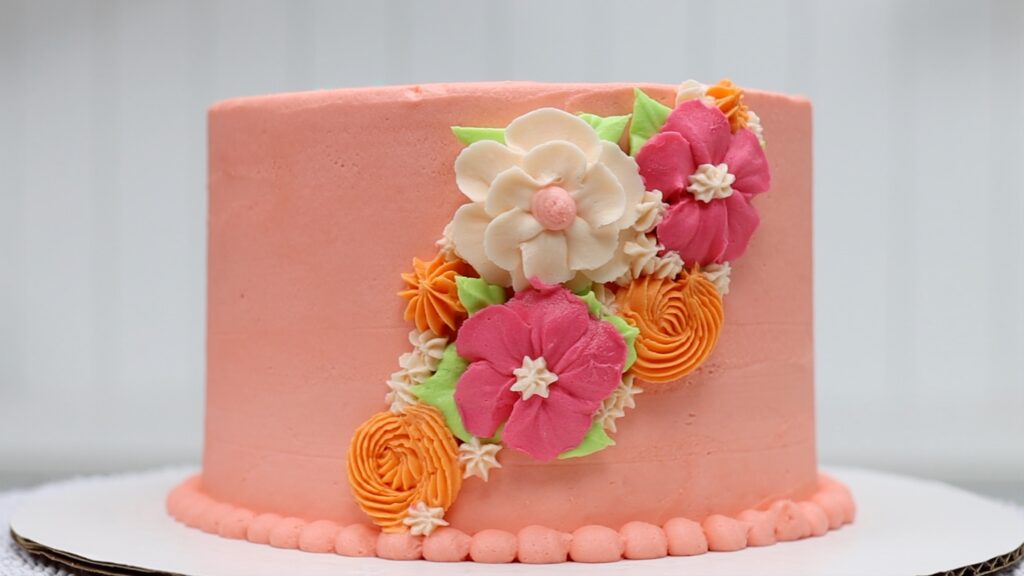
To attach the flowers to the cake, pipe leaves onto the cake using a leaf tip like a #352. Then lift a flower up, peel it off the paper and press it onto those sticky buttercream leaves.
You could use only flowers to decorate the cake or add some piped details too. I'm using a #32 open star tip and a tiny #18 tip for pipe swirls and blossoms. This Mother's Day cake design is pretty and feminine and, best of all, it’s entirely edible!
Rainbow Double Stencil
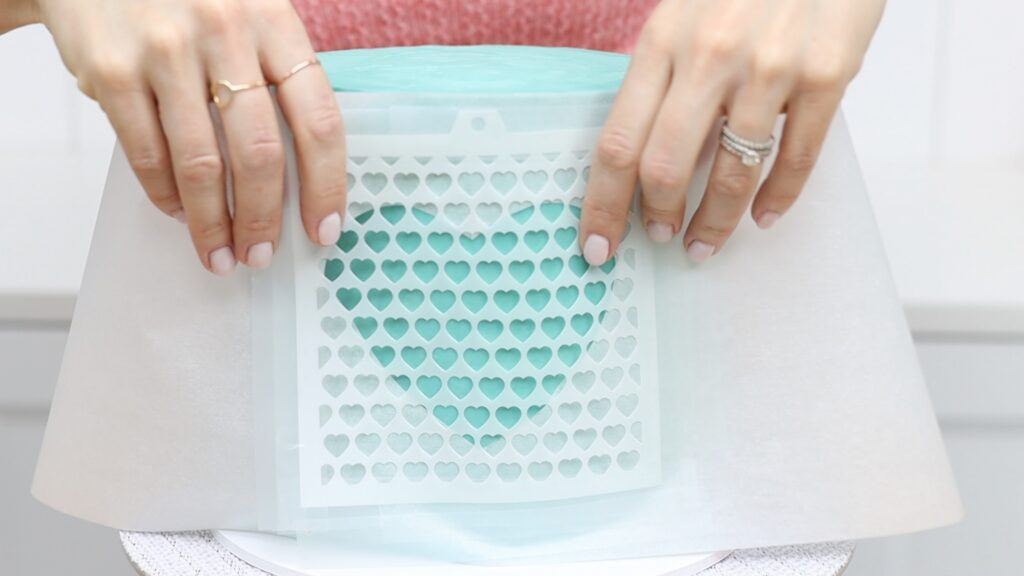
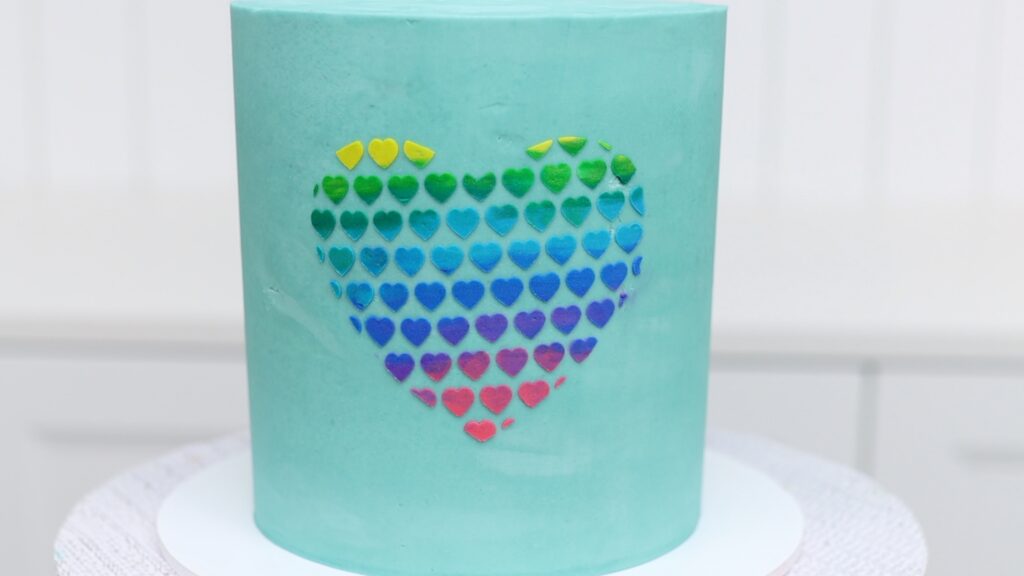
Make a beautiful rainbow heart with a homemade stencil for this next cake. Draw a heart onto parchment paper and cut it out, leaving the parchment around the shape intact. The heart should fit onto the side or top of your cake. This will be part of your stencil. Now use a more detailed stencil to add a design within your parchment stencil shape. Tape them together and wrap the stencils around your cake, taping or pinning the double stencil in place.
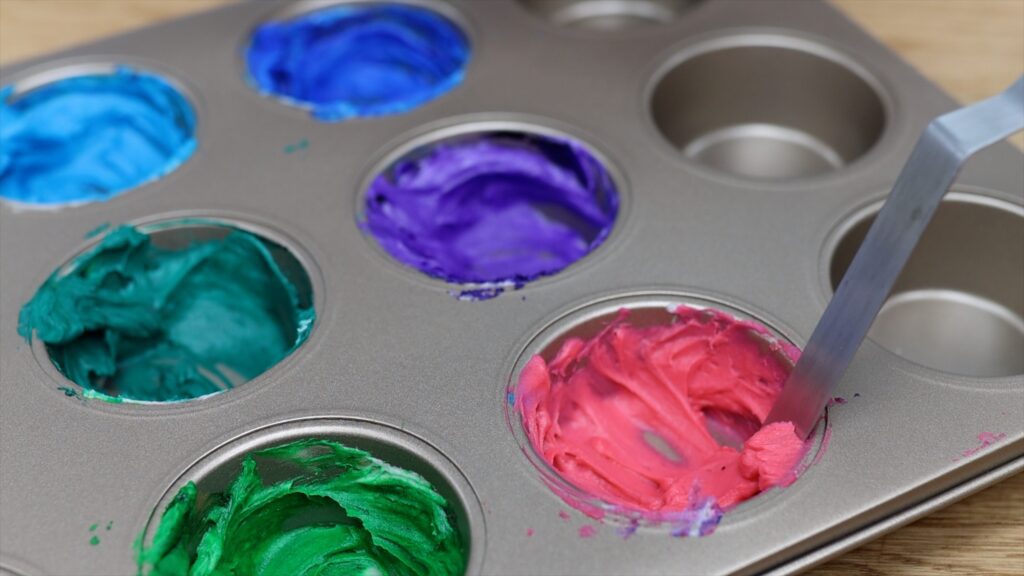
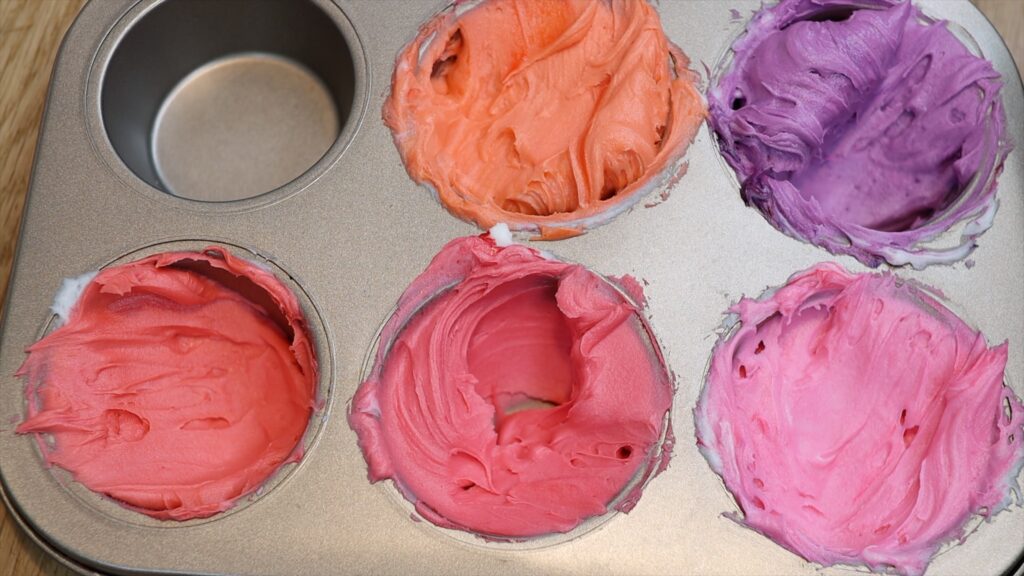
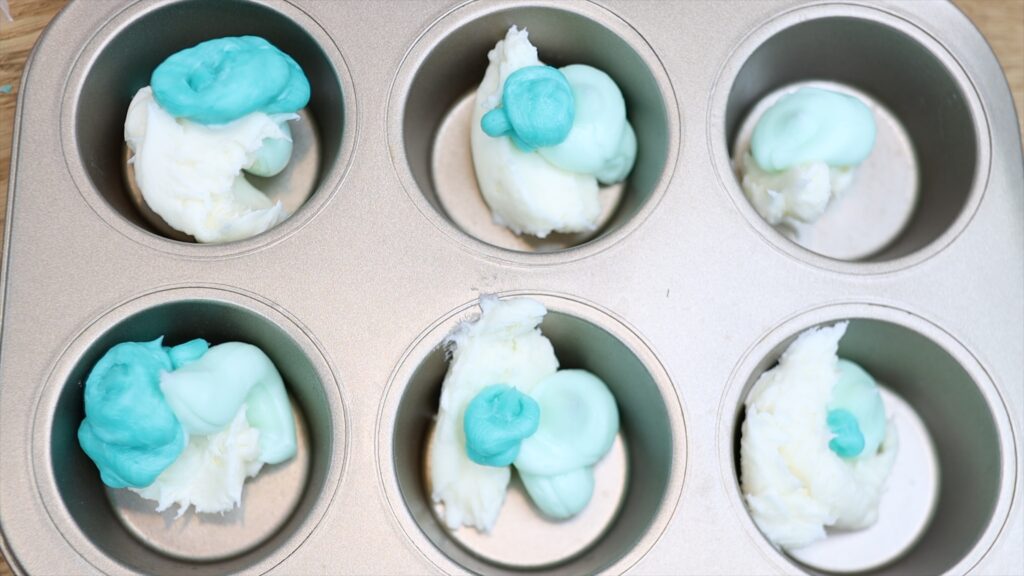
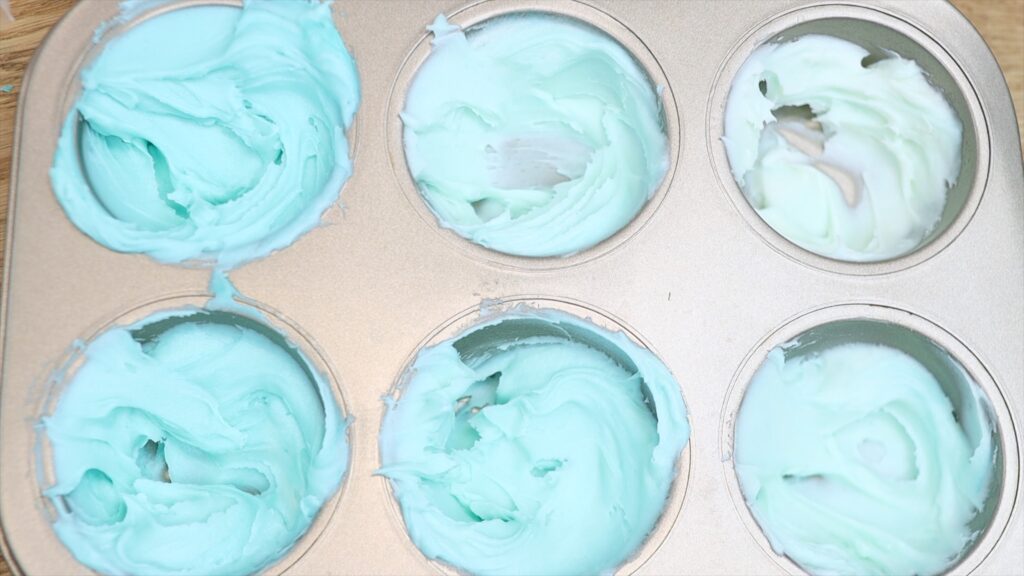
Tint rainbow colours of buttercream, using a very small amount of each colour. I like to mix these in a cupcake pan since you'll only have to wash one pan instead of lots of bowls.
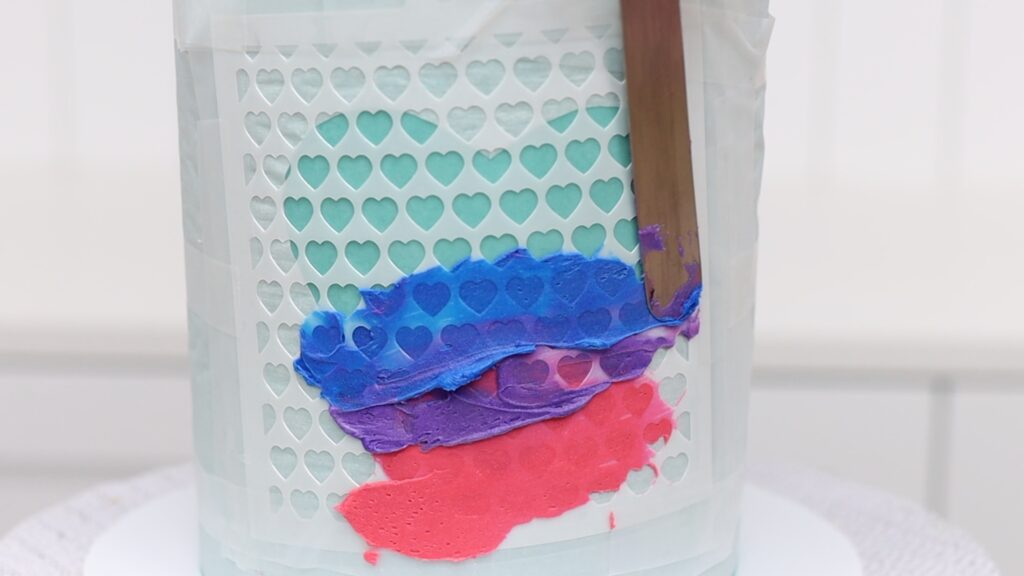
Spread the coloured buttercream over the double stencil. Use an offset spatula or a cake comb to scrape over the stencil several times. You'll take the excess frosting off and blend the colours together slightly.
Take as much frosting off as possible, leaving a thin, smooth layer behind. Then carefully peel the stencil off the cake to leave the design behind!
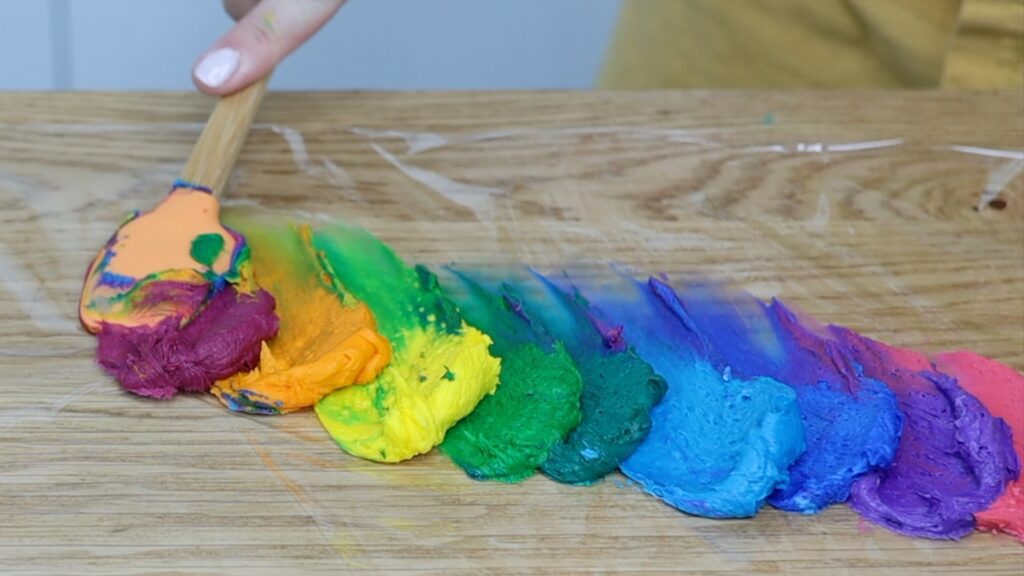
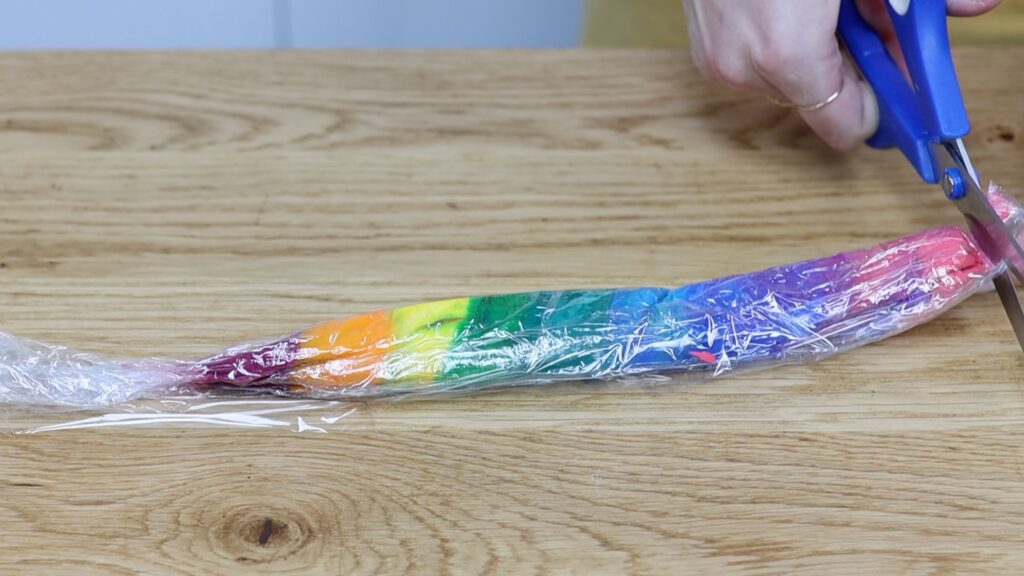
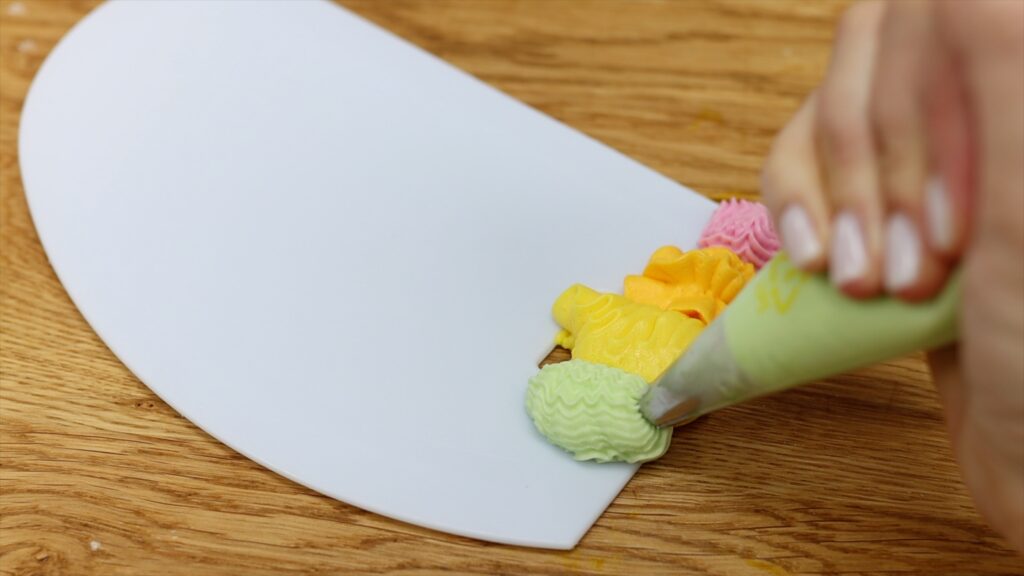
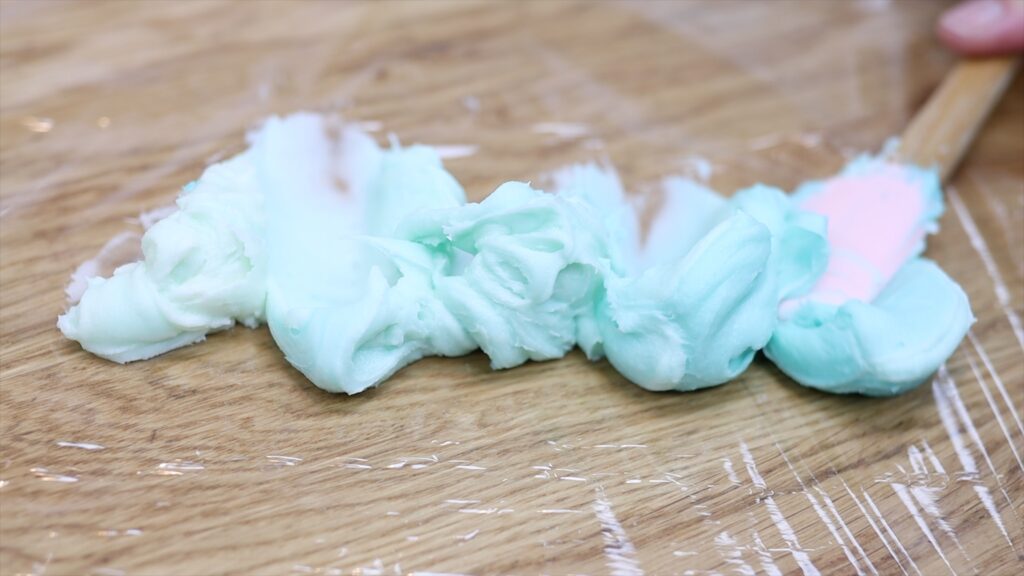
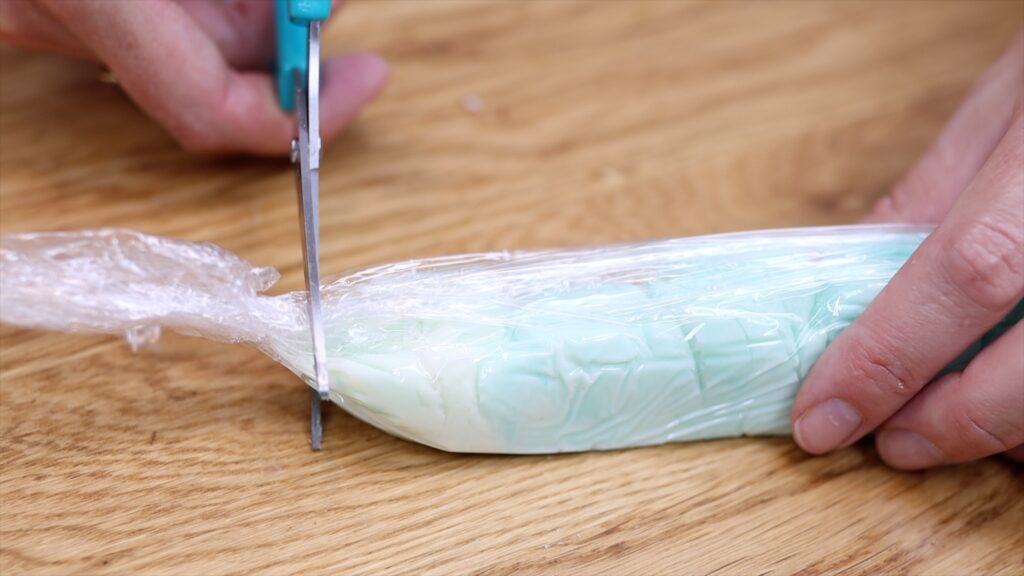
You can use the leftover frosting to add a border the cake. Spread the colours side by side onto a piece of plastic wrap and then roll it up into a log. Cut off the end with the colour that you'll start piping with.
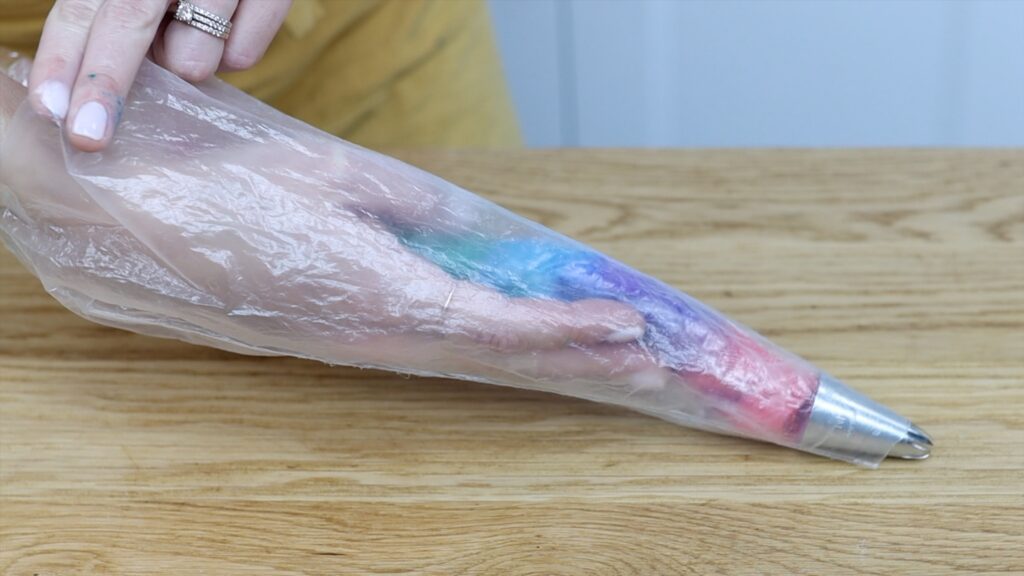
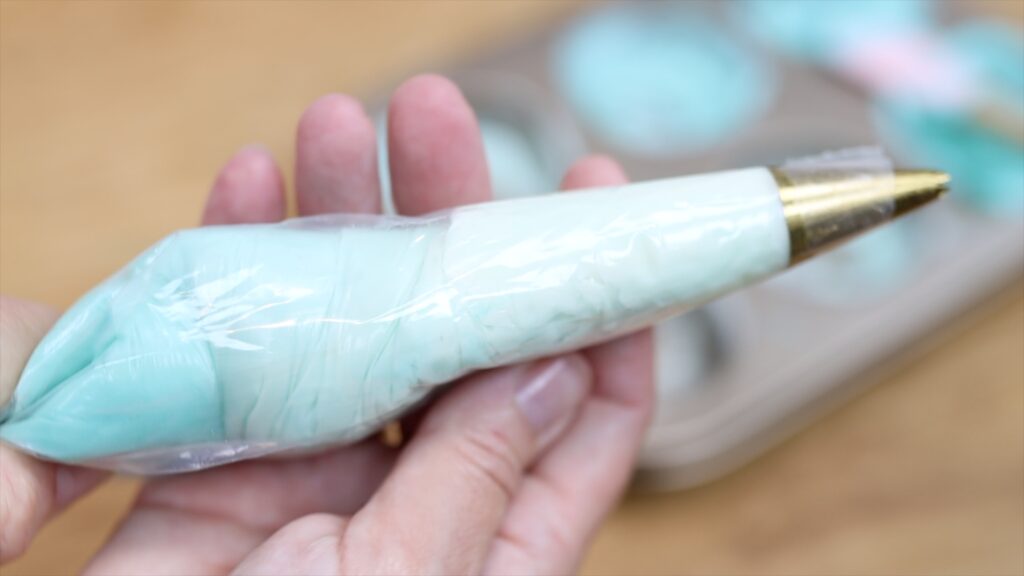
Put the log into a piping bag fitted with a 1M star tip, pushing the cut end down into the piping tip at the bottom of the bag.
To pipe a wave or shell border, squeeze the bag to let the buttercream bulge out and then pull away. Overlap the tail of each one to make a colourful border to match the stencil design.
Rainbow Layered Frosting
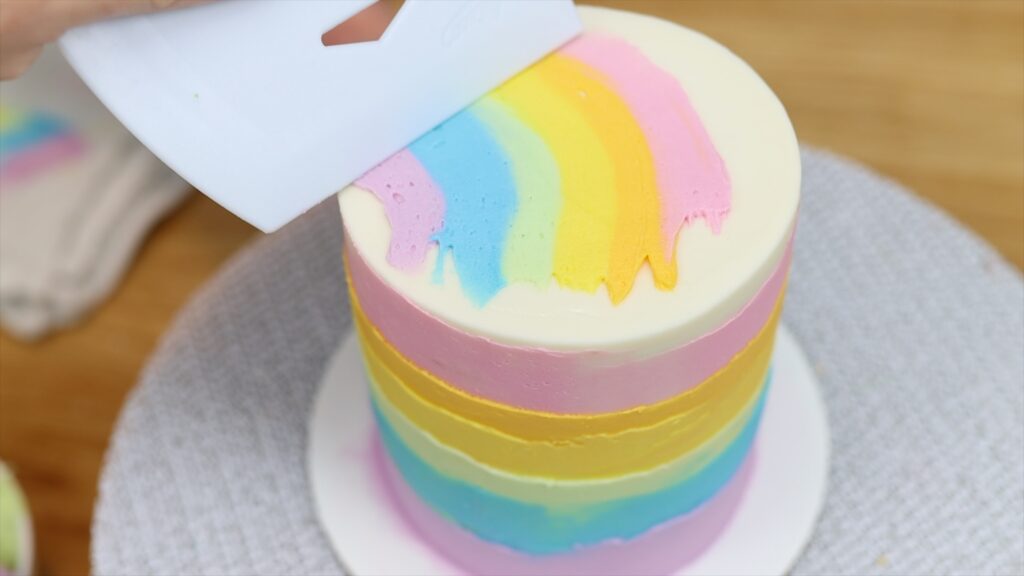
Here’s another fun rainbow design for a Mother's Day cake that’s even easier to create. Spread or pipe coloured buttercream onto a cake, starting at the top of the cake. Scrape around the cake gently with a cake comb a few times to take off the excess. You'll leave a thin, smooth layer of colour on the cake.
After each time you go around the cake, scrape the excess frosting off your cake comb into a bowl. If you take off more frosting than you want and the band of colour is too thin, spread some of that frosting you scrape off, back onto the cake and then smooth it again.
Pipe or spread your next colour underneath the first colour. Overlap the first colour so that there’s no gap in between the two colours.
There are three tricks to this design. First, use a crusting buttercream like my 4 Minute Buttercream because it gets really firm when it sets. That makes it possible to layer the colours instead of blending them together.
Second, take your time to get the frosting on the cake really smooth before doing this. These colours won’t completely cover the cake and they won’t disguise messy frosting. For tips on this, check out my tutorial on 15 Frosting Mistakes and How to Fix Them!
The third trick is to chill the cake in the fridge for at least two hours before you do this. That way, the frosting will be very firm and you can add and scrape these colours without damaging it.
To add some detail to the top of this cake, squeeze some of each colour onto a cake comb.
Lower the comb onto the top of the cake. Pull it in a curved, arc shape over the top surface of the cake to leave a rainbow behind. You might need to spread more of some of the colours and scrape again to get good coverage.
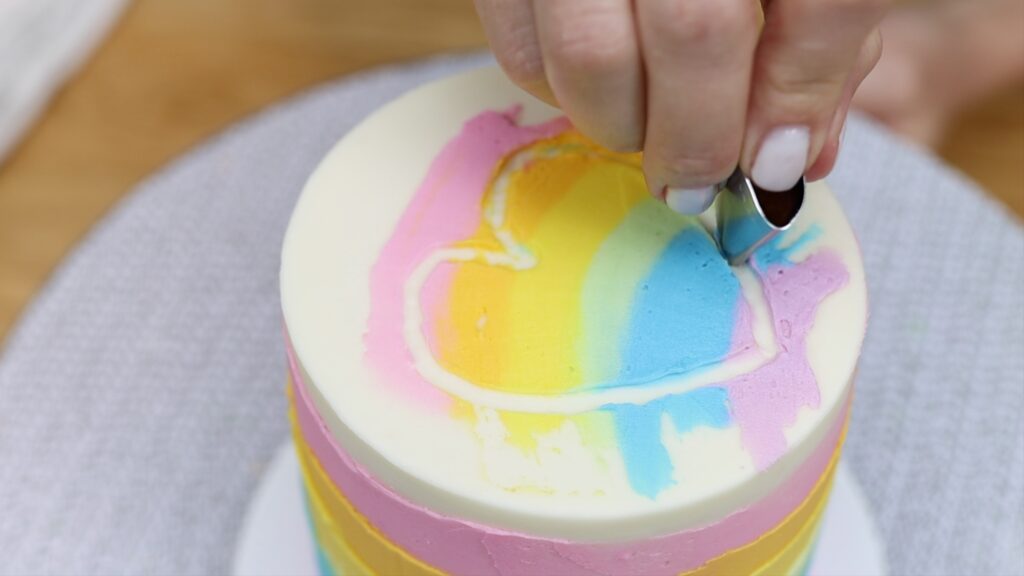
You can use a piping tip or a toothpick to draw a design in the rainbow if you like:
To learn hundreds of cake decorating techniques and designs, visit my online cake school. You can take individual courses or join my ClubPLUS for access to every MasterCourse, MiniCourse, Live Workshop and 5 Minute Fridays. I hope to see you there!
Tray Bake Mother's Day Cake with a Heart
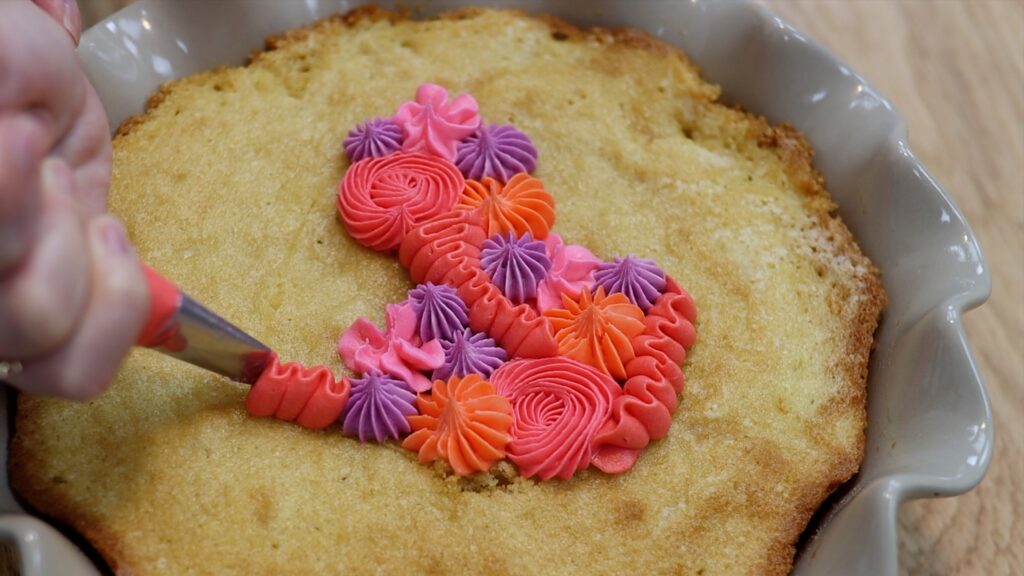
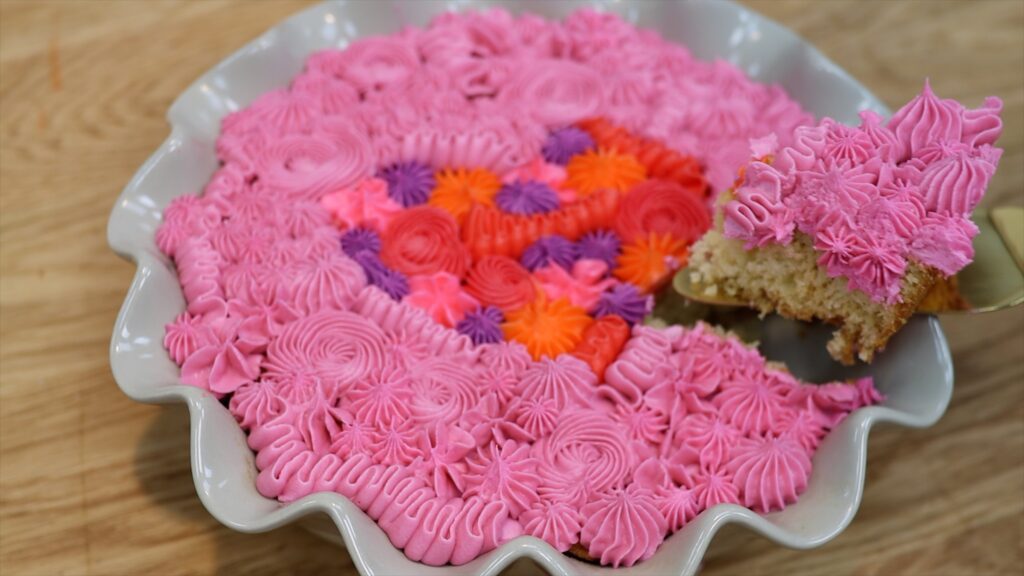
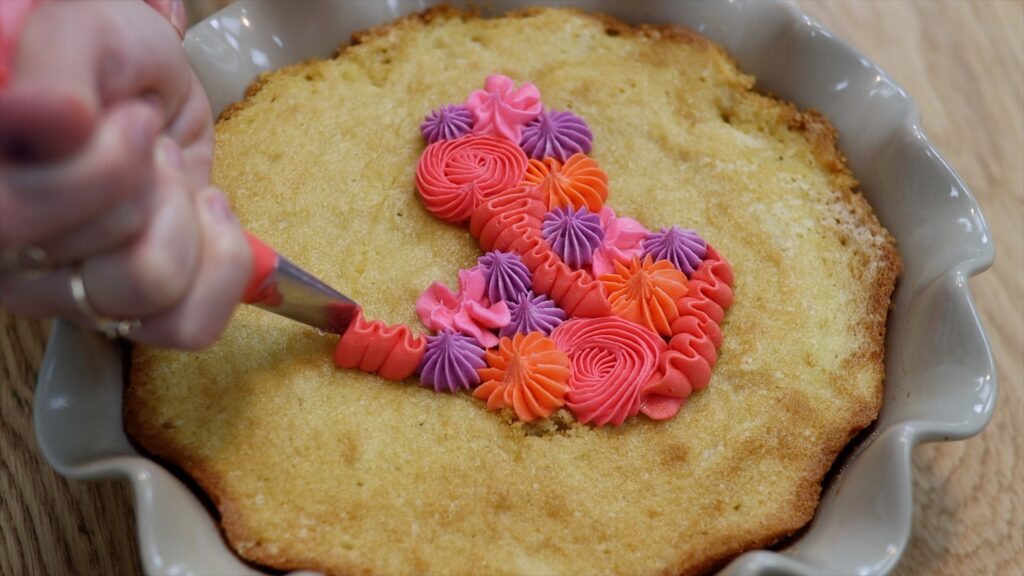
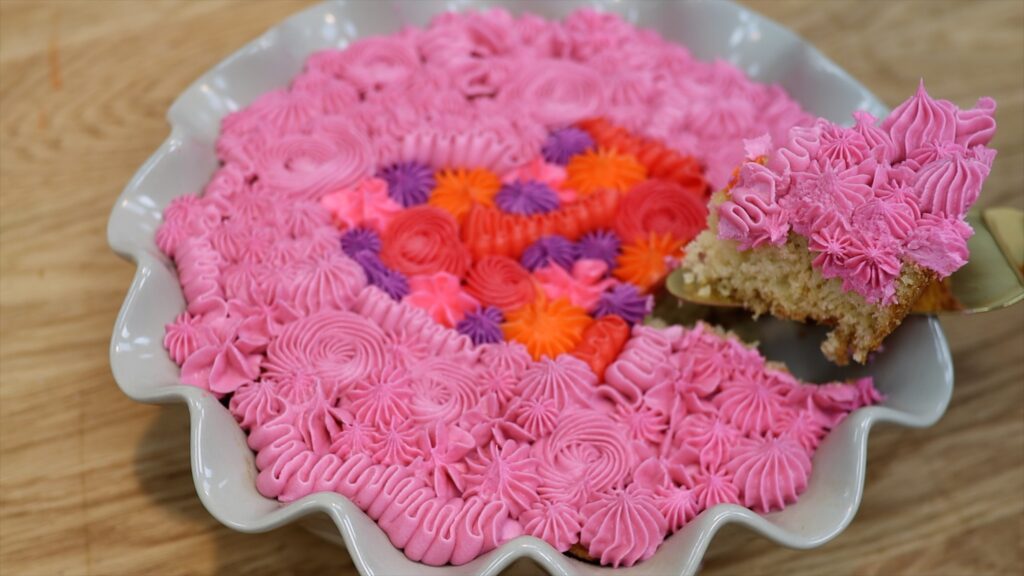
The easiest kind of cake to make is a tray bake cake. You bake, decorate and serve these cakes in the same dish! Use a few different piping tips and a variety of colours of frosting to create different textures.
To pipe a design, score the outline with a toothpick and then piping within that outline. Save one colour to pipe outside the outline, which will be the background colour.
I’m using my 4 Minute Buttercream but you can do this with ganache, whipped cream or meringue buttercream instead. And this is my Very Vanilla Cake but you can even do this with brownies or chocolate chip cookie dough!
Tray bakes are easy to make and decorate and also easy to transport and serve!
Kid's Choice Mother's Day Cake!
If you don’t feel like decorating a Mother’s Day cake for yourself or you can’t choose a style or design, let your kids decorate a cake for you! It’s a fun activity that they’ll love and even if it’s not beautiful, it will be delicious and a wonderful memory.
These are two of my kids, James and Max. They wanted to make their own baking videos and you can watch this one and all of their other videos on their YouTube channel, British Boys Bake! They would LOVE it if you subscribed!
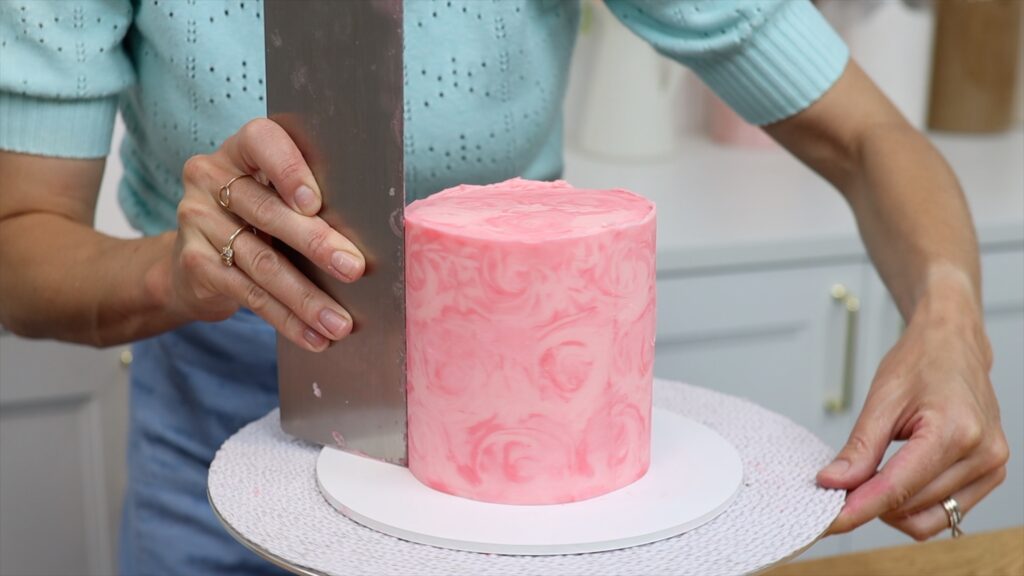
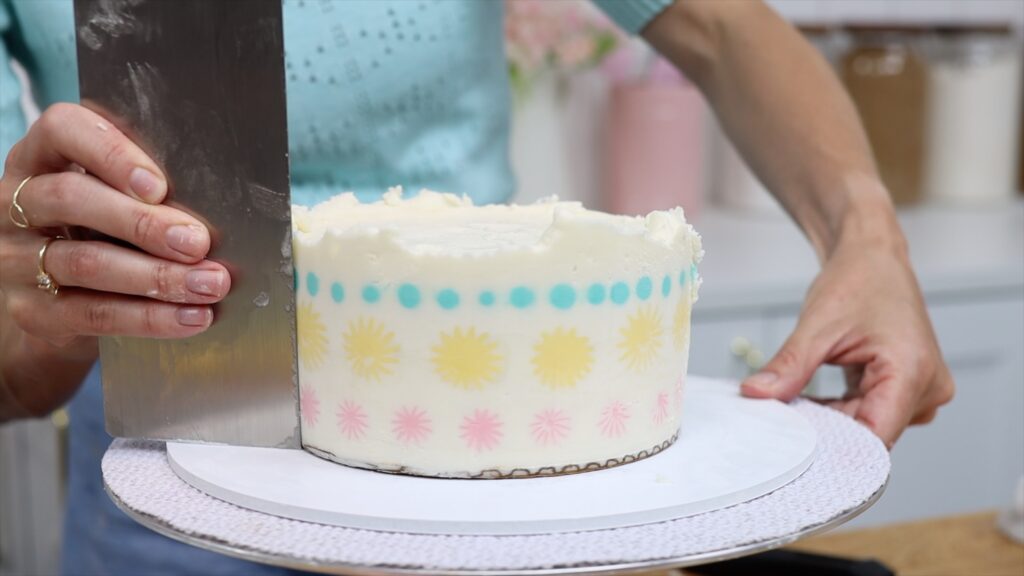
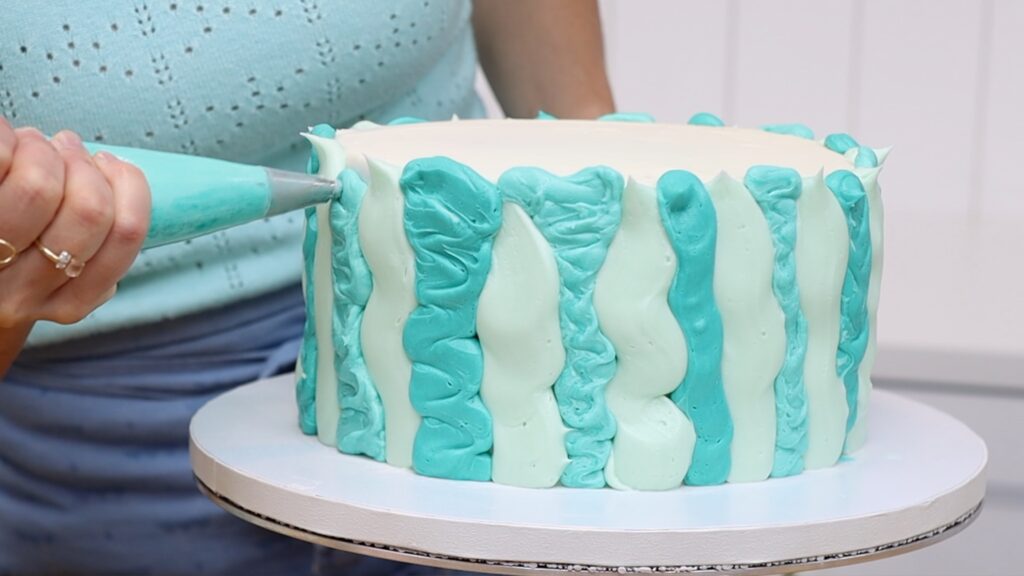
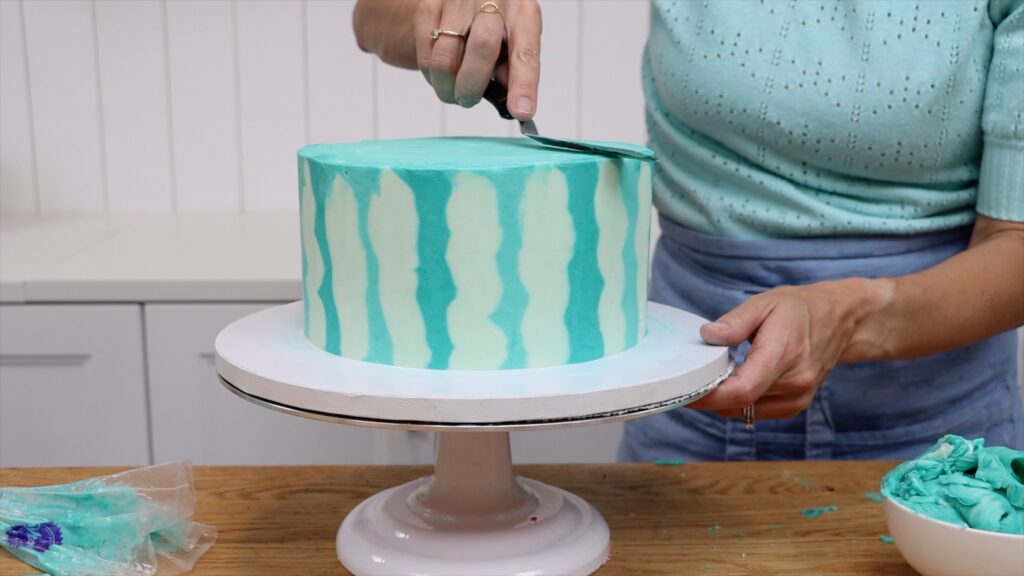
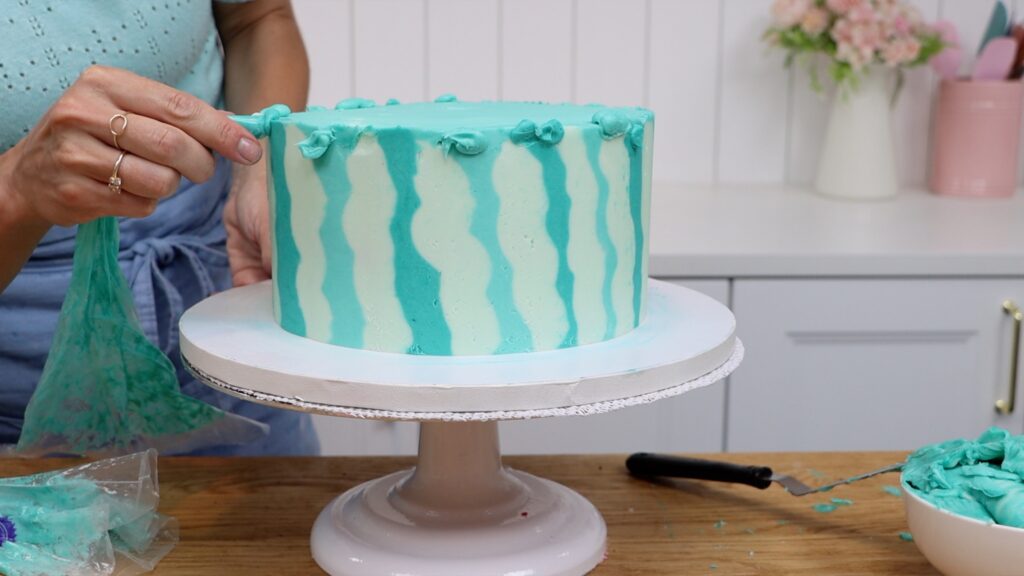
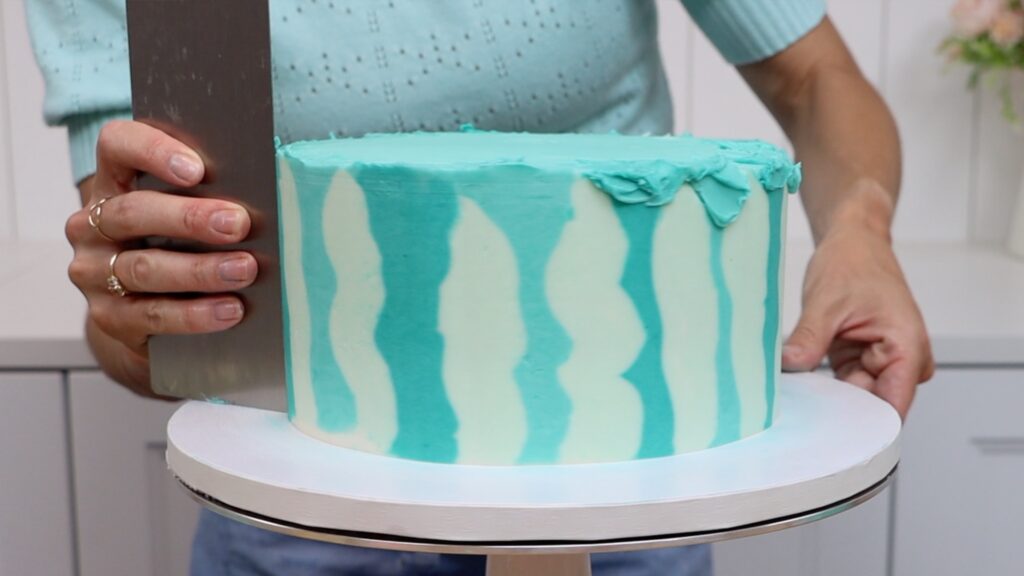
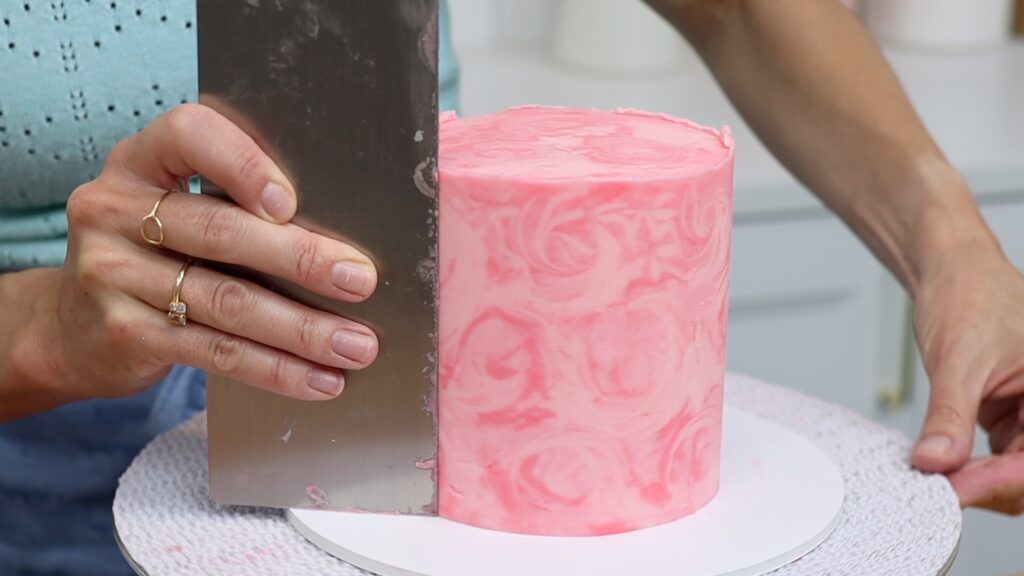
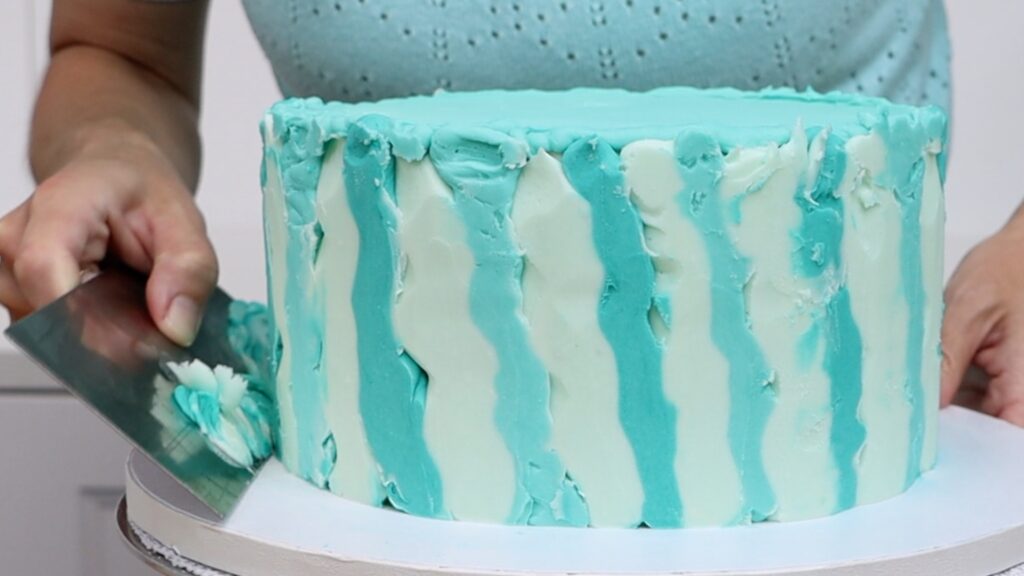
Turn piping into flat patterns on cake like stripes, circles, diagonals and triangles by giving the frosting a facelift! In this tutorial I’ll show you everything you need to know about this technique.
Prepare your cake
After assembling your cake, cover it in a thin layer of frosting. This will trap any crumbs that might come off the cake and give the cake a neat shape. It doesn't have to be perfect but it’s important that the sides are straight and smooth.
Mark your pattern on cake
Before creating flat patterns on cakes, I really recommend marking or scoring your pattern into the frosting.
A pattern is an arrangement of lines or shapes repeated at regular intervals. This means the placement and spacing of each shape is really important. If you try to freestyle a pattern and the shapes are different distances apart from each other, it won’t look like a pattern.
So, how can you make sure the shapes of a pattern are spaced evenly? Here are three methods:
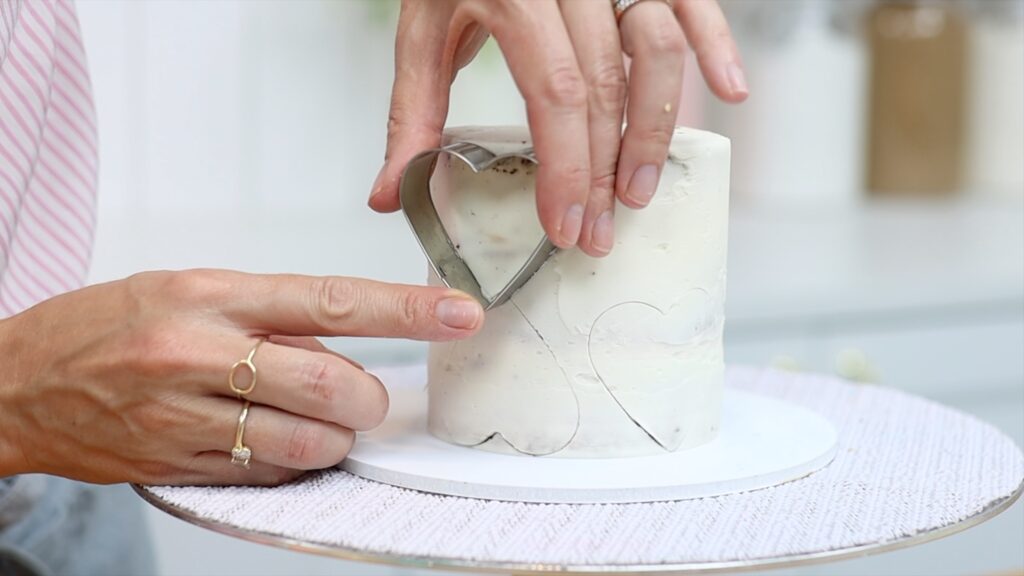
Use cookie cutters to mark your pattern. Line the shape up so that the edges touch or leave the same amount of space in between them. Another option is to overlap the shapes by the same amount each time. If you don’t have a cookie cutter the shape you’re looking for, you can use part of another one. For example, I’m using this heart to make triangles:
If your pattern is in lines going around or up and down your cake, mark those lines onto the cake. You can press the straight edge of a cake comb into the frosting to score the lines. Then pipe along those lines.
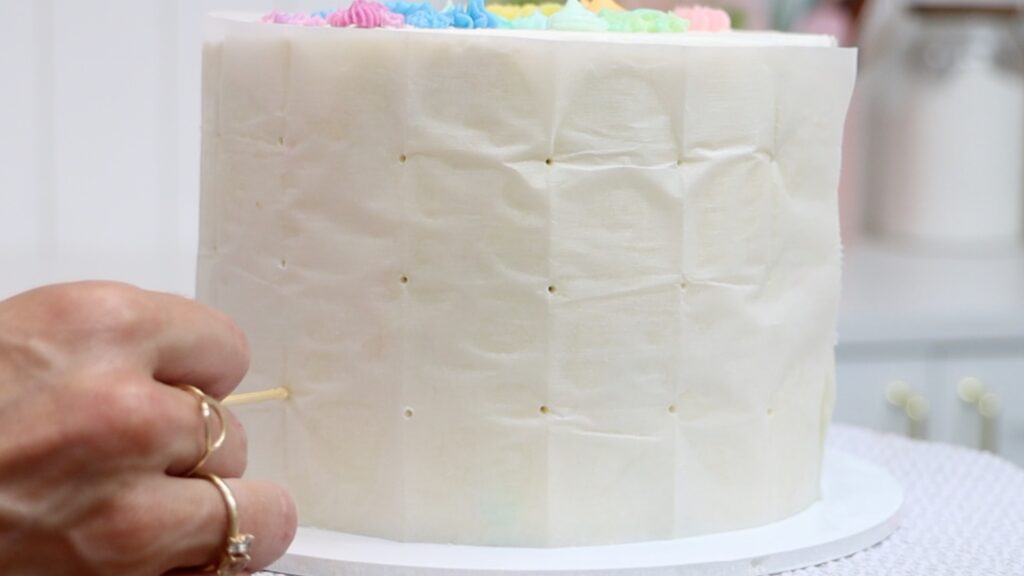
If your pattern follows lots of horizontal, vertical or diagonal lines, mark a grid. This will space the entire pattern evenly. To make a grid you'll need a piece of parchment paper and a chilled cake. Wrap a piece of string or ribbon around your cake to measure it and then cut a piece of parchment paper the same length. It needs to be long enough to wrap around your cake and should be the same height, too. Measure it after the frosting has set, which takes about 30 minutes in the fridge, so that the paper doesn’t stick to it. Fold the paper in half and half again and again, in both directions. When you unfold it you’ll have a grid! Wrap the grid around the cake and poke a pin or toothpick through every point where the creases meet. This will transfer the grid onto your frosted cake.
Prepare your colours
To create flat patterns on cake, begin with piping. You'll use piping bags to pipe the pattern onto the cake. There are lots of ways to prepare the colours and the most obvious is to tint each colour individually and use several piping bags with different piping tips.
To create different shades, use different amounts of the same colours. I like to mix small amounts of buttercream in a cupcake pan so I don’t have to wash lots of bowls afterwards!
You canmix different colours in just onebowl by starting with the lightest colour. Scoop some into a piping bag, add more gel to make the next colour, and repeat.
Layer different colours within the same piping bag to create a gorgeous ombre effect with your piping. Lay out of piece of plastic wrap and spoon or spread or pipe your colours side by side onto it. You can use different colours or different shades of the same colour, from light to dark or dark to light.
Lift up the plastic wrap around the colours and roll it into a log.
Cut off the end that you’re going to pipe first and drop that end down into the piping bag. The shades will be layered neatly within the piping bag. They will come through after each other but they’ll also blend slightly, which you’ll see on the cake with the circular pattern.
You can skip the plastic wrap and just spoon the colours straight into the piping bag. The colours won’t layer as neatly as they do in the plastic wrap log. You can see this in the piping bag below and you’ll see the result on the circular pattern.
I'm using my 4 Minute Buttercream for all of the cakes in this tutorial. How much buttercream do you need? If your pattern only covers a small part of the cake, you only need a spoonful of buttercream. If the pattern covers most of the surface of the cake you’ll need more buttercream. It's best to always fill your piping bag between one third and two thirds full so that you can comfortably hold and squeeze it.
You’ll see the results of different piping tips in these patterns. For star tips, choose ones with long prongs that are spaced widely apart from each other. These will give you better results than tiny, tight prongs, where the details tend to get lost and piping looks like circles.
Pipe and chill
Ok, let’s start piping! Like I mentioned, flat patterns on cake begin with texture. Using the markings you made on your cake, pipe the pattern you’ve chosen.
Aim to pipe everything the same thickness. When you take off the outer layers of this piping, if some parts of the piping are thicker than others you’ll have to take off lots of that piping to get level with the rest of the piping. This will make more sense in a minute!
Keep in mind that this technique works best for fairly simple patterns with space in between each detail. Also, the part of the piping that is visible now will not be visible at the end. The peak or tip or outer edge is going to disappear when you flatten your pattern so don’t worry about that part. For example, the peaks on rosettes don’t all need to point in the same direction.
For the circular pattern below I’m using a star shaped tip to fill in the areas where the circles overlap. I’m using the plastic wrap method for an ombre effect, starting with the lightest shade at the bottom of the piping bag. When you finish a section and you want the colour to get darker, squeeze some of the buttercream out of the bag until you see it getting darker. Then pipe the next section.
Unlike the other two cakes, this piping isn’t spaced apart. The star shapes will blend together when I flatten the pattern and their shape will only be noticeable around the edges of each section of piping.
These stripes, triangles and circles are just a few examples of flat patterns on cake. The possibilities are endless! Find more ideas in this tutorial on facelift frosting and on my cake school!
After piping all of the details of your pattern, chill this part before adding the background colour or colours. Put the cake in the freezer for 15 minutes so that the piping becomes firm.
Fill and chill
When you can touch the piping without damaging it, cover the cake with your background colour of frosting. It's best to use a piping bag because it applies the least pressure to the piped pattern. If you spread it straight on, your offset spatula can knock off parts of the piping.
Cover the top of the cake as well and then smooth the top. I like to start with the top of the cake because you’ll prevent dropping edges, getting sharper edges around the top of the cake this way.
This frosting you've just piped onto the cake will be the background colour of your pattern. It will cover up your piping for now, but not for long! Spread the frosting gently to push it into any gaps within the piping and also to scrape off the excess. You'll leave a relatively level, smooth layer of frosting on the cake. Don’t press hard enough to touch the piped pattern because if any parts of that piping break off, you’ll spread those pieces around the cake and you’ll end up with unexpected details in your pattern!
Now put the cake in the freezer for 20 -30 minutes, until this frosting is cold and firm. The time depends on how cold your cake layers already are. You don’t want to freeze the frosting completely because it will be much harder to remove the outer layers when they’re frozen.
Give your frosting a facelift
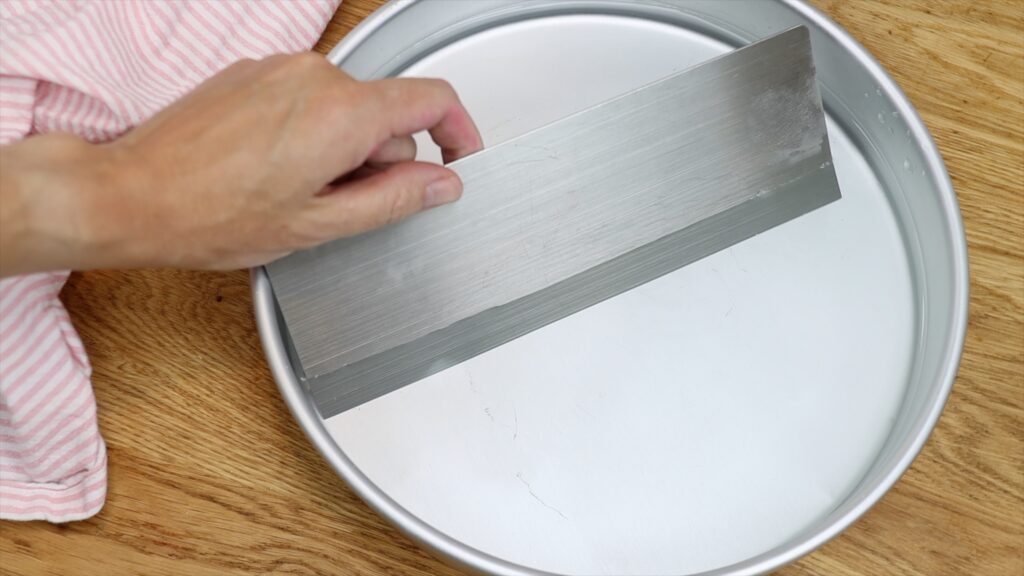
Ok, here comes the really fun part! Let’s give this frosting a facelift! Pour boiling water into a cake pan wide enough to fit the edge of a metal cake comb into. Leave your comb in the water while you take your cake out of the freezer. Then dry the comb on a towel or paper towel and scrape around the cake. This is a process, and you’ll question it during the first few scrapes!
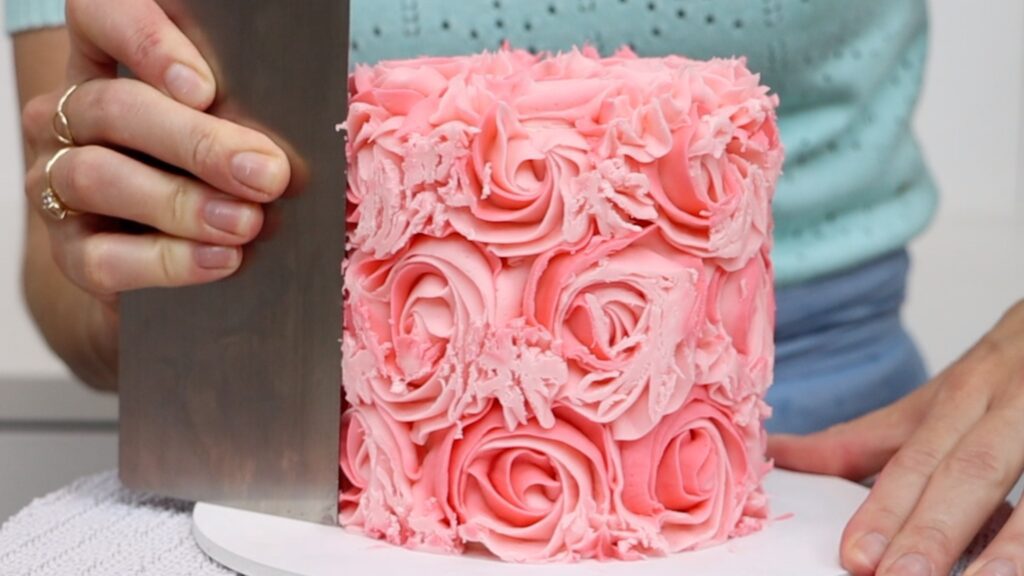
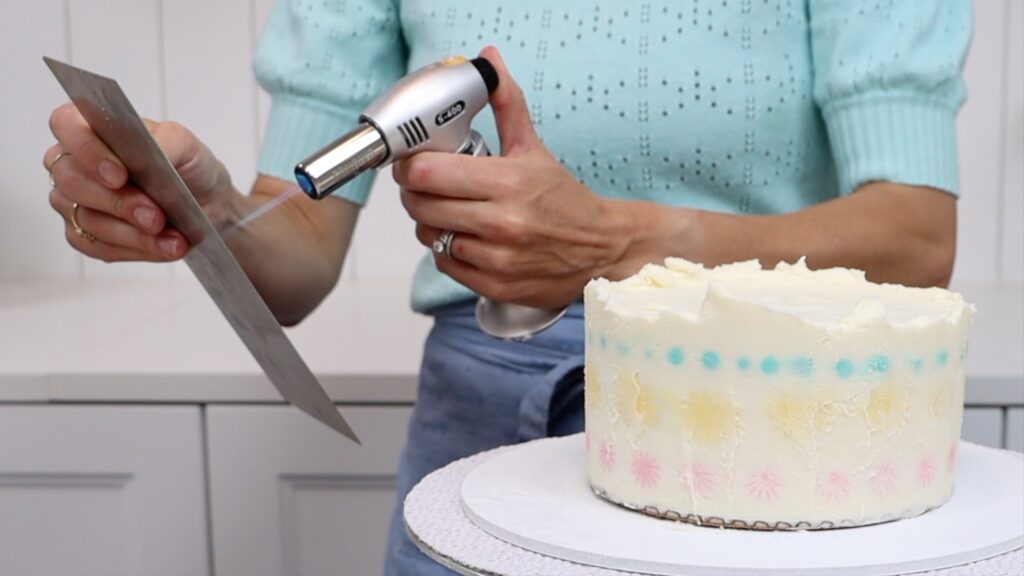
The hot metal will take off layer after layer of frosting, revealing the colours of your piping. Keep scraping, taking off the top layers of the piping to reveal a cross section, which will be the middle part of whatever shape you piped. You’re giving the frosting a facelift!
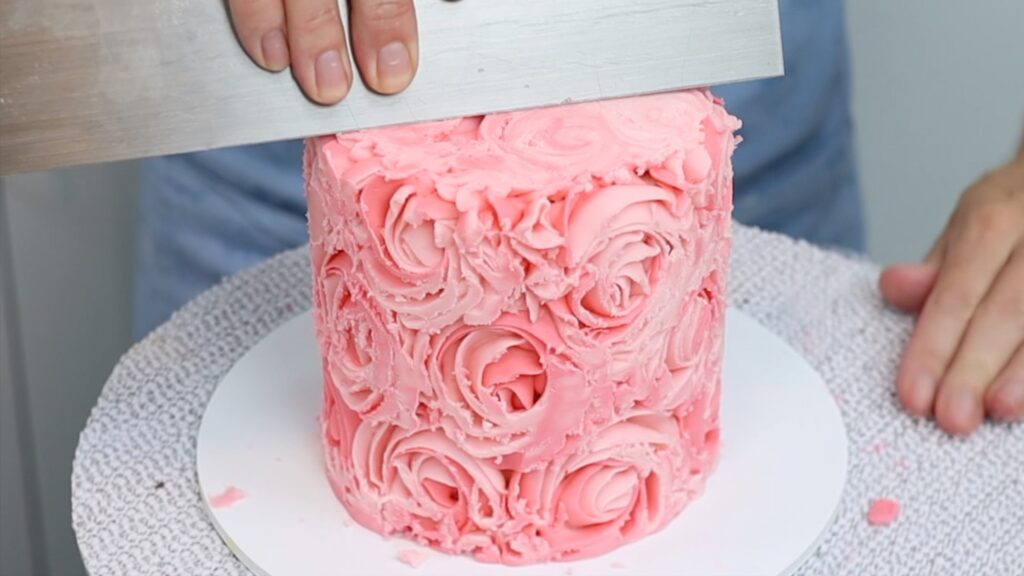
Different parts of your pattern might become visible before others. Where you spread the background colour more thickly over the piping, you'll have to scrape more off before the pattern will show through. Scraping up the sides of the cake is the quickest way to remove the outer layers. Then scrape around the cake to smooth the sides.
Any indents in the frosting are caused by air pockets within the frosting or where the frosting isn’t as thick as on the rest of the cake. Fill them in by piping or spreading more buttercream of whatever colour that part of the pattern should be. For the details of the pattern, use the leftover buttercream in your piping bags. For the background colour, use those leftovers.
Then scrape again straight away to take off the excess. Now the pattern should be visible and also smooth because that buttercream you just spread or piped on has filled in the indents.
Now you have a perfectly flat buttercream pattern on your cake, which looks like it’s been printed or painted on!
I can’t wait for you to try this technique! Tell me in the comments when you create your own flat patterns on cake and tag @britishgirlbakes or #faceliftfrosting in your photos on social media so I can see your creations!
Visit my cake school to learn more fun cake decorating techniques, all broken down step by step, showing all of the little details so that you can use the techniques to make your own cake masterpieces!
I’m so excited to show you this fun technique I’ve been experimenting with! After piping buttercream onto a cake, give it a facelift to reveal a cross section of that piping. Let's call it Facelift Frosting! The technique creates a stunning effect that looks like edible paper or painted fondant. There are endless variations you can try and in this tutorial I’ll show you three.
Step 1: Prepare your cake for Facelift Frosting
To prepare your cake for this technique, cover it in a crumb coat. A crumb coat is a thin layer of frosting that traps any crumbs that come off the cake. It prevents those crumbs from getting into your final layer of frosting next. I'm using my 4 Minute Buttercream for all of these cakes.
The crumb coat doesn't have to be smooth because it’s going to be covered up in a moment. It should create a neat outline for the cake though, so aim for straight sides and a level top. Then chill the cake to set this frosting while you prepare your piping bags.
Step 2: Prepare your piping bags
You’ll need at least two colours or shades of buttercream for this technique. After tinting your buttercream, put it into piping bags. You can use the piping bags without piping tips or for more detailed designs, use a variety of piping tips.
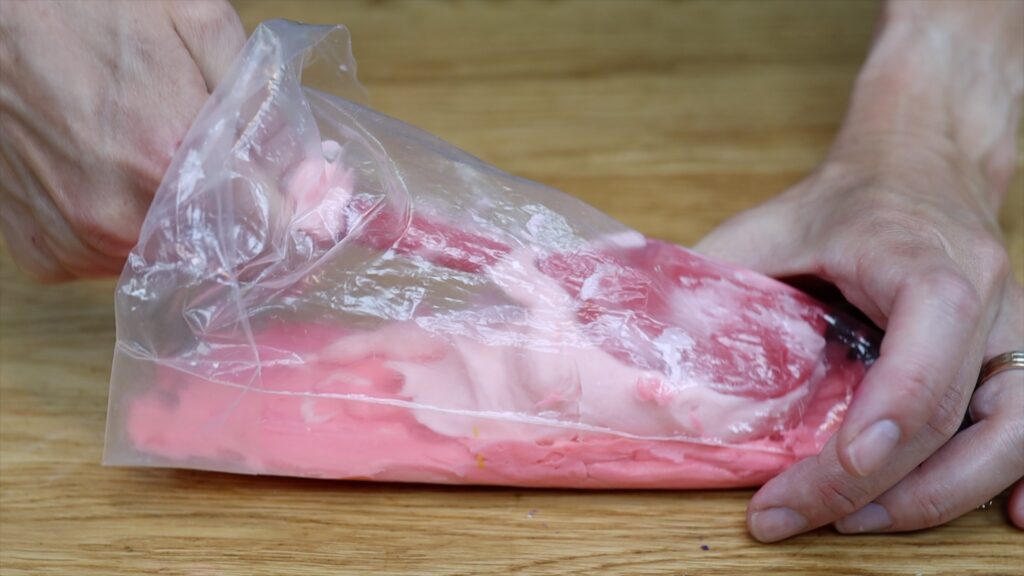
One way to incorporate two colours with just one piping bag is to do two tone frosting. To do this, hold the piping bag open and spread one colour down one side of the bag. Then fill the other half of the piping bag with another colour, like this:
Step 3: Pipe and chill
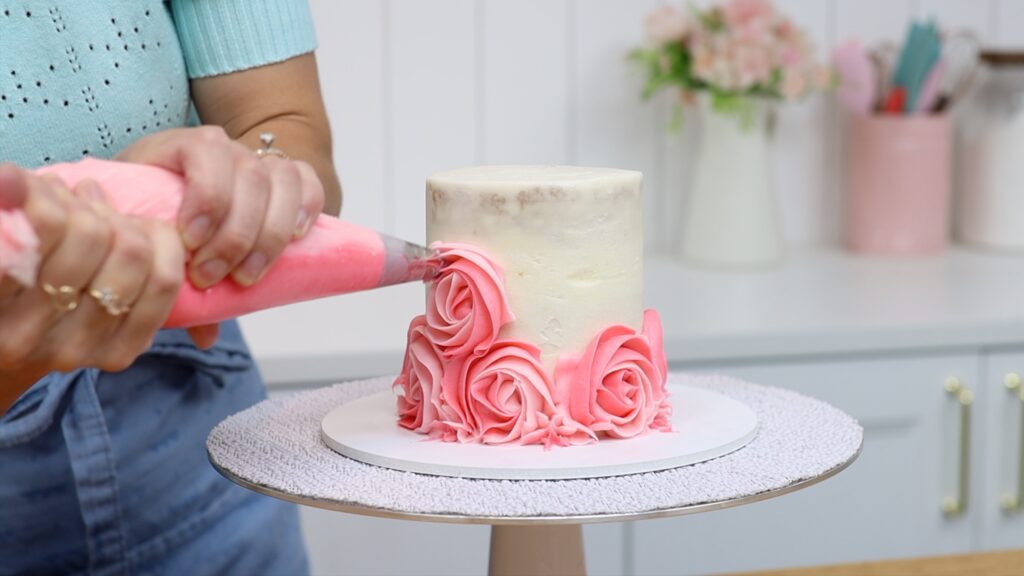
Take your chilled cake out of the fridge and pipe away! You can cover the whole cake with piping, like I’m doing here with these roses. I know this rose frosting technique is a bit dated but the effect at the end is going to be totally different and unrecognizable.
You can create pretty designs without piping tips by just cutting the ends off piping bags. Try wavy lines or zig zags or you could pipe hundreds of dots or really anything you like. Save all of your leftover frosting in the piping bags for later!
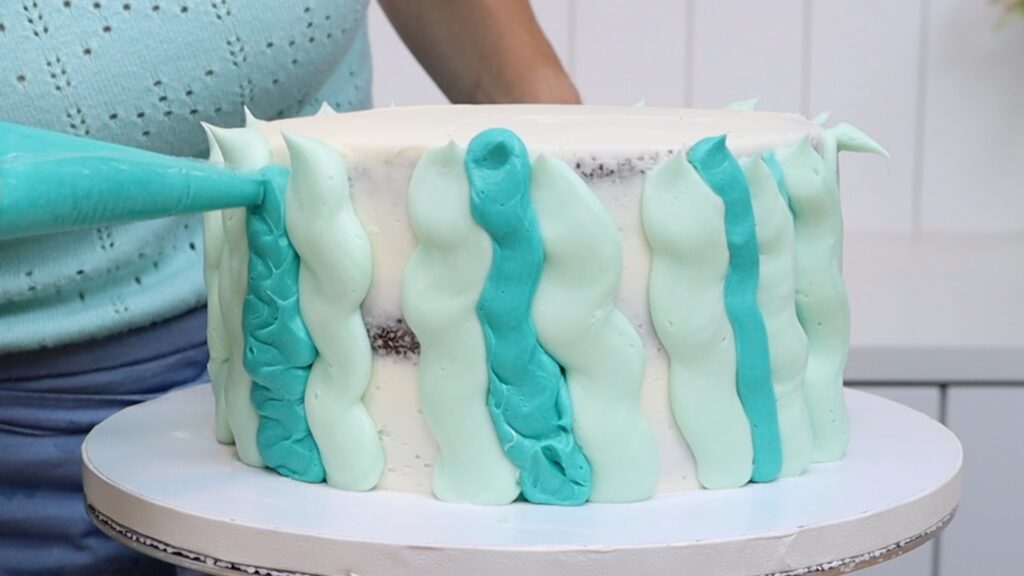
For the previous two cakes I covered the entire cake with piping but you don’t have to do it this way. Another option is to pipe texture to partially cover the cake. I'm piping textured stripes on this cake and leave the rest of the crumb coat blank for now:
For partial coverage piping, put the cake in the freezer just long enough to set the piping. It will take about 15 minutes. Then pipe over the whole cake with another color of frosting like this plain white buttercream:
You apply much less pressure with a piping bag compared to using an offset spatula to spread this frosting straight on. This means you won’t damage the rosettes or dots or whatever you piped.
However you choose to decorate the cake, make sure the entire cake is covered in frosting. Don't forget the top of the cake! You might choose to cover the top with smooth frosting instead of piping onto it.
Now put the cake in the freezer for 20-30 minutes to chill and set the frosting.
Step 4: Scrape the frosting
While the frosting is chilling, boil a kettle and find your metal straight edged cake comb. Pour the boiling water into a cake pan at least as wide as your comb. You need to be able to fit the entire straight edge of the cake comb into it. The water should be about two centimeters or an inch high.
Take your cake out of the freezer and put it on a turntable. Lift the cake comb out of the hot water and dry it off and then scrape around the cake. Don’t panic after the first scrape! You’re going to pull off the outer parts of the piping and it’s going to look very messy.
If you have piping on the top of the cake you’ll need to scrape that as well. You hot metal cake comb will take off the texture layer by layer until it’s smooth.
After each scrape around the cake, wipe the buttercream off your cake comb and dip it back in the hot water. Dry the comb off and scrape again. And again. And again. This will take a few minutes and several scrapes.
Step 5: Fill in and scrape to reveal Facelift Frosting!
When most of the frosting is smooth but you still see several gaps or indents, stop scraping. If you continue, you'll expose the crumb coat underneath the piping. Instead, use the leftover buttercream from piping to fill in those indents.
Spread this fresh frosting to push it deeper into the indents and then scrape again. You'll drag the fresh frosting over the whole cake at first but keep going!
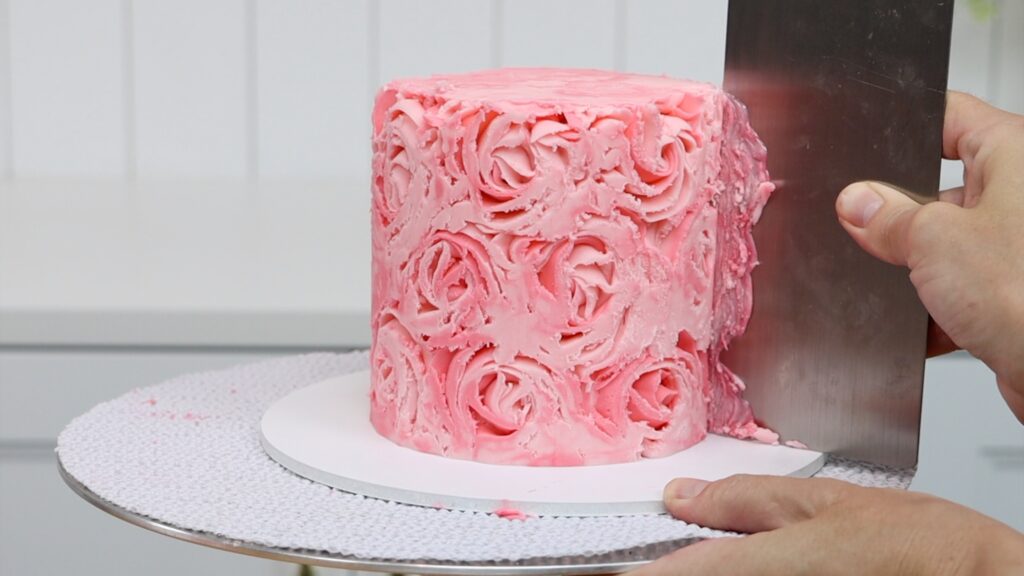
As you scrape the frosting off you’ll reveal a cross section of the piping. It will look as though you’ve sliced straight through the middle of whatever shape you piped. The result is a very intricate design that looks like it’s been printed or painted onto the cake. The piped buttercream has been given a facelift!
Tips for this Facelift Frosting technique
As you’re scraping the frosting off, go in different directions with your cake comb. Scrape up the sides of the cake as well as around. It’s quicker to scrape up than around and you'll take off the outer layers faster this way. Then switch to going around the cake to get the curve of the sides smooth at the end.
Remember to attach your cake to the cake board! Before you assemble your cake, spread or pipe a generous dot of buttercream onto the middle of the cake board. Press your first layer of cake down onto that dot. When you chill your cake later, the buttercream dot will get cold and hard and it will act like glue, securing your cake to the board. This is how to prevent your cake from moving around while you’re scraping off the piped frosting.
Don’t leave your cake in the freezer any longer than 20-30 minutes. If you do, the frosting will freeze rather than just getting cold and firm. It will be hard work to scrape off the outer layers.
Replace the hot water as it cools. The hotter the water, the hotter your cake comb and the easier it will be to scrape off the layers of frosting. If you prefer you can use a blowtorch to heat the straight edge of your metal cake comb!
Don’t worry abut the visible cake board at the bottom of these cakes - in next week’s tutorial I’ll show you how to stack a tier cake and as part of that, I’ll be covering up these boards!
Any other questions? Ask them in the comments!
If you like the breakdown of this technique, you’ll LOVE my online courses! Visit my cake school to learn hundreds of cake decorating techniques and designs. Join my ClubPLUS membership for access to every MasterCourse, MiniCourse, Live Workshop and 5 Minute Fridays, where I share a tip or technique or demonstrate an answer to a FAQ in just 5 minutes!
You can watch a video of this tutorial on Facelift Frosting if you prefer:
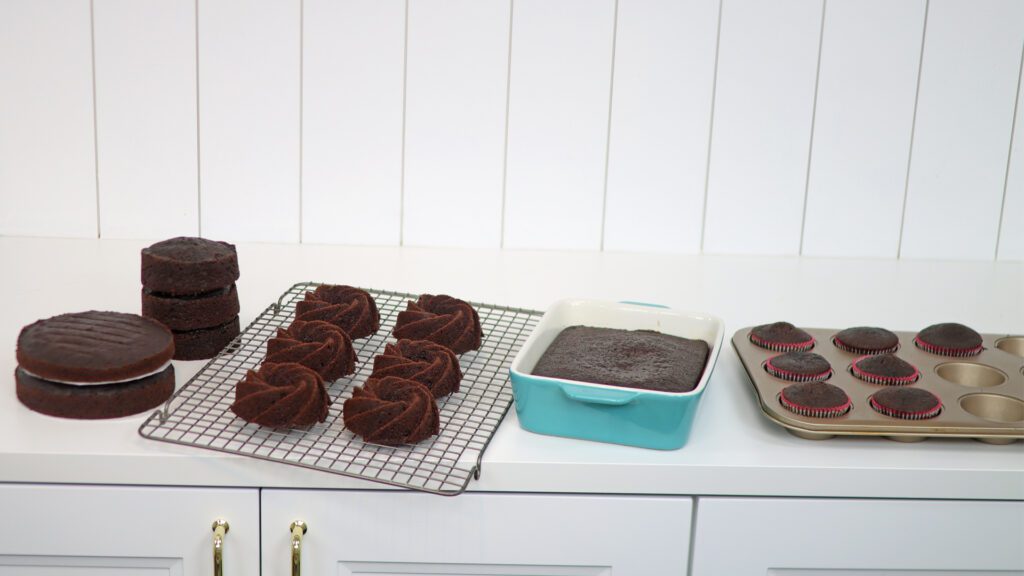
This small chocolate cake recipe can make:
one tall 4” cake
two short 4" cakes
one short 6” cake
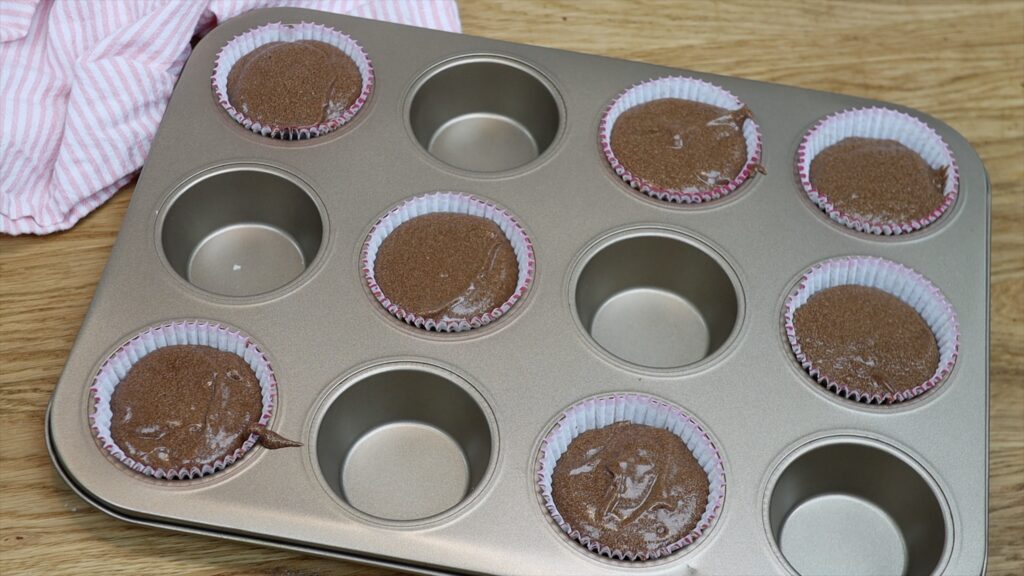
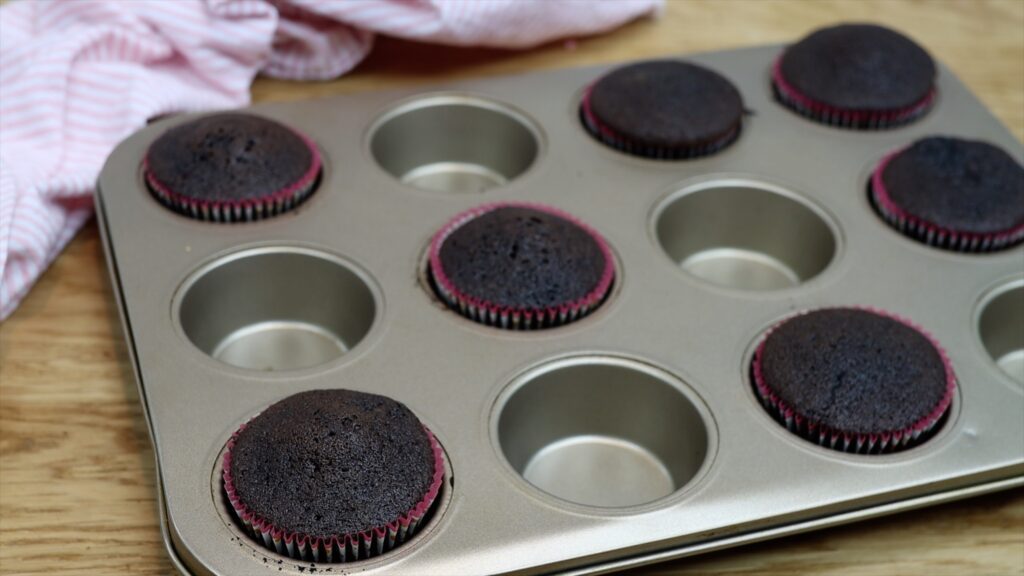
7 cupcakes
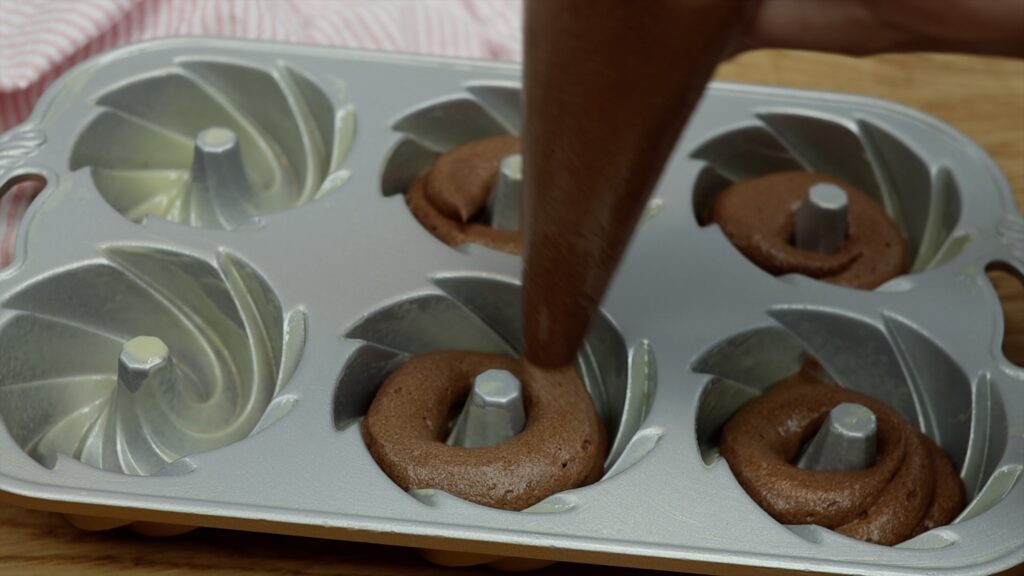
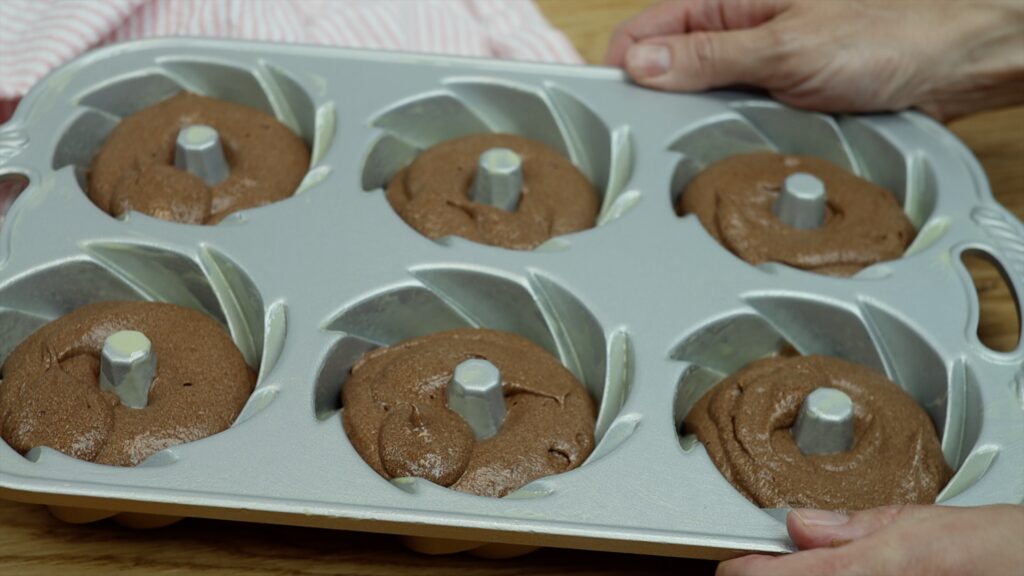
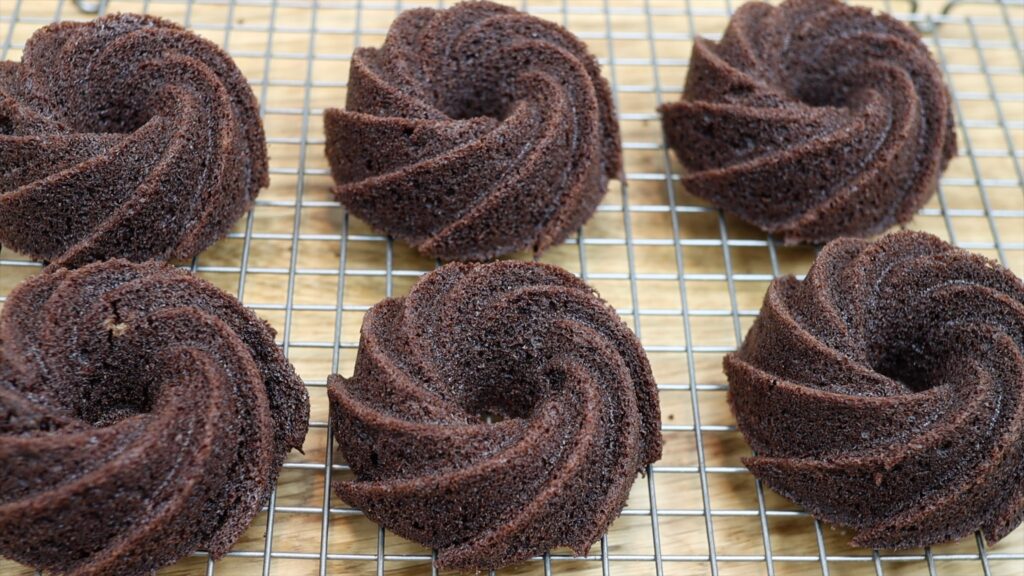
6 mini bundt cakes
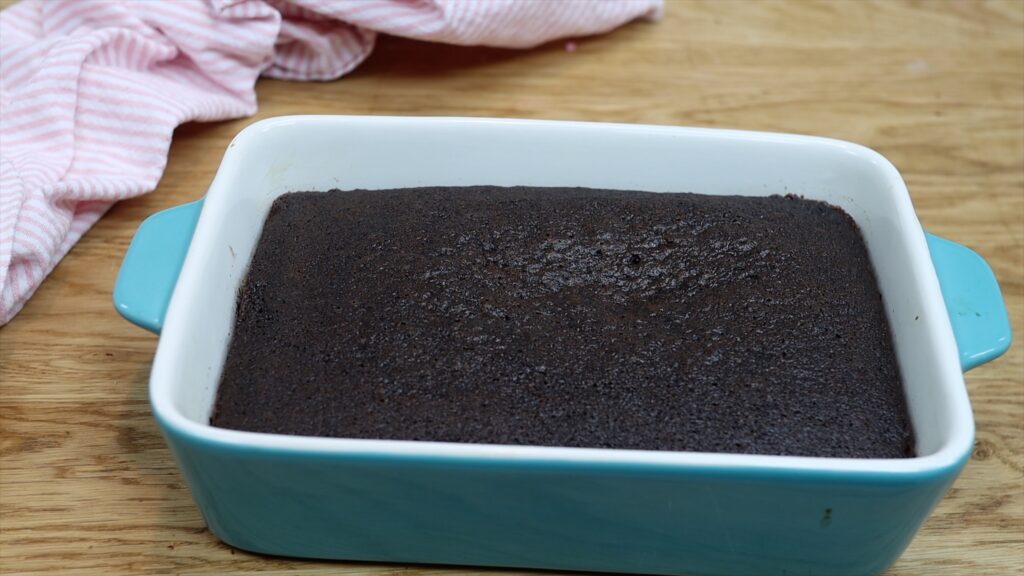
a 9" x 6" tray bake cake
The recipe uses cocoa powder for a super chocolatey flavour and butter to make it rich and moist. You can convert it into any of the desserts listed above by adjusting the baking time and temperature. You'll find the recipe card below these directions and photos. Skip to the bottom of the page to watch a video if you prefer!
How to make this small chocolate cake recipe
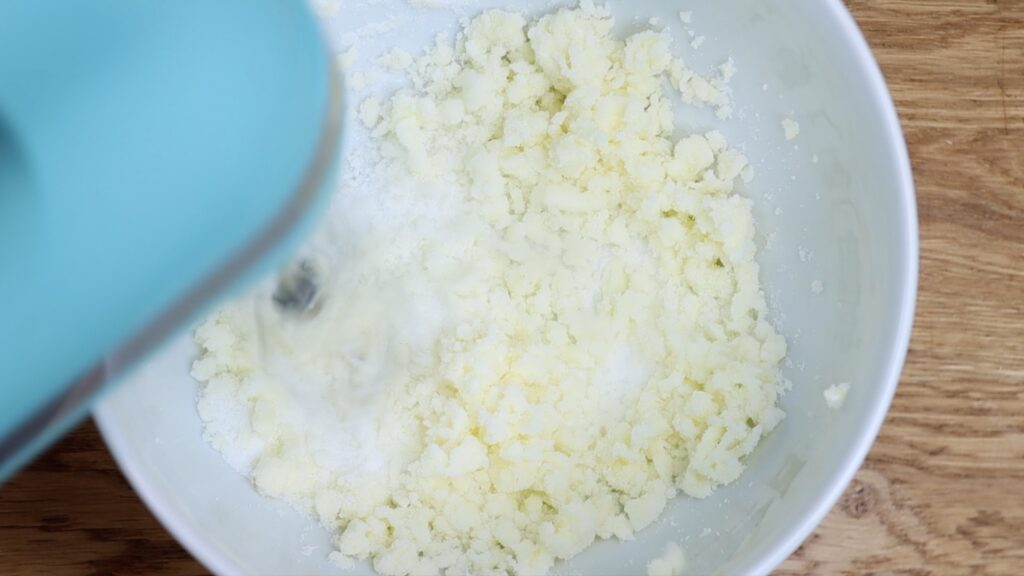
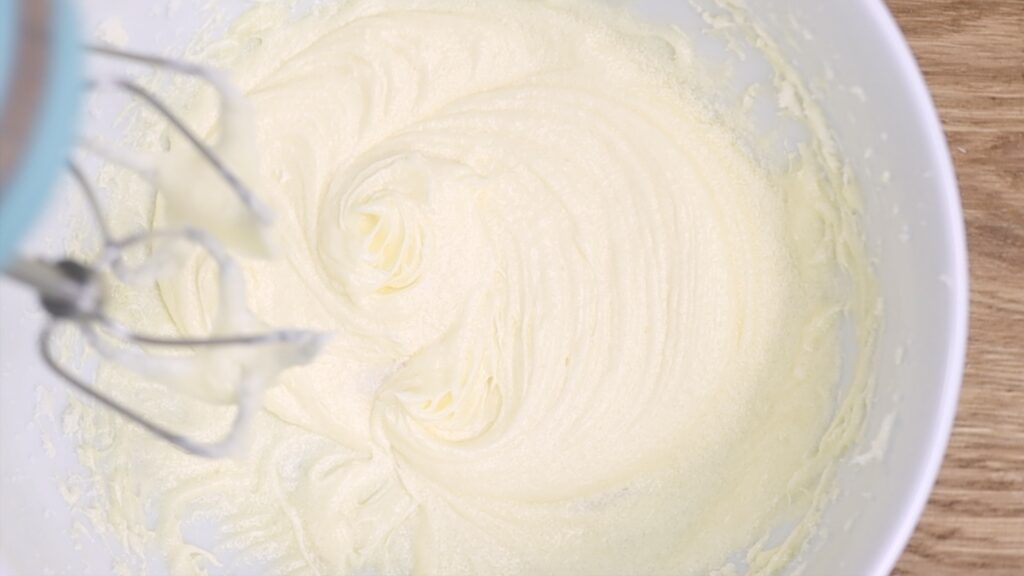
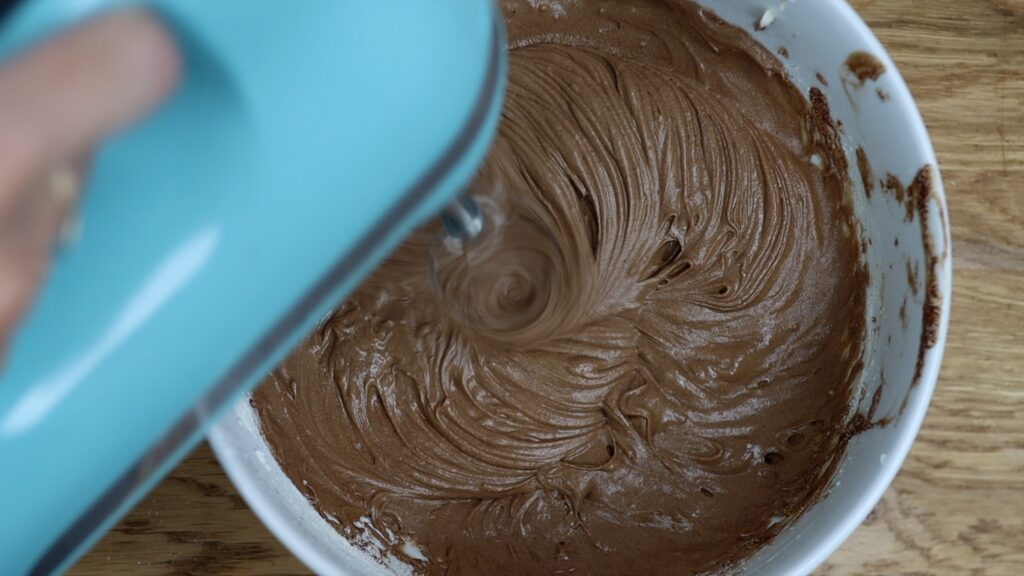
Start by creaming room temperature butter and sugar together, which takes about 5 minutes at medium speed. I prefer to use a handheld mixer rather than a stand mixer for small recipes. You can angle it to incorporate all of the ingredients, even if they're stuck to the sides or bottom of the bowl. A stand mixer tends to be more effective for bigger batches with larger quantities of ingredients.
At the beginning, the butter and sugar mixture will look gritty or chunky, like this:
Keep mixing until it gets lighter in colour and starts to look fluffy and creamy. Add an egg and the vanilla, mixing until they're incorporated. You’ll notice the mixture getting lighter in colour and runnier and smoother. Your mixer will leave trails behind and the batter will look similar to pudding:
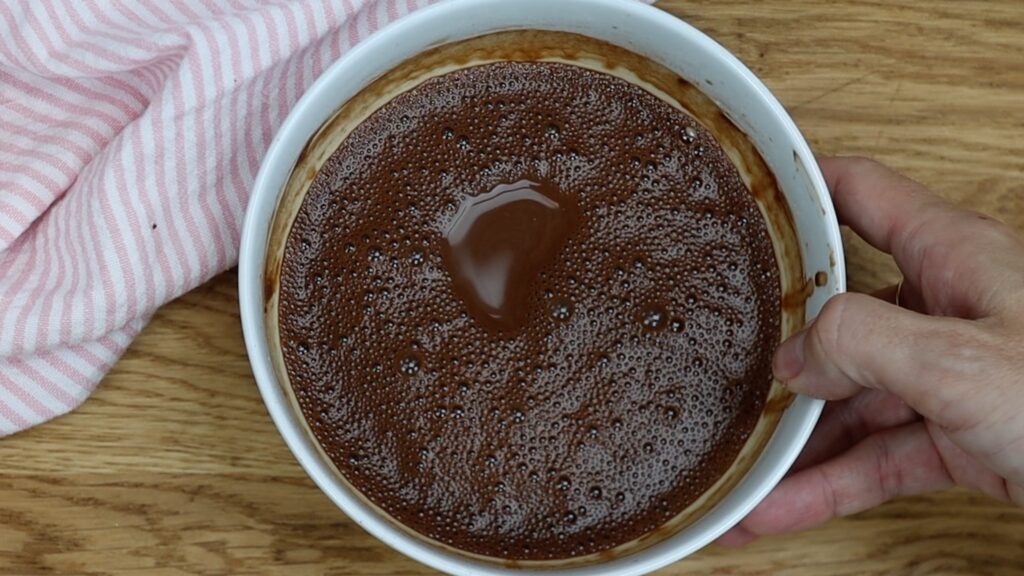
Now whisk together hot water with cocoa powder. The hot water will help the cocoa powder dissolve easily but you’ll need to let it cool before adding it to the butter so you don’t melt it.
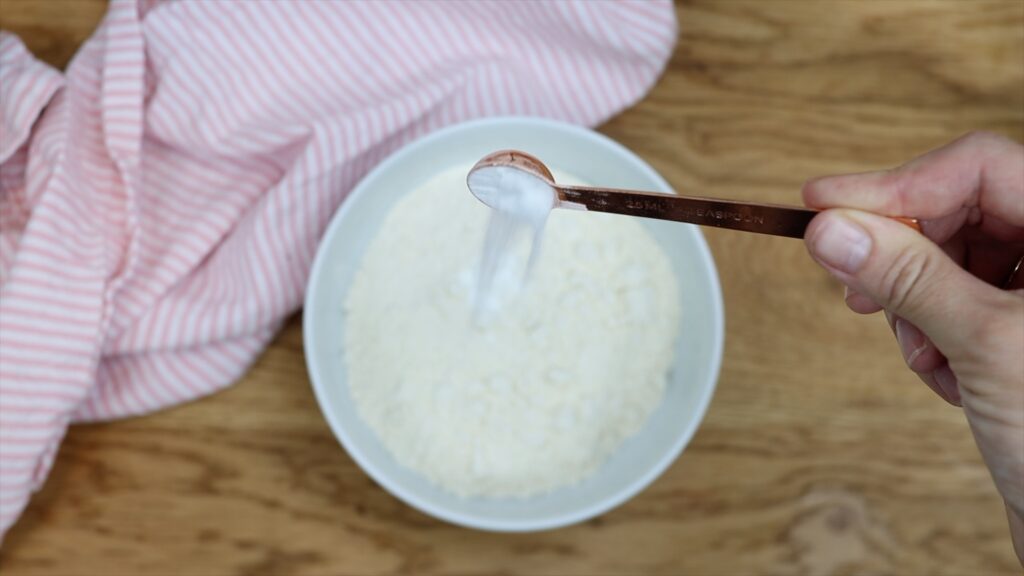
In another bowl, whisk together all purpose or plain flour with baking powder and baking soda. The reason for mixing them together is to make sure they mix evenly through the batter later.
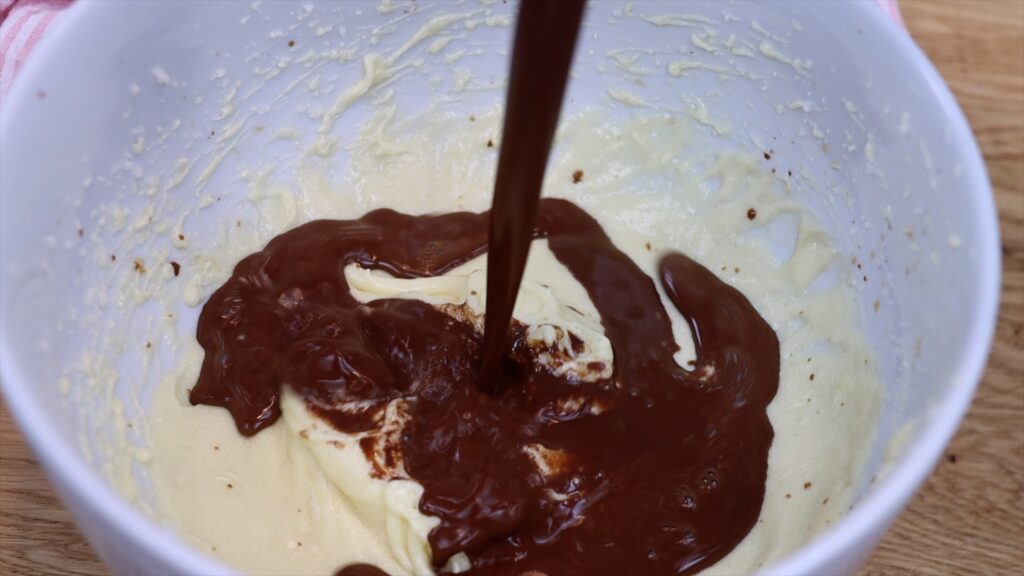
Add the cocoa powder mixture to the butter mixture first and mix it in. Then use a spatula to scrape around the bowl to make sure there isn’t any butter stuck to the bottom or the sides of the bowl.
Next, add the flour mixture. Don’t overmix the batter! Stop mixing as soon as you don’t see any white flour in the batter.
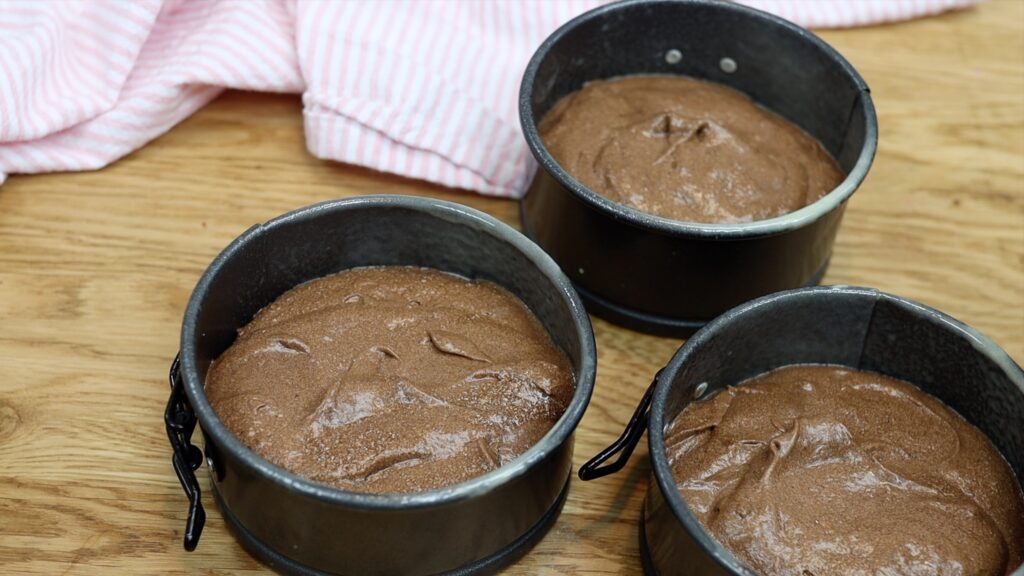
Now just transfer the batter into whatever pan or mold or dish you want to use!
How to convert this small chocolate cake recipe
Look at all of the different things you can bake with this recipe!
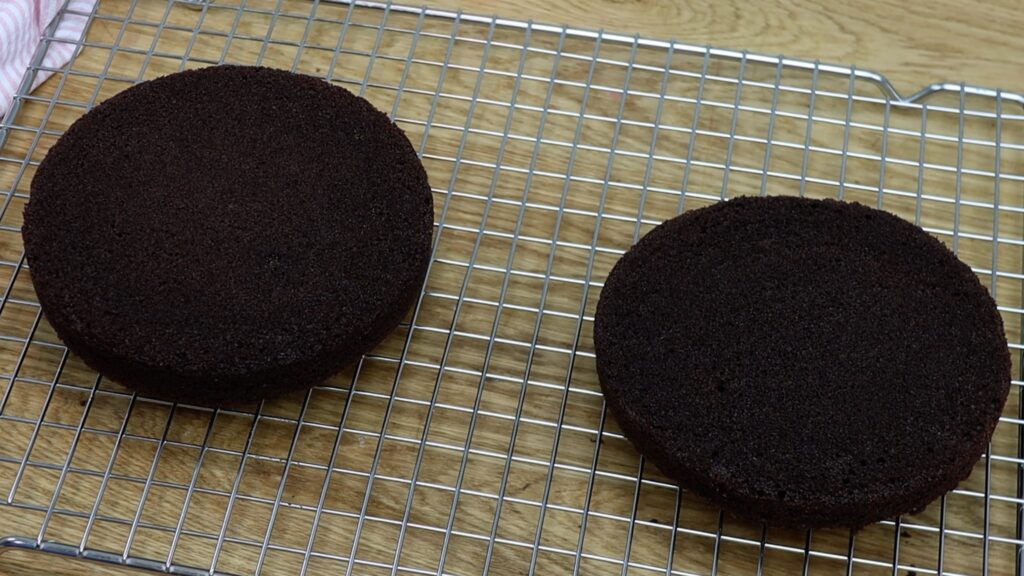
You can use this small chocolate cake recipe for a 6 inch cake bydividing the batter between two 6 inch pans. Bake at 350F for 16 minutes.
For a tall 4 inch cake, divide the batter into three 4 inch pans and bake at 350F for 21 minutes. If you prefer, you can make two short 4 inch cakes by dividing the batter into four 4 inch pans. These will bake at 350F for 18 minutes.
You can make 7 cupcakes with this small chocolate cake recipe. Fill the wrappers 3/4 full for a slightly domed cupcake. Bake at 375F for 14 minutes.
For mini bundt cakes you'll have enough batter for 6. I like to pipe the batter to divide it evenly and neatly between the molds or cavities without getting batter all over the pan! Bake at 375F for 19 minutes.
For a super easy cake that you can bake, frost and decorate in the pan, make a tray bake cake. This small chocolate cake recipe will fill a 9" x 6" casserole or baking dish. Bake at 350F for 29 minutes.
Frosting and decorating ideas
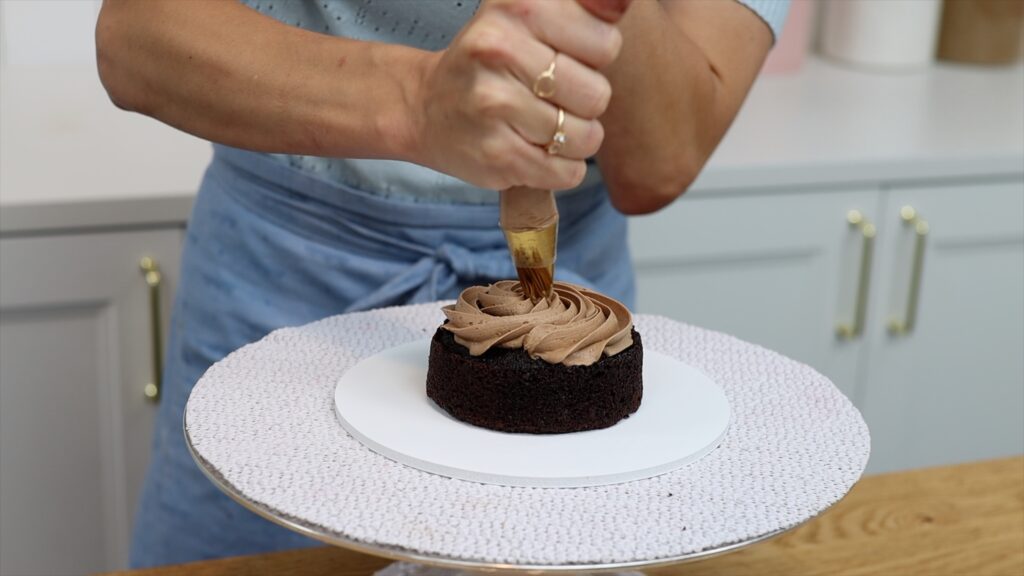
Of course, there are endless ways to frost and decorate all of these! I love my 4 Minute Buttercream for filling and frosting cakes, piping swirls on cupcakes, and piping gorgeous textures on tray bake cakes.
For naked cakes try different piping tips and different colours of buttercream between each layer of cake. It's quickest to pipe filling onto cakes but you can also spread it on. Find out more about how to make a quick cake in this tutorial!
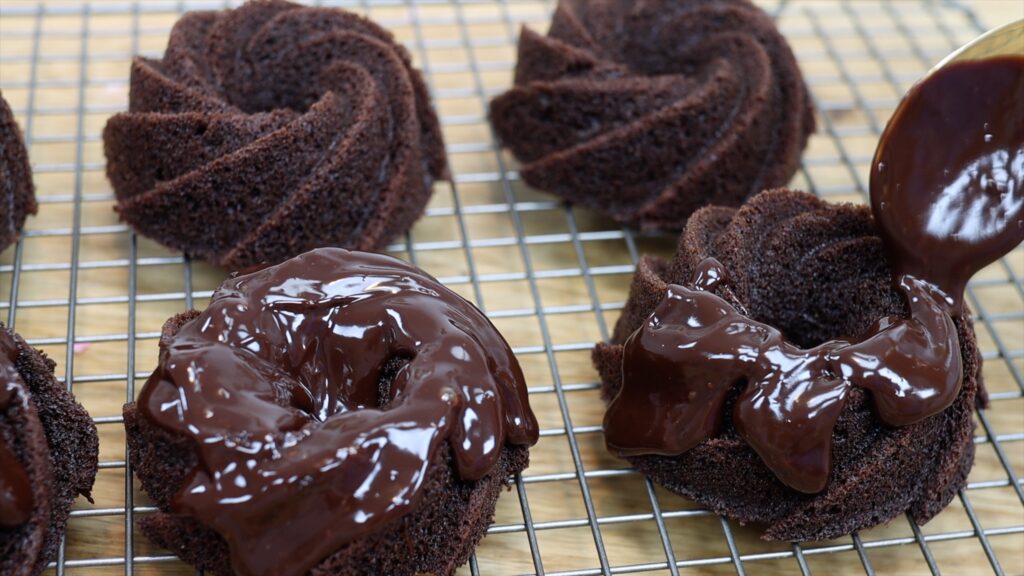
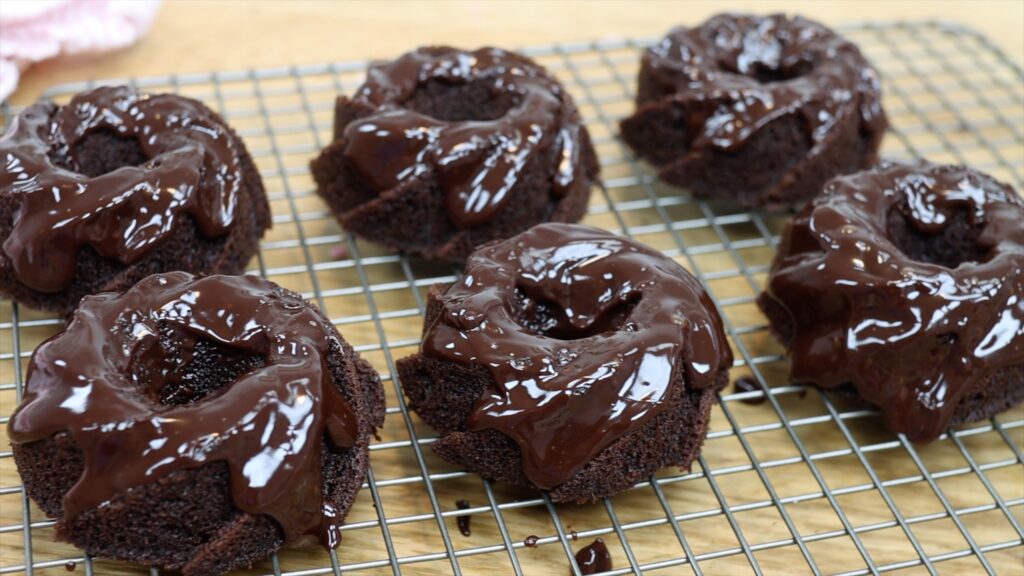
Chocolate ganache is delicious on mini bundt cakes and it's very easy to make. Heat 1/3 cup heavy whipping cream or double cream in the microwave for 30 seconds and then add 2/3 chocolate chips to the bowl. Push them under the surface of the cream and leave for 5 minutes. Stir together until smooth and then drizzle over the mini bundt cakes with a spoon.
This small chocolate cake recipe is not only versatile, it’s also absolutely delicious! It’s rich and moist and super chocolatey but not too sweet - I can’t wait for you to taste it! Please leave a comment below when you do!
This small chocolate cake recipe is not only versatile, it’s also absolutely delicious! It’s rich and moist and super chocolatey but not too sweet. Follow these directions to use it for small cakes (4 inch or 6 inch), cupcakes, mini bundt cakes or a tray bake cake!
Ingredients
UnitsScale
1/2cup hot water
1/4cupunsweetened cocoa powder
1/4cupunsalted butter
1/2cupwhite sugar
1 egg
1/2 teaspoon vanilla extract
2/3cupall-purpose flour
1/2 teaspoon baking soda
1/8 teaspoon baking powder
1/4 teaspoon salt
Instructions
1. In a small bowl, whisk cocoa powder and hot water together until the cocoa powder dissolves. Set aside to cool.
2. In a mixer, cream butter and sugar at medium speed until light and fluffy. Add vanilla and egg and mix to combine.
3. In a small bowl, whisk flour, baking soda, baking powder and salt together. Add to the mixing bowl and mix on the lowest speed setting for one minute. Scrape down to the bottom of the mixing bowl with a spatula to loosen any ingredients. Mix again until you can't see the flour in the batter.
4. Add the cocoa powder mixture to the mixing bowl and mix on the lowest speed until the batter is smooth. It will be runny!
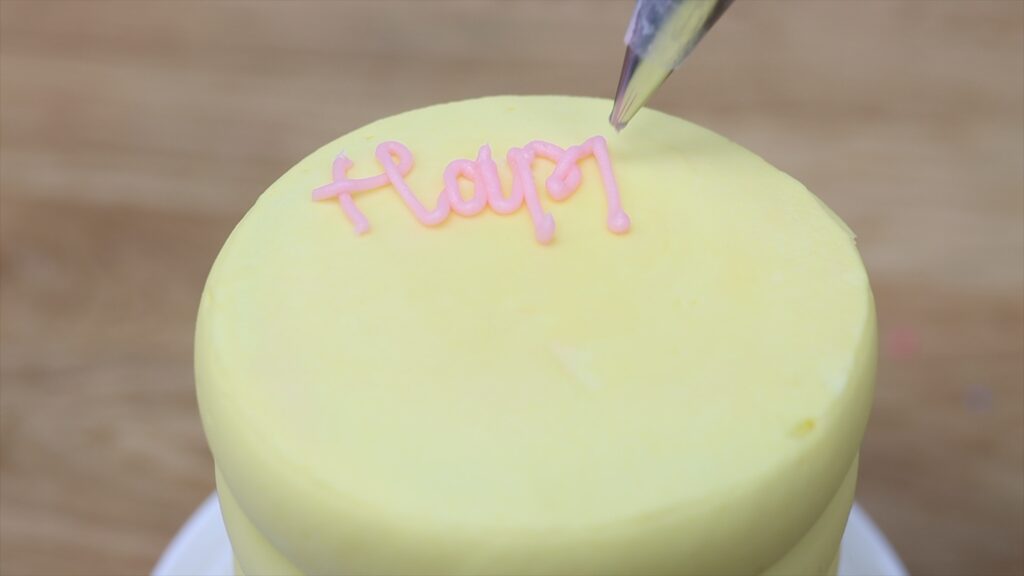
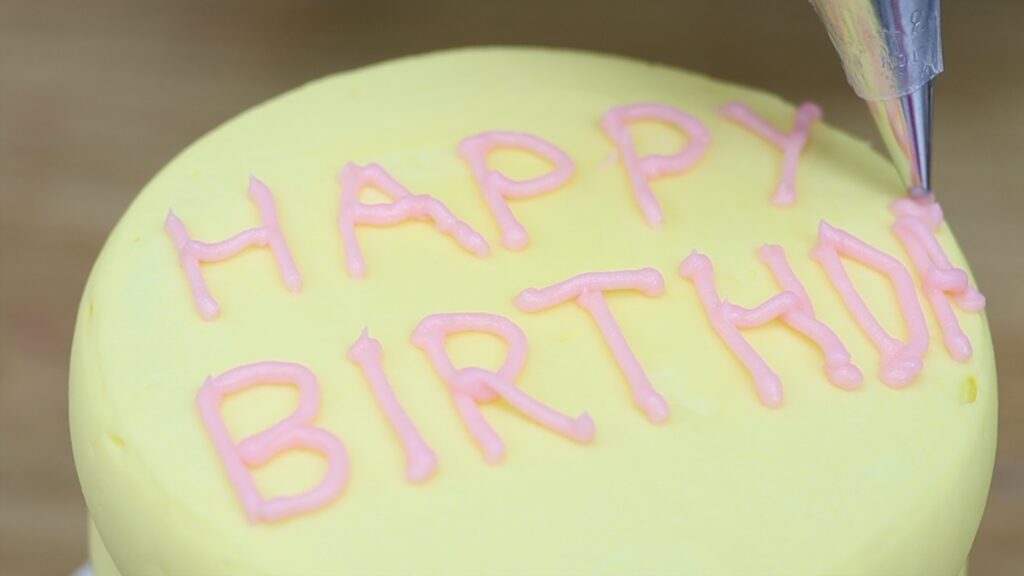
In this tutorial I'll show you how to write HAPPY BIRTHDAY on a cake with neat, gorgeous lettering. I’ll share my tips on how to position your message, various materials to write with, and different lettering techniques.
What to use to write HAPPY BIRTHDAY on a cake
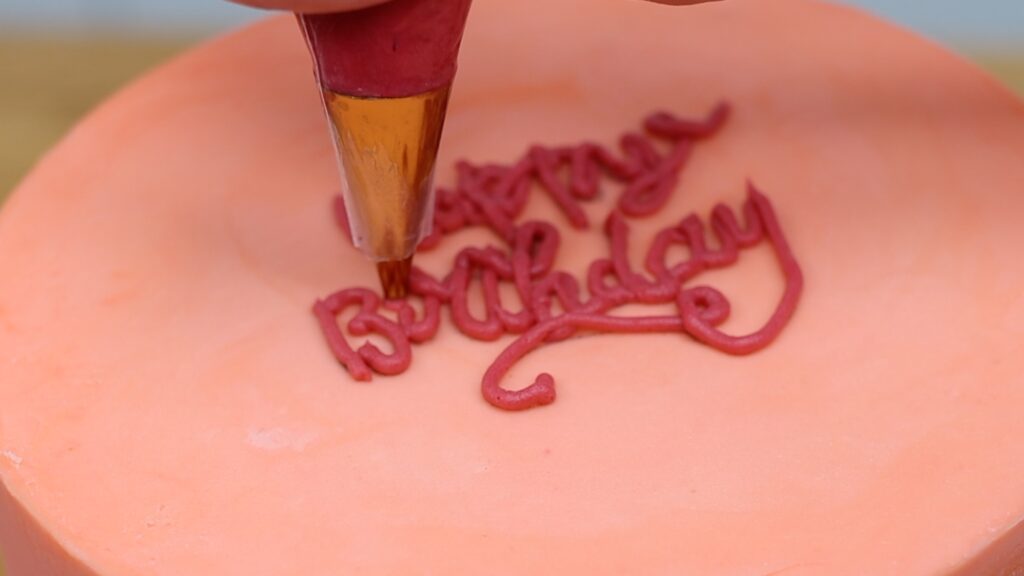
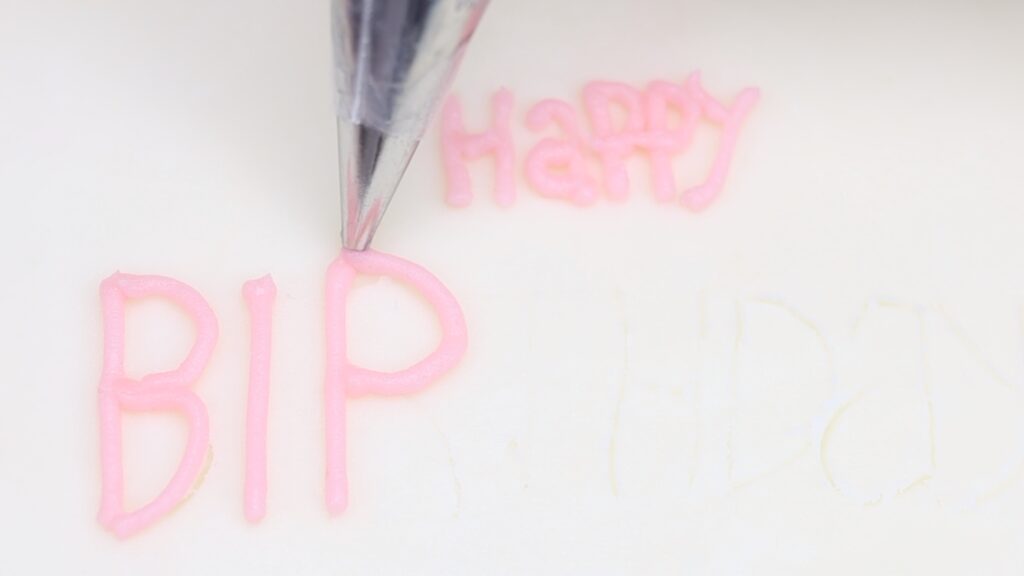
The most convenient option is buttercream because you can use the leftovers after frosting your cake. My 4 Minute Buttercream is my favourite type of buttercream! Spoon a little bit into a piping bag fitted with small round tip. If you don’t have one, you can use a ziplock bag instead. After spooning the buttercream in, cut a tiny piece off one corner to pipe through.
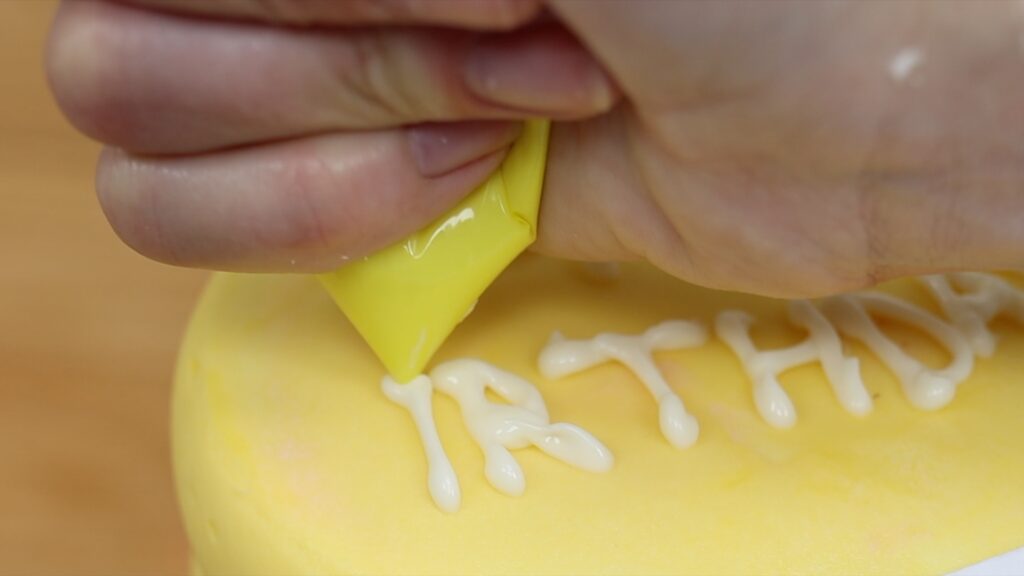
Another delicious option is melted chocolate. You can use white, milk, semi-sweet or dark chocolate. Spoon the melted chocolate into a ziplock bag and cut a corner off. Make a tiny hole for thin lettering or a larger hole for thick lettering.
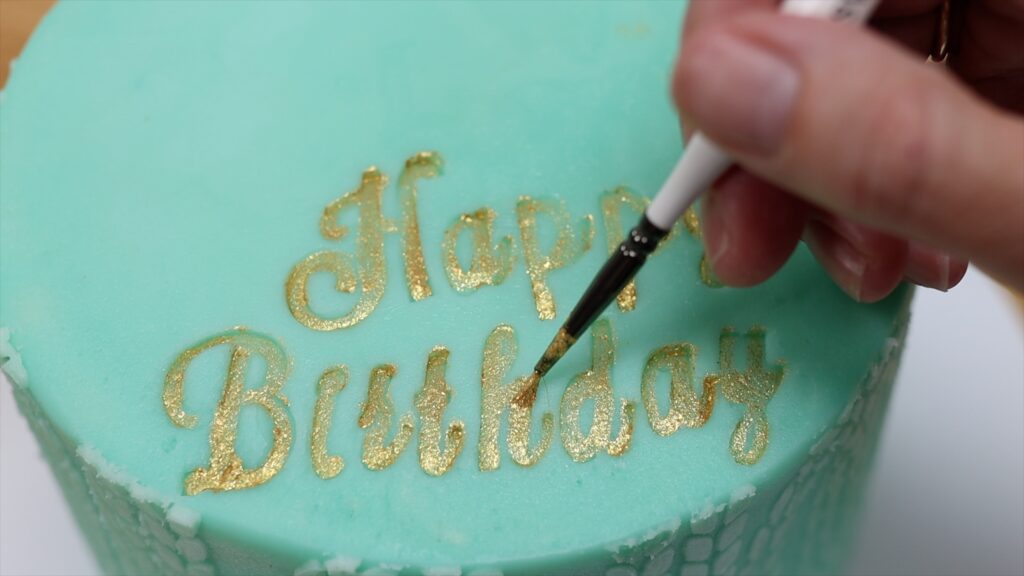
Edible paints are a third option. You can buy them already mixed or make your own by mixing metallic luster dust with a few drops of clear alcohol. You'll need a thin paste rather than a runny liquid. If it’s too runny you won’t get bold coloured letters. You’ll need a tiny paintbrush and I’ll show you how to paint neat letters later in this tutorial.
How to write HAPPY BIRTHDAY on a cake
There are lots of ways to write HAPPY BIRTHDAY and I'll show you the techniques for all of these next:
print the letters in lower case letters, all capitals, or a combination of these
write in cursive
try pointillism
copy a simple font
use a different technique to copy an elaborate font
use imprints or embossers for gorgeous, perfect fonts
Let’s dive into the techniques for writing Happy Birthday on cakes.
How to pipe a line
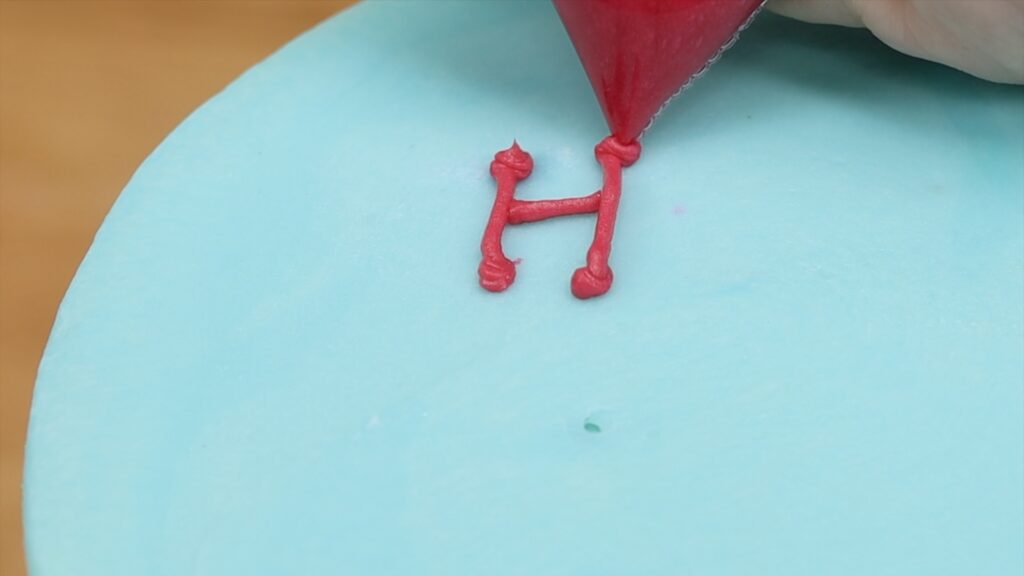
To pipe a line, squeeze the piping bag to push the buttercream out and pull slowly. At the end of the line, release your pressure on the bag as you pull it away. Doing these two things at the same time will finish the line neatly.
Like I mentioned, you can use a ziplock bag instead of piping bag. Your letters won't be as neat because the metal of a piping tip is much more solid than the plastic of the ziplock bag. Your lines will be straighter with a piping tip but if you don't have one, this is another option.
How to pipe a dot
To pipe a dot, squeeze the piping bag to let the buttercream bulge out into a circle. Stop squeezing the bag as you push the tip slightly into the dot of buttercream and then pull away. This will leave a neat peak on the dot. You can do this for the dot on the 'i' in 'birthday' or for pointillism like in the cake below. For a line of dots, hold the piping tip at the same angle for each dot for neatest results.
How to copy a simple font
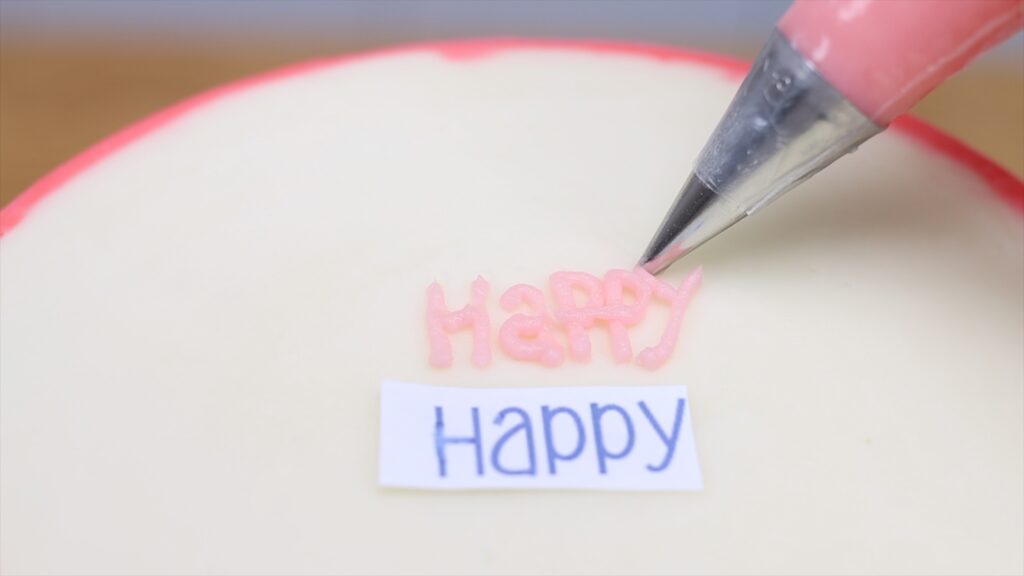
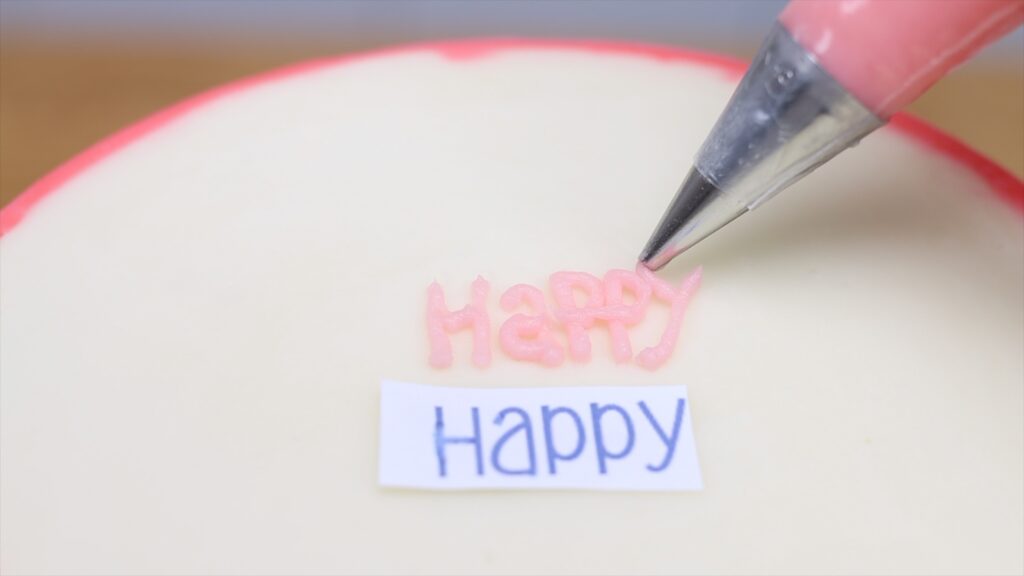
If you want to write happy birthday on a cake in a specific font, print out your message in that font and refer to it as you pipe. I like to place the word immediately below where I’m piping. This way, you can look at each printed letter as you’re piping to mimic the font most accurately. Keep in mind that if your piping is thicker than the printed letters, your word will be wider than the printed word.
For cursive I recommend piping one letter or one part of a letter at a time. Then pause to look at the printed message to check what the next letter looks like and how it connects to the previous letter. Now pipe the next letter. This is the neatest method, compared to trying to pipe the entire word at once.
How to copy an elaborate font
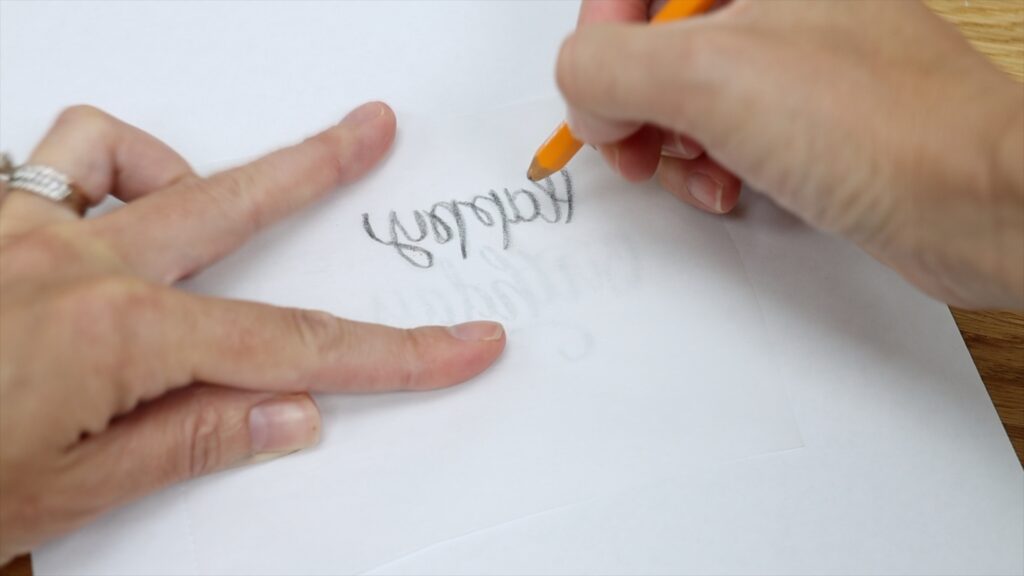
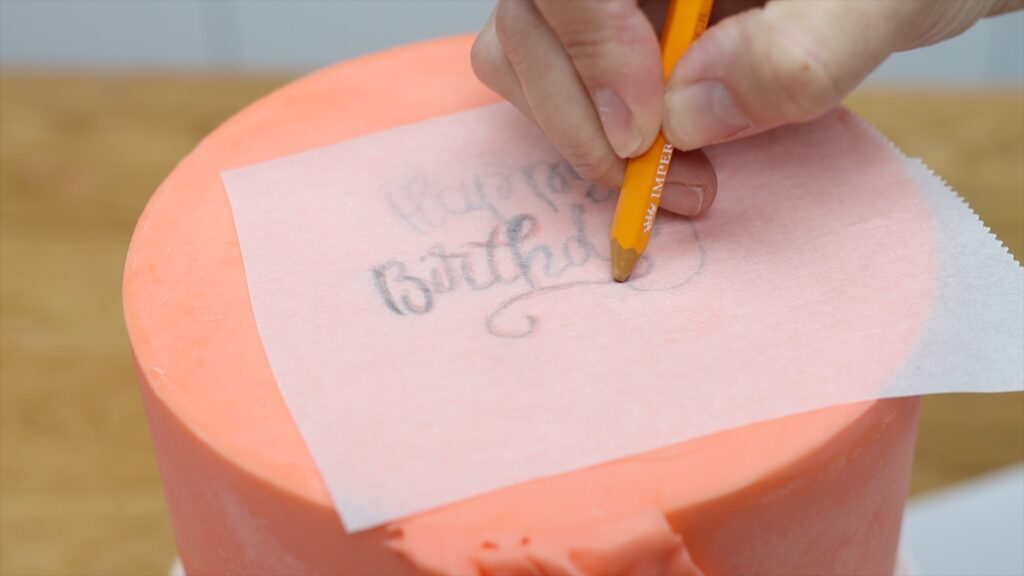
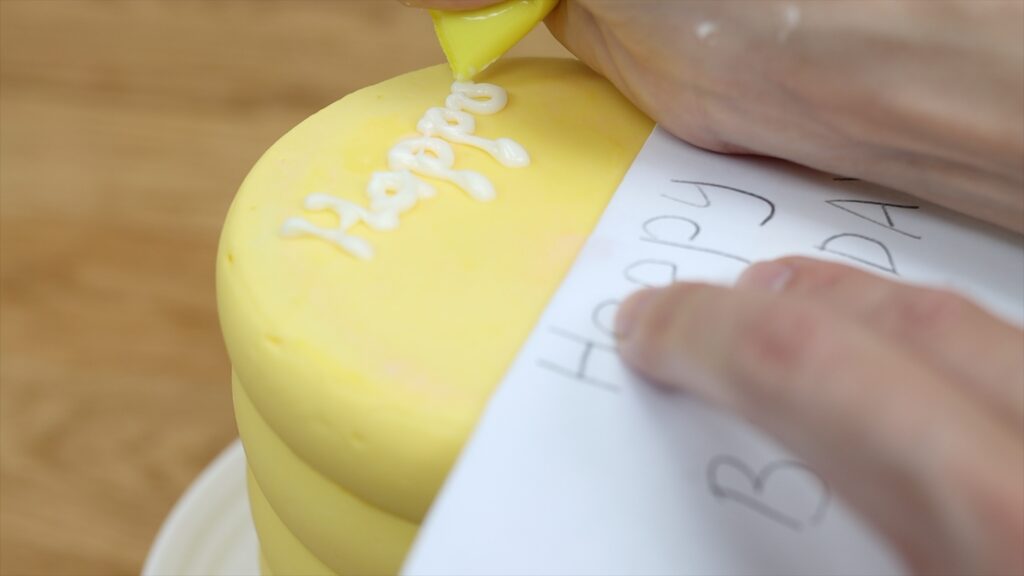
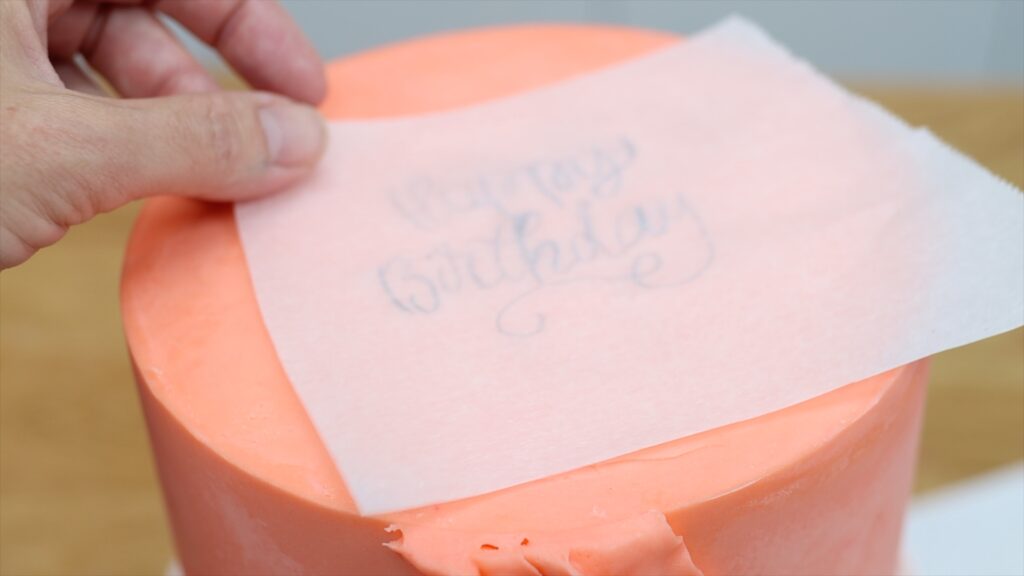
To copy a font that you don’t feel confident replicating onto a blank cake, try this technique! Print your message, flip it over, and trace the reverse side onto parchment paper.
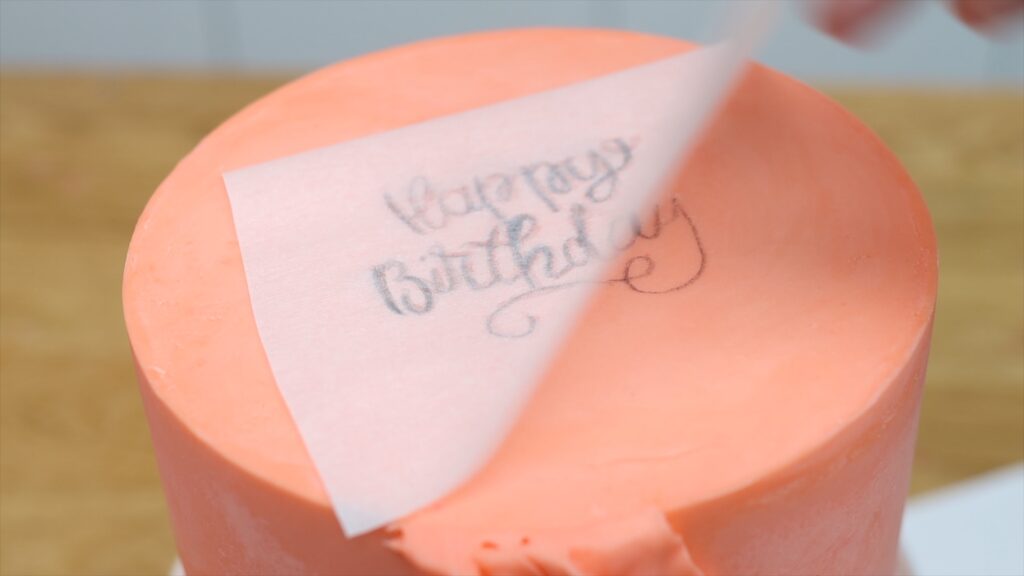
Now press the pencil side against the cake and re-trace over the message. Your pressure will transfer the pencil from the underside of the parchment paper onto the cake.
Note that pencils are no longer made with lead. These days they're graphite, which is not toxic, but if this faint trace bothers you, don’t use this technique. If you’re comfortable with it, pipe over the pencil lines with buttercream and voila!
How to write with chocolate
To write with chocolate you'll need a sandwich bag like a ziplock bag. I find writing with melted chocolate trickier than buttercream because it flows continuously out of the bag, compared to buttercream which only comes through the tip when you squeeze the bag. You have a lot more control when piping with buttercream than you do with chocolate. With chocolate, as you finish each line if you pull the bag away you’ll leave a drizzle or tail or peak of chocolate at the end of the letter. You can minimize this by pushing down slightly before pulling the bag away. Then use a toothpick to flatten any peaks. It’s not as neat as buttercream but it’s another way to write Happy Birthday on a cake.
How to use letter embossers
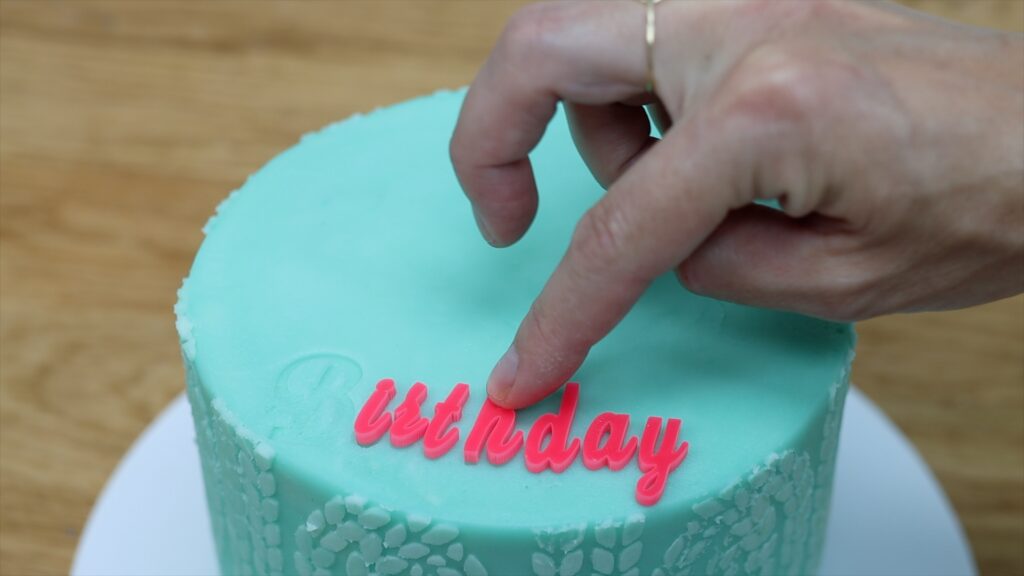
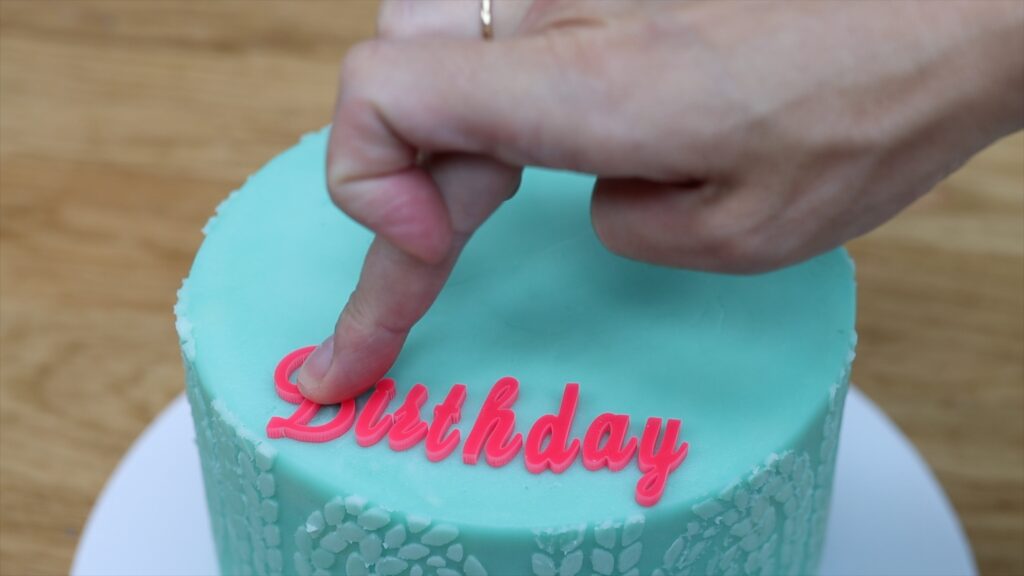
Try letter embossers for gorgeous, perfect fonts. These are made by Sweet Stamp and you can use my code BGB10 for a discount! After chilling the cake to set the frosting, arrange the letters on the cake wherever you want them to go. Press each one gently into the frosting. You’re aiming for a shallow indent, just enough to see the whole letter, so don’t press too hard.
Then use edible paints and a tiny paintbrush, the smaller the better! Fill the letters in by painting with dabbing motions and the imprints will guide your paintbrush to fill each one neatly.
How to position and space your letters
Whichever style of writing you choose to write Happy Birthday on a cake, the neatness of your message really depends on how well you space it. Let’s look at what NOT to do. If you start writing without planning the position of the letters, your words can end up off-center. Even worse, they'll be crammed in tightly to fit onto the cake like this:
So, how do you space your message? Here are six options:
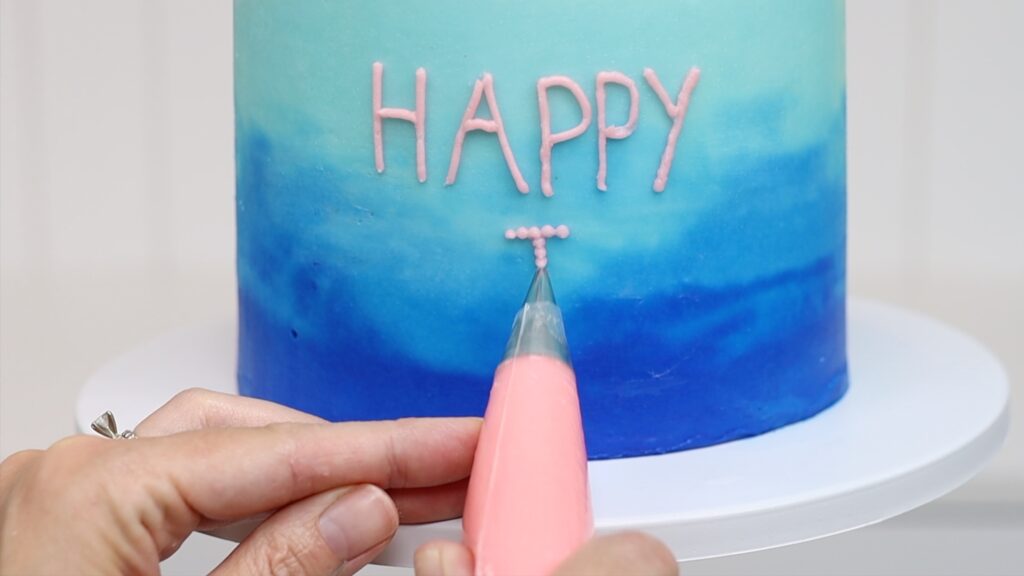
1. Pipe your letters freehand
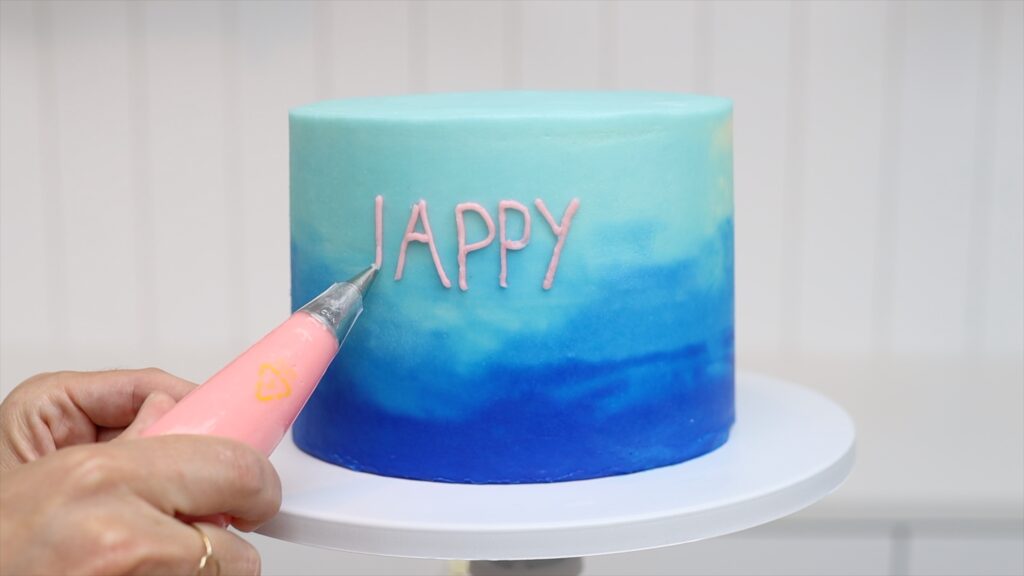
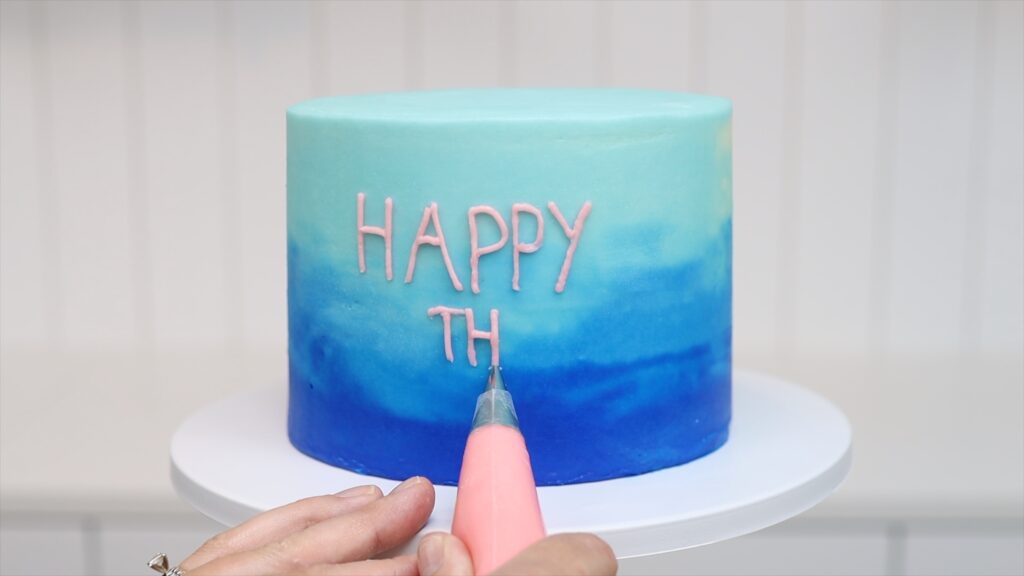
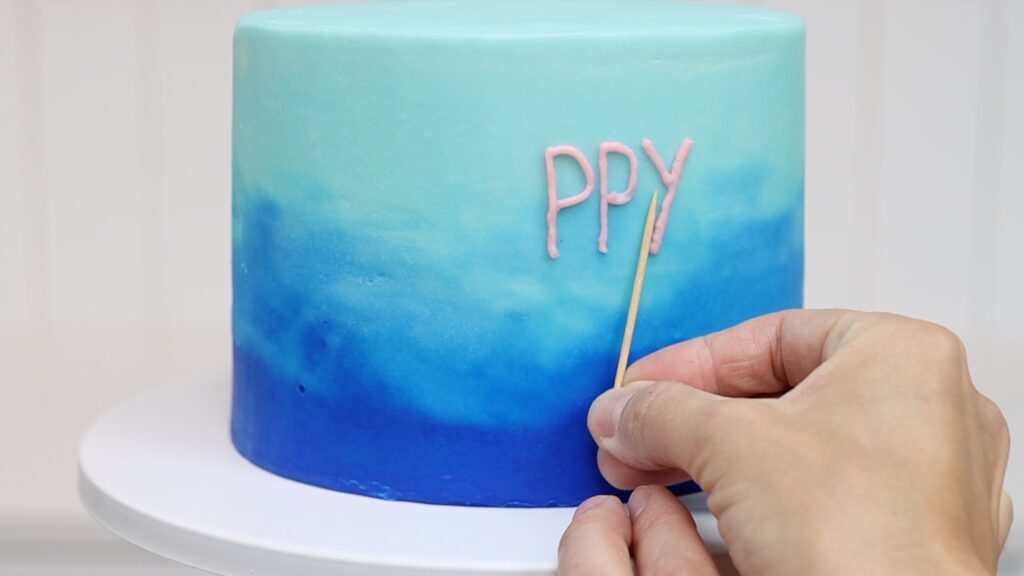
You can freehand your letters, meaning that you pipe them before planning where each one is going to go. This is most successful if you start with the middle letter. This centers the word, and then you can pipe the letters before and after. So for BIRTHDAY, there are 8 letters and the middle two are T and H so I'm piping those underneath the middle letter of HAPPY, which is the first P.
2. Use a printed word
If you print your message in a certain font to copy, place the printed word above or below where you’re going to pipe. If you center the printed word on the cake and then copy the spacing of the printed letters, your piped word will be centered, too.
3. Use a written word
Even if you don't want to copy a specific font, it can still be a good idea to write your message on a piece of paper first. Hold that up on the cake to use as a guide, centering the word you wrote and then piping below or above it so that the piped word is centered, too. This way, when you write happy birthday on a cake you can be confident that both words will fit on the cake!
4. Outline with a toothpick
Another option is to outline your word with a toothpick before piping, starting with the middle letter to make sure the word is centered on the cake, and then pipe over the letters. This way you can take your time with the toothpick to make sure each letter is the same height and check that you like the shape of each letter, and then when it comes time to pipe, all you’re focusing on is squeezing the piping bag with constant pressure and holding your wrist still and steady to pipe straight lines, rather than focusing on the little details of the lettering.
5. Trace a message
If you’re using the pencil tracing method, spacing is very easy. Just center the message on the cake before you start tracing.
6. Arrange and re-arrange letter embossers
If you’re using letter embossers, arrange and rearrange them until they’re in the exact spot you want them to be. When you're happy with their position, press them into the frosting on the cake.
Tips for success to write Happy Birthday on a cake
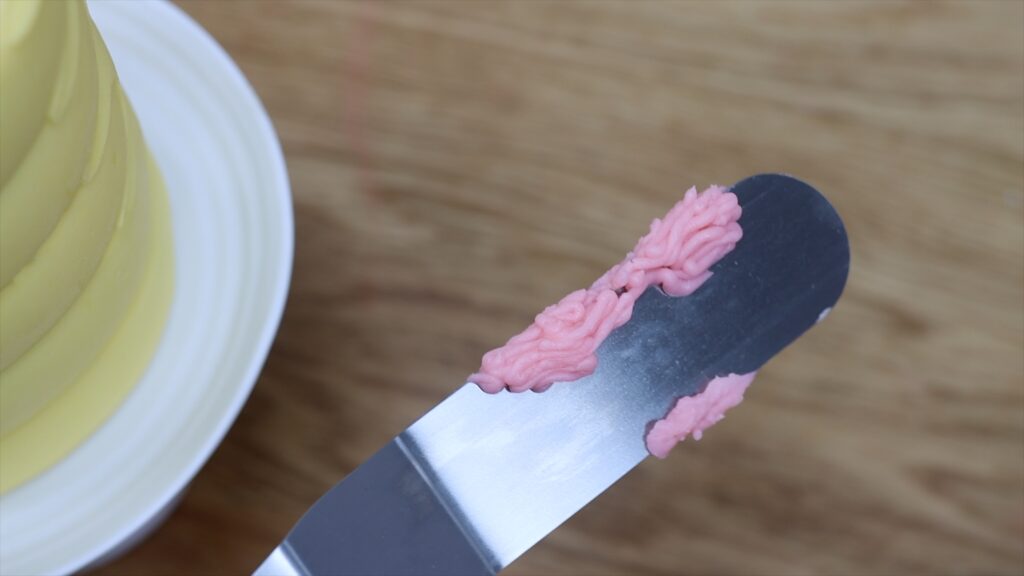
You only need a tiny amount of buttercream to write Happy Birthday. Look at how much there is if I scrape a message off a cake - it’s just a tablespoon or so:
But it’s easier to pipe with the bag about half full, than an almost empty bag, so I suggest using more than you’ll actually need. I have another tutorial on 9 ways to use leftover frosting for ideas on what to do with the extra buttercream.
I recommend writing on a cake BEFORE piping borders or other details on top of the cake, so you have the biggest space available to move your wrist, without having to navigate around piping or other decorations.
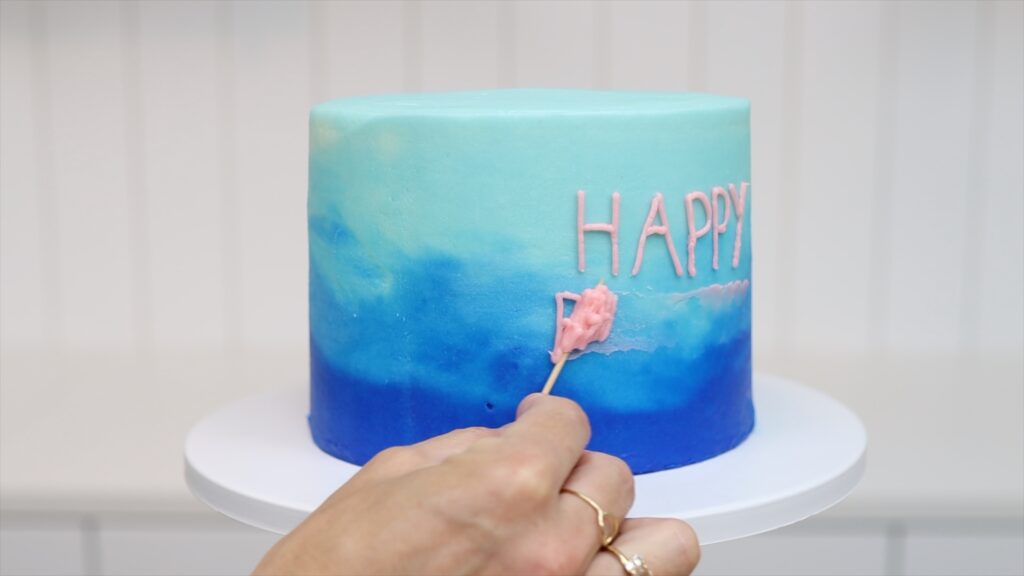
While you’re piping. Keep a toothpick handy and use it to adjust your letters to make the lines smoother or to manipulate them to make the hole in a P bigger, for example.
I always chill my cakes before writing on them because when the frosting on the cake is cold, it’s firm, so if you pipe a message you don’t like you can scrape it off straight away with toothpick or offset spatula and you won’t damage the firm frosting on the cake.
I hope this tutorial has been useful! Visit my cake school to learn hundreds of cake decorating techniques and designs and join my ClubPLUS for access to every MasterCourse, MiniCourse, Live Workshop, and 5 Minute Fridays, where I teach a tip or technique or demonstrate a frequently asked question like how to choose the best turntable, different ways to store leftover buttercream, and how to freeze a fully decorated cake.
With acrylic discs you can achieve perfectly smooth frosting on cakes and a sharp edge from the sides onto the top. Acrylic discs will make your cakes look professional if you use them correctly and in this tutorial I’ll show you how.
What are acrylic discs and what are they used for?
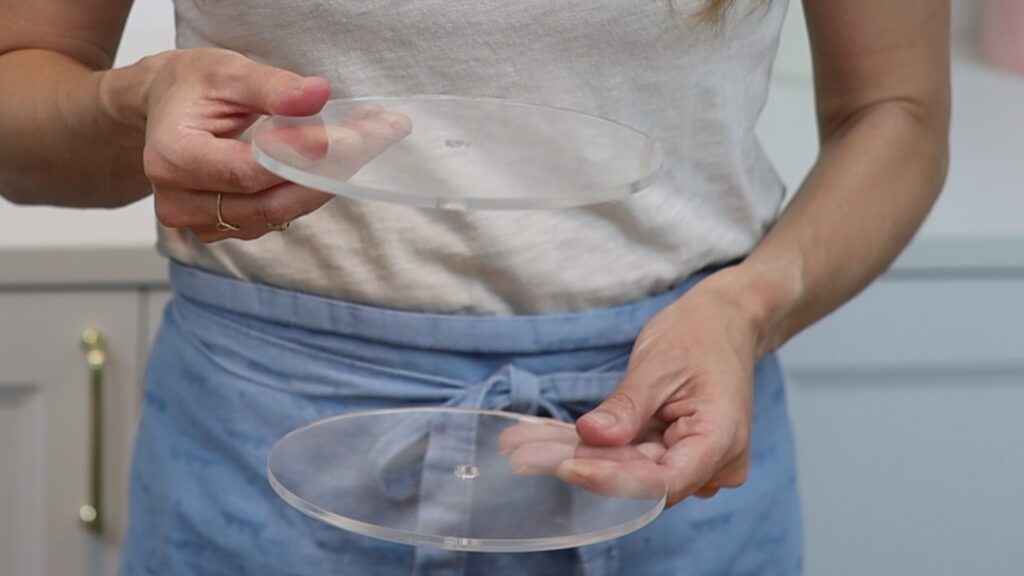
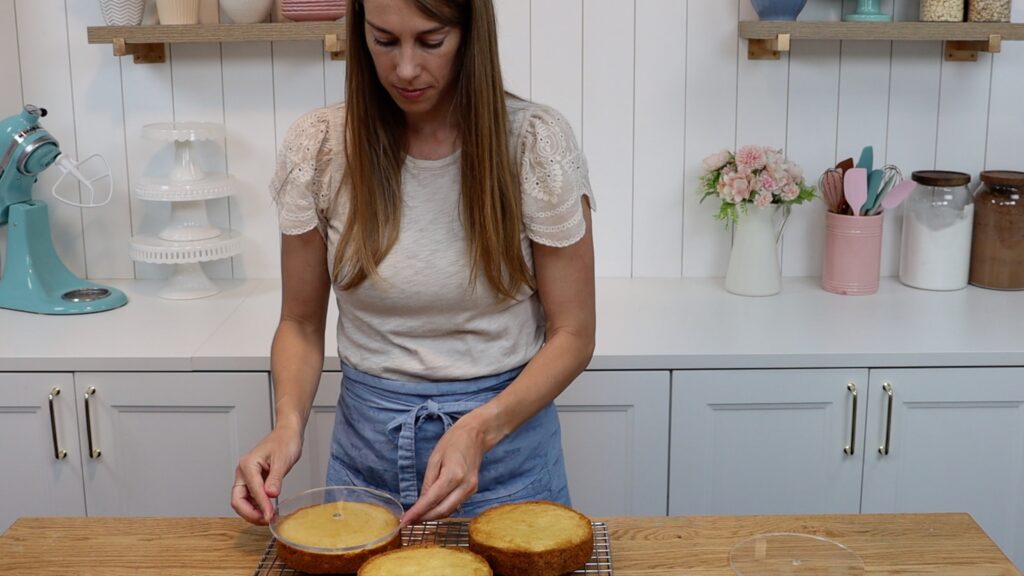
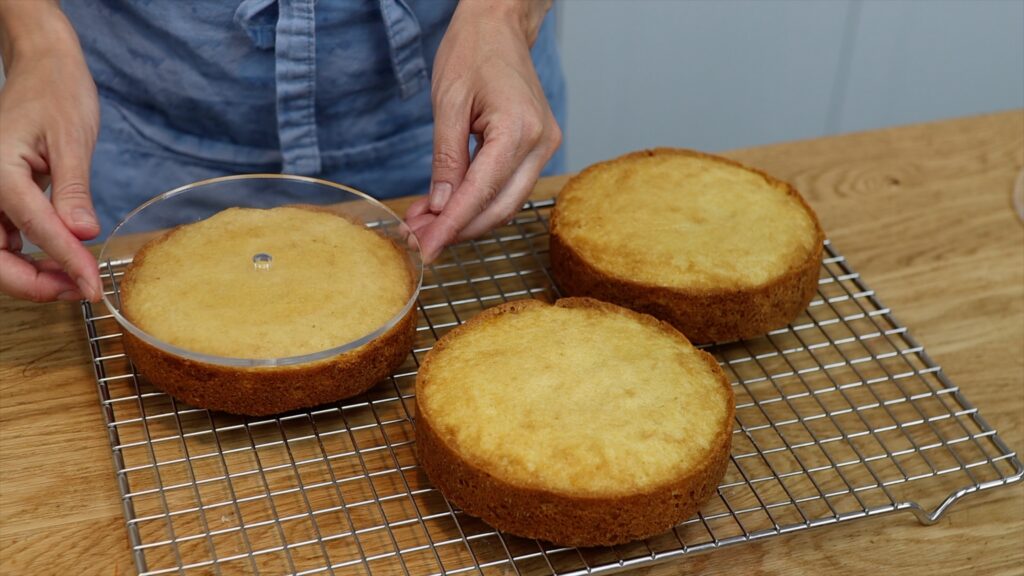
Acrylic discs are transparent, round pieces of acrylic, which is a kind of plastic that’s very strong. They are placed below and above a cake while you spread frosting onto the cake. Those discs will guide your cake comb as you scrape around the cake to create smooth, straight sides. There are lots of little details to get right for this to work, which I'll explain next.
What size acrylic discs should I use?
You’ll need two identical acrylic discs and they should be about 1/2 an inch wider than your cake layers.
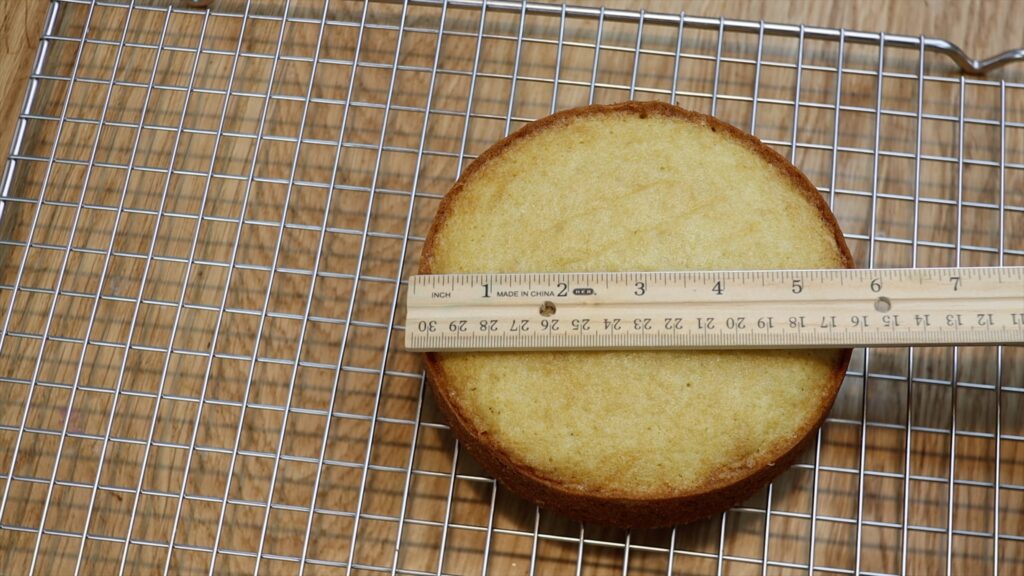
Measure the width of your cake layers after baking and cooling and then choose discs half an inch wider. This is because some cakes will shrink after baking so will end up smaller than pans you baked them in.
For example, this is my Very Vanilla Cake baked in six inch pans but after cooling, they measure 5.75 inches. I’m using a set of acrylic discs that are 6.25 inches wide, which is half an inch wider than the cake layers. This will leave space for a quarter of an inch of frosting all the way around the cake.
What tools do you need to be able to use acrylic discs?
Apart from two identical acrylic discs you’ll need:
your cake
buttercream frosting
an offset spatula
a straight edged cake comb or frosting smoother
parchment paper
scissors
a pencil
a turntable
a non-slip mat
two cake boards.
Your two cake boards should be at least 2 inches apart. You'll need one cardboard cake board that's as close as possible to the same width as your cake layers. You'll also need a larger one of any material such as acrylic, cardboard or foam core.
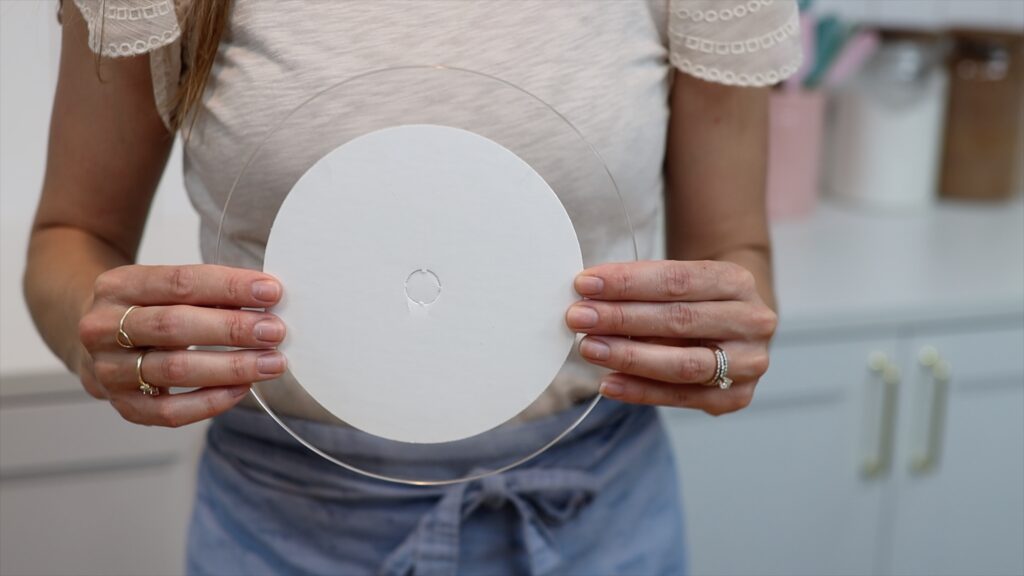
To make it easy to remove the top acrylic disc, line it with parchment paper, which is non-stick. Trace around a disc onto parchment paper and cut that circle out.
Use four tiny dabs of buttercream to attach the parchment to the disc. I recommend putting this disc into the freezer for 5 minutes to set the buttercream dots to attach the parchment securely.
How to prepare a cake for acrylic discs
Assemble your cake on the cardboard cake board that's the same width as the cake. Spread a dot of buttercream onto the middle of the cake board to secure the first layer of cake.
Like I mentioned, some cakes shrink when they bake and cool so they might end up being smaller than your cardboard cake board. After attaching the cake to the cake board, trim the board so that it's the same size as the cake. The sides of the board should be flush with the sides of the cake.
Then alternate between cake and filling to assemble your cake. I recommend chilling your cake layers for about 15 minutes in the fridge before you start. When they're cold, they're firmer and less crumbly to frost. Also, if the bottom cake layer is cold it will chill that dot of the buttercream on the cake board to set it and that will hold the entire cake steady while you assemble and frost it.
Get down to eye level to make sure each layer is directly on top of the layer below it. This will ensure that the sides of the cake are straight.
Now cover the cake in a crumb coat, which is a thin layer of frosting to trap any crumbs that come off the cake. If you skip this, you’ll have visible crumbs in the frosting on your cake. Place your larger cake board on your turntable with a non-slip mat in the middle. Then lower your cake on its little cardboard cake board down onto in. The non-slip mat in between the boards will hold the small cake board still.
After spreading frosting over the whole cake, scrape around the cake with a cake comb to smooth the frosting a little bit. This doesn't need to be perfect! As long as there isn’t any exposed cake, a messy crumb coat is fine because it’s going to be covered up in a moment.
The big cake board gives you a large flat surface to rest your cake comb on as you scrape. It also stops the frosting getting all over your turntable.
Trimming the cake board earlier was important because next, the final coat of frosting will cover up both the crumb coat and the cake board underneath, so the board will be invisible.
Now put the cake into the fridge for 30 minutes or the freezer for 15 minutes to set the crumb coat.
How to frost a cake with acrylic discs
When the frosting on the cake has chilled and it’s firm to the touch, take the cake out. Slide an offset spatula underneath the cake, in between the big cake board and the little cardboard cake board the cake is sitting on.
Slice all the way around the cake to separate it (still on its board!) and lift it up. Place a non-slip mat on the cake board and one of the acrylic discs on top.
Then spread a dot of buttercream onto the middle of the acrylic disc and lower the cake back down onto that dot. Let's skip ahead to see why that dot is so important:
The cake will push the dot flat and the coldness of the cake will chill and set the squashed dot, which will act like glue to attach to the cake on its little cake board, so it doesn’t slide around.
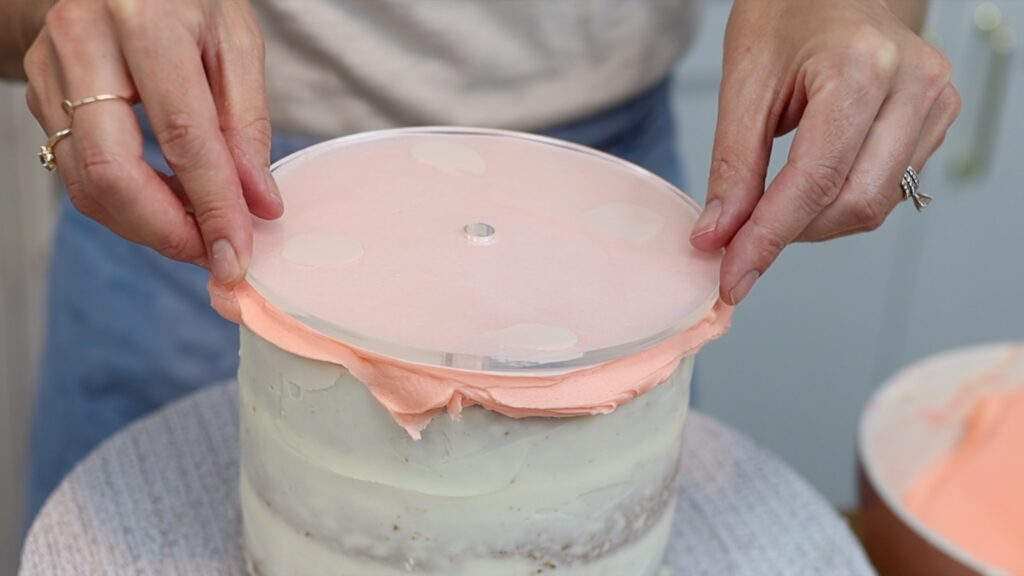
After lowering the cake onto the buttercream dot, center the cake on the acrylic disc. Then spoon a generous amount of buttercream onto the top of the cake and spread it around, pushing it out over the edges of the cake. Press your second acrylic disc down onto the frosting with the parchment facing down, so it’s pressed against the frosting.
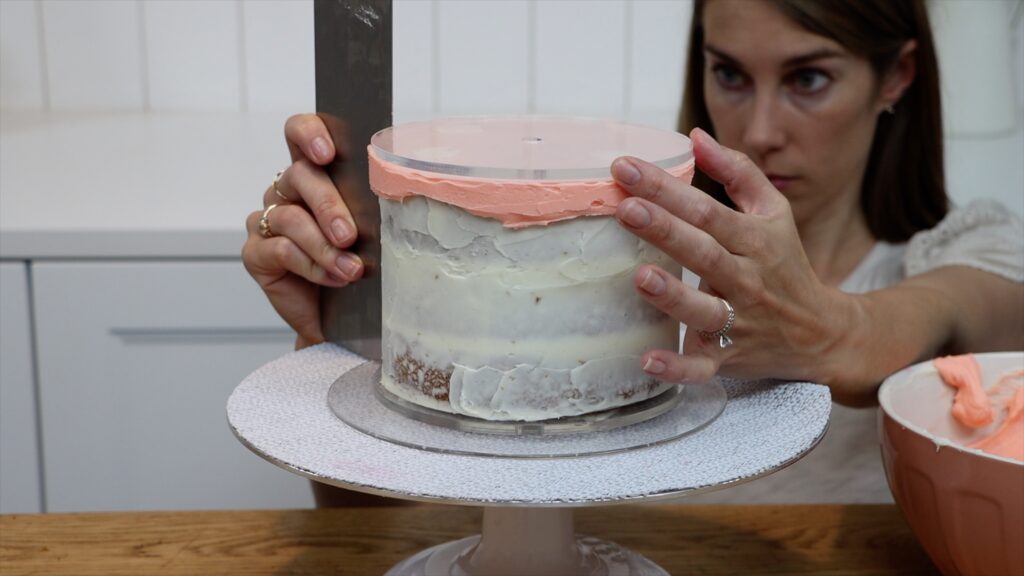
Push a cake comb sideways, making sure the bottom is resting on the big, bottom cake board so that it’s straight. It should touch both the bottom and top acrylic disc. If it doesn’t, adjust the top disc so that it’s directly above the bottom disc. Your cake comb should now touch both discs.
Now spread buttercream around the sides of the cake. It needs to be thick enough so that it goes up to the outer edge of the acrylic discs. Press your cake comb up against the acrylic discs and scrape around the cake to smooth the frosting.
Scrape around a few times, wiping off the buttercream from your cake comb into your bowl of buttercream after each scrape. Then fill in any indents by spreading on more buttercream to fill those in and then scrape again.
If you’re struggling to get the frosting perfect it's probably because the top disc is sliding as you press against it with your cake comb. Put the cake in the freezer for 30 minutes or the fridge for an hour to chill and set the frosting. Cover the leftover buttercream in your bowl with plastic wrap so it doesn’t dry out. Take the cake out of the fridge or freezer and spread the leftover buttercream over the frosting. Now scrape again and since the top disc is secured onto the chilled frosting, you should be more successful.
When you’re happy with the sides of the cake, put the cake in the freezer for 30 minutes or the fridge for an hour to set the frosting.
How to remove acrylic discs from a cake
When the frosting is cold and firm, use a sharp knife to separate the top acrylic disc from the cake. Lift the disc off and then peel the parchment off, too. Don’t expect the frosting to be perfect… yet!
The frosting will have little air pockets or indents where the acrylic disc didn’t push down far enough to stick to the buttercream. Spread more buttercream over those areas now, scraping off the excess with your offset spatula or cake comb. Because the rest of the frosting has chilled and set, you won’t damage your smooth sides or top.
Scrape around the sides of the cake, angling your cake comb to press against only the top of the side. You'll push the fresh buttercream you’ve just spread on so that it sticks up above the top edge of the cake. Then swipe sideways with your offset spatula to push and lift it off the cake.
Step back and admire your beautiful sharp top edge! The cake isn't quite finished yet. To separate the cake from the bottom acrylic disc you'll need an offset spatula or sharp knife again. Slide it between the disc and the cake on its cardboard cake board. Pull all the way around the cake and then lift the cake up off the acrylic disc. You can use your hand to balance it because the frosting is cold and firm.
Transfer the cake onto a cake stand or cake board or whatever you want to transport or serve it on. Neaten the bottom edge by spreading gently around it with an offset spatula and tadaa! A perfectly smooth and angular frosted cake!
What do you think? Are acrylic discs worth the extra steps to get super smooth frosting? Tell me in the comments! And visit my cake school on BGB.com to learn hundreds of cake decorating techniques and designs.
With these 5 minute cake decorating techniques and designs, decorate 5 cakes in 5 minutes or less!
#1 Tray Bake Cakes
Tray bakes are a great option for quick but eye-catching cakes. Bake your cake in any ovenproof dish like a casserole dish or pie dish. Skip the assembly step by decorating it right there, in the dish!
Use a few different piping tips and a variety of colours of frosting to create different textures. You can even make shapes for designs like this heart.
I used my 4 Minute Buttercream but you can do this with ganache, whipped cream or meringue buttercream, too! This is my Very Vanilla Cake but you can even do this with brownies or chocolate chip cookie dough. Tray bakes are one of my favourite 5 minute cake decorating techniques because as well as being easy to make and decorate, they're also easy to transport and serve!
#2 Fresh Flowers
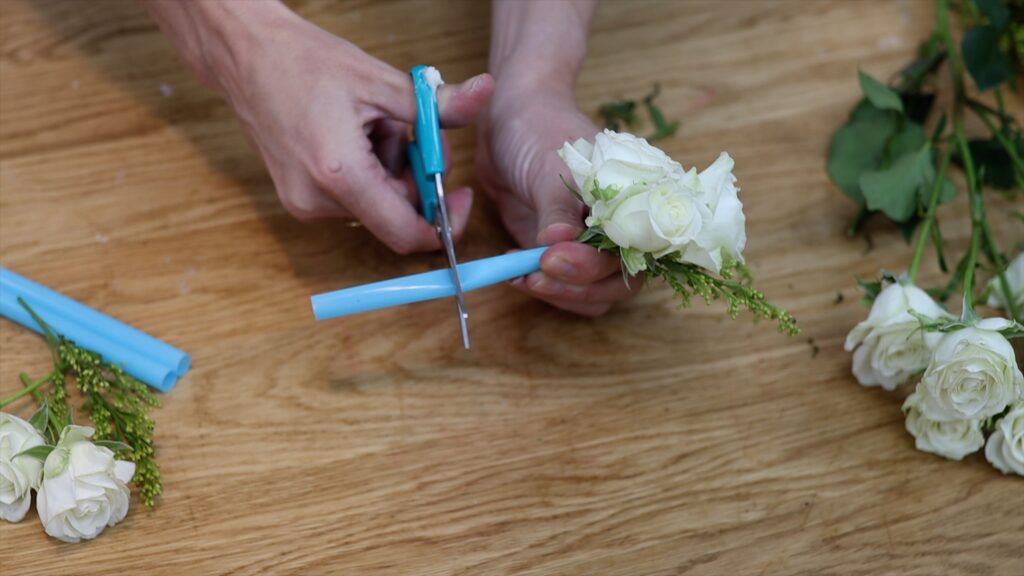
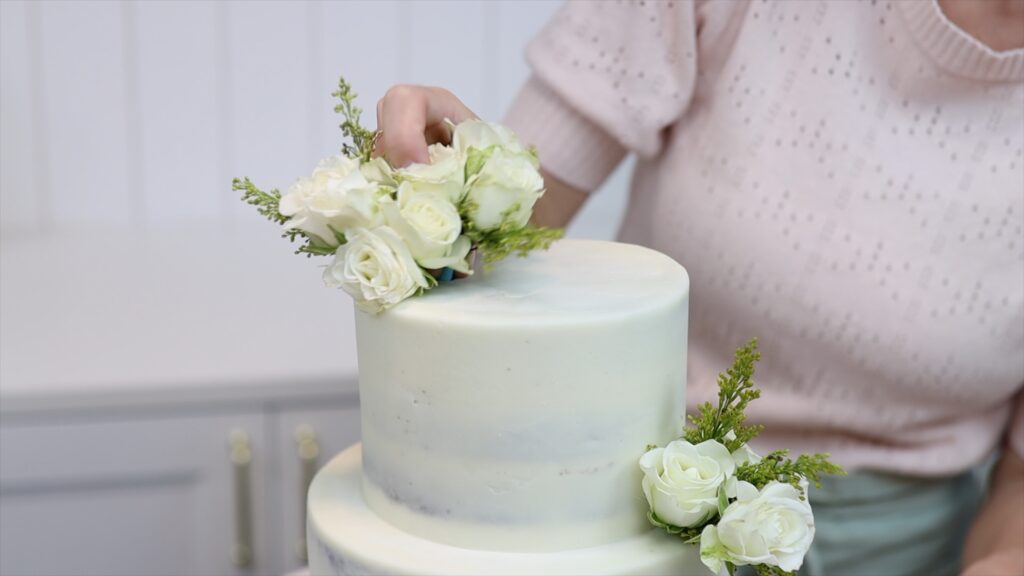
Fresh flowers will turn even a very simple cake like a semi-naked cake into a stunning beauty! You’ll need some straws, ideally boba straws because they're wider than normal straws. Wash and dry your flowers and cut them so that the stems are about 2 inches long. They need to be just long enough to secure the flowers in the cake.
Pull off any leaves from the stems so that you can fit as many stems as possible into each straw. Then pinch together little bouquets of flowers, combining different flowers and adding greenery. Wrap the stems in plastic wrap to catch any liquid that comes out of the stems so it doesn’t get into your cake. Then push the wrapped stems into a straw.
Cut the straw just below where the stems end. Make as many of these flower arrangements as you like.
Then push each one into the cake. Use your fingers first but then push them in the last little bit using scissor blades. Scissors will let you push deeper into the cake without poking it with your fingers and damaging the frosting.
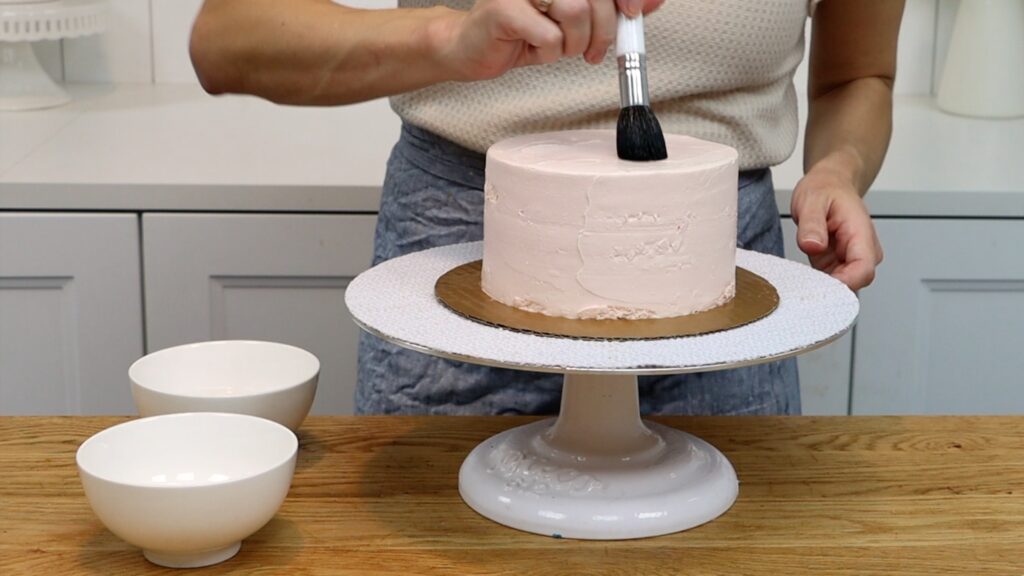
This next 5 minute cake decorating technique is perfect if the frosting on your cake isn’t completely smooth. Chill your cake to set the frosting and then brush it with a bit of water to make it sticky.
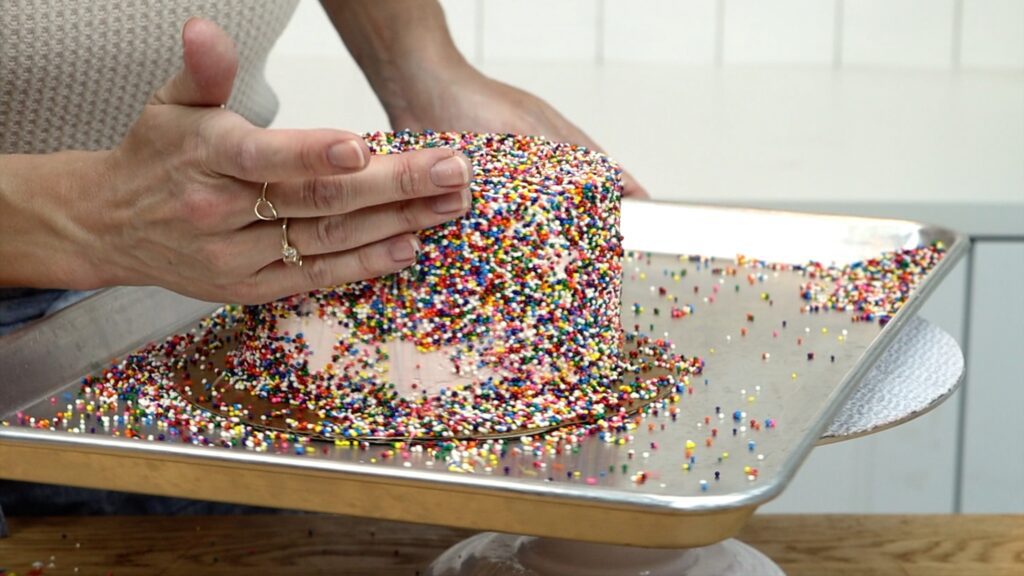
Non-pareils (or hundreds and thousands) work best for this because you won’t bite into big crunchy chunks of sprinkles!
Pour your sprinkles into a bowl and scoop up a handful, pressing the sprinkles into the frosting. Since the frosting is cold and firm, as you push against it you won’t cause indents or bulges. Also, the sprinkles won’t sink into the frosting so you won’t bury them!
By placing the cake on a baking sheet or tray before doing this, you’ll catch any falling sprinkles so they won’t bounce away and make a mess all over the kitchen.
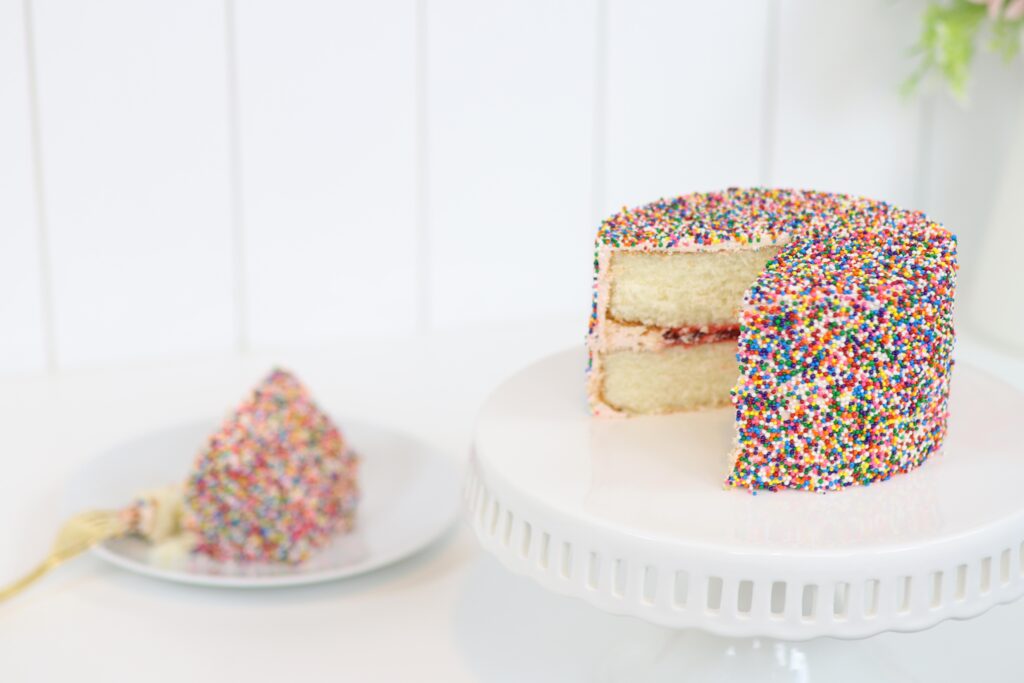
Not only are sprinkled cakes quick and easy to decorate, they’re also colourful and fun!
#4 Textured Frosting
Use a spoon to create gorgeous texture with this 5 minute cake decorating technique! Bonus: this design doesn’t require perfectly smooth frosting. Cover your cake with buttercream or whatever frosting you're using and scrape around a few times with a cake comb. Don’t worry about little imperfections or getting the top edge perfectly straight.
Press the back of a spoon lightly into the frosting and pull it in a curve to make an arc. Continue in different directions and overlap the arcs to create this rustic effect.
Dip your spoon into hot water every minute or so and the hot metal will smooth the frosting as you pull it. This prevents tiny air bubbles in the frosting or if they’re already there, the hot spoon will make them disappear! This technique works on the sides of the cake and also on the top.
#5 Homemade Stencil Cakes
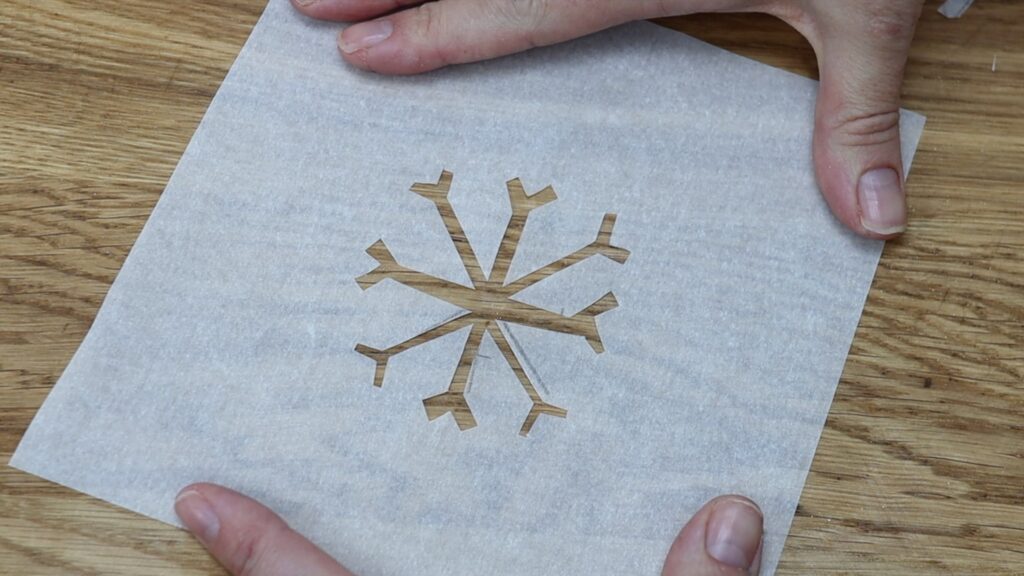
Create any design or pattern on your 5 minute cake by making a homemade stencil with parchment paper. Draw or trace your shape and cut it out, leaving the paper around the shape intact to create a stencil. Parchment paper is thin and flexible so it’s easy to cut into any design.
Place the stencil on a chilled cake and since the cake is cold, the stencil won’t damage the frosting. Spread frosting over the stencil and scrape over it until you have a thin, smooth layer. Peel the stencil off, leaving your design on the cake.
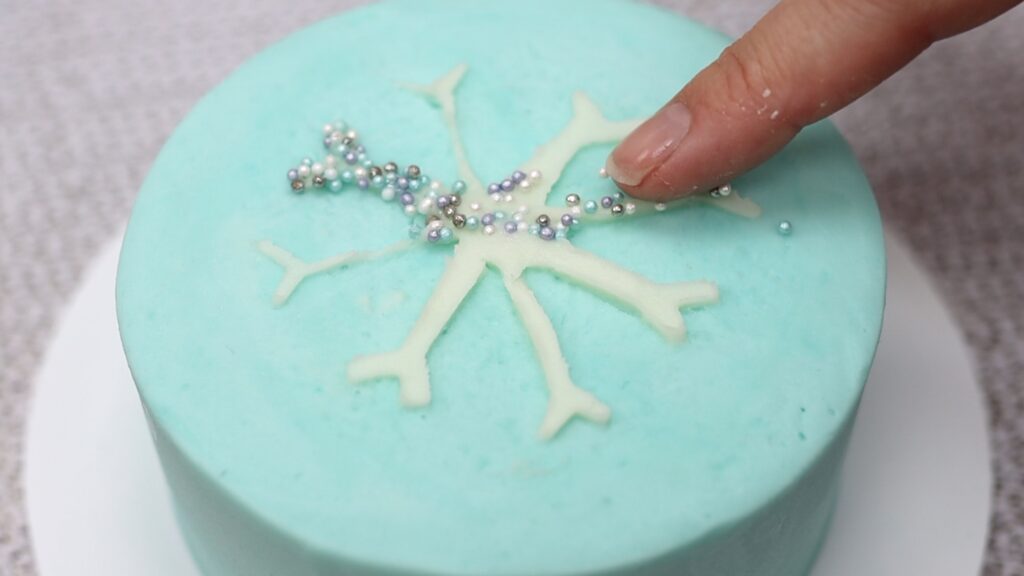
For extra decoration, press sprinkles into the stencil design. While the frosting design is still soft and sticky, the sprinkles will attach easily. You can use a small paintbrush or a toothpick to nudge any sprinkles onto the shape if they roll off.
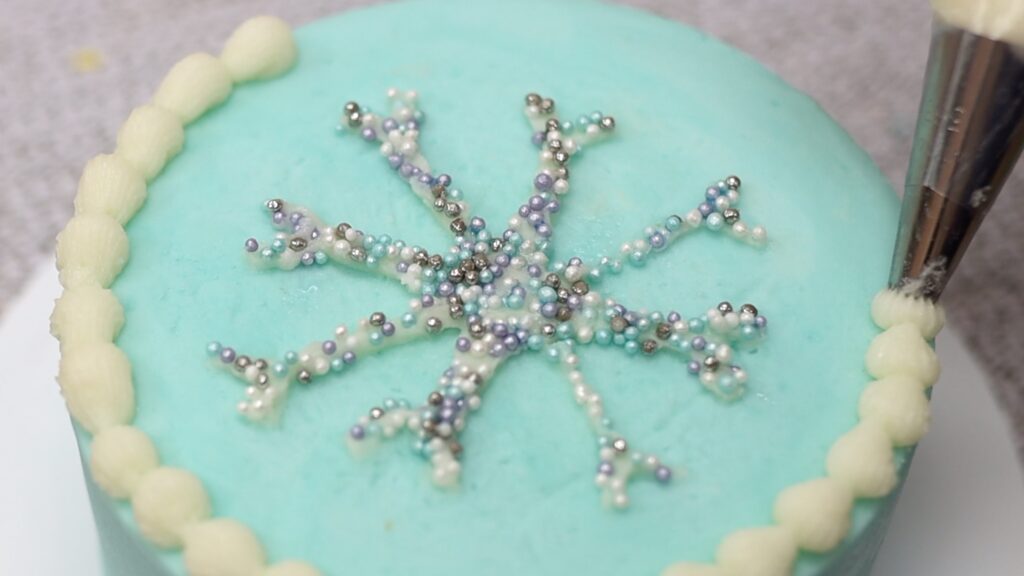
You can add a quick border with any open star shaped piping tip but even with just the stencil design, the cake looks pretty and fancy!
Which of these 5 minute cake decorations if your favourite? Tell me in the comments! Visit my cake school for online courses to learn hundreds of cake decorating techniques and designs.
Make a gorgeous semi-naked wedding cake or baby shower cake by following this step by step tutorial. Semi-naked cakes are a popular choice and with a few tips they’re easy to make. I hope this tutorial gives you the confidence to make a semi-naked cake for your celebration or for someone else’s!
Bake the cake
You can follow these steps for a tier cake or just a single standalone semi-naked cake. I’m going to make a two tier cake. If you’re making a tier cake I recommend at least a two inch difference between each tier. I’m using 6” and 8” pans and I’m baking 3 layers of cake for each tier. You can use any flavour but keep in mind that you'll see the colour of the cake through the semi-naked frosting. I'm using my Perfect Chocolate Cake recipe.
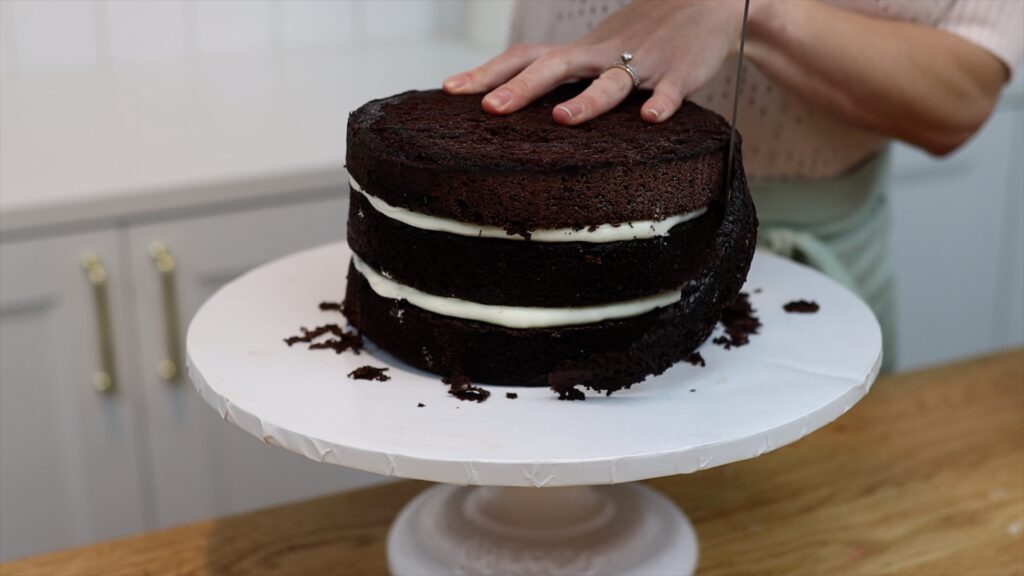
Level the cake layers
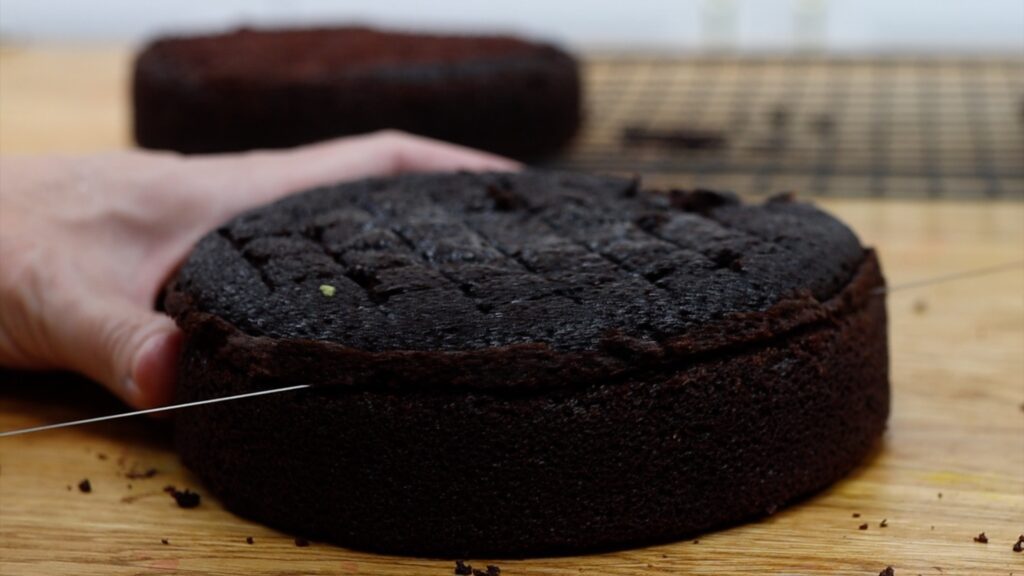
After baking and cooling, it’s important to level cake layers for semi-naked cakes. This makes the cake straight and gives it a neat outline. You can use a serrated knife like a bread knife for this, or a wire leveller. I tested this one for a tutorial on Amazon cake tools.
Preparation for a semi-naked wedding cake
Before you start making the cake, there are two things to check to set yourself up for success. First, the consistency of your buttercream. This may be less stiff than you'd normally use! Using very soft buttercream minimizes crumbs pulling off the cake.
The second thing, which is really important, is that the cake layers are chilled. Cold cake layers are easier to work with because they’re less crumby than room temperature cake layers. This will make the cake easier to assemble and frost neatly.
I wrapped these layers in plastic wrap and left them in the freezer overnight, which I find is ideal for semi-naked cakes. If you don't have that much time, even thirty minutes is long enough to make a difference.
Assemble the second tier
When you have your buttercream and cake layers ready, assemble your second tier. If you're making a two tier cake, this is the top tier. The reason for doing the second tier first is that you’re going to touch the frosting when you stack the tier cake so you want to give it the most time possible to set and harden in the fridge first.
I like to use a thin cardboard cake board with a greaseproof lining. A material you can cut easily is ideal. Start with a board the same width as your cake layers and spread a bit of buttercream onto the middle of the board. This acts as glue to attach your first cake layer.
Now you can pipe or spread your filling. I’ll spread it for this tier and pipe it for the next to show you both options. Since the cake is cold, you won’t pull up lots of crumbs as you spread your filling. Also, the cold cake will chill and set the dot of buttercream down on the cake board and that will hold the cake securely in place. This way it won't slide around on the cake board as you spread the filling or the frosting later.
Line up the next cake layer so it’s directly above the first. Get down to eye level with the cake and spin the turntable to check that the sides of the cake are straight all the way around. Adjust the top layer if necessary and then add your next layer of filling.
If the filling is sticking out from the side of the cake, spread that to flatten it. I’m using my 4 Minute Buttercream to fill and frost this semi-naked wedding cake but I teach all sorts of fillings and frostings in my Basics of Cake and Basics of Buttercream online courses.
Frost the second tier
Once the cake is assembled, if the layers are still cold you can move straight on to frosting it. If not, put the cake in the freezer for 15 minutes or the fridge for an hour first. I like to start with the top of the cake. Spread the frosting all over and push it over the edges to make a neat, sharp angle around the top of the cake later. Smooth the frosting by spinning the cake on the turntable and holding your offset spatula at a 45 degree angle. Then swipe it off the cake to take the excess frosting off with it.
Since the cake is on a board the same size as the cake, frosting the sides will be tricky unless you put the cake on a bigger cake board, using a non-slip mat to hold it still.
Spread the frosting from side to side around the cake, which is quickest and will pull the fewest crumbs off the cake. Push the frosting up above the top of the cake so that you can make that sharp angle later. Since the buttercream is softer than you might normally use to frost a cake, this lip should sink down instead of standing up like this. Instead, because the cake is cold it chills the buttercream quite quickly, which makes it firm.
Cover the whole cake and for the neatest results, be generous with how much buttercream you spread on. Although this is going to be a semi-naked cake, by making a thick layer of frosting and then scraping off the excess you’ll minimizes crumbs in the frosting. Trying to spread the frosting very thinly will pull more crumbs off the cake.
Scrape around the cake with a straight edged cake comb to smooth it. After every few scrapes around the cake, spread more frosting over any indents to fill them in. Then scrape again take off the excess frosting, leaving a thin, smooth layer behind.
For the top edge, push sideways with your offset spatula to push the lip of frosting over onto the top of the cake. Swipe your offset spatula up and off the cake to take the excess buttercream off with it.
Now put the whole cake in the fridge to set this frosting while you make the bottom tier.
Assemble the bottom tier
For the bottom cake you’ll need a cake drum or another thick, sturdy material for the board since it needs to support the weight of the whole tier cake. For a semi-naked wedding cake you'll probably use a cake stand for display but you'll need a strong cake board for transportation. Assemble the bottom tier the same way, attaching the first layer of cake with a dot of buttercream and then alternating between fillings and cake layers.
To pipe the filling onto the cake, spoon it into a piping bag with the end cut off. You can use a round piping tip if you like but this will work just as well without a tip. Pipe around the edge of the cake and then spiral inwards to the middle. You don't need to cover up the whole cake with your piping unless you want a thick layer of filling. Use an offset spatula to spread the piped buttercream into a flat, smooth layer. Then place the next cake layer on top. Spin the cake to check the layers are lined up straight on top of each other. Push down to secure the top layer and then repeat.
If you chilled your cake layers before assembling the cake, it’s important to work quickly. The filling will set quite quickly as it chills and then it won’t be sticky. You want to place each cake layer before the filling below it sets so that the cake will attach to it.
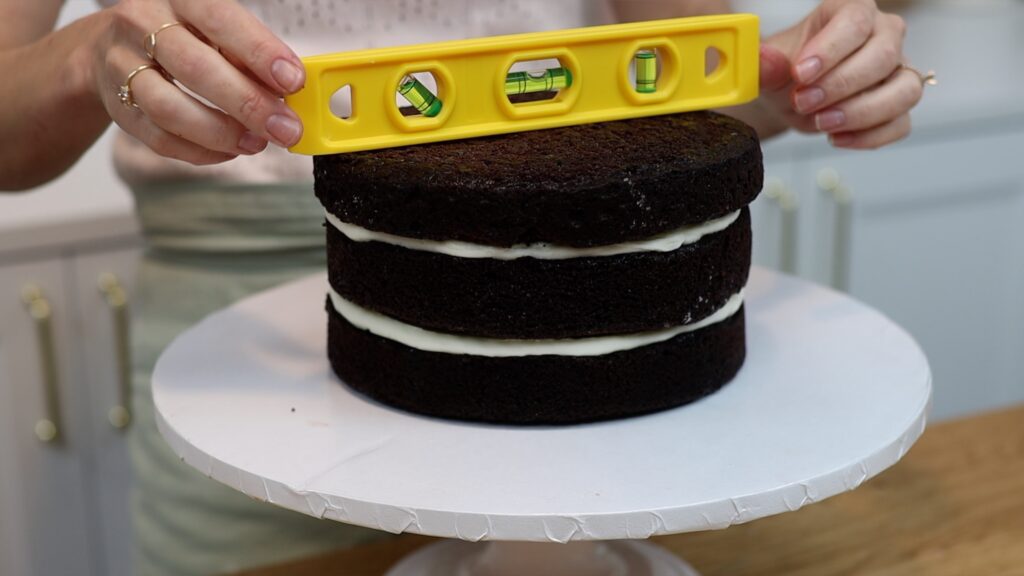
After placing the final layer, I like to use a spirit level to check that cake top is flat. This is especially important for the bottom tier because you want the next tier to sit level and straight on top of it. Push down on one side of the cake if it’s higher than the other and it will sink into the filling on that side to level the cake.
Check the cake from the sides to make sure it's straight. You can see that my top layer is wider than the other two. It was a test cake for some silicone baking pans, which are also in my tutorial on testing amazon cake tools. Since it’s wider than the other layers it’s important to trim it so that the sides of the cake are straight. You can do this with a serrated knife like a bread knife. If I didn’t trim this, I’d have to spread the frosting on very thickly over the bottom part of the cake to make it as wide as this. Then the cake wouldn’t be semi-naked at all!
Frost the bottom tier
Once the bottom tier is assembled, if the cake layers are already chilled you can frost it straight away.
I'll recap my tips for neat semi-naked frosting:
Make sure your cake is cold so it’s firm and less crumbly than a room temperature cake
Check that your buttercream isn’t too stiff to spread easily
Use more buttercream than you think you need. This minimizes the crumbs coming off the cake and getting into the frosting.
For this tier I’ll show you how to pipe the frosting onto the cake. I like to pipe around the bottom of the cake first, since that’s the trickiest part to get to with your offset spatula. Then I zig zag around the rest of the cake.
Now use your offset spatula to spread it over the whole cake. Since the frosting is already on the cake, it should glide instead of sticking and dragging crumbs with it.
Scrape around the cake with a cake comb to smooth the frosting and spread more frosting over any indents to fill those in. Scrape around again and do more touch ups as you need them, until the frosting is smooth.
Tidy up the top edge and this bottom tier will be ready! But don’t rush ahead and place the second tier on top yet. Put this cake into the fridge for now.
Prepare for stacking
Semi-naked wedding cakes are usually tier cakes but like I mentioned before, you can skip the stacking step if you're making a standalone cake instead. For a semi-naked tier cake there are a few small steps to do in preparation for stacking the cake. Take the second tier out of the fridge once the frosting has set. It should be cold and firm so that you can touch it without damaging it. If the cake board is sticking out because it’s wider than the cake, trim the cake board now. Since the cake is cold you won’t smudge or indent the frosting as you do this. Angle your scissors to cut right up to the edge of the cake so the board is flush with the cake.
Now place this cake onto the bottom cake for just a moment. Center it and trace around the edge to mark where it’s going to be eventually. Then put the top tier back into the fridge.
Add support
The bottom tier needs to hold up the cake above it so it needs some supports. I like to use boba straws because they’re wide, strong, and easy to cut to the right size.
Push one into the bottom cake, about an inch within the line you scored. After stacking the cake, the straw will be underneath the top tier, holding it up. Push the straw down until you feel it hit the cake board. Pinch the straw at the top of the cake, pull it up and cut at the point you pinched it. Now this straw is the same height as the cake.
Hold this first straw against three more straws and trim them all to be the same length. You will now have four identical sized straws.
Push the first straw back into the first hole and push the other three straws in. Position one opposite the first straw and then the other two opposite each other too, to form a square formation.
Use the handle of your offset spatula to push them right down to the bottom of the cake. Then spread some more frosting over the top, which will act as glue to attach the next cake.
Stack the cake
Take the second tier out of the fridge once the frosting has set. Lift the cake off the larger cake board, removing the non-slip mat, too. You can touch the sides of the cake to balance it because the frosting is cold and firm. Lower the cake onto the bottom tier, adjusting it so that it’s centered on the cake. It should be sitting on top of those four straws you inserted.
Now that your semi-naked wedding cake is assembled, there is some tidying up to do. There will be an obvious join between the two tiers where you can see the top tier's cake board. To cover that up, use a piping bag to pipe a ring of buttercream around the bottom of the top tier. You can use a piping bag with the end cut off or use a round piping tip. This will cover up the seam:
I like to spread it with an offset spatula to push the piped buttercream into the gap between the two tiers. Then use a cake comb to scrape around the cake, taking off the excess frosting you just piped on. This will smooth it against the cake until it’s not noticeable. The buttercream conceals the cake board and any gaps in between the two cakes.
Decorate your semi-naked wedding cake
Now you can decorate the cake however you like! By decorating a tier cake after stacking it, you won't damage the decorations while stacking it.
There are so many ways to decorate semi-naked cakes! I’m going to use fresh flowers for this one. I like to make little bouquets of flowers that I’ve already washed and let dry. Then wrap the steams in cling film or Saran Wrap to prevent any floral juices leaking out. Push each bunch into a boba straw and trim the straw so it’s just as long as the stems.
Then push the straw with the flowers inside into the cake. It’s easiest to use scissor blades to push the straws in that very last bit without accidentally poking your fingers into the frosting!
Store your semi-naked tier cake in the fridge until transporting it, or until 4 hours before serving it.
Ask me any questions you have about semi-naked cakes in the comments below!
Make a quick cake with these tips and tricks! Should you pipe or spread cake filling and frosting? Should your cake layers been chilled or at room temperature? What kind of cake comb is the best? In this tutorial I'll answer all of these questions!
The basics of making a cake
Let's start with the basics of making a cake. After baking and cooling your layers, put a bit of frosting on the cake board. This will attach your first layer of cake to the board. Then alternate filling and cake layers. Cover the cake in a this layer of frosting, called a crumb coat, before spreading on the final coat. Then add decorations! But let's rewind to see the best way to do each stage to make a quick cake.
Should you spread or pipe filling onto a cake?
I'm going to use two cakes to spread and pipe my 4 Minute Buttercream as the filling.
To spread filling onto a cake,use an offset spatula to cover the whole top of the cake layer. Then smooth it so it’s flat and level, ready for the next cake layer.
To pipe filling, spoon it into a piping bag with the end cut off or use a round piping tip. Pipe a spiral onto the cake and then optionally, spread that to flatten and level it.
Which is faster? Piping the filling gives it a neater edge than spreading it and piping also takes less time than spreading. However, if you choose to spread and smooth piped filling you’ll add some time to the process. This makes piping just a tiny bit faster than spreading the filling straight on.
PRO TIP for a straight cake: get down to eye level several times as you assemble the cake. At eye level you can make sure you place each layer of cake directly over the layer below it. This way, the cake will have straight sides and won't lean to one side.
Should you spread or pipe frosting onto a cake?
Spreading frosting onto the top of the cake is the same process as for the filling. Spread the frosting to cover the cake and then smooth it to flatten it. For the sides, side to side motions are the quickest way to spread the frosting all over the cake.
Piping frosting onto the top of the cake is also the same process as for the filling. For the sides of the cake I like to pipe zig zags all the way around. This evenly spreads the frosting over the cake without ending up with too much frosting. I like to pipe a ring around the bottom of the cake too, since that’s the trickiest part to reach with an offset spatula. Then spread the piped frosting all over the cake.
Which is faster: spreading or piping? Definitely piping! Although it’s an extra step to fill a piping bag with frosting, you’ll see that it takes a lot less time to spread frosting that's piped evenly over the cake compared to scooping up dollop after dollop of frosting from a bowl and spreading that straight onto the cake. To frost a quick cake, pipe your frosting before spreading it.
What’s key with either the spreading or piping method is to completely cover the cake with frosting. This first layer of frosting is called a crumb coat. Its purpose is to trap any crumbs that come off the cake so they don’t get into the final layer of frosting. To prevent crumbs you need to be sure not to leave any cake exposed.
What kind of cake comb is the fastest to use?
Let’s compare the two most common materials, plastic and acrylic. Plastic is quicker to clean off after each scrape around the cake. Acrylic is much thicker so you have two surfaces to wipe off each time, which takes longer.
I should mention that I find that the frosting is much smoother if I use acrylic rather than plastic. However, for the crumb coat I use a plastic cake comb because making a quick cake is my goal, rather than appearance. Since the crumb coat is going to be covered up with another layer of frosting, it doesn’t matter what it looks like. For the final coat of frosting I choose acrylic over plastic because I want that frosting to be as smooth as possible.
What temperature should the cake layers be?
Probably the most important factor in assembling a cake is the temperature of the cake layers. Cakes that have cooled to room temperature after baking are the most difficult and time consuming to frost. Even light pressure from an offset spatula or cake comb will cause the cake to wobble. Room temperature cakes slide easily on the cake board because the dot of buttercream on the board hasn't set so doesn't secure it. Also, even if you assemble the layers straight on top of each other, spreading and smoothing the frosting can push the layers sideways and make the cake lean. I had to push this cake back into the middle of the cake board after it started to lean and slide:
These cake layers have been in the freezer for an hour so they’re cold and firm. This makes the cake much sturdier. The dot of buttercream on the cake board sets after about a minute because the cold cake chills the buttercream and it attaches the cake very securely to the cake board. I can spread the frosting with my offset spatula without making the cake wobble or slide or lean.
With the room temperature cake layers I have to stop and start several times as I adjust the cake when it moves. But with the cold cake layers, the cake stays still as spread and smooth the frosting. Frosting chilled cake layers is much quicker than room temperature cake layers.
So, now you know how to make a quick cake! Learn all of my tips for cake decorating on my online cake school with hundreds of cake designs and decorating techniques.