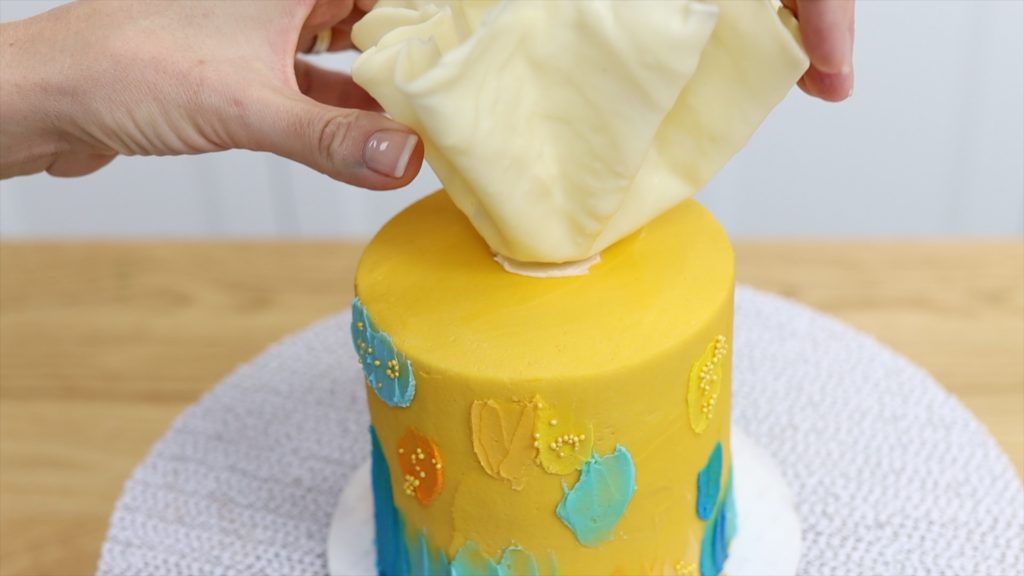
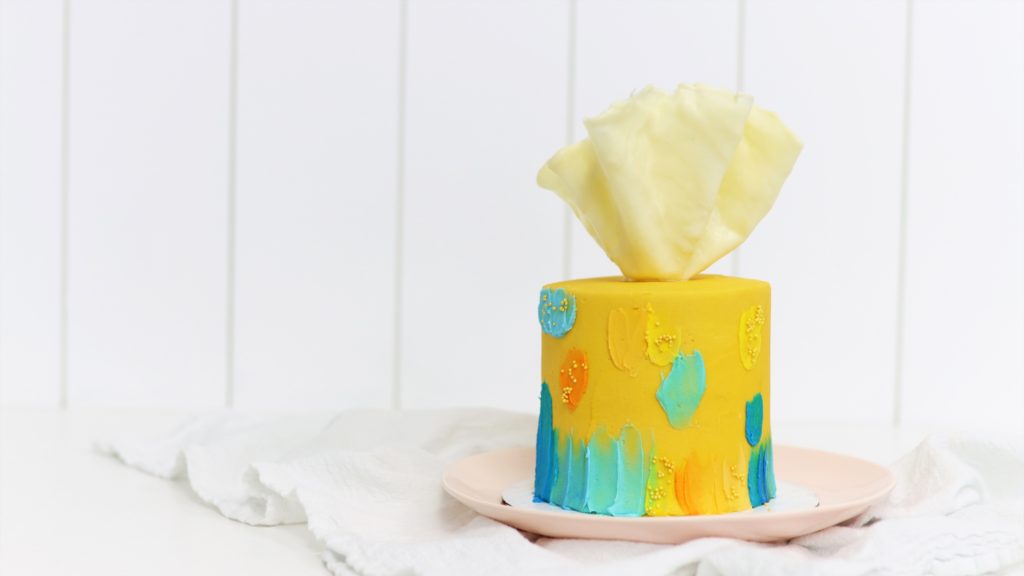
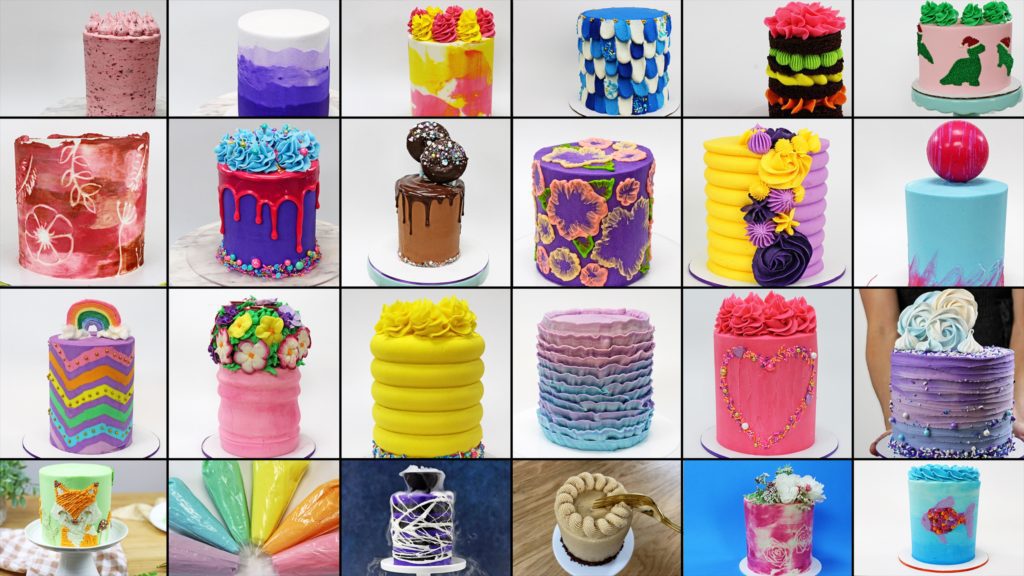
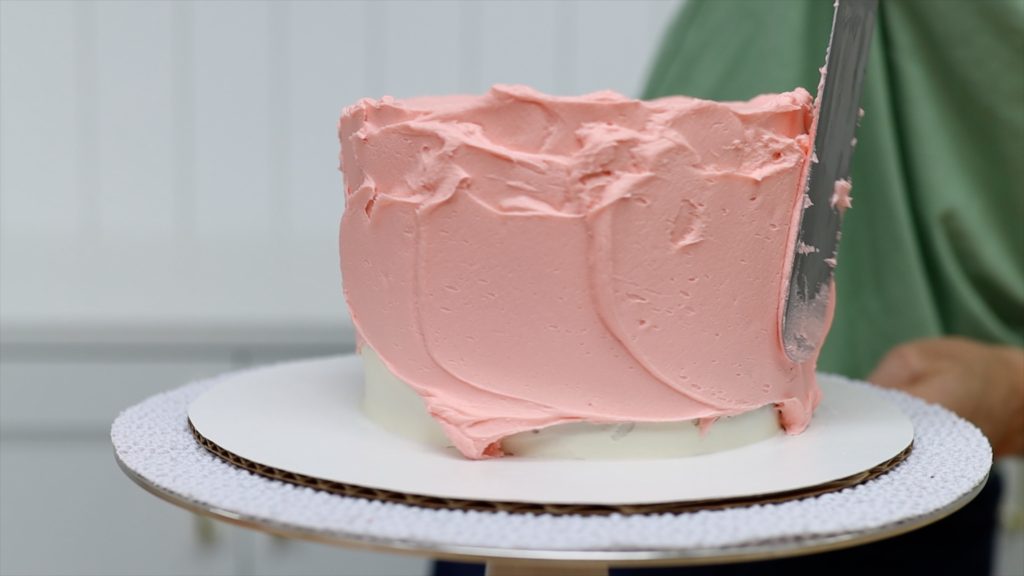
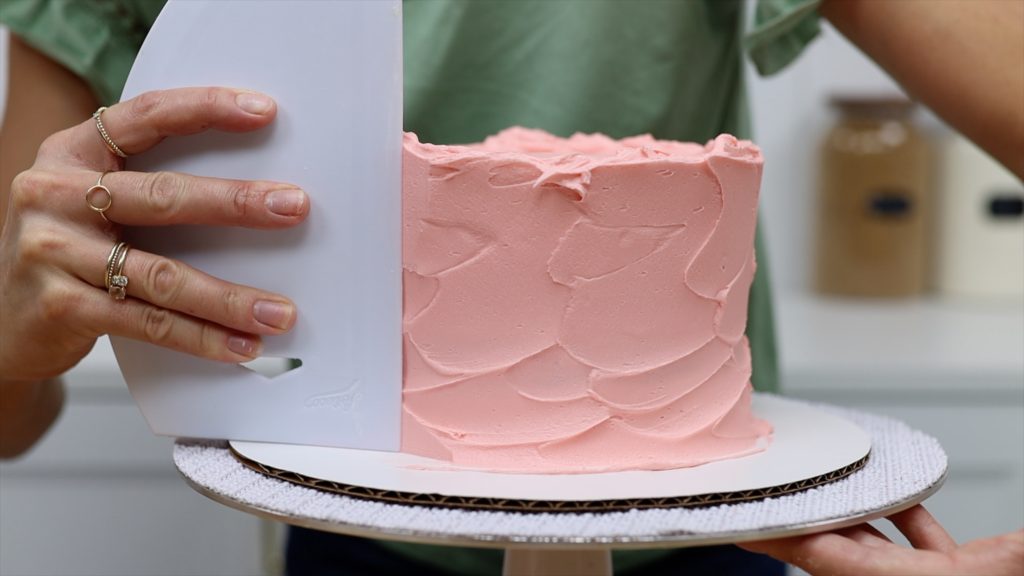
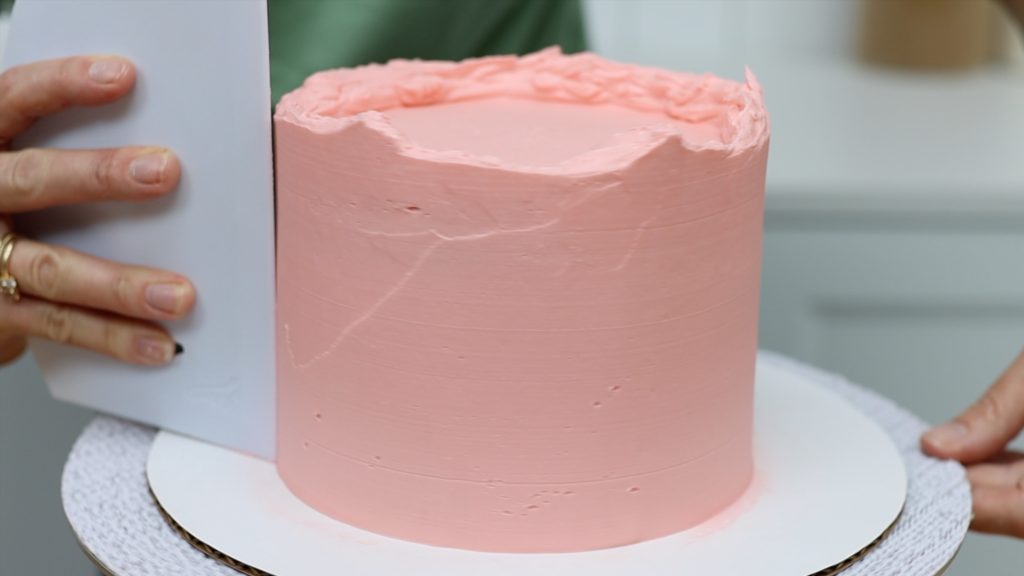
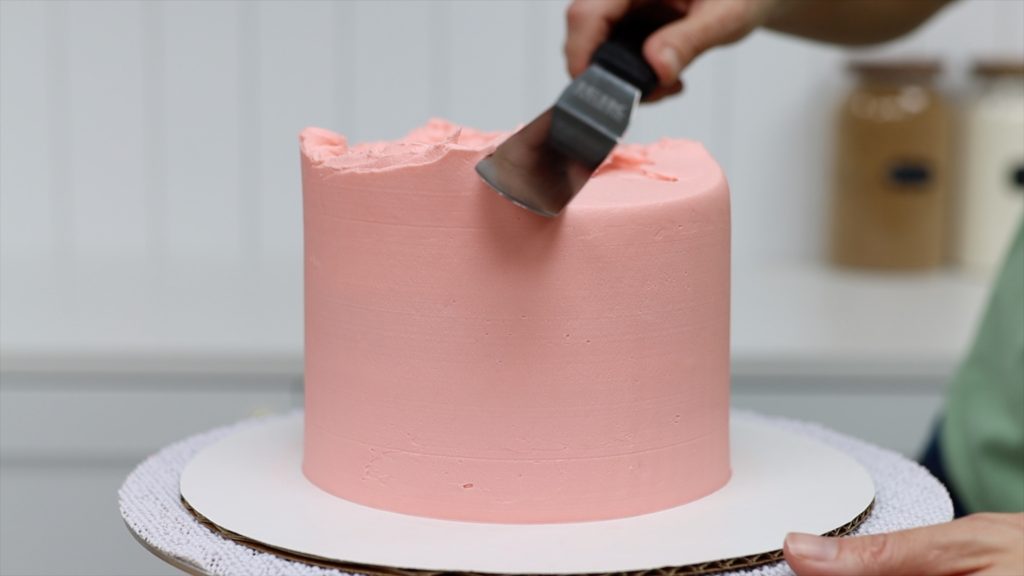
There are SO many fun way to decorate cakes at Christmas and I’m going to share 5 fun ideas with you, showing the steps to decorate each one!
If you prefer to watch a video of this tutorial, scroll to the bottom of the page.
#1 Buttercream Transfer Character
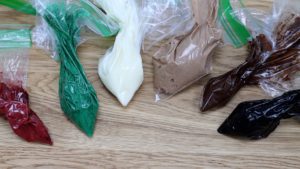
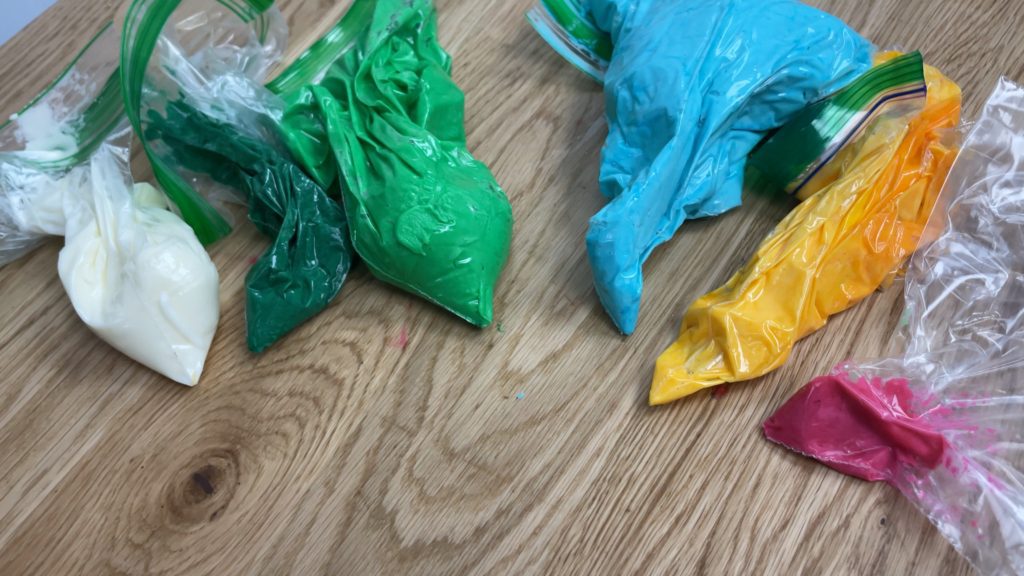
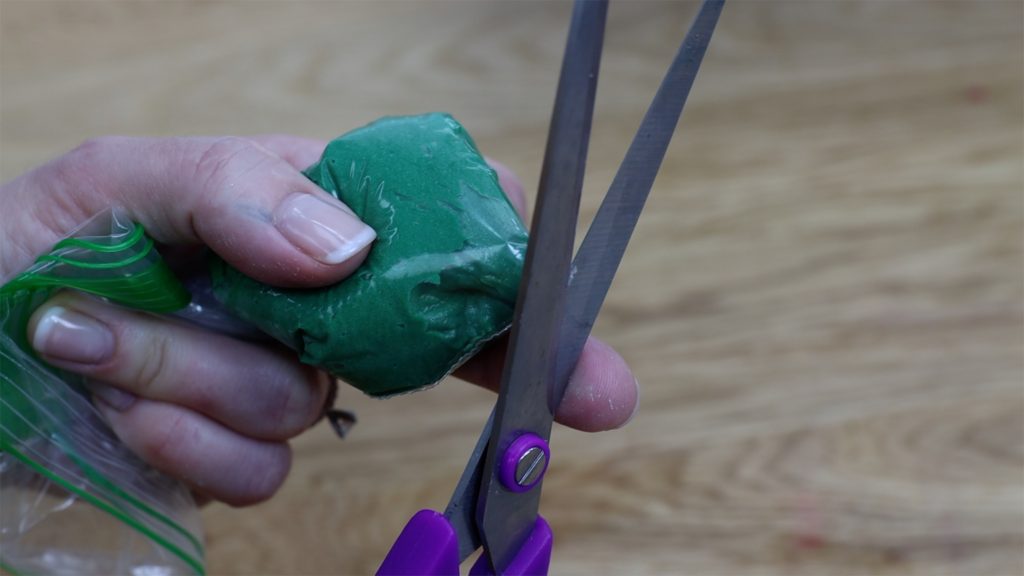
To make a cute reindeer or snowman or any other character, print or draw the character and tape a piece of parchment paper or wax paper on top. Tint buttercream to make a spoonful of each colour you need and put the colours in piping bags with small round tips, or use ziplock bags and cut a small piece of one of the bottom corners to make your own piping bags!
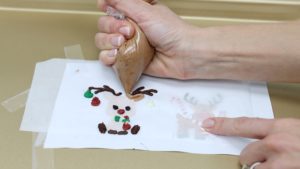
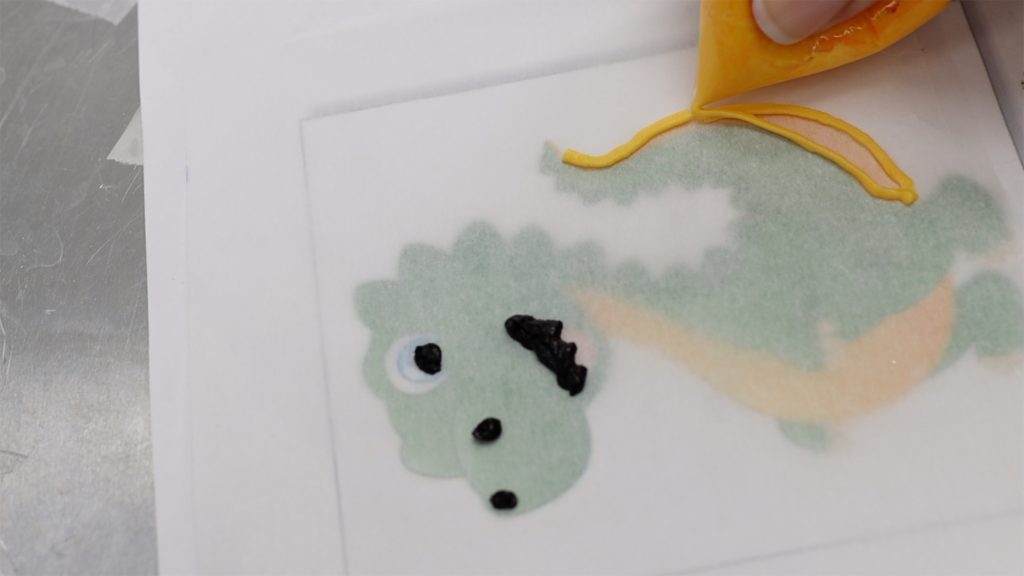
Start with the small details, piping the colored buttercream to trace the design, skipping any complicated details if you want to simplify the design. This side of the design isn’t going to be visible so don’t worry about messy textured piping. Save the largest colour section until the very end and when you finish all of the other colours, put the design in the freezer for 5 minutes to chill and set those colours.
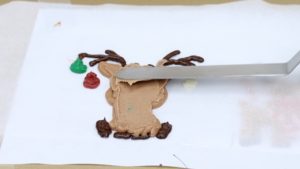
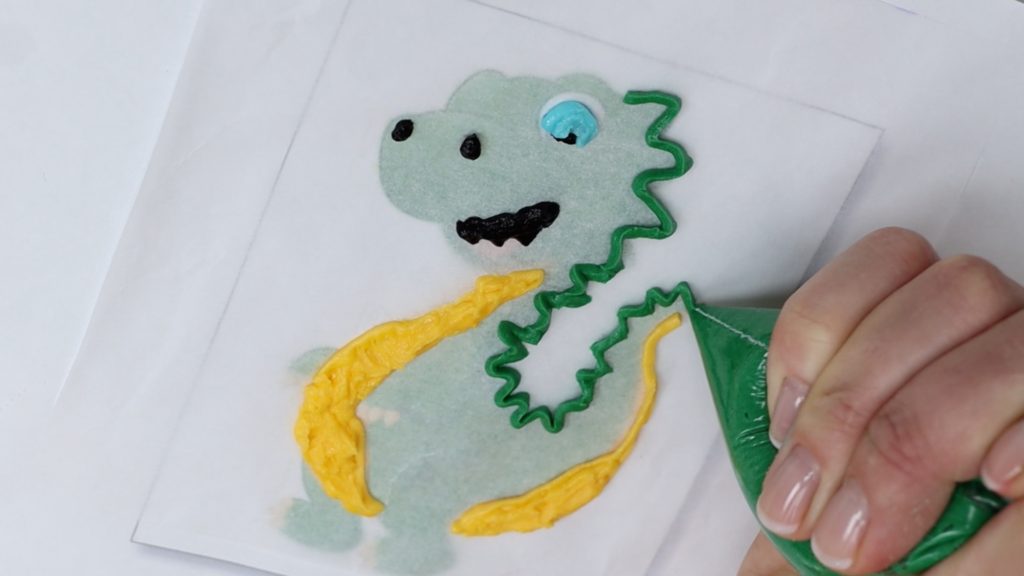
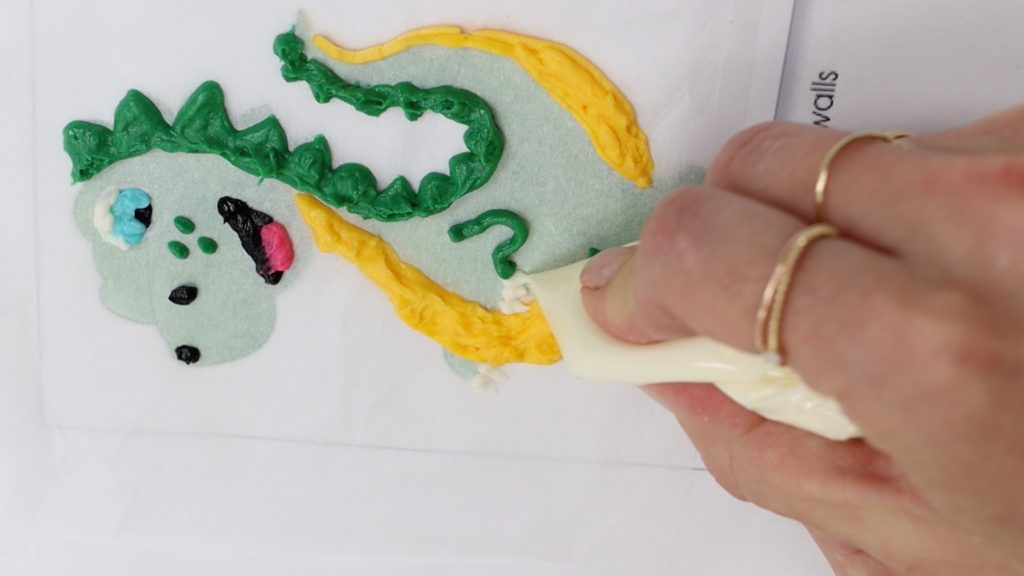
Then pipe the final colour on top of the frozen details, spreading it with an offset spatula to fill in the rest of the design and to flatten it so the whole design is level. It’s fine to spread over the other colours because they’ve set.
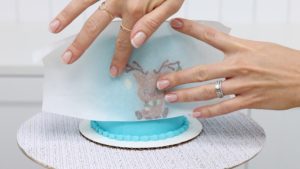
Straight away, pick up the parchment and gently press it against a cake. Push the parchment paper gently all over the design so that it sticks to the frosting on the cake. The frosting on the cake should have already set, so I put this cake in the fridge for an hour before doing this. Put the cake with the parchment transfer back in the fridge for another hour, or in the freezer for 15 minutes, to set the design so that it attaches to the cake.
Then peel the parchment off to reveal your design!
#2 Homemade Stencil Design
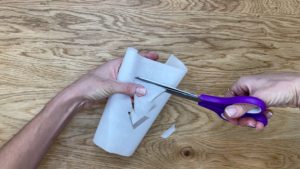
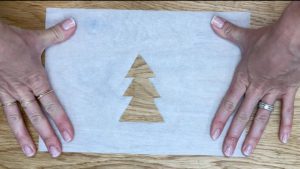
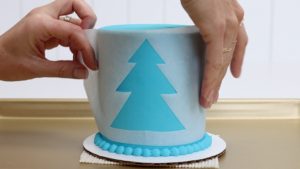
To make your own cake stencil, cut a piece of parchment or wax paper so that it’s as tall as your cake and wide enough to wrap around half the cake. Draw or trace a design onto it and then cut it out with scissors, poking the shape in the middle and cutting around the outline without damaging the parchment paper that surrounds it.
Make sure the shape fits within the height of the cake. If the parchment paper was on a roll, it will curve, and you can use the curve to help you wrap the stencil around your cake.
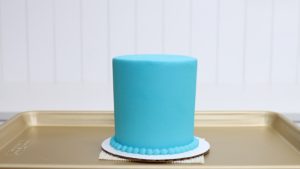
You can use coloured buttercream on your stencil or add sprinkles, too. I’ll show you how to do both. If you’re going to use sprinkles, put your cake on a tray or baking sheet to catch falling sprinkles to make cleanup easier, and a non-slip mat will stop the cake from sliding around.
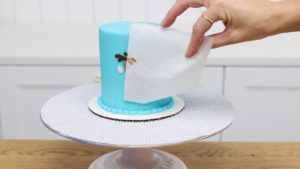
Wrap your stencil around your cake after the frosting has set in the fridge for at least an hour, so that it’s firm and the stencil won’t damage it. If the parchment paper is from a roll, follow the curve of the parchment paper so that it wraps easily around your cake.
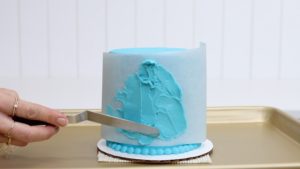
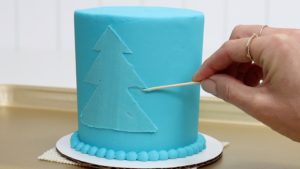
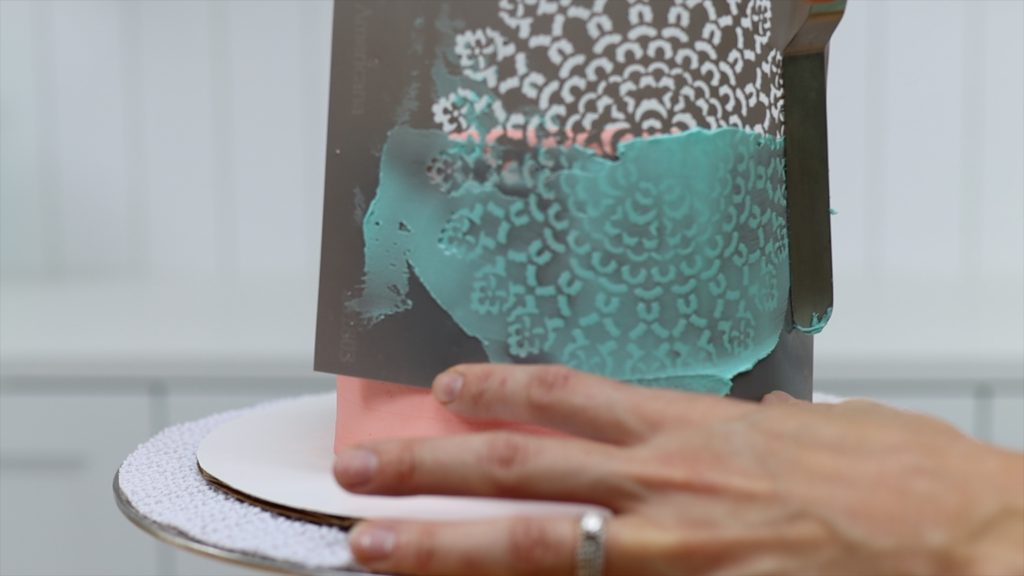
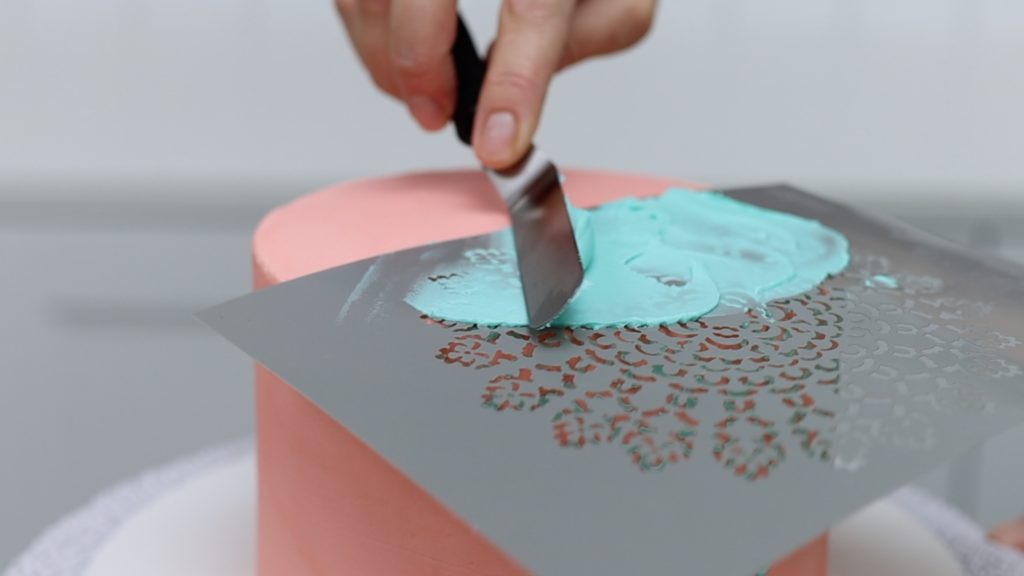
Pipe or spread buttercream over the stencil to cover the shape. Parchment is delicate and flimsy so as you’re spreading, spread from the outside of the shape towards the middle and that way you won’t push buttercream underneath the stencil, which will smudge the outline of your design.
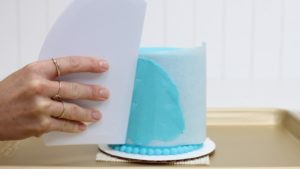
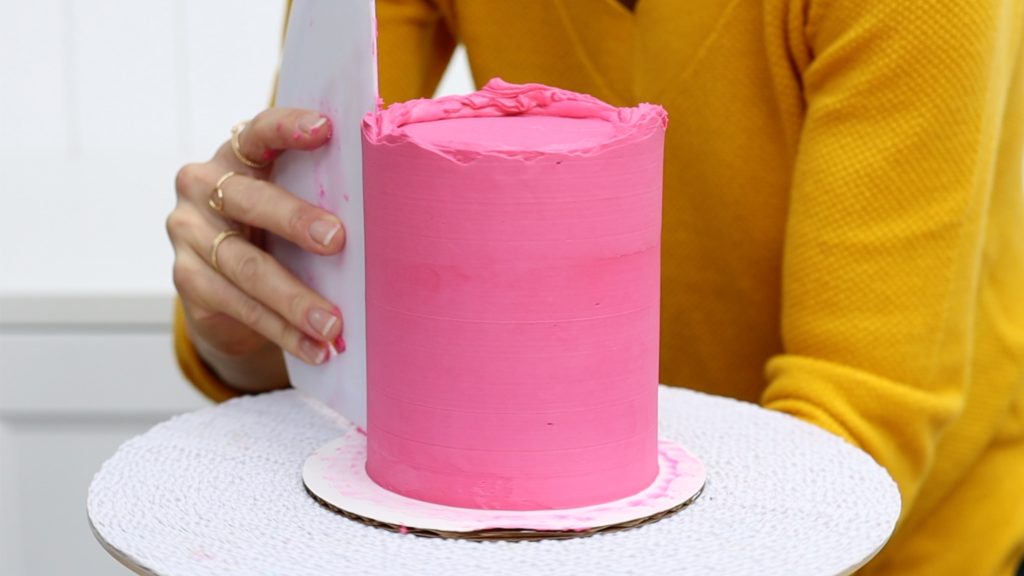
When the buttercream covers the whole stencil design, scrape off the excess with your offset spatula and then smooth and flatten the frosting with a cake comb.
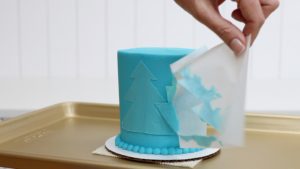
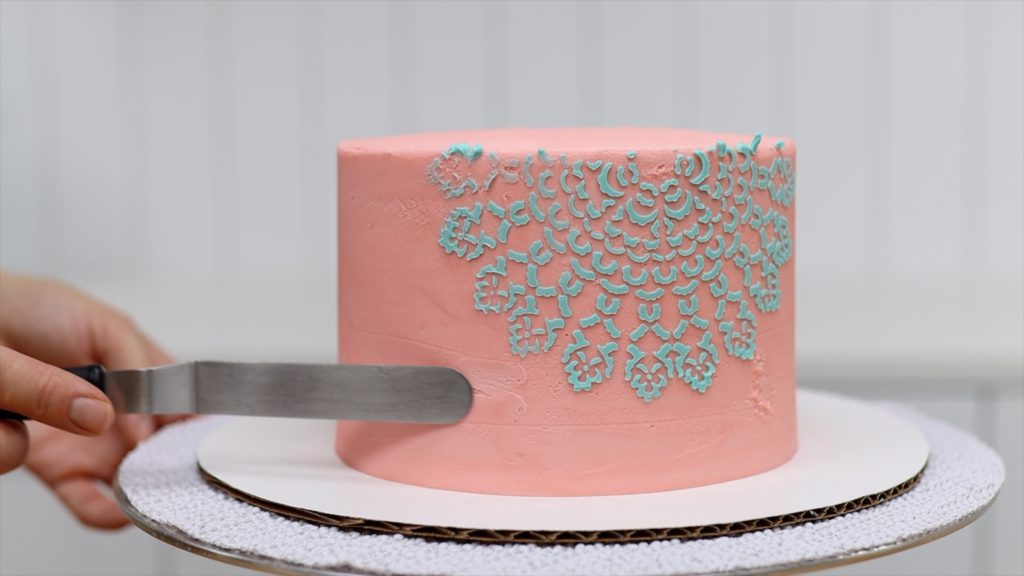
Peel the stencil off straight away, while the buttercream you just spread on is still soft and this will give you a neat edge on your shape.
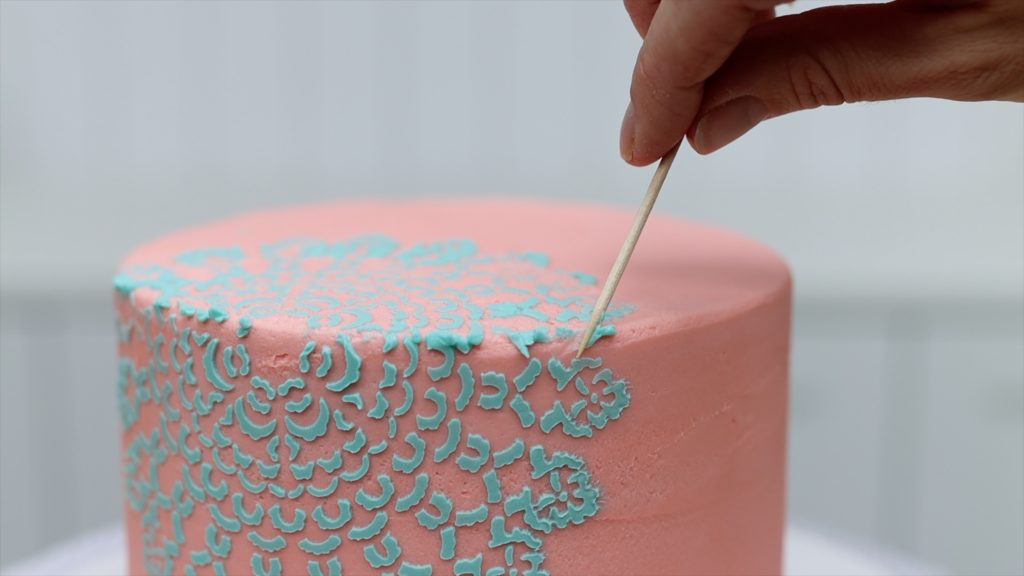
You can touch up any smudges with a toothpick, since the frosting on the cake has set so you won’t damage it.
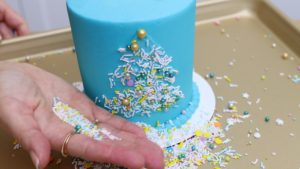
If you want to add sprinkles, do that now while the stencil frosting is still soft and sticky. Scoop up some sprinkles in your hand and angle your hand towards the cake so that the sprinkles press against the stencil design. The sprinkles will stick to the fresh frosting of the stencil, but not the frosting around the rest of the cake because that frosting has set.
Use your finger or a toothpick or a paintbrush to tidy up the edges of the design, so that the sprinkles go just up to the outline of the design and make the shape really clear and recognizable.
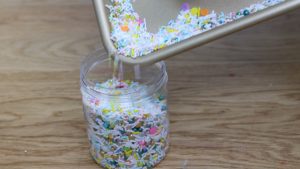
By doing this on a tray, when you’ve finished you can tilt the tray to collect the leftover sprinkles and then pour them back into the jar or packet and save them for another project!
#3 Cookie Cake Topper
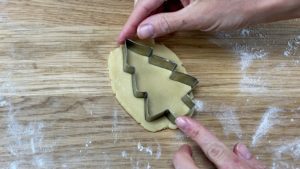
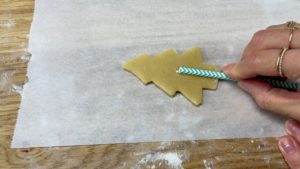
Cookies are a fantastic way to make a really unique cake topper yourself! I keep raw cookie dough in the freezer to pull out whenever I want to make a topper like this. Roll the dough and press a cookie cutter into it to cut out your shape.
Push a paper straw into one side of the cookie, which you’ll use to attach the cookie to your cake. Freeze the shape for 5 minutes before baking to help it hold its shape better, so it doesn’t spread out into a shapeless blob in the oven.
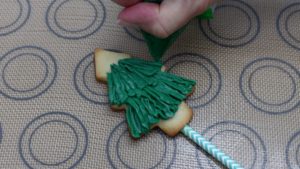
Now decorate the cookie with buttercream using piping bags or a ziplock bag with a corner cut off to pipe through. You can spread the frosting with an offset spatula to smooth it but I love the way textured buttercream looks on cookies! Sprinkles will stick easily to the buttercream before it sets, while it’s still soft and sticky.
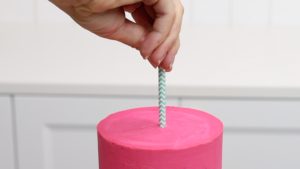
To attach this to a cake, start with a plain straw and push it into your cake. You’ll have to push quite hard if your cake has been in the fridge and that’s the reason for using this test straw first. Pull it out and this makes a pathway for your cookie topper.
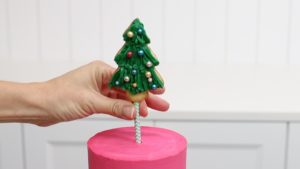
Push your cookie on its straw into the hole and it will slide in easily without breaking the cookie in the process!
#4 Cupcake Cake Topper
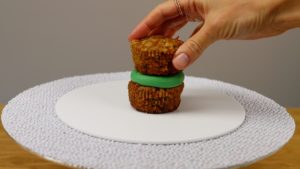
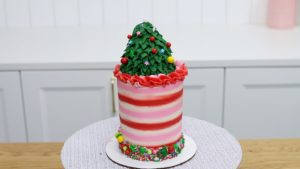
Instead of a cookie, you can make a Christmas tree with cupcakes! Peel the wrappers off and layer the cupcakes like a little cake, with frosting in between to attach them together.
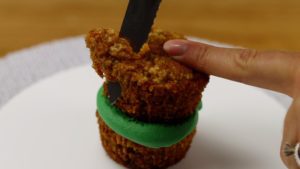
Carve the cupcakes to make a point at the top to make a Christmas tree shape. This is easiest to do with a serrated knife when the cake is cold because cold cakes are less crumbly and wobbly than when they’re at room temperature.
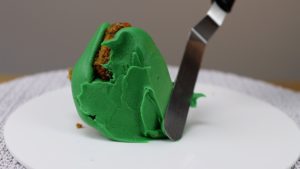
Now cover the cupcake tree with green frosting. This is my 4 Minute Buttercream, which I use for all of my cakes. This is a crumb coat so it doesn’t have to be neat, it just seals in the moisture and traps the crumbs.
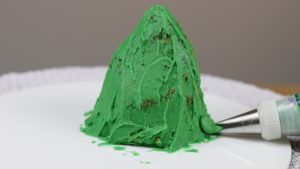
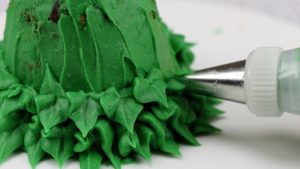
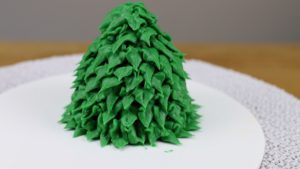
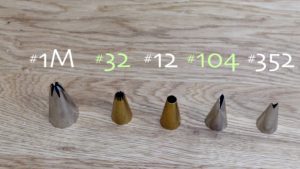
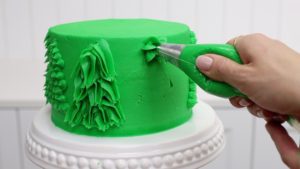
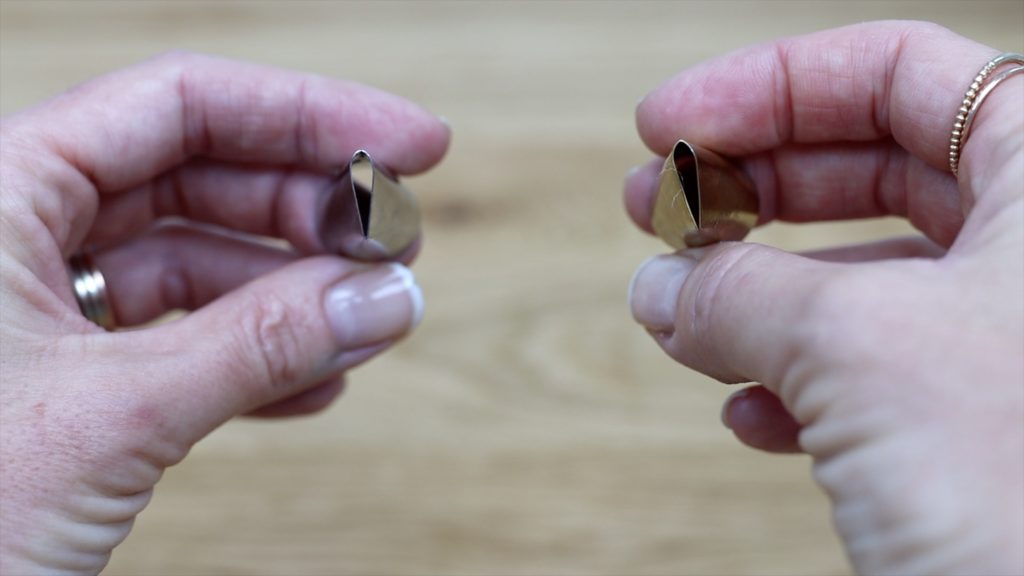
Use a leaf shaped piping tip like this #352 to pipe leaves to cover the cupcake Christmas tree. The teeth of the leaf tip should be above each other and the leaf will fan out from the sides of the piping tip. When you pull the tip away and stop squeezing the piping bag, the buttercream will make a point which looks like the spikes of a Christmas tree.
Start at the bottom of the tree, piping in a ring that goes all the way around the tree. Then pipe another ring above that, with each leaf overlapping the leaf below to cover up the base of that leaf.
Work your way up to the top of the tree and then chill the cupcake in the fridge for an hour to set the frosting so that the piped details won’t get damaged when you move the tree onto the top of a cake. Alternatively, you could place the crumb coated Christmas tree on top of the cake before piping the leaves around it.
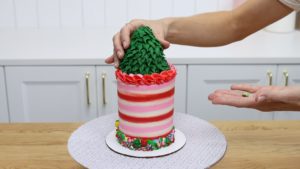
When the tree has set, take it out of the fridge or freezer and lift it up and lower it onto a cake.
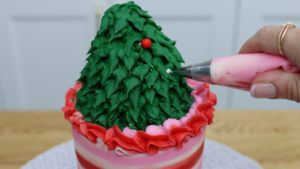
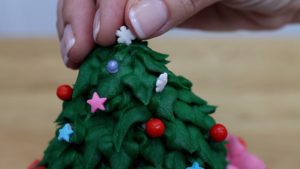
To make Christmas decorations, choose a fun sprinkle mix and press the sprinkles one by one into the frosting. You can do this immediately after piping the frosting, while it’s still soft and sticky, or if you wait until the frosting has set, like I did, you’ll need to spread or pipe a tiny dot of frosting onto each sprinkle to act as glue to attach it to the cupcake Christmas tree.
Don’t forget the top of the tree! If you don’t have a golden star sprinkle you can get creative with a gold ball or even a snowflake!
This festive cupcake Christmas tree makes a delicious addition to any cake!
#5 Piped Christmas Trees
Now let’s pipe some Christmas trees straight onto a cake! There are loads of different piping tips you can use for this and I’ll show you my favorites now.
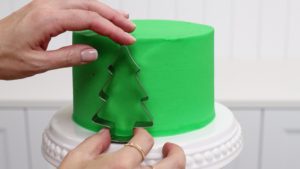
I like to press a cookie cutter into a frosted cake to give myself an outline to follow and here’s a crash course on Christmas tree piping:
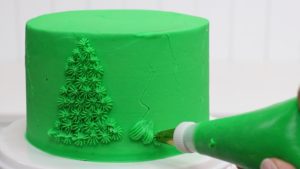
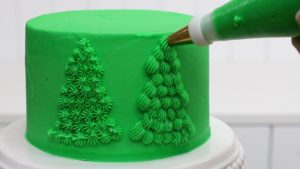
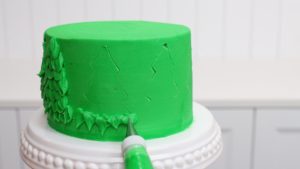
Use an open star tip like a #32 to pipe rosettes or spikes to fill in the outline like on the tree on the left. You can use the same tip a bit differently, starting with a dot and after it bulges out, pull the tip upwards to fork a peak, which you’ll cover up with the next row of piping.
Both of these create texture similar to on a Christmas tree, with multiple ridges of texture in each piped detail.
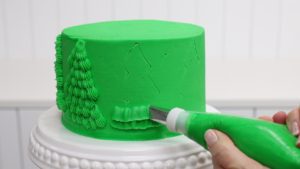
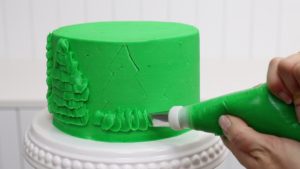
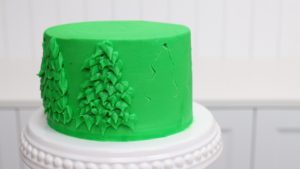
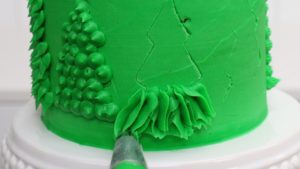
Next up, a petal tip. This is a #104 and there are two ways you can use it for Christmas trees. First, you can pipe ruffles like this if you keep the narrow end of the piping tip pointing down and the wide end pointing up. Create layers of ruffles that overlap each other to fill in the tree outline.
Holding the same piping tip in the same way, with the narrow part pointing down, pipe these little petals along the tree, starting at the bottom and overlapping each row as you work up the tree.
With a leaf tip like this #352 you can make spikier shapes, holding the tip with the two little teeth above each other.
This is what the finished Christmas tree looks like when you pipe it with a leaf tip!
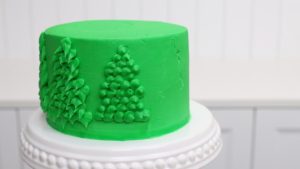
Use a medium round piping tip like a #12 to pipe dots and as you pull away after each dot you’ll leave a point behind, which give the Christmas tree that branch texture.
Almost everyone has a 1M tip, a star tip, and that works too, piping little lines downwards to resemble the branches.
Instead of dragging the tip downwards, squeeze a bit out to make these spiky star dots!
I hope you’ve seen a fun idea you’d like to try! Visit my online cake school for LOTS of courses teaching hundreds of cake designs and techniques and join my ClubPLUS for access to them all!
Here’s the video version of this tutorial:
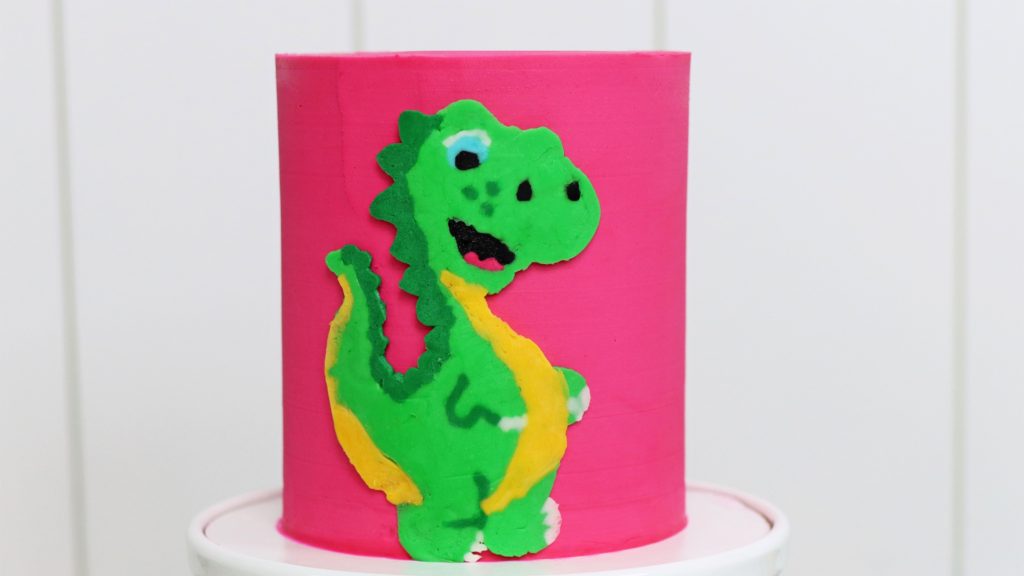
Cakes with a cute or recognizable character are really popular but it’s difficult to replicate all of those tiny details onto a cake. Here’s where buttercream transfers come in: you can trace an image and then put it on your cake!
If you prefer to watch a video of this tutorial, scroll to the bottom of the page.
The first step is to frost your cake. It’s best to start here because then you’ll know how much space you have for your design, so you can choose the size of your character. Also, the frosting needs to set before you transfer your design, so after you frost the cake it needs to sit in the fridge for at least an hour while you prepare your design.
Now for the fun part: the character!
Print out an image, making sure it will fit within the height of your cake, and tape it onto a flat surface like a tray or cutting board, something you can move around easily later. Now put a piece of parchment on top, or wax paper or baking paper, lining it up so that the bottom edge is at the bottom of the design, which makes the transfer onto the cake the easiest.
Mix all of the colours you need for your design and put them in piping bags or ziplock bags. You only need a tiny bit of each colour. Cut a little piece off a corner of each ziplock bag, or piping bags if that’s what you’re using, or you can use a small round piping tip like a #2 or a #3.
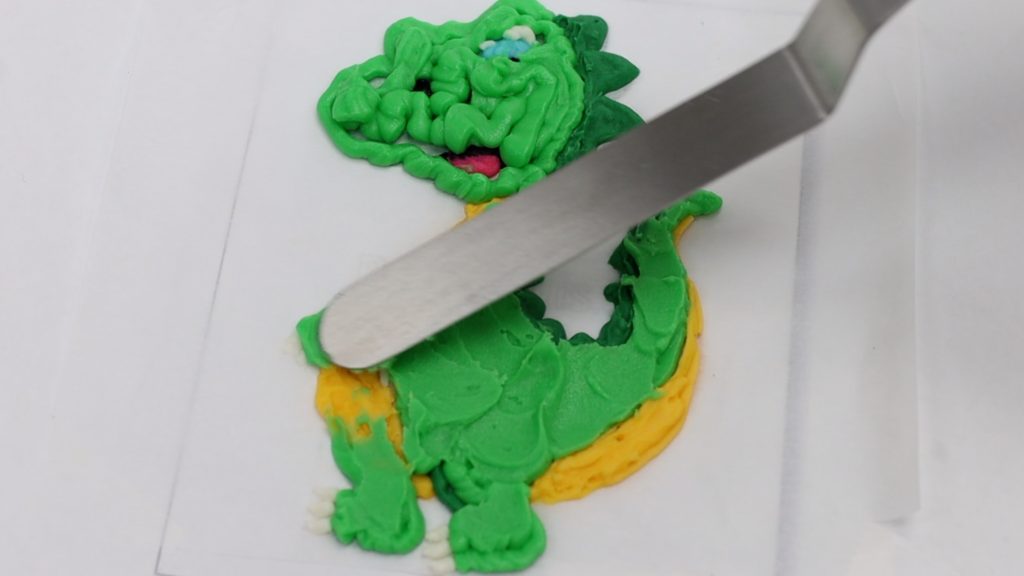
Use one colour at a time, starting with the smallest details. Squeeze the buttercream out to outline a section and then fill it in by zig zagging the buttercream within the outline.
You can use a toothpick to spread the piping around, pushing downwards because you want the buttercream to be pressed flat against the parchment paper, which is the side of the design that’s going to be visible. This side you see here is going to be pressed against the cake so this texture on the buttercream is fine.
To pipe a colour right next to another colour, chill the design first by putting the tray in the freezer for 5 minutes. That sets the first colours so when you pipe beside them, the new colour won’t distort the first colour. I like using ziplock bags for this because I don’t have 7 small round piping tips, which is the number of colours I’m using for this design. Save the colours after you finish piping because you’ll need them later.
When you’ve done everything else, put the design back in the freezer for another 5 minutes to chill everything.
Then outline and fill the shape with the final colour. It’s fine to pipe over the other coloured details because remember, no one will see this side of the design. Use an offset spatula to spread this final colour, pushing it down against the parchment to push out any air pockets and also, by flattening and smoothing this side of the design you’ll create a level surface while will attach best to the cake in a minute.
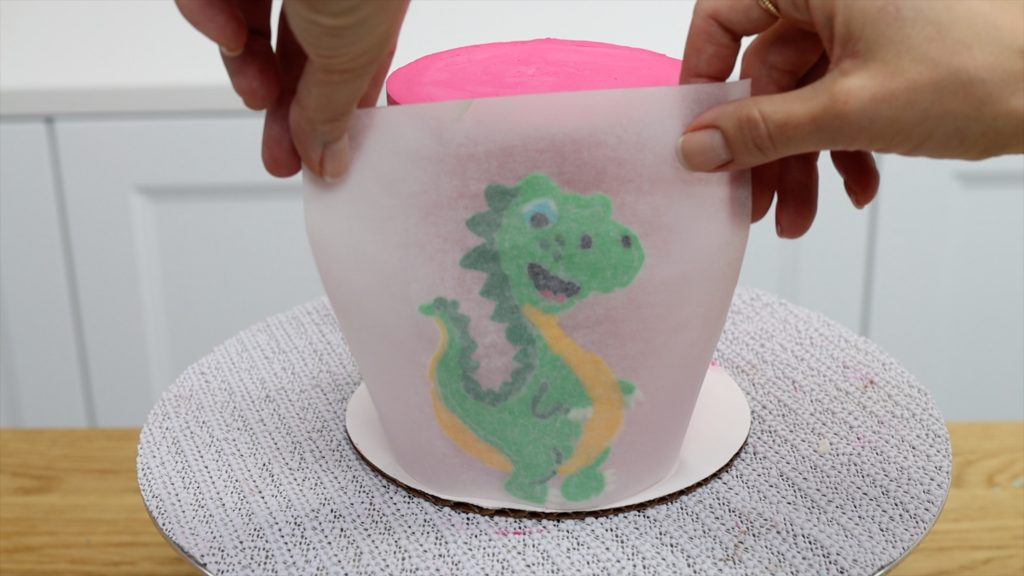
As soon as you’ve finished the design, transfer the design to the cake. You want to do this straight away, while that biggest section of coloured buttercream is still soft and sticky, so that it attaches to the cake. Take your cake out of the fridge and the frosting should be cold and firm. Lift your character up on the parchment paper and line it up against the cake. Press it against the cake, pushing gently against the parchment paper all over the design to stick it to the frosted cake.
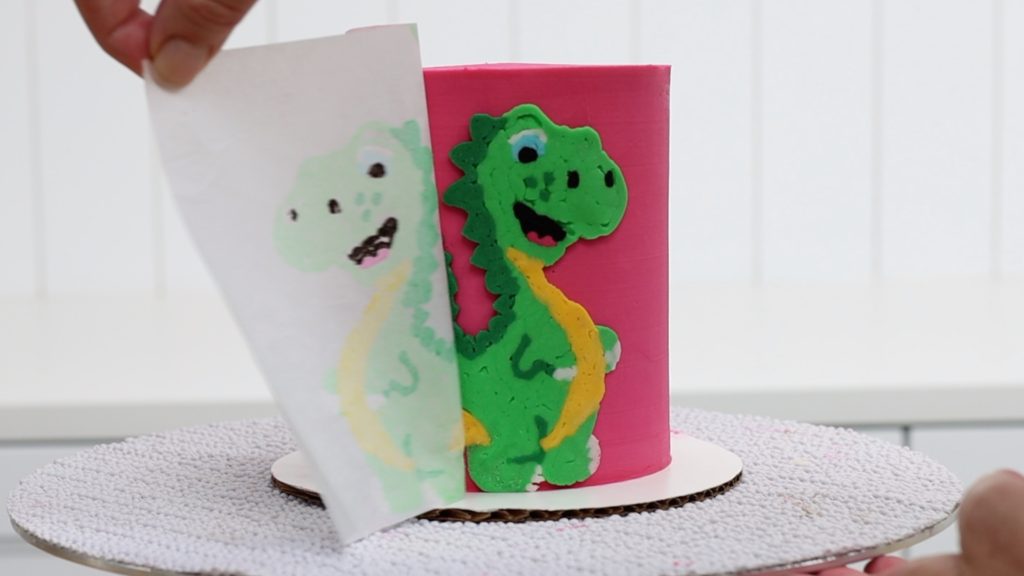
Don’t remove the parchment yet! Put the cake back in the fridge for an hour or in the freezer for 15 minutes to set the character on the cake and then peel the parchment off to reveal your character! We still need to do some touch ups so don’t be put off by the air pockets in the design.
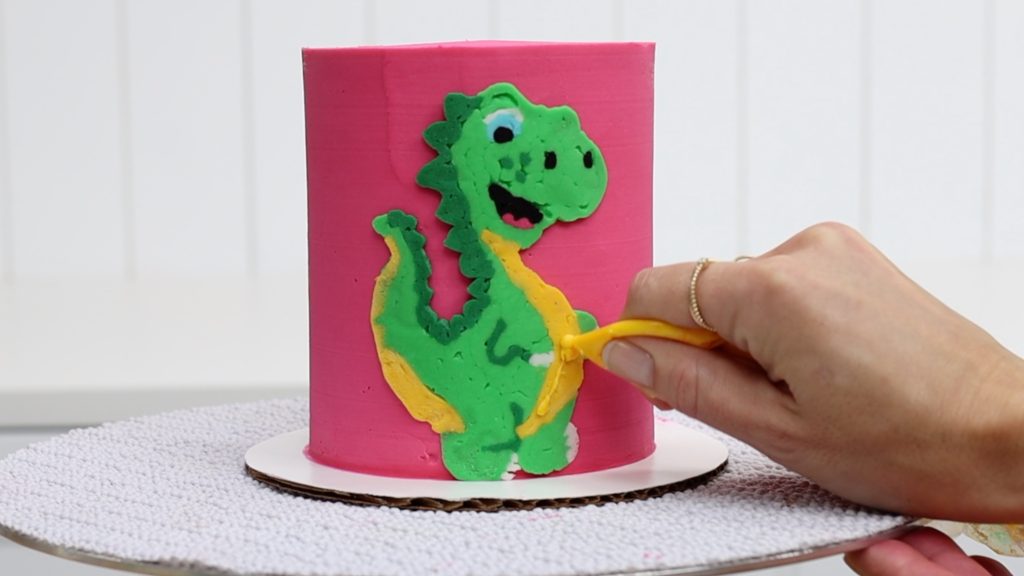
Use the leftover buttercream from piping your design to cover up any air pockets, doing one colour at a time and then scraping off the excess with an offset spatula to smooth it. Since the character has been chilled, it’s okay if you pipe or spread this touchup buttercream over other colours of the design because you can scrape it off without damaging the rest of the design, since it’s cold and firm and will hold its shape.
Do as many touchups as you like, until you’re happy with the result. Tracing the character keeps everything in proportion and it’s much easier than piping a design straight onto the side of a cake, and it creates a perfectly flat design!
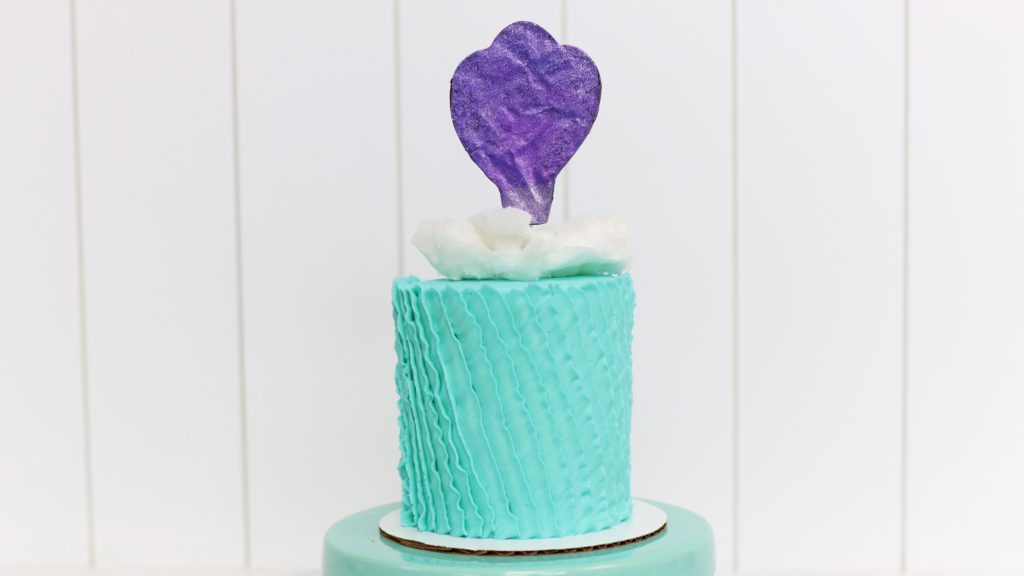
Instead of buying expensive cake toppers, use these ideas to make four stunning homemade cake toppers that will add colour, texture, and height to your cakes! In this tutorial I’ll show you step-by-step how to make each one AND how to attach them to cakes!
If you prefer to watch a video of this tutorial, scroll to the bottom of the page.
#1 Chocolate Shapes
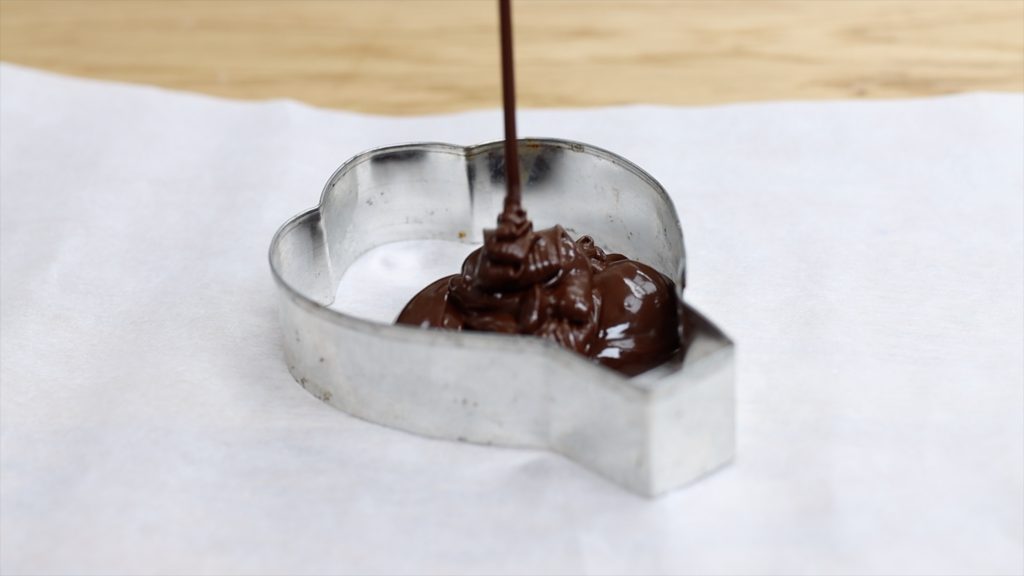
For detailed shapes, melt chocolate chips and spoon the melted chocolate into a cookie cutter placed on top of a piece of parchment paper.
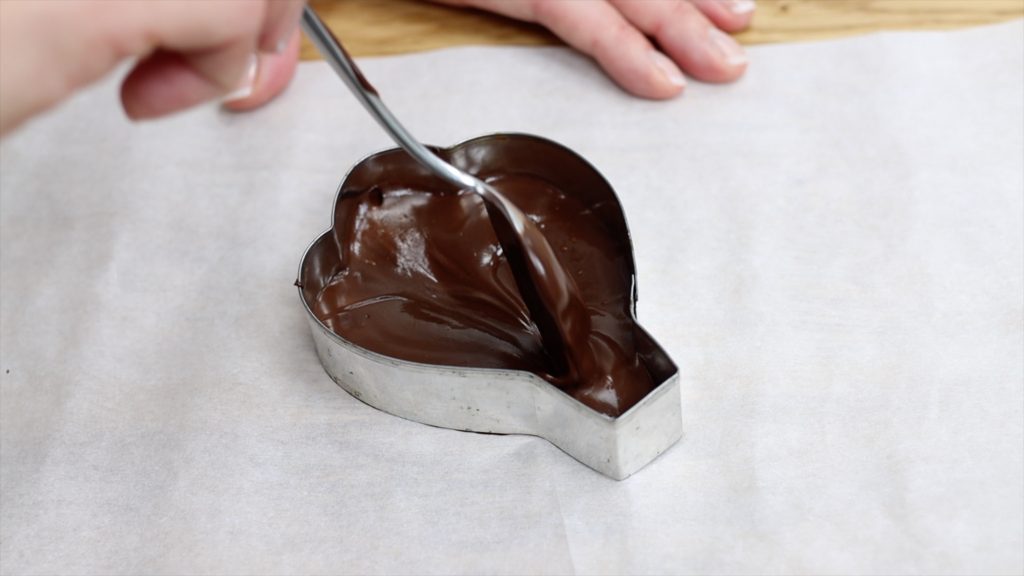
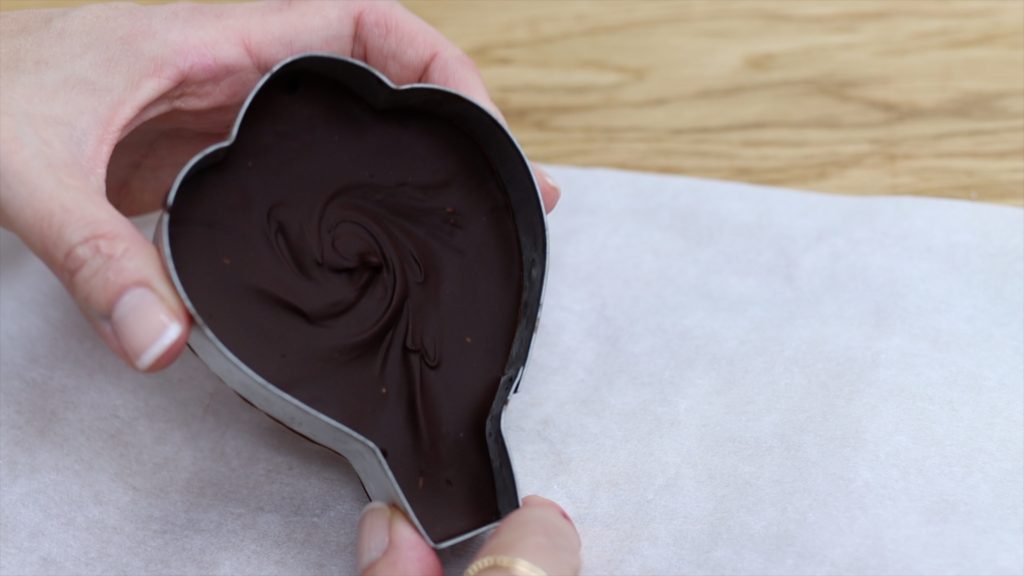
Use the spoon to push the chocolate around to completely fill the shape, right up to the edges. Save a spoonful of the melted chocolate for later and then put it in the freezer for 10 minutes or in the fridge for 30 minutes.
When the chocolate has set, take it out of the fridge or freezer and gently pushing the chocolate out of the cookie cutter. Flip the cookie cutter over and push from the bottom, up to the top, and this makes it much less likely to snap as you push. Push all over the shape to gradually ease it out of the cookie cutter. The thicker the chocolate is, the stronger the shape will be, which is important for this part!
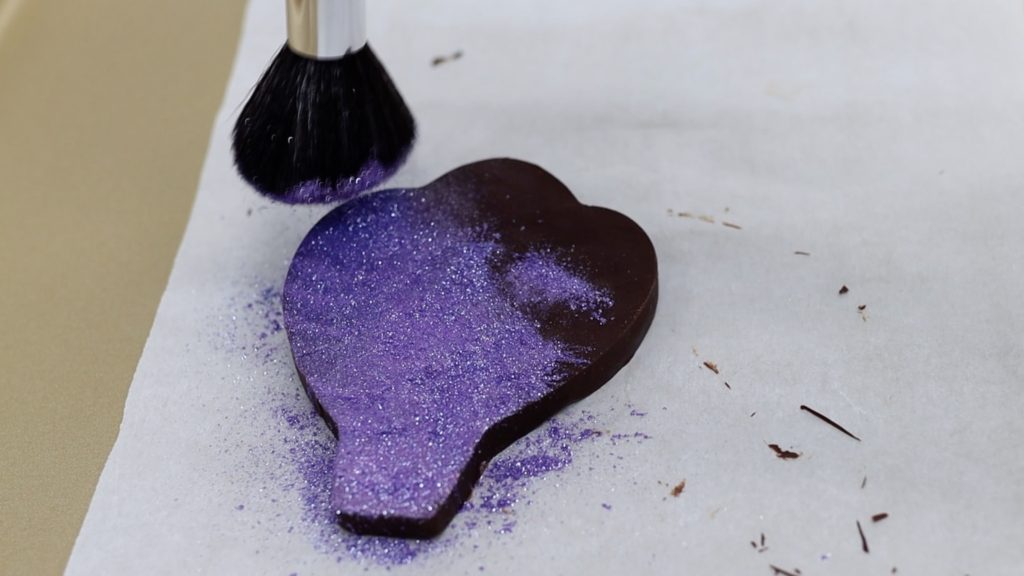
Once the shape is out you can brush it with edible glitter or luster dust to give it some colour and sparkle. Remember to do the sides as well, so that those match the colour of the front of the shape.
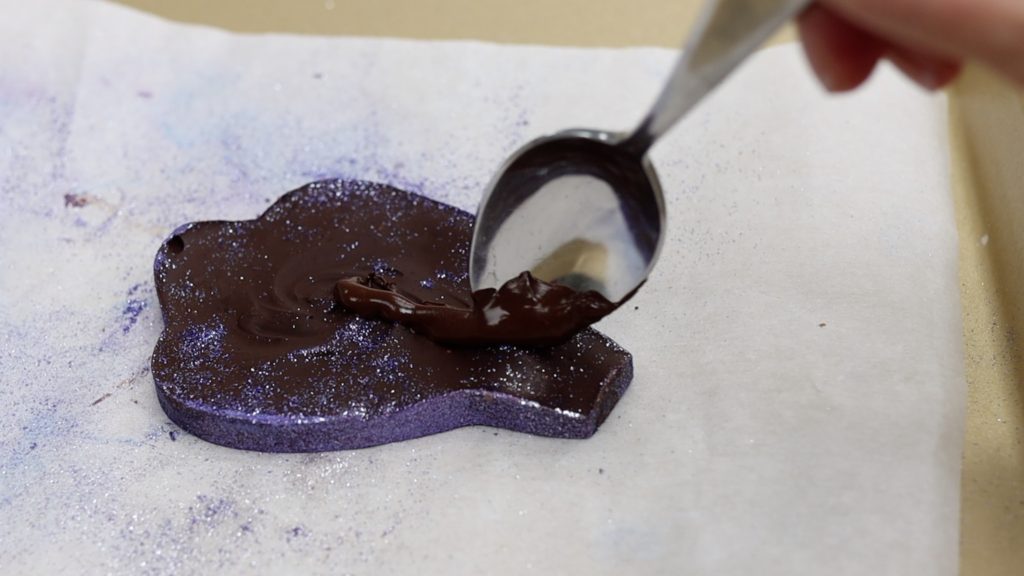
To attach the shape, flip it over and use the spoonful of chocolate you saved to make a line down the middle of the shape. You’ll probably need to re-melt this chocolate because it will have set while the chocolate shape was setting.
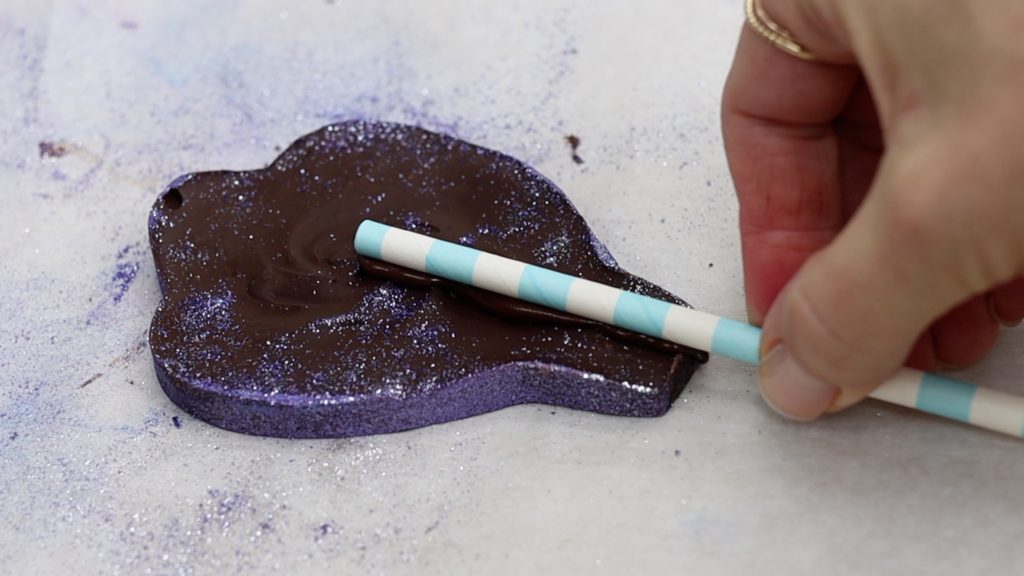
Press a paper straw into the melted chocolate, which will act as glue to attach it. You can put the chocolate shape with the straw in the fridge for a few minutes to speed up the process.
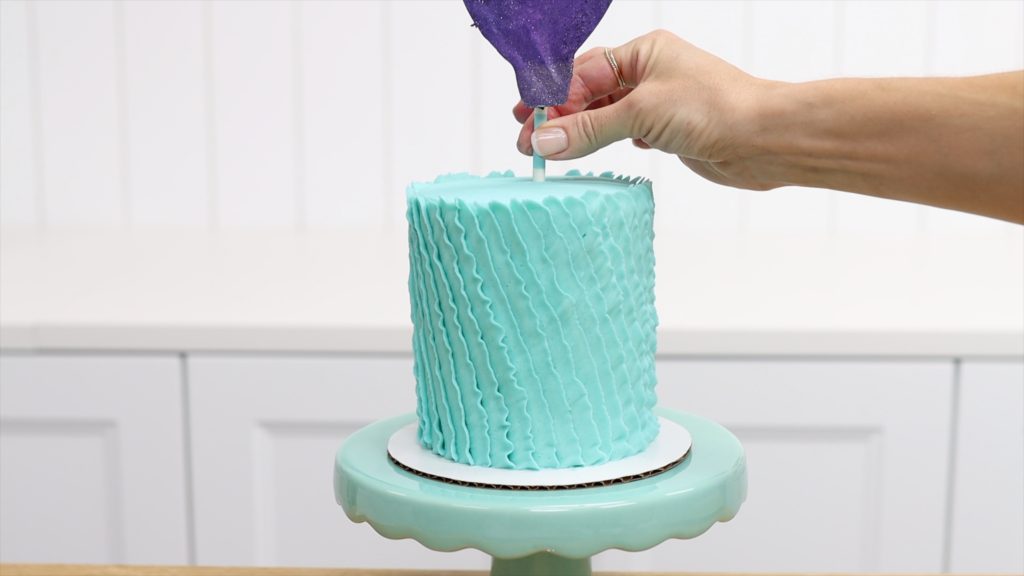
Meanwhile, push a straw into your cake to forge the pathway for the straw attached to the cake topper. Then when the chocolate has set to attach the straw to the chocolate shape, push that straw into the hole and the shape will slide in easily and secure the cake topper in place.
With just a cookie cutter you’ve created a perfectly shaped cake topper!
#2 Buttercream Rose
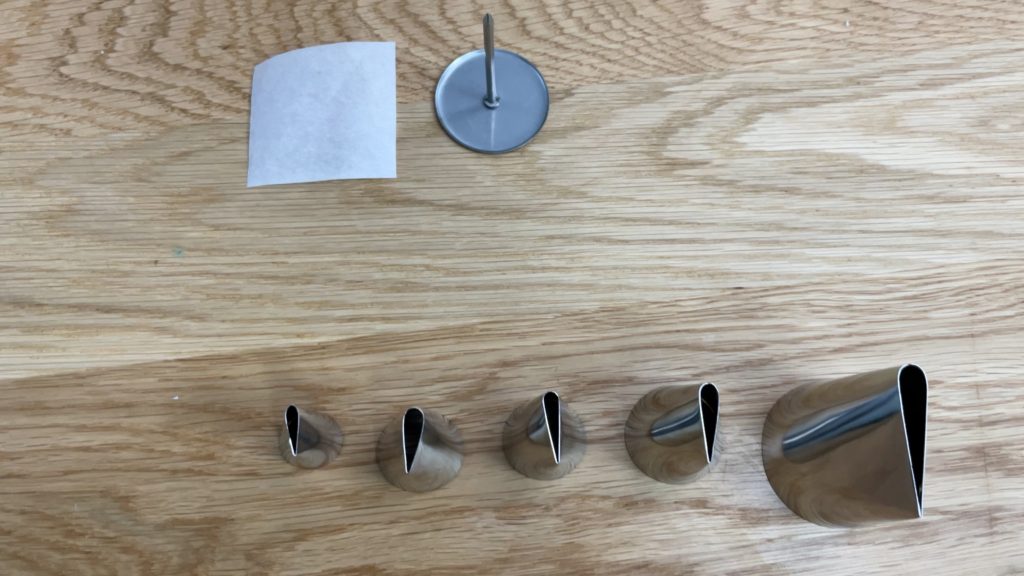
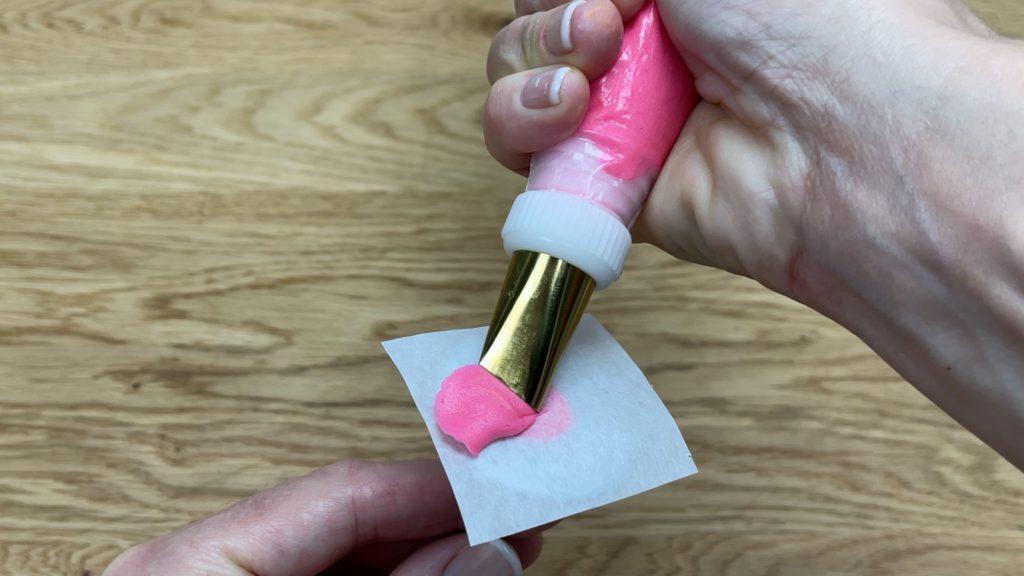
With a petal tip you can create all sorts of flowers using buttercream, or any other frosting. You’ll need parchment paper (just a small square), a flower nail and a plate or a tray.
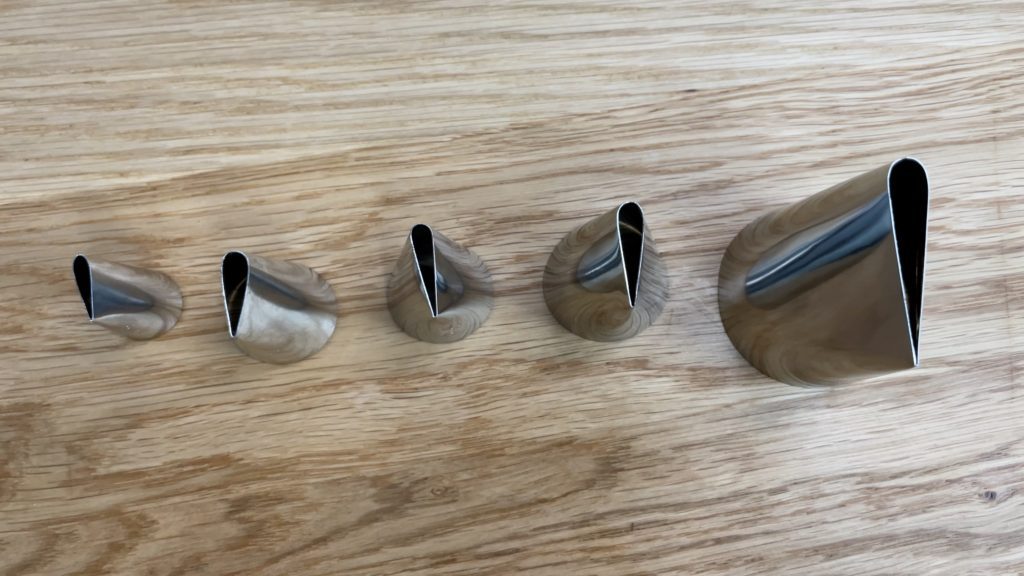
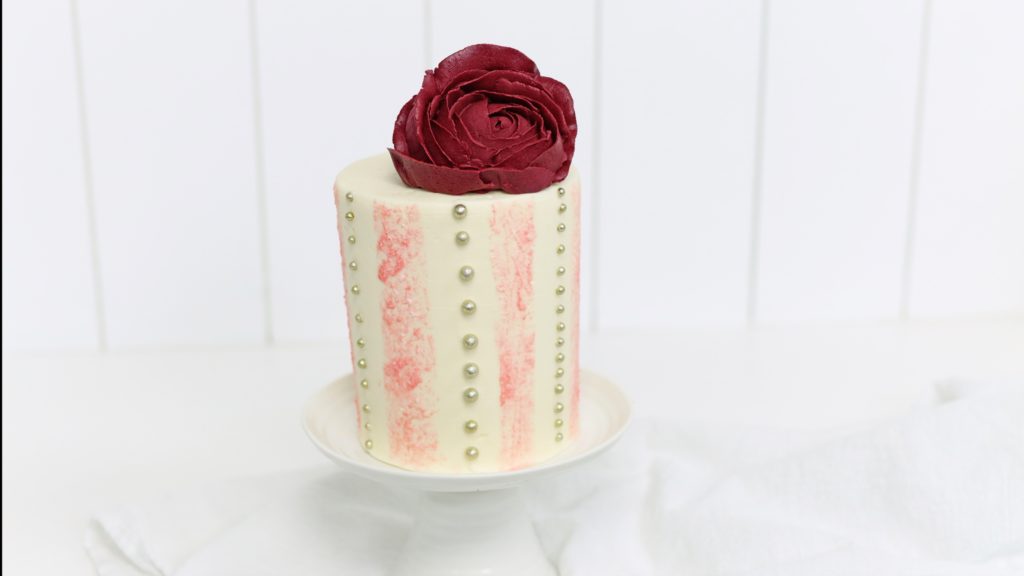
Choose a petal tip that’s the right size for your cake. I’m using a #126 to pipe a rose on top of my little 4” cake but for a larger cake you might choose a larger tip like a #127.
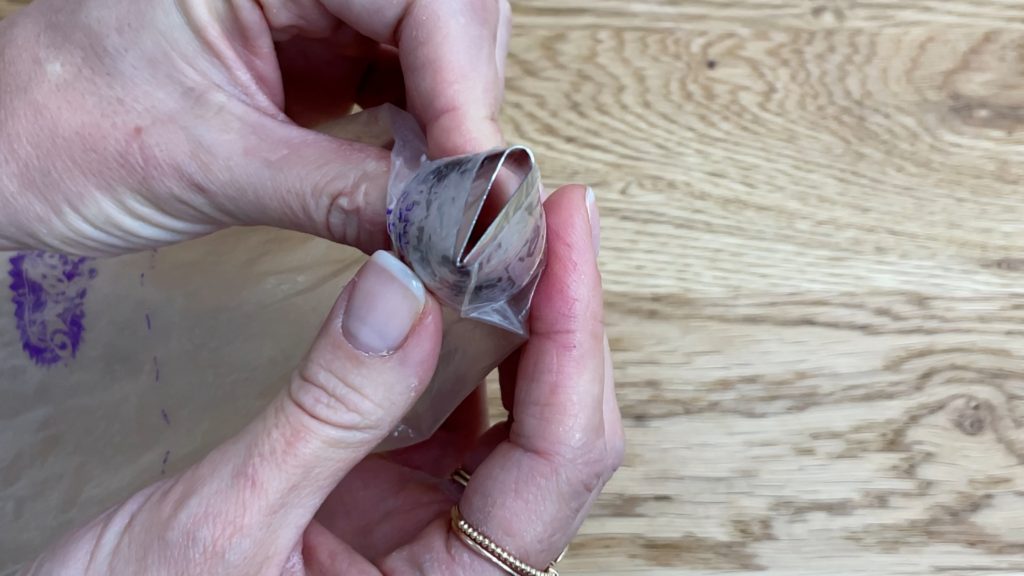
Drop the petal tip into a piping bag and you’ll notice it’s a teardrop shape with a narrow end and wide end and that’s going to be very important in a minute.
Fill your piping bag no more than half full with frosting and push the frosting down to the to[, twisting the bag to make piping easier. Squeeze a little smear onto the flower nail, which will act as glue to attach the parchment square.
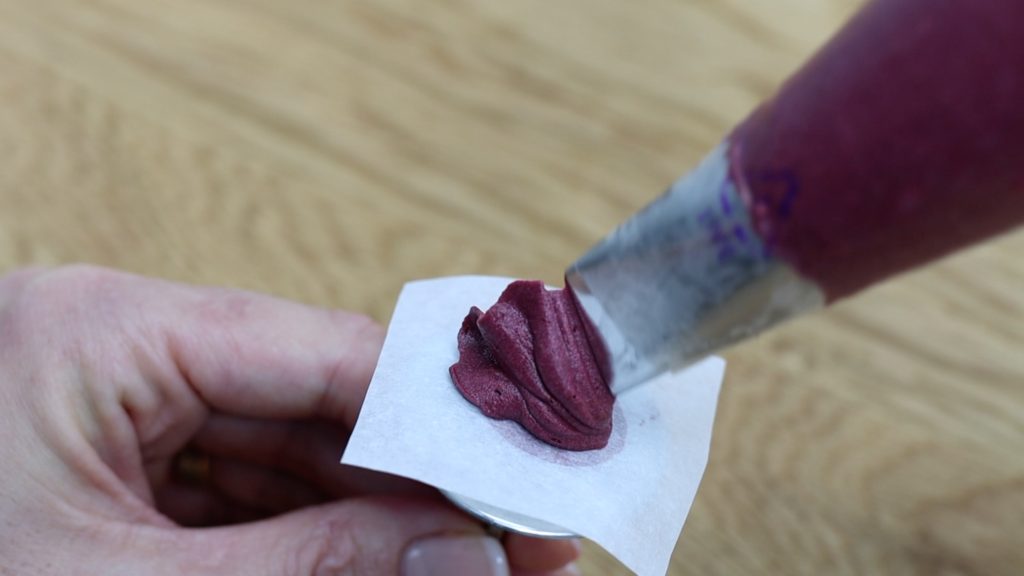
Now squeeze a blob onto the middle of the parchment, which will support the rosebud.
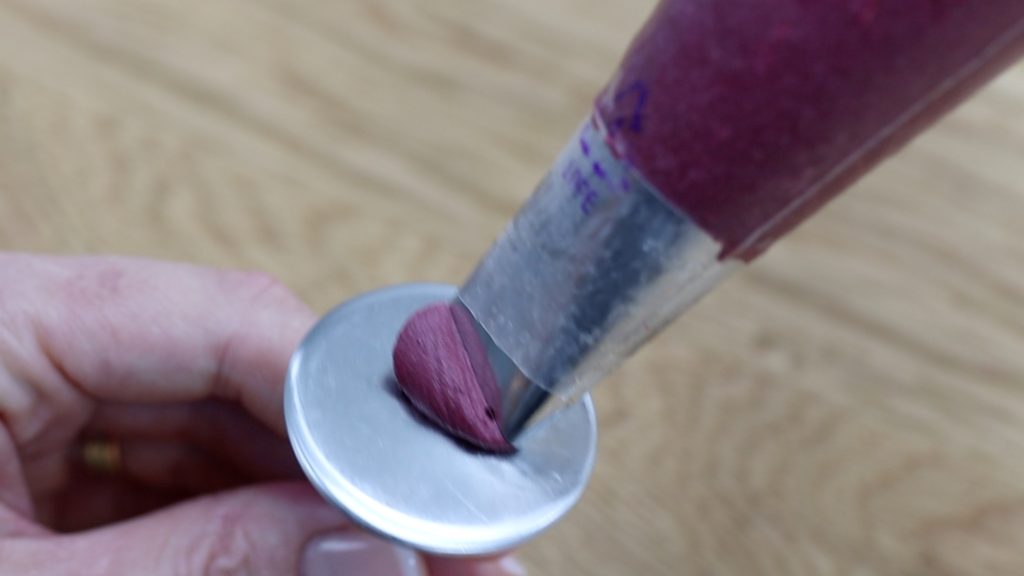
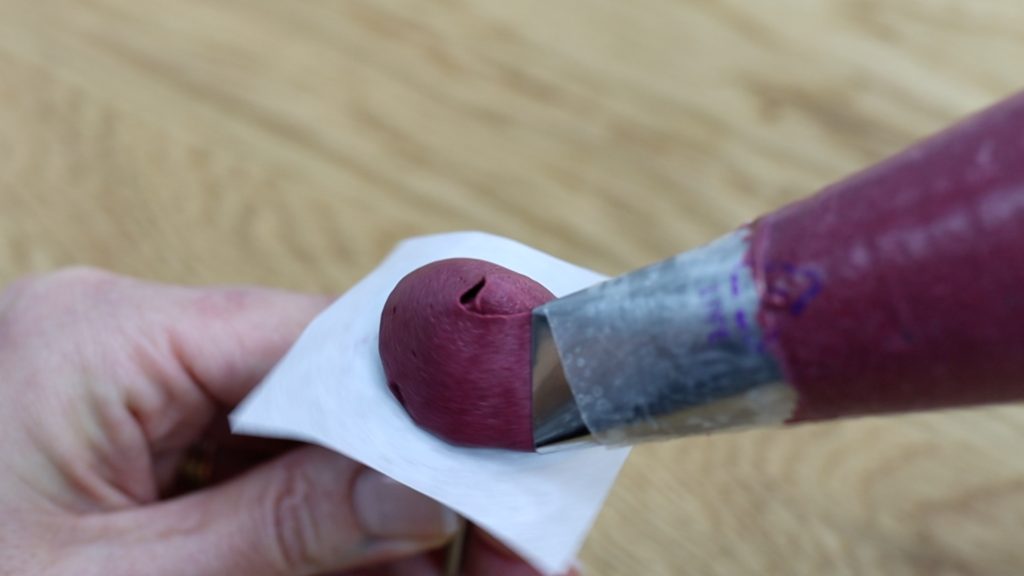
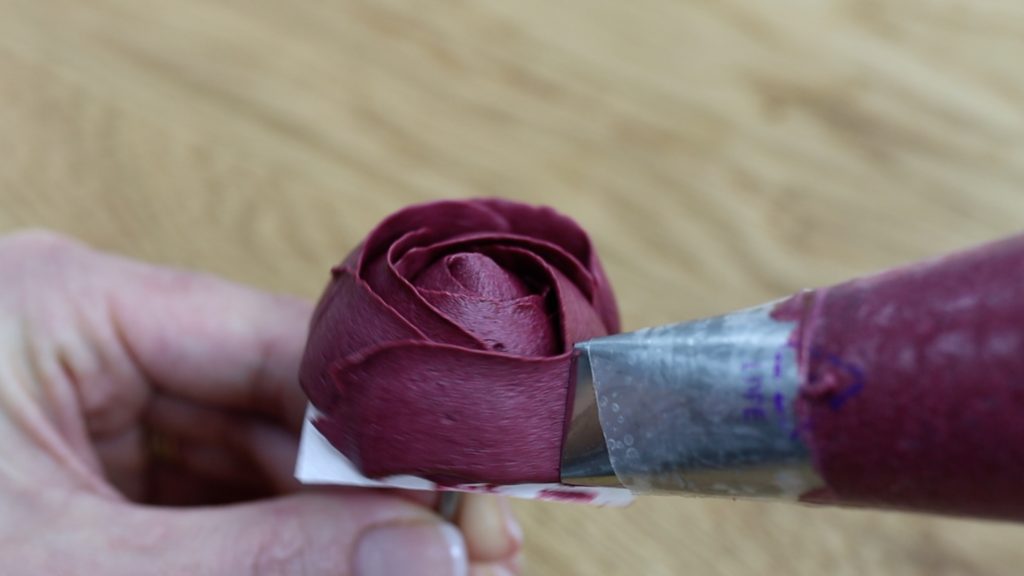
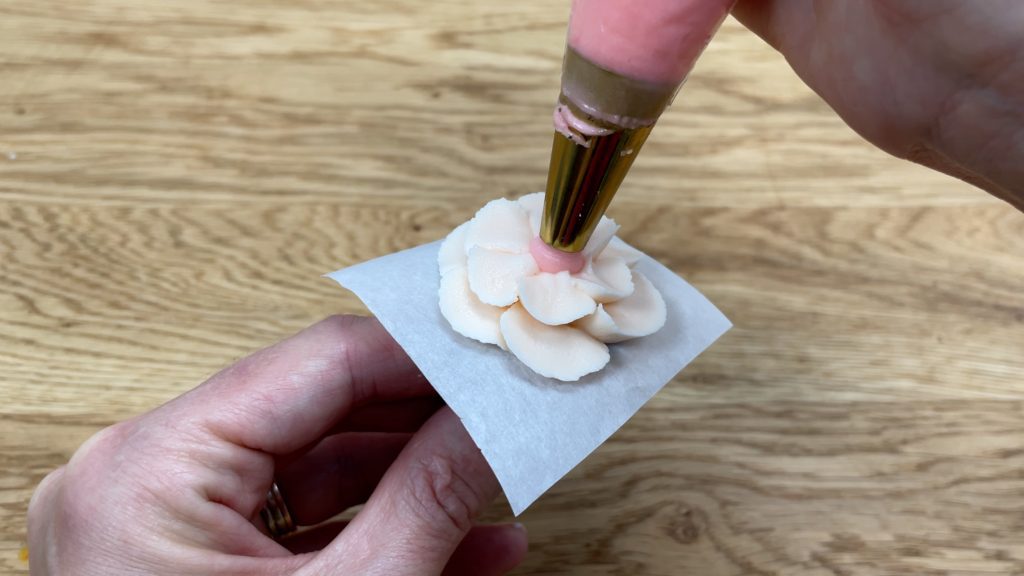
Hold the piping bag with the narrow end of the top pointing up and squeeze the buttercream out, spinning the flower nail between your thumb and fingers to make a ring and keep piping to overlap it, creating a rose bud.
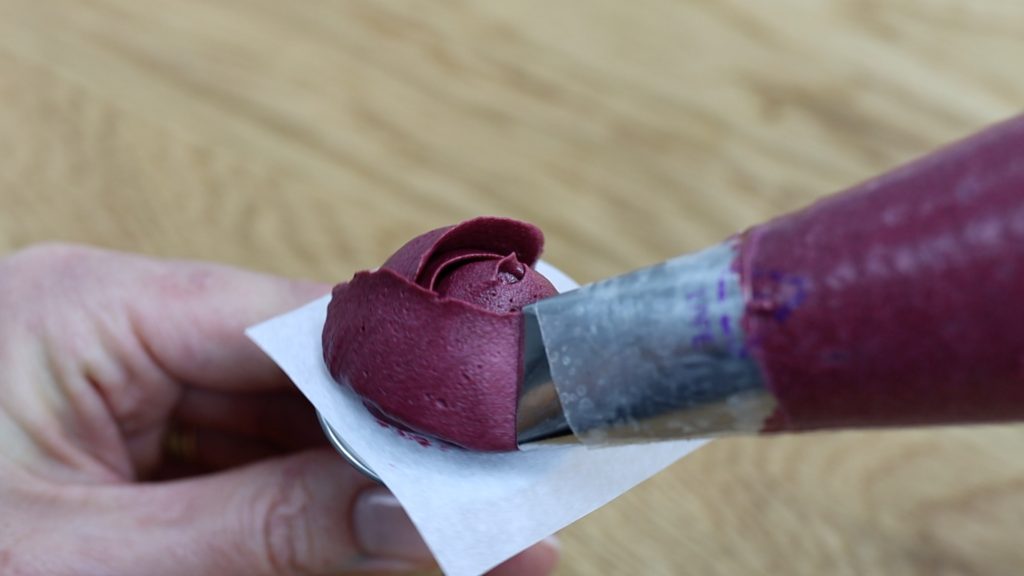
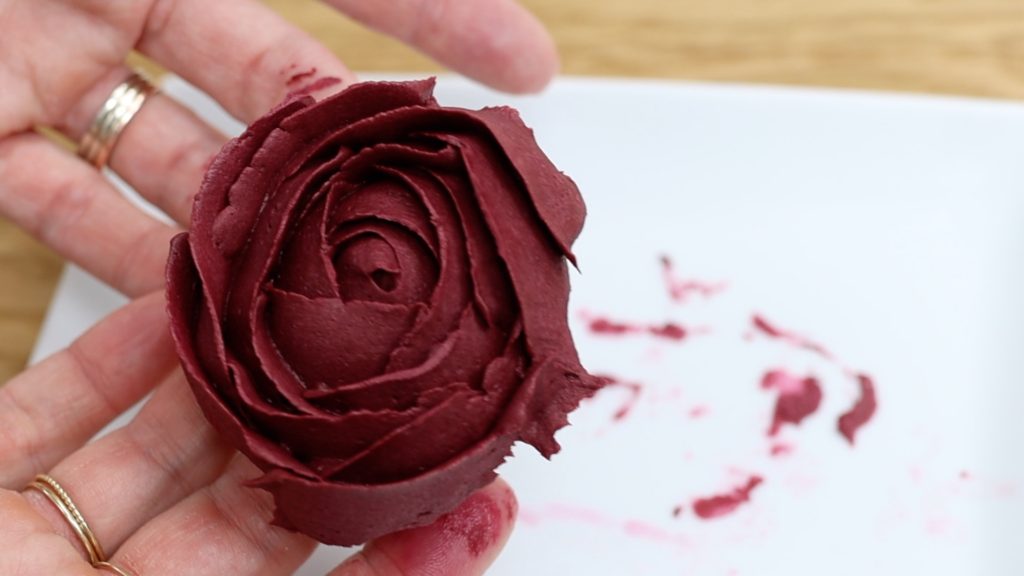
Roses are really easy to pipe because you use the same motion to create petals, just changing the length and the angle. Start by angling the tip in to keep the petals as tight as you can, as close to the rosebud as possible, and overlap each petal by a bit so they sort of wrap around each other.
After one ring, pipe another ring, and with each ring the petals should get a bit longer and also start angling a bit further out so they’re less tight around the rosebud, because rose petals start to fan out as you get towards the outside of the rose.
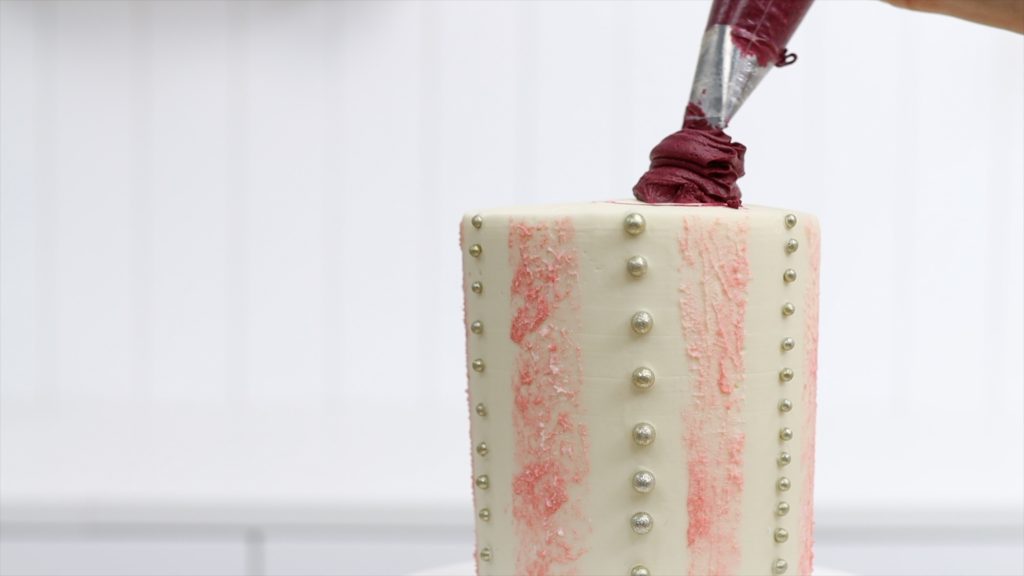
When you’ve covered the parchment, pinch a piece of it and carefully slide it onto a plate or a tray and put it in the freezer for 5 minutes. Meanwhile, pipe a generous blob of frosting onto the top of a cake which will act as glue to attach your rose.
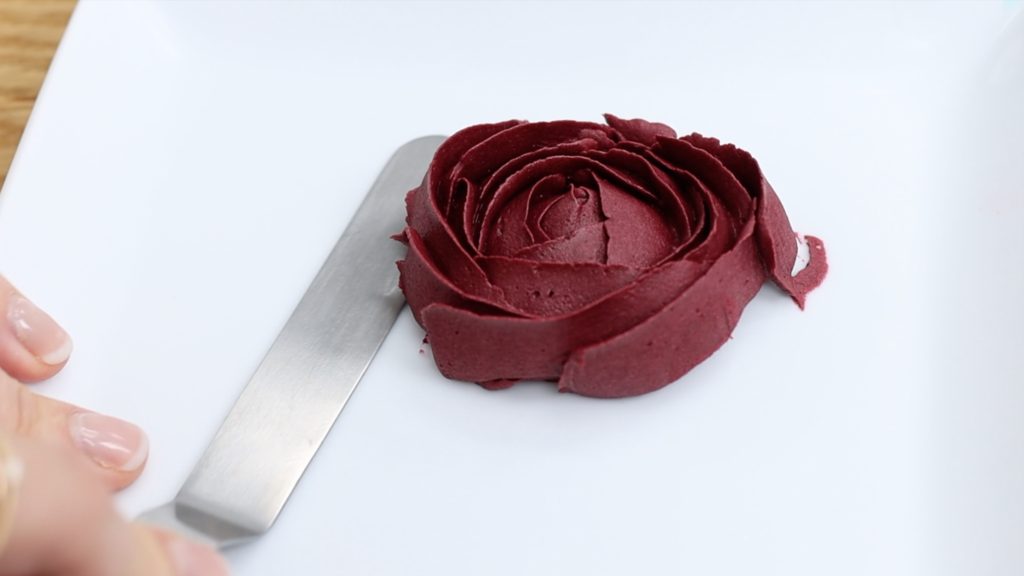
Take your rose out of the freezer and it will be cold and firm for a few minutes so work quickly! Lift the rose on the parchment paper up from the plate. It might be easiest to slide an offset spatula underneath it to loosen it.
The buttercream will already be starting to warm up and soften so while it’s still firm, peel it off the parchment paper.
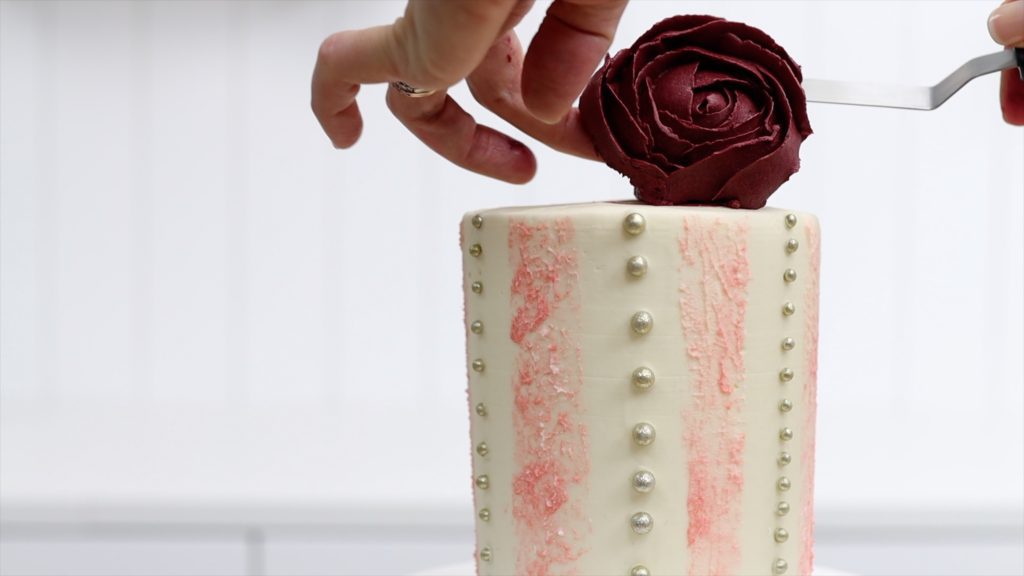
Lift it up and place it onto the blob of buttercream on the cake, angling it so it’s facing outwards rather than straight up. You might find it helpful to use your offset spatula to lower it slowly down onto the blob of buttercream.
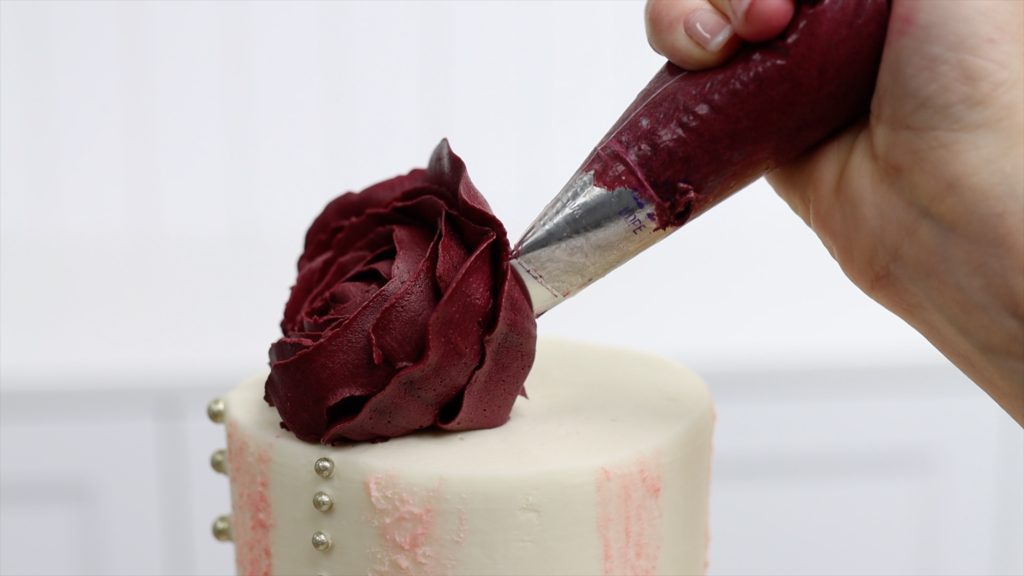
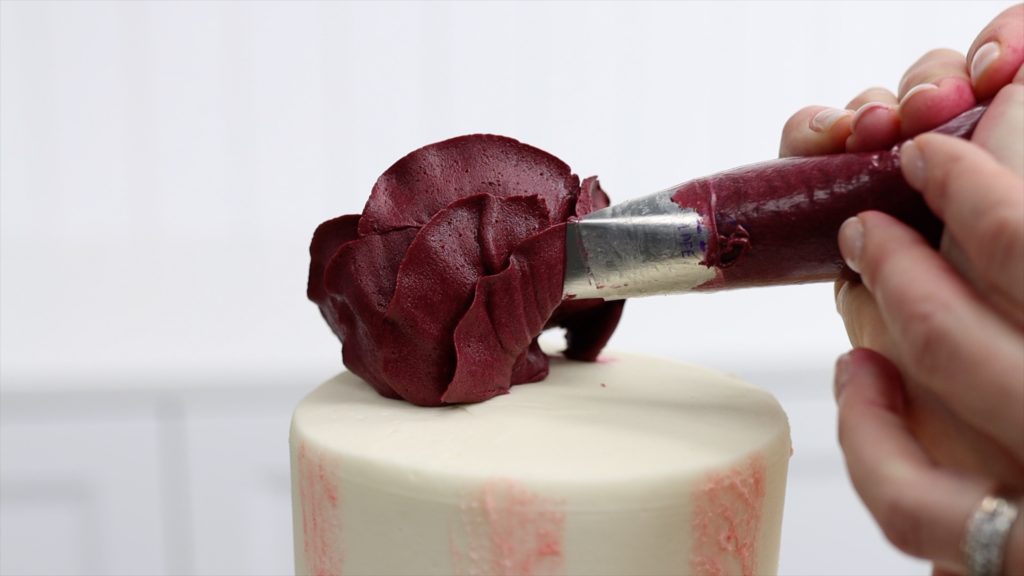
Spin the cake so you can see the back of the rose and pipe move petals around the back to cover up that blob.
Keep the narrow end of the piping tip pointing up and overlap the petals so that the blob of buttercream and the underside of the rose are no longer visible.
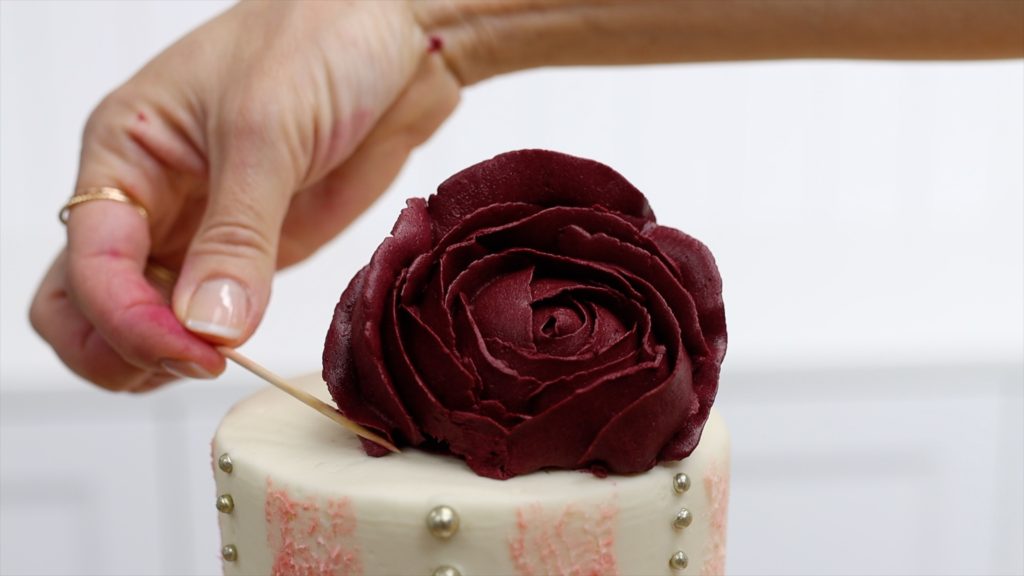
If you want to you can tidy up the petals with a toothpick, because the frosting is soft and sticky so you can manipulate it.
Roses are so elegant and this one has the added benefit of being delicious, too!
#3 Candy Shards
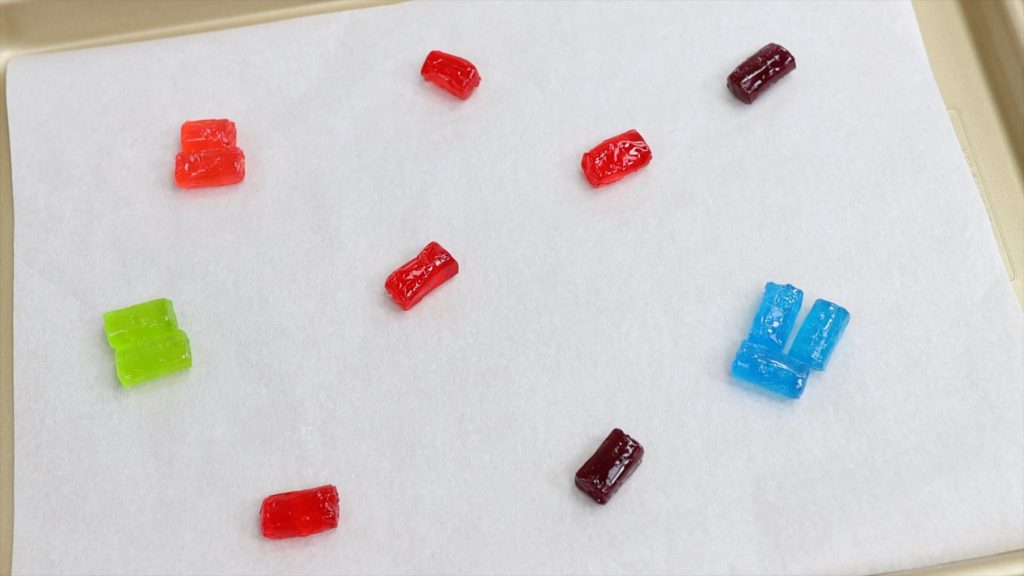
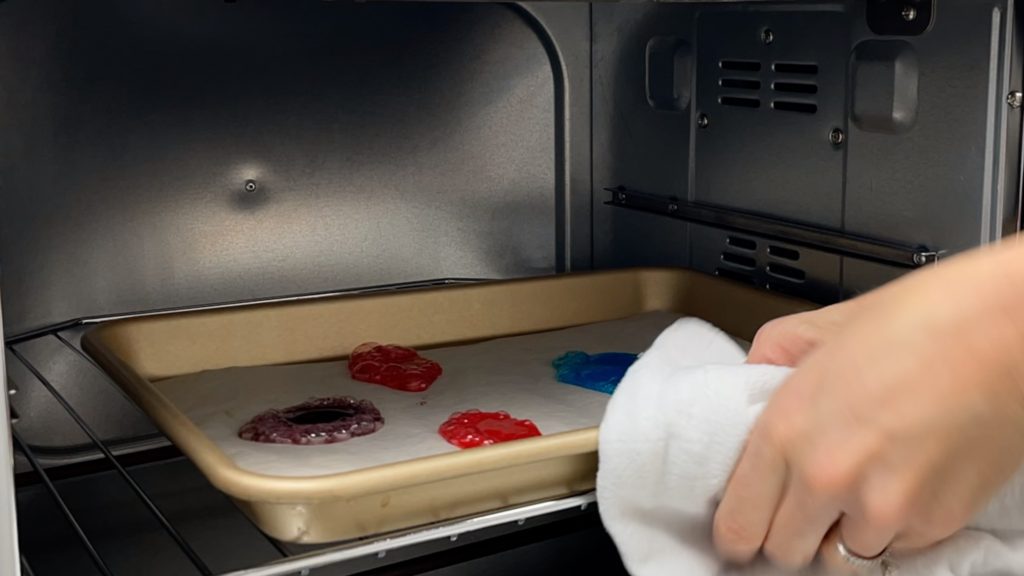
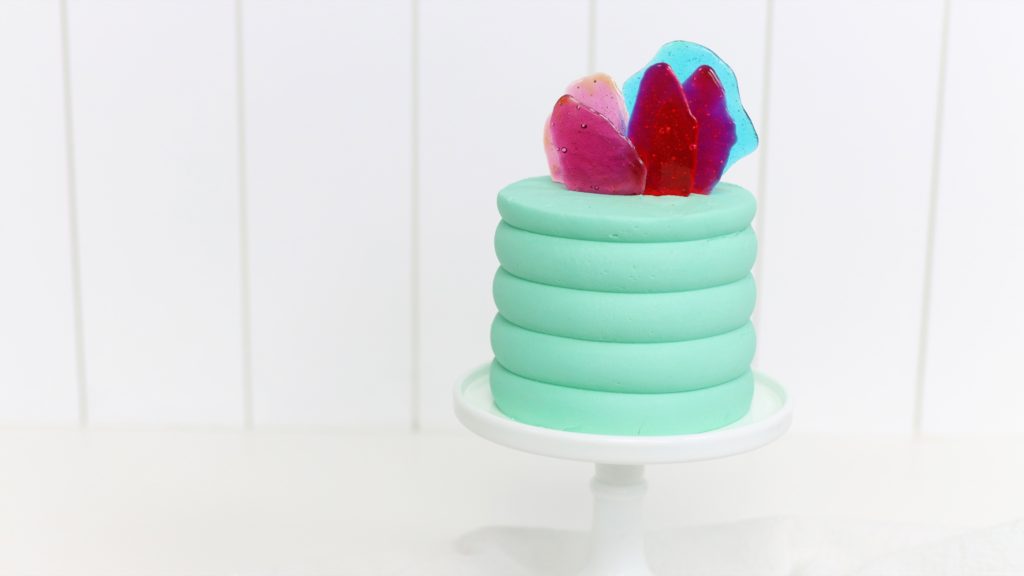
Another delicious way to add height and colour to a cake is with any kind of hard candy. Place them on a baking tray lined with parchment paper or a silicone mat and put the tray in the oven at 350F or 180F for about 2 minutes, until the candy melts into a puddle.
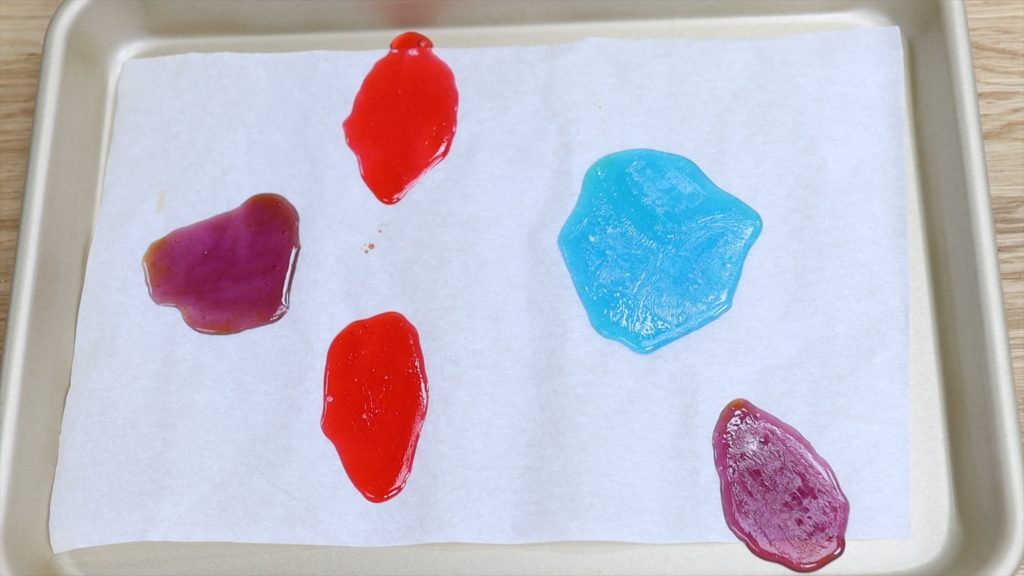
The candy should have a few bubbles on the surface but don’t wait until the candy is bubbling furiously because the candy will spread out too much and be too thin and delicate.
Let the candy cool for about 5 minutes. Those big bubbles will settle as the candy cools, leaving shiny colourful shards. Lift them off the parchment paper and they’ll peel off easily because of the non-stick surface of parchment paper.
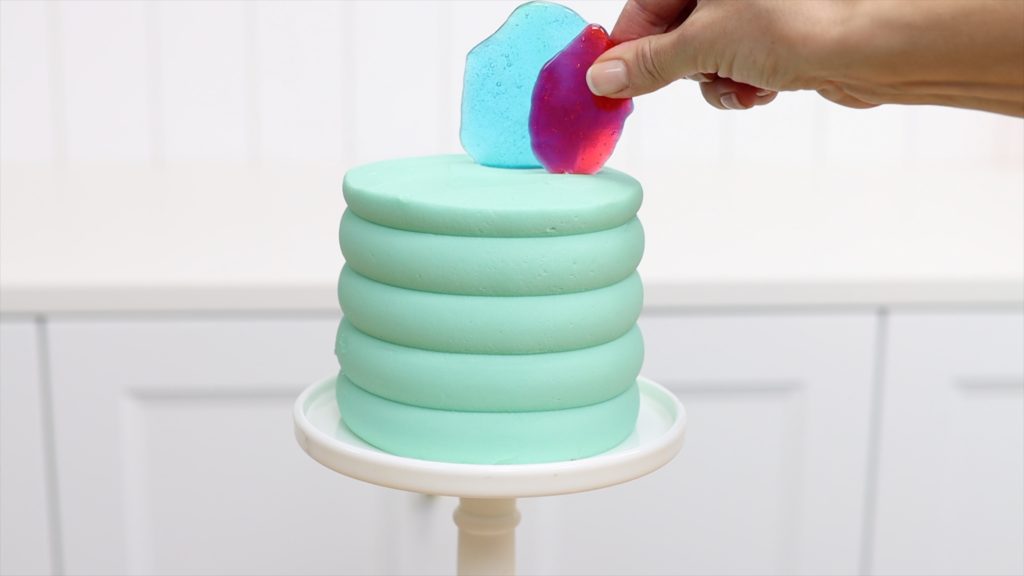
Push the shards into a cake either straight after frosting it, or after the frosting has set. I prefer to do it after the frosting has set because the cake and frosting are firmer and will support the shards better. The shards will have thin, sharp edges so they’ll poke through the firm frosting easily.
Don’t be shy as you push the candy in, pushing all the way through the frosting until you feel it sink into the cake underneath. The frosting will hold the topper in place so it doesn’t topple over. No one will guess how easy it is to make these colourful cake toppers!
#4 Chocolate Basket
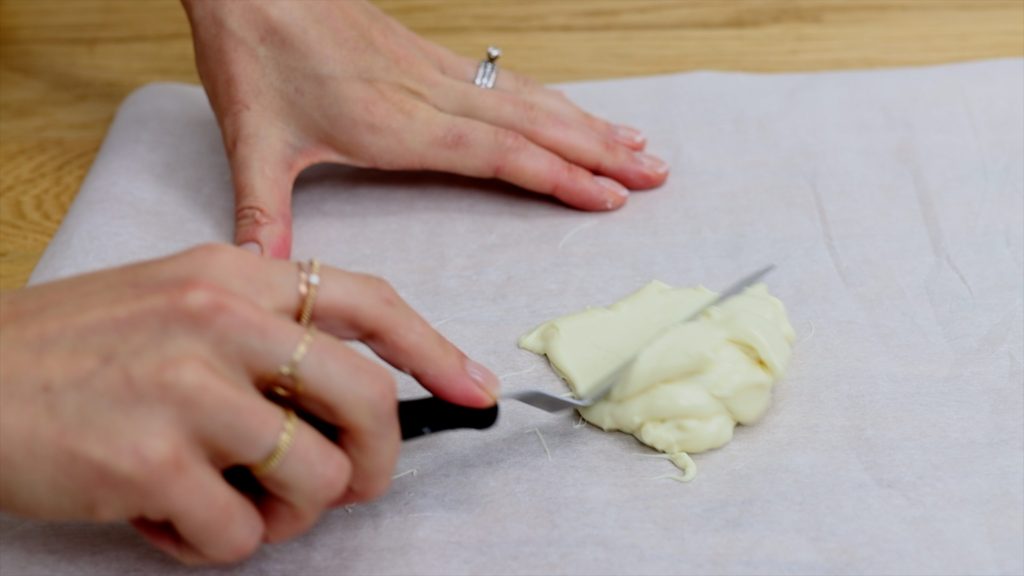
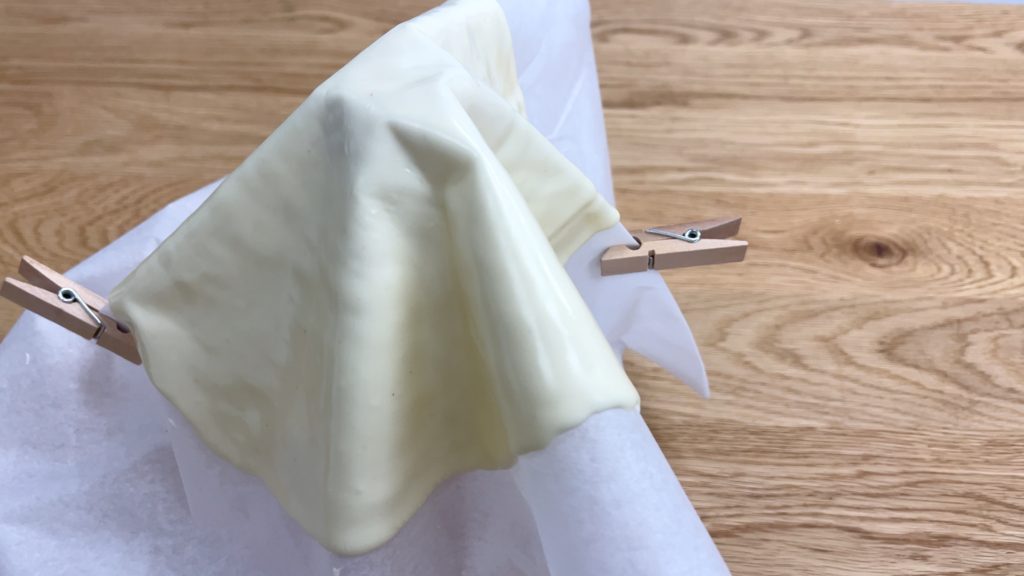
To make a basket or sail, melt chocolate and pour it onto parchment paper and spread it around to make (approximately!) a circle.
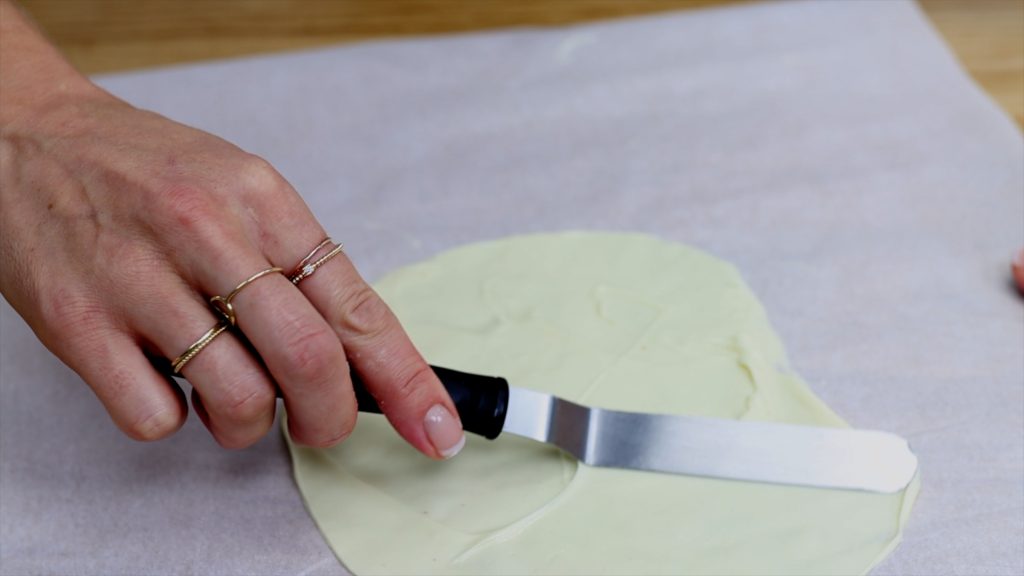
Use your offset spatula to smooth the chocolate to create an even layer so it’s the same thickness all over. Aim for smooth edges since those will be noticeable at the end.
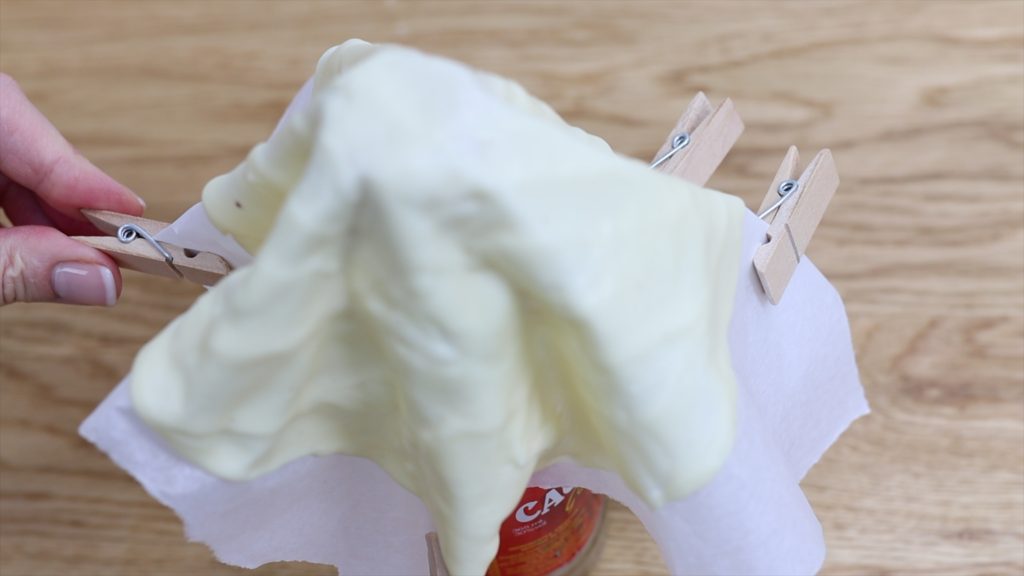
Immediately lift the parchment up and drape it over a bottle or an upside down bowl or any other object. You can use clothes pegs or pins or clips to hold the parchment in a certain position to create the shape you want for your chocolate.
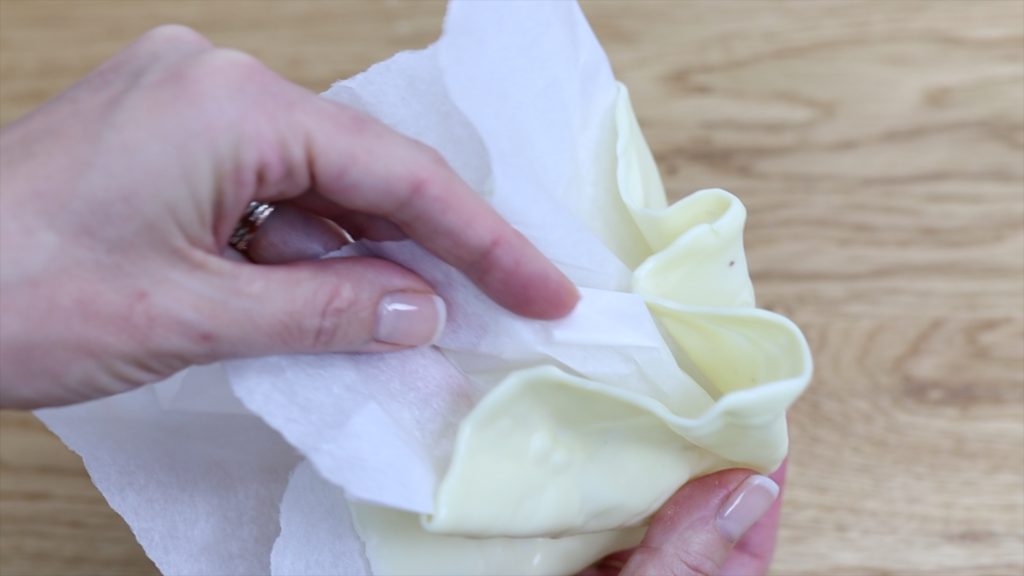
Put the chocolate in the fridge and this is essential – it’s almost impossible to get the chocolate at room temperature off the parchment without breaking. When the chocolate is cold, take it out of the fridge and remove the clothes pegs or clips or pins.
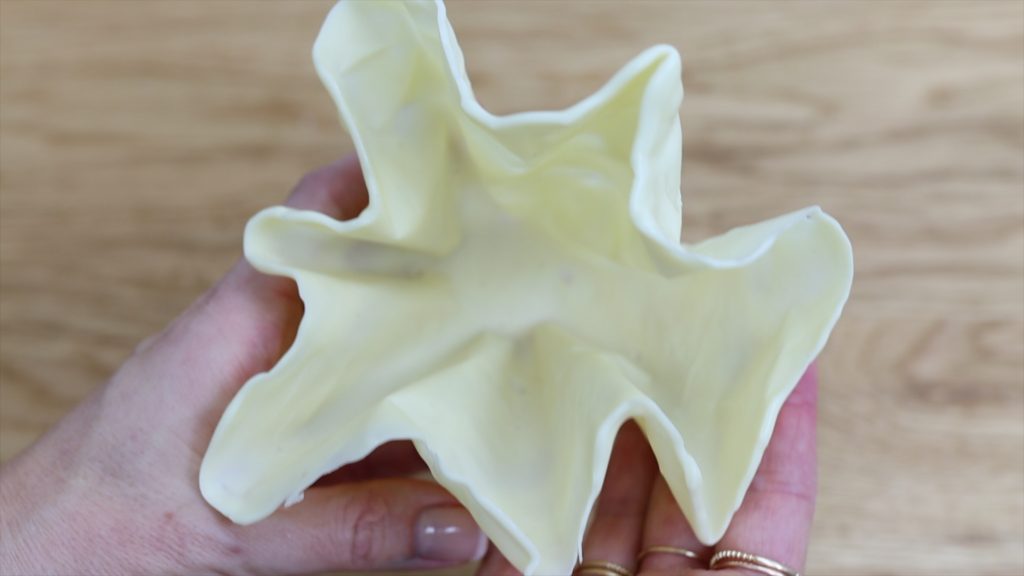
Peel the parchment paper away from the chocolate and you’ll leave behind a pretty chocolate basket!
You could fill the basket with sprinkles or candy or fruit, or leave it empty and the unique shape will be dramatic and eye-catching.
If the frosting on your cake has set, spread a bit of fresh buttercream onto it and press the chocolate into that and the chocolate will stick to it. So pretty!
I hope you’ve seen some fun ideas you’d like to try. Visit my online cake school for LOTS of courses teaching hundreds of cake designs and techniques and join my ClubPLUS for access to them all!
Here’s the video version of this tutorial:
Using two identical cakes I’m going to show you which tools I use to frost and decorate each cake and tell you where I think it’s worth buying the cheapest option, and where it’s worth splurging for better quality. I hope this helps you choose what cake decorating tools to invest in!
If you prefer to watch a video of this tutorial, scroll to the bottom of the page.
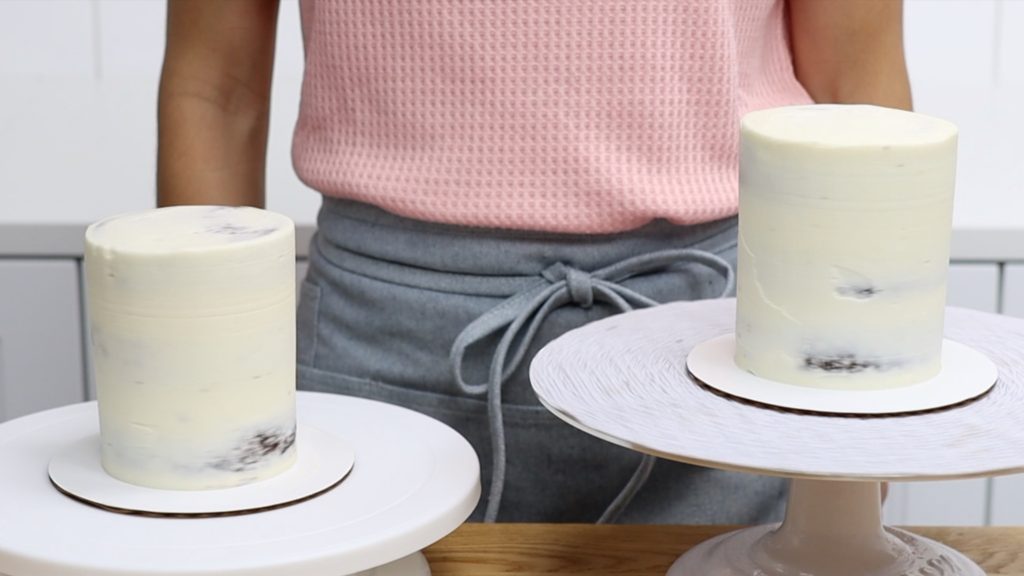
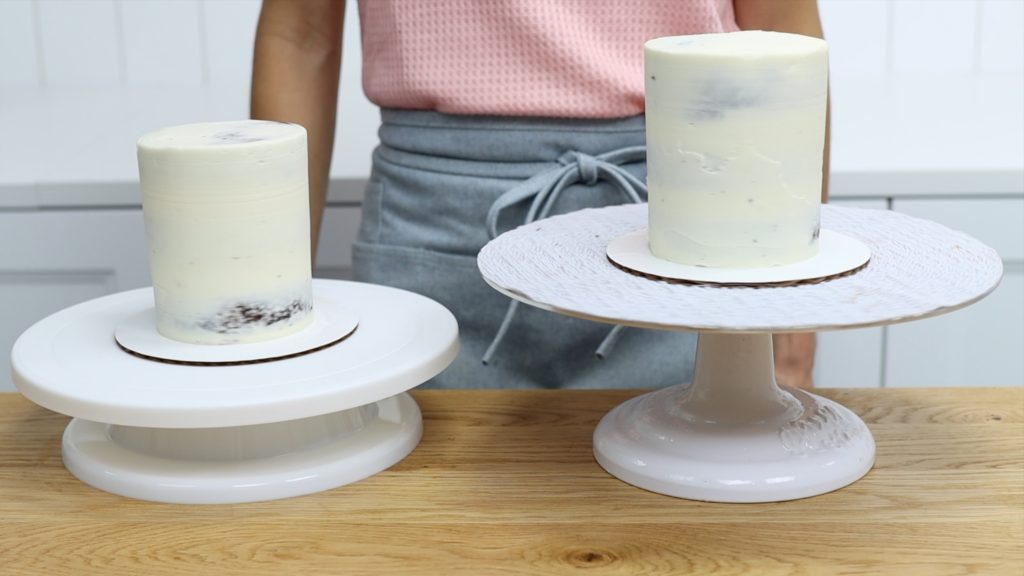
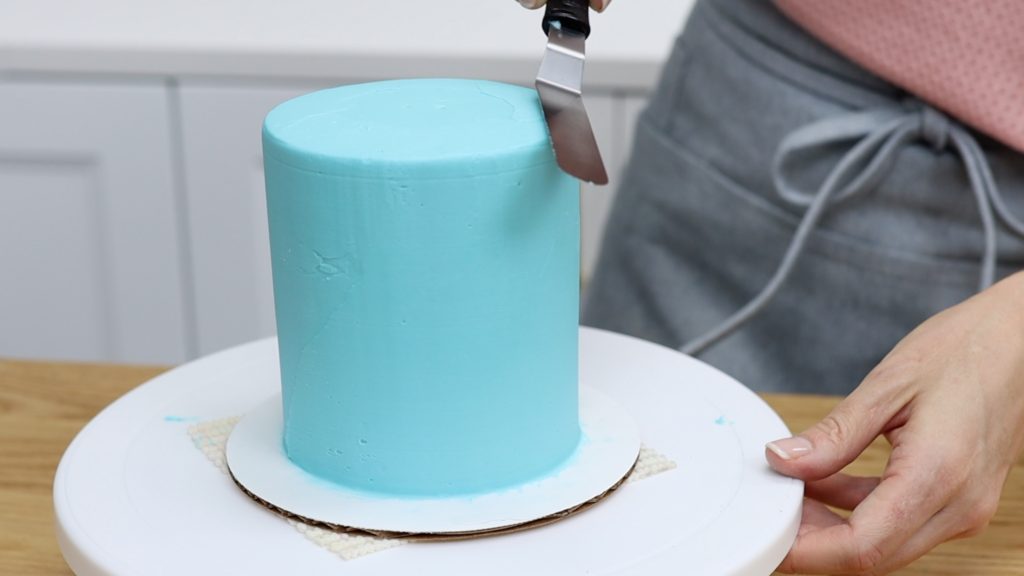
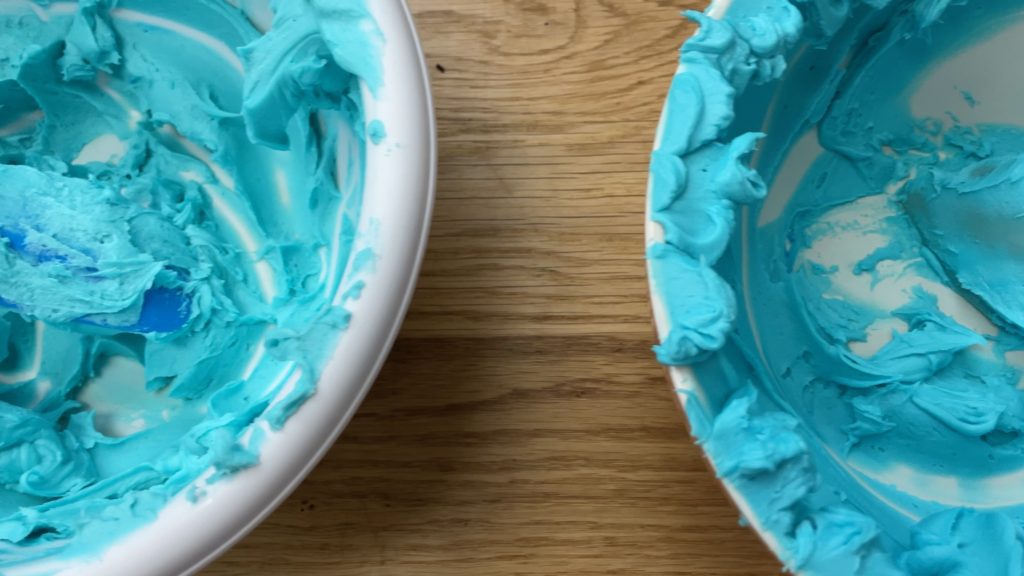
Here are two cakes ready to be covered with frosting. I’ll be using my 4 Minute Buttercream for both the frosting and decorations. First,let’s look at the different options you have for colouring your frosting.
Colouring Frosting
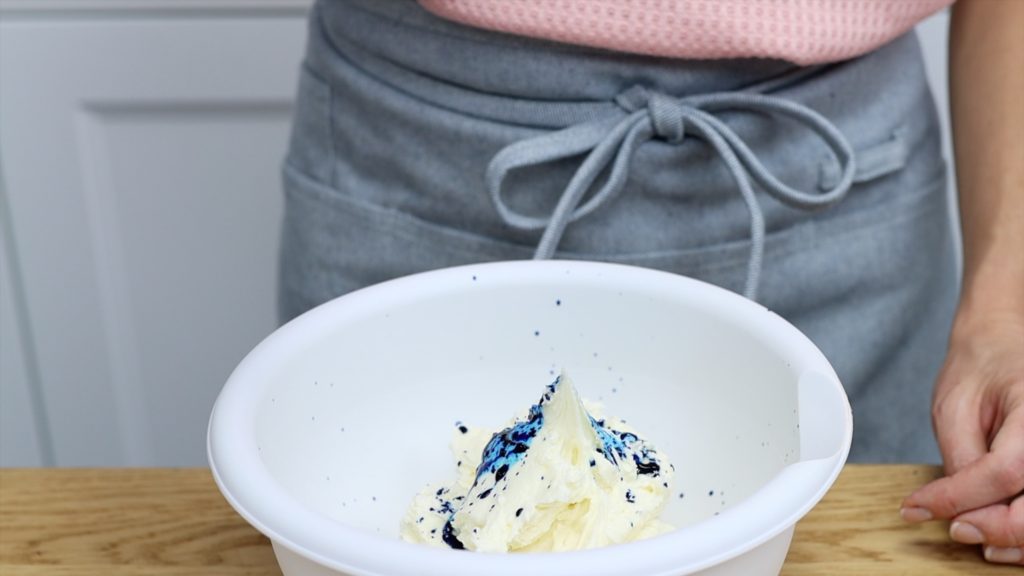
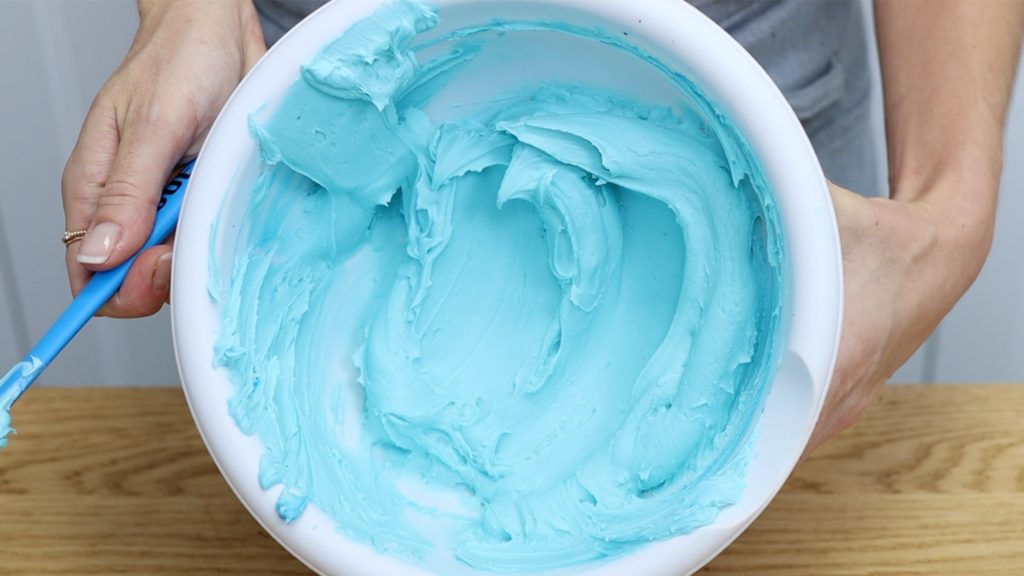
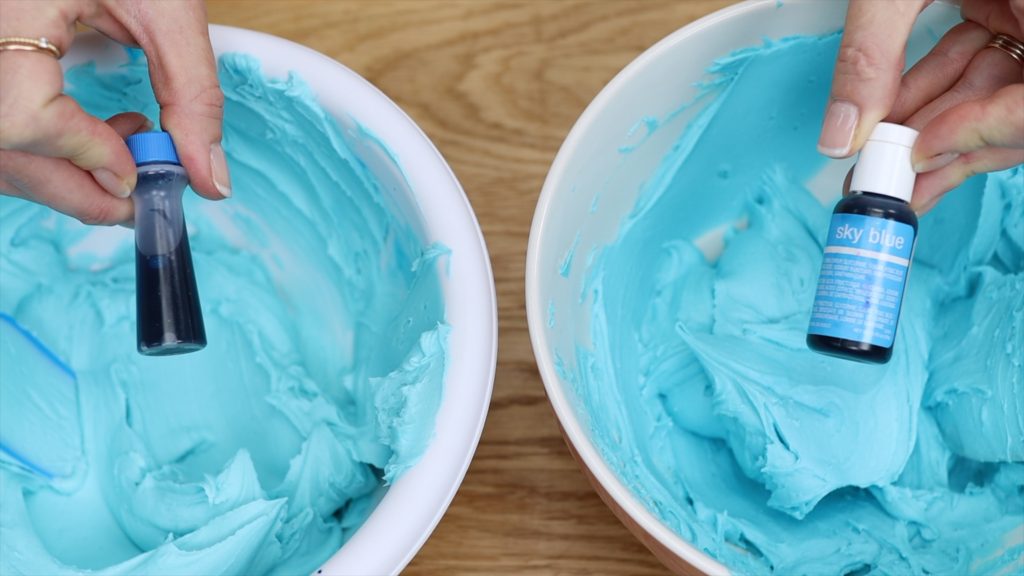
SAVE The first option is liquid colour, which is water based and you can buy very cheaply at a supermarket or grocery store. You need a generous squirt, maybe a quarter of the bottle to achieve a bright colour of buttercream.
For really bold colours like red or black you’ll need the whole bottle, or maybe more than one, which will affect the consistency of the buttercream so I don’t recommend using liquids for those colours, but for this blue the liquid works perfectly.
SPLURGE The next option is to use gel colours. These are a bit more expensive but they’re much more concentrated than liquid colours so with just a drop I can make the same bright blue that I made using a quarter of a bottle of liquid colour. For red or black I would definitely choose a gel rather than a liquid color since you need so much less gel to get a true black and red. Also, gels come in a huge range of colour options whereas liquids usually come in little packs with just red, blue, yellow and green. But if you want one of those colours, and a light shade of it, like this blue, the results are the same for liquid and gel, so saving money by buying liquids is smart.
Turntables (Spinning Cake Stands)
One of the very first tools to invest in when you start cake decorating is a turntable. They make it much quicker to spread frosting onto and cake and then quicker and easier to smooth the frosting. There are cheap plastic turntables and more expensive metal turntables – is it really worth buying the fancy version?
SAVE The cheapest option is a plastic turntable which is about half the price of a metal turntable. Both spin, but let’s take a look at the difference. Plastic turntables aren’t super stable so they spin jerkily, which means that the cake will vibrate or even wobble as it’s spinning. (This is best demonstrated by video, which you can watch at the bottom of the page.)
SPLURGE In comparison, a metal turntable has a very smooth spin with no shuddering motions at all. When there’s a cake on top, that cake spins perfectly smoothly too. Why is that important? You’ll see in a minute.
Quick side note: for a turntable that doesn’t come with a non-slip mat, you can buy drawer liners on Amazon or at grocery or home stores and just cut a piece off and put that on the turntable to stop your cake from sliding around.
Before choosing whether to save or splurge on a turntable, let’s see how they work in practice.
Cake Combs
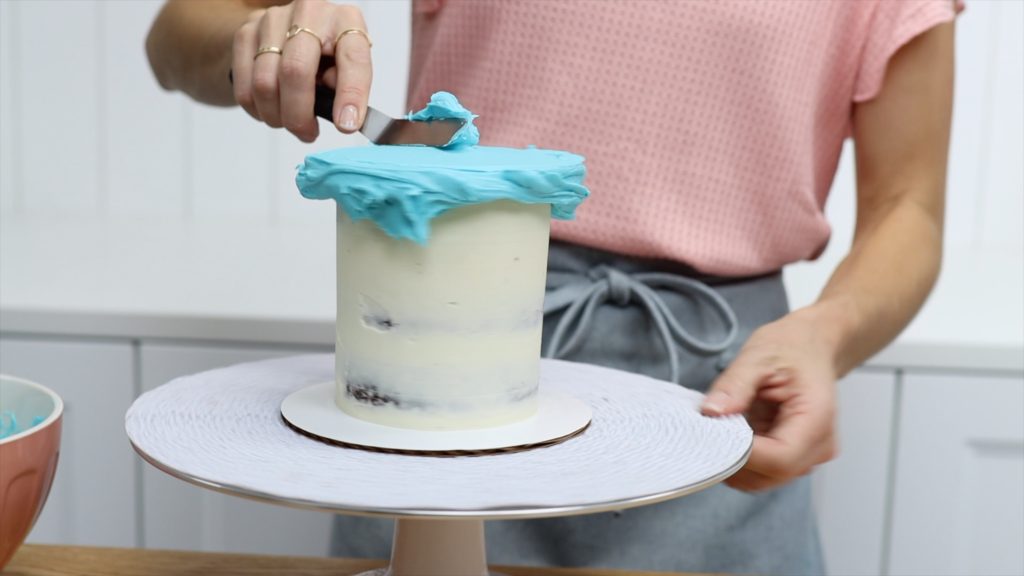
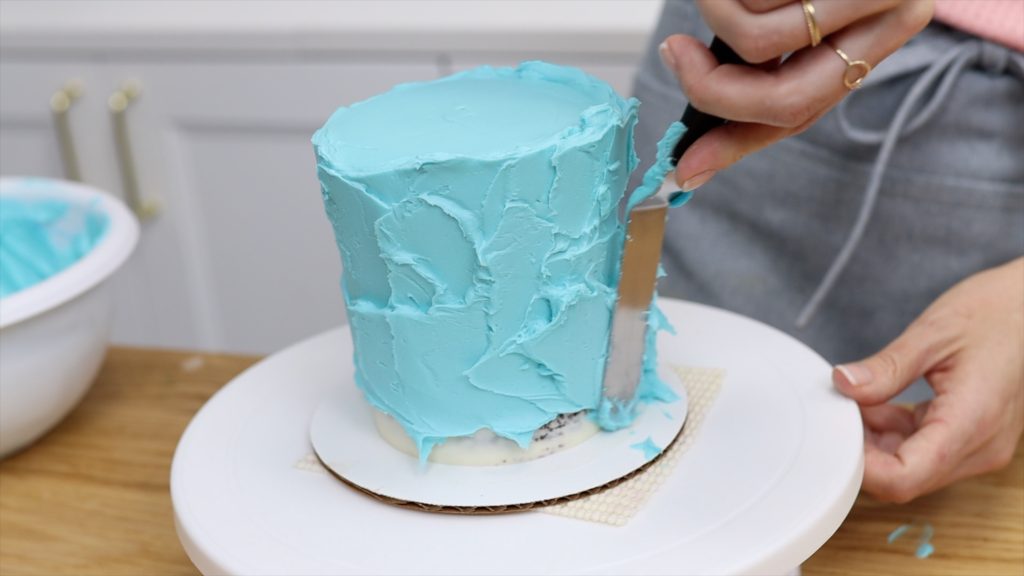
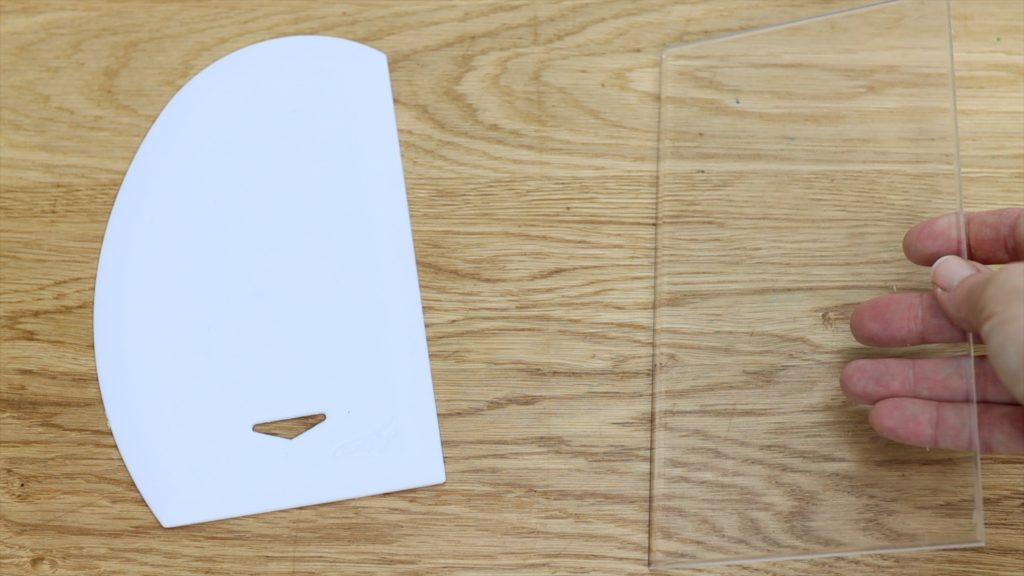
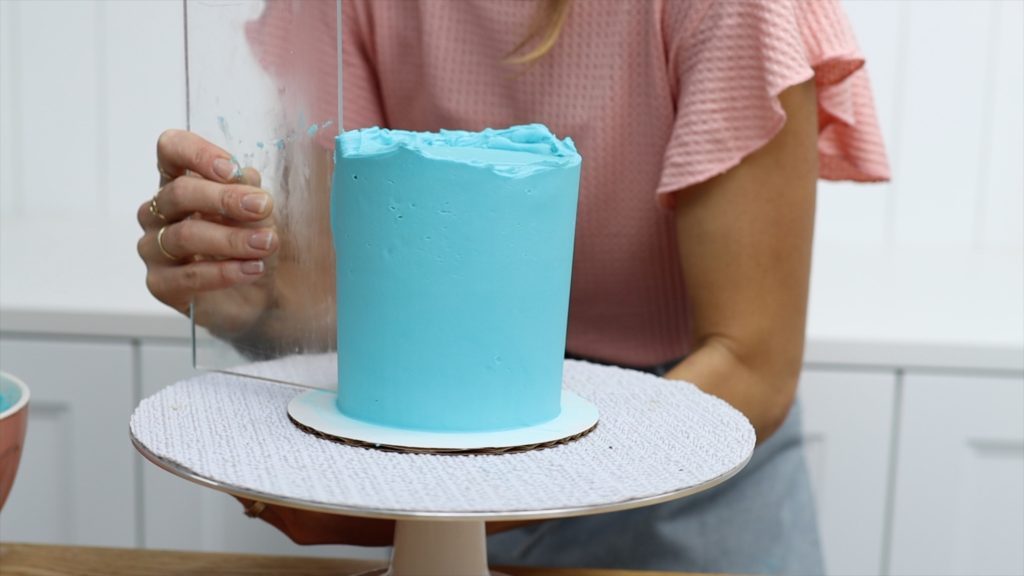
Getting super smooth frosting on your cake is really important for any cake design and I’m going to show you two very different options for getting that smooth frosting: a plastic cake comb and an acrylic cake comb. After you spread the frosting all over your cake, you use your cake comb to scrape the excess frosting off, leaving a smooth layer behind.
SAVE
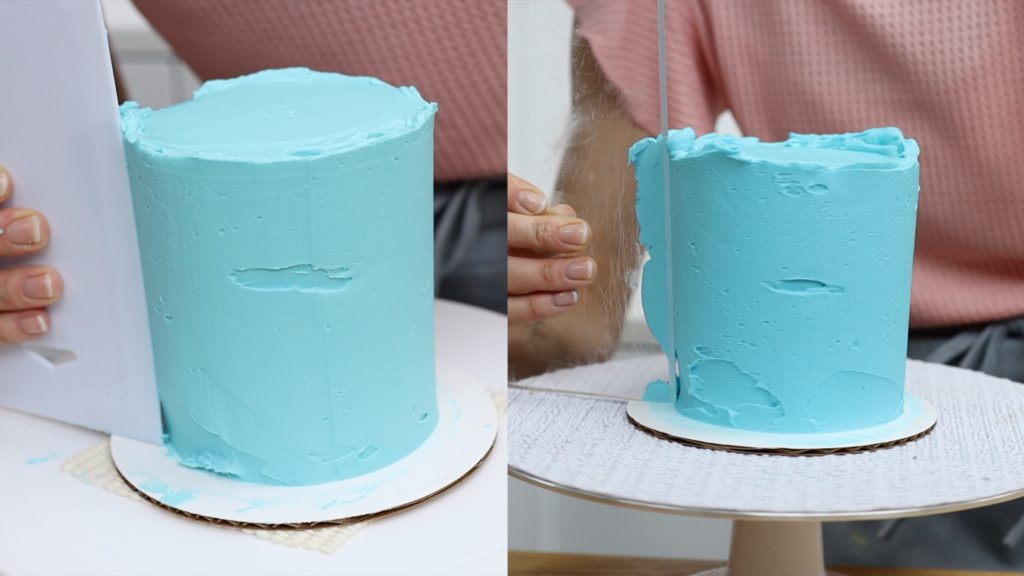
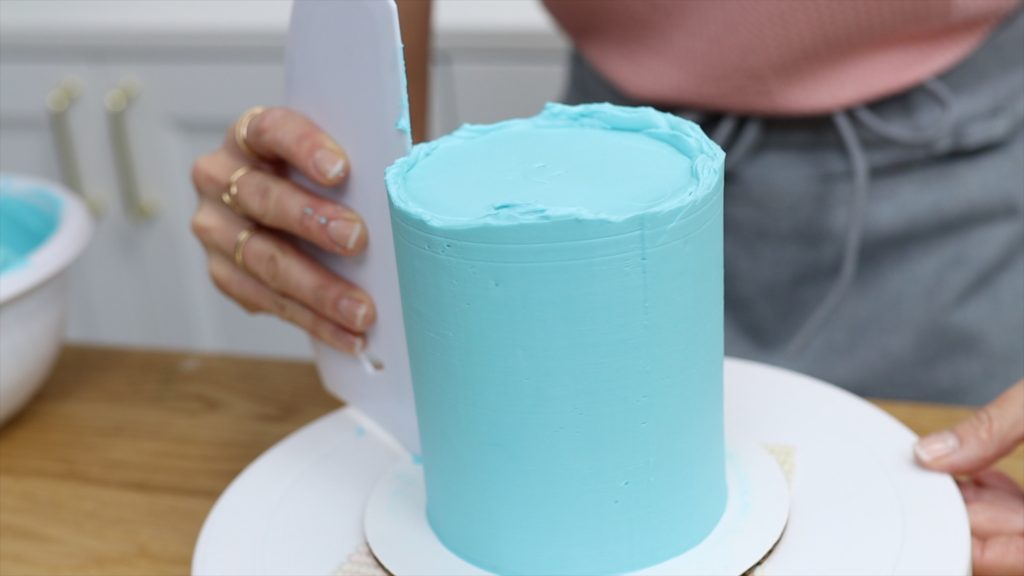
Plastic cake combs are much cheaper than acrylic ones. Look at the result of the plastic cake comb and the plastic turntable: plastic cake combs have a very short life expectancy because they wear down fast, and these grooves you see around the top of the cake are caused by little dings in the straight side of the plastic cake comb.
The little dents you see going up and down the cake all the way around are caused by the jerky movements of the plastic turntable, which make the cake comb dig into the frosting instead of gliding smoothly over it.
SPLURGE
Let’s compare this to an acrylic cake comb and a metal turntable. The acrylic cake comb is thicker and heavier and has a much sharper edge, which make the frosting smoother than a plastic cake comb. It won’t create grooves, unless you drop it and chip it so try not to do that! Also, the smoothness of the metal turntable is obvious here because you don’t see those same vertical dents in the frosting since the spin is constant, rather than jerky.
I definitely recommend splurging on a good quality acrylic cake comb over a plastic one and a metal turntable over a plastic one.
Stencils
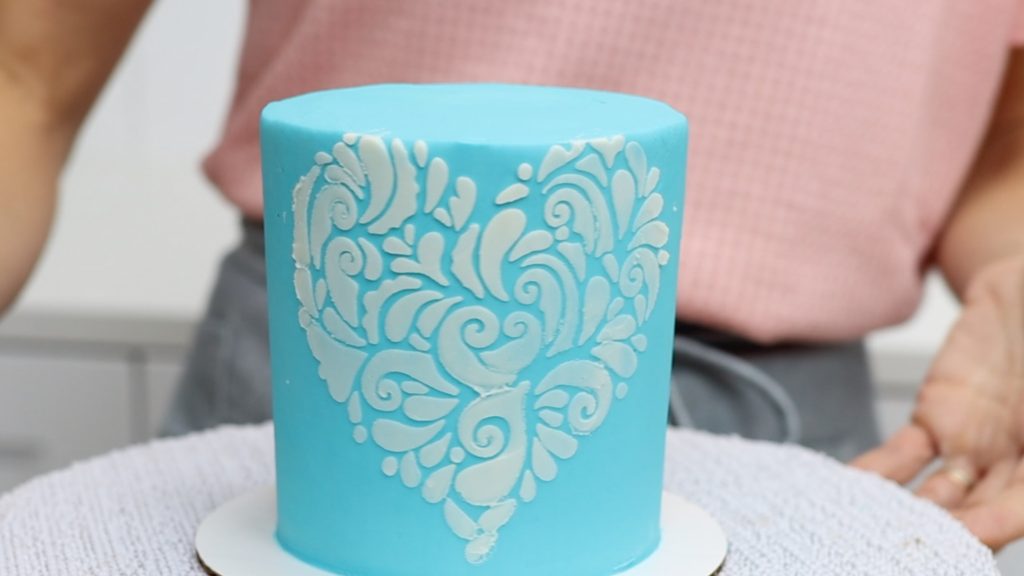
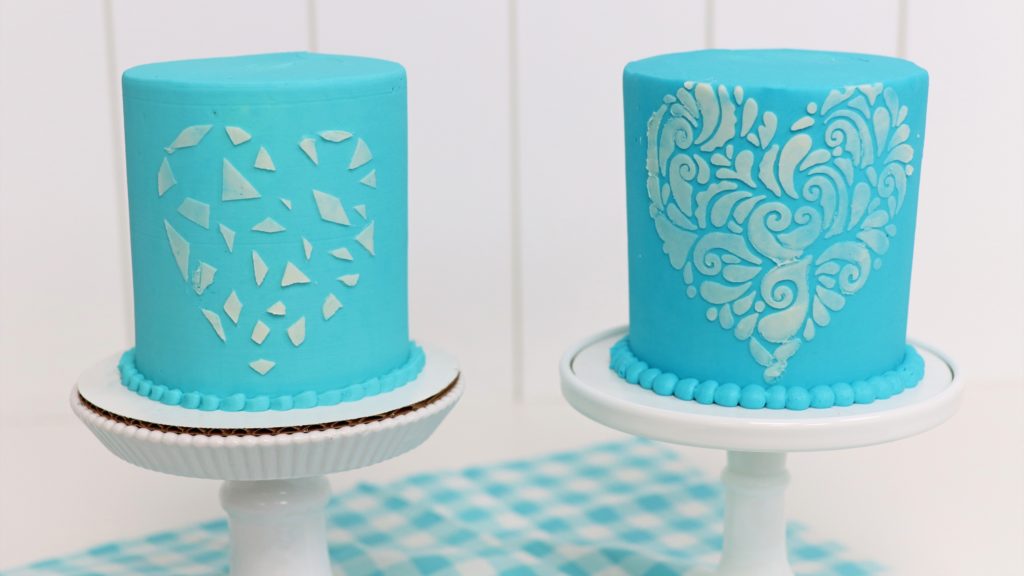
One the the quickest and easiest ways to decorate a cake is to use a stencil, but there are different options here as well. You can make your own incredible cheaply or you can buy lots of very impressive, intricate designs.
SAVE
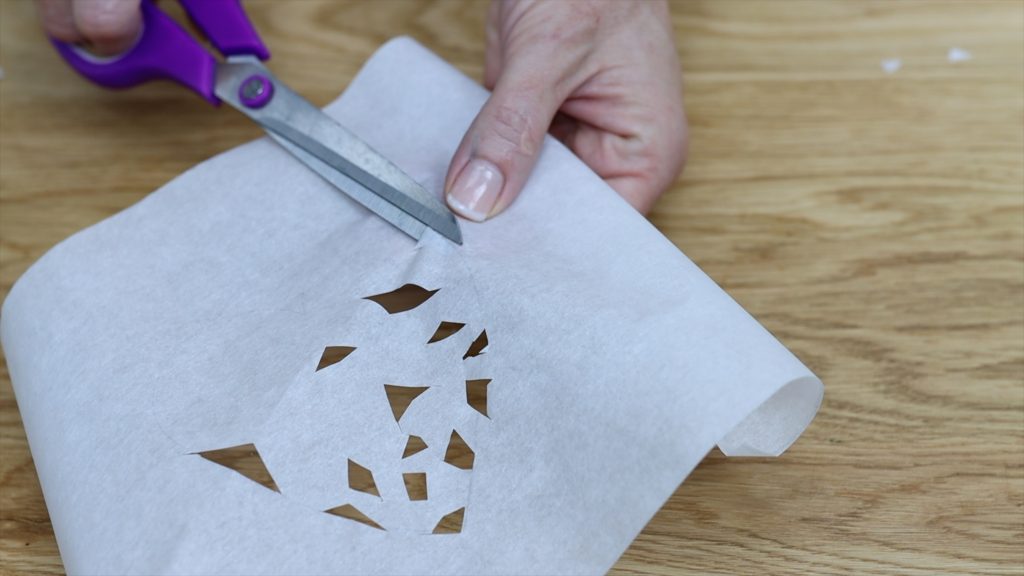
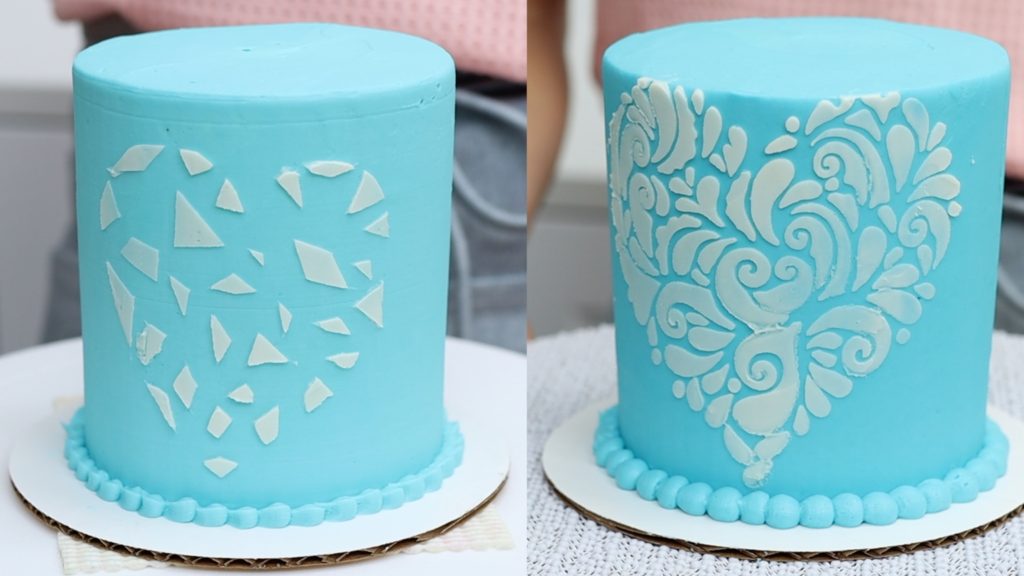
To make your own stencil, cut a piece of parchment paper wide enough to wrap around at least half of your cake, and draw a shape onto it.
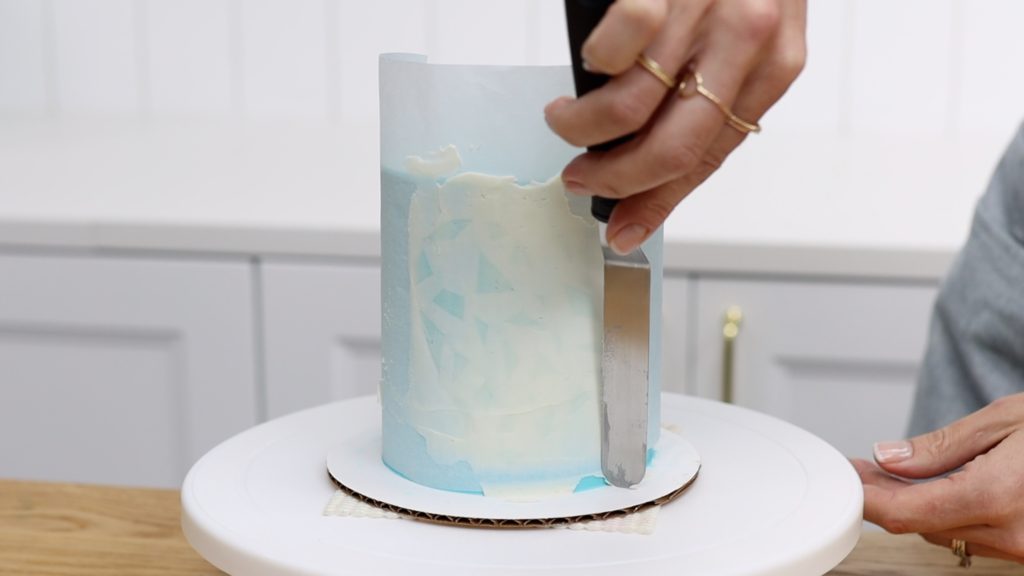
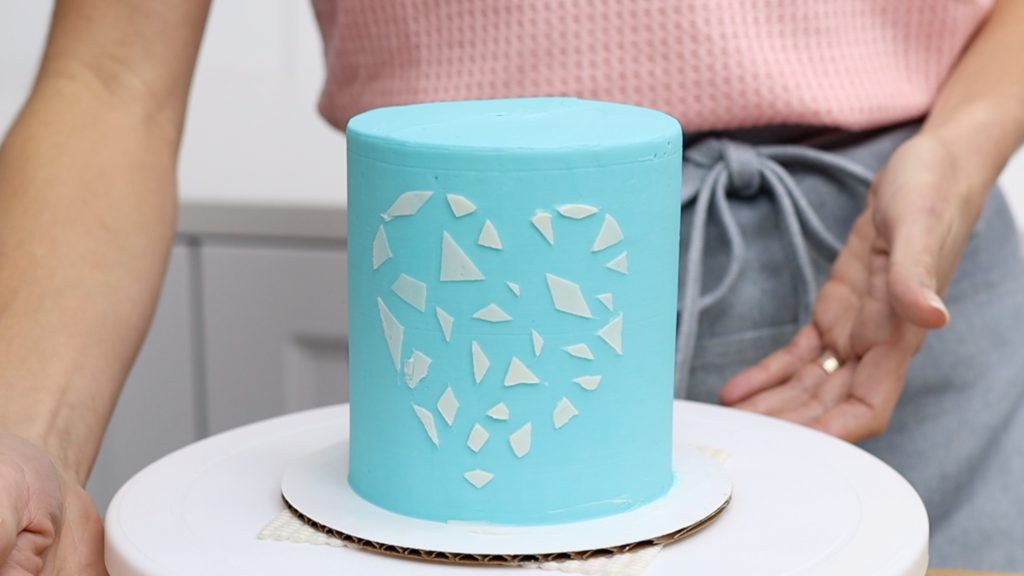
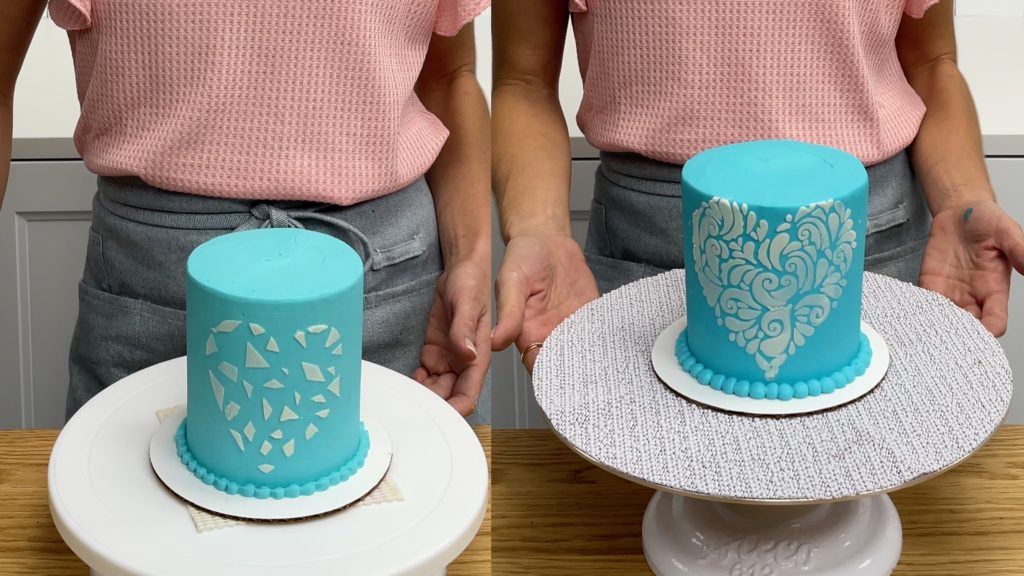
Use scissors to cut out the whole shape or cut out a design within the shape, for example I’m cutting out random triangles and diamonds within this heart to make a mosaic style design. This is time consuming but it’s also very very cheap!
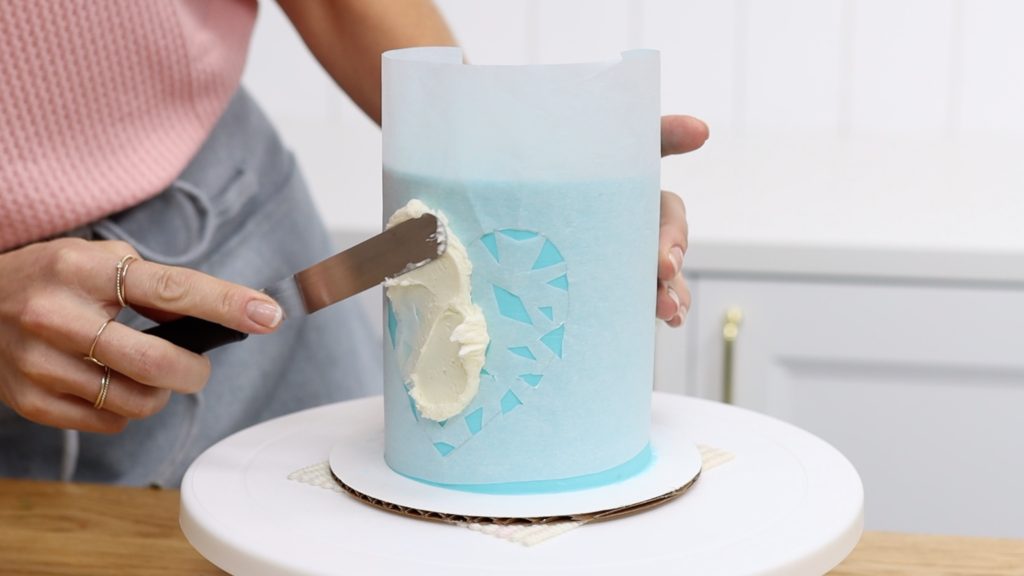
The stencil wraps easily around the cake if you buy it in a roll, which makes applying it to the cake very easy.
Spread frosting over it, scrape off the excess and smooth it with your offset spatula or a cake comb, and the peel the stencil off and voila!
You can make your stencil as detailed as you want it to be, and the result is neat and unique.
SPLURGE
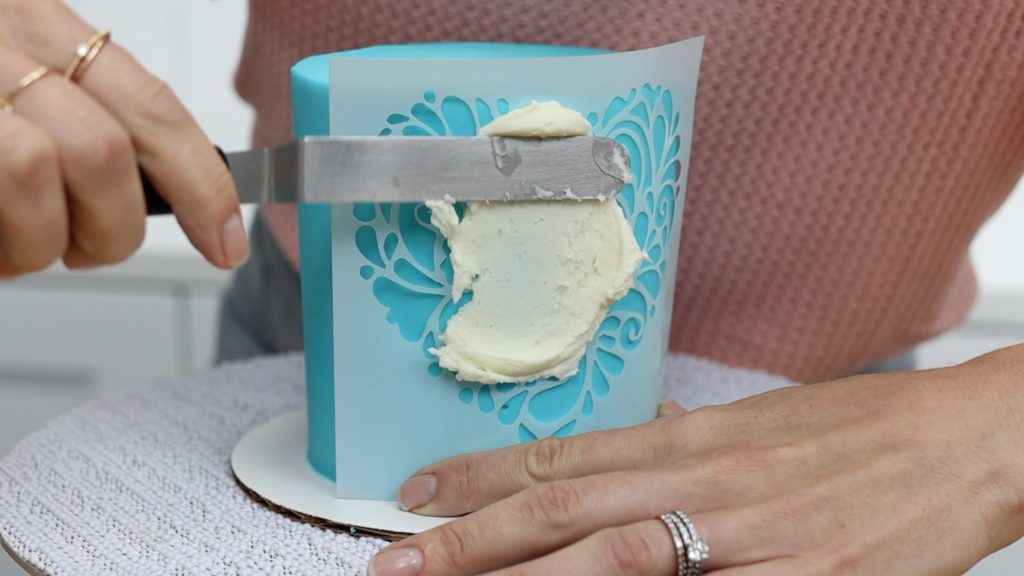
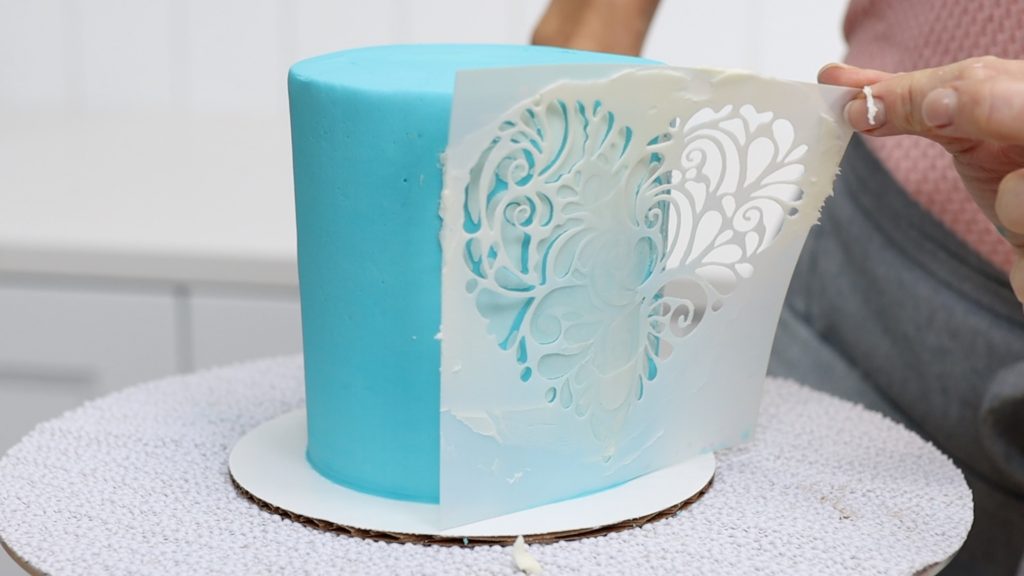
For a pre-made stencil follow the same steps: wrap the stencil around the cake and then spread frosting over it and scrape it off.
I should mention that your cake needs to be cold before you do this, so that the frosting has set and doesn’t get damaged by the stencil.
This pre-made stencil is much more detailed than my homemade stencil and if you can find a reasonably priced stencil, I think it’s worth buying one if you want to make your cake really impressive.
Borders
Let’s use up the leftover frosting from both cakes and look at two options for borders.
SAVE
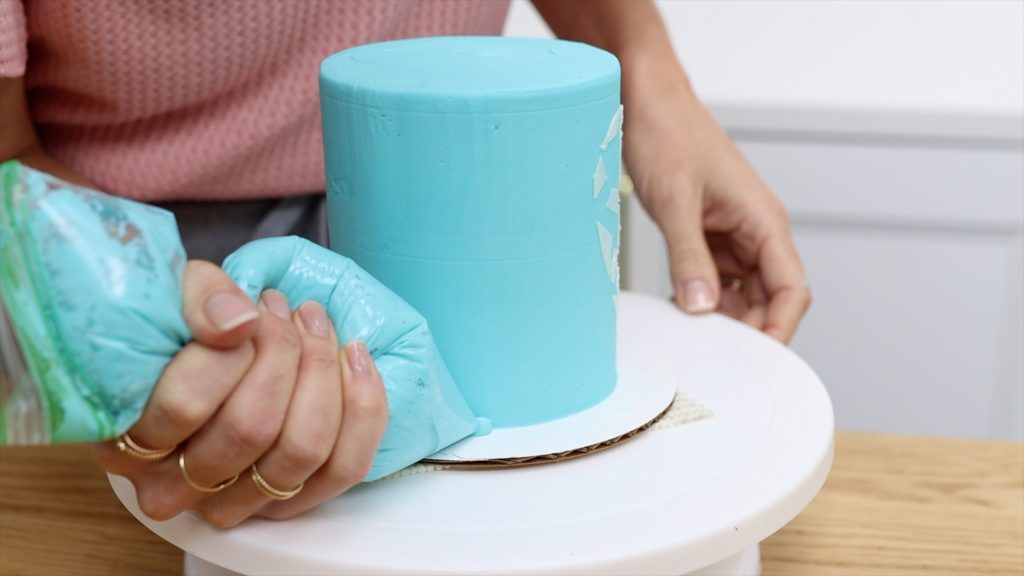
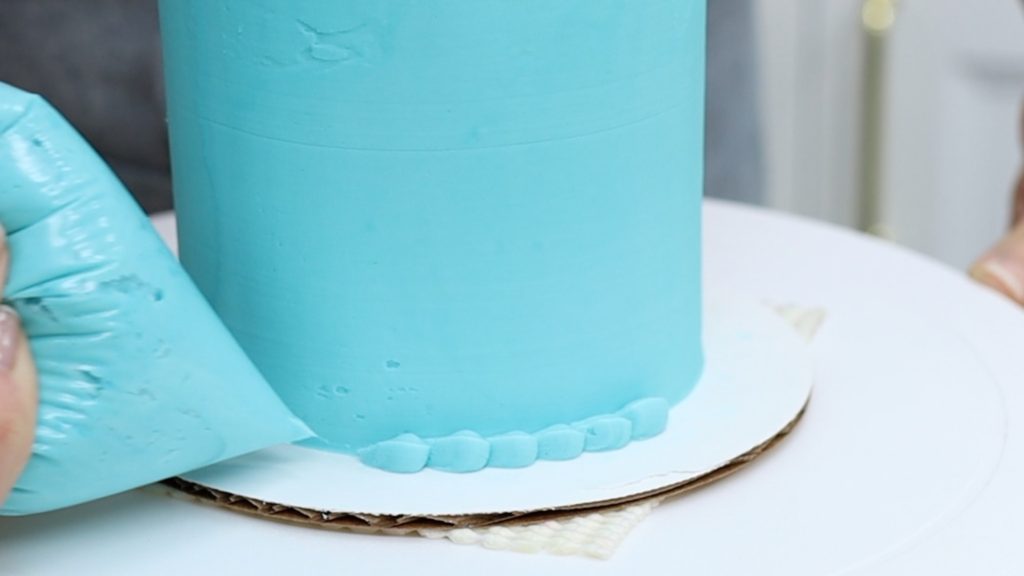
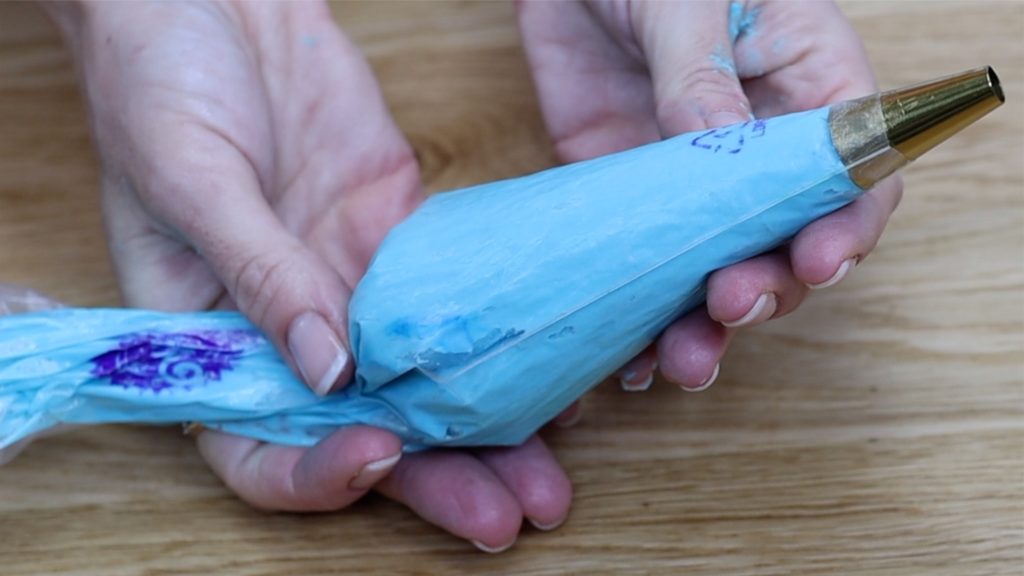
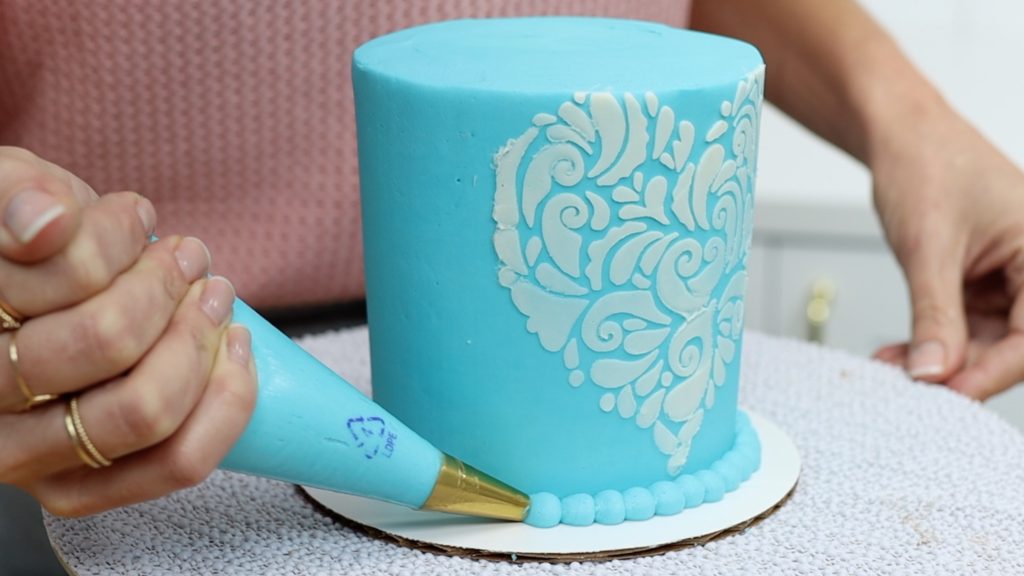
The very cheap option is to spoon the frosting into a ziplock bag, seal it, and cut a piece off one of the bottom corners to make a homemade piping bag.
To pipe a border, start at the side of the cake and squeeze a dot out, pulling away sideways to leave a tail on the dot and then squeeze out the next dot to cover that tail. The seam of the ziplock bag will leave a line of texture on your dots so hold the bag at the same angle all the way around the cake, so that the seam is always facing the same way.
SPLURGE
The splurge option is a piping bag with a medium sized piping tip like a #12 tip. Put the piping tip in the piping bag and spoon your leftover frosting into the bag. Push the frosting down to the top and twist the end to make piping easier.
Pipe a dot onto the bottom of the cake, using the same technique of pulling away sideways and overlapping the tail of each dot with the next dot. These dots are much rounder and smoother than the dots piped with a ziplock bag, but that’s not necessarily a good thing…
The texture from the seam on the ziplock bag dots looks nice and so does the shape of the dots. For a beaded border like this, I don’t think it’s worth splurging on a piping bag and tips. However, having piping bags and a variety of tips does give you lots of options for different types of borders and other piping.
So, my advice is:
save on gel colours for light colours and use liquids instead, but splurge on gels for bold colours like red and black, or if you want a specific colour that you’re not comfortable mixing like sage green.
splurge on a metal turntable and an acrylic cake comb because you’ll be much happier with the smoothness of your frosting compared to a plastic turntable.
for stencils, it really comes down to how intricate you want the design to be. For a simple design, making your own stencil is a great way to save money but if you want something really eye-catching, buy a more intricate stencil.
for piping, if it’s round piping like a beaded border I’d recommend saving and using a ziplock bag, but for other textures a ziplock bag won’t work so for those, splurge on piping tips and a piping bag.
If you have any questions about this, ask me in the comments! If you’re looking for inspiration, join my ClubPLUS for access to ALL of my online courses as well as live online sessions for members only!
Here’s the video version of this tutorial:
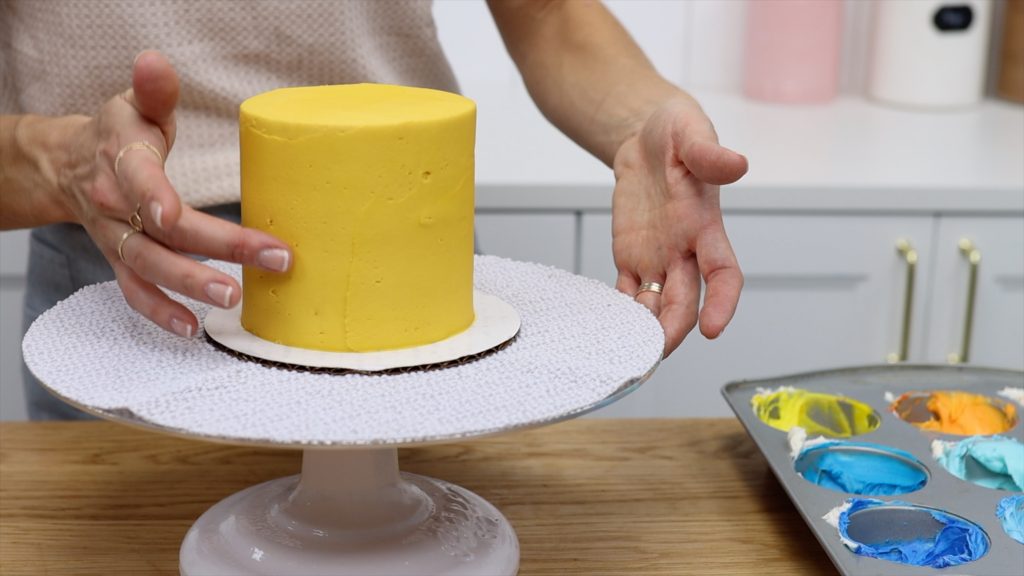
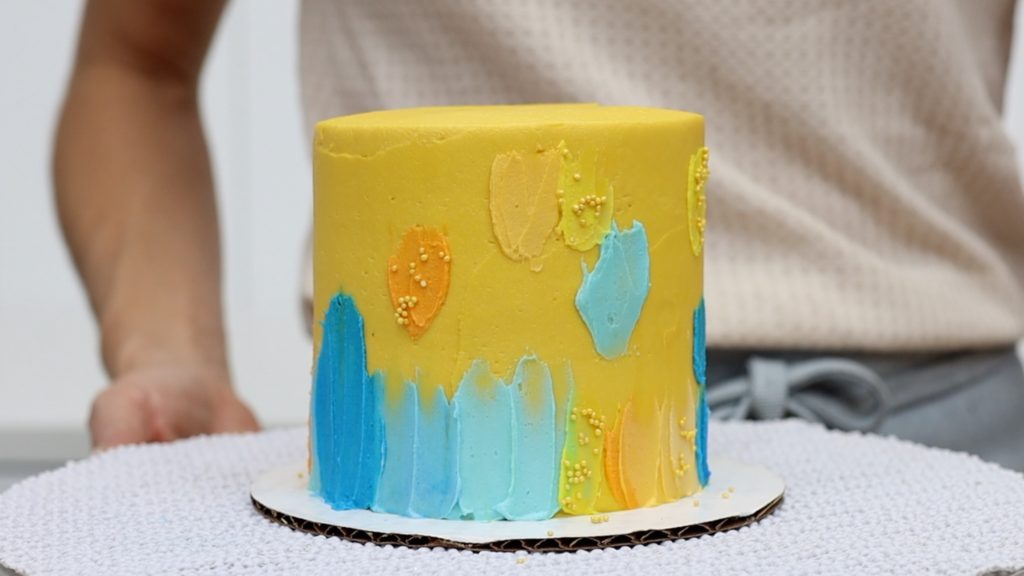
Let’s decorate a cake in five minutes! Use a simple technique with just an offset spatula to paint a colorful design onto a cake.
If you prefer to watch a video of this tutorial, scroll to the bottom of the page.
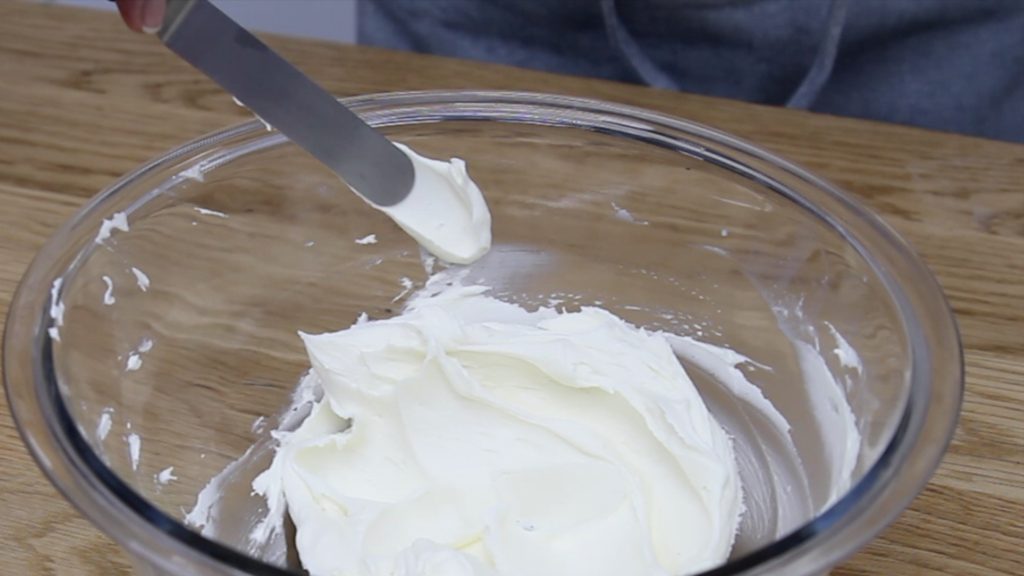
First, prepare your colour palette. Your “paint” will be buttercream! Check consistency of your buttercream before you start mixing and it should be easy to stir and spread. This is my 4 Minute Buttercream.
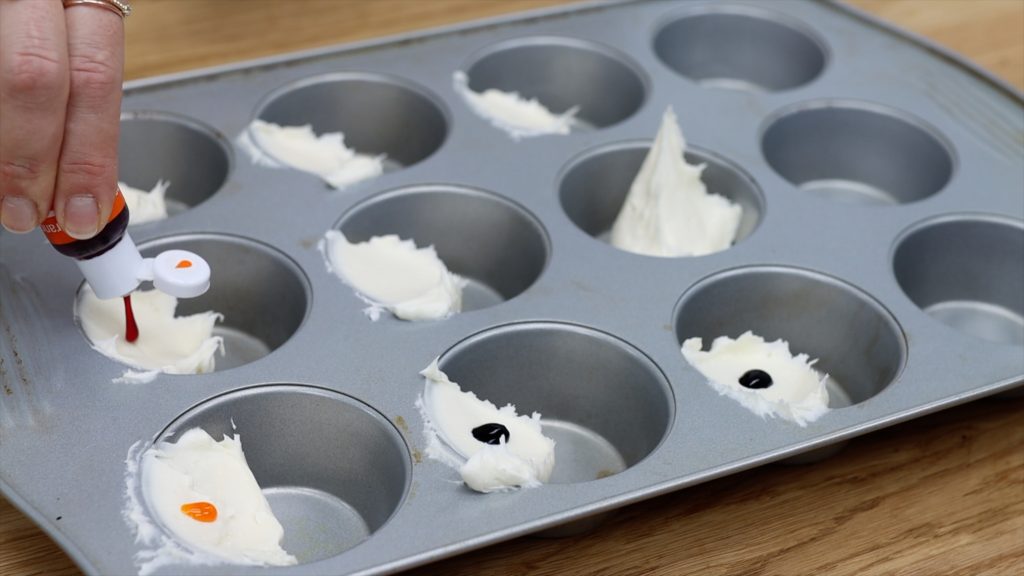
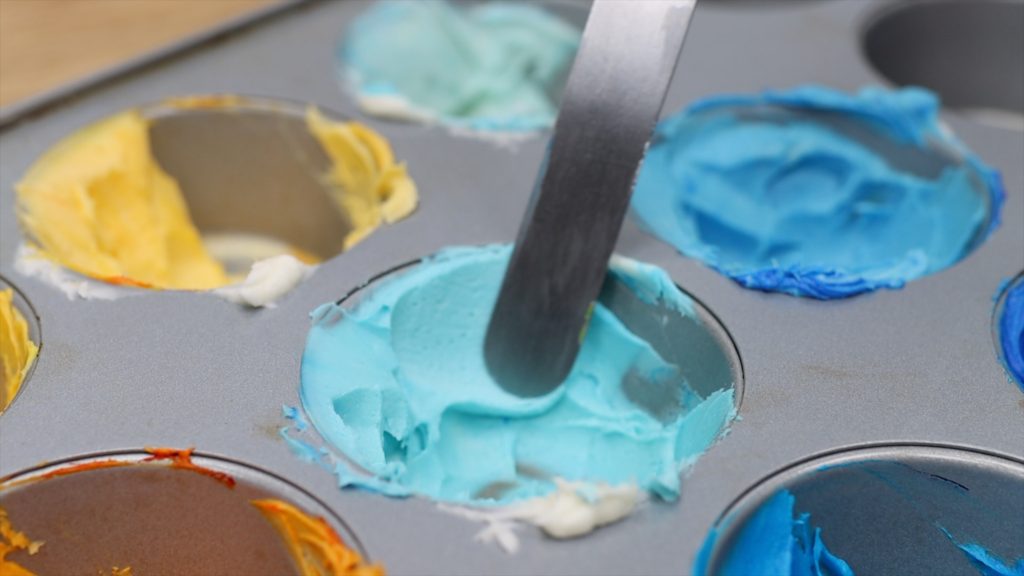
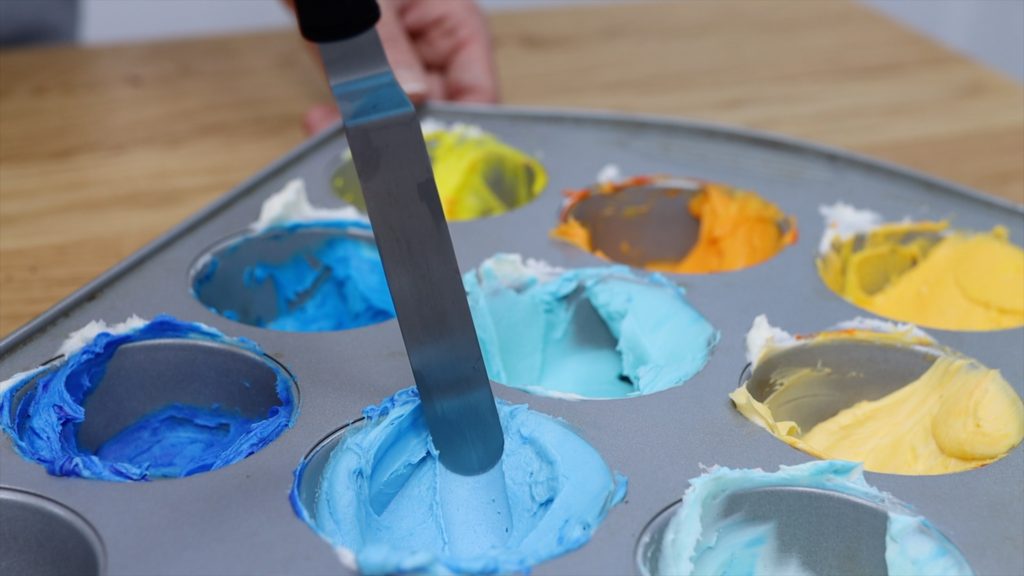
I like to use a cupcake pan as a pallet because it keeps all of the colors separate and it’s easy to mix them in one of these. You don’t have to use all 12 cups – I’m just going to use nine for this cake. Since you only need a very small amount of buttercream for each colour, just one drop of gel will create very bright and bold colours.
I tend to gravitate to the same colours for my cakes so choosing a color palette online by googling “colour palette” forces me out of my comfort zone to try new colour combinations, which I almost always end up loving!
Now that your colours are ready, it’s time to paint a cake! The frosting on your cake needs to have set, so that you can apply pressure to it without damaging it. I put this cake in the fridge for an hour to chill and set the frosting.
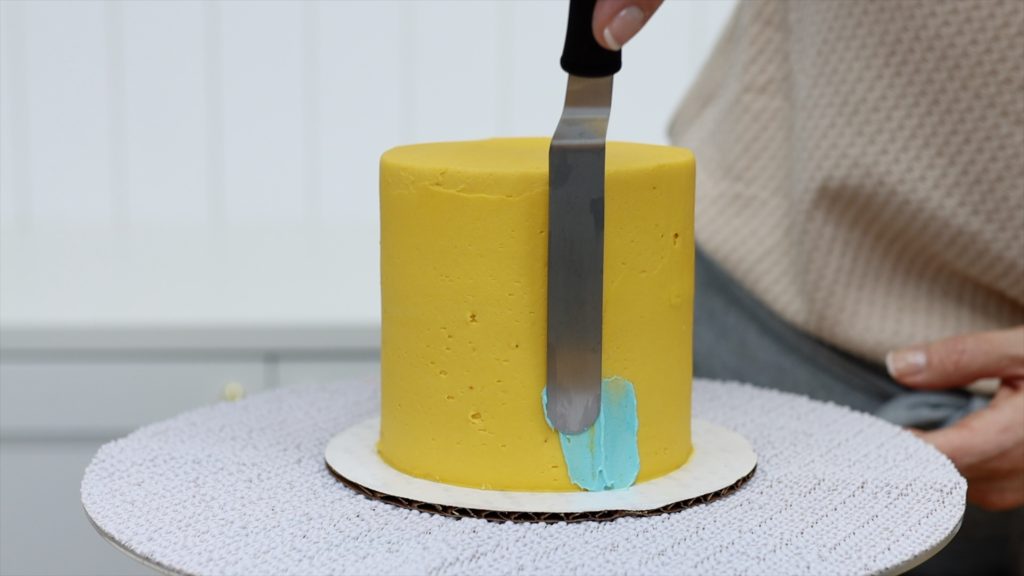
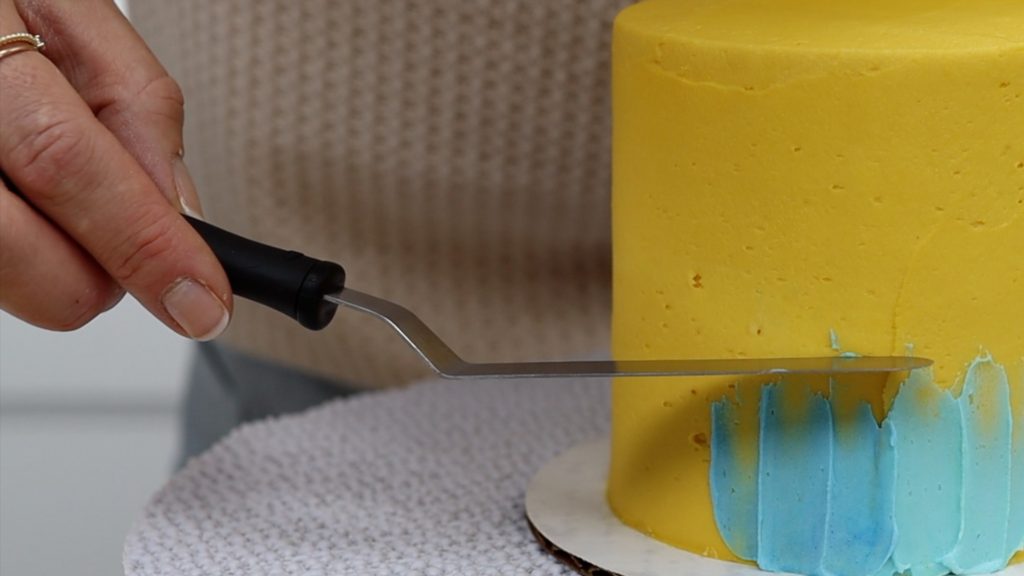
You’ll need an offset spatula (also called an angled palette knife) and using a small one like this will allow you to create more detail than using a big one. Lower the tip of your offset spatula down into one of your colours and drag away sideways to leave a small amount of that colour on the blade.
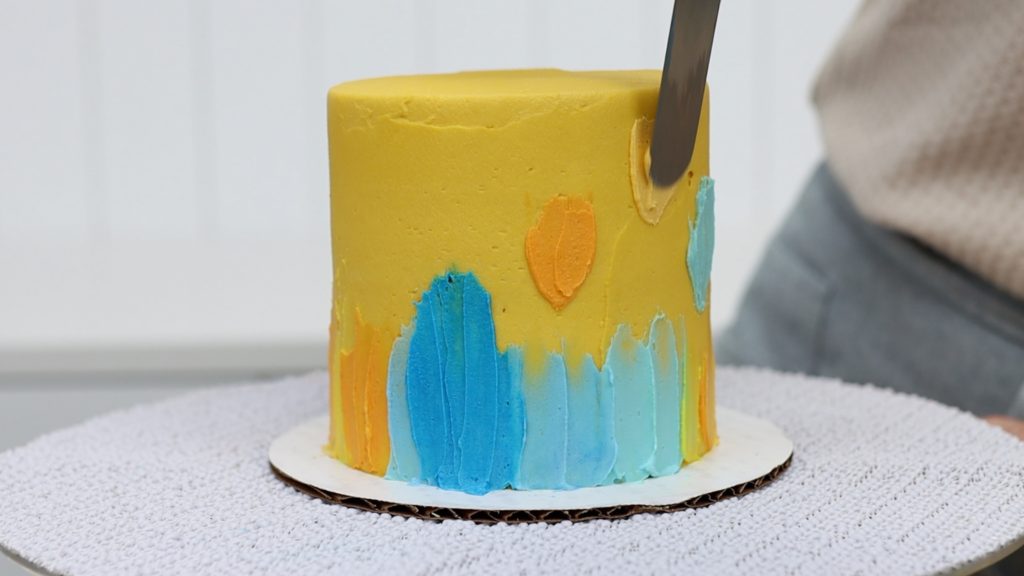
Press the tip of the offset spatula against the very bottom of the side of the cake and pull it up the side of the cake until you feel that there isn’t any “paint” left in between your offset spatula and the cake. You can swipe a few times until you’re happy with the texture and coverage. Swipe it away and then dip it into the next colour and repeat the spreading motion upwards.
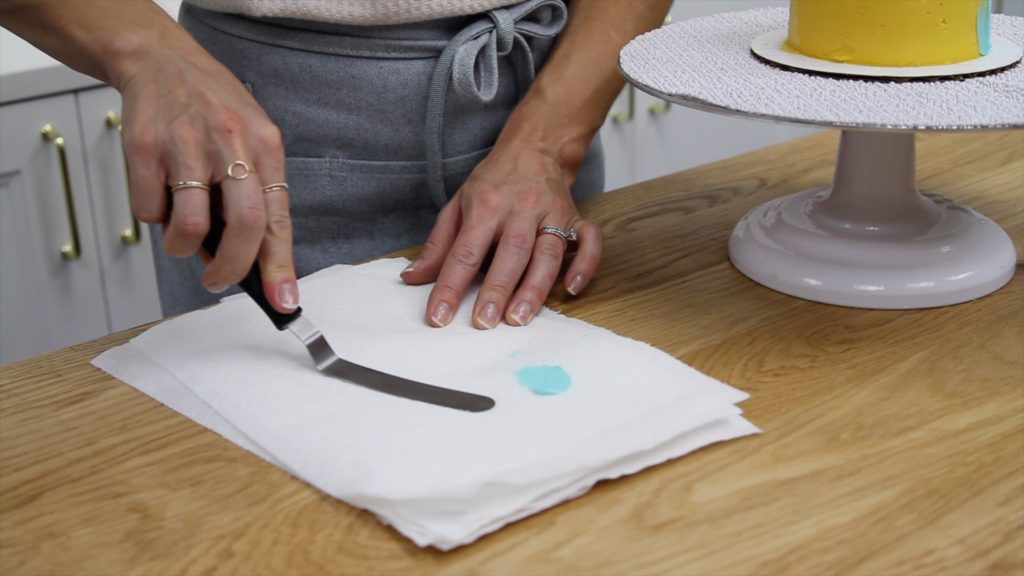
Before changing colour, wipe your offset spatula clean on a paper towel so that you don’t drag your first colour into the next colour, and that will keep the colours more distinct.
What’s nice about painting onto a cake when the frosting has sent is that if you paint anywhere you don’t want to paint you can scrape that off with your offset spatula without damaging the frosting underneath.
Paint onto the cake again and again to go all the way round the bottom of the cake. Always start with the tip of your offset spatula resting down on the cake board and that will make sure that you’re covering up the very bottom of the cake. You can vary the height that you paint upwards each time – you don’t have to try to make it all identical because the irregularities of this design are what makes it so beautiful. Try adding random “swooshes” of paint higher up on the cake, too.
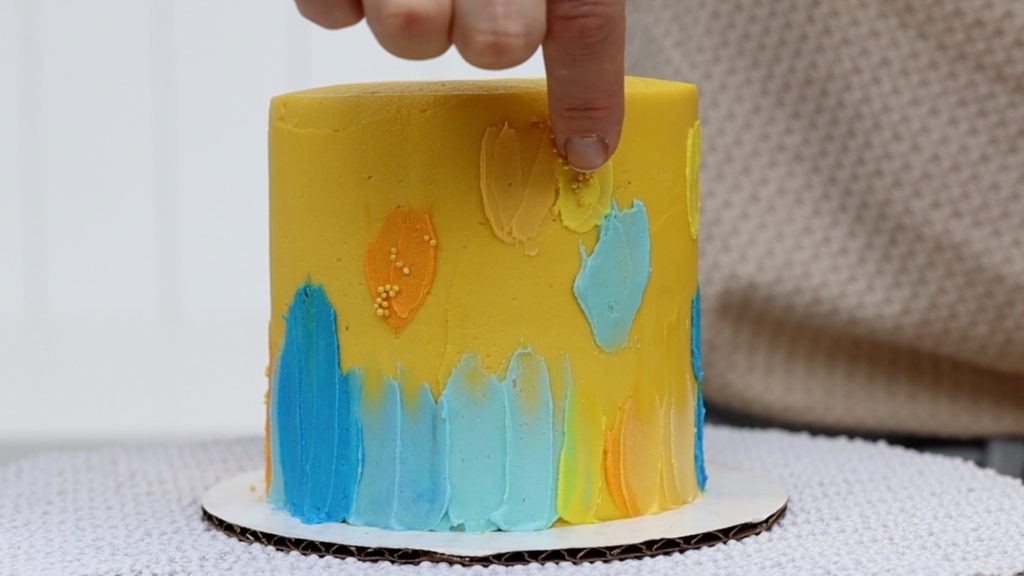
To add even more texture you can press sprinkles into the paint, and it’s easiest to do this straight after you’ve painted the cake so that the buttercream “paint” is still soft and sticky and then the sprinkles will attach easily.
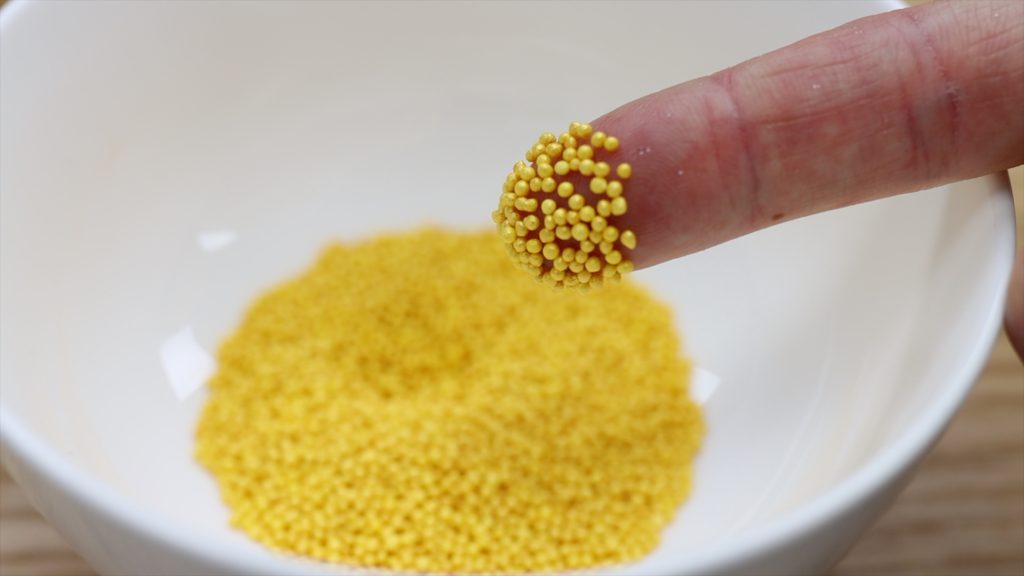
The quickest way to add sprinkles is to dip your finger into water, shake off the excess or dab it on a paper towel so your finger is just damp, not wet, and then press your finger into the sprinkles and they’ll stick to the moisture on your finger. Press your finger into the paint and the sprinkles will stick to that instead of your finger.
For my next 5 minute cake decorating video I’m going to choose a tool chosen by YOU – comment below with your tool suggestions and I’ll pick one to get creative with!
If you’ve enjoyed this tutorial you’ll LOVE my classes, where I teach unique cake designs broken down into four manageable steps in less than 20 minutes of video modules. Join my ClubPLUS for access to every class and course on my online cake school!
Here’s the video version of this tutorial:
A delicious cake with pretty frosting will make people happy but with these 10 techniques I’ll show you how to impress EVERYONE with your cakes, from piping details to transferring a cake onto a cake stand, using simple tricks, basic tools, and quick techniques!
If you prefer to watch a video of this tutorial, scroll to the bottom of the page.
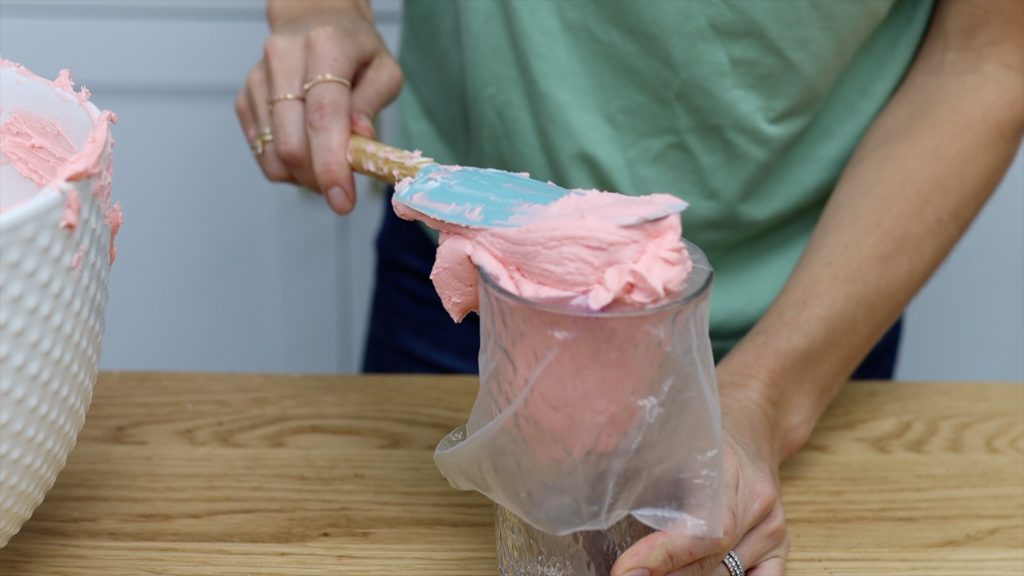
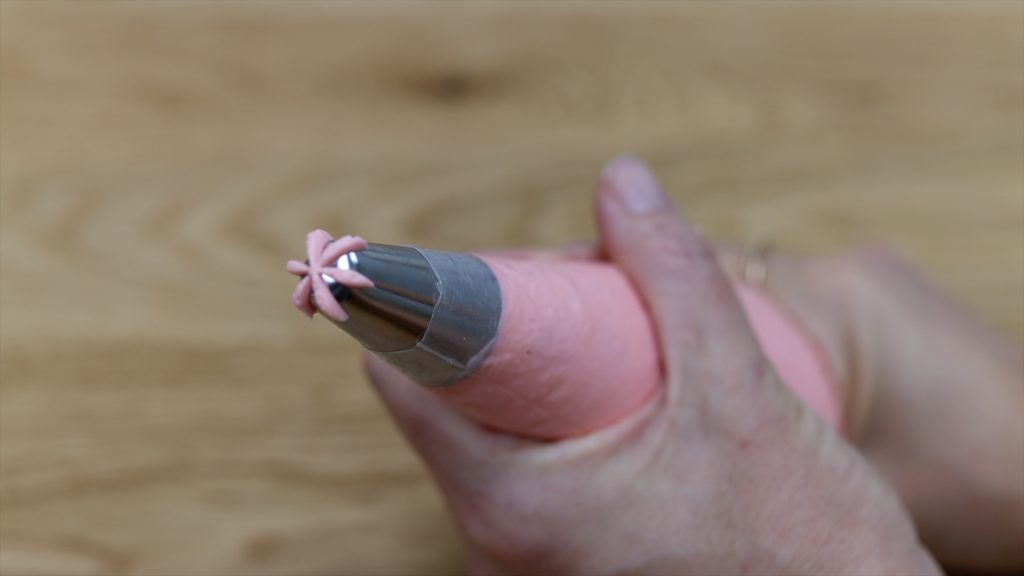
#1 Swirls For this first technique all you need is a piping bag and a star shaped piping tip like a 1M or a 2D. Fill your piping bag about half full with whatever frosting you’re using. I like to do this within a glass to make it neater, so you don’t get frosting all over the top of the piping bag.
Twist the end of the bag to make it easier to pipe because you won’t need as much pressure to squeeze the frosting out. I like to chill my cakes before piping onto them, and I’ll show you why in a second.
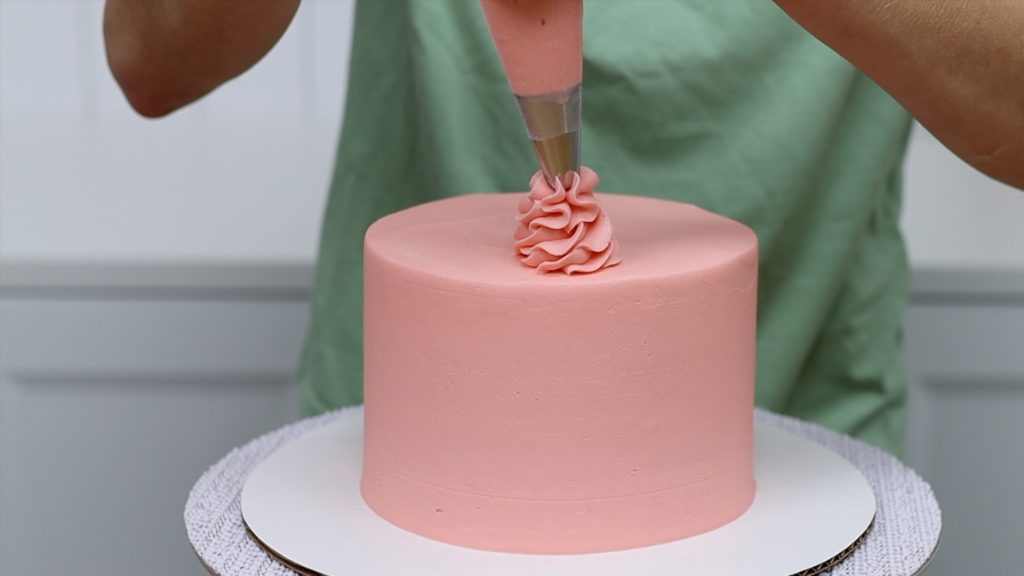
Hold the piping bag above the cake, starting about an inch in from the edge, and pipe a circle, spiralling upwards to pipe a swirl. If you count the number of circles you make for the swirl, you can replicate that around the cake and every swirl will be the same height. At the top of each swirl I like to push down slightly, then stop squeezing the bag and swipe the piping tip up and away, and that leaves a nice neat peak on each swirl.
The reason for chilling the cake before you do this is that these frosting swirls are quite heavy and if you pipe onto a cake just after frosting it, the weight of the swirls can make the top edge of the frosting on the cake droop. If you chill the cake the frosting will set and you’ll keep those nice sharp edges around the top of the cake even after piping all of the swirls. These swirls are SO easy to pipe and they make the cake much taller, more elegant, and more festive!
#2 Rope border For a more unique way to add some detail to the top of your cake, use the same star tip and hold the piping bag at a diagonal and pipe a circle. Just before the end of the circle, loop back around to make another circle that overlaps the first one.
Continue like this to make a border that looks like the links of a rope. Using a 2D tip makes the piped ruffles much softer than using a 1M tip, which will make the texture sharper.
A rope border isn’t as tall as frosting swirls, which makes it perfect to use with a cake topper because it won’t block or hide the cake topper.
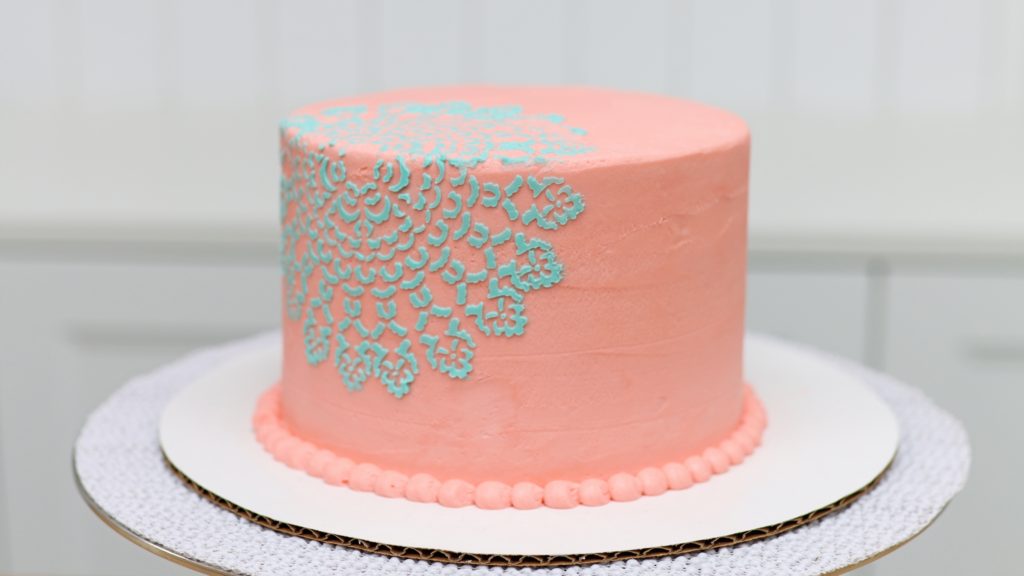
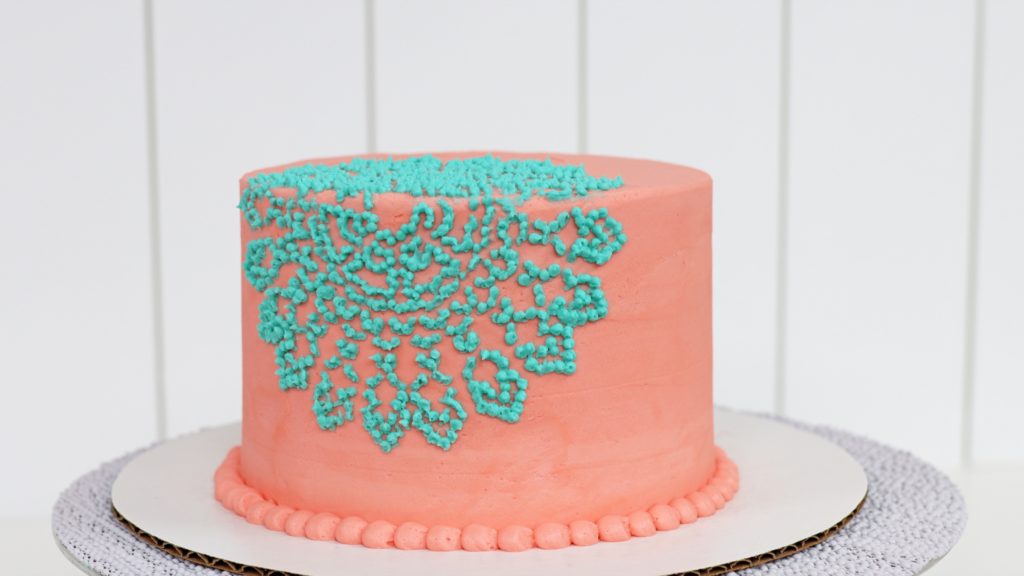
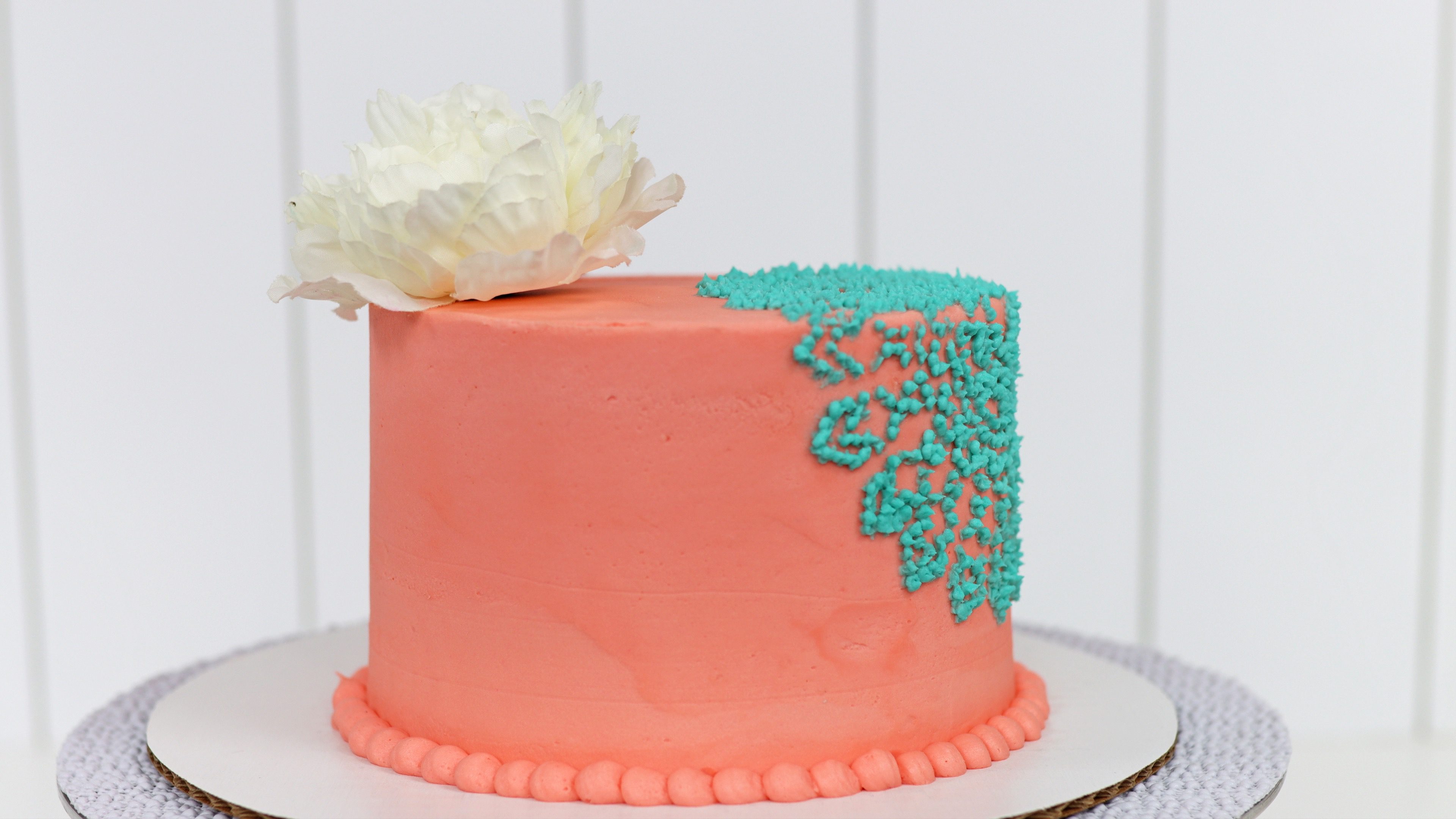
#3 Stencil Next up, stencils! These are much easier to use than you might think. Tint another colour of frosting and spoiler alert: buttercream works best for this and you’ll see why in a second. Choose a stencil – plastic, acrylic, any material is fine. What’s essential for successful stenciling is that the cake has been chilled so the frosting is really firm, and that way you can press the stencil against the cake without damaging the frosting.
Spread buttercream to cover the whole stencil design and then scrape off the excess to leave a thin, smooth layer over the stencil. Peel the stencil off and voila!
If the warmth of your fingers leaves indents in the frosting you can smooth those with your offset spatula now, and after chilling the cake again you can smooth them even more.
Stencils are even easier on the top of cakes because they lie flat – you don’t have to curve them around the cake. Follow the same process of spreading buttercream and then scraping it off and smoothing it, and then peel the stencil off.
You can tidy up any excess bits of frosting with a toothpick to make the design neater. Stencilled cakes are quick and easy but SO beautiful!
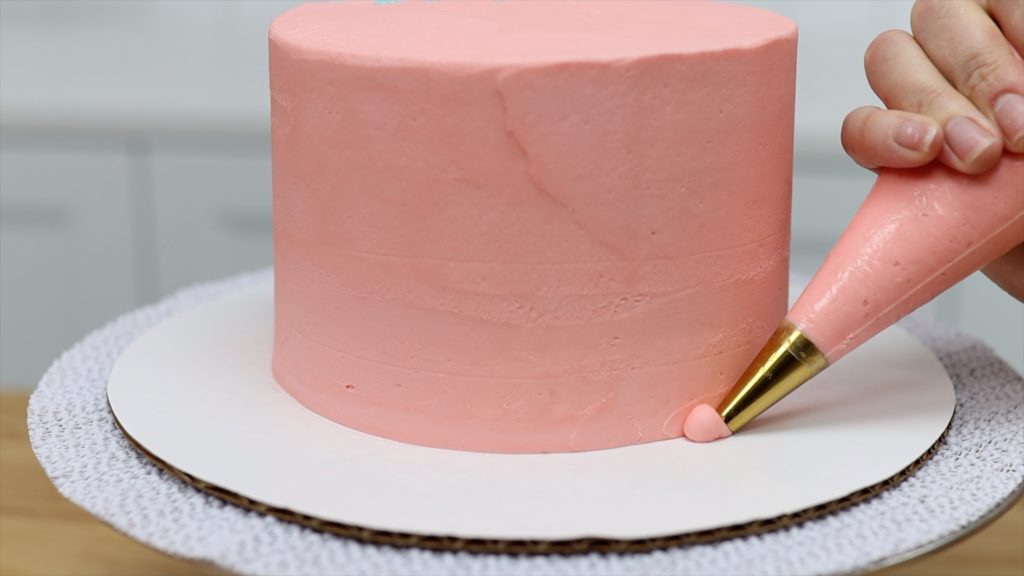
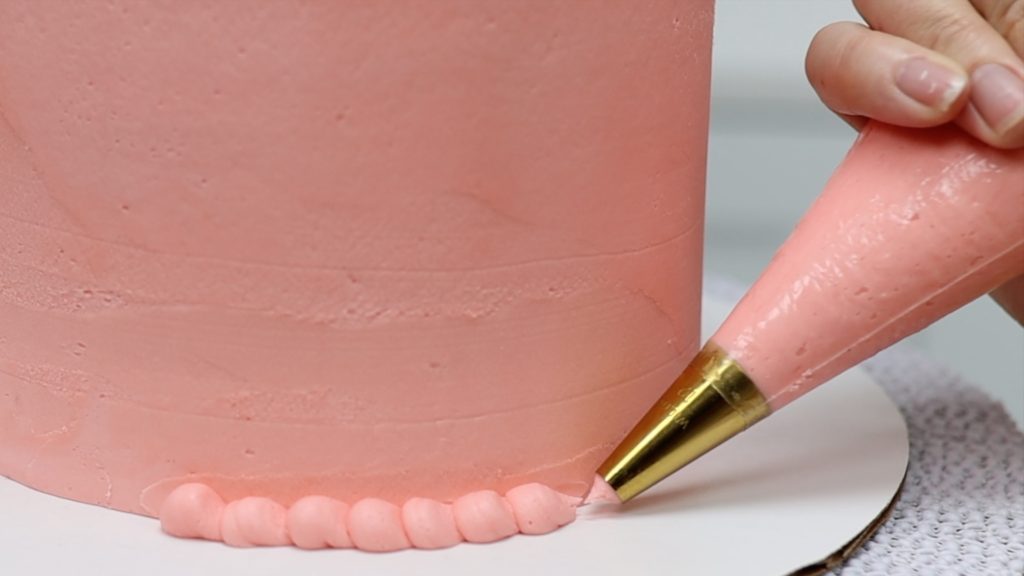
#4 Beaded border Borders around the bottom of the cake are a nice way to soften the base of the cake, and also to disguise any imperfections around the bottom of the cake! Choose a medium sized round tip, like this #12, for the neatest beads.
Hold it up against the side of the cake and squeeze the bag to push the frosting out, letting it bulge out slightly before pulling away. This leaves a tail on each bead, which you’ll cover up with the next bead.
This finishing touch makes a pretty cake look professional instantly!
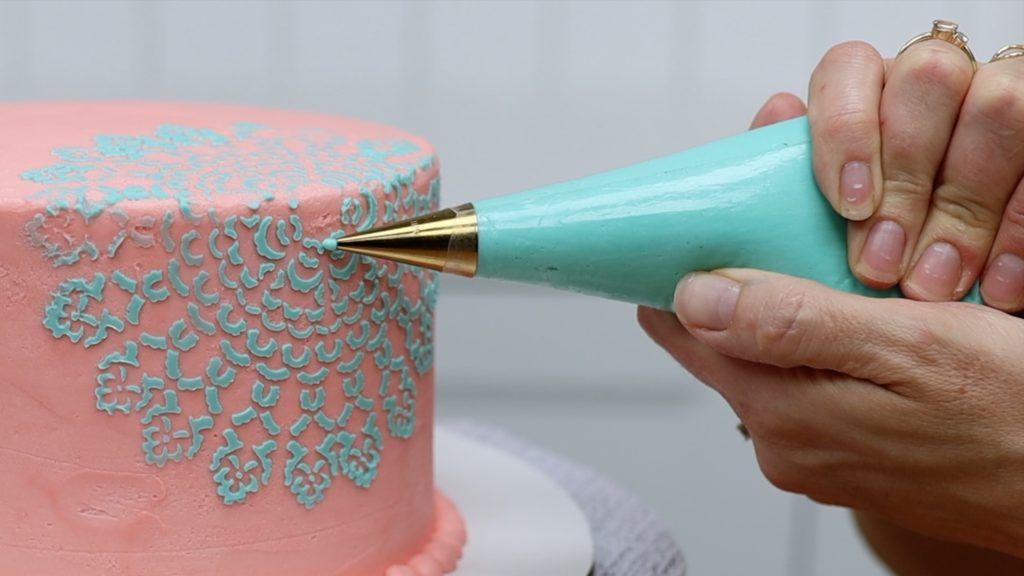
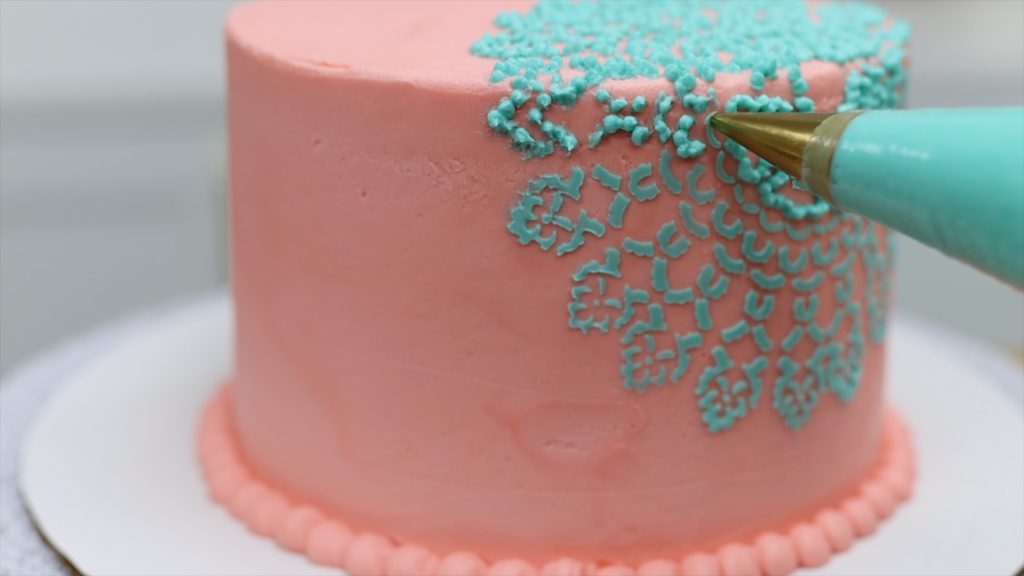
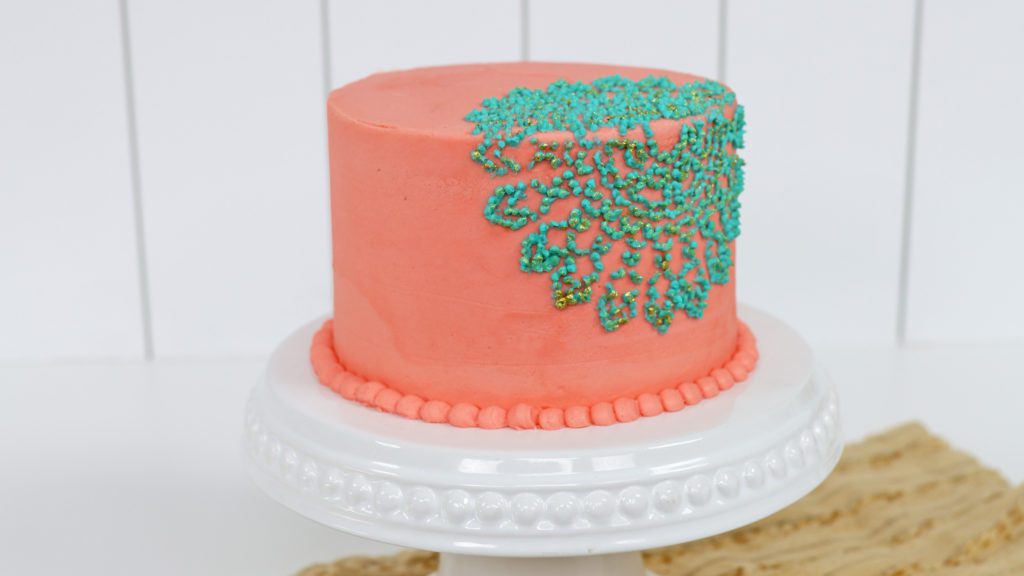
#5 Pointillism For a step up from a flat stenciled design on a cake, use a small round piping tip like a #2 or a #3 to pipe tiny dots to cover the design, giving it texture and much more detail.
To reduce the strain on your wrist as you’re piping hundreds or dots, make sure the consistency of your buttercream isn’t too thick, otherwise you’ll need to squeeze the bag much harder than if the buttercream has a bit more milk in it to thin it out.
You can use whipped cream or meringue buttercream for this technique as well. It’s time consuming so take breaks but the result is definitely worth it!
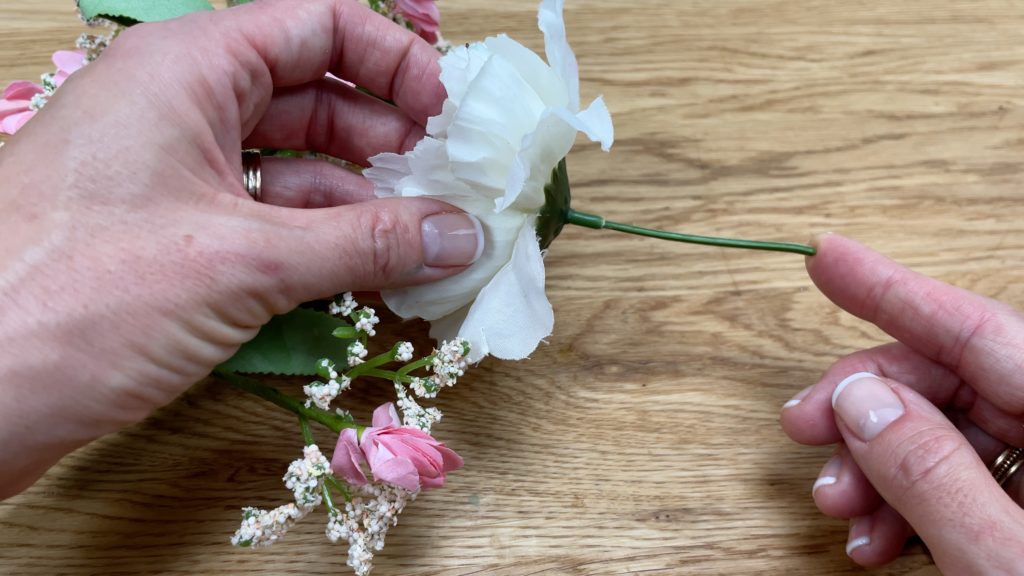
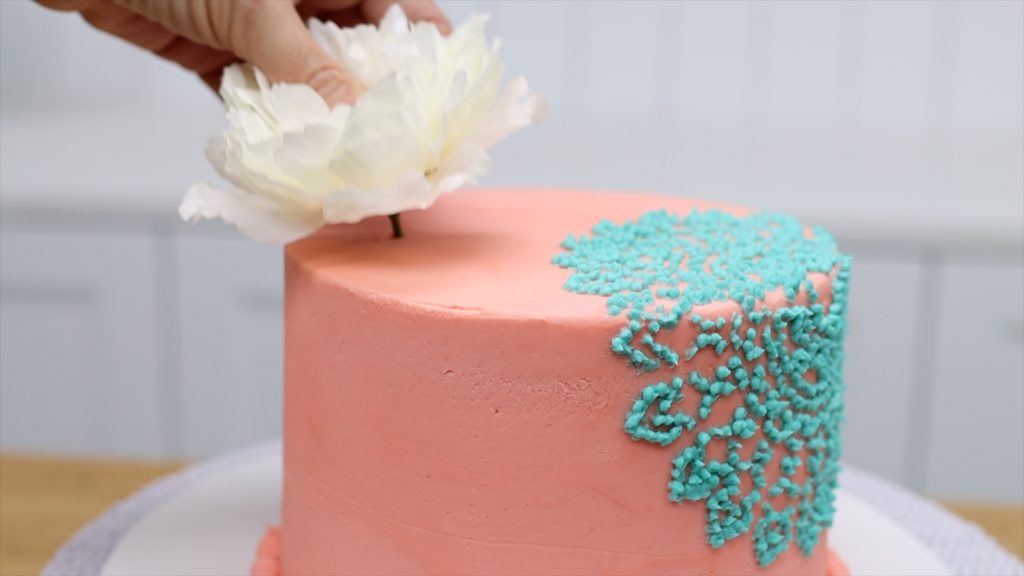
#6 Artificial flowers Artificial flowers make gorgeous cake toppers in just a few seconds. Trim the stalks so they’re a few inches long and cut off any leaves along the stem.
Wash the stem and the bottom petals of the flower with hot soapy water so they’re nice and clean and then poke the flower into the cake!
These won’t wilt like natural flowers will, and the stems won’t leak floral liquids into your cake. If you’re enjoying these techniques, check out my online cake school for hundreds of cake designs and decorating techniques!
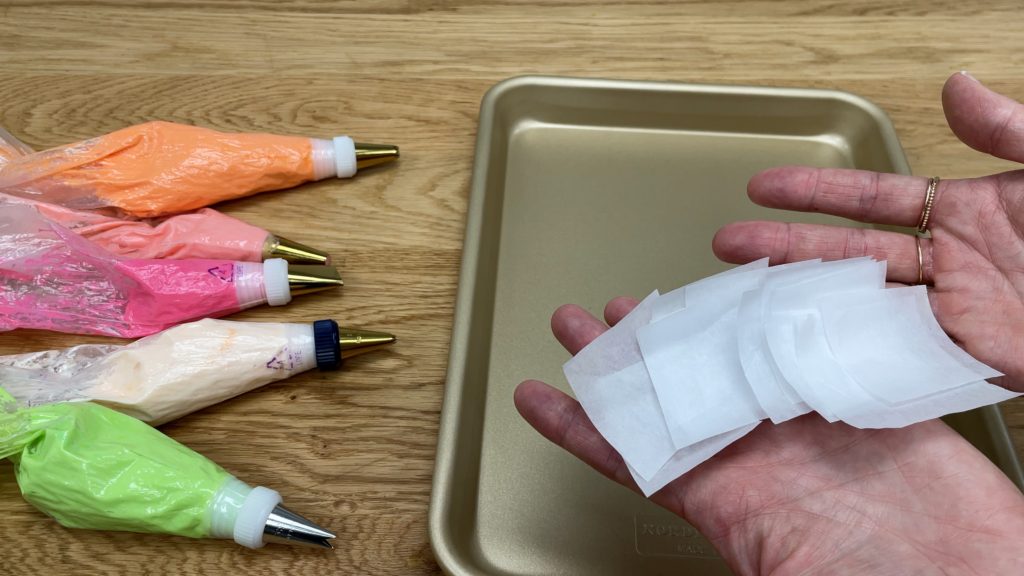
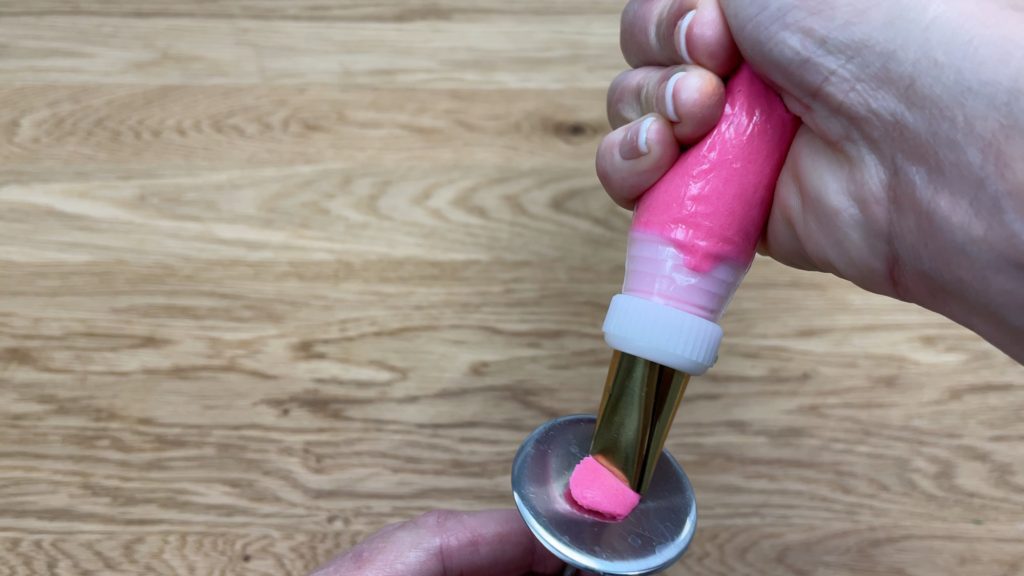
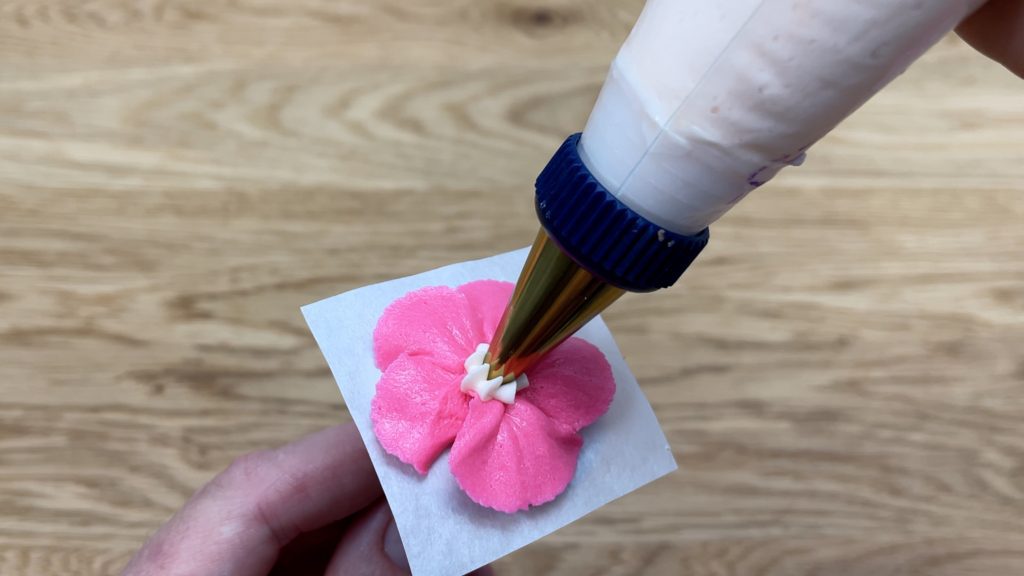
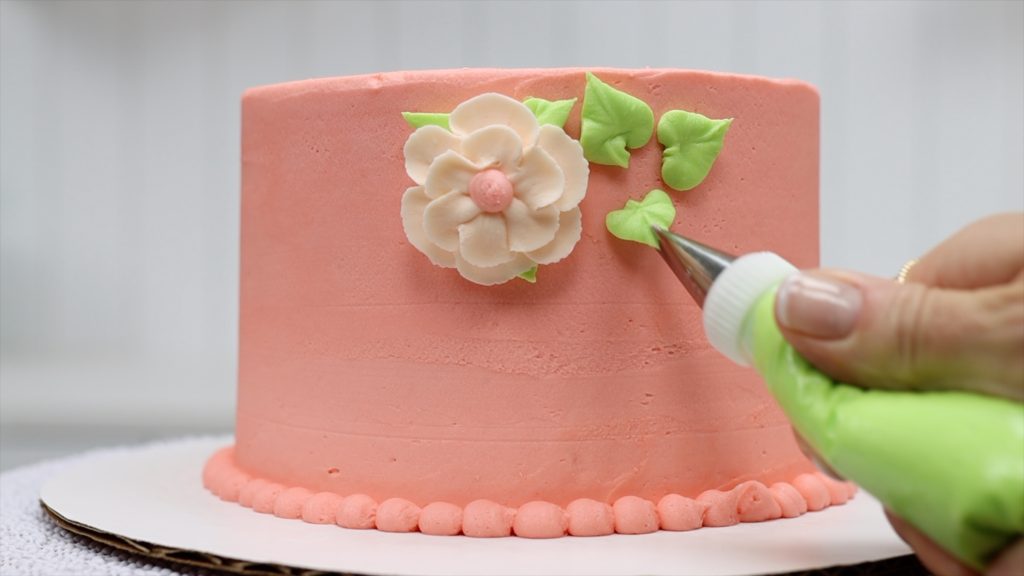
#7 Piped flowers Add edible flowers by piping them with frosting! You’ll need a flower nail and some parchment paper cut into little squares and a few colours of frosting in piping bags.
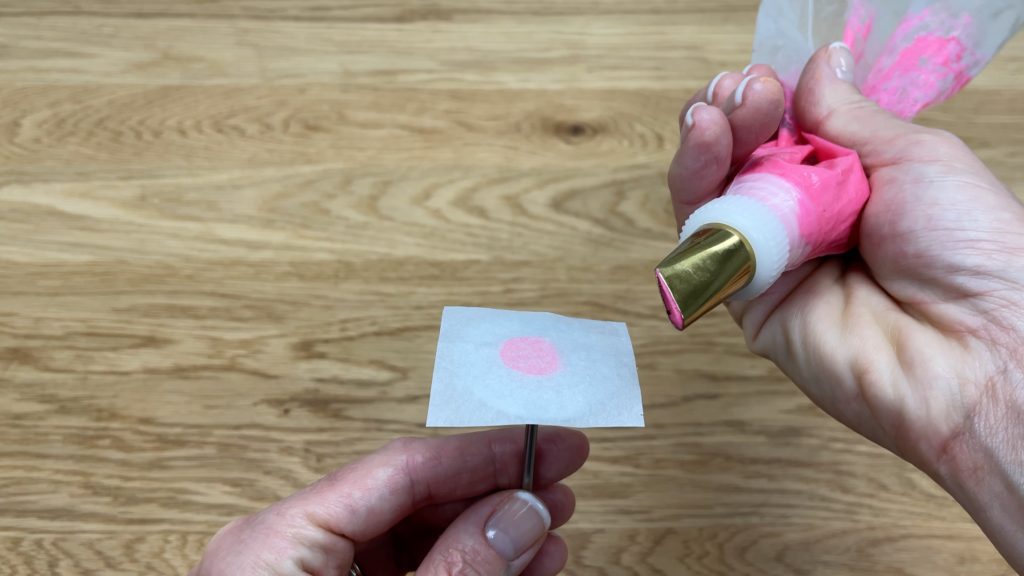
Pipe a dot of buttercream onto the middle of the flower nail. This dot will act as glue to attach a square of parchment paper onto the flower nail.
Hold a petal tip with the narrow end of the tip facing outwards. This is important because by holding it this way, the edges of your petals will have some movement and look more natural.
To pipe petals, spin the flower nail between your finger and thumb as you work your way around the flower.
Pipe a dot in the middle or a little star – this is a #18 by Wilton.
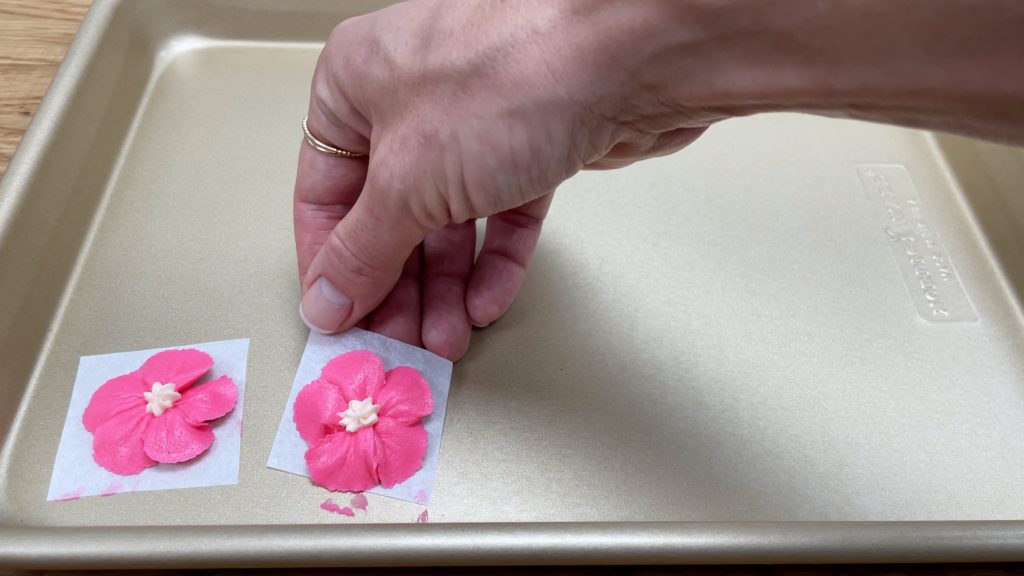
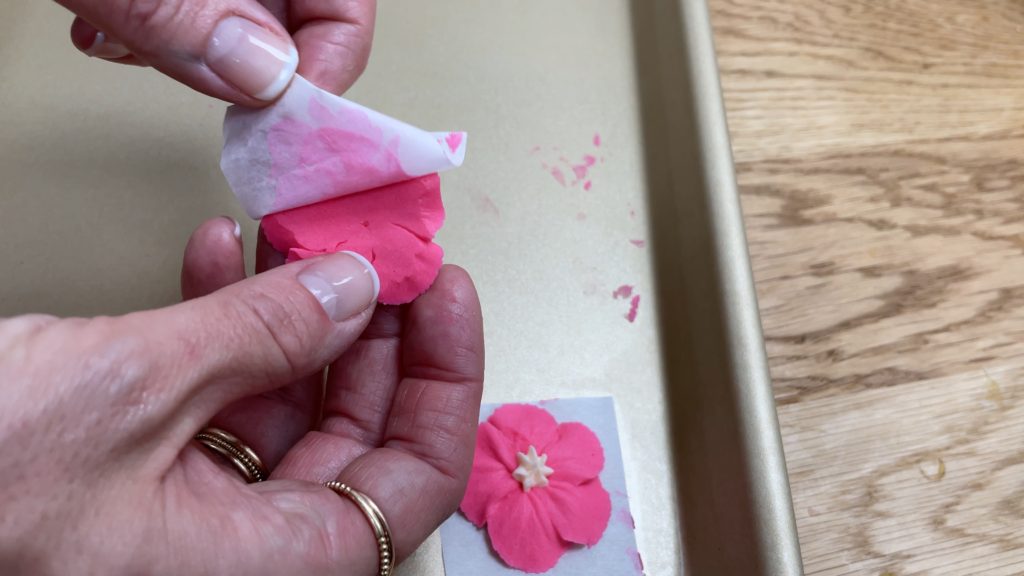
Carefully slide the parchment off the nail and place it on a tray or plate. Pipe as many flowers as you want for your cake.
Try piping two layers of petals and use different colours to make the design more interesting. This is a #104 petal tip but for bigger flowers you could use a #125.
Put the tray into the freezer for 5 minutes to set the flowers. If the frosting on your cake is still soft and sticky, you can press the flowers straight into the cake but if the frosting on the cake has set, you’ll need to use buttercream as glue. Either pipe little dots or pipe leaves with a leaf tip like a #352.
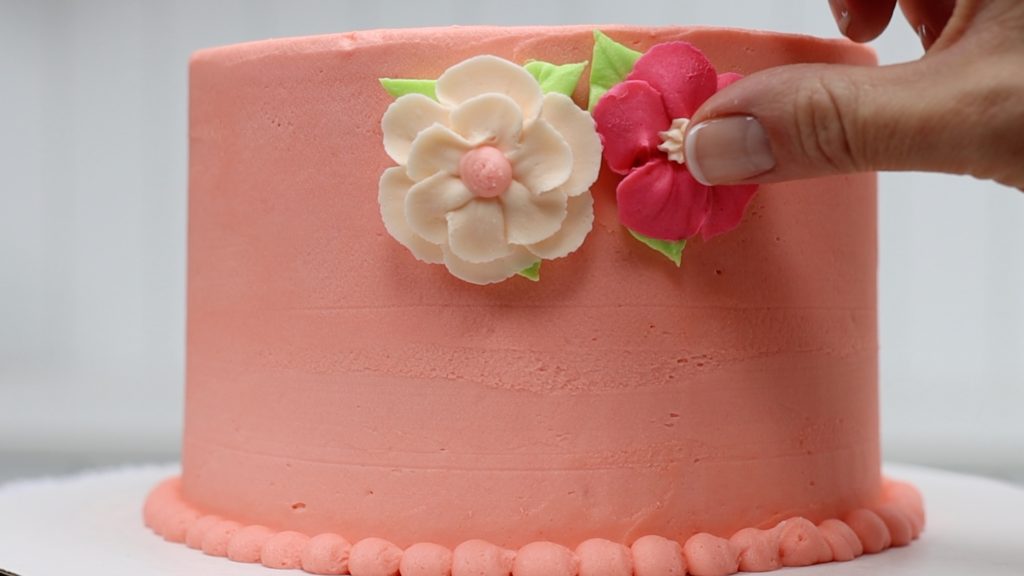
To attach the flowers, take them out of the freezer and lift a square of parchment up. Peel the flower off the parchment and it will be cold and firm for a few seconds so move quickly!
Press the flower onto your cake and it will attach to the dot or the leaves you’ve just piped.
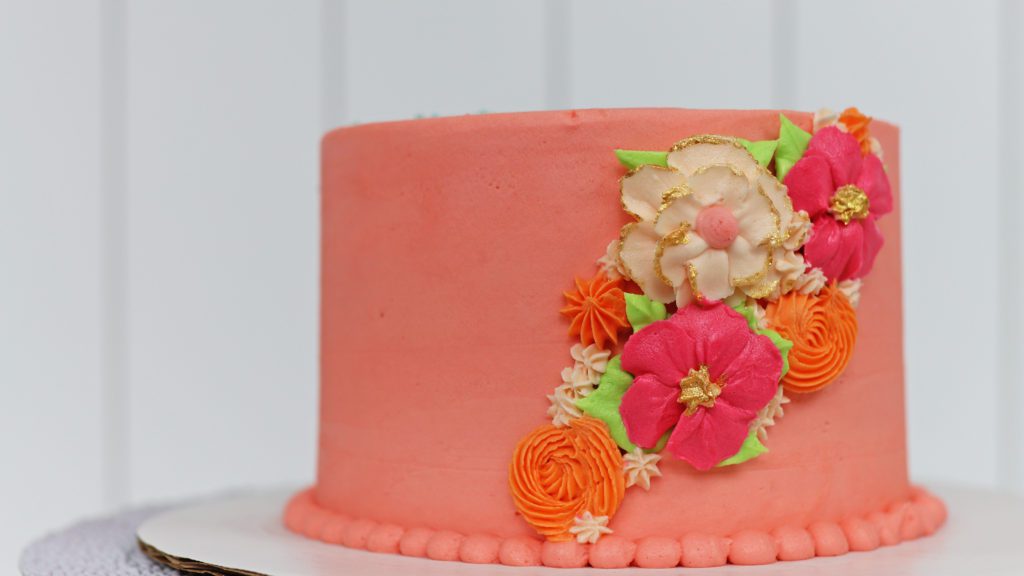
Pipe swirls and rosettes with any star shaped tip, like the #32 tip I used for the orange details on this cake. Arrange a few flowers or make them cascade down the side of the cake, making a plain cake colourful and detailed in just a few minutes!
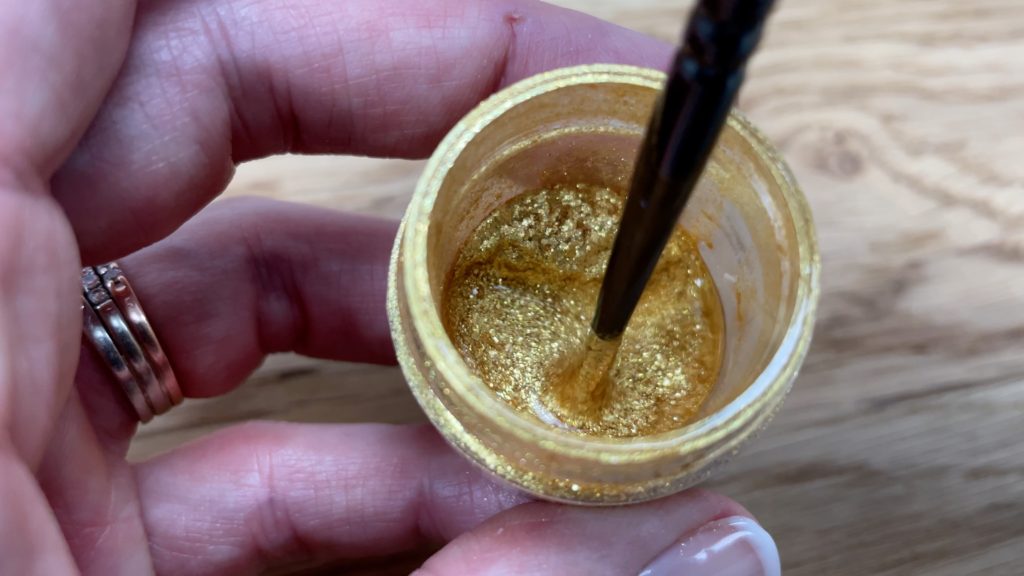
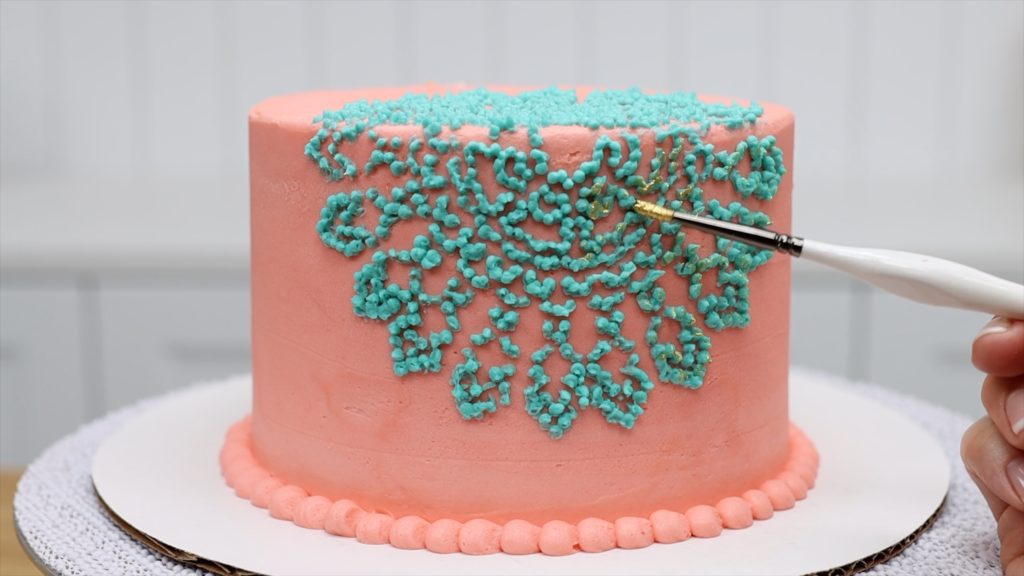
#8 Add gold Adding gold to a cake makes it instantly glamorous and attention-grabbing because most people don’t realize gold can be edible! Buy gold luster dust and add a drop of clear alcohol like vodka or a clear flavour extract like lemon, mixing it to make a thick liquid.
You can brush the gold “paint” over buttercream after the buttercream sets. The easiest way to make buttercream set is to put the cake int he fridge for about an hour, until the buttercream is firm enough that you can touch it without leaving an indent in the frosting.
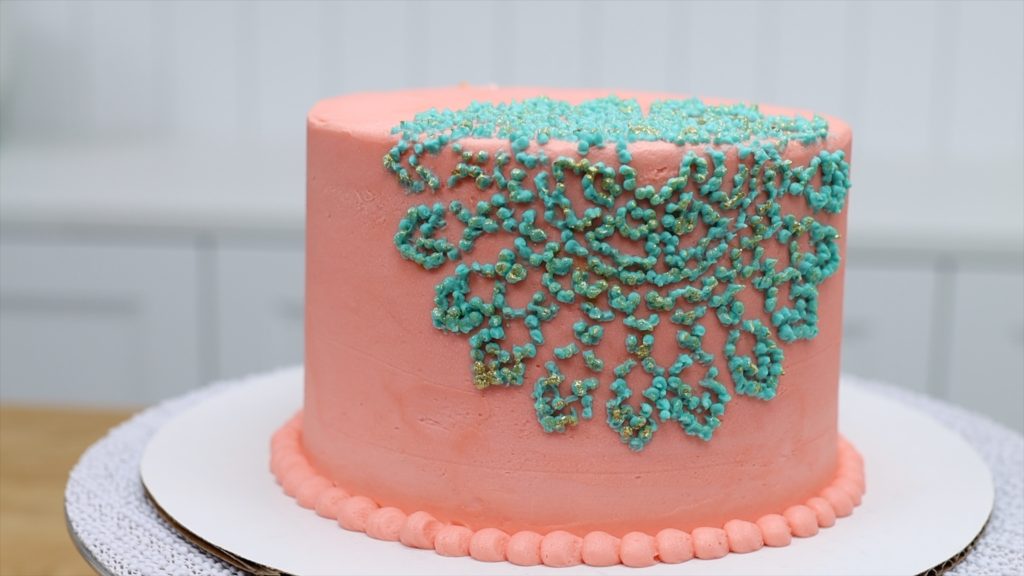
The gold accents make this design even more elegant!
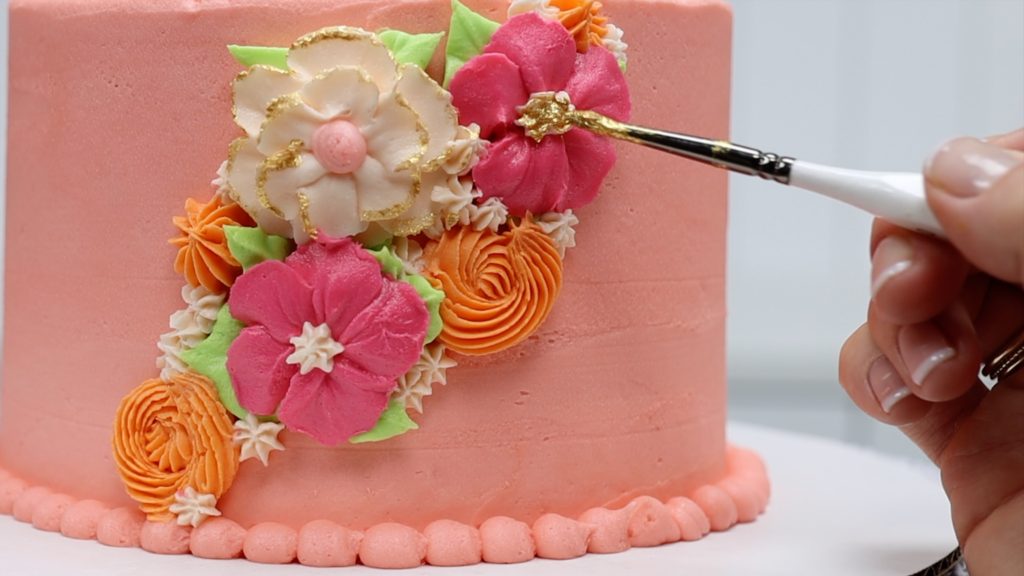
Gold paint works well for flowers too – after chilling the cake you can brush this along the edges of petals or onto the dots or stars in the middle of flowers, taking this piped design to the next level.
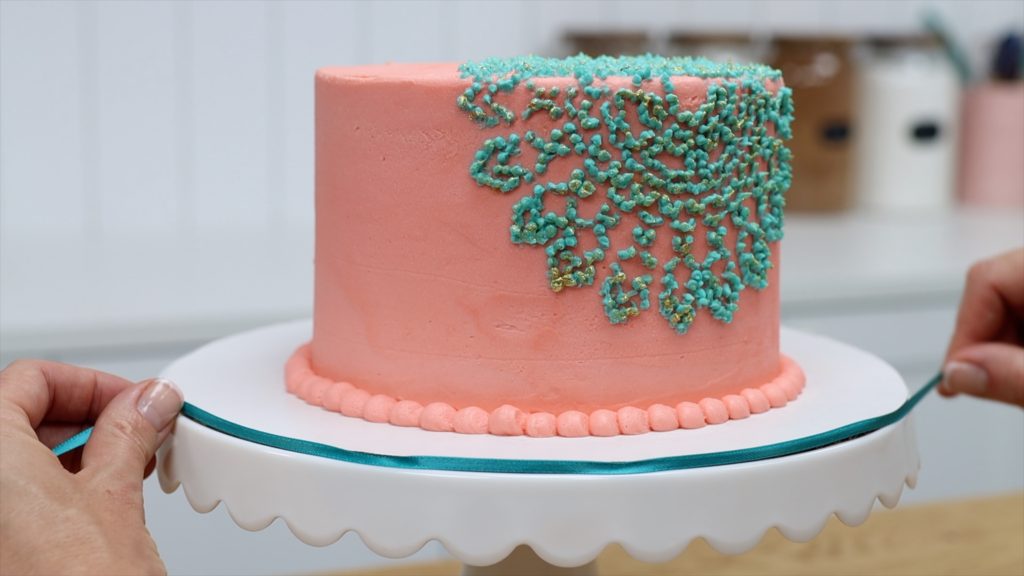
#9 Wrapped ribbon A beautiful cake needs beautiful presentation, not a visible corrugated cake board. There’s an easy solution for this – wrap a fabric ribbon around the cake board and secure it with glue. Choose a colour that matches the colours of the cake, like this turquoise, to complete the presentation.
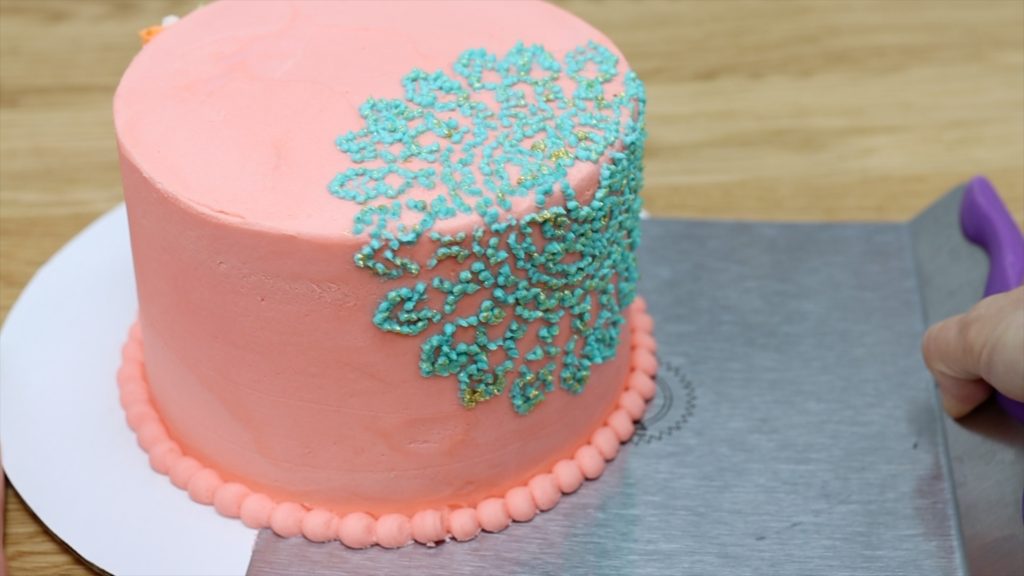
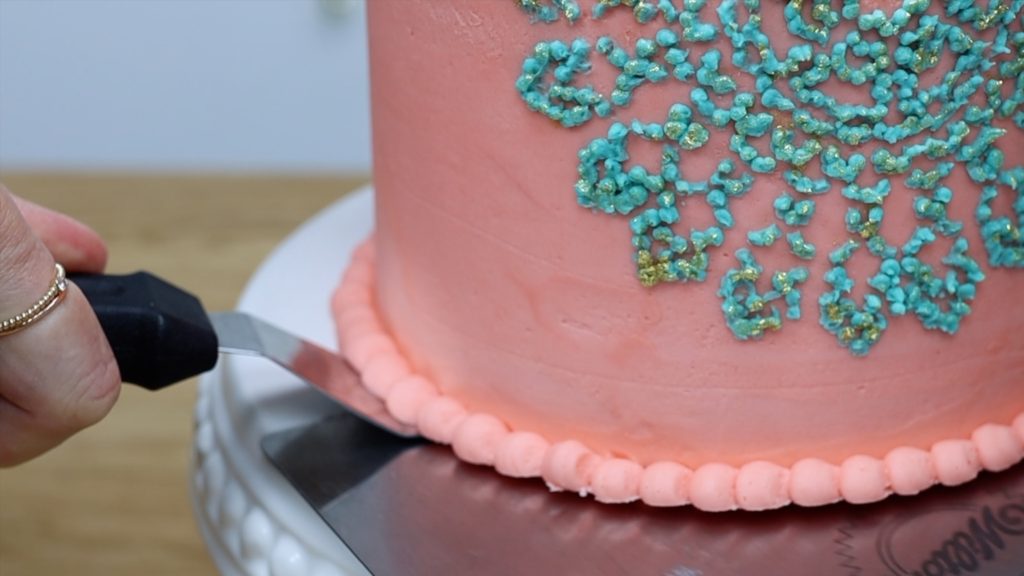
#10 Cake stand Alternatively, transfer you cake to a cake stand, but without the cake board you frosted it on. The trick for this is to chill the cake for at least an hour so it sets, and then slide an offset spatula or a cake lifter underneath to separate it from the cake board.
Lift the cake up and place it on a cake stand, sliding the cake lifter out from underneath the cake. You might need to use an offset spatula to lift the cake slightly while you pull the cake lifter out. If you need to center the cake not he cake stand, so it now while the frosting is still cold so you can press it without damaging it.
I’m excited for you to make your cakes look more professional! Tell me in the comments which is your favourite technique, or tell me one you’d like to learn!
Here’s the video version of this tutorial:
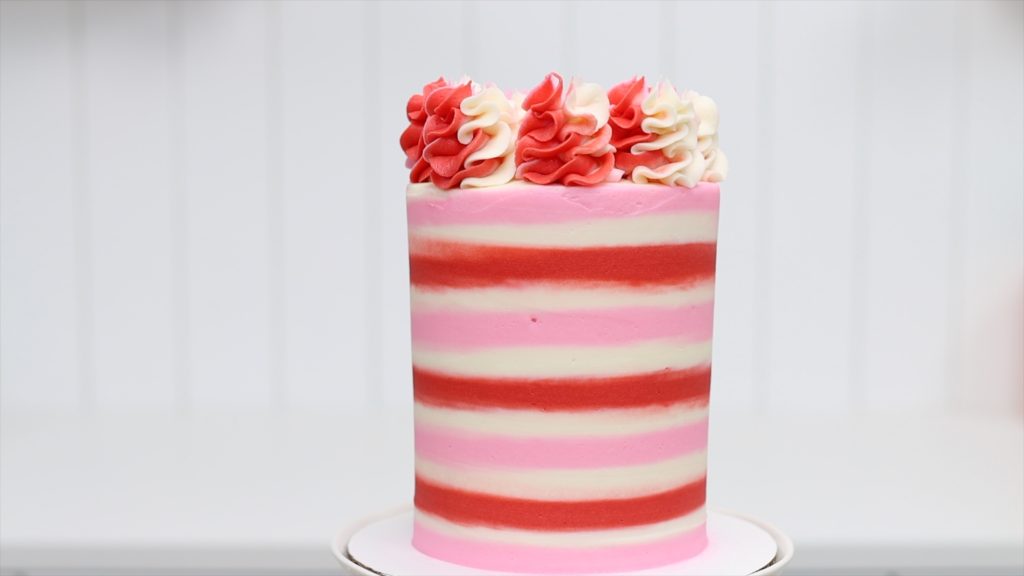
Striped cakes have been trending for a while and with good reason: they’re gorgeous! But instead of using a striped cake comb, which takes a while to master, try these five techniques for quick and easy striped cakes using minimal tools and materials. They’re so easy, you might even call them striped cake hacks!
If you prefer to watch a video of this tutorial, scroll to the bottom of the page.
#1 Piped stripes
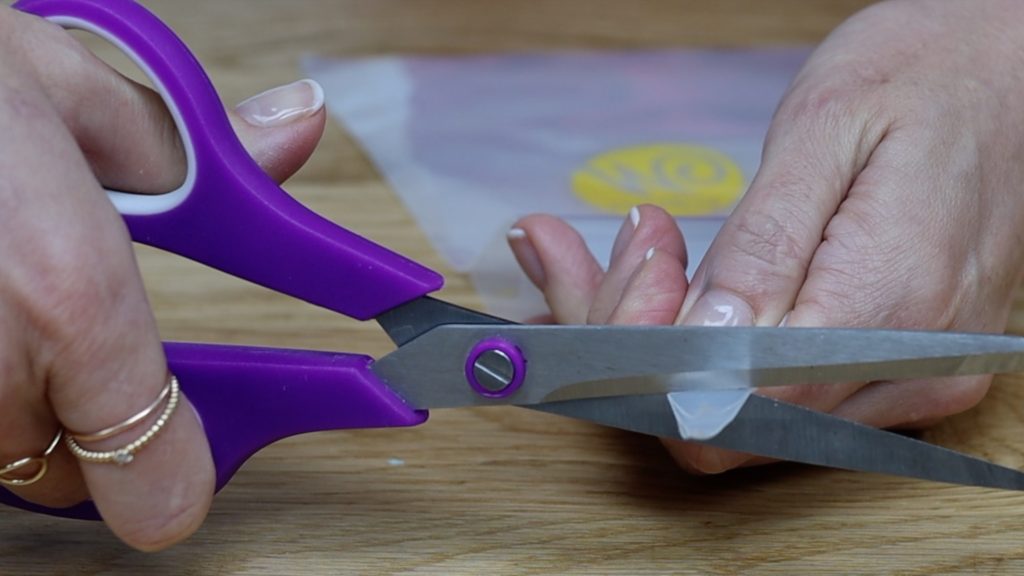
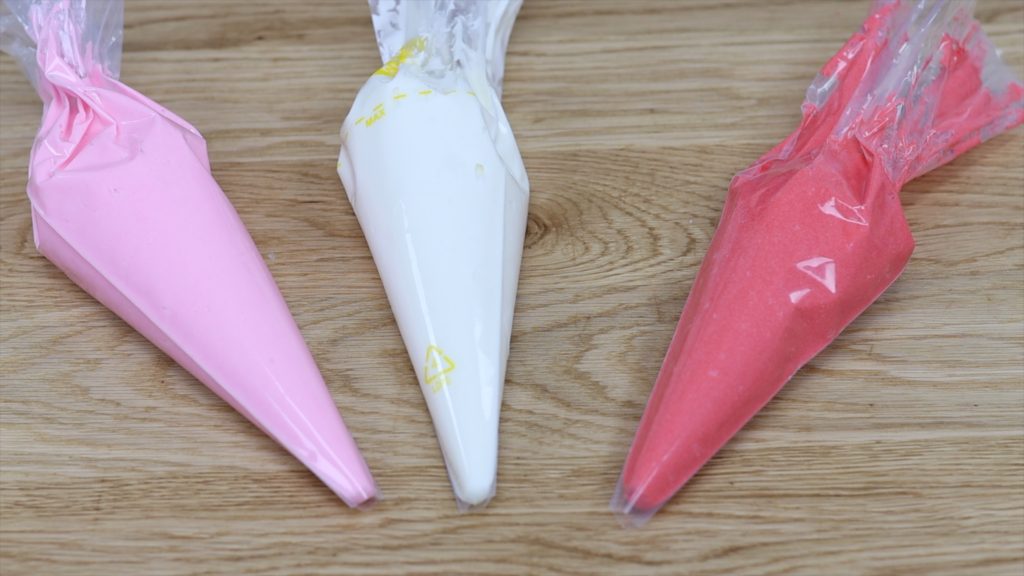
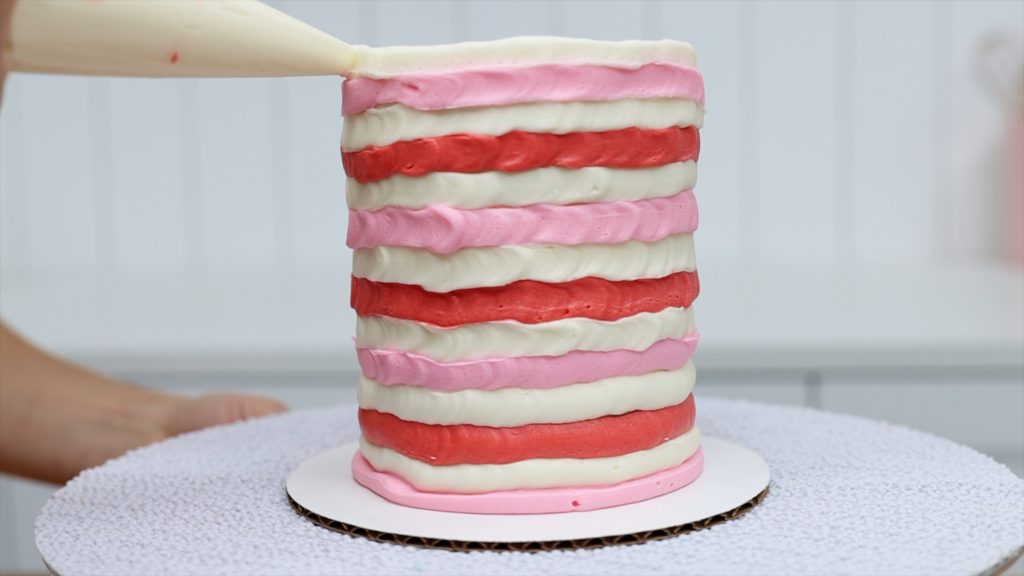
For this first technique all you need are two piping bags, or three if you want three colours. Cut the ends off together so they’re all the same size, however wide you want your stripes to be.
Fill the piping bags with buttercream or whatever frosting you want to use, like whipped cream or meringue buttercream.
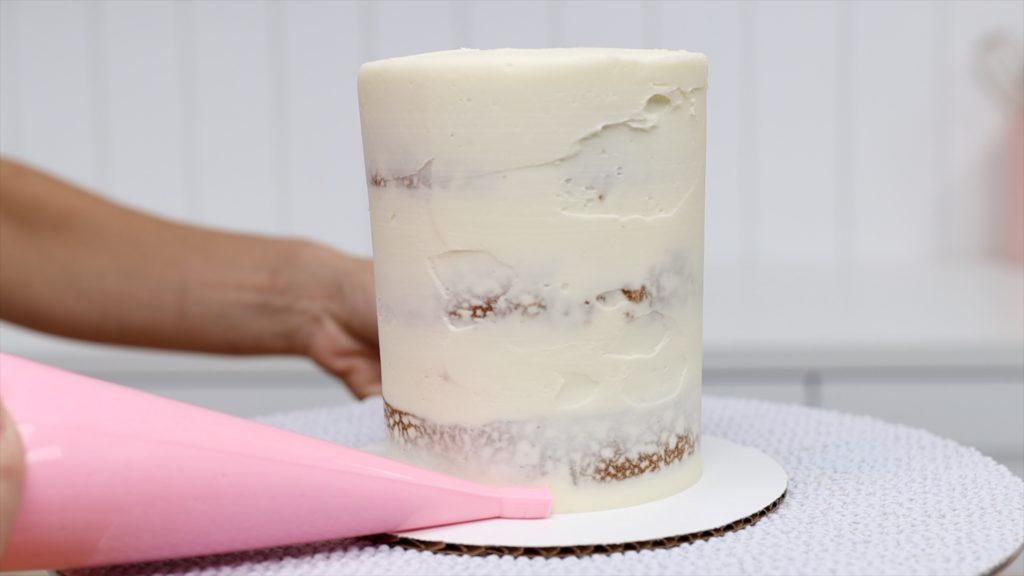
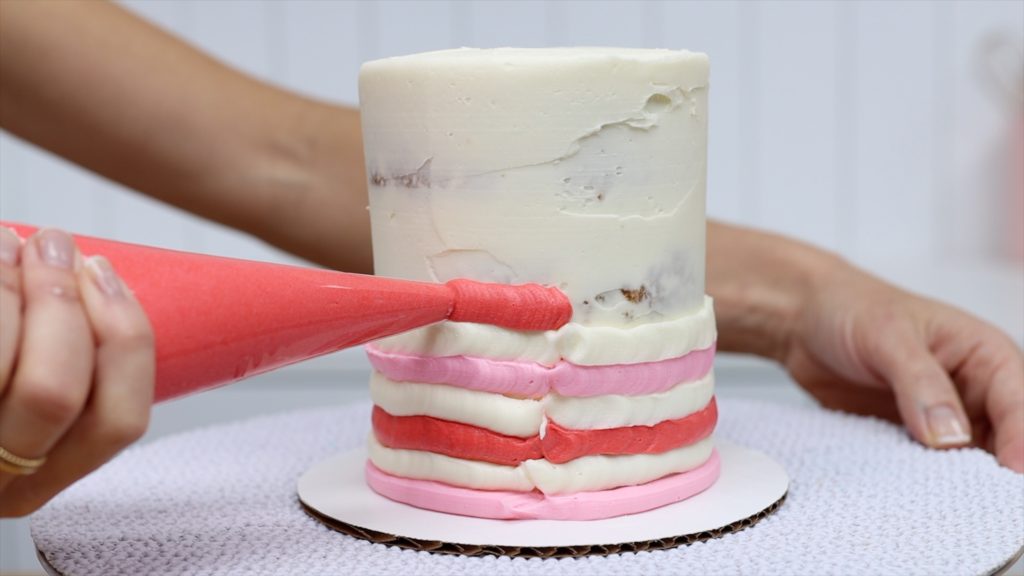
Hold your first bag against the side of the cake, resting down on the cake board, and squeeze the bag to push the frosting out as you spin the cake on the turntable to pipe a strip of frosting all around the cake.
Switch colours and pipe another strip on top, aiming to pipe it so that it’s immediately above the first strip, with no gaps in between.
Continue alternating colours and the final colour should go up above the top edge of the cake, and that will prevent indents or air pockets and also give your cake a flat top instead of a domed top.
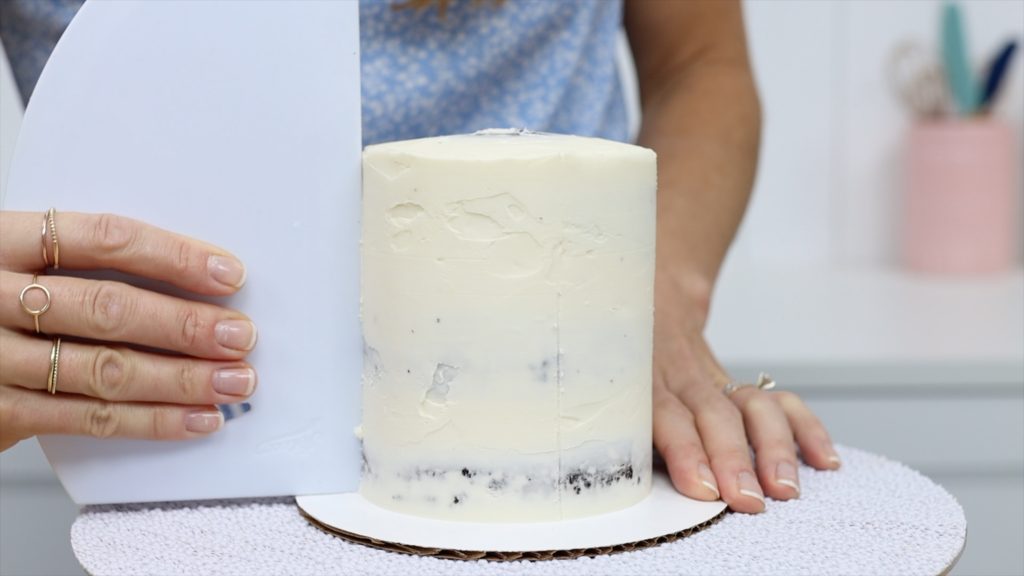
Use a cake comb to smooth the frosting and as you scrape around the cake again and again, your stripes will get neater and neater and neater!
#2 Stencil stripes
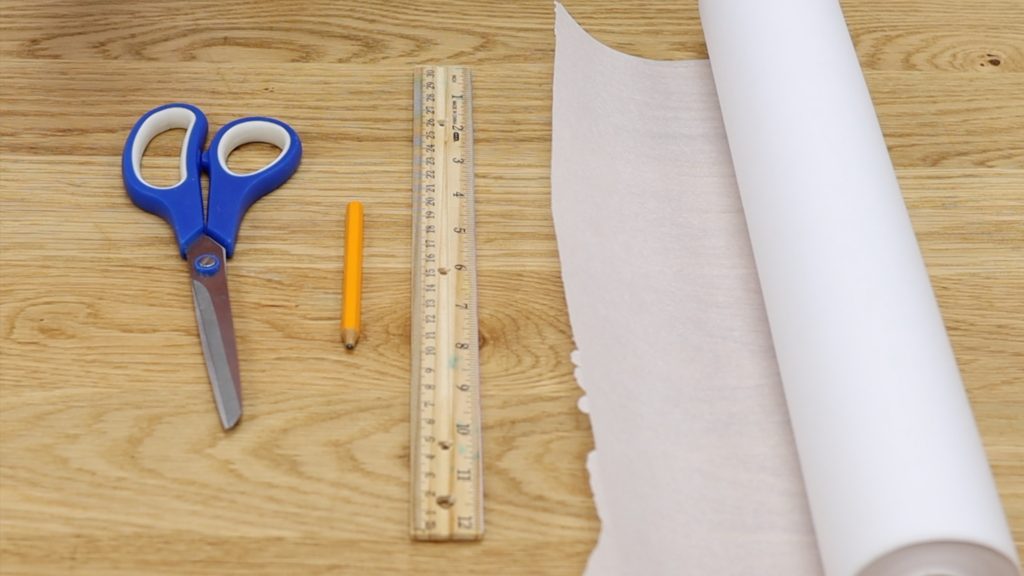
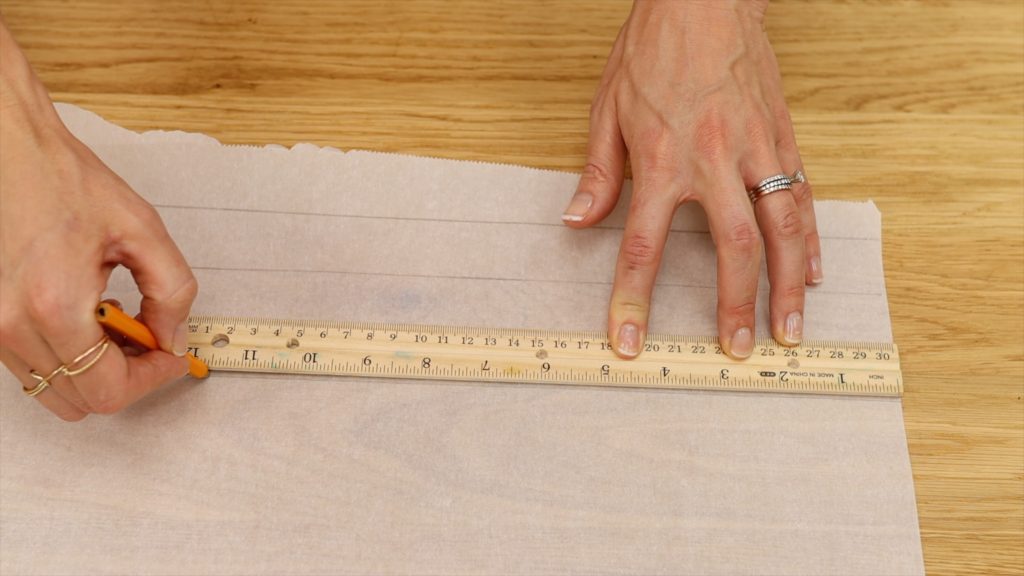
If piping and smoothing stripes makes you nervous, this next technique will give you a lot more control over your stripes. You can make your own striped stencil with parchment paper, a ruler, pencil, and scissors.
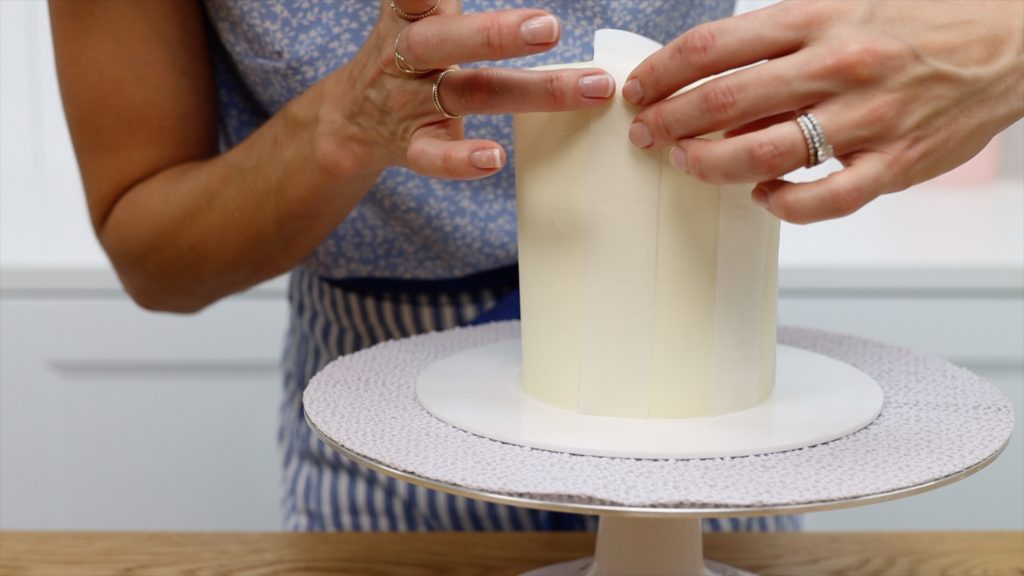
After you frost your cake, put it in the fridge for at least an hour. Cut your parchment into strips, and I’m using the width of a ruler to draw my lines and cut pieces of equal widths. Glide your scissors along or cut with snipping motions, aiming for smooth straight lines because that will give you smooth straight stripes on your cake!
Now make your “paint”, thinning out buttercream with milk to make it more of a paintable consistency. It might look slightly curdled after adding more milk than normal, but it will still work perfectly for this!
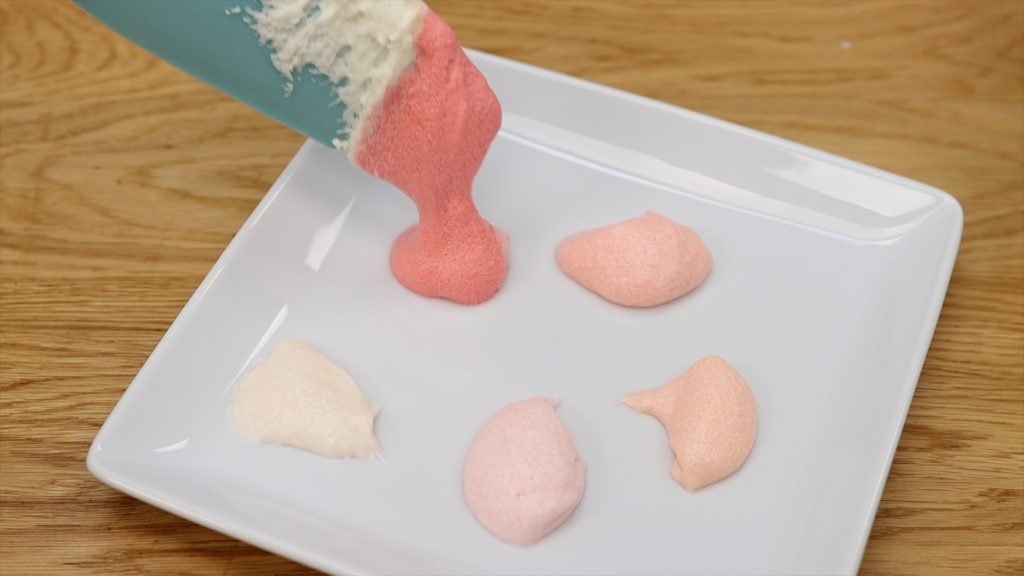
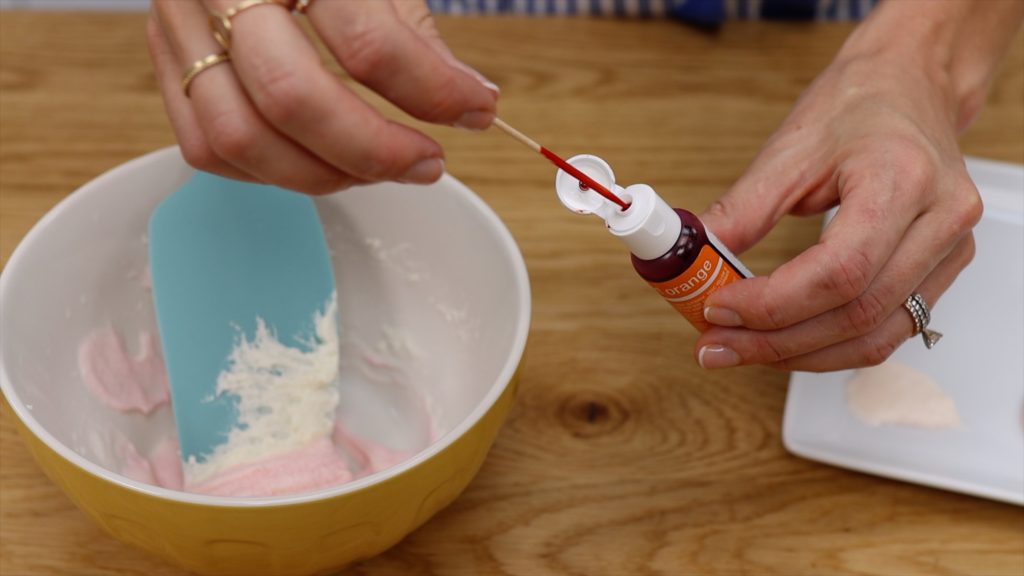
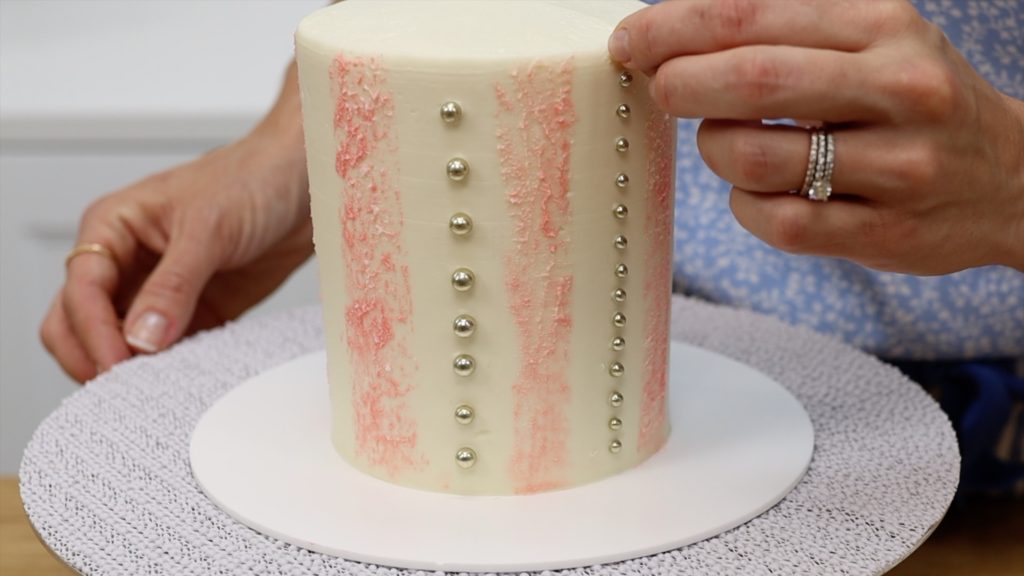
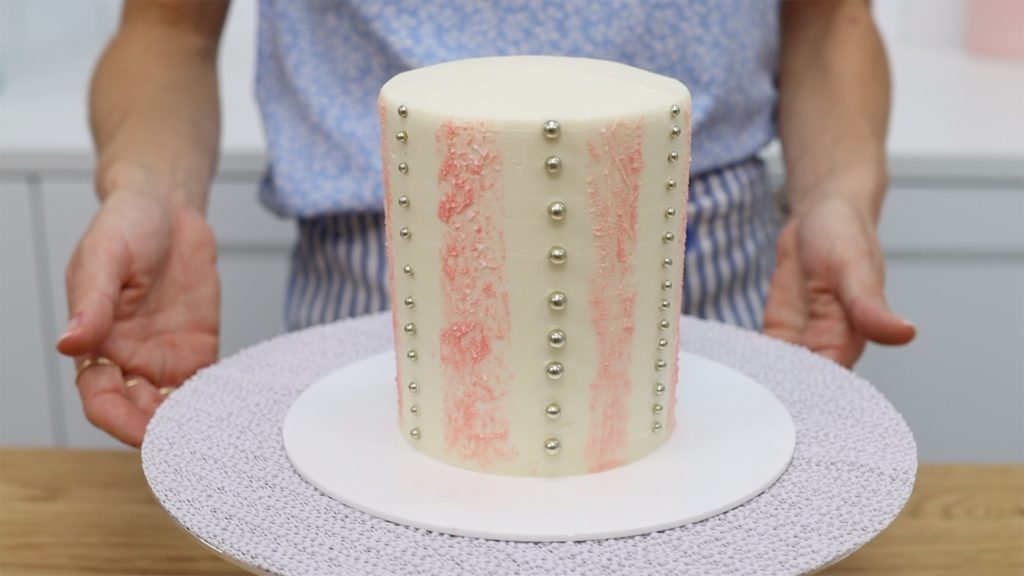
You only need a tiny amount of buttercream for this and a teeny tiny bit of gel, so instead of squeezing out a drop you can dip a toothpick into the bottle and drag that through the buttercream to tint it. You can use just one color or several, to make different colours of stripes going around the cake or to blend the colours within each stripe, which I’ll show you in a minutes. I’m mixing pink with orange and red to make shades of pink, peach, and coral.
When your cake is cold, take it out of the fridge and press the parchment strips onto the frosting. Since it’s cold, it will be firm and the parchment won’t damage the frosting, and the pressure from your fingers won’t leave indents in the frosting. The frosting will have set, so it won’t be sticky anymore, but after a few minutes out of the fridge some condensation will start to form on the frosting and that will act as glue to attach the parchment paper. You can poke pins or toothpicks through the parchment into the cake to hold the parchment in place, if you prefer.
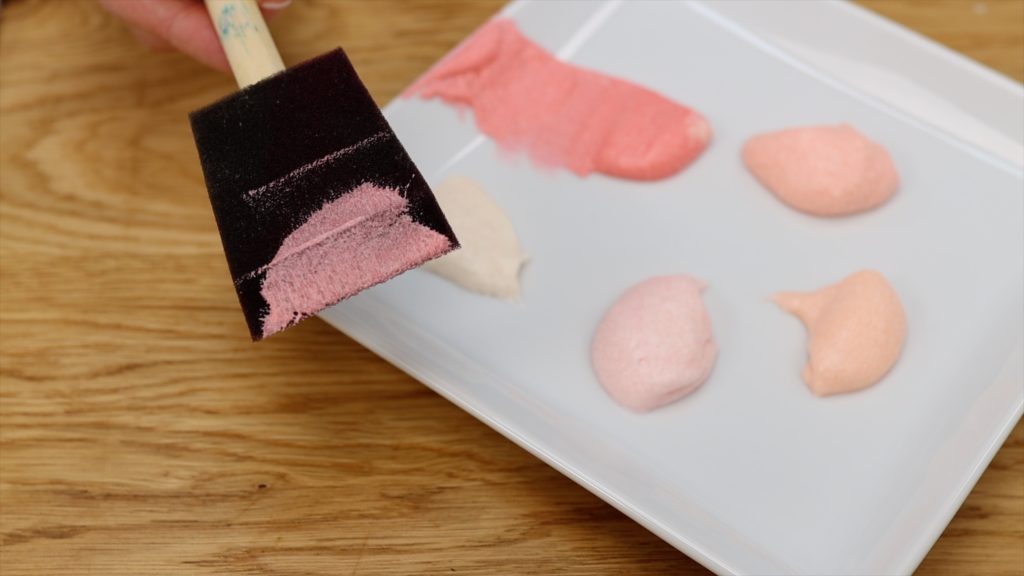
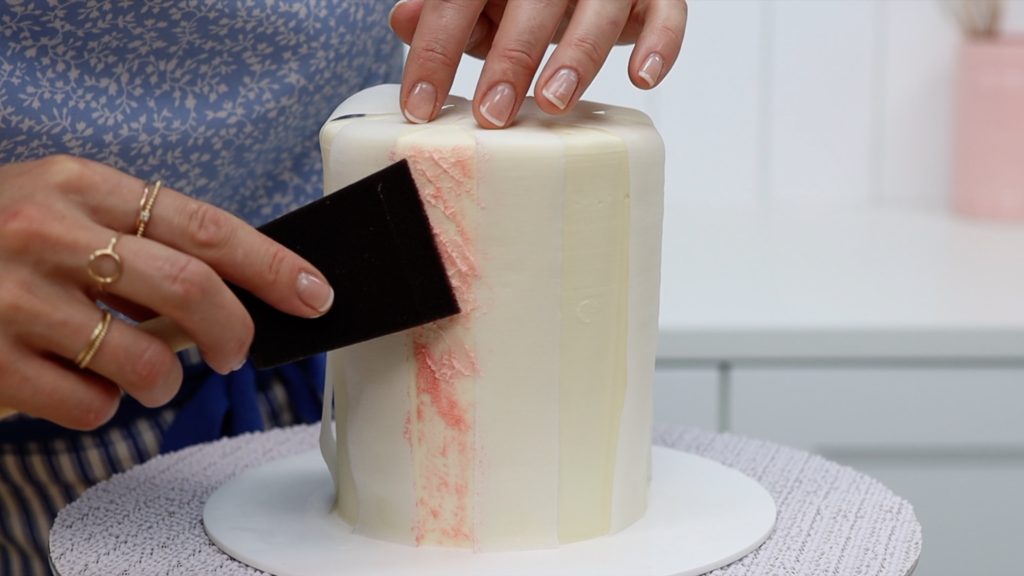
Next, you’ll need a sponge or a paper towel. Dip it into a color and wipe most of the buttercream off so that there’s just a thin layer left.
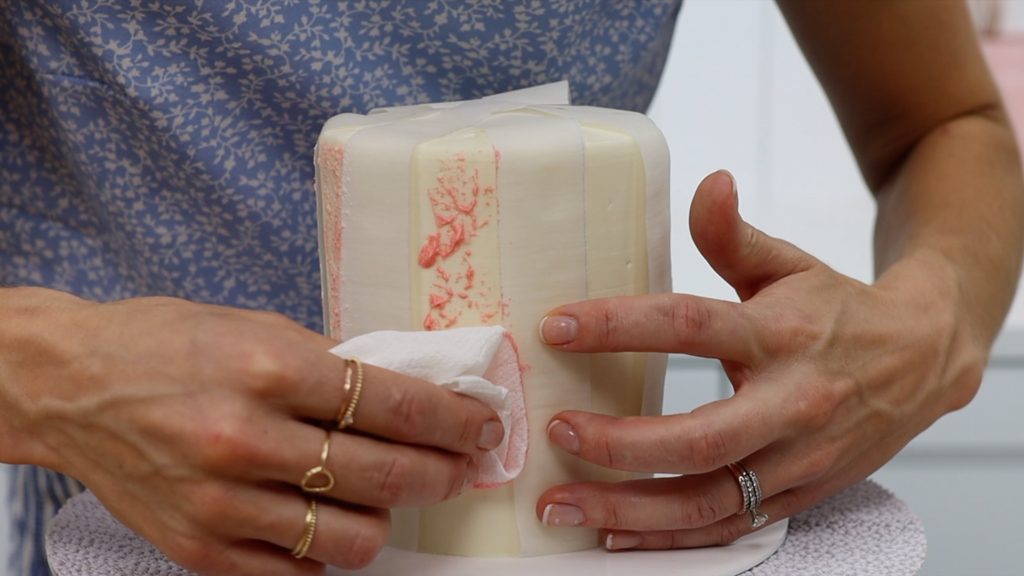
Then dab it against the cake, into one of the gaps between parchment paper strips, holding the parchment strips in place so that the buttercream paint onto covers the stripe of exposed cake. If you have a lot of buttercream on the sponge you’ll leave globs of it on the cake, and you’ll also be more likely to pull the parchment strips away with your sponge. Using just a small amount of buttercream on your sponge means you’ll transfer color to the cake without leaving dramatically raised texture behind.
Instead of a sponge you can use a paper towel, scrunching it up and dipping it into colored buttercream and then wiping most of the buttercream off before dabbing the paper towel against the cake.
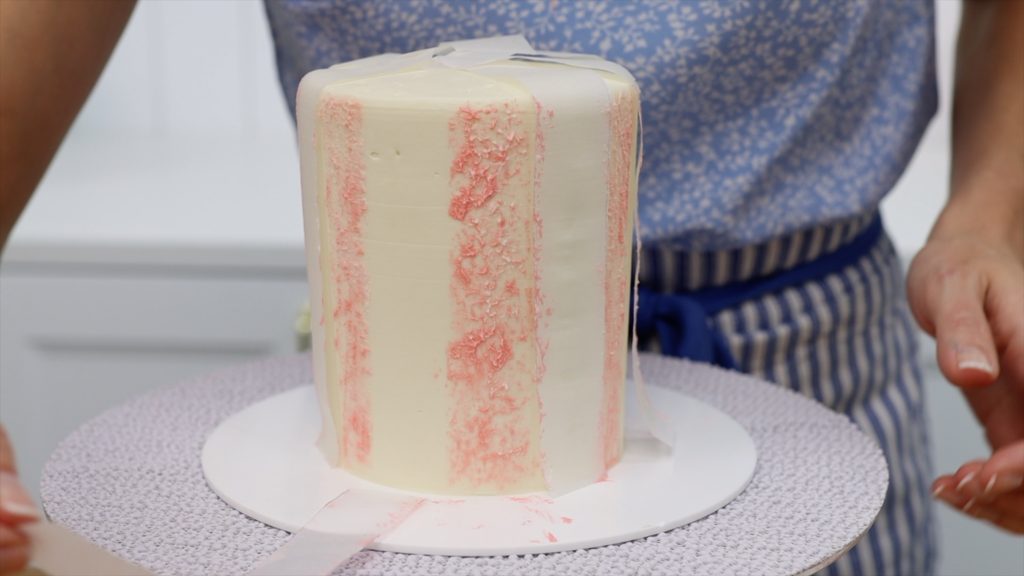
Dip and dab, dip and dab, alternating colours between stripes or within each stripe, to blend the colours together. I’m using pink and peach and coral, which are all quite similar and when I mixed the colours I started with the same pink base for all of them so I know they’ll blend together nicely.
When you’ve covered up all of the gaps between the strips of parchment paper, peel the parchment off and voila! You’ll leave neat stripes behind with colorful texture.
#3 Sprinkle stripes
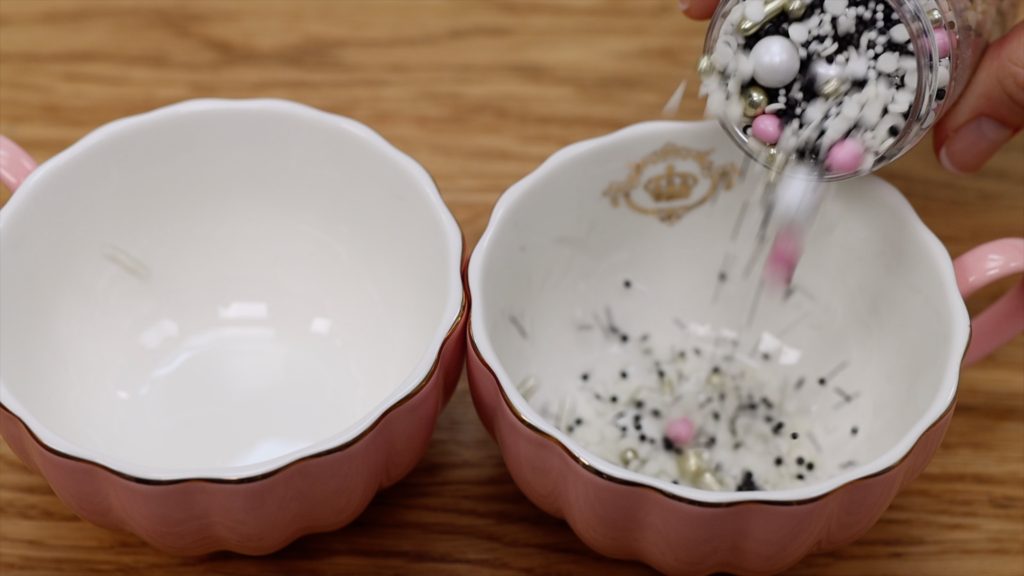
Use sprinkles to create stripes by pouring a sprinkle mix into a bowl or cup and taking out only the sprinkles you want to use. Tiny sprinkles will take you forever, and huge sprinkles will bulge out of the cake so medium-sized are best for this.
Now press the sprinkles into the frosting on the cake. I like to do this after the frosting sets because you’ve just frosted a cake, as you push the sprinkles in with just a tiny bit of pressure the sprinkles will sink straight into the frosting and can easily get buried in it, but after the frosting has set you have to push quite firmly to attach the sprinkles and that means the sprinkles will sit visibly on the outside of the frosting.
This is really easy because you don’t need any tools at all, and I love the texture that the sprinkles add to the cake.
#4 Ruffle stripes
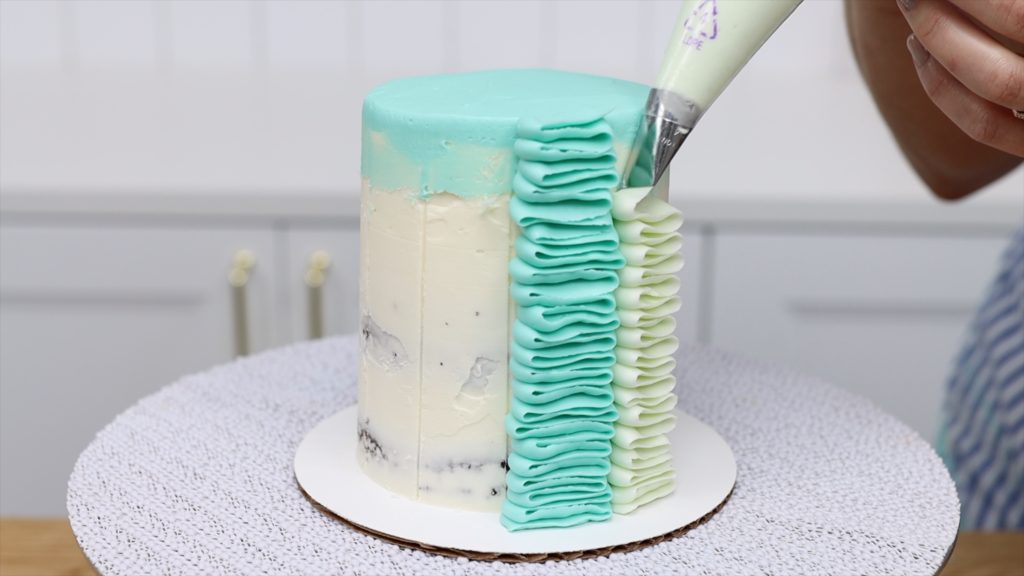
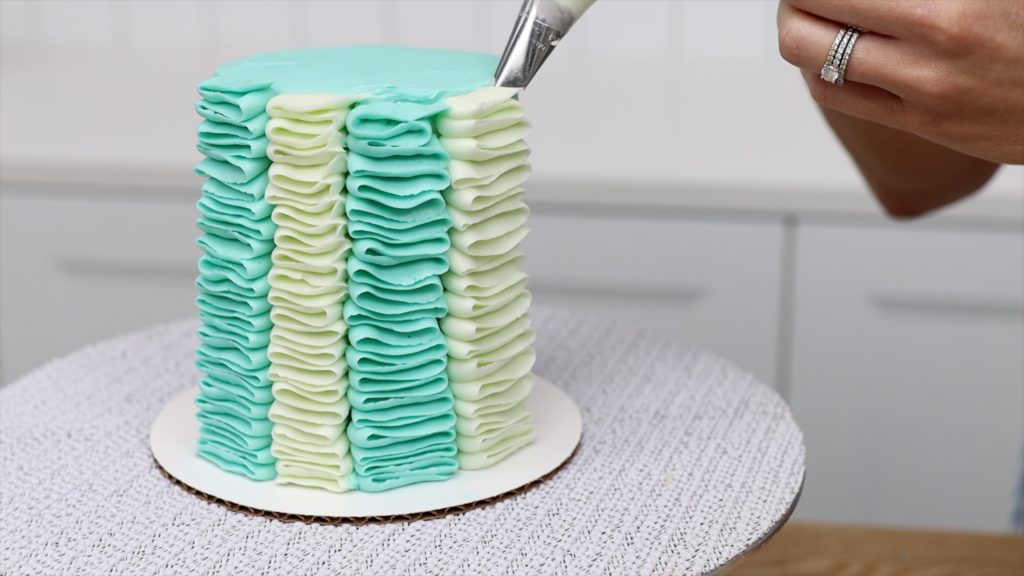
To create ruffles stripes you’ll need two petal piping tips so that you can pipe two colours. If you want three colours, you’ll need three tips. Put each piping tip in a piping bag and fill the piping bag with colored buttercream or whatever frosting you’re using, and push the frosting down to the tip of the piping bag.
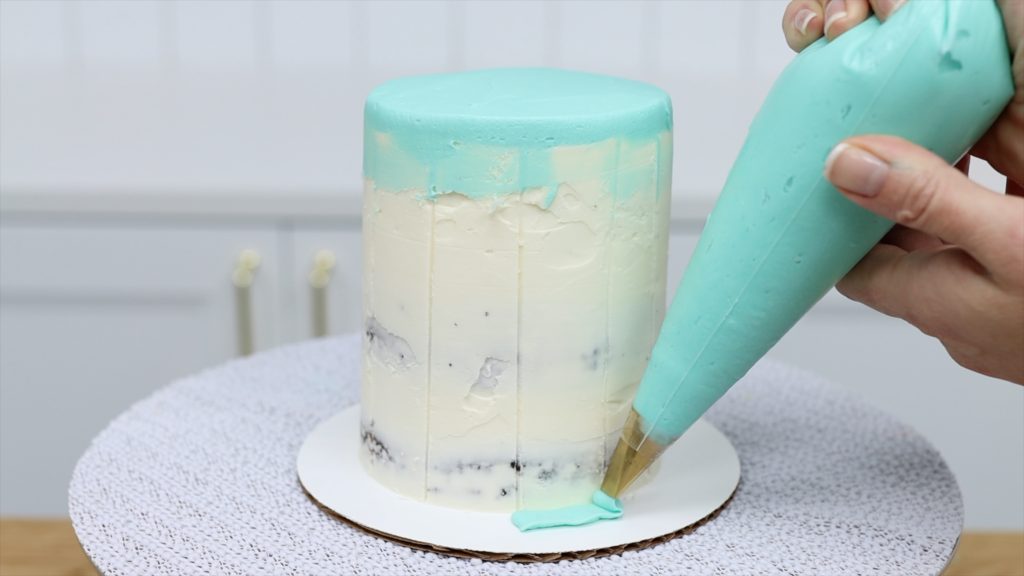
Outline your stripes on your crumb coated cake with straight edge of a cake comb, resting down on the cake board to line up straight. I do two lines opposite each other, then divide it into quarters, and then add lines between those dividing lines to make equal width sections as a guide while piping.
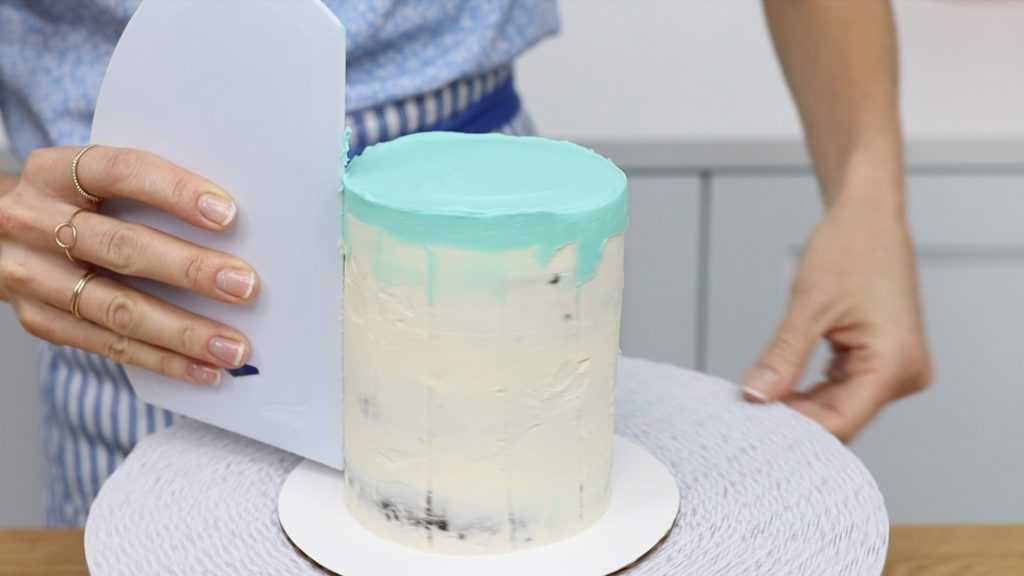
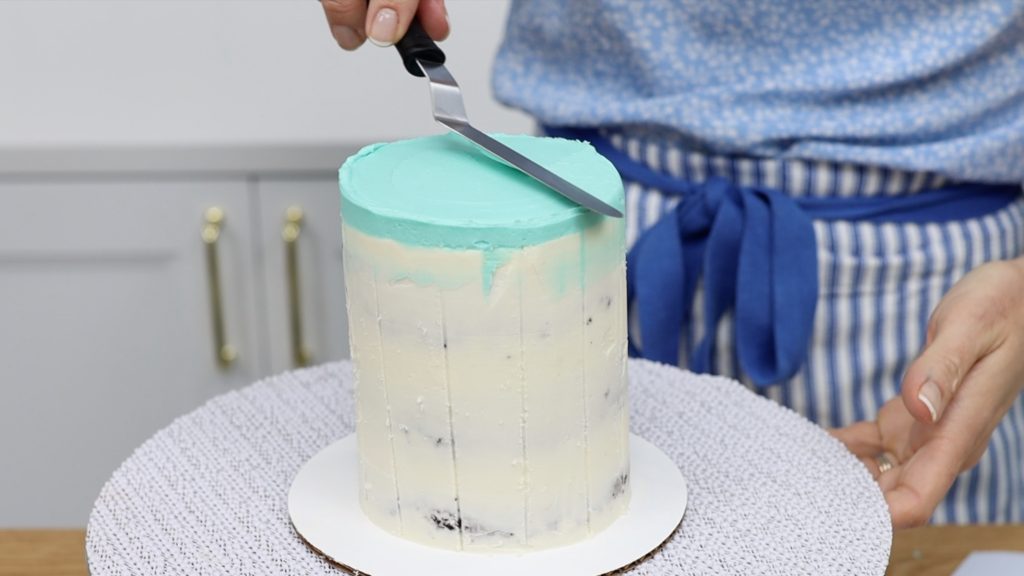
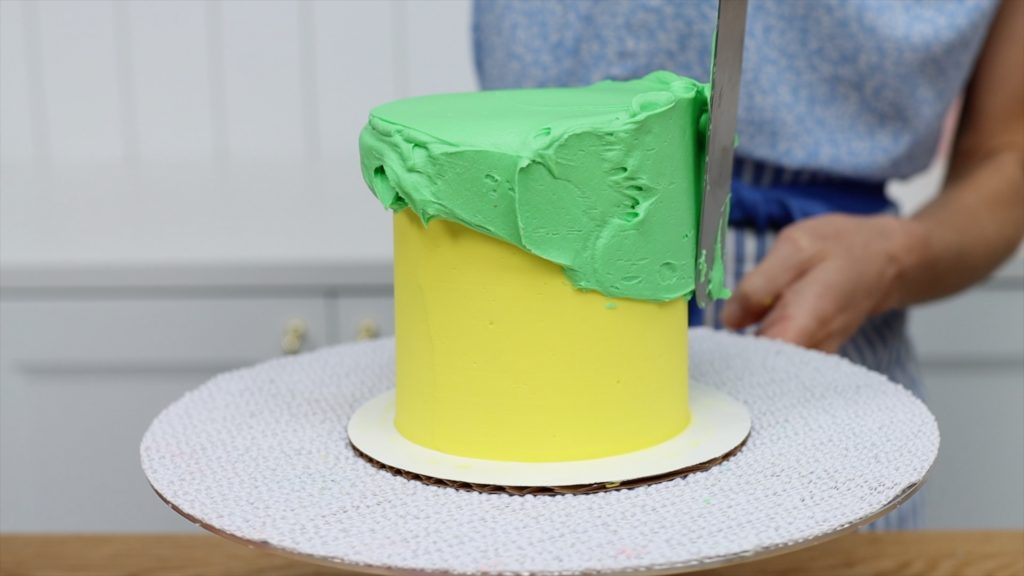
Spread frosting onto the top of the cake and smooth it and then use your cake comb to scrape around the cake to take off the frosting that’s sticking out over the sides of the cake, so that the sides of the cake are straight.
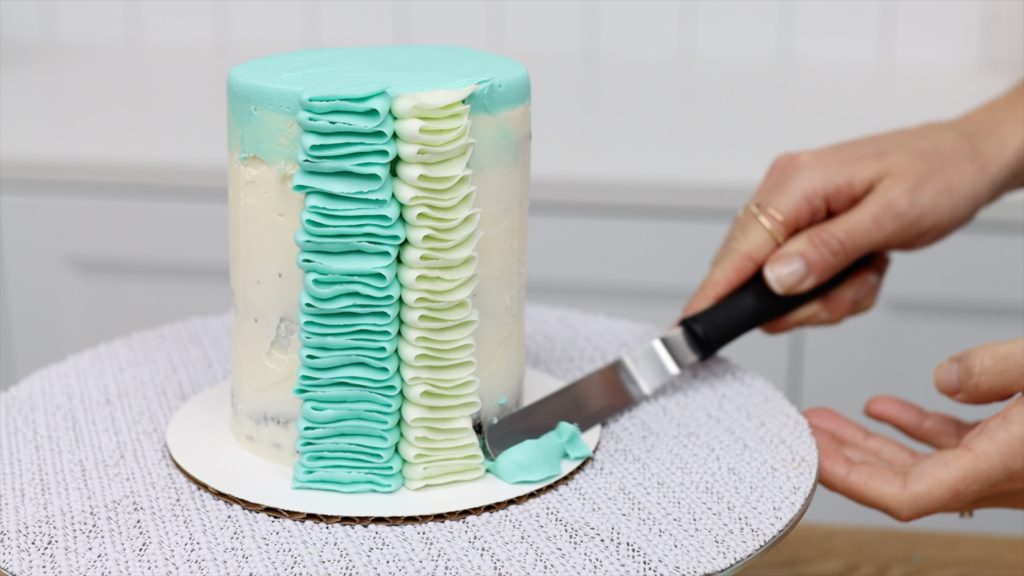
The top of the cake is going to be visible even after piping the stripes so tidy up the top edge by pushing and offset spatula sideways to take off any buttercream that’s sticking up.
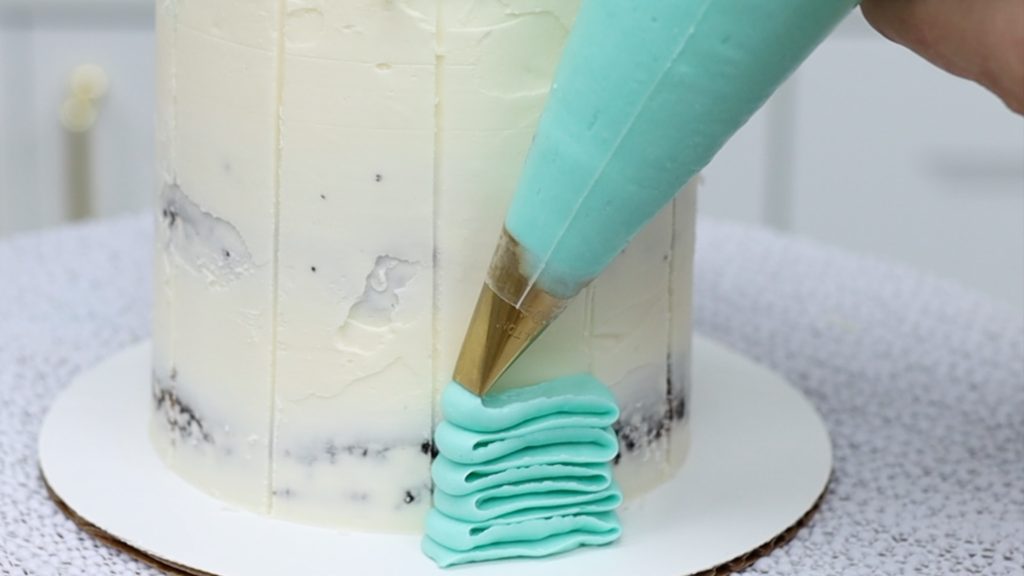
Hold your piping tip facing down, with the wide end of the piping tip pressed against the cake and slowly pull the tip sideways, keeping the wide end touching the cake so that the buttercream attaches to the cake.
Move the bag from side to side as you gradually lift it up the side of the cake, using those lines you indented in the crumb coat to keep the ruffles directly over each other, and that will make your ruffle stripes straight and even.
Switch piping bags to the next colour and repeat the process beside the first stripe, going right up to the edges of those first ruffles and up to the next line you indented on the other side.
If the crumb coat has set before you do this it’s easiest because if you make a mistake you can scrape it off the cake without damaging the crumb coat frosting on the cake. I chill my cakes for about an hour rim the fridge after crumb coating but before applying the final coat of frosting, and that’s why.
Continue all the way around the cake and at the top of each ruffle, finish it off in the same direction, so for this cake I’m piping towards the right and then swiping away so that all of the ruffles match. When you finish the cake you’ll have ruffled stripes that add both colour and texture to the cake!
#5 Carved stripes
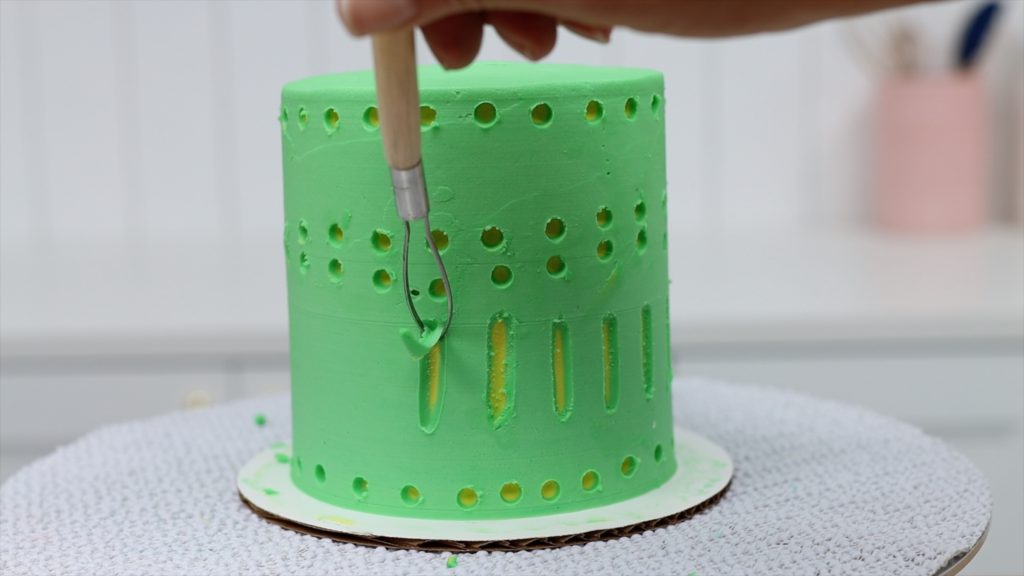
Carving striped patterns is fun and unique and everyone will ask how you did it! After frosting your cake, chill it in the freezer for 15 minutes before spreading another colour of frosting on top, and smooth that too.
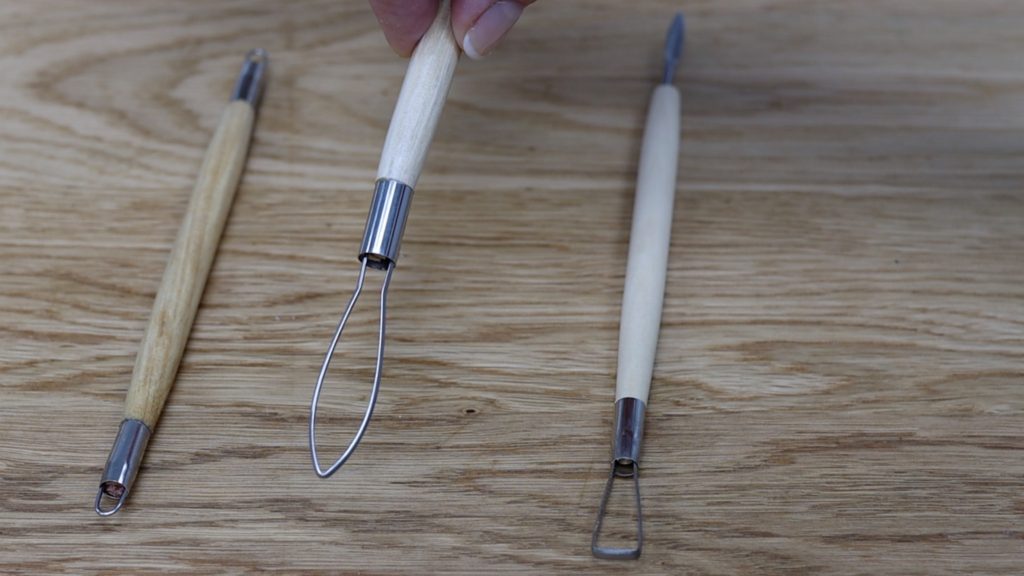
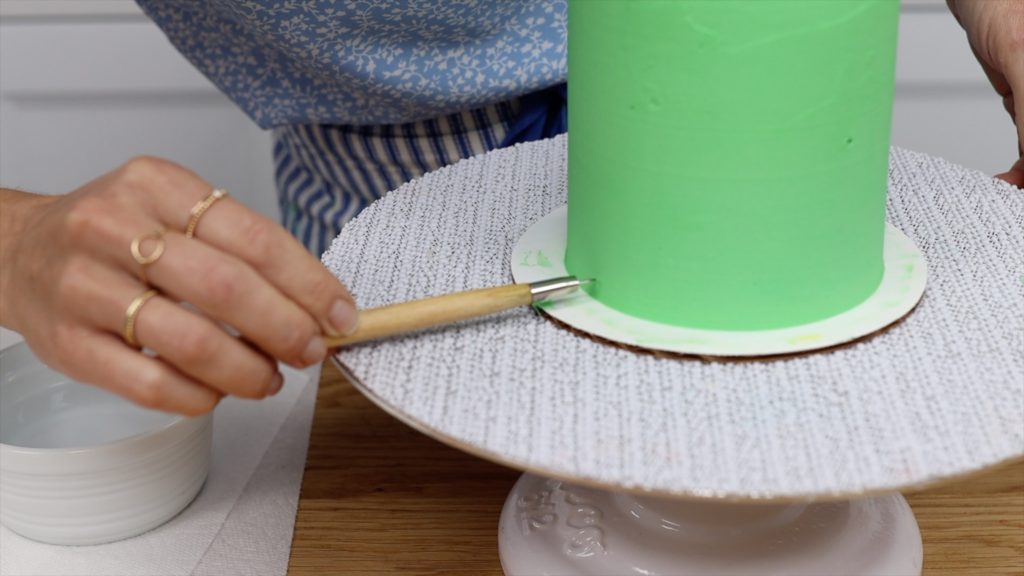
Freeze for another 15 minutes and then use clay modeling tools to carve the frosting. You can buy these here and my favourites are the one on the left for small dots, the one on the right for large dots, and this one in the middle for lines.
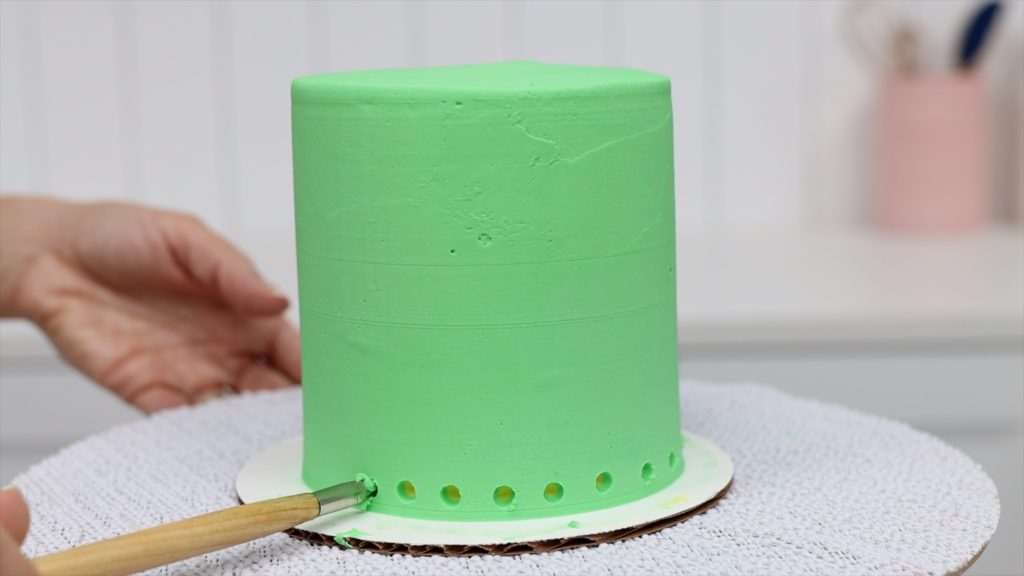
Dip your tool into hot water, tap the water off to leave the tool dry but warm. Then twist it into the frosting to scoop out a circle to make a dot.
As soon as you seen the colour underneath coming off onto your tool, you know you’ve gone through the top layer of frosting so the dot will be the colour of the frosting underneath.
This is a quick and also satisfying and therapeutic way to create stripes! I love watching the carving come to life. I teach an online course on buttercream carving covering how to choose your tools and how to use them to create shapes, textures, designs, and more – click here to sign up with 25% off!
I hope you’ve seen a stripe hack that you’d like to try. If you want to use a striped cake comb instead, I have a very detailed tutorial on 4 Secrets for Perfect Stripes.
Check out my online cake school for LOTS of courses on hundreds of cake designs and techniques. Join my ClubPLUS for access to them all!
Here’s the video version of this tutorial:
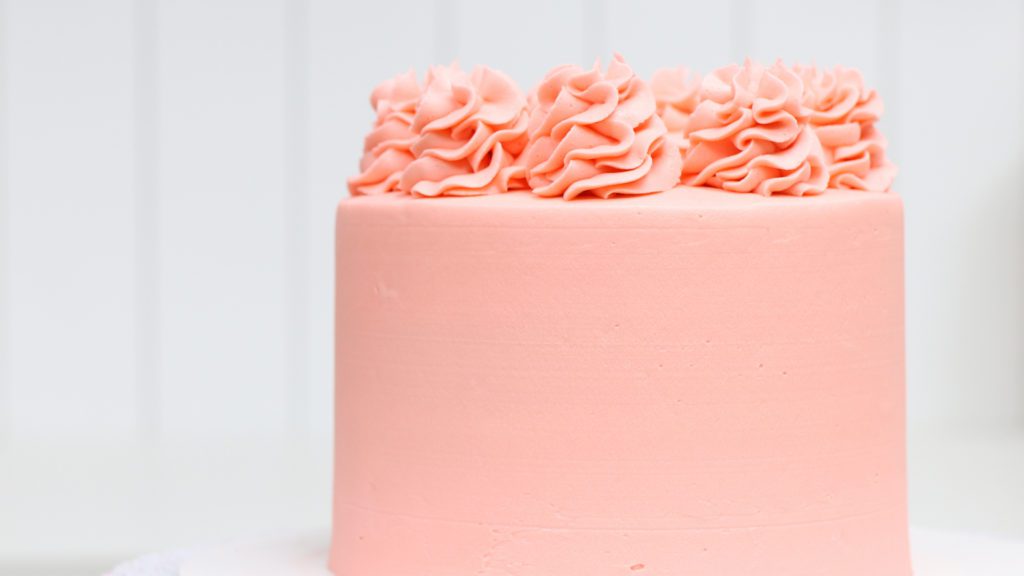
Let’s decorate a cake in 5 Minutes! This technique creates gorgeous texture with just a piping bag and a piping tip.
If you prefer to watch a video of this tutorial, scroll to the bottom of the page.
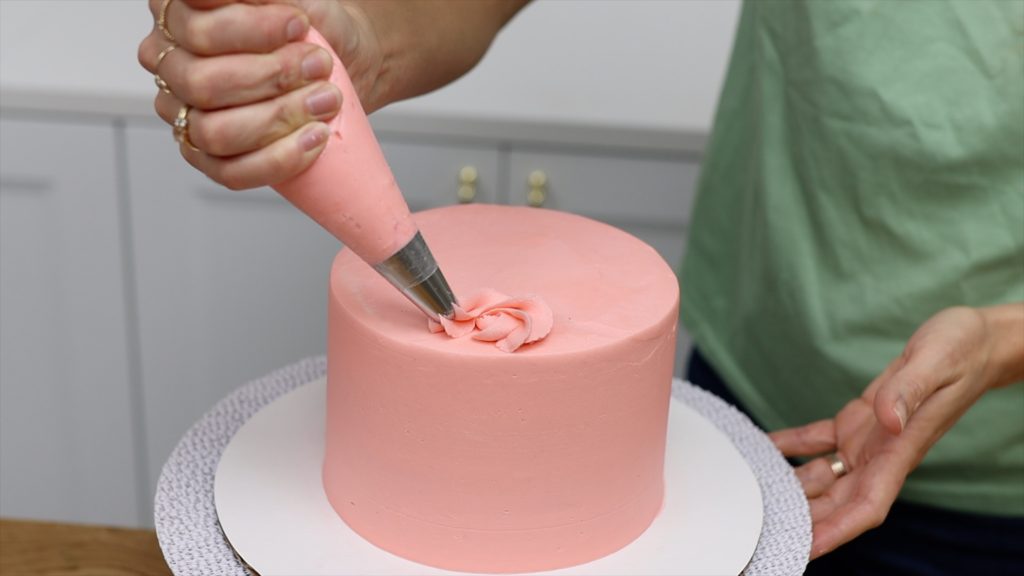
All you need is a piping bag and a petal piping tip, which is one of these with a narrow end and a wide end. This is a #104 by Wilton and it’s perfect for my little four inch cake but for larger cakes you can choose a larger petal tip, for example a #125.
To fill your bag with buttercream I like to drop the bag with the piping tip down into a glass and fold the top over the rim of the glass. This way, your hands will stay clean when you grip the piping bag later.
Spoon some buttercream into the piping bag. I’m using my 4 Minute Buttercream. You really don’t need much for this technique so don’t fill the bag more than half full.
Unfold the bag to lift it out of the glass and twist the end of the bag to push the buttercream down into the tip of the bag and to apply pressure to it while you’re piping. You’ll notice that there’s a wide and narrow end of the tip and that’s important for the next step.
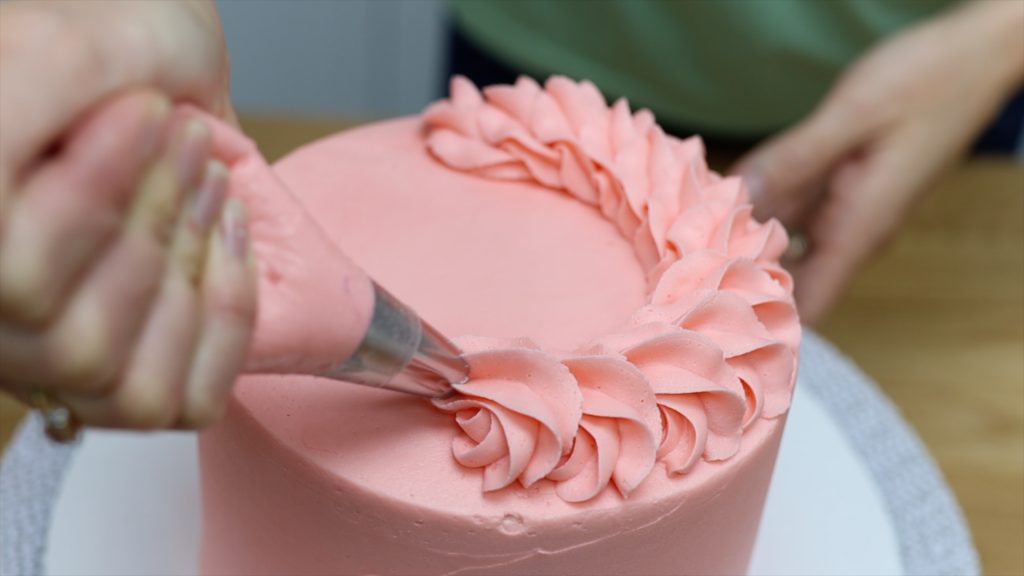
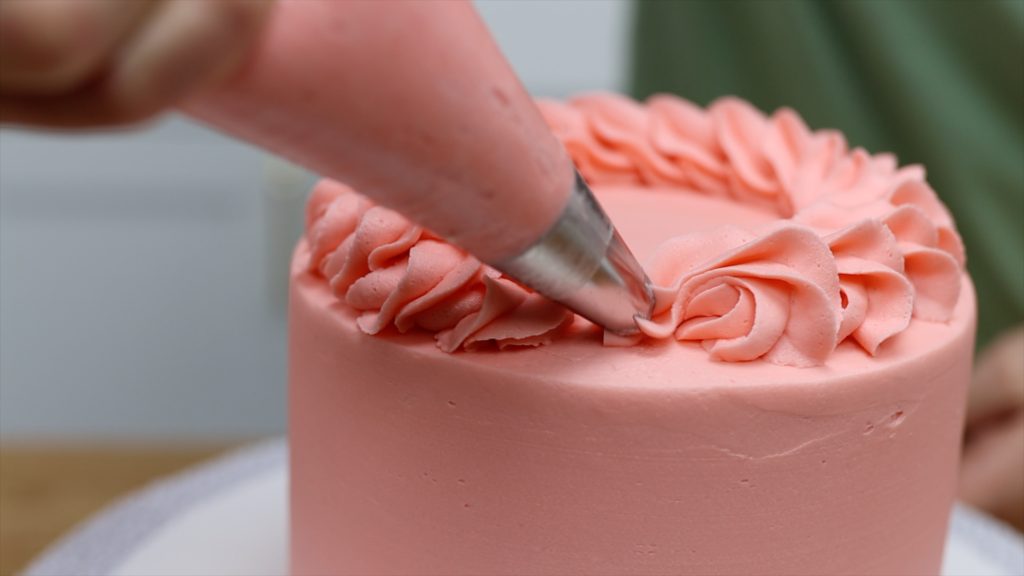
The rest piping tip down on the cake board with the wide end pressed against the side of the cake and the narrow end sticking out slightly. Squeeze the piping bag and slowly pull the bag up the side of the cake to pipe a ruffle.
When you get to the top of the cake, release your pressure on the bag as you swipe it away and that will leave a neat end to the top of the ruffle. Pipe another ruffle beside the first ruffle so that it overlaps the first ruffle, covering up the base of the ruffle, which is the edge that came through the wide part of the piping tip.
You can pipe the ruffles straight up the side of the cake or at a diagonal, which is what I’m doing here. The more slowly you move the bag upwards, the more ruffly the piping will be.
You can exaggerate the ruffles even more by wiggling your wrist slightly as you pipe, to create more movement in the ruffles. I like to chill the cake in the fridge for an hour before piping onto it so that the frosting on the cake has set, which means you can drag the piping tip along the frosting without damaging it. By pressing the tip against the frosting, your ruffles will be securely attached to the frosting and that will make them more stable.
I love this technique because the only thing you have to remember is to keep the wide end of the piping tip pressed against the cake, because it’s the narrow end that creates the ruffles so you want that end to be sticking out. But other than that, you can move the bag as fast or slow as you like to make the ruffles as smooth or wiggly as you like, and you really can’t go wrong with this.
If you’ve enjoyed this tutorial you’ll LOVE my classes, where I teach unique cake designs broken down into four manageable steps in less than 20 minutes of video modules. Join my ClubPLUS for access to every class and course on my online cake school!
Here’s the video version of this tutorial:
If you’re about to make your first cake, there’s a lot to think about! With these 10 tips I hope to make the process easier and more enjoyable.
If you prefer to watch a video of this tutorial, scroll to the bottom of the page.
#1 Divide your batter
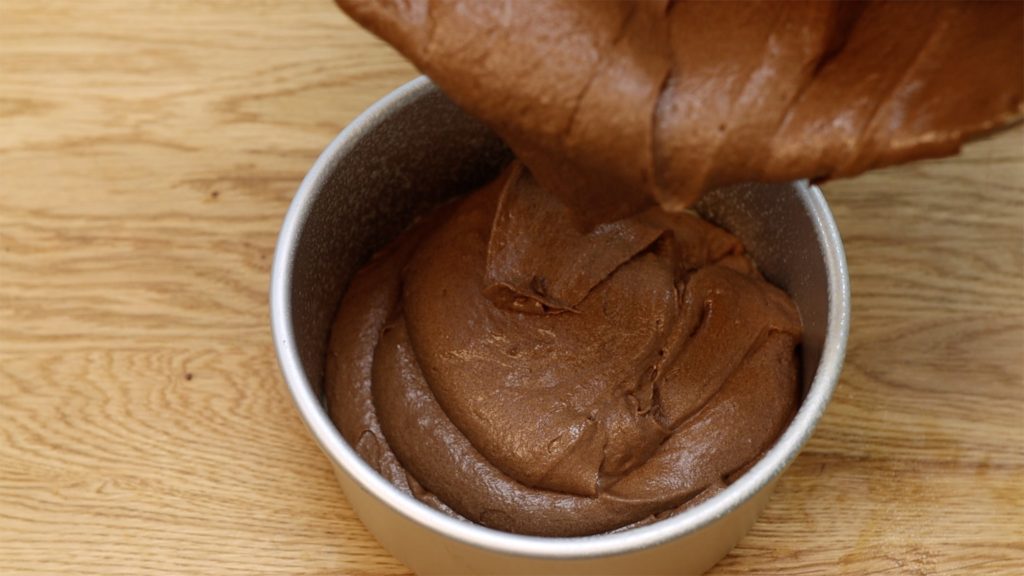
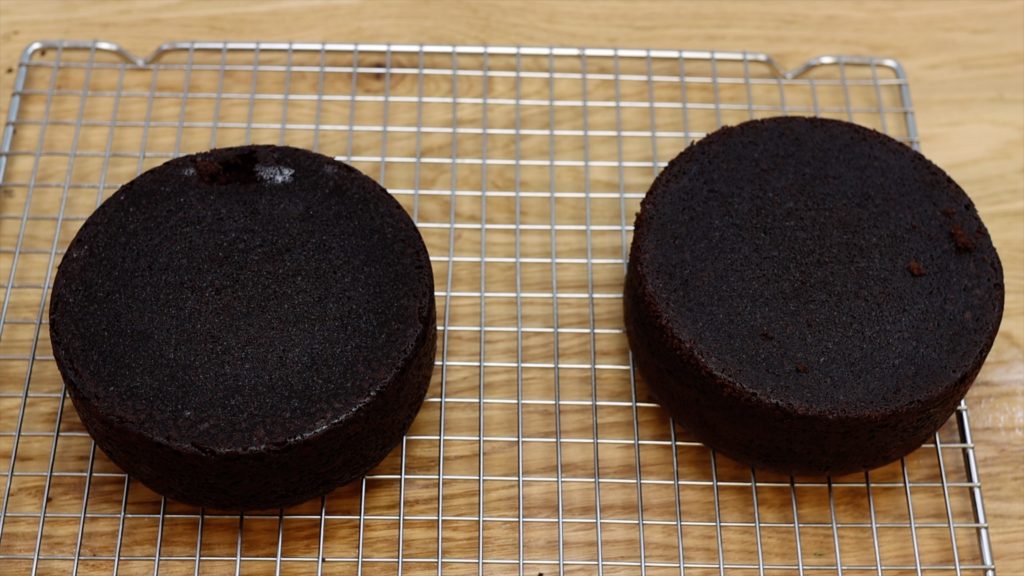
After following whichever recipe you choose, spray your pans with non-stick spray. Only fill your pans half full to leave space for them to rise as they bake. You definitely don't want them to overflow and make a mess on the floor of your oven! This might mean using two or three or four pans. If you only have one or two pans you can bake the cakes one at a time.
#2 Leave to rest
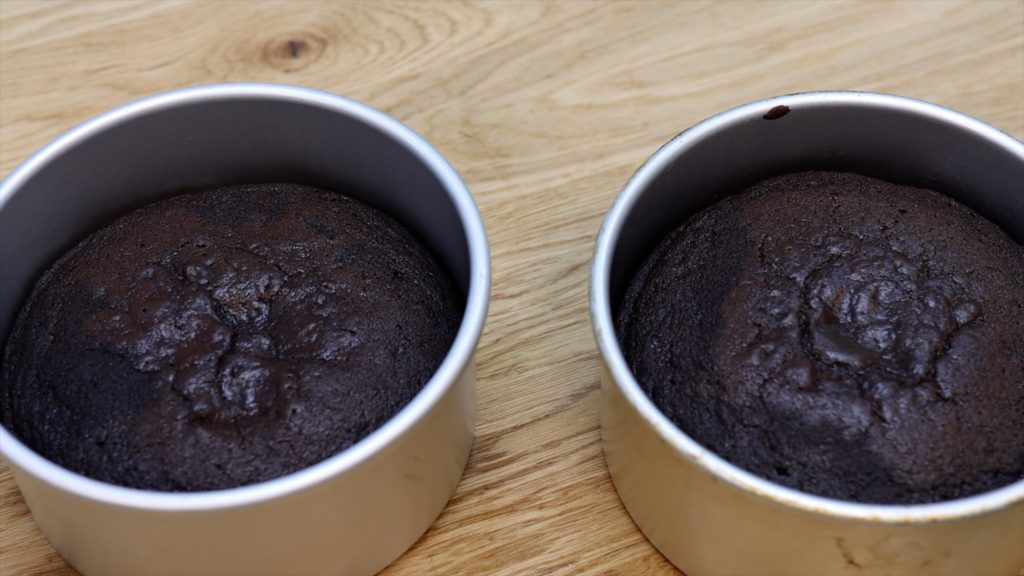
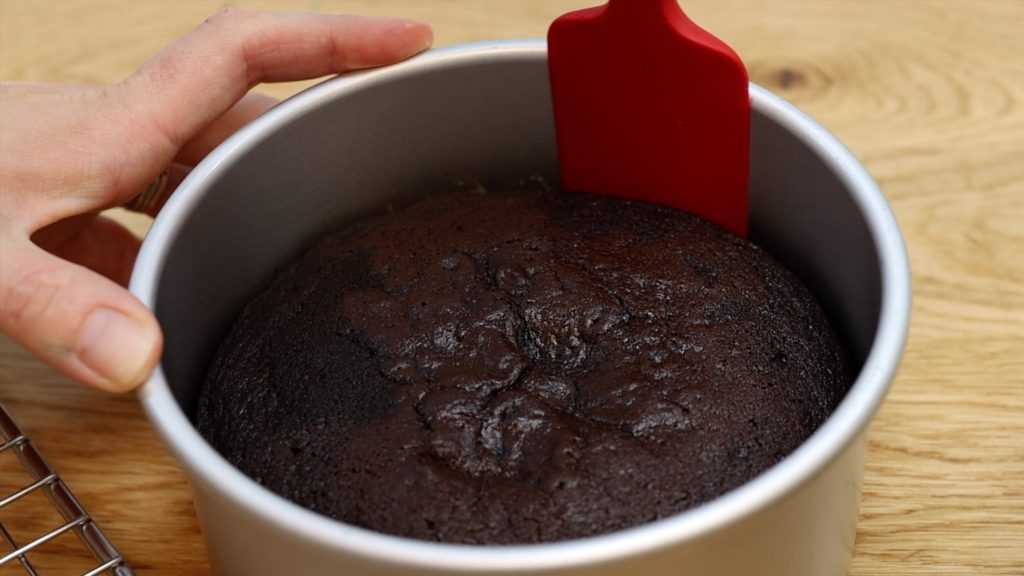
After baking your first cake, leave the pans for ten minutes before you turn the cakes out. Straight out of the oven, the cakes are very fragile but ten minutes gives them a chance to firm up.
You can slide a spatula or knife around the pan to loosen the edges of the cakes. When the pans are just cool enough to touch, flip the pans over onto a cooling rack. The cakes will slide out easily without crumbling or cracking.
#3 Let layers cool
Your cake layers need to cool completely before you use them, which takes an hour or two. Even when they feel cool on the outside, heat is still slowly being released from the middle. That heat can melt buttercream if you try to frost them too soon.
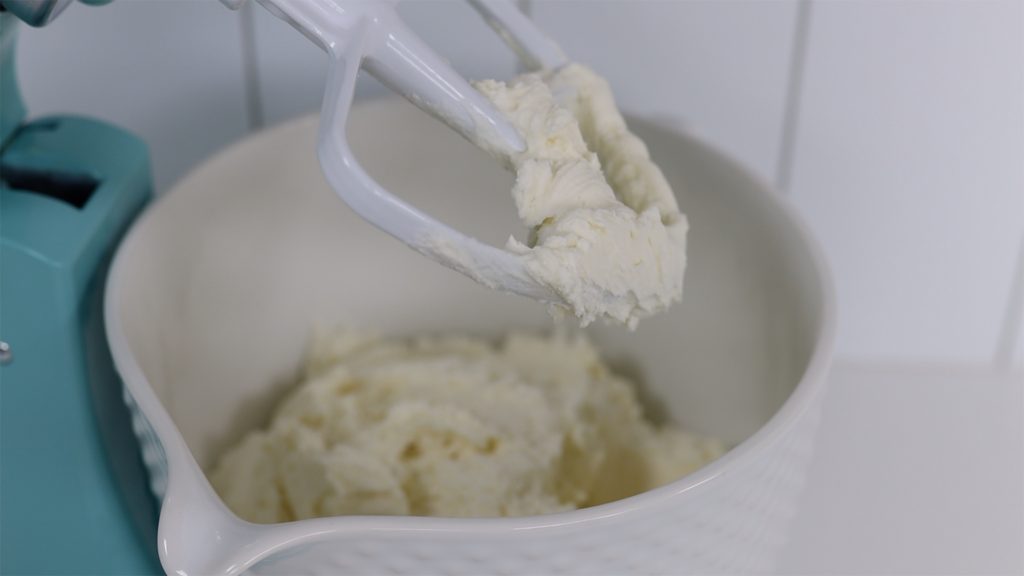
While the cakes are cooling, prepare your filling and frosting. My favourite is my 4 Minute Buttercream, which is easy to make, delicious, stores well, and can take on hundreds of flavours.
#4 Prepare your cake layers
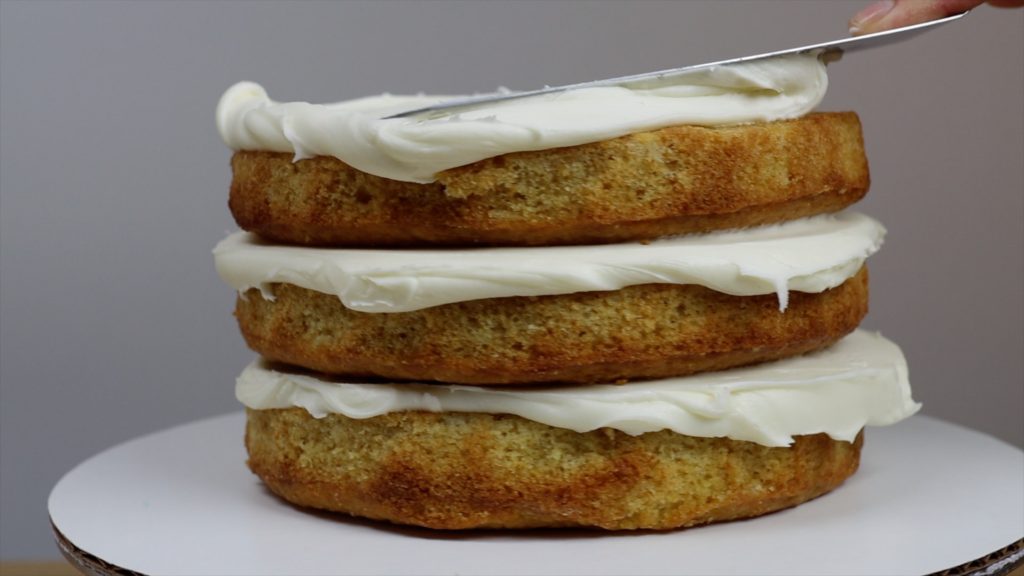
When your layers are cool, it's time to prepare them. This means shaping them by trimming off any domed tops with a serrated bread knife. This will make the cake layers flat so that they stack neatly on top of each other. Uneven \layers can cause cakes to lean to one side so don't skip this step!
If you want to create more layers, cut each layer in half horizontally. Now instead of two layers you’ll have four!
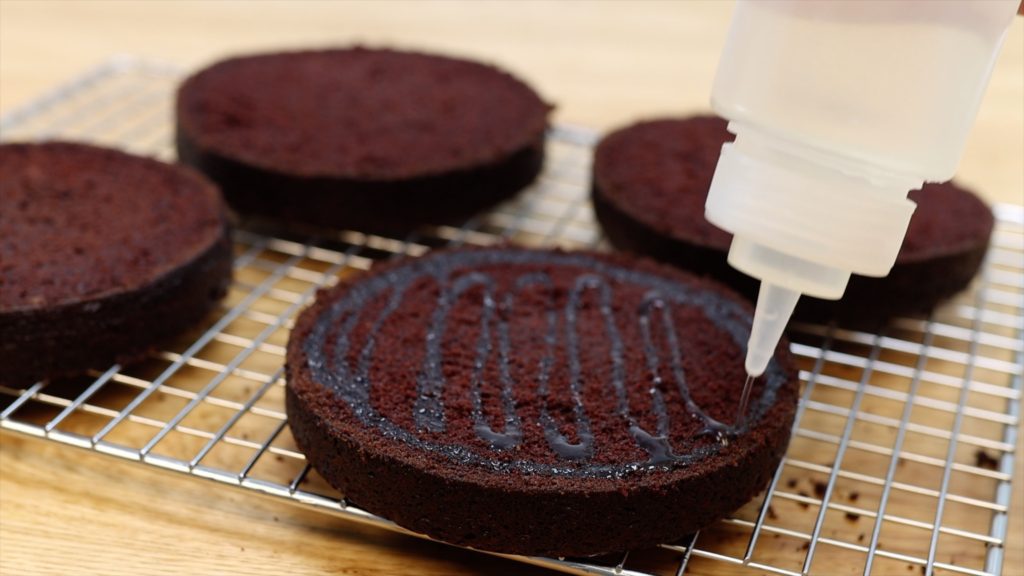
If you like you can drizzle them with simple syrup, which will keep them moist for several days. Simple syrup is made with equal parts of water and sugar, for example half a cup of each. Bring them to a simmer until the sugar dissolves and then let the syrup cool. You can drizzle the syrup with a squeezy bottle or brush it with a pastry brush. Pay special attention to the edges of the cakes, which will dry out fastest so they’re the most important to keep moist.
#5 Choose a cake board
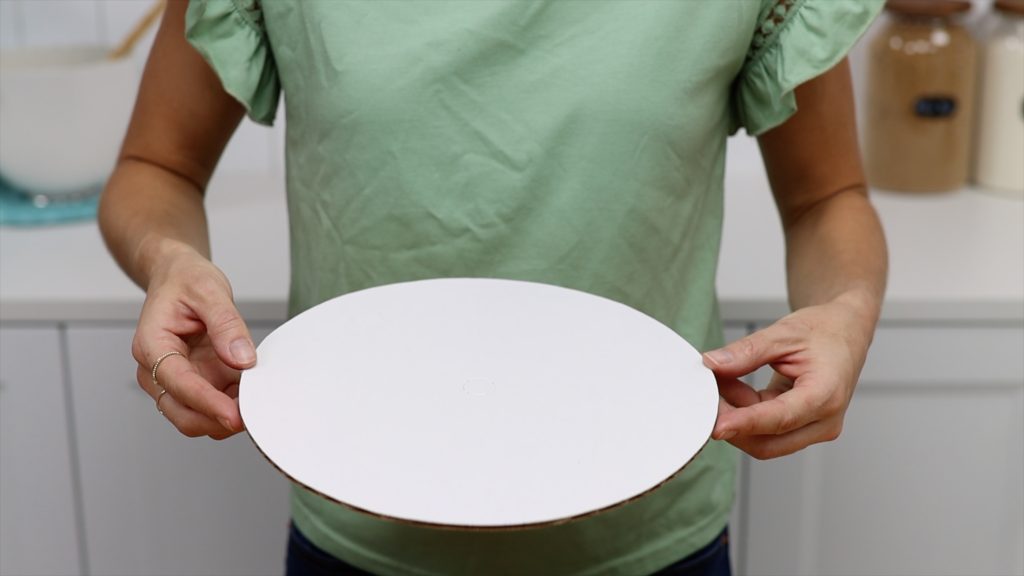
Before assembling your first cake you need to choose a board to assemble it on. This needs to be flat so that you can use a frosting scraper to smooth the frosting all the way down to the bottom of the sides. Choose a board at least two inches bigger than your cake to leave room for frosting and decorations. This extra room will also give you something to grip onto when you lift it up to move it. Find a board with a greaseproof surface so that the butter in the buttercream doesn’t stain it.
#6 Dot and chill
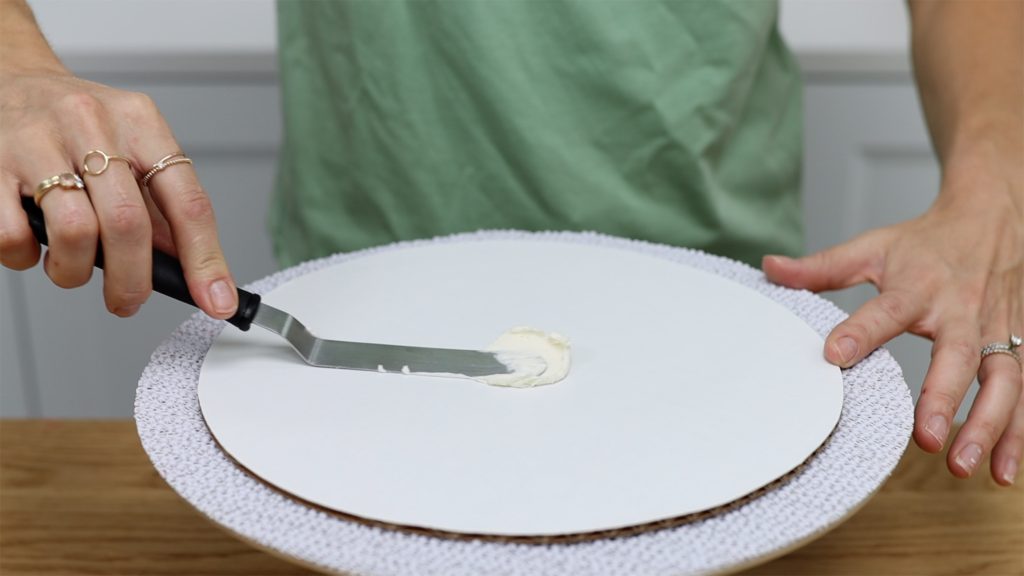
Pipe or spread a dot of buttercream onto the middle of your board and this will act as glue.
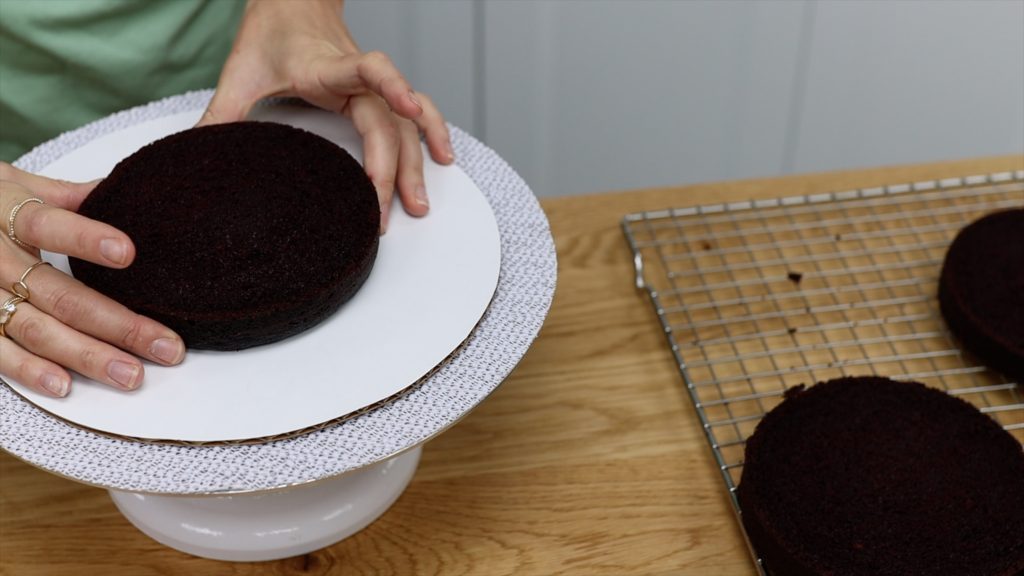
Press your first cake layer down onto the dot and center it on the board. You’ll be able to adjust it now, before the dot of buttercream sets.
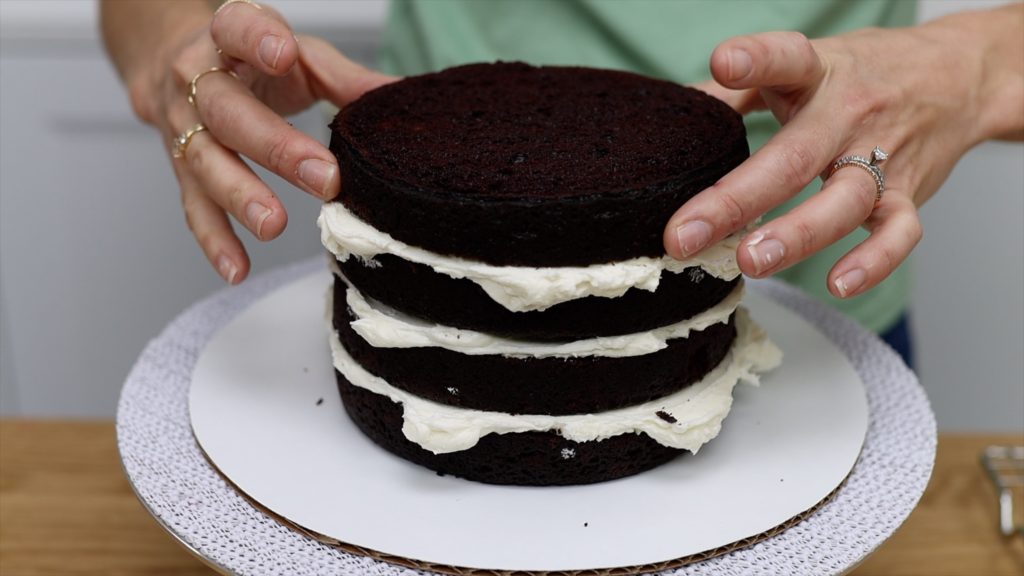
Then spread or pipe your filling. Line up the next layer of cake so that it’s directly on top of the layer below, which will give you straight sides. Continue alternating cake and filling. Then, once it's assembled, don't first it yet! Chill it in the freezer for 30 minutes or in the fridge for an hour. The fridge will set the dot of buttercream on the board and that willhold the cake in place so it doesn’t slide around when you frost it.
#7 Crumb coat (do it!)
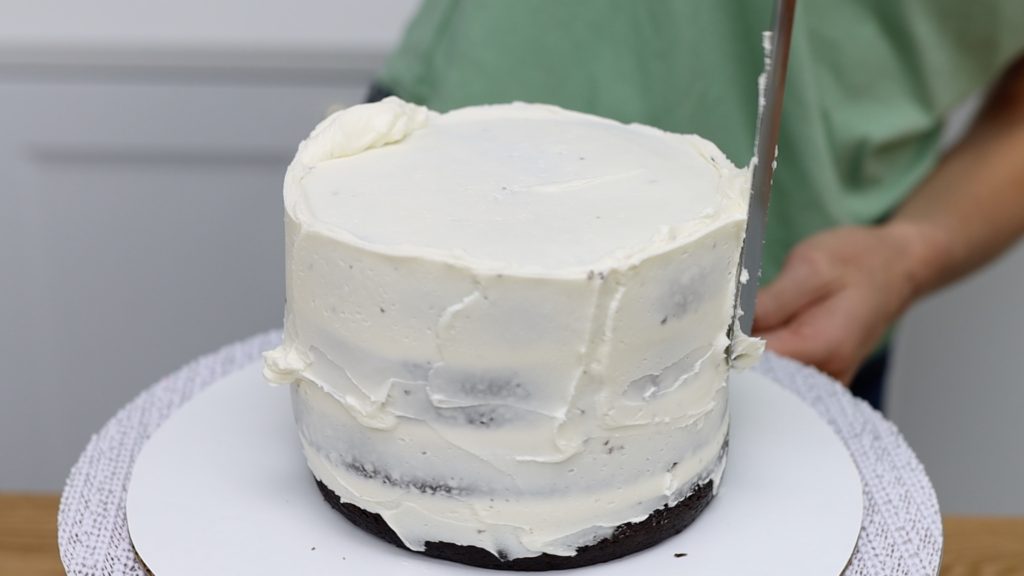
You might have heard of crumb coats and I’ll show you what that is now. Don’t skip the crumb coat on your first cake - or any cake! It’s a very thin layer of frosting that completely covers the cake from the very bottom to the very top. As you can guess from the name, it traps any crumbs that come off while you're frosting.
There won’t be as many crumbs if you chilled your cake after assembling it because cold cakes are firmer and less crumbly than room temperature cakes.
Smooth the frosting with a cake scraper and this is where the next tip comes in:
#8 Use two bowls!
Your batch of buttercream will be in one bowl and you'll need a small empty bowl, too. As you pull your cake scraper away from the cake, scrape that excess buttercream off into the small bowl.
This bowl is essential because the buttercream that you scrape off the cake will have crumbs in it. If you put it into your main bowl of frosting, you'll get those crumbs into the rest of it. Then you’ll use that crumby buttercream for your final coat of frosting, which will have those crumbs in it.
Your crumb coat doesn’t have to be perfect because it’s going to be covered up next.
#9 The final coat
Frosting your first cake can be a struggle so I hope this section will be useful! For the final coat I have several tips so I’ll combine them all into this ninth tip:
Use a lot of buttercream to create straight sides
Spread it above top edge of the cake to create sharp angles and flat top of the cake
Rest the base of the frosting smoother down on the board. This lines it up straight against the side of the cake
For the top edge, wipe your offset spatula clean after each swipe to create neat edges around the cake.
I know that was a lot of information! If you’re looking for more details, check out my tutorial on 7 Secrets for Smooth Frosting.
#10 Store and serve
Now that your cake is beautifully frosted you can decorate it or leave it simple. Store it in fridge until 2-4 hours before serving. The coldness prevent bulges in the sides of the cake and drooping of any decorations. After 2-4 hours on the counter it will come to room temperature. Now the cake and frosting will be soft and delicious!
If you have any questions about making your first (or hundredth!) cake, ask me in the comments! For hundreds of cake designs and decorating techniques, join my All You Can Cake membership for access to ALL of my online courses as well as live classes and Q&A sessions for members only!
Here’s the video version of this tutorial:
My 4 Minute Buttercream is the easiest and quickest frosting to make! It’s delicious on its own or you can add any flavour to it with a few simple tweaks. In this tutorial I’ll share the adjustments necessary to add different types of flavour ingredients.
If you prefer to watch a video of this tutorial, scroll to the bottom of the page.
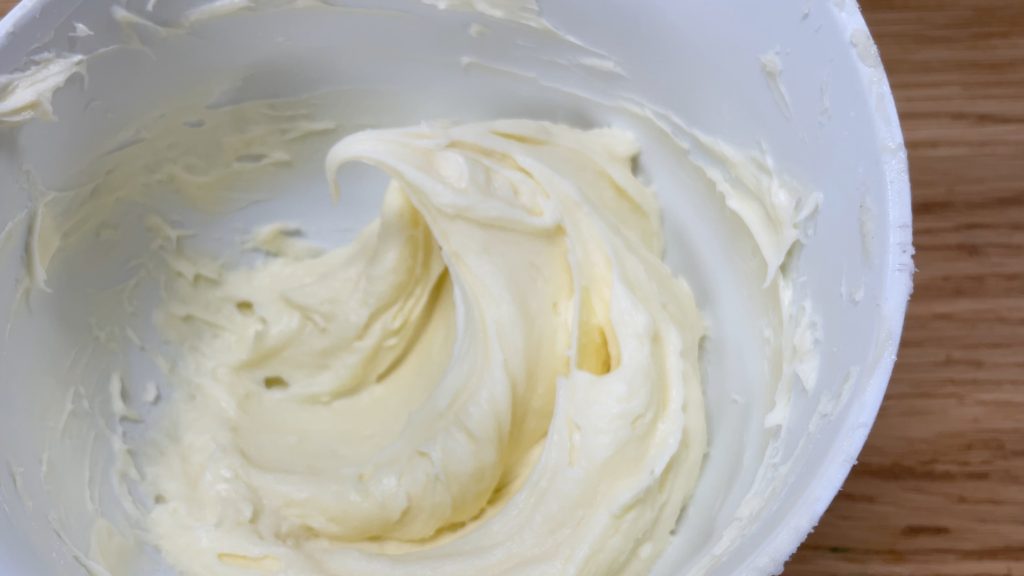
Buttercream is made with butter and powdered sugar or icing sugar and the consistency you’ll need is different depending on what flavour ingredients you’re adding. (More on that in a minute!) No matter what flavors you add later, it’s always essential that the butter is at room temperature so that it’s soft. If it’s cold you can warm it in the microwave for 10 seconds.
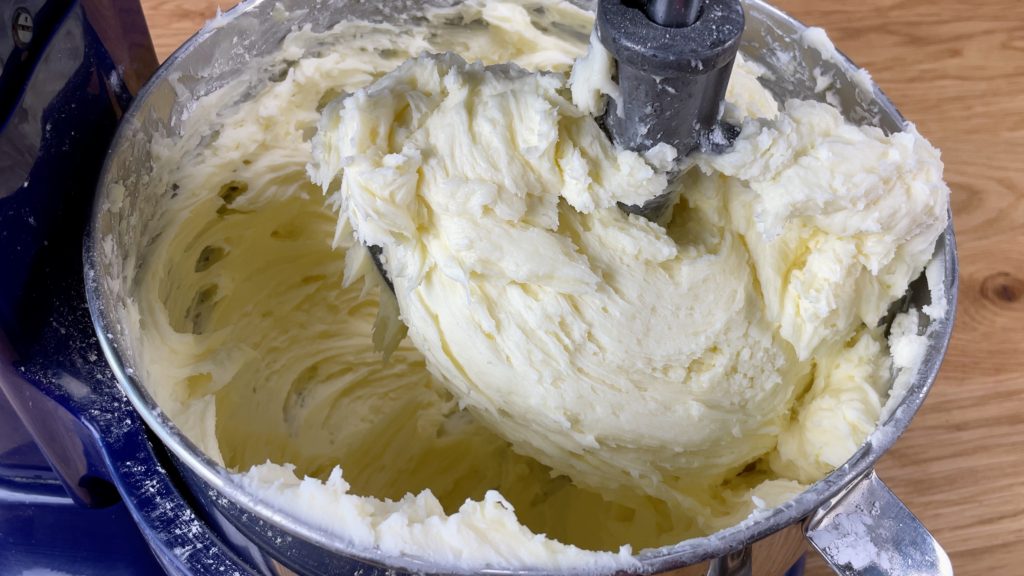
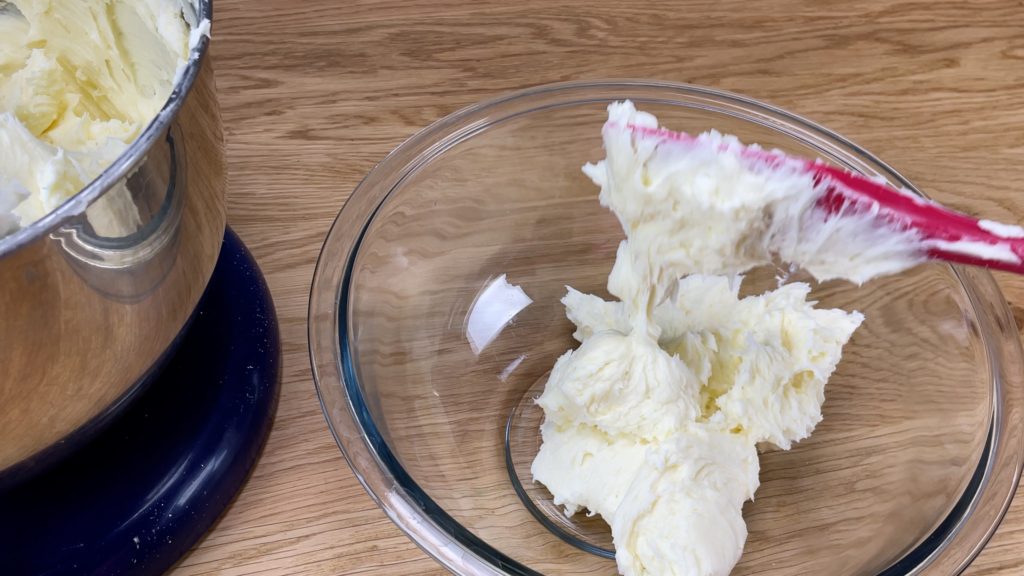
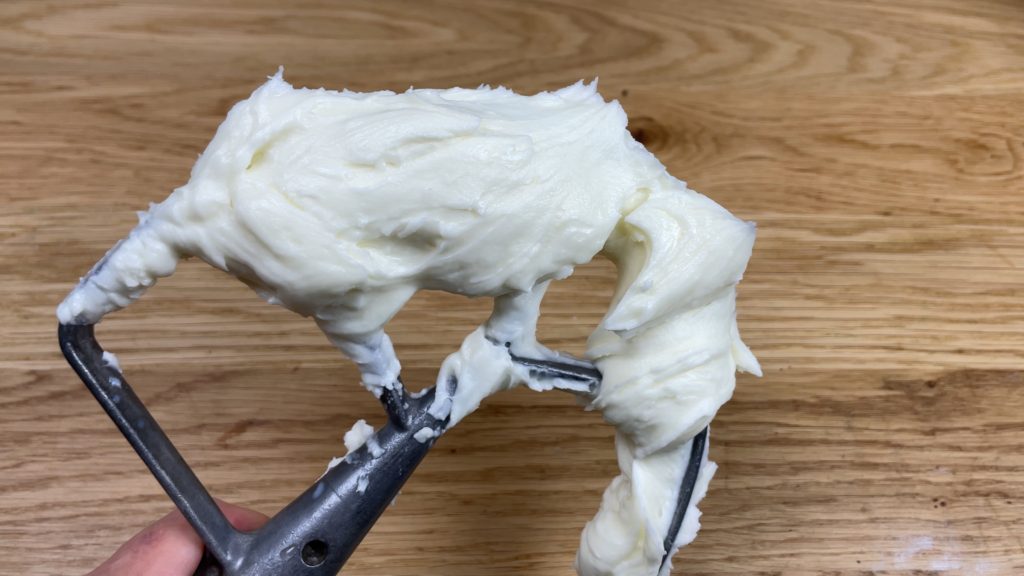
Mix the butter and sugar together (click here for the recipe) and your frosting will be thick and stiff. You can see the rough texture here which shows how stiff it is, and this is when you’d normally add milk or cream to thin it out. However, if you’re going to add a liquid with a runnier or more liquid consistency, this stiff consistency is perfect so don’t add the milk or cream yet!
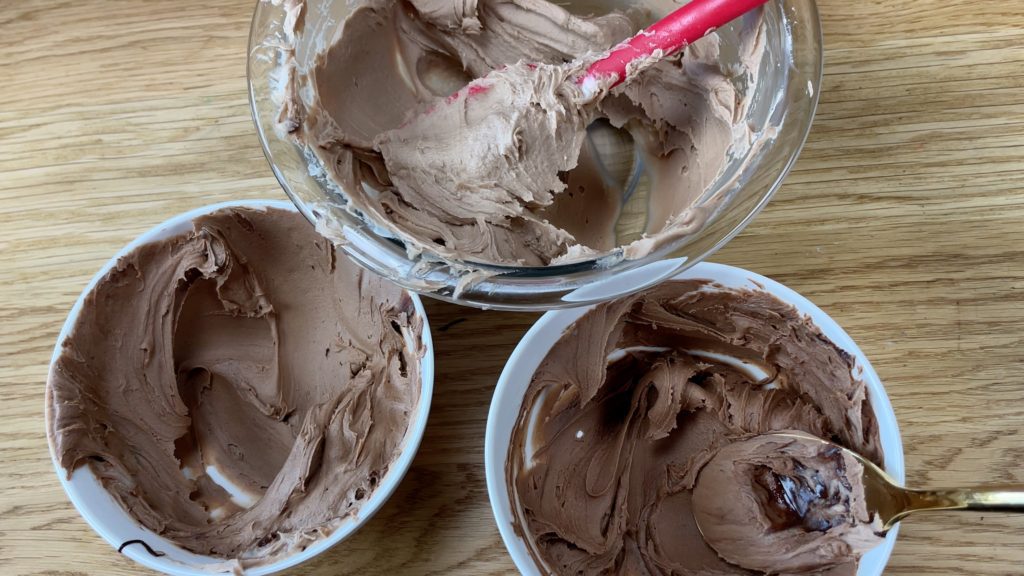
You can flavour an entire batch of buttercream or divide it into bowls and add different flavour ingredients to each bowl.
Wet flavour ingredients
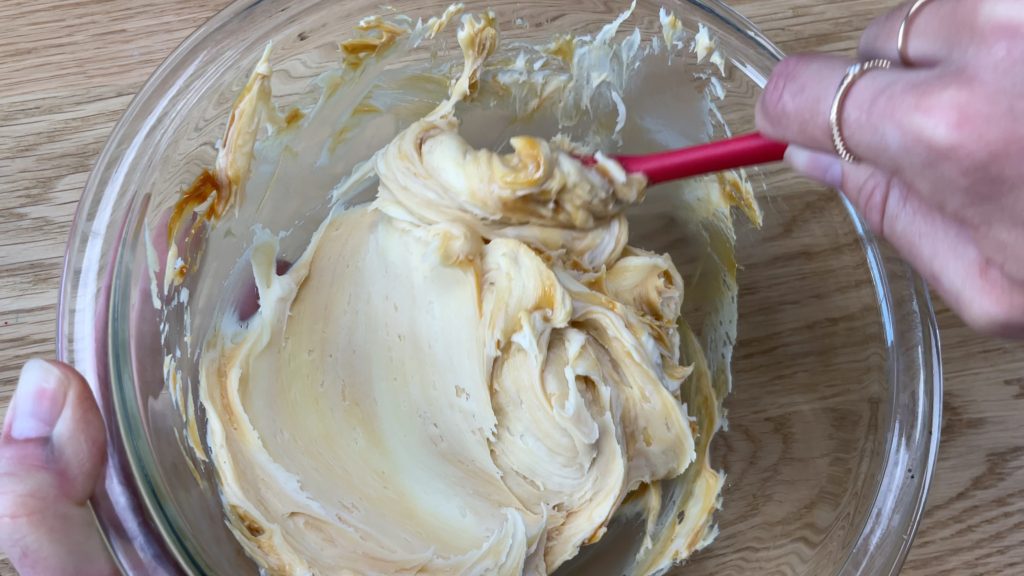
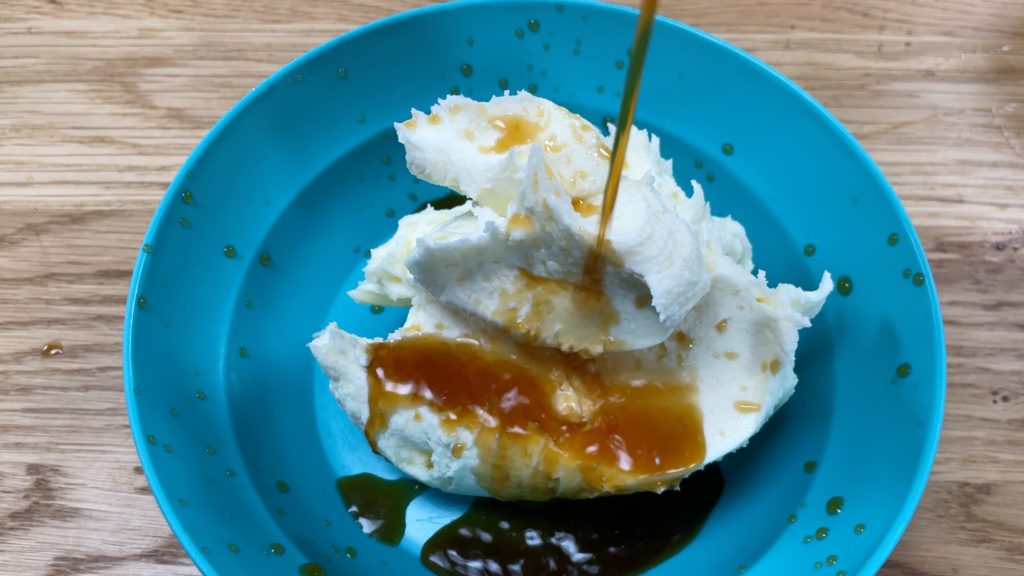
For any flavour ingredient that’s more liquid than buttercream, starting with a stiff consistency of buttercream allows you to add a LOT of that flavour ingredient without make the frosting too runny. This means you can add several spoonfuls of ingredients like dulce de leche or caramel.
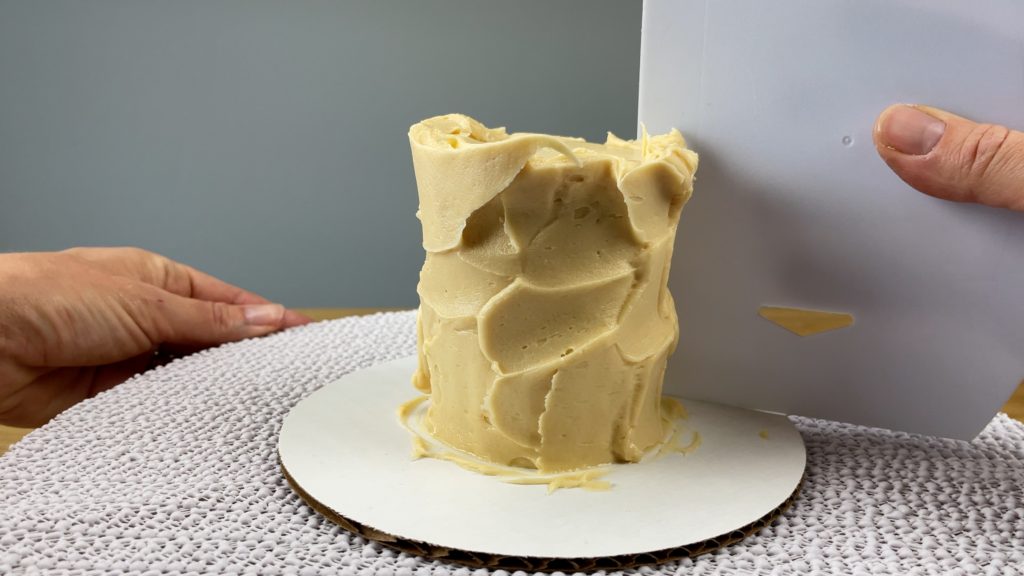
Adding runny caramel will thin out the buttercream in the same way that milk or cream would, resulting in a silky smooth consistency that spreads and smooths onto a cake beautifully.
Even liquid coffee can be added in large amounts without making buttercream too runny if you start with stiff buttercream and use coffee as the thinner. You can either add strongly brewed coffee, or mix instant coffee granule with a few drops of hot water to make a very thick liquid and that will give the buttercream a stronger flavour.
Peanut butter, lemon curd, orange juice and cream cheese are all examples of wet ingredients that can be added to stiff buttercream. Cream cheese frosting is very easy to make if you start with a stiff buttercream base. Let the cream cheese come to room temperature before adding it to the buttercream because if it’s cold, straight out of the fridge, it can make the buttercream lumpy.
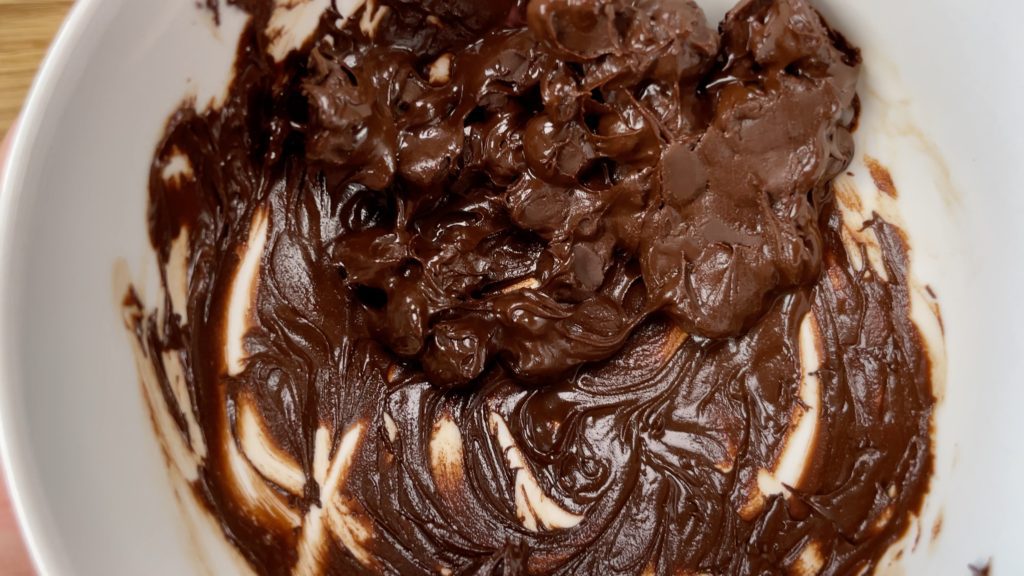
Chocolate buttercream is my favourite and it’s easy to make if you follow a few tips. To melt chocolate, put it in the microwave for 30 seconds at 80% power and this way you’ll melt it without overheating it. If you stir it for maybe 30 seconds and the chocolate chips still aren’t melting, put the bowl back in the microwave for about 30 seconds at 80% power. If it gets too hot it will seize and get grainy and lumpy, so 80% power is important.
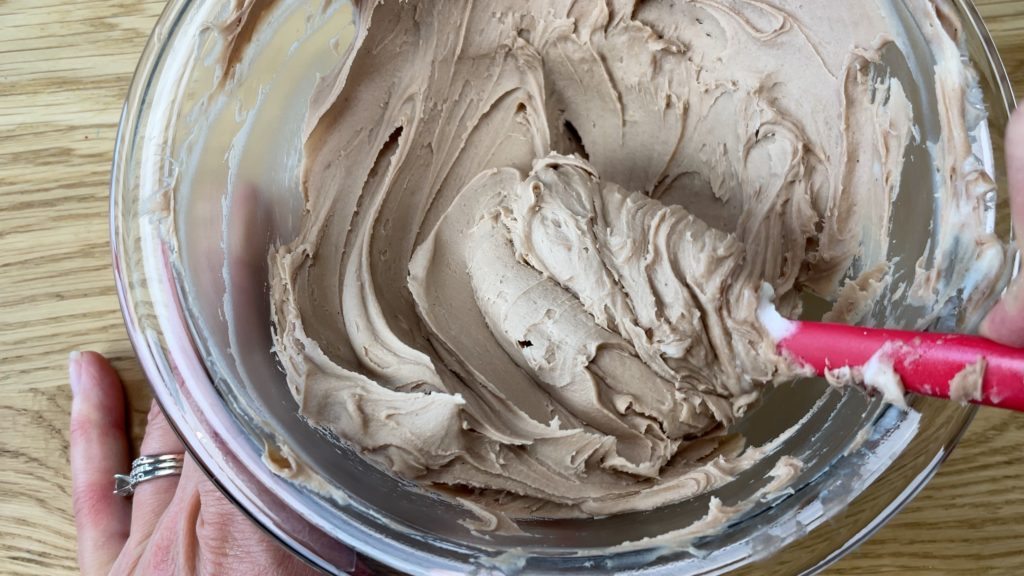
Wait for the chocolate to cool before adding it to your buttercream otherwise it will melt the butter in the buttercream. Just like with other liquid ingredients, start with a stiff consistency of buttercream and add the melted chocolate to thin it out.
The buttercream should have a silky smooth consistency that’s easy to stir and that’s easy to spread and smooth onto a cake. You can add as much chocolate as you like and you’ll notice the buttercream the darker with more chocolate.
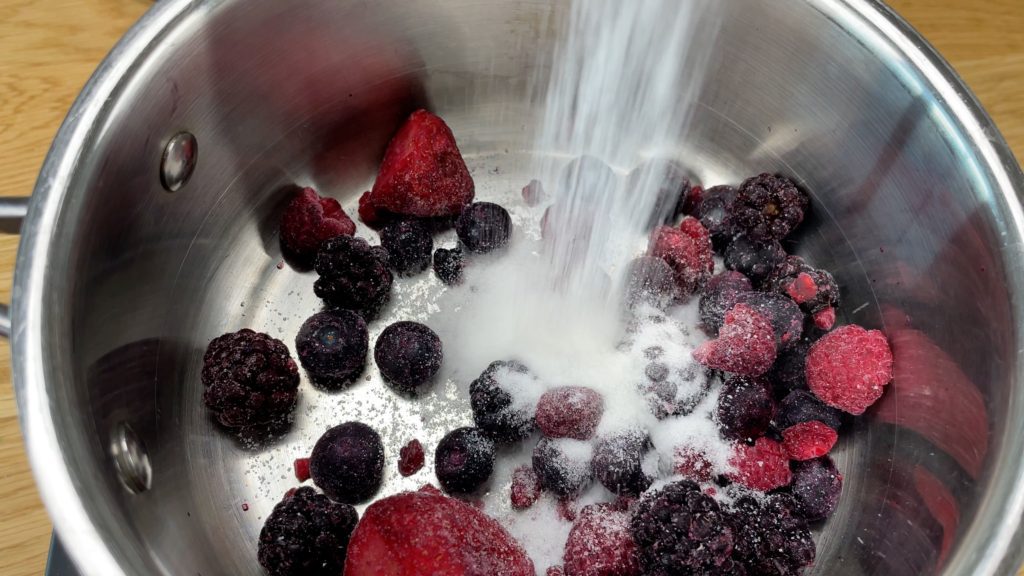
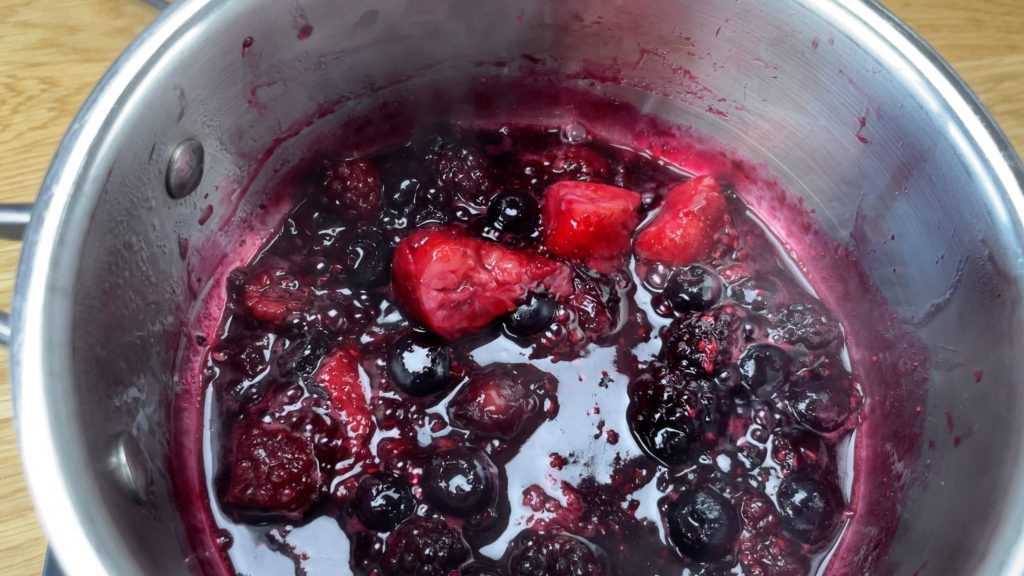
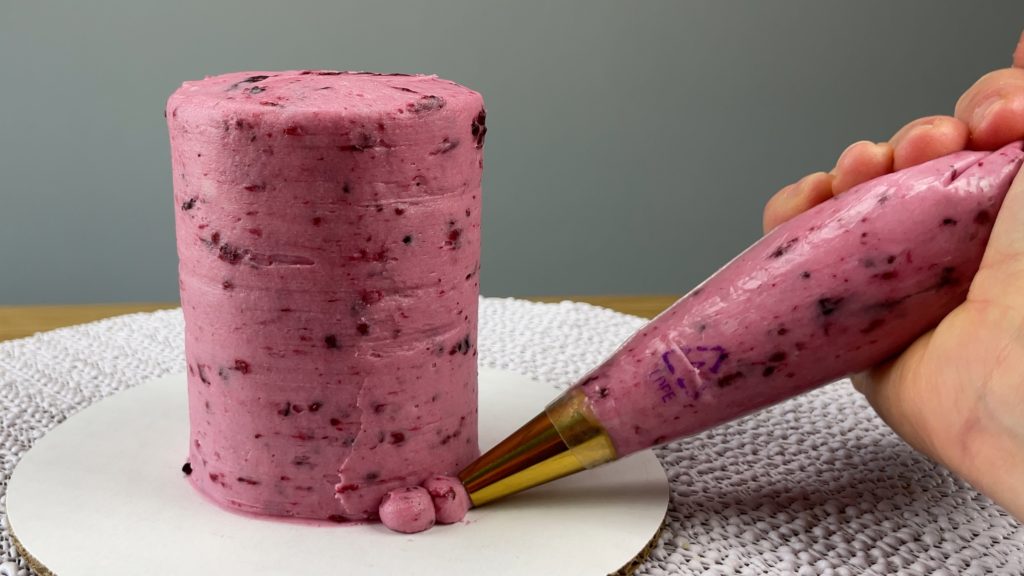
To incorporate berries into buttercream, I find the best way is to cook them first. Raw berries can split the buttercream but by simmering either fresh or frozen berries with a tiny bit of sugar, just a teaspoon per cup of fresh or frozen berries, you’ll make a concentrated puree that’s full of flavour and that mixes perfectly with buttercream.
As the berries cook they’ll release liquid, especially if you’re using frozen berries. The liquid will simmer down into a thicker liquid and when the berry mixture cools it will become even thicker.
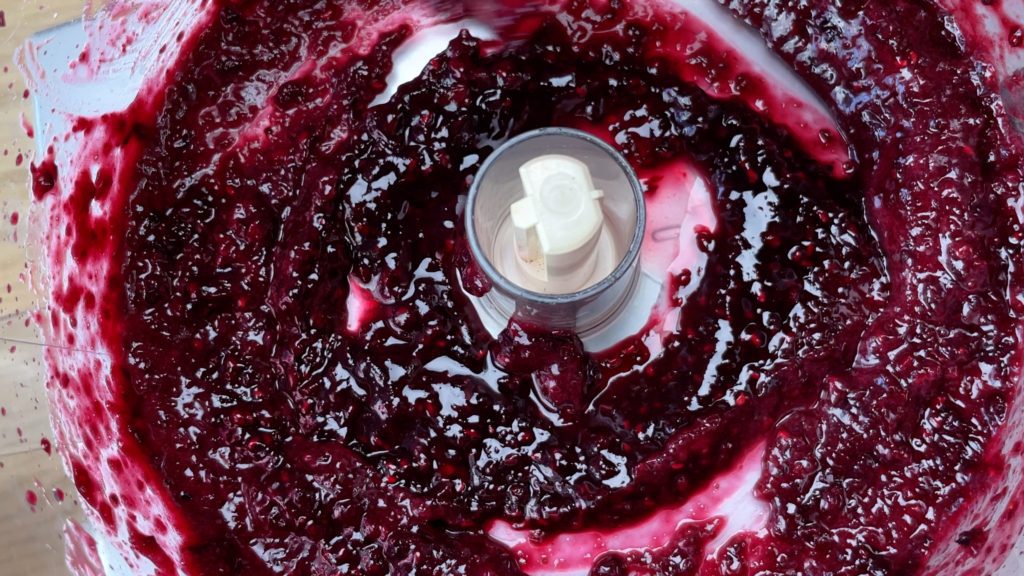
Unless you want large chunks of fruit in your frosting, blend the cooks berries in a food processor or blender to make a smooth puree. Add a squeeze of lemon or lime juice to keep the tartness of the fruit, even after adding a bit of sugar while cooking it.
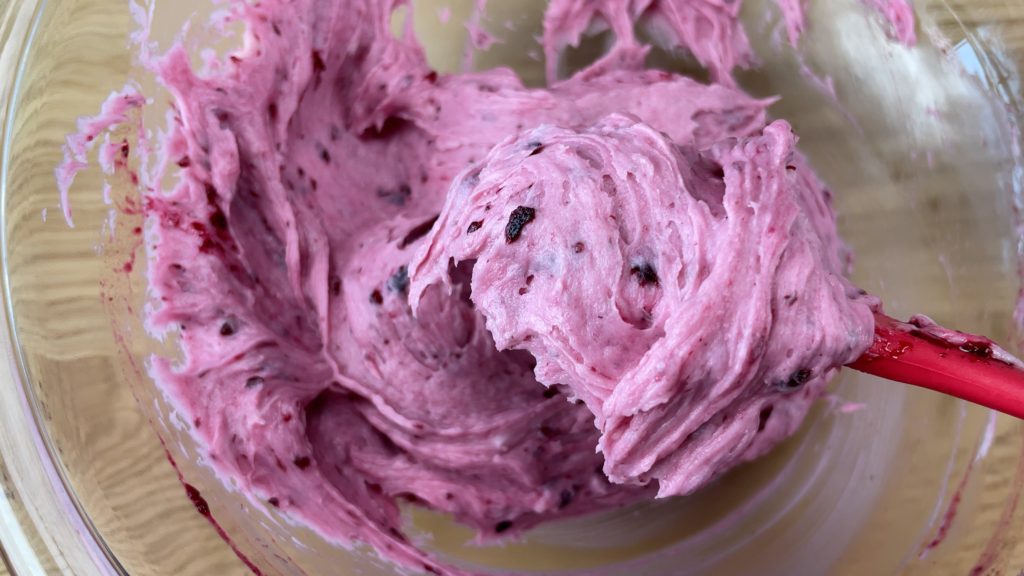
Let the berries cool completely before adding it to your buttercream. I wish you could taste this through the screen – it’s incredible! It spreads and smooths beautifully onto a cake and the flecks of berries will make your mouth water.
Flavoured buttercream pipes perfectly as long as the hole or gaps in the shape of the piping tip aren’t too narrow for any pieces of berry (or any other ingredient) in the buttercream.
Dry flavour ingredients
The process of flavoring buttercream with dry vs. wet ingredients is a little bit different. For dry ingredients, when you make your buttercream follow the whole recipe, adding the milk or cream at the end of the recipe so that the buttercream is the right consistency for frosting a cake.
Dry ingredients don’t affect the consistency of the buttercream, so get the consistency right first before adding the flavour ingredients, and you’ll see why in a minute.
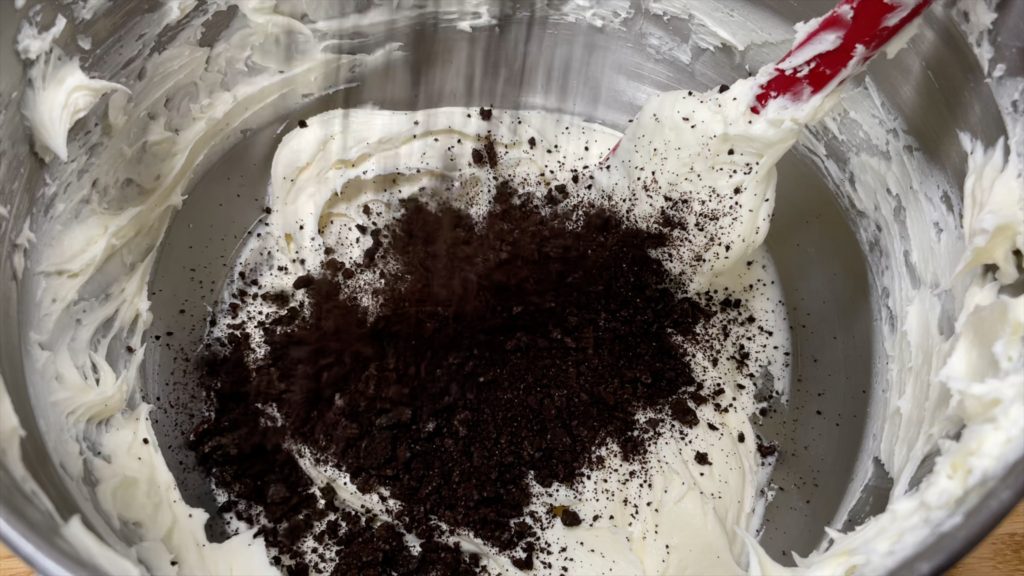
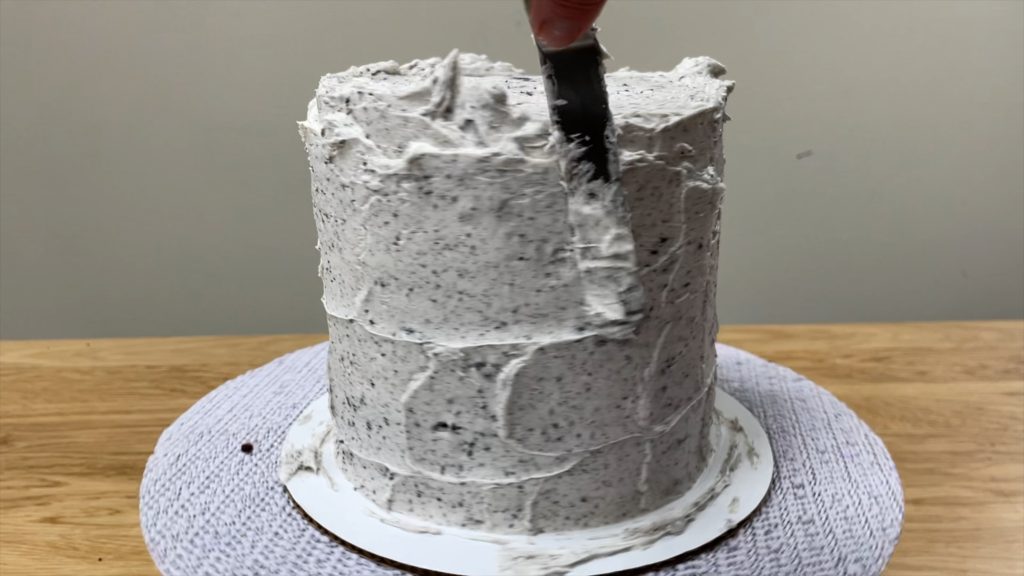
Oreos are a popular dry ingredient to make cookies and cream frosting, by smashing the Oreos or blending them in a food processor or blender and then stirring them into buttercream.
The tiny flecks of black cookies in the white frosting are what makes the flavour recognizable, and that’s why you add the cookie crumbs right at the end, because if you over-mix it the frosting will turn grey.
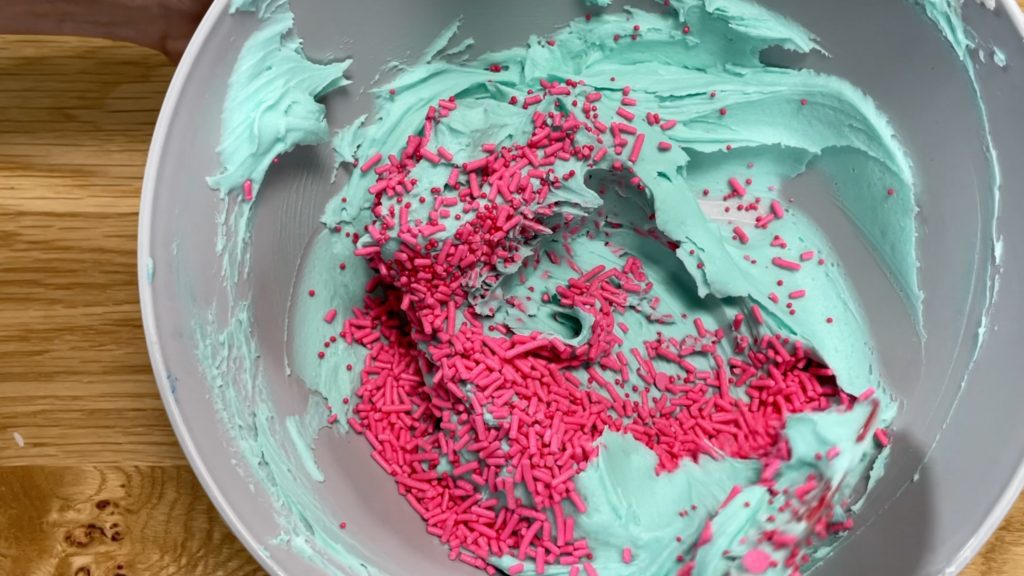
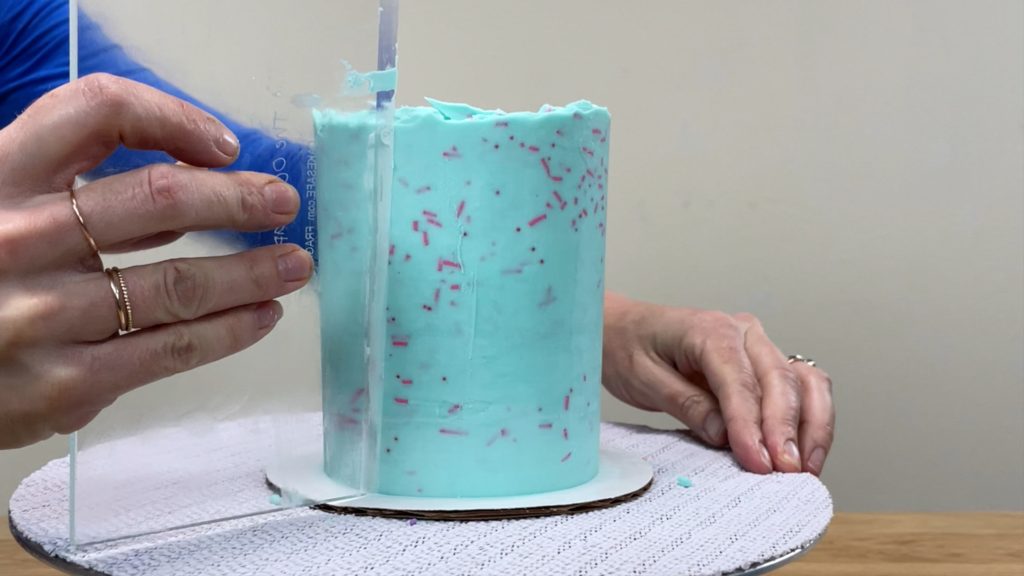
You can add freeze-dried fruit to buttercream instead of cooking and blending berries like I showed you earlier, and sprinkles are fun to add in too – not really a flavour ingredient but they look so colourful and pretty, I wanted to mention them anyway!
Frosting a cake with sprinkles in the buttercream is slightly different to using smooth buttercream and I teach how to do that, along with 49 other techniques, in my online course on 50 Easy Cake Decorating Techniques.
Flavour extracts
After wet and dry ingredients, the final type of flavour ingredient is to add a flavour extract. Buttercream recipes will list vanilla extract as an ingredient but other delicious flavors are almond and mint. There are lots of flavour extract options available in supermarkets or grocery stores and at baking shops, and online.
They’re very concentrated so you only need a tiny amount, depending on the flavour it’s usually less than a teaspoon for an entire batch of buttercream. That’s such a small amount of liquid, it won’t affect the consistency of the buttercream so when you’re making your buttercream, you can just add it at the end to mix it in.
I hope this tutorial has been helpful! Check on my online course on the Basics of Buttercream for everything you need to know about buttercream including how to tint it any colour, how to store it, and how to use it for lots of different cake decorating techniques.
You can use this base recipe to create hundreds of different flavours!
Ingredients
UnitsScale
2 1/2cupsunsalted butter
907g or 2 lb (about 7 cups) powdered sugar
1/2 teaspoon salt
1/2 tablespoon vanilla extract
2-3 tablespoons cream or milk**
Instructions
Start by preparing your ingredients: the powdered sugar should be sifted to remove any lumps and the butter should be at room temperature. If the butter is cold, bring it to room temperature quickly by popping it in the microwave for 10 seconds and then flipping it over and microwaving it for another 10 seconds.
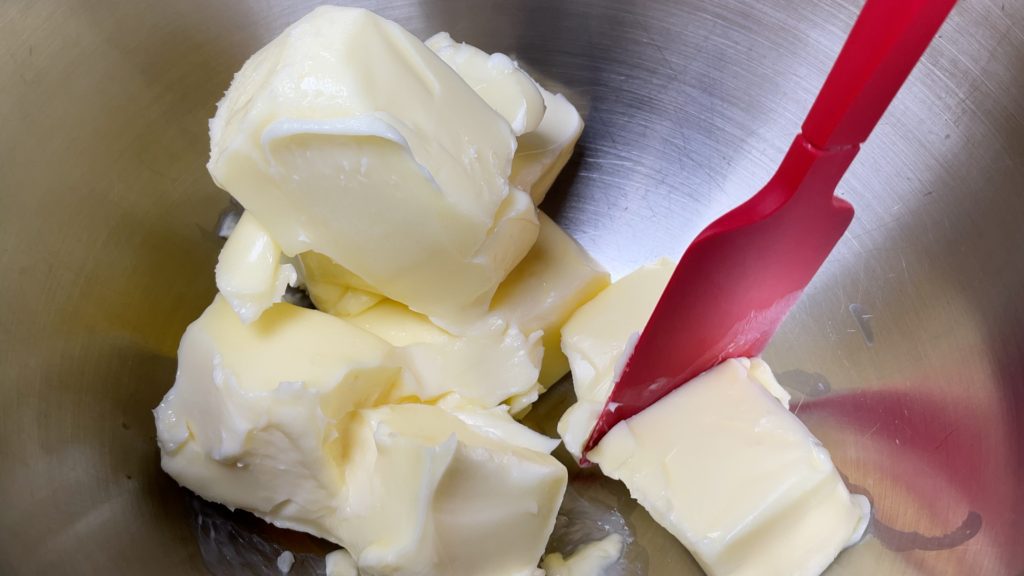
In a mixer with a beater (paddle) attachment, mix butter for a few seconds until smooth. If it’s not smooth and there are any lumps of butter, your butter is too cold.
Add 1/4 of the powdered sugar and salt (if using) and mix on the lowest speed until incorporated, about 1 minute. Scrape down to the bottom of the mixing bowl with a spatula to loosen any butter and sugar and add the next 1/4 of powdered sugar and mix for another minute on low.
Scrape down to the bottom of the bowl, add another 1/4 of the powdered sugar, mix for 1 minute on low, scrape, and add the final 1/4 of the powdered sugar and the vanilla. Mix for 1 more minute on low.
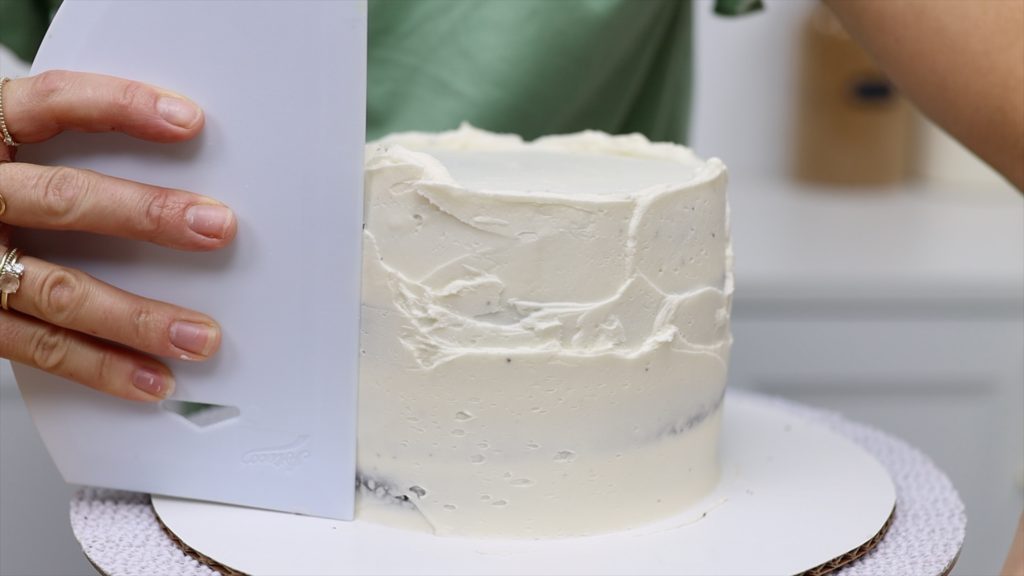
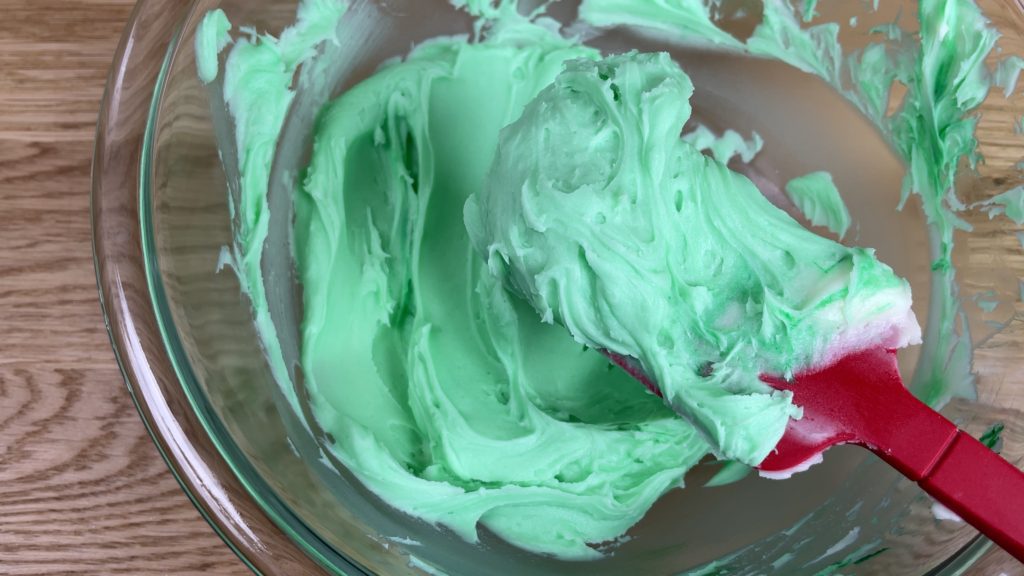
Check the consistency of the buttercream by stirring it with your spatula. It needs to hold its shape but also be spreadable. When you smooth or spread it with your spatula if the buttercream breaks apart, leaving little air pockets like in the photo below, it’s too stiff and you need add liquid.
Add cream or milk 1 tablespoon at a time, mixing for about 30 seconds to incorporate it, and test again. Alternatively, if you’re making a flavoured buttercream using a liquid like strawberry puree or coconut cream, you can thin out the buttercream by adding that liquid 1 tablespoon at a time instead.
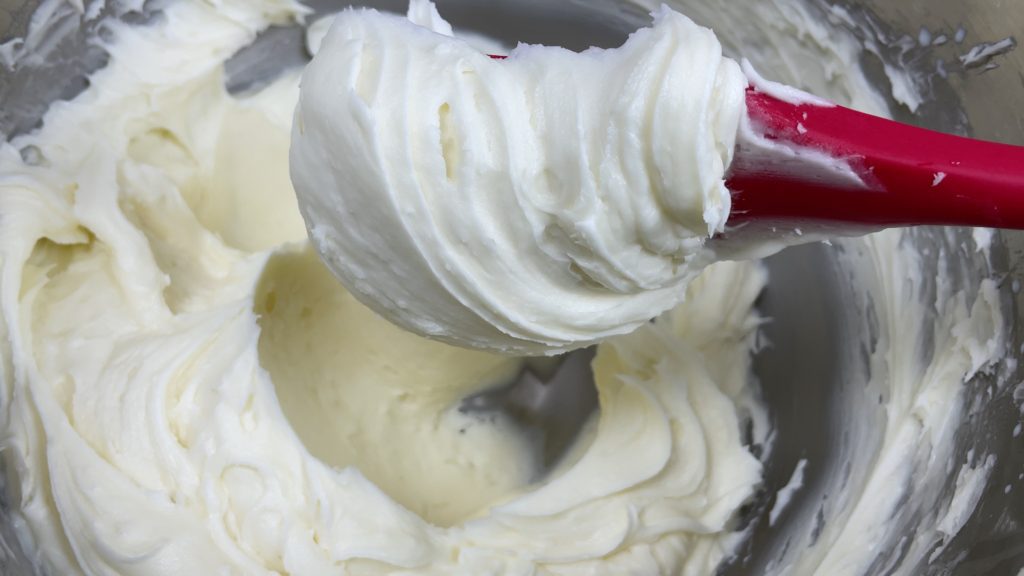
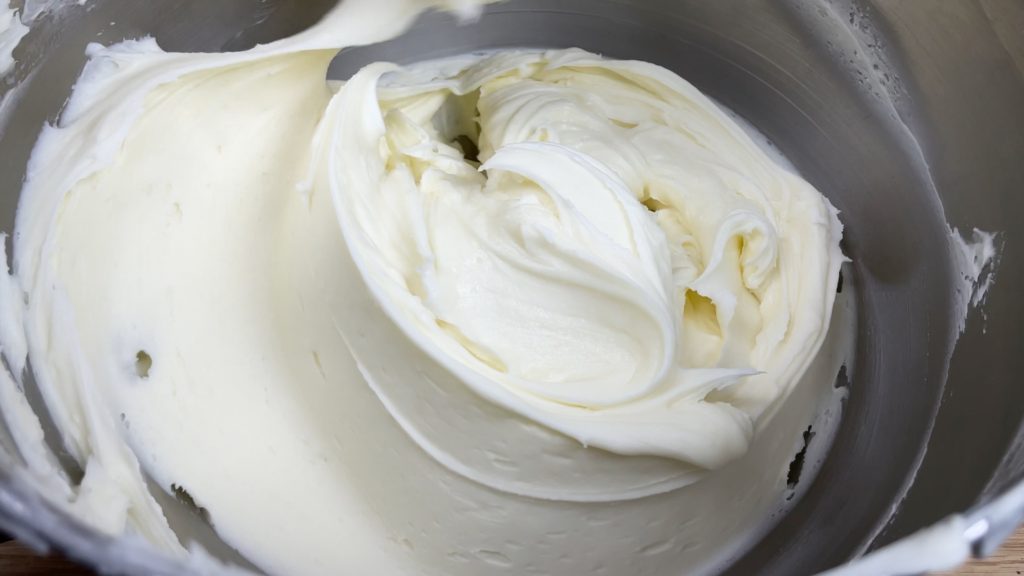
For the perfect consistency, check to make sure that when you scrape a spatula across it, it leaves a smooth trail of buttercream behind with no air pockets.
Notes
*If you use salted butter instead, omit the salt in the recipe
**Try adding different ingredients to make different flavours of buttercream. Depending on how liquid the ingredients are, you’ll need to add different amounts. For example, you can add 1 tablespoon of lemon curd for every cup of buttercream to get the right consistency but you can add 1/4 cup of stiffer ingredients like melted chocolate or peanut butter for every cup of buttercream.