There are lots of design possibilities for Halloween cakes and in this video I’m going to share 10 hacks for quick and easy but impressive Halloween cake decorating!
If you prefer to watch a video of this tutorial, scroll to the bottom of the page.
#1 Black Buttercream
The first hack is how to create jet black buttercream. There are a few tricks for this, the first one being to start with a brown base by mixing cocoa powder and hot water to make a paste and adding that along with melted chocolate to your buttercream.
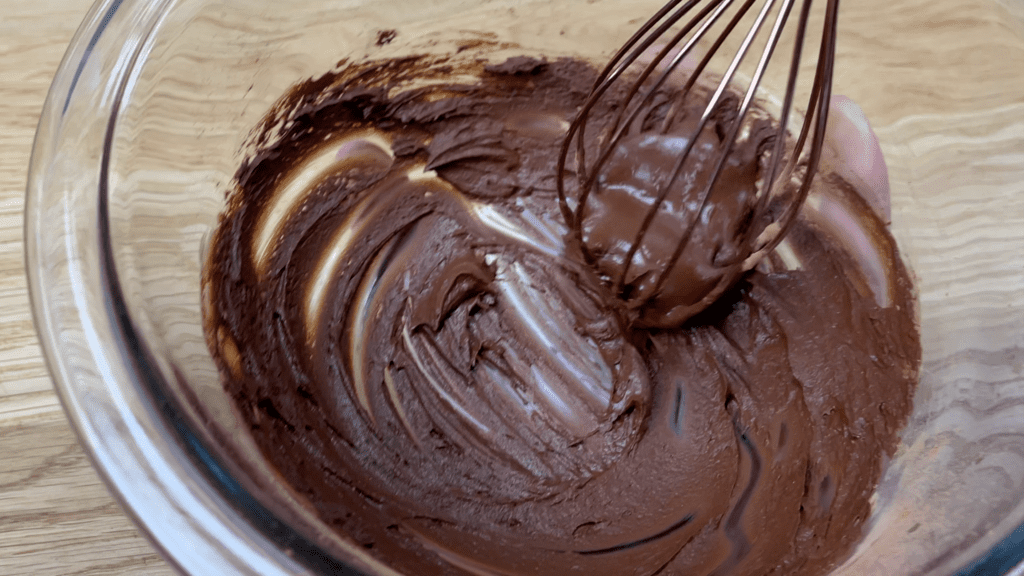
Melt the chocolate at 80% power in the microwave for 30 seconds at a time so that it doesn’t overheat and seize, and let it cool to room temperature before adding it to the buttercream so that you don’t melt it.
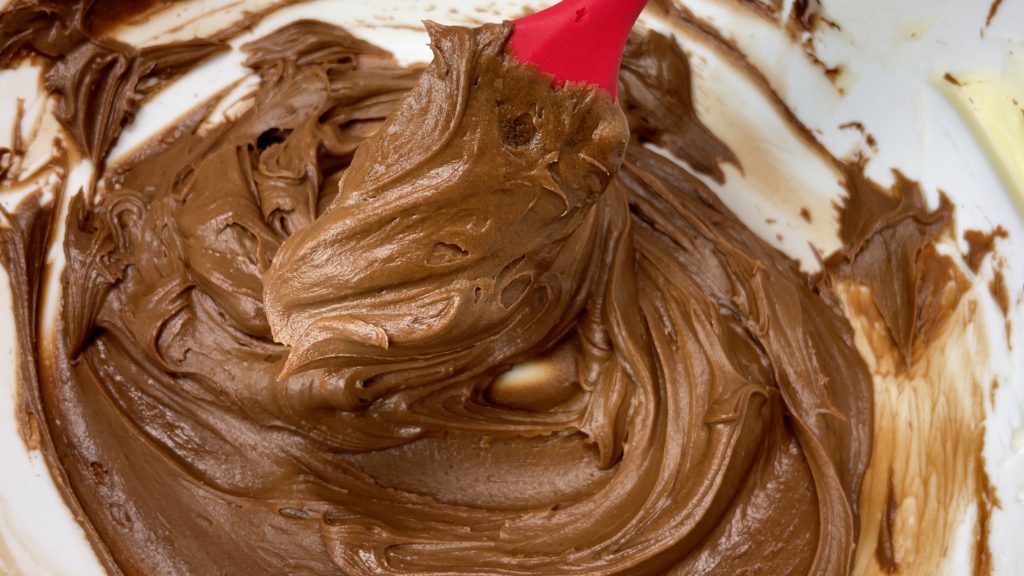
Now add black gel and you’ll need a lot less than if you’d started with plain white vanilla buttercream.
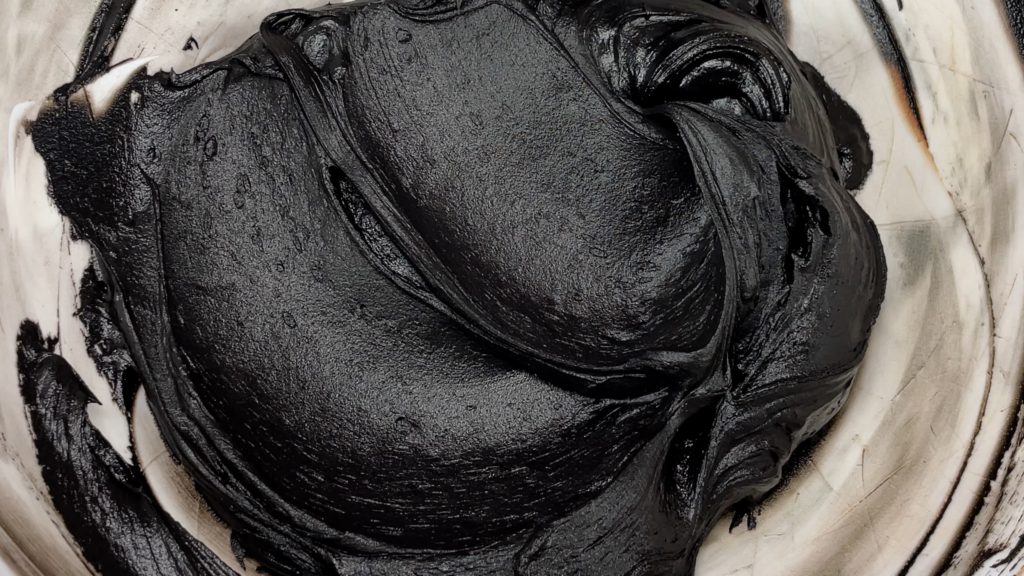
Next tip: after you’ve mixed the black in, cover the bowl and leave it for an hour for the color to develop and darken and you’ll have a true jet black buttercream, perfect for Halloween cakes!
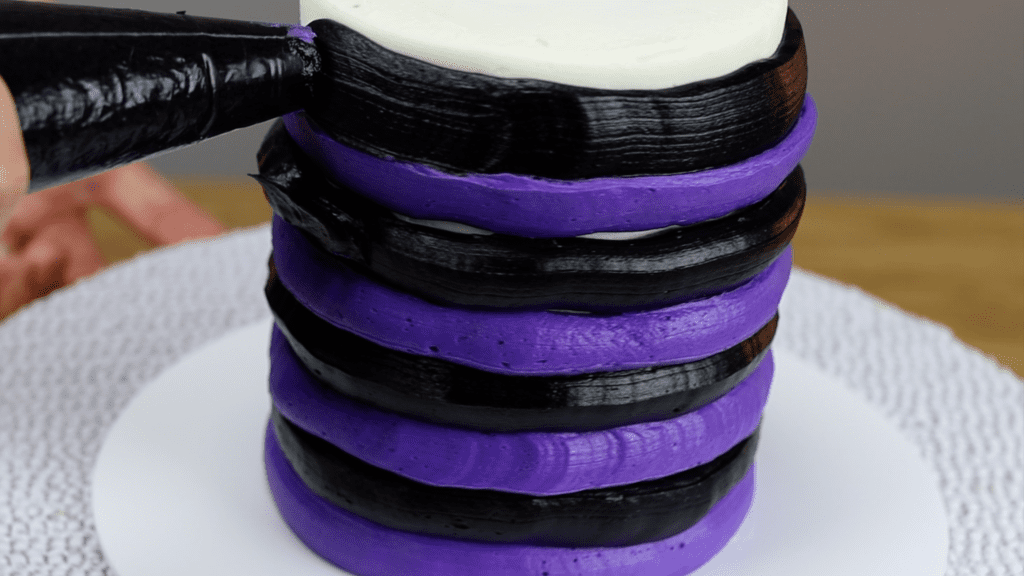
#2 Edible Spiderwebs
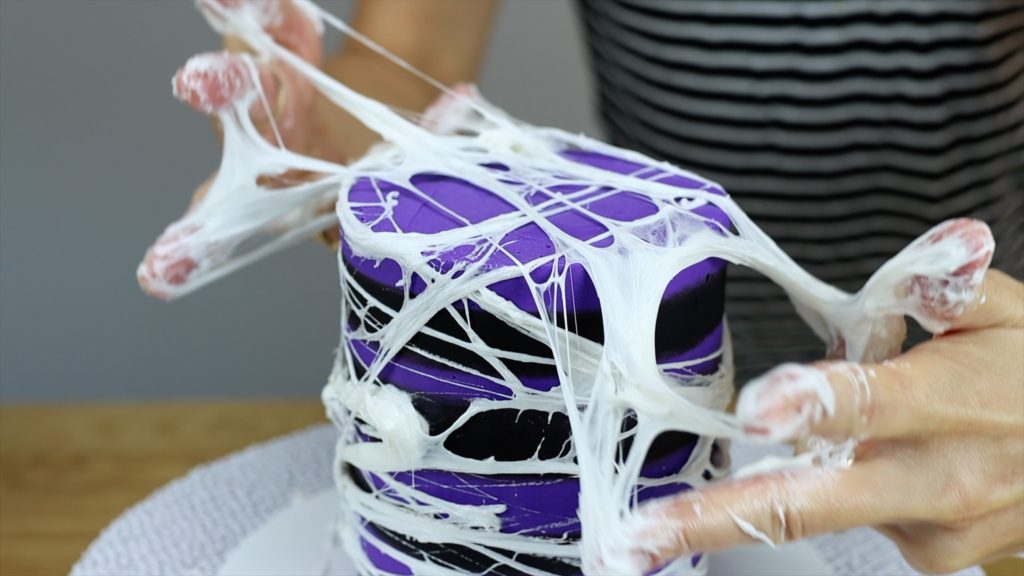
Create edible spiderwebs with marshmallows, melting them in the microwave for 30 seconds and then stirring them to make, well, a mess! Pinch the mixture between your fingers and stretch it out to wrap around a cake.
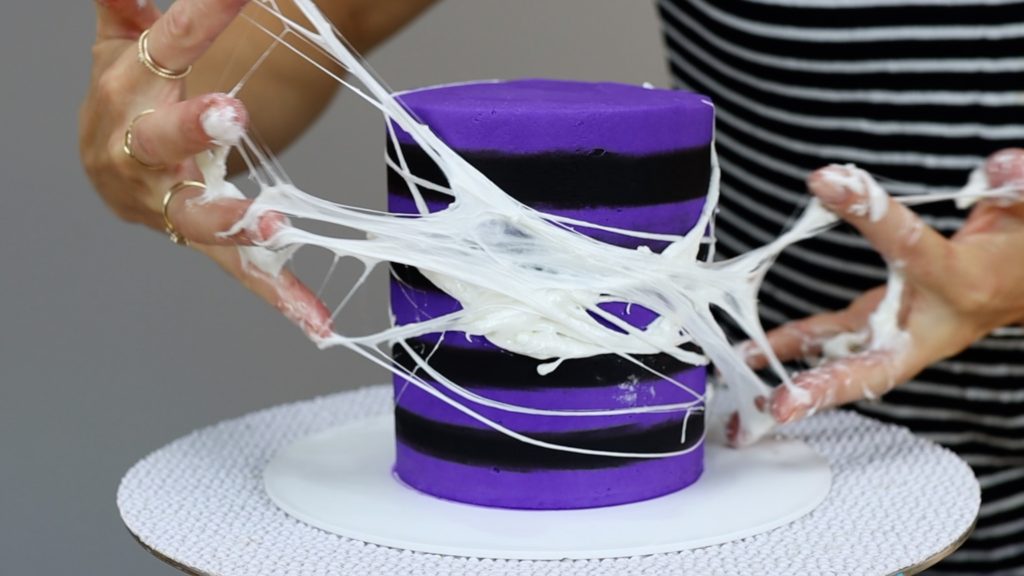
Make a perfectly imperfect web of stringy, gooey, delicious strands of marshmallow. Don’t forget the top of the cake! Cake toppers will stick to the marshmallow spiderweb, like this bubbling cauldron in my Striped Spiderweb Cauldron Cake class.
#3 Piped Pumpkins
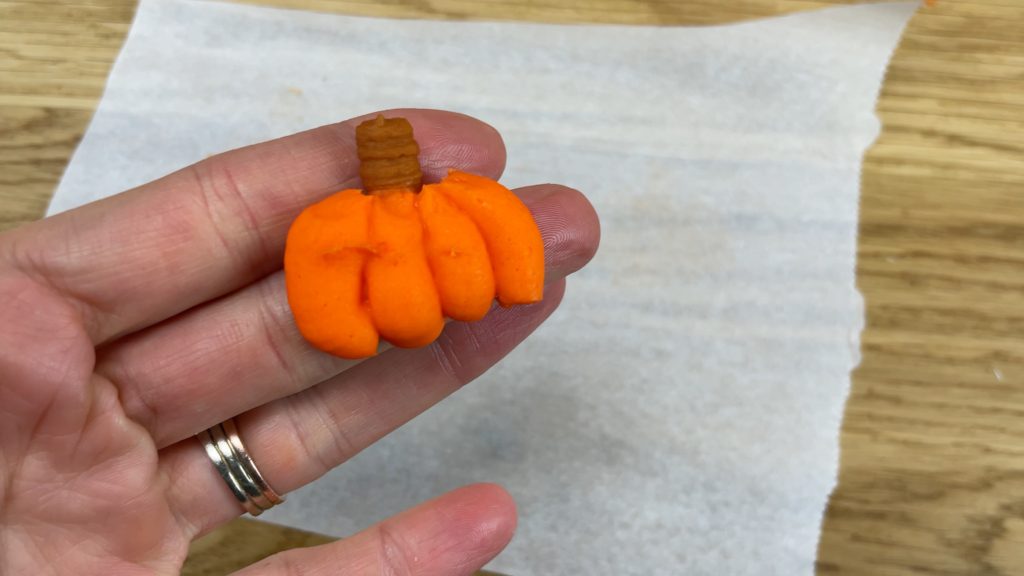
For textured pumpkins use a medium round tip like this #12 tip, piping curved lines side by side. I usually do 4 or 5 lines, and these lines create the effect of the bulges and grooves in a real pumpkin.
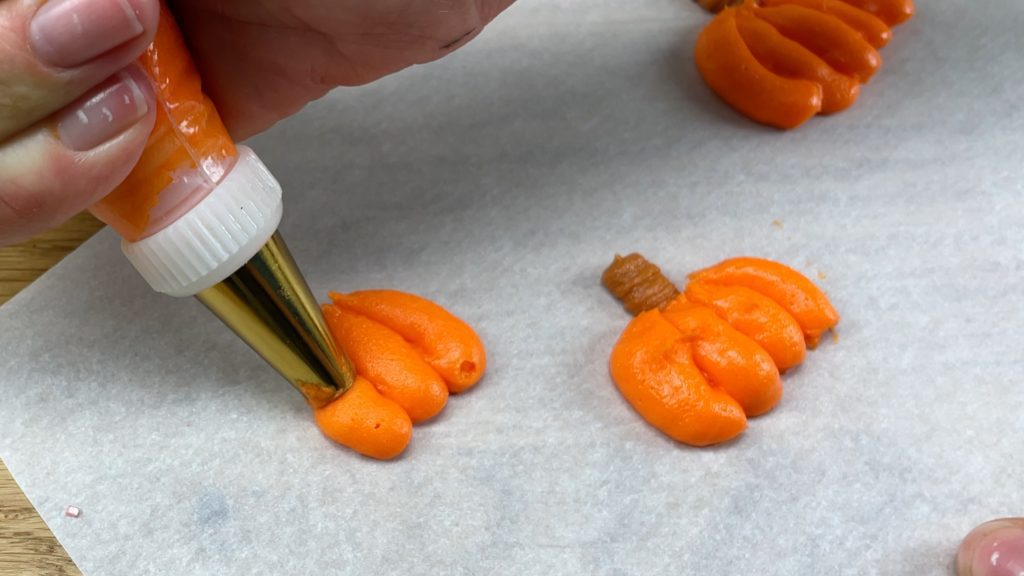
Piping them onto parchment is much easier than piping onto the side of a cake. Put them in the freezer for 10 minutes to chill and set the buttercream and then you’ll be able to peel them off the parchment and pick them up to stick onto the side of a cake!
#4 Whimsical Halloween Cakes
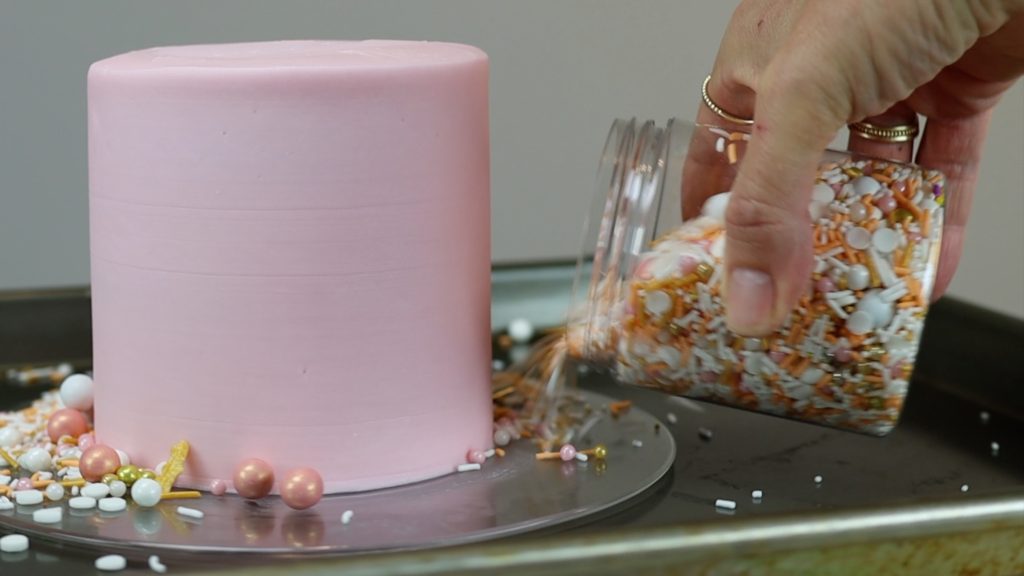
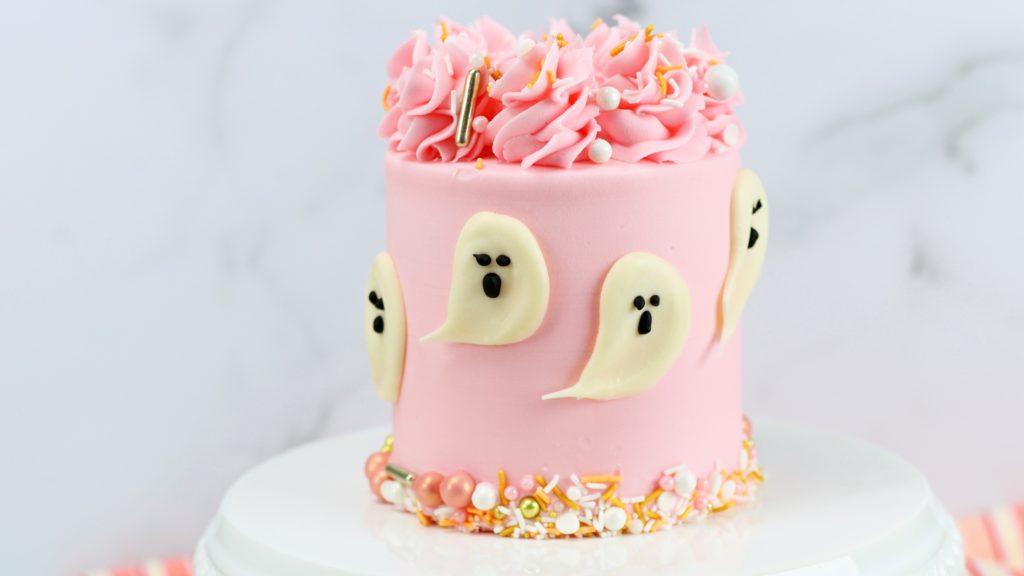
Halloween cakes don’t have to be scary and using non-traditional Halloween colours is a great way to make the cake fun instead of creepy. Pale pink, for example, pairs really well with orange and you can incorporate the orange with a sprinkle border, pushing the sprinkles gently into the bottom inch or so of the cake just after frosting it, while the frosting is still sticky so the sprinkles will attach easily.
Some pretty pink swirls piped onto the top with a 1M star tip finish this off nicely, creating a Halloween cake that’s whimsical with a touchy of spooky.
#5 Chocolate Ghosts
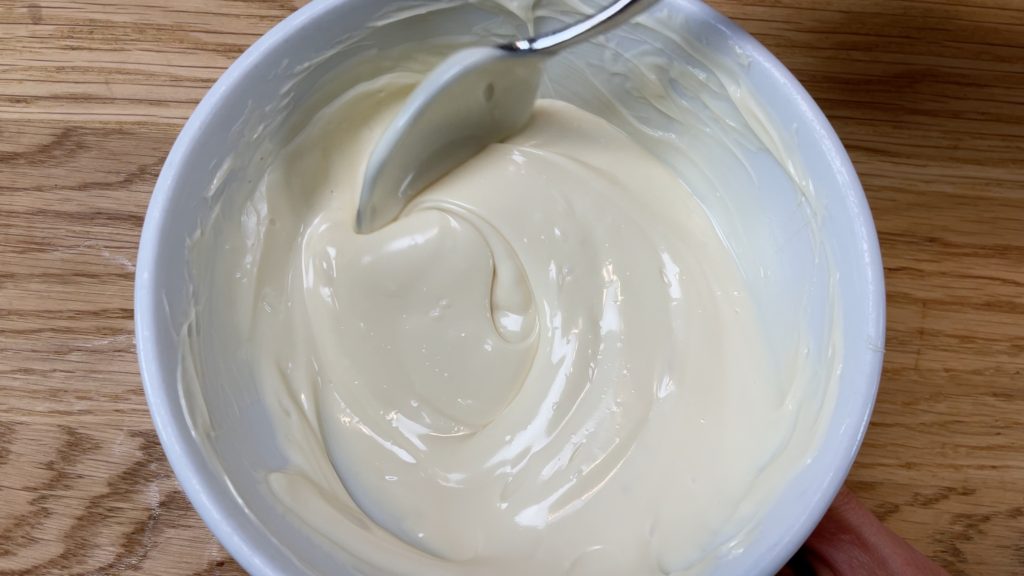
Use white chocolate chips or white candy melts and melt them in the microwave at 80% power for 30 seconds at a time so they don’t overheat and seize.
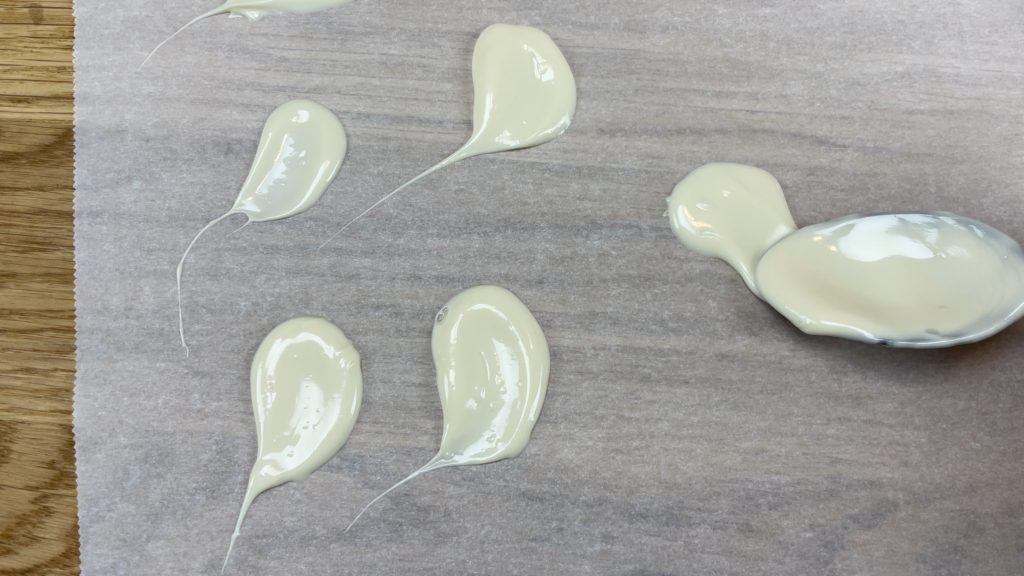
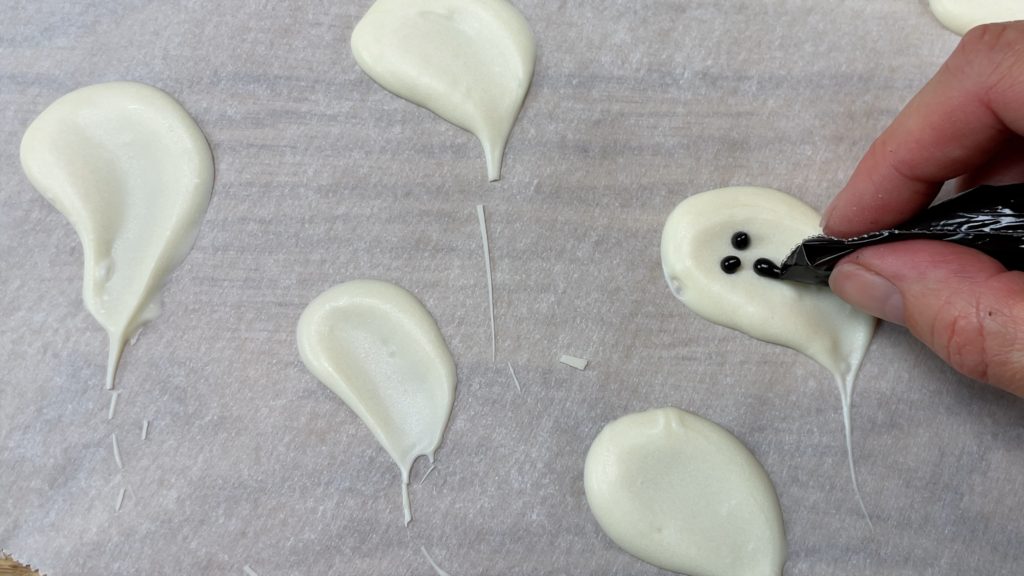
Lay out a piece of parchment paper and spoon a little bit of melted chocolate onto it, and then use the back of the spoon to smear it out, whisking the spoon away to leave a little tail on each ghost.
For the faces, melt chocolate chips and add black gel and then pour the melted chocolate into a ziplock bag and cut off a corner, and then pipe on dots for the eyes and mouth. These need to set before you add details and attach them to a cake so leave them at room temperature for about an hour or put them in the freezer for 5 minutes.
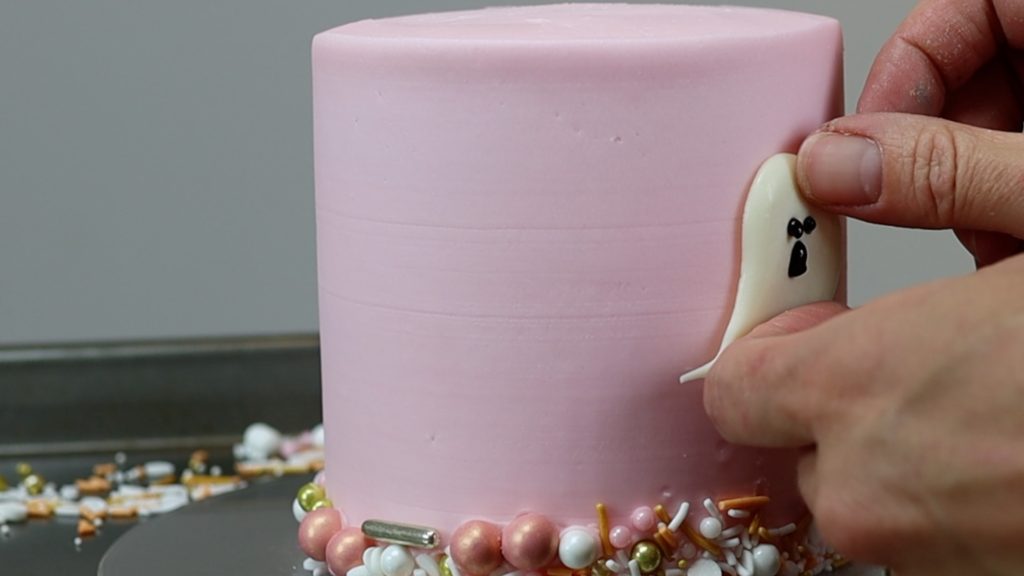
Peel the ghosts off the parchment paper and press them into a cake while the frosting is still soft and sticky, and they’ll attach easily!
#6 Cookie Cake Toppers
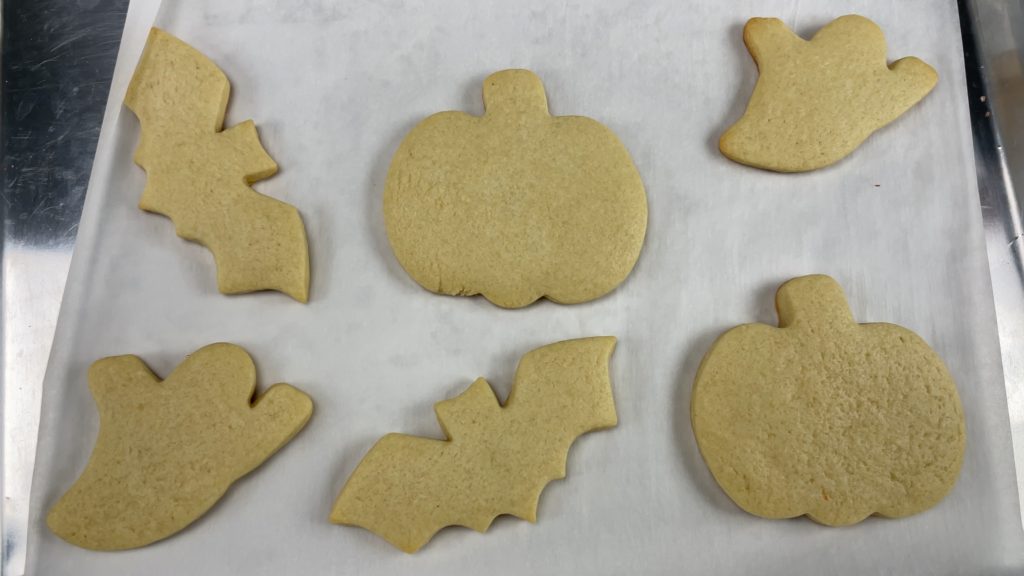
For really easy homemade cake toppers, cut out cookies in Halloween shapes and freeze them for an hour before baking them so that they hold their shape and don’t expand into blobs in the oven.
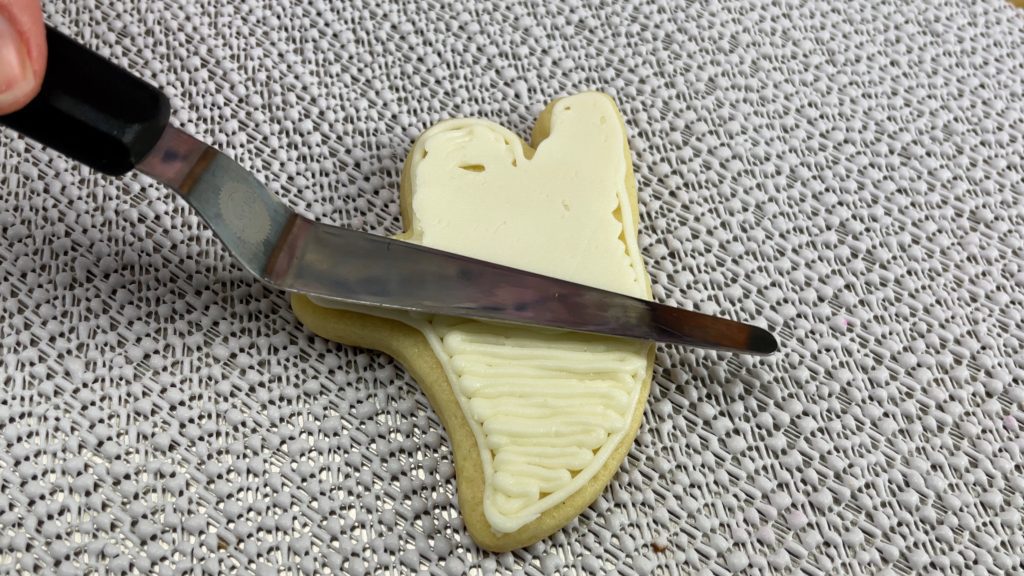
Let them cool completely and then pipe or spread buttercream to decorate them. Holding your piping tip a little bit above the cookie as you pipe will help you get a smooth outline.
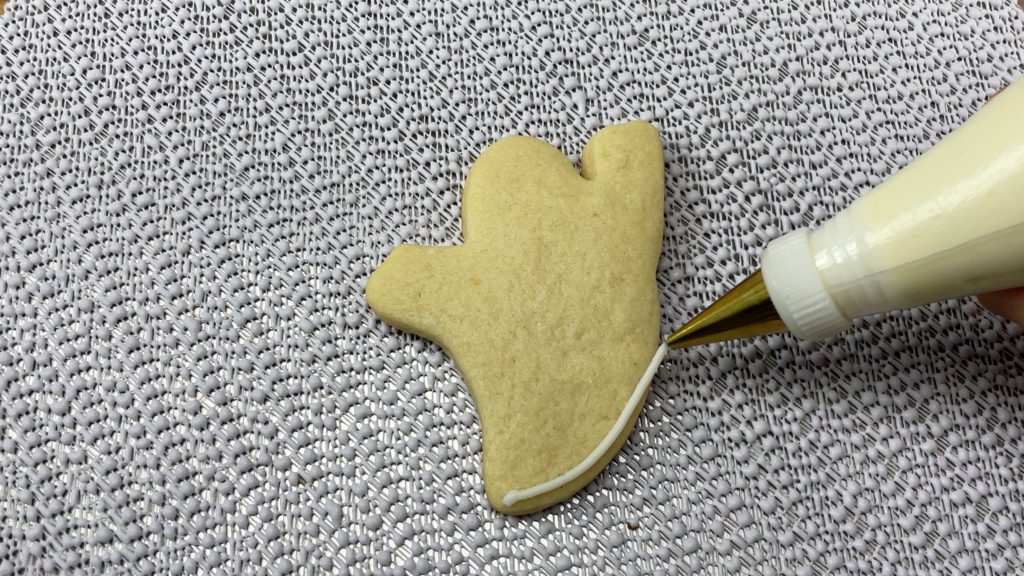
A quick way to decorate cookies is to zig zag the buttercream all over the cookie and then use an
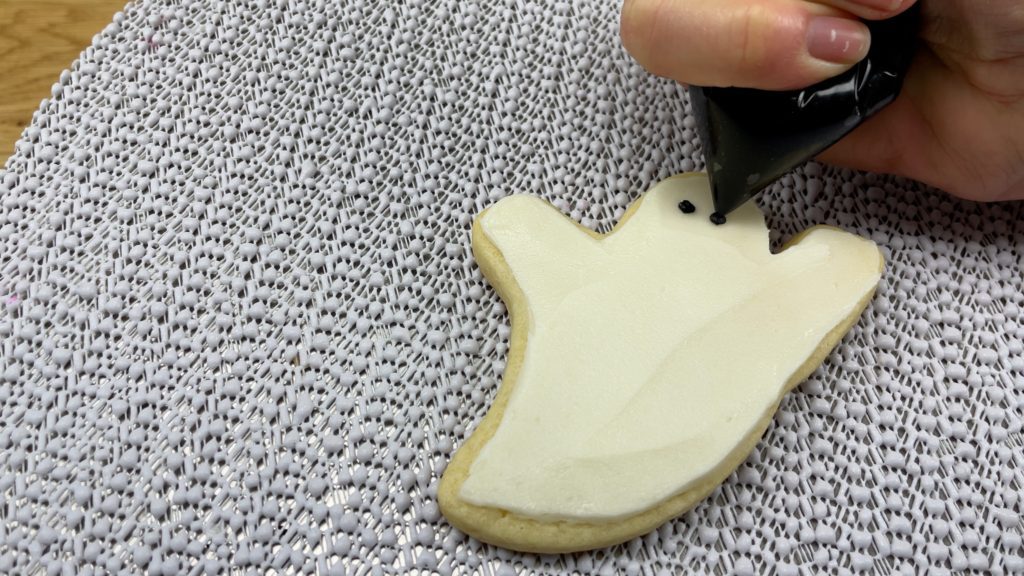
Use black buttercream or melted chocolate tinted black to pipe the face with a piping bag or just a ziplock bag with a corner cut off.
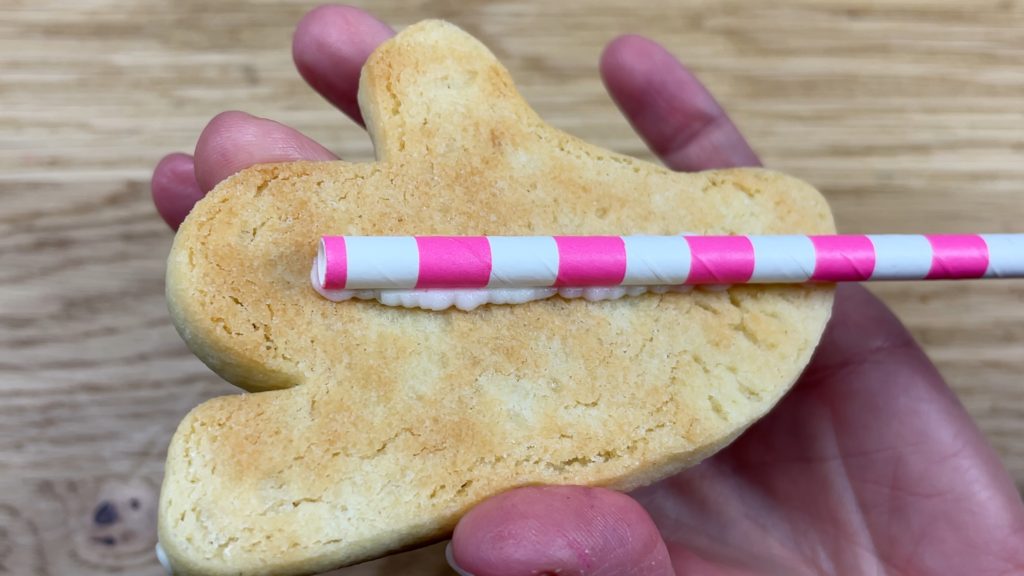
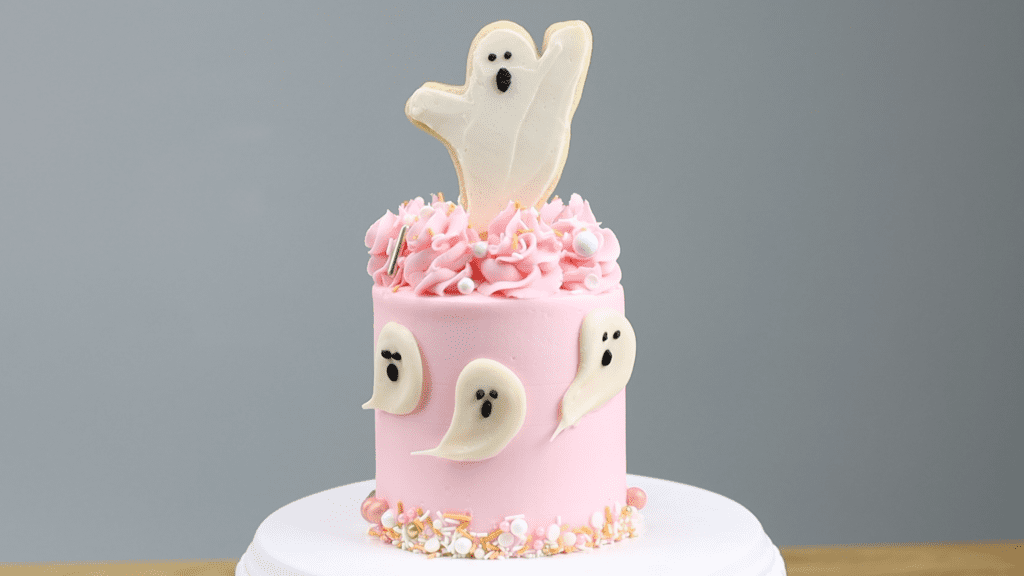
To attach the cookie to a cake, spread or pipe a line of buttercream or melted chocolate up the back of the cookie and press a straw into it, and the buttercream or chocolate will act as glue.
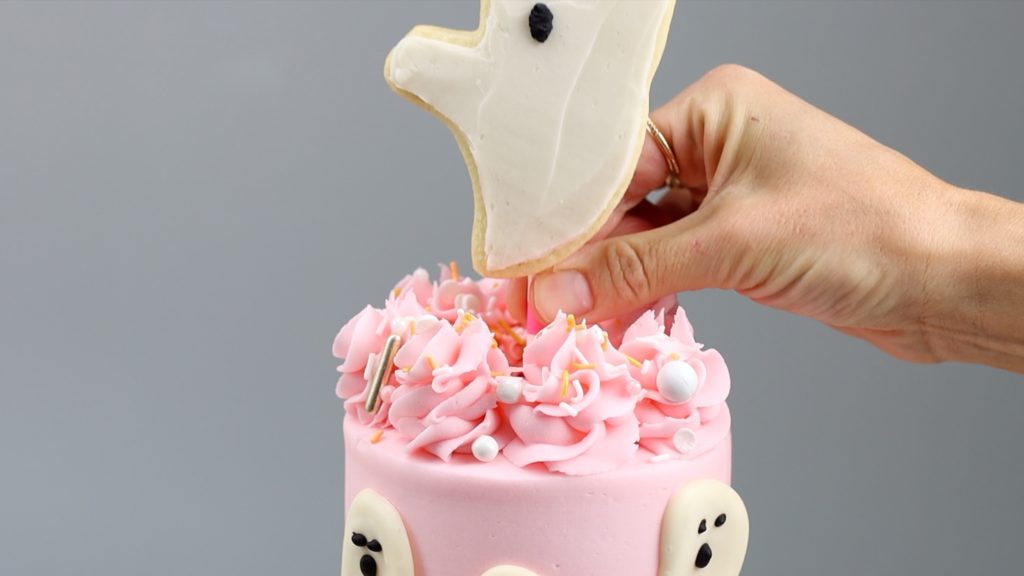
Put the cookie in the freezer for 5 minutes to set the buttercream decoration as well as the “glue” on the back of the cookie and then push the straw into your cake to secure your cookie cake topper in place!
#7 Piping Guides
Piping your design straight onto a cake? To make it easier and neater, draw or trace the design first onto paper or parchment paper and then cut it out.
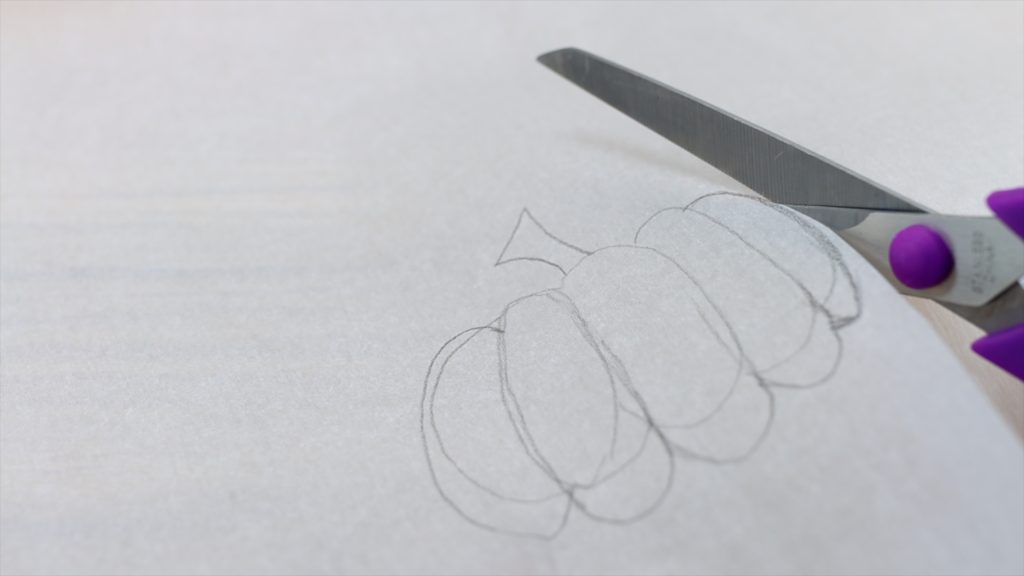
Hold it against the side of your cake after the frosting has set, so that the frosting is film and you don’t damage it. Use a toothpick to draw around the edge of the shape, creating a guide to pipe onto.
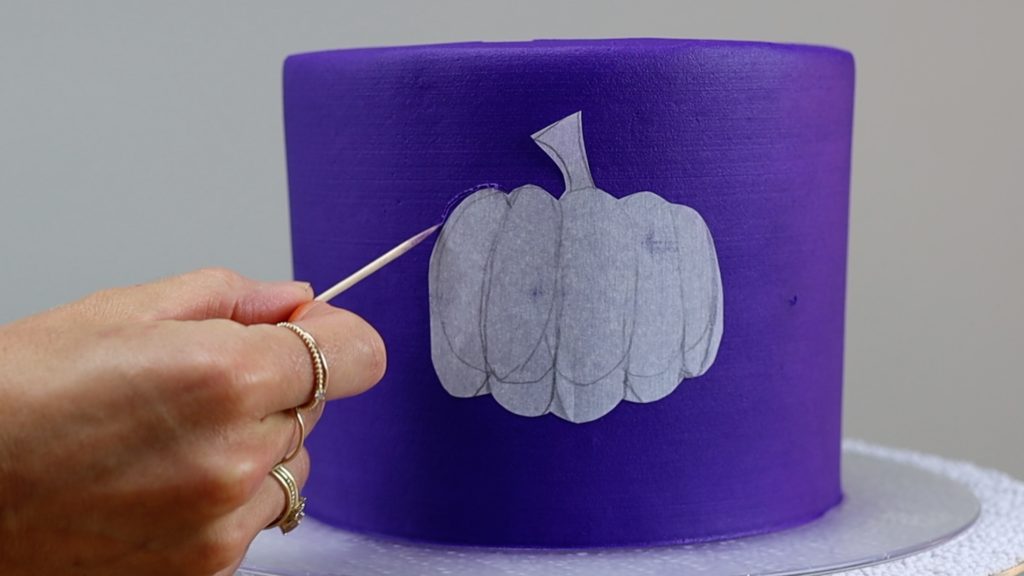
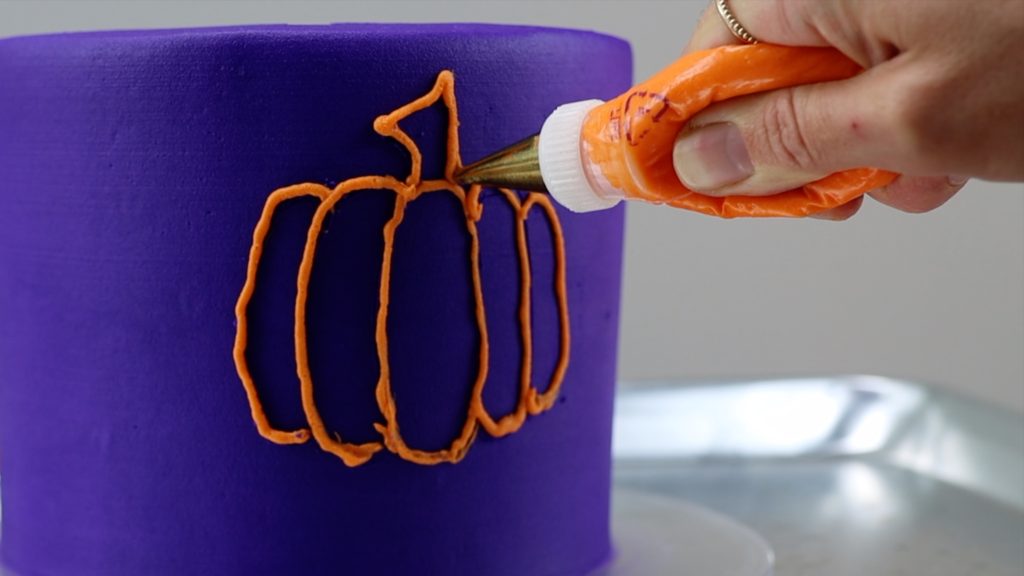
Now you can pipe onto the outline, using it as a guide instead of free-handing your design.
#8. Glitter Designs
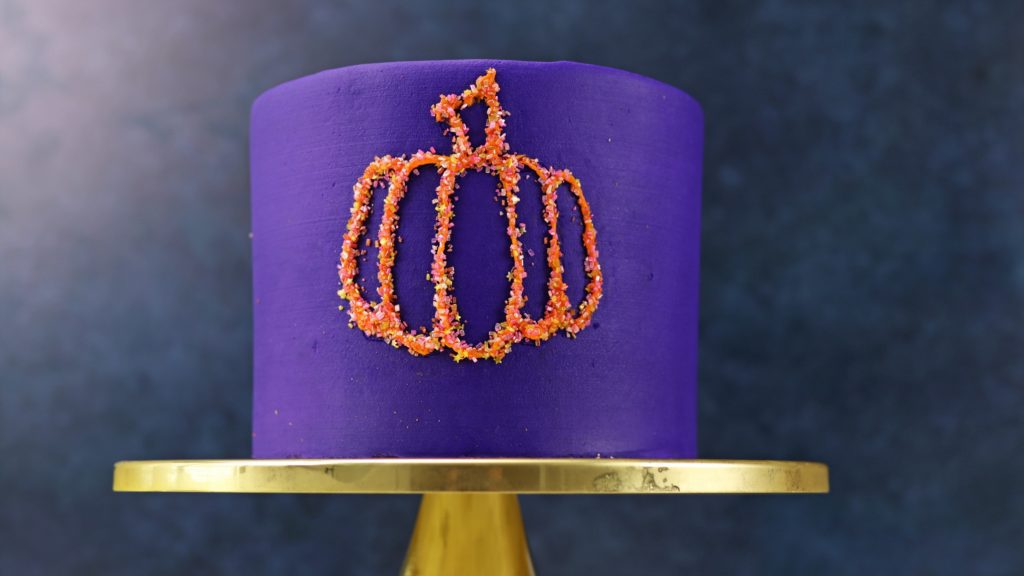
Don’t like your piping? Press sprinkles or coloured sugar over the outline and the sprinkles with stick to that soft and sticky piping. Use a paintbrush to brush off the extra sprinkles or sugar.
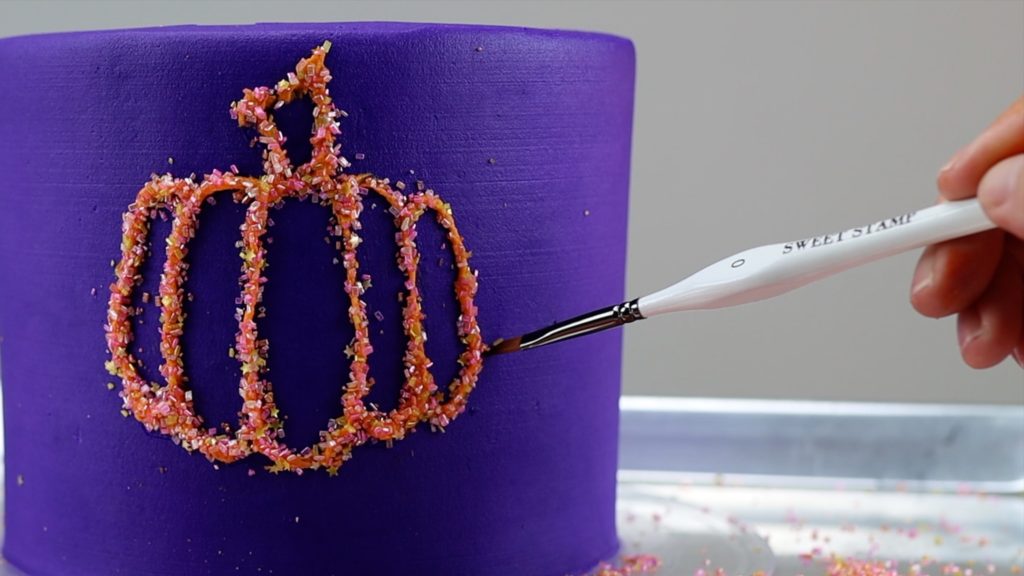
Adding sprinkles or sugar to the piping makes the lines colourful and sparkly, but also, they’ll appear much neater!
#9 Homemade Stencils
With parchment paper you can create your own stencils! Draw or trace your design, cut it out and press the parchment paper against your cake. This only works when the frosting is firm, so I put my cakes in the fridge for at least an hour before doing this.
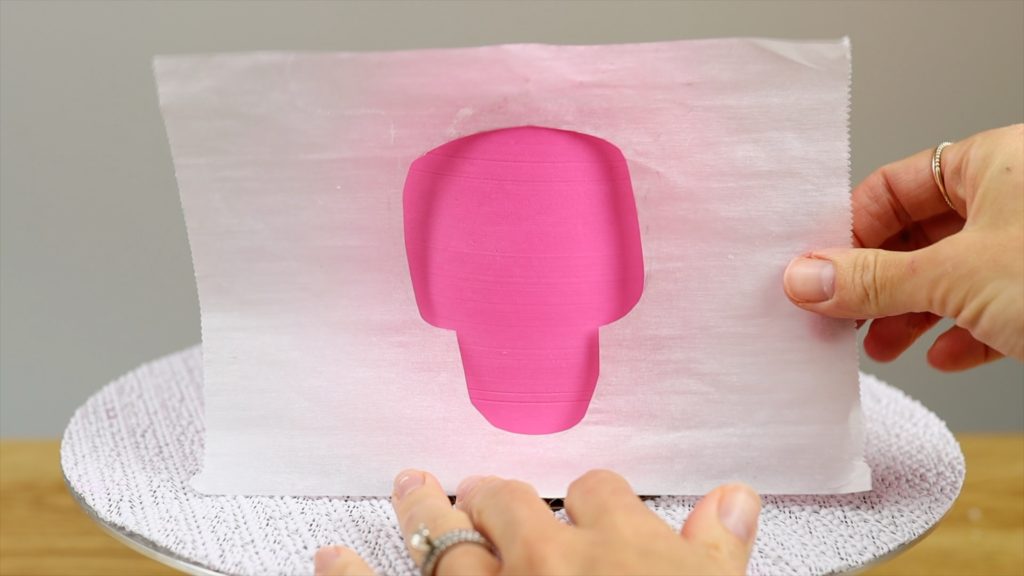
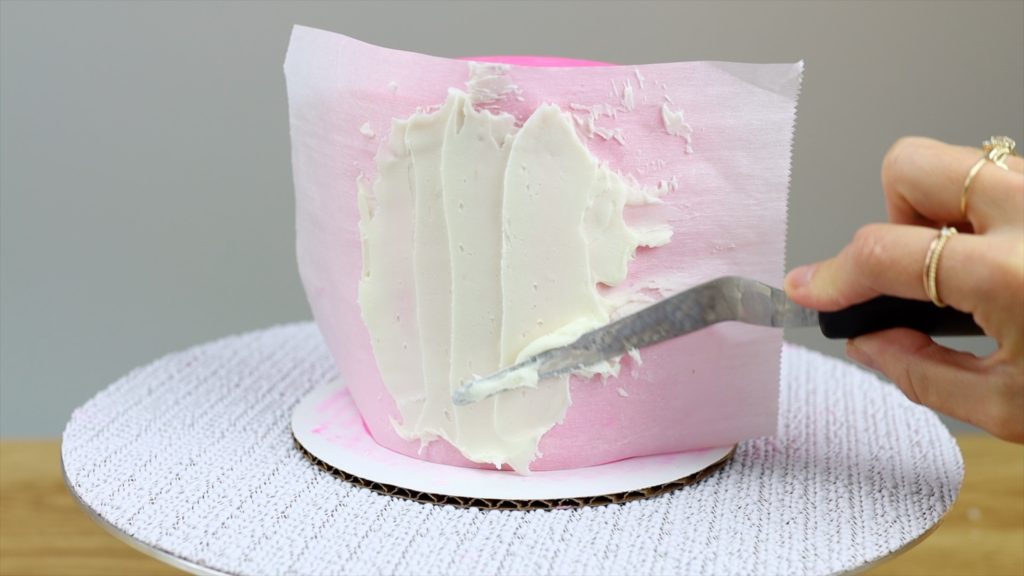
Spread buttercream over your homemade stencil and then smooth it with a cake scraper. With this technique you can make your own free stencils in whatever shape and size you like, saving lots of money and creating unlimited cake designs!
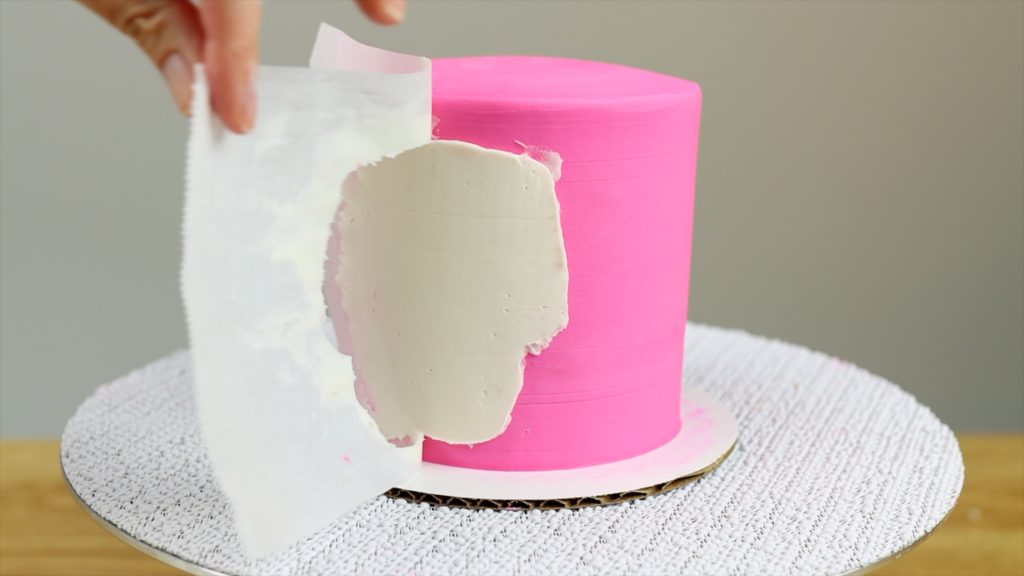
After you peel the parchment off you can touch up any smudges in the outline of your shape with a toothpick, scraping gently to remove unwanted buttercream.
#10 Quick Multi-Coloured Designs
Want to create a design with lots of colors? If you don’t have several small round piping tips you can pipe your design with ziplock bags, filling each one with a bit of colored buttercream and cutting off a tiny piece from one corner, and pushing the buttercream through that hole.
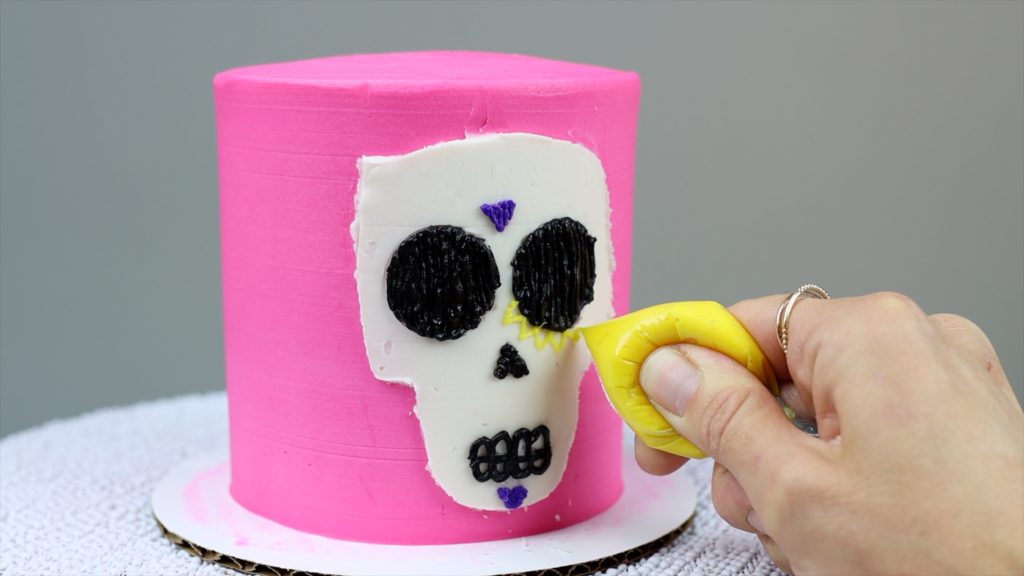
Use 5, 10, or however many colours you like, without spending forever washing and drying piping bags and piping tips in between each colour. You can pipe lines to create outlines or to fill in shapes, or pipe dots, and the more you cut off the corner of your ziplock bag, the wider your lines or dots will be when you squeeze the buttercream out of the bag.
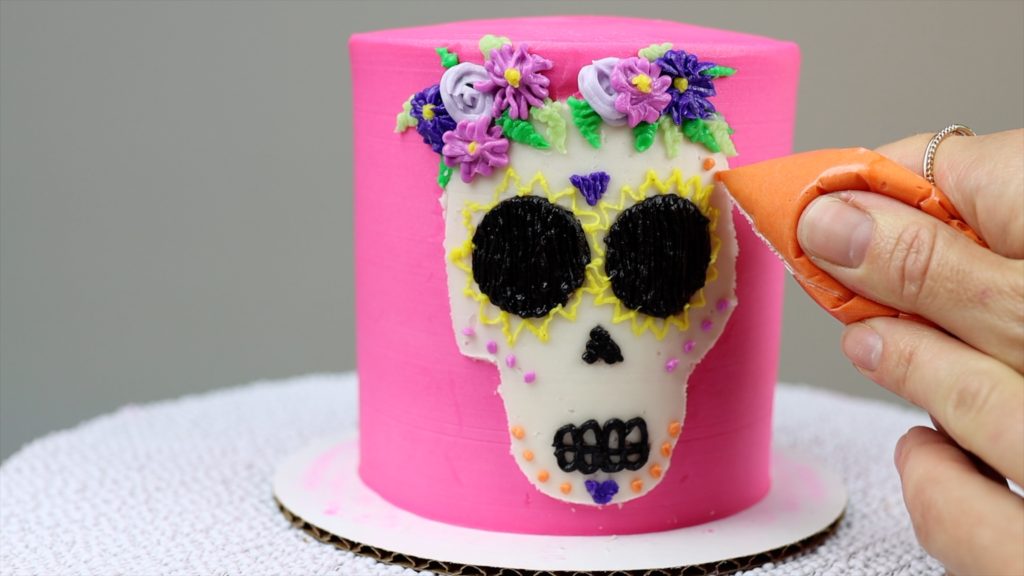
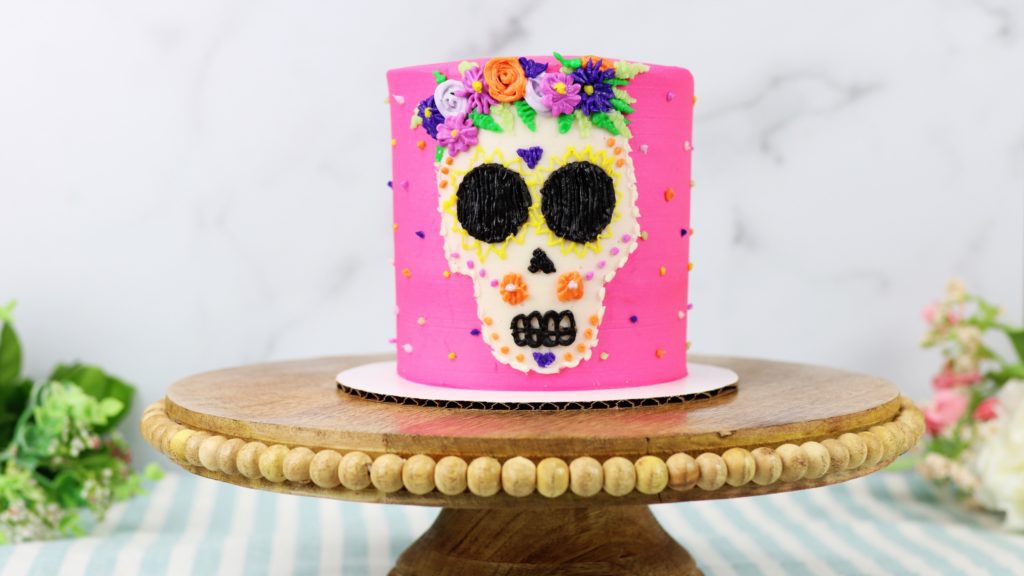
You’d never know intricate cakes like this were created with just a few ziplock bags!
I hope these Halloween hacks have been useful. Tell me in the comments which one’s your favourite and check out my online cake school for lots of cake decorating classes and courses.
Here’s the video version of this tutorial:
There are a LOT of cake decorating tools available but here are my 10 absolute must haves, which you’ll get the most out of because you can use each one for several different decorating techniques.
If you prefer to watch a video of this tutorial, scroll to the bottom of the page.
#1
Starting with the basics, an
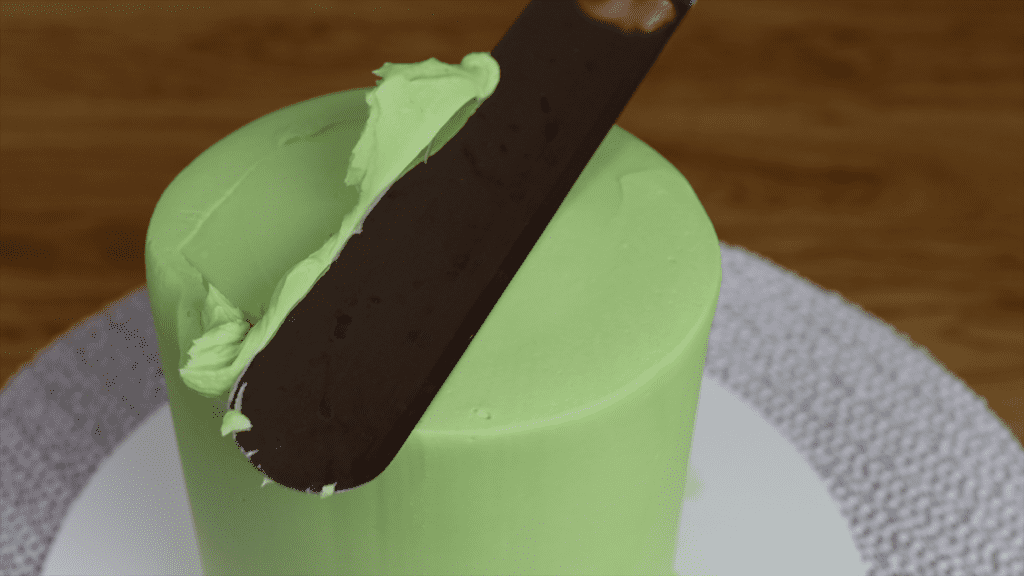
It’s also the quickest way to tidy up the top edge of a cake to get nice sharp edges, by pushing sideways from the outside of the cake towards the middle and swiping away to leave neat edges behind.
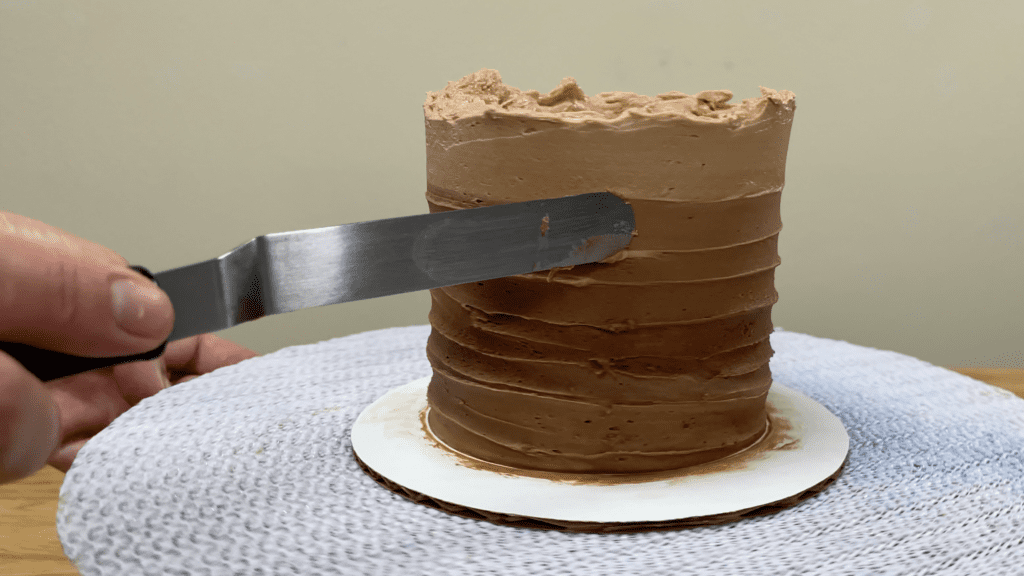
You can use it to to decorate a cake too, creating texture in the frosting by pressing the tip into the frosting and spinning the cake to create grooves around the sides or “swoosh”ing it upwards to create vertical texture going from bottom to top.
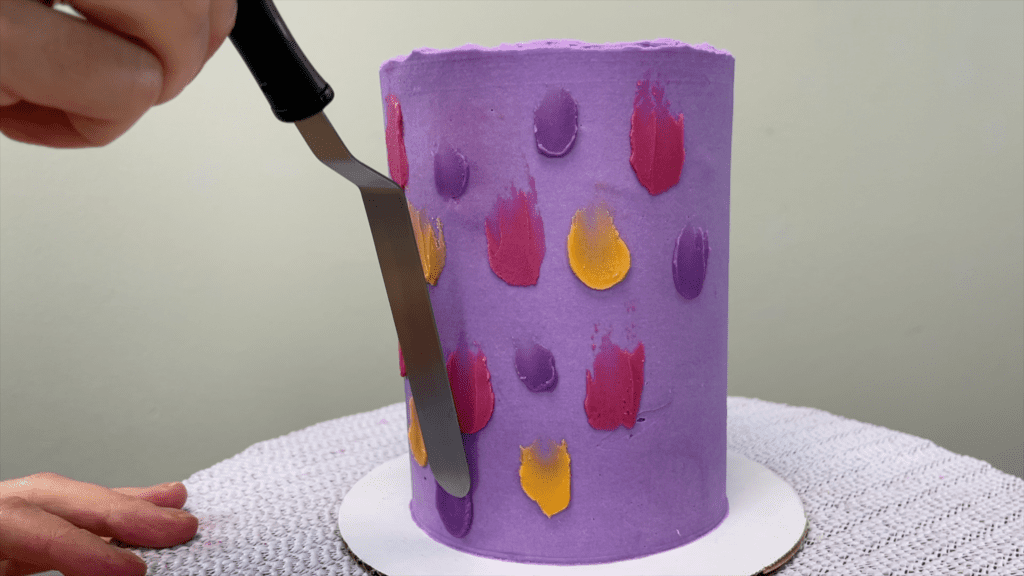
Use it to apply colours to the cake in a painted style, using a small amount of frosting on the tip of the
An

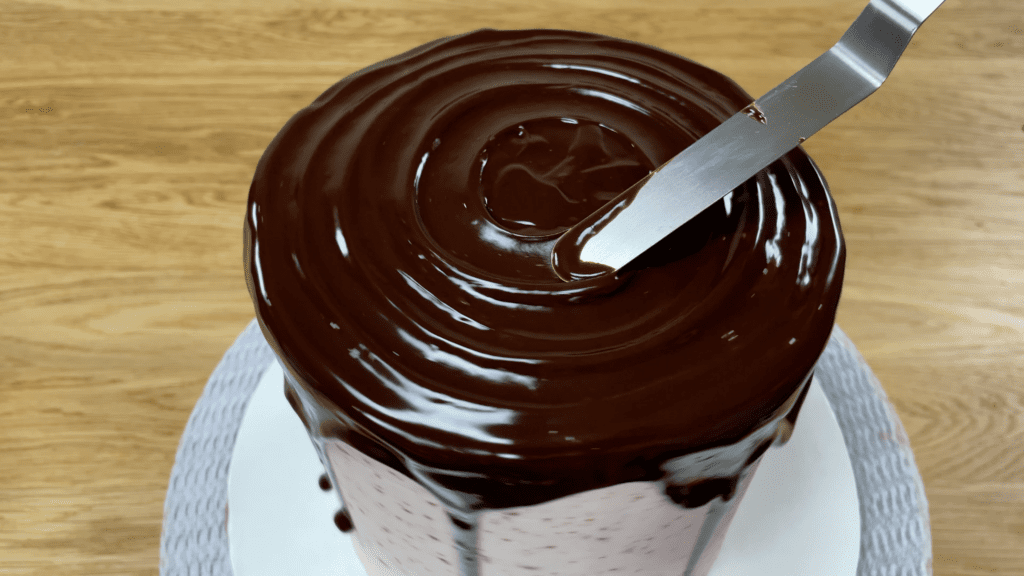
If you’re a fan of drip cakes, an
#2 Cake Scraper
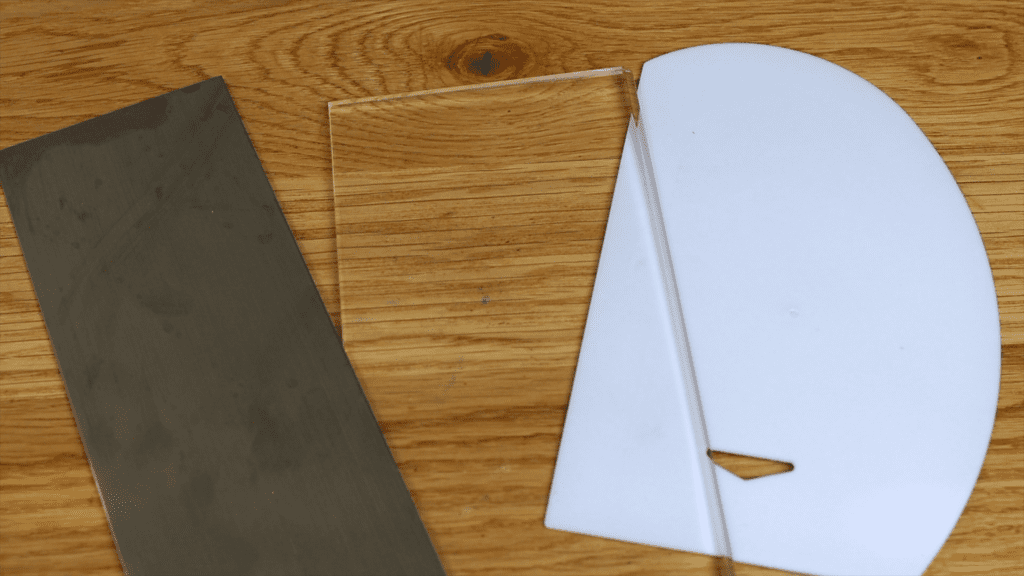
A cake scraper is another basic tool that’s an absolute essential if you want to get smooth frosting on your cakes, and they come in different materials like plastic, metal and acrylic. Can’t choose? Check out my tutorial on the best cake scraper!
#3
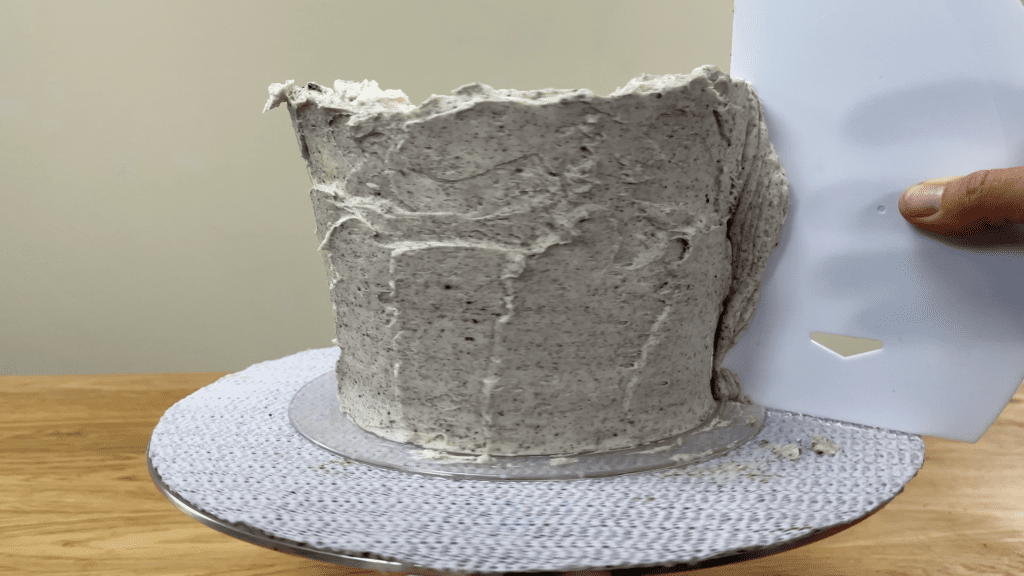
As you’ve seen with the cakes so far, having a
#4 Piping Bags
Piping bags allow you to apply frosting quickly to a cake, whether that’s by piping the filling onto each cake layer or piping it around the sides of the cake before you smooth it.
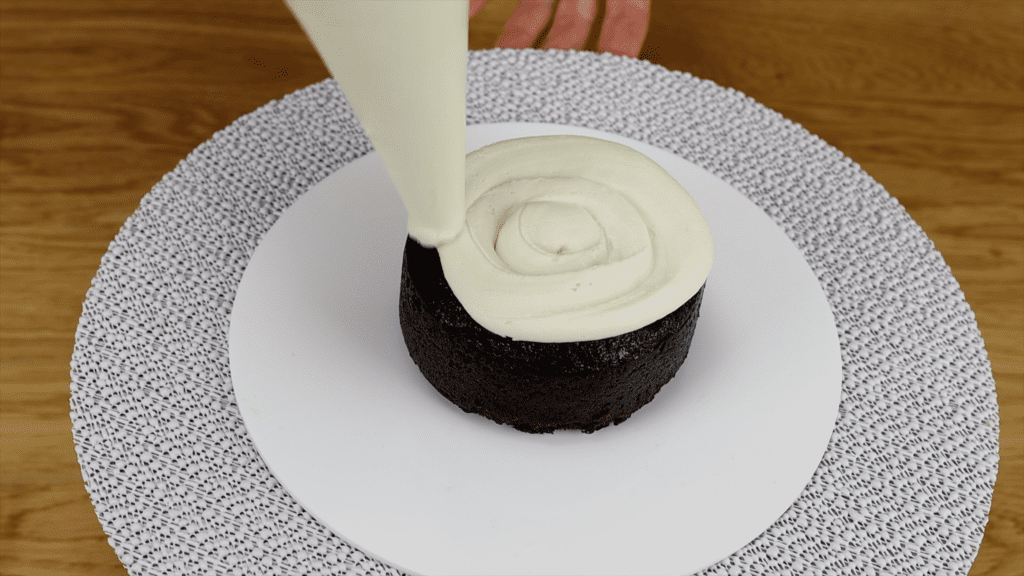
This is especially useful for mini cakes, which are very lightweight and wobbly so you’ll find it much easier to pipe the frosting onto the cake, than spreading it one with an
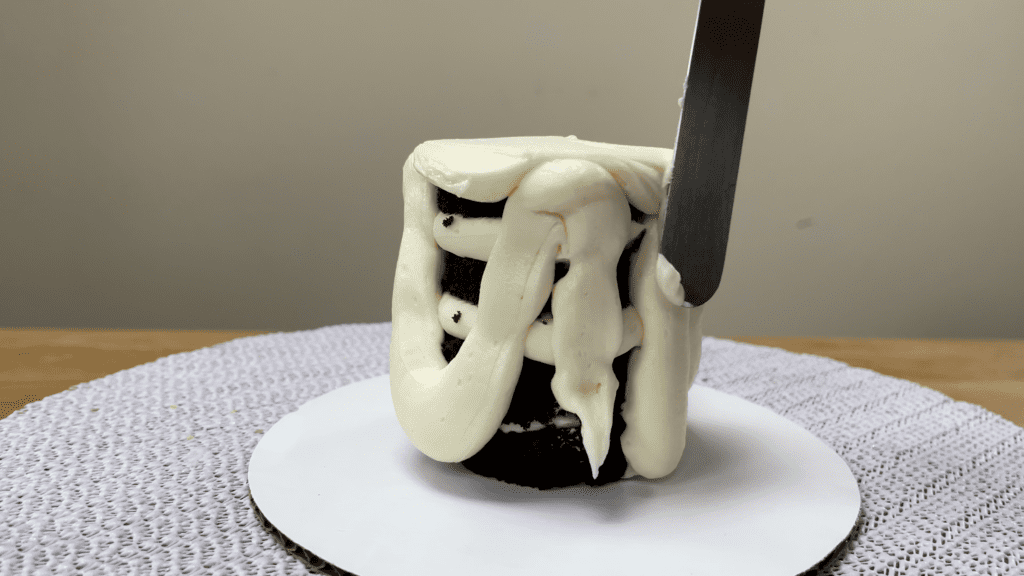
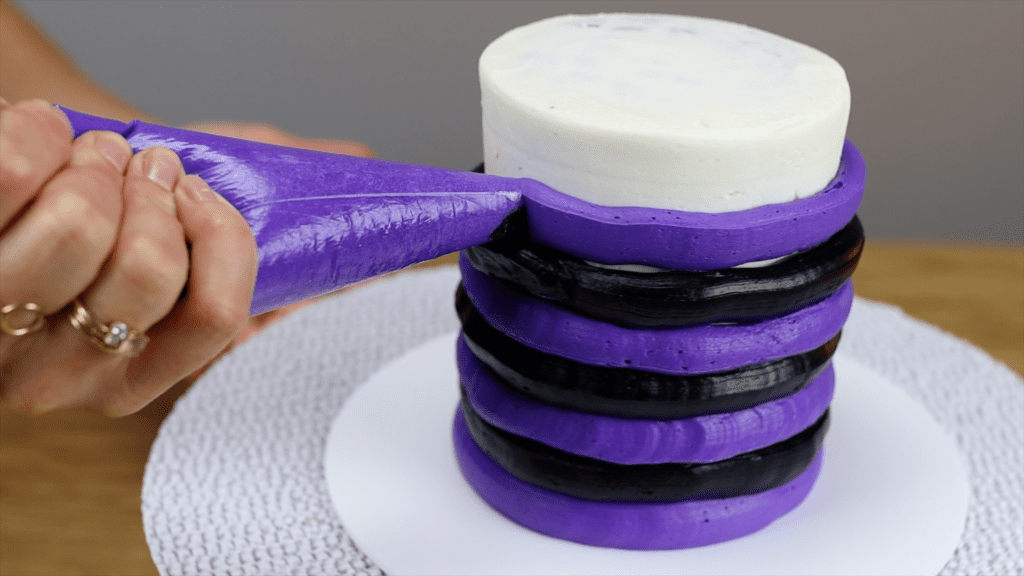
You can also use piping bags to create stripes on a cake without needing a striped cake comb.
#5 Piping Tips
Adding piping tips to piping bags will give you a whole new range of possibilities for cake decorating. A 1M tip is my go-to tip and it pipes beautiful swirls onto the top of a cake.
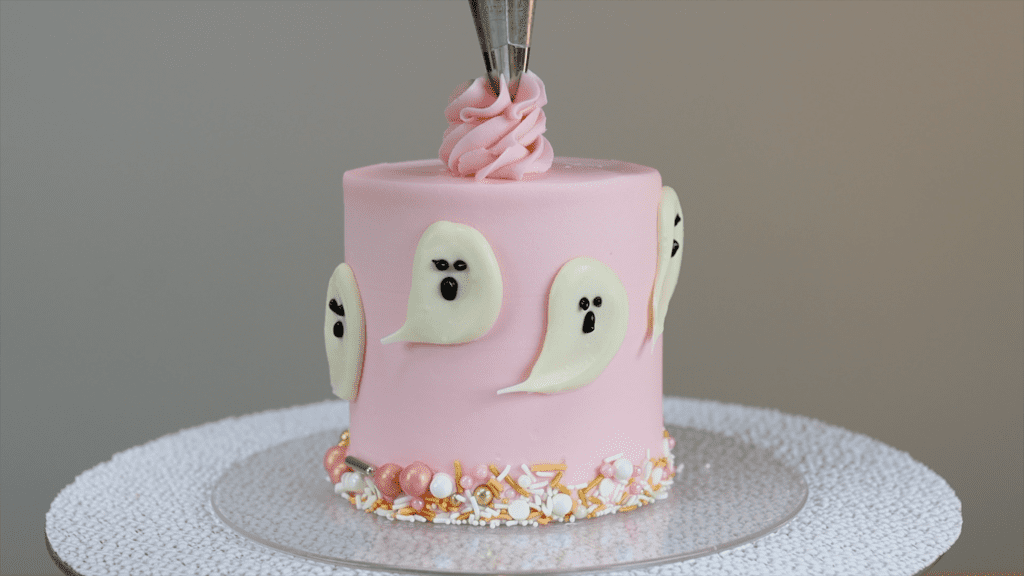
You can also buy star shaped tips where the prongs are shorter and much more open, with a larger hole in the middle of the tip, and these are called open star tips. These work really well for wave or shell borders around the top and bottom of cakes.
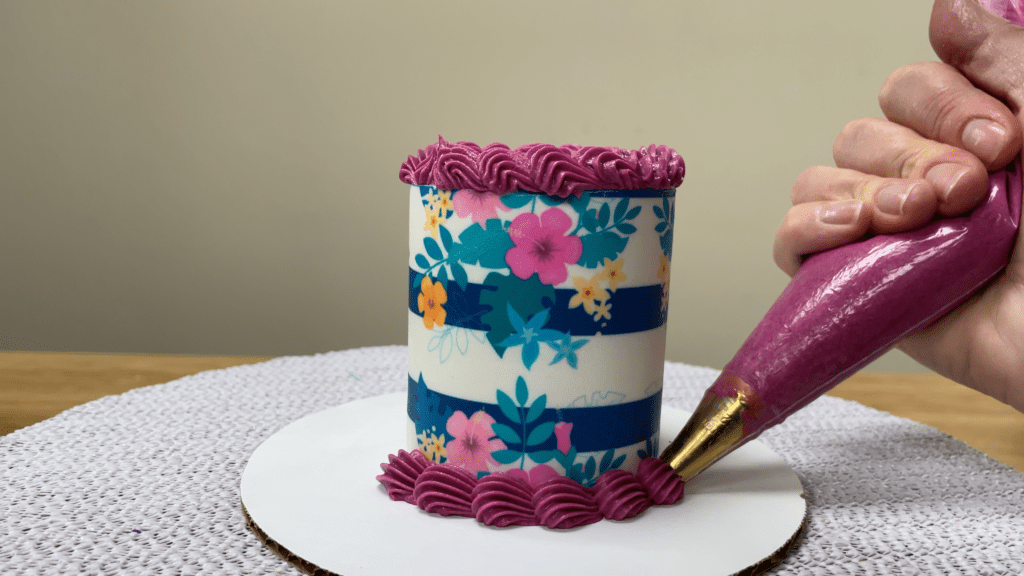
You can also use open star tips to pipe texture onto smooth frosting. You can see that open star tips can be large, like a 4B, or very small, like an 8B or a #199. Small tips are perfect for tiny details and borders on mini cakes!
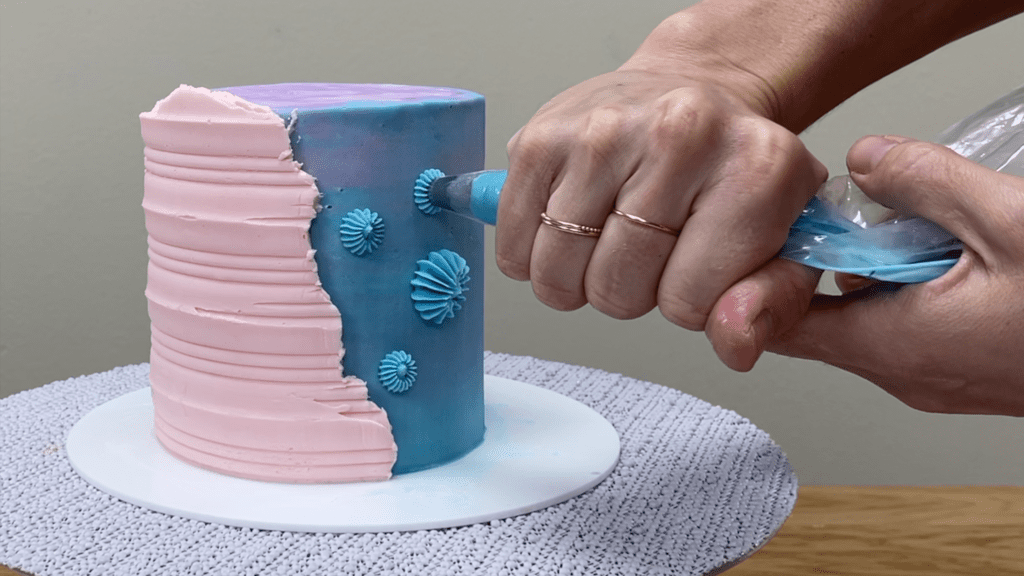
A petal tip like a #125 pipes ruffles of frosting which you can layer around a cake to cover it completely.
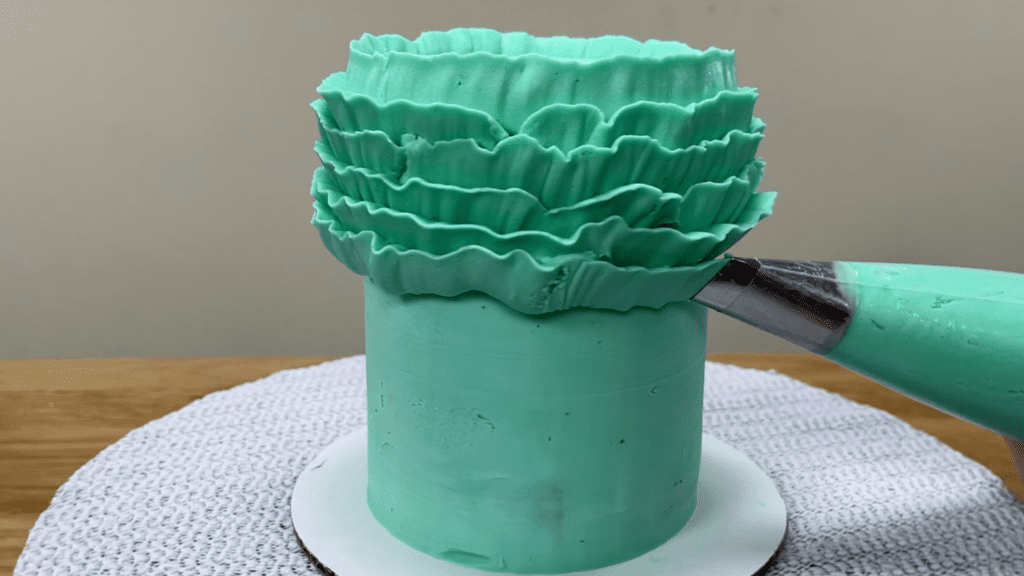
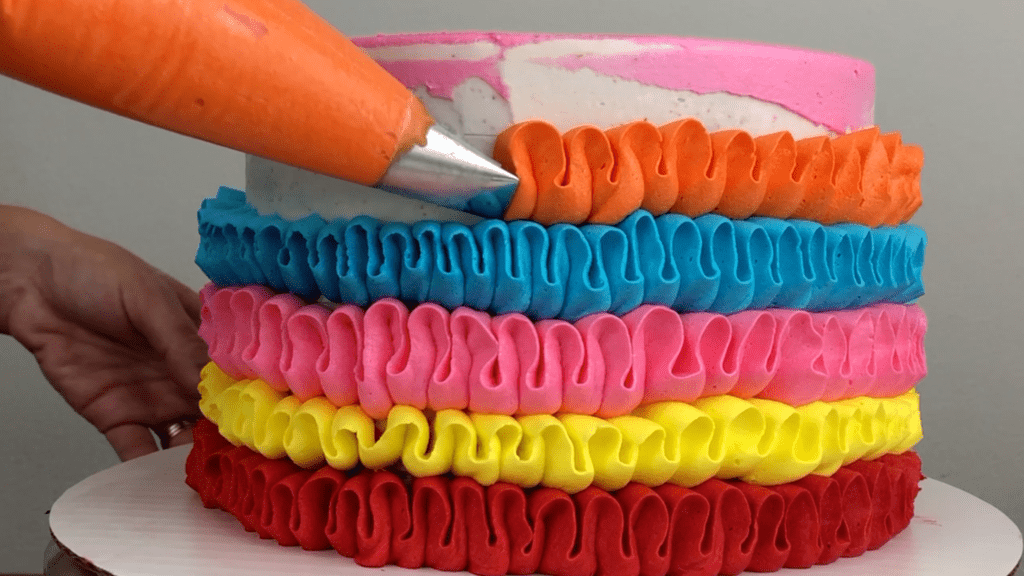
Petal tips are wide at one end and narrow at the other, which creates ribbons of frosting and allows for endless decorating possibilities. I love looped ribbons of frosting like this and I’ll show you how to use a petal tip with another must have tool in a moment for another beautiful cake decoration.
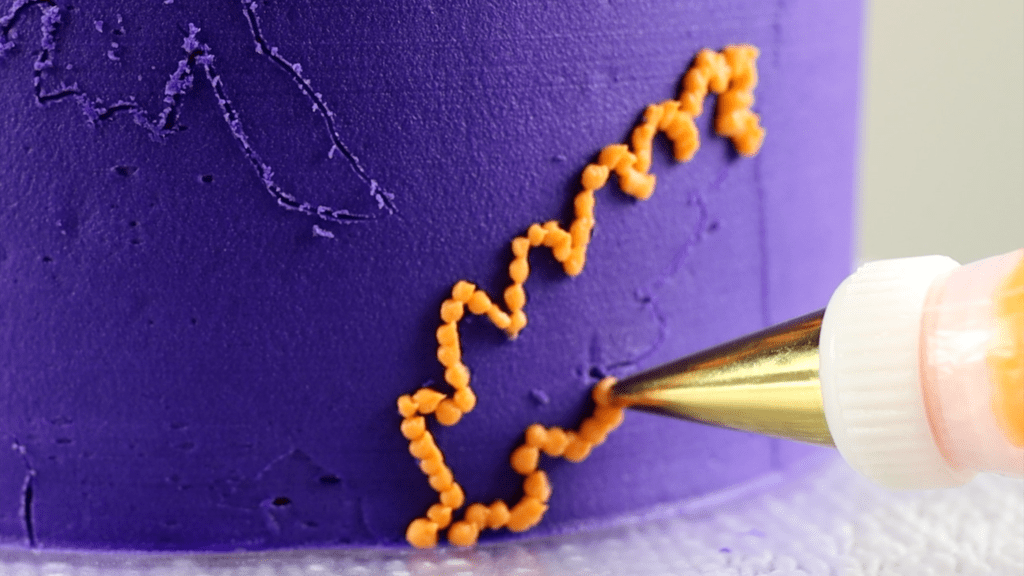
Small round tips can be used to pipe letters if you want to write something on a cake and the smaller the number of the tip (e.g. #1 or #2), the smaller the hole and the thinner the piped line will be.

With a small round tip you can pipe tiny dots to create shapes, called pointillism, which is an easy way to create shapes and patterns and designs on a cake without needing to buy a specific stencil or mold to each cake.
#6 Textured Cake Combs
Textured cake combs are one of my favourite cake decorating tools because in a few seconds you can make a plain cake look stunning with a huge variety of textured patterns: pleats, zig zags, scallops, and even stripes!
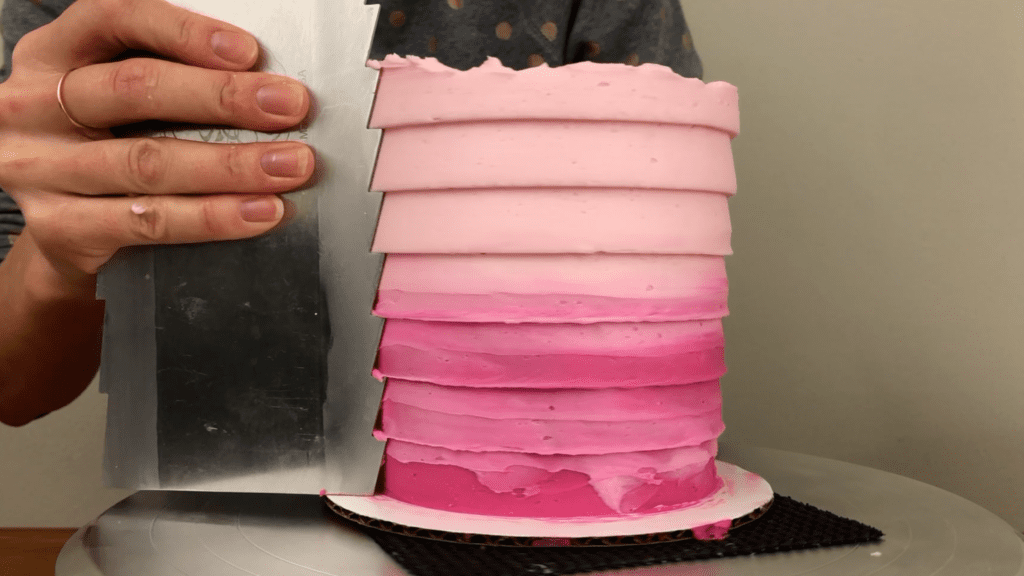
Stripes are the most precise and neat if you use a striped cake comb and chill the first colour of frosting before spreading or piping the next colour into the grooves. As you scrape and scrape and scrape off the excess frosting, the stripes will get neater and neater.
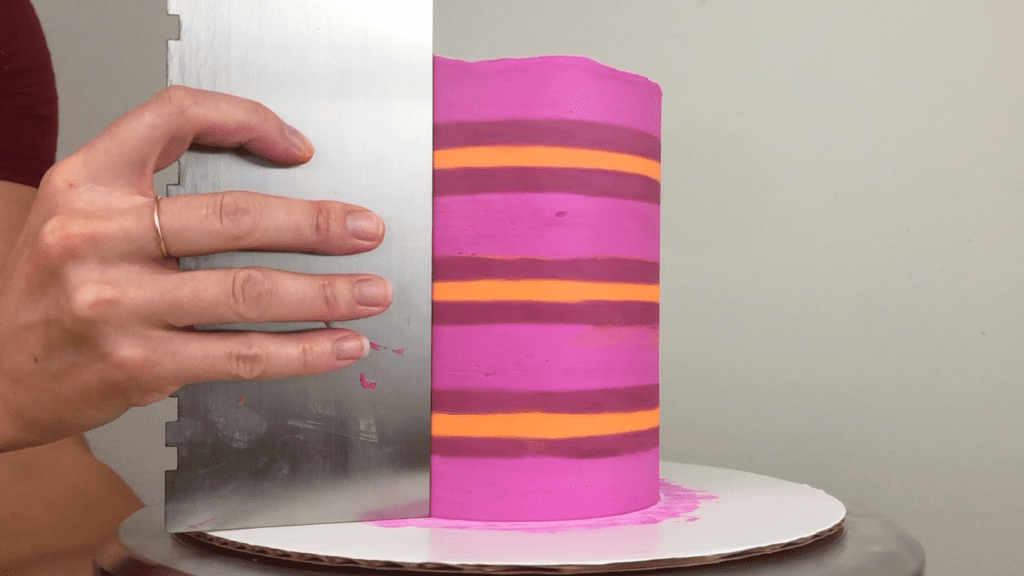
#7 Cookie Cutters
Cookie cutters are maybe a surprising tool for cake decorating, but they’re really useful for a lot of techniques. You can make your own stencils with them, tracing around them onto parchment paper and then cutting out the shape you’ve drawn, and when you spread frosting over the shape onto a cake, you’ll leave a perfect design on the frosting.
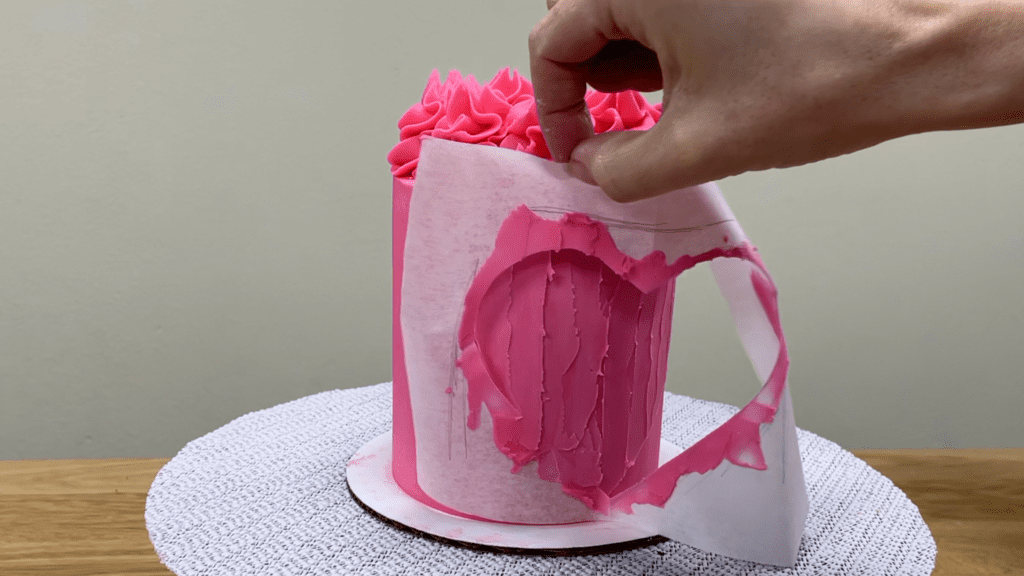
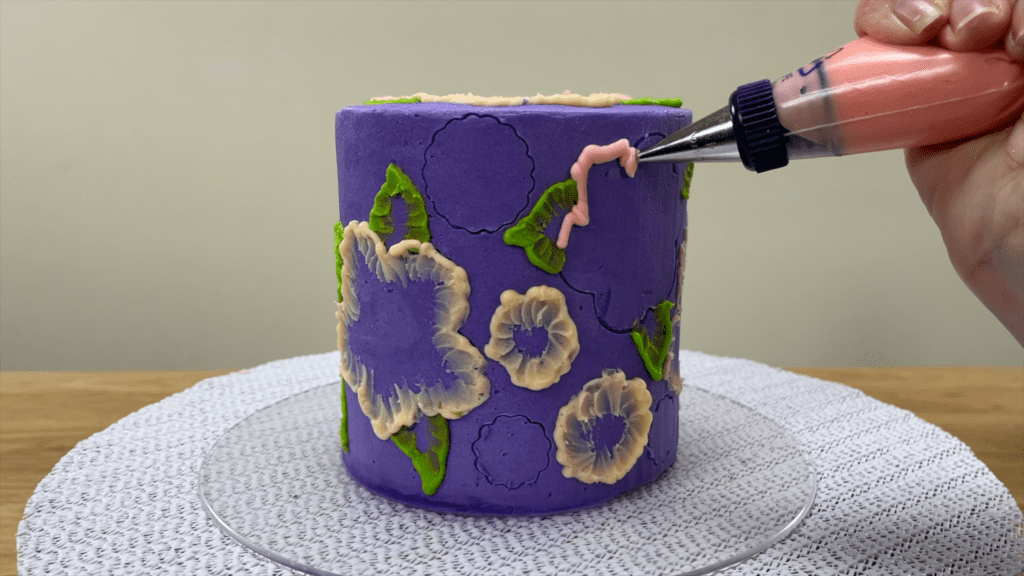
They’re a great guide for piping, too, outlining the design before you pipe it onto the cake.
Cookie cutters can even be used to make cake toppers with melted chocolate or candy by placing the cookie cutter on a piece of parchment paper and pouring the liquid into it.
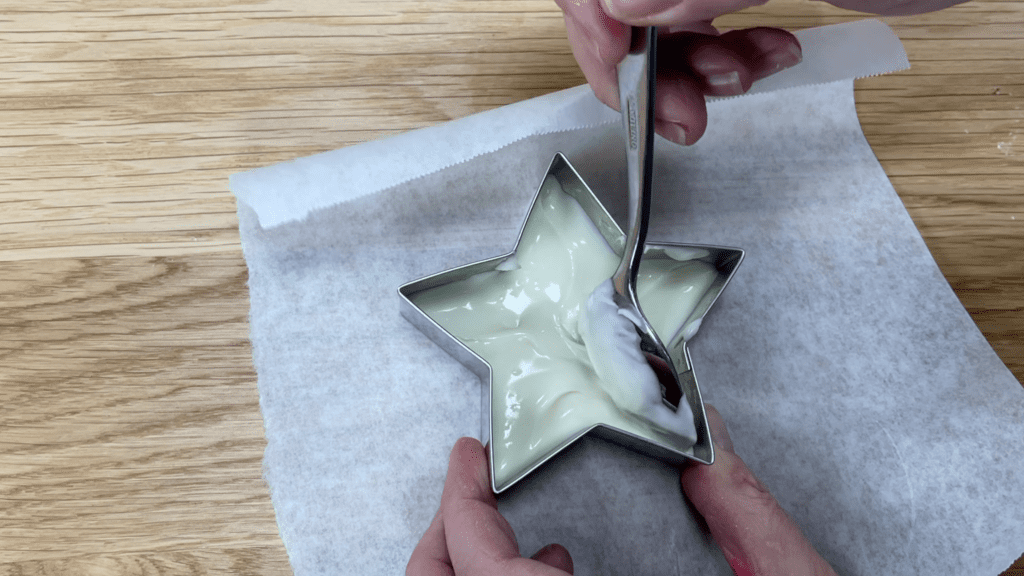
When it sets and you push it through the cookie cutter, you’ll have a neat shape to place on top of your cake!
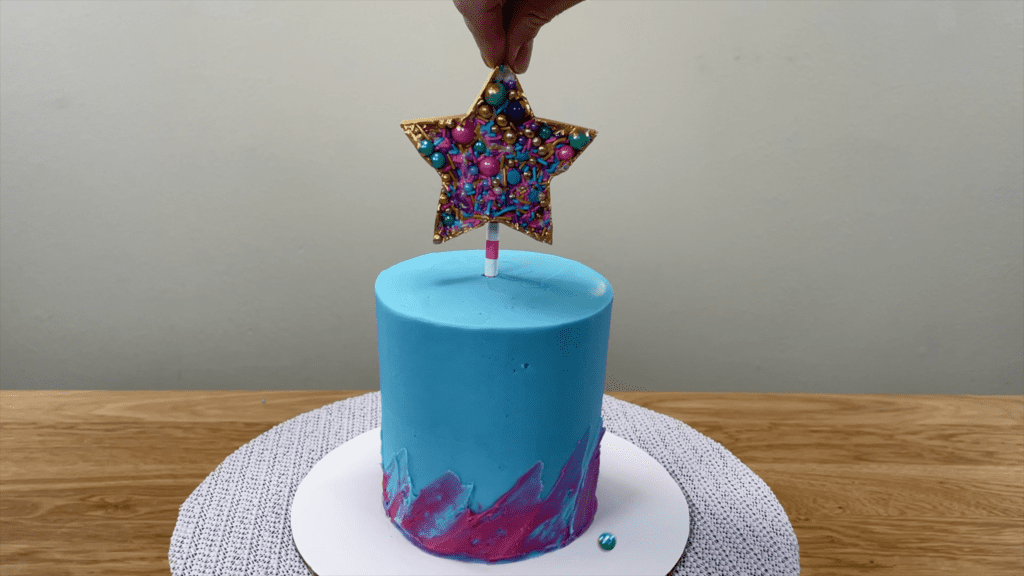
Of course, you can also use cookie cutters to make cookies, pressing a paper straw or a wooden skewer into them before baking and then you can decorate them and use them as toppers on a cake.
#8 Microwave-Safe Bowl
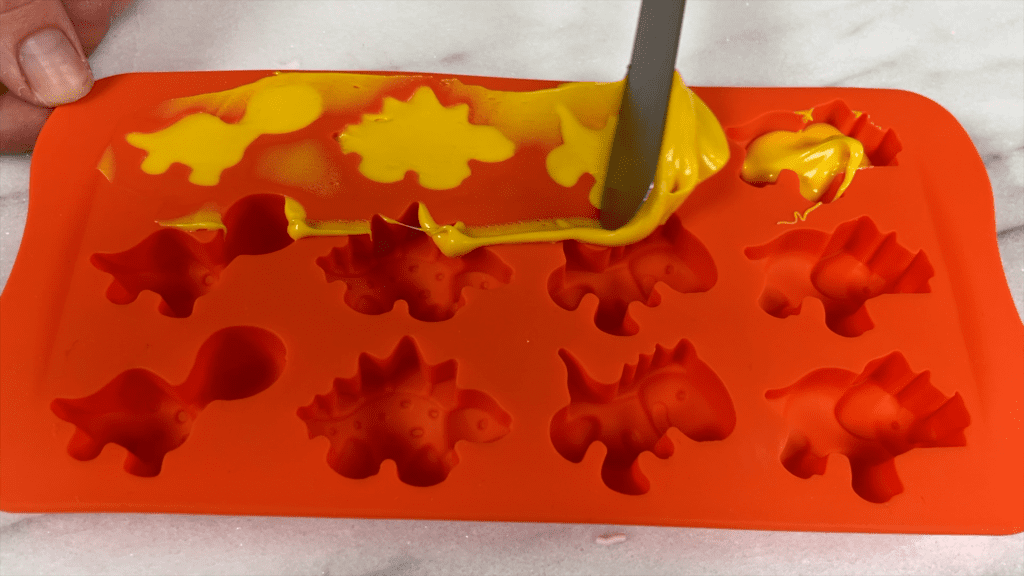
If you want to melt chocolate so that you can make chocolate decorations like these cute little dinosaurs, a microwave-safe bowl is a must-have. Bowls that aren’t microwave safe get incredibly hot, which will burn the chocolate and cause it to seize while you’re heating it.
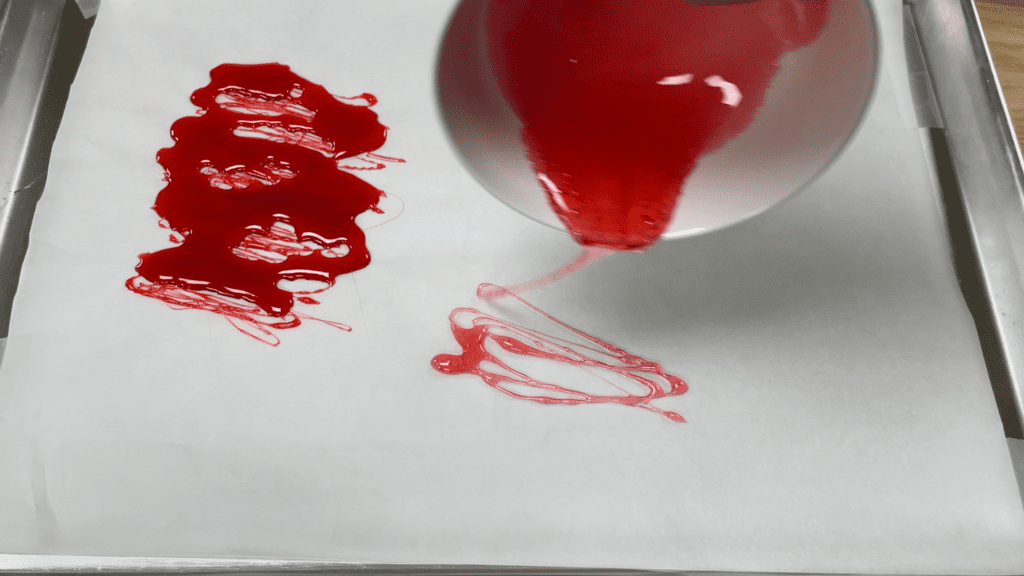
You can also use microwave safe bowls to melt candy evenly without burning it, and then drizzle it to make fun shapes for cake toppers. If the bowl is not microwave safe and gets too hot, the colour of the candy would turn brown.
#9 Flower Nail
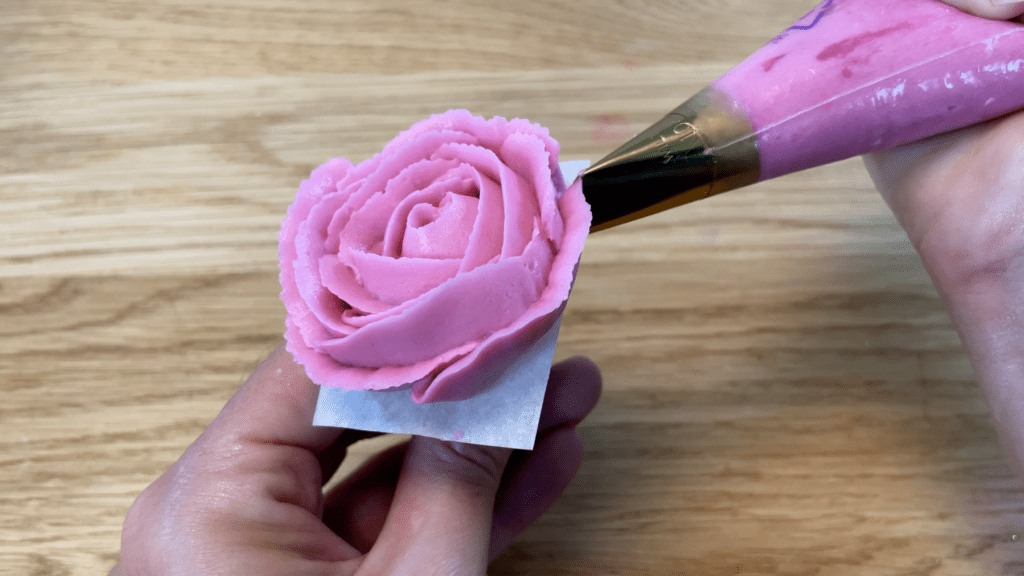
This is called a flower nail and combined with a piping tip and piping bag and a little square of parchment paper, you can use a flower nail to create all sorts of shapes! With a petal tip you can pipe (obviously!) petals to make flowers to attach onto a cake.
You can use the same tip to pipe these pinwheels, spinning the nail between your thumb and finger and holding the wide end of the tip pressed down towards the middle of the nail.
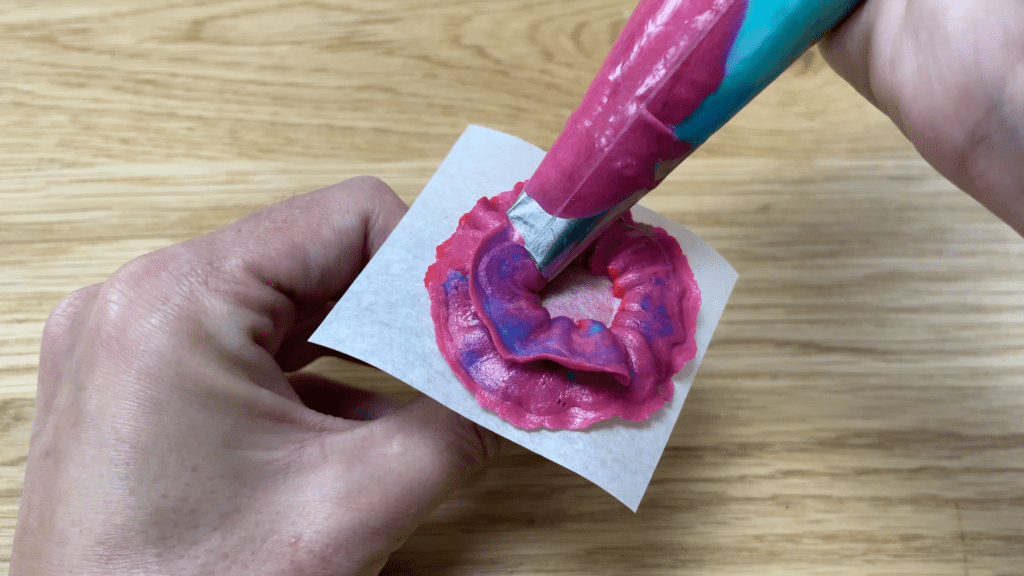
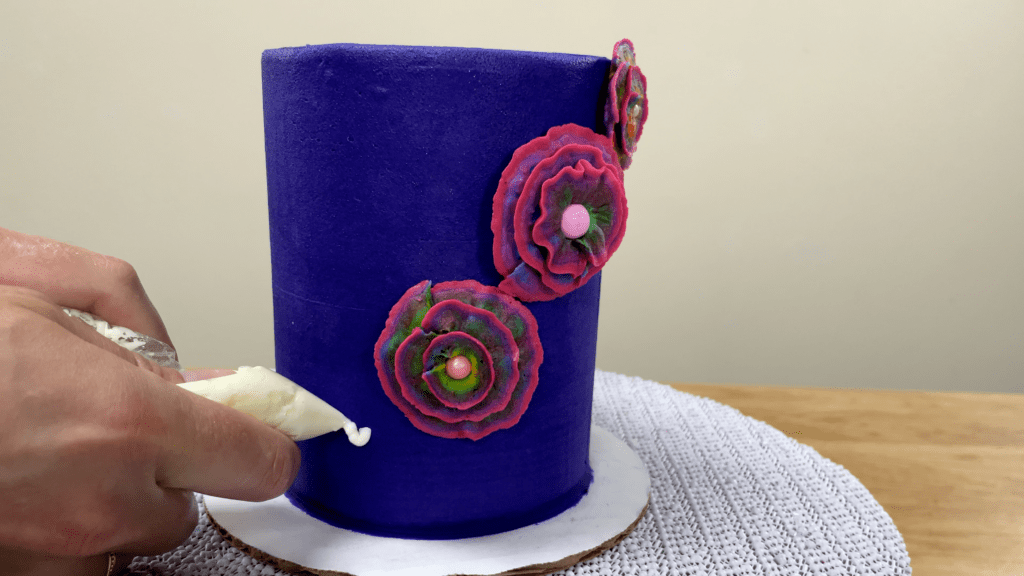
To attach them to a cake, freeze them for a few minutes to set the buttercream and then use a dot of fresh buttercream as glue to stick them onto the side of the cake.
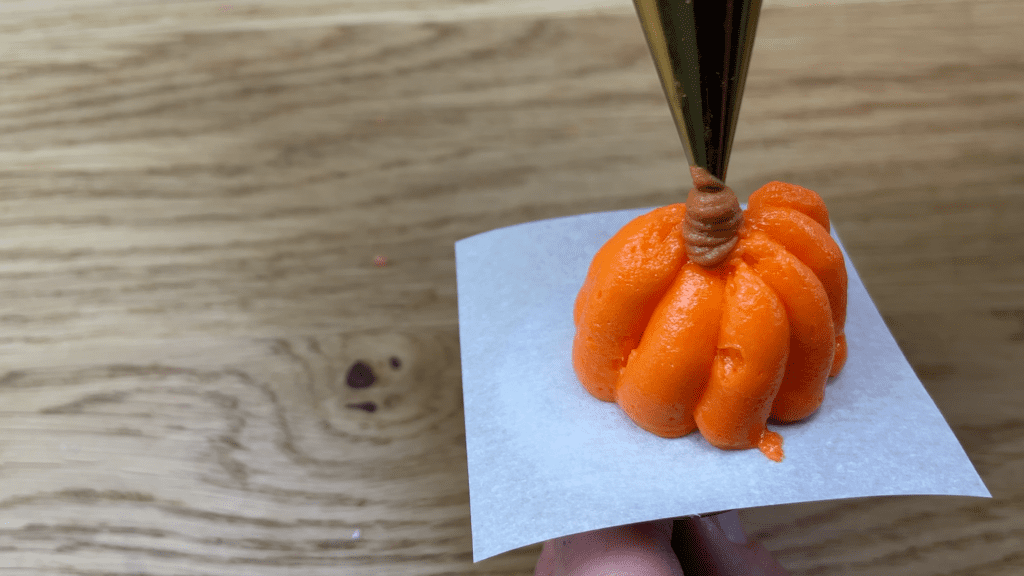
A flower nail isn’t just for flowers though – use a round tip to pipe a pumpkin, for example!
#10 Cake Stand
Finally, when you finish your cake you’ll want to show it off to your friends and family and customers, or at least show them a photo! A cake stand is an easy way to make a cake look instantly more professional and impressive.
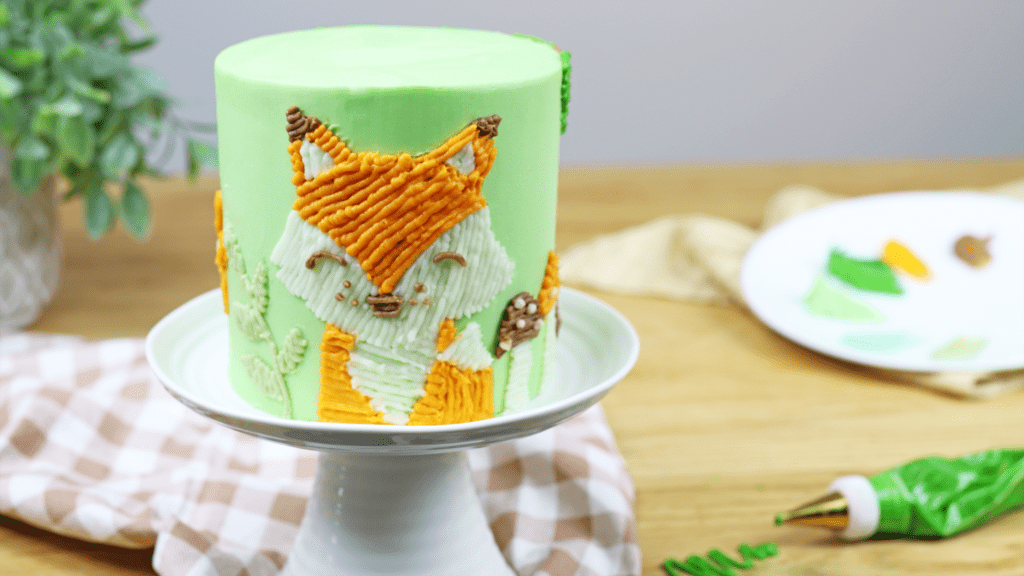
If you’re going to buy just one, choose a white one which will go well with any colour scheme and as far as size, I like stands that are 2-4 inches wider than the cake. For my online course on Cake Photography Like A Pro and LOTS of other classes and courses for cake decorating, check out my online cake school.
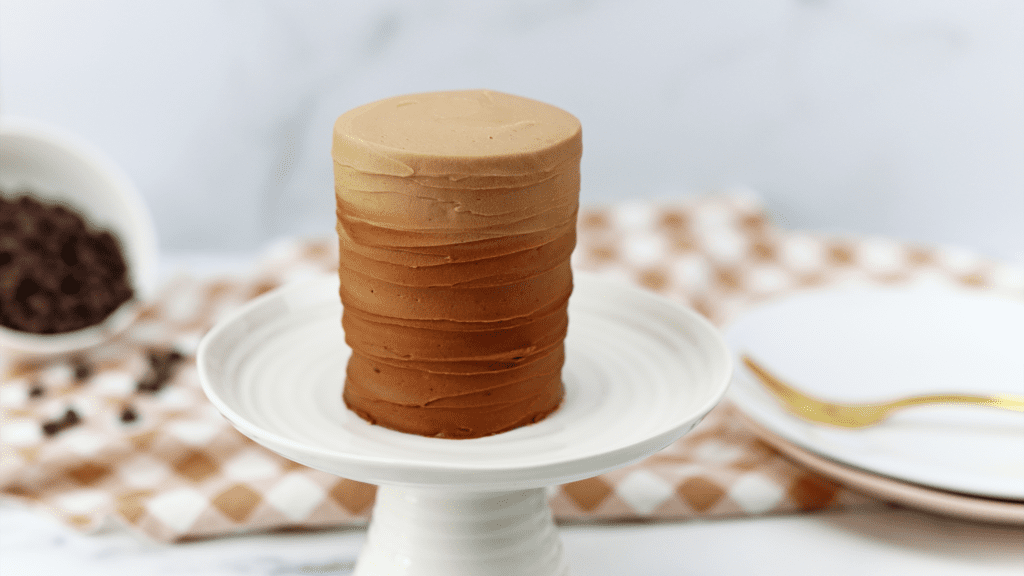
Here’s the video version of this tutorial:
Plastic, acrylic or metal – which is the best kind of cake scraper? I’m going to show you how to prepare a cake to use any of these options and then I’ll demonstrate the pros and cons of each material: how well they smooth frosting, cost, lifespan, and how quick and easy they are to use as you smooth the frosting on your cake. I’ll also share the most important thing to look for when you’re choosing a cake comb. No affiliate links – just honest reviews and opinons!
If you prefer to watch a video of this tutorial, scroll to the bottom of the page.
Whatever cake scraper you’re using, there are some essential basics to get right first if you want to achieve neatly textured or smooth frosting. Going to the very beginning for just a moment, make sure your cake layers are stacked directly on top of each other so that the cake is straight, not leaning to one side.
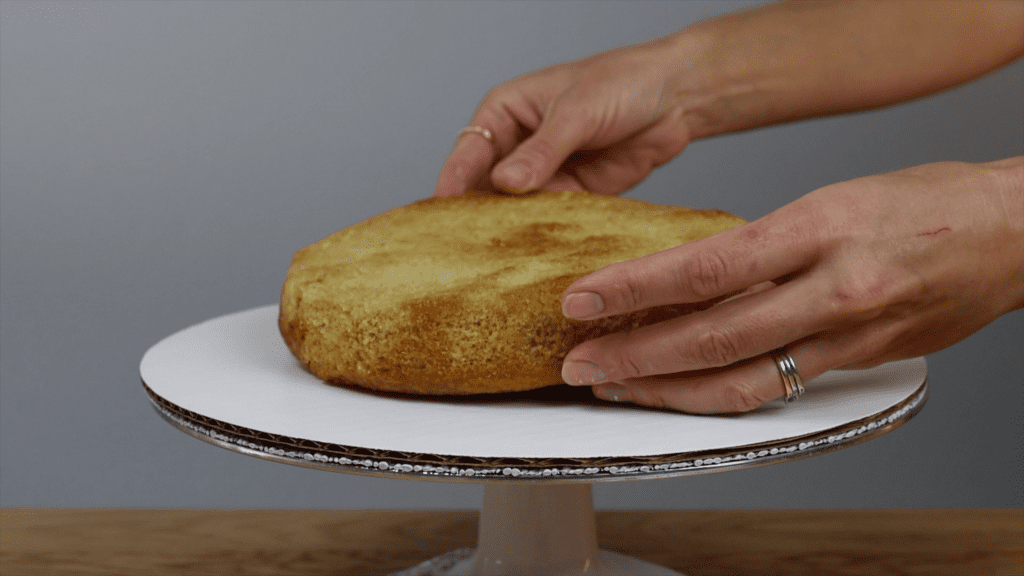
Trimming the tops of your cake layers with a serrated knife will make the tops flat and level will make this easier.
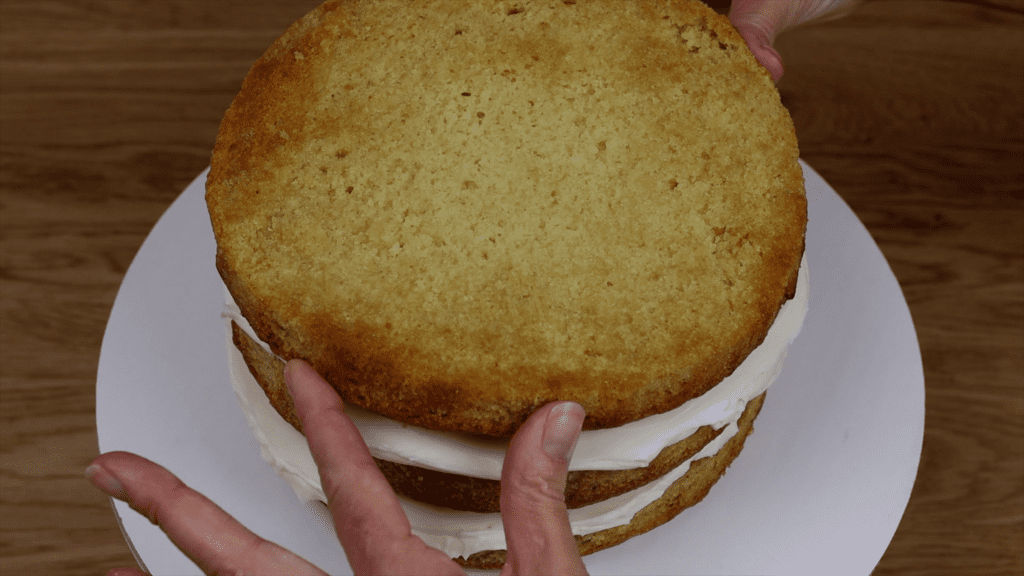
Cover the cake with a crumb coat, which is a very thin layer of frosting that completely covers the cake and traps any crumbs that come off the cake, so that those crumbs are stuck in this layer of frosting.
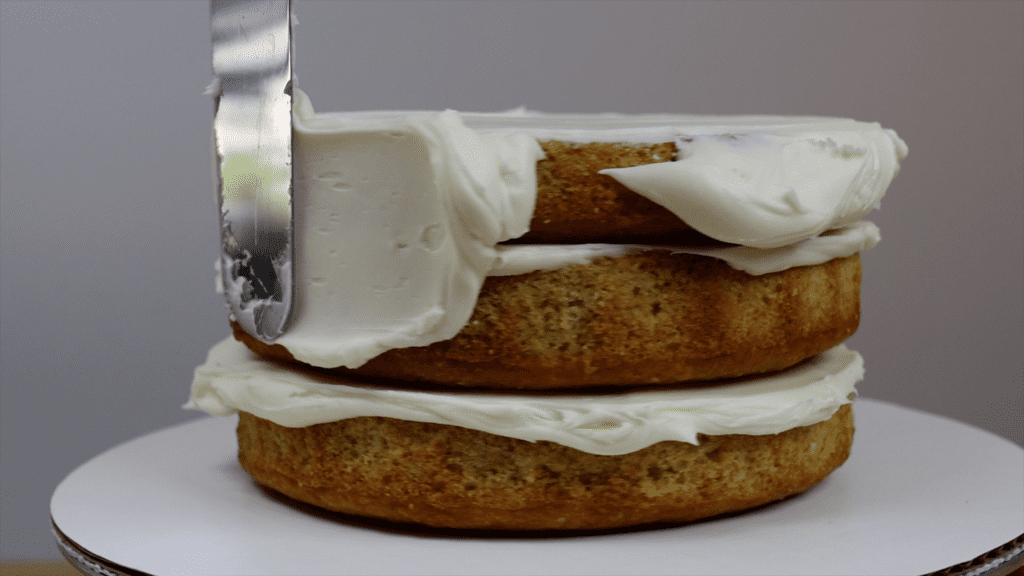
You can see that this frosting is gliding onto the cake and it’s easy to spread and smooth, and that’s because of two tricks: the first is that these cake layers have been in the fridge for about an hour, so they’re firm and less crumbly than room temperature cakes and that makes them easier to frost.
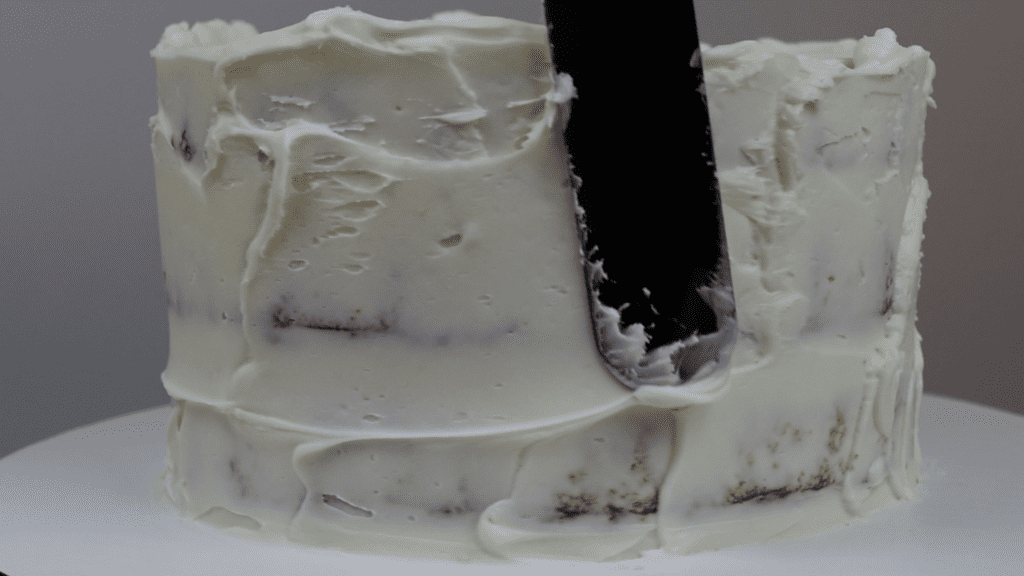
The second trick is making sure that your buttercream isn’t too stiff. This buttercream is easy to stir and drag a spatula through, and it’s loose enough that if you tap the spatula on the bowl, the frosting falls back down into the bowl. This is the perfect consistency. If your frosting is stiffer than this just add a bit of milk or cream to thin it out.
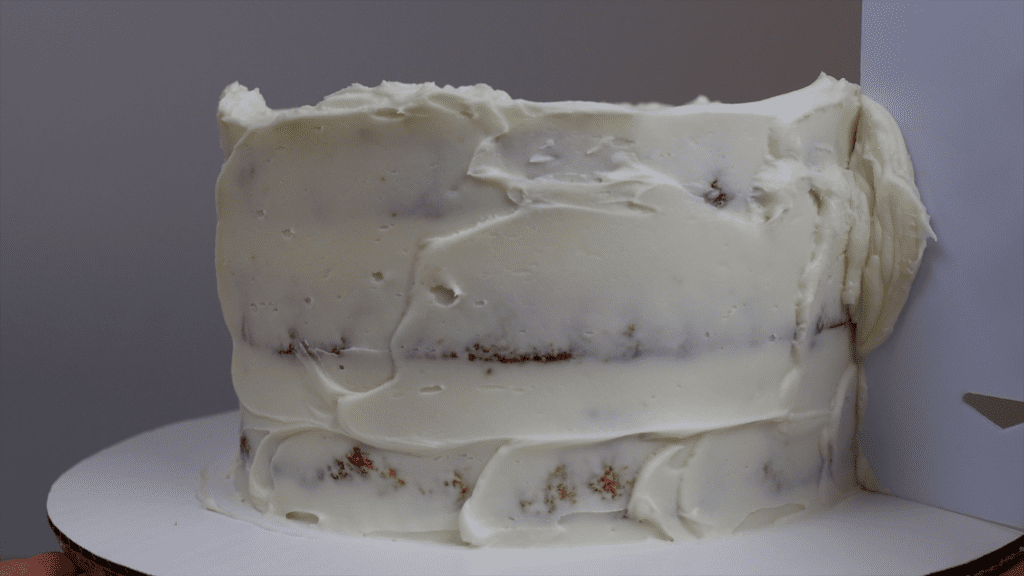
Your crumb coat doesn’t need to be very neat because you’re going to cover it up. It needs to completely cover the cake though, so that there isn’t any exposed cake that can create crumbs later. If your cake isn’t straight and your frosting isn’t the right consistency, you won’t get smooth frosting with any material of cake comb.
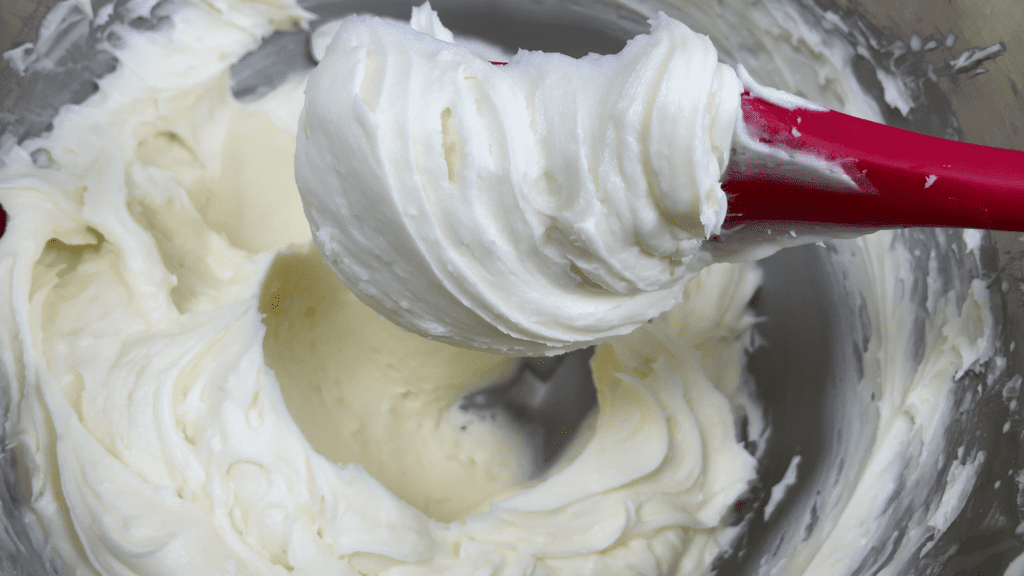
I’m using a plastic frosting smoother here but spoiler alert: plastic doesn’t give you the smoothest frosting so although I love using this for the crumb coat, it’s not my favourite for the final coat. I’ll show you what I mean in a minute.

Chill the cake for 30 minutes in the fridge to set the crumb coat and then apply your final coat of frosting. Create whatever design you like with the frosting, using just one colour or several colours, and the crumbs will stay in the crumb coat instead of getting into this layer of frosting.
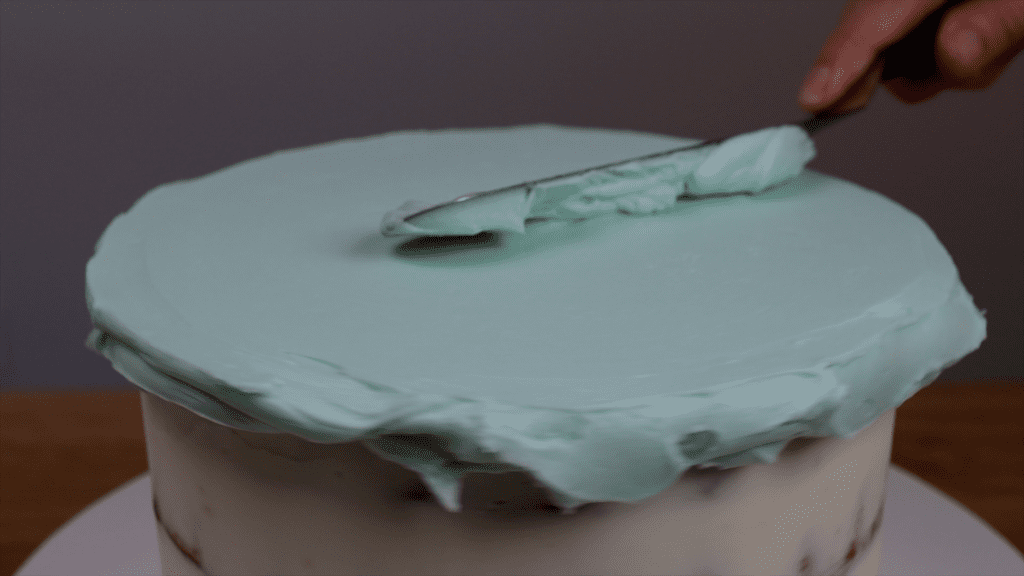
The important thing here is to spread the frosting on quite thickly, aiming for the same thickness all along the sides of the cake so that you can create straight sides. Even if the cake underneath the frosting isn’t perfectly straight and level, you can create that with the frosting if it’s thick enough.
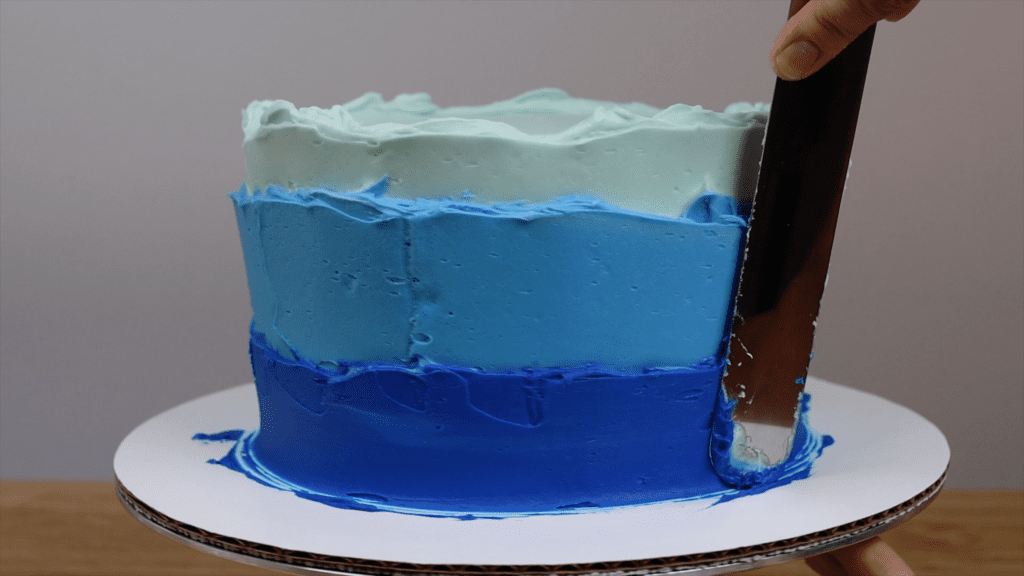
Here’s where a cake scraper comes in, or it’s also called an icing scraper or frosting smoother or a cake comb. These can be plastic, acrylic, or metal, and they each have advantages as far as cost, lifespan, how well they smooth frosting, and how quick and easy they are to use.
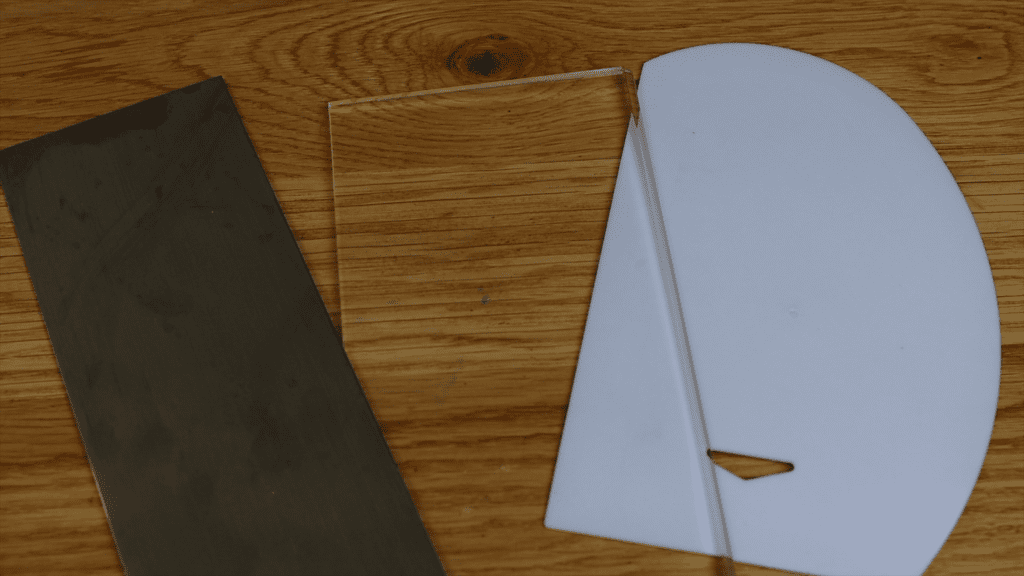
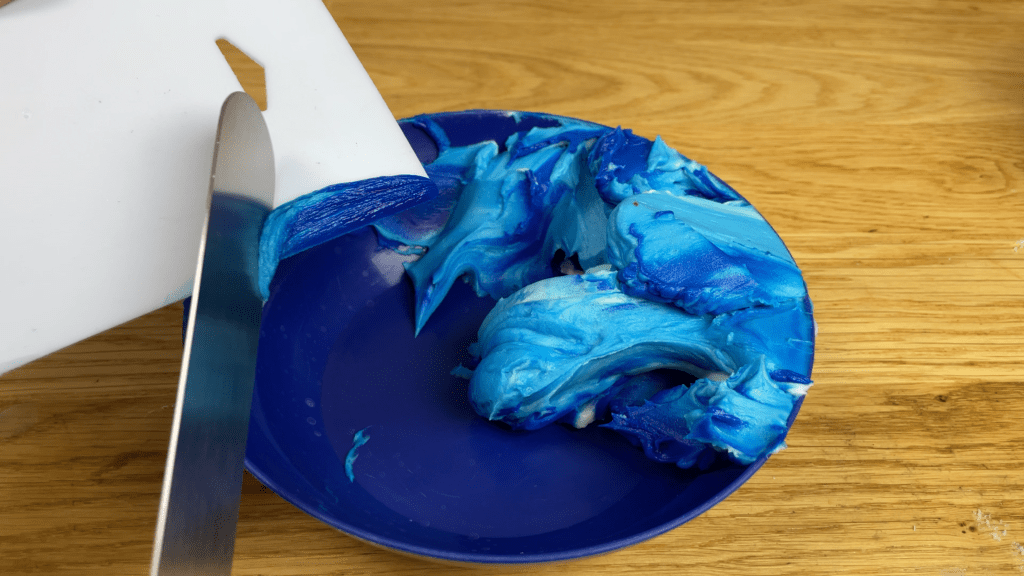
Let’s start with plastic. Plastic is the cheapest material to use and I find it the easiest to use because it’s lightweight and I love thin ones like this because they’re flexible, making it easy to scrape the excess frosting off into a bowl after each scrape around the cake.
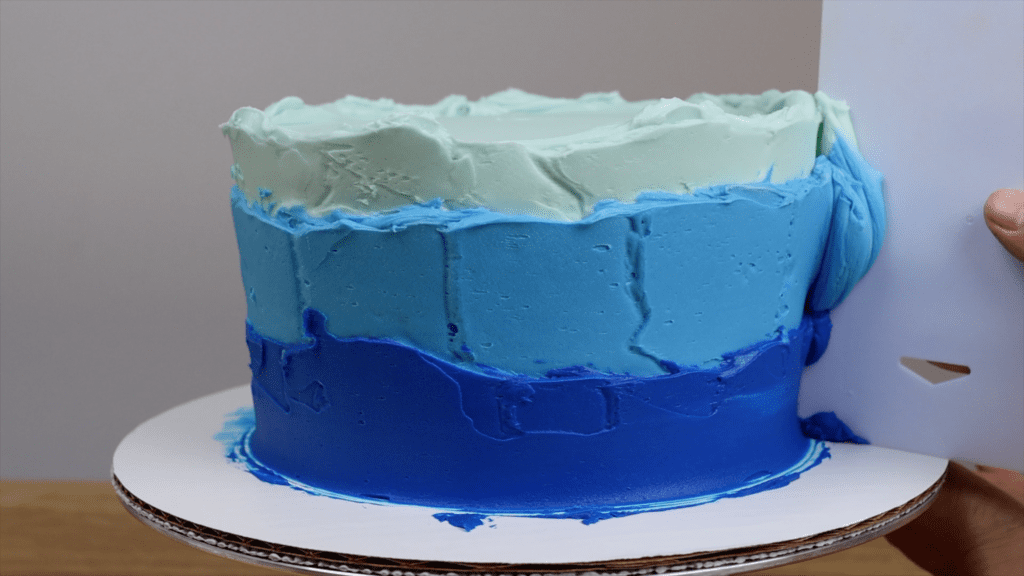
I’ll mention now that whichever material you choose, the most important thing to look for is a comb that’s at least as tall as your cake, so that you can reach the entire surface of the sides of the cake with each scrape.
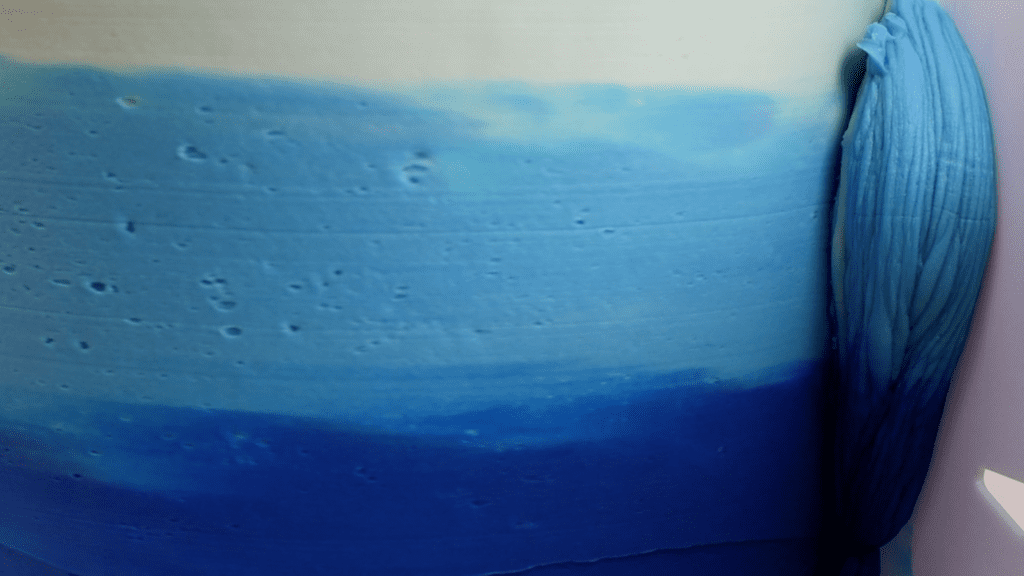
You can see that the plastic scraper worked well to take off the excess buttercream, leaving a smooth surface behind. Let’s compare this to an acrylic scraper, and you can see that at this stage of the process, while you’re taking the excess frosting off, the smoothness of the frosting is pretty much the same with either material.
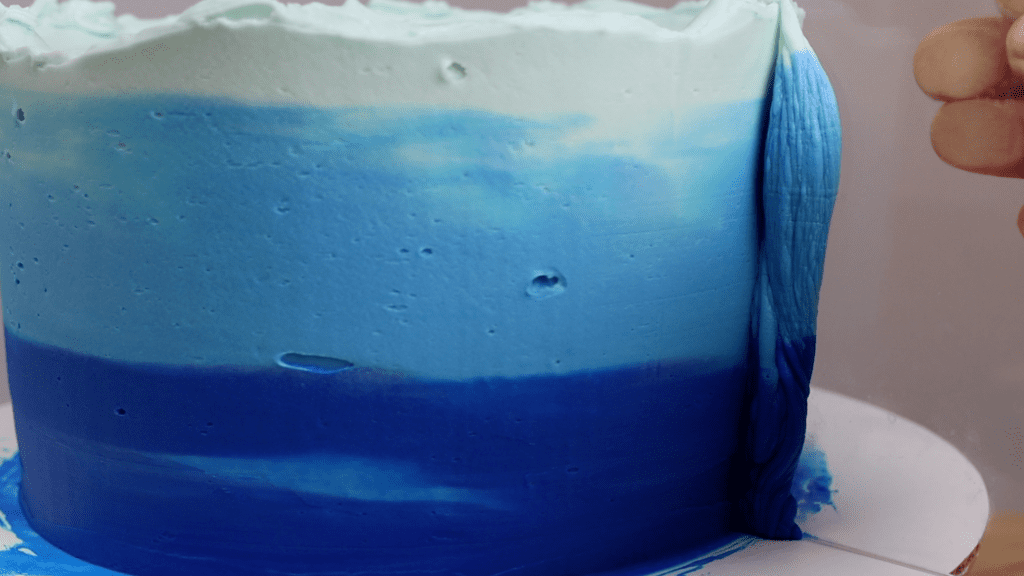
Now metal and again, the surface is just as smooth. So when you start smoothing the frosting and while you’re in the initial stages of the process, it really doesn’t matter which material you use as far as smoothness goes. Once you’ve taken off the excess frosting so the sides of the cake are straight, this is where the different materials become noticeable.

Once the sides of the cake are straight and the frosting is quite smooth you can focus on getting the frosting really really smooth and that’s when you’ll notice the difference between plastic, acrylic and metal cake scrapers.
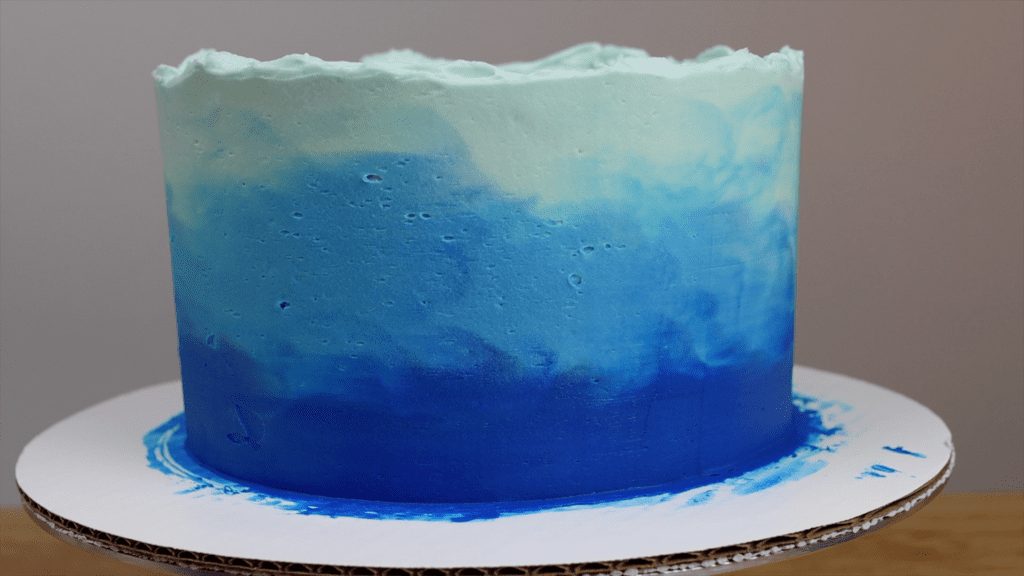
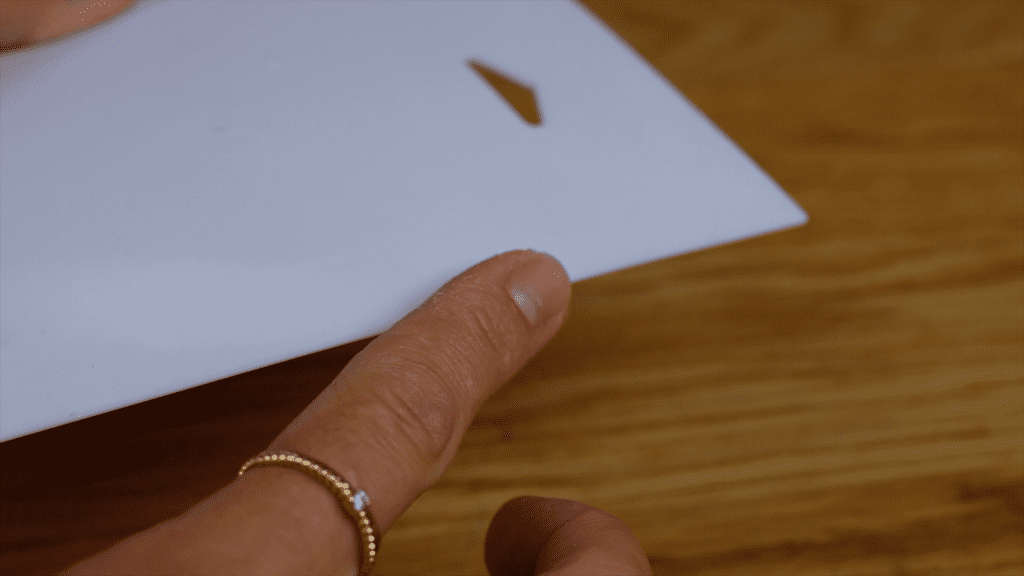
Plastic leaves a nice smooth surface BUT you can see some horizontal grooves or lines or ridges in the frosting – this is because plastic wears out quite quickly, and wherever there’s a little ding in the edge of the scraper, that will leave a line behind as it scrapes around the cake.
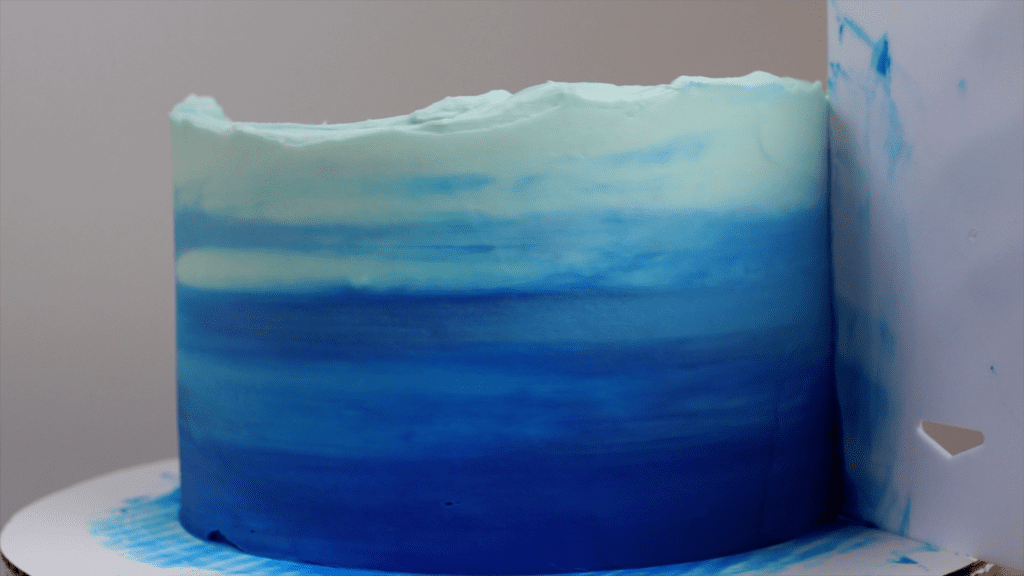
Dings happen when you drop a cake scraper or if you knock it against a hard surface or object. You can feel the dings when you run your finger up and down the edge of the cake scraper.
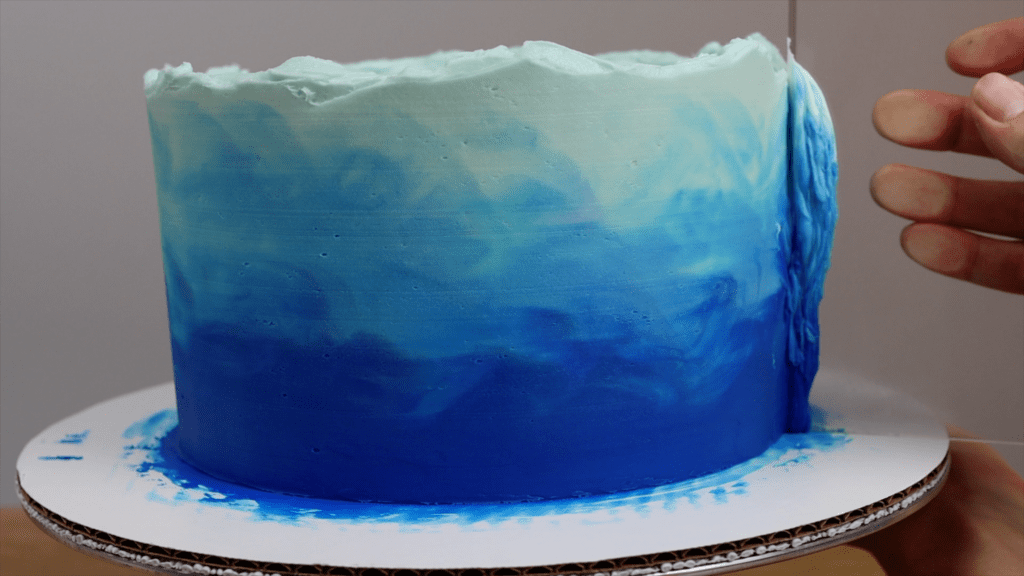
Acrylic scrapers are more temperamental than plastic. You have to use just the right amount of pressure because if you push too hard, like I’m doing here, you’ll create little air bubbles in the frosting because you’re using the acrylic scrape to pull the frosting too aggressively. Once you get the hang of these they’re great, but it does take some practice.
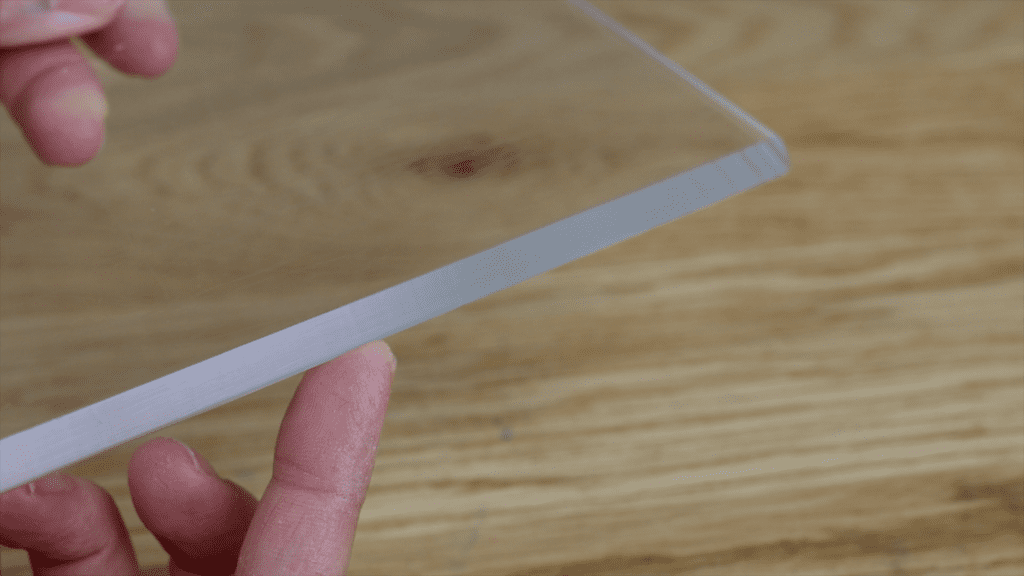
Just like plastic scrapers, acrylic cake scrapers are very delicate so if you ding them when you’re washing them, or if you drop them, they chip easily and if you run your finger along the edge you’ll feel the unevenness, and that little chip will leave a groove in the frosting as you scrape.
Metal cake scrapers, just like plastic scrapers, work very well to smooth frosting and don’t create air bubbles. The big advantage of a metal cake scraper is that metal is the most resilient material so it has a perfectly smooth edge and it will leave perfectly smooth frosting behind on the cake, with no ridges or grooves.
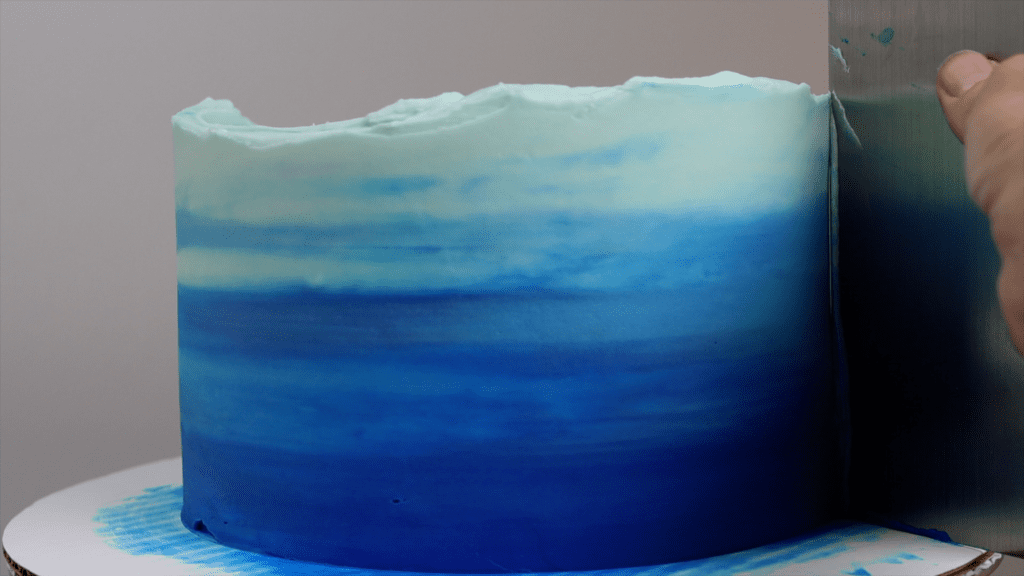
So, as far as smoothness, if a cake scraper is in perfect condition it will create perfectly smooth frosting whether it’s made of plastic, metal or acrylic. But when plastic and acrylic scrapers get dinged, they leave grooves in the frosting so it’s not as smooth as metal scrapers can achieve.
But smoothness isn’t the only factor to consider. Another important aspect is how easy and quick a cake scraper is to use. I showed you earlier that plastic scrapers are very quick and easy to wipe clean after each scrape around the cake, to take the excess buttercream off before scraping again.
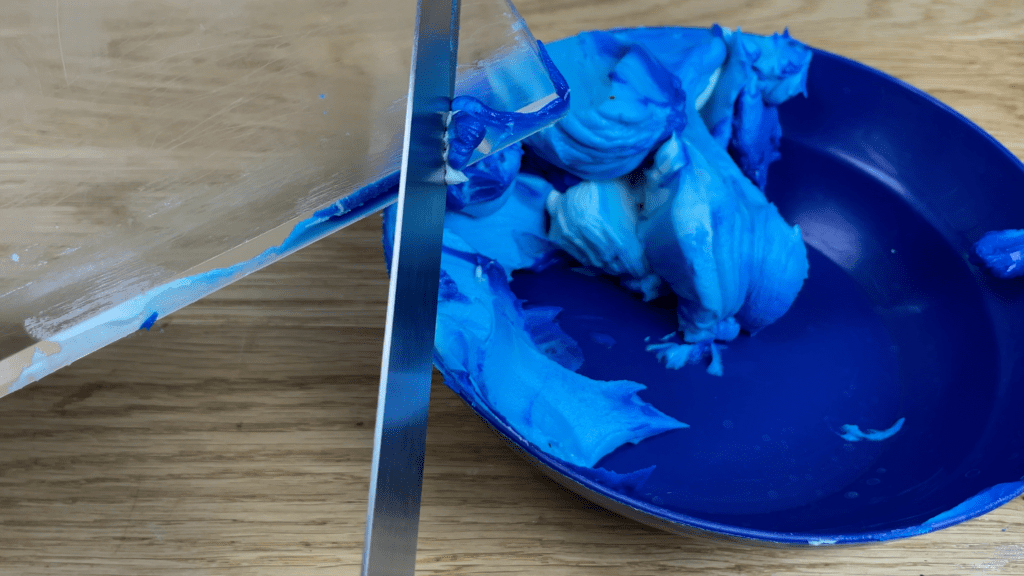
Acrylic, which has two different sides to wipe the buttercream off, is more time consuming to wipe off and if you’re scraping 10 or 20 times around a cake to smooth the frosting, that adds quite a bit of time to the process.
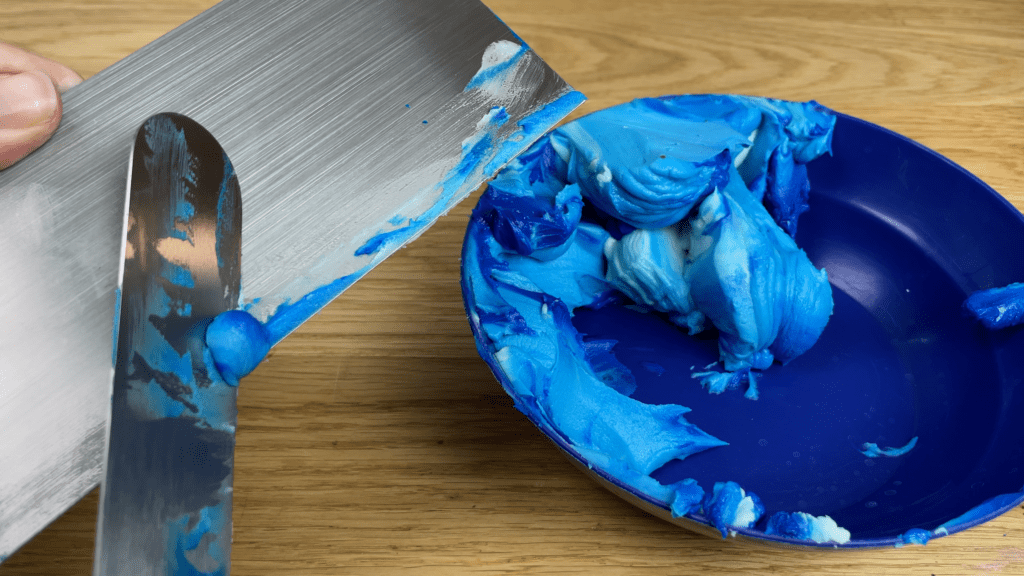
Metal is in between the other two: it’s quicker to wipe clean than acrylic because it only has one edge but it’s not flexible like plastic is so it’s not quite as quick as plastic is to use.
The other thing to consider is cost: plastic cake scrapers are the cheapest while metal and acrylic cake scrapers are a bit more expensive. Metal lasts the longest, because it doesn’t ding like plastic and acrylic do, so in terms of an investment, metal is probably the best option.
Since it’s possible to get smooth frosting with any material, it really comes down to personal preference. Acrylic is my go-to scraper but there are cake decorators who swear by metal so if you can, try them both and then choose your favourite. Just keep in mind that metal will last much longer than plastic or acrylic, so if you frost cakes often, metal might be the best option for you.

I hope this tutorial has been helpful! Check out my online cake school for LOTS of cake decorating classes and courses with unique cake designs, techniques and tips!
Here’s the video version of this tutorial:
If your kitchen or cake decorating area is cluttered and messy, I feel your frustration! I’m going to share 14 hacks for organizing baking supplies and cake decorating tools.
If you prefer to watch a video of this tutorial, scroll to the bottom of the page.
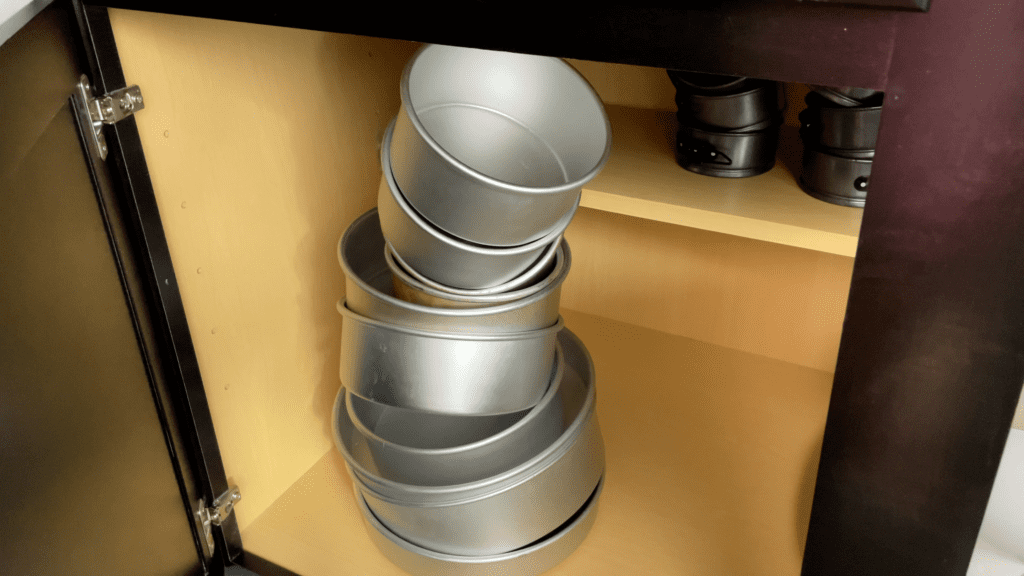
Tired of cake pans tumbling out of your cupboards? If you start with your biggest pans and get smaller and smaller you’ll build a leaning tower of pans, which is very likely to collapse when you open the cupboard door.
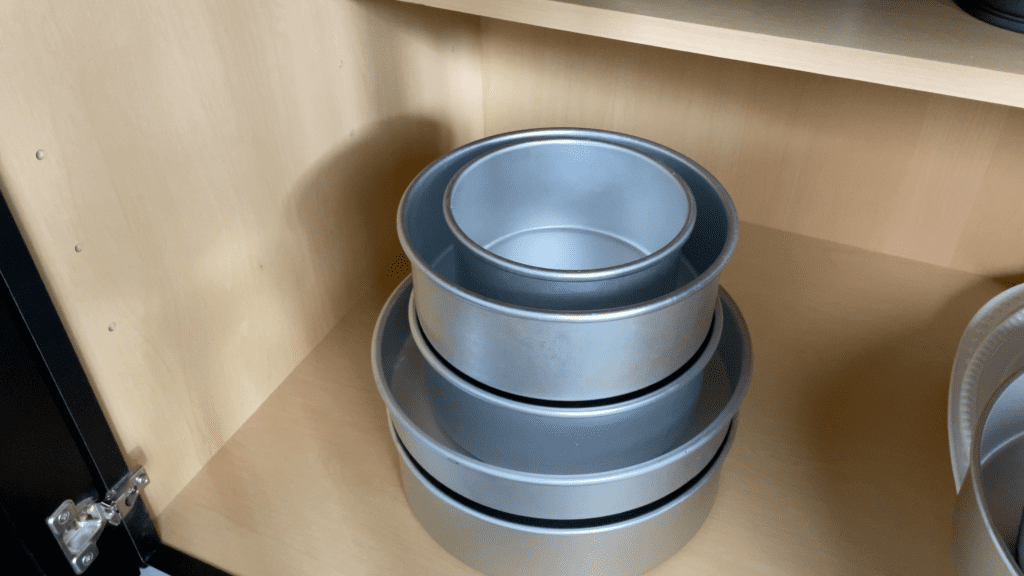
Instead, put the small pans inside the bigs ones and they’ll balance the next layer of pans.
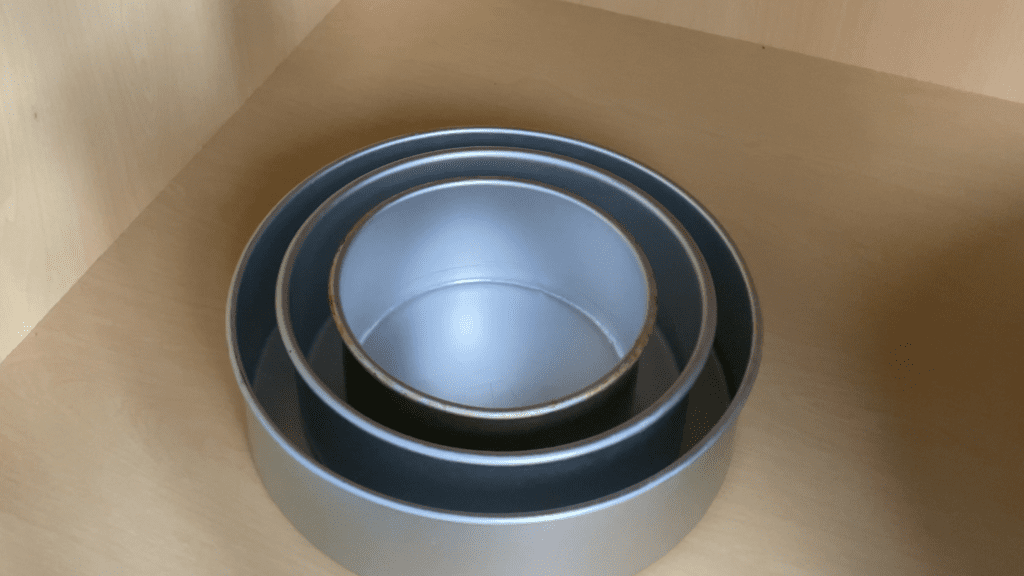
Your tower of pans will be stable and also much shorter, taking up less space!
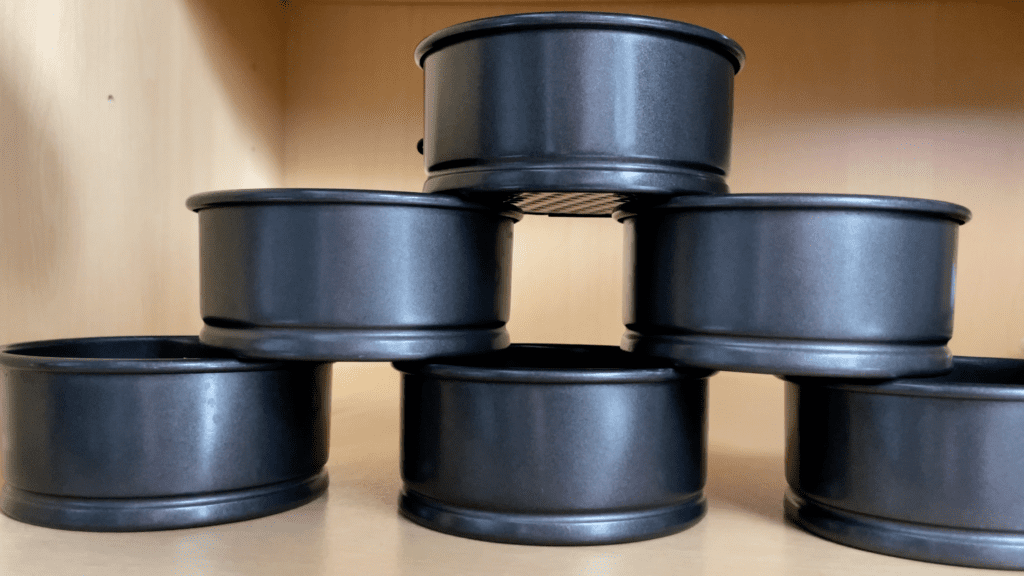
If you have several pans of the same size, instead of trying to stack them (which won’t work), build a pyramid so that all of the pans are sitting flat, and the lower pans will hold up the higher pans. Neater, more stable, and space-saving!
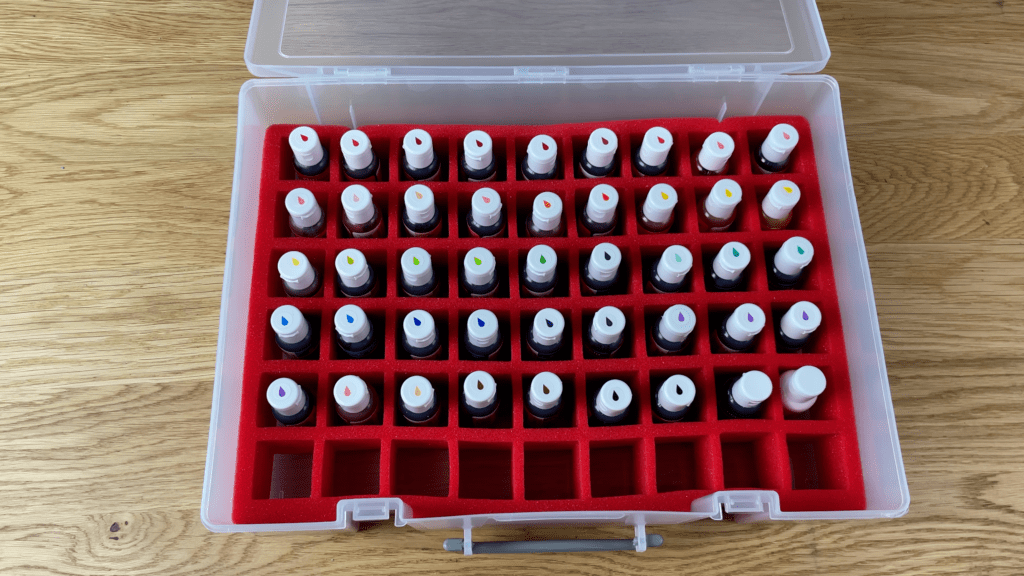
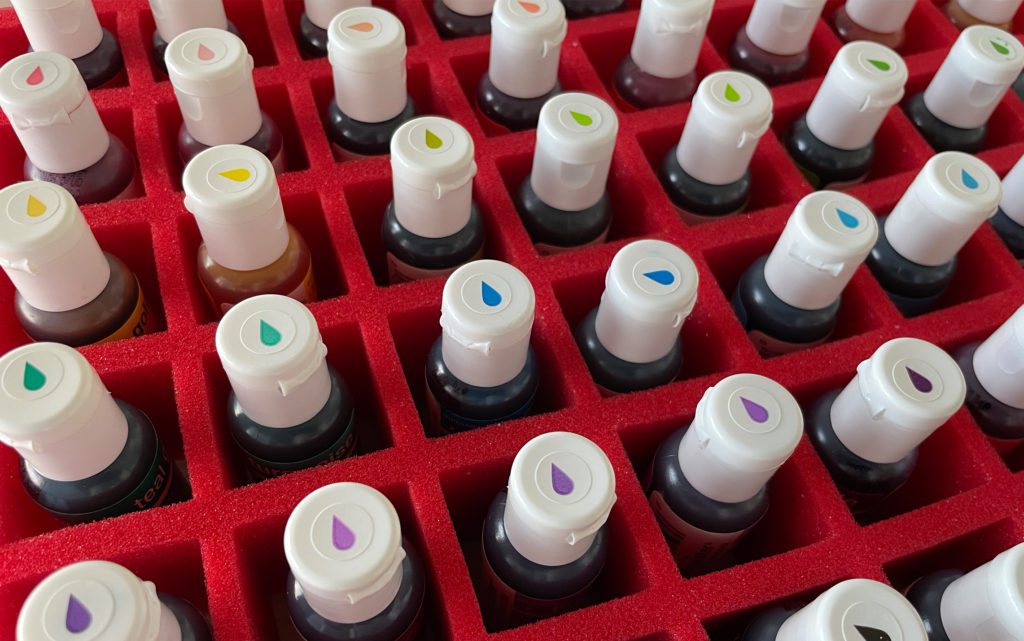
Colours are a nightmare to use after they topple over and leak, and they’ll stain your hands for days. To keep them upright I use a case intended for nail polish!
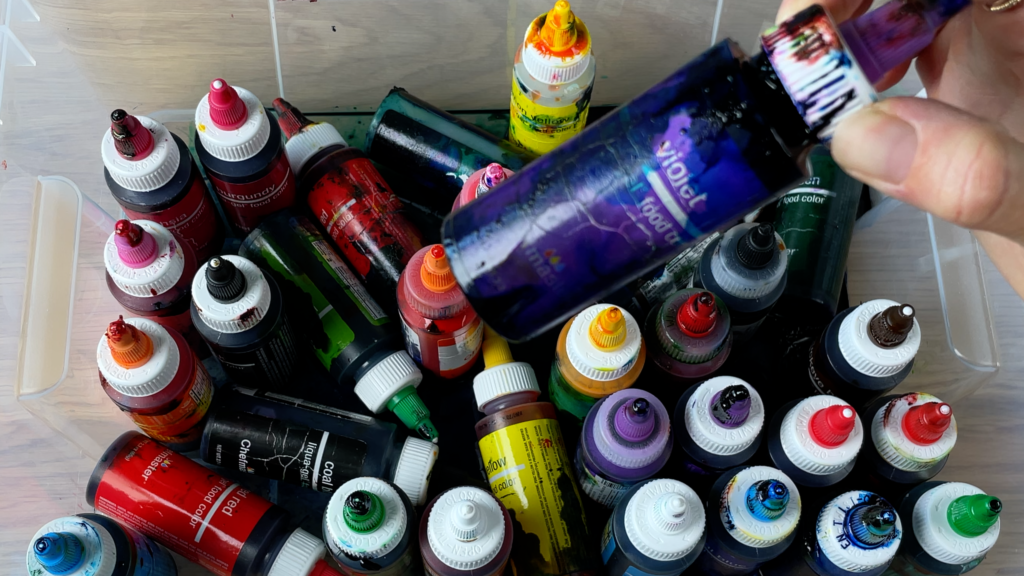
With these dividers it’s impossible for the bottles to fall over and leak. They’ll stay in place so you can organize them by colour and quickly find exactly the right shade you’re looking for. Don’t they look beautiful?!
With cake combs you can get really smooth frosting and also perfectly texture frosting, but if they’re in a box or drawer it’s a pain to find the one you’re looking for.
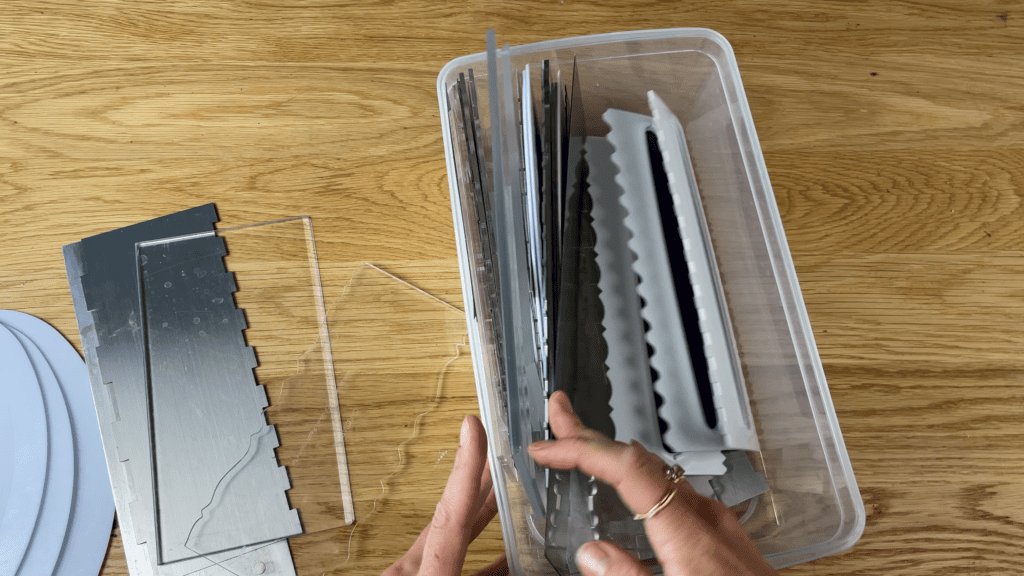
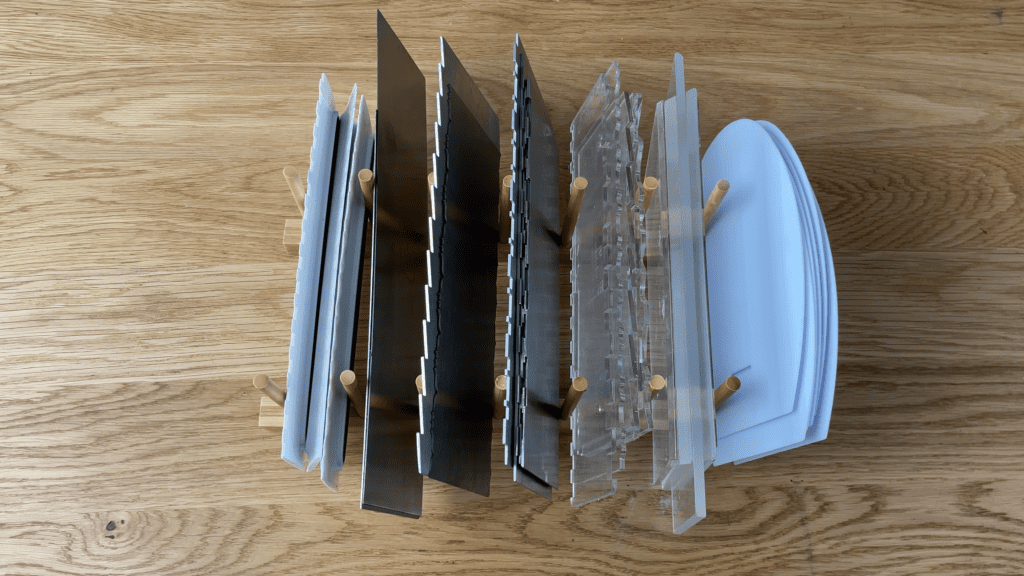
This rack is intended for the lids of pots and pans but works excellently as a divider for different types of cake combs.

The combs are organizer and easily visible so in a split second I can grab a smooth acrylic comb, or a textured metal comb, or whichever one I want.
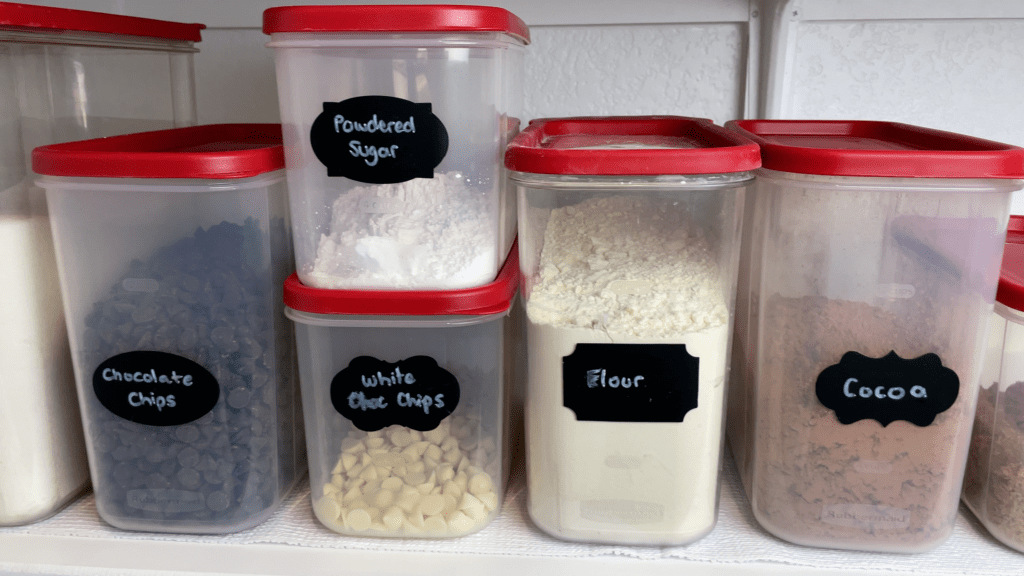
Baking ingredients in unruly packets like flour and sugar are messy and also take up a lot of space in you cupboard or pantry.
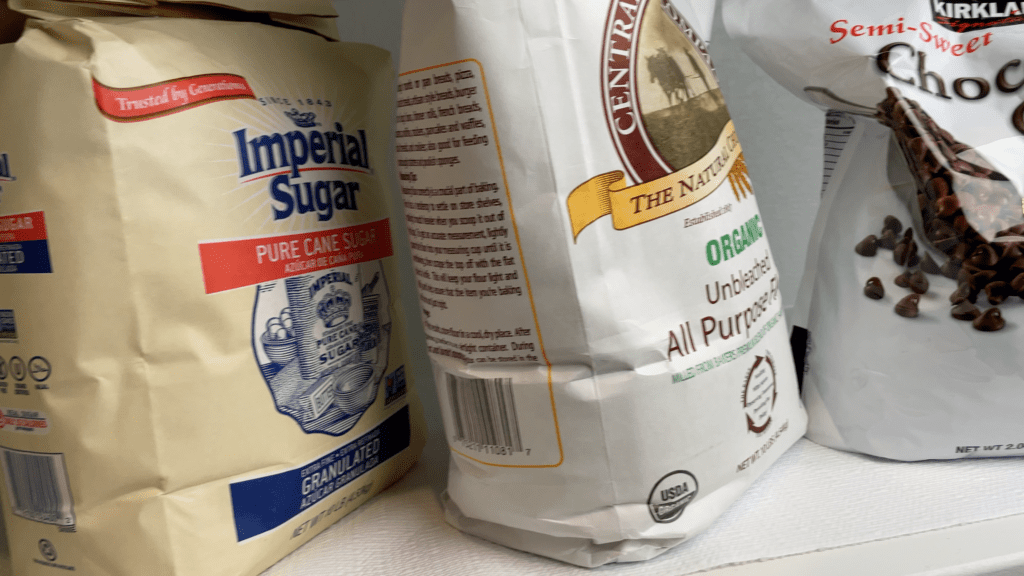
Tupperware containers will keep ingredients fresh and tidy and use up much less room.
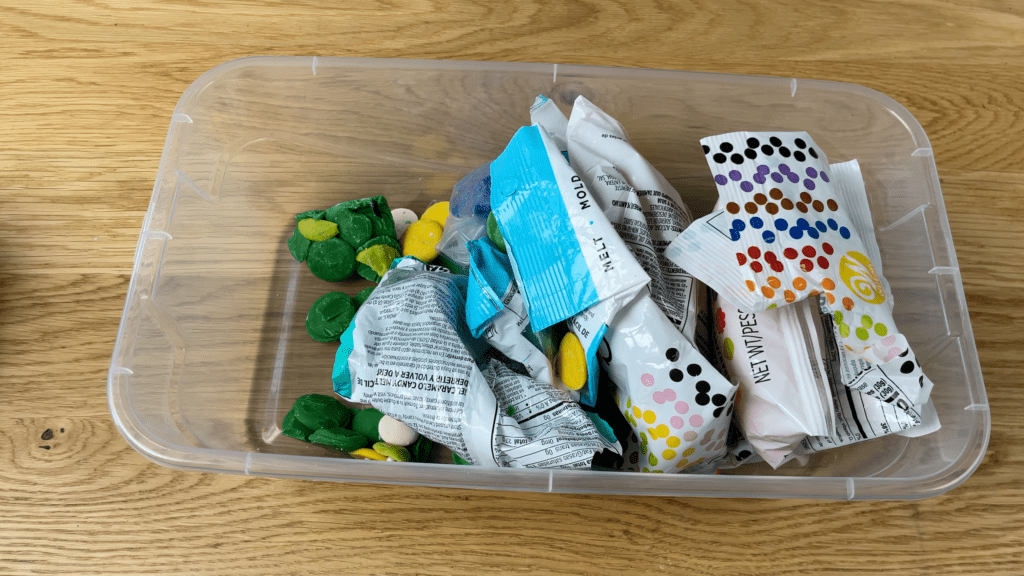
You can stuff packets of chocolates or candies, like Candy Melts, into a box or tupperware but they’ll probably spill and get all mixed up at the bottom of the box.
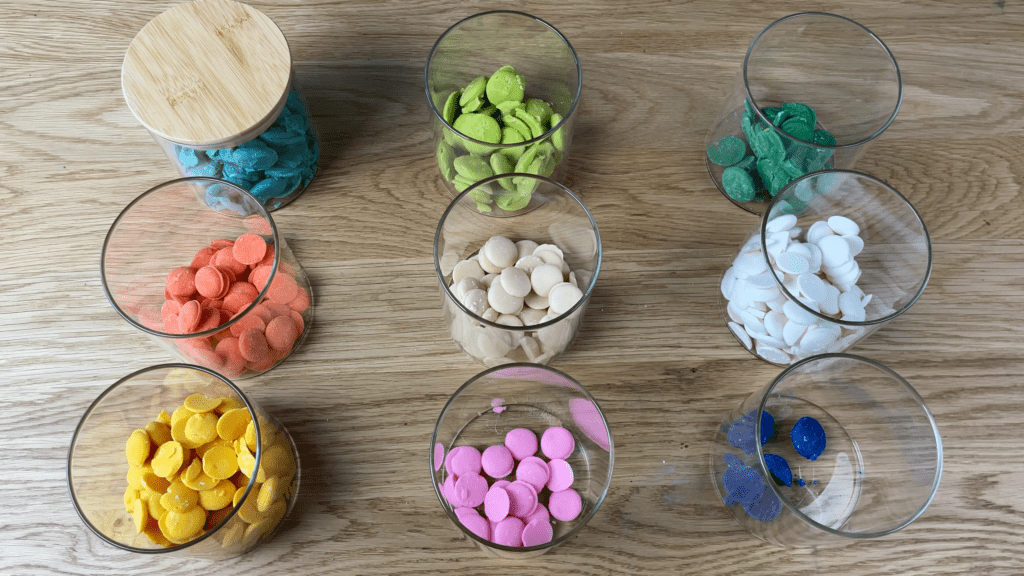
Use clear glass or plastic jars to divide them up and you’ll be able to see exactly what you have and grab it easily. As a bonus, these make a pretty display on a shelf as well!
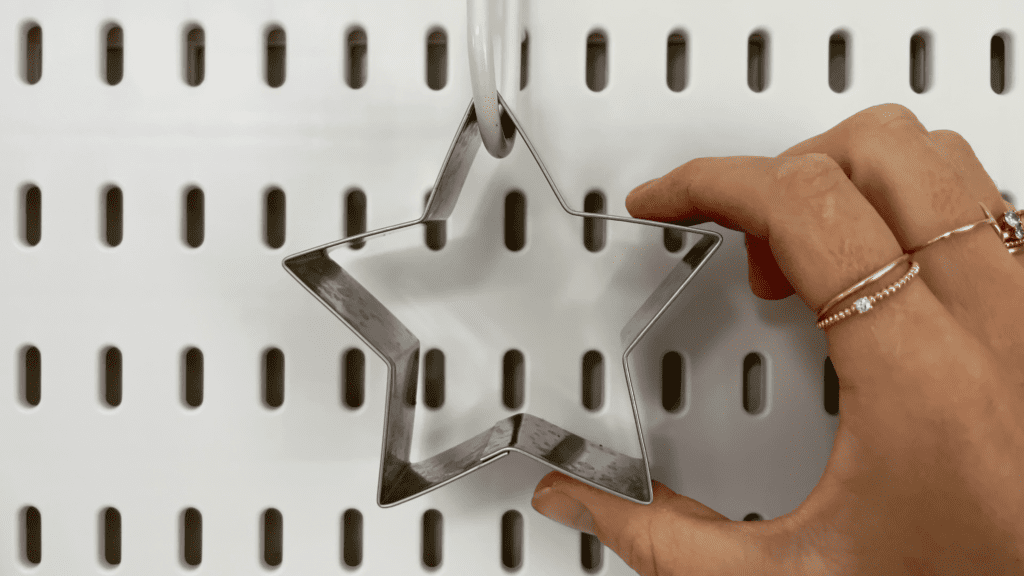
Cookie cutters are useful for lots of cake decorating techniques but different shapes don’t stack nicely in a box.
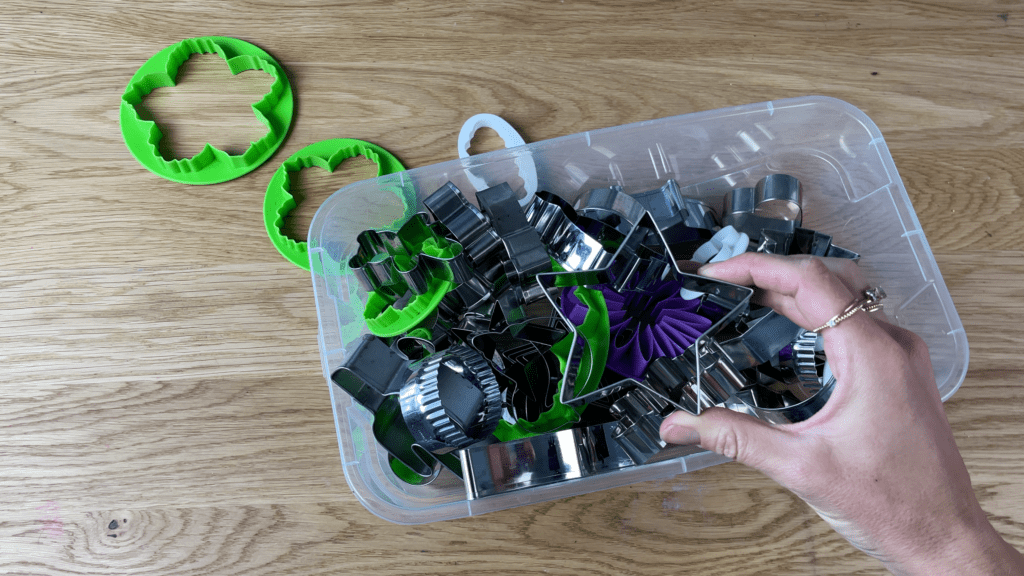
Use a pegboard with some pegs to arrange them and you can organize them based on themes, holidays, seasons… it will be easy to see what you have and to lift off just one.
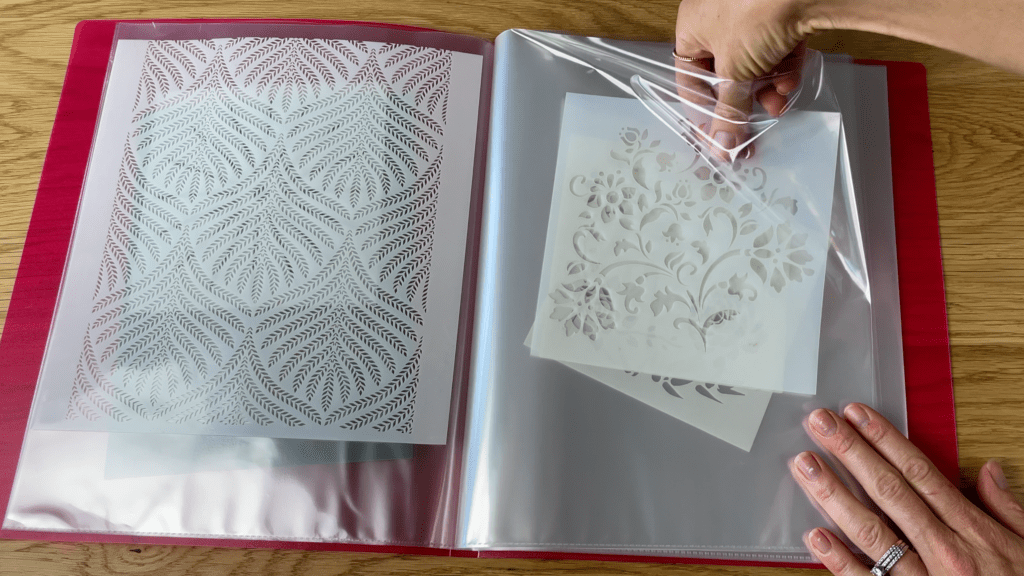
Stencils are super thin but if you have several, they end up taking up a lot of space and you have to dig around to find to one you’re looking for.
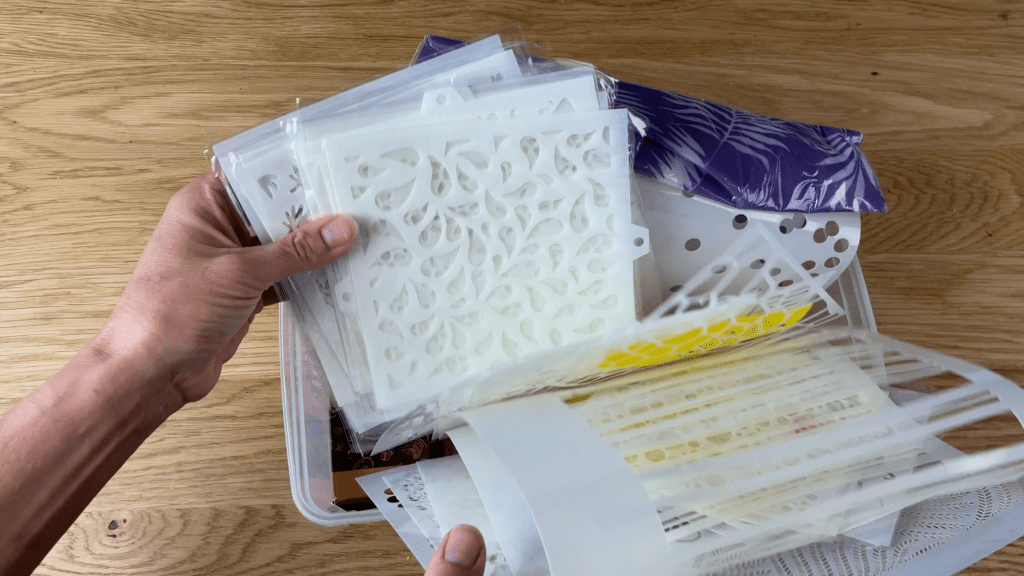
A folder with plastic wallets is an easy storage solution for these – put one in each wallet and you can label these with tabs if you want to sort them into categories like the material of the stencil or the theme of the design. Now you can flick through the folder quickly, making it quick and easy to choose and remove your stencil.
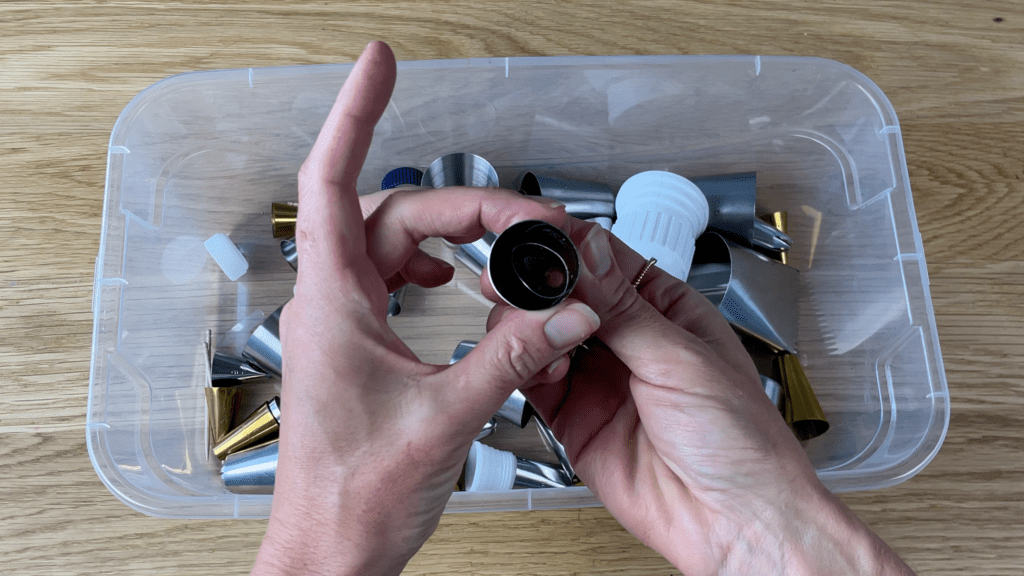
Piping tips provide the most possibilities for cake decorating and each one has a different shape at the tip to create a different texture. If they’re in a box or jar, you can’t see those shapes at the tip so you have to lift each one up until you find the right one.
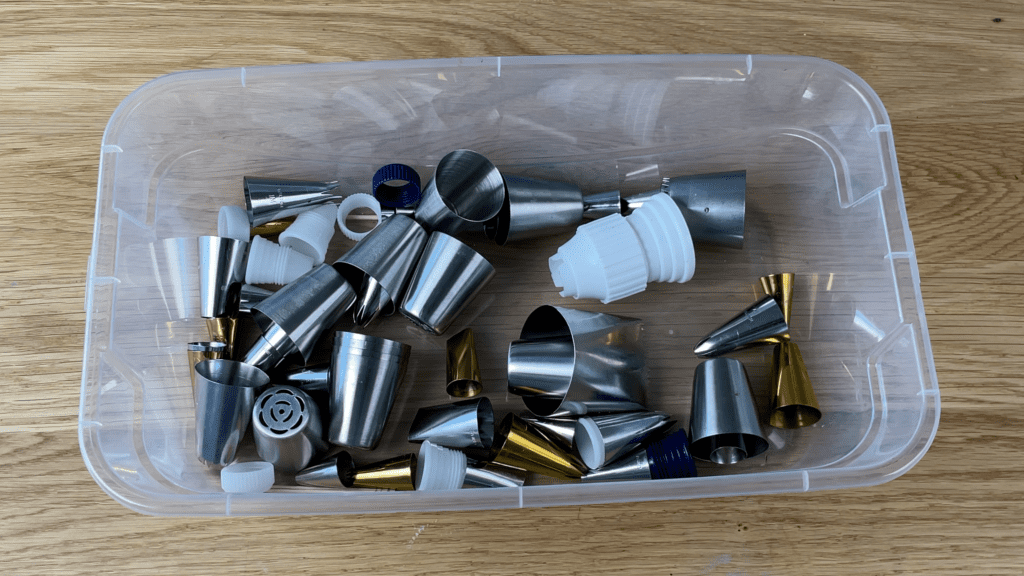
To make it even trickier, smaller ones will hide inside bigger ones, making them harder to find.
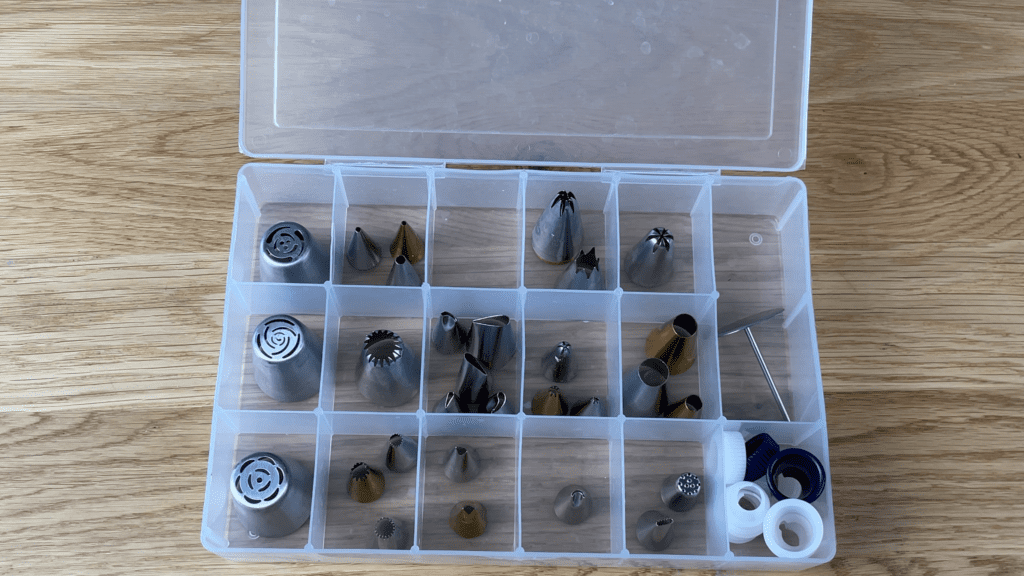
Use a craft box and ether place one tip in each section, or group them together like star tips in one section and open stars in another, and petal tips in one section, and grass and leaf tips in another.
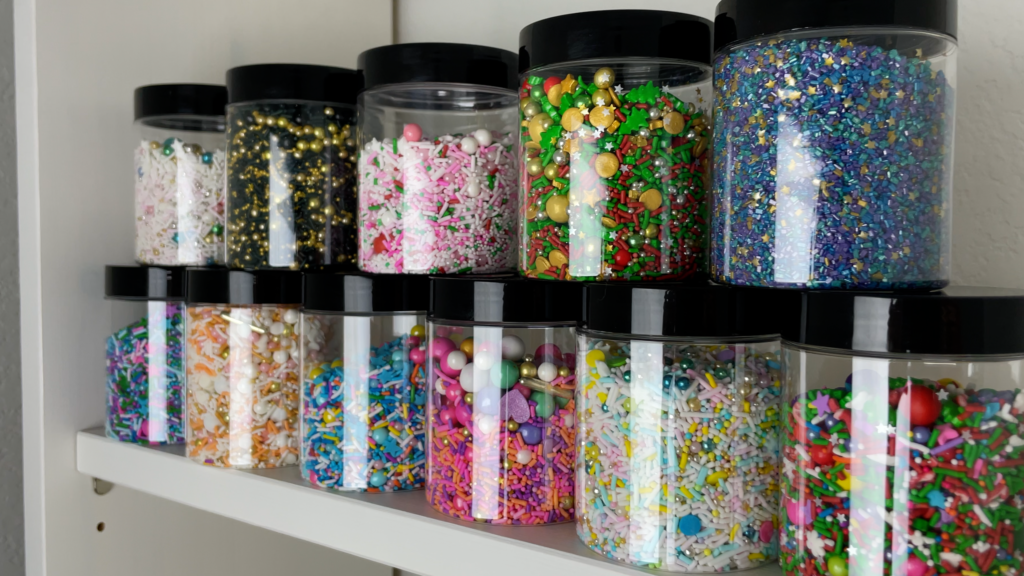
Sprinkles come in all kinds of shapes and colours and you buy them in packets or jars, but in a box or drawer it’s difficult to see what’s inside each one.
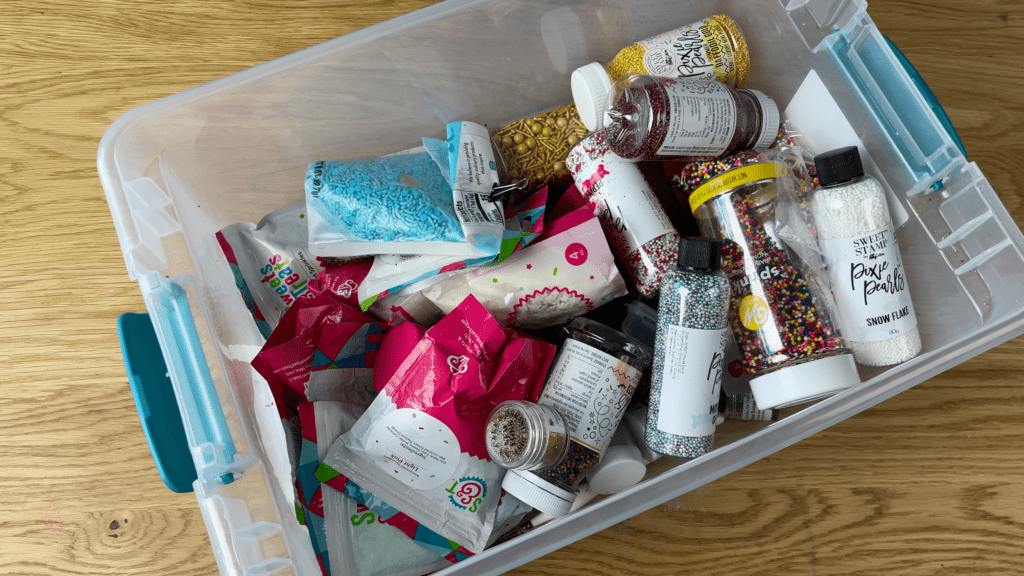
Pour your most used mixes into jars and arrange them on a shelf, adding some colour to your room as well as your cakes!
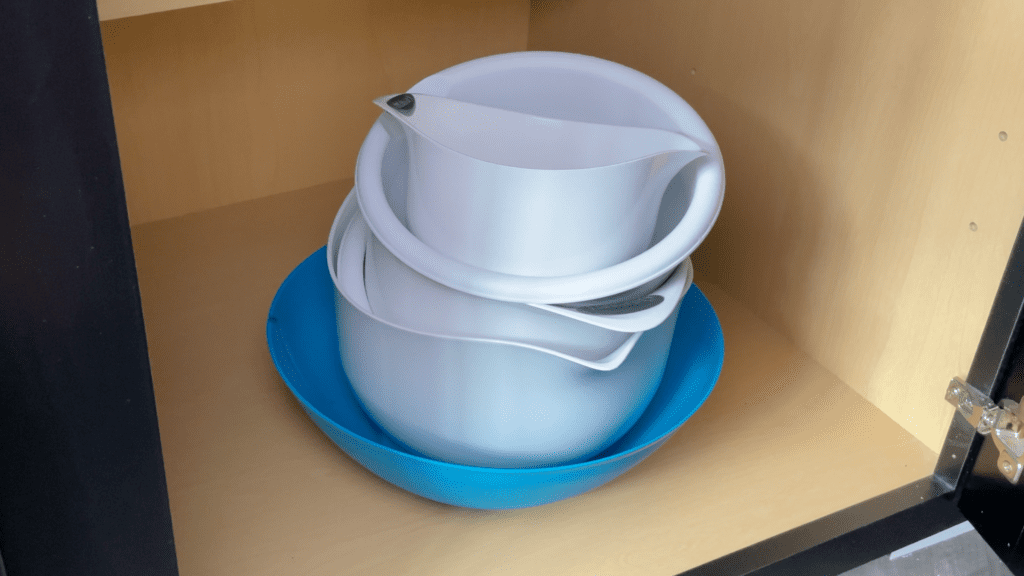
Mixing bowls are a must have for baking, preparing and coloring frosting, drips, chocolate decorations… but if you have lots of them in different shapes and sizes they’ll tower up and topple over easily.
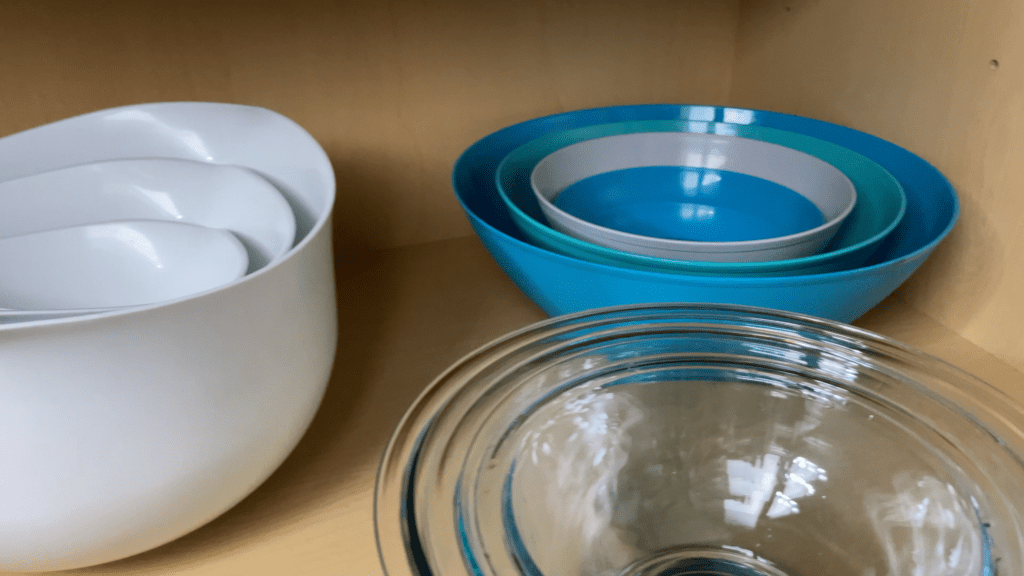
Arrange them by type instead, so that they nest neatly inside each other. They’ll be easier to see and to reach this way, compared to being in a tall tower.
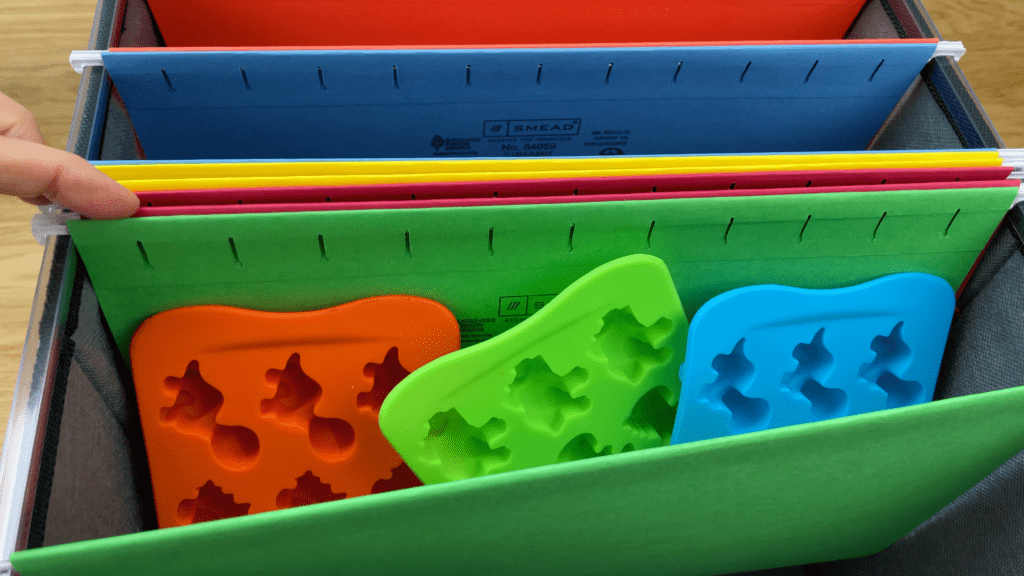
Silicon molds for chocolate, candy, gummies, and cakesicles, can be crammed into a box but you’ll have to lift them all out to find tthe one you’re looking for.
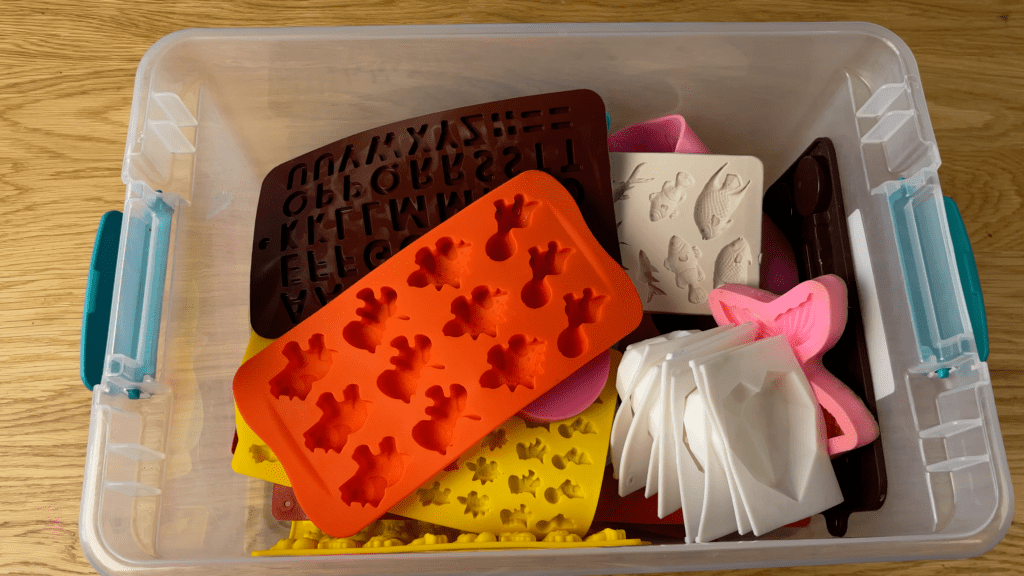
Instead, you can use hanging folders or an accordion folder and put a mold into each one, labelling them so you can find just the right one.
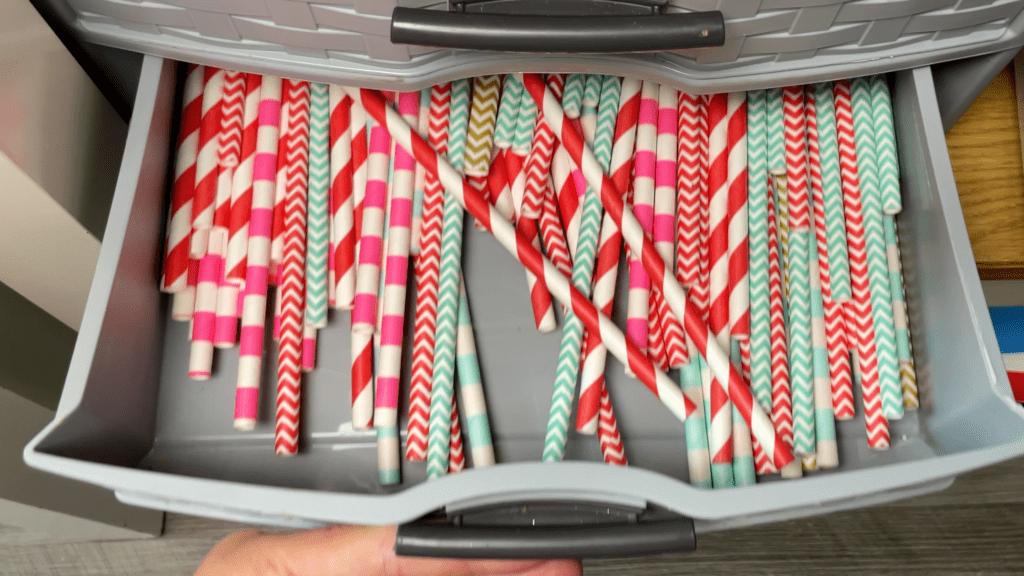
If you use straws for cake pops, lollipops, meringue pops or cake toppers, you’ll know that they don’t stay organized when you stuff them all in a drawer or a box.
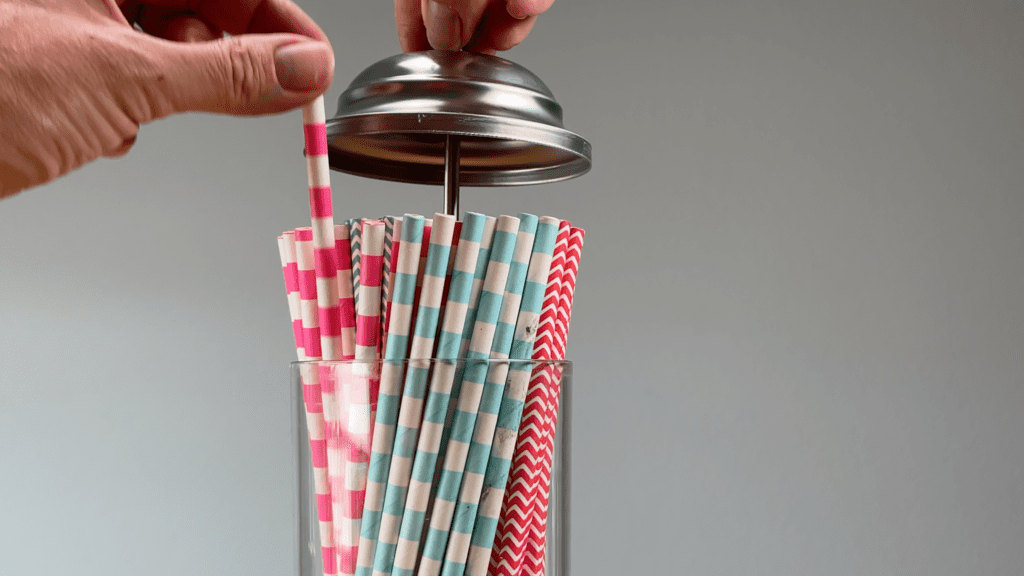
These straw dispensers show exactly which colours and patterns you have, they look pretty on a shelf, AND they make it easy to remove the one you want!
Decorations for cakes need to be stored too, like cake toppers and ribbon to wrap around cake boards.
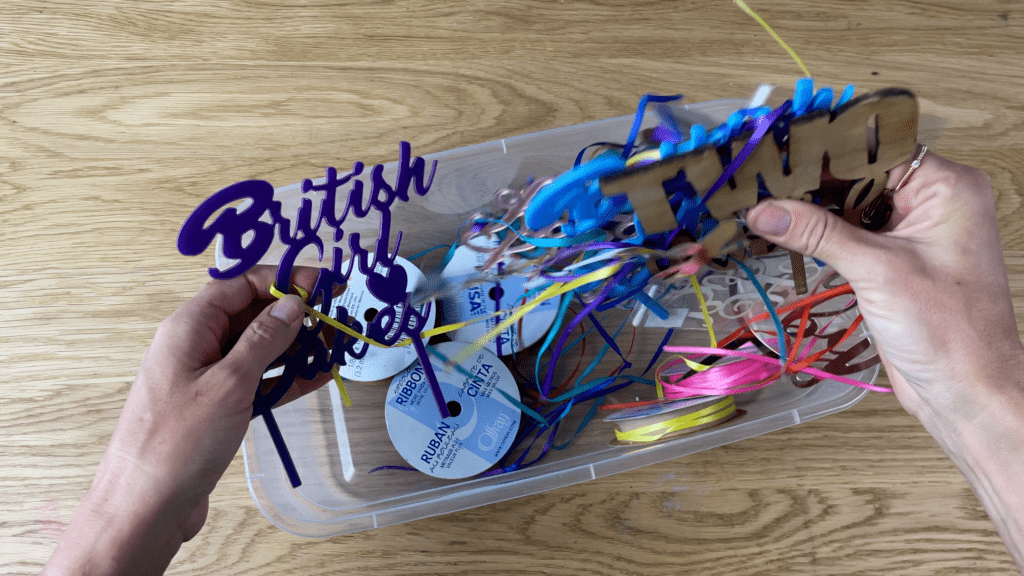
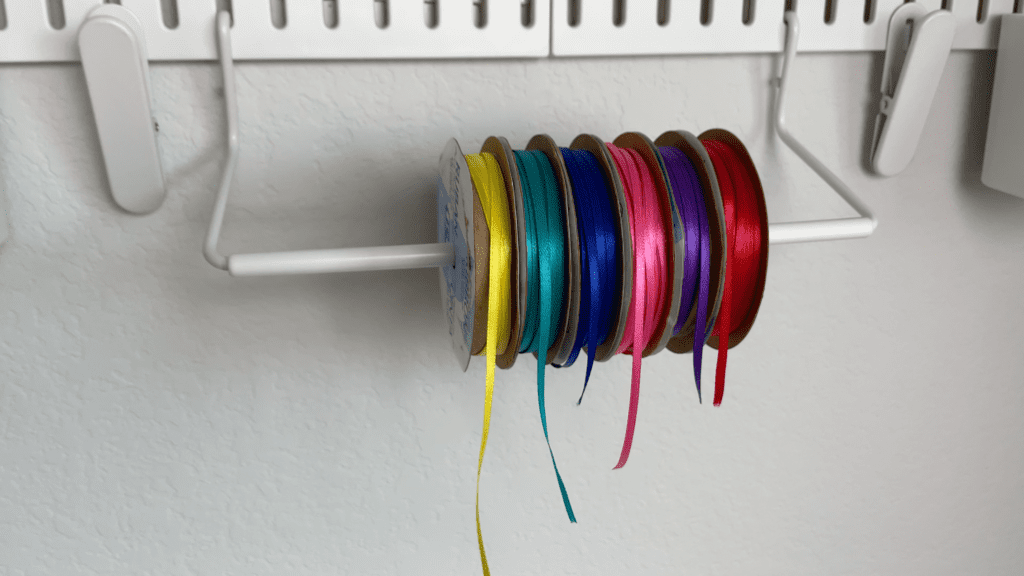
Instead of getting tangled up in a box you can use pegs on a peg board as ribbon spools, keeping each colour of rubbon separate.
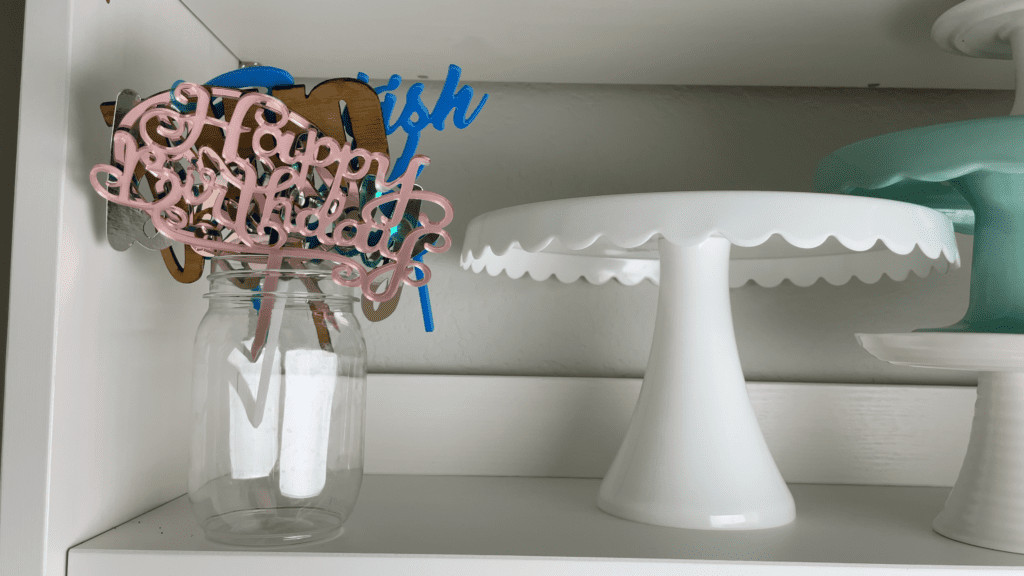
Put your cake toppers into a jar or glass so they’re upright and easy to grab.
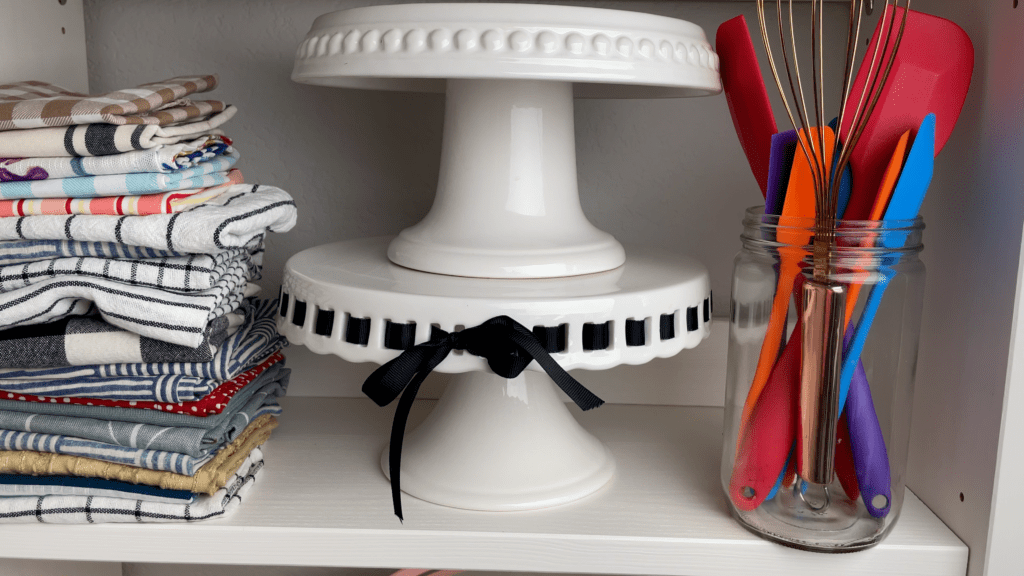
The same solution works for spatulas – instead of taking up a whole drawer, stand them upright in a jar or a glass and they’ll look pretty as well as being easy to reach.
I hope these hacks help you organize your baking or cake decorating space and without all of the clutter you’ll enjoy spending time in that room. If you have any other organization hacks, please share them with all of us in the comments!
If you’re looking for cake decorating ideas, techniques, and designs, check out my online cake school.
Here’s the video version of this tutorial:
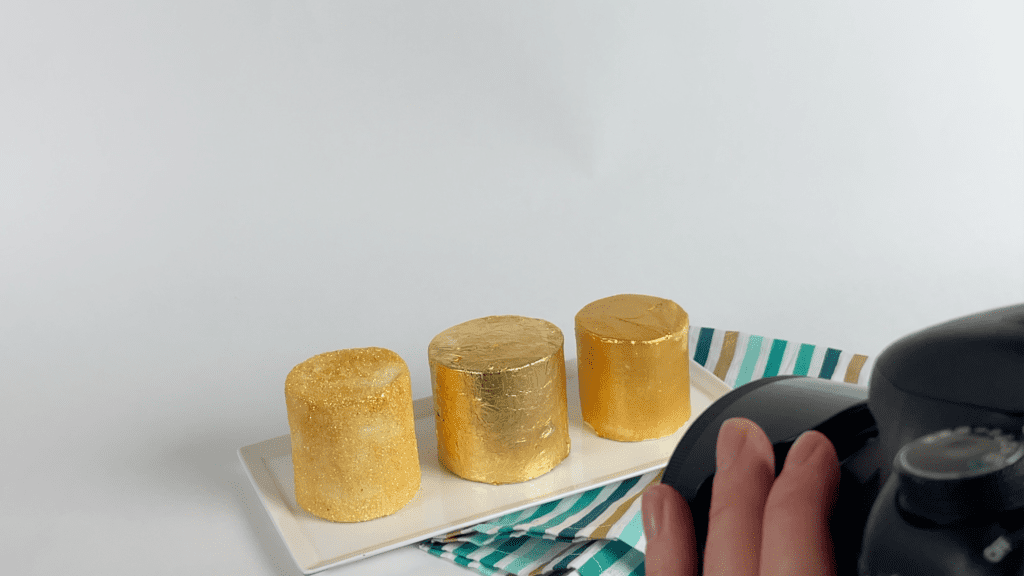
If you want to make your cakes gold, you have different options and I’m going to walk you through three ways in this tutorial.
If you prefer to watch a video of this tutorial, scroll to the bottom of the page.
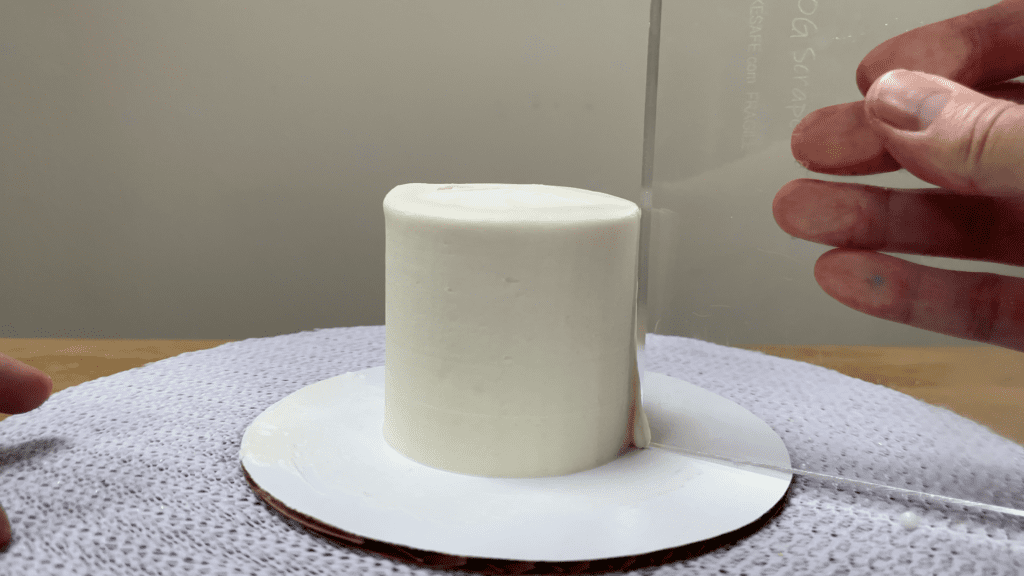
What all of these cakes have in common is that it’s really important to get your frosting as smooth as you can before you start. The gold will form a thin layer over whatever shape you create for your cake, so it won’t disguise messy frosting. Chill the cake for at least 2 hours in the fridge before you use any of these techniques, so that the frosting is firm.
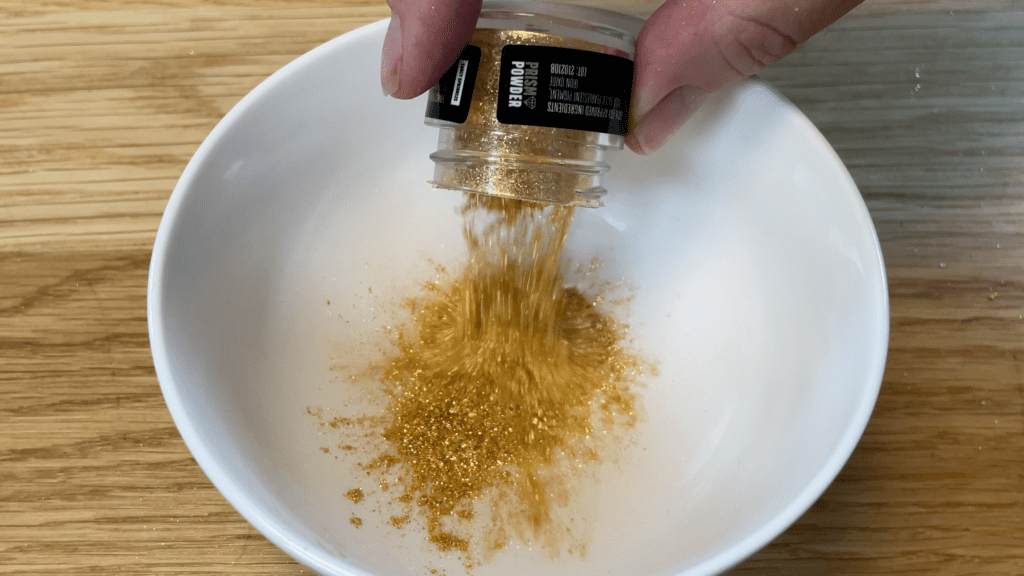
Gold powder is my favourite way to achieve gold cakes. This is Prism Powder by Fancy Sprinkles (use the code BRITISHGIRL15 for 15% off) or you can use gold luster dust instead.
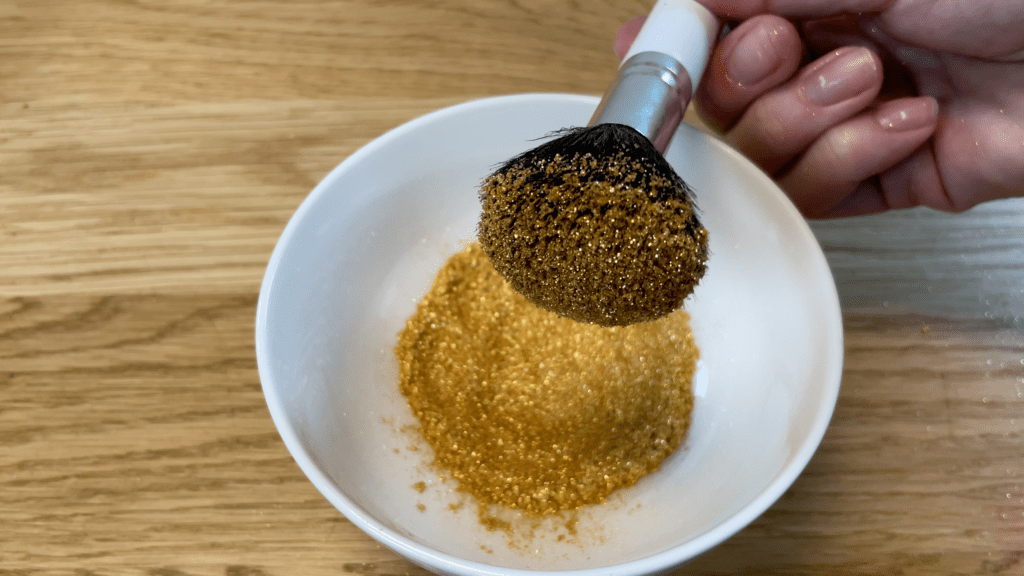
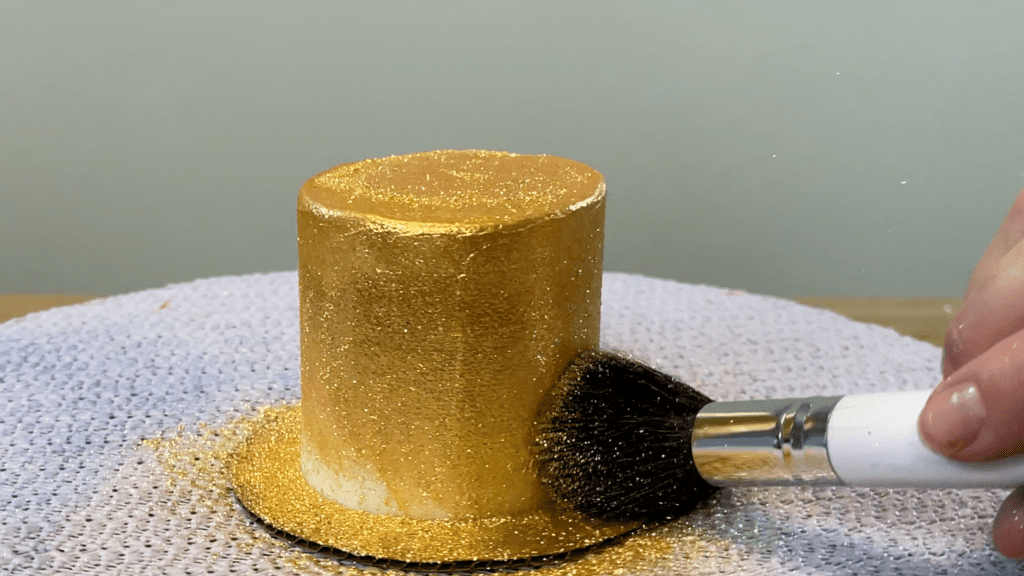
Use a powder brush for the quickest and gentlest application and brush the cake all over to cover it in gold.
The frosting really needs to be firm before you do this, so that the gold sits on top instead of mixing into sticky frosting. You can use a small paintbrush instead but it will take much longer and compared to a wide, soft, powder brush, a smaller and stiffer paintbrush will be more likely to indent the frosting as you brush.
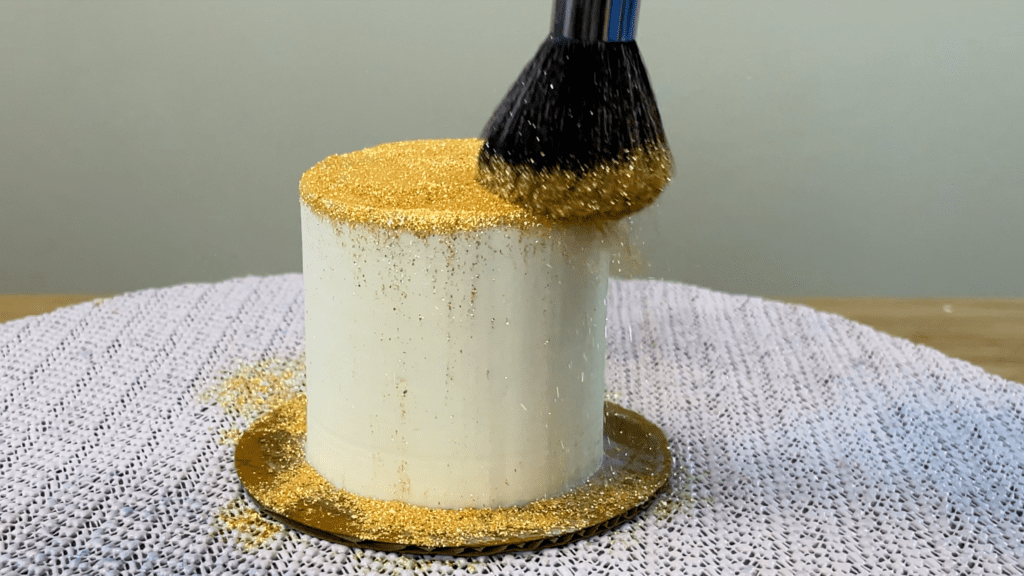
You will get gold powder all over your cake board as you brush the powder onto the cake and I’ll show you at the end how to transfer these cake from their boards onto a cake stand or platter.
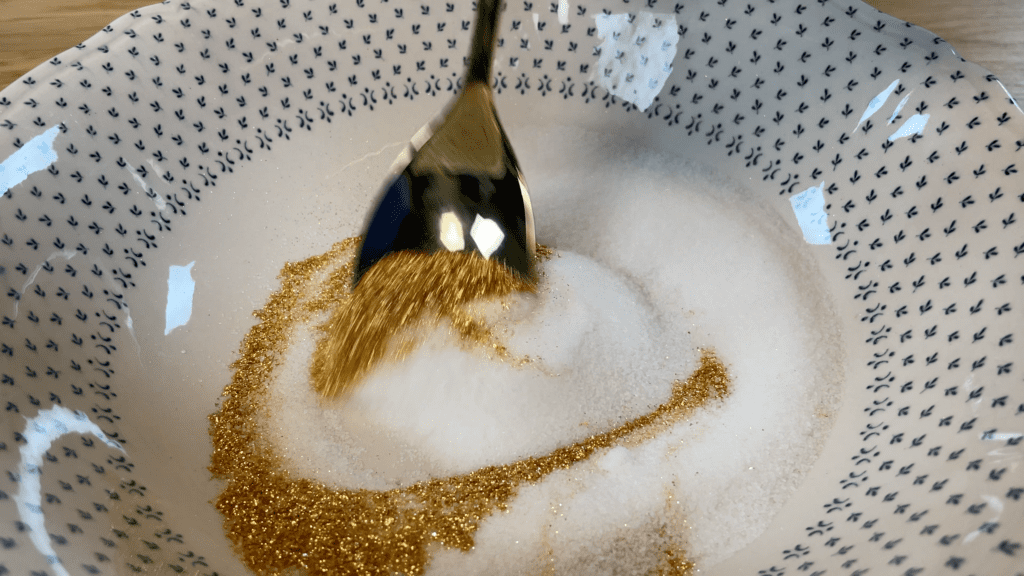
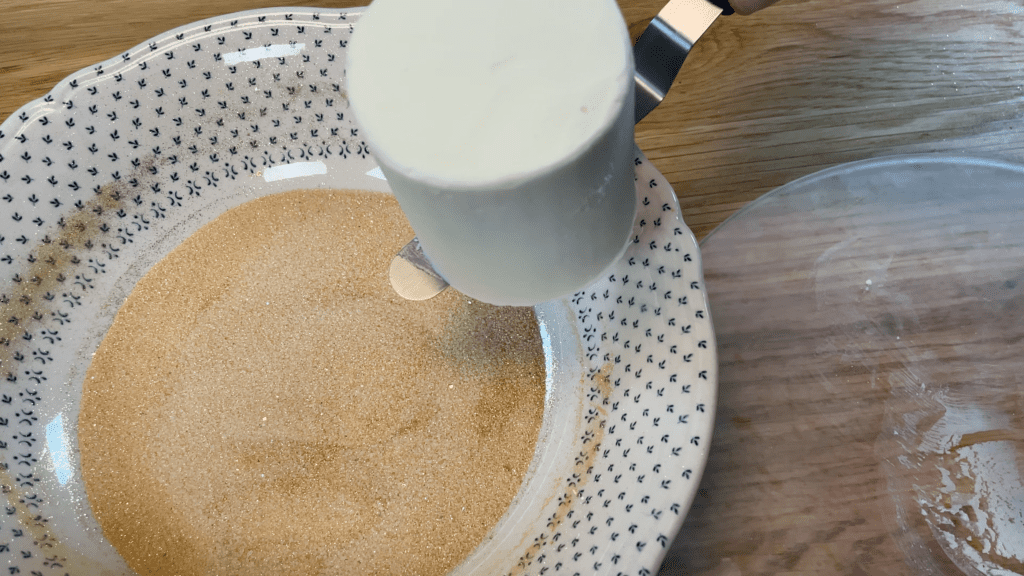
The next way to make a cake gold is by making glitter! This is really easy – mix sugar with gold luster dust or prism powder in a bowl or on a baking tray.
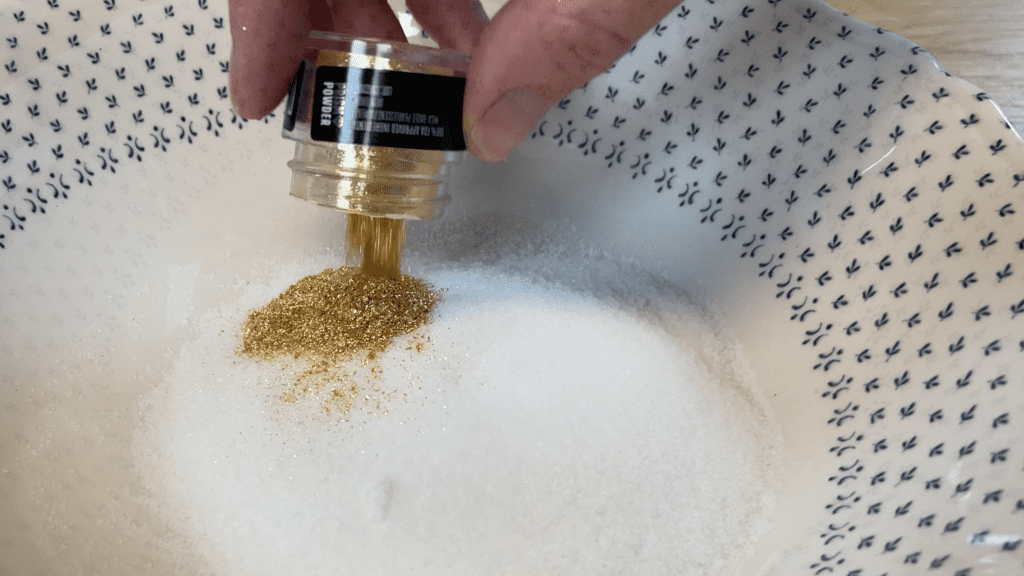
The more gold you use with your sugar, the more metallic and bold the gold will be. I’m using a bowl to mix my glitter because my cake is tiny so it will fit inside this bowl, but for bigger cakes you’ll need a bigger bowl or a tray.
Slide an
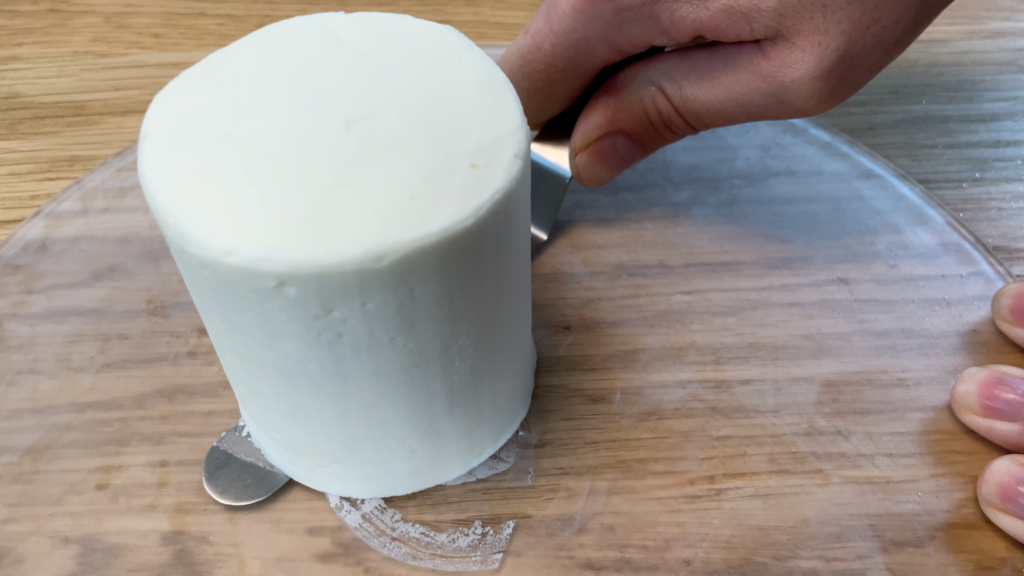
Lift the cake up, balancing it with your hand if you need to, and lower the cake into the glitter in your bowl on your tray. I’m using cupcake cakes for these examples and I have an online class on everything you need to know to assemble, frost and decorating gorgeous mini cakes!
Roll your cake in the bowl of gold sugar glitter, holding onto the top and bottom of the cake and spinning it between your fingers to roll it back and forth and totally coat the sides of the cake in gold sugar.
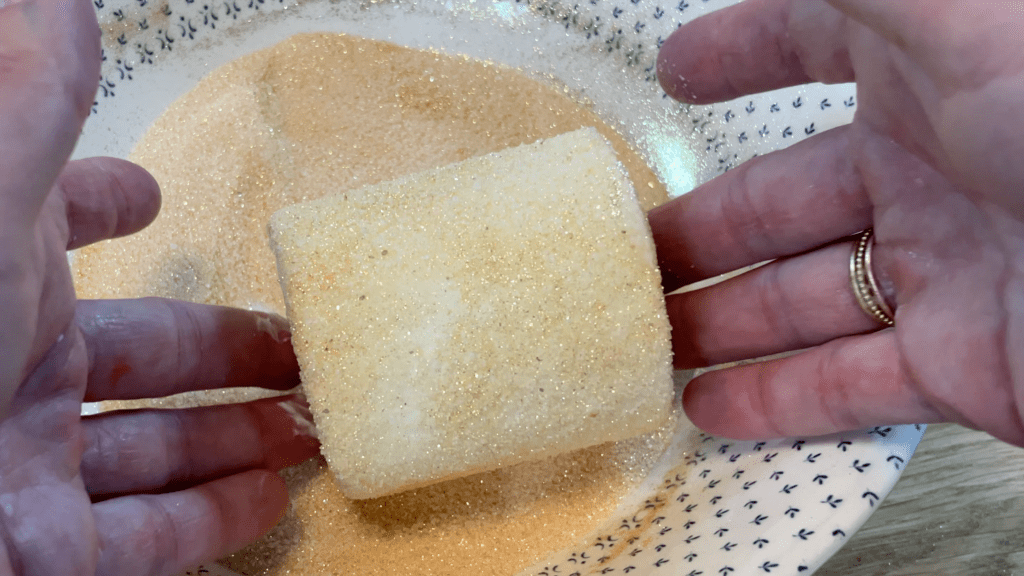
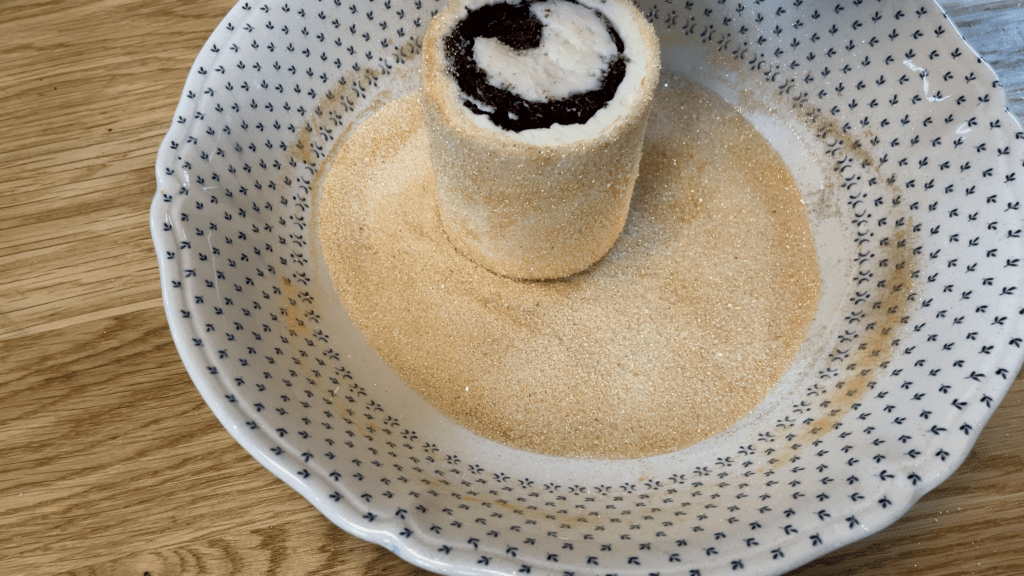
For the top of the cake you can flip the cake upside down and the glitter will stick to the frosting. It’s worth mentioning again that your cake needs to be cold with firm frosting for this to work!
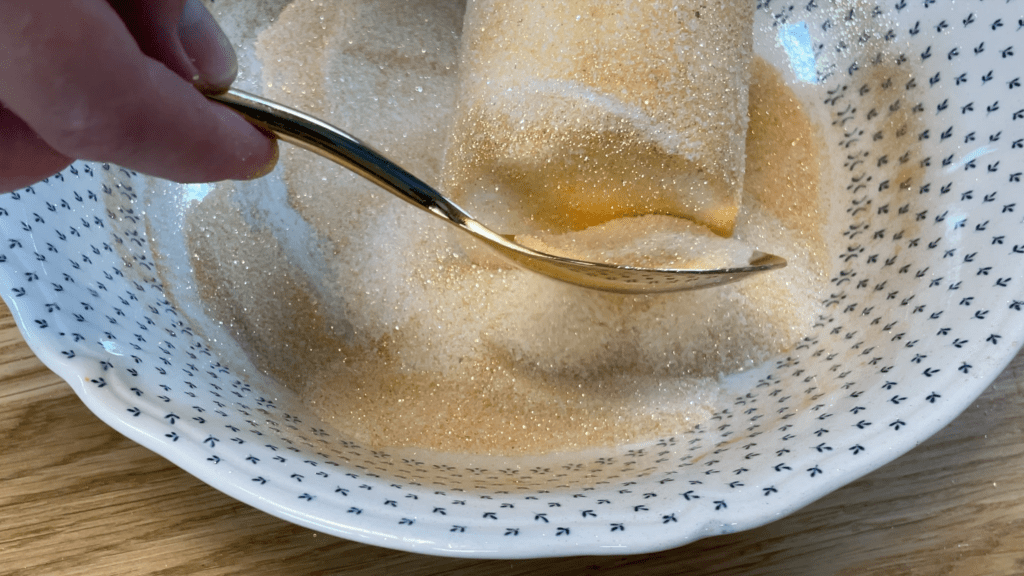
Instead of flipping the cake over, you can use a spoon or your fingers to press the gold glitter against the top of the cake. I’ll show you the final step for this cake in a moment!
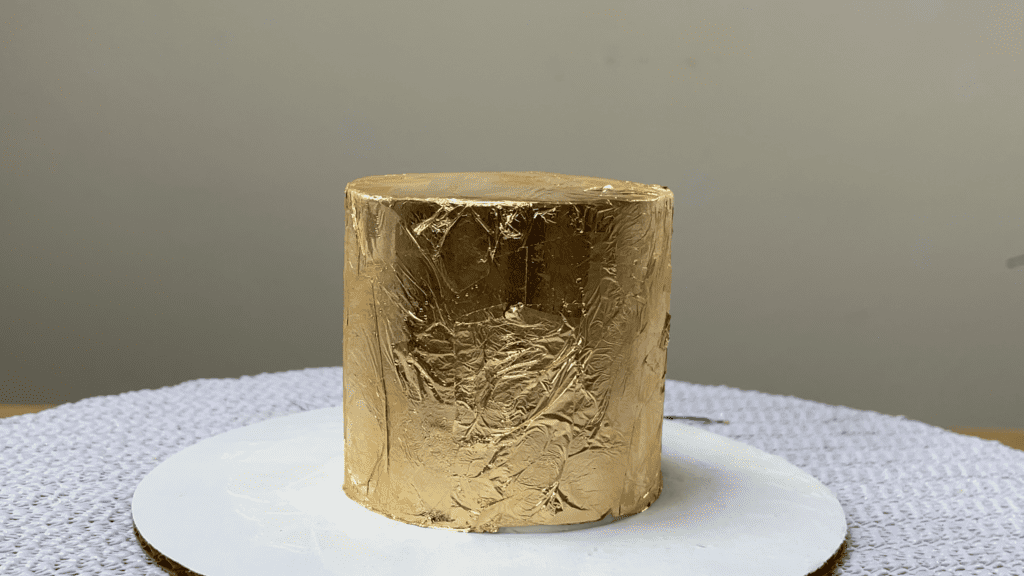
#3 The third way to make a cake gold is the most gold and that’s by using gold leaf. Make sure it’s edible gold leaf because you can buy non-edible versions for other crafts.
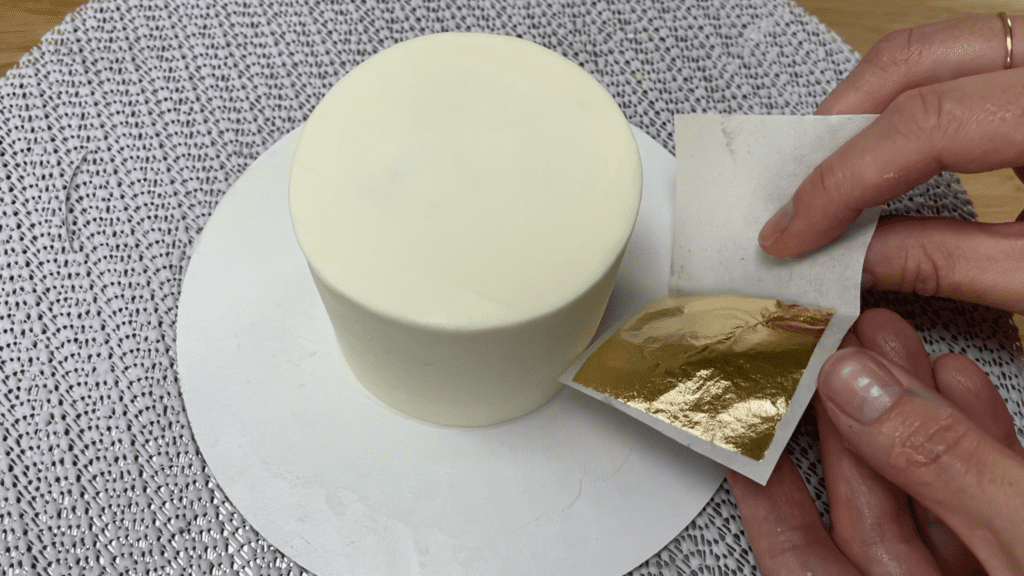
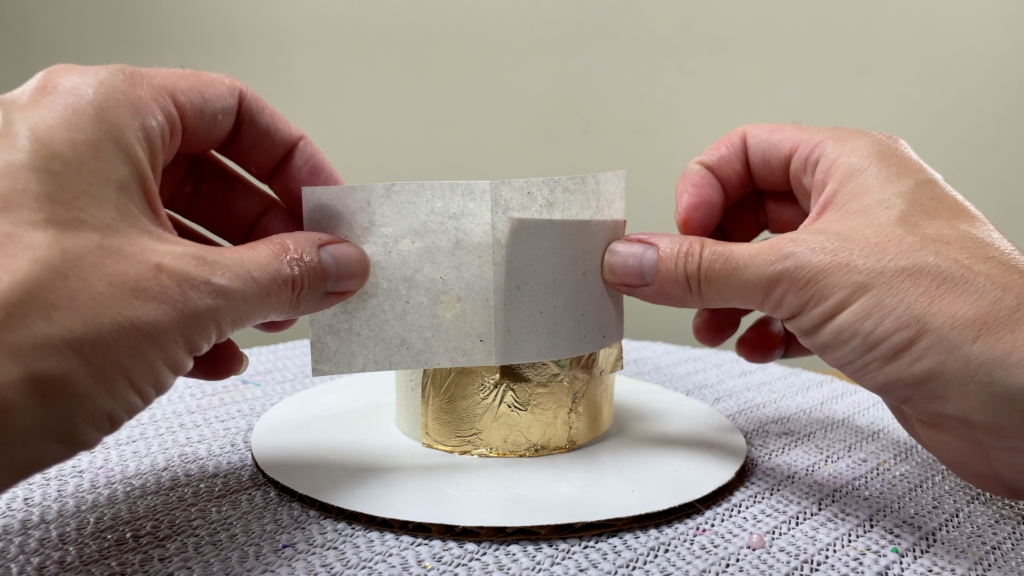
Gold leaf is very delicate and will attach to any moisture so don’t touch it with your fingers! Use the backing paper it comes in, to press the gold leaf against the frosting and it will stick easily.
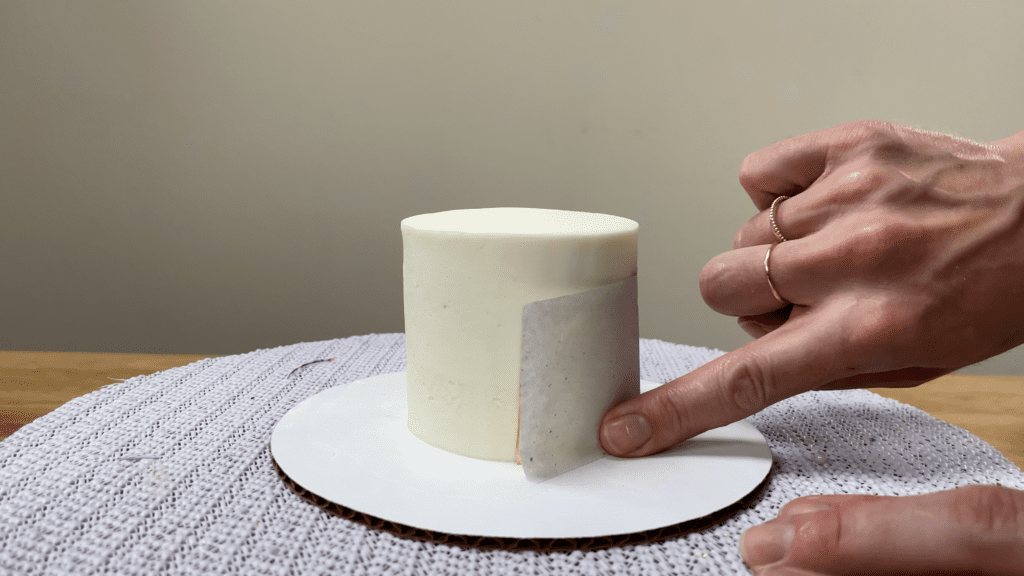
To do this, peel one side of the paper back, tilt the gold leaf so it’s facing the cake and then push gently through the paper. This will only work if your cake has been chilled and the frosting is firm.
For frosting that doesn’t get firm when it’s cold, like whipped cream, you can apply gold leaf with a paintbrush to create gold accents rather than complete coverage.
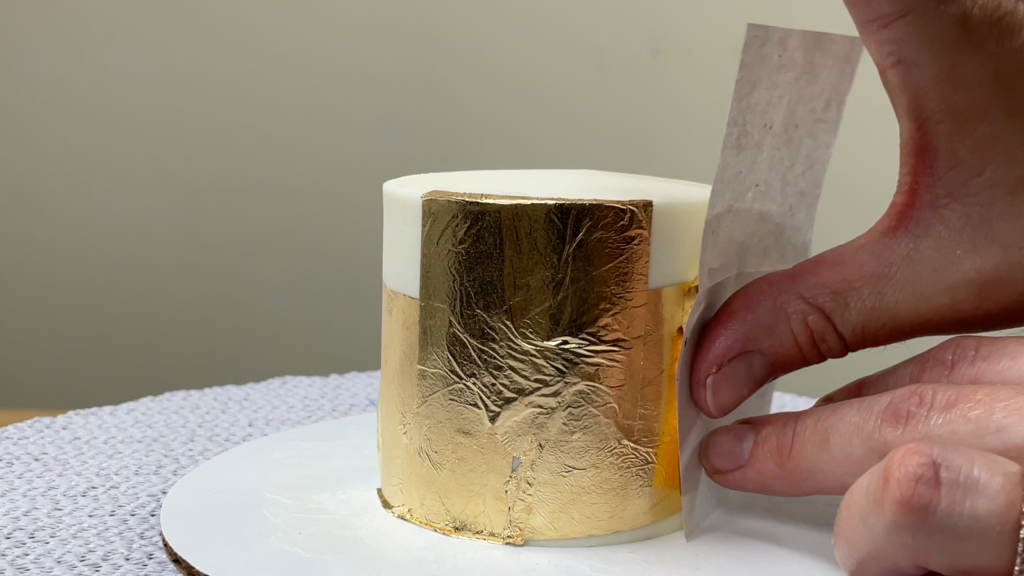
For buttercream cakes, as you apply sheet after sheet of gold leaf, you’ll cover the cake with gold and where the sheets overlap, the join will disappear since the gold leaf is so thin so you’ll end up with a seamless, totally gold cake!
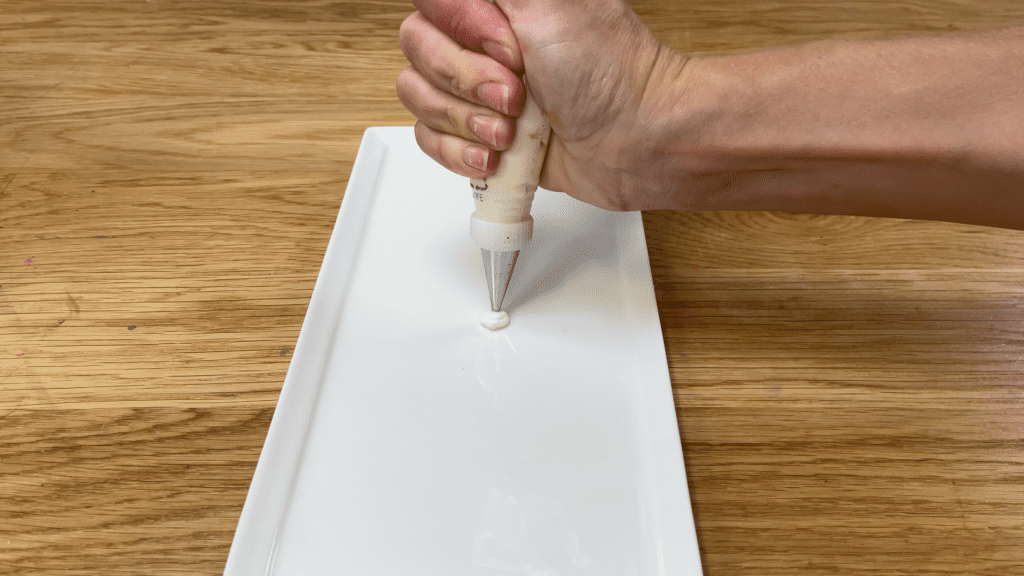
To transfer your gold cakes (or any cakes!) from their cake boards onto a cake stand or platter, after chilling the cakes spread or pipe a dot of buttercream wherever you want to place a cake.
Slide an
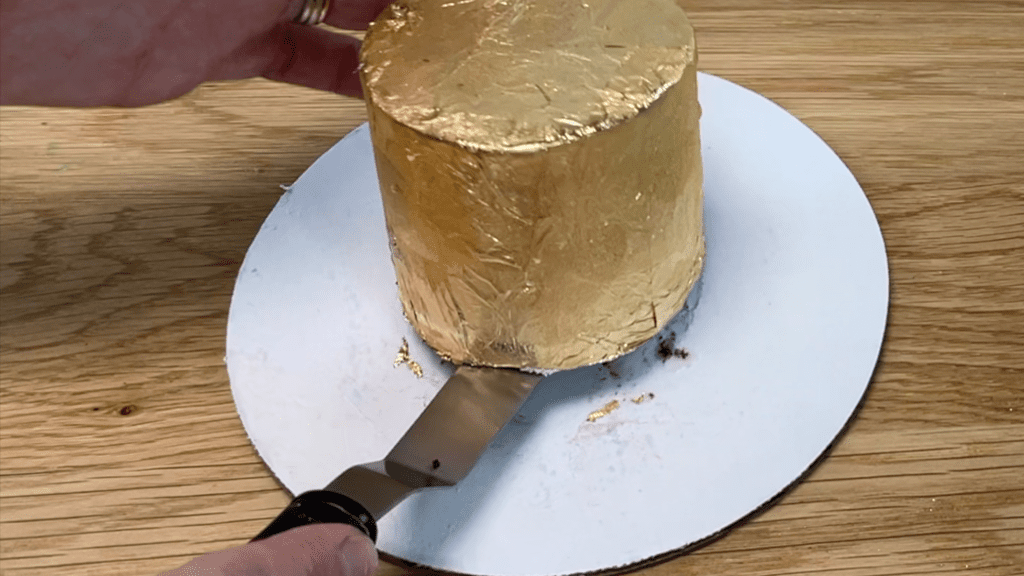
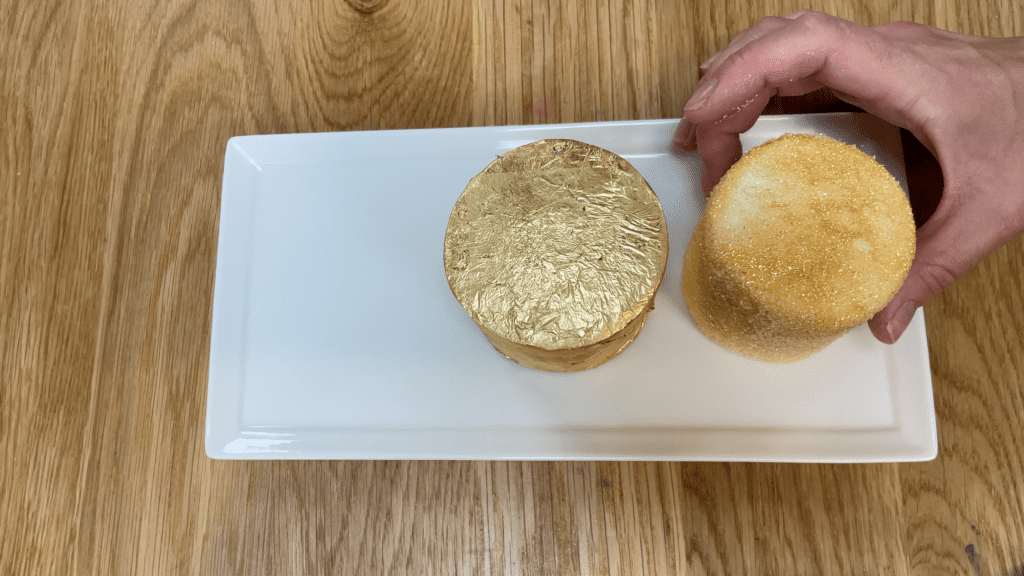
If the cakes have been chilled for at least 2 hours you’ll be able to lift them with your hands and adjust them on the platter because the frosting will be so firm.
I teach an online course on Cake Photography Like A Pro sharing how to create gorgeous backgrounds, excellent natural and artificial light, staging with props, how to adjust the focus and lighting in photos taken with your phone or camera, taking and using photos for social media and video, editing… everything you need to know to take amazing cake photos! If you join my ClubPLUS you’ll get access to every course and class on my cake school
Here’s the video version of this tutorial:
From Austin to Yosemite, or anywhere else you may travel for a special occasion, with this technique you’ll be able to transport a cake confidently, wherever you go!
If you prefer to watch a video of this tutorial, scroll to the bottom of the page.
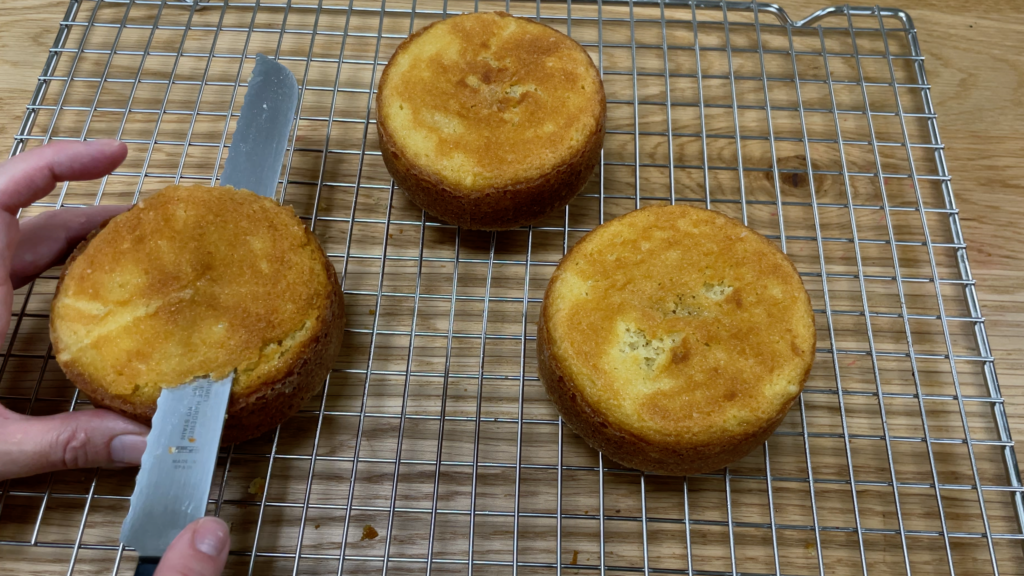
Before you travel, bake your cake or cakes and after they’ve cooled completely, level them so they’re all flat, divide them if you want to make more layers, and you can do this with a serrated knife like a bread knife.
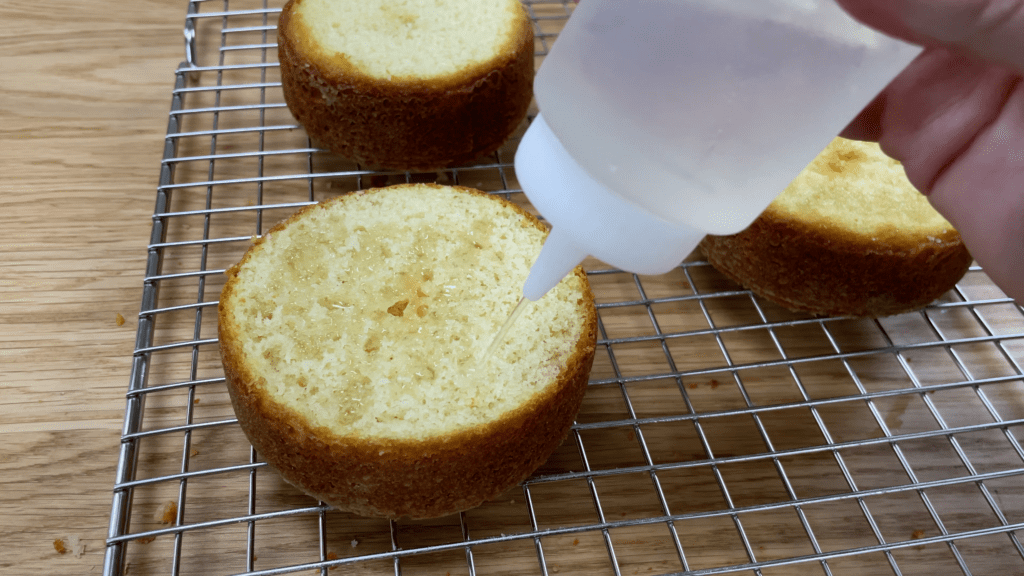
I really recommend drizzling them with simple syrup. Simple syrup is just equal parts of water and sugar simmered together until the sugar dissolves and when it cools, you can drizzle it over cakes to keep them really moist. This is a good idea if you’re not going to eat the cake on the same day. Drizzle it over the whole cake layer, paying special attention to the edges because those will dry out the quickest.
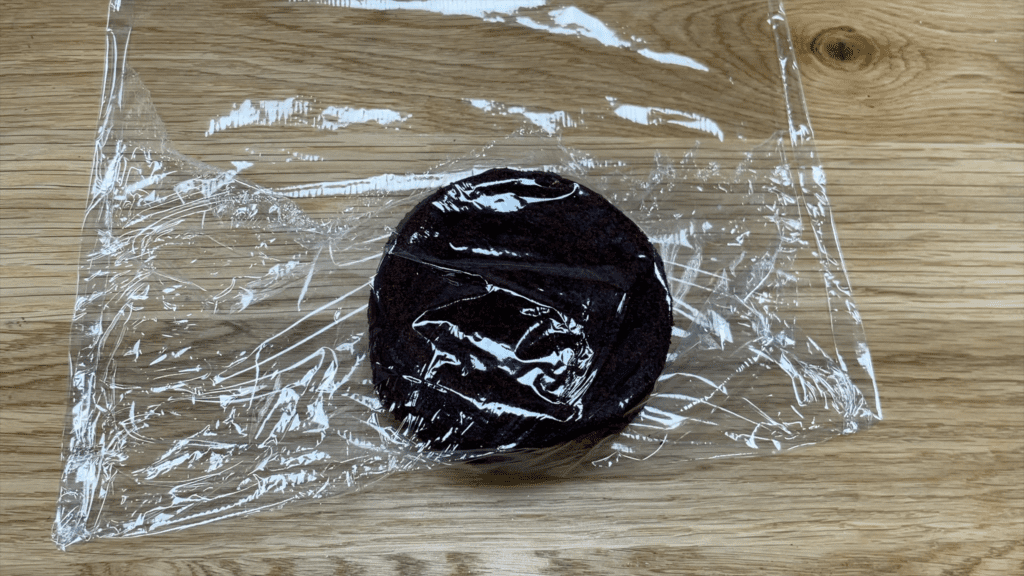
Now you have two options. The first is to wrap the layers in cling film or Saran Wrap to transport and then assemble the cake at your destination. When you wrap layers the goal is to seal them so that they don’t dry, so be generous with the wrap and ideally use two layers to make sure they’re sealed.
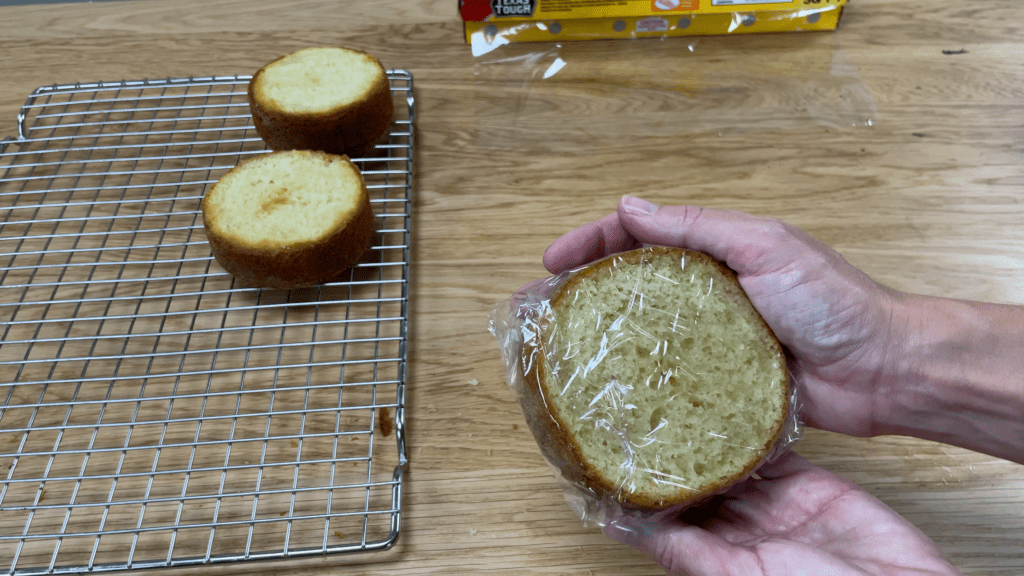
You can of course do this with whatever cake flavours you like – I’m doing vanilla and chocolate here. Then put the layers in the freezer for at least 24 hours before you travel.
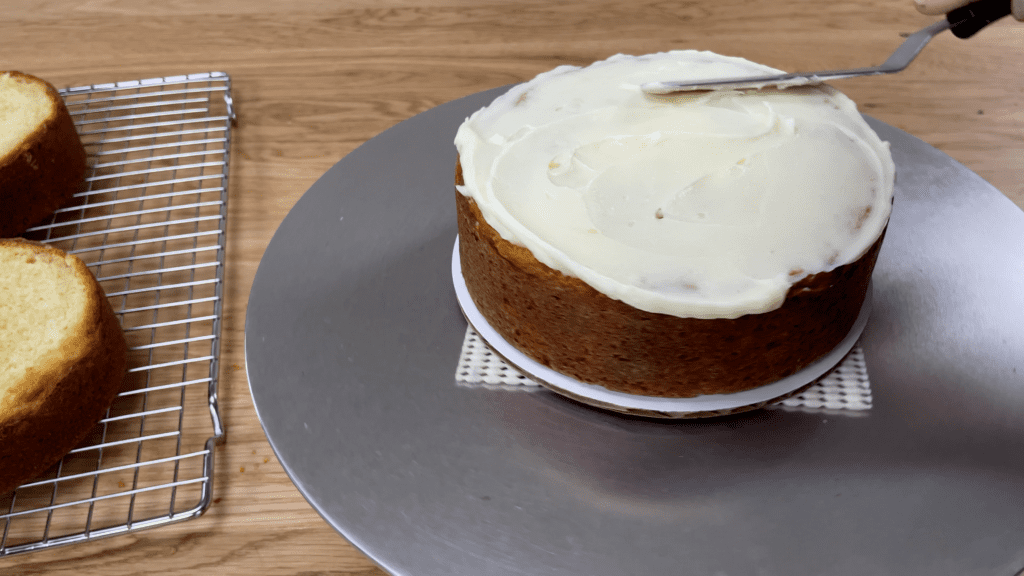
The second option is to assemble the cake now, before you travel. Layer your cake and filling, and you can spread buttercream onto the cake layers or pipe it on, whichever you prefer.
If you’re using a running filling like lemon curd you’ll need to pipe a ring of buttercream around the edge of the cake before spooning the filling in, and that ring will hold the filling in place so it doesn’t ooze out.
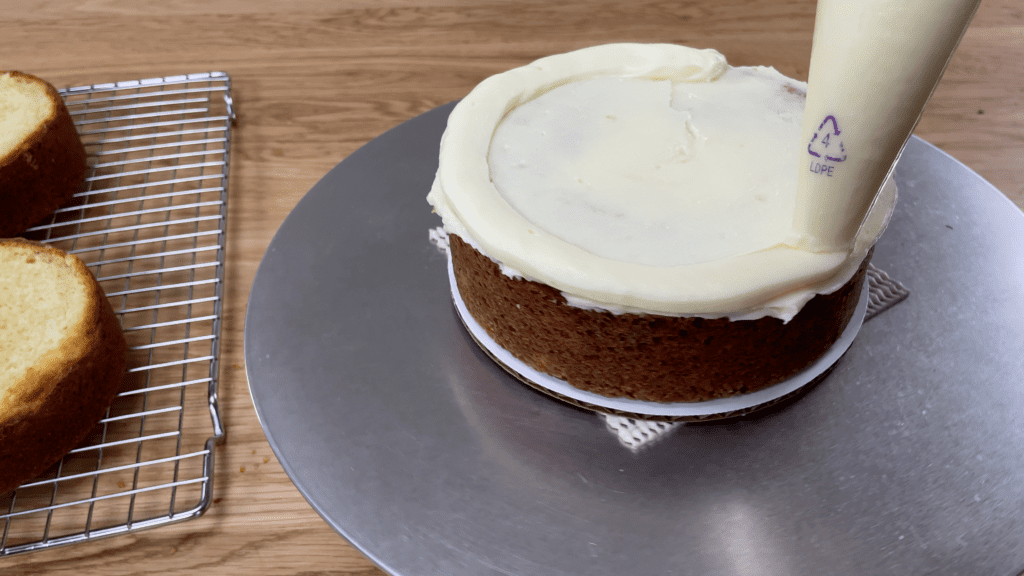
This ring of buttercream is called a buttercream dam and you can see why!
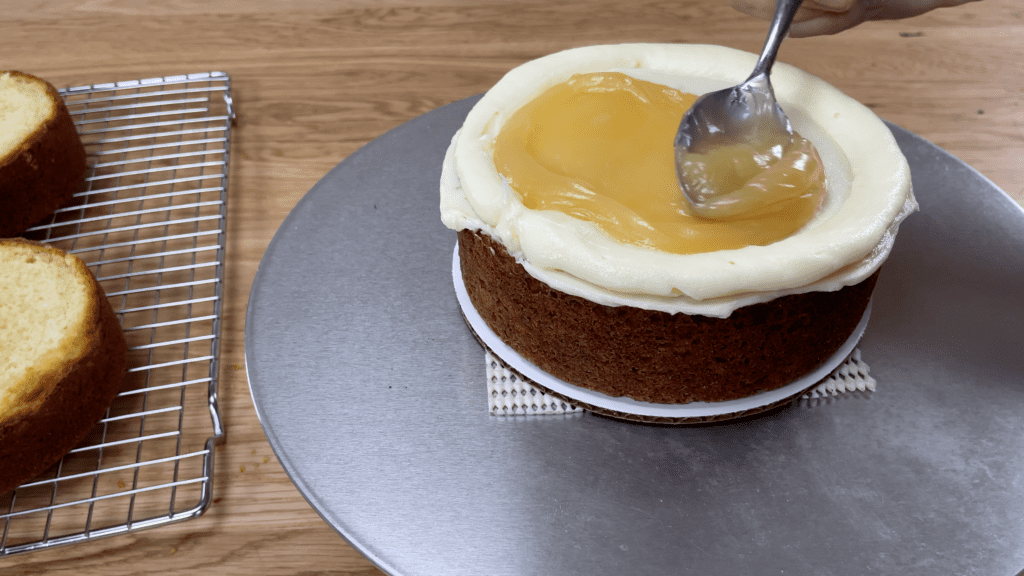
As you assemble the cake, make sure each layer of cake is directly above the previous layer so that the sides of the cake are straight, not leaning over to one side.
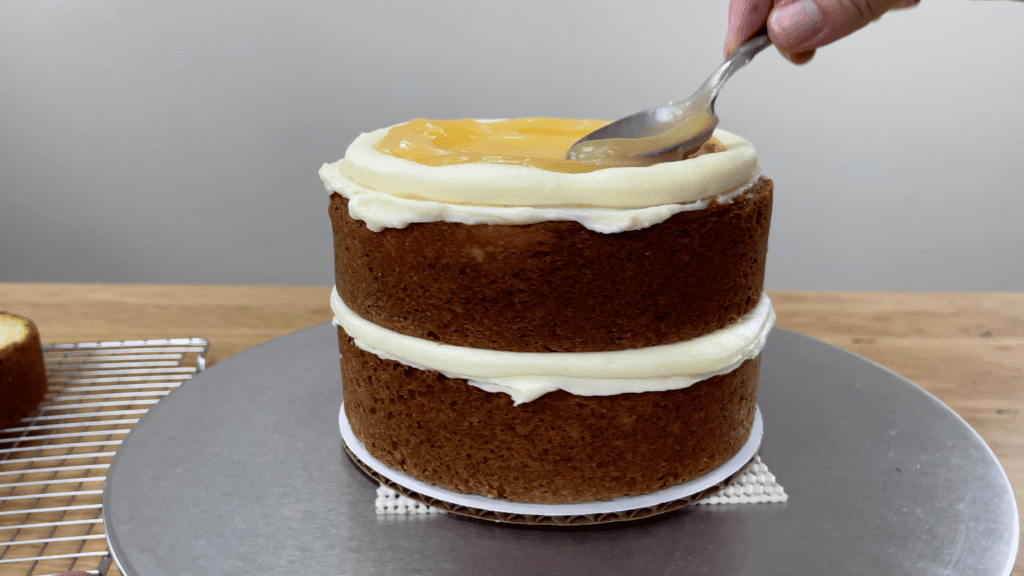
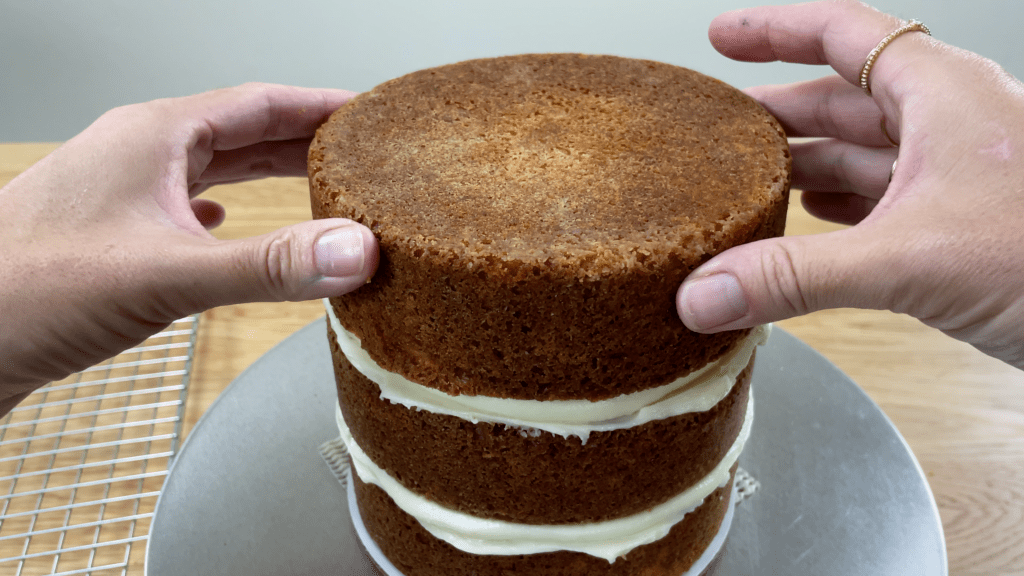
Press the top of the cake down the squeeze out any filling that might ooze out later, and this will prevent bulges in the frosting on the sides of your cake.
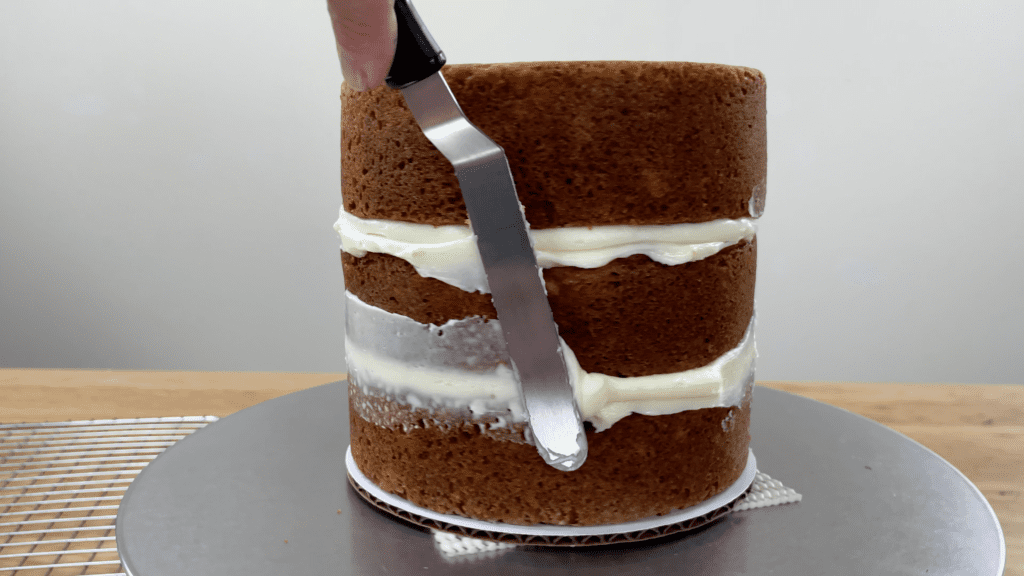
Then use your
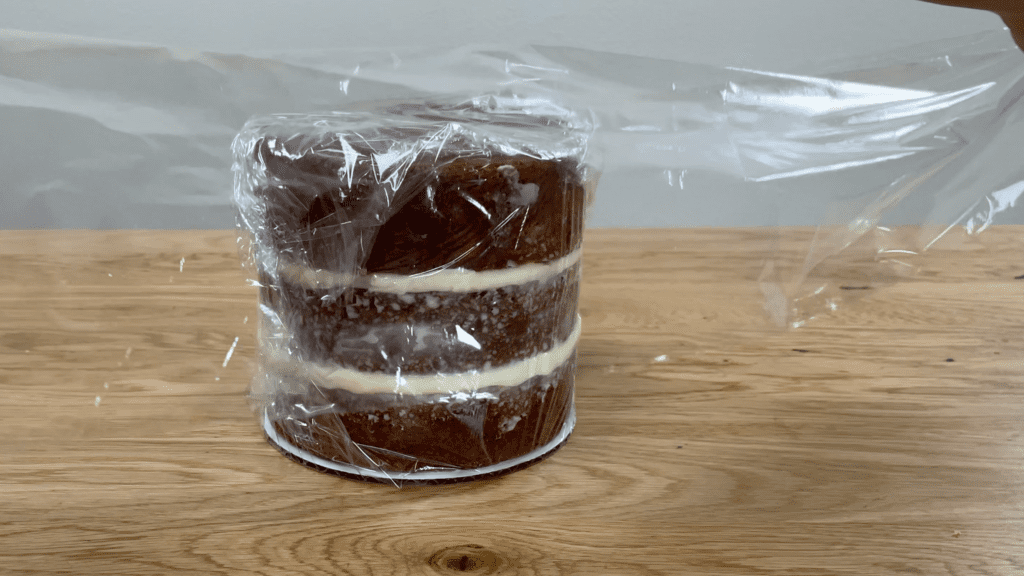
Now wrap the entire cake in two layers of cling film or Saran Wrap. (You don’t need to do this on the cake board, just the cake is fine.)
To protect the cake you’re going to transport it IN the cake pans you used to bake it, so slide one over the top of the cake and if the cake is tall, use another cake pan to protect the other half of the cake.
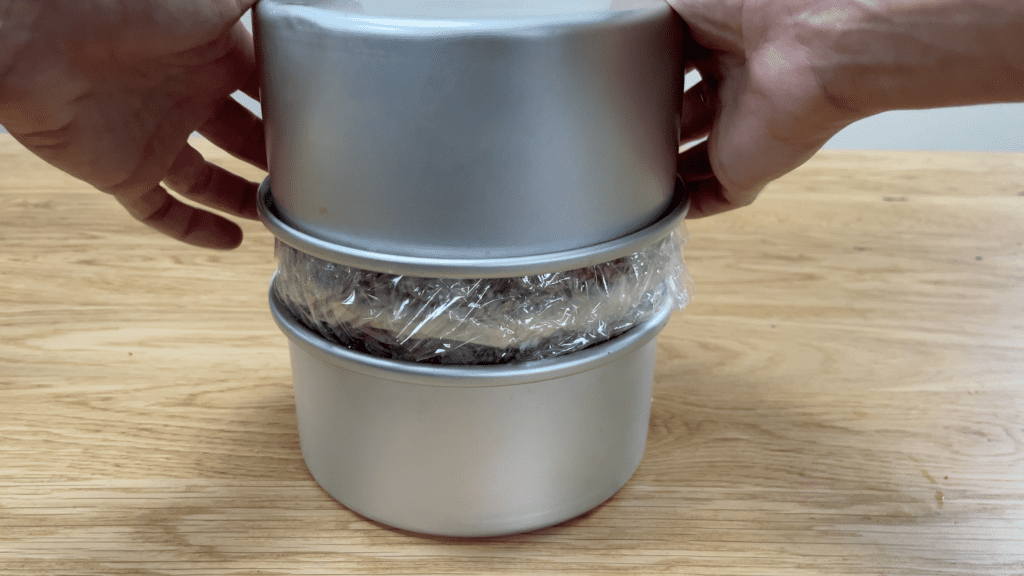
Put the pans, with the cake inside, into the freezer for at least 24 hours.
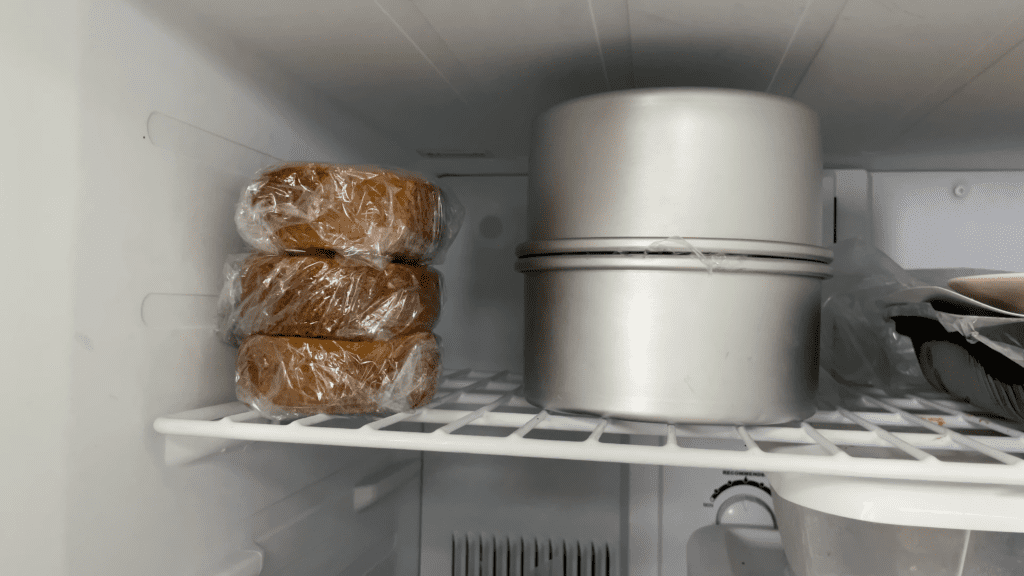
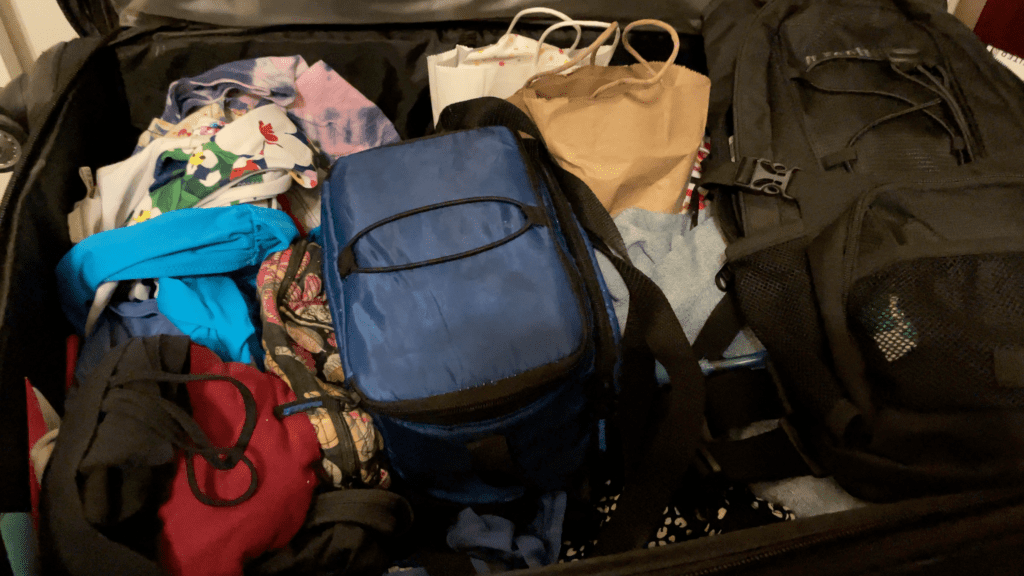
Just before you leave, put the cakes in a coolbox with ice packs and put the coolbox in your suitcase. If you’re flying, having the cakes in your suitcase means less to carry through the airports and on the flight or flights!
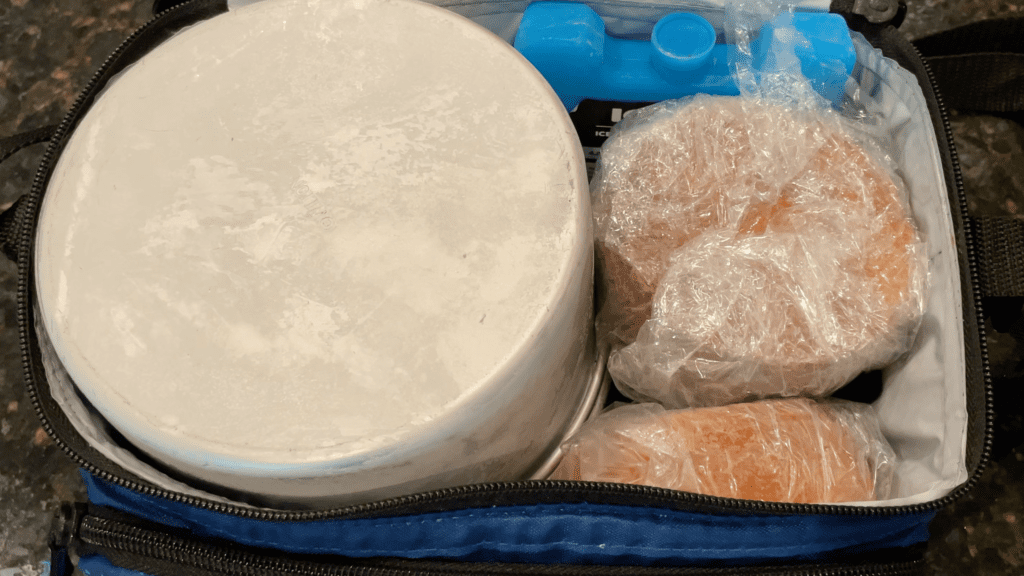
I’ve got three cakes in the coolbox in my suitcase and you’ll see, the cakes will stay frozen while you travel. There are still ice crystals on this cake pan after 12 hour of travel! So until you get to your destination the cakes will stay firm and will hold their shape, so they won’t get squished in your suitcase, and being snug inside the cake pans will keep an assembled cake extra secure.
At your destination, put the cakes or the entire coolbox in the freezer if the cake is for another day or if it’s for the next day, put it in the fridge to defrost overnight.
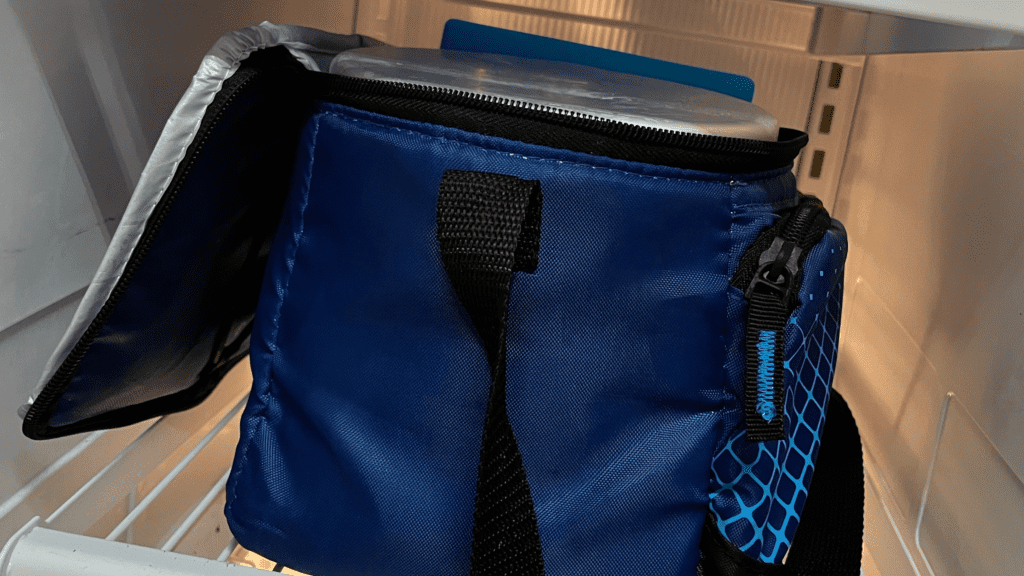
When you’re ready to decorate the cake, unpack your
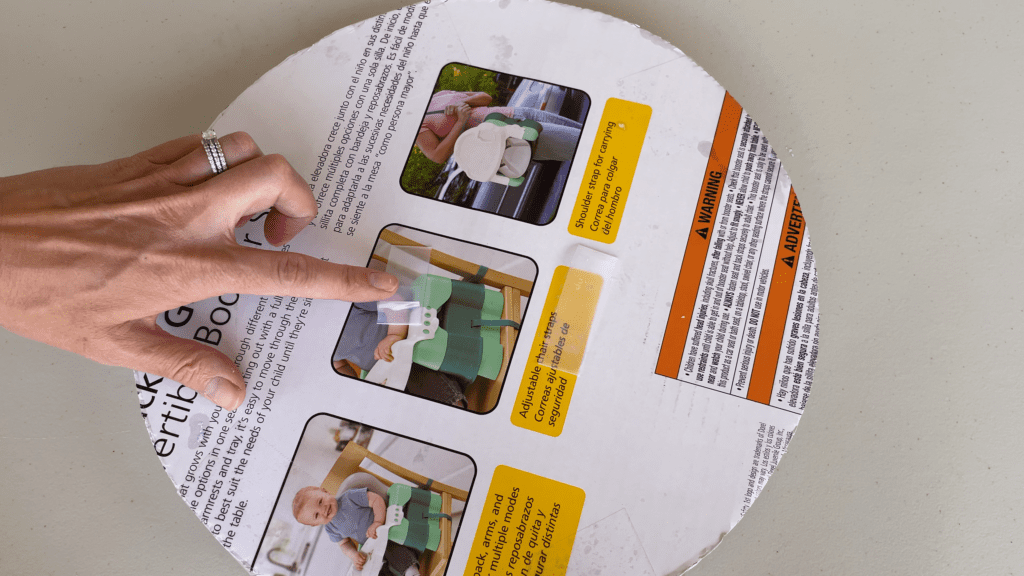
You’ll need an
What you definitely need to bring or go and buy is a cake board for each cake – these are cardboard rounds by Wilton. I like to use cake boards at least 2 inches bigger than cakes, to leave room for decorations and to hold onto when you’re carrying the cake, but for tier cakes for the upper tiers I trim the boards to be exactly the same size as those cakes. More on that in a minute!
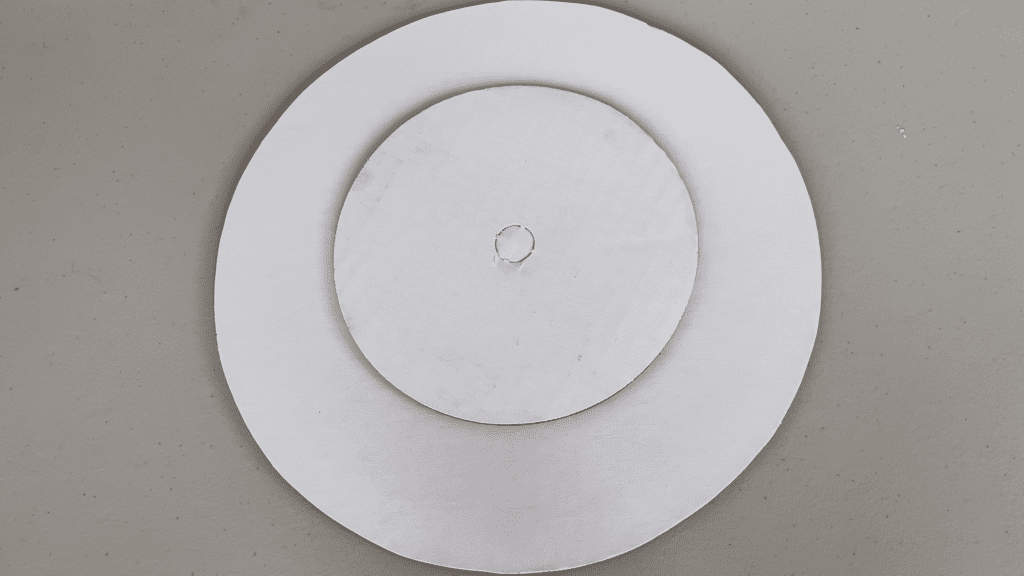
I’ve used a little ring of tape to attach this cake board onto my makeshift
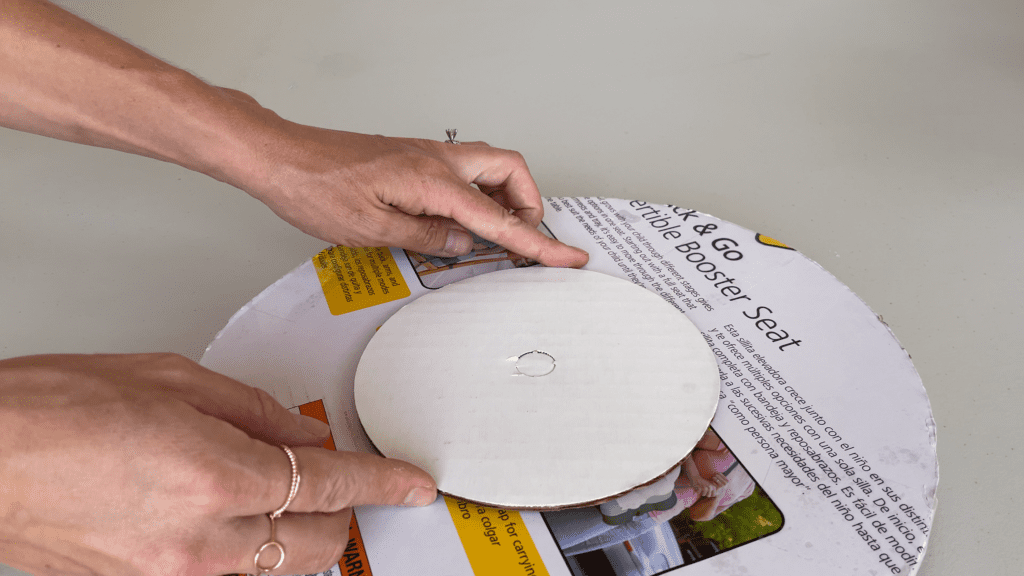
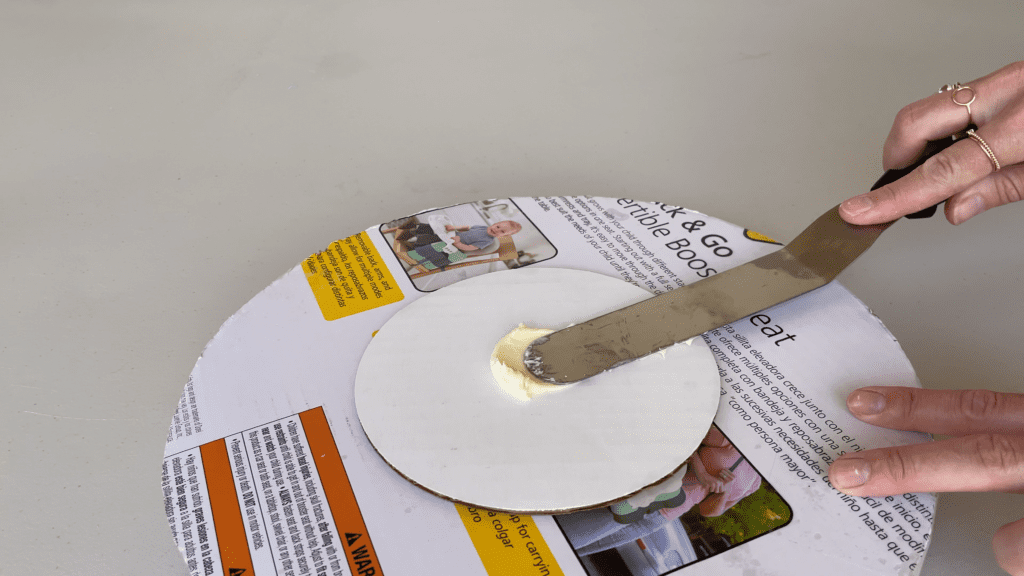
Spread a dollop of buttercream on the cake board to attach your first cake layer. When you chill the cake later, this buttercream will set and act as a glue to hold the cake in place while you frost and transport it.
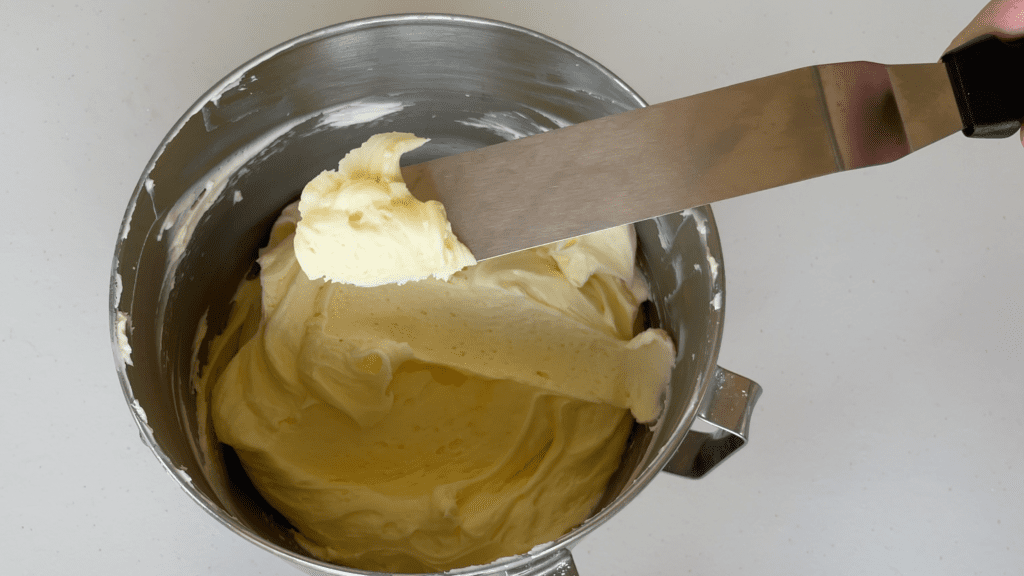
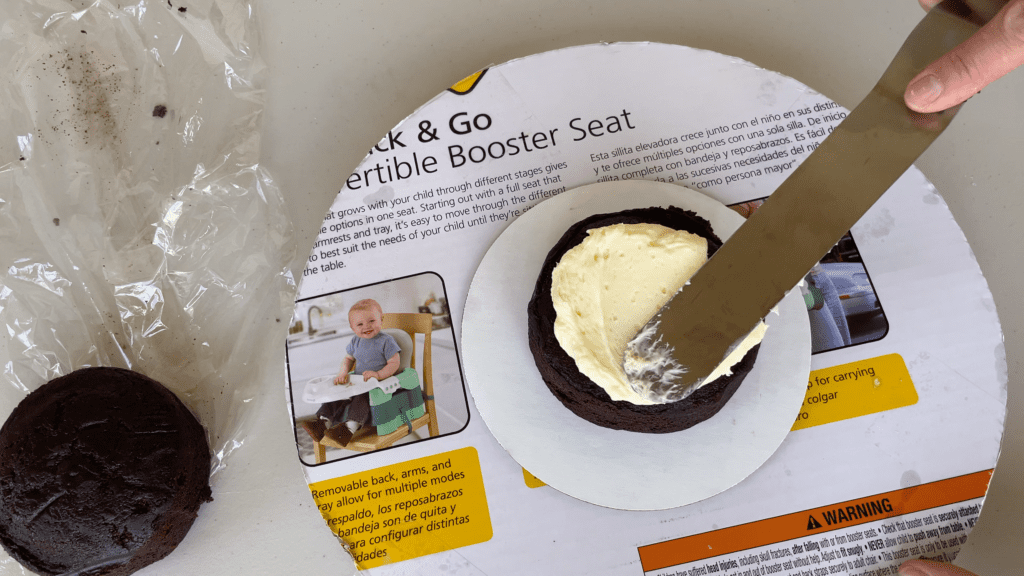
Center your cake on the cake board and then spread or pipe a layer of filling on top. I’m using my 4 Minute Buttercream.
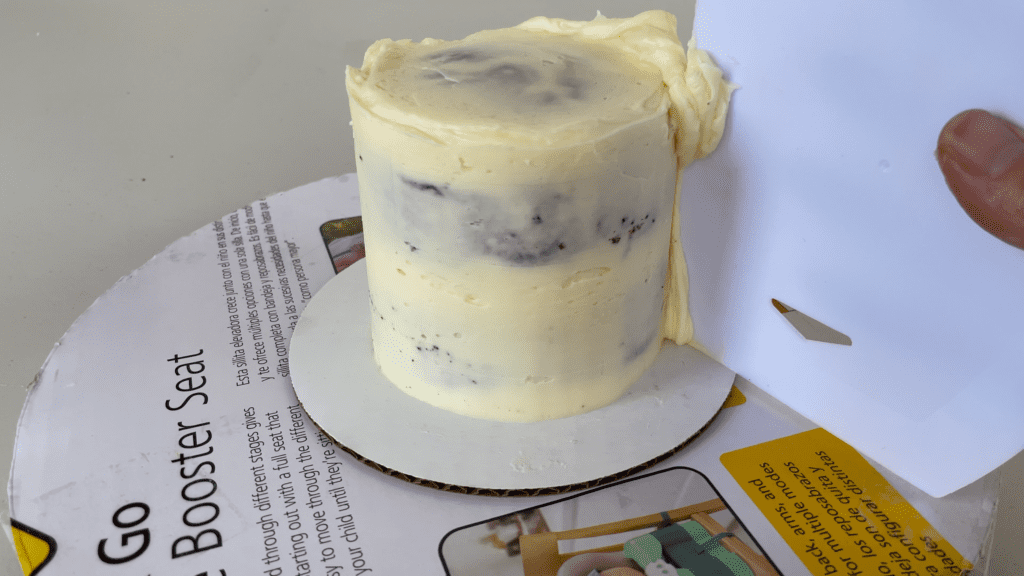
Give the cake a crumb coat, which is a very thin layer of frosting to completely cover the cake and trap any crumbs that come off. I find it easiest to frost cakes when they’re cold from the fridge because they’re firmer and less crumbly than when they’re at room temperature.
If you’re making a tier cake, give all of your cakes a crumb coat and let the crumb coat set for about 30 minutes in the fridge before applying a final coat of frosting, so that the final coat sits on top of the firm crumb coat and doesn’t mix into it, and that way you won’t get any crumbs in your final coat of frosting.
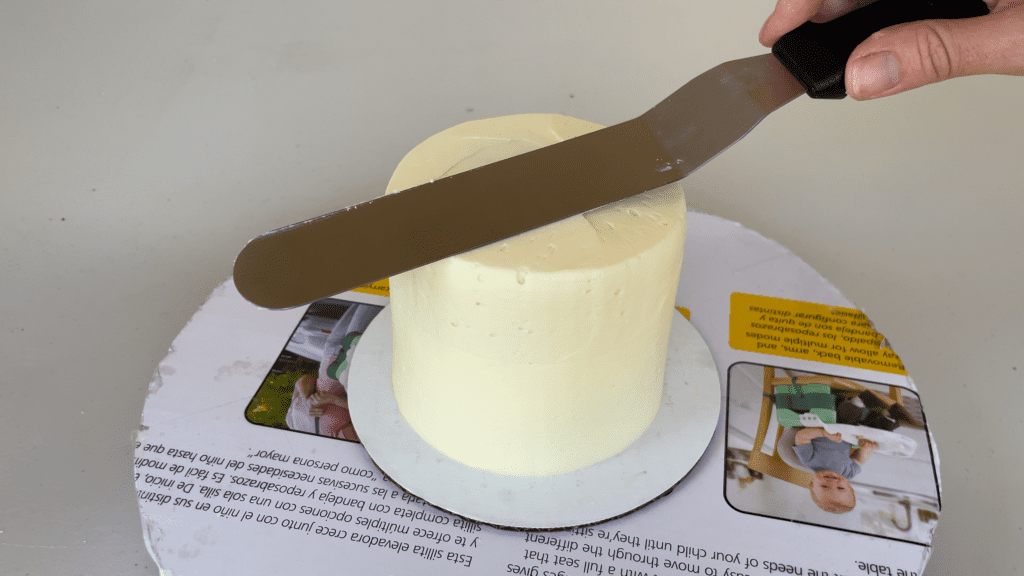
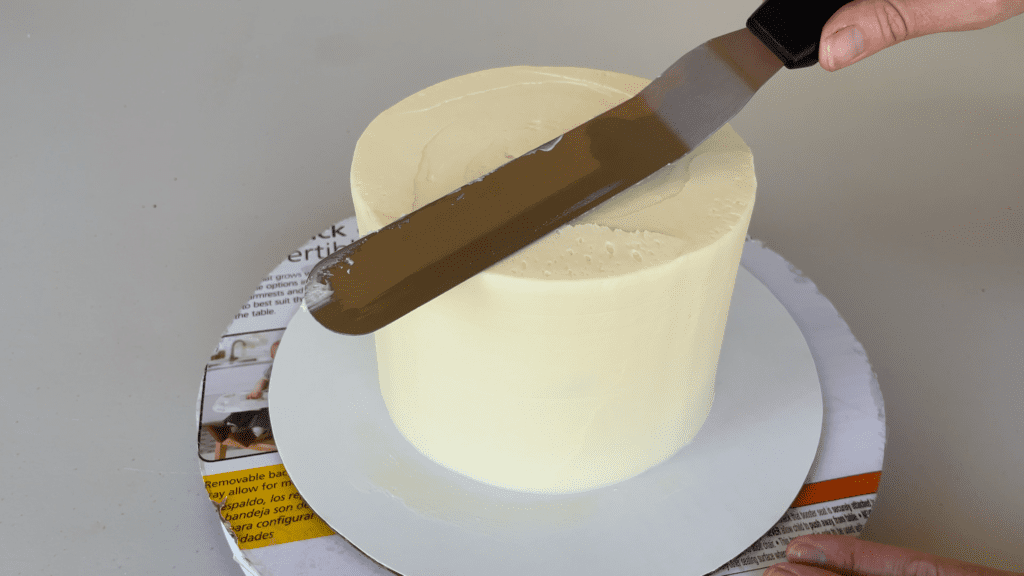
For tier cakes, it’s easiest to stack the cakes when they’re cold and very firm so after frosting them, I put them in the fridge for a few hours before stacking.
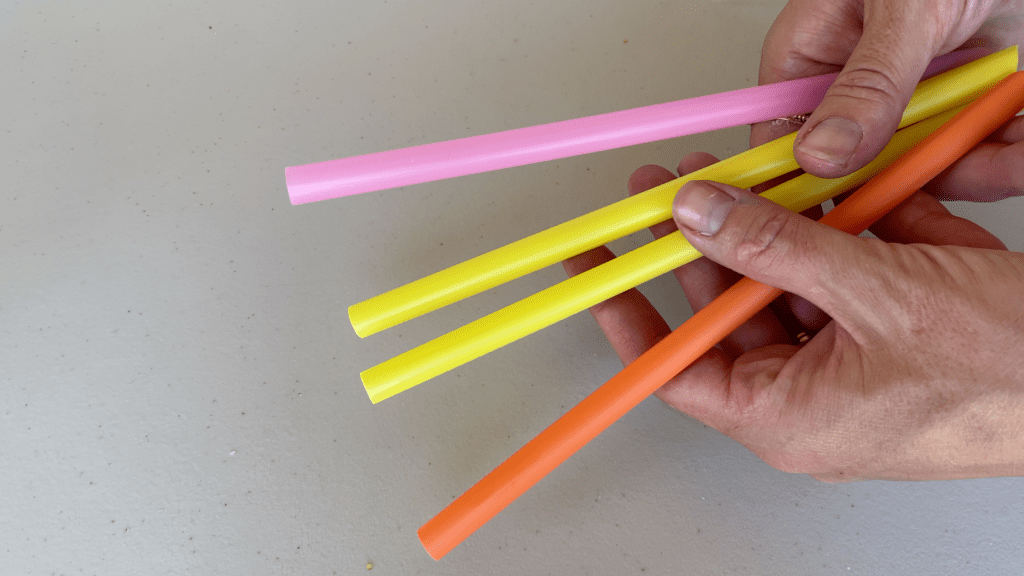
Then you need boba straws, or wooden dowels, but these are great because they’re so easy to cut! They’ll provide the support for your upper tiers of cake.
Push one straw all the way down to the bottom of the cake, until it hits the cake board, and then pinch it where it sticks out of the cake.
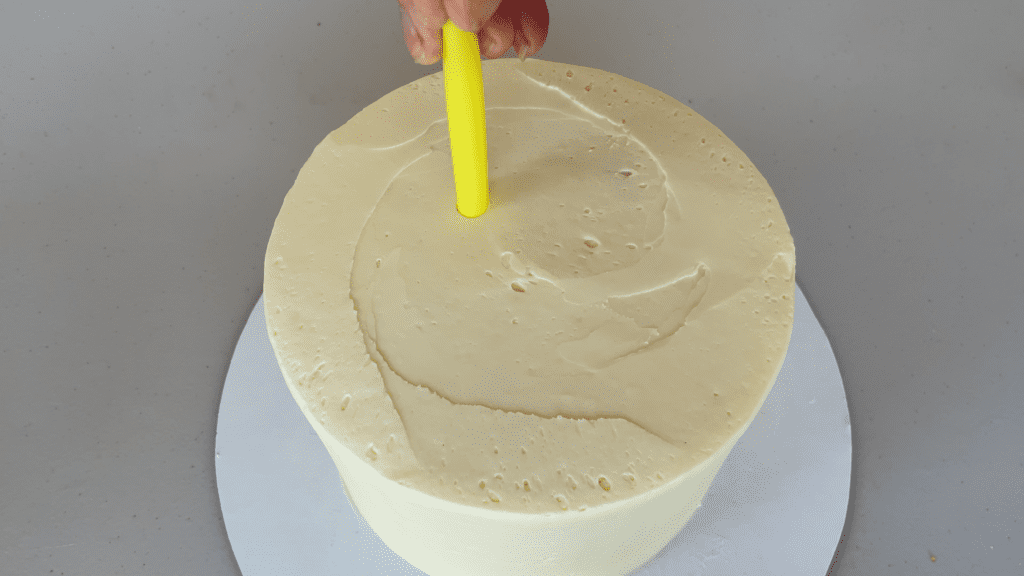
Pull the straw out and cut it there and now it’ll be exactly the same height as the cake. Use it to measure and cut three more straws the same height, and these will be like pillars that support the next tier of cake.
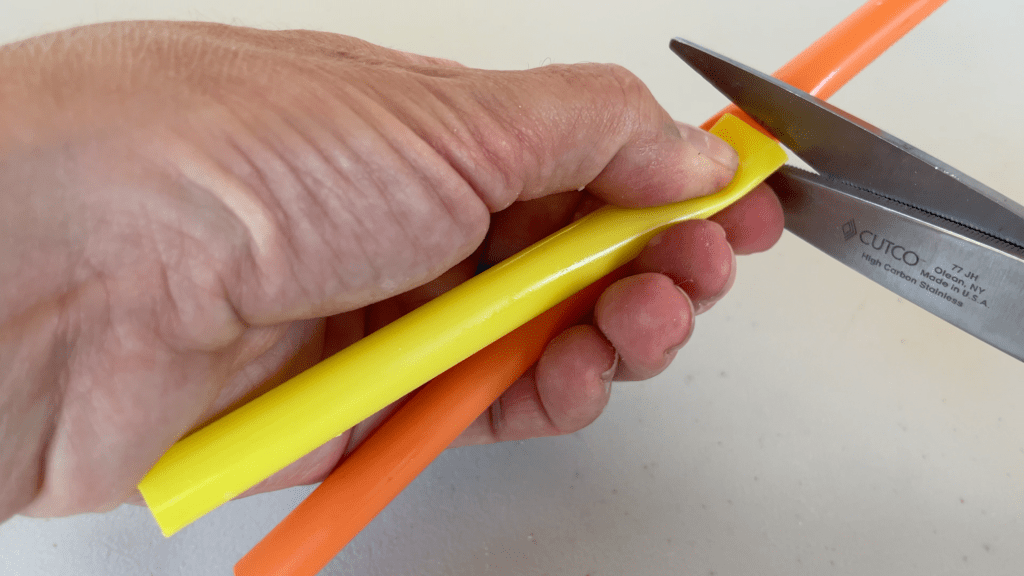
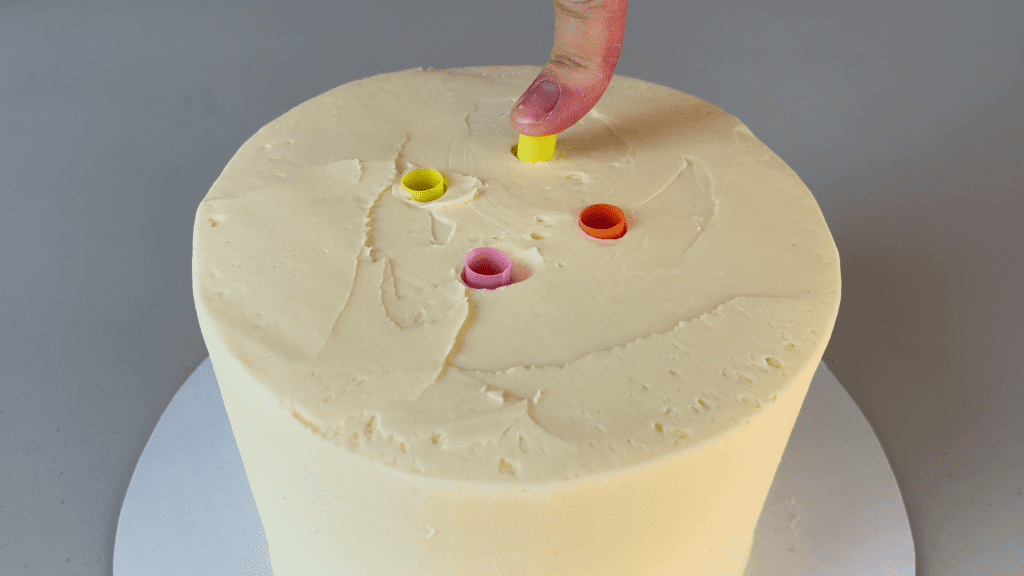
Push them into the cake in a square formation, with at least 2 inches or 5cm between the straws, but keep the square small enough that the next cake will be sitting on top of all of the straws.
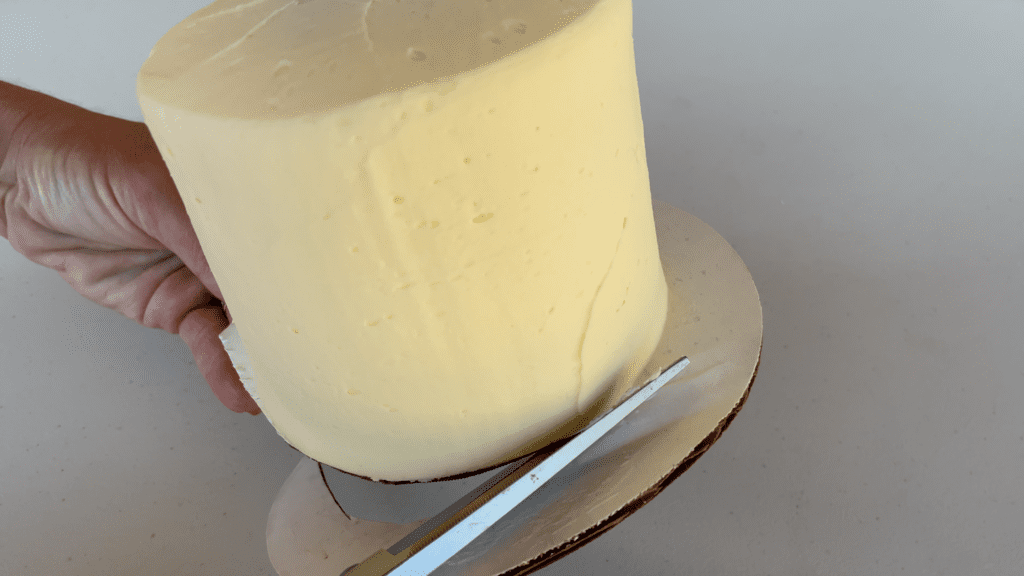
Cut the board around the top tier of cake so that it’s exactly the same size as the cake. Since the cake is cold, the frosting is firm so you won’t damage it. You COULD cut this before frosting the cake but then you’d need another board to frost it on, so this is how to do it with minimal materials.
Spread a little bit of buttercream over the straws, which will act as glue, and now place the top tier onto the bottom tier.
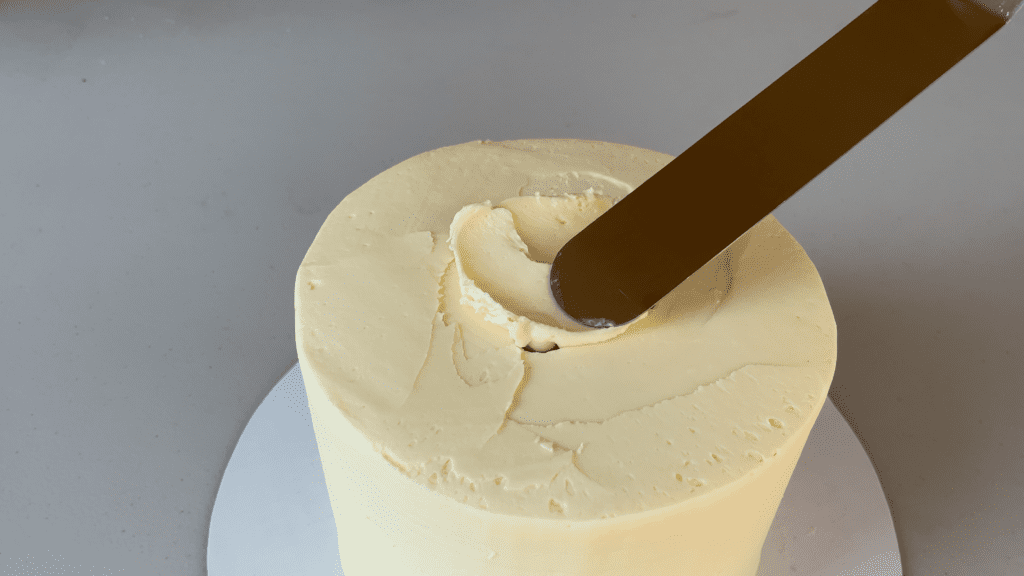
Center it by sliding it around and then press down to secure it. Having a cold cake is really essential for this. Now the straws will hold the cake up, supporting the little board that the top cake is on, and the fresh buttercream will hold it in place.
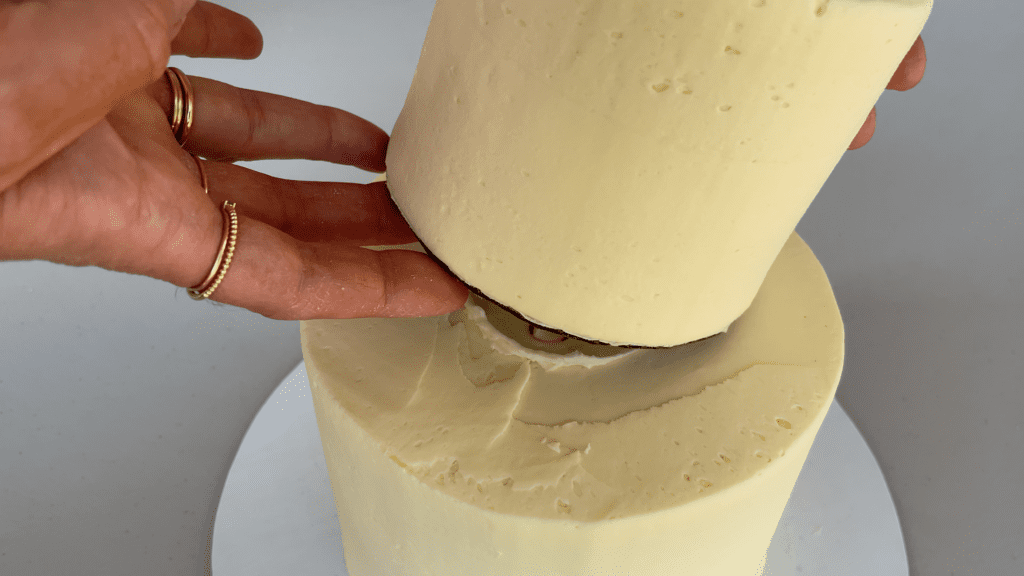
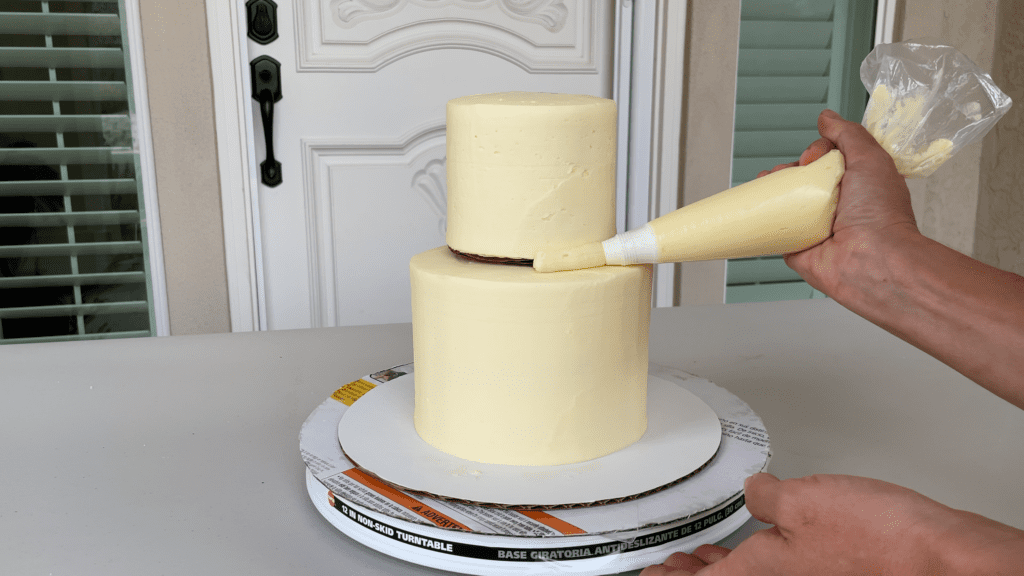
The little board under the top tier will be visible so use a piping bag to pipe a ring of buttercream around it. The piping bag can have a round tip or a star tip or just the ned cut off with no tip – the shape doesn’t matter.
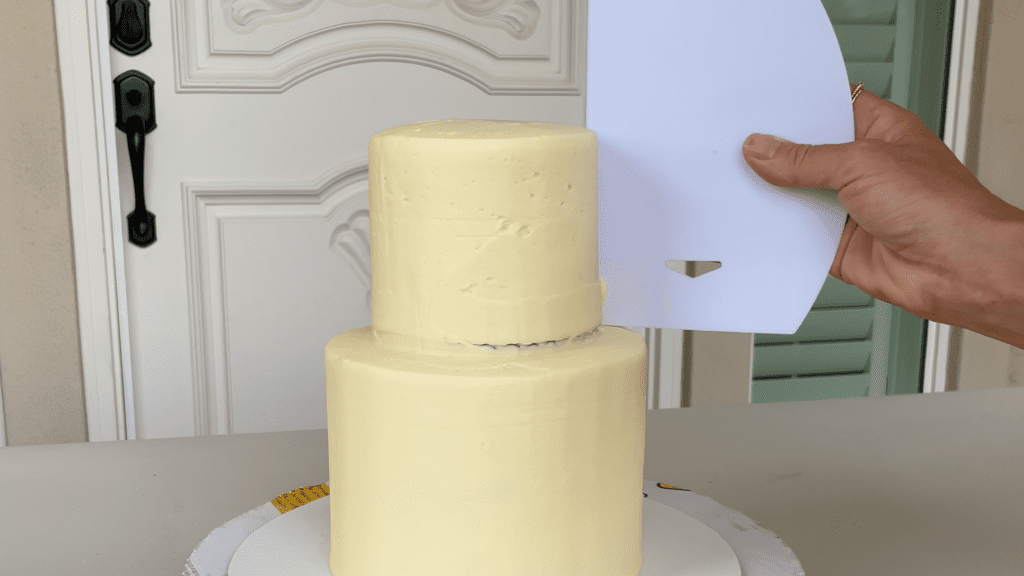
Use your frosting smoother to scrape off the excess buttercream and flatten the rest against the side of the cake, filling in the gap between the two tiers and icing the cake board in the middle. If you’re piping a border around the bottom of each cake later, which I’m going to do, you don’t have to worry too much about this!
If you’re going to use gel colours, make sure you put them in a ziploc bag before you travel in an airplane because of cabin pressure which will almost definitely make them leak!
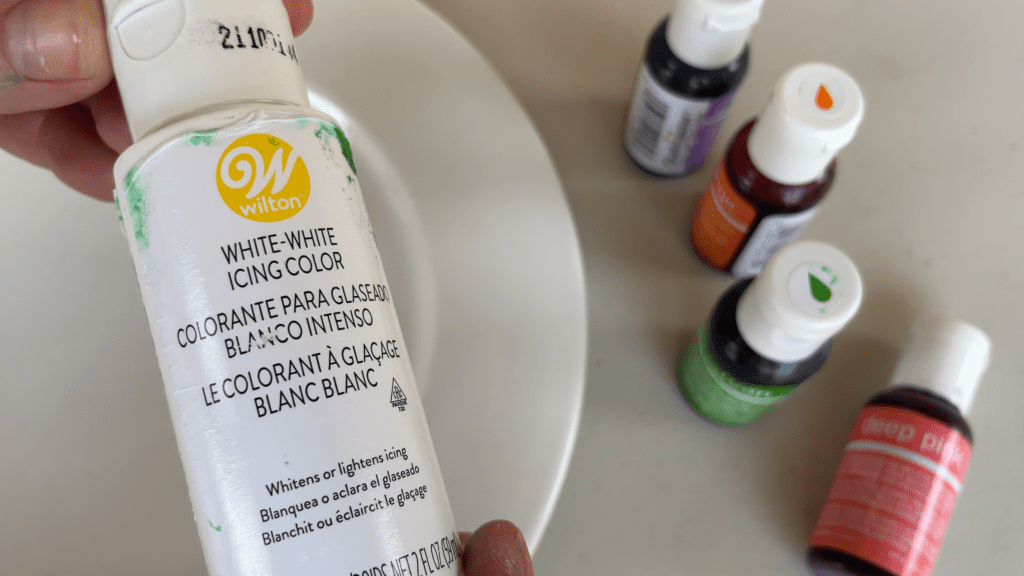
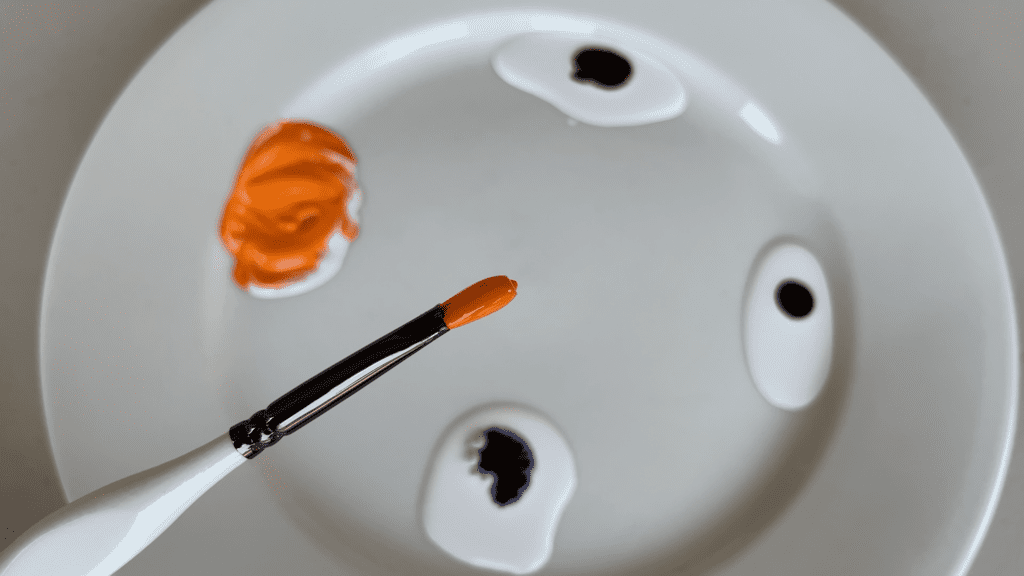
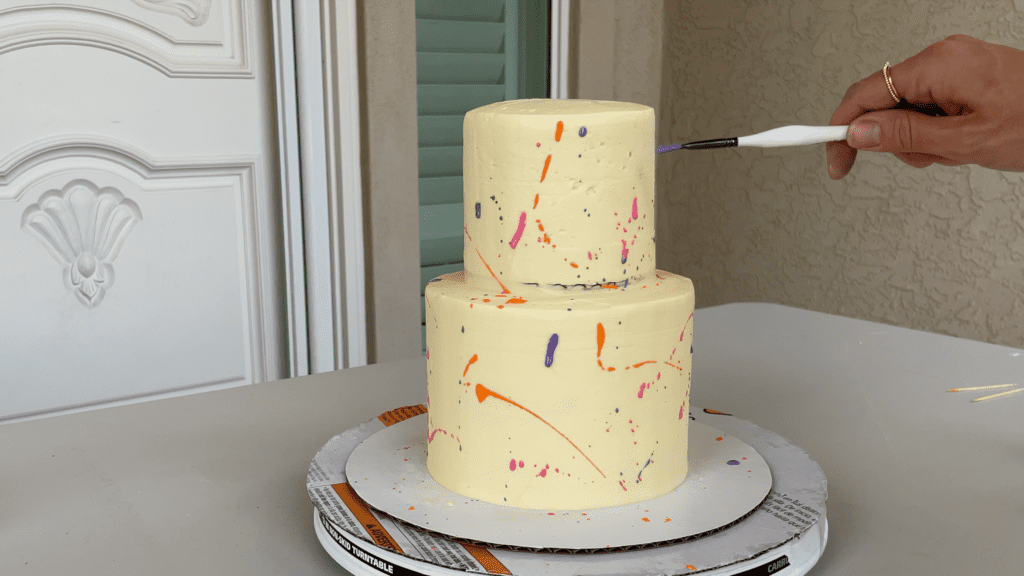
I’m using Wilton white icing color mixed with gel colours to make an edible paint and then dipping a paintbrush into each colour and flicking it over the cake to make colorful splatters.
I love this technique because it’s fun to do and an unusual decoration of a cake, and there’s really no skill to perfect! I’d recommend putting a disposable tablecloth or a down down around the cake so you don’t get paint everywhere.
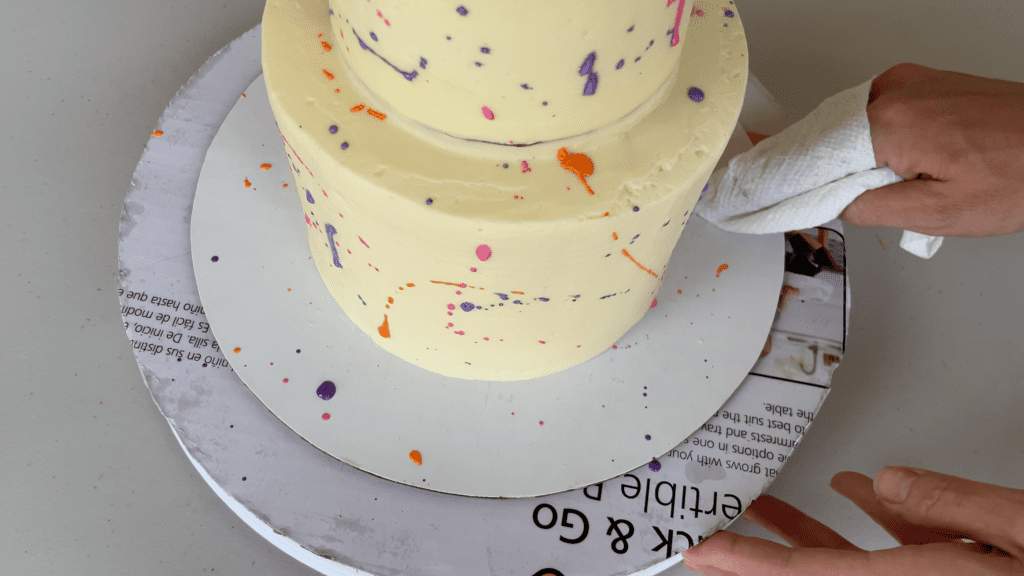
You can wipe any smudges of buttercream or paint off the cake board with a cloth or a paper towel.
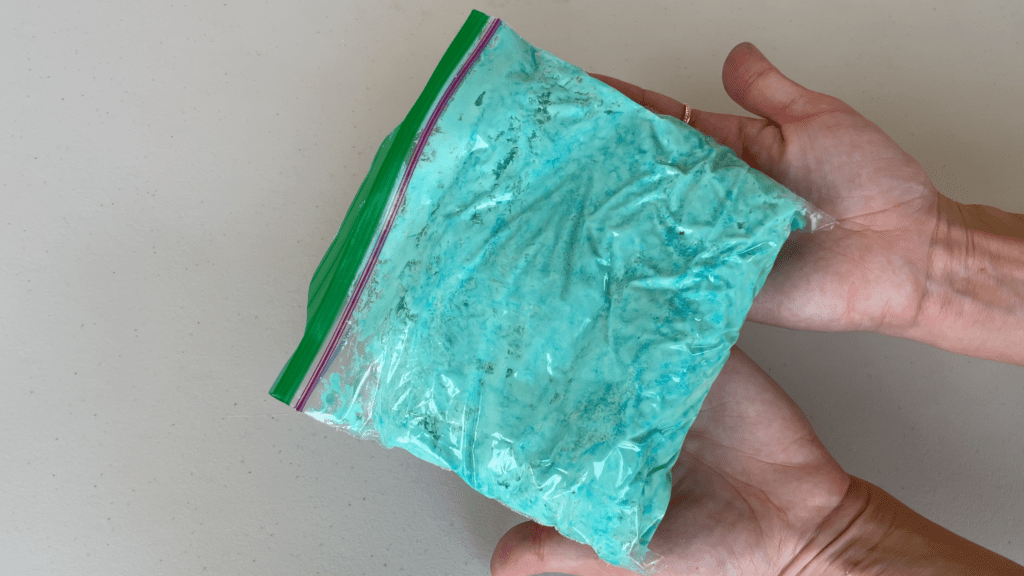
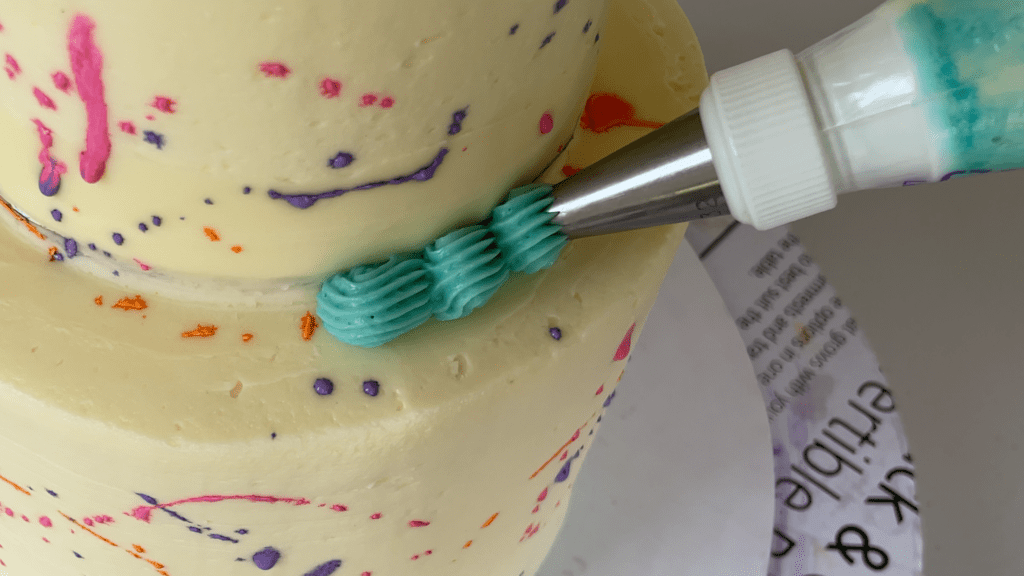
To pipe some borders I’m using an open star tip and buttercream tinted with blue gel that I made at home and froze in a ziploc bag and brought with me in the coolbox, to save me some time tinting buttercream here.
I like to pipe borders around the bottom of both tiers to cover up the join and any visible cake board, and to add some extra texture and colour and detail really quickly.
If you’re going to travel a long distance with the cake it’s a good idea to stick something down through the cakes to hold them steady. Using a simple wooden skewer is fine for two tiers. Center it over the top tier and then use a pair of scissors or anything flat and strong to knock the skewer down through top cake, through the cake board underneath the top cake, and then down through the bottom cake too.
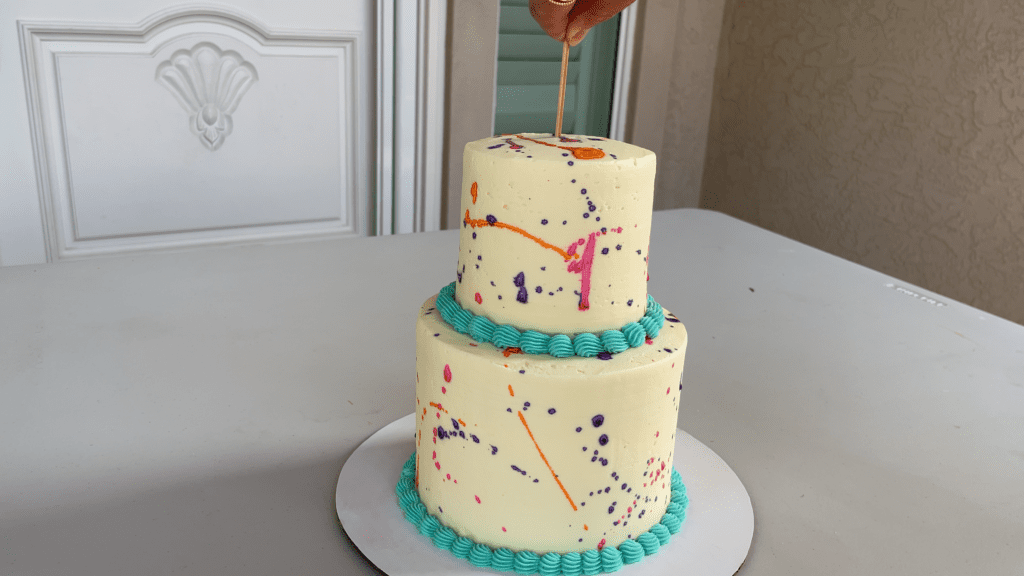
That’s where that little hole in the middle of Wilton cake boards comes in handy! But the pointed end of a wooden skewer will poke through a cardboard cake round without a hole, too.
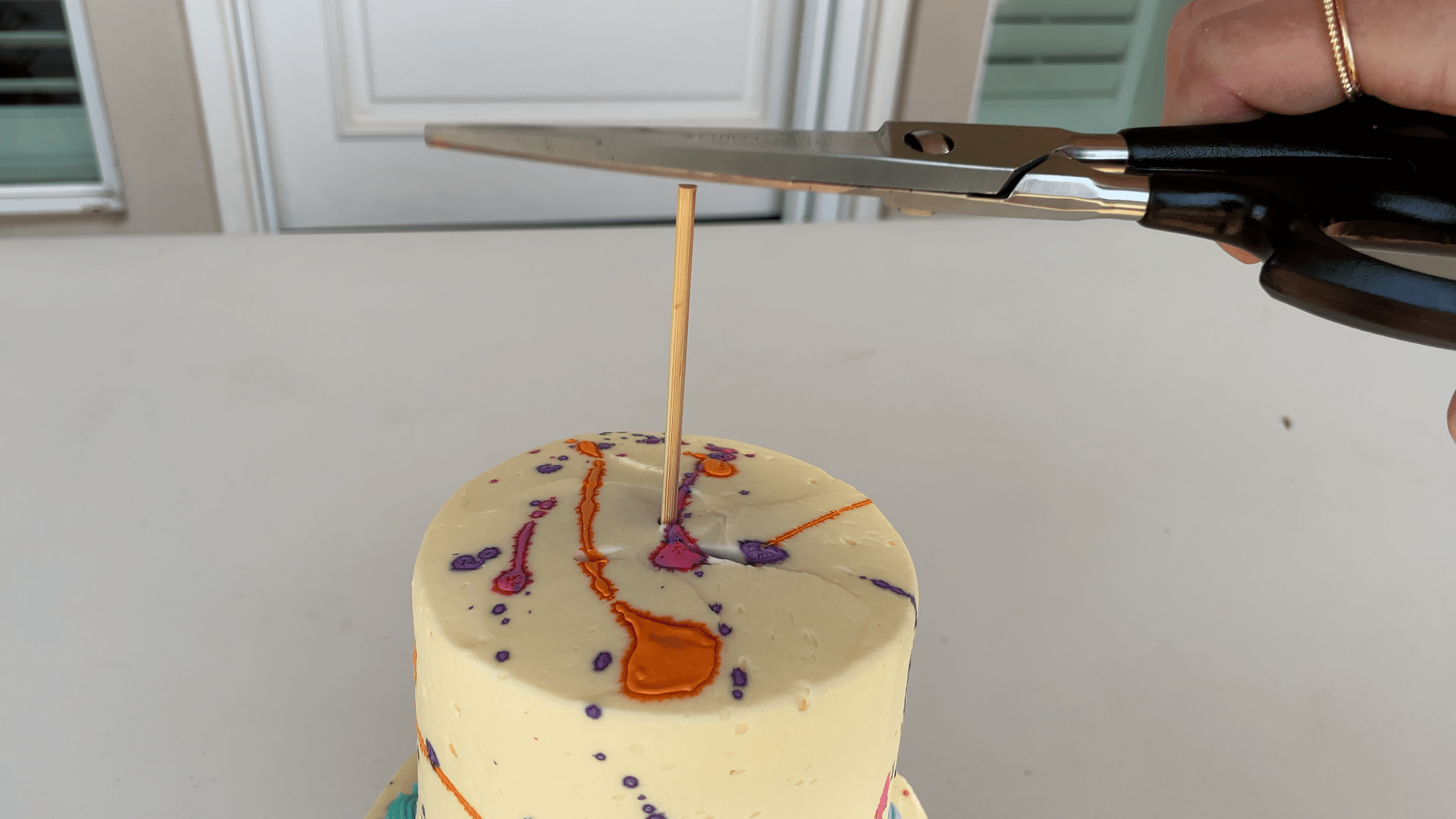
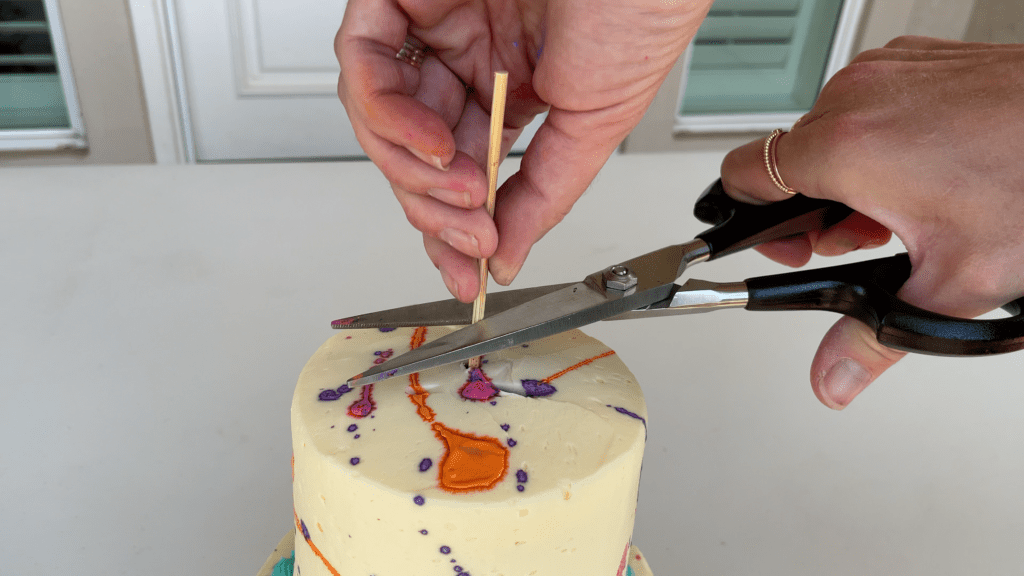
When you feel it hit the cake board at the very bottom, pull it up high enough to be able to cut it at the point where it stuck out of the cake, and then you can either spread some buttercream over the top or use cake toppers to conceal it.
I’m arranging some artificial flowers on top of the cake, trimming them, washing the stems, and the poking them into the top of the cake to make a little bouquet.
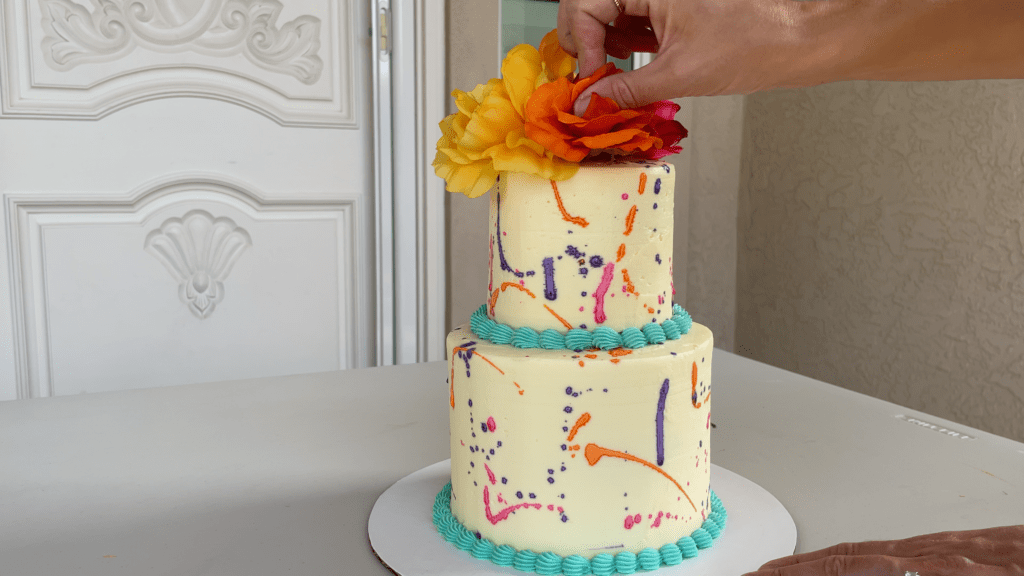
I like to do this the day before an event, to reduce stress on the big day and more importantly, so that the frosting and any decorations have time to set in the fridge so they’re as stable as possible before any vibrations or sudden movements inside a car.
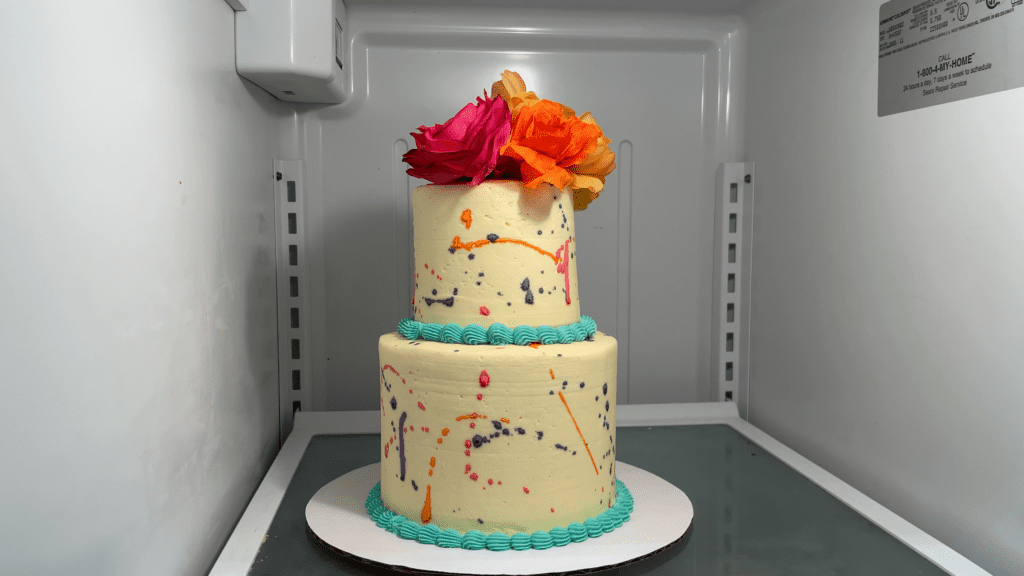
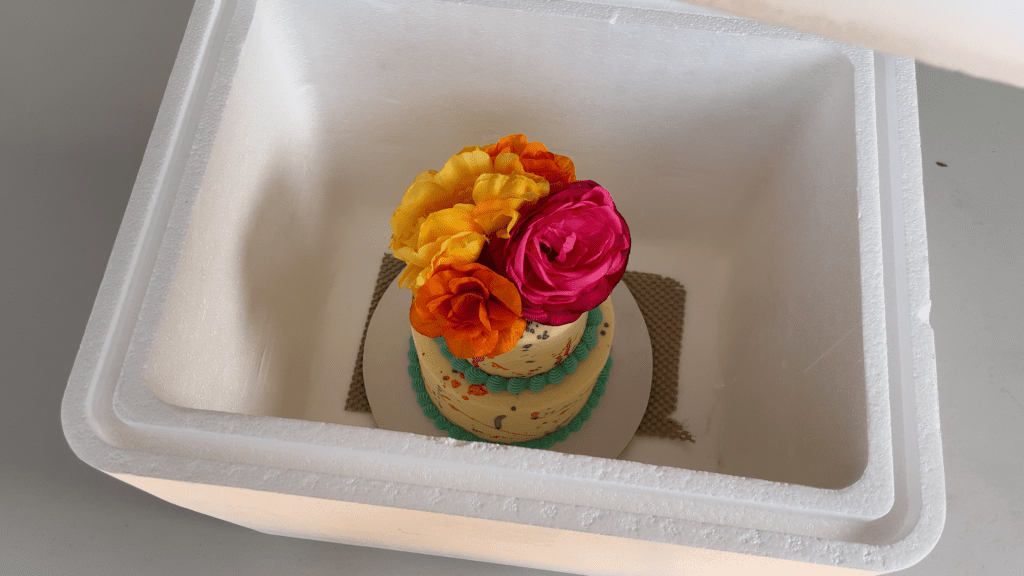
To transport cakes you can place them on a flat surface of the cake, on the floor, or if you have a box, that will keep it cool which is important here where it’s over 100 degrees! This is a styrofoam cooler and I’m putting a piece of non-slip matting down first to prevent the cake from sliding around, and then lowering the cake in.
If you put a cake onto a seat in the car, the slanted surface will keep the cake at an angle which isn’t idea, so use a towel, sweater, purse, bottle – whatever you have to level the box so it’s sitting flat.
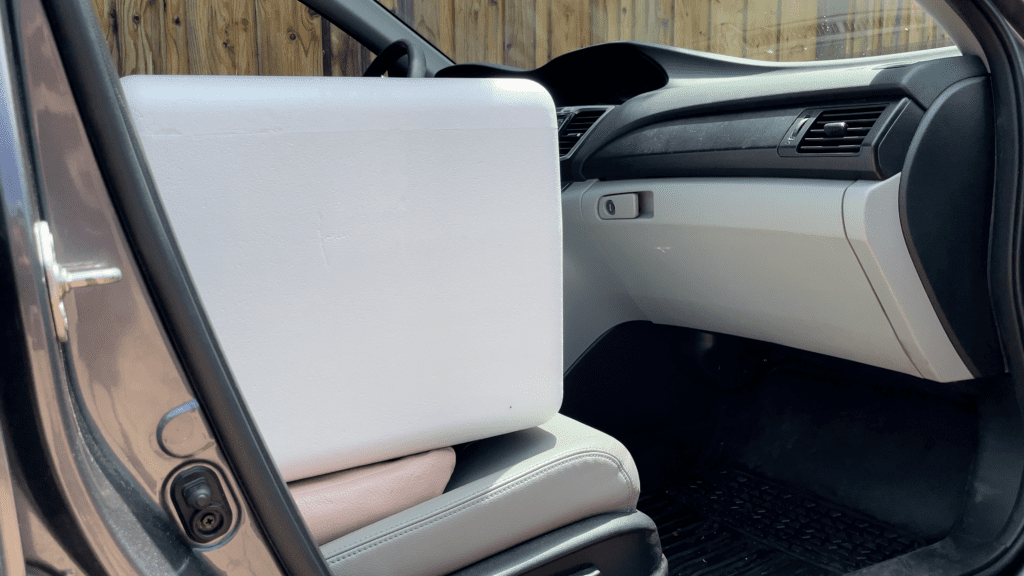
Ok, let’s go! Another 150 miles in the car along some very bumpy roads and with some sudden breaking in traffic, including one time that the styrofoam cooler slammed forwards into the glove box and I was sure the cake was destroyed….
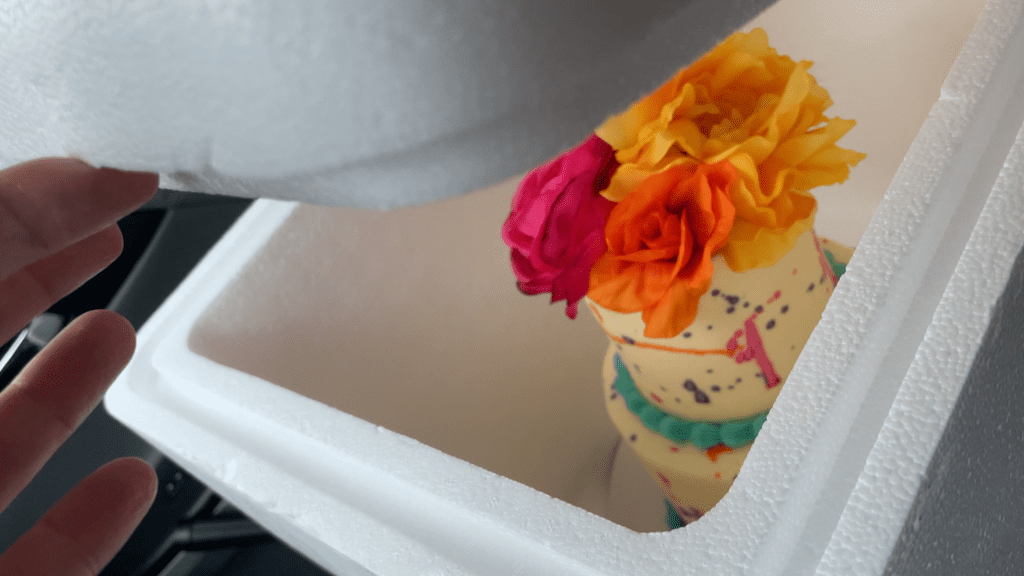
But here we are in Yosemite and the cake has survived and is looking gorgeous with this beautiful scenery in the background! If you’re looking for tips on how to take photos of cakes, in surroundings like these or in your kitchen, I teach an online course called Cake Photography Like a PRO, sharing how to create stunning DIY backgrounds, great lighting with natural or artificial light, how to stage props, different photo angles and setups, taking photos with a phone or camera and how to adjust focus and lighting with both, how to take action shots without motion blur, photos for social media and video, editing…. everything you need to know to take amazing photos of your cakes to impress your friends and family or bring in more cake orders or grow your Instagram or Facebook account! Visit my online cake school to sign up.

Here’s the video version of this tutorial:
I’m excited to share these nine tips with you so you can dramatically improve your cake photos, or any food photography!
If you prefer to watch a video of this tutorial, scroll to the bottom of the page.
#1 Let’s start with the cheapest, easiest background option: a piece of paper! Place it flat, put your cake or other food up at the front edge of one of the long sides, and use a box or something tall like a cake caddy to prop the back of the paper up.
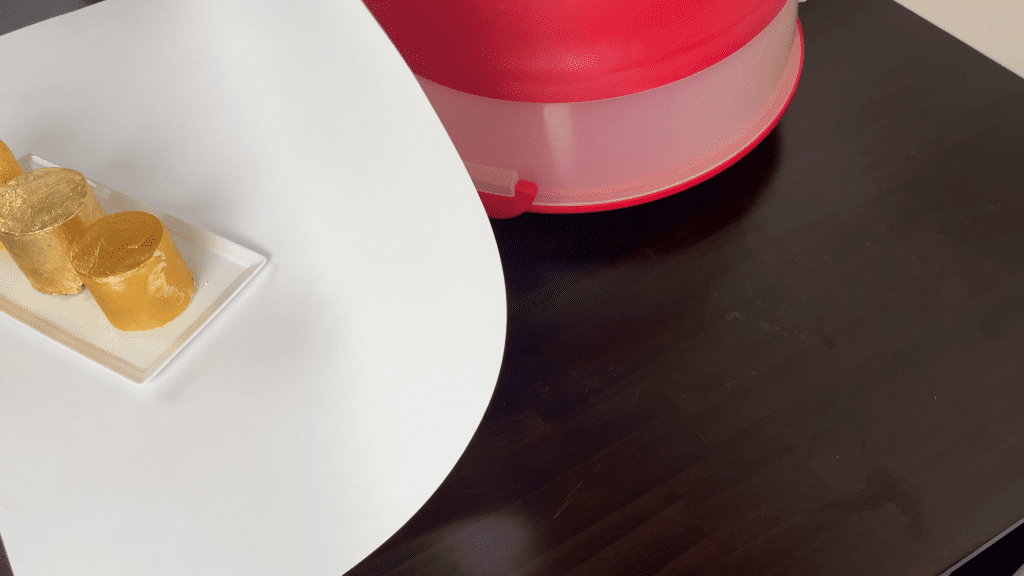
You’ll have a uniform background with no seam or join or distractions, so there’s nowhere to look other than at your cake!
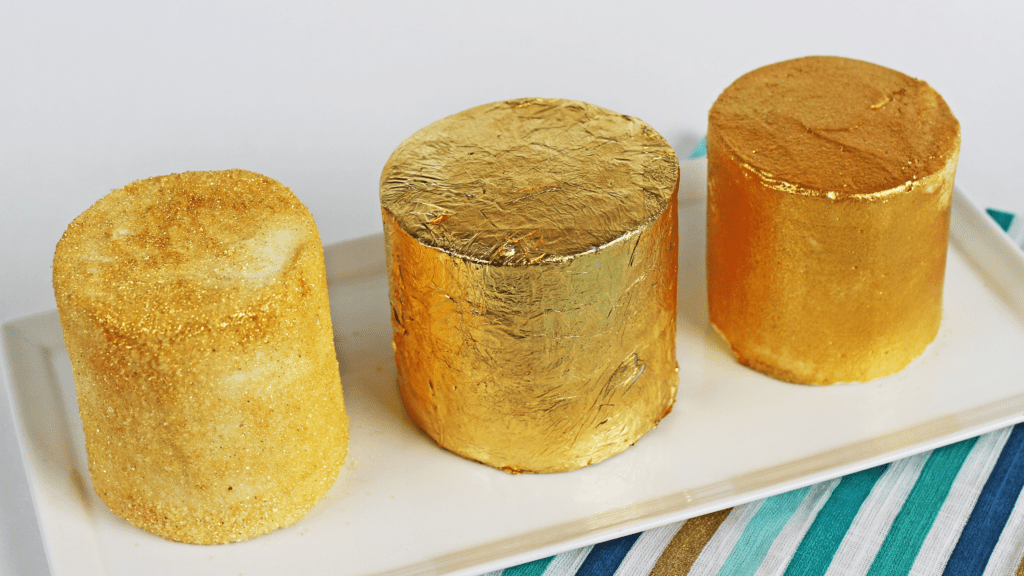
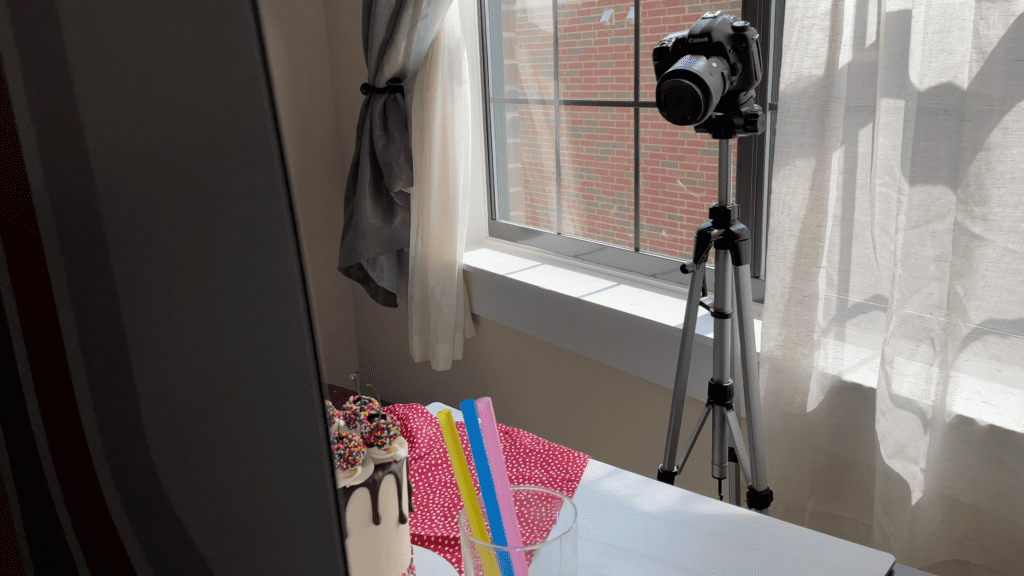
#2 The most important aspect of photos is lighting. Good lighting can really make or break a photo. For a free option, use natural light but avoid direct sunlight, which can cause unwanted shadows.
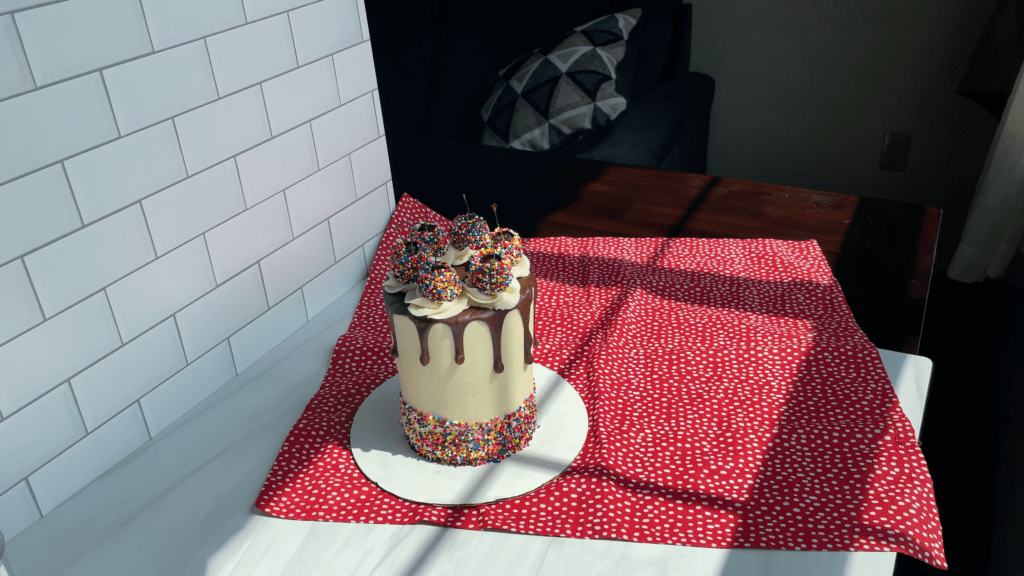
Instead, pull your setup so that sunlight doesn’t shine directly on it, or arrange your setup at an angle to block direct light and that way you won’t have to deal with shadows.
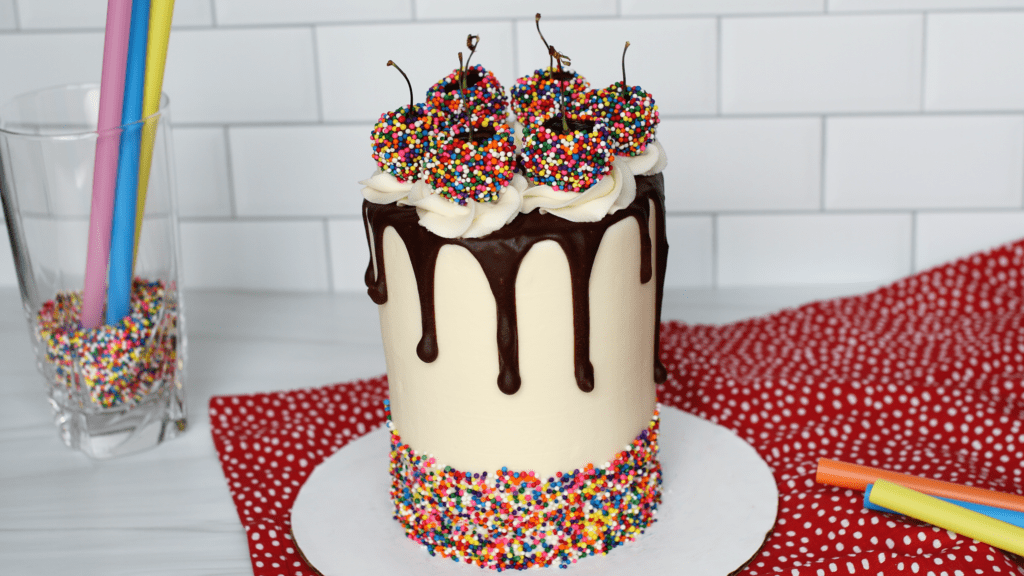
#3 If you want more control over your lighting, umbrella lights are really cheap, less than $50 for a set, and you’ll be able to create perfect lighting at any time of day, with no shadows.
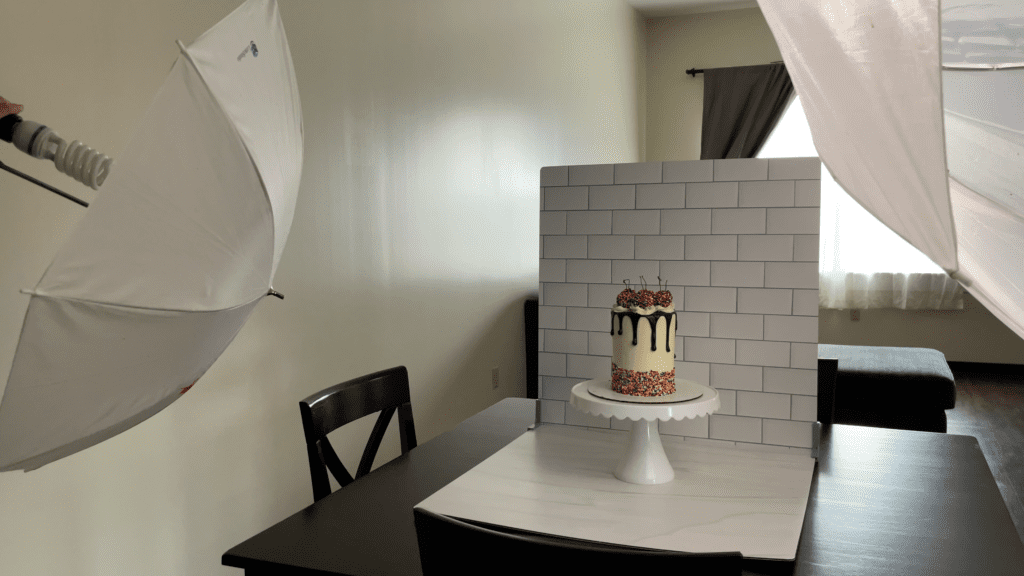
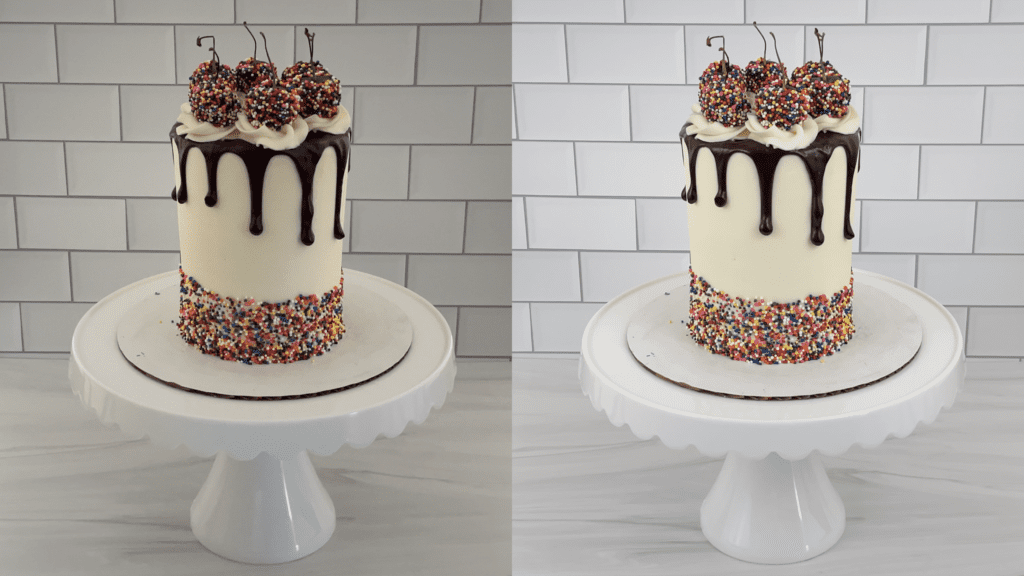
Look at the difference between the cake on the left, with natural light, and the right, using two umbrella lights.
#4 A photo of a pretty cake with a nice background and good lighting is great, but to take it to the next level, add some props. You can use the ingredients of whatever you’re taking a photo of, or tools you used to create it, or show how you’re going to serve and enjoy it when it’s time to dig in.
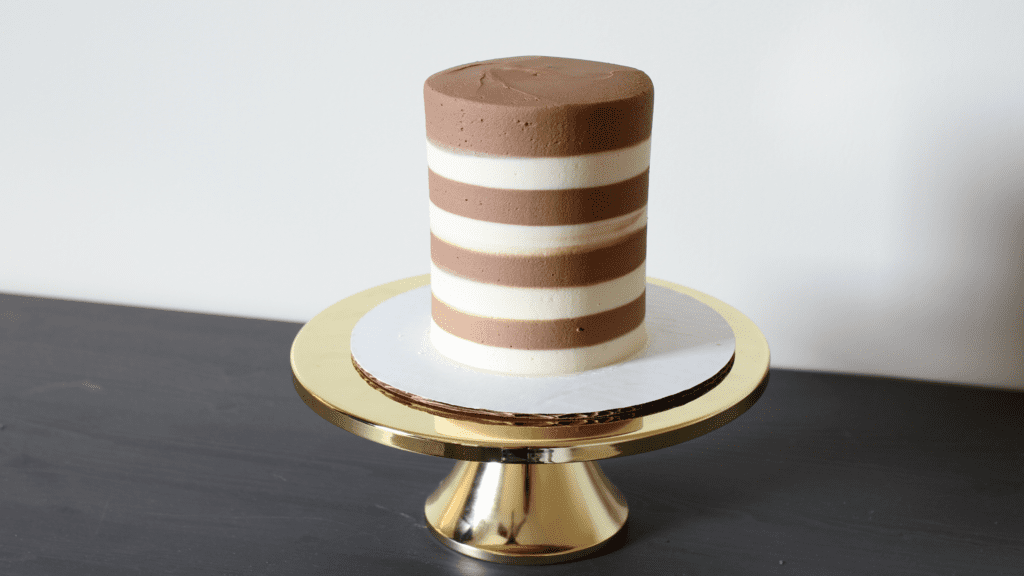
To choose which types of props to use, consider the purpose of the photo. I teach different purposes and arrangement of props, as well as winning shots and photographic theories to make your photos grab and hold everyone’s attention, in my online course on Cake Photography Like A PRO! The course also covers backgrounds, lighting, photos for social media and video, photography with a phone and with a camera, action photos and editing. Click here to find out more!
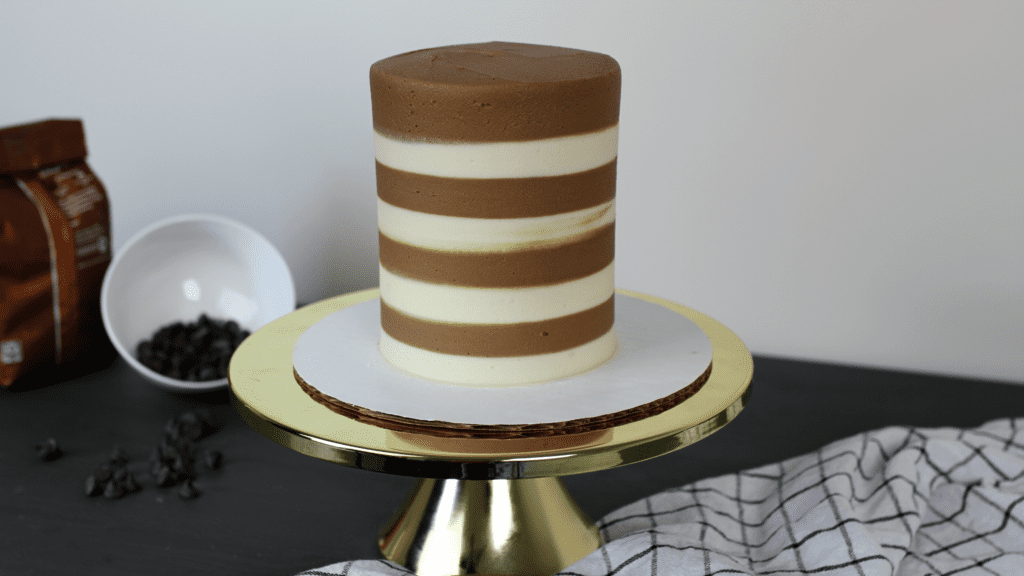
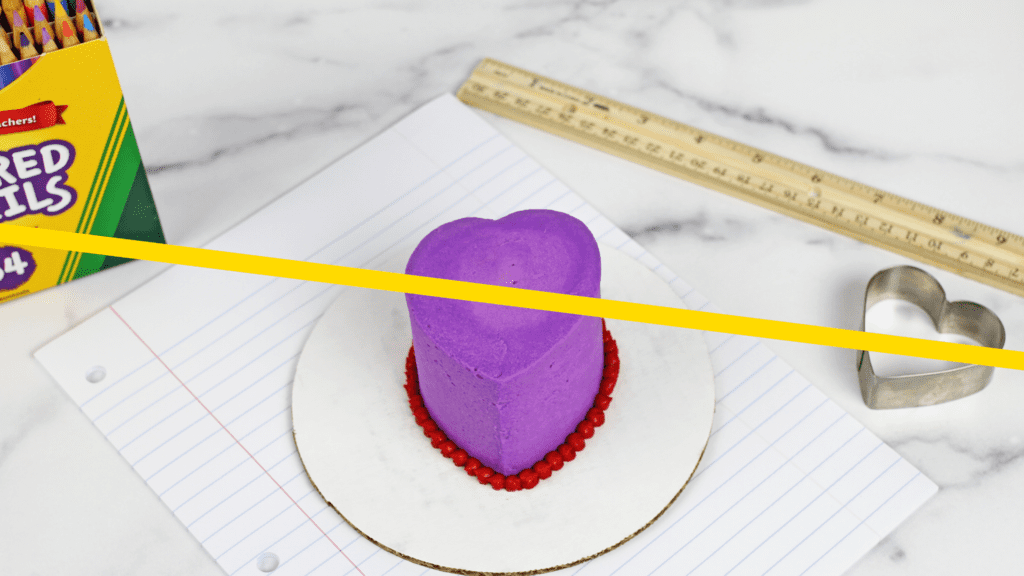
#5 As you’re arranging your props, aim for a straight line across the shot. This guides your eyes from one side of the photo to the other, and the different distances of each item from the camera will make the photo more interesting to look at.
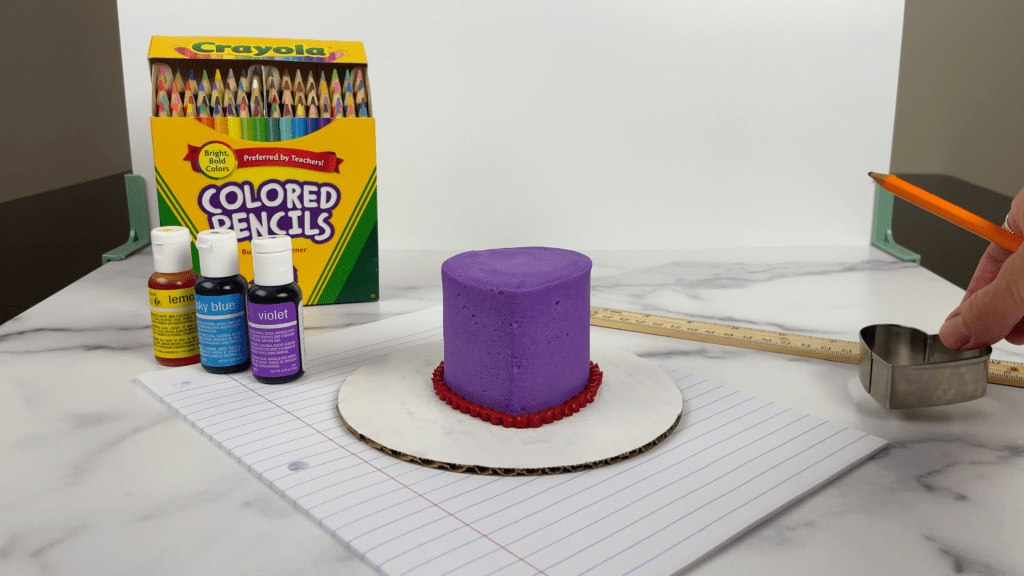
Scroll up and down and you’ll notice the lines in all of these photos, and any food photography that catches your attention on social media!
#6 Get messy! Drizzle some chocolate sauce, scatter some sprinkles, knock a bowl over, or let some crumbs linger in your photo.
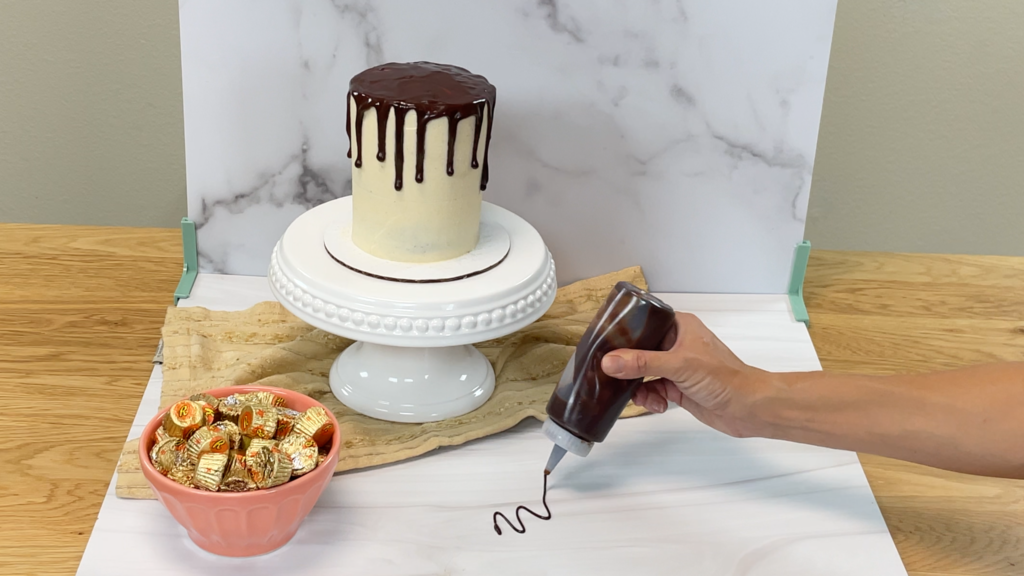
These messes make your photo more interesting to look at but also make it more sensory and appealing, which is the goal with food photography!
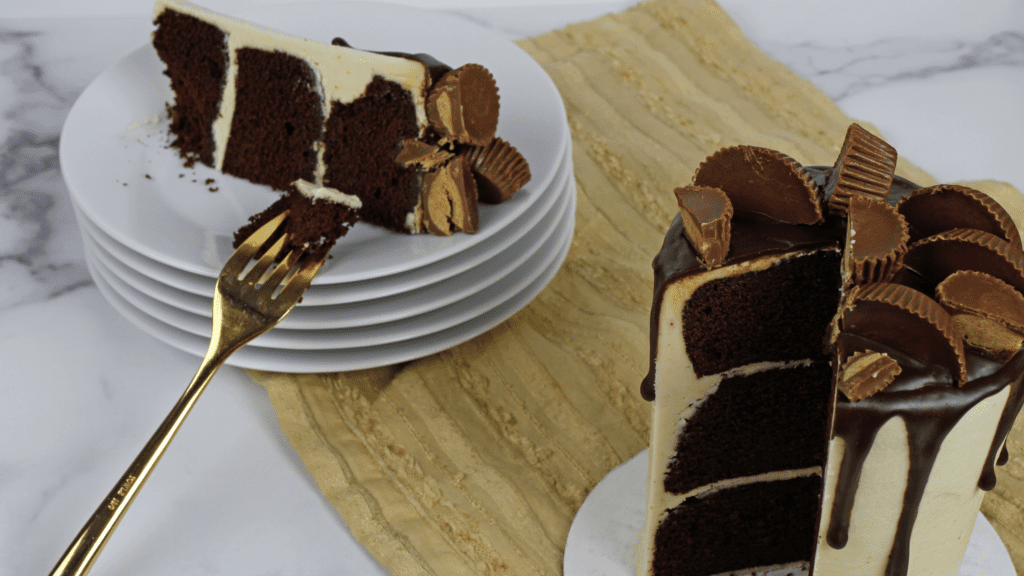
#7 Adjust the focus of your photo. On a phone you can do this with portrait mode, so that the background is out of focus and draws much more attention to the subject of your photo. On a camera, turn the Fstop to a number like 2.8 to push most of the background out of focus. I go into these adjustments in a LOT of detail on my online course on Cake Photography like a PRO.
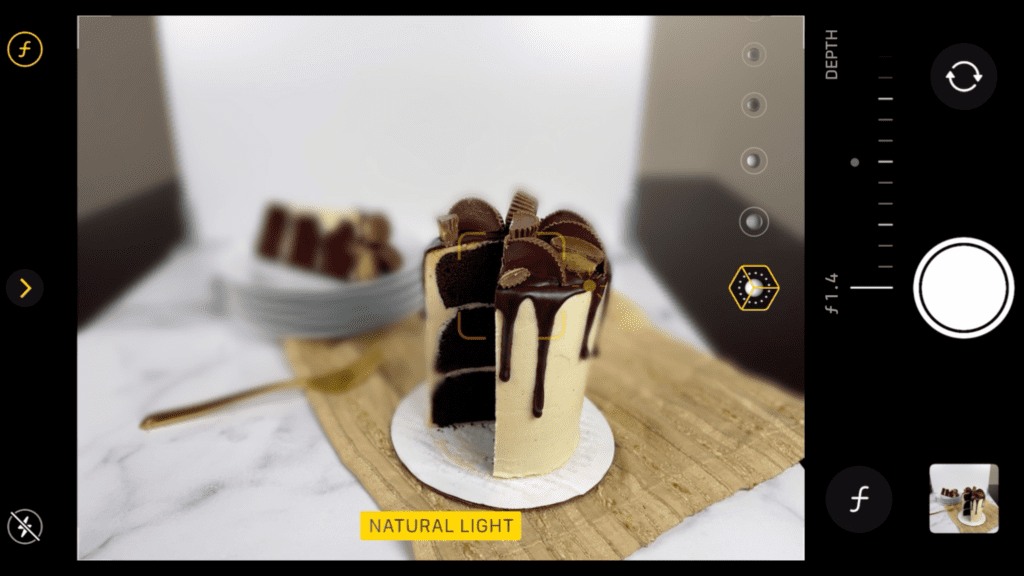
On a camera, turn the Fstop to a number like 2.8 to push most of the background out of focus. I go into these adjustments in a LOT of detail on my online course on Cake Photography like a PRO to give you the knowledge and confidence to adjust the focus and lighting in your photos.
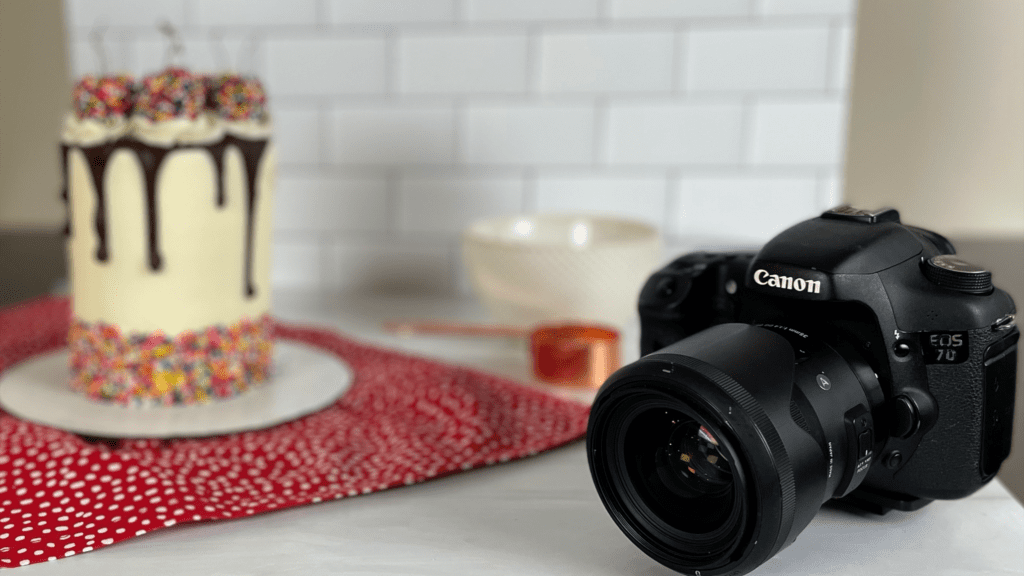
#8 Don’t make the background brighter than the subject. Your cake will look dull in comparison and your eyes will go straight to the background instead of noticing the cake!
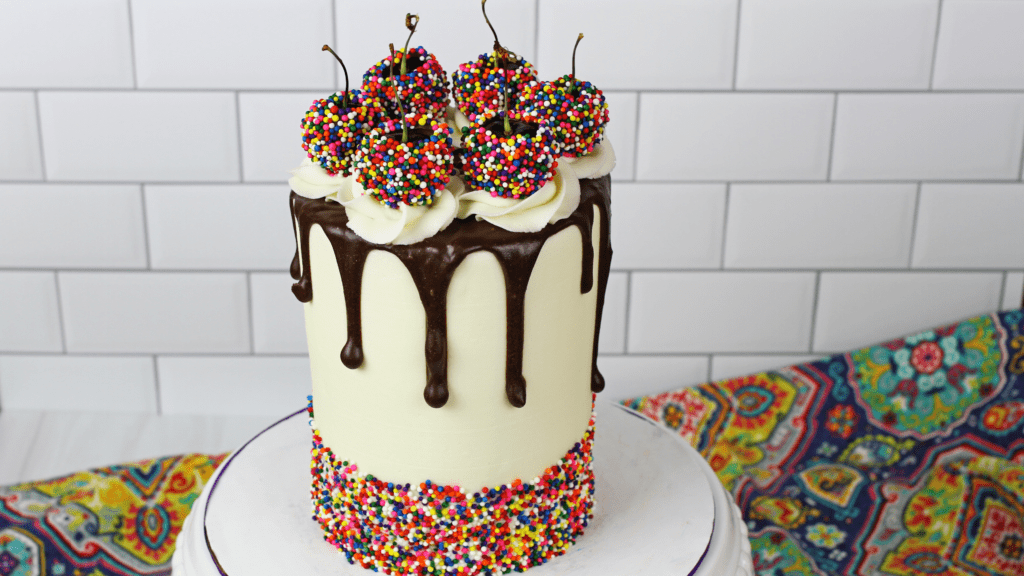
To captivate people with your food, stick to neutral colours for the background and use bright pops of colour, like small props, or keep everything fairly neutral and just let the food be the star!
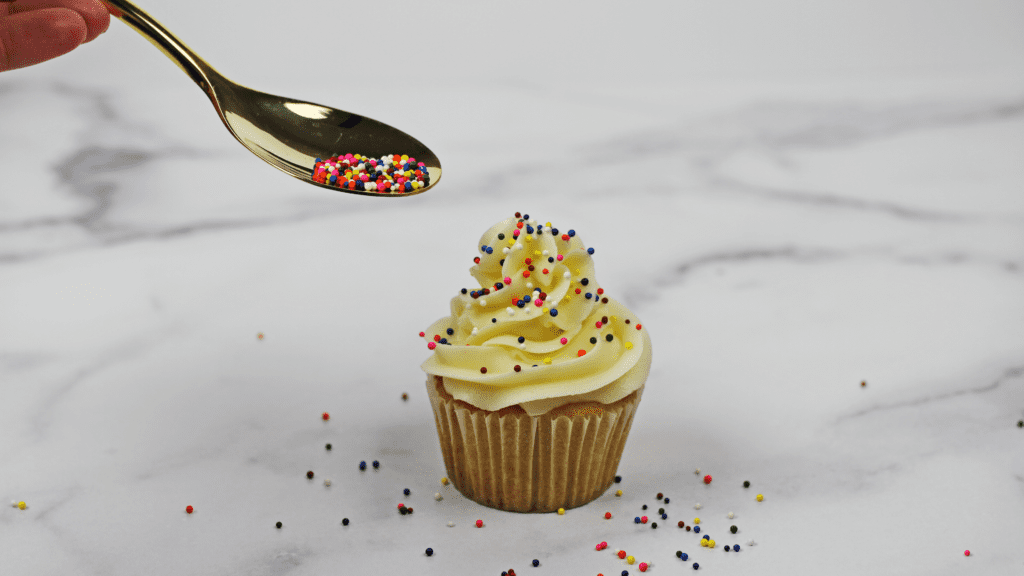
#9 To make your photos more eye-catching, without distracting from your beautiful cakes, add some detail to the background. Instead of a plain coloured background, try photo backdrops like these ones by Replica Surfaces. You’ll be able to create a cake studio for fantastic food photos wherever you go!
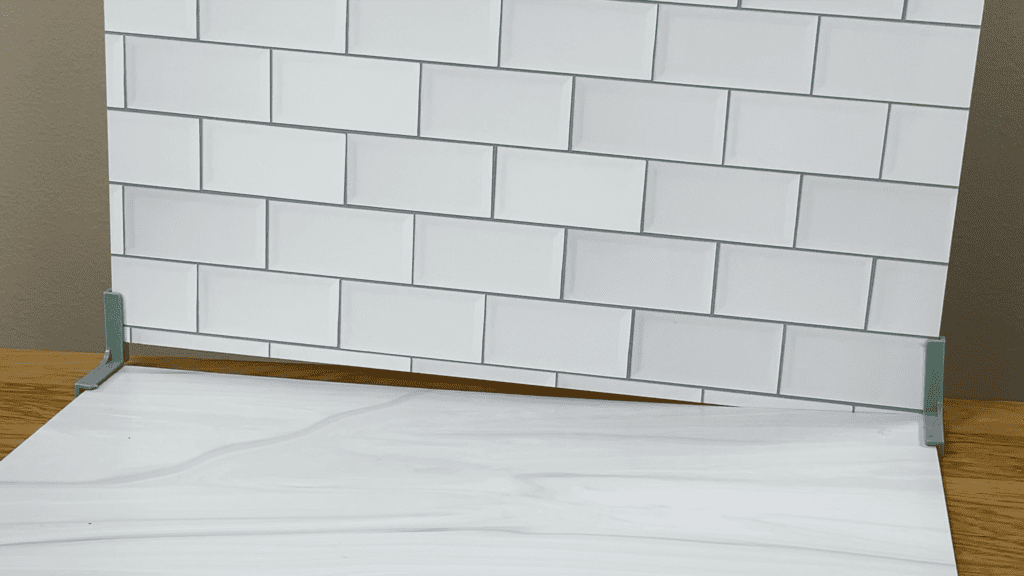
You can use their stands with two backdrops to create a setup underneath and behind your cakes, and mix and match the backdrops to create realistic scenes for your cakes without having to spend a lot of time setting the scene and staging the photo.
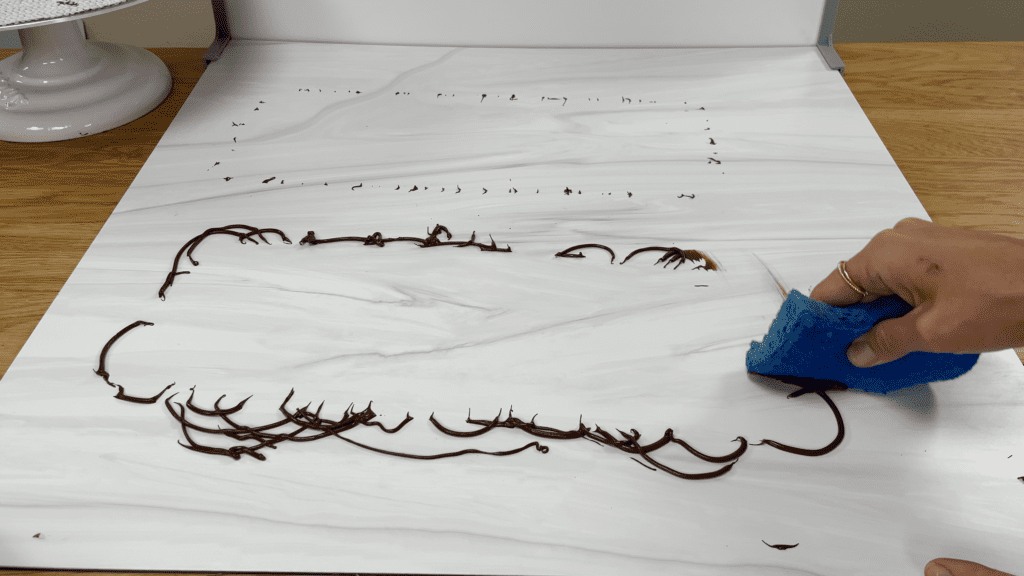
You can even pour ingredients onto them and wipe them clean later, for deliciously messy food shots! Check out their huge selection and choose your favourites here!
I hope these tips have been helpful! To dive deeper into seamless backgrounds, creating excellent natural or artificial lighting, using your phone or camera settings to adjust focus and lighting, achieving action shots without motion blur, staging photos with props, shot angles and photographic theories to grab anyone’s attention, creating and using photos to boost your engagement and following on social media, and editing options for photo perfection, check out my online course on Cake Photography – Like A PRO!
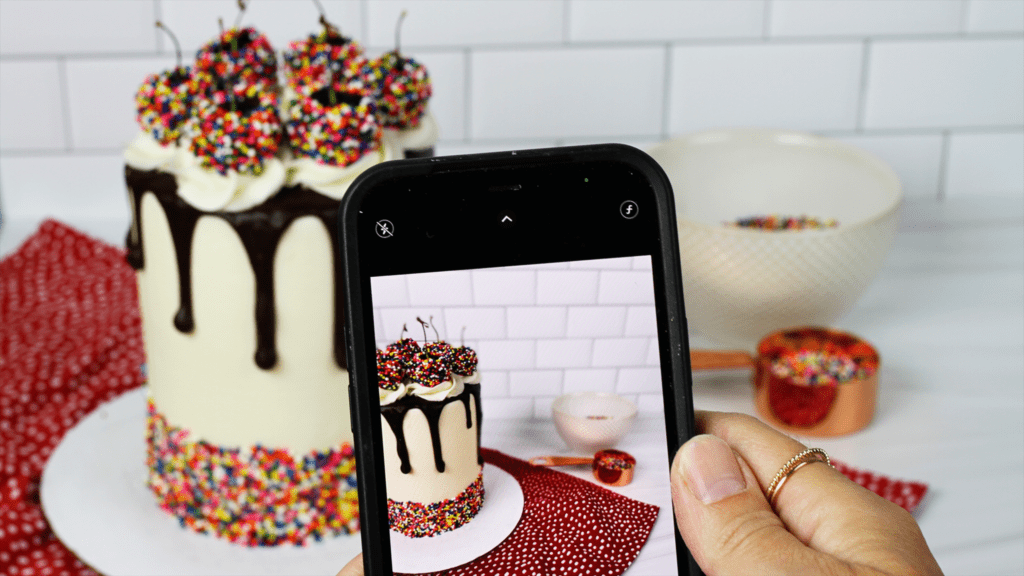
Here’s the video version of this tutorial:
Make cake decorations using candy or boiled sweets, like Jolly Ranchers. In this tutorial I’ll show you different ways to melt candy and how to make freehand designs using no tools or more detailed shapes using tools. Then I’ll show you how to attach the decorations to a cake.
If you prefer to watch a video of this tutorial, scroll to the bottom of the page.
To create a 2D shape like a silhouette, put a cookie cutter on a baking tray lined with parchment paper and arrange candy inside it to fill the shape. The more candy you put in, the thicker the shape will be and the easier it will be to remove it later.

Put the tray in the oven at 350F or 175C for five minutes and check to see if the candy has melted completely. If not, leave it in the oven for another 2 minutes and then check again.

The melted candy might leak out from the cookie cutter but that’s fine – we’ll fix it in a minute.

You can do this with a silicone mold to create a more detailed shape. Place the candy into the mold, and for narrow areas you can crush the candy so that you can fit the smaller pieces into the mold.

Bake the candy in the mold at 350F or 175C until it’s all liquid and bubbling. It will be HOT when it comes out of the oven so don’t touch it yet!

You can use a microwave instead to melt the candy, just in a bowl or using a mold. If you crush the candy you’ll be able to blend the colours more subtly than if you use entire candies, like in the previous mermaid tail. To crush candy you can put it in a ziploc bag and then smash it with a rolling pin.

With crushed candy you have a lot more control over the coloring of the decoration, compared to using whole candies where you have large blocks of colour.

Put the mold in the microwave for one minute, until it’s bubbling and there are no solid chunks of candy left. Look at those beautiful colours! But it’s easy to overheat candy in the microwave and if that happens, the colour will become duller as it cools.

To remove the candy from a silicone mold is easy. The mold is flexible so just push upwards from underneath it and you’ll pop the shape out. Now I want to show you the different effects of using the oven and the microwave.

Look at the difference in the colours of the candy – the bright colours of the tail on the left, which was melted in the oven, compared to the dull colours of the one on the right, which was melted in the microwave.

To remove candy from a cookie cutter is a bit trickier. Once it’s cool, lift it off the tray and snap off any pieces of candy that have leaked out of the mold.

Now, you’ll notice that the candy is down at the bottom of the cookie cutter, and intuitively, you’d push it out through that bottom side. But it’s much more likely to crack that way, than if you flip it over and push the candy out through the top of the cookie cutter.

Push gently all over the shape, nudging it out bit by bit, until it pops out of the other side of the cookie cutter. As I mentioned earlier, the thicker the candy the stronger it will be. If the candy is very thin it’s more likely to snap as you push it out of the cookie cutter.

When the candy pops out you’ll have a perfect candy cactus (or whatever shape you’ve chosen). Learn how to decorate this Taco Tuesday Cake on my online cake school!

If you don’t have cookie cutters or silicon molds you can create decorations without them. You’ll need a piece of parchment paper and I like to place this on a tray to hold it in place and make it easy to move around. Melt the candy in a bowl and then drizzle it onto the parchment paper.

Let the candy cool slightly before pouring it because then you’ll have more control over the design because the drizzle will be thinner and it won’t spread out like it does when it’s still REALLY hot.

Look at the difference between candy you pour immediately after melting, compared to leaving it to cool for just a minute, until it stops bubbling.

When these cool, you can lift them easily off the parchment.

To attach candy decorations to a cake, pipe details onto the top of a cake and this frosting will be soft and sticky so you can push the candy straight into them. I’m using a #104 petal tip to pipe these ruffles.

I suggest using a crusting buttercream for piping, like my 4 Minute Buttercream because when it sets, after about 30 minutes in the fridge, it gets very firm and it will hold the candy in place while you transport and serve it.

I used a 1M tip for this piping.

For LOTS of cake designs and cake decorating techniques, check out my online cake school. If you join my Club you’ll get access to ALL of my classes!

Here’s the video version of this tutorial:
Here are 9 ideas for cakes for anyone who loves the colour pink! I’ll share different patterns, textures, and styles of cakes and of course, all of these frosting and decorating techniques can be applied to a cake using any colour palette, not just pink ????
If you prefer to watch a video of this tutorial, scroll to the bottom of the page.
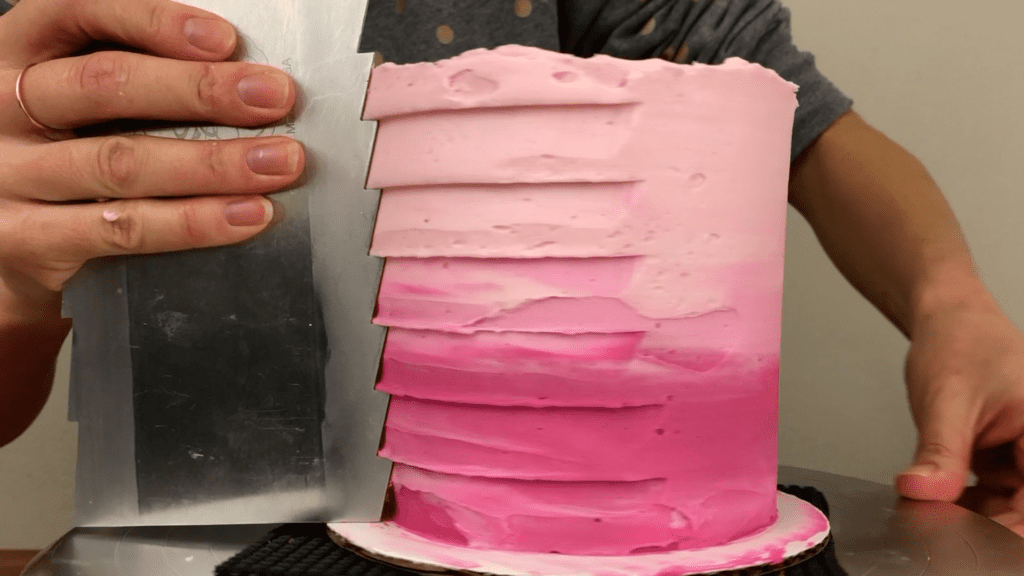
#1 Ombre Frosting
This is easy to create with just three shades of pink frosting. Spread the colours in bands around the cake so that the pink gets lighter or darker as you go down the cake. I’m using my 4 Minute Buttercream but any frosting will work for this, like whipped cream or meringue buttercream.
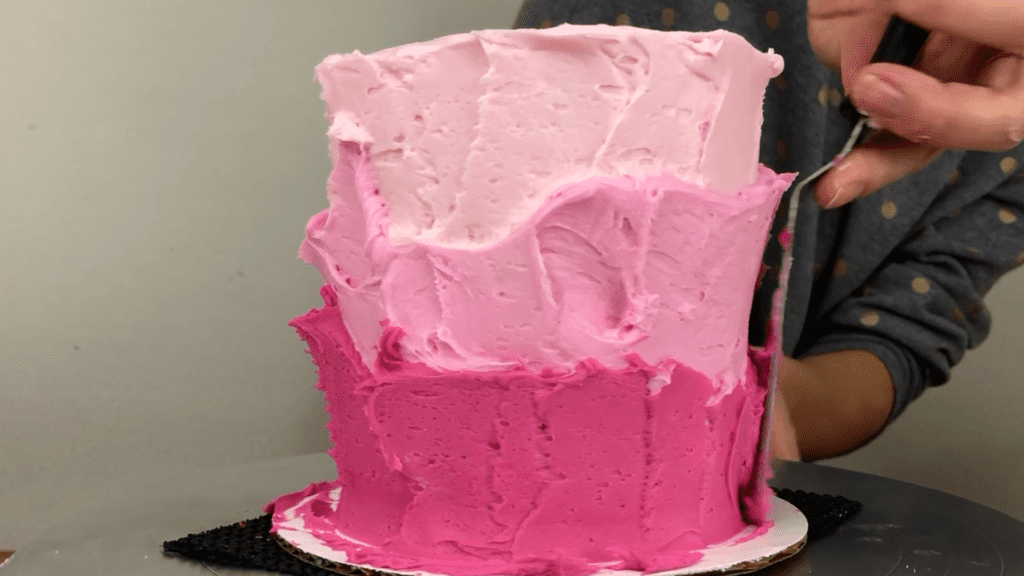
Scrape around the cake with a frosting smoother to smooth it. Just like on any other cake, the frosting won’t be perfectly smooth after just one scrape! You’ll tidy. upany indents or gaps in the frosting next.
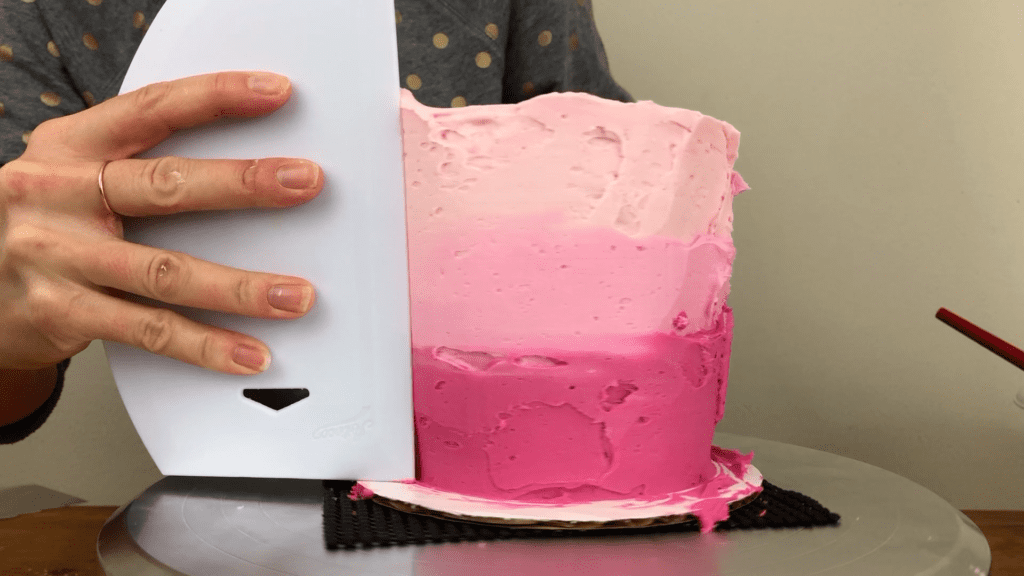
Spread more frosting over any areas of the frosting that aren’t as thick as the rest, where it looks like there’s an indent or gap in the frosting. To make the blending of the shades of pink more gradual and subtle, do these touch-ups using a lighter or darker shade than the frosting where you’re spreading it.
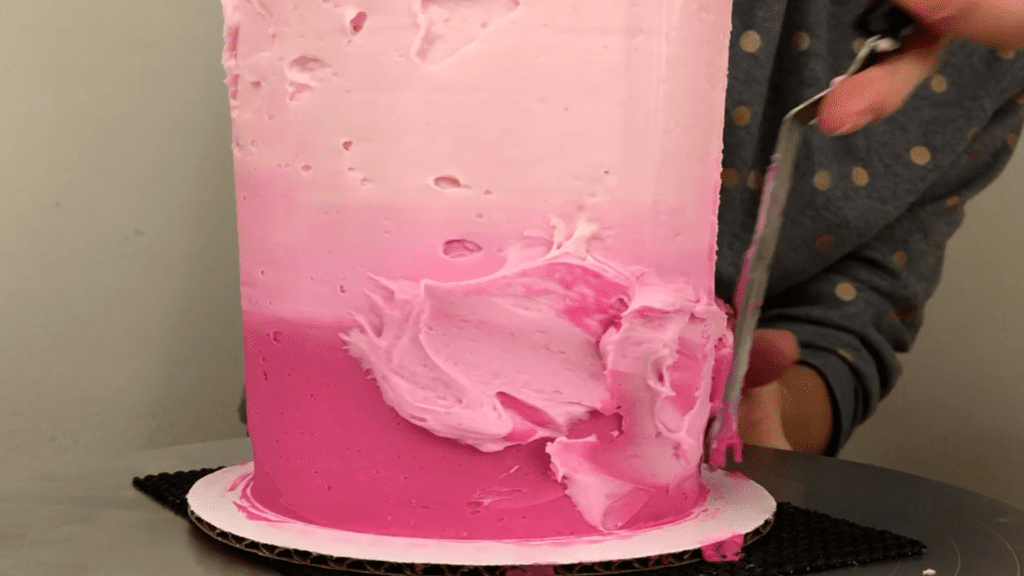
Continue to smooth the frosting with a frosting smoother OR use a textured cake comb to add pleats or waves or any other pattern!
#2 Watercolour
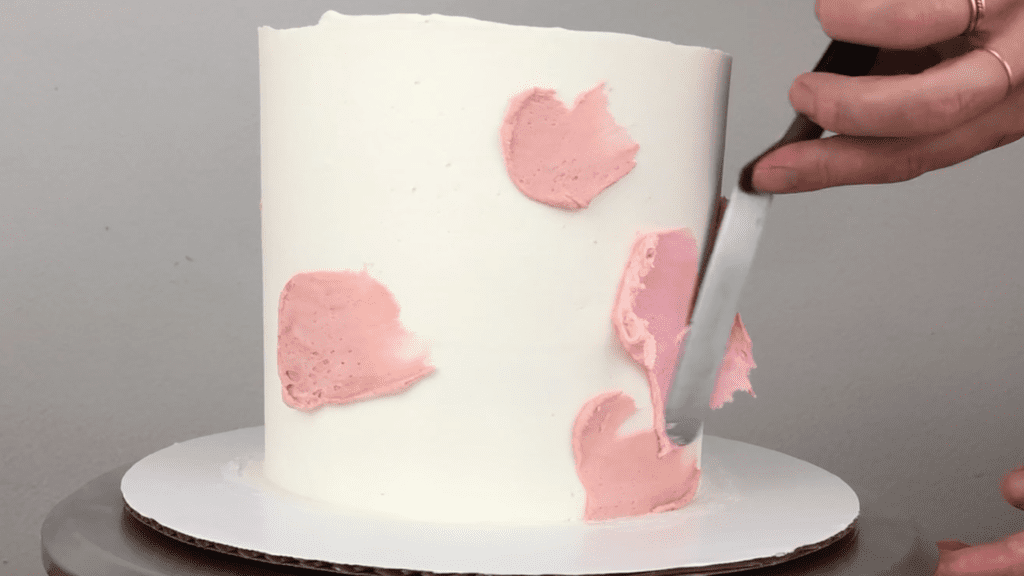
To create a watercolour effect, spread dollops of different shades of pink over a cake, on top of frosting that’s already set. I left this cake in the fridge for an hour before adding the pink.
Scrape around the cake with a frosting smoother to spread the pinks, blending them together. Spread on some more frosting anywhere that you can still see the white frosting underneath.
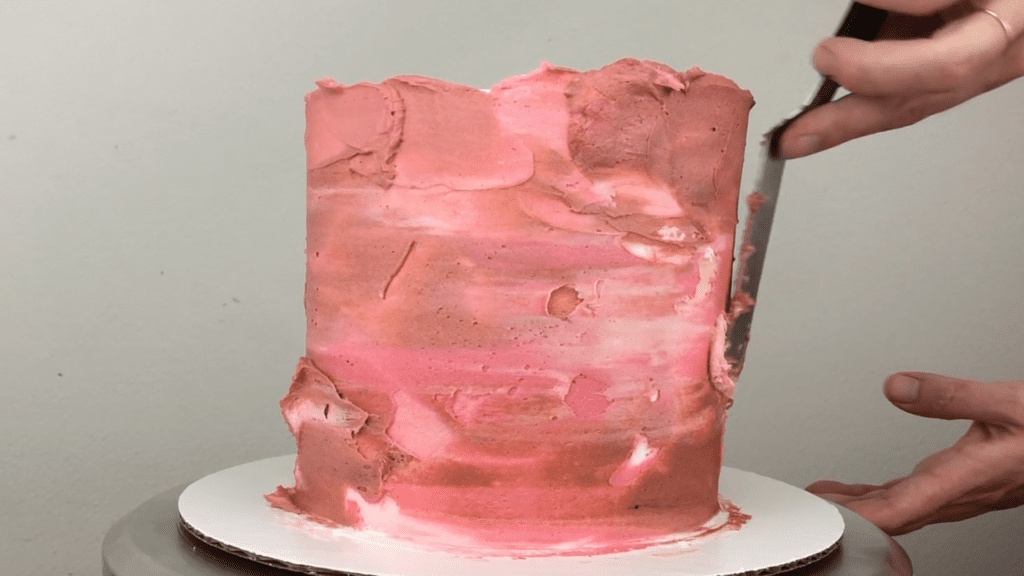
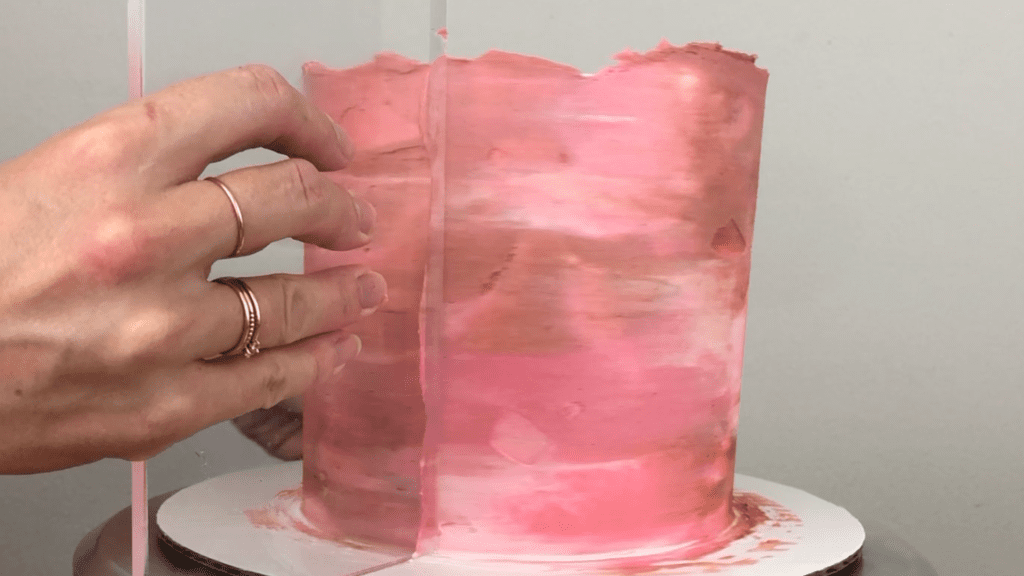
Smooth again to completely cover the cake with different shades of pink! This is my favourite frosting smoother and you can get 10% off with the code BRITISHGIRLBAKES here!
#3 Piped Stripes
You can create pink stripes with just two piping bags and you don’t even need piping tips!
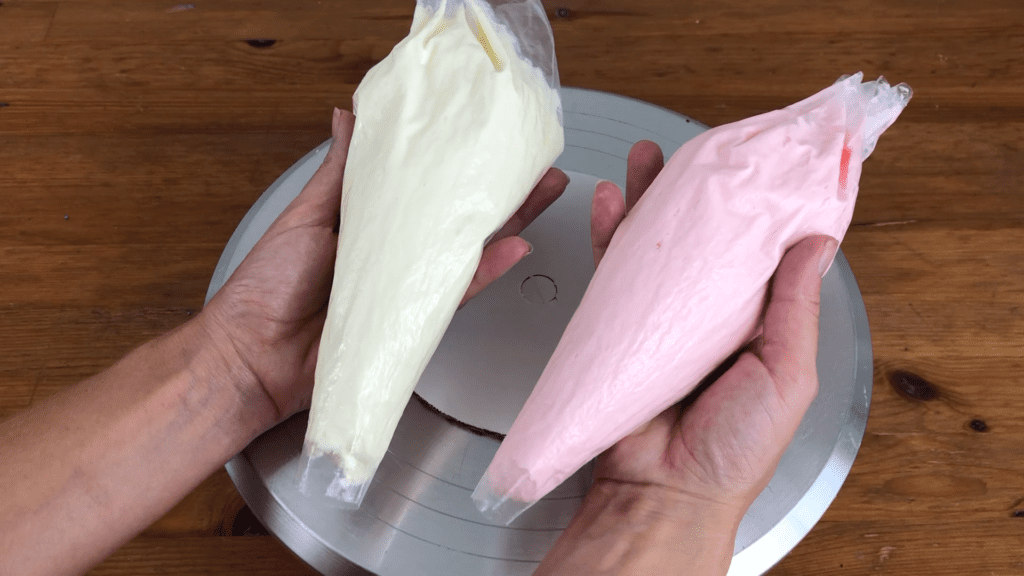
After assembling your cake and covering it with a thin layer of frosting, a crumb coat, pipe rings of colour around the cake, alternating between your two piping bags.
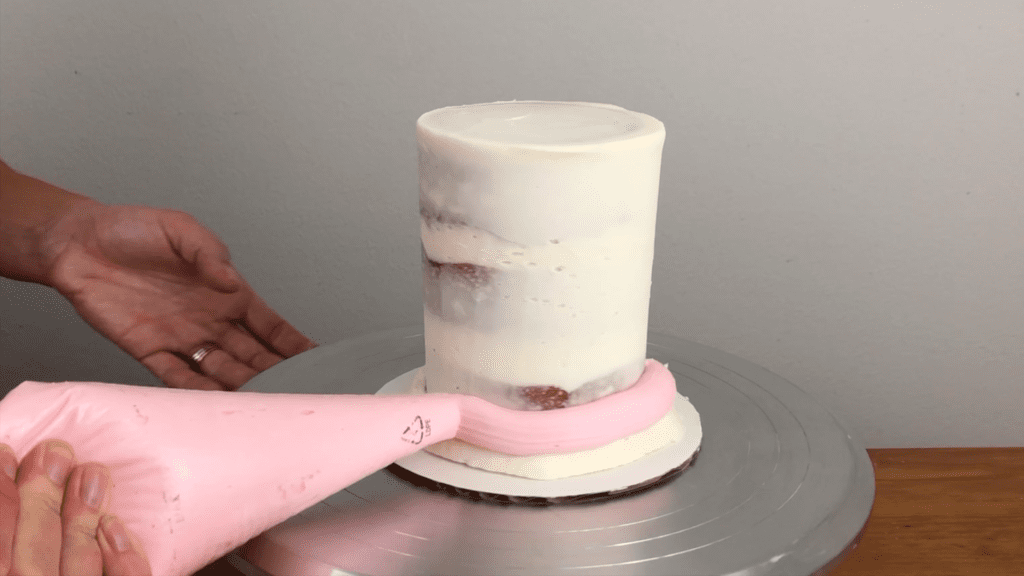
If you want your stripes to be the same thickness, it’s important that the holes you cut at the end of your piping bags are the same size.
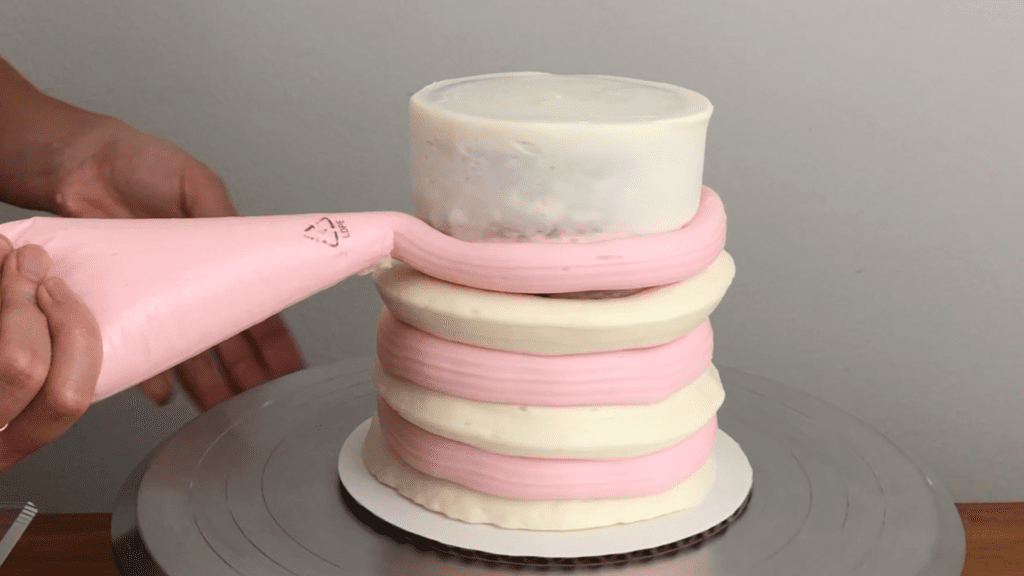
Spread or pipe frosting onto the top of the cake, too, pushing it all the way over the edges of the cake to avoid air gaps or a domed top later. Smooth the frosting on the top of the cake first, using your
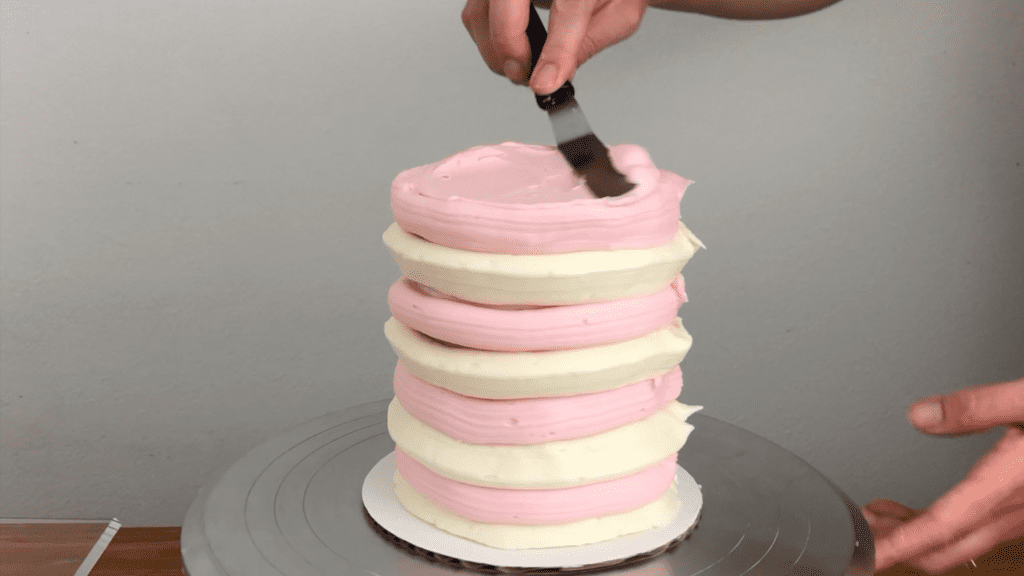
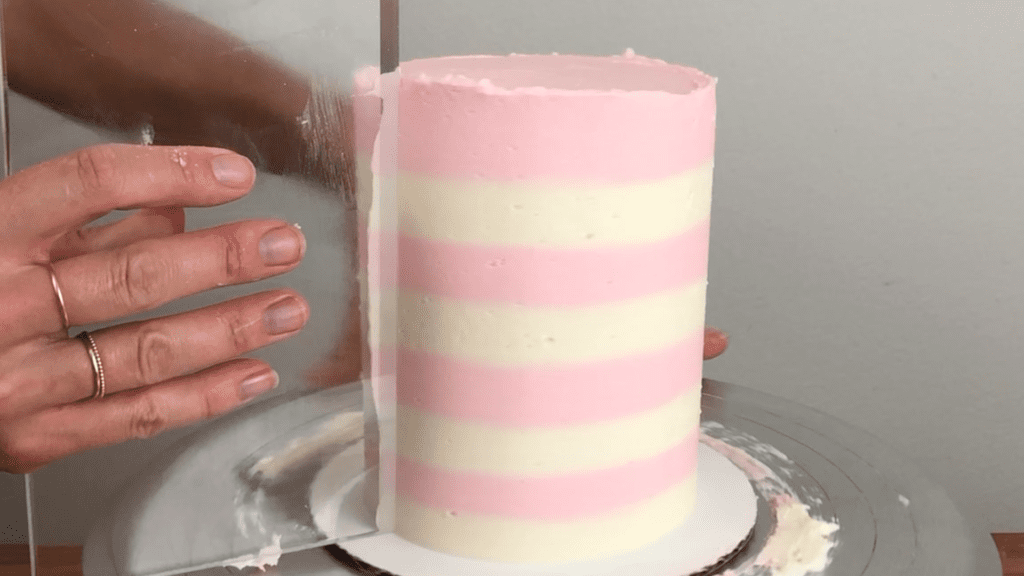
Then scrape around the sides with a frosting smoother. As you scrape again and again, you’ll flatten the frosting which will make it spread out to fill any gaps in between the stripes.
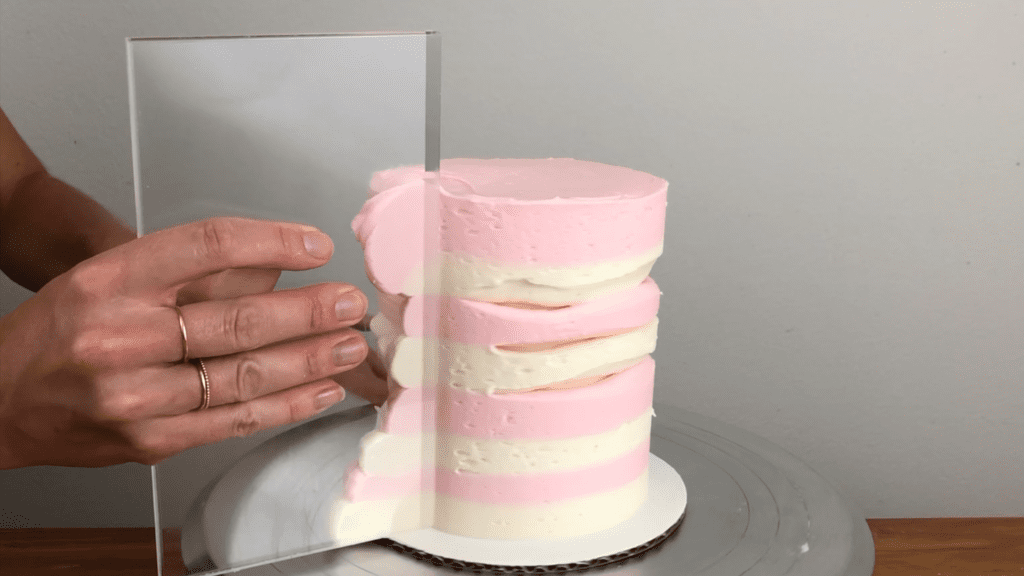
When you’re happy with the sides of the cake, tidy up the top edge by swiping inwards with your
#4 Cake Comb Stripes
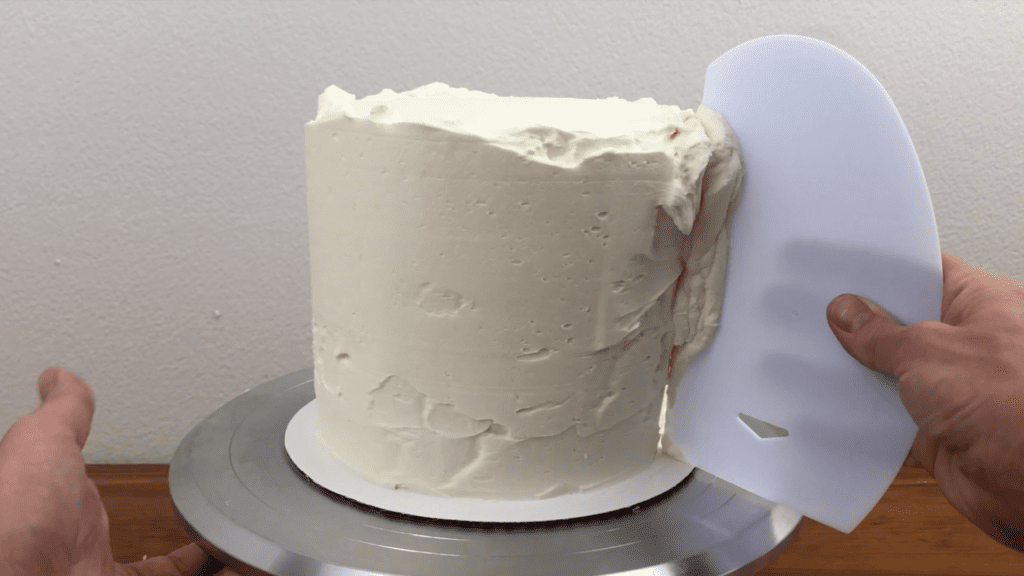
You can create stripes with a cake comb. The stripes will be neater but it’s a bit more time consuming. Spread your first color thickly all over the cake and then scrape around the cake with a frosting smoother to check the sides are straight.
Then use a striped cake comb, pressing the base down on the cake board to line it up straight and then pulling it around the cake to imprint stripe grooves.
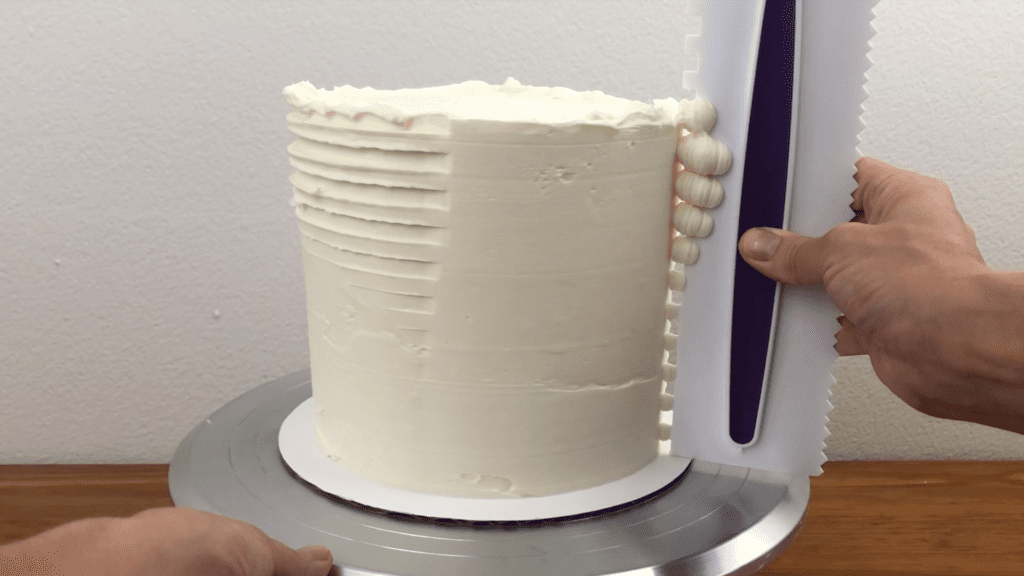
You’re aiming for neat edges to the stripe grooves and smooth frosting on the outer edge of the stripe grooves. You’ll probably have to scrape around the cake several times until you achieve this.
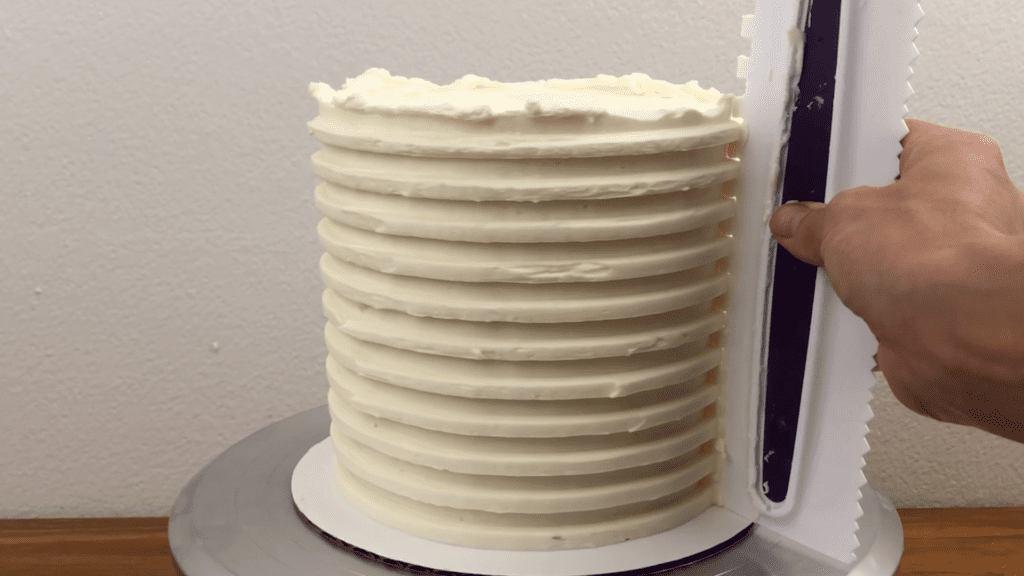
Put the cake in the freezer for 15 minutes to chill the first colour of frosting and then spread pink frosting all over it, or pipe it into the grooves using a piping bag if you prefer.
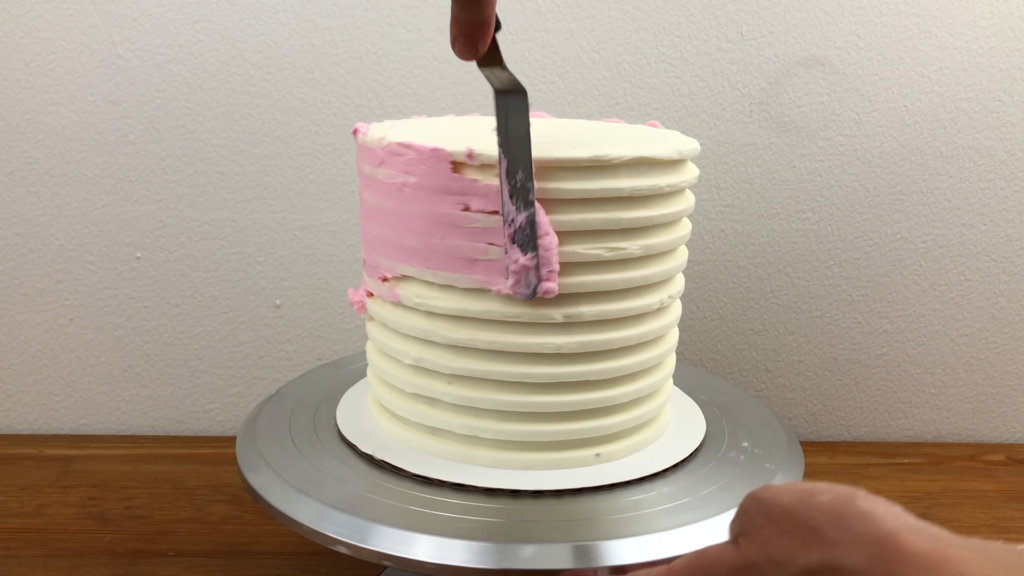
Scrape around the cake to take off the excess pink frosting, which will spread it everywhere and it will look messy but keep scraping!
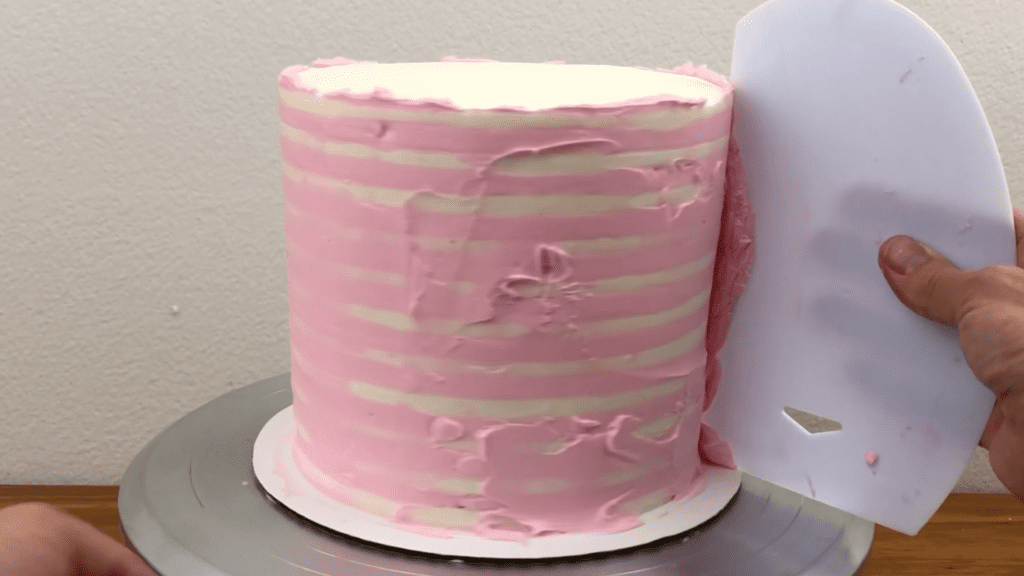
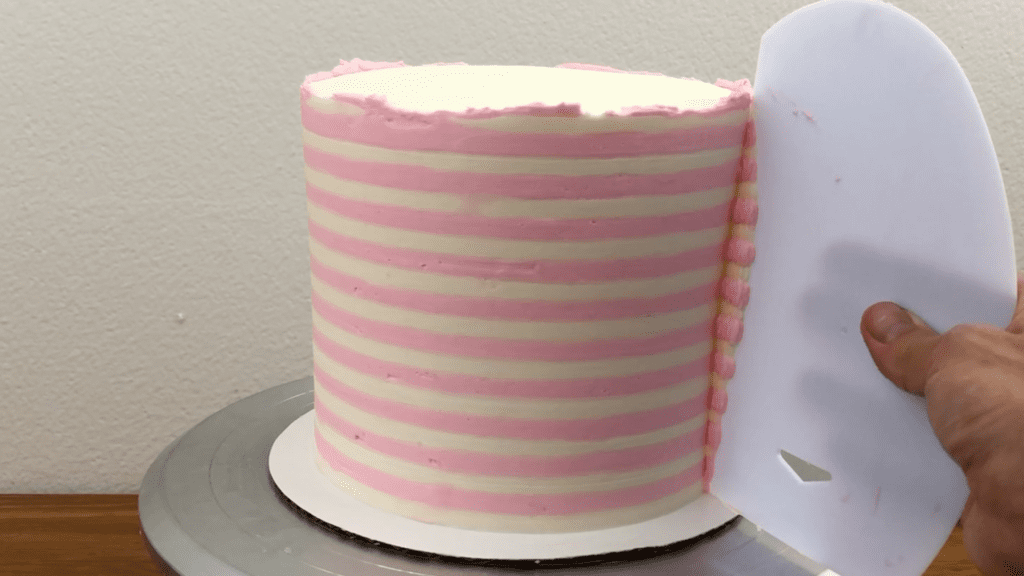
The stripes will get clearer and neater with every scrape of your frosting smoother until all of the excess frosting is removed and the stripes look perfect!
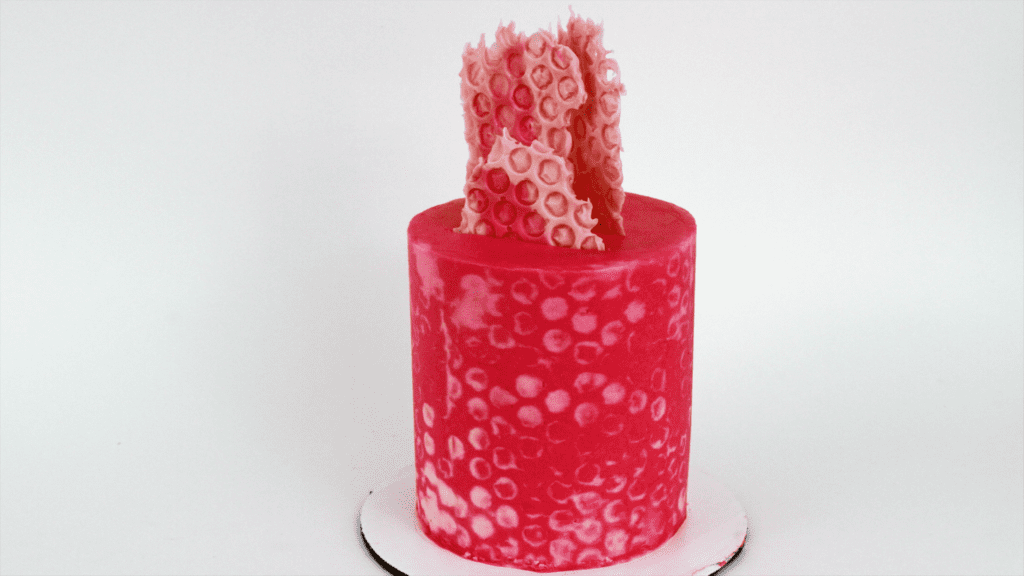
#5 Bubbles
Add a reallyinteresting pattern using bubble wrap! Taping it onto acetate makes this easier but it’s not essential.
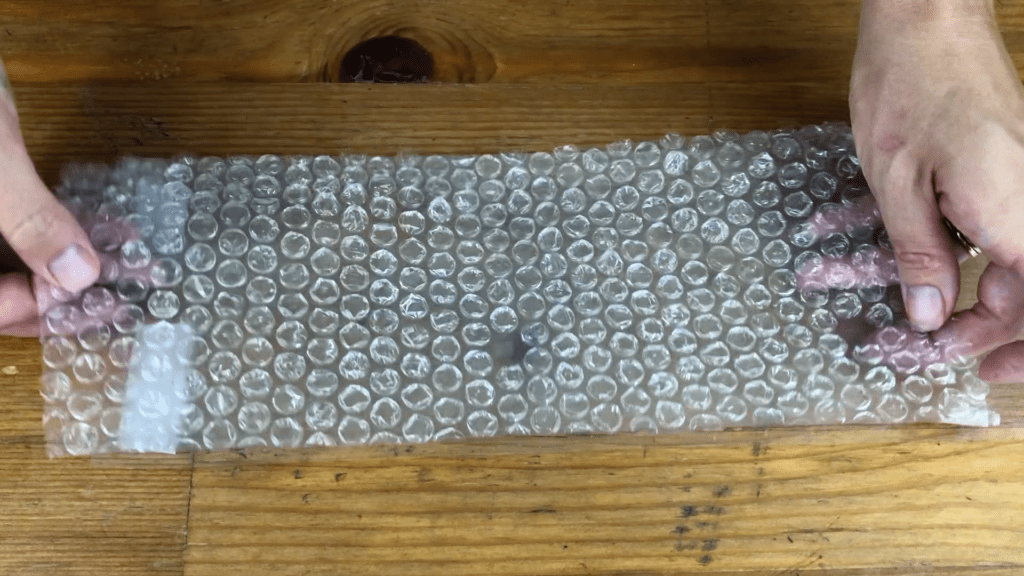
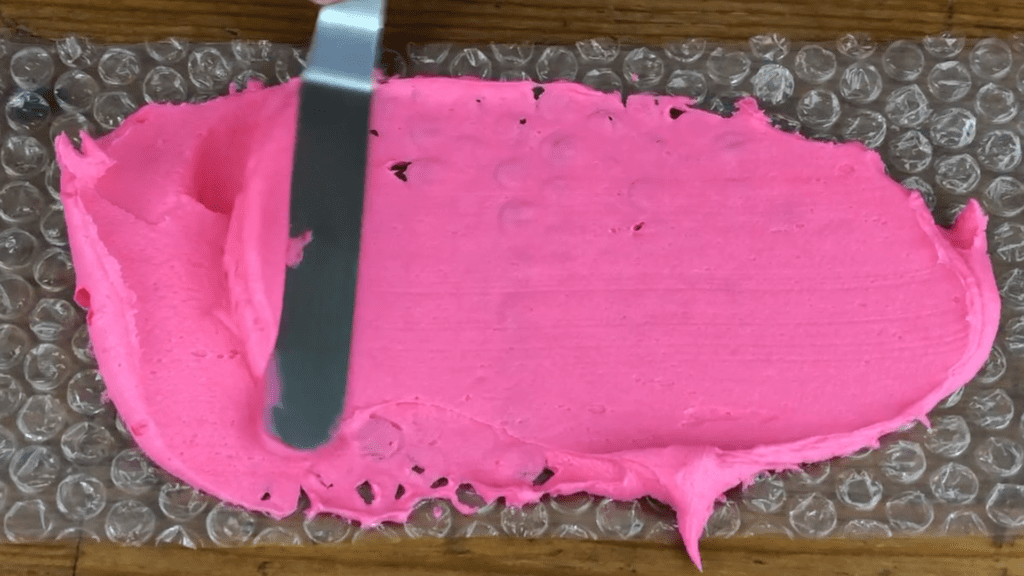
Spread pink frosting over the bubble wrap, after washing it of course. The frosting will need to be thick enough to completely cover the bubbles on the bubble wrap and it will also need to go right up to the edges of the bubble wrap.
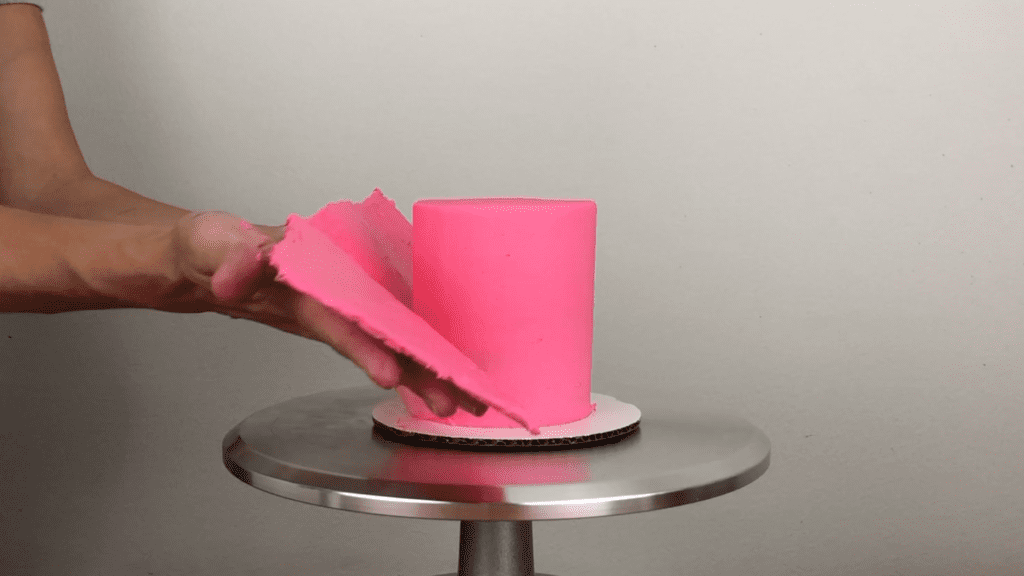
Lift the bubble wrap up and lower it down towards the cake, angling it so that one of the long sides rests down on the cake board to make sure the frosting goes all the way down to the bottom of the cake.
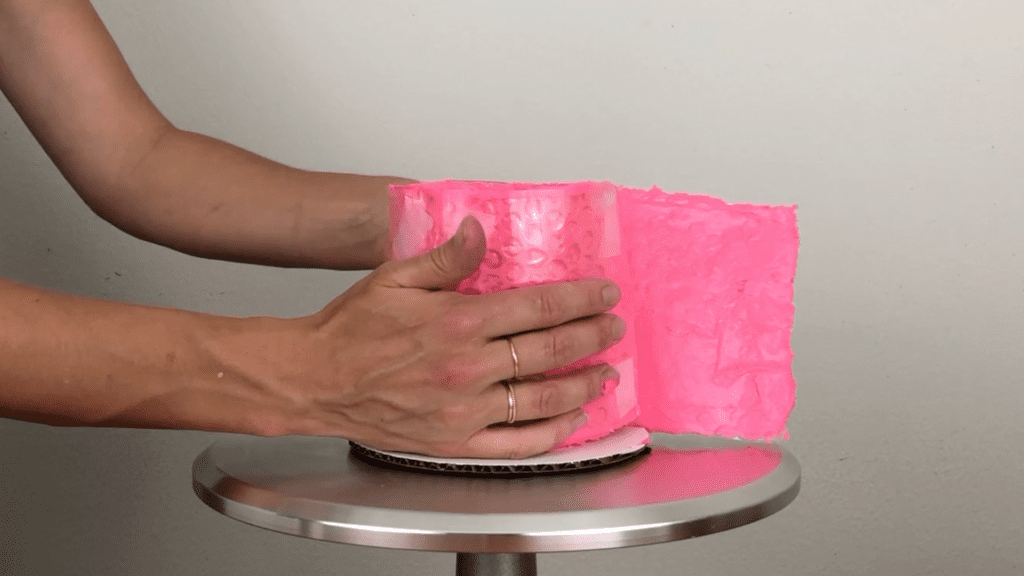
Wrap the bubble wrap around the cake with the frosting pressed against the cake. Press it firmly against the cake to attach it and then chill the cake in the freezer for 15 minutes to set the bubble frosting.
Peel the bubble wrap off and if the frosting has chilled and set, it will stay behind on the cake and only the bubble wrap will peel off the cake.
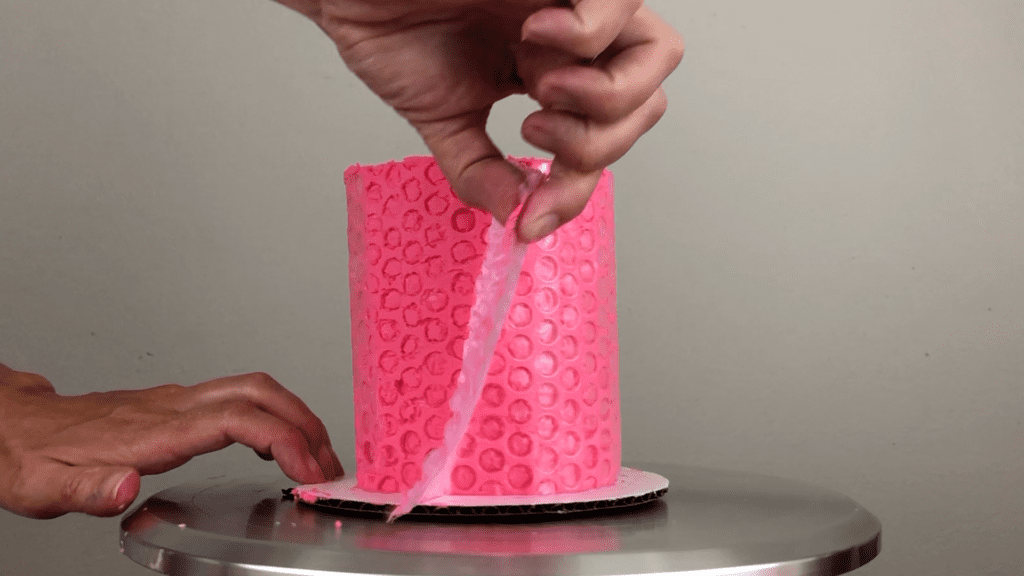
You can leave the texture as it is or spread different colours of frosting over the cake. This new pink frosting will fill in the holes from the bubble wrap.
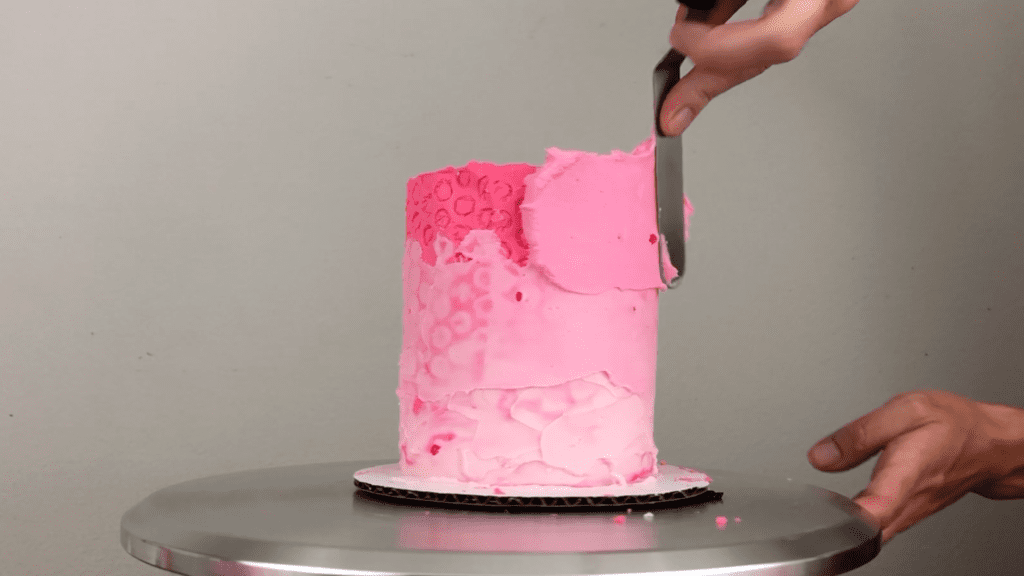
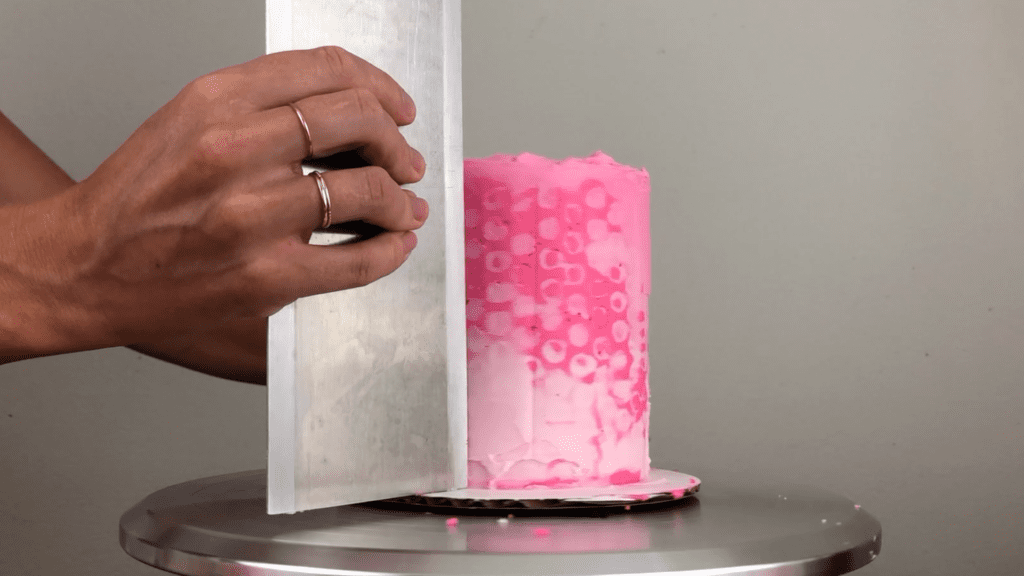
Scrape around the cake a few times to take off the excess frosting. Freezing the cake for a few minutes will have made the bubble wrap frosting firm, so it won’t blend together with this new pink frosting.
To make bubble cake toppers, spread melted chocolate onto bubble wrap and chilling it to set it.
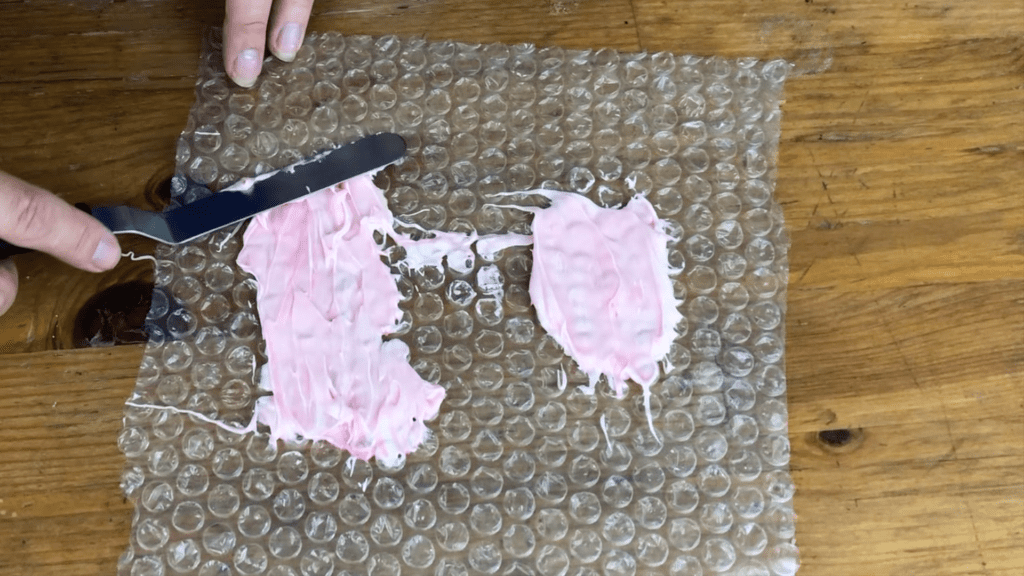
Peel the chocolate off the bubble wrap and push them into the frosting on the top of the cake for a fun bubble wrap patterned cake!
#6 Roses
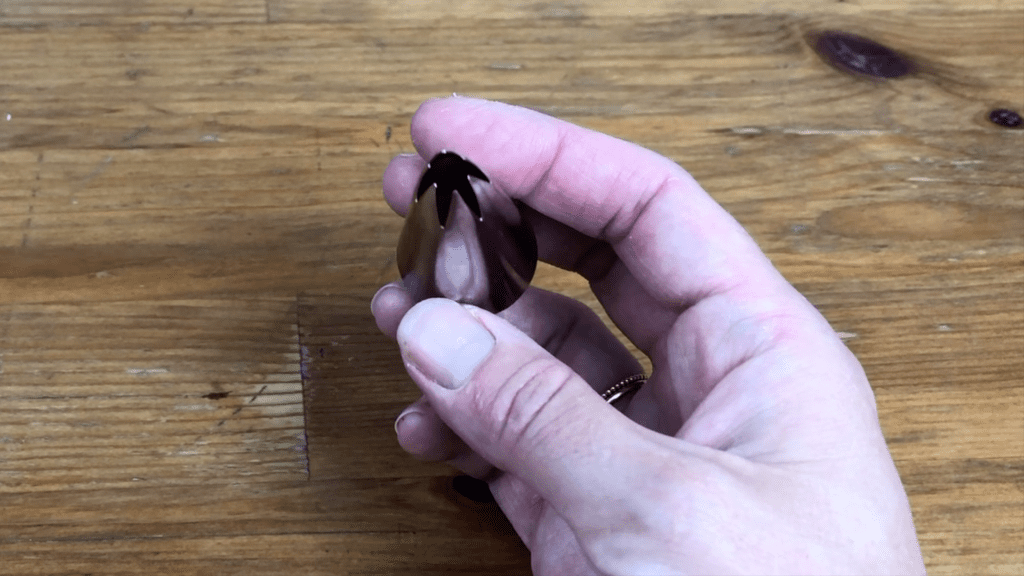
Cover a cake with roses using a star shaped tip like a 1M tip. You’ll need as many of these piping tips as the number of colours you want to pipe.
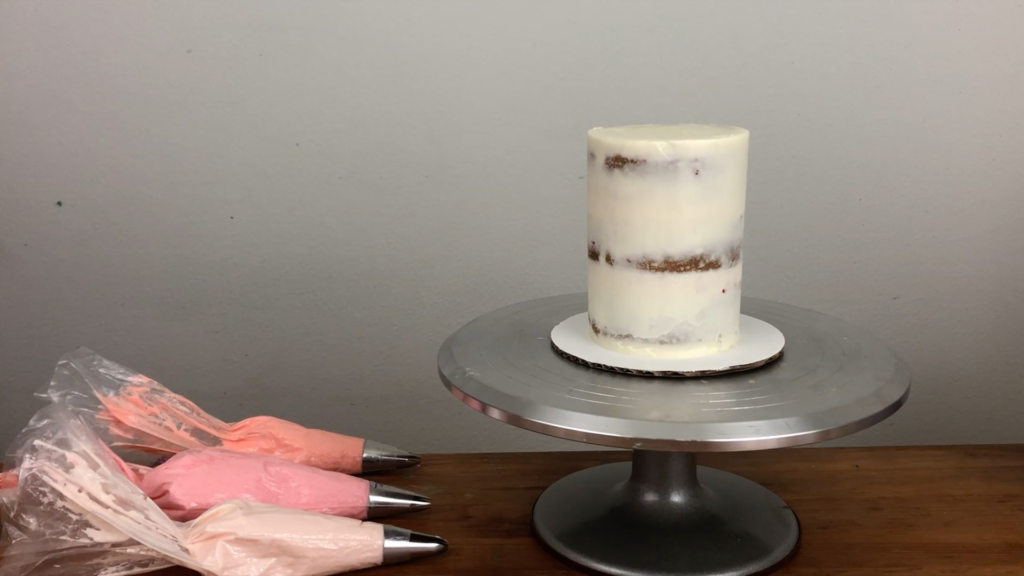
Fill piping bags with different shades of pink buttercream, or whatever frosting you’re using. Cover a cake with a crumb coat and let it set before continuing.
Starting at the bottom of the cake, pipe rosettes of frosting onto the cake, starting in the middle of each rose and spiraling outwards.
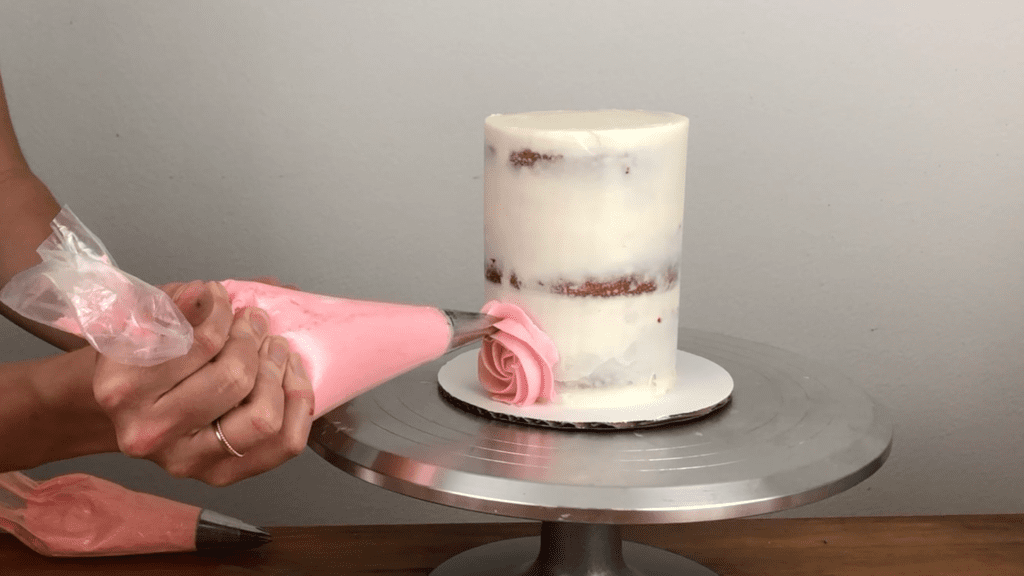
For neat ends of the rose spirals, at the same time as you stop squeezing the piping bag swipe the bag away from the cake. Pipe rows of roses to cover the sides of the cake and if there are any gaps in between roses, squeeze a little dot of frosting with the same piping bags and tips to make star blossoms to cover up the gap.
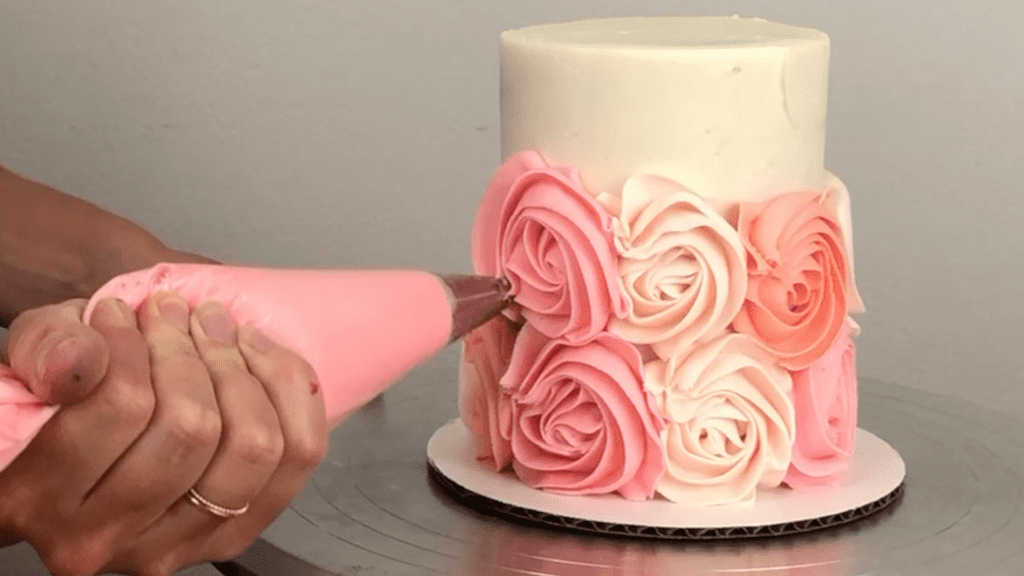
You can leave the top of the cake plain or pipe roses onto the top, too!
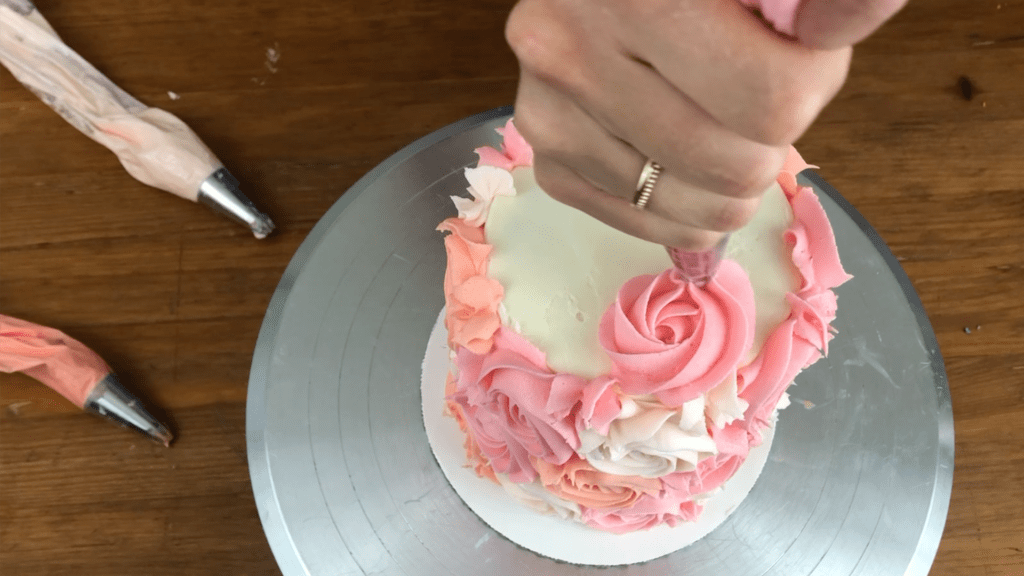
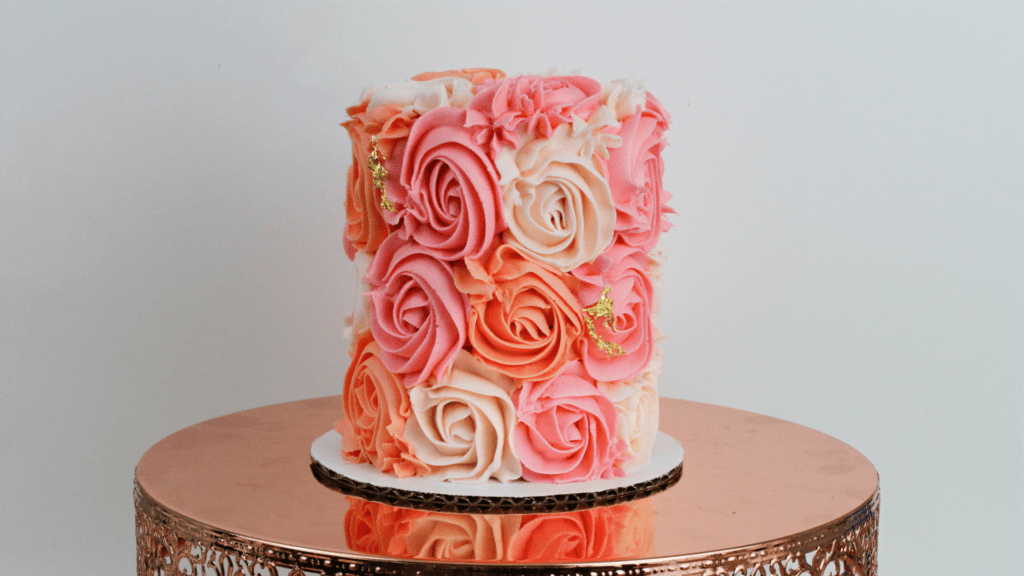
This rose frosting looks beautiful with just one colour for the roses, or you can layer different colours in rows or arrange them randomly like this. I added some gold leaf to finish off this cake.
#7 Russian Tip Flowers
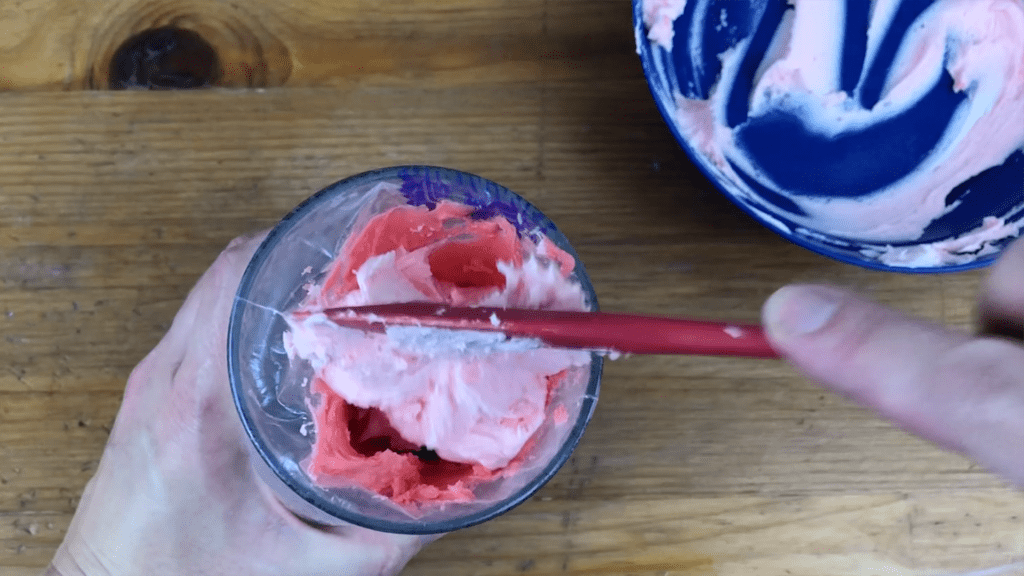
Another way to pipe flowers onto a cake is to use flower nozzles or Russian tips. Place a piping bag (fitted with any flower shaped Russian tip) into a glass to hold it open and spread pink frosting around the inside of the bag.
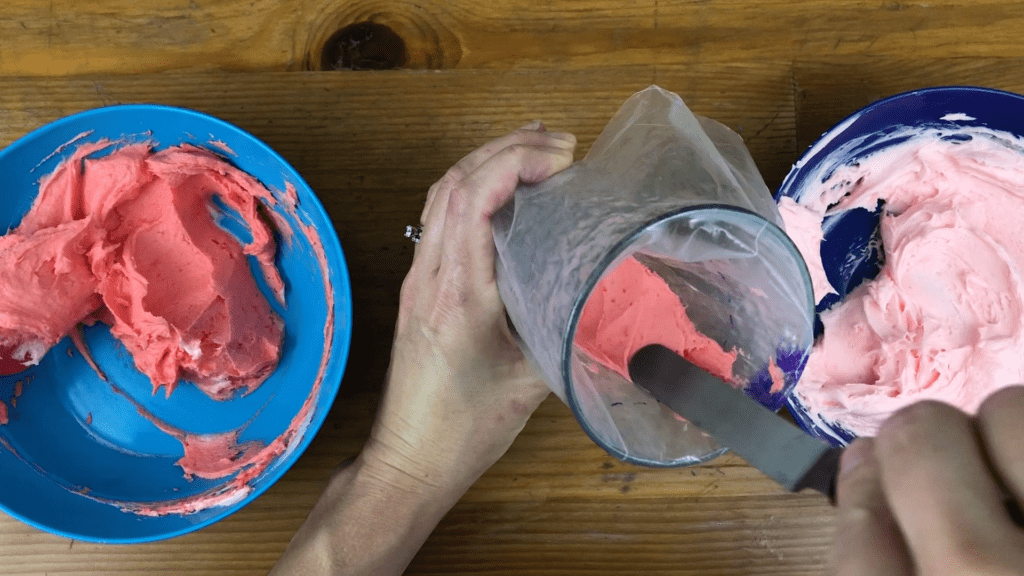
Then fill the middle of the piping bag with another shade of pink. This will create two-tone flowers.
Hold the piping tip against the side of a frosted cake and squeeze the piping bag, letting the frosting bulge out slightly before slowly pulling the bag away to to pipe a flower. Every petal of the flower will be created with just one squeeze! The flowers will look really eye-catching with a variety of colour combinations and different tips.
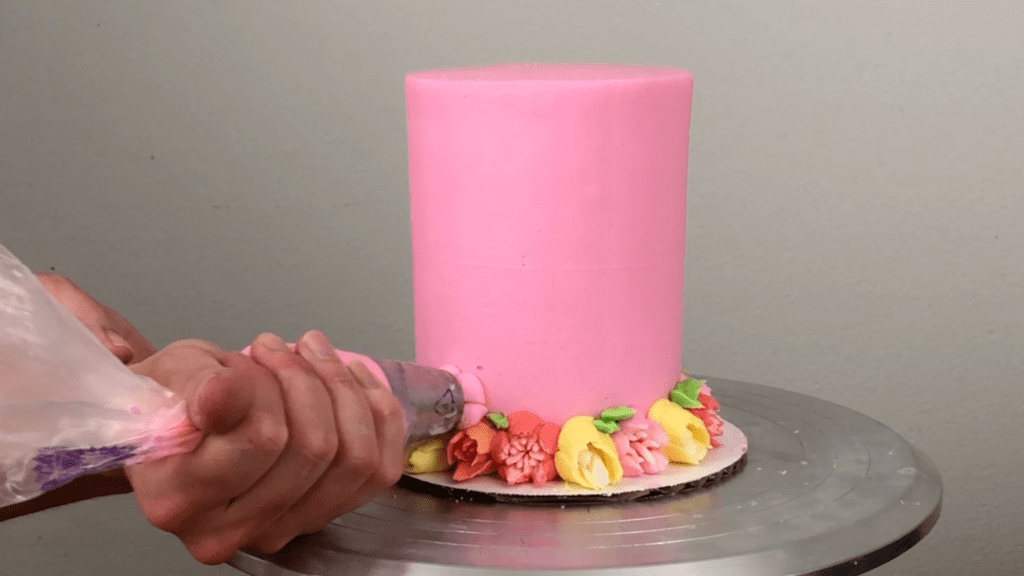
You can add leaves with a leaf piping tip like a #352, pressing the end of the tip against the cake before you start squeezing the bag so that the leaf attaches to the cake.
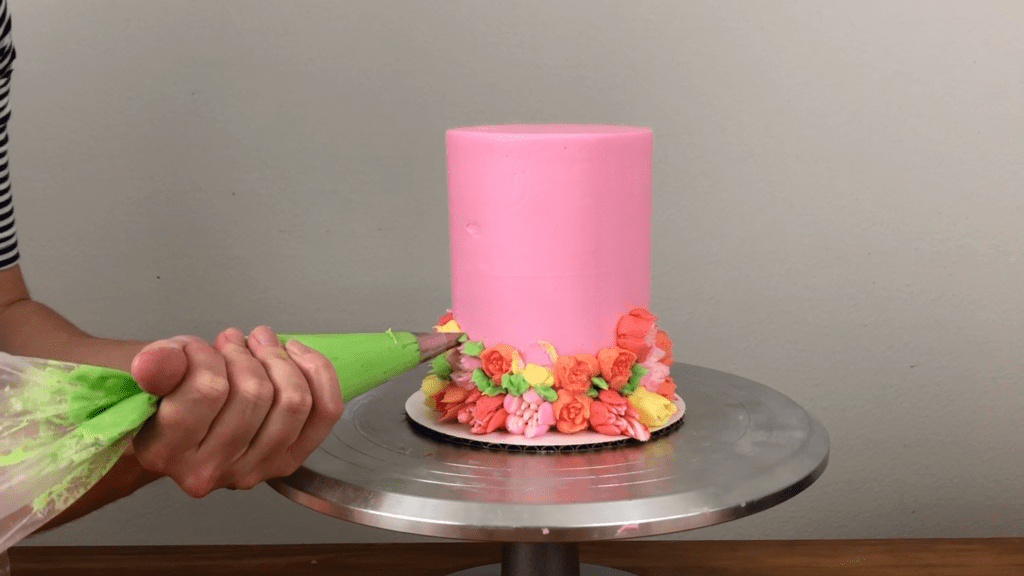
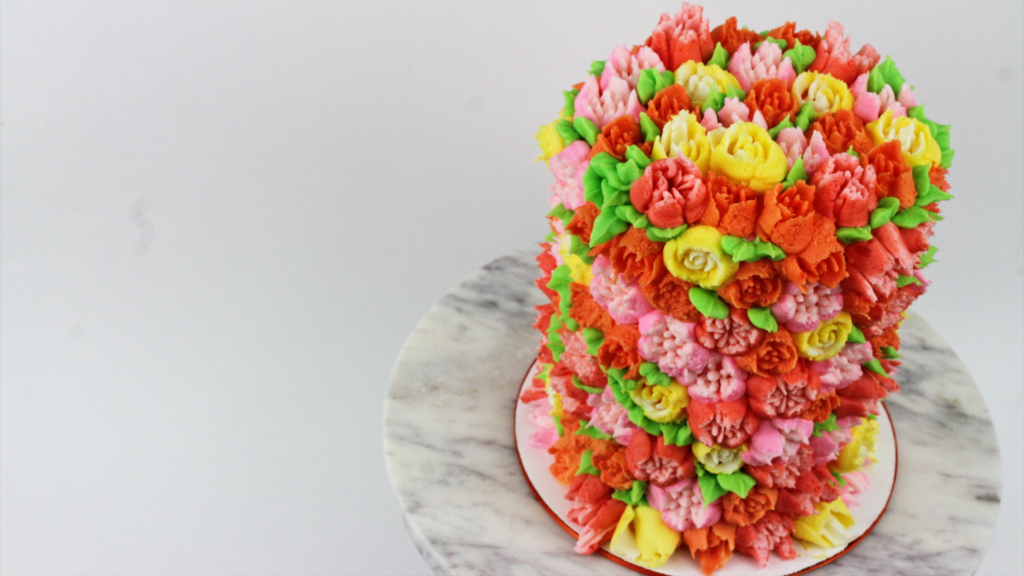
You can pipe just a few flowers for some colour and texture on your cake or cover the entire cake with flowers!
#8 “Naked” Filling
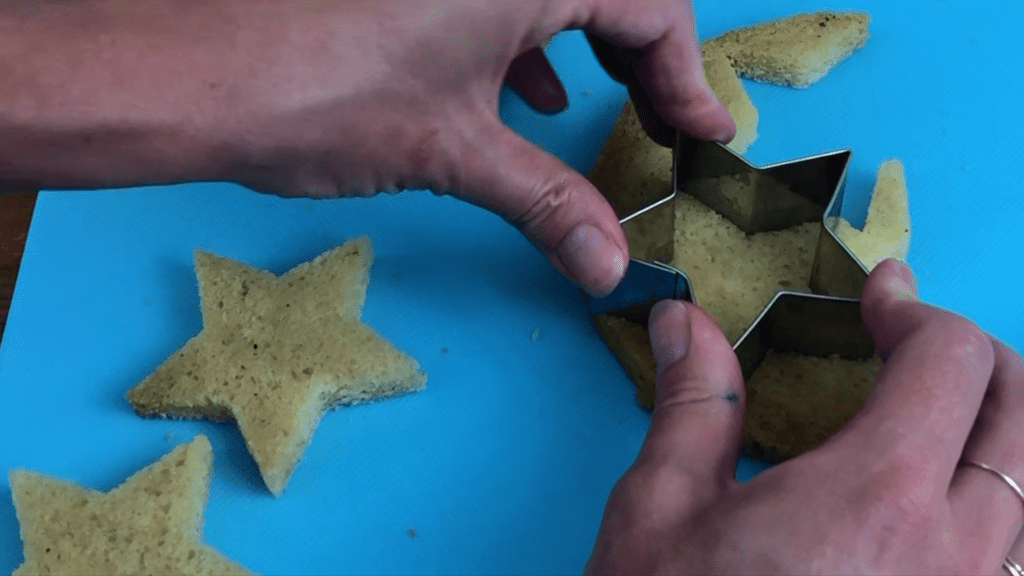
Pipe pink texture onto the inside of a cake by using the piping as filling between cake layers. To shape your cake, use a cookie cutter to cut shapes out of larger cake layers.
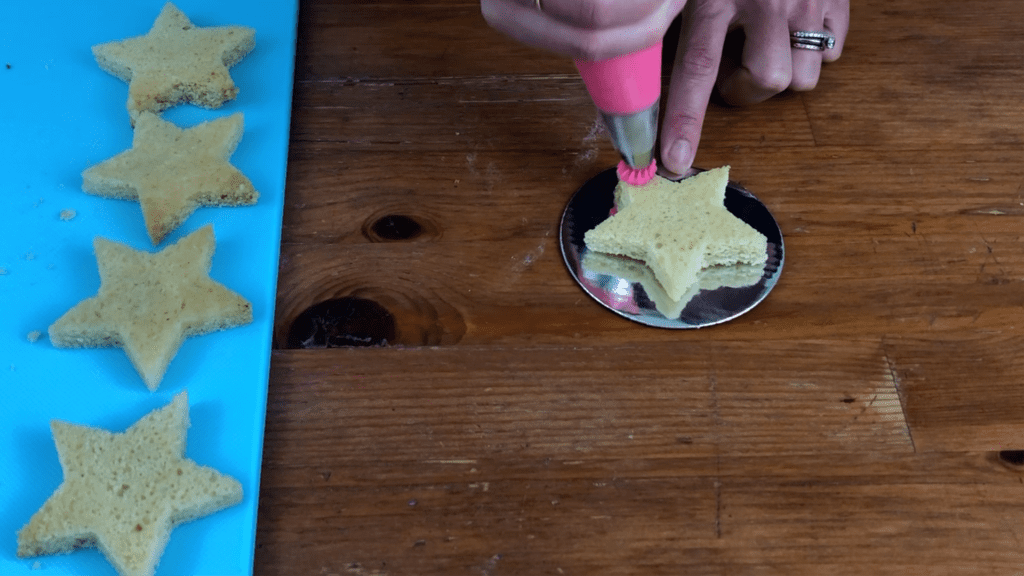
Pipe frosting onto each layer using whatever piping tip you like – my favourites are large round tips or open star rosettes like 4B tip.
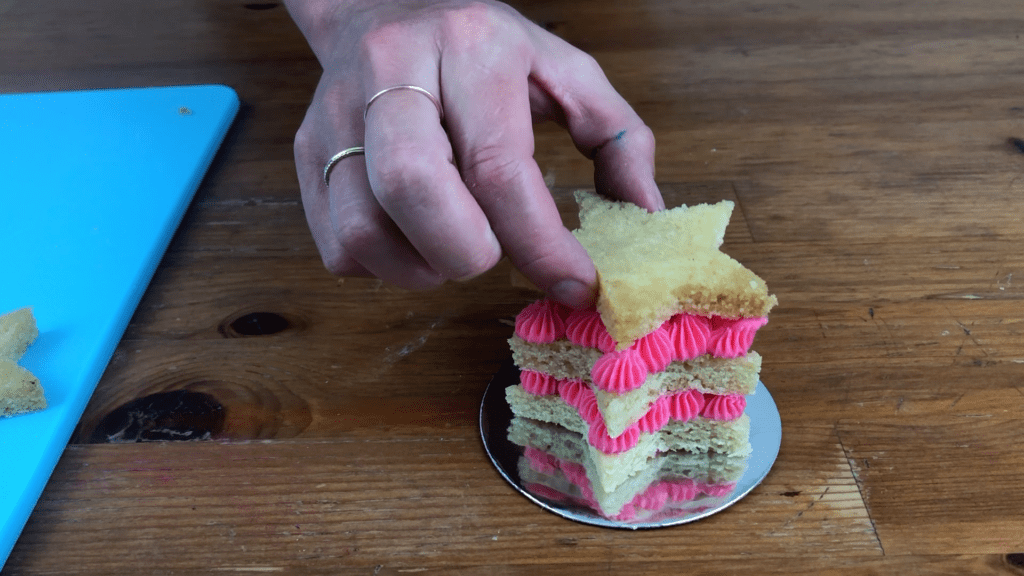
Alternate cake layers and filling to assemble your cake. This is called a naked cake because there won’t be any frosting on the outside, which means it’s REALLY easy and quick to make!
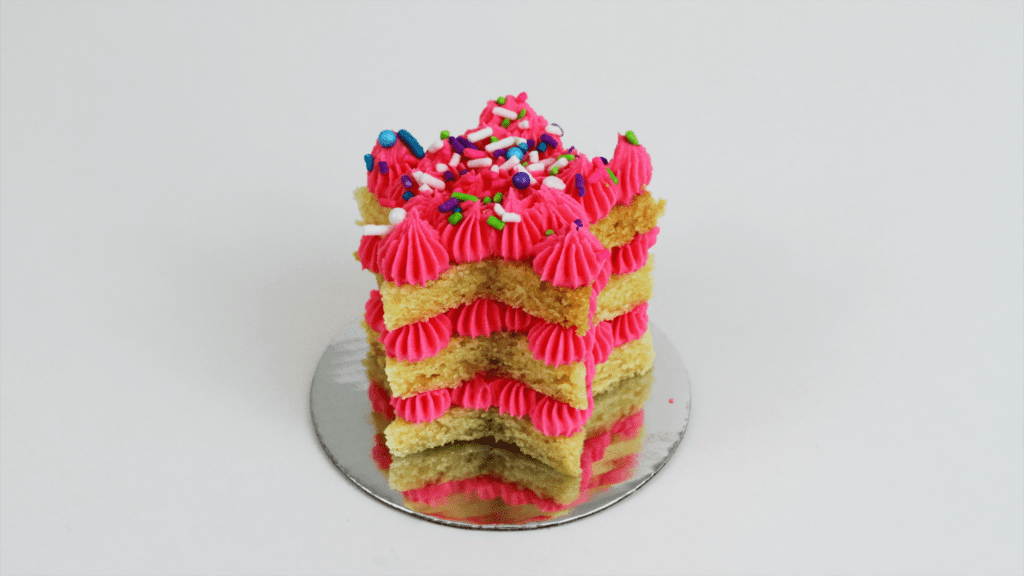
The pretty piping provides color and texture so you don’t need any other decorations on the cake, but sprinkles on top can add a nice finishing touch.
#9 Number Cake Filling
Using a similar technique to #8 , create a pink number cake by carving a number out of a rectangular sheet cake, twice, to make two layers of cake. I like to cut a piece of parchment paper to be the same size as my cake layer and fold it in half, so that I know exactly how much space I have to draw my number. Cut the number out of the parchment paper and place it on the cake to trace around with your knife.
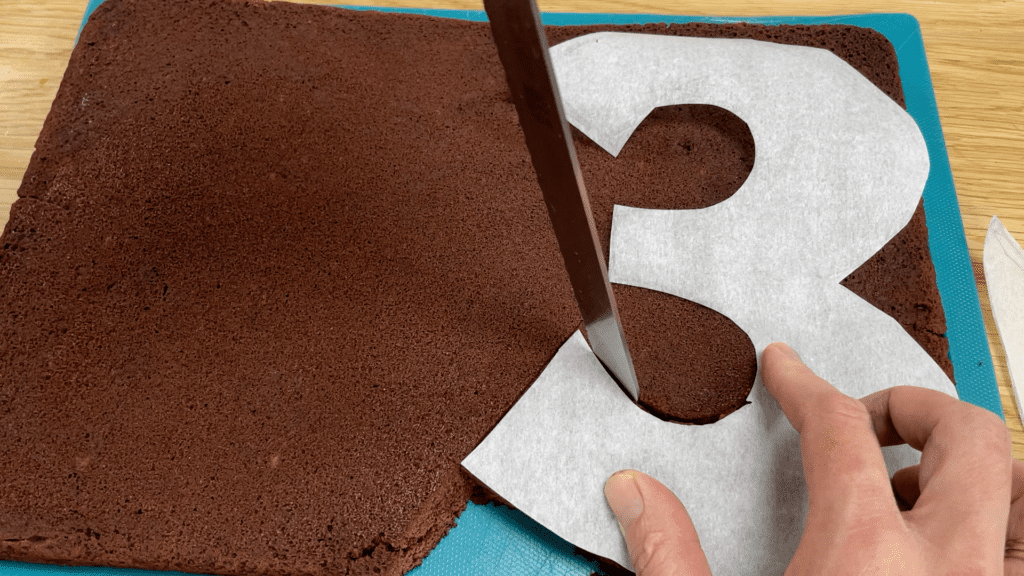
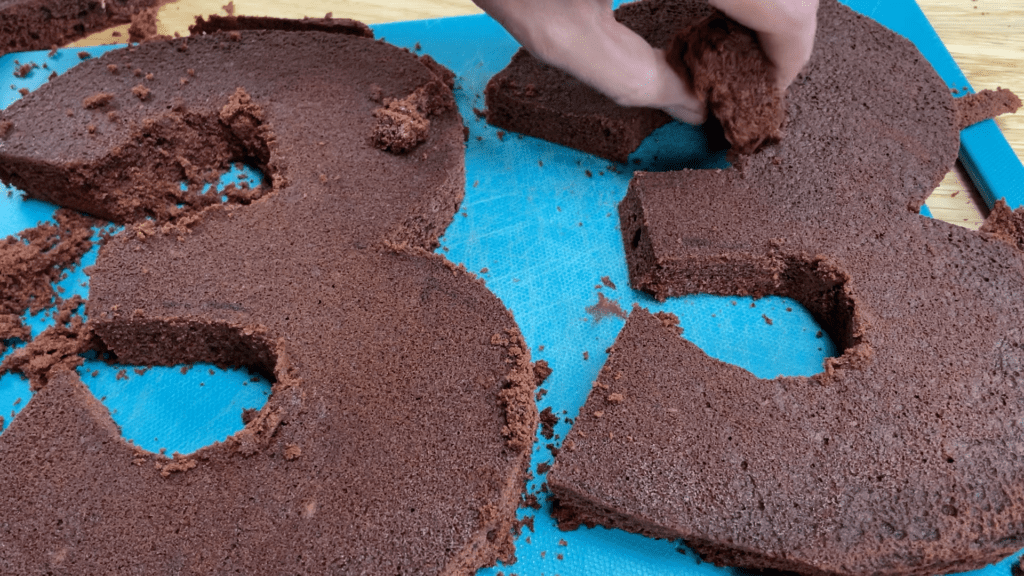
Remove all of the excess pieces to leave two identical number cake layers! I recommend drizzling them with simple syrup to keep them moist if you won’t be frosting the outside of the cake.
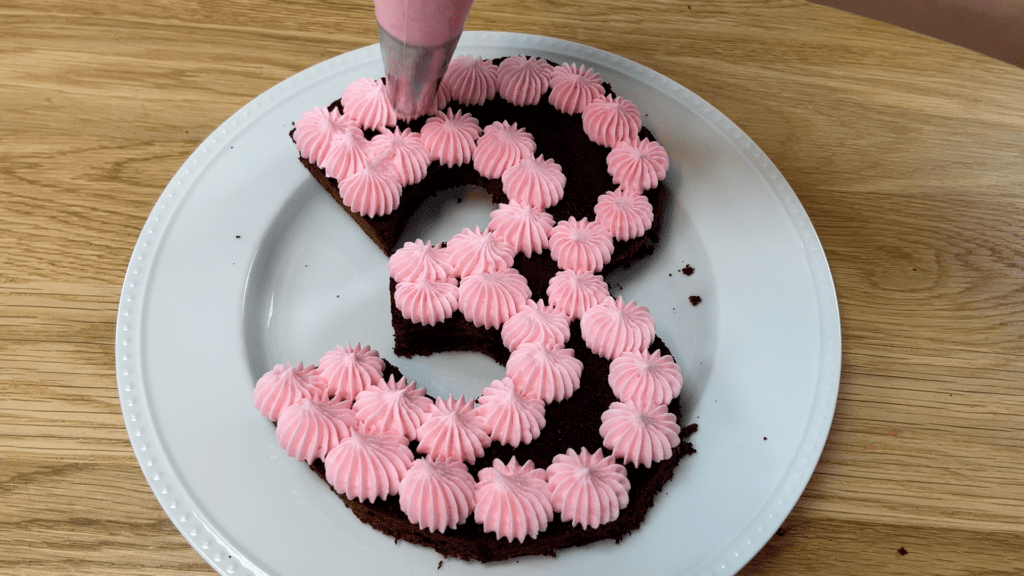
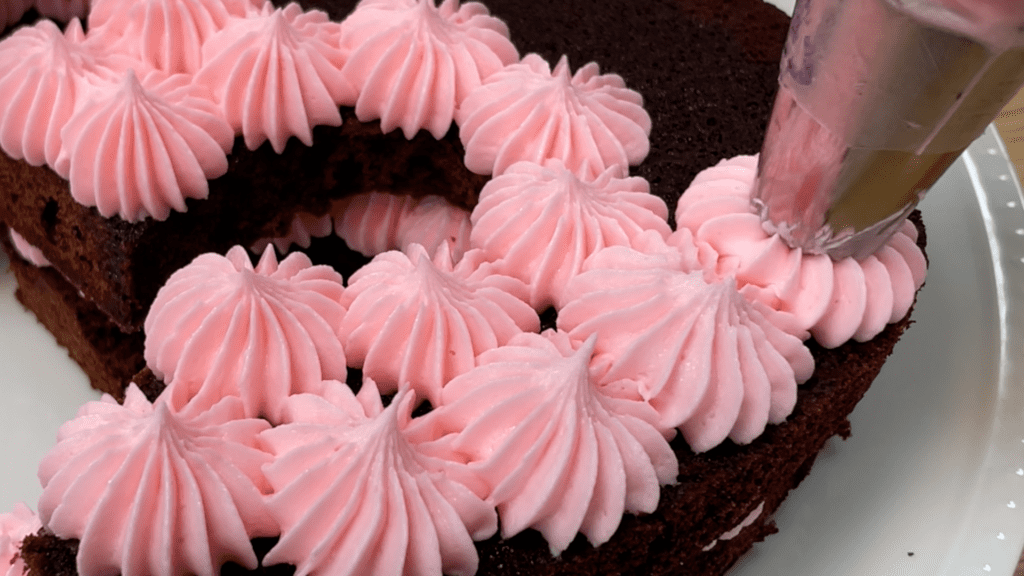
Pipe frosting onto the first layer of cake, starting at the outer edge of the cake so that that part is the neatest, since it’s the only part that will be visible once the cake is assembled. Then fill in in the area within the outline with more piping. I’m using an 8B open star tip for this cake.
Place the next layer of cake on top , arranging it so it’s directly on top before pushing down gently to secure it onto the sticky frosting you’ve just piped, which will act as glue to fold the cake in place.
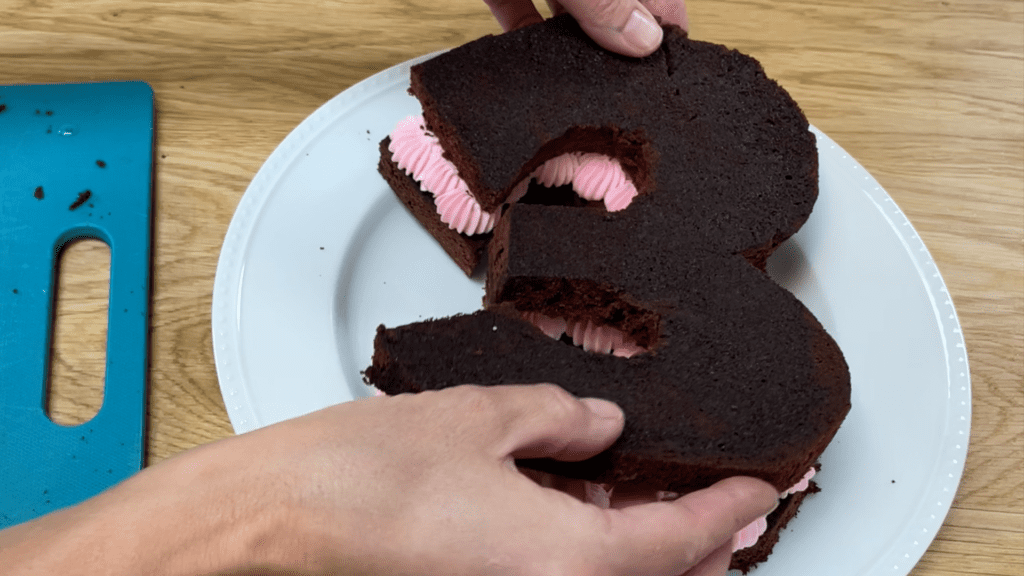
Cover this layer with piping too, again starting with the outline and then filling it in.
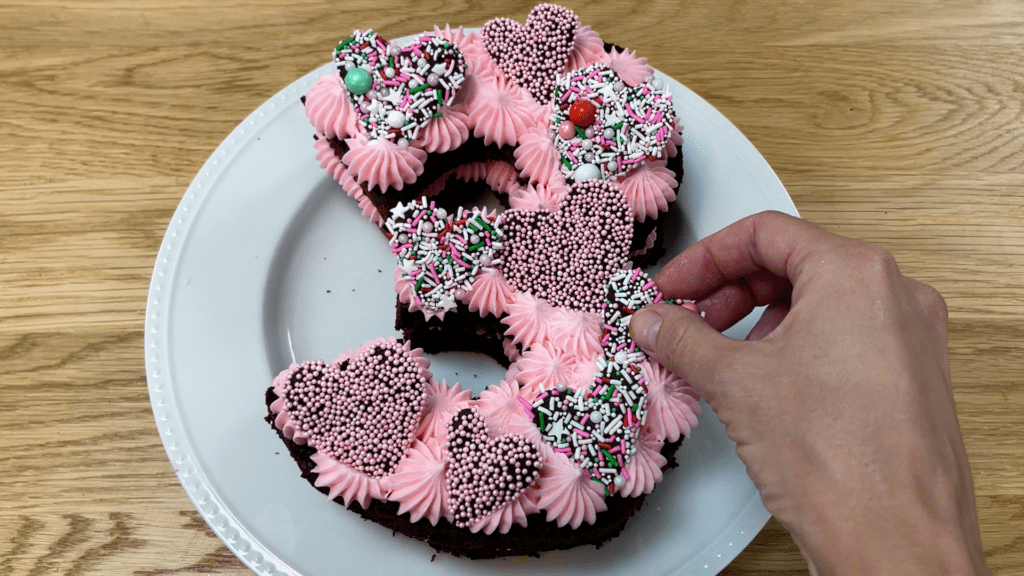
You can add any decorations you like on top like these chocolate hearts. Add them immediately after piping, while the frosting is still sticky so the decorations will attach easily.
Visit my online cake school for a LOT more cake design ideas and techniques and join my Club for access to ALL of my classes as well as live online classes and Q&A sessions for members only!
Here’s the video version of this tutorial:
If you could have any cake superpower, what would it be? Turning cupcakes into cakes? Making cakes truly gold? In this tutorial I share 5 cake hacks to WOW your friends, family, and customers. They’ll all ask you how you achieved these cake designs and you can choose whether to tell them or leave them guessing!
If you prefer to watch a video of this tutorial, scroll to the bottom of the page.
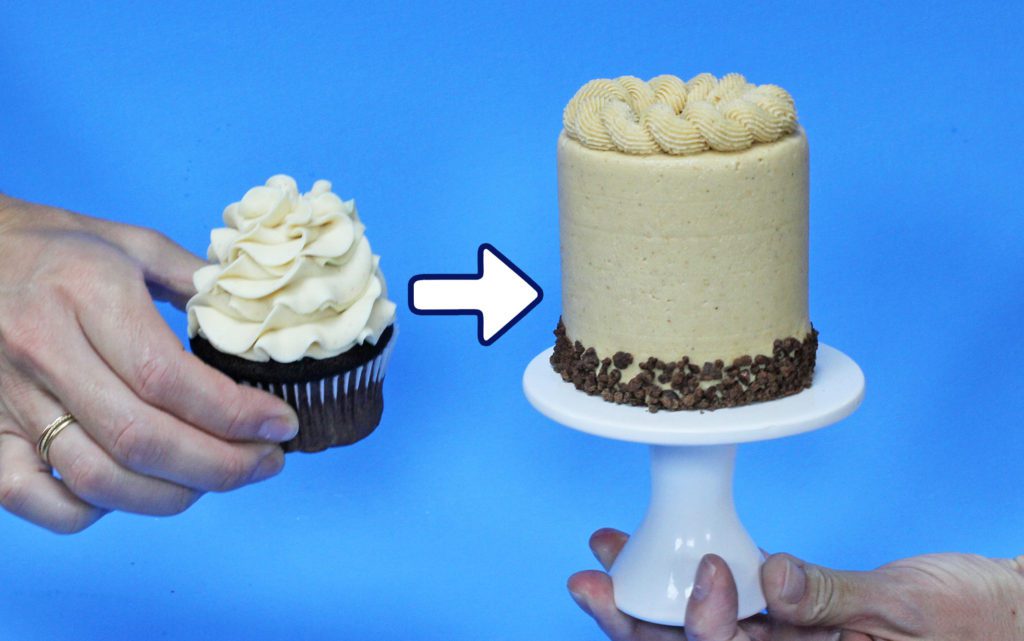
#1 Turn a cupcake into a cake with this fun trick! Peel the wrappers off two cupcakes and trim the tops so that they’re flat. Cut the cupcakes in half if you want more cake layers.
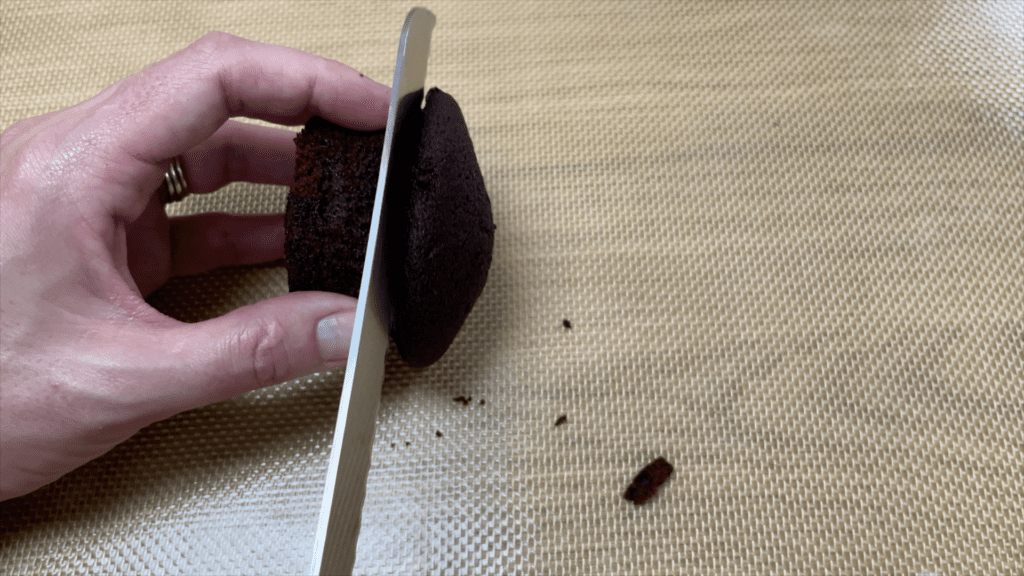
Then layer the cupcake halves with whatever filling you like, piping it like you would on a cupcake or just spread it on. Alternate between cupcake and filling to assemble a teeny tiny cake!
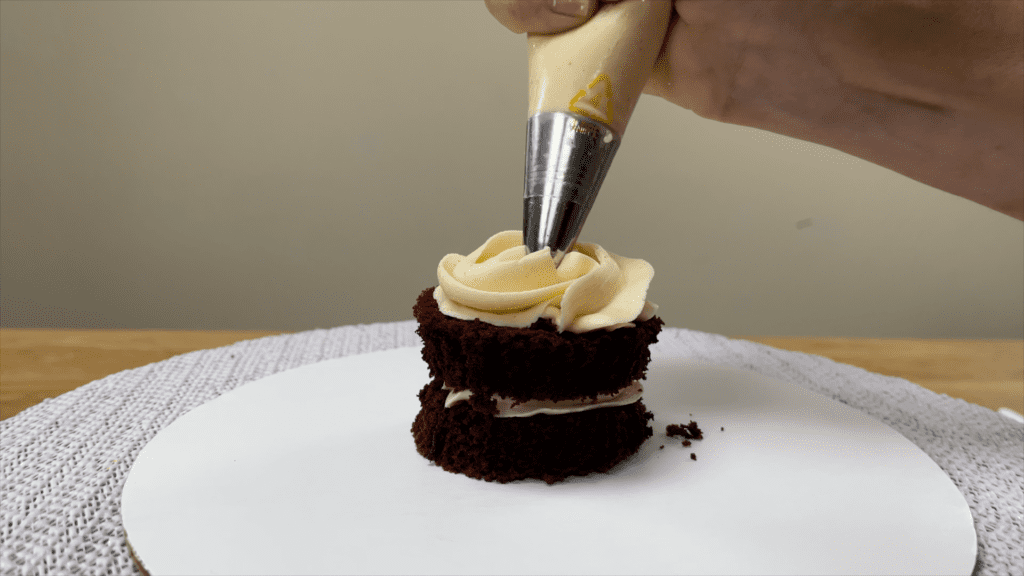
Put it in the freezer for 15 minutes before frosting it so that it’s more stable and doesn’t wobble all over the place. Use two layers of frosting for the neatest results, because the first layer will try any crumbs that come off the cupcake layers and then the second layer will be crumb-free.
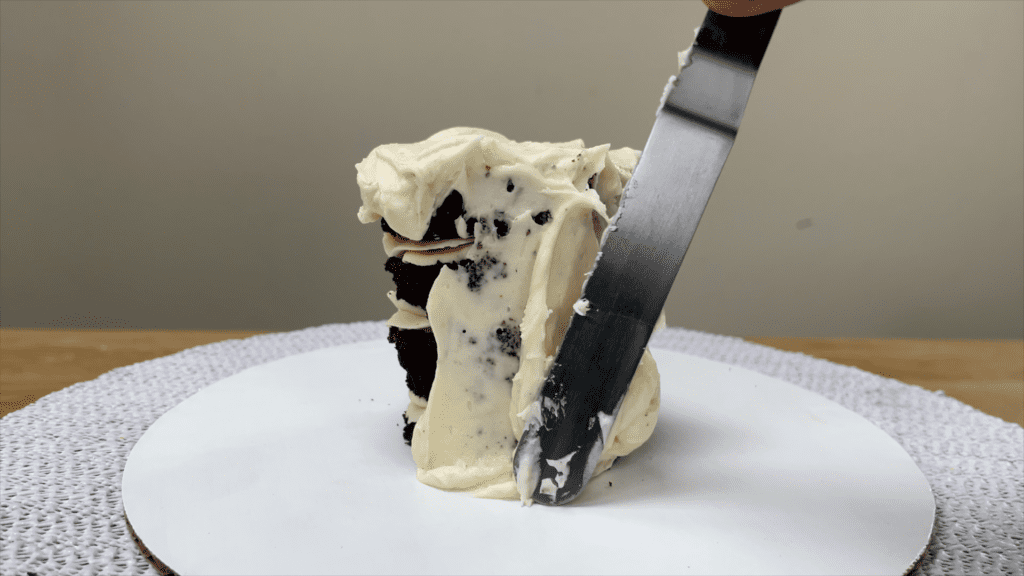
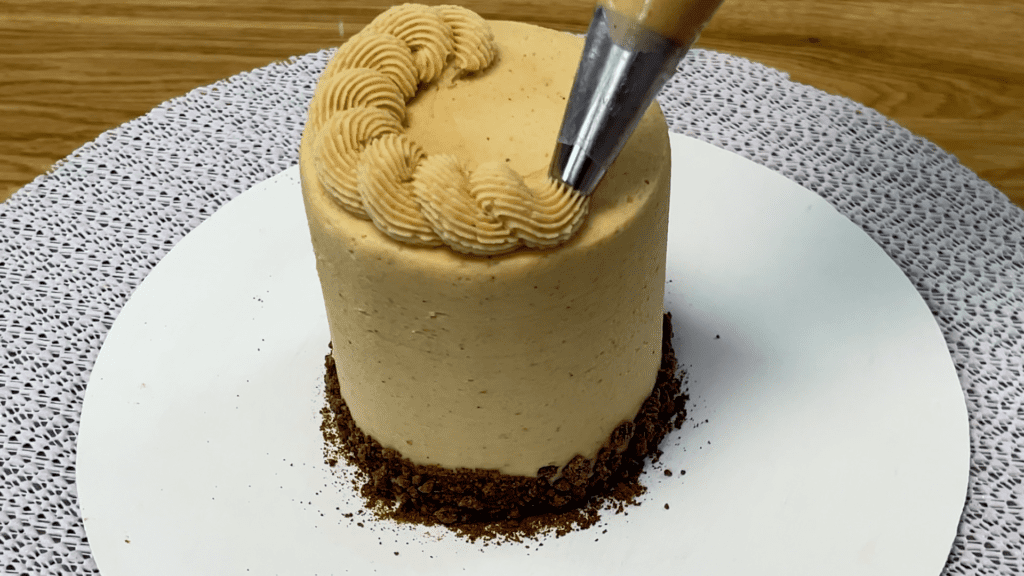
Add whatever details you like to create a dessert that looks way fancier than a simple cupcake!
#2 Achieve incredibly intricate details with flawless designs in seconds! Buy icing sheets online in thousands of different patterns – use my code EMILYBGB for 20% off here!
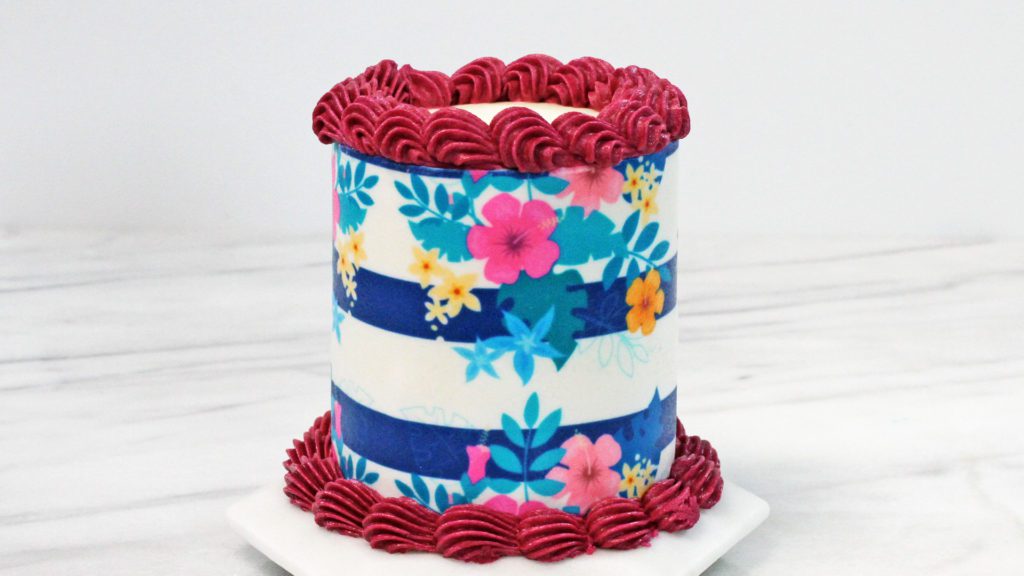
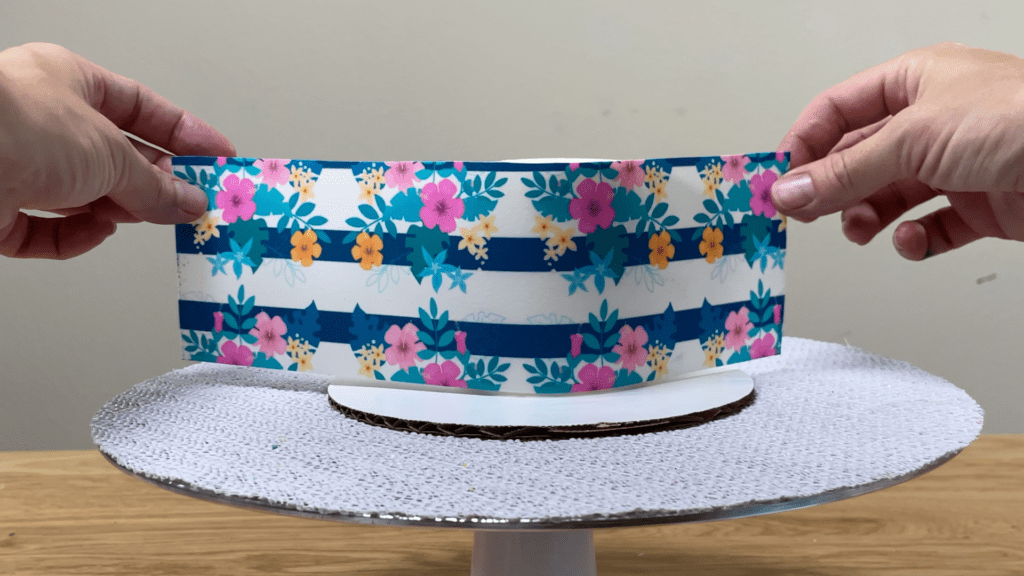
Frost a cake as normal and measure the height of the cake. Then cut an icing sheet to be the same height. If the icing sheet will wrap around the cake completely you’ll only need one strip of the sheet but if it doesn’t, you’ll need to cut two or even three strips, making sure they’re all at least as tall as the cake is.
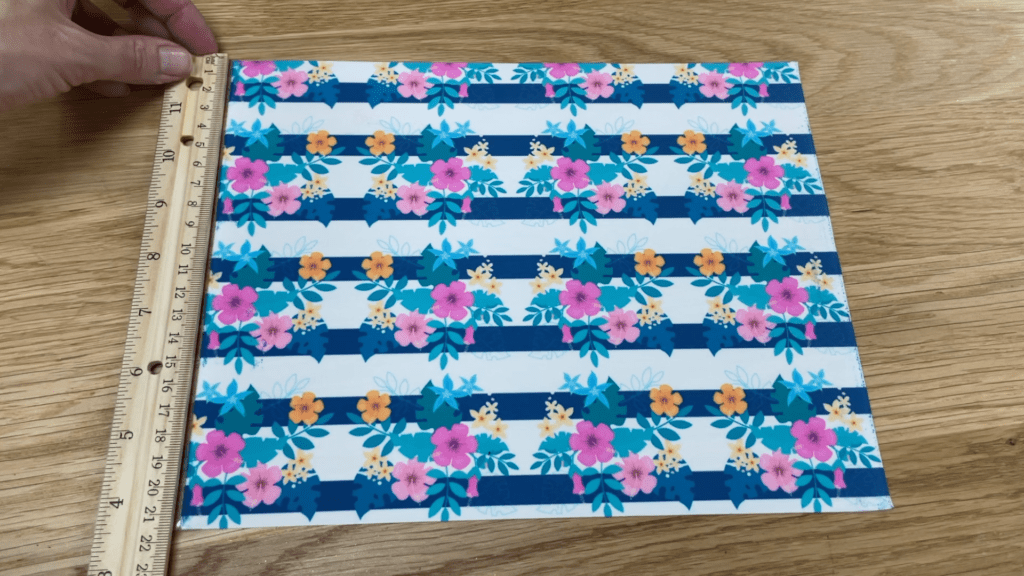
Icing sheets are attached to a plastic backing. When you’re ready to attach a sheet to the cake, peel the icing sheet off the backing and wrap it around the cake.
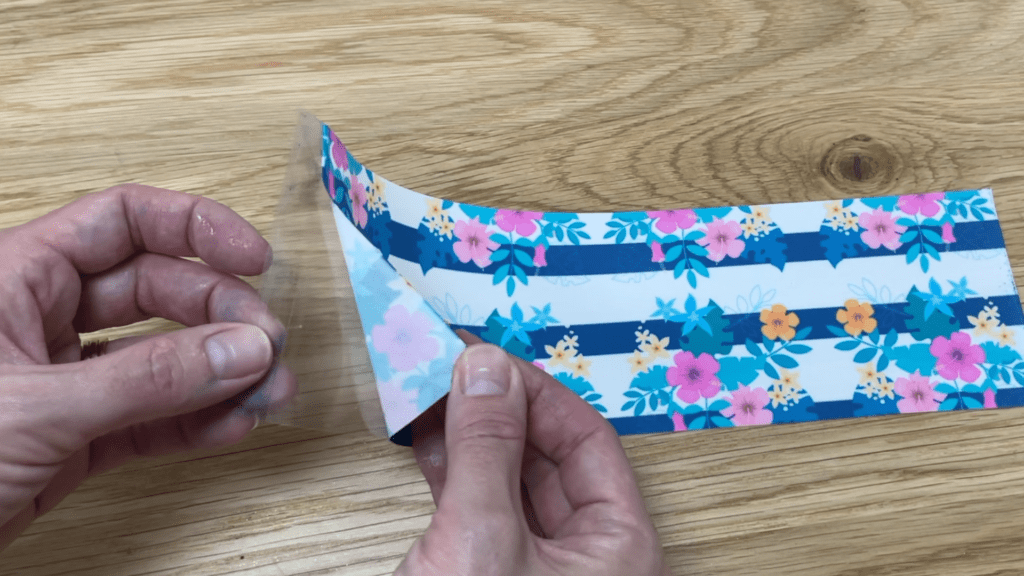
Icing sheets are slightly sticky and in my experience they are sticky enough to attach to a cake after the frosting has set. I prefer to attach the sheets at this point because the frosting is firm and you won’t risk indenting it or damaging it as you press the sheet against the cake.
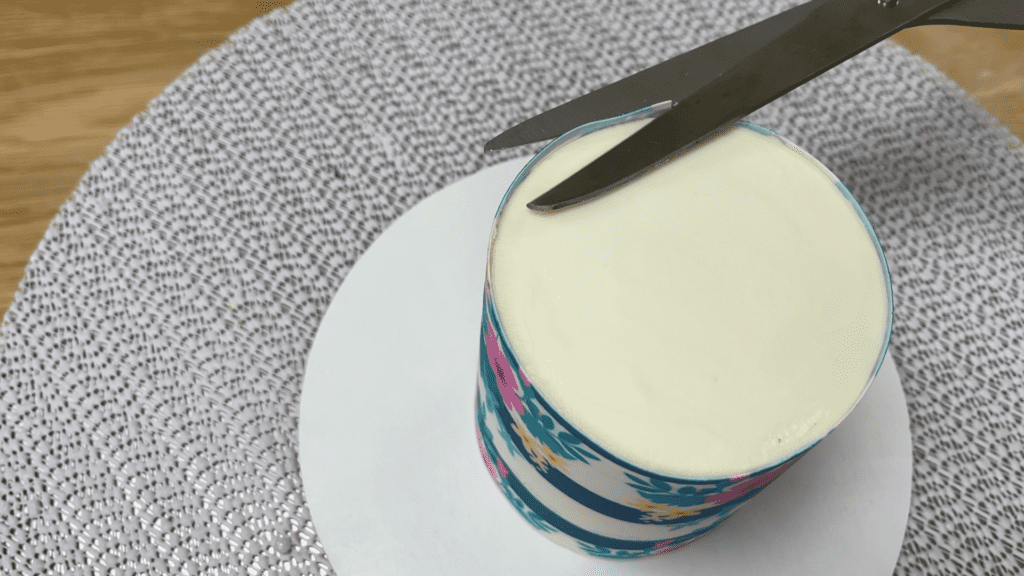
Cut the icing sheet where the two ends join so that there’s no overlap. You can also choose this side to be the back of the cake when you display it.
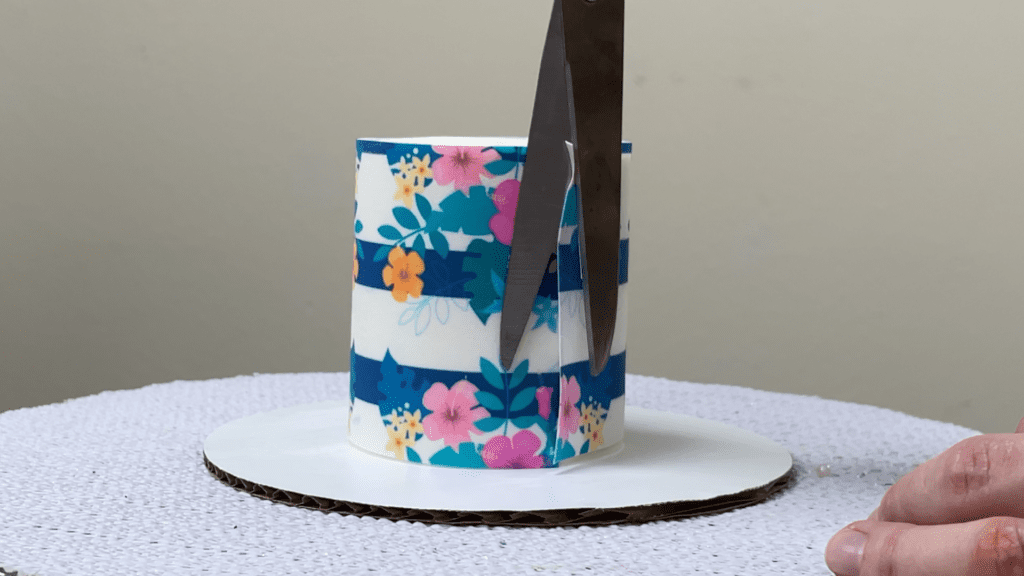
Trim the top of the icing sheet anywhere it’s sticking up above the cake. If you want to cover the top of the cake with the icing sheet you can place a piece on top and trim around it so that it fits perfectly on top of the cake.
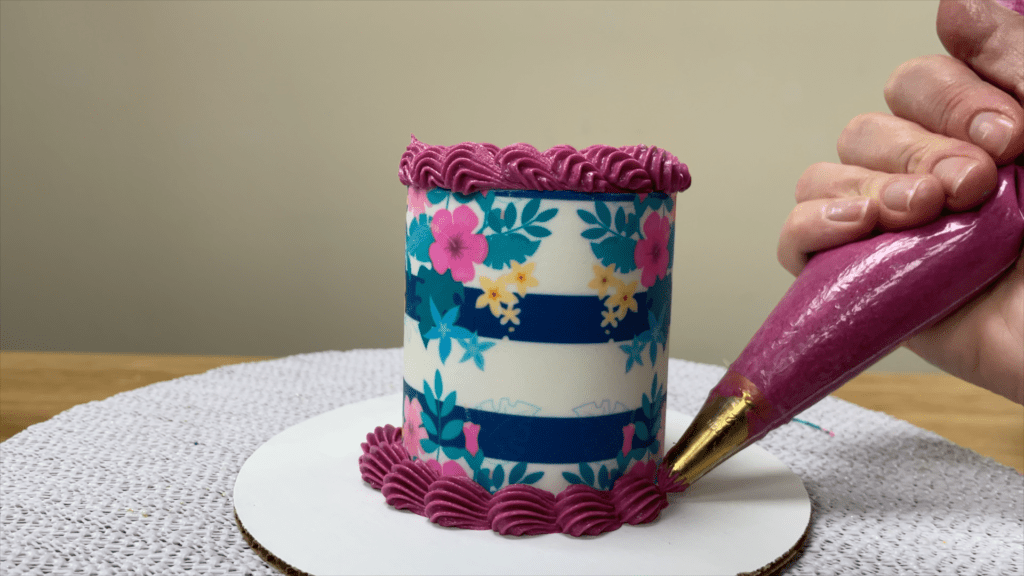
The seam where the two ends of the icing sheet meet will barely be visible amongst the busy pattern of the icing sheet. Add a pretty border on the top of the cake and around the bottom to finish it off!
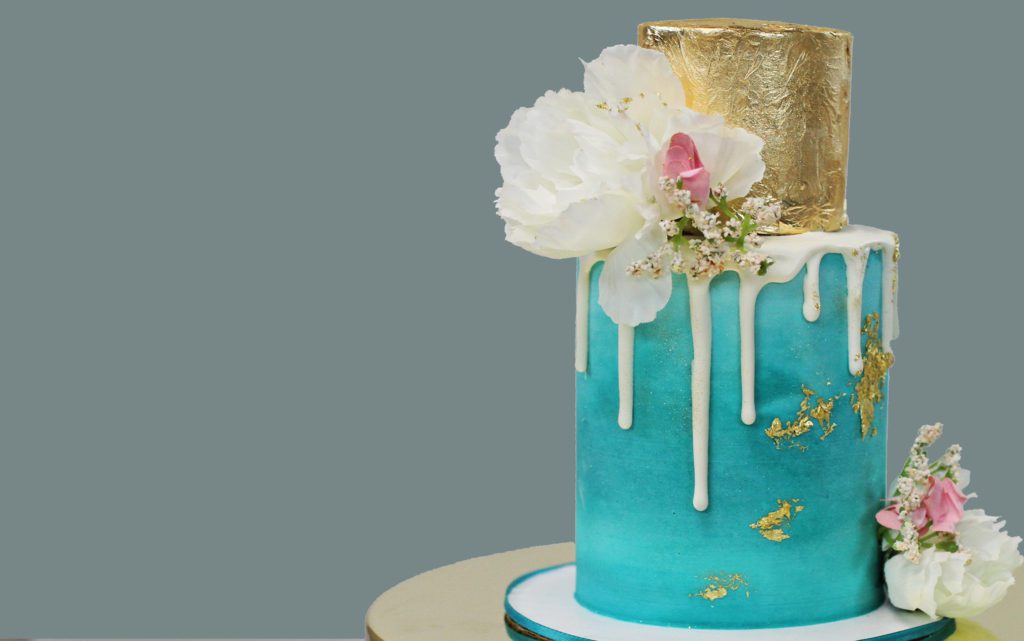
#3 Make a cake gold by letting the frosting set so that it’s firm and holds its shape. Peel open a sheet of edible gold leaf, which you can buy here, and press the gold leaf into the frosting on the cake.
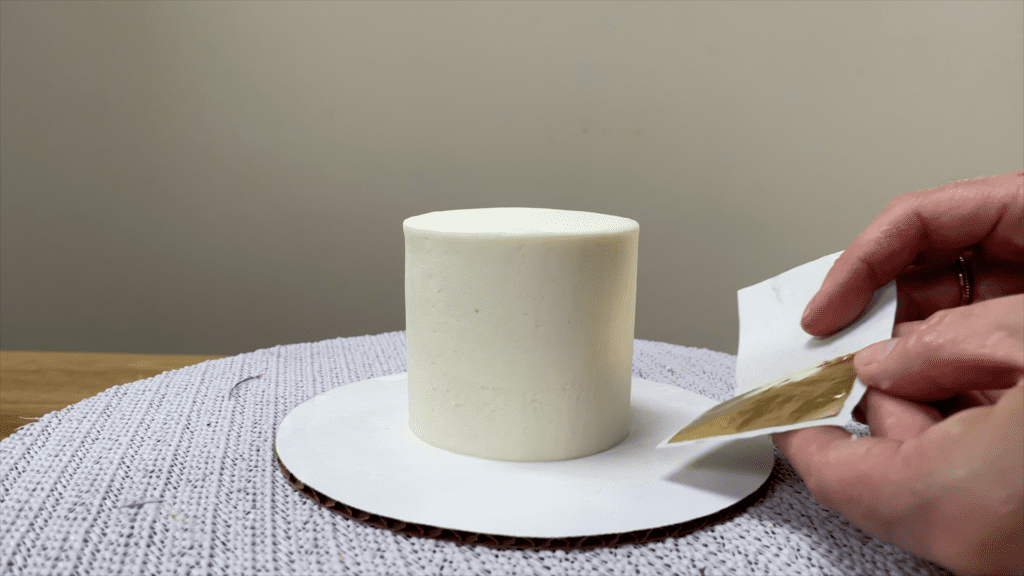
Use the backing paper to push against the cake without touching the gold leaf with your hands, since it’s very delicate and will stick to you instead of the cake.
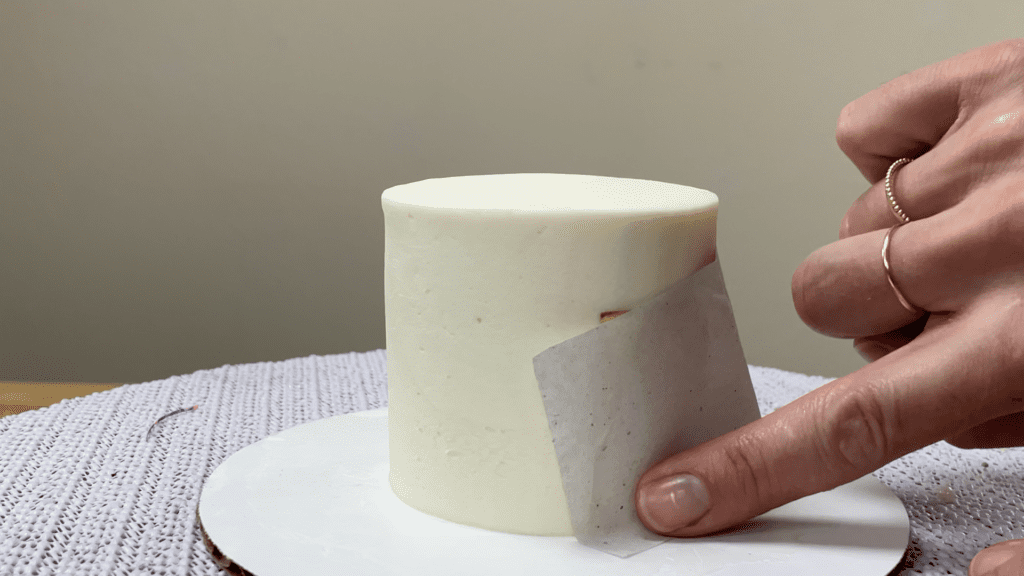
When you peel the backing paper away, the gold leaf will be left on the cake. I do this after chilling the cake in the fridge for at least an hour so that the frosting on the cake has set.
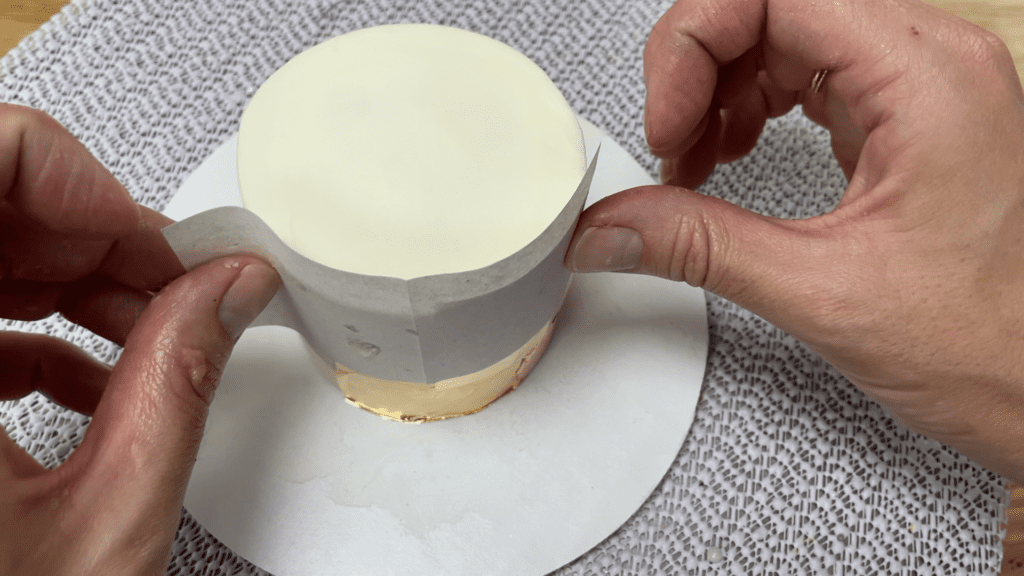
Repeat the process with several sheets of gold and they’re so thin that where they overlap they’ll blend together to form a flat layers of gold all over the cake!
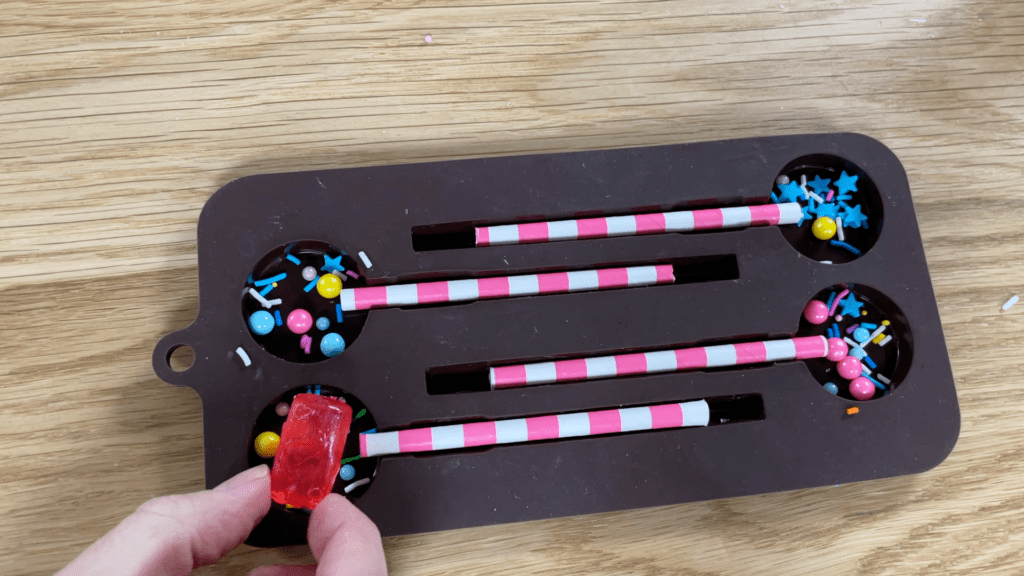
#4 Make homemade lollipops with just one ingredient! Place some paper straws in a lollipop mold and add some sprinkles if you like. Then put a hard candy like a Jolly Rancher in each circle.
Put the mold in the microwave for 30 seconds, or until the candy is melted and bubbling. They will be HOT so be careful when you take them out of the microwave.
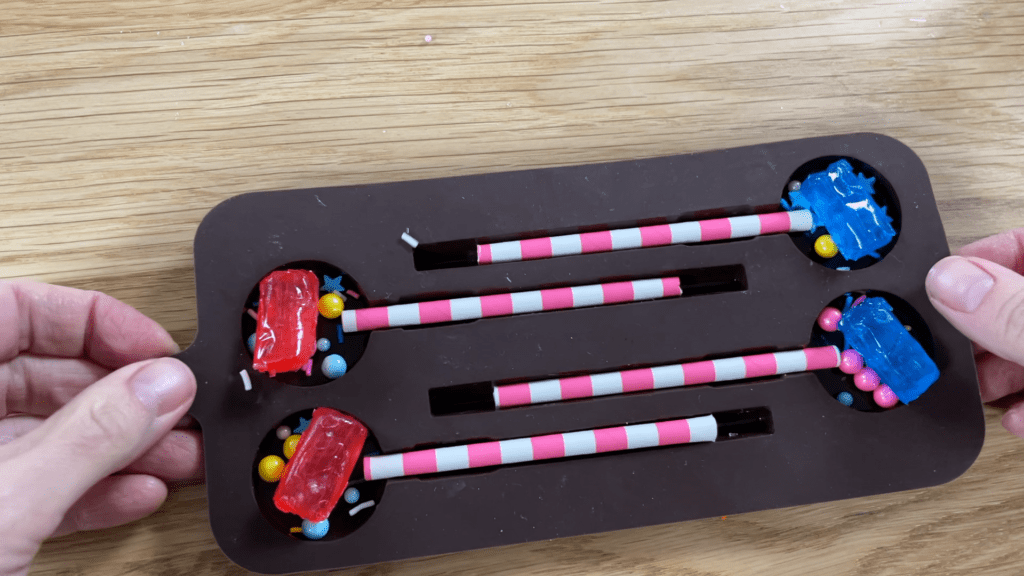
Leave them to cool for about 15 minutes and then push the lollipops out of the mold. They should release and pop out easily but if they stick to the mold, the sugar hasn’t set yet so leave them for a few more minutes before trying again.
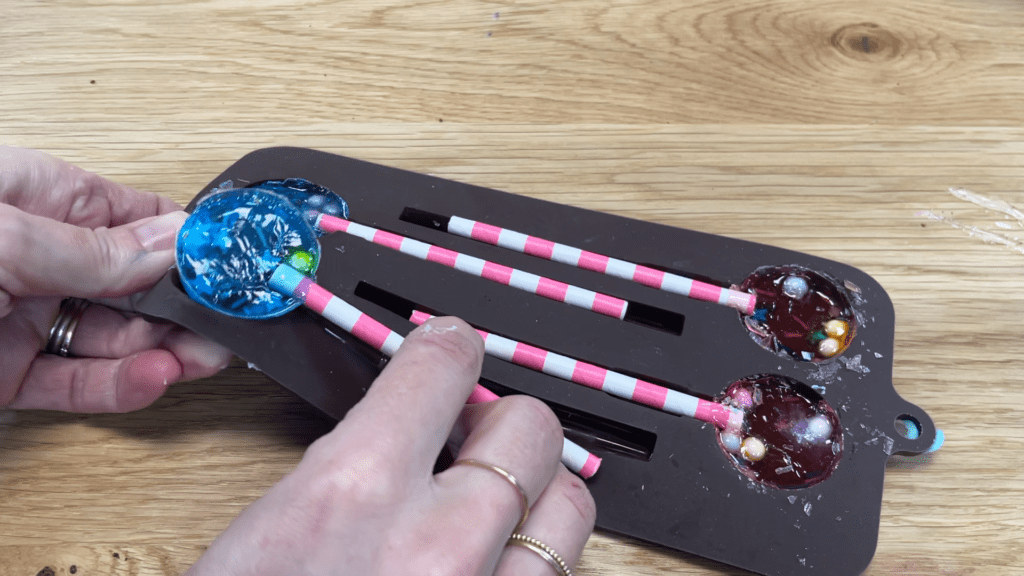
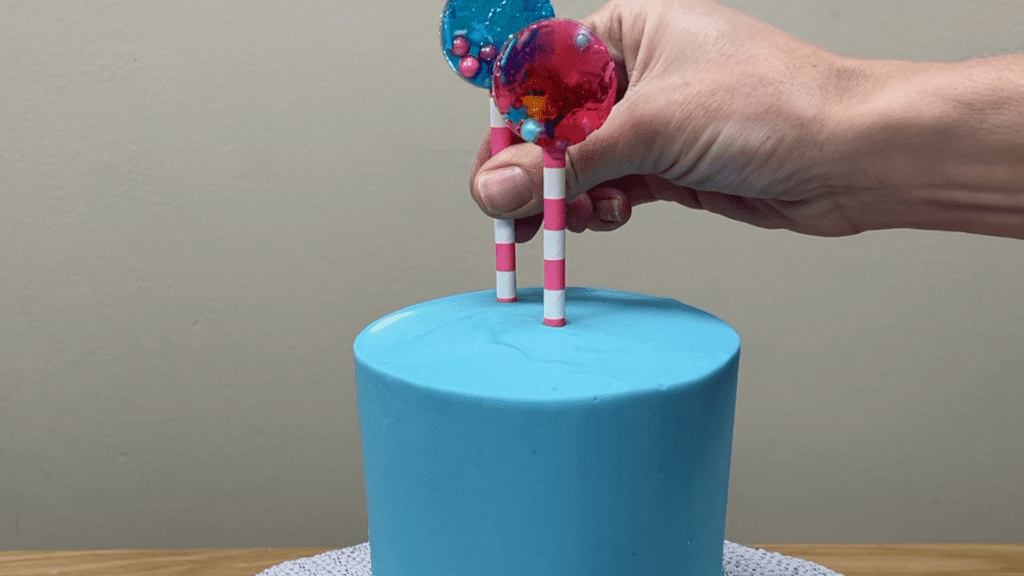
These make fun, flavoured, colourful treats or cake decorations and you can choose sprinkles and paper straws to match any colour scheme!
#5 Create REALLY bright and bold colours with chocolate by using a secret ingredient. Melt chocolate in the microwave at 80% power for 30 seconds at a time so it doesn’t overheat. Add cream if you’re going to make a drip or skip it for chocolate decorations.
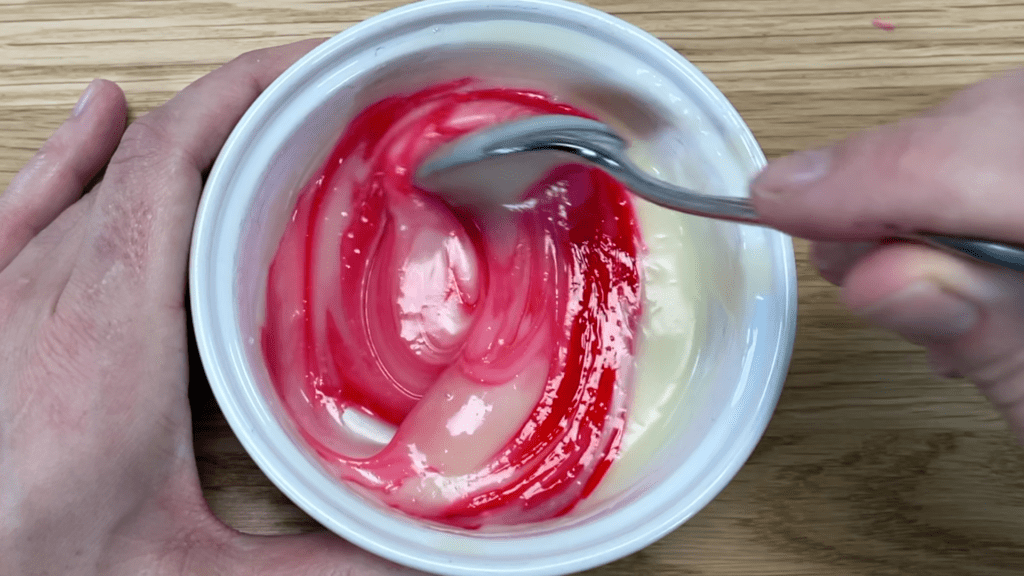
Now add colour but chocolate will seize if you use more than a drop of the gel colours intended for frostings like buttercream. Instead use OIL based colours, sometimes called candy colours, which have no water in them so they won’t make the chocolate seize up.
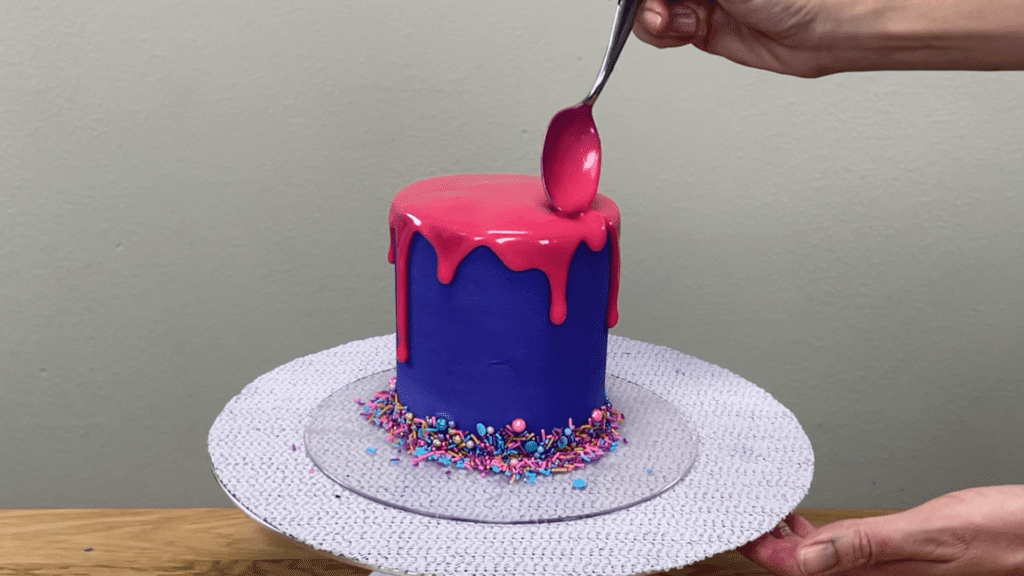
You can add as much of these colours as you like to make shades like these! This will work for chocolate drips, chocolate spheres, sails… any chocolate details on cakes!
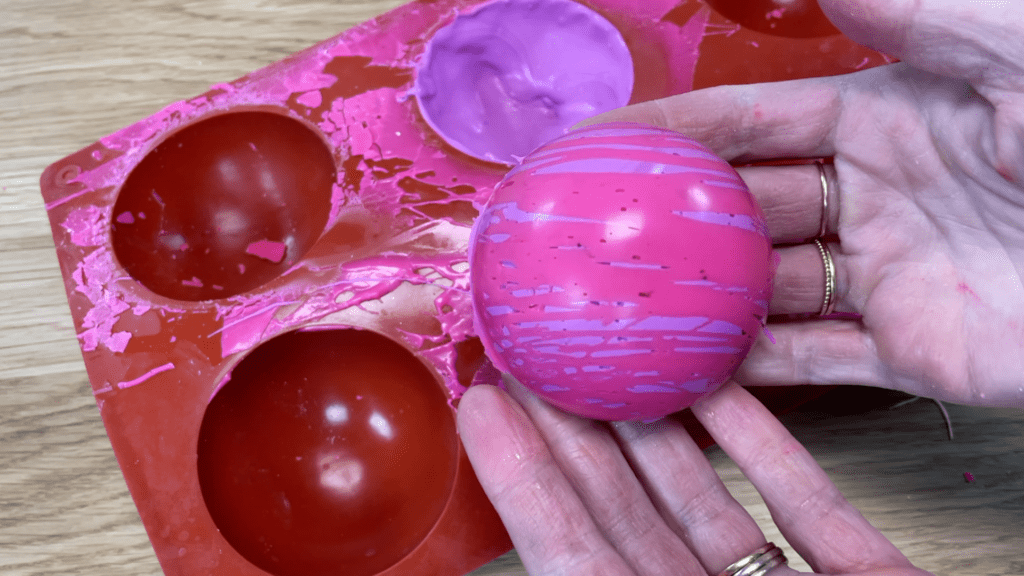
So now you can turn cupcakes into cakes, make cakes gold, create jaw droopingly bright and bold colours with chocolate, turn candy into cake toppers, and achieve flawless, intricately patterned designs!
What cake superpower do you wish you had? I’d love to be able to decorate at timelapse speed! Tell me yours in the comments!
If you’re looking for inspiration or want to learn new cake designs and techniques, join my Club+ for access to ALL of my online classes and courses as well as live online classes and Q&A sessions for members only!
Here’s the video version of this tutorial: